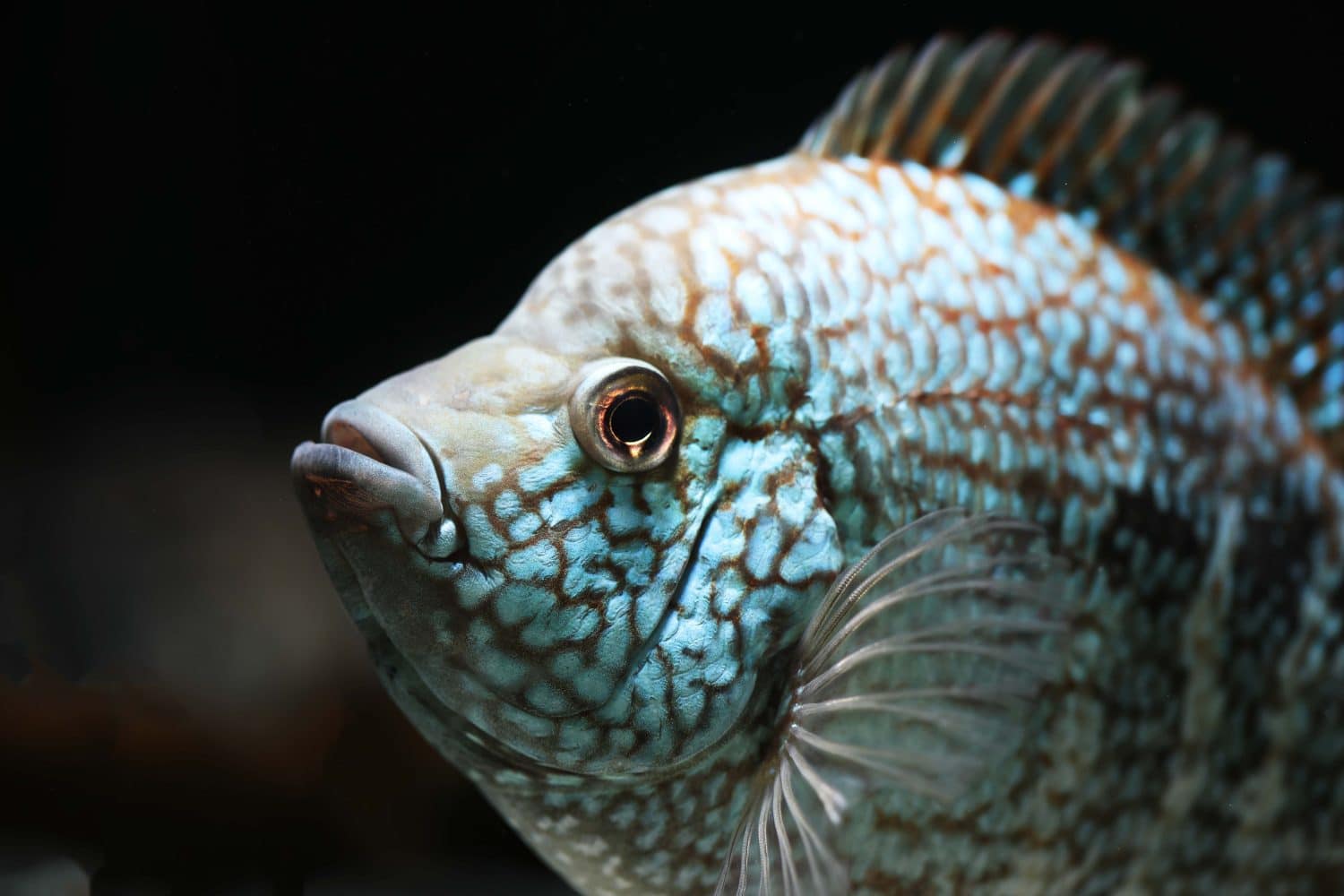
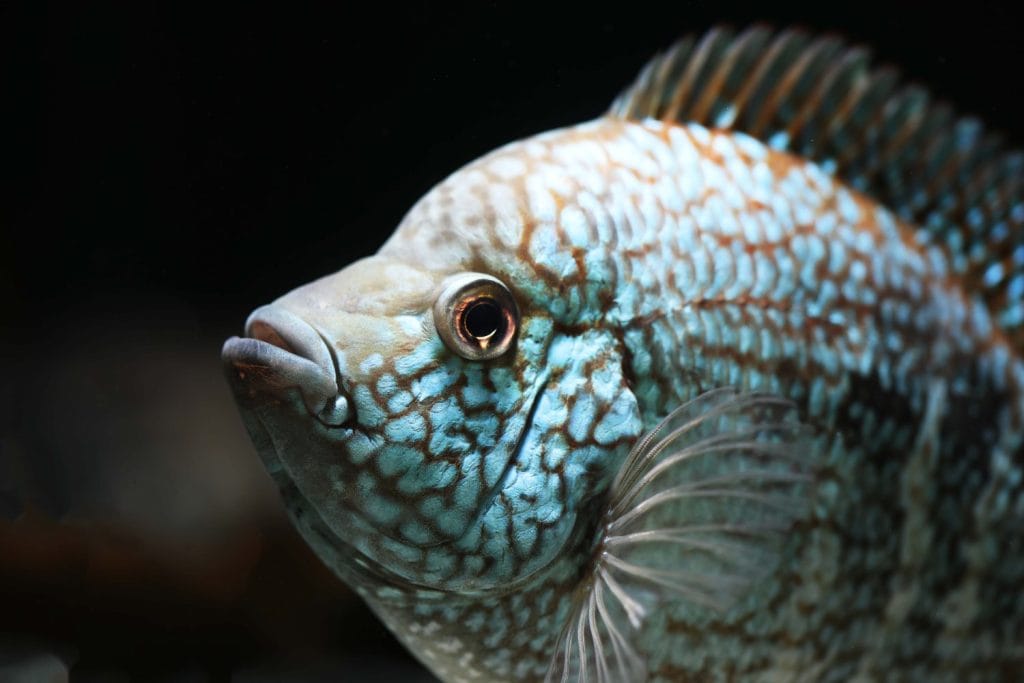
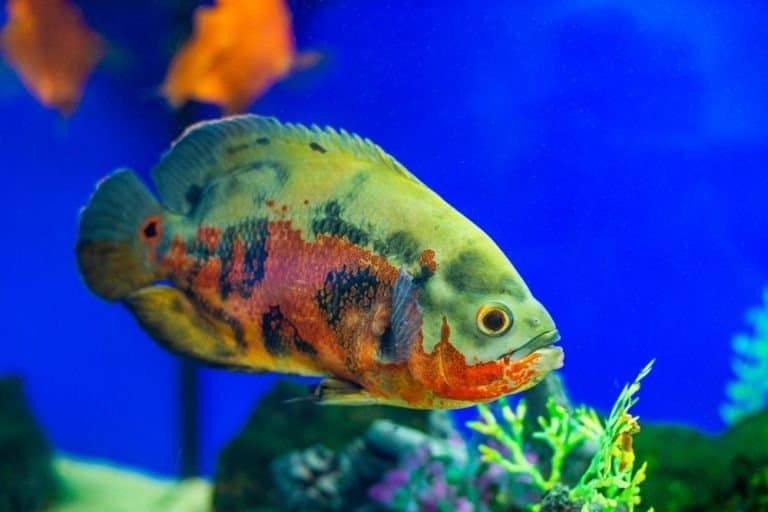
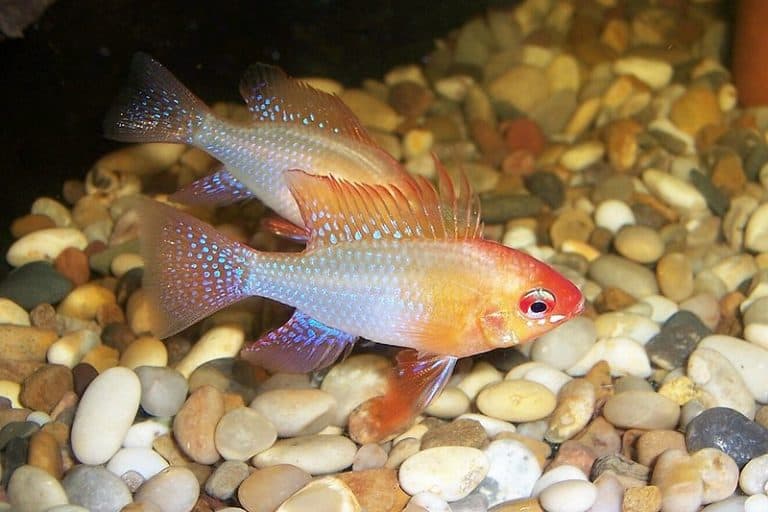
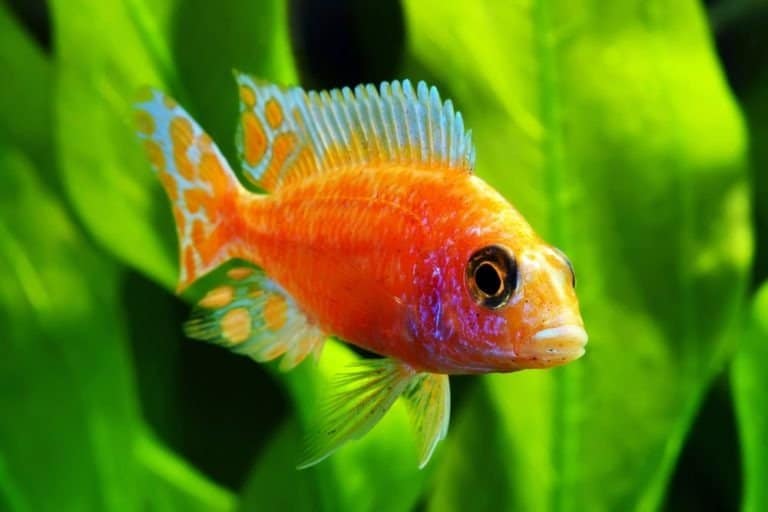
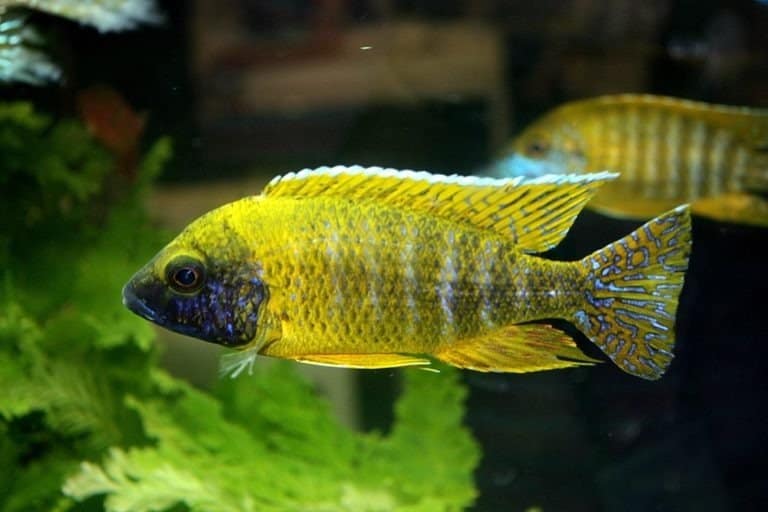
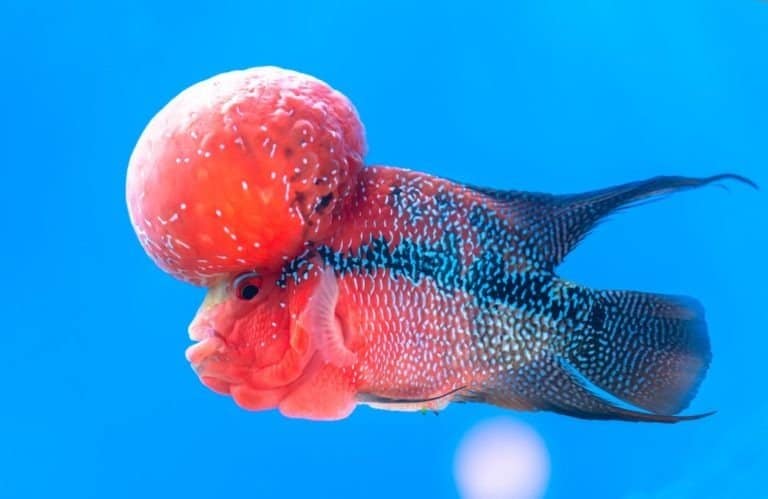

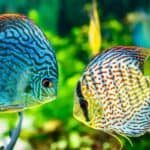
One of the most important things to learn about cichlids is that there are lots of them! There are about 1,650 described species of cichlids, but estimates of the total number of species — including those not yet formally described — range from 2,000 to over 3,000. These freshwater fish are omnivores, eating larvae, brine shrimp, and algae. They’re best known for their colorful scales.
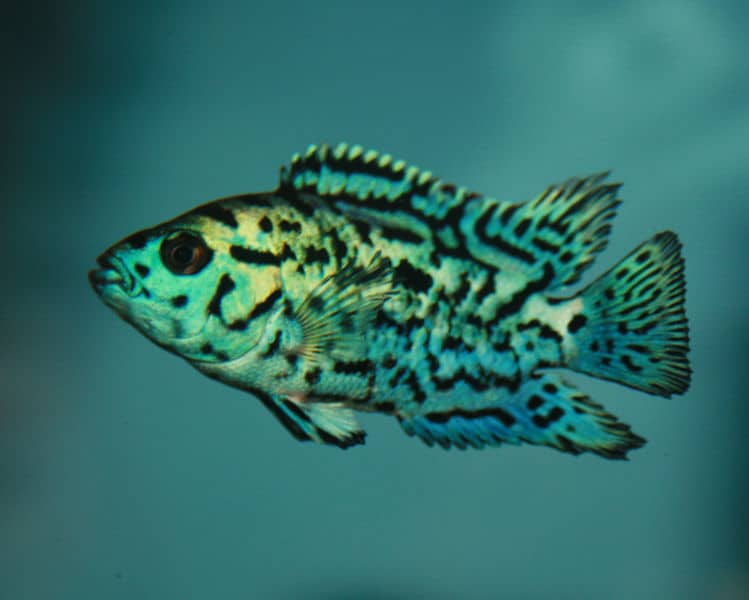
Cichlids are beautiful fish.
©Steven Viemeister / Creative Commons – Original
History and Origins
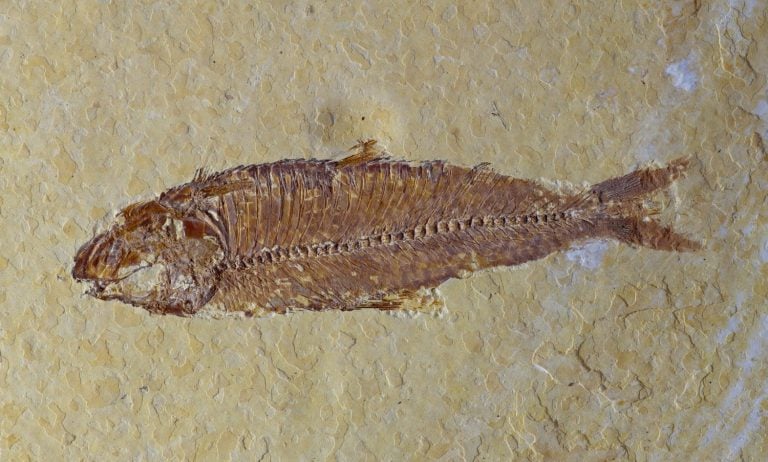
Cichlids are a type of fish belonging to the family Cichlidae in the order Cichliformes. It is believed that cichlids first appeared in Tanzania during the Eocene epoch, roughly 46 to 45 million years ago. The closest living relative of cichlids is believed to be the convict blenny fish. To date, about 1,650 species of cichlids have been formally described, making it one of the largest groups of vertebrates, with total species estimates ranging from 2,000 to over 3,000.
Classification and Scientific Name
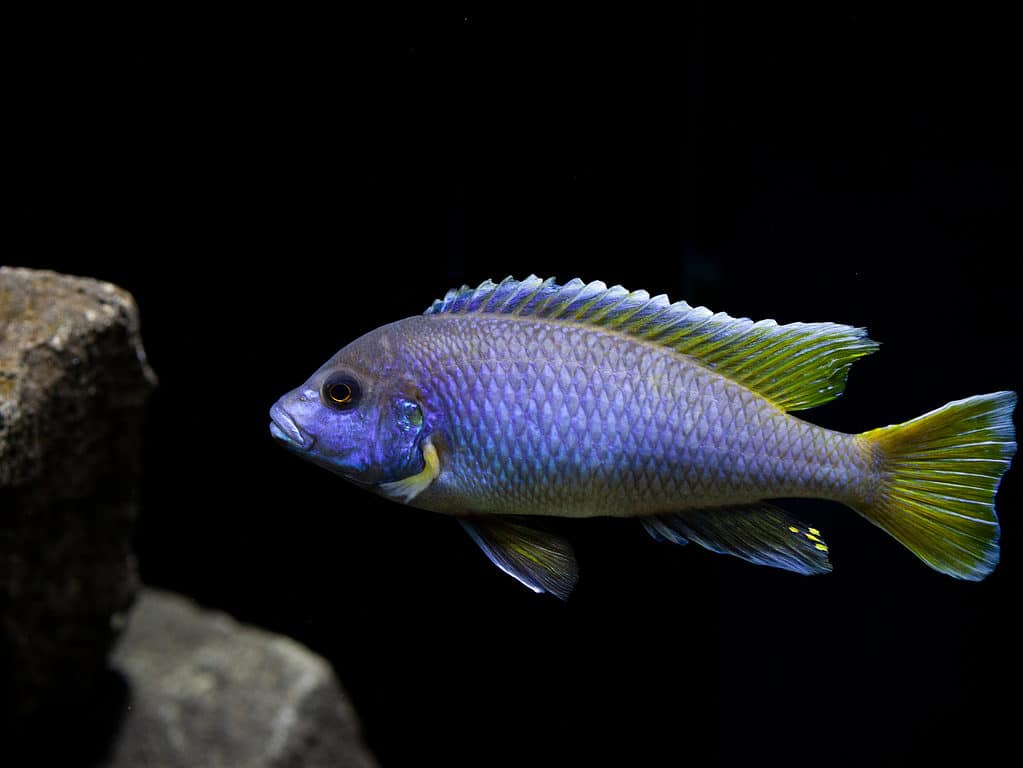
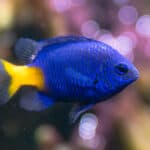
Yellow-tail acei cichlid.
©koagulant/Shutterstock.com
The scientific name of the Nile tilapia is Oreochromis niloticus. Of course, this is just one of the more than 1,700 species of cichlids. The Latin word Oreochromis translates to golden fish.
Cichlids belong to the Cichlidae family and the class Actinopterygii. Actinopterygii is Latin, meaning ray-finned fish.
Species

The midas cichlid (Amphilophus citrinellus) is from America.
©Andrej Jakubik/Shutterstock.com
Many of the more than 1,700 species in the Cichlidae family are African cichlids. Specifically, many species live in Lake Malawi, which spans Malawi, Mozambique, and Tanzania.
All of these African cichlids live in Lake Malawi, and some are known as mbuna. Also known as rockfish, mbuna swim around the rocks near the shore.
- Peacock cichlids (Aulonocara spp): These cichlids have scales with dazzling color combinations of yellow, blue, orange, silver, red, and black.
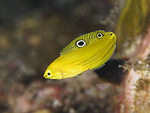
- Bumblebee cichlid (Pseudotropheus crabro): The bumblebee cichlid is aptly named for its yellow body covered with black stripes. A bumblebee cichlid is an mbuna.
- Electric yellow cichlid (Labidochromis caeruleus): This mbuna is known for its brilliant yellow scales. It grows to a length of three to four inches.
- Venustus cichlid (Nimbochromis venustus): This cichlid has blue scales with white stripes. These cichlids may swim as deep as 75 feet in Lake Malawi.
Appearance
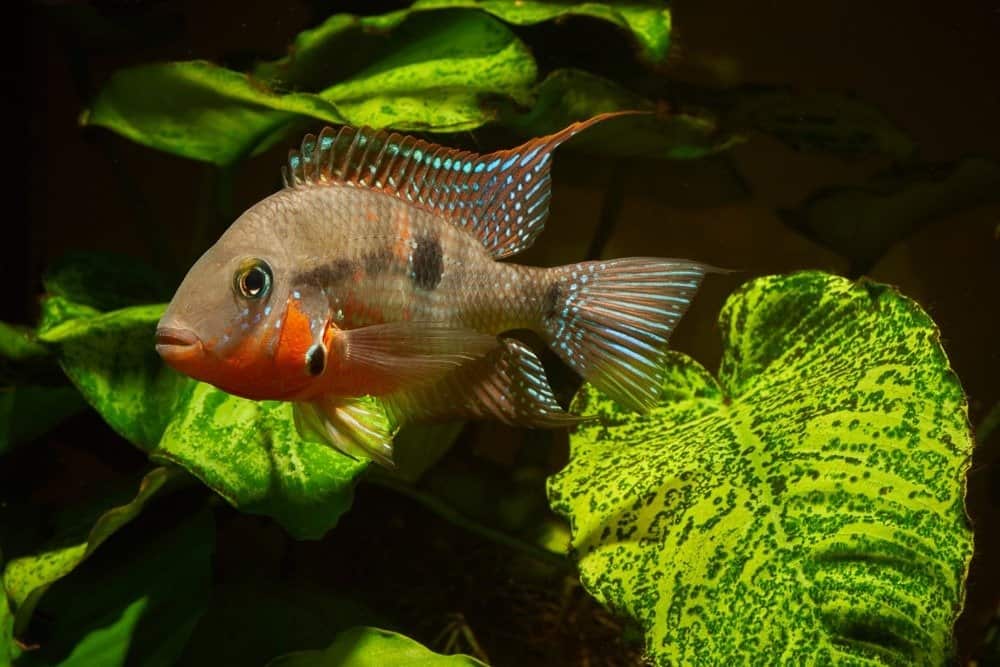
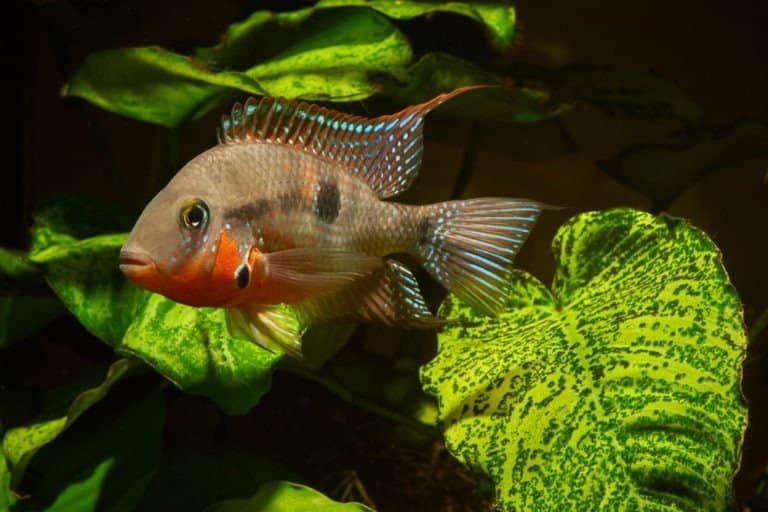
The Firemouth cichlid is a brightly colored representative of the American cichlid family. It can inflate its gills to scare opponents.
©Johannes Menge/Shutterstock.com
With so many types of cichlids in existence, this fish can claim practically any color on the spectrum. As an example, an African butterfly peacock cichlid has brilliant yellow scales with bright blue fins. Alternatively, a Livingstonii cichlid, also a mbuna, has a silver body with black splotches.
Cichlids have ray fins on their backs and underbellies. These spiny fins stand up while this fish swims.
These fish can be as small as two inches in length and as large as 36 inches. The Neolamprologus ocellatus is a dwarf African cichlid growing to two inches. Alternatively, the African giant cichlid is the biggest type, measuring 36 inches.
Species can greatly differ in weight as well. Dwarf African shell dwellers are less than an ounce, whereas a giant cichlid can weigh seven pounds or more. Smaller cichlids are vulnerable to predators. Many of them take shelter in rock crevices to escape larger fish or other predators. Large cichlids have fewer predators but can be targets of fishermen.
Distribution, Population, and Habitat
Where to Find Cichlids and How to Catch Them
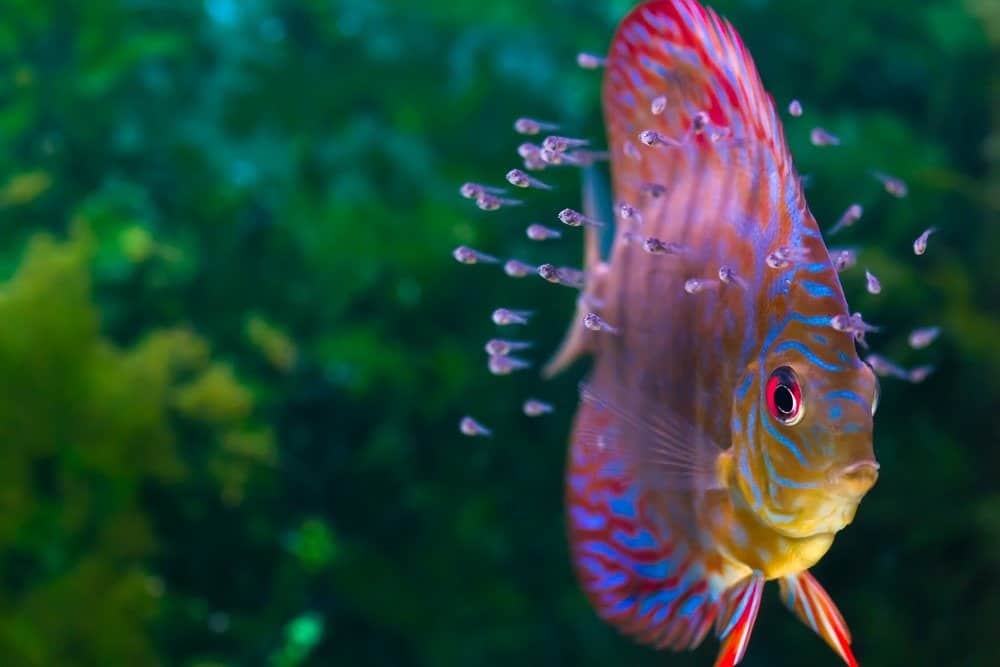
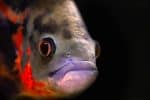
Baby Discus Cichlid fish swimming with a parent. Discus fish are native to the Amazon River.
©Studio 37/Shutterstock.com
Most cichlids live in freshwater rivers and lakes in Africa, Central America, and South America. Specifically, biologists estimate that Lake Malawi in Africa is home to at least 700, and possibly up to 1,000, cichlid species.
Not surprisingly, different cichlids reside at different depths. For instance, the Maingano cichlid lives at a depth of around 16 feet, while a red zebra cichlid lives at 30 feet.
In terms of commercial fishing, tilapia is a type of cichlid caught and eaten by people throughout the world. They are also raised on fish farms and sold to restaurants and businesses.
Cichlids of all types are kept by fish enthusiasts in home aquariums. Their popularity is due to their varied scale colors and patterns.
Predators and Prey
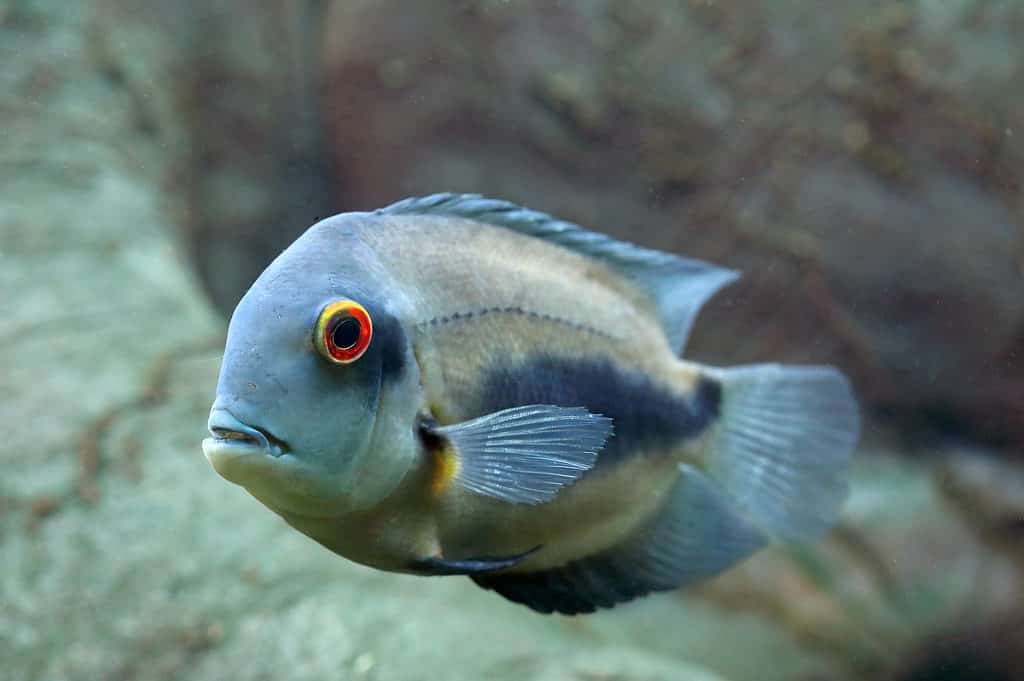
The average lifespan of a Uaru is about 8 to 10 years.
©Grigorii Pisotsckii/Shutterstock.com
Cichlids vary between being fully herbivorous and fully carnivorous, depending on the species. This dietary strategy is almost always reflected in the fish’s physical characteristics. Many cichlids cruise through algae beds or the muddy floor and passively filter out small prey from the surrounding water, such as zooplankton (tiny marine animals) and phytoplankton (small photosynthetic plant matter). Larger cichlid species consume hard-shelled mollusks by crushing the shell with their strong jaws or sucking out the prey.
A select few species will consume the eggs or larvae of other cichlids. They have adapted the unique strategy of targeting a mother who keeps the eggs stored safely in her mouth. They will ram her repeatedly to make her release the eggs so they can gobble them up.
Besides members of their own kind, cichlids also face predation from humans and other types of fish. Overfishing, habitat change, and invasive species all pose dangers to cichlids. The introduction of the Nile perch into Lake Victoria has driven many native cichlid species to extinction or near extinction. While some cichlid species are listed as least concern, many others are threatened or endangered due to overfishing, habitat change, and invasive species.
Cichlid Reproduction and Lifespan
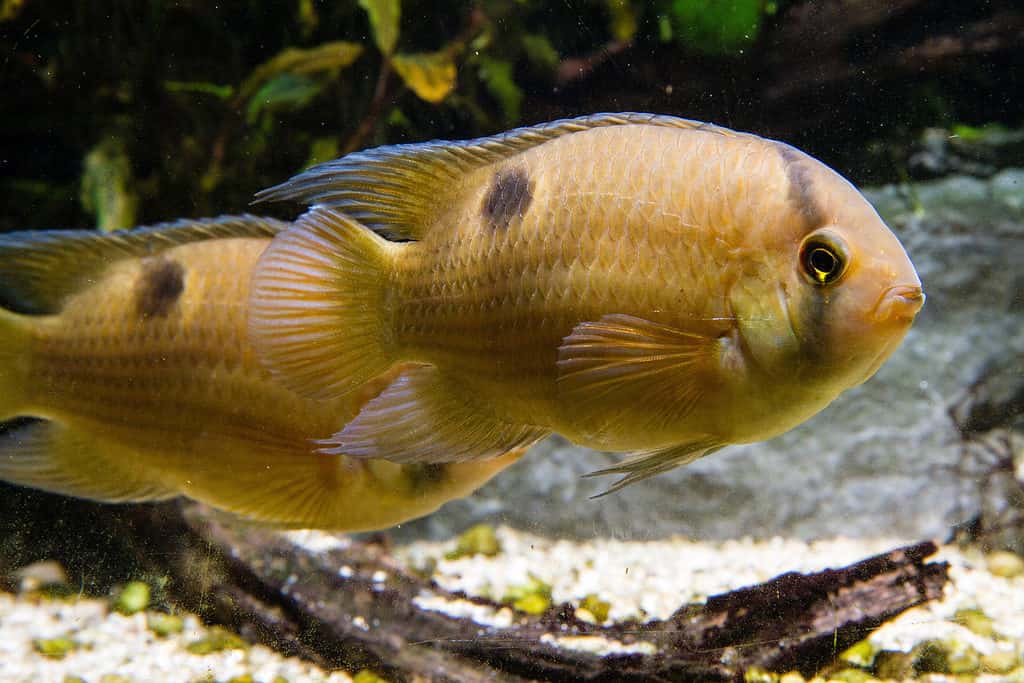
A pair of keyhole cichlids.
©chonlasub woravichan/Shutterstock.com
Cichlids, such as the Mayan cichlid, spawn in the spring and summer. These fish reproduce by laying eggs. Some cichlids are mouthbrooders, while others are pit spawners.
Mouthbrooding occurs when a female fish releases eggs, which are then fertilized by the male. After fertilization, the female takes the eggs back into her mouth for protection. This is her way of protecting her young. The gestation period for mouthbrooding cichlids is 21 to 36 days.
Pit spawning is when a fish digs a shallow pit in the sand. The female deposits her eggs into the pit, and the male cichlid fertilizes them. The gestation period for eggs in a pit is five to 15 days.
Cichlids can lay hundreds of tiny eggs at a time. These fish are sexually mature at nine months old and have a lifespan of up to eight years.
Fishing and Cooking
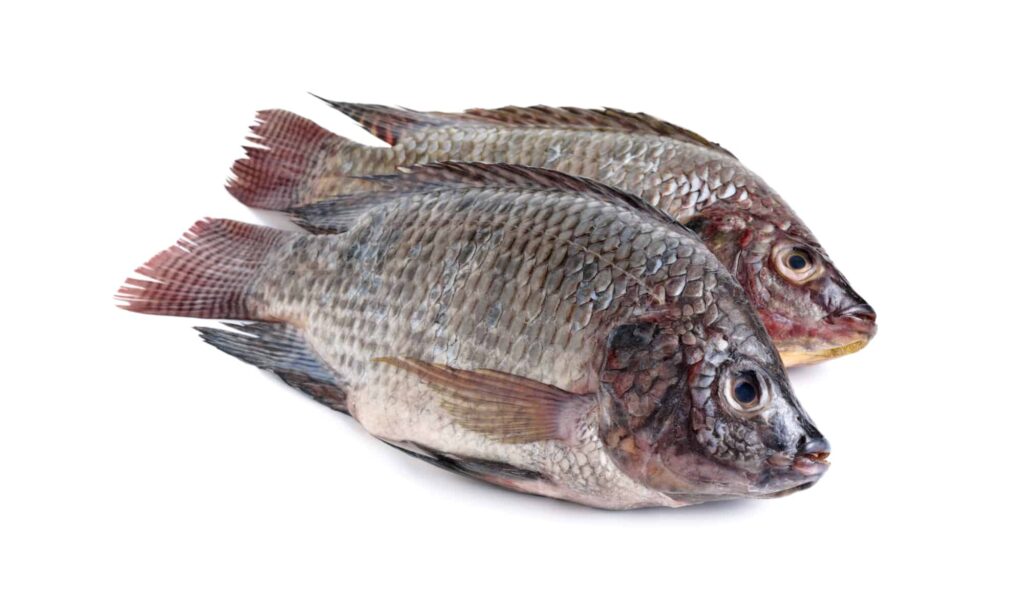
Tilapia are cichlid fish that are commonly eaten around the world.
©Yossi James/Shutterstock.com
A type of cichlid called tilapia is popular in both commercial and recreational fishing. China produces approximately 1.8 million tons of tilapia per year, accounting for nearly 30% of global production.
Recreationally, these fish can be caught on a fishing line using corn or peas as bait. The best time to catch tilapia is in the spring and summer when they’re most active. Generally, they congregate in shallow water during these seasons.
Tilapia is eaten throughout the world, but is rated as the fourth most popular seafood in the United States. However, most of the tilapia eaten in the U.S. has been raised on fish farms. This fish contains 29 grams of lean protein in a four-ounce serving.
Whether it’s baked, broiled, or grilled, tilapia is easy to prepare and delicious.
Cichlid Pictures
View all of our Cichlid pictures in the gallery.

elpashtetto/Shutterstock.com
How to say Cichlid in ...
Sources
- Britannica / Accessed December 5, 2020
- Seaworld Parks & Entertainment / Accessed December 5, 2020
- San Diego Zoo / Accessed December 5, 2020
- Animal Diversity Web / Accessed December 5, 2020
- Big Al's Blog / Accessed December 5, 2020
- Aquaria Wise / Accessed December 5, 2020