
C
Species Profile

Common Loon

Gavia immer

Haunting voice of northern lakes
P199 / Creative Commons

Common Loon Distribution

Click a location to explore more animals from that region

This map shows coastal regions where Common Loon are found.

Loading map...

At a Glance

Wild Species
Also Known As Great Northern Diver, Great Northern Loon, Loon, Diver
Diet Piscivore
Activity Diurnal+
Lifespan 15 years
Weight 6.3 lbs
Status Least Concern
Did You Know?

Size: 66-91 cm long; wingspan 122-152 cm (adult).

Scientific Classification

A large, fish-eating diving bird of northern North America, famous for its haunting yodeling calls and black-and-white checkered breeding plumage; a strong swimmer with legs set far back on the body.

Kingdom
Animalia
Phylum
Chordata
Class
Aves
Order
Gaviiformes
Family
Gaviidae
Genus
Gavia
Species
Gavia immer

Distinguishing Features

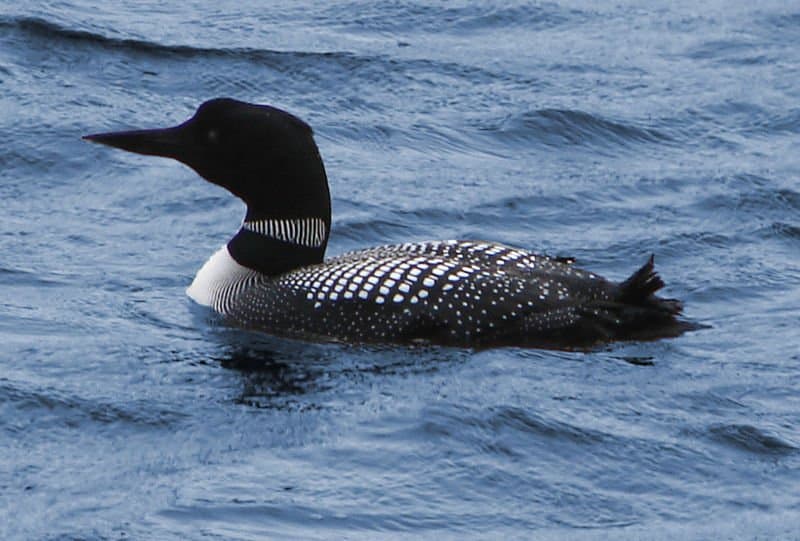
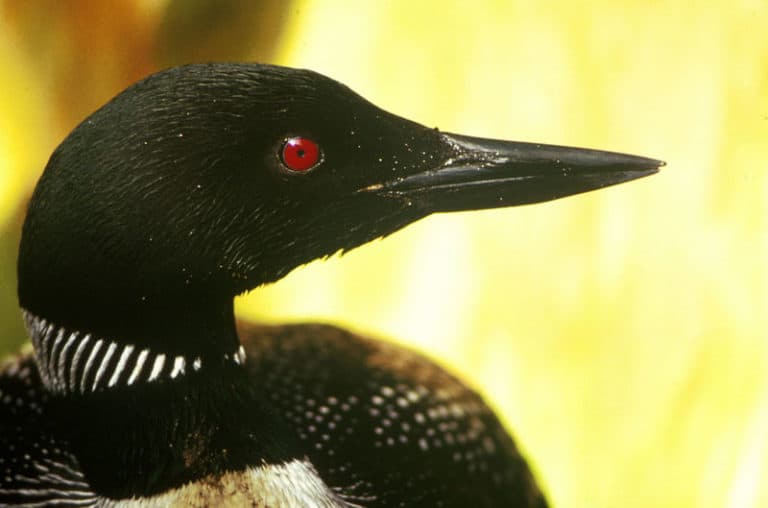
  • Black head and neck with greenish gloss in breeding plumage
  • Bold black-and-white checkered back
  • White underparts; dagger-like dark bill
  • Powerful diver; awkward on land due to rear-set legs
  • Distinctive vocalizations (yodel, wail, tremolo)

Physical Measurements

Males and females differ in size

Length
2 ft 8 in (2 ft 2 in – 2 ft 12 in)
Weight
9 lbs (7 lbs – 14 lbs)
9 lbs (6 lbs – 11 lbs)
Top Speed
75 mph

Appearance

Primary Colors
Secondary Colors
Skin Type Common Loon (Gavia immer) has dense waterproof feathers; legs and large webbed feet have bare scaly skin. Legs sit far back (hindlimb-driven pursuit diver), making it powerful underwater but clumsy on land.
Distinctive Features
  • Large North American freshwater-breeding, coastal-wintering diving bird: breeds primarily on northern lakes (often clear, fish-bearing waters) and winters mainly along Atlantic and Pacific coasts and large coastal bays/nearshore marine waters (Birds of the World-Gavia immer).
  • Size (adults): total length 66-91 cm; wingspan 122-152 cm; mass commonly ~2.7-6.3 kg (range varies by sex/season/region) (Birds of the World / Cornell Lab All About Birds-Common Loon).
  • Bill: long, straight, dark 'dagger-like' bill used for capturing fish; head held slightly raised, giving a streamlined, spear-billed profile (Birds of the World-Gavia immer).
  • Diving and propulsion: powerful rear-set legs and large webbed feet provide primary underwater propulsion; wings are used mainly for flight rather than underwater 'flying' (diagnostic vs alcids) (Birds of the World-Gavia immer).
  • Common Loon (Gavia immer) hunts by chase-diving for fish, crayfish, and other water prey. Dives usually last about 1–2 minutes, sometimes longer, and can be deep in clear water.
  • Iconic vocalizations: four well-known call types-wail (long-distance contact), yodel (territorial; most often given by males), tremolo (alarm 'laugh'), and hoot (short-range contact) (Birds of the World-Gavia immer).
  • Feet and posture: very posterior leg placement yields an upright, 'low-in-water' profile; on land, movement is difficult and typically limited to nest access at water's edge (Birds of the World-Gavia immer).
  • Longevity: banding record at least 30 years 11 months (USGS Bird Banding Laboratory longevity records for Gavia immer).
  • Common Loon (Gavia immer) eats lead fishing tackle, which can kill them; mercury builds up and harms breeding and behavior; nest disturbance and shoreline development lower breeding success.

Sexual Dimorphism

Sexes are similar in plumage (monomorphic coloration) but show size dimorphism: males average larger/heavier with proportionally larger bills; females tend to be slightly smaller with slightly shorter bills. Field separation by plumage alone is generally unreliable (Birds of the World-Gavia immer).

  • On average larger body mass and overall size; slightly longer/deeper bill (Birds of the World-Gavia immer).
  • Territorial 'yodel' call is primarily/typically given by males (behavioral dimorphism) (Birds of the World-Gavia immer).
  • On average slightly smaller body and slightly shorter bill; plumage essentially identical to male across seasons (Birds of the World-Gavia immer).

Did You Know?

Size: 66-91 cm long; wingspan 122-152 cm (adult).

Weight ranges widely: ~2.2-7.6 kg, with males averaging heavier than females.

Clutch is usually 2 eggs (sometimes 1); incubation ~26-31 days.

Chicks can swim right away and often ride on a parent's back for warmth and protection.

Diving is routine: many foraging dives last ~30-60 s; maximum dive times up to ~3 min have been reported.

A long-lived bird: banding records document individuals living 30+ years in the wild.

The "loonie" on Canada's $1 coin is a Common Loon-one of North America's most recognizable bird symbols.

Unique Adaptations

  • Rear-set legs and large, fully webbed feet act like efficient paddles for high-speed underwater pursuit, but greatly reduce mobility on land.
  • Dense bones and compressible plumage help reduce buoyancy, making deep dives easier than in many other waterbirds.
  • A "spear-and-grab" bill and strong neck are adapted for seizing slippery fish underwater.
  • Eyes adapted for underwater vision: loons rely heavily on sight to track prey beneath the surface; a protective nictitating membrane helps shield eyes while diving.
  • High oxygen storage capacity (large body, strong muscles) supports repeated dives; typical foraging dives are under a minute, with longer dives possible when pursuing prey or avoiding threats.
  • Breeding-nest placement is an adaptation to body plan: nests are built right at the water's edge so adults can slide on and off the nest without walking far.

Interesting Behaviors

  • Four main vocalizations with distinct uses: the male "yodel" (territorial advertisement and individual identity), the "wail" (long-distance contact/coordination), "tremolo" (alarm/defense, often during aerial threats), and soft "hoots" (close-range family contact).
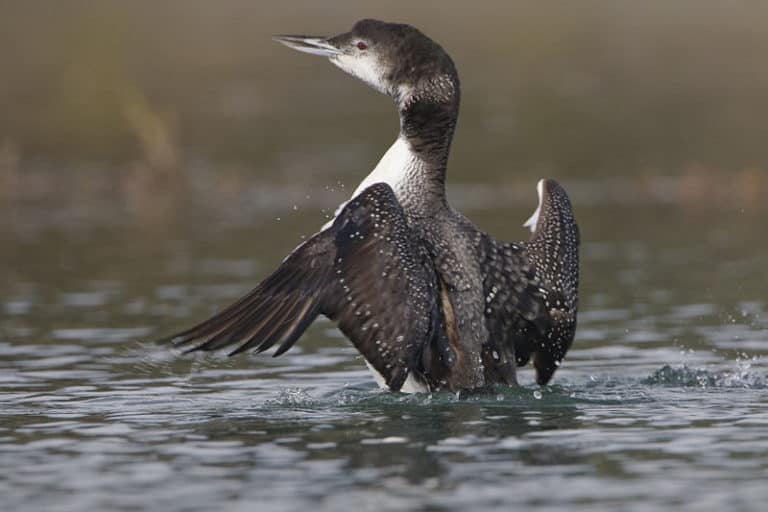
  • Breeding vs. nonbreeding look: in breeding season adults show a black head and neck with a greenish sheen and a bold black-and-white checkered back; in winter they molt into mostly gray above and white below, with a paler throat and face.
  • Freshwater breeder, coastal winterer: nests on northern lakes (often on small islands or shorelines with quick water access), then migrates to Atlantic/Pacific coasts and the Gulf of Mexico for winter.
  • Territory defense is intense: pairs patrol lake sections, respond to intruders with yodels and tremolos, and may engage in low, "penguin-like" aggressive postures and rushing displays across the surface.
  • Specialized takeoff: because legs are set far back, loons need a long "running start" across the water to become airborne; on land they are awkward and rarely walk.
  • Underwater pursuit predation: hunts primarily fish by sight, propelling with powerful feet; also takes crayfish and other aquatic prey depending on lake conditions.
  • Parental care is prolonged: adults feed chicks small fish/invertebrates and escort them; fledging typically occurs around 11-12 weeks (~70-84 days), with families staying together until migration.

Cultural Significance

Common Loon (Gavia immer) is a symbol of northern wilderness, on Canada's loonie and Minnesota's state bird. Its calls bring to mind clear lakes. It helps protect clean water; raising young needs fish, clear water, and low pollution. Threats: lead fishing tackle, mercury, and nest disturbance (boats, development, loose dogs).

Myths & Legends

In Ojibwe tradition, the loon is honored as a clan emblem; clan stories connect the loon with leadership, communication, and watchfulness on the water.

Across several Algonquian-speaking peoples' oral traditions, loons are portrayed as powerful lake beings whose far-carrying calls serve as warnings or messages across distance-an audible sign of the spirit-filled wilderness at night.

Northern lake folklore among settler communities often treats the loon's wail as an omen-like "voice of the lake," woven into stories of solitude, storms, and travelers finding their way by sound in fog or darkness.

In Canada, the loon’s image, made famous by the 'loonie' coin, became a symbol of wild waters and the North, appearing in many stories, sayings, and campfire tales as 'the bird that owns the lake.'

Conservation Status

LC Least Concern

Widespread and abundant in the wild.

Population Stable

Protected Under

  • United States: Migratory Bird Treaty Act (MBTA) - prohibits take, possession, sale, purchase, and transport of migratory birds, nests, and eggs except as permitted.
  • Canada: Migratory Birds Convention Act, 1994 (MBCA) and associated Migratory Birds Regulations - protects migratory birds, nests, and eggs and regulates hunting/harvest.
  • Protected status is complemented by site-based protections in some jurisdictions (e.g., nesting-lake management measures, shoreline buffers, seasonal nest closures, and boating restrictions) used to reduce disturbance and improve productivity.

Life Cycle

Birth 2 chicks
Lifespan 15 years

Lifespan

In the Wild
1–30 years
In Captivity
1–23 years

Reproduction

Mating System Monogamy
Social Structure Socially Monogamous
Breeding Pattern Long Term
Fertilization Internal Fertilization
Birth Type Internal_fertilization

Behavior & Ecology

Social Flock Group: 2
Activity Diurnal, Crepuscular, Nocturnal
Diet Piscivore Small to medium-sized fish-often perch (notably Yellow Perch, Perca flavescens) when locally abundant.
Seasonal Migratory 1,118 mi

Temperament

Strongly territorial during breeding (aggressive toward conspecific intruders; escalates from threat postures to chasing and physical fights)
Pair-bonded and site-attached on breeding territories (high breeding-lake fidelity reported in long-term studies; mate/territory retention varies with survival and competition)
Generally wary and disturbance-sensitive, especially on breeding lakes; may abandon nests or reduce attendance under repeated human disturbance (documented management concern in loon conservation literature)
Outside breeding territories, typically non-territorial and tolerant at distance in loose rafts/aggregations, though individuals maintain personal spacing while foraging
Opportunistic, persistent pursuit-diver; competitive interactions over fish can occur but coordinated cooperative hunting is not typical

Communication

Yodel: loud, far-carrying territorial call given primarily by males; used in territory advertisement and during interactions with intruders Classic species-specific call described in McIntyre & Barr 1997; Birds of the World: McIntyre et al.
Wail: long-distance contact/locating call used by both sexes; commonly heard in low-light conditions and during social separation or movement on large waters McIntyre & Barr 1997
Tremolo "laugh"): rapid, wavering alarm/agitational call produced during perceived threats and aerial or surface chases; often associated with heightened arousal (McIntyre & Barr 1997
Hoot: soft, short-range contact call between mates and between adults and chicks; used at close distances on territory and with family groups McIntyre & Barr 1997
Visual threat/territorial displays: low head posture, bill-pointing, and oriented swimming toward intruders; escalation can include splash-diving and direct attacks McIntyre & Barr 1997
Display behaviors during social interactions: synchronized swimming, circling, and the well-known "penguin dance" Upright posturing with wing movements) reported during pair and territorial contexts (McIntyre & Barr 1997
Acoustic + spatial signaling as a hub pattern: on breeding lakes, vocalizations are tightly linked to movement and spacing-pairs use calls to manage territory boundaries, coordinate mate location, and respond to intrusions; in contrast, on migration/wintering waters, spacing is maintained more by movement/avoidance than by overt territorial calling Seasonal variation summarized in Birds of the World: McIntyre et al.; McIntyre & Barr 1997

Habitat

Lake Pond River/Stream Wetland Marsh Bog Estuary Coastal Rocky Shore Open Ocean +4
Terrain:
Riverine Coastal Island Plains Valley Rocky Sandy Muddy +2
Elevation: Up to 9842 ft 6 in

Ecological Role

Upper-level aquatic predator (piscivorous diver) in northern lakes and coastal waters; also functions as a sentinel/bioindicator species for aquatic ecosystem contamination (e.g., mercury) because it feeds high in the food web.

Top-down regulation of small- to medium-sized fish communities in breeding lakes Energy and nutrient transfer between aquatic and terrestrial systems (guano deposition and prey transport during chick provisioning) Bioindicator of aquatic food-web contamination and lake health due to high trophic position Supports ecosystem monitoring and conservation planning as a high-visibility flagship species for lake ecosystems

Diet Details

Main Prey:
Freshwater fish Perch Sunfish Minnows Sticklebacks Trout and salmonids Smelt Young-of-year and small schooling fish Crayfish Aquatic insect larvae +4

Human Interaction

Domestication Status

Wild

Common Loon (Gavia immer) is a fully wild migratory waterbird with no domestication history. It is protected across most of its range (e.g., U.S. Migratory Bird Treaty Act; Canada Migratory Birds Convention Act); capture or keeping is generally banned except under scientific, educational, or wildlife-rehab permits. Loons are vulnerable to nest disturbance, fishing-gear entanglement, lead sinkers, pollution, and oil spills.

Danger Level

Low
  • Territorial defense during breeding season: can lunge, bite, or strike with the bill if approached closely (especially near nests/chicks).
  • Handling risk to rescuers/rehabilitators: powerful bill can cause puncture wounds; stress/aspiration risk to bird during capture.
  • Rare severe incidents have been reported when people approached too closely on watercraft; overall risk to the general public remains low compared with large mammals or raptors.

As a Pet

Not Suitable as Pet

Legality: Common Loon (Gavia immer) cannot be kept as a pet in the U.S. or Canada. Protected by the MBTA and MBCA; catching, sale, keeping, or moving needs federal permits only for rehab, research, or education. States/provinces may add rules.

Care Level: Expert Only

Purchase Cost:
Lifetime Cost: $50,000 - $300,000

Economic Value

Uses:
Ecotourism/birdwatching value (iconic species on northern lakes; vocalizations and breeding plumage drive wildlife tourism) Cultural/branding value (symbolic use in regional/nature identity; educational outreach) Ecosystem indicator value (sentinel for lake health, fish contamination-especially methylmercury-and human-caused mortality such as lead tackle ingestion) Conservation-management value (drives funding and policy actions: shoreline buffers, nest protection/rafts, boating restrictions, lead-tackle regulations)
Products:
  • No legal commercial products (species is protected; commercial trade is generally prohibited). Historically, loon feathers/skins were used in some contexts, but modern trade is restricted/illegal in much of its range.

Relationships

Related Species 4

Red-throated Loon Gavia stellata Shared Genus
Pacific Loon Gavia pacifica Shared Genus
Yellow-billed Loon Gavia adamsii Shared Genus
Arctic Loon Gavia arctica Shared Genus

Ecological Equivalents 5

Animals that fill a similar ecological role in their ecosystem

Western Grebe Aechmophorus occidentalis Common Loon (Gavia immer) is a large, foot-propelled diving bird of freshwater lakes. It eats small to medium fish, pursuing them underwater. Size: 66–91 cm long; wingspan 122–152 cm; mass about 2.7–6.3 kg.
Red-necked Grebe Podiceps grisegena Breeds on northern lakes and forages by pursuing fish and invertebrates underwater. Has a similar seasonal movement pattern: lake-breeding populations often move to more marine or coastal areas in the nonbreeding season.
Double-crested Cormorant Nannopterum auritum Piscivorous diver that hunts visually underwater and can overlap with loons on lakes, reservoirs, and coastal waters. Takes similar-sized prey (often schooling fish) and uses similar habitat (open water near roosts/haul-outs).
Common Merganser Mergus merganser Fish-eating diving duck that pursues prey underwater; frequently shares northern lakes and rivers with common loons during breeding and migration, creating potential prey and space-use overlap.
Red-breasted Merganser Mergus serrator Pursuit-diving piscivore that overlaps strongly with common loons in coastal, nonbreeding habitats and during migration stopovers, and is similarly dependent on clear water for visual hunting.

“An underwater hunting expert”

Though awkward on land, the common loon bird is a graceful hunter on the water. This mostly cold-weather waterfowl learns to dive before it learns to fly and will come back to the same nest with the same mate every year for almost a decade. The bird has found its way into a number of Native North American legends and is also the face of the Canadian one-dollar coin. Though pollution eliminated common loons in much of eastern North America, this fowl thrives in Canada, particularly. Though the name “loon” comes from its goofy walk, it’s probably described better by its other English name: “Great Northern Diver.”

Incredible common loon facts!

  • Deep diver: The common loon is a bird that can dive as much as 200 feet underwater to catch fish!
  • Already famous: Canada’s one-dollar coin, called the “loonie,” features the common loon!
  • Frequent-flyer: The common loon can fly for hundreds of kilometers when migrating!
  • Loud and proud: Loon sounds include a distinctive “yodel” when it is claiming territory!
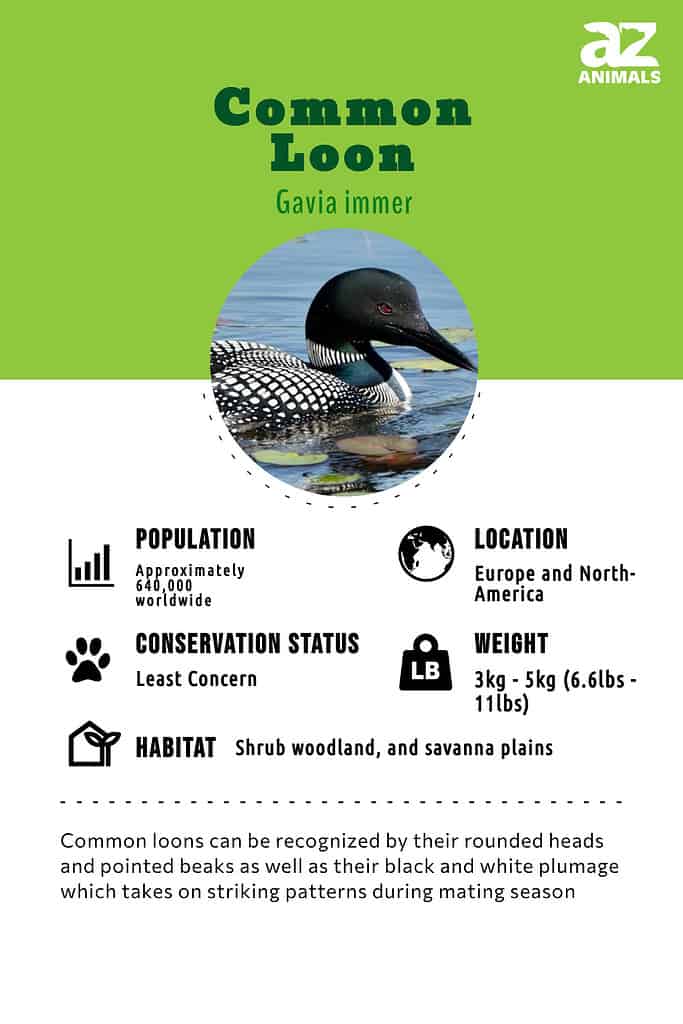
Pictorial summary of the Common Loon

Scientific Name

The scientific name for the common loon, also known as “Great Northern Diver,” is gavia immer. “Gavia” comes from the Latin term for seabird, and “immer” could be from the Norwegian word for “ash” (for its appearance) or the Latin words “immergo” or “immersus“, meaning “submerged” or “diving.”

Evolution 

As a member of the genus Gavia, the common loon’s closest relatives are: black-throated, red-throated, Pacific, and yellow-billed loons.

This family of birds is believed to date back to the Paleogene era which took place between 23 – 66 million years ago.

During the Miocene which occurred between 5.3 – 23 million years ago, the ancestors of the genus extended along the coasts of the Atlantic, until they eventually reached the Pacific coast. An undertaking which would only reach its end by the late part of the period.Fossil evidence of the ancestors of the genus can be found dating back to the Miocene, the Pliocene, and the Pleistocene. The Gavia brodkorbi dating back to the Middle to Late Miocene (the Clarendonian age), discovered in California, is one such example.

Appearance and Behavior
Common Loon (Gavia Immer)
Common loons are known for their distinctive breeding plumage and their distinctive sounds

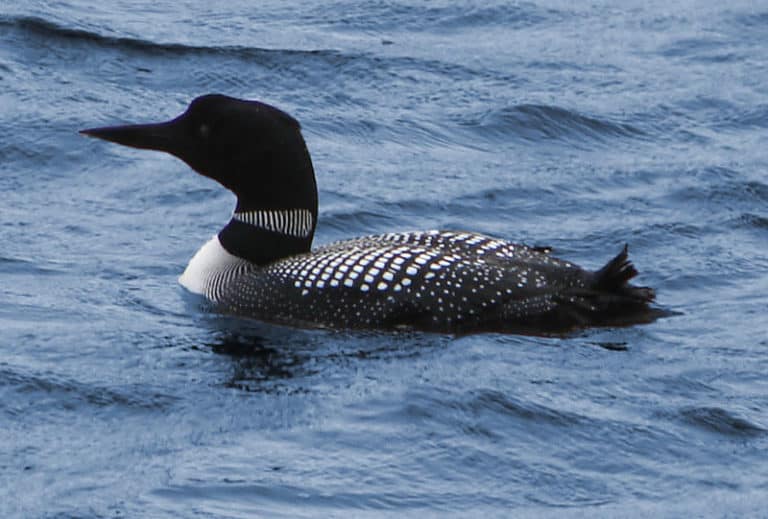
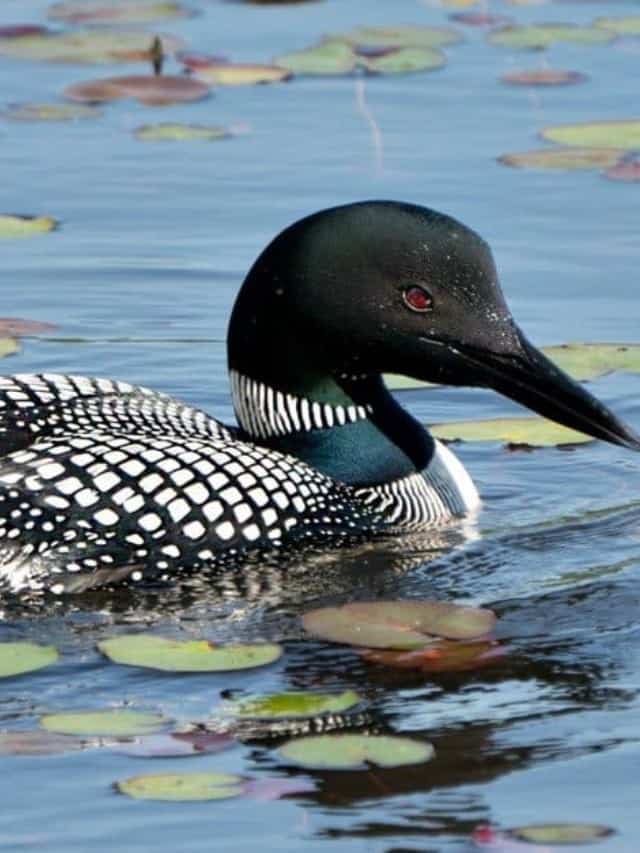
The loon looks like many other ducks, except its bill is more pointed, like a songbird. Its feathers are mostly black, with an almost grid-like pattern of white spots across its wings and throat and a white underbelly.

Common loon sounds are well-known to people who live near their habitats. These include a distinctive yodel, a wailing sound, and a hooting noise. The common loon call is used to find a mate or declare a nesting site.

The feet on the common loon
What Do Loons Eat Cover image
Common Loons’ lower limb anatomy makes them excellent swimmers with a clumsy walking gait

The feet of a common loon are set further back on its body than other water birds. This makes them excellent swimmers and divers. However, it looks awkward whenever it walks on land. That silly-looking walk is believed to be why it earned the name “loon.” Its unique feet also make it land differently from other ducks. While most ducks land on water by skimming their feet, common loons have to skim on their belly.

Habitat
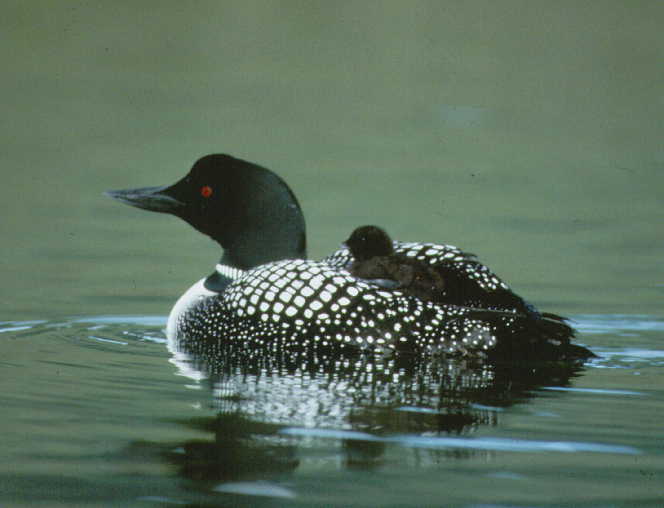
Common Loons prefer smaller bodies of water in summer and larger bodies of water in winter

Common loons are birds that prefer colder areas close to water. They are most often found throughout Canada and are common in New England. In addition to Canada, loons are common to Alaska, Greenland, Iceland, and Scotland. They tend to live near smaller ponds during the summer, when they nest, and migrate to larger lakes and coastal areas during the winter.

Diet
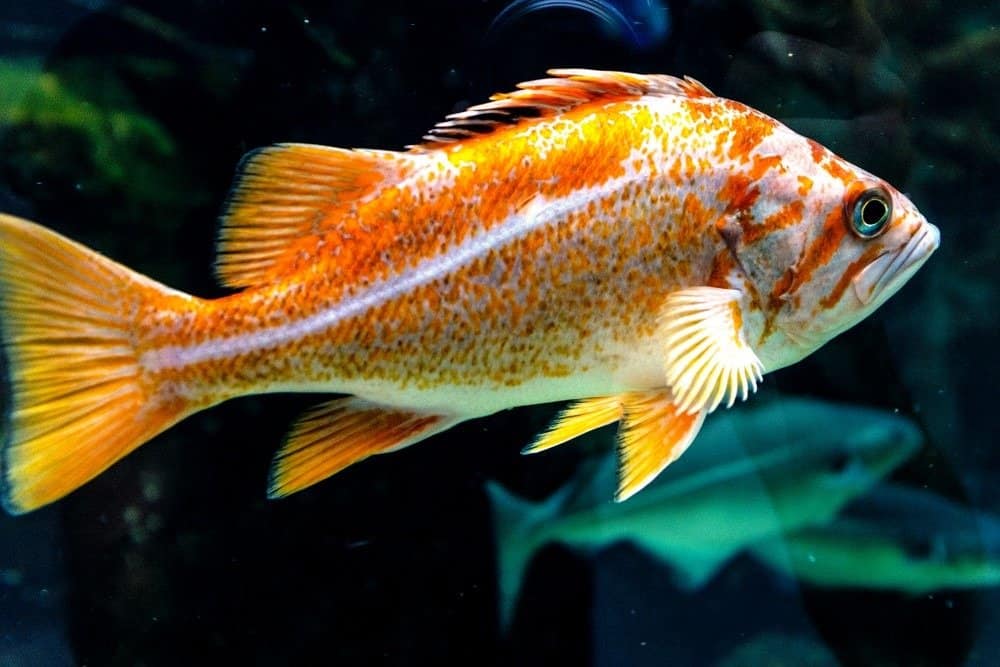
Single Canary rockfish - fish from the northeast region of Pacific Ocean in a zoological aquarium

Rockfish as well as other fish species such as herring, flounder, bass, perch, and pike figure on the Common Loon’s menu

The common loon eats lots of fish. It is an expert at diving into the water to hunt. The specific fish a common loon eats depends on where it spends most of its time. For loons near coastal areas, dinner means flounder, herring, rockfish, and sea trout. Meanwhile, common loons near fresh water will eat bass, perch, pike, sunfish and trout.

To hunt, a common loon will first poke its head under the surface of the water. Once it sees its prey prey, it can dive as deep as 200 feet! Smaller fish can be gulped whole, while larger fish are carried to a place where they can be eaten.

Predators and Threats
Most Dangerous Birds

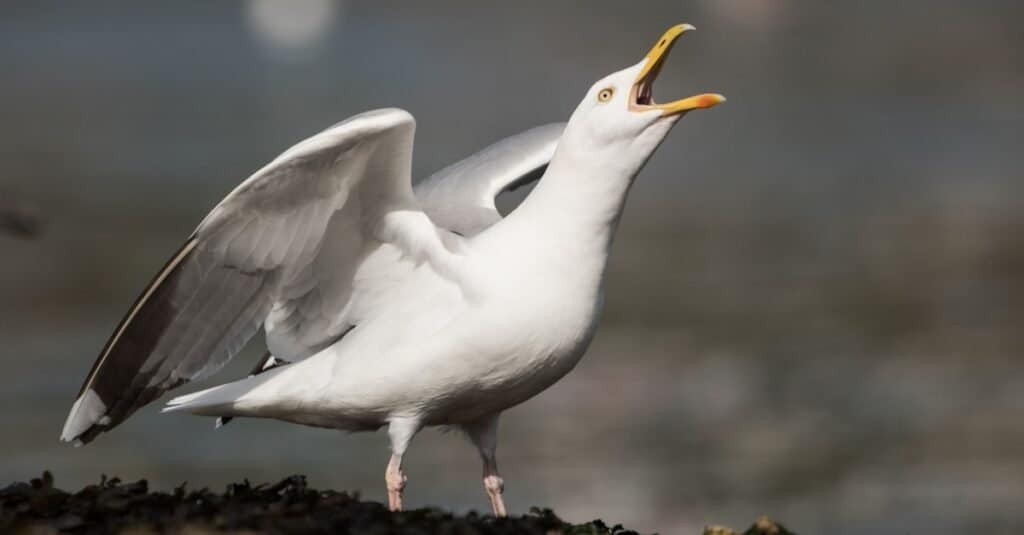
Gulls are considered to be pretty formidable and are known to be occasionally fond of common loons’ eggs

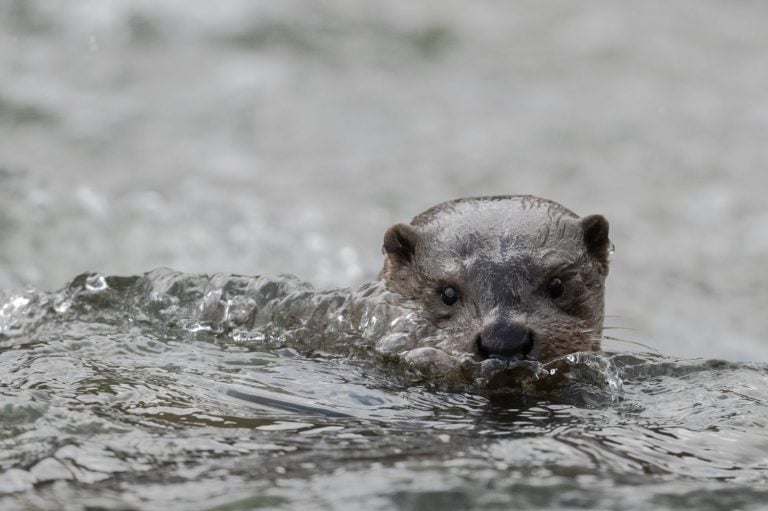
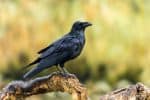
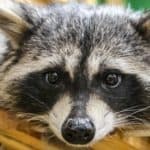
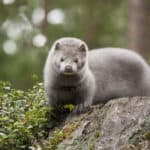
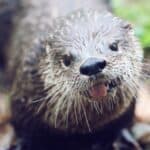
Common Loons may be attacked by bald eagles. The process of fishing out in the open water also places them at risk of sharks’ razor-sharp fangs. Other predators which pose a threat to their existence include minks, foxes, and otters. Ravens and gulls may also decide to help themselves to their eggs.

Humans stand as the biggest threat to loons, though the threat is not severe. Water pollution has caused common loons to disappear from eastern North America. However, the International Union for Conservation of Nature’s lists the common loon as “least concern,” meaning it is not currently at risk of disappearing.

Common loons can also risk having their eggs taken by small mammals. It may change nesting sites when this happens.

How pollution affects the common loon

Toxic water poses a threat to the common loon, because it prefers the same kind of water in which it was born. That means that a common loon hatched on a polluted lake will, according to some research, seek out a similarly polluted lake when it nests later in life. It will seek this type of lake, even if that lake has fewer fish or is worse for hatching new chicks.

Reproduction, Babies, and Lifespan
Most Dangerous Birds

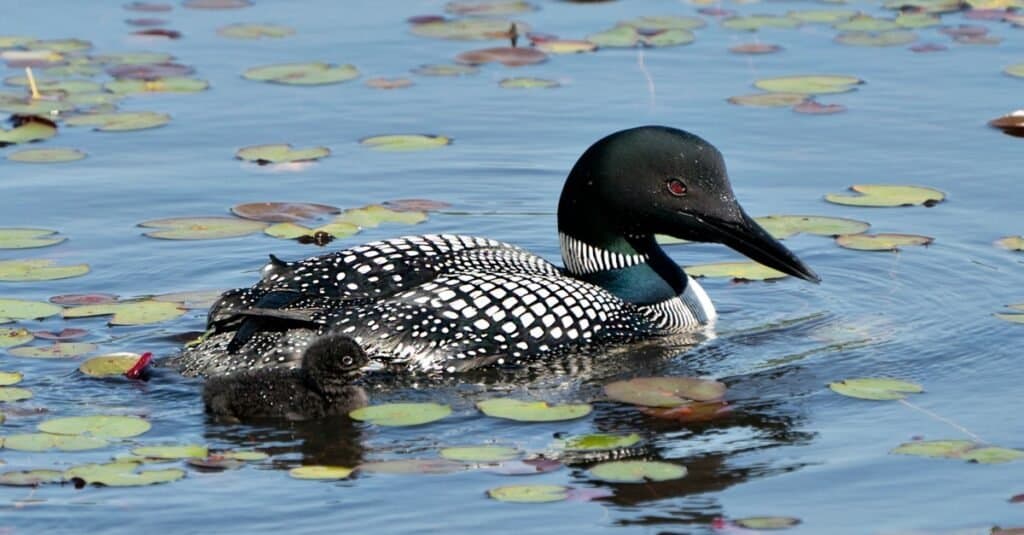
Common Loons are monogamous by nature and both genders share incubation and feeding duties

Common loons breed monogamously, meaning the same male and female will breed every year. Common loons live for about 10 years and will breed once a year for most of their lives. Each year, a common loon female will produce two baby loons or chicks. This is much less than typical water birds. A female mallard duck, for example, will lay as many as 13 eggs each year.

Common loons will generally build a nest near the edge of water mostly out of sticks, reeds, and grass. They use the same nest, or nesting site, every year. The male might move the nest if eggs are lost to predators.

Common loons begin breeding at age two. They will find a mate during early summer and the two will stake off a nesting site by circling it overhead and making a yodeling noise. The mother will typically lay two eggs. Common loon eggs will sit for almost a month before hatching, with both parents taking turns sitting on the eggs. After hatching, both mother and father feed the chicks while they are growing. It will take the chicks nearly three months to learn to fly, but less than a week to swim and dive. The male and female will migrate separately to winter quarters after the chicks have grown. The two then return to the same breeding ground at the start of each summer.
 

Population
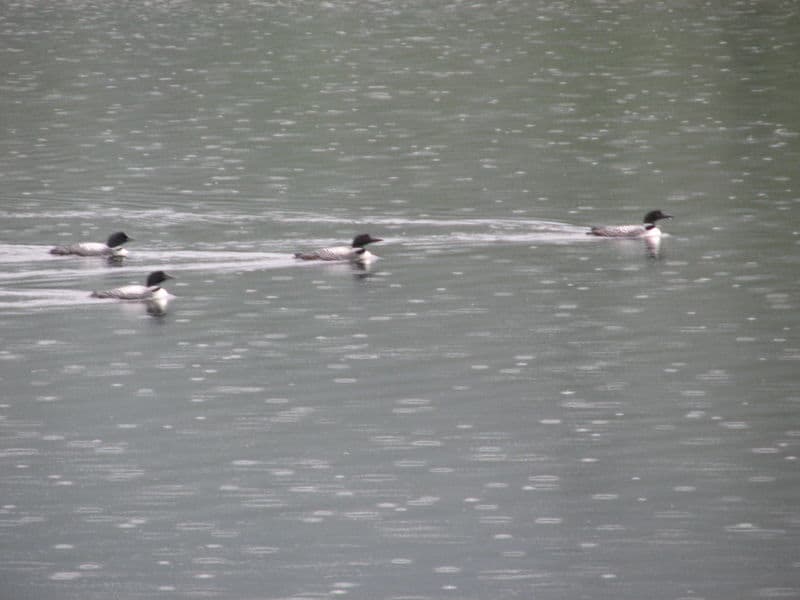
The population of common loons is increasing in North America, but decreasing in Europe

The International Union for the Conservation of Nature (IUCN) estimates as many as 640,000 common loons exist worldwide. Most of these loons are located in North America, particularly in Canada. About 2,600 common loons are estimated to live in Europe.

While the population seemed to be growing slightly in North America, the IUCN said it is declining in Europe.

View all 392 animals that start with C
How to say Common Loon in ...
Bulgarian
Черноклюн гмуркач
Catalan
Calàbria grossa
Czech
Potáplice lední
Danish
Islom
German
Eistaucher
English
Great Northern Diver
Esperanto
Granda kolimbo
Spanish
Gavia immer
Finnish
Amerikanjääkuikka
French
Plongeon huard
Hungarian
Jeges búvár
Italian
Gavia immer
Japanese
ハシグロアビ
Dutch
IJsduiker
English
Islom
Polish
Nur lodowiec
Portuguese
Mobelha-grande
Swedish
Svartnäbbad islom
Turkish
Buz dalgıcı
Vietnamese
Chim lặn mỏ đen
Chinese
普通潜鸟

Sources

  1. David Burnie, Dorling Kindersley (2011) Animal, The Definitive Visual Guide To The World's Wildlife / Accessed February 16, 2009
  2. Tom Jackson, Lorenz Books (2007) The World Encyclopedia Of Animals / Accessed February 16, 2009
  3. David Burnie, Kingfisher (2011) The Kingfisher Animal Encyclopedia / Accessed February 16, 2009
  4. Richard Mackay, University of California Press (2009) The Atlas Of Endangered Species / Accessed February 16, 2009
  5. David Burnie, Dorling Kindersley (2008) Illustrated Encyclopedia Of Animals / Accessed February 16, 2009
  6. Dorling Kindersley (2006) Dorling Kindersley Encyclopedia Of Animals / Accessed February 16, 2009
  7. Christopher Perrins, Oxford University Press (2009) The Encyclopedia Of Birds / Accessed February 16, 2009
Dana Mayor

About the Author

Dana Mayor

I love good books and the occasional cartoon. I am also endlessly intrigued with the beauty of nature and find hummingbirds, puppies, and marine wildlife to be the most magical creatures of all.
Connect:

Thank you for reading! Have some feedback for us?


Common Loon FAQs (Frequently Asked Questions)

Though many think of creatures such as lions when they think of the word, “carnivore” is also a title claimed by the common loon. Instead of sprinting across a forest or African plain, however, the common loon goes fishing. Its highly-specialized diving abilities make it an expert at catching all the fish it needs to survive. Catching fish is such an important part of the common loon life, loon chicks even learn to dive months before they learn to fly.