
C
Species Profile

Cougar

Puma concolor

One cat. Two continents.
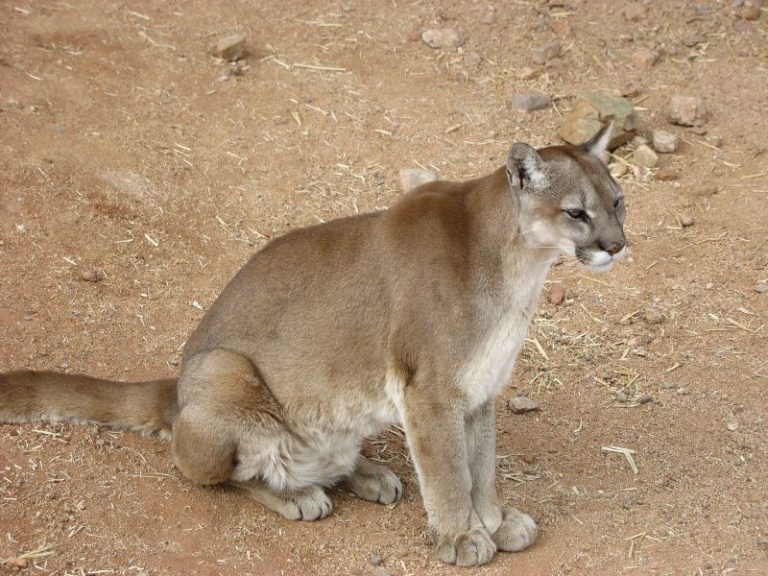
Art G. / CC BY 2.0, Wikimedia Commons

Cougar Distribution

Click a location to explore more animals from that region

Loading map...

Size Comparison

Human 5'8"
Cougar 2 ft 2 in

Cougar stands at 39% of average human height.

At a Glance

Wild Species
Also Known As Puma, Mountain lion, Panther, Catamount, Mountain cat, Painter
Diet Carnivore
Activity Crepuscular+
Lifespan 12 years
Weight 100 lbs
Status Least Concern
Did You Know?

One species, many names: "cougar," "puma," "mountain lion," and "panther" are all Puma concolor (regional usage).

Scientific Classification

A large, solitary felid native to the Americas, ranging from Canada through much of South America. Highly adaptable, occupying a wide variety of habitats and preying primarily on medium-to-large mammals.

Kingdom
Animalia
Phylum
Chordata
Class
Mammalia
Order
Carnivora
Family
Felidae
Genus
Puma
Species
Puma concolor

Distinguishing Features

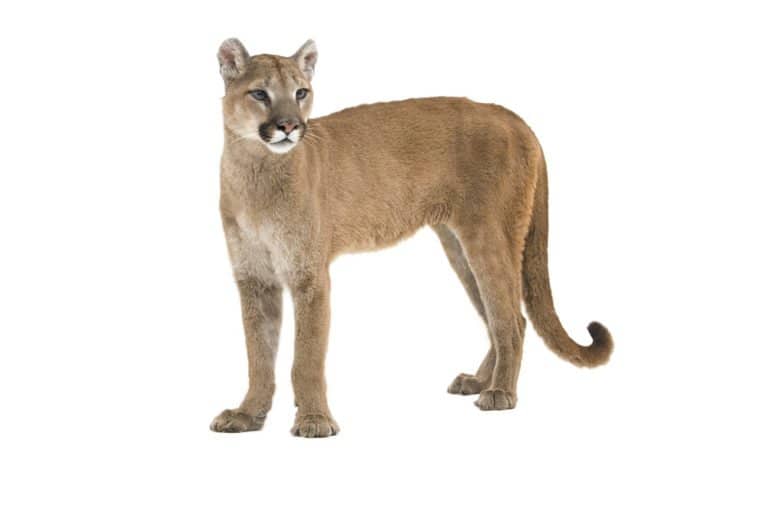
  • Large tawny/tan cat with lighter underside
  • Long tail with darker tip
  • Rounded ears; no mane or prominent spots/rosettes (unlike many big cats)
  • Powerful hindquarters adapted for jumping and sprinting
  • Wide geographic variation in size; males typically larger than females

Physical Measurements

Males and females differ in size

Height
2 ft 3 in (1 ft 12 in – 2 ft 6 in)
2 ft 4 in (1 ft 12 in – 2 ft 7 in)
Length
7 ft 7 in (5 ft 5 in – 9 ft 7 in)
6 ft 6 in (5 ft 3 in – 7 ft 9 in)
Weight
137 lbs (117 lbs – 220 lbs)
93 lbs (64 lbs – 141 lbs)
Tail Length
2 ft 7 in (1 ft 12 in – 3 ft 2 in)
2 ft 2 in (1 ft 10 in – 2 ft 7 in)
Top Speed
50 mph
Short sprints to 80 km/h

Appearance

Primary Colors
Secondary Colors
Skin Type Short, dense fur (seasonally variable thickness by latitude/altitude); skin covered by fur with prominent whiskers and retractile claws typical of cats.
Distinctive Features
  • Adult cougar (Puma concolor) coat is usually plain and without spots, unlike rosetted cats like jaguars and leopards; cougars are not "big cats" such as lions, tigers, leopards, or jaguars.
  • Long, heavy tail (often ~1/3 of total length) used for balance; tail commonly ends in a black tip.
  • Body proportions: relatively small head with rounded ears; muscular forequarters; notably powerful hindquarters adapted for pouncing and jumping.
  • Face often shows contrasting pale muzzle/chin with darker whisker pads and facial edging; backs of ears frequently dark/blackish.
  • Size (scientific ranges reported across the species' broad distribution): head-body length ~102-180 cm; tail length ~60-95 cm; shoulder height ~60-76 cm (values commonly compiled in mammalogy references such as Nowak and the Sunquists).
  • Weight varies by sex and region: females about 29–64 kg; males about 53–100 kg. Northern Puma concolor are usually larger than those in tropical and subtropical areas.
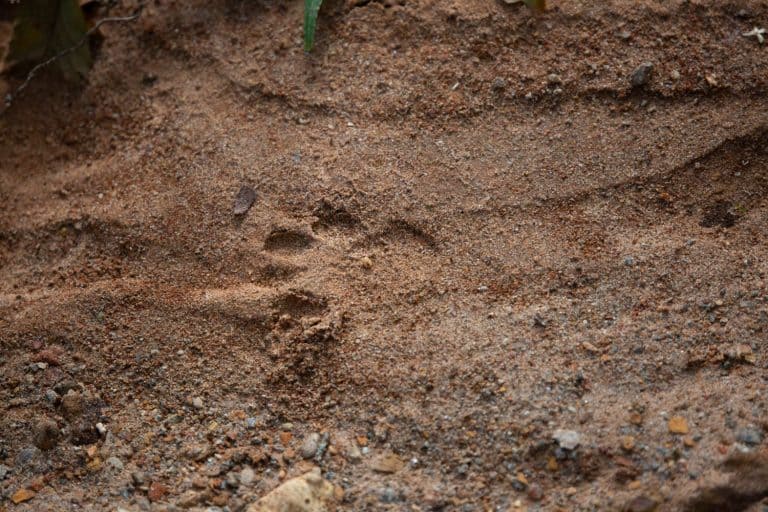
  • Tracks: typically roundish cat tracks lacking claw marks; large heel pad with three lobes on posterior edge (felid trait), helpful where the animal is not seen.
  • Cougar (Puma concolor) are solitary and territorial, often active at dawn, dusk, or night. In the wild they live about 8–13 years; in captivity they may reach 20+ years.
  • Cougar (Puma concolor) mainly eats deer, such as white-tailed and mule deer. It can be an apex predator or a mesopredator depending on other predators and human activity.

Sexual Dimorphism

Sexual dimorphism is present primarily in size and robusticity rather than coat pattern: males average larger/heavier with broader heads/necks; females are smaller/slighter. Pelage coloration and pattern are generally similar between sexes. (Summarized across major mammalogy references and IUCN species accounts for the cougar.)

  • Larger overall body size and mass on average (commonly ~53-100 kg, region-dependent).
  • Broader head, thicker neck/shoulders, more robust forequarters; can appear "blockier" than females in profile.
  • Smaller overall body size and mass on average (commonly ~29-64 kg, region-dependent).
  • More slender head/neck and lighter overall build compared with males; otherwise similar coat coloration.

Did You Know?

One species, many names: "cougar," "puma," "mountain lion," and "panther" are all Puma concolor (regional usage).

It cannot roar (no specialized hyoid); instead it purrs, chirps, whistles, and screams (Felidae anatomy; common in field bioacoustics).

Adults are typically 60-80 cm at the shoulder and ~1.5-2.75 m total length including the 0.6-0.95 m tail (standard field-guide morphometrics).

Body mass varies by sex and region: females commonly ~29-64 kg; males ~53-100 kg (reported in multiple North American management summaries; size tends to increase toward higher latitudes).

Reproduction is relatively fast for a large felid: gestation ~82-96 days; litters 1-6 (most often 2-3).

Pumas often cache prey and return for days, dragging carcasses to cover and covering them with leaves/soil (documented feeding behavior in telemetry studies).

Their range is one of the largest of any terrestrial mammal in the Western Hemisphere-Canada to southern South America-across deserts, forests, mountains, and wetlands (IUCN range assessments).

Unique Adaptations

  • Powerful hindlimbs for vertical/horizontal leaps: Frequently cited performance includes ~5.5 m vertical and ~12 m horizontal leaps, aiding ambush hunting and rugged-terrain travel (compiled from field observations and biomechanics summaries).
  • Long, heavy tail for balance: The 0.6-0.95 m tail acts as a counterbalance during tight turns, steep climbs, and jumps-useful in broken terrain and forest understory.
  • Broad habitat tolerance: Puma concolor persists from arid deserts to temperate rainforests and Andean highlands; adaptability comes from generalist habitat use plus flexible prey selection (IUCN/ecology syntheses).
  • Low-profile camouflage: A uniform tawny to gray coat with lighter underparts reduces visual detection in scrub, grass, and forest edge; juveniles' spots provide extra concealment until they fade.
  • Sensory and stealth specializations: Large eyes for low-light hunting, sensitive vibrissae, and padded feet enable quiet stalking (felid functional anatomy).
  • Feeding efficiency via caching: Dragging and covering carcasses reduces scavenger loss and spreads energy intake across multiple days-important for solitary predators that make high-cost kills.

Interesting Behaviors

  • Solitary, overlapping territories: Adults are mostly solitary; resident males typically maintain larger home ranges that may overlap several females (telemetry-based population studies).
  • Scrape marking and scent communication: Pumas build "scrapes" (small soil/leaf mounds) and add urine/feces to advertise presence and reproductive status; scrapes often cluster on travel routes (field studies of marking behavior).
  • Ambush predation strategy: They rely on stalking and a short explosive rush rather than long chases, usually killing with a powerful bite to the neck/throat and then feeding at a secluded site (predation observations).
  • Prey specialization with local flexibility: In many regions, deer (Odocoileus spp.) are primary prey, but diets shift to elk, guanaco, peccaries, hares, or livestock depending on availability (regional diet analyses).
  • Crepuscular/nocturnal activity with human avoidance: Activity peaks commonly occur at dawn/dusk/night and shift more nocturnally where human activity is high (camera trap and GPS-collar studies).
  • Long-distance dispersal of juveniles: Subadults-especially males-may disperse tens to hundreds of kilometers to establish territories, enabling recolonization where corridors exist (genetic and telemetry evidence).
  • Maternal rearing: Kittens remain with the mother for roughly 12-24 months learning hunting and movement routes before dispersing (long-term field observations).

Cultural Significance

Cougar (Puma concolor) is a symbol across the Americas of power, stealth, and wild places. In the Andes it is part of Inca tradition and art. Many Indigenous nations honor it for leadership and protection. Today it appears in conservation plans and as a sports and regional icon.

Myths & Legends

In Inca/Andean tradition, the puma is one of the three sacred animals (often paired with the condor and serpent) representing layered realms of existence; puma imagery symbolizes strength and the earthly domain in Andean cosmology.

A well-known Andean cultural association holds that the Inca capital Cusco was conceived or laid out in the shape of a puma, linking the animal to imperial power and sacred geography.

In Indigenous stories of western North America, Cougar (Puma concolor) and Coyote tales show Cougar as a strong, sometimes rival force, teaching respect for danger, the cost of pride, and hunting rules.

In Native American traditions, the mountain lion (Cougar, Puma concolor) is a guardian spirit that brings hunting luck or courage; seeing one is an omen about the wild and the edge of human land.

Conservation Status

LC Least Concern

Widespread and abundant in the wild.

Population Decreasing

Protected Under

  • CITES Appendix II (Puma concolor listed; international trade regulated)
  • United States: Endangered Species Act protections apply to the Florida panther (Puma concolor coryi) rather than the species globally; elsewhere management is primarily via state/provincial regulations (hunting seasons/quotas, depredation control)
  • Range-wide: occurs in numerous national parks and protected areas; legal protection and hunting/persecution controls vary substantially by country/region

Life Cycle

Birth 3 cubs
Lifespan 12 years

Lifespan

In the Wild
8–18 years
In Captivity
12–25 years

Reproduction

Mating System Polygynandry
Social Structure Solitary
Breeding Pattern Transient
Fertilization Internal Fertilization
Birth Type Internal_fertilization

Cougar (Puma concolor) mating is solitary and polygynandrous: males with larger ranges overlap many females; females may mate with several males. Estrus ~8–11 days, gestation ~91 days, litters 2–3, kittens stay 12–24 months; only mothers care.

Behavior & Ecology

Social Family group Group: 1
Activity Crepuscular, Nocturnal, Cathemeral
Diet Carnivore Deer (particularly mule deer, Odocoileus hemionus, in much of western North America)

Temperament

Solitary, territorial, and avoidance-oriented; adults minimize encounters via space use and timing (Logan & Sweanor 2001).
Strong intrasexual aggression potential, especially male-male; lethal fights occur and are a documented mortality source in some populations (Logan & Sweanor 2001).
Highly adaptable/behaviorally plastic: activity shifts toward nocturnality/avoidance in heavily human-used landscapes, and can be more cathemeral in remote areas or where prey activity dictates (Sunquist & Sunquist 2017).
Maternal tolerance/protectiveness: females maintain prolonged association with offspring (typically 12-24 months), showing reduced aggression toward dependent young compared with other conspecifics (Logan & Sweanor 2001).
Longevity context (often tied to social/territorial turnover): typical wild lifespan commonly ~8-13 years; captive records commonly reach ~20 years (reported up to ~21 years) (Sunquist & Sunquist 2017).

Communication

Purr Cougars can purr; they do not roar due to felid hyoid/laryngeal anatomy typical of non-roaring cats) (Sunquist & Sunquist 2017
Growls, snarls, hisses during close-range agonistic encounters.
Screams/caterwauls, especially associated with courtship/estrus interactions and long-range advertisement.
Chirps/whistles and soft calls used in close-range contact Notably mother-kitten communication
Scent marking: urine spraying and fecal deposits used for territorial advertisement and individual identification; often associated with travel routes and scrapes Logan & Sweanor 2001
Scraping behavior: hindfoot scrapes that expose soil/vegetation and are frequently scent-marked Urine/feces), functioning as persistent signposts (Logan & Sweanor 2001
Visual sign: claw marks on substrates and conspicuous scrapes along movement corridors.
Tactile/body signaling at close range: posture, facial expressions, and physical contact primarily in mating pairs and mother-young interactions.

Habitat

Biomes:
Tropical Rainforest Tropical Dry Forest Savanna Desert Hot Desert Cold Mediterranean Temperate Grassland Temperate Forest Temperate Rainforest Boreal Forest (Taiga) Alpine Freshwater Wetland +7
Terrain:
Mountainous Hilly Plateau Plains Valley Coastal Island Riverine Rocky Sandy +4
Elevation: Up to 19028 ft 11 in

Ecological Role

Large solitary apex/mesopredator (context-dependent) that exerts top-down regulation on prey communities, especially ungulates, and provides carrion resources to scavengers.

Regulates abundance and behavior of medium-to-large herbivores (especially deer), influencing browsing pressure and vegetation dynamics Can contribute to trophic cascades by altering prey distribution and activity patterns (risk effects) Selective removal of vulnerable individuals (e.g., very young, old, injured), potentially influencing prey population health Provisioning of carrion subsidies that support scavenger guilds (e.g., bears, wolves where present, coyotes, foxes, ravens, eagles, beetles) Influences mesopredator dynamics through interference competition and occasional intraguild predation

Diet Details

Main Prey:
Deer Elk Moose Bighorn sheep Mountain goat Pronghorn Peccaries Camelids Capybara Lagomorphs Medium-sized mammals Small mammals Birds +7

Human Interaction

Domestication Status

Wild

Cougars are wild cats and have not been domesticated; there is no recognized domesticated lineage created through long-term selective breeding for tameness or household living. Some individuals have been captured and hand-raised for zoos, sanctuaries, entertainment, or private collections, but these are captive wild animals rather than a domesticated form.

Danger Level

High
  • Physical attack can cause severe trauma or death; although rare relative to human exposure, cougars are capable of predatory attacks on adults and children.
  • Documented attack history: Beier (1991, Wildlife Society Bulletin) reviewed 53 North American cougar attacks from 1890-1990, including 10 fatalities (useful benchmark for documented risk even if totals have risen since).
  • Injuries include deep puncture wounds, lacerations, crushing trauma, and neck/head bites consistent with predatory behavior.
  • Risk increases with solitary hikers/joggers, low visibility (dawn/dusk), presence of children, or habituation/food conditioning in human-dominated landscapes.
  • Zoonotic risk is generally low from casual proximity, but handling carcasses/feces or close contact can pose exposure risk to pathogens/parasites (e.g., ectoparasites; regionally variable).

As a Pet

Not Suitable as Pet

Legality: Cougar (Puma concolor) are generally not suitable or legal as household pets. Many places ban private ownership; others allow it only with strict permits, licenses, and rules (CITES Appendix II; some populations protected).

Care Level: Expert Only

Purchase Cost: $1,500 - $6,000
Lifetime Cost: $100,000 - $300,000

Economic Value

Uses:
Ecosystem services (apex/mesopredator regulation; indirect effects on prey and scavenger communities) Ecotourism and wildlife viewing (where sightings are possible) Regulated hunting revenue (where legal) Livestock depredation costs and compensation/mitigation programs Public-safety management costs (monitoring, hazing, response) Scientific research value (ecology, conservation genetics, disease ecology) Cultural value (Indigenous and regional symbolism)
Products:
  • hunting licenses/tags and guide services (jurisdiction-dependent)
  • trophies/pelts (historical; limited/regulated where legal)
  • mitigation tools/services (range riders, guardian animals, deterrents, fencing)
  • research outputs (datasets, publications, monitoring services)

Relationships

Ecological Equivalents 6

Animals that fill a similar ecological role in their ecosystem

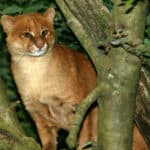
Jaguar
Jaguar Panthera onca Most similar large wild-cat niche in the Americas: an ambush hunter of medium-to-large mammals. Where they co-occur, both species take deer, peccaries, and capybaras, partitioning habitat and prey size; interactions include documented killing or avoidance.
Gray wolf
Gray wolf Canis lupus In North America, wolves and cougars strongly overlap in what they eat—particularly deer and elk—and thus compete. Wolves sometimes steal kills or kill cougars, changing cougar kill rates and where cougars live.
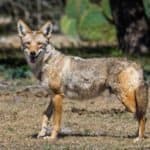
Coyote
Coyote Canis latrans Both cougars (Puma concolor) and coyotes are medium-to-large predators across much of North America. Coyotes often scavenge cougar kills and can be killed by cougars; these interactions have been documented and studied at kill sites.
American black bear
American black bear Ursus americanus Black bears often steal or scavenge cougar (Puma concolor) kills, forcing cougars to hunt more and expend more energy. This competition at carcasses is common in western North America.
Bobcat
Bobcat Lynx rufus Smaller sympatric felid with overlapping habitat use and partial prey overlap (rabbits, rodents, and occasionally young ungulates). Coexistence often involves spatial and temporal partitioning, and intraguild predation of bobcats by cougars has been reported (e.g., Hearn et al., 2018, Journal of Mammalogy).
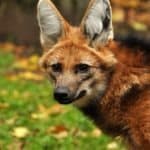
Maned wolf
Maned wolf Chrysocyon brachyurus In parts of South America, it shares broad habitats and the role of a wide-ranging terrestrial carnivore but has a more omnivorous diet; used as an ecological analog in Neotropical carnivore comparisons (Dietz 1984; IUCN).
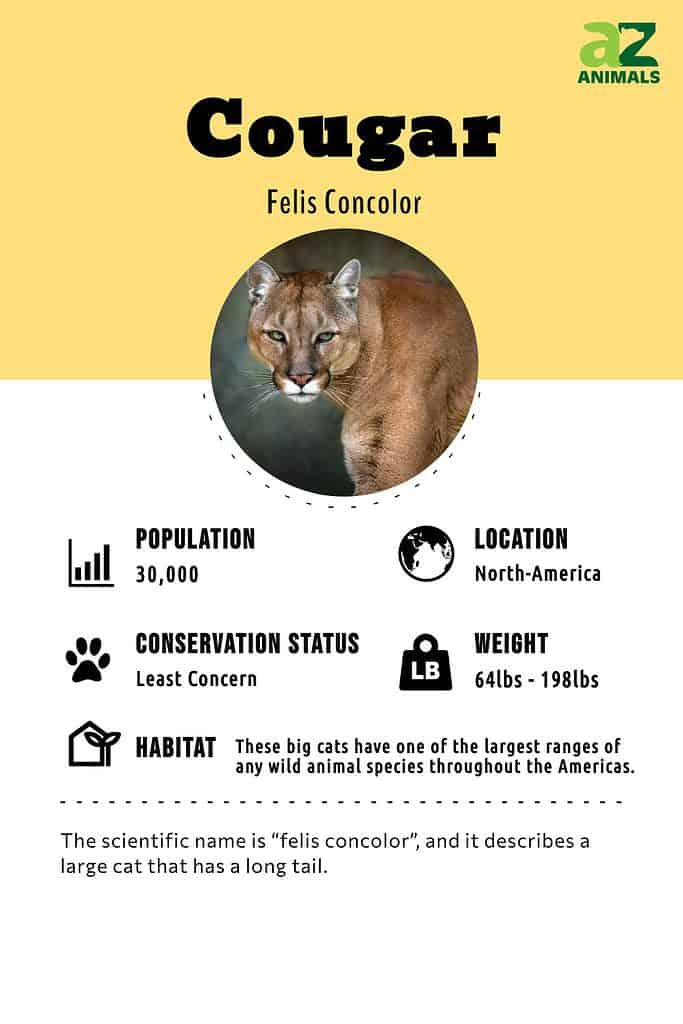
Cougar Infographic
Cougar Infographic

“A Big Cat Without a Roar”

As North America’s second largest cat, the cougar is an intimidating animal to run into. The cougar is unable to roar because it doesn’t have the needed larynx to do so. Instead, the big cat purrs, growls, hisses, and screams as well as whistles and chirps.

Cougars are also called pumas, panthers, and mountain lions. The cats have round heads, pointed ears, and slender bodies.

Cougar Top Facts
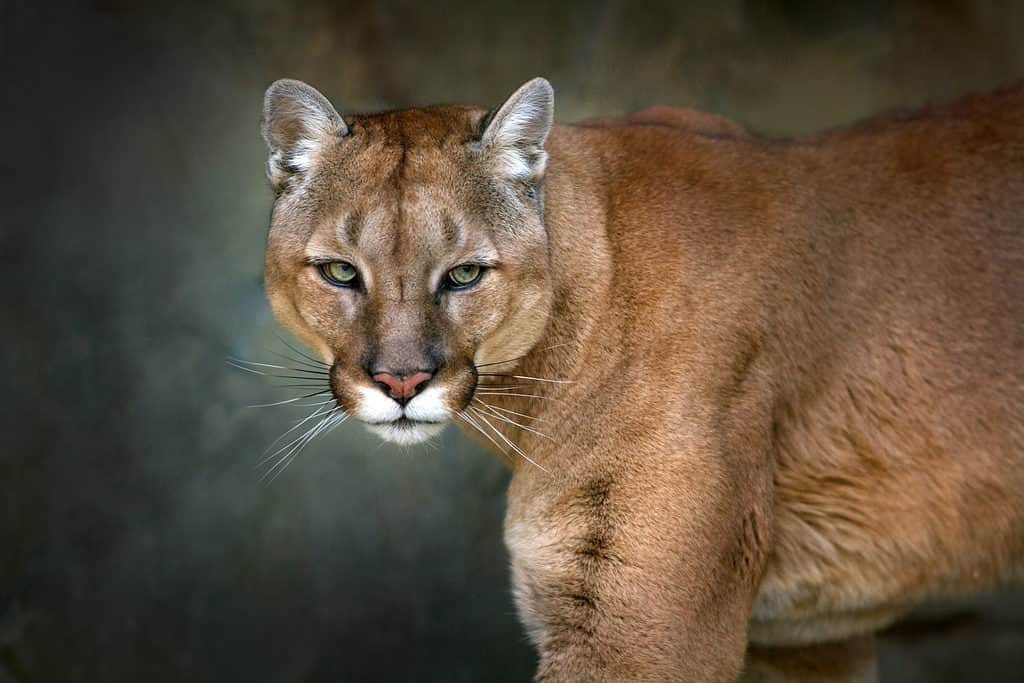
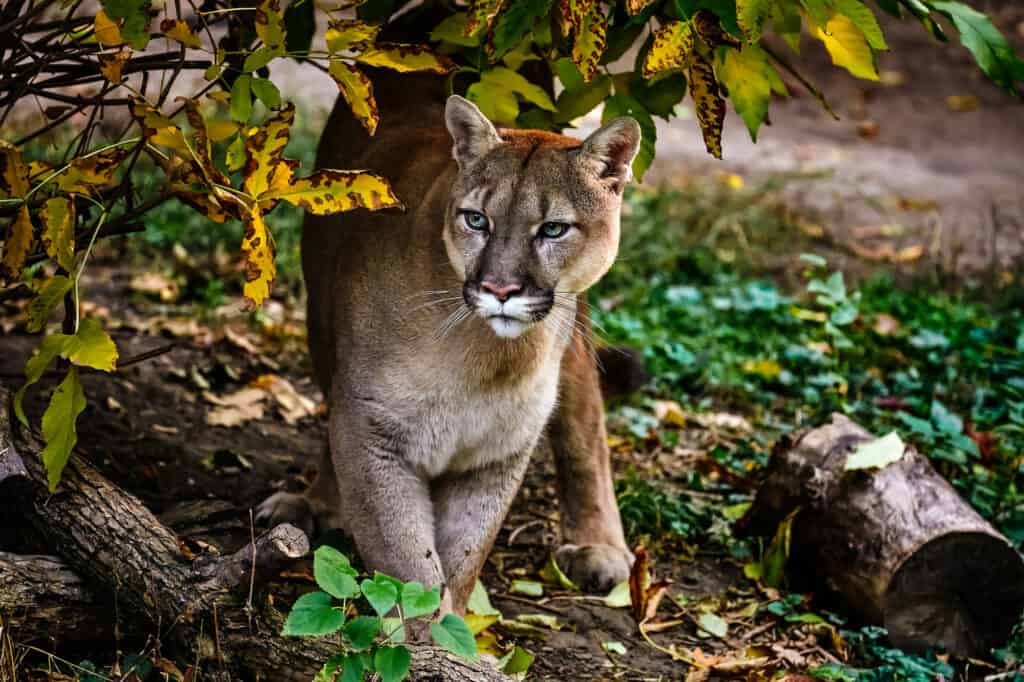
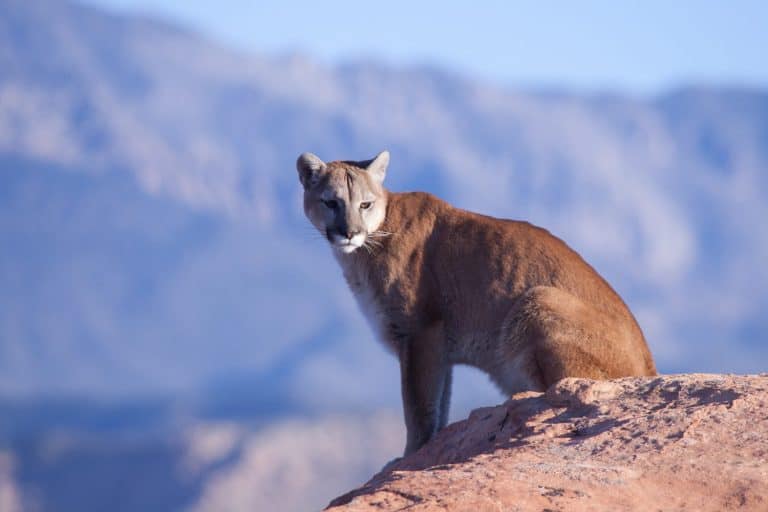
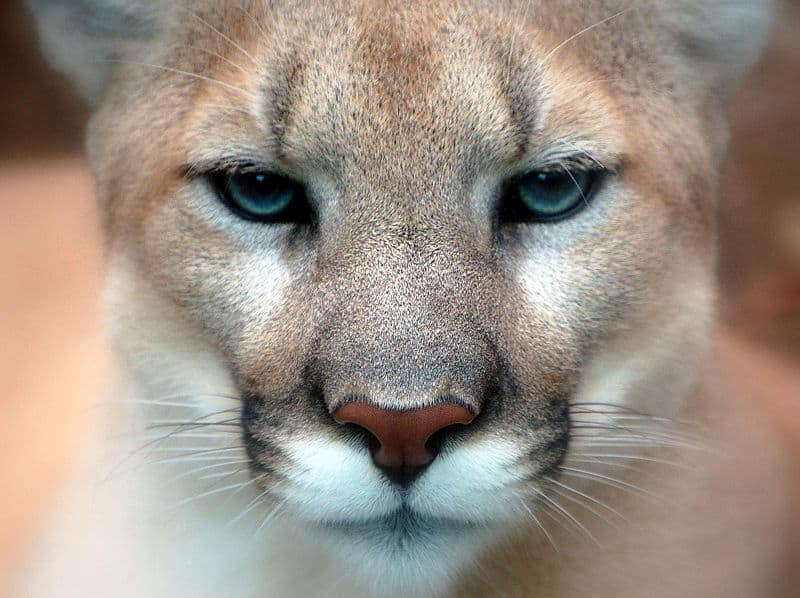
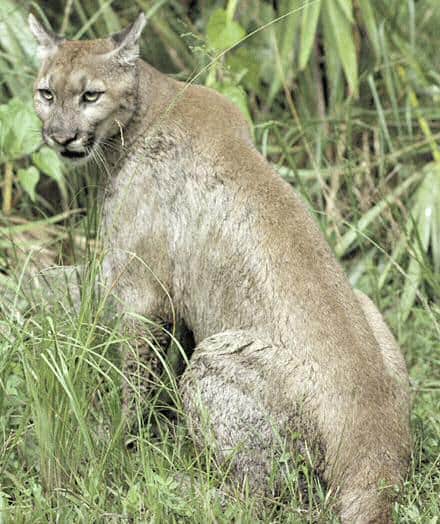
Mountain lion stares into camera

Cougars are superior hunters and are solitary animals

• Cougars are superior hunters

• Cougars are animals that are found in many parts of the world

• Cougars dine on animals like deer, raccoons, and even crocodiles

• Like most felines, cougars are solitary animals

You can check out more incredible facts about cougars.

Scientific Name
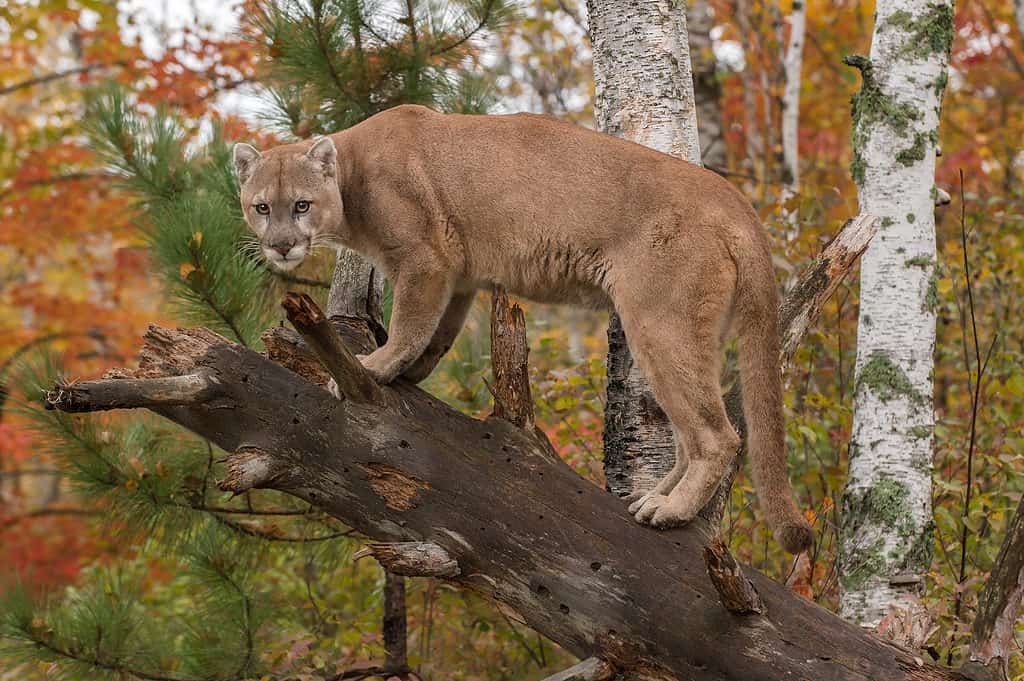
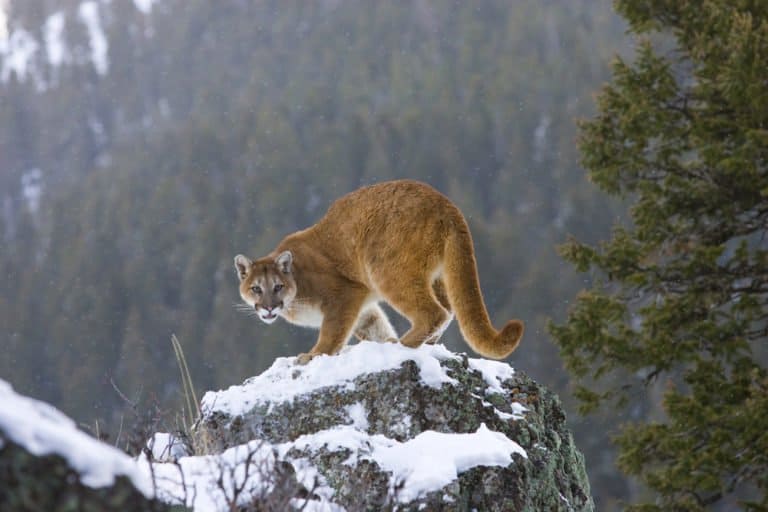
Mountain lion standing on thick tree branch

The cougar is known by the scientific name “puma concolor” or “felis concolor.

The cougar is known by the scientific name “puma concolor” or “felis concolor.” Carl Linnaeus proposed the name “felis concolor” to describe a big cat that has a long tail. The animal has more names in the dictionary than any other animal. Along with mountain lion and puma, the cat is also called catamount and red tiger among others.

Cougars belong to the subfamily Felinae. After Linnaeus introduced a scientific description of cougars, researchers listed 32 zoological subspecies until the late ‘80s. According to genetic studies, many of the subspecies were too close to be considered separate. Now, scientists have determined that there are six phylogeographic groups.

Appearance

A cougar’s body is similar to that of a house cat on a larger scale. Mountain lion coats are a grayish tan to a reddish hue, and the animal features lighter parts underneath. The end of a cougar’s tail is black, and the cat has black markings on its ears and face.

An amazing fact about cougars is that they can jump 20 feet into the air. This allows them to pounce on prey that’s 20 feet to 40 feet away from a standing position. Learn more about the highest jumping animals in the world here.

Pumas range from 5 feet to 9 feet in length from head to tail with male cougars weighing as much as 150 pounds and females topping out at about 100 pounds.
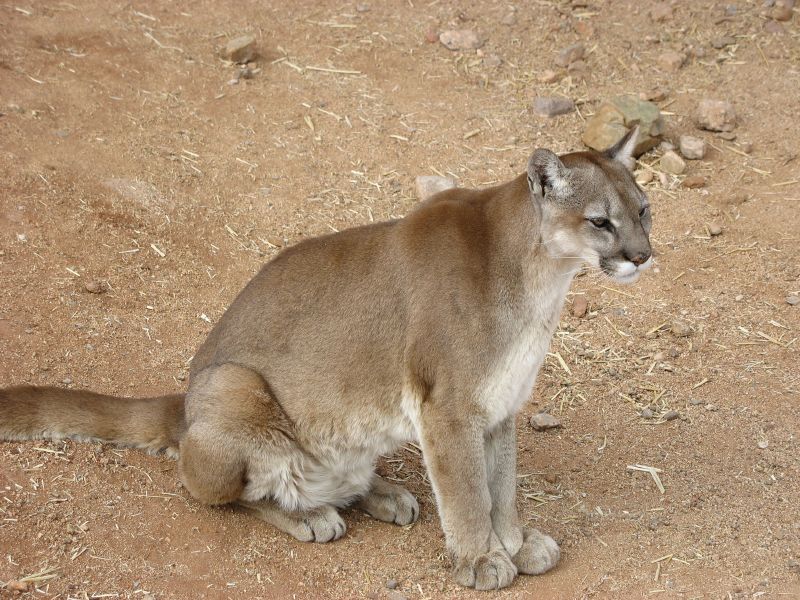
Cougar (Felis Concolor)

Behavior

cougar

Cougars are only social when raising cubs

Mountain lions are solitary animals unless a mother cougar is raising cubs. On occasion, the animals will share kills with one another. They establish themselves in small communities based around the territories of strong male cougars. Cats that live within these areas socialize with one another more often than animals that are outside of them.

Habitat

Cougars can be found in Canada’s northern Yukon to the southern Andes.

These big cats have one of the largest ranges of any wild animal species throughout the Americas. You’ll find them from Canada’s northern Yukon to the southern Andes. The animal is able to adapt to a variety of habitats including forests, mountainous deserts, and lowland areas.

Cougars prefer to live in parts of the country that feature steep canyons, rim rocks, and dense brush for protection. However, they can survive well in open areas that have very little vegetation.

Evolution and Origin

Cougars evolved from a common ancestor alongside the African cheetah and American jaguarundi, the oldest known fossil records discover. Cougars actually originated in North America and are believed to have been extirpated during the Pleistocene extinction.

What Do Cougars Eat?
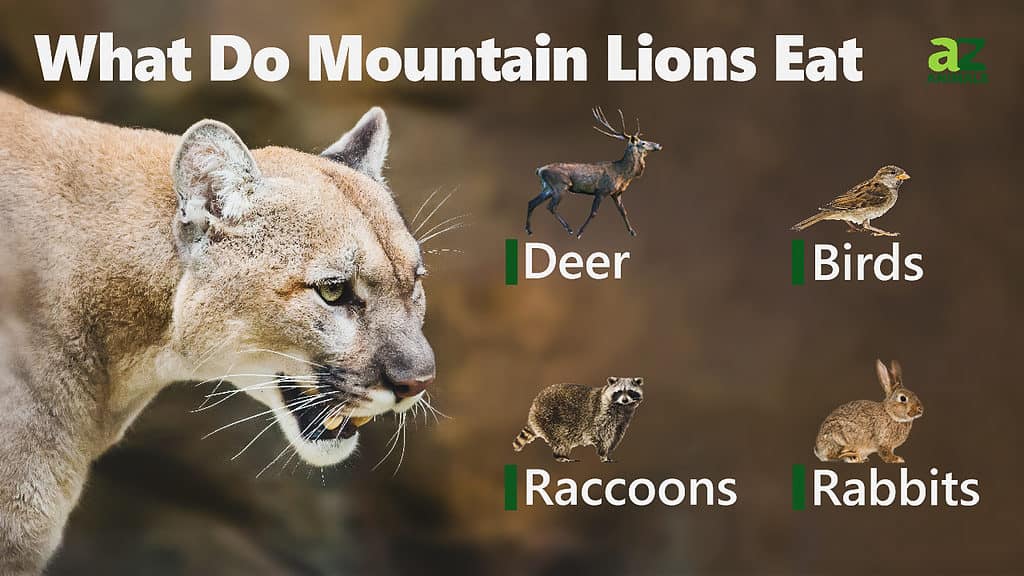
what do cougars eat
Cougars eat deer, birds, raccoons, and rabbits

These big cats aren’t picky about their diets. They’ll dine on insects, mice, beavers, raccoons, rabbits, and wild turkeys. Since cougars live in Patagonia’s Monte Leon National Park, they’ve become quite skilled at hunting penguins.

Those that live in Florida sometimes make a meal out of a crocodile. In North America, cougars frequently eat deer. In fact, they typically kill one large deer every two weeks. These large felines are not generally scavengers, but if a deer carcass has been left exposed, then they may eat it, meaning that the cats sometimes display resourceful behavior.

Because of their powerful hind legs, cougars are ambush predators. They are hunters that stalk their victims through brush and trees before leaping powerfully onto them, delivering a deadly neck bite. The animal is able to break the neck of its prey with one strong bite and the force of driving its prey to the earth.

Predators

Human growth and population are the biggest predators for cougars

Humans are the biggest predators of cougars with people hunting them for sport and to protect livestock. People are also the main cause of the cats losing their habitats. In states like Florida, highways are often deadly to cougars.

Out in the wild, wolf packs will prey on the cats because they’re able to surround the animal and overwhelm it with numbers. When it comes to a one-on-one battle, the cougar will usually survive the match. Wolves are more likely to affect cougars by dominating the same territory and taking advantage of prey opportunities. Wolves can also disrupt the cougar’s ability to reproduce.

The feline is not on the endangered species list, but conservation groups remain unsure about how well the cougar population is doing around the world. In the United States, the only state that prohibits hunting them is California. However, it is illegal to hunt them in Costa Rica, Guatemala, Venezuela, Brazil, and most of Argentina. To hunt the big cat in the U.S., hunters must obtain a permit unless they live in Texas.

Poachers target cougars, but the effects of this action on the cat are unknown. The U.S. Fish and Wildlife Service reports that the illegal animal part trade is a $200 million a year market, and it’s growing.

About Cougar Reproduction

Male and female mountain lions reach sexual maturity at 24 months, but according to research, females have mated as young as 20 months. The age at which a cougar first breeds often depends upon her establishing a home range. A major breeding challenge that cougars face is finding each other due to their solitary lifestyle. The cats are usually scattered across hundreds of miles of rough terrain.

Another reproduction complication is that female cougar are only interested in mating for several days out of a month. Despite the challenges, the animals find a way to breed. They have keen senses and practice polygamy.

When cougars breed, they do so vigorously by copulating at a rate of 50 times to 70 times within a 24-hour period for 7 to 8 days. Each time a couple copulates, it lasts less than a minute. Because the felines are so vigorous, researchers believe that the act stimulates ovulation, which is when the ovaries release an egg so that it can be fertilized.

Cougar Cubs

Once a female cougar conceives, after 88 to 96 days, she will retire to the privacy of a den and give birth to a litter of cubs. Cougar litters vary in size from one to six cubs with the average size being two to three kittens. A young female cougar may only have one cub for her first litter. Researchers believe that this gives young females time to develop their mothering skills.

Cougars generally bear young every other year, which means that a female mountain lion that lives for 8 to 10 years may be able to produce five litters. According to reports, one mother cougar in captivity produced seven litters in 16 years.

Baby cougars usually weigh slightly more than 1 pound when they are born. Within 10 to 20 days, they grow to double their weight, and by the time they reach 2 months of age, they can weigh as much as 9 pounds.

When cougar babies are born, their coats typically have black spots, which camouflage them, protecting the juveniles from predators. The spots generally last for about 6 months. Baby cubs are born deaf, blind, and almost immobile, making them vulnerable to predators. To gain strength and learn how to take down their prey, cougar cubs play and pounce on one another.

Mother cougars start taking their cubs to kill when they reach 7 to 8 weeks of age. The female will also take the meat to her babies until she weans them when they’re 2 to 3 months old. As the cubs grow, the female will leave them at a kill site for several days at a time while she hunts for their next meal. Mother cougars will travel further in search of food as their cubs become older and stronger.
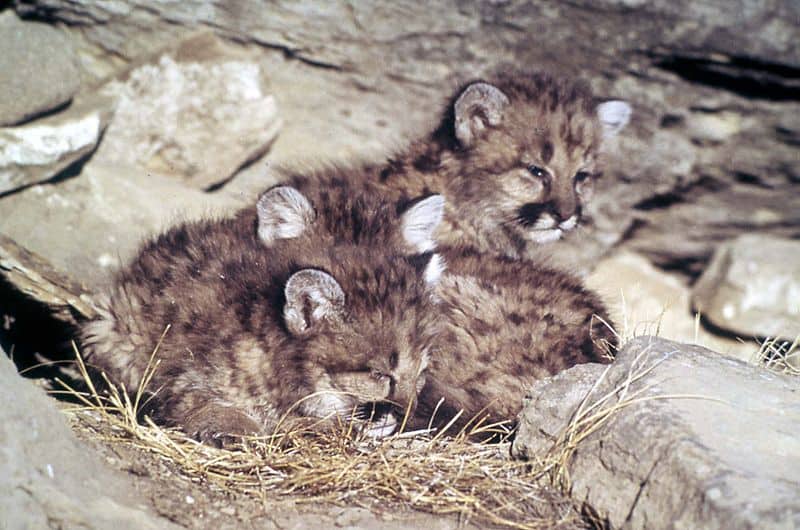
Cougar Cubs (Felis Concolor)

Lifespan

When a cougar is in captivity, the animal can live for as long as 20 years. However, there is a report of one captive cougar that lived to be 29. In the wild, their lifespan is about half that. Researchers disagree about which sex lives longer. Some say that females live for fewer years due to the stress of having and raising cubs.

Even when humans are not threatening them, cougars tend to have a high-risk lifestyle. They are frequently exposed to injury or death because they target animals that are larger than themselves.

When they are attacking elk or deer, they may be thrown against a tree or a rock hard enough to break their backs. Sometimes, they are trampled by the hooves of herd animals. Cougars can be impaled by a branch or an antler, and an injury like this may result in starvation. The cats die from lightning strikes, poisonous snake bites, and rock slides.
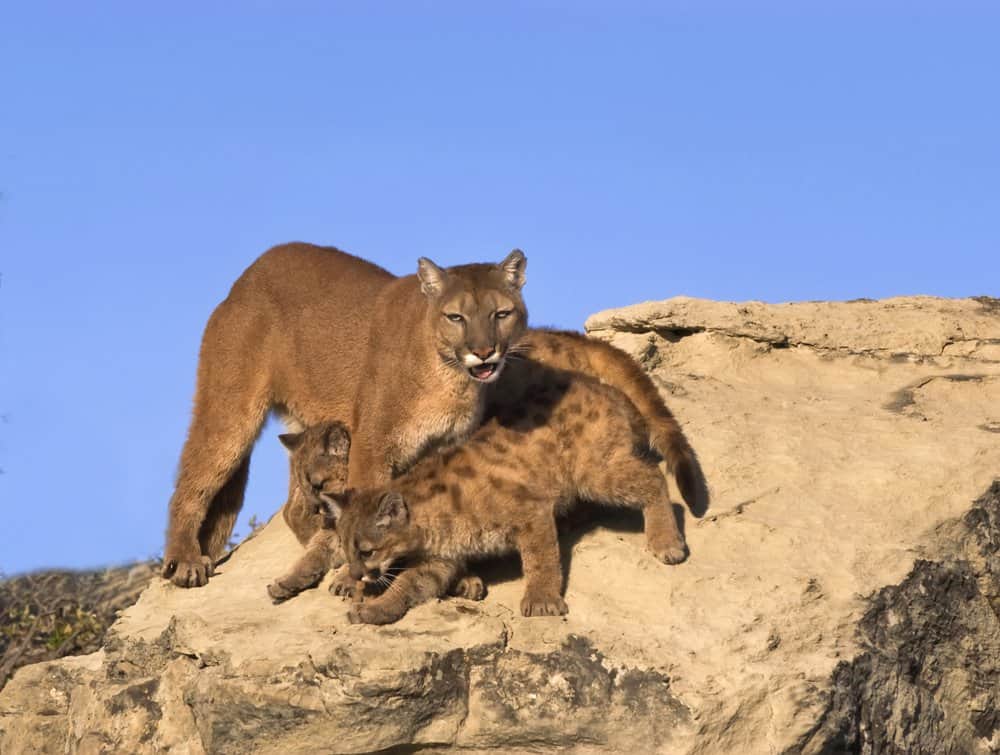
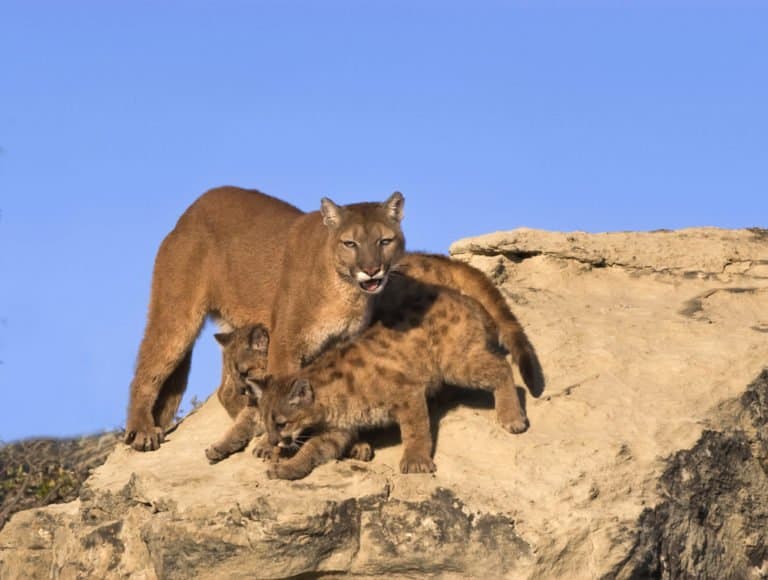
Cougar (Felis Concolor) - with babies on rock

When a cougar is in captivity, the animal can live for as long as 20 years.

Population

Researchers have been unable to provide an exact estimate regarding how many cougars are in the wild. Some believe that there are an estimated 30,000 of them throughout the American west.

The density of cougars generally ranges from one to seven cats for every 100 kilometers of territory with males permitting several females to be present in their ranges. Oregon estimates that its cougar population is around 6,600 while California believes that it has between 4,000 and 6,000 animals.

The International Union for Conservation of Nature, which tracks the cougar population in each Central and South American country, reports that there are less than 50,000 of the big cats populating that part of the world. This is thought to be a declining trend.

However, cougar researchers in the U.S. believe that the country’s population is rebounding. California has protections in place for its cougar population, but thirteen states including Wyoming, Colorado, and Utah classify them as a game species, allowing people to hunt them for sport.

View all 392 animals that start with C
How to say Cougar in ...
Bulgarian
Пума
Czech
Puma americká
Danish
Puma
German
Puma
English
Cougar
Esperanto
Pumo
Spanish
Puma
French
Puma
Hebrew
פומה
Croatian
Puma
Italian
Puma concolor
Japanese
ピューマ
Dutch
Poema
English
Fjelløve
Polish
Puma
Portuguese
Suçuarana
Slovenian
Puma
Swedish
Puma
Turkish
Puma
Vietnamese
Báo sư tử
Chinese
美洲狮

Sources

  1. David Burnie, Dorling Kindersley (2011) Animal, The Definitive Visual Guide To The World's Wildlife / Accessed November 10, 2008
  2. Tom Jackson, Lorenz Books (2007) The World Encyclopedia Of Animals / Accessed November 10, 2008
  3. David Burnie, Kingfisher (2011) The Kingfisher Animal Encyclopedia / Accessed November 10, 2008
  4. Richard Mackay, University of California Press (2009) The Atlas Of Endangered Species / Accessed November 10, 2008
  5. David Burnie, Dorling Kindersley (2008) Illustrated Encyclopedia Of Animals / Accessed November 10, 2008
  6. Dorling Kindersley (2006) Dorling Kindersley Encyclopedia Of Animals / Accessed November 10, 2008
  7. David W. Macdonald, Oxford University Press (2010) The Encyclopedia Of Mammals / Accessed November 10, 2008
Rebecca Bales

About the Author

Rebecca Bales

Rebecca is an experienced Professional Freelancer with nearly a decade of expertise in writing SEO Content, Digital Illustrations, and Graphic Design. When not engrossed in her creative endeavors, Rebecca dedicates her time to cycling and filming her nature adventures. When not focused on her passion for creating and crafting optimized materials, she harbors a deep fascination and love for cats, jumping spiders, and pet rats.
Connect:

Thank you for reading! Have some feedback for us?


Cougar FAQs (Frequently Asked Questions)

The cougar animal is an obligate carnivore. This means that to survive, the animal must feed on meat. The feline is a generalist predator, so it will make a meal of any animal that it is able to catch. While it prefers to eat hoofed animals like deer, elk and moose, the feline will eat feral hogs, coyotes and badgers.