

C
Species Profile

Crested Penguin

Eudyptes

Yellow brows, ocean pros.
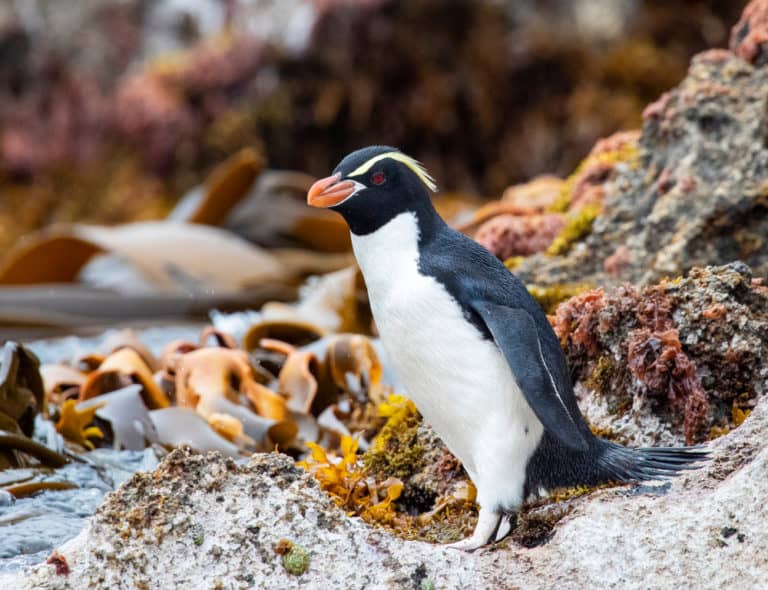
COULANGES/Shutterstock.com

Crested Penguin Distribution

Click a location to explore more animals from that region

This map shows coastal regions where Crested Penguin are found.

Loading map...

Size Comparison

Human 5'8"
Crested Penguin 1 ft 12 in

Crested Penguin stands at 35% of average human height.

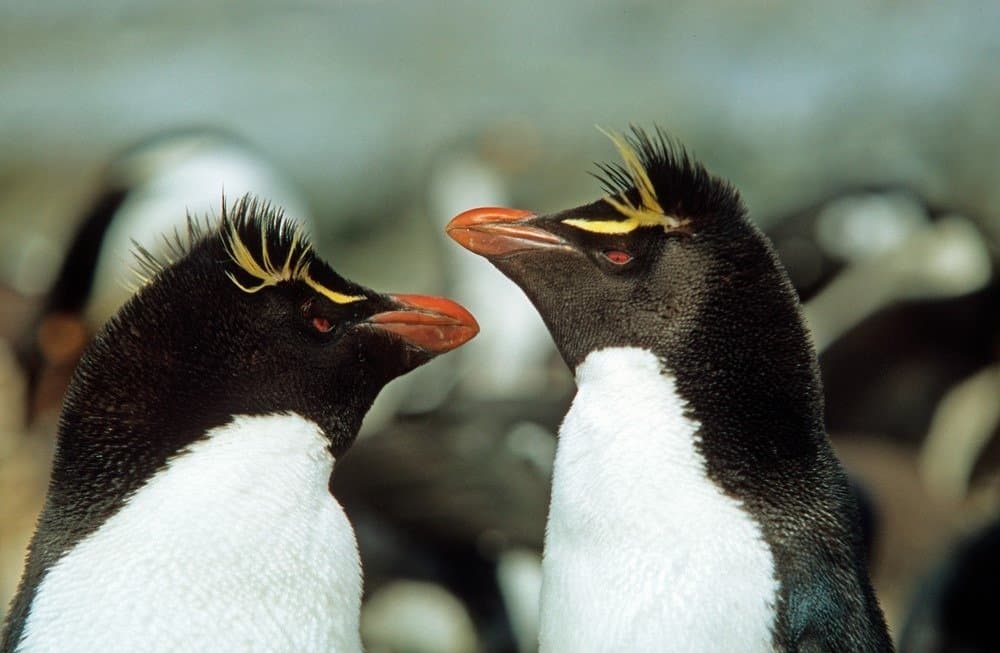
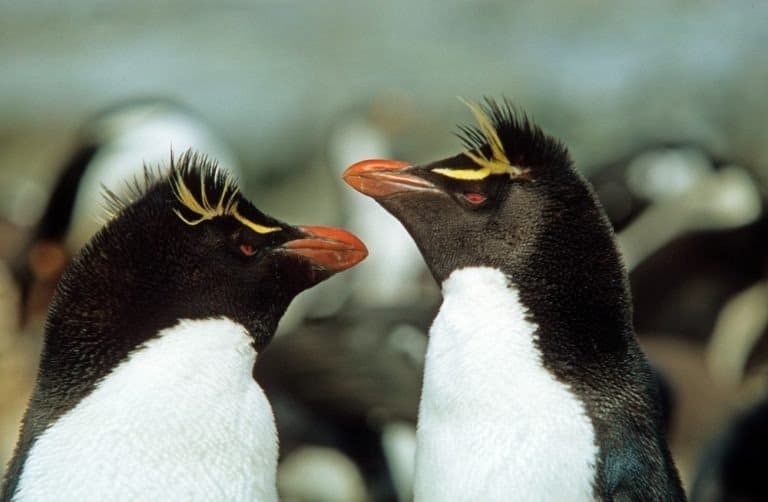
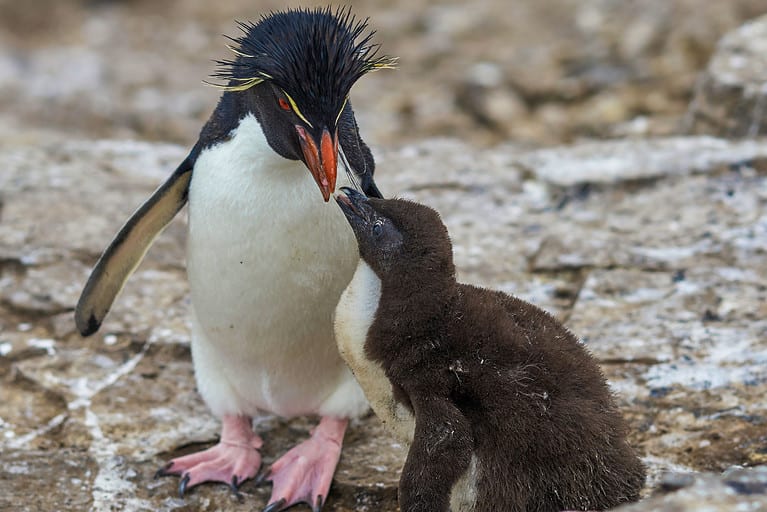
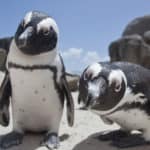
Two crested penguins on a rock

At a Glance

Genus Overview This page covers the Crested Penguin genus as a group. Stats below are general traits shared across the genus.
Diet Carnivore
Activity Diurnal+
Lifespan 12 years
Weight 6.5 lbs
Status Not Evaluated
Did You Know?

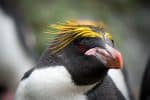
All Eudyptes have bold yellow-to-orange-yellow head crests, but crest thickness, length, and direction vary by species (e.g., "eyebrows" vs fuller "macaroni" plumes).

Scientific Classification

Genus Overview "Crested Penguin" is not a single species but represents an entire genus containing multiple species.

Crested penguins (genus Eudyptes) are medium-sized penguins noted for yellow or orange-yellow head crests. They are primarily subantarctic/temperate Southern Hemisphere breeders, forming dense colonies on remote islands, and are adapted for cold-water foraging on krill, fish, and squid.

Kingdom
Animalia
Phylum
Chordata
Class
Aves
Order
Sphenisciformes
Family
Spheniscidae
Genus
Eudyptes

Distinguishing Features

  • Yellow/orange-yellow head crests or eyebrow plumes (the defining ‘crested’ trait)
  • Black upperparts with white underparts typical of penguins, with species-specific facial patterns
  • Colonial breeding on remote islands; strong site fidelity
  • Excellent underwater propulsion via flipper-like wings; diet often dominated by krill/fish/squid

Physical Measurements

Males and females differ in size

Height
1 ft 12 in (1 ft 6 in – 2 ft 6 in)
1 ft 11 in (1 ft 6 in – 2 ft 4 in)
Length
1 ft 11 in (1 ft 6 in – 2 ft 4 in)
Weight
9 lbs (4 lbs – 14 lbs)
8 lbs (4 lbs – 13 lbs)
Tail Length
4 in (2 in – 6 in)
Top Speed
15 mph
Fast swimming bursts

Appearance

Primary Colors
Secondary Colors
Skin Type Crested penguins (Eudyptes) have thick, waterproof feathers over most of the body, bare skin patches on the face and bill base, scaly feet with strong claws, and a heavy seasonal molt.
Distinctive Features
  • Crested head plumes: yellow to orange-yellow feathers forming eyebrow-like streaks and/or longer crests; shape, length, and orientation vary markedly among Eudyptes species (a key within-genus difference).
  • Medium-sized crested penguins (genus-wide range, smallest to largest members): approximately 45-76 cm in length/height and about 2-6.5 kg in mass (varies by species, season, sex, and condition).
  • Lifespan (across the genus): commonly ~10-25+ years in the wild; survival and maximum age vary by species and local pressures (food availability, predation, fisheries interactions).
  • Robust bill adapted for mixed diet; bill depth/length varies among species (e.g., some are noticeably heavier-billed).
  • Red to reddish-brown iris common in the genus; facial expression often accentuated by dark head with pale underparts and bright crest.
  • Strong flippers for pursuit-diving; streamlined body for cold-water foraging in subantarctic/temperate Southern Ocean environments.
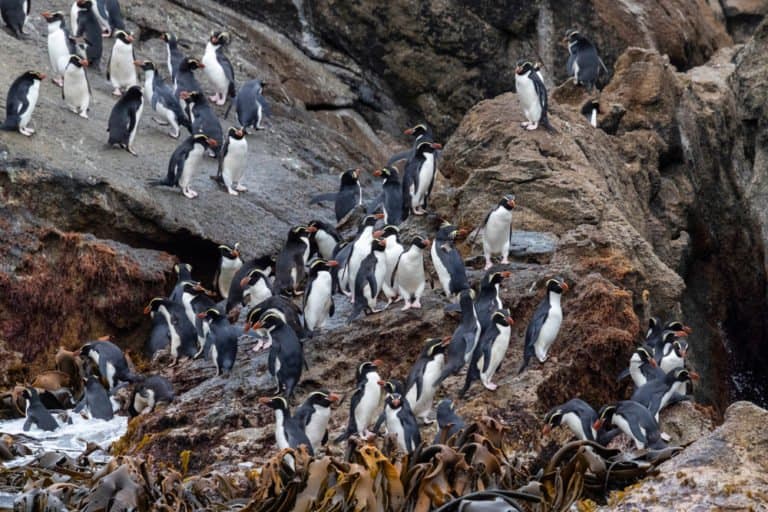
  • Breeding ecology generalization: predominantly colonial breeders on remote subantarctic/temperate islands (and some temperate coasts), often on rocky shores, tussock slopes, or burrow/scrape nests; colony density and nesting substrate vary by species and island.
  • Foraging ecology generalization: marine pursuit-divers feeding primarily on krill and other crustaceans, small schooling fish, and squid; proportional reliance on each prey type varies by species, region, and year (oceanographic conditions).
  • Seasonality and movement: timing of breeding, molt, and at-sea dispersal differs among species and colonies; some populations undertake longer post-breeding or pre-molt movements while others remain more regionally faithful depending on local productivity.

Sexual Dimorphism

Sexual dimorphism is generally subtle across Eudyptes: males tend to average larger and heavier with slightly more robust bills; plumage patterning is broadly similar between sexes, and differences often require close comparison or measurements. Degree of dimorphism varies among species and populations.

  • On average larger body mass and slightly taller/longer overall size (species- and colony-dependent).
  • Typically thicker/longer bill and heavier head profile; may show slightly more pronounced crest in some species, though overlap is large.
  • On average slightly smaller and lighter with a slimmer bill profile; otherwise similar crest coloration and overall plumage pattern to males.

Did You Know?

All Eudyptes have bold yellow-to-orange-yellow head crests, but crest thickness, length, and direction vary by species (e.g., "eyebrows" vs fuller "macaroni" plumes).

Across the genus, adults are typically ~50-75 cm long and roughly ~2-6.5 kg, with rockhoppers among the smallest and macaroni/royal among the largest.

Most lay two eggs, yet often only one chick is raised-common in crested penguins due to strong size differences between the first and second egg.

They breed in loud, dense colonies on remote islands and rugged coasts, using braying calls and dramatic head displays to recognize mates and rivals.

Their diet is flexible across species and seasons-often krill and other crustaceans, plus fish and squid-reflecting local ocean conditions.

Many species undertake long foraging trips at sea during chick-rearing, then return to the same crowded colony sites year after year.

Unique Adaptations

  • Crest feathers for communication: The yellow/orange-yellow eyebrow plumes function as high-contrast signals in crowded colonies, aiding species recognition and social display; crest form differs among species (shape, length, orientation).
  • Streamlined, flipper-powered pursuit: Rigid, flattened flippers and a torpedo-shaped body support efficient underwater "flight" when chasing krill, small fish, and squid.
  • Dense waterproof plumage + insulating fat: Tight feather packing and underlayer insulation reduce heat loss in cold Southern Ocean waters; molting replaces worn waterproofing annually.
  • Salt management: Specialized nasal salt glands allow drinking seawater and excreting excess salt-crucial for long foraging trips far from freshwater.
  • Countershading camouflage: Dark backs and pale fronts help reduce visibility to predators and prey when viewed from above or below in the water column.
  • Rugged-footed terrestrial movement: Strong legs and feet help negotiate steep, rocky breeding sites-especially in "rockhopper" types that hop and scramble over boulders.

Interesting Behaviors

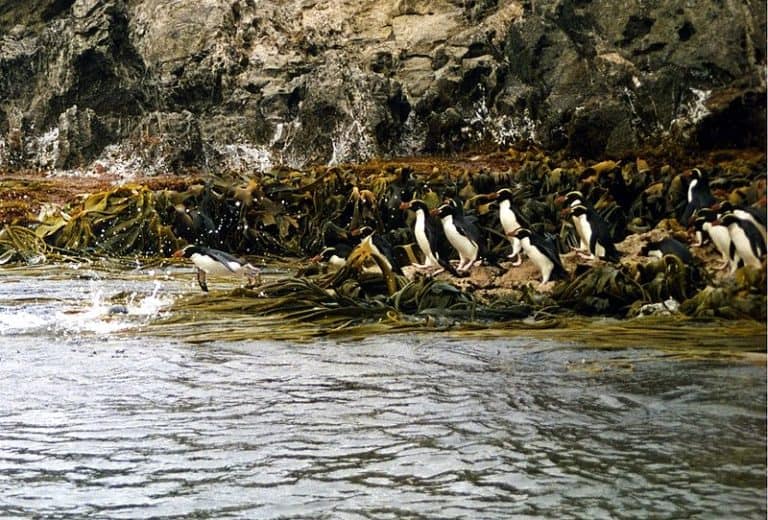
  • Colony life and "traffic lanes": Many species form dense breeding colonies where birds repeatedly use the same paths between nests and the sea; the scale and density vary greatly by island and species.
  • Crest-and-head display rituals: Crest raising, head-swaying, and calling are central to courtship and territorial disputes across the genus, though the exact postures and call patterns differ among species.
  • Two-egg strategy with frequent single-chick outcome: A widespread genus-level pattern is laying two eggs with strong egg-size dimorphism; chick survival outcomes vary by species, colony, and food availability (some populations occasionally fledge two).
  • Seasonal site fidelity: Adults commonly return to traditional breeding areas (often the same colony and sometimes the same mate), but the strength of pair-bonding and re-mating rates can vary among species and years.
  • Marine foraging with variable dive profiles: Crested penguins generally hunt in the upper water column (often tens of meters), with deeper dives possible (around ~100 m or more reported in some species); dive depth and prey choice vary with local oceanography and season.
  • Molt fasting and vulnerability: Like other penguins, Eudyptes undergo a yearly catastrophic molt on land, fasting while replacing waterproof feathers; timing differs among species and regions.

Cultural Significance

Crested penguins (Eudyptes) are a symbol of the Southern Ocean subantarctic islands and temperate southern coasts. Scientists study them and tourists visit because they are sensitive to ocean and climate change and help focus efforts to protect krill, fish, squid, and predator-free breeding areas.

Myths & Legends

In New Zealand, the Fiordland crested penguin has a Maori name linked to stories of an ancestor who climbed toward the sky; the bird's bold head plumes are said to match that name.

Sailors and islanders long called the smaller crested penguins (Eudyptes) on subantarctic islands "rockhoppers" because they hop and scramble across boulder fields, a lasting sea name tied to their rugged nesting areas.

"Macaroni" as a historical fashion reference: The common name "macaroni penguin" reflects 18th-century British slang for flamboyant 'Macaroni' fashion; the penguin's extravagant yellow plumes reminded observers of the era's showy hairstyles and hats.

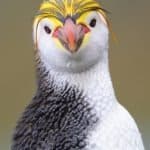
The name "royal penguin" came from its pale face and regal look to European explorers. It shows how explorers used human ideas of royalty when naming Eudyptes crested penguins.

Conservation Status

NE Not Evaluated (genus-level hub; IUCN assessments are at the species level)

Has not yet been evaluated against the criteria.

Population Unknown

Protected Under

  • CITES Appendix I (Spheniscidae spp.) - international trade controls
  • National legal protections in multiple range states for native penguins (e.g., New Zealand Wildlife Act 1953; Australia EPBC Act 1999 for listed taxa and marine protections)
  • Many major breeding islands/colonies occur within protected areas or strict nature reserves, including remote subantarctic island protected areas/World Heritage sites (jurisdiction-dependent)

You might be looking for:

Macaroni Penguin

30%

Eudyptes chrysolophus

Large crested penguin with prominent orange-yellow forehead plumes; very abundant in subantarctic regions.

View Profile

Southern Rockhopper Penguin

20%

Eudyptes chrysocome

Smaller crested penguin with spiky yellow eyebrow crests; breeds on subantarctic islands and southern South America.

View Profile

Northern Rockhopper Penguin

12%

Eudyptes moseleyi

Rockhopper of Tristan da Cunha and Gough; recognized as distinct from southern rockhoppers.

Royal Penguin

10%

Eudyptes schlegeli

White-faced crested penguin breeding mainly on Macquarie Island; closely related to macaroni penguins.

View Profile

Fiordland Penguin

10%

Eudyptes pachyrhynchus

New Zealand crested penguin; thicker bill and facial markings; breeds in temperate rainforest coasts.

Snares Penguin

9%

Eudyptes robustus

Endemic to the Snares Islands (NZ); distinctive crest and facial patterning.

Erect-crested Penguin

9%

Eudyptes sclateri

Tall, upright crest feathers; breeds on the Bounty and Antipodes Islands.

Life Cycle

Birth 2 chicks
Lifespan 12 years

Lifespan

In the Wild
5–20 years
In Captivity
10–30 years

Reproduction

Mating System Monogamy
Social Structure Socially Monogamous
Breeding Pattern Long Term
Fertilization Internal Fertilization
Birth Type Internal_fertilization

Behavior & Ecology

Social Colony Group: 10000
Activity Diurnal, Crepuscular, Cathemeral
Diet Carnivore Krill/euphausiids and small pelagic fish (especially lanternfish) - proportions vary widely among Eudyptes species, colonies, seasons, and oceanographic conditions
Seasonal Migratory 1,243 mi

Temperament

Highly social and tolerant of close neighbors in breeding colonies, but often territorial/aggressive at immediate nest sites (bill-jabbing, chasing, flipper strikes)
Bold, persistent, and physically assertive during nest defense and mate competition; intensity varies by species, colony density, and breeding stage
Strong site fidelity to breeding areas is common; navigation and return timing can be tightly synchronized within colonies, but phenology differs among species and islands
Lifespan varies across the genus; many individuals live ~10-20+ years in the wild, with occasional records extending into the mid-20s or more (and potentially longer in captivity)

Communication

Loud, harsh braying/trumpeting contact calls used for mate recognition and reunions in noisy colonies
Display calls during courtship and nest defense Often stereotyped, species- and colony-recognizable
Chick begging calls that stimulate provisioning and facilitate parent-chick recognition
Alarm/agitation calls during fights, disturbances, or predator encounters
Visual displays: head-bobbing, ecstatic displays, flipper waving, bowing, and crest/feather presentation used in courtship and social signaling
Agonistic signals and combat: bill-fencing, pecking, charging, and posture-based threat displays Especially at nest sites
Tactile behaviors: mutual preening/allopreening between mates; contact during incubation shifts and chick guarding
Olfactory/chemical cues likely contribute to individual and nest recognition (preen gland odors), though reliance and strength may vary among species and contexts

Habitat

Coastal Rocky Shore Cliff/Rocky Outcrop Beach Grassland Shrubland Open Ocean Seabed/Benthic Kelp Forest +3
Biomes:
Marine Tundra Temperate Grassland Temperate Forest
Terrain:
Coastal Island Rocky Sandy Muddy Volcanic
Elevation: Up to 1968 ft 6 in

Ecological Role

Mid-upper trophic-level marine predator linking pelagic food webs to island/nearshore ecosystems

Regulates and tracks abundance/distribution of krill, small fish, and squid (top-down predation and strong prey-switching with ocean conditions) Transfers marine-derived nutrients to land via guano, eggshells, and carcasses, fertilizing island soils and supporting coastal plant/soil communities and invertebrates Provides prey for higher predators (e.g., seals/sea lions and killer whales in some regions), contributing to Southern Ocean food-web structure Acts as an indicator of marine ecosystem change (diet shifts reflect variability in krill/fish availability and oceanographic conditions)

Diet Details

Main Prey:
Krill Small pelagic fish Squid and other cephalopods

Human Interaction

Domestication Status

Wild

Crested penguins (genus Eudyptes) have no domestication history. They are wild seabirds and have not been selectively bred into a domesticated or semi-domesticated form. Some individuals are maintained (and sometimes bred) in accredited zoos and aquariums under permits for conservation, research, and public education, but this is captive management rather than domestication.

Danger Level

Low
  • Bites and flipper strikes, especially when handled or near nests (can break skin)
  • Scratches and minor eye injury risk during close handling
  • Zoonotic/health risks from contact with feces/secretions (general wildlife hygiene concern) and guano-related respiratory/irritant exposure in dense colonies
  • Slips/falls and rock/terrain hazards for people approaching colonies on steep, wet coastal slopes (indirect risk associated with human visitation)

As a Pet

Not Suitable as Pet

Legality: Crested penguins (Eudyptes) are not suitable or legal as private pets. They are protected and often CITES-listed; permits are needed and keeping is limited to zoos, aquariums, rehabilitation centers, or research.

Care Level: Expert Only

Purchase Cost:
Lifetime Cost: $200,000 - $1,500,000

Economic Value

Uses:
Ecotourism and wildlife viewing Conservation and scientific research value Education/exhibit value (zoos and aquaria) Ecosystem indicator value (sentinels of ocean change)
Products:
  • guided wildlife tourism/permits and associated local services
  • research outputs (population monitoring, tracking datasets, conservation planning)
  • public education programming and exhibits

Relationships

Predators 11

Leopard seal
Leopard seal Hydrurga leptonyx
Antarctic fur seal Arctocephalus gazella
Subantarctic fur seal Arctocephalus tropicalis
Killer Whale
Killer Whale Orcinus orca
Large sharks
Large sharks Selachimorpha
South polar skua Stercorarius maccormicki
Brown skua Stercorarius antarcticus
Southern giant petrel Macronectes giganteus
Kelp gull Larus dominicanus
Rats Rattus spp.
Cat
Cat Felis catus

Types of Crested Penguin

9

Explore 9 recognized types of crested penguin

Speciess (7)

Macaroni penguin
Macaroni penguin Eudyptes chrysolophus
Royal penguin
Royal penguin Eudyptes schlegeli
Southern rockhopper penguin
Southern rockhopper penguin Eudyptes chrysocome
Northern rockhopper penguin Eudyptes moseleyi
Fiordland penguin Eudyptes pachyrhynchus
Snares penguin Eudyptes robustus
Erect-crested penguin Eudyptes sclateri

Subspeciess (2)

Southern rockhopper penguin (nominate) Eudyptes chrysocome chrysocome Subspecies
Eastern rockhopper penguin Eudyptes chrysocome filholi Subspecies
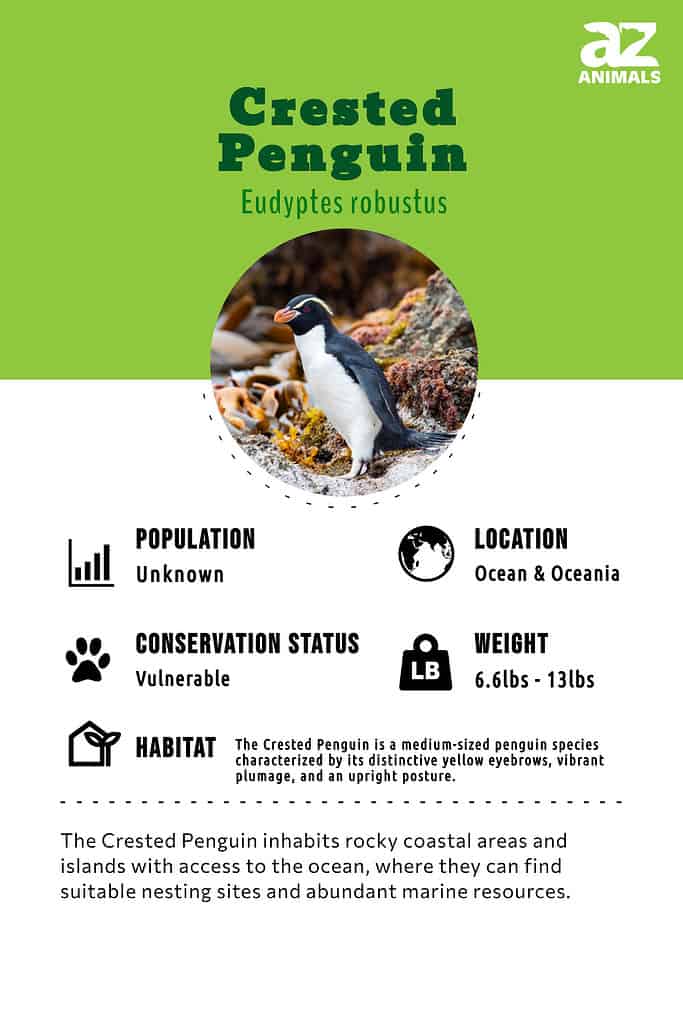
The Crested Penguin inhabits rocky coastal areas and islands with access to the ocean, where they can find suitable nesting sites and abundant marine resources.

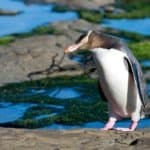
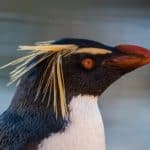
The crested penguin has long yellow eyebrows.


It lives in the watery areas off of a rocky Antarctic island named Snare Island, where it eats krill and other tastes. This penguin is one of six different species that live in the general area. The crested penguin is grey, yellow, black, and white. It lives as much as 20 years in the wild.

Incredible Crested Penguin Facts!
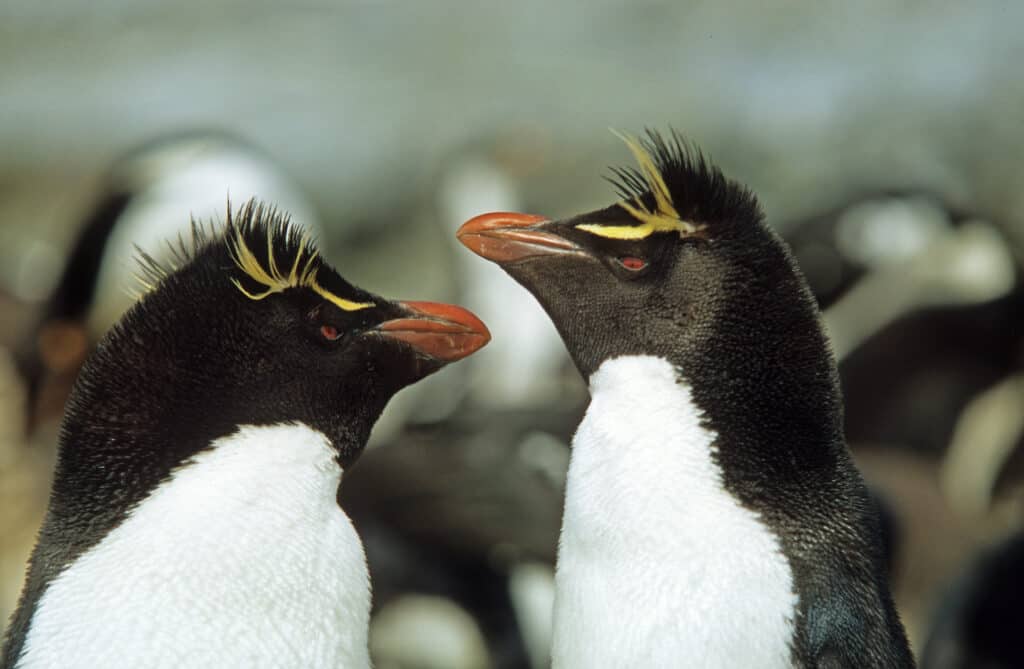
The penguin consumes krill, juvenile squid, and various other aquatic organisms as part of its diet.

• The penguin eats krill, young squid, and other small animals that live in the water.
• It lives only on one island, near New Zealand.
• The crested penguin typically reproduces a single chick each year.
• They are preyed upon by orcas, leopard seals, and a variety of birds.
• These penguins live freely in various zoos in places such as Antwerp and Paradisio.

Scientific Name
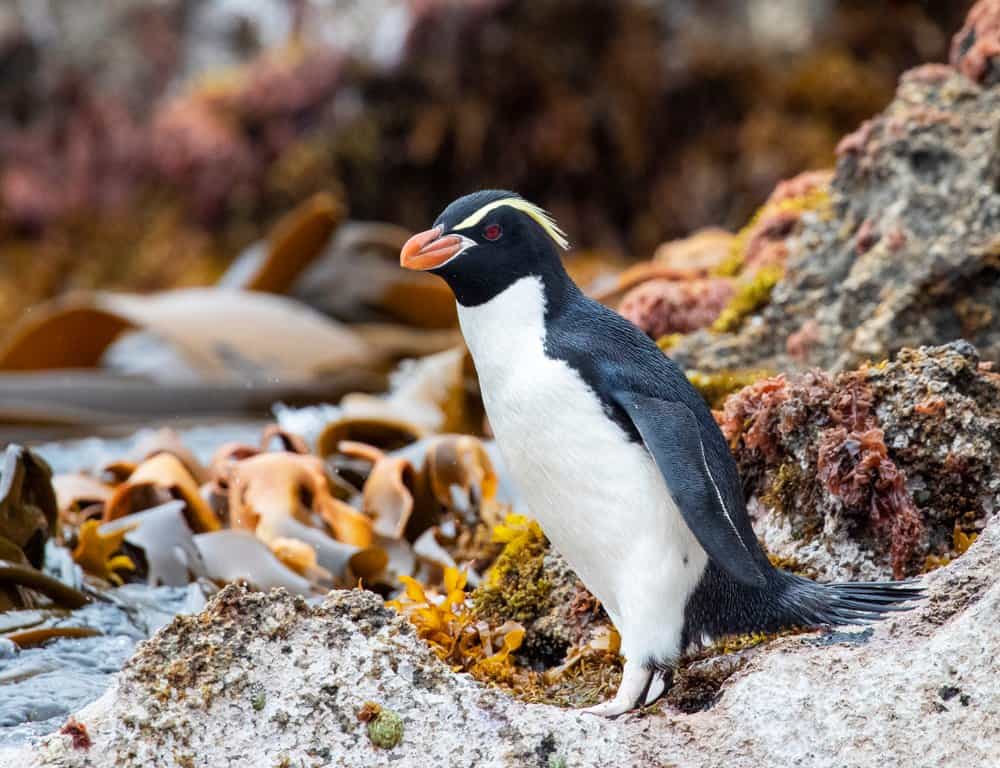
Crested Penguin on rocks

The Eudyptes robustus is the formal scientific designation for the crested penguin.

The scientific name of the crested penguin is the Eudyptes robustus. The name Eudyptes is based on the Greek words that mean “good diver.” The word robustus relates to how the penguins live, in a strong and robust manner. They are hardy and are able to live on their own in all kinds of environments, though they pair together to raise their chicks.

Evolution and Origins

Based on evidence from both mitochondrial and nuclear DNA, it is indicated that the crested penguins diverged from their closest living relative, the yellow-eyed penguin, during the mid-Miocene period, approximately 15 million years ago.

Subsequently, they underwent further speciation and separated into distinct species around 8 million years ago, specifically during the late Miocene.

According to the researchers, penguins originated from a common ancestor they share with a group of seabirds consisting of albatrosses and petrels.

Initially, penguins acquired the skill of diving, similar to puffins, and gradually relinquished their capacity for flight as they adapted to an aquatic habitat, evolving into exceptional swimmers and divers.

Appearance
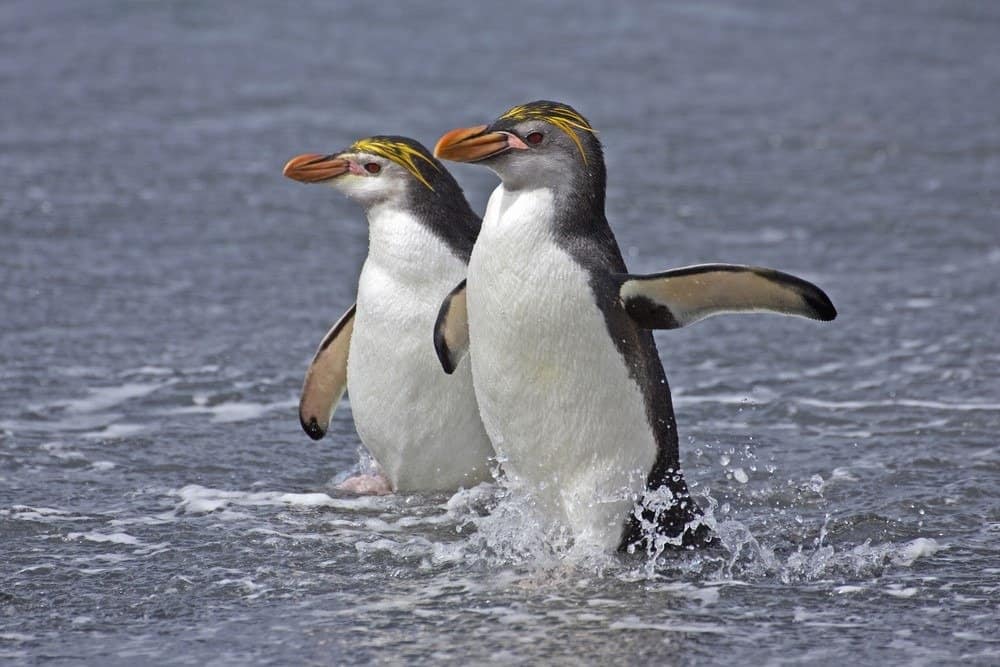
Two Royal Penguins in the water, Macquarie Islands, Australia

The crested penguin, a bird of moderate size, possesses a distinctive bright yellow feathered eyebrow extending from each eye to the back of its head.

The crested penguin is a medium-sized bird that has an eyebrow of bright yellow feathers that run from both of its eyes back to the rear of its head. This is the same in both sexes. Other than that, while the sexes are very similar, the males tend to be slightly larger and have heavier mouths.

The birds both have bright red eyes, but the eyes are not as red as those of the rock jumper penguin. Young birds tend to be less domineering, with a pale chin and a short crest. Both adults and juveniles have characteristic white stripes on the cheek and a bare white-pink stripe around the beak.

Behavior
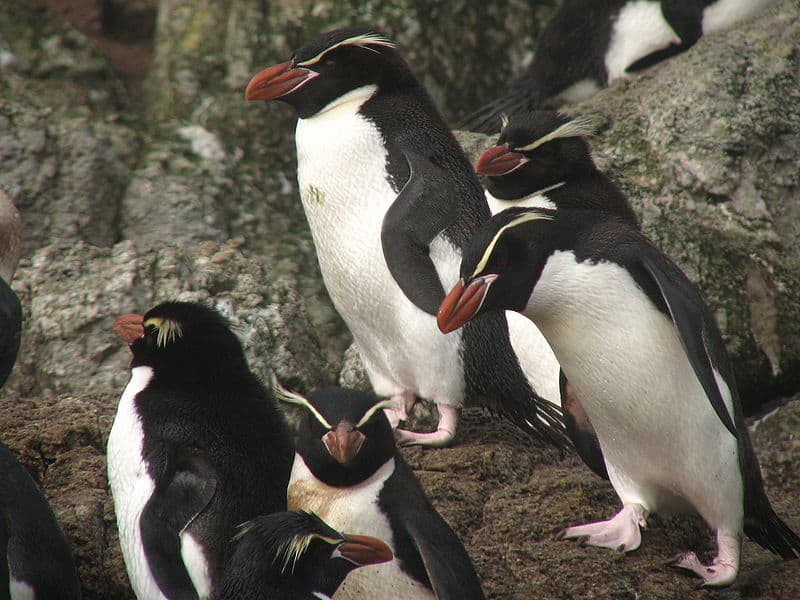
Snares Penguin (Eudyptes robustus), also known as the Snares Crested Penguin and the Snares Islands Penguin

Snares Penguin (Eudyptes robustus), also known as the Snares Crested Penguin and the Snares Islands Penguin

Although crested penguins seem very peaceful, they crested penguin gets into fights every year due to the need for new mates, both for young penguins to find a mate and for old ones who need a new mate. In these fights, the bird is grabbed by the neck and beaten with the wings of the grabbing bird.

The crested penguin can make a number of vocalizations, ranging from hissing and explosive cries to rhythmical trumpeting and braying sounds that carry for a long distance when they are at sea. Despite all of this activity, much of the time these birds are indeed peaceful and well-behaved. The birds are not looking for a fight and generally, they will settle down once the period of fighting is over.

Habitat

The crested penguin lives in the sea and on land, depending on which part of the season it is in. Not much is known about the habitat of the penguin during the non-nesting season, though they have been seen on land in Tasmania, New Zealand, and other places.

For the most part, these penguins nest in dense colonies on coastal rocks or under the tree cover of the Olearia forests. In these places, the penguins dig shallow holes and layer the bottom with grass, twigs, leaves, pebbles, or peat. They will then add a rim of mud to raise the level of the nest above ground level.

Once they have moved in the vegetation will die due to the heavy nesting activities, at which time the colony will move to a new nesting site. Colonies that nest near a stream may have an advantage over others because of the presence of water for drinking and bathing, but this isn’t necessary and many nesting colonies are located far from the water.

Diet

The diet of the Snares crested penguins is not well known, but it is assumed that they eat mostly krill, along with an equal portion of squid and small fish. Where and how they catch this food is not well known, but it seems to be done mostly on the fly while swimming in the ocean. They don’t appear to eat any other food items.

Predators and Threats

Crested penguins are preyed upon by a variety of large hunters, including orcas, sharks, and leopard seals. Their babies and eggs are threatened by petrels and skuas. They are not threatened by humans nor by any other known predators. They are protected by the government of New Zealand as a part of the effort to keep them invigorated and healthy.

Reproduction, Babies, and Lifespan
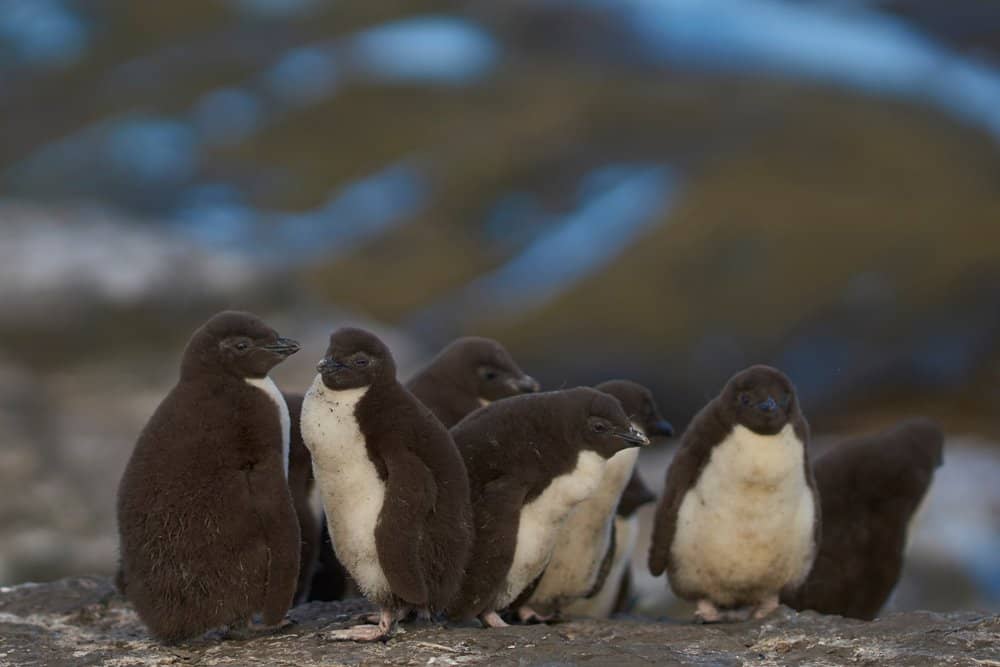
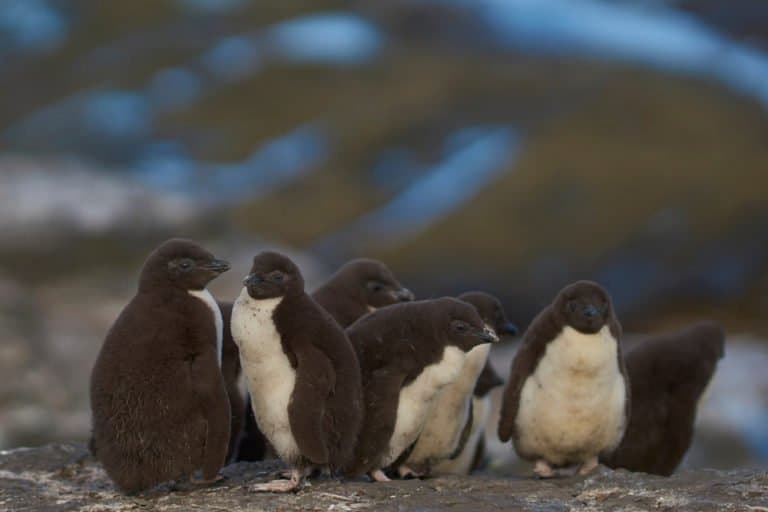
Crested Penguin babies

Snares crested penguins will be able to breed somewhere in the range of five to nine years old. They start in early September and will breed sometime between then and January. When they breed the males will stand up on their hind feet and flap their wings in an effort to attract a mate.

Crested penguins typically mate for life, so once they have found a reliable partner they will normally stick with him or her for the rest of their life. They meet up every year at the breeding place for penguins, and once they get together, they will be faithful to one another until they meet again the following year.

Once they have mated, the penguins will build their nests in the existing burrows in the rocks, then decorate it with whatever soft materials they can find. They use this nest to lay their eggs in, about one to three weeks after they breed. The first egg will be much smaller than the second egg and will likely not hatch. If it does, it is unlikely to survive.

Once both eggs have been laid, the parents will incubate them alternately for the first 10 days, then the male leaves to forage for the next 12 days to search for food. When he comes back the roles are reversed, and the female goes foraging while the male sits on the eggs.

When the egg hatches, the male sits on the eggs and guards them for the first three weeks, protecting the chick against all intruders while the female goes out and brings back food for the chick. Eventually, the chick will be guarded and fed by both parents. After the chick grows and molts, at about 11 weeks, the chick will be introduced to the water and left to make it on its own. Once the bird is on its own it can live 15 to 20 years, taking time to breed once it reaches between 5 and 9 years old.

Population

The group currently consists of about 25,000 pairs. They appear to be holding steady at that number, or even growing slightly. However, it wouldn’t take much to drop them to anything if a plague or other event were to hit, and for this reason, they are currently listed as vulnerable by the International Union for the Conservation of Nature. At this point, the penguin population could continue to grow or it could shrink, depending on how the penguins fare over the next few years.

Potential threats include the introduction of a new predator, overfishing around the islands that could deplete their food source, pollution, or increasing water temperatures that drive prey away from the islands. For these reasons, the New Zealand government has taken action that will protect the marine feeding grounds and the Snares Island habitats to continue to protect these birds.

View all 392 animals that start with C
How to say Crested Penguin in ...
German
Dickschnabelpinguin
English
Fiordland Crested Penguin
Finnish
Vuonopingviini
French
Gorfou du Fiordland
Hungarian
Fjordlandi pingvin
Italian
Eudyptes pachyrhynchus
Japanese
フィヨルドランドペンギン
Dutch
Fjordland kuifpinguïn
English
Skogpingvin
Polish
Pingwin grubodzioby
Portuguese
Pinguim-de-fiordland

Sources

  1. David Burnie, Dorling Kindersley (2011) Animal, The Definitive Visual Guide To The World's Wildlife / Accessed August 3, 2010
  2. Tom Jackson, Lorenz Books (2007) The World Encyclopedia Of Animals / Accessed August 3, 2010
  3. David Burnie, Kingfisher (2011) The Kingfisher Animal Encyclopedia / Accessed August 3, 2010
  4. Richard Mackay, University of California Press (2009) The Atlas Of Endangered Species / Accessed August 3, 2010
  5. David Burnie, Dorling Kindersley (2008) Illustrated Encyclopedia Of Animals / Accessed August 3, 2010
  6. Dorling Kindersley (2006) Dorling Kindersley Encyclopedia Of Animals / Accessed August 3, 2010
  7. Christopher Perrins, Oxford University Press (2009) The Encyclopedia Of Birds / Accessed August 3, 2010
  8. National Geographic / Accessed November 5, 2020
  9. Wikipedia / Accessed November 5, 2020
  10. Bio Expedition / Accessed November 5, 2020
  11. Britannica / Accessed November 5, 2020
  12. Pinguins / Accessed November 5, 2020
Rebecca Bales

About the Author

Rebecca Bales

Rebecca is an experienced Professional Freelancer with nearly a decade of expertise in writing SEO Content, Digital Illustrations, and Graphic Design. When not engrossed in her creative endeavors, Rebecca dedicates her time to cycling and filming her nature adventures. When not focused on her passion for creating and crafting optimized materials, she harbors a deep fascination and love for cats, jumping spiders, and pet rats.
Connect:

Thank you for reading! Have some feedback for us?


Crested Penguin FAQs (Frequently Asked Questions)

The crested penguin is a carnivore, eating nothing but meat throughout their lives.