
C
Species Profile

Crocodile

Crocodylia

Armored ambush masters of water
Dewet / Creative Commons

Crocodile Distribution

Click a location to explore more animals from that region

Invasive Species
Loading map...

Found in 82 countries

Size Comparison

Human 5'8"
Crocodile 1 ft 2 in

Crocodile stands at 20% of average human height.

At a Glance

Order Overview This page covers the Crocodile order as a group. Stats below are general traits shared across the order.
Also Known As Crocodile, Alligator, Caiman, Gharial, Croc, Gator, Jacaré, Yacaré
Diet Carnivore
Activity Crepuscular+
Lifespan 40 years
Weight 1200 lbs
Status Not Evaluated
Did You Know?

Crocodilians are archosaurs-closer living relatives of birds than of lizards or snakes.

Scientific Classification

Order Overview "Crocodile" is not a single species but represents an entire order containing multiple species.

Crocodilians (order Crocodylia) are large, semi-aquatic, predatory reptiles including true crocodiles (Crocodylidae), alligators and caimans (Alligatoridae), and gharials (Gavialidae). They are characterized by armored skin (osteoderms), powerful tails, strong bite forces, and aquatic ambush hunting.

Kingdom
Animalia
Phylum
Chordata
Class
Reptilia
Order
Crocodylia

Distinguishing Features

  • Semi-aquatic ambush predators with laterally compressed, muscular tails
  • Heavily armored skin with bony scutes (osteoderms)
  • Eyes, ears, and nostrils positioned high on the head for surface-level breathing/seeing while submerged
  • Conical teeth and strong jaws; tooth replacement throughout life
  • Temperature-dependent sex determination; lay eggs in nests and often provide parental care

Physical Measurements

Males and females differ in size

Height
1 ft 2 in (8 in – 1 ft 12 in)
Length
11 ft 6 in (3 ft 11 in – 21 ft 4 in)
7 ft 10 in (3 ft 7 in – 9 ft 10 in)
Weight
551 lbs (13 lbs – 1.2 tons)
265 lbs (11 lbs – 441 lbs)
Tail Length
5 ft 11 in (1 ft 8 in – 10 ft 10 in)
3 ft 11 in (1 ft 8 in – 6 ft 11 in)
Top Speed
11 mph
Short land bursts, faster swimming

Appearance

Primary Colors
Secondary Colors
Skin Type Thick keratin scales with dorsal osteoderms (scutes) forming heat-absorbing back armor; pebbled head scales; sensory pits and pressure receptors near jaws and on body. Skin is water-tight, tough, sides smoother, back scutes keeled.
Distinctive Features
  • Sizes range from about 1.2–1.5 m and 5–15 kg (small caimans) to about 6–7 m and 800–1,200+ kg (largest crocodiles). Most adults are 2–5 m; some exceed that.
  • Crocodilians (Crocodylia) often live several decades, commonly about 30–60 years; some reach 70+ years or more in protection. Lifespan varies by species, habitat, hunting, and human conflict.
  • Ancient archosaur lineage: crocodilians are living archosaurs and are evolutionarily closer to birds than to lizards/snakes; their body plan retains many deep-time traits (e.g., secondary palate, robust osteoderms) while also showing specialized aquatic adaptations.
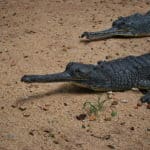
  • Snout shapes vary by group: Crocodylidae often have narrower V-shaped snouts, Alligatoridae usually have broader U-shaped snouts, and Gavialidae have very long, thin snouts for catching fish.
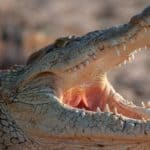
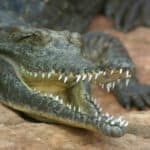
  • Many true crocodiles show upper and lower teeth when the mouth is closed, especially the large fourth lower tooth that fits a notch. Alligators often hide lower teeth, but it varies by species or individual.
  • Crocodilians have very strong jaws and necks, giving among the highest bite forces and a twisting "death roll" to tear large prey. Gharials have narrow jaws for quick fish‑snapping instead.
  • Semi-aquatic locomotor suite: laterally flattened, muscular tail for propulsion; webbing extent varies by species; high-walk and belly-slide gaits on land; eyes/nostrils positioned dorsally for stealth at the water surface; nictitating membranes protect eyes underwater.
  • Crocodilians have skin sensory organs (integumentary pressure and vibration receptors) around the jaws—more widely in crocodiles—to detect prey. They have strong low-light vision, keen hearing, and make complex social and parental calls.
  • Crocodilians (Crocodylia) are mostly water ambush predators that bask and open their mouths to warm. Young eat invertebrates and fish; adults eat larger vertebrates. Aggression and territory use vary widely.
  • Most crocodilians live in freshwater rivers, lakes, swamps, wetlands. Some true crocodiles use brackish estuaries or sea coasts. Gharials stick to river channels; many caimans and alligators use floodplains and marshes.
  • All crocodilians lay eggs, build nests (mounds or holes), and give much parental care. Sex is set by nest temperature. Nest materials, timing, and how much parents guard nests vary.
  • Conservation status varies: some crocodilians are common, others are critically endangered. Major threats include habitat loss, wetland changes, bycatch, illegal hunting/skin trade, and human-wildlife conflict; recovery depends on region and management.

Sexual Dimorphism

Sexual dimorphism is generally present but variable across Crocodylia. Most species show male-biased size dimorphism (males larger/heavier with proportionally larger heads), while coloration differences between sexes are usually subtle compared to age- and habitat-driven variation. Some lineage-specific traits occur (notably in gharials).

  • Typically larger total length and mass; broader heads and more robust neck/jaw musculature in many species.
  • May develop more prominent cranial/jaw robustness and body scarring with age due to intrasexual competition; degree varies by species and population density.
  • In gharials (Gavialidae), adult males develop a distinctive bulbous nasal growth (nasal boss) used in display and sound production.
  • Typically smaller and lighter than males of the same species; relatively narrower heads in many taxa.
  • Often strongly associated with nesting and extended parental care behaviors (nest guarding, assisting hatchlings), though participation patterns vary among species and local conditions.

Did You Know?

Crocodilians are archosaurs-closer living relatives of birds than of lizards or snakes.

Size varies hugely: from dwarf caimans ~1.2-1.6 m to saltwater crocodiles commonly 4-5 m and occasionally ~6-7 m.

They have some of the strongest bite forces measured in living animals (especially large Crocodylus).

Not all crocodilians look alike: gharials have long, narrow fish-snouts; alligators/caimans tend to have broader snouts; many true crocodiles have V-shaped snouts.

They can stay submerged for long periods by slowing their metabolism and shunting blood flow-ambush hunting is energy-efficient.

Their skin armor includes bony plates (osteoderms); in many species these help with protection and can aid thermoregulation.

Conservation status varies widely: some species have recovered with protection, while others remain critically endangered due to habitat loss, hunting, and fishing impacts.

Unique Adaptations

  • Osteoderms (bony armor) embedded in the skin: strong protection; in some species they also help absorb/dispense heat and may store minerals.
  • Secondary bony palate: allows breathing while holding prey underwater, separating airway from mouth cavity more effectively than in most reptiles.
  • Palatal valve and ability to close the throat while submerged: helps prevent water entering the airway during underwater handling of prey.
  • Dorsal sensory pits (integumentary sense organs): detect pressure changes and vibrations in water; especially developed in many true crocodiles and some other lineages.
  • Powerful tail propulsion: a large, muscular tail provides most swimming thrust; limbs are used more for steering and walking.
  • Snout diversity tied to diet: broad-snouted forms better for varied prey and crushing; long-snouted forms (e.g., gharials) specialize more on fish.
  • Efficient anaerobic bursts: strong muscles and physiology support sudden explosive attacks, with long inactive periods between hunts.

Interesting Behaviors

  • Ambush predation: many species wait motionless at the surface, then lunge with a rapid sideways head strike; prey ranges from fish and crustaceans to birds and mammals depending on species and size.
  • Seasonal nesting and parental care: females build nests (mounds or holes), guard eggs, and in many species help hatchlings to water; degree of care varies among lineages and habitats.
  • Basking and thermoregulation: they shuttle between sun and water to control body temperature; timing and basking style vary with climate and disturbance.
  • Territoriality and signaling: adults often maintain territories in breeding season, using vocalizations, head slaps, water vibrations, and posture displays; intensity differs by species and density.
  • Group tolerance at rich feeding sites: although often territorial, some gather at abundant food sources; dominance hierarchies and conflict levels vary.
  • Tool use (observed in some crocodilians): individuals have been reported balancing sticks on their snouts to lure nesting birds in certain seasons/regions.

Cultural Significance

Crocodilians are symbols of rivers, power, and danger across the tropics. In Egypt the crocodile god Sobek was tied to the Nile; in South Asia gharial and crocodiles are linked to river spirits. They appear in totems, tales, taboos, and affect protection and conflict.

Myths & Legends

Ancient Egypt: Sobek-the crocodile-headed god-was worshiped as a deity of the Nile, fertility, and protective power; sacred crocodiles were kept and honored in some temples.

Hindu tradition: the makara, a mythic aquatic creature often depicted with crocodilian features, serves as the vehicle of the river goddess Ganga and the sea god Varuna and appears in temple iconography.

India/Nepal: "Gavialis" (gharials) are culturally linked to river landscapes; local traditions in parts of the Ganges basin treat gharials and crocodiles as river guardians associated with sacred waters.

Australia (Aboriginal traditions in several regions): the rainbow serpent and other water-being stories sometimes include crocodile motifs or crocodiles as powerful river creatures tied to law, country, and seasonal change (stories vary widely among peoples).

In parts of West Africa (e.g., Burkina Faso and Ghana), sacred crocodile ponds and local taboos link crocodiles to ancestors, saying they are kin or guardians who protect the community and its origins.

Mesoamerica: crocodilian/earth-monster imagery appears in Maya and Aztec cosmology where crocodile-like beings can represent the earth or primordial waters in creation themes and iconography.

Conservation Status

NE Not Evaluated (order-level entity; IUCN assessments are made at the species level and vary widely across Crocodylia). Conservation landscape across the order spans from Least Concern (e.g., some broadly distributed crocodiles/caimans and the American alligator) through Near Threatened/Vulnerable to Endangered and Critically Endangered (notably the gharial and several restricted-range crocodiles/alligators such as Siamese crocodile, Philippine crocodile, Chinese alligator, Orinoco crocodile, Cuban crocodile). Population status is highly uneven across regions, with some recoveries under protection/sustainable management and severe declines where wetlands are converted and persecution/illegal harvest persists. RANGES & GENERALIZATIONS (across the entire order): - Measurements (smallest to largest members): adults roughly ~1.2-1.7 m in the smallest dwarf caimans to ~6-7 m in the largest saltwater crocodiles; adult mass from ~10-30 kg at the small end to several hundred kg, occasionally ~1,000+ kg at the largest extreme (rare). - Lifespan: commonly ~30-70+ years depending on species and conditions; some individuals can exceed this (especially in captivity), but longevity varies substantially. - Behavior/Ecology (shared patterns with explicit variation): semi-aquatic, ectothermic ambush predators strongly tied to freshwater/brackish wetlands and river systems; basking and seasonal activity are common; most build nests and show some degree of parental care (often strong in many species), but nesting mode (mound vs. hole), degree of social tolerance/territoriality, salinity tolerance, and habitat specialization vary widely. Diets are generally opportunistic (fish, crustaceans, birds, mammals), with size/age-based shifts; many species are ecosystem engineers that influence wetland food webs and create refugia (e.g., dry-season pools), but this role differs by habitat type and population density.

Has not yet been evaluated against the criteria.

Population Unknown

Protected Under

  • CITES (many crocodilian species listed in Appendix I or II; international trade tightly regulated or prohibited depending on species/population)
  • National legal protection/harvest regulation varies by country; many species protected with penalties for killing/egg collection, while some have managed sustainable-use programs (e.g., ranching)
  • Protected areas and wetland conservation frameworks (e.g., national parks/reserves; Ramsar sites) contribute to habitat protection but coverage/enforcement are uneven
  • Targeted recovery programs and legal protections in some jurisdictions (e.g., ESA listings for certain populations/species; country-specific action plans for Critically Endangered taxa)

You might be looking for:

Nile Crocodile

22%

Crocodylus niloticus

Large African crocodile; one of the most widespread and well-known species.

View Profile

Saltwater Crocodile

20%

Crocodylus porosus

Largest living reptile; Indo-Pacific coasts, estuaries, and rivers.

American Crocodile

12%

Crocodylus acutus

Neotropical crocodile of coastal wetlands; relatively slender-snouted.

Mugger Crocodile

10%

Crocodylus palustris

South Asian freshwater crocodile, common in reservoirs and rivers.

Gharial

9%

Gavialis gangeticus

Critically endangered, very long narrow snout; specialized fish-eater.

View Profile

American Alligator

9%

Alligator mississippiensis

Often colloquially called a crocodile; broad snout; southeastern USA.

View Profile

Black Caiman

8%

Melanosuchus niger

Large Amazonian caiman; dark coloration; apex predator in its range.

Dwarf Caiman

5%

Paleosuchus palpebrosus

Small-bodied caiman; South American forests and streams.

Life Cycle

Birth 35 hatchlings
Lifespan 40 years

Lifespan

In the Wild
15–70 years
In Captivity
20–100 years

Reproduction

Mating System Polygynandry
Social Structure Solitary
Breeding Pattern Seasonal
Fertilization Internal Fertilization
Birth Type Internal_fertilization

Crocodylia usually show polygynandry: males defend areas so mating can look polygynous. They live alone but gather to breed. Females build and guard nests; fertilization is internal and they lay eggs. Multiple paternity is common.

Behavior & Ecology

Social Bask (often described as a congregation) Group: 3
Activity Crepuscular, Nocturnal, Diurnal, Cathemeral
Diet Carnivore Animal prey taken at the water's edge-often fish and other aquatic vertebrates; in larger species, sizeable terrestrial mammals can become important when available (with strong variation among families and habitats).
Seasonal Hibernates

Temperament

Generally wary/cryptic ambush predators; boldness varies with habitat (remote vs human-subsidized sites) and species
Territoriality common, especially adult males in breeding season; disputes usually resolved via display but can escalate to biting
Context-dependent tolerance: individuals may rest close together at basking sites yet defend personal space at close range
Strong parental defensiveness around nests and young in many species
Opportunistic and food-motivated; feeding events can increase aggression and crowding
Thermoregulation-driven behavior (basking, gaping) strongly shapes daily social spacing and site fidelity

Communication

Low-frequency bellows/roars (notably in many crocodiles and alligators) used in courtship and territorial advertisement
Grunts, growls, hisses, and snorts during close-range interactions and threat
Jaw claps/teeth slaps as an auditory threat signal in some contexts
Hatchling and juvenile contact calls and distress squeaks; adults may respond by approaching/transporting young
Visual displays: head-raising, body arching, inflated posture, tail waving, gaping, and approach-retreat postures
Water-surface signals: head slaps, tail slaps, and body vibrations/ripples used in dominance and courtship
Substrate/water-borne vibrations and very low-frequency signaling that can travel through water
Chemical cues from musk glands and scent marking/rubbing at favored sites Importance varies among lineages and environments
Tactile contact in courtship and parental contexts Nudging, snout contact, gentle carrying of hatchlings

Habitat

Biomes:
Freshwater Wetland Marine Tropical Rainforest Tropical Dry Forest Savanna Temperate Forest Temperate Rainforest Temperate Grassland Mediterranean +4
Terrain:
Riverine Coastal Island Plains Valley Sandy Muddy +1
Elevation: Up to 4921 ft 3 in

Ecological Role

Predatory regulators and ecosystem engineers in wetlands, rivers, lakes, estuaries, and some coastal/marine systems; roles span mesopredator to apex predator depending on species, size, and community context.

Regulate fish and vertebrate prey populations (top-down control), influencing community structure Remove carrion through scavenging, potentially limiting some disease pathways and recycling nutrients Create/maintain habitat features (e.g., trails, burrows, nest mounds, and wallows in some species) that can provide refugia or microhabitats for other organisms Nutrient translocation between aquatic and terrestrial food webs via feeding and excretion Influence prey behavior and spatial distribution (landscape of fear) around water bodies

Diet Details

Main Prey:
Fish Aquatic and semi-aquatic invertebrates Amphibians Reptiles Birds Mammals Carrion +1

Human Interaction

Domestication Status

Wild

Crocodilians (order Crocodylia: Crocodylidae, Alligatoridae, Gavialidae) are not domesticated. People have hunted, feared, and sometimes worshiped them. In the last century humans began ranching and farming crocodilians for skins and meat, and keeping some in zoos or private collections. Breeding focuses on size and skin, not full domestication.

Danger Level

High
  • Severe bites and drowning risk during attacks; highest with large-bodied crocodiles and large alligators in shared waterways
  • Defensive aggression near nests/hatchlings and during breeding season; risk varies by species and local conditions
  • Human-wildlife conflict driven by habitat overlap (fishing areas, swimming sites, livestock watering points), with hotspots in parts of Africa, Asia, Australia, and the Americas
  • Smaller caimans and juveniles generally pose lower risk but can still inflict serious injury; even 'small' crocodilians become dangerous as they grow
  • Handling/capture risks for workers (farm staff, biologists, animal-control), requiring specialized training and equipment

As a Pet

Not Suitable as Pet

Legality: Laws vary by place. Many areas ban private keeping of crocodilians or call them dangerous, needing permits, inspections, secure enclosures, and insurance. Some allow small caimans/alligators with permits. CITES controls trade.

Care Level: Expert Only

Purchase Cost: $50 - $2,000
Lifetime Cost: $20,000 - $250,000

Economic Value

Uses:
Leather/skins industry (regulated farming/ranching, luxury goods) Meat production and local consumption Ecotourism and wildlife-viewing operations Exhibit/education (zoos, aquaria, rescue centers) Cultural/heritage value and traditional uses (region-dependent) Ecosystem services (apex/mesopredator roles; nutrient cycling; habitat engineering in some systems)
Products:
  • Leather (bags, belts, shoes, watch straps; mostly from farmed/ranch-raised animals where legal)
  • Meat (fresh/frozen; value varies by region/species and regulation)
  • Byproducts (e.g., fats/oils and curios in some markets; often regulated/controversial)
  • Tourism services (guided river tours, viewing platforms, conservation experiences)

Relationships

Predators 9

Ecological Equivalents 6

Animals that fill a similar ecological role in their ecosystem

Monitor lizard
Monitor lizard Varanus spp. Both are large, predatory reptiles that take vertebrate prey and scavenge; some monitor species are semi-aquatic (e.g., water monitors). Crocodilians, however, generally dominate in water and have far greater bite force and specialization for aquatic ambush.
Large constrictor snakes Eunectes spp.; Python spp. They share ambush predation on medium-to-large vertebrates in riparian and wetland habitats. Constrictors kill by compression rather than by biting. Role overlap is strongest in tropical floodplains and swamp forests.
Hippopotamus
Hippopotamus Hippopotamus amphibius Similar use of rivers and lakes, with strong territorial interactions in waterways. Hippos are primarily herbivores and can outcompete or attack crocodilians; the niche overlap is spatial rather than dietary.
Large predatory fish Juvenile and smaller crocodilians often function like large aquatic piscivores; both are stealth-oriented aquatic predators. Crocodilians extend their niche to land-water edges and can take large terrestrial prey.
Snapping turtle
Snapping turtle They share freshwater ambush tactics and are opportunistic carnivores and scavengers. Snapping turtles are generally smaller and focus on aquatic prey, while crocodilians often occupy higher, apex-predator roles.
Crocodylians Crocodylia Crocodilians range from small dwarf crocodiles and caimans to huge saltwater crocodiles, and individuals often live decades (30–70+ years). They are semi-aquatic ambush predators with varied diets, reproduce by laying eggs with nest-building and maternal care of young, and species differ in salt tolerance and head shape.

Types of Crocodile

26

Explore 26 recognized types of crocodile

American alligator
American alligator Alligator mississippiensis
Chinese alligator
Chinese alligator Alligator sinensis
Spectacled caiman Caiman crocodilus
Yacare caiman Caiman yacare
Broad-snouted caiman Caiman latirostris
Black caiman Melanosuchus niger
Cuvier's dwarf caiman Paleosuchus palpebrosus
Schneider's dwarf caiman Paleosuchus trigonatus
Gharial
Gharial Gavialis gangeticus
False gharial Tomistoma schlegelii
Saltwater crocodile Crocodylus porosus
Nile crocodile
Nile crocodile Crocodylus niloticus
West African crocodile Crocodylus suchus
American crocodile Crocodylus acutus
Morelet's crocodile Crocodylus moreletii
Cuban crocodile Crocodylus rhombifer
Orinoco crocodile
Orinoco crocodile Crocodylus intermedius
Siamese crocodile Crocodylus siamensis
Mugger crocodile Crocodylus palustris
Freshwater crocodile
Freshwater crocodile Crocodylus johnstoni
New Guinea crocodile Crocodylus novaeguineae
Hall's New Guinea crocodile Crocodylus halli
Philippine crocodile Crocodylus mindorensis
African slender-snouted crocodile Mecistops cataphractus
Central African slender-snouted crocodile Mecistops leptorhynchus
African dwarf crocodile
African dwarf crocodile Osteolaemus tetraspis

Quick Facts:

  • Unlike other reptile species, crocodilians are archosaurs which is an ancient group of reptiles that also included dinosaurs.
  • Crocodiles bask in the hot sun all day to absorb enough warmth to last through a night of hunting and feeding.
  • Social animals who often hunt in groups, crocodiles have the ability to communicate with each other by hissing, chirping, and bellowing. Baby crocs can emit a high-pitched scream when in distress.
  • Crocodiles can live up to three years without eating.
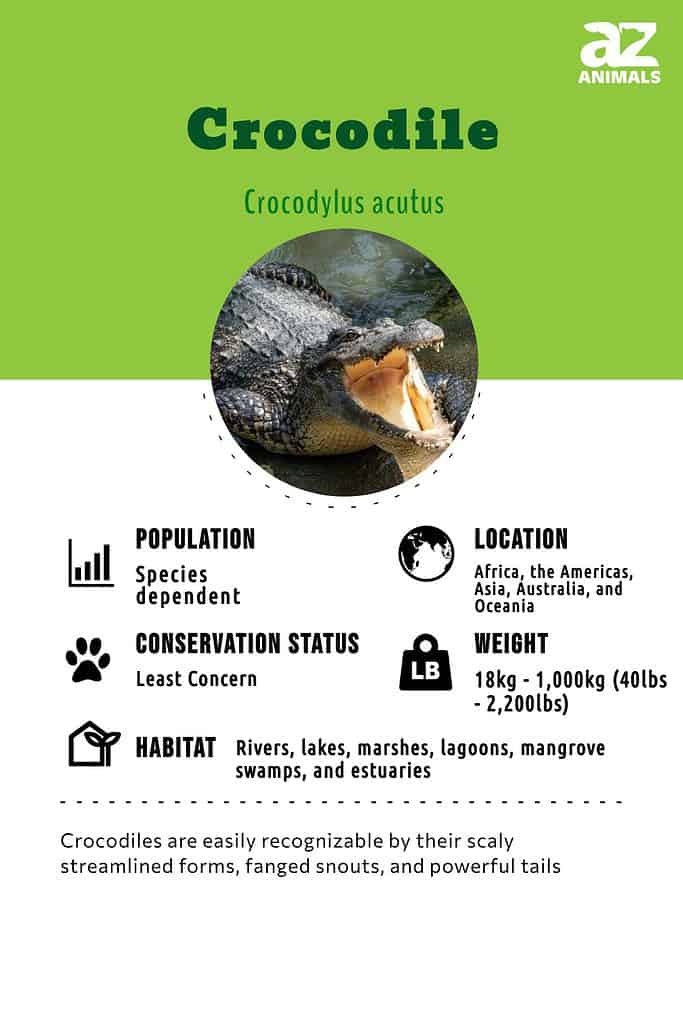
Crocodiles are one of the most well-known and fearsome animals in the world and are considered apex predators. Their powerful bodies, strong jaws, and immense speed and agility along with their unparalleled stealth, have led to them being one of the world’s top predators in their natural environments.

Types

  • Saltwater crocodile (Crocodylus porosus): Once endangered, this marine monster has since staged an impressive comeback. Known for a penchant for ambushing its prey, it is capable of growing to 20 feet in length and weighing over 4,000 pounds. It is also the largest reptile on the planet and generally has dark green scales, although they may also be tan, or almost black in some cases. The giant reptile can be found in Australia, India, and Micronesia.
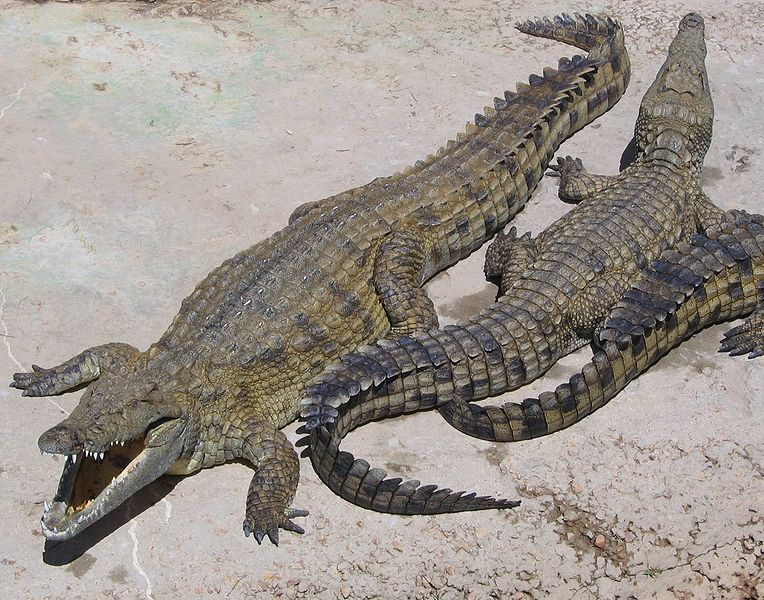
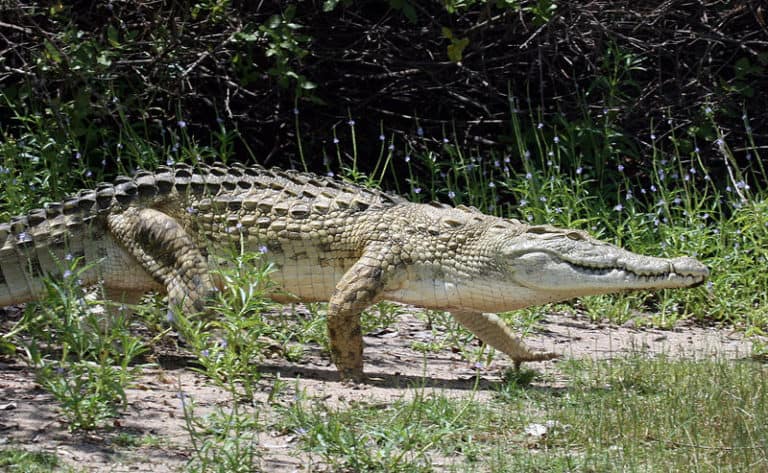
  • Nile crocodile (Crocodylus niloticus): This reptile is known for its extreme aggression and thick scaly skin. It also has a remarkable ability to clamp down powerfully with its jaws for lengthy periods of time. Its favorite hangouts include lakes, rivers, and swamps and it can generally be found in African regions south of the Sahara and parts of Madagascar.
  • American crocodile (Crocodylus acutus): The only crocodile apart from the saltwater crocodile to have an affinity for saltwater, this species can be found in Florida, Mexico, Peru, and Venezuela.
  • Hall’s New Guinea crocodile (Crocodylus halli): The giant reptiles can be found in the southern part of New Guinea where they prowl in estuaries, lakes, and rivers.
  • Orinoco crocodile (Crocodylus intermedius): The largest reptile in the Americas, this crocodilian is known for its pale hide and occupies the Orinoco river Basin in Colombia and Venezuela.
  • Freshwater crocodile (Crocodylus johnstoni): Unlike their saltwater cousins, these reptiles thrive in freshwater and only reach 3 metres and 220 pounds at the maximum. They do live side by side with salties,  although they’re no match for the former.
  • Philippine crocodile (Crocodylus mindorensis): These freshwater crocodiles have golden brown scales that darken with age. They play a key role in maintaining healthy fish stocks in their environs and can grow slightly over 8 feet while weighing a maximum of 200 pounds.
  • Morelet’s crocodile (Crocodylus moreletii): These reptiles which have webbed posterior feet are rather fast runners. They are recognizable by their dark scales and broad snouts.
  • New Guinea crocodile (Crocodylus novaeguineae): A separate species from the crocodiles which lie south of the island’s central rige, these reptiles which are found in the north are nocturnal. They have a tapered snout and grey scales.
  •  Mugger crocodile (Crocodylus palustris): Known for its light olive coloring, this crocodile can be found in  India, Iran, Nepal, Pakistan, and Sri Lanka. It also has a habit of burrowing into the mud to escape scorching temperatures and is the crocodile with the widest snout.
  • Borneo crocodile (Crocodylus raninus): Found in Borneo, as its name suggests, this species continues to remain something of a mystery to experts.
  • Cuban crocodile (Crocodylus rhombifer): Highly intelligent, long-limbed, and fond of land, this crocodile cooperates with other members of its species when hunting. Its numbers, however, have plummeted owing to hunting.
  • Siamese crocodile (Crocodylus siamensis): This species comes with scales ranging from dark to pale green. It is capable of growing to a maximum of 13 feet and 770 pounds.
  • West African crocodile (Crocodylus suchus): With scales which range from dark to pale, this crocodile is known for being fond of fresh water in forests. However, it has also adapted to deserts in Mauritania where it sits out periods of drought ensconced in caves.
  • Osborn’s dwarf crocodile (Osteolaemus osborni): This species can be found in the Congo river basin in central Africa.
  • Dwarf crocodile (Osteolaemus tetraspis): The smallest crocodile species, this reptile grows to about 5 feet and 70 pounds, and can be found in forests or caves.
  • West African slender-snouted crocodile (Mecistops cataphractus): Something of an enigma to experts, this reptile is recognizable by its pointed snout. It also prefers to live in water filed with plant life.
  • Central African slender-snouted crocodile (Mecistops leptorhynchus): As its name suggests, this second member of the genus Mecistops, can be found throughout Central Africa. However, it can also be found in Southern Sudan.

Evolution

  • Crocodiles are closely related to other crocodilians including alligators, caimans, and gharials, crocodiles have changed very little in an evolutionary sense in 200 million years.
  • Unlike other reptile species, crocodilians are archosaurs which is an ancient group of reptiles that also included dinosaurs.
  • Although dinosaurs became extinct 65 million years ago, crocodiles are thought to have survived so well over time due to the fact that they are so well suited to their environments.
  • There are currently 13 different crocodile species that are found inhabiting both fresh and saltwater environments throughout North and South America, Africa, Asia and Australia.
  • The semi-aquatic nature of Crocodiles has led to them evolving a number of key adaptations that allow them to survive so successfully in their natural environments.

Read here to learn more about prehistoric crocodiles.
crocodile

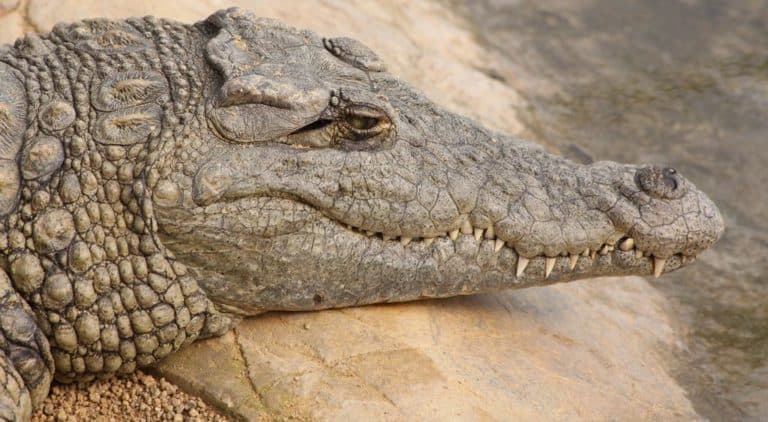
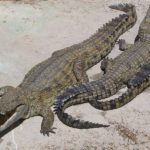
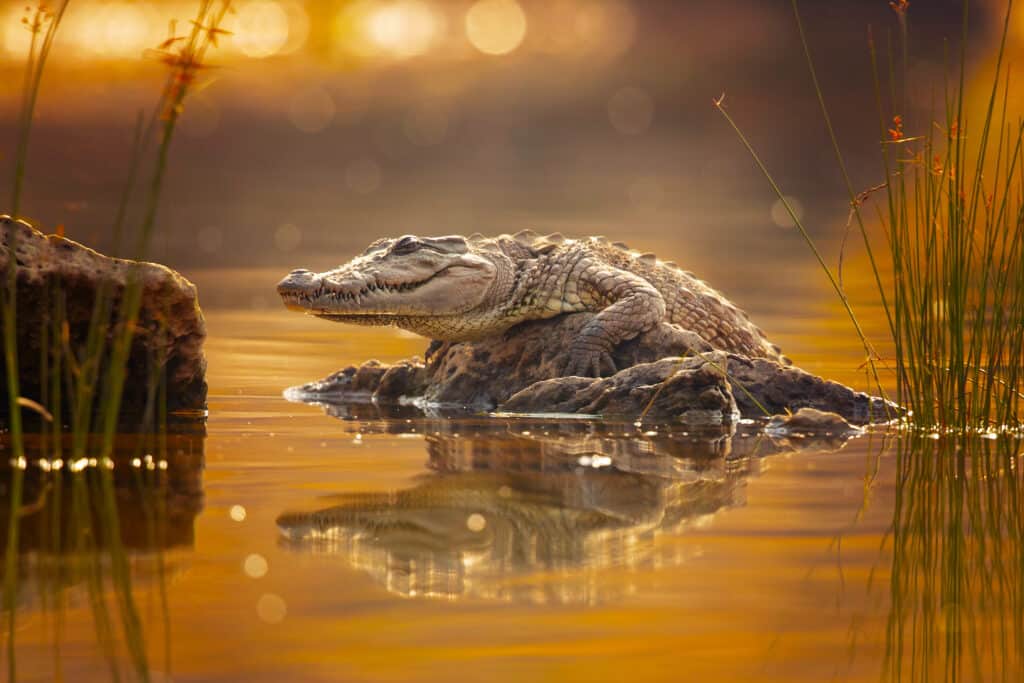
A crocodile rests on rocks and gathers some sunlight.

Etymology

The word crocodile actually originates from the Ancient Greek word krokódilos or some other slight variation. Latinization of the name turned the “k” into a “c”. Some scholars believe that crocodile is a combination of the word for pebbles (krokè) and for worm (drilos).

Anatomy and Appearance

  • Crocodiles are large-sized reptiles with thick, scaly skin that is made up of armored, waterproof plates that both protects them from potential predators and also prevents their bodies from drying out.
  • These scales come in a variety of colors from dull olive and green, to brown, greys and black meaning that they are very easily camouflaged in the surrounding water and vegetation.
  • Like other crocodilian species, their eyes and nostrils are located on the very top of their broad head and snout.
  • This is useful as they lie in wait in the water with almost none of their bodies exposed in order to more successfully ambush prey.
  • In order to protect them in the water, crocodiles have a special transparent third eyelid which allows them to leave their eyes open but prevents damage from the water.
  • They also have external flaps that close off their ears and nostrils, and a special respiratory system that allows them to remain in the water for up to five hours at a time.
  • Their vertically flattened tails are immensely strong and are used to propel them through the water, as although they do have webbed feet, they do not use them to aid them when swimming.
  • Crocodiles range in size from the less than 2 meter long dwarf crocodile to the 7 meter long estuarine crocodile (also known as the saltwater crocodile or “saltie”), which is the world’s heaviest reptile weighing up to 1,000kg.

Read here to learn about crocodile skulls.
Cornered crocodile fight five adult lions

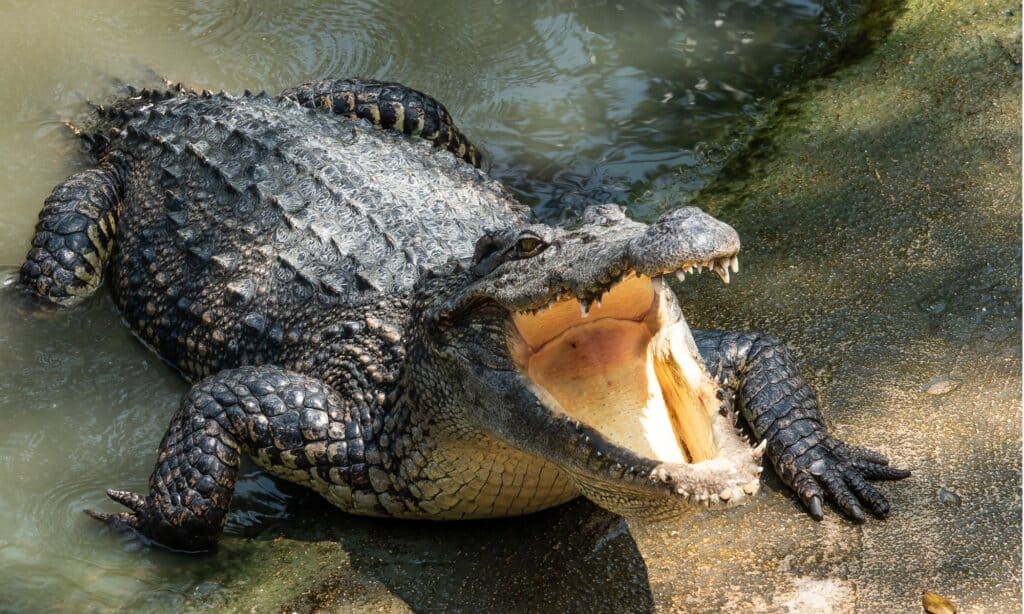
Big aggressive crocodile in the swamp.

Distribution and Habitat

Crocodiles are found in a variety of wetland habitats throughout the warmer tropical waters in the southern Hemisphere. Their inability to internally regulate their body temperature means that they rely heavily on the sun to warm their bodies up after it being cooled by spending time in the water.

Americas

The American Crocodile is the largest crocodilian species in North and South America and is found inhabiting freshwater rivers and lakes, along with brackish coastal waters near estuaries and in lagoons from southern Florida, throughout Central America and into northern parts of South America.
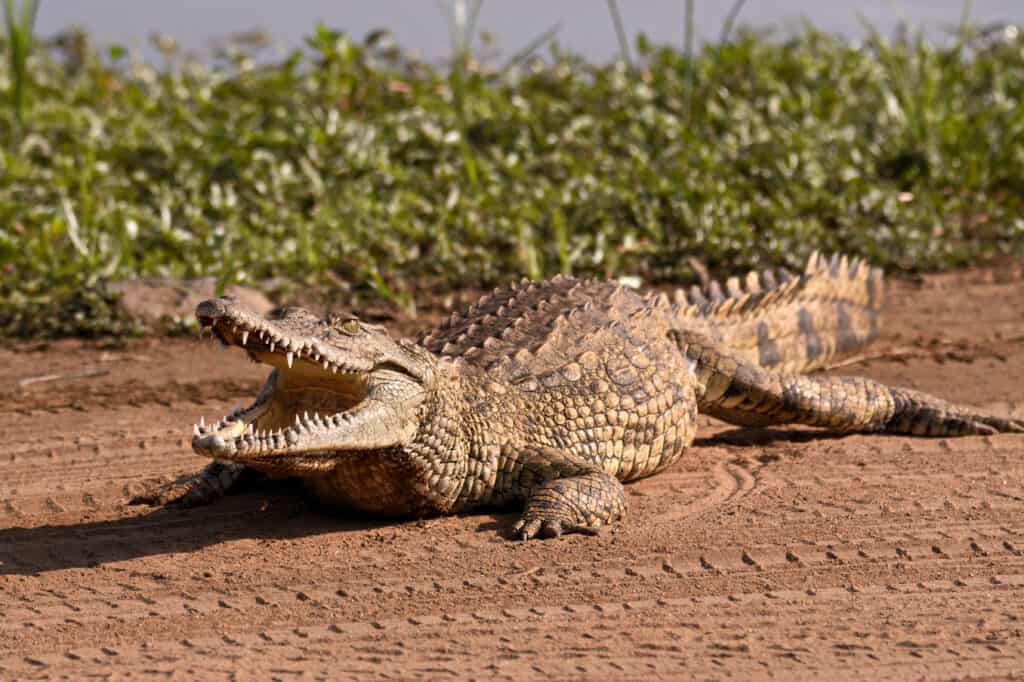
Young Nile Crocodile basking on the banks of a river

Africa

Over in Africa, the Nile Crocodile was once widespread in eastern and southern Africa but are now scarcer. They inhabit freshwater marshes, rivers, lakes and mangrove swamps. The world’s largest and most widely dispersed crocodile species is the estuarine crocodile.

Asia and Australia

These formidable reptilian giants are found in river mouths and brackish swamps from the Bay of Bengal in the Indian Ocean, across to and throughout Southeast Asia and down into Australia.

Behavior and Lifestyle

Crocodiles have been extensively studies by many researchers and scientists to understand their behavior better. Although many species are mainly reclusive and haven’t been extensively studied, here are some common behavioral patters found in crocodiles.
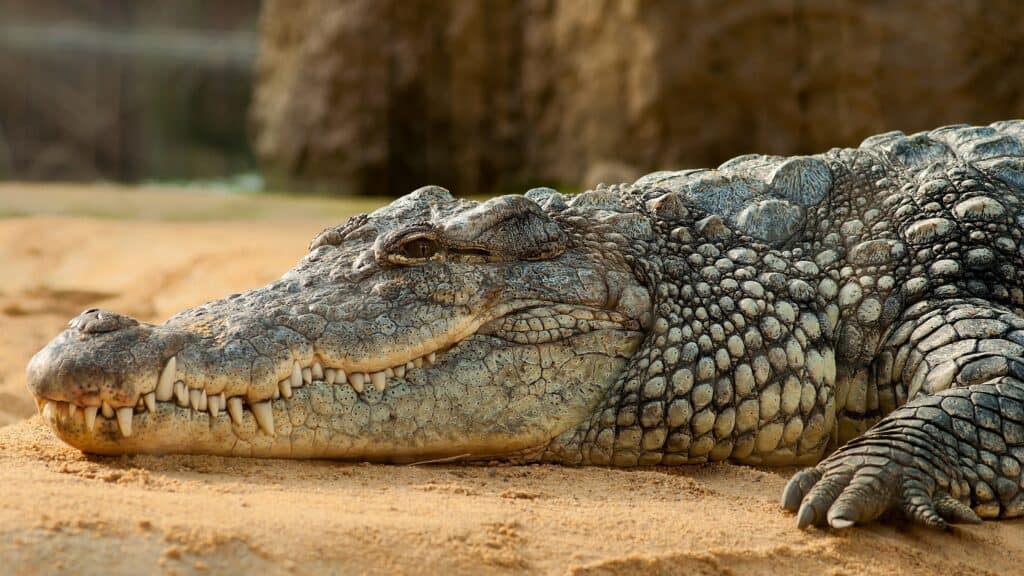
Crocodiles bake in the sun during hot daylight hours to prepare for a night of hunting.

Inability to regulate Body Temperature

In the same way as other reptiles, crocodiles are not able to regulate their body temperature themselves and instead rely heavily on the heat of the sun to warm their enormous bodies. During the hot daylight hours, they bask in the sun on the riverbanks warming their bodies up from a night of hunting. Smaller species like the dwarf crocodile (which is the least-known of the crocodile species) are also known to climb trees in order to bask on the branches.

Another way crocodiles are able to regulate their body temperature is by bobbing up and down in the water, warming in the sun on the surface and cooling themselves down beneath it. Crocodiles are highly sociable animals that remain together in large, mixed groups of adults and juveniles.
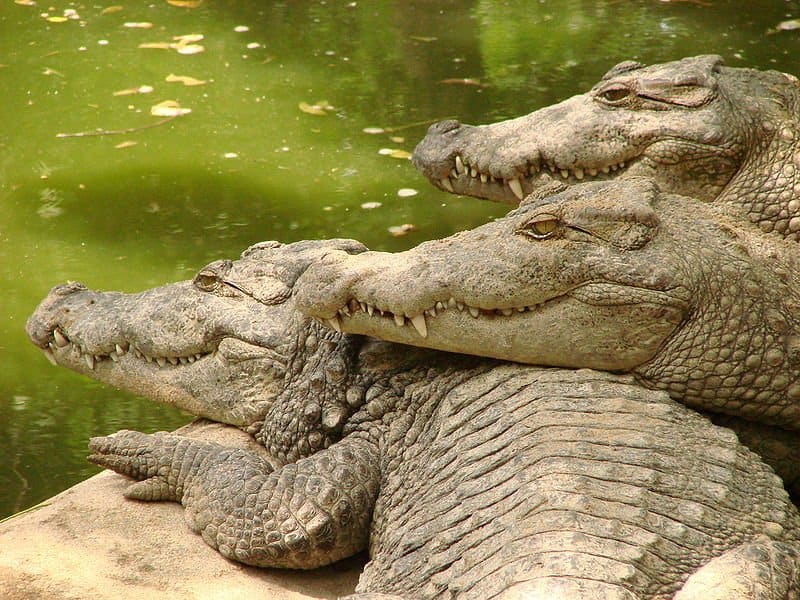
Crocodiles are social animals with a hierarchy led by the largest male.

Crocodiles are Social Animals

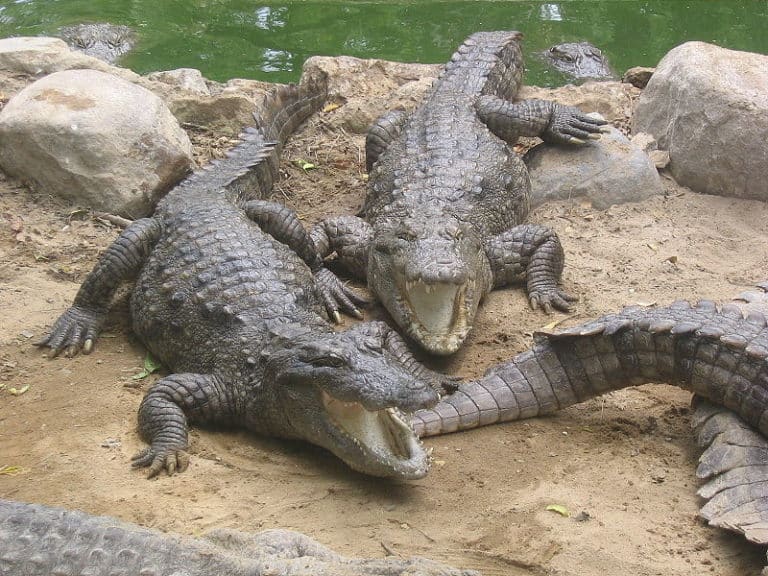
Behavior such as hierarchy, and group feeding have been observed in many of the species. The biggest male is on the top of the hierarchy ladder, and they get to enjoy the best spots for basking. The females always get preference during group feedings when a large animal has been felled by the group. This behavior has especially been observed in the Nile crocodiles and the Mugger crocodiles.

This changes when the mating season begins, the males become highly territorial and protect their stretch of river bank from intrusion by competitors by rearing their large heads high up into the air and roaring at intruders. When female Nile crocodiles are attracted by these noises, the males begin to thrash their bodies around and even shoot water into the air from their nostrils.

How do Crocodiles Communicate?

Unlike many other reptiles crocodiles have the ability to communicate with each other. Depending upon the species in question, the size, the sex, and the situation or condition they are in, crocodiles make a variety of sounds to communicate. Here are some common sounds and their meaning:

  • Chirping – When the eggs are about to hatch, the hatchlings inside the eggs make a ‘squeaky’ noise which prompts the mother to carry the eggs into the water with her mouth. The eggs then hatch in the water and the mother keeps the hatchlings in the water, protecting and feeding them over a period of time.
  • Distress – When the young crocodiles are in imminent danger or they feel threatened, they emanate a high-pitched sound that can alert other crocodiles in the area.
  • Hiss – When they want to threaten others, whether crocodiles or other animals and prey, they make a sound akin to a coughing noise.
  • Mating call – female crocodiles make a specific noise called the hatching call.
  • Bellowing – The male crocodiles make a bellowing noise which is a combination of an infrasonic vibration that creates ripples in the water and a vibration in the ground itself. This commonly happens during mating season in spring. Crocodiles also use this noise to scare off other predators and threats in the area.
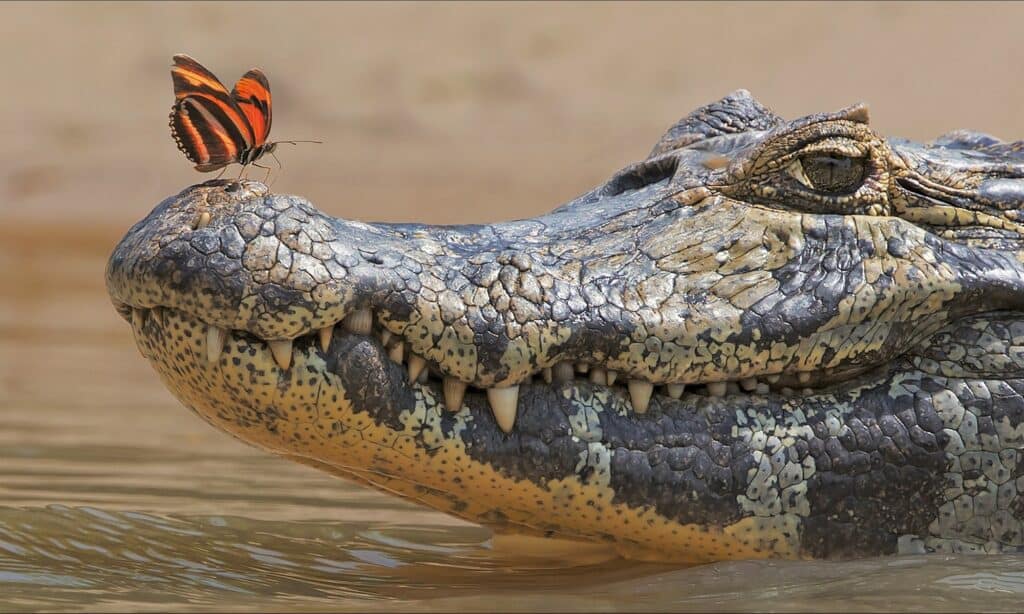
Alligator with Butterfly

Crocodiles are intelligent creatures who study behavior patterns of prey animals before they attack.

Cognitive Intelligence

Crocodiles are highly observant and they study the behavior of their prey extensively. They study the usual patterns in the behavior of animals that come to drink water near their habitat. Some crocodiles have used nesting materials to lure birds close enough to grab them.

Crocodiles are cooperative-group-hunters. They swarm larger preys while big crocodile holds it down and others kill it by ripping it apart. They also trap fish by circling them in groups and snatching them one by one.

Crocodiles are have displayed playful behavior common in social structures, such as locomotive play like repetitive rolling on the slopes, playing with objects, social play like wrestling, swimming and riding ach others backs are common sight in crocodile societies.
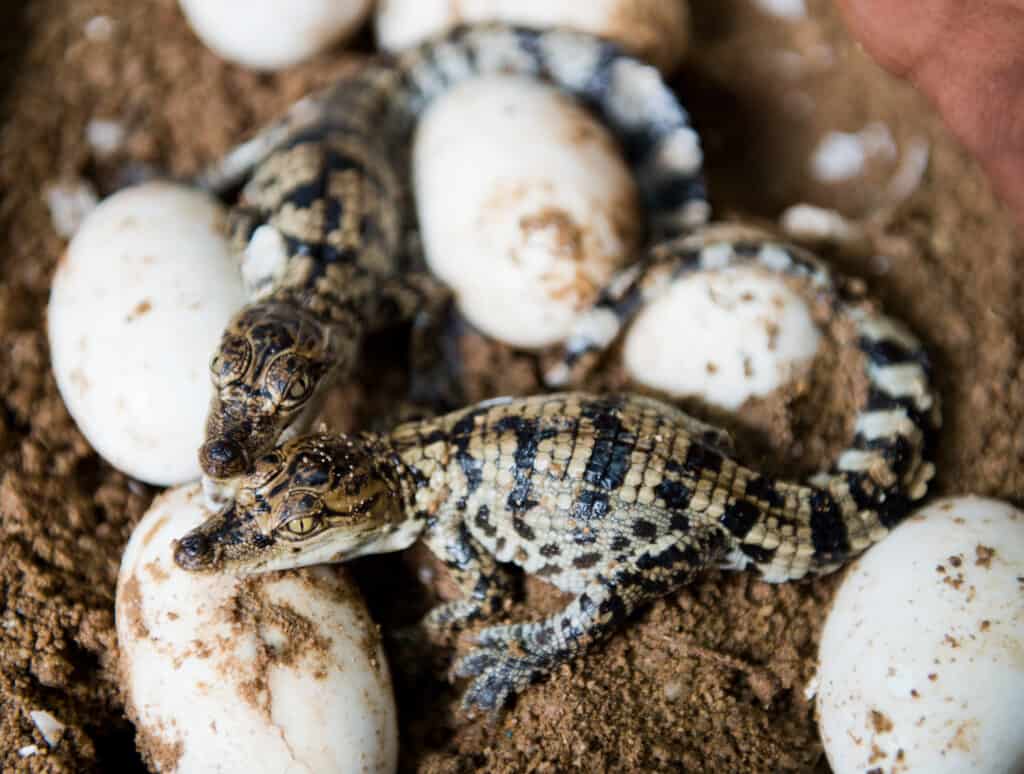
Newly hatched crocodiles often emerge at the start of the rainy season

Reproduction and Life Cycles

After mating, the female crocodile lays between 17 (dwarf crocodiles) and 100 (Nile crocodiles) eggs in a nest made up of soil and vegetation such as leaves, which prevents the eggs from becoming too cold should the nest become flooded during incubation. In areas prone to flooding, they are also known to build nest mounds to raise the eggs out of the danger from flood waters.

The incubation period is usually around 3 months long with hatchlings often emerging to coincide with the beginning of the rainy season to prevent their bodies from drying out. Despite their fearsome reputation, female crocodiles are incredibly caring mothers and guard their nests fiercely to protect them from predators until they are ready to hatch. Once the hatchlings begin to emerge, the female crocodile then helps them down to the water by carrying them in the throat pouch in her mouth.

Interestingly the thin-shelled, leathery eggs of crocodiles (and indeed other more modern reptile species) was an evolutionary breakthrough for many species as their protective layer and waterproof nature meant that females could lay their eggs on land rather than in water, even in the driest of places, meaning they could be better protected from predators. Typically, crocodiles have a lifespan of 25 to 75 years.

Diet and Prey
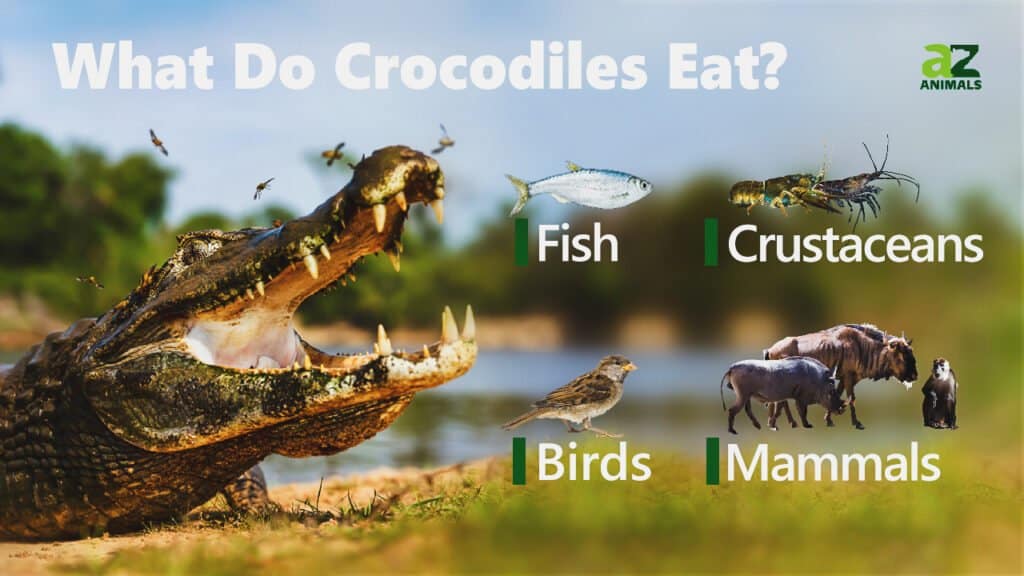
What Do Crocodiles Eat
Crocodiles eat small mammals, birds, fish, bugs, frogs, other species of reptiles, and crustaceans.

Crocodiles are carnivorous, formidable predators and at the top of the food chain in their natural habitat. Their inability to chew food has led to the development of ambush hunting techniques, and strong powerful jaws with teeth that are used to tear food apart.

  • Young crocodiles rely heavily on fish, crustaceans, and small mammals, birds and reptiles, but as they grow larger they are able to take much bigger prey species including, deer, zebra and water buffalo.
  • Crocodiles are often more active during the night, with some species being known to venture onto land to catch prey, livestock and in some cases, people (learn more about the most dangerous animals on earth to humans).
  • Due to their highly sociable nature, Nile crocodiles (which predominantly feed on fish), are known to work together in order to cordon fish off in sections of river when they are migrating.
  • Crocodiles have a very slow metabolism and can float for a long time without moving.
  • In extreme cases, they seem to be able to go dormant and live off of their own tissues for long periods.
  • Crocodiles can live for up to three years without eating.

Catfish make up a large portion of their natural diets and by keeping their numbers at bay, this allows small fish species to still thrive. These fish (which would ordinarily be quickly eaten by the larger catfish) then provide food for over 40 species of bird, that in return fertilize the waters with their droppings and keep them rich with nutrients so numerous animal species can continue to thrive.

Learn more about the toughest animals in the world here.

Predators and Threats
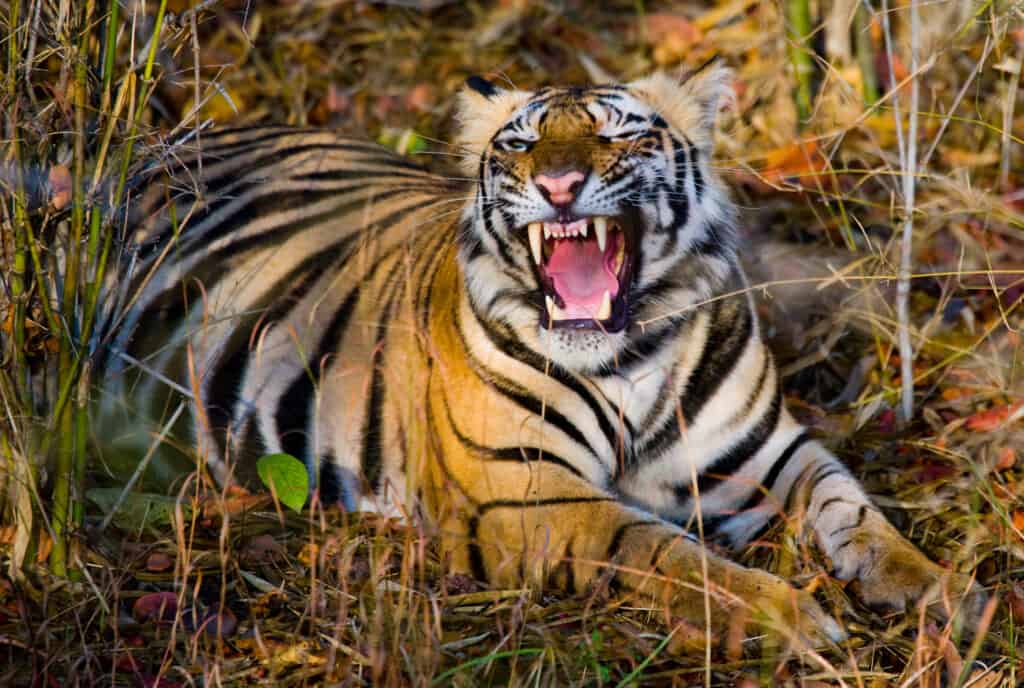
Wild Bengal Tiger lying on the grass and yawns.

Tigers occasionally prey on crocodiles

Due to the large size and highly aggressive nature of these apex predators, adult crocodiles have very few predators within their natural environments with the exception of occasional takings by big cats such as lions, jaguars, and tigers. The smaller and much more vulnerable juveniles however are preyed upon by a number of animal species around the world from wild pigs, dogs, and large reptiles to birds of prey like eagles.

Although they are common in certain areas, crocodiles are threatened throughout much of their natural ranges from hunting, habitat loss, and ecological changes further down the food chain due to overfishing or water pollution, which then has an impact on them higher up the food chain.

Interesting Facts and Features

Although most crocodile species inhabit freshwater regions such as swamps, rivers, and lakes, there are a number of species that venture into more salty waters around the coasts. American crocodiles are often found in estuaries and lagoons close to the shores but are able to deal with the higher salinity levels by drinking large amounts of freshwater whenever possible, and by removing salt from the body by secreting crocodile tears through the glands on their face.

In periods of drought, they are also known to burrow deep into the mud in order to stop their bodies from drying out and will not eat anything until the water returns. On the other side of the world, estuarine crocodiles have been observed eating pebbles found on the riverbeds. The process of this is thought to help to grind up their food, therefore aiding digestion but also acts as a ballast to help with buoyancy while floating on the surface of the water.
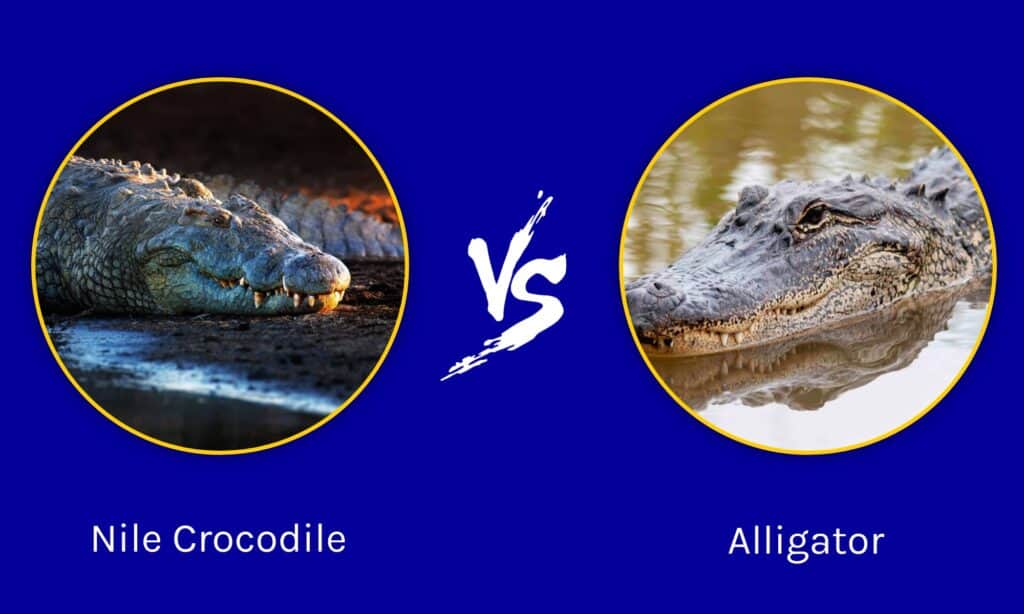
Crocodile vs Alligator

As noted earlier, the order Crocodilia encompasses crocodiles, alligators, gharial, and caimans. With alligators being common across the Southeastern United States, a common question is what are the key differences between alligators vs. crocodiles? The two differ most in that:

Relationship with Humans

The relationship between crocodiles and people has been a long-lasting point of contention for thousands of years. Their highly aggressive manner of attacking prey has resulted in numerous human fatalities an on annual basis, with some people actually having been hunted by crocodiles as well as in ambush on the banks of the rivers.

Although death toll numbers are declining due to better education and local knowledge about the formidable nature of these enormous reptiles, around 1,000 deaths are still estimated to occur every year. Crocodiles have also been affected heavily by increasing human activity in many regions around the world, with the expansion of settlements and an increase in river traffic due to hunting, fishing, and tourism.

Commercial Use of Crocodiles

Crocodile skin – As formidable as they are crocodiles are farmed in many parts of the world for their hide, which is tanned and turned into apparel, shoes, handbags, belts, etc. Crocodile skin is highly sought after and valuable in the high fashion industry across the globe.

Crocodile meat – The meat is harvested as it is considered a delicacy and eaten in various countries such as China, Thailand, Cambodia, Korea, Philippines, New Zealand, Bahamas, and even the USA.

Crocodile oil – Monounsaturated and polyunsaturated fats are extracted from the tissues of the crocodile and sold as crocodile oil. It was extensively used in traditional medicine in many Asian and native cultures. It is used in treating skin conditions, mending wounds and skin tissue, and treating illnesses such as cancer.
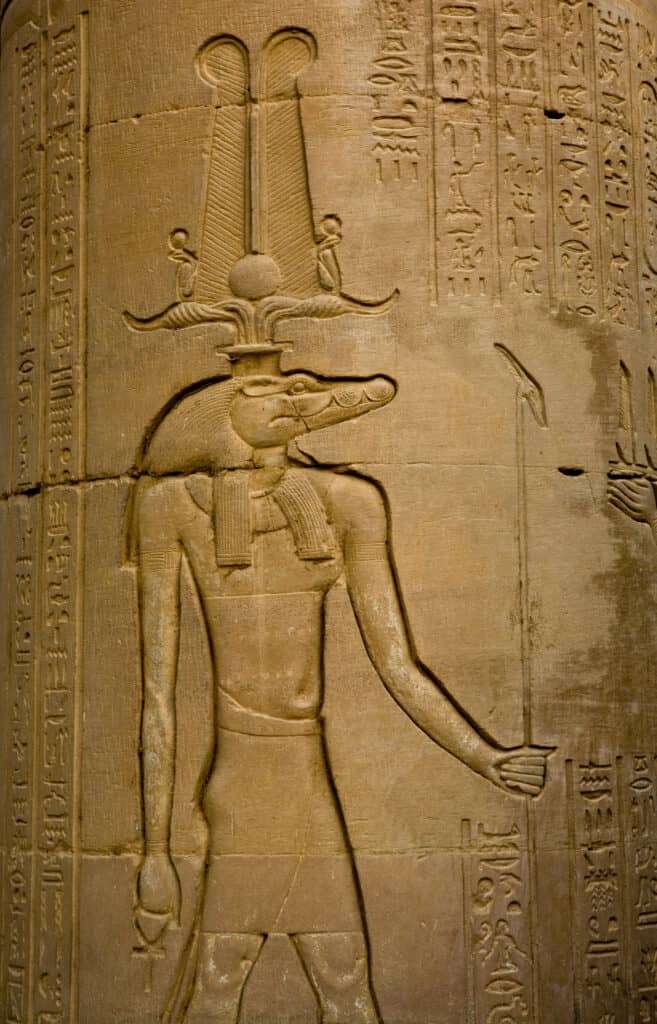
Kom Ombo, crocodile God Sobek, Egypt

Sobek was the revered Crocodile god of ancient Egypt.

In Various Cultures

The fierce and formidable nature of crocodiles resulted in their being worshipped in many cultures. In Egypt, Sobek, who represents power and fertility has the head of a crocodile. Also, Taweret, the goddess of fertility, has the tail and back of a crocodile on a human body. In parts of Africa, crocodiles are seen as ancestors and offered food. In Hinduism the god and goddess of water are seen riding crocodiles, and so are a few river deities.

Conservation Status

Today, although some local populations are thought to be stable, throughout much of their natural ranges the population numbers for all crocodiles species are declining. Out of the 13 different crocodile species, 6 has been listed as Least Concern, 2 have been listed as Vulnerable and 5 have been listed as Critically Endangered by the IUCN. Of all of these species, the Philippine crocodile is by far the most at risk with less than 200 individuals estimated to remain in the wild

View all 392 animals that start with C
How to say Crocodile in ...
Bulgarian
Крокодили (род)
Catalan
Crocodylus
Czech
Krokodýl
German
Crocodylus
English
Crocodile
Esperanto
Krokodilo
Spanish
Crocodylus
Hebrew
תנין (סוג)
Hungarian
Crocodylus
Italian
Crocodylus
Japanese
クロコダイル属
Latin
Crocodylus
Dutch
Crocodylus
Polish
Crocodylus
Portuguese
Crocodylus
Swedish
Crocodylus
Turkish
Crocodylus
Chinese
鱷屬

Sources

  1. David Burnie, Dorling Kindersley (2011) Animal, The Definitive Visual Guide To The World's Wildlife / Accessed April 25, 2018
  2. Tom Jackson, Lorenz Books (2007) The World Encyclopedia Of Animals / Accessed April 25, 2018
  3. David Burnie, Kingfisher (2011) The Kingfisher Animal Encyclopedia / Accessed April 25, 2018
  4. Richard Mackay, University of California Press (2009) The Atlas Of Endangered Species / Accessed April 25, 2018
  5. David Burnie, Dorling Kindersley (2008) Illustrated Encyclopedia Of Animals / Accessed April 25, 2018
  6. Dorling Kindersley (2006) Dorling Kindersley Encyclopedia Of Animals / Accessed April 25, 2018
Dana Mayor

About the Author

Dana Mayor

I love good books and the occasional cartoon. I am also endlessly intrigued with the beauty of nature and find hummingbirds, puppies, and marine wildlife to be the most magical creatures of all.
Connect:

Thank you for reading! Have some feedback for us?


Crocodile FAQs (Frequently Asked Questions)

Crocodiles are Carnivores, meaning they eat other animals.