
C
Species Profile

Cross River Gorilla

Gorilla gorilla diehli

Protect the Cross River silverback
Kit Korzun/Shutterstock.com

Cross River Gorilla Distribution

Click a location to explore more animals from that region

Endemic Species
Loading map...

Size Comparison

Human 5'8"
Cross River Gorilla 5 ft 3 in

Cross River Gorilla stands at 93% of average human height.

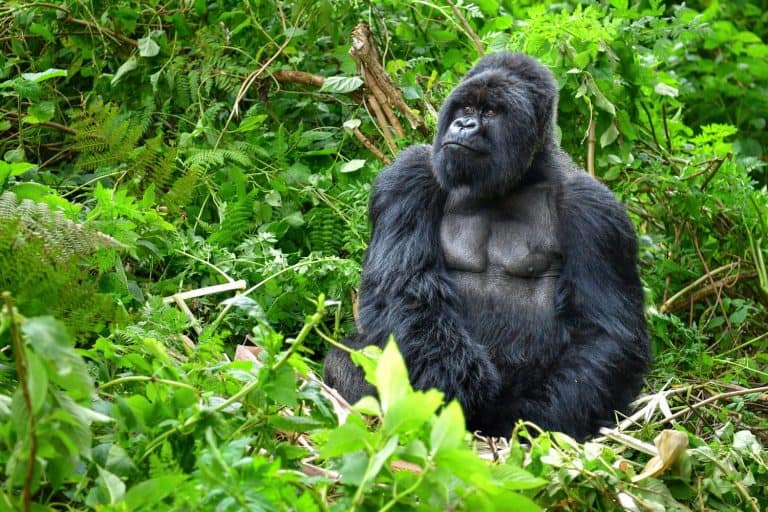
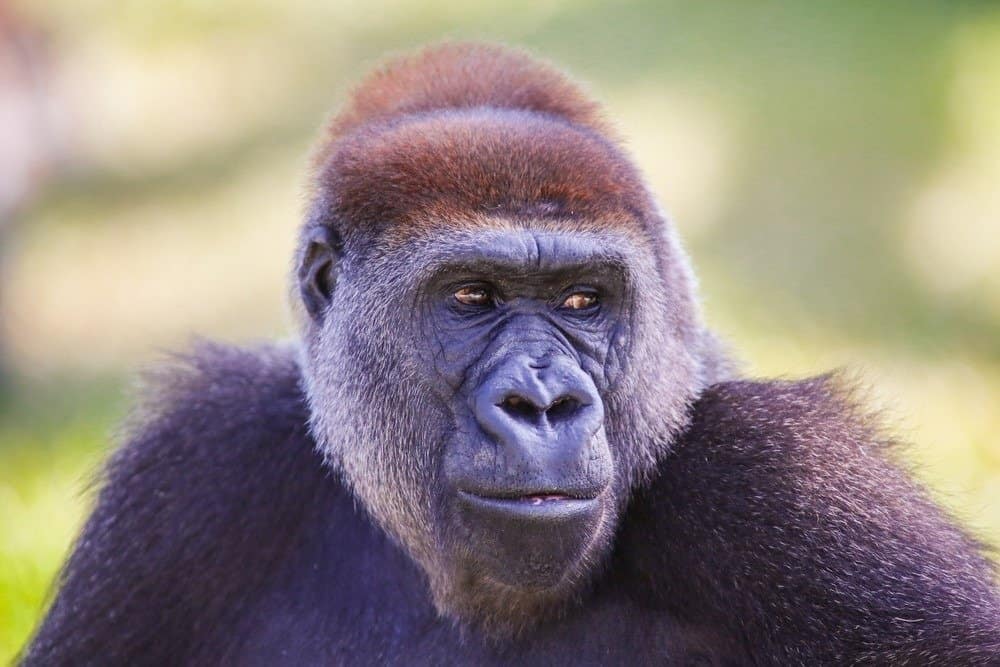
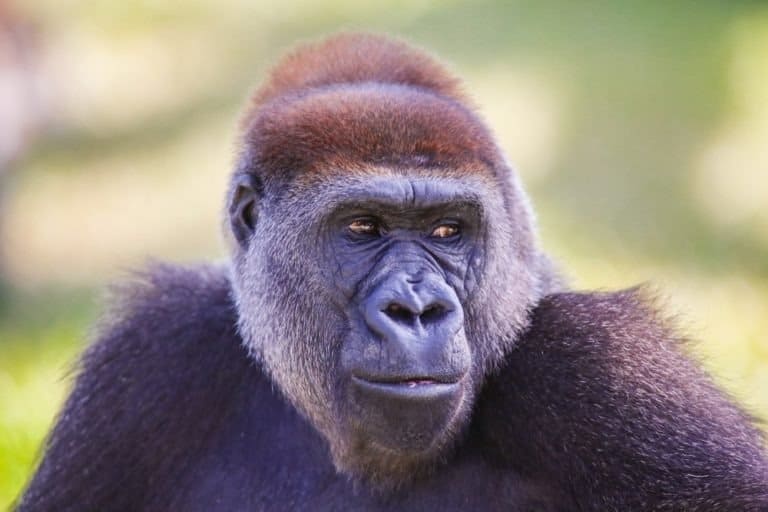
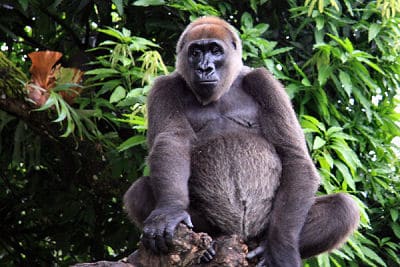
Portrait of the Cross River Gorilla

At a Glance

Wild Species
Diet Omnivore
Activity Diurnal+
Lifespan 35 years
Weight 180 lbs
Did You Know?

Taxon: Cross River gorilla = Gorilla gorilla diehli, the most geographically isolated form of western gorilla (G. gorilla).

Scientific Classification

The Cross River gorilla is a critically endangered subspecies of the western gorilla, restricted to a small region along the Nigeria–Cameroon border near the Cross River headwaters. It is one of the rarest and most geographically isolated gorilla populations.

Kingdom
Animalia
Phylum
Chordata
Class
Mammalia
Order
Primates
Family
Hominidae
Genus
Gorilla
Species
Gorilla gorilla

Distinguishing Features

  • Very limited geographic range (Nigeria–Cameroon border region) compared with other western gorillas
  • Small, fragmented subpopulations with low connectivity
  • Often described as slightly smaller-bodied with proportionally shorter skull/teeth traits than western lowland gorillas (diagnosis relies on morphology/genetics rather than obvious field marks)
  • Behavior/ecology broadly similar to other western gorillas, with flexible diet including fruit and herbaceous vegetation

Physical Measurements

Males and females differ in size

Height
5 ft 5 in (4 ft 11 in – 5 ft 11 in)
4 ft 3 in (3 ft 11 in – 4 ft 7 in)
Weight
353 lbs (309 lbs – 441 lbs)
176 lbs (154 lbs – 198 lbs)
Top Speed
25 mph
About 40 km/h

Appearance

Primary Colors
Secondary Colors
Skin Type Cross River gorillas have dense, coarse hair over most of the body. Face, ears, hands, feet have sparse or bare, thick dark skin with a unique nose 'noseprint'. Thick knuckle and sole skin aids knuckle-walking.
Distinctive Features
  • Large, powerfully built African great ape (Family Hominidae) with very broad chest/shoulders, long forelimbs, and short neck; no tail; habitual knuckle-walking and capable climber.
  • Hairless black face with pronounced supraorbital/brow region; noseprint (skin folds/ridges around nostrils) is individually unique and used for identification in field studies.
  • Adult males typically develop a prominent sagittal crest and enlarged jaw musculature; very large canines (especially in males) used for display rather than predation.
  • Cross River gorillas (Gorilla gorilla diehli) show slightly smaller skulls and teeth than other western gorillas, but these differences are small, hard to see in the field, and not reliable identifying traits.
  • Body size data for the Cross River gorilla (Gorilla gorilla diehli) are limited; western gorilla numbers are used—males ~140–200 kg, 1.55–1.75 m; females ~70–100 kg, 1.25–1.40 m—and not measured for this subspecies.
  • Active by day; eat leaves and fruit, more fruit in season. Make night nests. Live in groups led by a silverback with females and young. Cross River groups are small due to fragmented habitat.
  • Cross River gorillas live in a small, isolated area of rugged forest on the Nigeria–Cameroon border near the Cross River headwaters. Populations are fragmented and hunted; forest links are needed.

Sexual Dimorphism

Cross River gorillas (Gorilla gorilla diehli) show strong sexual dimorphism: adult males are much larger and heavier than females, with silver backs, head crests, and bigger canines. Lifespans are about 35–40+ years wild and can exceed 50 years in captivity, but Cross River data are limited.

  • Gray 'silverback' saddle developing with maturity; increased overall grizzling in older males.
  • Much larger body mass and shoulder/chest breadth; more massive forelimbs.
  • More prominent sagittal crest and wider zygomatic arches (supporting larger jaw muscles).
  • Larger canines and broader jaws; more pronounced display features (e.g., chest-beating, vocalizations) typical of gorilla social behavior.
  • Smaller, more lightly built body; no silver saddle (coat remains mostly dark).
  • Less pronounced cranial cresting and smaller canines.
  • Reproductive cues are not strongly visual in pelage; females carry infants ventrally then dorsally, which is often the most obvious field-identification 'feature' beyond size.

Did You Know?

Taxon: Cross River gorilla = Gorilla gorilla diehli, the most geographically isolated form of western gorilla (G. gorilla).

Wild population size is typically estimated at ~250-300 individuals (IUCN Red List assessments widely cite this range).

They persist in a handful of rugged hill/mountain forest blocks along the Cross River headwaters on the Nigeria-Cameroon border (not one continuous population).

Like other gorillas, they build a new sleeping nest almost every night-on the ground or in trees depending on safety and terrain.

They live in small social groups usually led by a single silverback; smaller average group sizes are often linked to hunting pressure and fragmentation.

They can use higher-elevation forest than most western lowland gorillas, with records up to roughly ~2,000 m in the Cross River region (published field reports from the subspecies' range).

The subspecies was formally described in 1904 (Paul Matschie) and named "diehli" after a person associated with early collections from the region.

Unique Adaptations

  • Rugged-terrain persistence: their remaining habitat is disproportionately steep and remote-an ecological 'refuge' that likely improves survival by reducing human access (a landscape-driven adaptation in behavior and ranging).
  • Morphological distinctiveness: Cross River gorillas show documented skeletal/cranial differences from other western gorillas (notably in skull and dental traits) consistent with long-term isolation and limited gene flow.
  • Dietary flexibility: like other gorillas, they possess large hindguts/fermentation capacity for processing high-fiber vegetation-key where fruit availability is seasonal or reduced at higher elevations.
  • Low reproductive rate (a life-history trait): long infant dependency and multi-year interbirth intervals make populations slow to recover from hunting losses-driving the subspecies' extreme vulnerability.

Interesting Behaviors

  • One-male group structure: a dominant silverback leads, mediates conflicts, and controls group travel; adult females and offspring form the core social unit (a typical gorilla pattern also documented in this subspecies).
  • Concealment and avoidance: in heavily hunted landscapes, Cross River gorillas are notably wary-often silent, cryptic, and quick to retreat into dense cover or rugged slopes.
  • Flexible nesting: ground nests are common where threat is low; tree nests are used more when disturbance is high or where steep, broken terrain favors arboreal sites.
  • Diet tracking across seasons: groups shift feeding routes to follow fruiting trees when available and rely heavily on leaves, pith, and other fibrous plant foods when fruit is scarce (a hallmark of western gorillas, applied in this highland-lowland mosaic).
  • Dispersal: adolescents-especially females in many gorilla populations-often transfer between groups, which is crucial for gene flow; fragmentation makes this risky and elevates the importance of forest corridors.
  • Trail and site fidelity: repeated use of ridge-lines, saddles, and specific feeding areas is reported in mountainous gorilla habitats, helping groups move efficiently through steep terrain.

Cultural Significance

In Nigeria–Cameroon border forests, the Cross River gorilla (Gorilla gorilla diehli) helps shape local identity and community conservation agreements, supports anti-poaching rules, and pushes for forest corridors (Afi-Mbe-Okwangwo, Takamanda/Kagwene). It is a symbol for protecting headwater forests and other local plants and animals.

Myths & Legends

Documented, widely shared "gorilla-specific" folklore from the Cross River area is limited in the scientific literature; to avoid inventing traditions, the most verifiable cultural narratives are historical and naming-related.

The subspecies name diehli comes from Paul Matschie's 1904 description. It honors Diehl, who helped collect specimens during early colonial exploration of Central and West African wildlife.

The Cross River gorilla (Gorilla gorilla diehli) is a symbol of forest care. Locals and conservation groups say its survival shows community rules, patrols, and corridor protection in the border highlands are working.

Conservation Status

CR Critically Endangered

Facing an extremely high risk of extinction in the wild.

Population Decreasing

Protected Under

  • CITES Appendix I (Gorilla spp.)
  • Cameroon: Wildlife Law No. 94/01 (1994) - Class A (fully protected species)
  • Nigeria: Endangered Species (Control of International Trade and Traffic) Act/Decree (national protection for great apes)
  • Key protected/managed sites within range (examples): Cross River National Park (Nigeria); Afi Mountain Wildlife Sanctuary (Nigeria); Takamanda National Park (Cameroon); Kagwene Gorilla Sanctuary (Cameroon); community-managed Mbe Mountains (Nigeria)

Life Cycle

Birth 1 infant
Lifespan 35 years

Lifespan

In the Wild
30–40 years
In Captivity
40–60 years

Reproduction

Mating System Polygyny
Social Structure Harem Based
Breeding Pattern Long Term
Fertilization Internal Fertilization
Birth Type Internal_fertilization

Cross River gorillas (Gorilla gorilla diehli) are polygynous: one dominant silverback mates with several adult females in long-term groups. Breeding occurs throughout the year; the silverback fathers most young. Some multi-male groups occur, but many details are not well known.

Behavior & Ecology

Social Troop Group: 6
Activity Diurnal, Matutinal, Vespertine
Diet Omnivore Aframomum spp. (gingers; pith/shoots and fruits)

Temperament

Cross River gorillas are shy and avoid people, usually retreat instead of fighting; aggression is rare, happens in certain situations and is led by the silverback.
Cross River gorilla (Gorilla gorilla diehli): silverbacks (dominant males) protect the group, use threat displays and defend against danger or other groups. Daily life is mostly calm; mothers and young stay close.
Dispersal-related variation (HUBS): subadult males commonly show increased ranging and risk-taking during emigration; females may transfer between groups, influencing short-term instability and occasional tension during introductions (Robbins, 1996; Oates et al., 2007).
Cross River gorillas (Gorilla gorilla diehli) likely live about 35 to 40 years in the wild and up to about 50 years in zoos, but exact subspecies data are limited.
Cross River gorilla (Gorilla gorilla diehli) body size data are scarce; studies focus on skull and tooth differences. Western gorilla sizes used as estimates: males ~140–200 kg, females ~70–90 kg, height ~1.4–1.8 m.

Communication

Contact grunts Short-range cohesion signals within foraging/travel; common across Gorilla gorilla including Cross River gorillas) (Robbins, 1996
Alarm barks/roars and explosive vocalizations during disturbance or high arousal; often paired with visual displays by the silverback Robbins, 1996; Oates et al., 2007
Screams/cry vocalizations by infants/juveniles during distress and during social conflict Robbins, 1996
Low-frequency "belch"-like vocalizations reported in gorillas as part of close-range social signaling Documented broadly in Gorilla spp.; Cross River-specific recordings are limited due to low habituation) (Robbins, 1996
Chest beating Rapid, resonant drumming) as a long- and mid-range signal of size/status and arousal; used in both intergroup spacing and within-group display contexts (Robbins, 1996; Oates et al., 2007
Visual threat displays: strut posture, piloerection, ground/vegetation slapping, charging; especially by silverbacks as a graded escalation sequence Robbins, 1996
Gestural communication: reaching, pushing/pulling, presenting, and directed touches used in affiliative interactions and mother-infant coordination Great-ape gestural repertoires; Cross River gorillas expected to share this, though direct ethograms are limited) (Robbins, 1996; comparative great-ape gesture literature
Facial expressions and gaze cues E.g., play face in juveniles, stare/avert gaze in tension regulation) consistent with gorilla social signaling (Robbins, 1996
Auditory non-vocal signals: branch shaking and vegetation thrashing to increase signal salience in dense forest Oates et al., 2007

Habitat

Biomes:
Tropical Rainforest Wetland
Terrain:
Mountainous Hilly Plateau Valley Riverine
Elevation: 492 ft 2 in – 5577 ft 5 in

Ecological Role

Large-bodied forest herbivore and key frugivore/seed disperser in Nigeria-Cameroon montane and submontane forests

seed dispersal (defecation of intact seeds from many fruit species, promoting forest regeneration and plant gene flow across fragmented habitats) seed predation for some taxa (when seeds are chewed), influencing plant recruitment patterns vegetation pruning and understory restructuring via repeated browsing on herbaceous and woody plants nutrient cycling (redistribution of nutrients through feces/urine, locally enriching soils and influencing plant growth) creation/maintenance of forest trails and small clearings, which can alter plant community structure and provide movement corridors for other fauna

Diet Details

Main Prey:
Termites Ants Opportunistic invertebrates
Other Foods:
Forest fruits Herbaceous vegetation Gingers Young leaves and leaf petioles Pith and stems Bark and cambium Seeds +1

Human Interaction

Domestication Status

Wild

No domestication history. Cross River gorilla (Gorilla gorilla diehli) was never domesticated: slow breeding, long lives, large size, complex social needs, and danger to people. They are not kept in captivity as a separate group. Threats: hunting, snares, and habitat loss. Protection: patrols, community conservation, and non-contact studies.

Danger Level

Moderate
  • Physical injury if a group is approached too closely, surprised, or threatened-adult silverbacks can inflict severe trauma (bites, blunt-force injury) during defensive charges; however Cross River gorillas are generally wary and avoid humans, so attacks are rare.
  • Zoonotic disease transmission in both directions: humans can transmit respiratory pathogens (and other infections) to gorillas; close contact can also expose humans to zoonoses. This is a key reason for strict distancing and health protocols in great-ape fieldwork and any tourism.
  • Human-wildlife conflict is usually indirect (crop-raiding is not typically a dominant issue compared with other primates), but snare injuries and retaliatory risk can occur where hunting pressure is high.

As a Pet

Not Suitable as Pet

Legality: Keeping a Cross River gorilla (Gorilla gorilla diehli) as a pet is illegal and would be a crime. They are Critically Endangered and protected by Nigeria, Cameroon, CITES Appendix I, the US ESA, and EU/UK rules.

Care Level: Expert Only

Purchase Cost:
Lifetime Cost: $1,000,000 - $2,000,000

Economic Value

Uses:
Ecosystem services (seed dispersal/forest regeneration via frugivory) Scientific and conservation value (flagship/umbrella taxon for protecting Cross River headwater forests) Ecotourism potential (limited and carefully managed; currently far less developed than mountain gorilla tourism) Cultural and educational value (local/national heritage; global conservation symbolism) Illicit economy impacts (bushmeat trade; illegal wildlife trade externalities)
Products:
  • No legal consumptive products (commercial trade prohibited under CITES Appendix I and national laws).
  • Illegal/unsanctioned: bushmeat; occasional live-capture attempts (infant trade) in broader great-ape trafficking contexts.

Relationships

Ecological Equivalents 4

Animals that fill a similar ecological role in their ecosystem

Nigeria-Cameroon chimpanzee Pan troglodytes ellioti Cross River gorillas (Gorilla gorilla diehli) and the Nigeria-Cameroon chimpanzee (Pan troglodytes ellioti) occupy the same Nigeria–Cameroon border forests, consume fruits and leaves, and contribute to seed dispersal. Cross River gorillas are rare (a few hundred individuals) and are threatened by hunting and habitat loss.
Drill Mandrillus leucophaeus Large-bodied forest primate in the Nigeria–Cameroon region; a terrestrial forager that relies heavily on fruit and understory plant foods and is similarly impacted by bushmeat hunting and forest fragmentation, making it a functional analogue for human-pressure ecology and forest-floor resource use.
Preuss's monkey Allochrocebus preussi Endemic or near-endemic primate of the Cameroon-Nigeria forests. Shares reliance on intact forest habitat and vulnerability to fragmentation and hunting pressure. Although smaller and more arboreal, it overlaps in forest food-web roles (fruit and seed interactions) and in conservation context.
Forest elephant
Forest elephant Loxodonta cyclotis Sympatric (or historically sympatric) large forest herbivore/frugivore and major seed disperser. Like Cross River gorillas, it depends on connected forest landscapes and is strongly affected by hunting and habitat loss, making it an ecological counterpart in megafaunal forest dynamics.

The Cross River Gorilla lives in the mountainous region between Nigeria and Cameroon.

The Cross River gorilla (scientific name: Gorilla gorilla diehli) is a subspecies of the western gorilla. Paul Matschie, in 1904, named the cross river gorilla a new species, though it has become increasingly rare.

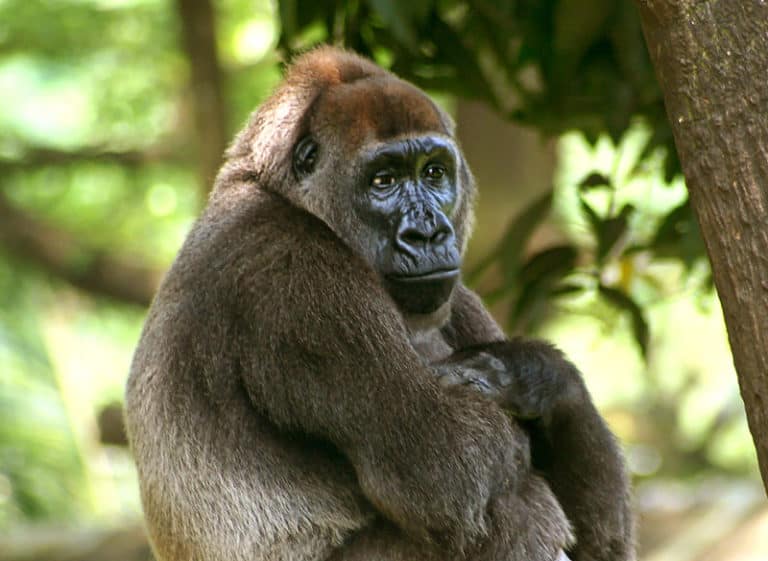
These gorillas have brownish-grey or black fur. However, the face, hands, and feet have no fur at all. They have cone-shaped heads, above which, rests a reddish crest. These gorillas are very social and usually live in groups of 2 to 20. The groups are led by a dominant male. Apart from the dominant leader, there are 6-7 females and their children.

Cross River gorillas sexually mature at age 10 and usually have babies every 4 years. Their gestation period usually lasts 9 months. These gorillas live in the mountainous region between Nigeria and Cameroon. The Cross River gorillas are herbivores and usually feed on branches, nuts, leaves, and berries that they hunt for from different plants.

The Cross River gorillas are known to be highly efficient in infant care and are known to care for their babies up until they are three to four years of age. During this time, they do not reproduce again and give their full attention to their newly born baby.

Incredible Cross River Gorilla Facts!

  • Known as the world’s strangest gorillas, the Cross River gorillas are small in population and are rarely seen.
  • Cross River gorillas are critically endangered – there are only 200 to 300 left in the world.
  • They are the most endangered primate in Africa.
  • They are usually found at the borders between Nigeria and Cameroon.
  • Most of their day is spent eating.

Scientific Name

The Cross River gorillas go by the scientific name “Gorilla gorilla diehli” and belong to the kingdom Animalia and class Mammalia. They belong to the phylum Chordata and order Primates. They also belong to the family Hominidae and genus gorilla.

Evolution And Origin

The Cross River gorilla is a subspecies of the western gorilla, which scientists believed originated from a genus of proto-primates that were around at the end of the Cretaceous period. The first species of what we know of as Old World monkeys appeared about 40 million years ago. It is believed that the western species of gorilla deviated into its own genus during the Pleistocene era, and the cross river gorilla was further shaped into its own subspecies around 17,800 years ago due to climate change.
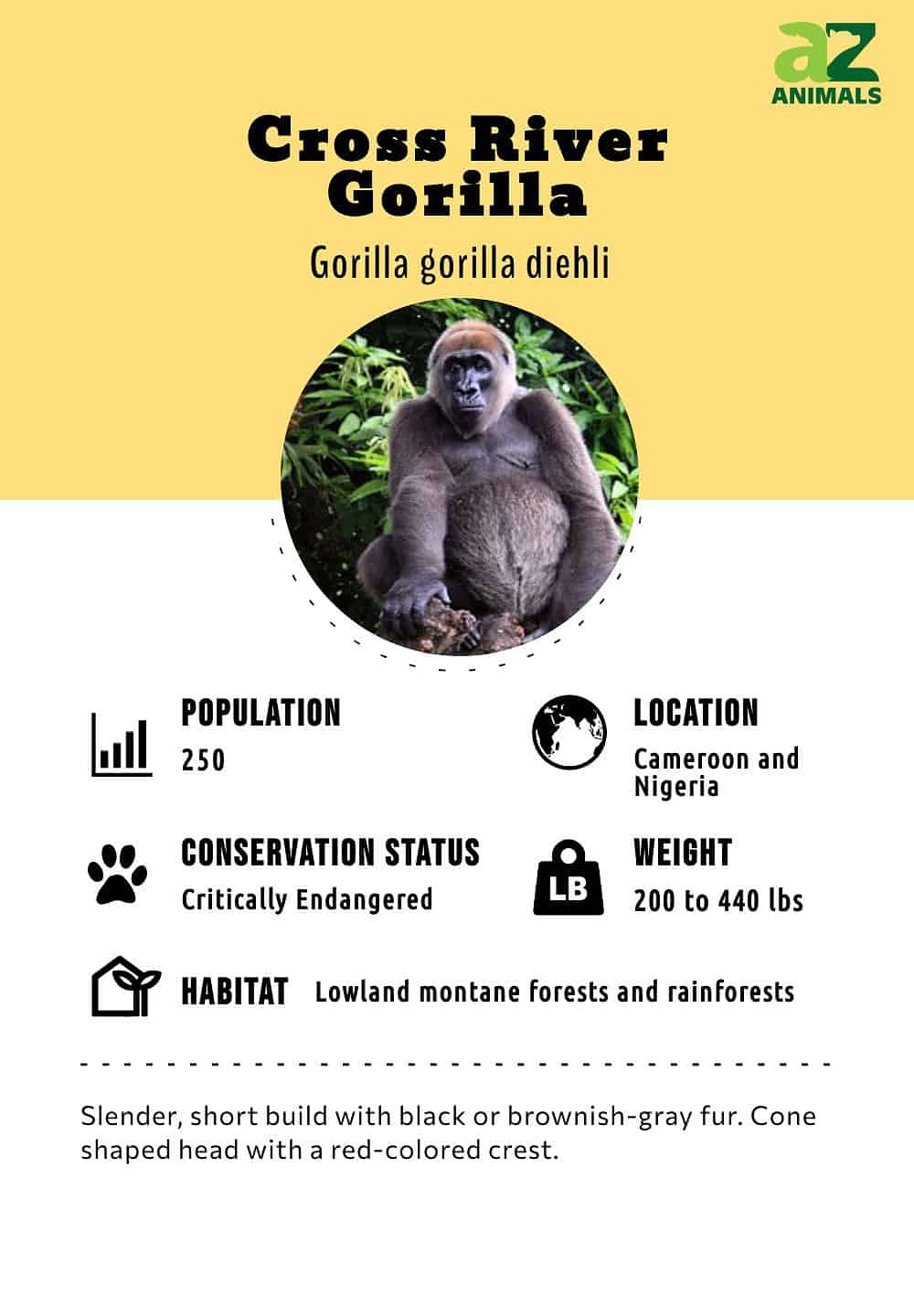
Appearance And Behavior

The Cross River gorillas have a slender yet short build, paired with light-colored hair. These gorillas have long arms and a prominent ridgeline, which offers a striking contrast to the flat face and wide nostrils. Their dark eyes are concealed by fur, which is often either black or brownish-gray.

The face usually has no fur, just like the hands, and feet. Their heads are cone-shaped, and they have a red-colored crest on their heads. The group leaders who are dominant males often have a silver patch on their backs – which is also why they are called silverbacks.

The Cross River gorillas are social and live in family groups of 2 to 20 individuals. Their behavior is very similar to other gorillas. The group is usually led by a silverback male as the dominant leader.

The male leader is usually responsible for taking care of the females and children of the group and also often makes the key decisions of the group like the feeding and nesting sites.

A group usually consists of the dominant male, six to seven females, and their children. The nesting happens in forests after these gorillas build nests with branches and leaves. The nesting places are usually on the ground.

However, the resting places change in the rainy season when they shift their nests to the top of trees. Most of their day is spent eating. However, sources suggest that they also indulge in recreational activities like grooming.

These gorillas are usually known to be peaceful. However, they may sometimes turn aggressive toward humans when threatened. They may attack humans with branches, stones, and herbs if provoked.
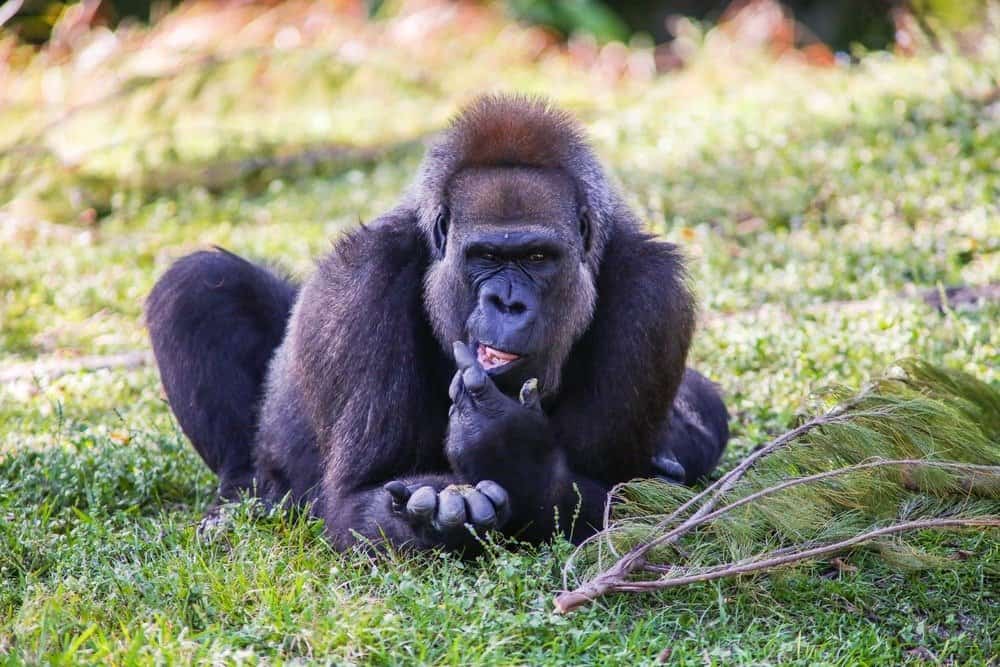
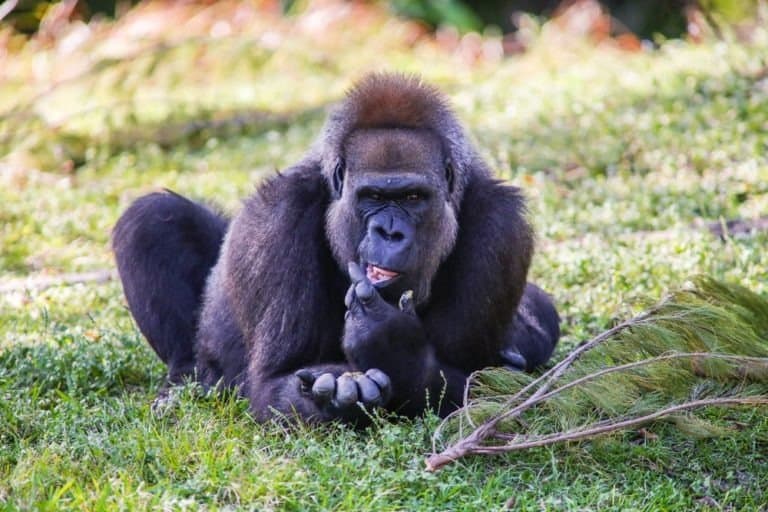
Cross River Gorilla resting in the shade of trees in the hottest time of the day.

Cross River Gorilla is known to be peaceful.

Habitat

Known as the world’s strangest gorillas, the Cross River gorillas are small in population and are rarely ever seen. They are usually found on the mountainous borders of Nigeria and Cameroon. This habitat of theirs is called the Cross River basin.

These animals are known to inhabit most North and West regions. They also exist in the Afi mountains in Nigeria and the Cameroons’ Mbe mountains. Apart from that, they are also found in the Takamanda National Park of Cameroon and the Cross River National Park in Nigeria.

Most of these gorillas are found at a height of 1500 meters to 3500 meters in mountainous rainforests and bamboo forests.

Diet

The foods found in the diets of the Cross River gorillas mainly consist of leaves, nuts, berries, and liana which is a woody vine. These herbivorous gorillas will search as far as they need to go for their nutrients, even outside of their typical foraging area to get what they need.

If this gorilla species makes it down to the lowlands, they will likely find themselves in an unsatisfactory situation with local farmers that harvest bananas and plantains. Even though this may seem overwhelming to the area, some local farmers have remarked that they are far less destructive to their land than other animals with a smaller stature, including wild pigs.

The only way that Cross River gorillas seek out food in other areas is due to the lack of nutrition in proximity to their home. Still, the only time in recent history that these beautiful mammals have caused significant damage was in 2006. This event is believed to have been the result of how close the farms were to the forest homes of the gorillas.

Predators And Threats
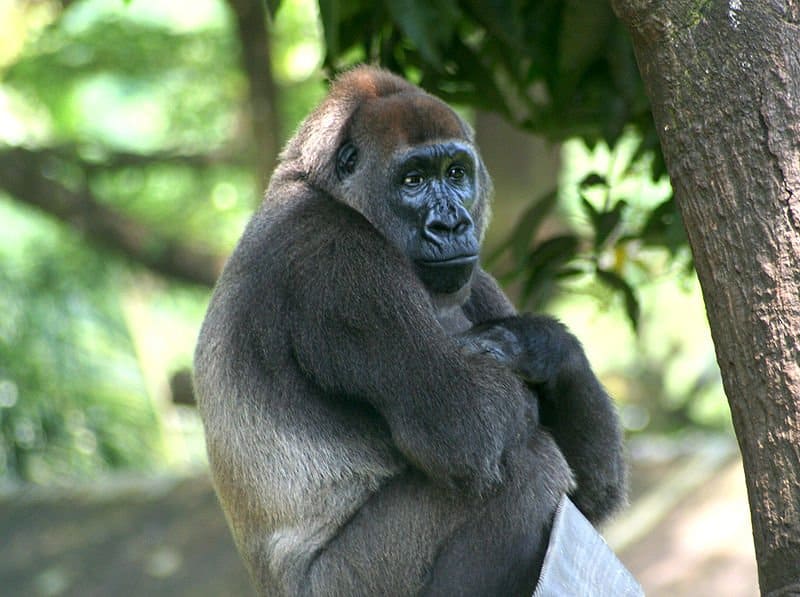
Cross River Gorilla (Gorilla gorilla diehli) is threatened by hunters and is the most endangered great ape in Africa.

Like all the other living beings on the planet, the Cross River gorillas are also an important part of the ecosystem. However, they also face a lot of threats – both from other animals and from human beings. The predators of the Cross River gorillas include crocodiles and large jungle cats.

The Cross River gorilla is threatened by humans as they were hunted extensively in the past – which is also why their numbers are pretty low. Human activities like deforestation also pose threats to these gorillas. The Cross River gorillas are the most endangered great apes in Africa.

The Cross River gorillas are critically endangered. As the population dwindles, some organizations are working to protect the forests that they live in, preventing them from venturing out into local areas and losing food sources. The World Wildlife Organization has multiple partners within the Nigerian and Cameroon governments to protect certain areas.

Reproduction, Babies, And Lifespan

The Cross River gorillas reach maturity around ten years of age. They usually give birth only once in four years or so because the level of infant care is very high in these Cross River gorillas. These gorillas usually take care of their babies until they are three or four years of age. The gestation period usually lasts about nine months – which is also very similar to humans.

The Cross River gorillas are polygamous animals. The dominant male of the group usually mates with all the sexually mature females of his group. The female gorillas, after giving birth, breastfeed their babies and take care of them up until they are about three to four years of age. Usually, these gorillas give birth to single babies and pairs are a rare occurrence. The lifespan of these gorillas is usually 35 to 50 years.

Population
Since these gorillas are critically endangered due to hunting and other human activities like deforestation, there are only about 200 to 300 Cross River gorillas left in the world. The majority of these gorillas are in Nigeria and Cameroon, spread out amongst no less than 11 families.

Efforts are therefore being made to make them live in designated places so that they could thrive in protected environments since the Cross River gorilla is decreasing still. Apart from their fragmented families, another trade has become highly lucrative and a major threat to the species – selling this species as pets.

Some people have kept the Cross River gorilla as pets, which is a dangerous trade that impacts the ability to conserve the species. Some hunters will kill the parent of the baby gorilla to take them to sell, as they are easy to handle at a small size. Right now, the threat of becoming infected with Ebola and of being hunted is enough to make recovery an impossibility in the short term. Still, there is hope that this species will recover from these threats within the next 75 years, as long as continued efforts are made to preserve their habitat.

In the Zoo

Due to the critically endangered status and the decreasing number of Cross River gorillas around the world, keeping them in a captive environment allows these gorillas can thrive again. To view them in a zoo, there are many reserves and sanctuaries to host them, like the Afi Mountain Wildlife Sanctuary.

The Limbe Wildlife Center in Cameroon has been the only zoo to have one of these gorillas on display since 2007. The gorilla, who was named Nyango, passed away on October 10th, 2016 as the result of illness, and there are no other reports of zoos that currently hold these mammals.

Despite not hosting these animals, many zoos and sanctuaries offer important facts about the Cross River gorilla to encourage patrons to support conservation.

View all 392 animals that start with C
How to say Cross River Gorilla in ...
German
Cross-River-Gorilla
English
Cross River Gorilla

Sources

  1. Wikipedia / Accessed November 30, 2020
  2. New England Primate Conservancy / Accessed November 30, 2020
  3. Gorillas World / Accessed November 30, 2020
  4. Cross Gorilla Programme / Accessed November 30, 2020
  5. WWF / Accessed November 30, 2020
  6. Study.com / Accessed November 30, 2020
A-Z Animals Staff

About the Author

A-Z Animals Staff

AZ Animals is a growing team of animals experts, researchers, farmers, conservationists, writers, editors, and -- of course -- pet owners who have come together to help you better understand the animal kingdom and how we interact.
Connect:

Thank you for reading! Have some feedback for us?


Cross River Gorilla FAQs (Frequently Asked Questions)

Cross River gorillas are herbivores and feed on branches, leaves, nuts, and berries that come from several different plants.