
D
Species Profile

Dachshund

Canis lupus familiaris

Small legs. Big hunter.
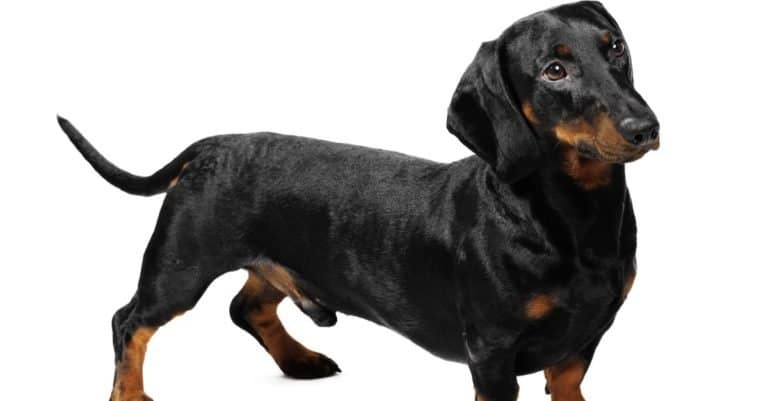
BIGANDT.COM/Shutterstock.com

Dachshund Distribution

Click a location to explore more animals from that region

Origin Location

This map shows the native origin of the Dachshund. As a domesticated species, they are now found worldwide.

Loading map...

Found in 1 country

Size Comparison

Human 5'8"
Dachshund 7 in

Dachshund stands at 10% of average human height.

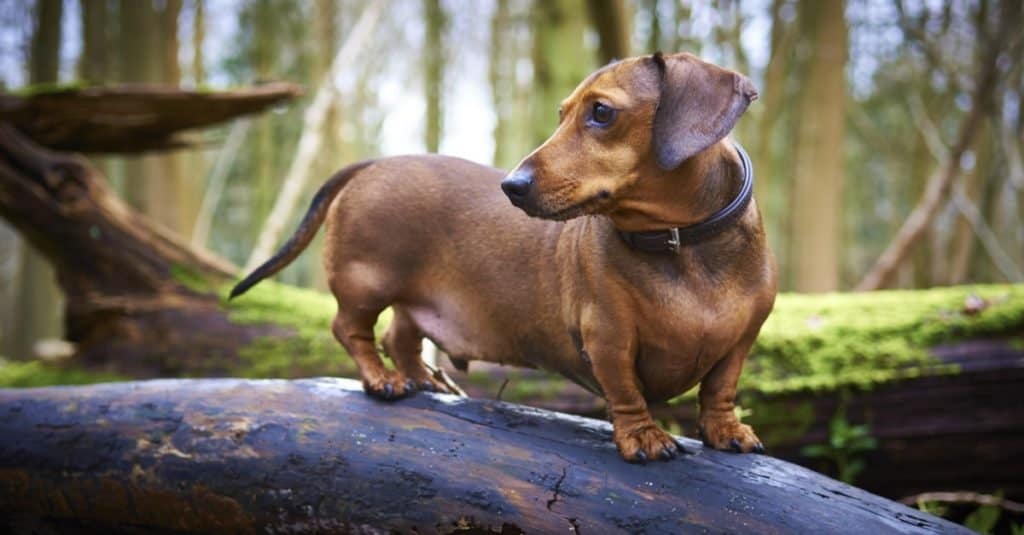
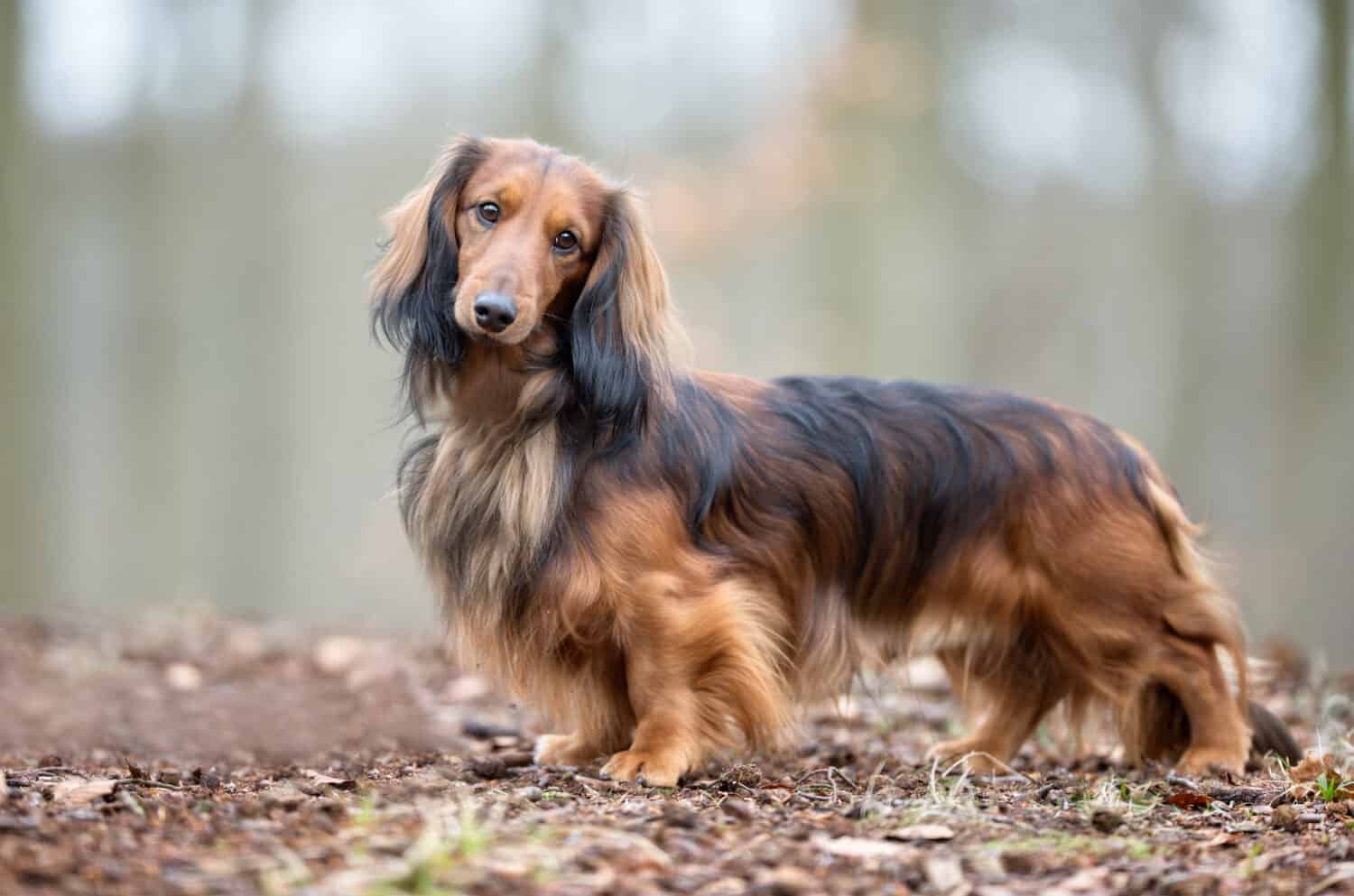
Healthy purebred dog photographed outdoors in the nature on a sunny day.

At a Glance

Domesticated
Also Known As wiener dog, weenie dog, sausage dog, Dackel, Teckel, badger dog
Diet Omnivore
Activity Crepuscular+
Lifespan 14 years
Weight 14 lbs
Status Not Evaluated
Did You Know?

"Dachshund" means "badger dog" in German.

Scientific Classification

The Dachshund is a short-legged, long-bodied breed of domestic dog developed in Central Europe for scent-trailing and hunting burrowing mammals (notably badgers). It is recognized in multiple coat types (smooth, longhaired, wirehaired) and commonly in multiple sizes (standard and miniature; some registries also recognize rabbit size).

Kingdom
Animalia
Phylum
Chordata
Class
Mammalia
Order
Carnivora
Family
Canidae
Genus
Canis
Species
Canis lupus familiaris

Distinguishing Features

  • Elongated body with short limbs (chondrodystrophic build)
  • Deep chest and strong forequarters adapted for digging
  • Long muzzle with well-developed scenting ability
  • Coat varieties: smooth, longhaired, wirehaired; many color/pattern variants

Physical Measurements

Males and females differ in size

Height
7 in (5 in – 9 in)
8 in (5 in – 11 in)
Length
1 ft 10 in (1 ft 4 in – 2 ft 2 in)
1 ft 12 in (1 ft 5 in – 2 ft 6 in)
Weight
19 lbs (9 lbs – 26 lbs)
18 lbs (8 lbs – 32 lbs)
Tail Length
6 in (5 in – 8 in)
7 in (6 in – 9 in)
Top Speed
17 mph

Appearance

Primary Colors
Secondary Colors
Skin Type Dachshund (Canis lupus familiaris) skin has three coat types: smooth (short, close), longhaired (feathers on ears, chest, legs, tail), and wirehaired (stiff outer coat with undercoat, facial whiskers). Wirehair needs more grooming; longhair mats.
Distinctive Features
  • Domestic dog breed (not a wild species): a specialized scent hound developed in Central Europe for tracking and pursuing burrowing game (notably badgers) underground.
  • Signature morphology distinguishing it from the base domestic dog population: markedly elongated body/long back with very short, strong legs (chondrodystrophic build), low-to-ground stance, and a deep keel-like chest for lung capacity while working in tunnels.
  • Long, pendulous ears that aid scenting by sweeping scent toward the nose; strong forequarters and prominent breastbone suited for digging and pulling through tight spaces.
  • Size varieties commonly recognized: standard and miniature (some registries also recognize a smaller 'rabbit' size).
  • Coat varieties: smooth, longhaired, wirehaired-each with distinct texture and grooming demands (smooth: minimal brushing; longhaired: frequent brushing/anti-mat care; wirehaired: periodic stripping or clipping, plus beard/eyebrow tidying).
  • Dachshunds' body shape raises risk of intervertebral disc disease (IVDD) and back injury because of a long spine and short legs. Care: keep weight down, limit jumping, use ramps, avoid stairs.
  • Additional common breed-associated concerns: obesity (worsens IVDD risk), patellar luxation, dental disease (especially in smaller individuals), and some heritable eye issues (e.g., PRA) depending on lines.
  • Use a harness instead of a neck collar to ease strain; trim nails and clean feet because short legs pick up more dirt; give gentle, regular exercise and avoid high jumps.

Sexual Dimorphism

Sexual dimorphism is present but generally subtle compared with many larger breeds; males tend to be slightly larger and heavier with a more robust head/neck, while females are often a bit finer-boned. Differences are most apparent within the same size variety (standard vs miniature).

  • Slightly broader head and stronger neck/forequarters on average.
  • Often a marginally heavier body mass and deeper chest within the same height/size class.
  • Typically a slightly finer head and lighter overall build within the same height/size class.
  • May appear a bit more streamlined through the neck and shoulders compared with males.

Did You Know?

"Dachshund" means "badger dog" in German.

Bred in Central Europe as a scent-trailing hunter for den animals; they were expected to follow quarry underground and bark to signal location.

Three coat types are recognized: smooth, longhaired, and wirehaired-each shaped by different breeding influences and working needs.

Common size varieties include standard and miniature; some European registries also recognize a smaller "rabbit" type for rabbit work.

Despite short legs, they were built for endurance: a deep chest supports lung capacity for sustained tracking.

Their signature "big dog" confidence is a hallmark of many scent hounds-independence comes with the job.

Dachshunds have been popular in art, advertising, and as mascots; the 1972 Munich Olympics mascot "Waldi" was a dachshund.

Unique Adaptations

  • Chondrodystrophic build (short limbs with normal-sized body) helps them enter dens while maintaining a powerful, low-slung working posture.
  • Long, narrow skull and strong sense of smell support scent-trailing (a core domestic dog ability refined by hound selection).
  • Deep chest and prominent forequarters provide strength for digging and pushing through tunnels.
  • Varied coats match conditions: wirehair offers abrasion resistance in rough cover; longhair provides insulation; smooth is low-maintenance.
  • A strong, muscular tail historically served as a "handle" for visibility and, in difficult terrain, easier retrieval from dense cover (not a guarantee, but a traditional working rationale).

Interesting Behaviors

  • Scent-led problem solving: once a trail is found, many will "lock on" and follow with determination typical of hounds.
  • Digging and den-seeking: a strong instinct to burrow into blankets, cushions, or yard soil-echoing their original quarry work.
  • Alert barking: they often announce visitors or unusual sounds, reflecting a working role that relied on vocal signaling.
  • "Tunneling" play: squeezing into tight spaces, crawling under furniture, and exploring holes or gaps.
  • Selective listening: independence is common in dogs bred to work at distance from handlers; training tends to do best with rewards and short sessions.
  • Prey-drive behaviors: chasing small animals or tracking scent trails during walks; secure fencing and leash use are important.

Cultural Significance

Dachshund (Canis lupus familiaris) began in German-speaking Central Europe as a hunting dog. It became a symbol of German sport, then a global pet. Its long shape appears in cartoons and ads; "Waldi" was the 1972 Munich Olympics mascot. Small but fearless, it stands for bravery and humor.

Myths & Legends

German hunting lore often frames the dachshund as the fearless "badger dog," celebrated in stories of dogs that would enter a badger's sett and bark steadily until hunters arrived-tales used to praise bravery and persistence.

In Central Europe, hunters said a good dachshund had a voice "like a horn in the earth" and could guide them by sound when the dog and its prey were underground and out of sight.

Breed stories say the wirehaired dachshund came from crossing smooth dachshunds with rough-coated terriers so it could handle brambles and rough cover. Hunters repeat this to explain its tougher coat and nature.

Nicknames like "wiener dog" (from sausage-shaped comparisons) became a playful cultural tale of naming-by-shape, reinforced through cartoons and novelty items that turned the breed into a lighthearted household symbol.

Dachshunds (Canis lupus familiaris) are often shown in Europe and the U.S. as funny, brave underdogs—small but bold. They appear in children's stories and pictures, outsmarting bigger animals.

Conservation Status

NE Not Evaluated

Has not yet been evaluated against the criteria.

Population Stable

Life Cycle

Birth 4 pups
Lifespan 14 years

Lifespan

In the Wild
12–16 years
In Captivity
10–18 years

Reproduction

Mating System Polygynandry
Social Structure Managed Domestic
Breeding Pattern Serial
Fertilization Managed Selective
Birth Type Managed_selective

Dachshund mating is managed by breeders: polygynandry where many males and females are used. Breeders arrange and time matings (natural or veterinary-assisted). Dogs have internal fertilization, no long-term bonds, usually cycle about every six months; litters are moderate.

Behavior & Ecology

Social Pack Group: 3
Activity Crepuscular, Diurnal, Cathemeral
Diet Omnivore Meat-forward foods (e.g., cooked lean chicken or a high-protein dog diet)

Temperament

Bold, tenacious, and highly persistent-breed-typical "never quit" behavior reflects selection for confronting burrowing mammals (distinguishes them from the average domestic dog, which is often more handler-directed and less single-minded).
Scent-driven and exploratory: strong nose-work motivation, frequent ground-sniffing, tracking, and roaming tendencies; recall can be weaker than average without structured training.
Alert watchdog tendencies with a low threshold to bark at novel sounds/approaches; can be territorial in the home and may develop nuisance barking if under-exercised or under-enriched.
Dachshund is an independent problem solver that learns moderately well. Best with short, reward based sessions. Can be stubborn with repetition. Wirehaired often more intense like a terrier; longhaired softer; smooth bold and alert.
Affectionate and people-oriented but may be wary of rough handling; requires early gentle handling and child-dog management due to back vulnerability and potential defensiveness if uncomfortable.
Prey drive and digging instinct are prominent; may chase small animals and excavate bedding/yard-provide safe outlets (snuffle mats, scent games, designated digging box).
Health issues like IVDD and back pain can make Dachshunds irritable, sensitive to touch, or unwilling to jump or climb. Obesity adds strain; keep them lean, use ramps, and avoid frequent jumping or stairs.
Can show separation-related distress or demand barking when strongly bonded; benefit from gradual alone-time training, predictable routines, and enrichment.

Communication

Frequent alarm barking; many individuals produce a loud, deep bark for their size Watchdog function
Hound-like baying/howling can appear during high arousal, scenting, or frustration, reflecting scent-trailing ancestry.
Whining/whimpering to solicit attention, express frustration, or signal discomfort Important to assess for pain/IVDD
Growls and grumbles as distance-increasing signals around resources, handling, or tight spaces; should be respected and managed with behavior modification rather than punishment.
Scent marking (urine marking) and intense investigative sniffing; uses olfactory communication heavily compared with many companion-focused breeds.
Body posture: forward-leaning, chest-out stance; tail carriage and stiffness indicate arousal; crouching/avoidance may indicate discomfort or fear.
Mouth-based communication: may nip when over-handled or startled; early cooperative care training reduces risk.
Digging and ground-scratching as both displacement behavior and functional 'burrow work' expression.
Pawing, nudging, and proximity-seeking (lap sitting, burrowing under blankets) as affiliative signals.
Play signals: play-bow may be reduced by body shape; more common are bouncy forequarters, quick darts, and toy-shaking-monitor for over-arousal in multi-dog play.

Habitat

Biomes:
Temperate Forest Temperate Grassland Mediterranean Desert Hot Desert Cold Boreal Forest (Taiga) Tundra Alpine Wetland Freshwater +4
Terrain:
Plains Hilly Valley Coastal Island
Elevation: Up to 18044 ft 8 in

Ecological Role

Domesticated omnivorous companion animal; historically a specialized small-game/den hunter (mesopredator role under human management).

Localized rodent/pest deterrence and control (where allowed/managed) Human companionship and social/psychological benefits Working roles leveraging scenting/trailing (hunting, sport, informal detection) Acts as a managed consumer of animal and plant-based food resources within human settlements

Diet Details

Other Foods:
Cooked grains Vegetables Fruits Grasses and plant matter

Human Interaction

Domestication Status

Domesticated

Dachshund (Canis lupus familiaris) was bred in Central Europe, in German regions, as a scent hound to track badgers, foxes, and rabbits. They have short legs, long bodies, strong front legs for digging, and noses with an independent hunting drive. Today they are mainly companions but still do scentwork, earthdog trials, hunting, and need training, back-care, grooming, and socialization.

Danger Level

Low
  • Bites/injury risk is generally low but present, especially with fear, pain, or resource guarding; small-dog bites often involve children mishandling.
  • Potential reactivity toward unfamiliar dogs/people if under-socialized; can escalate to nipping.
  • Hunting drive may prompt chasing/sudden lunging on leash (risk of falls/rope-burn to handlers).
  • Zoonotic risk is similar to other pet dogs if not vaccinated/dewormed (e.g., parasites); manageable with routine veterinary care.

As a Pet

Suitable as Pet

Legality: Generally legal to own as a domestic dog in most jurisdictions; subject to standard local dog laws (licensing, leash rules, vaccination). Not typically targeted by breed-specific legislation.

Care Level: Moderate

Purchase Cost: $500 - $3,500
Lifetime Cost: $15,000 - $40,000

Economic Value

Uses:
Companionship/pet keeping Dog breeding and sales (registered and non-registered) Conformation showing (AKC/FCI and similar) Canine sports (earthdog trials, scentwork, tracking, obedience/rally) Veterinary services and preventive care (notably spine/orthopedic-focused) Pet products and services (ramps/steps, harnesses, grooming, daycare/boarding) Therapy/visitation roles (temperament-dependent) Media/advertising/pop-culture representation
Products:
  • Companion animal services (training, boarding, grooming)
  • Stud services and puppy sales
  • Entry fees and related spend for shows/sports
  • Breed-specific equipment (back-supportive harnesses, ramps/steps, long-bodied coats)

Relationships

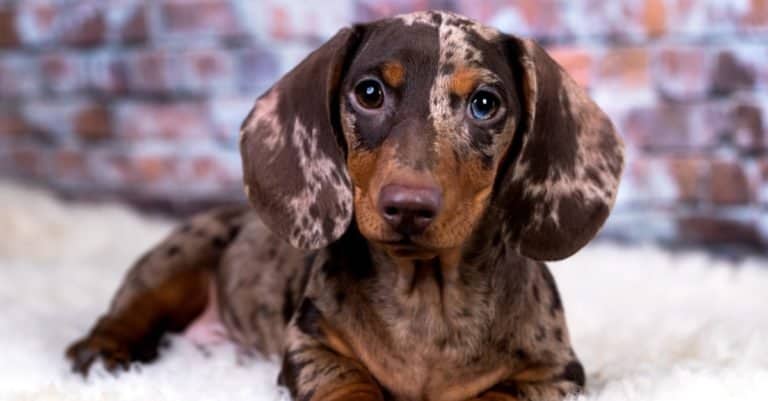
Single-colored smooth and longhaired dachshunds tend to be red or cream, sometimes with black hair. Two-colored smooth dachshunds are black, brown, wild boar (grizzled), gray (blue), or Isabella (fawn) with tan or cream markings. There are many color patterns that can be found in this breed.

While all the colors found in the smooth dachshund are acceptable for the wirehair, the most common color is wild boar. Light-colored dachshunds typically have light gray, light hazel, green, or blue eyes instead of brown or black. They can also have eyes of two different colors. In rare cases, doxies can have a blue and a brown eye.

Germany is the birthplace of the dachshund, which has remained a popular breed since the 1950s, though its ranking among the most popular dogs has varied over the years. Also known as a wiener dog, dashie, and dachels (in German), you can’t help but love this confident, yet cute and lovable dog.

3 Pros And Cons of Owning a Doxie

ProsCons
An adaptable breed thanks to its small size
Doxies rarely grow to more than 32 pounds. This small size provides versatility for a number of living conditions.
Health Concerns
Not all dogs face the same concerns, but it is worth asking for any genetic information the shelter or breeder might have.
Playful and kid-friendly
Considering a rescue but want to be sure that the kids will get along with him or her? Doxies are a very playful breed of dog. They’re affectionate, kid-friendly, independent, and great for first-time dog owners!
Challenging to train
Dachshunds can be difficult to housetrain, even though they are the perfect size and have the right temperament for it. Crate training and patience will help correct any stubborn behavior.
Adapts well to apartment living
If you are looking to adopt or buy a dog but have little to no outdoor space, this is the dog for you. They can be active indoors, but don’t underestimate the value of taking them on walks.
Exercise needed
Doxies have the potential to become fat and lazy, which will put strain on their fragile backs. Monitoring food intake and encouraging activity is a must.

Evolution and Origins

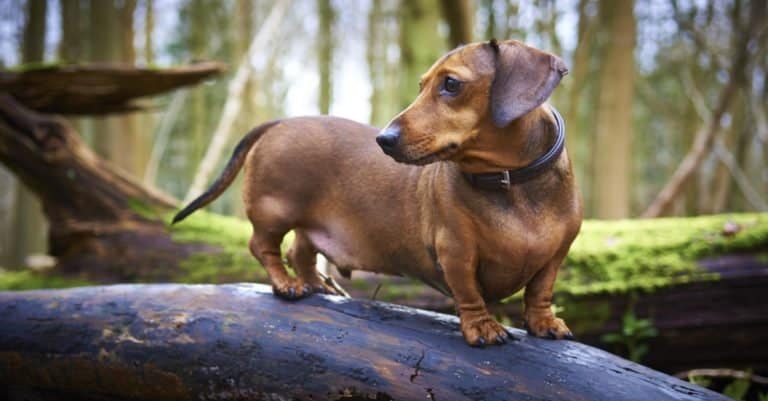
Miniature Dachshund on a tree in English woodland.

Dachshunds’ spectacular sense of smell is believed to be due to basset, bloodhound, or pointer ancestry.

The name of this breed is a clear indication of its original purpose: “Dachs” is the German word for badger, while “Hund” is the word for dog in the same language. In other words, this little canine with a large personality was bred with the sole purpose of hunting down badgers for sport and for their pelts. 

This breeding exercise, which began in the 1400s, gained traction in the 1600s. The resulting hunting dog was a rather stout-hearted, short-legged, diminutive canine with a fondness for digging and a sense of smell which is believed to be a result of basset, bloodhound, or pointer ancestry.

In the 19th century, smaller dachshunds were bred to take on rabbits; rough-coated terriers were also added to the breeding pool, giving rise to wirehaired dachshunds.

Unsurprisingly, that fondness for digging, loud barking, and that strong prey drive remain, and yet, their hilarious, affectionate nature makes these pets a firm favorite in homes all over the globe.

Size and Weight

Standard doxies usually weigh between 16 and 32 pounds, while their miniature counterparts may weigh under 11 pounds at full maturity. The standard height for doxies is 8 to 9 inches tall at the shoulders.

Common Health Issues

The most common health issue in doxies is intervertebral disc disease. This is also the most common spinal disease in dogs. This can lead to dehydration, bladder issues, and paralysis in certain cases. Epilepsy in dogs can be genetic or brought about by a hard fall or blow to the head. In many cases, this condition can be controlled by medication, which can be provided by a veterinarian.

Progressive retinal atrophy (PRA) is a degenerative eye disorder and is detectable years before the dog shows any signs of blindness, though that is the eventual result. Gastric dilation-volvulus (GDV) is more commonly known as bloat or torsion and shows up the most in larger dogs. Due to the dachshund’s deep chest, it can also affect this breed. GDV can be fatal if not treated immediately. Suspect torsion if your dog has a distended abdomen, is salivating excessively, and retching without throwing up. Other possible indicators are restlessness, depression, lethargy, and weakness with a rapid heart rate.
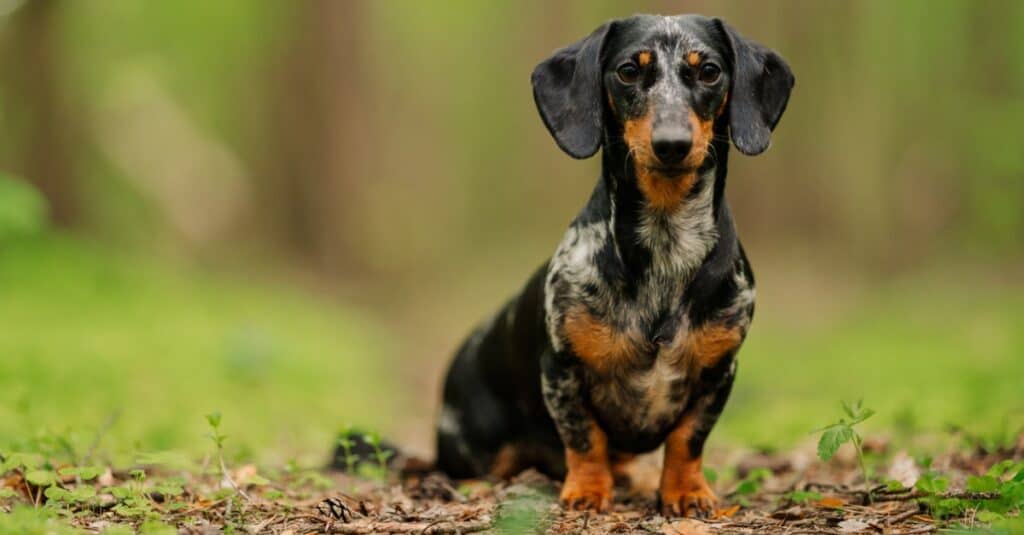
marbled dachshund sitting outside

Dachshunds are susceptible to gastric dilation-volvulus (GDV) or bloat.

Temperament and Behavior

The Doxie is known to be a stubborn but playful and devoted dog who is often wary of strangers but loyal to his owners, including children. These personality traits ensure that your doxie will be an independent creature who may take to one member of the family more than the rest.

They will love to play but can also be quite mischievous; their instinct to hunt may also manifest as digging in the backyard, so watch out for your newly planted flowers! Breeders should be able to provide family information to give context for individual temperaments.

How To Take Care of a Doxie
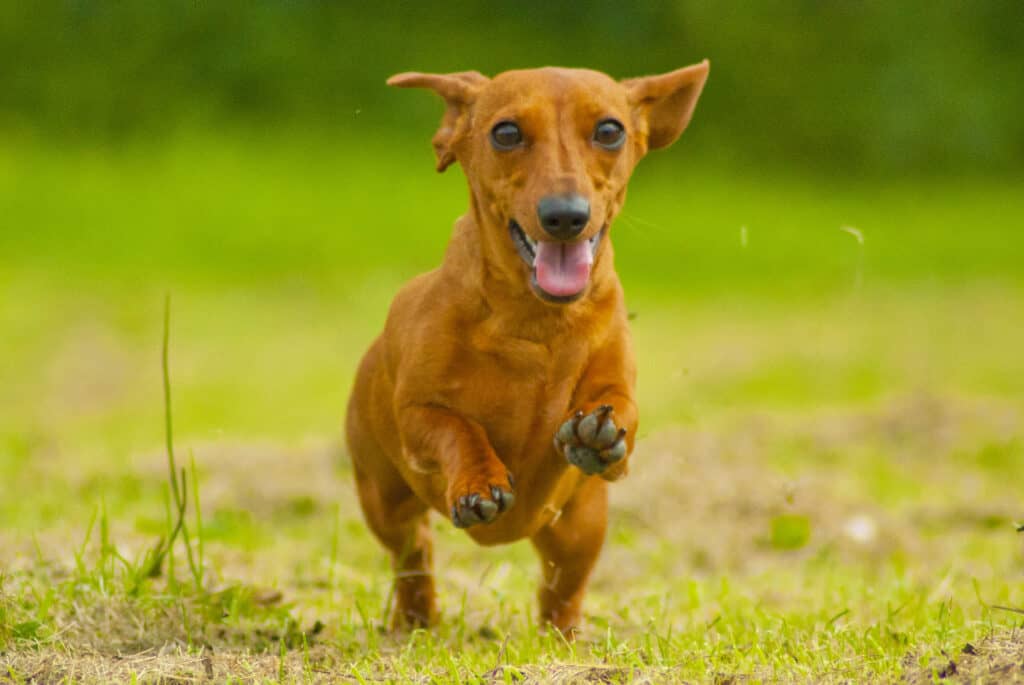
Animal, Dachshund, Dog, Exercising, Horizontal

Dachshunds are affectionate yet known for having a mind of their own.

New pet owners looking for how to care for doxies, specifically dachshund puppies, must consider a range of unique factors. Whether you are looking to rescue or buy this breed, you must consider all of its needs. It is best to begin training from socialization to obedience and crating very early if it is possible. This will make it easier for your doxie to trust strangers and other animals more readily.

The Best Dog Food

Doxie puppy dog food: Puppy food tends to be higher in protein and enriched with minerals, essential fats, vitamins, and more. Since dachshunds are small dogs that mature more quickly, check with your vet to determine how long you should consider your dog to be a puppy.

Doxie adult dog food: As this breed is quite susceptible to obesity, be sure to choose the best quality dog food. The recommended overall daily amount of food for an adult doxie is ½ to 1 ½ cups of high-quality dog food per day, depending on the size and activity level of the individual dog.

Dachshund owners should review the breed’s individual health needs and potential conditions when comparing dog food.

Maintenance and Grooming
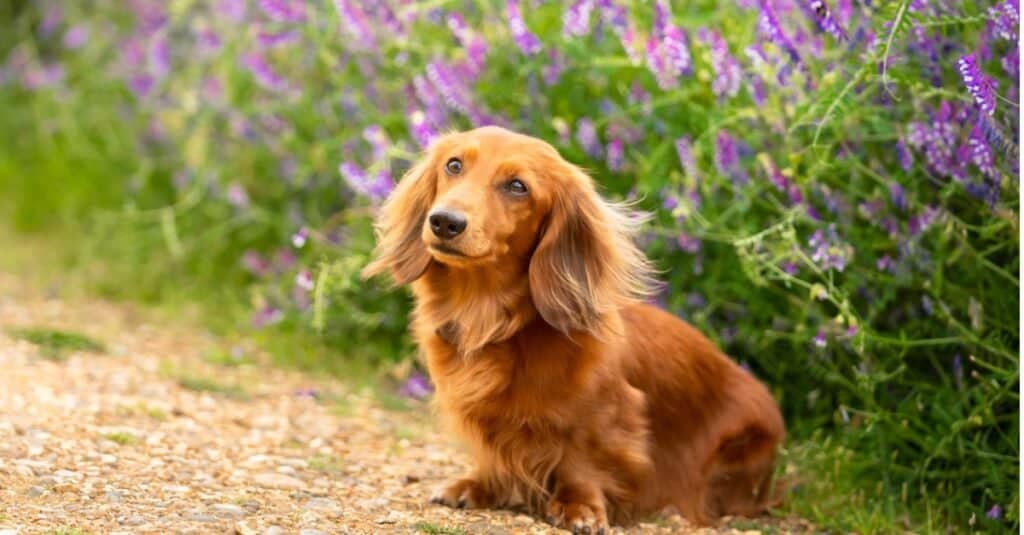
Dachshund sitting in front of purple flowers

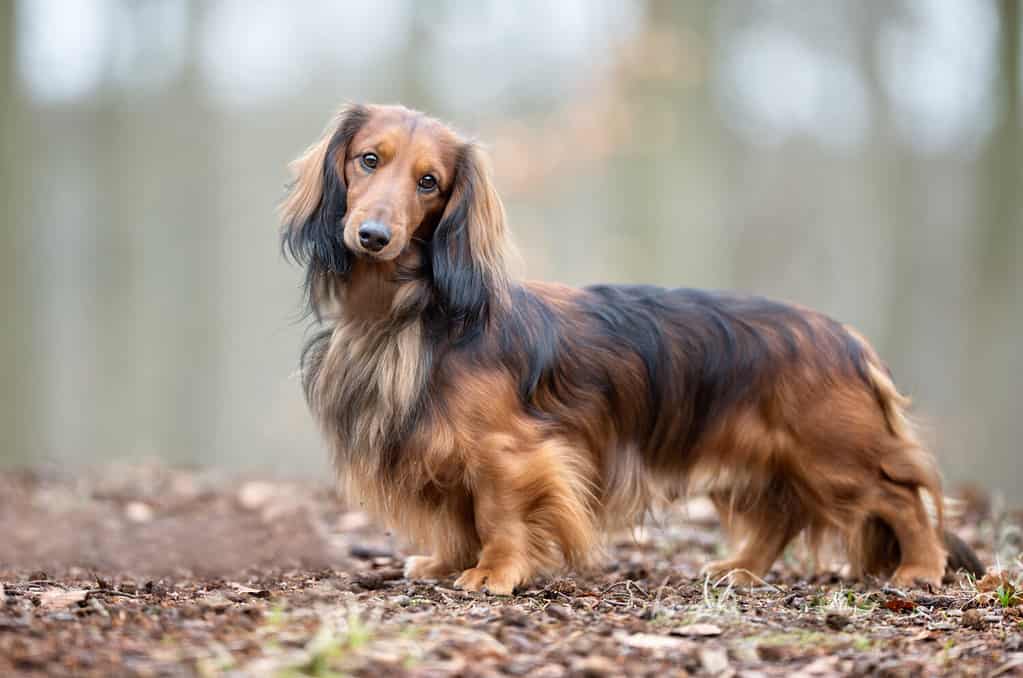
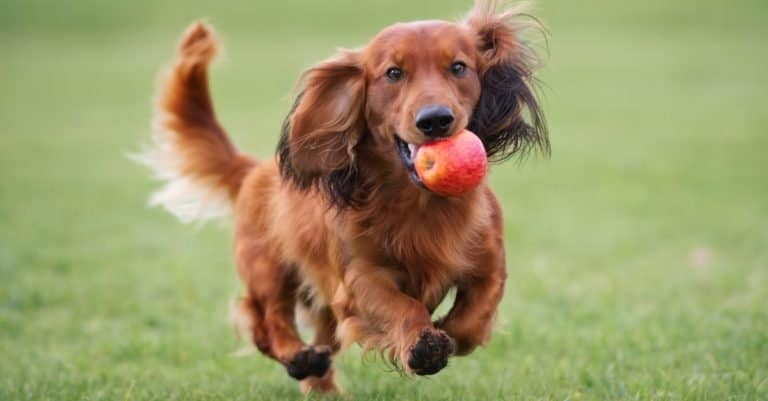
The grooming needs of your pooch will depend on whether it has a smooth, wirehaired, or longhaired (seen above) coat.

Doxies have three different types of coats: smooth, wirehaired, and longhaired.

The Smooth dachshund’s coat is short and shiny. Wirehaired dachshunds have a very different coat, with short, thick, hard hair on the topcoat with a softer undercoat. Longhaired dachshunds have glistening, slightly wavy long hair, which gives them an elegant appearance.

This low-maintenance breed only sheds a small amount and generally only needs bathing every three months. Smooths can be wiped with a damp cloth between baths to keep them clean.

Wirehaired dachshunds require regular brushing, and they’ll need to have their coats “stripped” two to three times a year to look their best. Ask a groomer or breeder how to do this.

Longhaired dachshunds must be brushed regularly and should be bathed more often than the Smooth dachshund. For their hair to look its best, opt to blow-dry it.

Be sure to wipe your doxie’s droopy ears to avoid fungus, bacteria, and mites. Do this weekly by moistening a cotton ball with an ear cleaner recommended by your veterinarian. Other grooming needs include nail care and dental hygiene.

Training

Doxies are intelligent dogs that can learn quickly if motivated properly (hint: this often involves food or treats as rewards, but toys work too!) When it comes down to it, positive reinforcement is key. Begin with short training sessions to keep their attention.

When housetraining, patience and consistency are vital. Doxies do not do well living outdoors, and this sometimes translates to the feeling that they can relieve themselves indoors, as well. Crate training can be a good supplement to this, but be sure not to crate train for more than a few hours at a time so that your dog does not feel like they are being punished. Rescues may react differently or require more patience.

Exercise
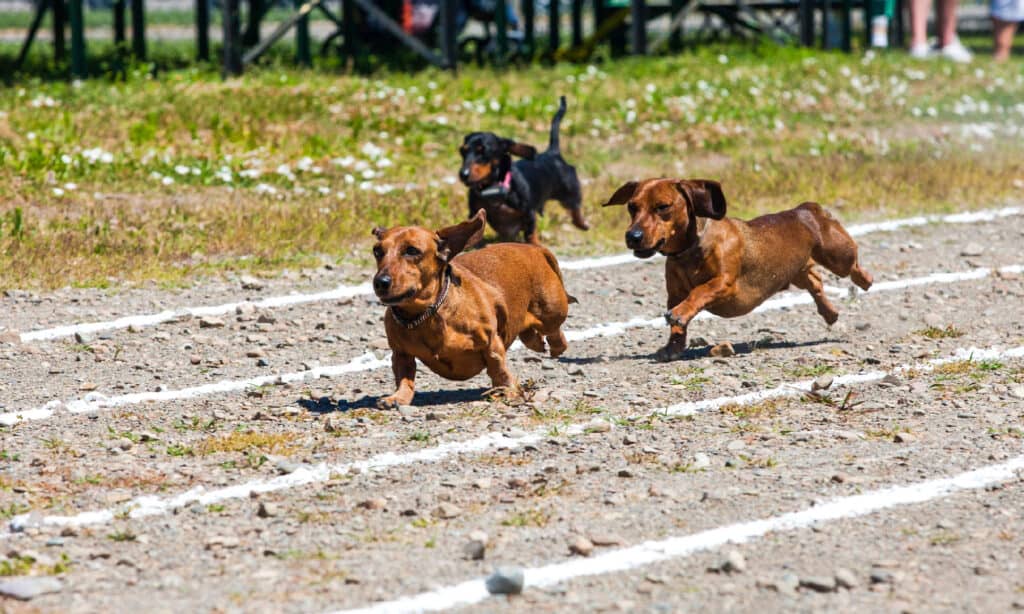
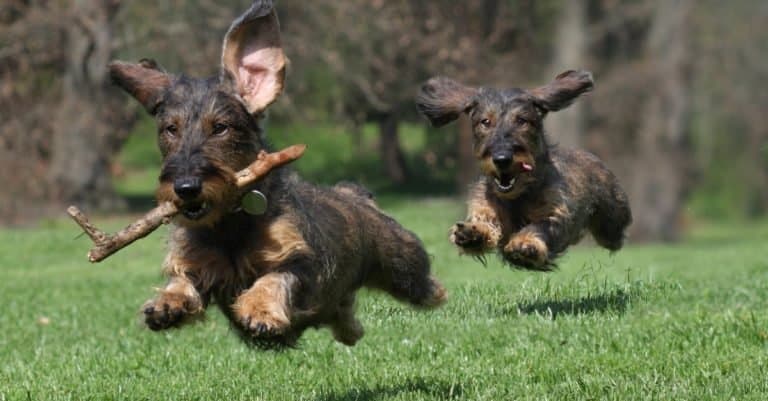
Dachshund, Sports Race, Running, Activity, Animal

Dachshunds love the outdoors, but only require moderate amounts of exercise.

Doxies love to play outdoors with other dogs and take walks. They are also known to hunt and dig, which can mean toys or small game, so be aware of this. This breed is also active inside the house and will do well in small living quarters as long as they get a moderate amount of daily exercise. Two half-mile walks a day (about 10 minutes each) is the recommended average amount. Occasionally, when time is short, a game of fetch will meet their need for activity. Other times, they can go for a little longer if you are hoping to spend the day exploring with them.

Puppies

Doxie puppies’ mischievous side can come out and cause them to be quite destructive, and patience is key for these dogs when they are young. Easily trained, it just takes a little time to get them to remain confident but obedient.

Children
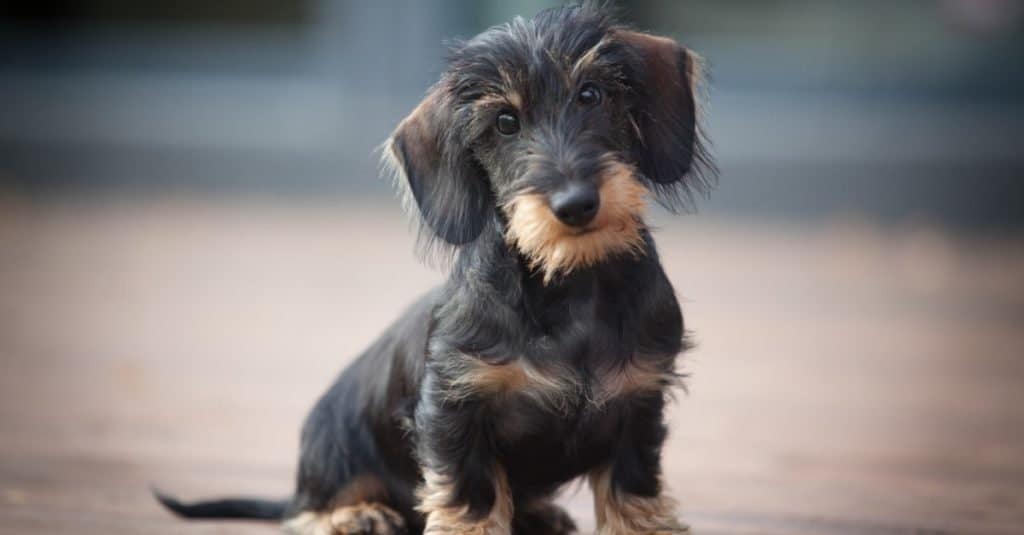
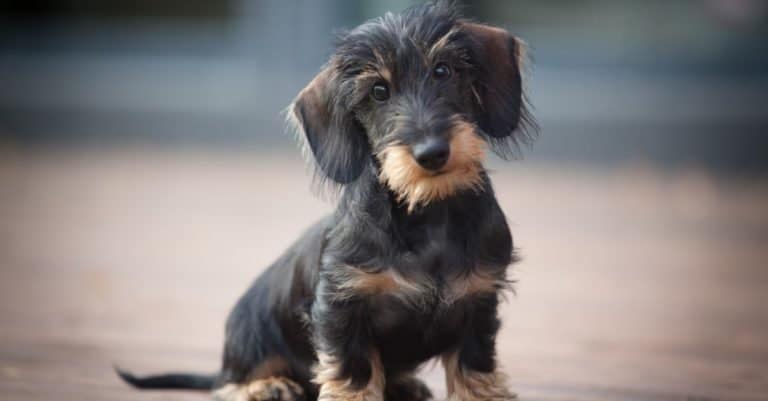
Cute and shy wire-haired Miniature Dachshund puppy.

If introduced early, dachshunds generally get along well with children of all ages.

Doxies are a wonderful dog for families with children of any age, so long as they are introduced early on. A great watchdog, they might be warier of other children and strangers, so be mindful of playtime and introducing them to guests. Dachshunds’ backs are quite fragile due to the shape of this dog, so remind children that they should only ever hold the dog if they are seated on the floor. Otherwise, playing gently and being mindful of how dogs should be interacted with is important.

Dogs Similar to Doxie

Other similar dog breeds to the doxie include the Pembroke Welsh corgi, the Scottish terrier, and the Beagle.

  • Pembroke Welsh Corgi: This breed can be identified by its short but powerful legs, big black eyes, compact body, and long ears relative to body size.
  • Scottish Terrier: The Scottish Terrier is a miniature, short-legged breed with a big personality and self-confident style.
  • Beagle: A beagle is a small to medium-sized dog with short hair. They are popular dogs for families who can give them lots of exercise and space to run.

Famous Doxies

Doxies are one of the most well-known breeds of dog out there, to animal lovers and even those less accustomed to pets. This means that, throughout history, there have been a few “famous” doxies.

Former United States President John F. Kennedy (JFK) purchased Dunker as a puppy for his girlfriend at the time. Unfortunately, Dunker never made it out of Europe because JFK was allergic to him.

Pablo Picasso, the famed painter, once had a friend, and that friend had a dog named Lump. When Picasso and Lump met, they couldn’t be separated, and Lump ended up staying with the painter. There is even a book on their relationship floating around out there somewhere!

View all 451 animals that start with D

Sources

  1. Dogtime / Accessed April 22, 2021
  2. The Smart Canine / Accessed April 22, 2021
  3. Dachshund Station / Accessed April 22, 2021
  4. American Kennel Club / Accessed April 22, 2021
  5. Alpha Paw / Accessed April 22, 2021
  6. Dachshund Rescue / Accessed April 22, 2021
Dana Mayor

About the Author

Dana Mayor

I love good books and the occasional cartoon. I am also endlessly intrigued with the beauty of nature and find hummingbirds, puppies, and marine wildlife to be the most magical creatures of all.
Connect:

Thank you for reading! Have some feedback for us?


Dachshund FAQs (Frequently Asked Questions)

Dachshund is a German word that can be challenging to pronounce. It’s two syllables and sounds like dock-sunned.