

D
Species Profile

Deutsche Bracke

Canis lupus familiaris

Endurance nose, German hunting voice
Rumo / Creative Commons

Deutsche Bracke Distribution

Click a location to explore more animals from that region

Origin Location

This map shows the native origin of the Deutsche Bracke. As a domesticated species, they are now found worldwide.

Loading map...

Size Comparison

Human 5'8"
Deutsche Bracke 1 ft 7 in

Deutsche Bracke stands at 27% of average human height.

Deutsche Bracke profile picture

At a Glance

Domesticated
Also Known As Dog, Domestic dog, Domestic canine, Canine, Pooch, Puppy, Doggo, Man's best friend
Diet Omnivore
Activity Diurnal+
Lifespan 12 years
Weight 20 lbs
Status Not Evaluated
Did You Know?

Traditional Central European scenthounds are used to follow game by scent rather than sight.

Scientific Classification

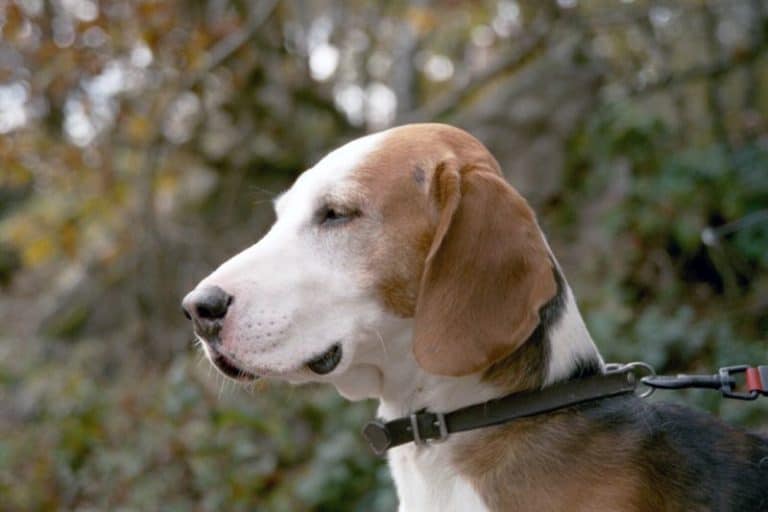
The Deutsche Bracke is a German scenthound breed developed for tracking and hunting (especially hare and fox) using scent, often working over long distances with a steady voice. It is a medium-sized, athletic hound historically associated with traditional German hunting systems.

Kingdom
Animalia
Phylum
Chordata
Class
Mammalia
Order
Carnivora
Family
Canidae
Genus
Canis
Species
Canis lupus

Distinguishing Features

  • Scent-hound (Bracke) type with strong tracking drive and endurance
  • Typically tri-color hound coloration (often with saddle pattern) and medium build
  • Long, pendant ears; head and body adapted for sustained ground scent work
  • Traditionally a voiced hound during the chase/trail

Physical Measurements

Males and females differ in size

Height
1 ft 8 in (1 ft 6 in – 1 ft 9 in)
1 ft 5 in (1 ft 4 in – 1 ft 7 in)
Length
2 ft 8 in (2 ft 6 in – 2 ft 11 in)
Weight
42 lbs (35 lbs – 49 lbs)
35 lbs (31 lbs – 40 lbs)
Tail Length
9 in (7 in – 10 in)
10 in (9 in – 11 in)
Top Speed
31 mph
German Hound: trotter, not sprinter

Appearance

Primary Colors
Secondary Colors
Skin Type Domestic dog (Canis lupus familiaris) with short-to-medium, dense, close-lying coat; typically weather-resistant for long tracking days. Skin is generally taut and functional rather than heavily wrinkled; pendant ears require routine skin/ear hygiene.
Distinctive Features
  • Distinguished from the wild base species (gray wolf, Canis lupus) by domestic-dog conformation and behavior: smaller, more refined head and muzzle; reduced overall mass; more human-directed tractability; and breed-standard coat patterning.
  • Medium-sized, athletic, endurance-focused scenthound build suited to sustained tracking rather than sprinting; balanced proportions and efficient, ground-covering trot for long-distance work.
  • Strong scenting ability with a steady, audible 'voice' while trailing-an intentionally selected trait in traditional German hunting systems for hare and fox.
  • Tail carried with purpose while working; white tail tip is valued as a visual marker in dense cover.
  • Temperament tendencies: focused, persistent tracker; can be independent-minded due to hound heritage, benefiting from patient, reward-based training and reliable recall management (leash/secure areas) when off game scent.
  • Watch for ear infections (otitis) from floppy ears — clean and dry ears after getting wet. Medium, active dogs can get hip dysplasia; deep-chested dogs risk bloat (gastric dilatation‑volvulus).
  • Needs lots of daily exercise and brain games (scent work, tracking, long walks/runs). Grooming is low—brush weekly and manage seasonal shedding. Trim nails and keep dog lean for joints and endurance.

Sexual Dimorphism

Typically modest sexual dimorphism: males tend to be slightly larger and more robust, while females are slightly lighter and narrower; both retain the same functional, athletic scenthound outline.

  • Slightly larger overall frame and head breadth; more pronounced musculature through neck and shoulders.
  • Often a more substantial chest and bone while maintaining endurance-focused proportions.
  • Slightly smaller, lighter frame with a more refined head and narrower chest; same working-athletic structure.
  • May present a more streamlined outline while retaining strong scent-hound musculature.

Did You Know?

Traditional Central European scenthounds are used to follow game by scent rather than sight.

The breed is prized for endurance-able to work long distances at a steady pace while maintaining the trail.

Unlike many silent trailers, German Hounds are expected to "give tongue," letting hunters track progress by voice.

Typical hound traits-pendant ears and a strong, moist nose-help trap and interpret scent particles close to the ground.

It's a medium-sized, athletic hound: built to keep going rather than sprint like a sighthound.

Its role historically fit German hunting systems where hounds worked methodically across large, mixed landscapes (fields/forest edges).

As a domestic dog (Canis lupus familiaris), it shares wolf ancestry but is selectively bred for cooperation, tractable temperament, and specialized scent work rather than wolf survival behaviors.

Unique Adaptations

  • Highly developed olfaction typical of scenthounds, selected for line-trailing hare/fox where scent is intermittent and aged.
  • Endurance-focused metabolism and build: moderate bone, efficient gait, and cardiovascular stamina for hours-long hunts.
  • Pendulous ears and close-to-ground head carriage can help funnel scent toward the nose while tracking.
  • Voiced working style is a functional adaptation: the dog's calls serve as long-range communication in dense cover.
  • Weather-tolerant, practical coat (often tri-color) suited to varied German terrain; relatively low-maintenance for field work.

Interesting Behaviors

  • "Giving tongue" on trail: a steady, carrying bay that can change with excitement when the scent is hot.
  • Nose-down persistence: will methodically re-check a line, cast in arcs to relocate scent, and work through distractions.
  • Independent decision-making: bred to solve scent problems at distance, so it may "think first" rather than instantly comply.
  • Scent-driven exploring: prefers following odor corridors (hedgerows, ditches, game paths) and can ignore visual cues.
  • Pack-social tendencies: many scenthounds work well with other dogs; some individuals show more confidence in company.
  • Home behavior often includes "houndy" vocalization-bays or musical howls-especially when excited or bored.

Cultural Significance

The German Hound is a traditional German scenthound used by hunters to follow scents of hare, fox, and wounded game. German hunters prize its strong nose, endurance, and clear trailing voice, showing the scenting role of Canis lupus familiaris.

Myths & Legends

The Wild Hunt: in Germanic folklore, a ghostly hunt races stormy nights, led by a supernatural hunter with a fierce pack of hounds—stories that echo the eerie baying of real hunting dogs in darkness.

Saint Hubert, patron of hunters, is tied to dogs (Canis lupus familiaris) and the hunting moral code. Stories say he converted after seeing a miraculous stag, and dogs became honored, essential hunting companions.

Medieval and early modern German hunting tales praised scenthounds as the ideal hunting hounds; chase stories and forest hunt songs often show the hound’s steady bay guiding unseen prey to hunters.

Etymology-as-legend: in Central Europe, a traditional German term for a scent-trailing hound that gives voice while tracking became a generic label for that hunting type, and later several distinct breeds were standardized from it.

Hunters in parts of Europe thought a hound's steady, confident baying showed a true trail, while unsure tones warned of a lost line; they liked Bracke-type dogs' 'speaking'.

Conservation Status

NE Not Evaluated

Has not yet been evaluated against the criteria.

Population Stable

Life Cycle

Birth 6 pups
Lifespan 12 years

Lifespan

In the Wild
10–13 years
In Captivity
10–15 years

Reproduction

Mating System Polygynandry
Social Structure Managed Domestic
Breeding Pattern Transient
Fertilization Managed Selective
Birth Type Internal_fertilization

Unlike wolves (Canis lupus), which usually have one breeding pair, Canis lupus familiaris mating is shaped by humans. In managed breeding pairings are arranged and temporary; free dogs often mate with many partners. Puppies are mainly cared for by mothers, often with human help.

Behavior & Ecology

Social Pack Group: 5
Activity Diurnal, Crepuscular
Diet Omnivore Meat-rich meals (often rabbit/venison-based)

Temperament

Scent-driven, persistent tracker; easily distracted by odors compared with many companion breeds (distinguishes it from the base species' more prey-sight-and-coordination hunting in wolves).
Steady, even-tempered, and generally sociable; can be independent-minded outdoors due to strong trailing instinct.
Vocal/expressive while working: bred for a carrying 'voice' on track (often more baying than many non-hound dogs).
High endurance and work ethic; needs sustained daily exercise plus scent-work/field outlets to prevent frustration-related behaviors (roaming, nuisance vocalizing, destructiveness).
Trainable with patient, reward-based methods; benefits from early recall training and long-line management because scent pursuit can override handler cues.
Care requirements: structured physical activity (long walks/runs, tracking games), mental enrichment via nosework, secure fencing, consistent routines; moderate grooming but regular ear checks/cleaning are important due to drop ears.
Medium scenthounds often face ear infections (otitis), hip problems like hip dysplasia, and weight gain if not exercised. Deep-chested dogs can get bloat (GDV); watch feeding and signs. Prevalence varies.

Communication

Baying/'giving tongue' on scent Hallmark working trait in Deutsche Bracke
Barking (alerting and excitement), often more frequent when under-stimulated.
Howling Less common than in wolves but present; can occur in response to sirens/other dogs
Whining/whimpering Anticipation, frustration, attention-seeking
Growls (warning/play), with generally clear escalation signals when well-socialized.
Scent marking (urine/feces) and intense ground-scent investigation; may 'cast' back and forth to reacquire a track.
Body language: tail carriage, ear position, weight shift, and freezing/forward lean when scent locks in; may pull into a tracking posture.
Social contact signals: leaning, nudging, muzzle touches, and following/'shadowing' favored people at home.
Distance working communication: checks back visually, changes pace/arc patterns while trailing; handler reads line tension, head carriage, and rhythm changes as functional 'signals.'
Territorial/spacing signals: blocking, circling, and controlled approach behaviors; variation depends on early socialization and neuter status.

Habitat

Biomes:
Temperate Forest Temperate Grassland Boreal Forest (Taiga) Tundra Alpine Mediterranean Desert Hot Desert Cold Wetland +3
Terrain:
Plains Hilly Mountainous Valley Coastal Island
Elevation: Up to 16404 ft 3 in

Ecological Role

Human-associated mesopredator/scavenger and hunting aide; a scent-trailing specialist that influences local prey dynamics primarily under human management rather than as a self-sustaining apex predator.

assists humans in locating/harvesting game (hares/foxes) and tracking wounded animals can aid in wildlife management/monitoring via scent detection and trailing deterrence of some nuisance wildlife around human settlements in free-roaming situations, may impact small wildlife populations and scavenge carrion, linking human food resources to local ecosystems

Diet Details

Main Prey:
Hare Rabbit Fox Small rodents Ground-nesting birds Carrion
Other Foods:
Berries Fallen fruit Grasses and herbs Root vegetables Cooked grains and starches

Human Interaction

Domestication Status

Domesticated

Canis lupus familiaris, the domestic dog, comes from gray wolves and was shaped over thousands of years to work with people in hunting, guarding, herding, transport, and companionship. The German Hound is a Central European scenthound bred to track hare and fox by scent, with steady trailing, loud baying, strong prey drive, and endurance.

Danger Level

Low
  • Bites typically defensive (fear, pain, handling conflict), not breed-typical predation toward people
  • Strong prey drive and scent fixation can lead to bolting/running off-leash, creating traffic or collision hazards
  • Vocal, persistent baying can create neighborhood conflict (noise complaints)
  • Zoonotic/parasite risk similar to other dogs (ticks, fleas, intestinal parasites) without proper prevention
  • Dog-dog scuffles can occur if poorly socialized; risk increases around small pets due to hunting instinct

As a Pet

Suitable as Pet

Legality: Canis lupus familiaris are usually legal as pets in most places, but must follow normal dog laws (license, leash, vaccinations/rabies, noise). Rarely banned because of breed. Hunting may need permits.

Care Level: Experienced

Purchase Cost: $500 - $1,500
Lifetime Cost: $15,000 - $35,000

Economic Value

Uses:
Hunting and game management (scent tracking/pursuit of hare/fox; occasional wounded-game trailing) Companion animal economy (breeding, food, equipment, training, boarding, insurance) Working and sport roles (tracking/scentwork events; potential SAR trailing depending on lines/training) Veterinary services (preventive care; orthopedic/ear/skin management)
Products:
  • Trained hunting dog services (tracking and pursuit work)
  • Puppy sales from registered breeders (limited availability outside core regions)
  • Training services (recall, scentwork, hunting conditioning, behavioral management)
  • Pet goods (high-durability leashes/harnesses, GPS trackers for roaming risk, enrichment/scent games)

Relationships

Ecological Equivalents 6

Animals that fill a similar ecological role in their ecosystem

Hanoverian Scenthound Canis lupus familiaris Bred mainly for blood tracking and finishing wounded big game, similar to other specialist scent hounds. Also a versatile scent hound for hare and fox over long distances, with a steady, loud voice.
Bavarian Mountain Scenthound Canis lupus familiaris Another German scenthound used for scent work and tracking. It is more associated with mountain terrain and close-leash tracking, while the German Hound works for longer periods across wide areas and maintains a steady voice on the line.
Westphalian Dachsbracke Canis lupus familiaris Closely comparable hunting style—scent-driven tracking of hare and fox. Generally lower-set and shorter-legged, more of a badger-hound type, whereas the German Hound is typically more medium-sized and leggier for covering distance.
Gray wolf
Gray wolf Canis lupus Comparable sensory ecology (high reliance on olfaction and endurance travel) and canid pursuit/tracking behavior. The German Hound expresses these traits in a human-directed hunting context, with selected trainability and a characteristic steady voice.
Coyote
Coyote Canis latrans Ecological analogue as a mid-sized canid that uses scent and endurance to locate prey. It differs by being a free-living generalist predator and scavenger rather than a human-managed tracking specialist.
Red fox
Red fox Vulpes vulpes Occupies overlapping landscapes and is a common quarry for scenthounds; relies on scent and evasive movement patterns that shape how tracking dogs work.

In 1896, all the different types of Bracke dogs (scent hounds) in Germany were merged into one breed that was named the Deutsche Bracke. Deutsche Brackes are also known as German Hounds, Westphalian Brackes, Olpe Brackes, and Sauerländer Brackes.

These are friendly and affectionate dogs. They are loving and very tolerant with children, making them an excellent family dog. Additionally, Deutsche Brackes are intelligent, obedient, and easy to train.

3 Pros and Cons of Owning Deutsche Brackes

Pros!Cons!
Healthy: Overall, these are very healthy dogs. It is less likely that you’ll have to deal with serious health concerns as you may with other breeds.Roams: Deutsche Brackes have a stronger impulse to wander than some other dog breeds. You’ll want to make sure that your backyard is securely fenced and keep them on a leash for walks.
Alert and protective: They are good watchdogs and will alert their owners to any threats.Need Company: Deutsche Brackes do not do very well when they are left alone. They are probably not the best dog breed for you if someone won’t be able to be home with the dog most of the time.
Good Family Dog: Deutsche Brackes are a great family dog. They do very well with children. They can also make a great companion dog for a senior citizen.Allergies: Unlike some other dog breeds, Deutsche Brackes are not hypoallergenic dogs. They may aggravate the allergies of anyone in the home who is allergic to dogs.

Origin of the Breed

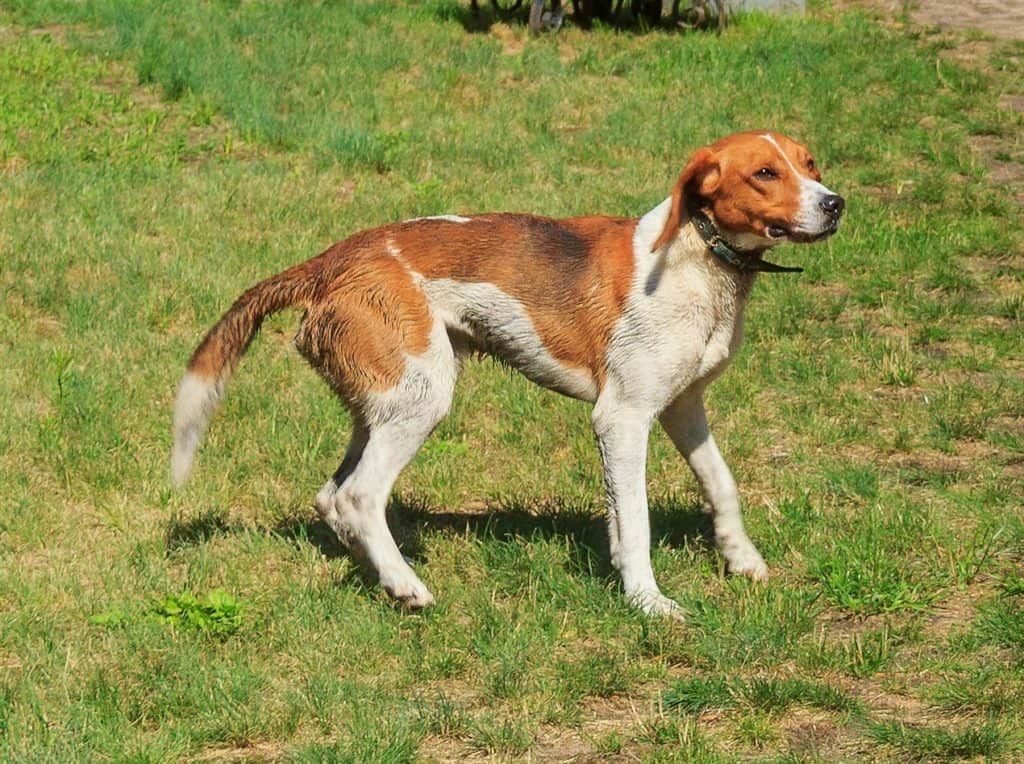
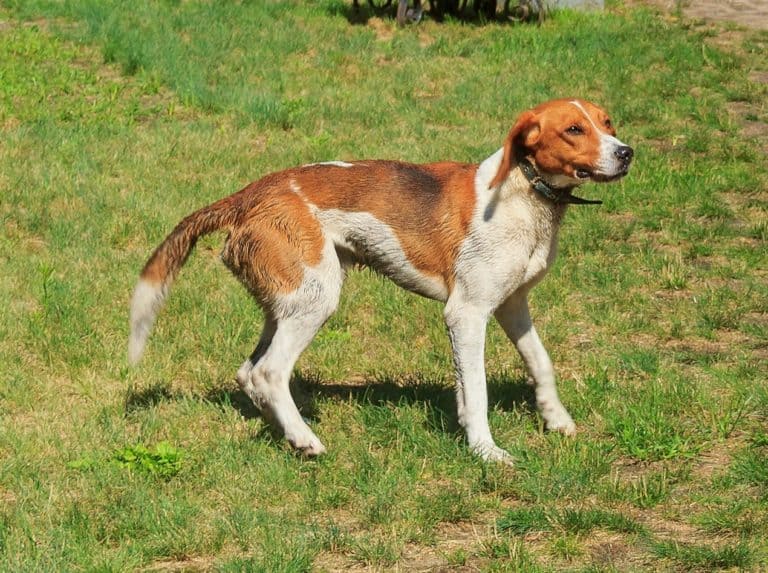
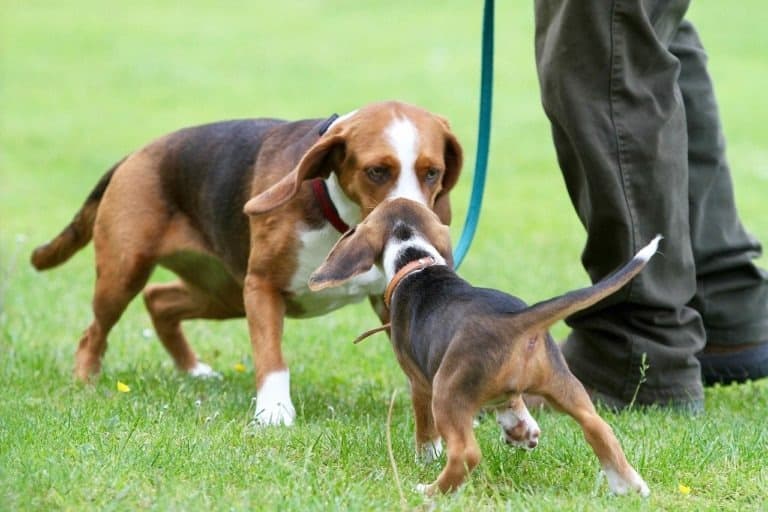
Deutsche Bracke on grass

Deutsche Bracke was originally bred for hunting.

Previously, Germany was home to several Bracke subspecies. However, with time, only the Westphalian Bracke remained. This breed was mixed with the Steinbracken for hunting purposes, and as a result, the Deutsche Bracke came into being. Initially employed in hunting boar and rabbits, this dog has a rather sensitive nose and is rather sturdy and capable of enduring harsh conditions.

Size and Weight

Unlike some other breeds, there is not much difference between a male and a female. Both males and females typically weigh somewhere between 35 and 40 pounds. The average height for this breed is 18.5 inches, but they may be anywhere between 16 and 21 inches tall.

Common Health Issues
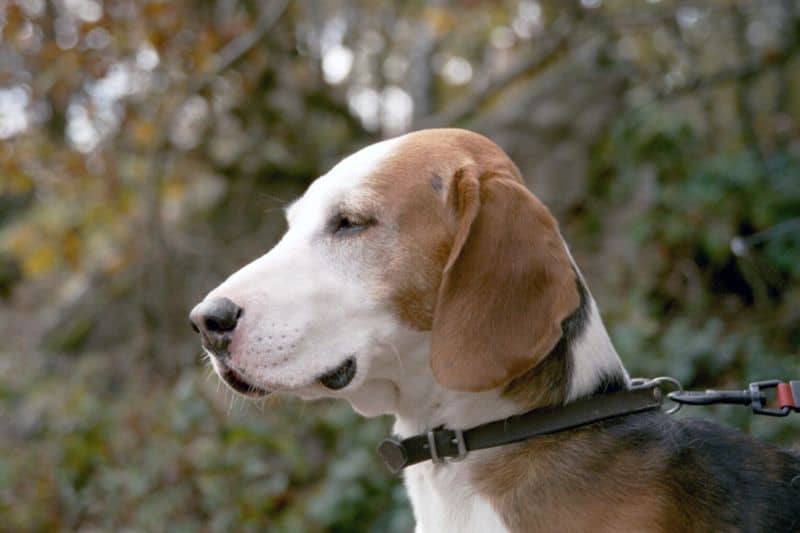
Deutsche Bracke profile picture

Members of this breed are prone to bloat owing to their deep chests.

Overall, these are very healthy dogs. However, there are a few common health concerns that you should be aware of if you adopt this breed.

Deutsche Bracke has a deep chest. This puts them at risk for bloat. If a dog bloats, it means their stomach fills with gas and liquid, and when you look at the dog, you’ll notice that their abdomen looks bloated, or enlarged. While the exact causes of bloat are not known, it often occurs in dogs who have completed a more vigorous activity shortly after eating a large meal.

Some of these breed may have their bloat progress to Gastric Dilation Volvulus (GDV). This is a condition in which the stomach rotates and traps the contents inside. This condition must be treated immediately by a veterinarian.

Cryptorchidism is a condition some male Deutsche Brackes may face. In this condition, either one or both of their testicles will not descend. The testicle(s) still in the body are more prone to developing testicular cancer, so most veterinarians recommend removing the testicle to prevent this from occurring.

These dogs may also develop hip dysplasia. This is a condition in which the ball and socket joint at the hip isn’t formed correctly and rubs against one another, wearing down the joint. This can be very painful for dogs and may cause them to limp. Therapies, medications, and, in some cases, surgery may be used to treat this condition.

Some Deutsche Brackes also develop glaucoma, progressive retinal atrophy, and other eye conditions. You should have your veterinarian check your dog regularly to catch these problems. It is also recommended to have the Deutsche Bracke screened for eye problems before breeding, since these conditions can be hereditary.

To review, here are some of the main health concerns they face:

  • Bloat
  • Gastric Dilation Volvulus
  • Cryptorchidism
  • Hip Dysplasia
  • Eye Problems

Temperament

These dogs have a very loving and affectionate personality. They enjoy interacting with their family and love getting lots of positive attention. However, they are also rather needy and rely heavily on their owners for attention. Without frequent attention, they may get into trouble or develop anxious behaviors.

Deutsche Brackes are also obedient dogs. With proper training and socialization, they will follow commands and act appropriately around children. Since their natural instinct is to hunt, you’ll want to be sure to train your dog if there are cats or other small animals in the house so he knows not to hunt them.

Another trait they exhibit is being very tolerant. This personality trait is another reason Deutsche Brackes are good family dogs; they are very good with children and can handle the slightly rougher handling of little hands.

How to Take Care of Deutsche Bracke

A Deutsche Bracke’s temperament, common health concerns, and other factors make this a very unique breed. If you are planning to adopt one of these dogs, you’ll want to take all of these factors into consideration as you plan for their care.

The Best Dog Food for Deutsche Brackes

When feeding your Deutsche Bracke adult dog or puppy, it is always important to look for high-quality foods that provide the balanced nutrition your dog needs to stay healthy and grow. They should not receive much, if any, people food. It can lead to problems such as obesity, bone and tooth issues, and vitamin deficiencies. When Deutsche Brackes get too much people food, it can also cause them to become pickier eaters and turn their noses up at their dog food.

Puppies need to eat smaller meals multiple times a day because of their smaller stomachs. Puppies between the ages of 8 and 12 weeks should eat four small meals a day, puppies between the ages of 3 and 6 months should eat 3 small meals a day, and puppies between the ages of 6 months and 1 year should eat two meals each day.

Once your Deutsche Bracke is 1 year old, it can eat just one bowl of food each day. However, you may find that your dog prefers to eat 2 bowls, which is perfectly fine too. Adults should eat between 1.5 and 2 cups of food each day.

Maintenance and Grooming

Deutsche Brackes are a pretty low-maintenance dog. A few baths each year and regular brushing will keep them clean and reduce the amount they shed. You should also take care to keep your dog’s ears and eyes clean to prevent infections. Keeping up with the grooming needs for these dogs is simple; you should be able to take care of grooming on your own and won’t need to schedule professional grooming appointments.

Training

Training these dogs is relatively simple. This breed is naturally obedient and submissive to its owner. Additionally, they are very intelligent dogs but aren’t stubborn like many other hunting dogs, which helps make them easier to train. They do best with positive reinforcement and when their owner plans training sessions to be relatively short and interesting.

You can train a Deutsche Bracke to be a guard dog. They are attentive and alert and will bark at strangers.

Exercise

Making sure your dog gets plenty of exercise is important. They need physical activity both for their health and to keep their brain stimulated. Keeping your dog active also prevents them from becoming bored, which is when they may start to get into trouble.

Puppies
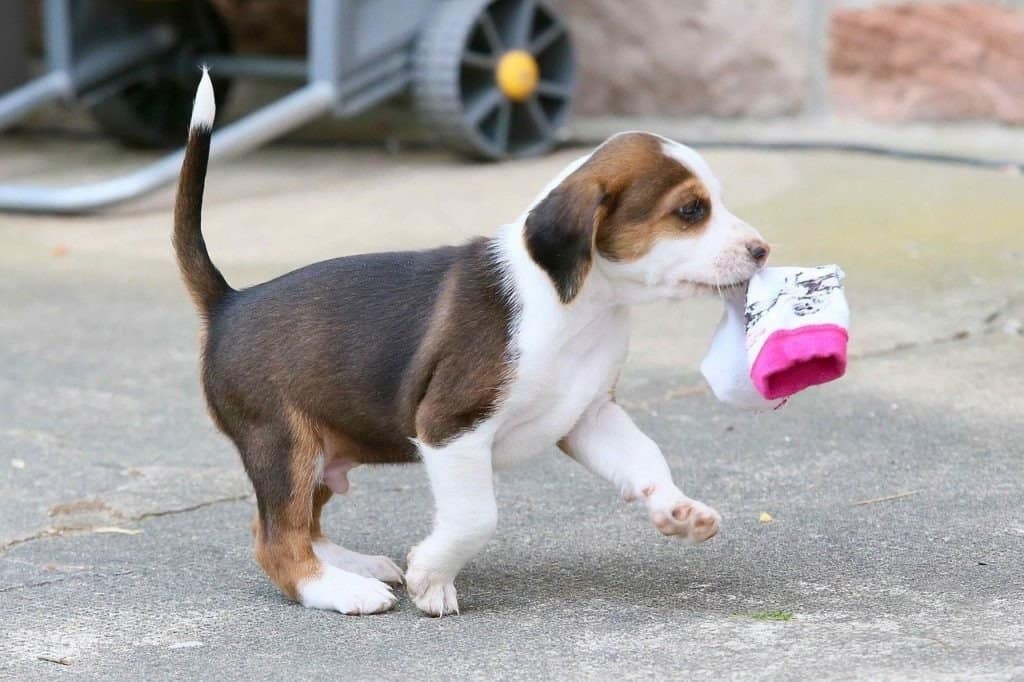
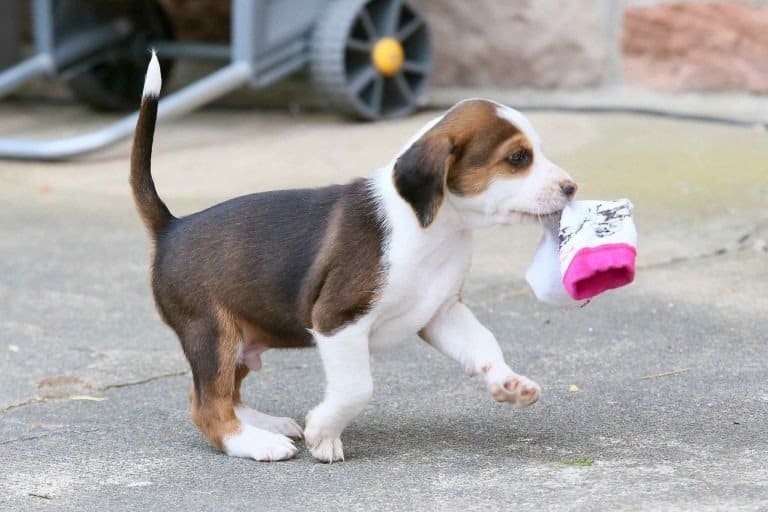
Deutsche Bracke puppy playing with sock

In addition to being fed small meals throughout the day, Deutsche Bracke puppies also need physical exercise.

Females typically have a litter of five to eight puppies. If you are adopting one of these puppies, there are a few key things you’ll want to keep in mind. First, it will be important to begin training your dog as soon as you bring them home. This will help them learn expectations and help them adjust to living in your home. Once your dog has received his immunizations, you can begin looking for an obedience class to enroll them in.

Deutsche Bracke puppies need to eat smaller, more frequent meals throughout the day. You don’t want to feed them too much since their stomachs are still small and developing. See the Food and Diet section above for more information about feeding your new puppy.

It will also be important to make sure your puppy gets enough physical activity and playtime. Take them for walks, allow them to run in a fenced-in yard, and play with them to help them get the physical activity they need.

Once you come home with your new puppy, you’ll also want to schedule an appointment with the veterinarian. Your veterinarian can perform an examination on your dog to make sure there are no health issues you need to be aware of.

Children

These dogs can be a great family dog to have around children. They are very tolerant, loving, and know how to be kind to young children. Additionally, they are very obedient dogs, so they will follow their owner’s commands in regards to playing with children.

Providing a Deutsche Bracke puppy with proper socialization and training from a young age will help prepare it to act appropriately with young children. It is also always important to make sure children know how to correctly interact with and treat a dog to avoid any accidental injuries.

Dogs similar to Deutsche Bracke

The Drever, Beagle, and American Foxhound are three dog breeds that share some similarities with these dogs.

  • Drever: Drevers and Deutsche Brackes are both hunting dogs. Drevers originated from Sweden, while Deutsche Brackes originated from Germany. Both dogs are social and affectionate. Unlike a Drever, a Deutsche Bracke can be a good dog to be a watchdog.
  • Beagle: A Beagle is another dog that was bred to be a hunting dog, specifically a scent hound like the Deutsche Bracke. One key difference between a Beagle and a Deutsche Bracke is their size. Beagles are smaller. They typically weigh between 20 and 25 pounds and are around 14 to 15 inches tall. On the other hand, a Deutsche Bracke weighs between 35 and 40 pounds and is between 16 and 21 inches tall. Both dogs are playful and easy to train.
  • American Foxhound: American Foxhounds are also hunting dogs. Like the Deutsche Bracke, they are affectionate and social dogs. Deutsche Brackes are more territorial and tend to have fewer health concerns than American Foxhounds.
View all 451 animals that start with D

Sources

  1. David Burnie, Dorling Kindersley (2011) Animal, The Definitive Visual Guide To The World's Wildlife / Accessed December 1, 2008
  2. Tom Jackson, Lorenz Books (2007) The World Encyclopedia Of Animals / Accessed December 1, 2008
  3. David Burnie, Kingfisher (2011) The Kingfisher Animal Encyclopedia / Accessed December 1, 2008
  4. David Burnie, Dorling Kindersley (2008) Illustrated Encyclopedia Of Animals / Accessed December 1, 2008
  5. Dorling Kindersley (2006) Dorling Kindersley Encyclopedia Of Animals / Accessed December 1, 2008
  6. Wikipedia / Accessed October 30, 2020
  7. Wag! / Accessed October 30, 2020
  8. Dogzone / Accessed October 30, 2020
  9. Planetfauna / Accessed October 30, 2020
Dana Mayor

About the Author

Dana Mayor

I love good books and the occasional cartoon. I am also endlessly intrigued with the beauty of nature and find hummingbirds, puppies, and marine wildlife to be the most magical creatures of all.
Connect:

Thank you for reading! Have some feedback for us?


Deutsche Bracke FAQs (Frequently Asked Questions)

Adoption costs for Deutsche Brackes can vary, but they are typically between $400 and $600 a year. In addition to the cost of adopting your dog and completing any necessary paperwork, you will also want to be sure to budget for medical check-ups and treatment, food, toys, and supplies for your dog. This typically costs between $400 and $780 each year but could be more if there are any unexpected vet bills.