

D
Species Profile

Dogo Argentino

Canis lupus familiaris

White hunter, loyal guardian
Hanna Dymytrova-Kaihila/iStock via Getty Images

Dogo Argentino Distribution

Click a location to explore more animals from that region

Origin Location

This map shows the native origin of the Dogo Argentino. As a domesticated species, they are now found worldwide.

Loading map...

Size Comparison

Human 5'8"
Dogo Argentino 2 ft 2 in

Dogo Argentino stands at 38% of average human height.

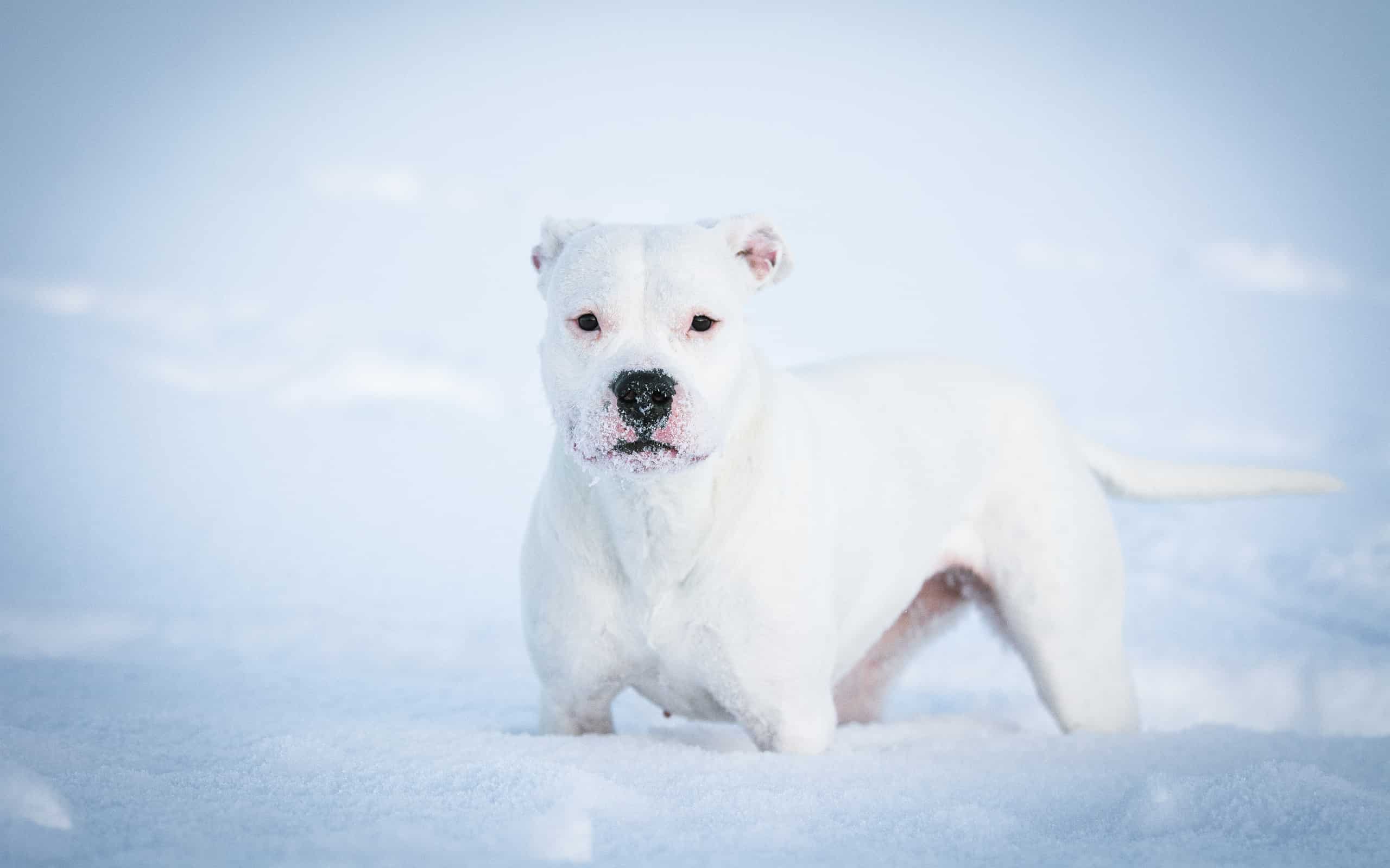
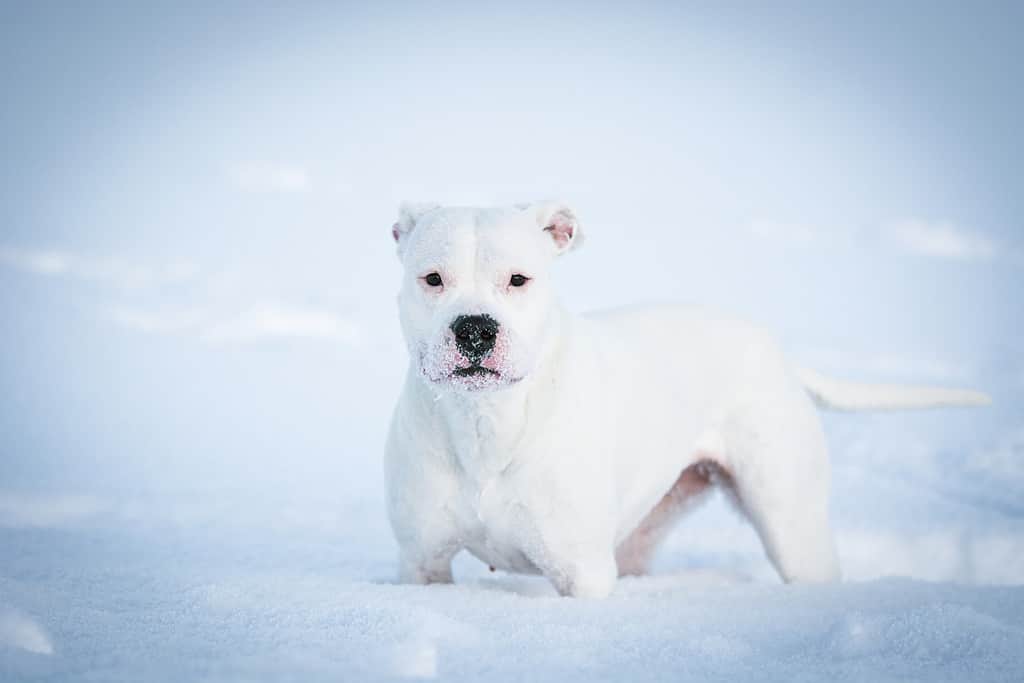
white Dogo Argentino dog in the snow

At a Glance

Domesticated
Also Known As Argentine Mastiff, Argentine Dogo, Argentinian Dogo, Cordoba Fighting Dog, Perro de pelea cordobés, Dogo
Diet Omnivore
Activity Diurnal+
Lifespan 4 years
Weight 45 lbs
Status Not Evaluated
Did You Know?

Developed in Argentina in the 1920s by Dr. Antonio Nores Martinez from the extinct Cordoba Fighting Dog plus several working breeds.

Scientific Classification

The Dogo Argentino is a large, muscular, short-coated domestic dog breed developed in Argentina, historically selected for big-game hunting and later used in a variety of working roles and companionship.

Kingdom
Animalia
Phylum
Chordata
Class
Mammalia
Order
Carnivora
Family
Canidae
Genus
Canis
Species
Canis lupus

Distinguishing Features

  • Large, athletic mastiff-type build
  • Typically solid white short coat (often with limited pigmentation on head permitted in some standards)
  • Broad head with strong jaws; drop or semi-drop ears (cropping varies by jurisdiction)
  • Bred for strength, stamina, and high drive; requires experienced handling and training

Physical Measurements

Males and females differ in size

Height
♂ 2 ft 2 in (1 ft 12 in – 2 ft 3 in)
♀ 2 ft 1 in (1 ft 12 in – 2 ft 2 in)
Length
♂ 3 ft 8 in (3 ft 4 in – 4 ft)
Weight
♂ 99 lbs (88 lbs – 110 lbs)
♀ 94 lbs (88 lbs – 99 lbs)
Tail Length
♂ 1 ft 4 in (1 ft 1 in – 1 ft 6 in)
♀ 1 ft 4 in (1 ft 2 in – 1 ft 6 in)
Top Speed
28 mph
Made for long chases

Appearance

Primary Colors
Secondary Colors
Skin Type Short, smooth, single-layer coat with tight skin; pigmentation can vary under the white coat. Skin may be more sun-sensitive due to the white coat and lighter exposed areas.
Distinctive Features
  • Domestic dog breed from Argentina, bred from mastiff-type and hunting dogs for big-game hunting. Shows a standard build, solid white coat, and strong hunting drive from careful breeding.
  • Large, athletic, muscular, deep-chested body with strong neck/shoulders; built for endurance and power rather than the more generalized, variable morphology seen across domestic dogs.
  • Broad head with strong jaws and substantial muzzle; expression typically alert and confident; short coat emphasizes musculature.
  • Historically a big-game hunting and catch dog (e.g., boar/puma) and later used for protection, sport, and companionship; modern dogs often retain high prey drive, persistence, and stamina-needs structured outlets.
  • Behavioral/care requirements: high daily exercise needs (brisk running, hiking, structured play) plus consistent training; early socialization is important to develop reliable, stable behavior with people and other animals.
  • Management needs: secure fencing and leash reliability due to athleticism and potential prey drive; benefits from experienced handling, clear boundaries, and reward-based training with firm consistency.
  • Coat care: low grooming demands (occasional brushing, bathing as needed), but routine ear/nail/dental care remains important; white coat shows dirt easily.
  • Sun/skin care: can be prone to sunburn or skin irritation (especially on sparsely haired areas like nose/ears/belly); shade and dog-safe sun protection may be needed for long outdoor exposure.
  • Health concerns seen in the breed: congenital deafness is a notable risk in predominantly white dogs; responsible breeding and BAER hearing testing are commonly recommended.
  • Orthopedic risks: hip dysplasia and other joint issues can occur in large athletic breeds-maintain healthy weight, use age-appropriate exercise, and consider joint-support guidance from a veterinarian.
  • Other potential concerns: gastric dilatation-volvulus (bloat) risk in deep-chested dogs (use sensible feeding/exercise routines), and allergy/dermatitis tendencies in some individuals.

Sexual Dimorphism

Males are typically larger and more heavily muscled with broader heads/neck; females are generally slightly smaller and more refined while retaining the same athletic, powerful outline.

♂
  • Heavier bone and musculature; broader skull and thicker neck/forequarters
  • Often taller and more imposing overall silhouette
♀
  • Slightly lighter build and narrower head/neck
  • Often a more streamlined outline while remaining muscular and athletic

Did You Know?

Developed in Argentina in the 1920s by Dr. Antonio Nores Martinez from the extinct Cordoba Fighting Dog plus several working breeds.

Its signature all-white coat wasn't just style-hunters valued it for visibility in dense brush to reduce accidental shooting.

Bred as a "catch dog": it could pursue, seize, and hold dangerous game (like wild boar) until hunters arrived.

Despite its mastiff-like power, it was selected for endurance and athleticism to travel long distances in rugged terrain.

Congenital deafness occurs more often in white-coated breeds; Dogo Argentino lines are monitored for unilateral/bilateral deafness.

Many kennel standards allow a single dark patch near one eye, but heavy pigmentation is typically faulted.

It's often called the national dog of Argentina, closely tied to rural hunting traditions.

Unique Adaptations

  • Muscular, athletic build optimized for short explosive power (grip/hold) plus enough stamina for long hunts.
  • Short, tight coat helps heat dissipation in warm climates and reduces snagging in brush (but offers little cold protection).
  • White coat increases visibility to human hunting partners in thick vegetation-an intentional functional selection in breed history.
  • Broad head and strong neck/shoulders support holding and controlling large struggling prey (requires safe management today).

Interesting Behaviors

  • High prey drive and intense tracking focus; may "lock on" to scents and ignore distractions without training.
  • Grapple-and-hold style play and work behavior (reflecting catch-dog heritage); benefits from structured tug and impulse control games.
  • Strong territorial awareness-often alerts quickly to unusual sounds or strangers, but should be taught calm greeting routines.
  • People-oriented bonding: many are "shadow dogs" with their family while remaining vigilant toward unfamiliar animals.
  • Rough, physical dog-to-dog play is common; careful socialization and match-ups are important to prevent conflict.
  • Powerful sprint-and-pounce bursts followed by steady trotting stamina-mirrors the pursuit-then-catch workflow in hunts.

Cultural Significance

The Dogo Argentino (Canis lupus familiaris) is a 20th century Argentine hunting breed made for wild boar and puma. It is strong, trainable, works as guard, sport, and service dog, and needs proper handling and ownership.

Myths & Legends

Founding story in Argentine kennel history tells of Dr. Antonio Nores Martínez seeking to transform the fierce Córdoba Fighting Dog into a noble, reliable hunter-pairing courage with stability through deliberate crossings and strict selection.

Antonio Nores Martinez made the Dogo Argentino in Argentina by breeding the extinct Cordoba Fighting Dog with breeds like Great Dane, Boxer, Bull Terrier, Mastiffs, Irish Wolfhound, Pointer, and Spanish Mastiff for hunting big animals.

Hunters said the Dogo Argentino, the "white dog of the brush," pushed into thick cover, stayed visible to its handler, and held boar long enough for a safe finish—so its whiteness was prized.

In some Argentine sporting circles, the Dogo is spoken of as the 'gentleman' of the hunt-valued not only for bravery but for the ideal of controlled, handler-focused courage rather than uncontrolled aggression.

Conservation Status

NE Not Evaluated

Has not yet been evaluated against the criteria.

Population Stable

Life Cycle

Birth 7 pups
Lifespan 4 years

Lifespan

In the Wild
1–10 years
In Captivity
9–15 years

Reproduction

Mating System Polygynandry
Social Structure Managed Domestic
Breeding Pattern Serial
Fertilization Managed Selective
Birth Type Internal_fertilization

Dogo Argentino (Canis lupus familiaris): Breeding is human-managed. The population is polygynandrous (many males and females mate). Owners plan mates and timing; pairings are temporary. Health and temperament screening guide breeding choices.

Behavior & Ecology

Social Pack Group: 4
Activity Diurnal, Crepuscular, Cathemeral
Diet Omnivore High-quality animal protein (e.g., beef or organ meat-based meals)

Temperament

Confident, bold, and people-oriented; typically forms strong attachment to handlers (breed-selected for human cooperation).
Protective/territorial tendencies are common; requires early, ongoing socialization to reduce suspicion toward strangers and prevent over-guarding.
High prey drive and chase/hold instincts (big-game hunting heritage); needs reliable management around small animals and strong recall/impulse control training.
Can be dog-selective or same-sex intolerant, especially with maturity; benefits from structured introductions, supervision, and avoiding high-conflict dog-park environments.
High physical power and persistence; best with experienced handling, clear rules, and reward-based training that channels intensity (avoid harsh methods that can increase defensiveness).
Care requirements (breed-specific): daily vigorous exercise plus mental work (tracking/scent games, obedience, controlled tug, structured walks); secure fencing and leash reliability are important due to strength and prey drive.
Health concerns (breed-specific): increased risk of congenital deafness (especially in predominantly white dogs), hip dysplasia, and some skin sensitivities/allergies; responsible breeding screening and early hearing checks (e.g., BAER) are recommended.
Coat/care: short coat is low-grooming but offers limited insulation; may need weather protection in cold and sun protection/management for light skin in strong sun.

Communication

Barking Alert/territorial and demand barking; often used to signal unfamiliar approach
Growling Warning and resource-guarding signal; important to respect and address via behavior modification
Whining/whimpering Arousal, frustration, appeasement, or attention-seeking
Howling Less common than in some spitz/hounds, but can occur with sirens/isolation
Snorts/grunts Common during play, exertion, or close-contact interaction
Body posture and stillness (upright stance, weight shift forward/back, freezing) used heavily in assessment and escalation/de-escalation.
Facial expressions and eye contact Hard stare vs soft eyes; direct gaze can be a challenge signal
Tail and ear carriage High/forward often correlates with arousal/alertness; low/relaxed with comfort
Scent marking (urine marking, ground scratching) and investigative sniffing; scent is central to social information across domestic dogs.
Mouth and contact behaviors (play bows, muzzle punches, controlled mouthing); during play and work, intensity should be shaped with rules and breaks.
Affiliative behaviors (leaning, following, physical proximity, licking) toward trusted humans; may be more reserved with unfamiliar people without socialization.

Habitat

Biomes:
Temperate Grassland Savanna Temperate Forest Mediterranean Tropical Dry Forest Tropical Rainforest Desert Hot Desert Cold Boreal Forest (Taiga) Tundra Alpine Freshwater Wetland +7
Terrain:
Plains Hilly Valley
Elevation: Up to 14763 ft 9 in

Ecological Role

Human-associated omnivorous domestic mesopredator/working hunter (breed historically specialized for big-game hunting; modern roles include guarding, sport/working, and companionship).

Historically assisted human harvest/control of large invasive or overabundant game (e.g., wild boar management where used) Potential deterrence of some wildlife pests around homesteads (context-dependent) Cultural/working utility and companionship in human ecosystems When free-ranging (not recommended), can contribute to predation pressure on wildlife-responsible ownership mitigates ecological harm

Diet Details

Main Prey:
Wild boar Collared peccary Puma Small mammals Domestic livestock Organ meats
Other Foods:
Cooked grains and starches Vegetables Fruits Dietary fiber sources

Human Interaction

Domestication Status

Domesticated

Domestic dog (Canis lupus familiaris) descends from gray wolves. The Dogo Argentino was developed in Argentina in the early 1900s by Antonio Nores Martínez, crossing breeds to make a powerful hunter of boar and puma. It now serves as guard, police/military-type, rescue, sport, and companion. It is selected for strength and courage, and faces legal limits in some places.

Danger Level

Moderate
  • High physical power and bite potential typical of large, muscular working breeds; injuries can be severe if an incident occurs
  • May show strong prey drive and dog-directed aggression if under-socialized or poorly managed; risk rises in multi-dog conflict scenarios
  • Protective/territorial tendencies can lead to bites when boundaries are not managed or when fearful/overaroused
  • Increased risk factors: inexperienced handling, inadequate containment, lack of early socialization, harsh training methods, unneutered roaming, and ignoring local laws (leash/muzzle requirements where applicable)

As a Pet

Suitable as Pet

Legality: Laws vary by place. Dogo Argentino may be legal with regular rules, but some areas ban or limit it. Rules can require muzzles, leashes, extra insurance, registration, or secure fencing. Check local and housing rules.

Care Level: Expert Only

Purchase Cost: $1,500 - $4,000
Lifetime Cost: $20,000 - $60,000

Economic Value

Uses:
Companion animal Working dog (guarding/property protection in some contexts) Hunting dog (big-game/boar hunting where legal and ethical) Sport dog (obedience, protection sports where permitted, weight pull, agility at lower heights, nose work) Service roles (limited; occasionally SAR/utility)
Products:
  • breeding and sales from reputable kennels (health-tested lines)
  • training services (advanced obedience, behavior consulting, working-dog handling)
  • specialized equipment (secure crates/kennels, heavy-duty leashes, harnesses, muzzles)
  • veterinary care including orthopedic screening and management
  • insurance and compliance costs in regulated areas

Relationships

Related Species 6

The American Kennel Club initially recognized the Dogo Argentino in 2011 as part of the miscellaneous group. However, during 2020, the AKC changed this breed’s designation to the working group. Despite its recent recognition, Dr. Antonio Nores Martinez created this breed almost 100 years earlier in 1928.

Dr. Nores Martinez initially bred this dog for fighting. He combined a local fighting dog known as the Cordoba Dog with Great Danes, Boxers, Bull Terriers, and other strong breeds. Despite its fighting heritage, Dr. Nores Martinez discovered that his creation, with its powerful head and muscular neck and body, excelled at hunting.

In its native Argentina, this dog is known for its fearless pursuit of wild boars, pumas, mountain lions, and other large game animals. Its intelligence and tireless energy also make it a good candidate for agility training and other physically demanding tasks. Dogos have done well as police and military support dogs as well as seeing-eye support animals.

The Dogo Argentino is also a very loyal breed that becomes attached to its family. However, it can be wary of strangers and stray animals. Proper socialization from a young age is important for your Dogo Argentino to grow up into a happy, healthy, and well-adjusted member of the family. However, the Dogo Argentino is one of the most expensive dogs to own in the US today.

Watch A-Z-Animals on YouTube

3 Pros and Cons of Owning a Dogo Argentino

Pros!Cons!
Grooming: This dog requires minimal grooming. Brushing weekly and periodic nail trimming are the two most important grooming activities.Exercise: These dogs require daily exercise. Long walks several times per day or opportunities to chase balls outside in a secure yard will go a long way to eliminating excess energy. Dogos can become destructive if they do not get enough exercise or find themselves bored during the day.
Guarding: Dogo Argentinos make excellent watch or guard dogs. Their large size and their muscular bodies can make them imposing to strangers.Strong Personality: This breed needs an experienced dog owner to show it the ropes and the rules at home. These dogs are extremely strong and need a firm hand to train them and teach them manners to avoid unruly behavior as adults.
Loyal and Intelligent: This breed is very attached to its family and will defend its humans to the death, if needed.Prey Drive: As noted above, these dogs are often used for hunting. They will chase squirrels, small game, and other animals if not trained properly.

Evolution and Origins

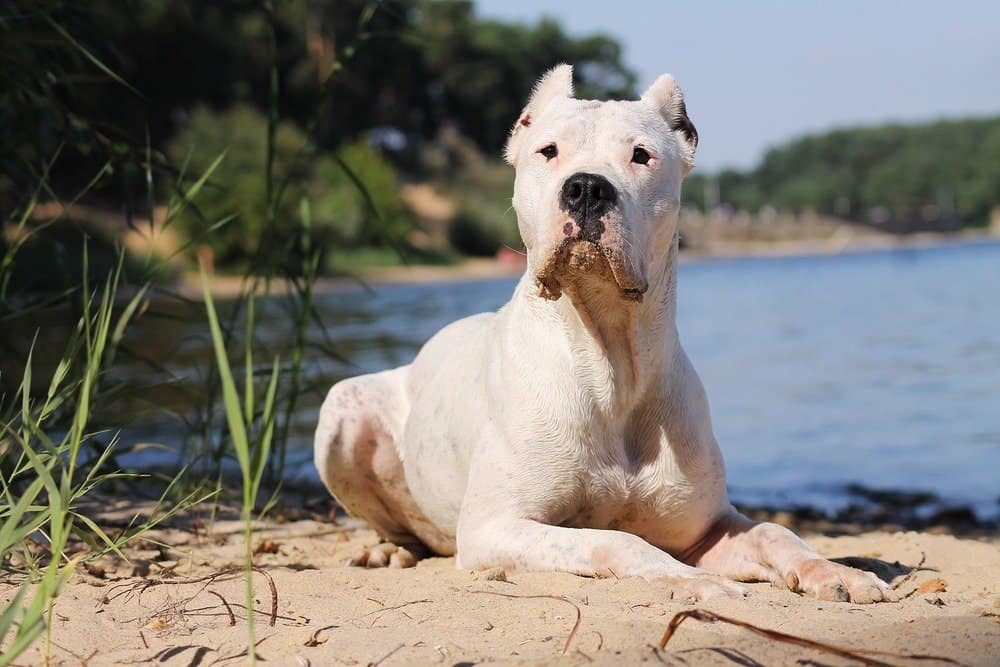
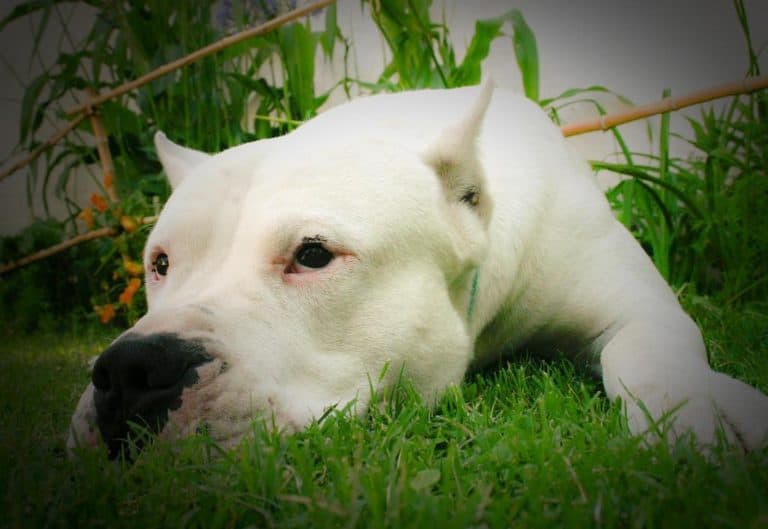
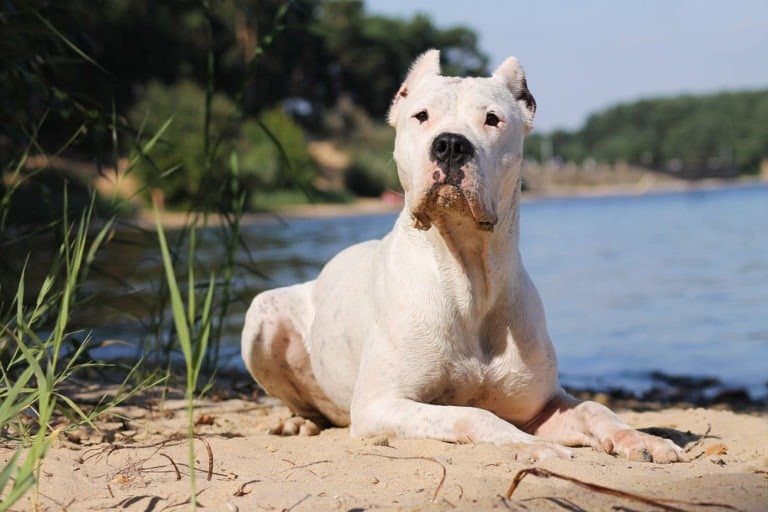
A Dogo Argentino dog laying by the water.

The Dogo Argentino was obtained by crossing several breeds, including bulldogs, bull terriers, great danes, and pyrenean mastiffs

The Dogo Argentino was originally bred in the early twentieth century by Dr. Nores Martinez, who had embarked on a quest to obtain a breed that would be the perfect family pet, a guard dog, and a hunting companion.

To that end, he obtained the Cordoba, a dog descended from European mastiffs renowned for its excellent hunting ability, yet dreaded for its aggressive behavior.

Enlisting the support of his brother, an attorney, he also made use of the bulldog for formidable jaws, the boxer for nimbleness, the bull terrier for the pet’s signature white coat, the Great Dane for its size, and the Pyrenean mastiff for an unflappable nature.

As proof of the success of his breeding program, Dr Martinez had one of the Dogos take on a puma and a boar, with the dog emerging victorious from both fights.

Size and Weight
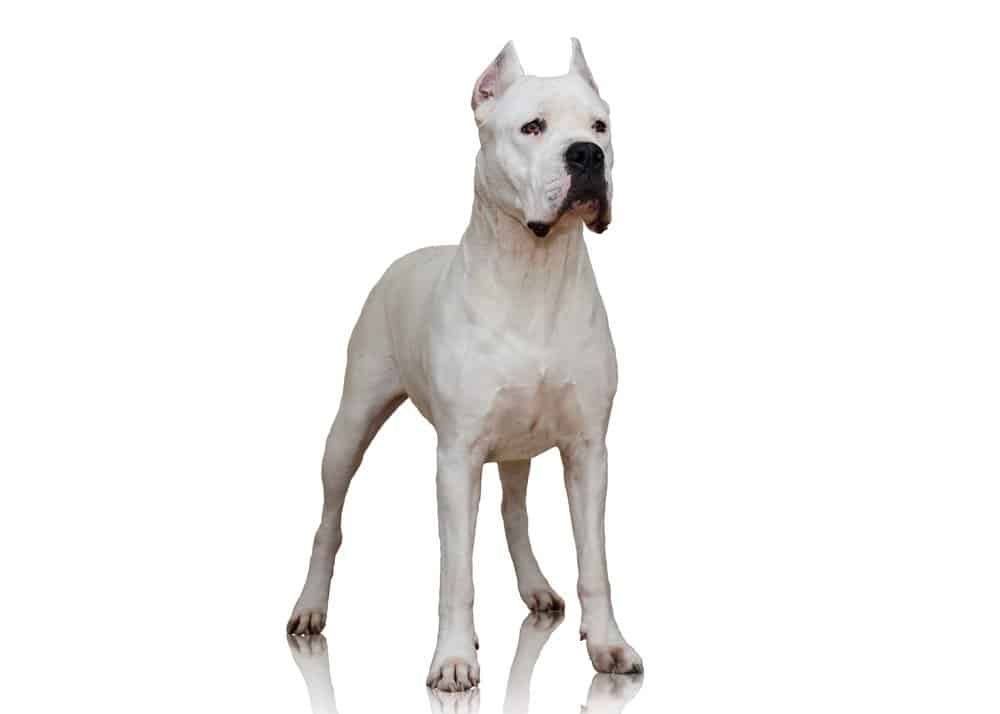
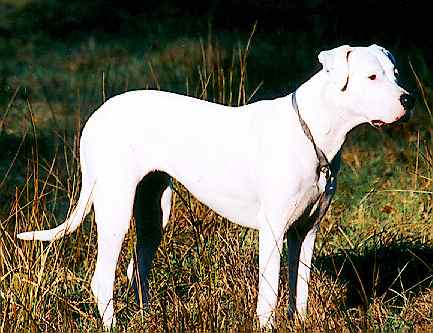
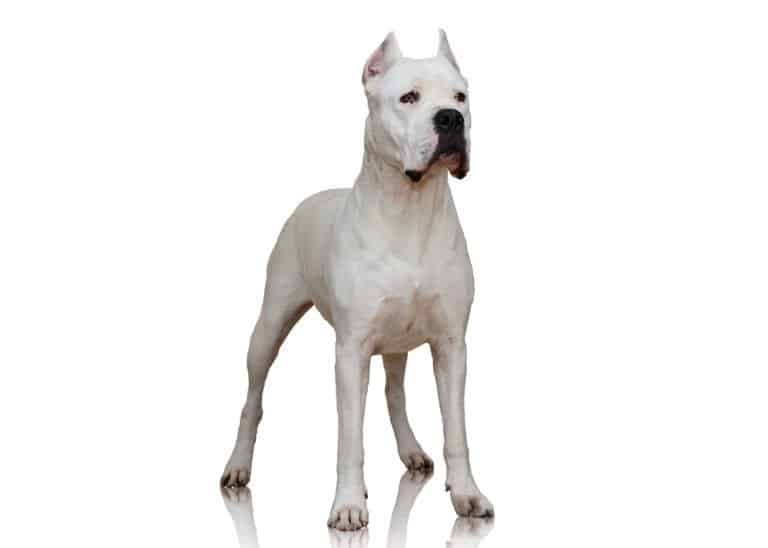
A Dogo Argentino dog isolated on a white background

Dogo Argentinos weigh between 88 to 100 pounds.

The Dogo Argentino is a large and strong dog breed. Males generally range from 88 to 100 pounds and stand between 24 and 26.5 inches tall. Female Dogos are only slightly smaller at 88 to 95 pounds and 24 to 25.5 inches in height.

These dogs should generally be pure white, but the AKC standard does allow for one black or dark patch on their heads. However, this colored area cannot be larger than 10% of the Dogo’s head. This breed has a powerful head and jaws with a muscular neck, a sturdy chest, and a lean body.

When puppies are three months old, they typically weigh between 28 and 34 pounds. The puppies will weigh between 52 and 64 pounds by the time they are six months old. Dogo Argentinos are fully grown by 19 months of age.

Common Health Issues
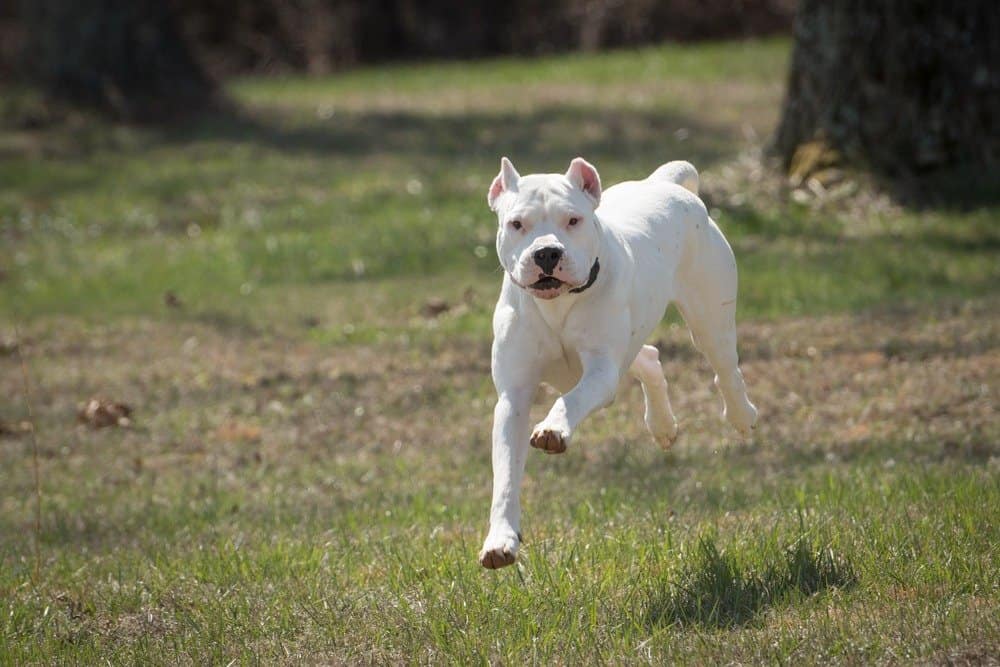
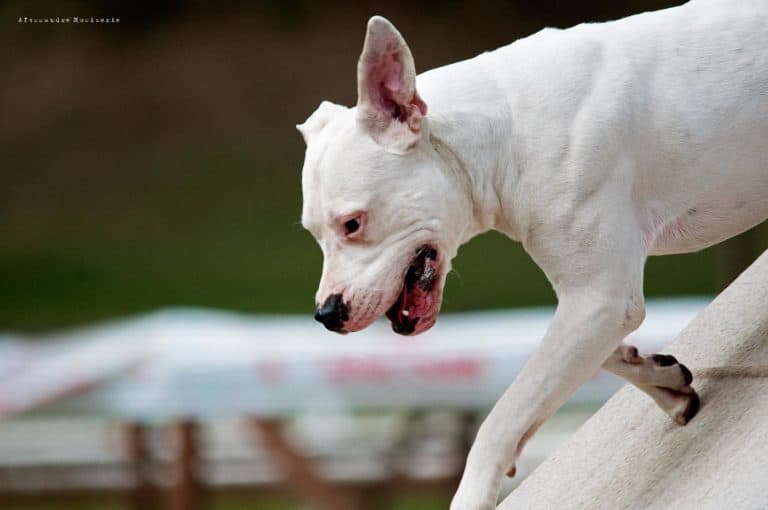
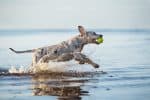
A Dogo Argentino dog running

Dogo Argentinos may develop laryngeal paralysis as they age.

This breed is generally healthy. However, similar to the white Bull Terrier, the Dalmatian, and other pale-colored breeds, the Dogo Argentino can suffer from deafness. Recent studies indicate that congenital deafness affects approximately 25% of Dogo Argentino puppies, with about 20% deaf in one ear and 5% deaf in both ears. Some dogs are only deaf in one ear, but there is a risk of becoming deaf in both ears.

Dogo Argentinos can also develop glaucoma, which impacts 1.7% of all dogs in North America. Two types of glaucoma can affect Dogos. These are open-angle glaucoma and closed-angle glaucoma. Open-angle glaucoma is characterized by increasing loss of vision as a dog ages. The early signs of open-angle glaucoma are often difficult for most owners to detect.

Closed-angle glaucoma is a much more serious condition. It results from a spike in the pressure within a dog’s eyes. It causes redness, pain, and rapid loss of vision.

Dogo Argentinos may develop laryngeal paralysis when they are older. Noisy breathing can be a symptom of this disease, in which the dog’s vocal cords become paralyzed and hang down in their airway. You should bring your dog to the vet immediately if you notice symptoms, as this condition can cause a dog to need emergency surgery.

To sum up, some of the major health concerns that Dogo Argentinos face include:
• Deafness (sometimes deaf in just one ear, sometimes complete deafness)
• Open-angle glaucoma
• Closed-angle glaucoma
• Laryngeal paralysis

Temperament
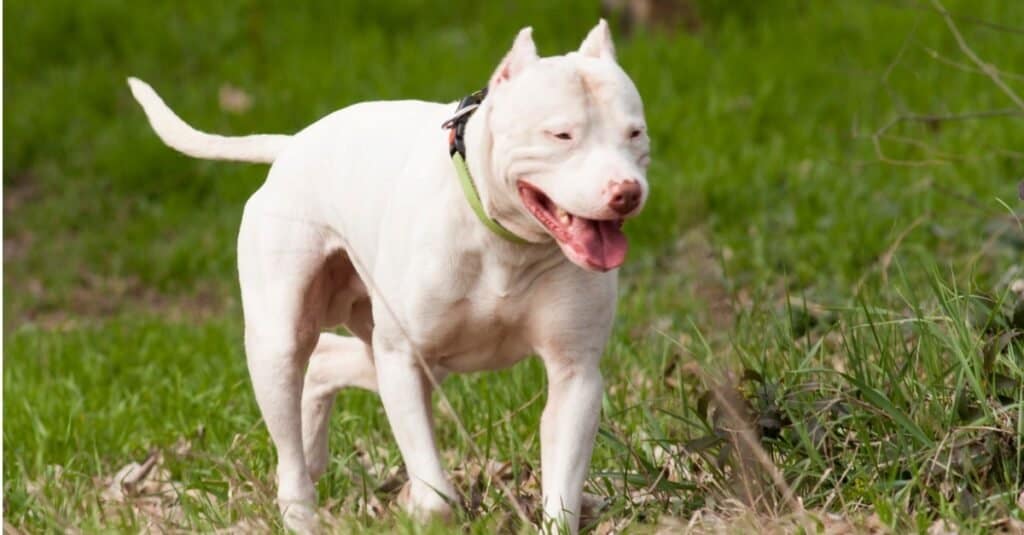
Strongest Dog Breed Bite - Dogo Argentino

Dogo Argentinos are fiercely loyal and affectionate. They are also courageous and protective.

Dogos have very brave and friendly personalities. They love feeling like part of the family and spending time with the people they love. When with people they know and trust, Dogos can be very social and happy. However, this breed is not as trusting of strangers, and if not properly trained, may exhibit inappropriate behaviors. This is one of the reasons you’ll want to make sure your dog is well-trained and socialized.

The Dogos’ personality traits make this breed a good dog for families. However, keep in mind that they don’t take well to strangers. If your child will be having friends over regularly, this is an important point to consider.

How to Take Care of a Dogo Argentino

There are a few things you’ll want to keep in mind when planning to care for a Dogo Argentino. As you plan for how you’ll care for your dog, keep in mind the unique health concerns and temperament of this breed.

The Best Dog Food for the Dogo Argentino

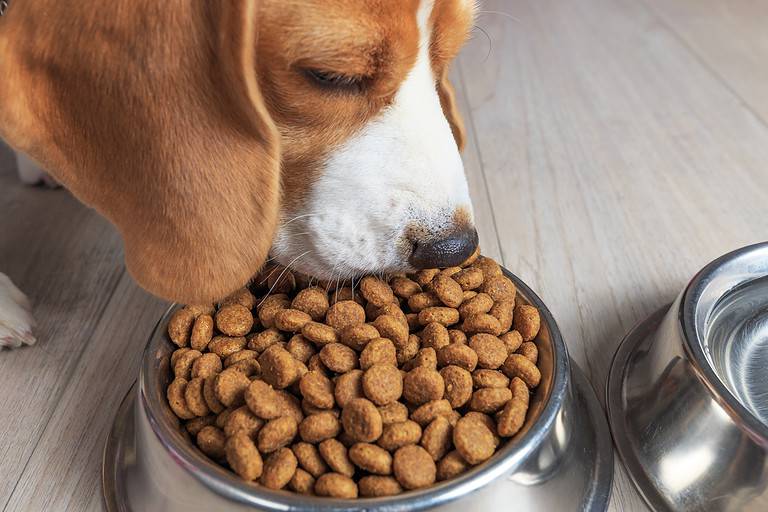
Whether you are selecting food for your adult or puppy Dogo Argentino, it will be important to choose a high-quality option from a trusted brand. Since Dogo Argentinos are a large-breed dog, you should look for a food specifically formulated for larger dogs.

Dogo Argentino puppies will need to eat multiple, smaller meals each day. When the dogs are between 8 and 12 weeks old, they should be fed four meals every day. This can be reduced to three meals a day when the puppies are between 3 and 6 months old. Puppies between the ages of 6 months and 1 year should eat two meals each day, and once your Dogo is 1 year old, you may choose to feed them just once a day or to continue with two meals each day.

Dogo Argentino owners luckily don’t have to worry too much about potential health complications when selecting dog food, since the breed tends to be relatively healthy. Still, it’s natural to want the best for your dog, so it’s not a bad idea to aim for glaucoma prevention when comparing dog food ingredients.

Maintenance and Grooming

Dogo Argentinos have a short, white coat. However, even though their coat is short, they are still relatively heavy shedders. To reduce the amount of hair left around your home, you should try to brush your dog at least once a week to remove dead or loose fur.

While your Dogo may need a bath if it gets dirty, you shouldn’t bathe it too frequently. Doing so can destroy the natural oils in their coat that offer protection for their skin. Trimming your Dogo’s nails, keeping their ears cleaned, and brushing their teeth are also tasks you should do regularly.

Training

As a very intelligent dog, the Dogo is relatively easy to train. They also look to please their owners, which aids in the training process. You should begin training your dog and socializing them from a very early age. This will help ensure they are comfortable with different people and in different situations.

While the Dogo Argentino is relatively easy to train, they do not respond well to training methods that use negative reinforcement or physical punishment. For this reason, you should use training methods that focus on positive reinforcement.

Exercise

Dogo Argentinos were bred to hunt mountain lions, wild boar, and other large game. As a hunting dog, their exercise needs are greater than some other breeds, so you will want to make sure you are willing to give your dog the exercise it needs. Taking it on hunting trips or longer walks, or hikes are some good ways to keep your dog active. You can also let your Dogo out in a fenced-in yard to run and play. If a Dogo does not get enough exercise, it may become stressed and destructive.

Puppies
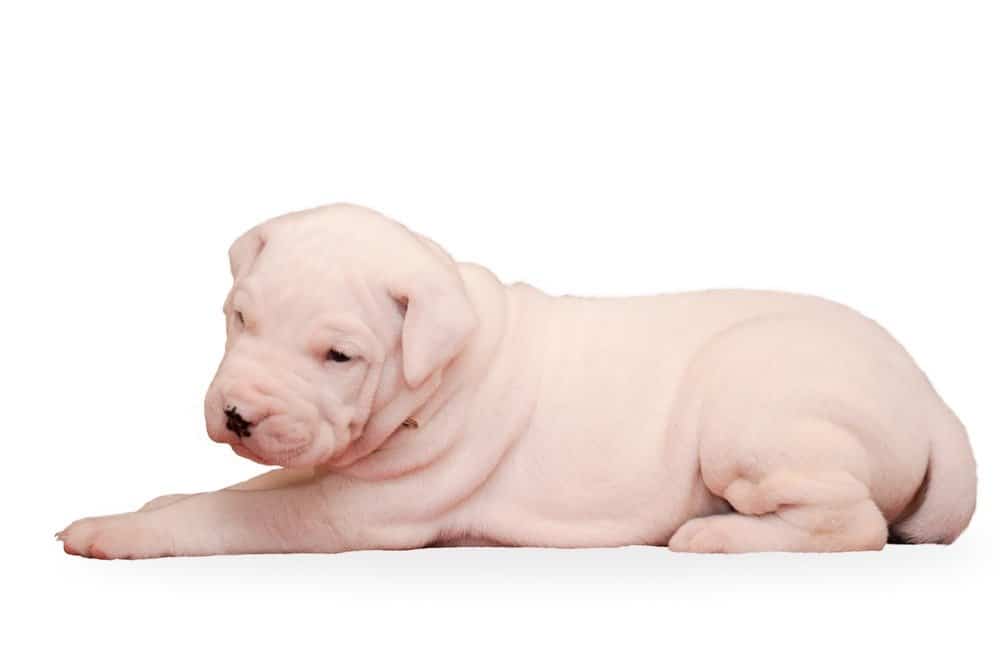
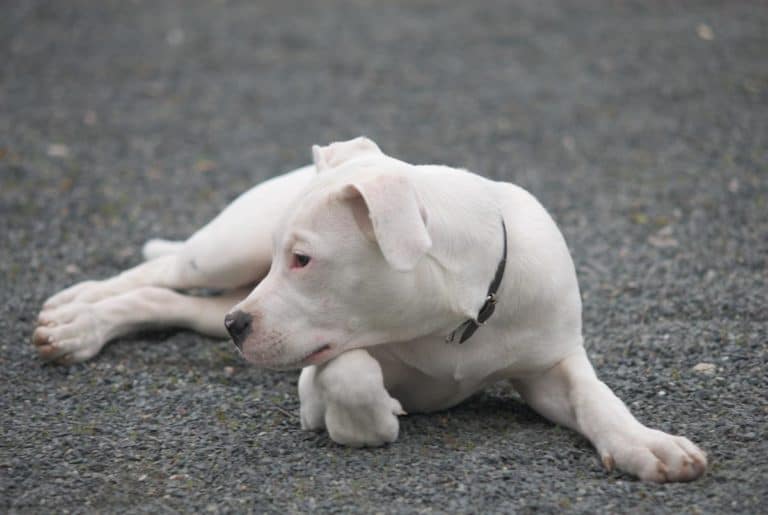
Dogo Argentino puppy

Your Dogo Argentino puppy should be taken to be immunized shortly after you bring it home.

If you are adopting a Dogo Argentino puppy, there are a few things you should do to get your house ready for the new dog. Start by puppy-proofing the areas of your home that the dog will be able to access. Remove anything that could be hazardous to the dog or that you wouldn’t want to see destroyed by an active puppy.

Next, make sure you have purchased food, a crate, a leash and collar, toys, beds, and other essentials for your dog. This way, you’ll have everything ready when you bring your new pup home.

One more thing you should do before bringing home your new puppy is find a veterinarian. This way, you’ll be able to schedule an appointment to get your dog vaccinated and checked out shortly after you bring him or her home.

Children

Dogo Argentinos can be great dogs around children they know and trust. They are very friendly and loyal to the members of their families, including the children. However, this breed does not do very well with strangers. This means they may not exhibit appropriate behaviors around other children who are not part of their family. This could be an issue for households with children who like to invite their friends over to play.

Dogs Similar to Dogo Argentino

The American Pit Bull Terrier, American Bulldog, and Great Dane and three dog breeds that have some things in common with the Dogo Argentino.

  • American Pit Bull Terrier: Like the Dogo Argentino, the American Pit Bull Terrier is a hunting dog breed. Both of these dog breeds are very loyal to their owners. They are also relatively easy to train. Pit Bulls are more social and affectionate than Dogo Argentinos, and they are also a little more likely to bark.
  • American Bulldog: American Bulldogs and Dogo Argentinos can both make good guard dogs. Both breeds are also very easy to groom. American Bulldogs are generally more affectionate and tolerant of other dogs than Dogo Argentinos are.
  • Great Dane: Great Danes and Dogo Argentinos are both very intelligent dogs that are relatively easy to train. Both of these breeds can be very territorial and are good choices for being watchdogs. Great Danes are much larger than Dogo Argentinos, though. The average weight of a male Great Dane is 160 pounds, while the average weight of a male Dogo Argentino is only 93.5 pounds. Great Danes are also taller, with an average height of 32 inches compared to the 25.5-inch average height of a Dogo.
View all 451 animals that start with D

Sources

  1. American Kennel Club / Accessed September 10, 2018
  2. https://petolog.com/dogs/dogo-argentino / Accessed September 10, 2018
  3. Wikipedia / Accessed September 10, 2018
  4. Dogtime / Accessed September 10, 2018
  5. Animal Care Tip / Accessed September 10, 2018
Dana Mayor

About the Author

Dana Mayor

I love good books and the occasional cartoon. I am also endlessly intrigued with the beauty of nature and find hummingbirds, puppies, and marine wildlife to be the most magical creatures of all.
Connect:

Thank you for reading! Have some feedback for us?


Dogo Argentino FAQs (Frequently Asked Questions)

The amount you’ll likely pay for a Dogo Argentino will vary quite significantly depending on whether you’re adopting the dog from a shelter or purchasing one from a breeder. Adopting a Dogo from a shelter will likely cost about $300. Purchasing one from a breeder can cost between $1,000 and $4,000. A number of factors, including the dog’s health, genetic lineage, and breeder’s reputation can impact the exact price you’ll be charged.

You will also want to factor in the cost of caring for your dog before making a final decision to adopt a Dogo. You will need money to pay for medical expenses, training, food, toys, and supplies. Your first year owning the dog will be the most expensive, and you could easily spend over $1,000. Subsequent years should be less money, but you should still budget to spend at least $500. Keep in mind, if you’re faced with a surprise medical issue, you could end up paying more than this.