

D
Species Profile

Dogue De Bordeaux

Canis lupus familiaris

Big head. Bigger heart.
otsphoto/Shutterstock.com

Dogue De Bordeaux Distribution

Click a location to explore more animals from that region

Origin Location

This map shows the native origin of the Dogue De Bordeaux. As a domesticated species, they are now found worldwide.

Loading map...

Found in 1 country

Size Comparison

Human 5'8"
Dogue De Bordeaux 2 ft 1 in

Dogue De Bordeaux stands at 36% of average human height.

Biggest Dog Breeds_ Dogue de Bordeaux

At a Glance

Domesticated
Also Known As Bordeaux Mastiff, French Mastiff, Bordeaux Dog, DDB
Diet Omnivore
Activity Diurnal+
Lifespan 3.5 years
Weight 68 lbs
Status Not Evaluated
Did You Know?

Also called the French Mastiff; "Dogue" refers to a mastiff-type dog in French usage.

Scientific Classification

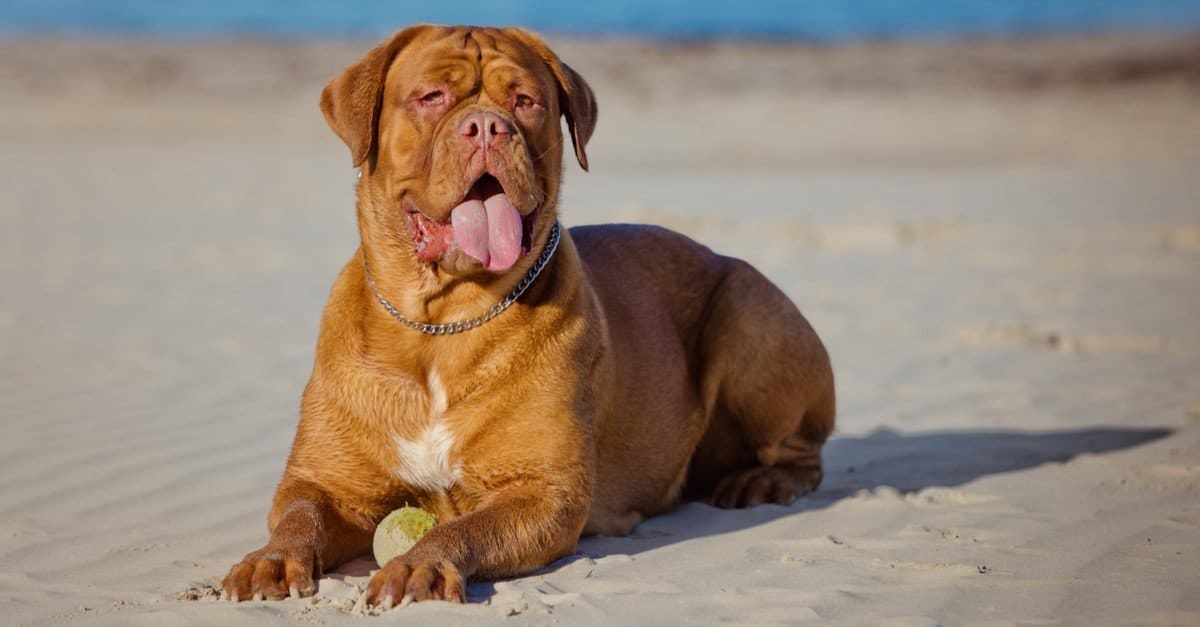
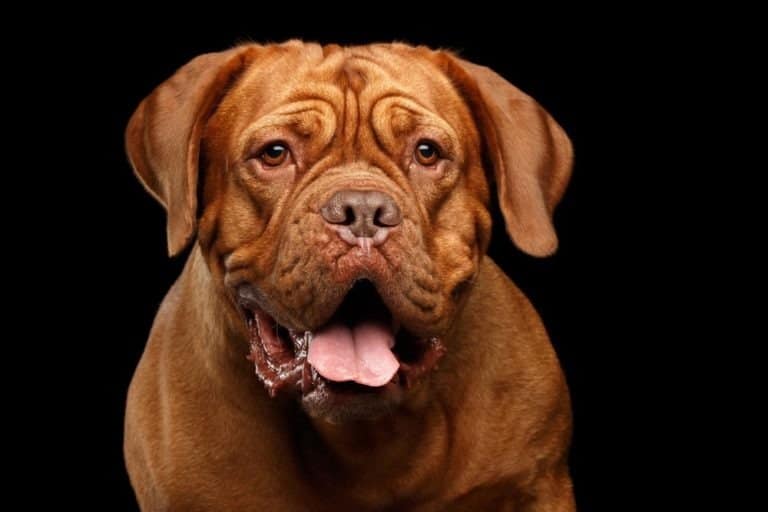
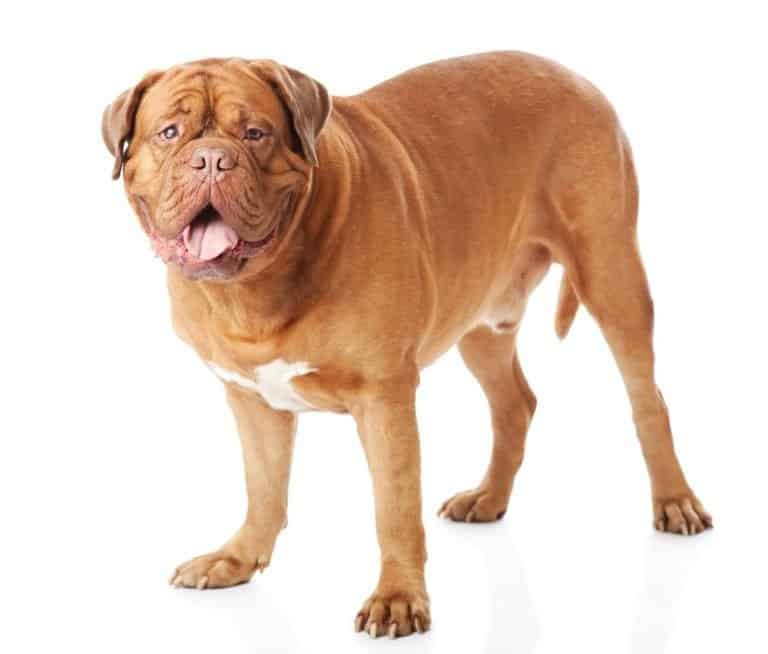
The Dogue de Bordeaux (French Mastiff) is a large molosser-type domestic dog breed originating from France, historically used for guarding and working roles and today kept primarily as a companion and guardian breed.

Kingdom
Animalia
Phylum
Chordata
Class
Mammalia
Order
Carnivora
Family
Canidae
Genus
Canis
Species
Canis lupus

Distinguishing Features

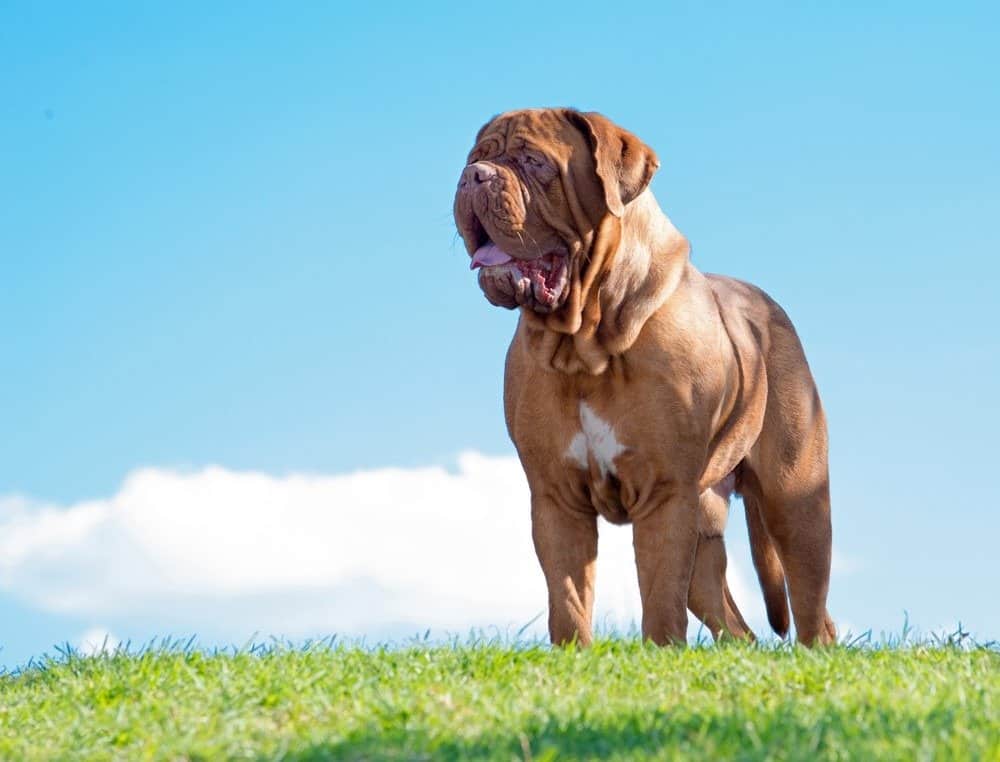
  • Very large, broad head with pronounced stop and short muzzle (brachycephalic tendency)
  • Powerful, stocky, muscular body; heavy-boned molosser build
  • Typically fawn to mahogany coat, often with a black or red mask; short coat
  • Loose skin with wrinkles, especially on the face
  • Calm, devoted guardian temperament when well-socialized

Physical Measurements

Males and females differ in size

Height
♂ 2 ft 1 in (1 ft 12 in – 2 ft 3 in)
♀ 2 ft (1 ft 11 in – 2 ft 2 in)
Length
♂ 4 ft 2 in (3 ft 9 in – 4 ft 7 in)
Weight
♂ 128 lbs (110 lbs – 150 lbs)
♀ 108 lbs (99 lbs – 119 lbs)
Tail Length
♂ 1 ft 2 in (12 in – 1 ft 4 in)
♀ 1 ft 3 in (12 in – 1 ft 6 in)
Top Speed
19 mph
Short bursts of speed

Appearance

Primary Colors
Secondary Colors
Skin Type Short, fine, close-lying single coat with thick, loose skin-especially on the head/neck-forming pronounced wrinkles; skin folds can trap moisture/debris.
Distinctive Features
  • Domestic dog (Canis lupus familiaris) breed-specific distinction from the base species: markedly brachycephalic/short-muzzled head, extreme skull breadth, and heavy mastiff musculature-traits selected for guarding/working roles rather than wild-type endurance hunting.
  • Molosser/mastiff-type build: very powerful, low-to-the-ground, broad chest, substantial bone, and thick tail set low; overall impression is compact power rather than the leaner wolf-like outline.
  • Head is the hallmark: massive, broad skull; pronounced stop; short, wide muzzle; strong underjaw often with an undershot bite; visible facial wrinkles and heavy lips (common drooling).
  • Expression and ears: alert but calm expression; small-to-medium ears set high, typically slightly darker than body coat.
  • Movement: steady, heavy gait with strong drive; can appear "rolling" due to massive forequarters and chest depth.
  • Temperament (breed-typical): calm, affectionate with family, naturally protective/territorial; requires early socialization and consistent, humane training to prevent over-guarding or reactivity.
  • Common health considerations for large, short-muzzled breeds: brachycephalic airway issues (snoring, exercise/heat intolerance), increased risk of overheating, and heavy drooling; care should prioritize cool environments and avoiding strenuous activity in heat/humidity.
  • Orthopedic risks typical of giant/large breeds: hip/elbow dysplasia and arthritis; manage with lean body condition, controlled growth in puppies, joint-friendly exercise, and vet-guided nutrition.
  • Dogue de Bordeaux have higher risk of some heart diseases (dilated cardiomyopathy, subaortic stenosis in some lines) and of cancers in many mastiff-type dogs; regular vet checks are important.
  • Bloat risk (GDV) in deep-chested large dogs: feed measured meals, avoid intense exercise around meals, and discuss gastropexy risk/benefit with a veterinarian.
  • Skin/eye care needs: facial folds can develop dermatitis/yeast if not kept clean and dry; loose eyelids may predispose to ectropion/entropion-monitor irritation and discharge.

Sexual Dimorphism

Sexual dimorphism is evident: males are typically larger and heavier with more pronounced head mass, muscle, and overall substance; females are smaller and often slightly more refined while retaining the breed's broad head and powerful build.

♂
  • Greater height and weight; heavier bone and thicker neck.
  • More massive head and broader skull; often more pronounced facial wrinkles and flews.
  • Typically more muscular forequarters and chest breadth.
♀
  • Slightly smaller frame with a somewhat lighter (but still robust) head and neck.
  • Often a more streamlined outline and less extreme wrinkle/flew development compared with males.
  • May mature slightly earlier physically, though still slow-maturing relative to smaller breeds.

Did You Know?

Also called the French Mastiff; "Dogue" refers to a mastiff-type dog in French usage.

Famous for an oversized, wrinkled head and very broad chest-classic molosser/mastiff proportions.

Became widely recognized outside France after the film *Turner & Hooch* featured a Dogue de Bordeaux.

Compared with the base species (the gray wolf), this breed is far more neotenous (juvenile-like) in face/body proportions and human-focused in social behavior due to domestication and selective breeding.

Its short coat and typically red/fawn coloration made it a visually distinctive guard and estate dog in French regions.

Like many giant breeds, it matures slowly and often stays "puppy-clumsy" longer than smaller dogs.

Unique Adaptations

  • Molosser head/jaw architecture: extremely broad skull and strong jaw muscles-selected for historic holding/guarding work (not a wild adaptation seen in Canis lupus).
  • Thick neck, heavy bone, and wide stance: enhances stability and pushing power for guarding and deterrence roles.
  • Short coat: low grooming load and quick-drying, but offers less protection from cold/rough terrain than many wolf-like double coats.
  • Brachycephalic tendencies (short muzzle): can reduce heat tolerance and airflow efficiency compared with the wolf; requires human-managed exercise and cooling.
  • Domestication-tuned social cognition: unusually attentive to human cues and household routines-more cooperative with people than the base species due to selection for companionship and work.

Interesting Behaviors

  • "Lean-and-block" guarding: many Dogues use their body weight to quietly block doorways or insert themselves between family and strangers rather than immediately barking.
  • Close-contact affection: often seeks full-body contact (pressing, leaning, lap-sitting attempts) despite size-an extension of companion-bonding typical of domestic dogs vs. wolves' more distance-based tolerance.
  • Low-bark deterrence: tends toward watchful, reserved observation; when it vocalizes, it may be a deep, brief alert rather than continuous barking.
  • Drool and jowl signals: loose flews can produce visible salivation during excitement, heat, or food anticipation-handlers often read "jowl mood" as an arousal cue.
  • Powerful, deliberate play: prefers tug, body-wrestling, and short bursts; benefits from structured rules to prevent accidental knocks.
  • Owner-shadowing indoors: many follow their person room-to-room, a breed-typical expression of domestic dog attachment and guarding tendency.

Cultural Significance

The Dogue de Bordeaux (Canis lupus familiaris) is part of France’s molosser tradition of farm and guard dogs—big, calm, and steady with family. Turner & Hooch (1989) showed its wrinkled, drooly, loyal companion-guardian side.

Myths & Legends

French regional lore and breed anecdotes often frame the Dogue de Bordeaux as the steadfast château and dockside guardian-an image repeated in 19th-early 20th century accounts of Bordeaux-area working dogs protecting property and accompanying laborers.

A common naming-origin story links the breed's identity to the Bordeaux region and its working life around estates and commerce, giving the dog an almost heraldic association with local pride and protection.

Modern popular culture created its own legend: after *Turner & Hooch*, stories spread of "Hooch-like" Dogues being both unstoppable home guardians and surprisingly tender family dogs, shaping a lasting pop-mythos around the breed's dual nature.

Conservation Status

NE Not Evaluated

Has not yet been evaluated against the criteria.

Population Stable

Life Cycle

Birth 7 pups
Lifespan 4 years

Lifespan

In the Wild
1–10 years
In Captivity
5–8 years

Reproduction

Mating System Polygynandry
Social Structure Managed Domestic
Breeding Pattern Serial
Fertilization Managed Selective
Birth Type Internal_fertilization

Dogue de Bordeaux (Canis lupus familiaris): biologically polygynandrous, but breeding is human-managed and selective. Temporary serial pairings, vet oversight, health screening, and careful sire/dam choice are needed because of large size, brachycephaly, and whelping risks.

Behavior & Ecology

Social Pack Group: 3
Activity Diurnal, Crepuscular, Cathemeral
Diet Omnivore High-quality animal protein (especially beef or poultry) in a complete, large-breed formulated diet

Temperament

Most Dogue de Bordeaux are calm at home and act as companion-guardians. They watch and guard their house, going from quiet watch to deep barking when unsure. Early socializing and breeder choice affect confidence.
Dogue de Bordeaux (Canis lupus familiaris) is a large molosser with a strong protective drive, usually less active than many working breeds, preferring close contact and often blocking doorways to control space.
Affectionate with family, often gentle with known children when supervised; can be wary with strangers and may require structured introductions to prevent over-guarding.
Moderate to low tolerance for rude dog greetings; potential for dog-directed reactivity if under-socialized-best outcomes with early, frequent, positive exposures and ongoing training.
Trainability: responsive to calm, consistent handling and positive reinforcement; may be stubborn/slow-to-repeat due to low toy/ball drive (variation: some individuals are highly biddable when food-motivated).
Arousal profile: generally steady, but can show rapid defensive escalation if startled or if an unfamiliar person enters territory; benefits from impulse-control routines and clear household rules.
Brachycephalic (short-muzzled) dogs may overheat and breathe loudly. Hip, elbow, or knee ligament problems can reduce exercise. Bloat risk makes them calm after meals; skin-fold or ear issues make them irritable.
Needs moderate, joint-friendly walks and low-impact play; avoid hard exercise and heat. Use a harness if strong. Early socialization and calm training, clean face folds, regular vet checks, prevent food guarding.

Communication

Deep, low-frequency bark used as primary territorial/alert signal Often fewer barks, more impactful
Low growl/rumble and "grumble" as distance-increasing signals; important to respect as early warnings.
Snorts, snuffles, and noisy breathing common due to head/muzzle structure; can increase with excitement or heat.
Whines/soft moans for attention-seeking and proximity requests, especially toward primary caregiver.
Body blocking and positioning (standing between family member and newcomer; leaning or shoulder-checking gently) as a characteristic guardian-style signal.
Stillness and hard stare to assess unfamiliar stimuli; may precede bark if uncertainty persists.
Physical contact seeking: leaning, pressing head/body, pawing; also uses close following ("shadowing") of trusted person.
Scent marking and investigation (sniffing, urine marking) typical of canids; may be less roam-driven than many breeds but still uses scent to map territory.
Facial expressions and ear/tail carriage (often subtle due to head shape): relaxed mouth/jowls vs tense muzzle; weight shift forward indicates heightened vigilance.
Drool/licking as appeasement or arousal indicator; excessive drooling can also reflect heat stress-monitor for panting and overheating signs.

Habitat

Elevation: Up to 16404 ft 3 in

Ecological Role

Human-associated omnivore; companion and guardian breed rather than an ecological predator in modern contexts. Compared with the wild base species context (wolf), the Dogue de Bordeaux is behaviorally and nutritionally dependent on humans, with selective breeding emphasizing guarding/companionship over hunting efficiency.

Household/property deterrence and guarding Human companionship and social support Assistance/working roles in controlled settings (e.g., watchdog, personal protection where legally and ethically trained) Indirect pest deterrence around homes via presence and occasional predatory behavior toward small animals

Diet Details

Main Prey:
Domestic livestock Poultry Fish Small mammals
Other Foods:
Grains and starches Starchy vegetables Vegetables Fruits

Human Interaction

Domestication Status

Domesticated

Canis lupus familiaris, the domesticated dog from the gray wolf, shaped by human breeding. Dogue de Bordeaux (French Mastiff) is a large, muscular guardian breed with a massive wide head (brachycephalic), a wrinkled face, strong guarding instincts, calm if well-bred, heavy drooling and heat sensitivity. Today it is a family companion and home guard, shown, and needs frequent veterinary care.

Danger Level

Moderate
  • High injury potential if a bite occurs due to large size, strong jaw/neck musculature, and guarding drive
  • Risk of defensive/territorial aggression without early socialization, consistent training, and responsible management
  • Accidental knock-down injuries to children/elderly from body mass and enthusiasm
  • Higher conflict risk in public settings if improperly restrained or if dog-reactive behavior develops
  • Public-safety/legal liability concerns may be elevated compared with smaller breeds (insurance/BSL attention)

As a Pet

Suitable as Pet

Legality: Generally legal to own as a pet in most jurisdictions, but may be restricted by breed-specific legislation (BSL), housing rules, or insurer exclusions due to size/guardian-type classification. Prospective owners should verify local ordinances, landlord/HOA rules, and liability insurance requirements.

Care Level: Experienced

Purchase Cost: $1,500 - $4,000
Lifetime Cost: $25,000 - $70,000

Economic Value

Uses:
Companion/guardian animal Breeding and stud services Conformation showing and sport participation (limited by build/health) Veterinary services and pharmaceuticals (often above-average utilization) Training/behavior services (obedience, impulse control, socialization) Rescue/shelter and rehoming networks
Products:
  • Puppy sales from health-tested lines
  • Stud fees and breeding contracts
  • Breed club memberships and show entries
  • Professional training packages for large guardian breeds
  • Specialized veterinary care (orthopedics, cardiology, oncology, airway management)
  • Crates, heavy-duty leashes/harnesses, and large-breed nutrition

Relationships

Ecological Equivalents 6

Animals that fill a similar ecological role in their ecosystem

Domestic dog
Domestic dog Canis lupus familiaris Dogue de Bordeaux: very heavy molosser build with a massive head and short, broad muzzle; often drools. Calm, protective guardian. Prone to hip and elbow dysplasia, heart disease, brachycephaly, bloat (gastric dilatation-volvulus), and skin-fold and eyelid problems; requires weight control, gentle exercise, cooling measures, regular hygiene, and routine screening.
English Mastiff
English Mastiff Canis lupus familiaris Similar molosser-type niche as a large deterrent/guardian companion; comparable management needs, including slow maturation, susceptibility to joint stress, heat sensitivity, risk of bloat, and requirements for drool and skin care; and an emphasis on a calm, stable temperament.
Bullmastiff
Bullmastiff Canis lupus familiaris Historically used for property and estate protection; shares a "guardian-first, athlete-second" ecological profile — short bursts of power, requires structured training and socialization, and has similar health risks (orthopedic issues, heat intolerance, and bloat).
Cane Corso
Cane Corso Canis lupus familiaris Functional guardian/working molosser: occupies a similar role as a territorial deterrent and family protector, with comparable requirements such as early socialization, consistent handling, and joint-friendly conditioning.
Neapolitan Mastiff
Neapolitan Mastiff Canis lupus familiaris Another heavy, wrinkled mastiff breed selected for intimidation and guarding. Shares niche and management themes—skin-fold care, drooling management, heat management, and orthopedic support—though conformation and mobility can differ.
Rottweiler
Rottweiler Canis lupus familiaris Large guardian/utility dog occupying a similar human-associated security and companionship niche. Shares needs for training, socialization, and controlled exercise, though typically more athletic and less brachycephalic than the Dogue de Bordeaux.

Quick Take

  • Maintaining a 100-pound Dogue de Bordeaux requires fulfilling a 50-pound monthly kibble requirement.
  • Standard anesthesia doses create a lethal technical constraint due to this breed‘s extreme sensitivity.
  • Counterintuitively, these guardians require swimming as a necessary activity during their puppy development phase.
  • The Raymond Triquet intervention was a necessary rescue mission following the World War 2 population crash.

Also known as the French Mastiff, this ancient breed originates from the Bordeaux region of France. Due to their massive size, they were working dogs used to pull carts or as guard dogs. Since they have a similar appearance, some dog enthusiasts believe that they are descendants of the Gaul, a larger Mastiff-type breed from ancient Romans, used as war dogs and gladiator-style fighting dogs.

These days, a well-trained Dogue de Bordeaux makes an excellent choice for a family pet. Their laidback personality makes them great with children, while their fierce loyalty to their human companions ensures that their families will never be without protection.

A comprehensive infographic about the Dogue de Bordeaux dog breed, showcasing its physical traits, history, and care requirements with icons and illustrations.
From a life-threatening sensitivity to common anesthesia to a 50-pound monthly food bill, owning this ancient French giant is a high-stakes commitment. © A-Z Animals

3 Pros and Cons of Owning a Dogue de Bordeaux

ProsCons
Their laid-back personality makes them a good fit for many families.They have an unfortunately short lifespan.
They are extremely loyal to their masters.They drool more than most other breeds.
They don’t need as much exercise as most other giant breeds.They don’t get along well with other pets.

Evolution and Origins

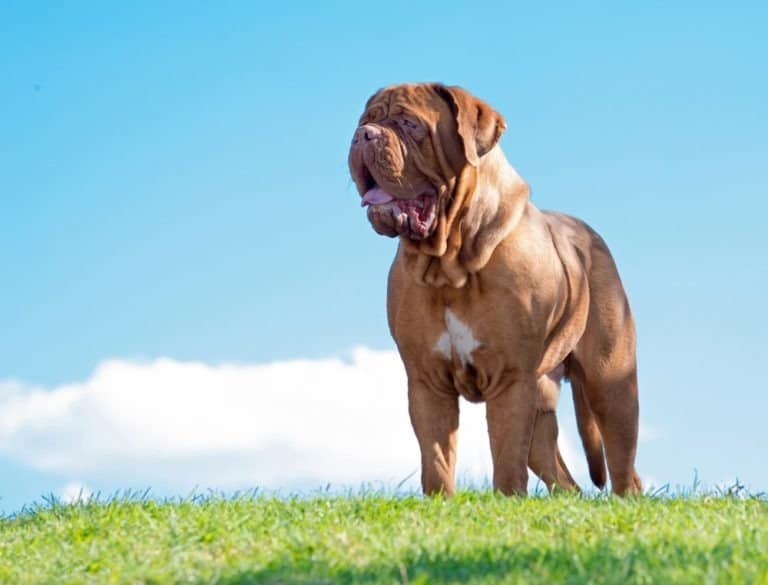
Dogue de Bordeaux dog, standing outdoors with sky background

The Dogue de Bordeaux is believed to be the descendant of the Molossus or British mastiffs.

A breed of many names, also known as the French Mastiff and Bordeaux Mastiff, this canine is considered to be the oldest in France. While its origins are somewhat shrouded in mystery, it is believed to be a descendant of the now-extinct Molossus. Other experts assert that its ancestors were bred as a result of the British presence in France when the former bred their mastiffs with local domestic canines. The Dogue de Bordeaux once earned its keep hunting game, including bear and boar. By the 19th century, it had earned a reputation as an excellent guard dog and was employed watching over vineyards.

Around the Second World War, its numbers plummeted. Thankfully, canine enthusiast Raymond Triquet, working with the French Dogue de Bordeaux Club, saved the breed. Between 1970 and 1995, the standard for the breed was established and refined, and it was eventually recognized by the American Kennel Club in 2008.

Size and Weight

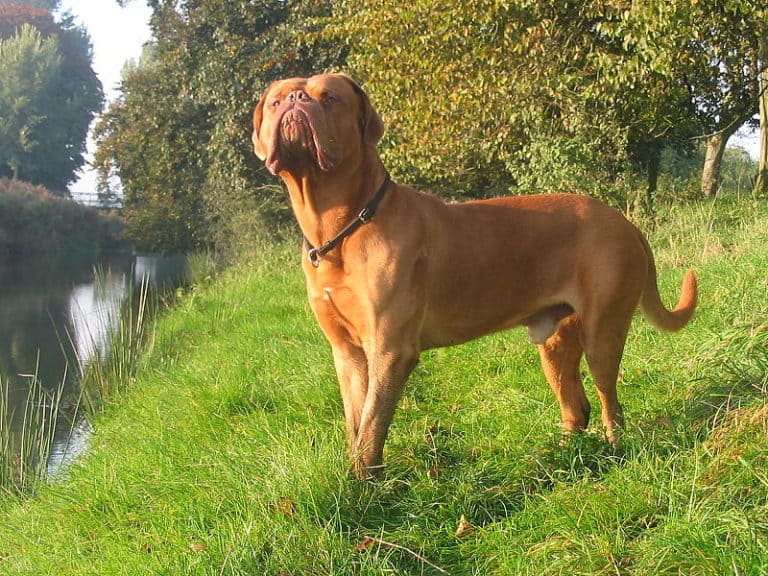
This stocky, muscular dog breed ranges in height from 23 to 26 inches and weighs in at a whopping 100 pounds or more. As with most other breeds, the males tend to be slightly larger than the females.

Common Health Issues

One of the biggest health issues the dog faces is gastric dilatation and volvulus, which is the scientific term for serious bloating. To keep the stomach from getting too much air, you should pay special attention to habits before, during, and after feeding. These dogs should eat 2 to 3 small meals a day and avoid exercise an hour before and after eating. Raised dishes and ones designed to force dogs to eat slowly are best for this giant breed, and soft foods or soaked kibble help to reduce the amount of air they take in alongside their food.

These dogs can also fall victim to illnesses like epilepsy, hip dysplasia, heart disease, and cancer. They are also extremely sensitive to anesthesia, so owners should choose a vet who is familiar with the breed.

Temperament
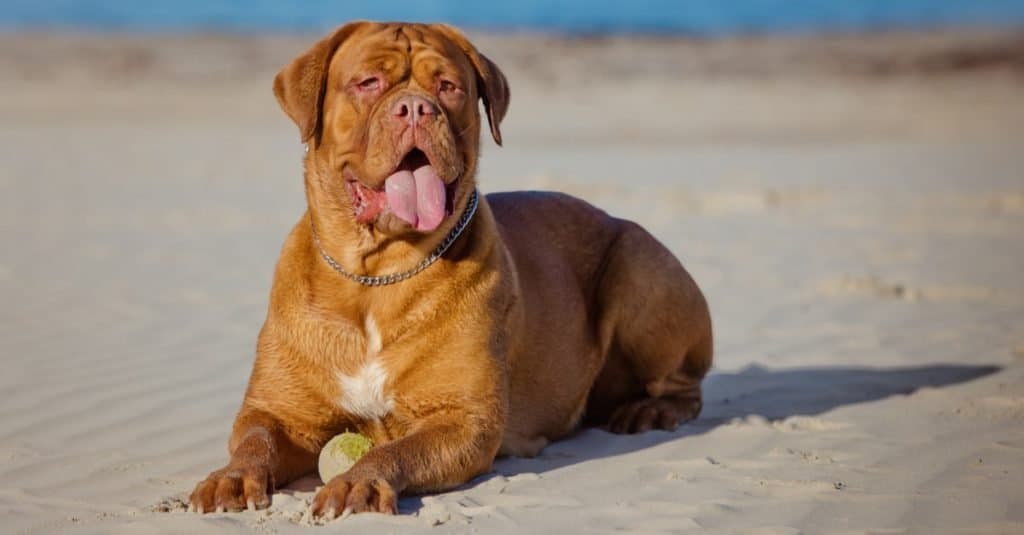
Biggest Dog Breeds_ Dogue de Bordeaux

In spite of their affectionate nature, these pets are none too fond of other canines.

The Dogue de Bordeaux is a loyal breed and will do whatever it deems necessary to protect its master. Proper training is imperative; without it, these dogs can pose a serious threat to unknown people and animals due to their extreme size and strength. If trained well, this breed will be protective but non-aggressive and will make a wonderful companion.

These dogs don’t get along with other dogs of the same sex, and sometimes won’t even tolerate another dog of the opposite sex. They also have a strong prey drive and will chase and kill smaller animals like cats or rabbits. Since behavior modification in these areas is not foolproof, these traits make them best suited for a single-pet household.

When it comes to training, these dogs have a stubborn yet affectionate personality. They require a gentle but consistent approach that tells them who is boss without damaging their sensitive feelings.

How To Take Care of a Dogue de Bordeaux

If you’re considering owning a Dogue de Bordeaux, you’ll need to consider its intense care needs. They require feeding modifications to keep them healthy, the right amount of exercise to stay healthy without overexertion, and a trainer who is gentle but consistent to help them reach their full potential.

The Best Dog Food
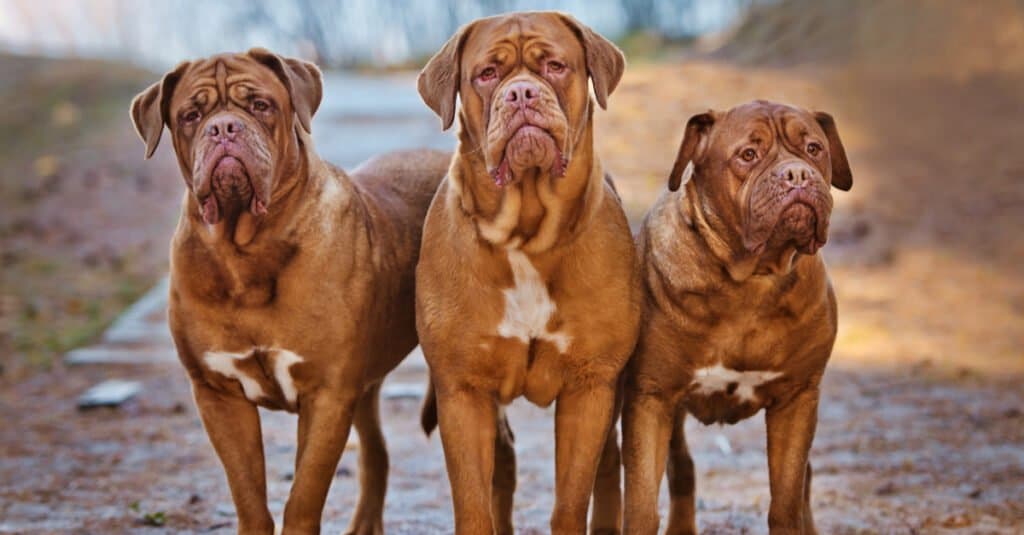
three Dogue de Bordeauxs on muddy path

This breed is best suited to a legume-free diet because it is prone to heart disease.

Due to their massive size, these dogs need to eat a lot. The average adult requires 4 to 7 cups of dry kibble every day. This breed tends to suffer from food allergies, which means they will need good-quality wheat-free food. Prospective owners should take note of the cost required to keep these dogs sufficiently fed, as they can eat around 50 pounds of food each month.

Know about the breed’s elevated risk of heart disease, and make sure your dog doesn’t eat legumes, which are linked to heart failure in dogs. There are plenty of legume-free dog foods to compare.

Maintenance And Grooming
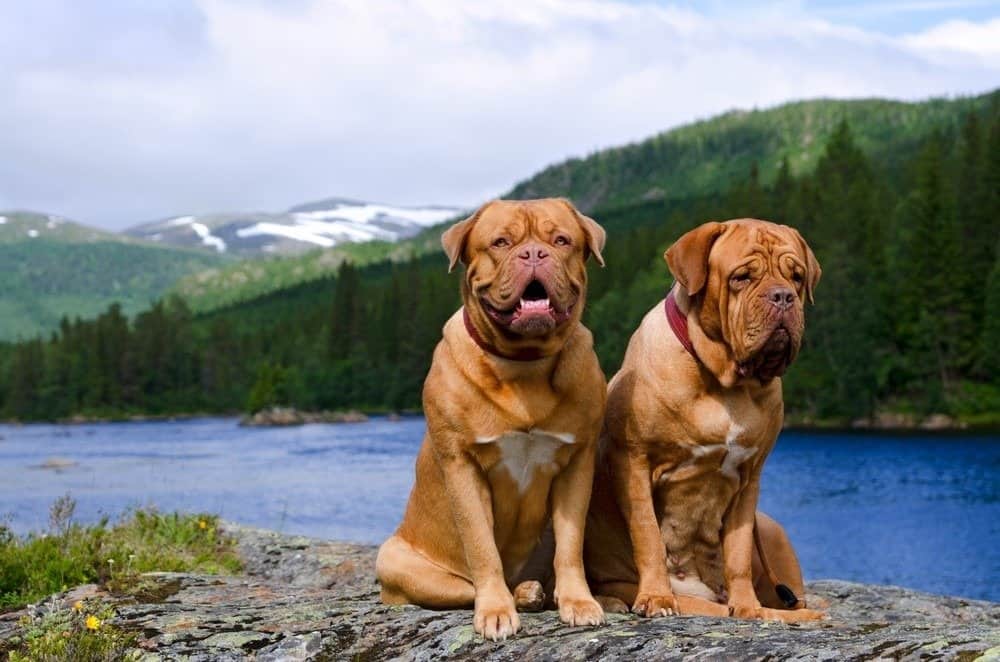
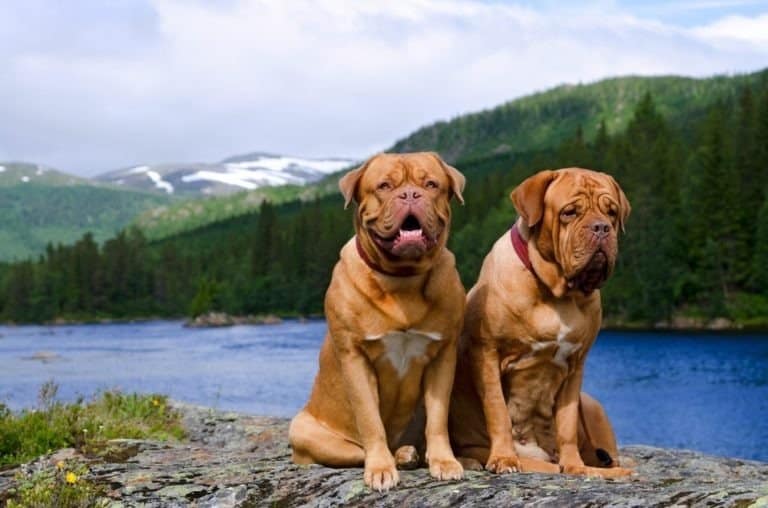
Dogue De Bordeaux couple against summer Norvegian landscape

This breed sheds a great deal and should be brushed weekly; its ears should also be cleaned at equal intervals of time.

This breed, like all the others in the mastiff family, drools a lot. Since their faces have many wrinkles, owners of the Dogue de Bordeaux will need to check each day to make sure they are clean and dry to prevent infections. As with all floppy-eared dogs, owners should clean their ears every week. All dog owners should clip their pet’s nails and bathe them once a month. These dogs shed their short coats all year long, so owners should brush them every week to keep hair fall to a minimum.

Training

This is a very sensitive breed, so their owners should train them gently to build their trust. They also need lots of attention, so if you lead a busy life with minimal time for a domestic canine, this breed is not the right fit for your lifestyle. If left alone for too long, they may become destructive when bored.

Exercise

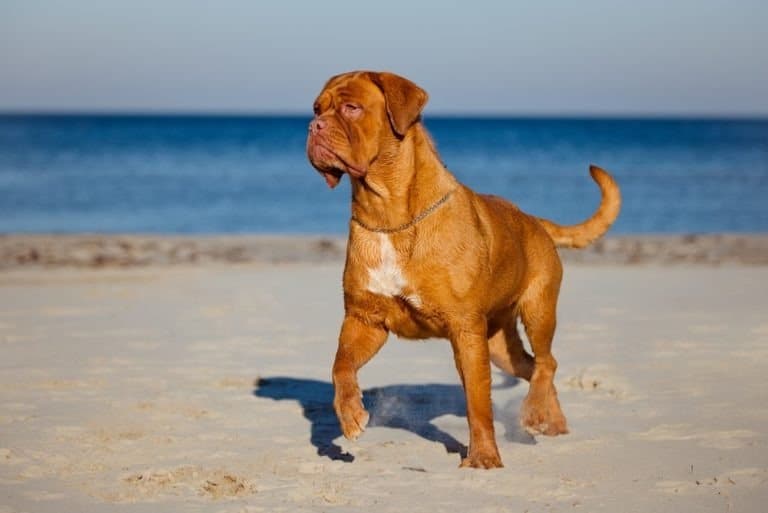
This breed doesn’t need much exercise and should take it easy as puppies, so they don’t put too much strain on their developing bones and muscles; low-impact activities like swimming are best for them. As adults, the Dogue de Bordeaux can handle fairly strenuous activities; they were originally bred to pull carts. As with many other giant breeds, these dogs shouldn’t have too much exercise when it’s hot or humid outside to prevent overheating.

Puppies
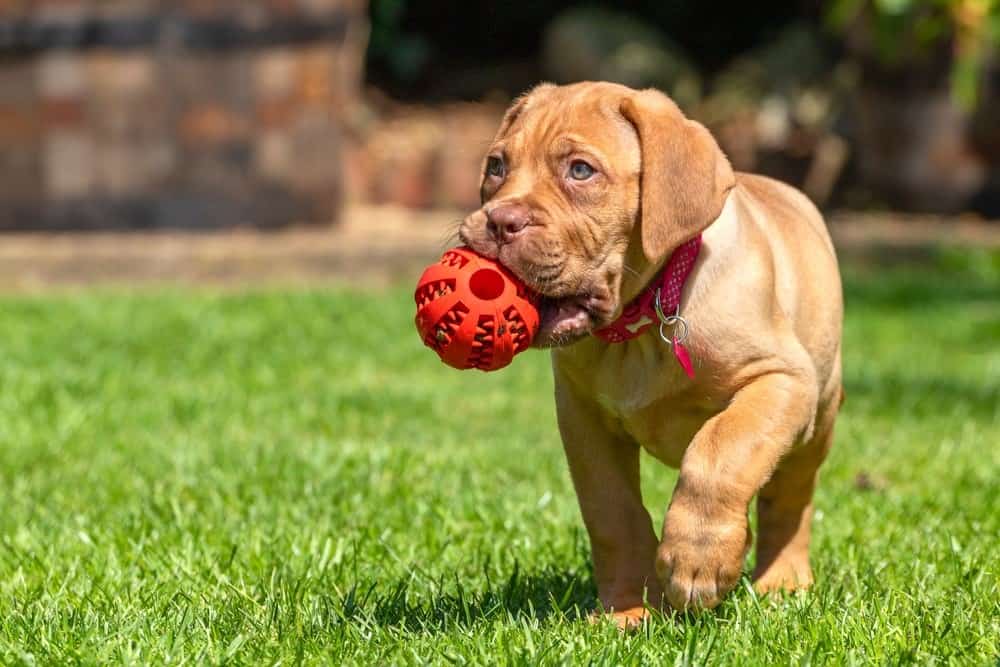
Dogue de Bordeaux puppy playing with ball

Dogue de Bordeaux puppies should be socialized at a young age.

These puppies should avoid too much exercise to keep from putting too much pressure on growing bones and joints, so they tend to have a good deal of pent-up energy. This pent-up energy means puppies can be quite rambunctious and need lots of attention and supervision to keep them from being destructive.

Since these dogs can be wary of strangers, it’s important to socialize them at a young age. If they aren’t properly socialized, they can become fearful of people outside their family members. This fear could lead to aggression if not corrected promptly.

Children

The Dogue de Bordeaux’s famously laidback personality and love of affection make them wonderful companions for children. Despite these lovely qualities, they do require constant supervision with small children; like all giant breeds, they don’t realize how big they are and could unintentionally injure a child by being too rambunctious with them.

Dogs similar to the Dogue de Bordeaux

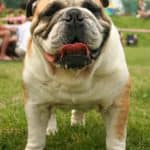
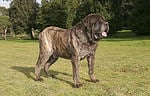
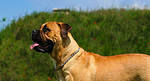
If you’d like to have a dog that’s similar in size or personality to these dogs, you may want to consider breeds such as the Mastiff, the Neapolitan Mastiff, or the Bullmastiff.

  • Mastiff: The Mastiff, also known as the English Mastiff, is similar in size, personality, and energy level to the Dogue de Bordeaux but gets along better with other pets and has a slightly longer lifespan of 6 to 12 years.
  • Neapolitan Mastiff: The Neapolitan Mastiff, nicknamed the Mastino, is similar in size and energy level to the Dogue de Bordeaux but has fewer health concerns, allowing it a slightly longer lifespan of 7 to 9 years. They are also more suited for living alongside other pets than the Dogue de Bordeaux.
  • Bullmastiff: The Bullmastiff is similar in size and personality to the Dogue de Bordeaux but has a higher energy level, making this breed a better fit for an owner with an active lifestyle. They also have a longer lifespan of 8 to 10 years.

Famous Dogue de Bordeaux

In 1989, the movie Turner and Hooch featured a Dogue de Bordeaux as the title character, Hooch.

View all 451 animals that start with D

Sources

  1. Tom Jackson, Lorenz Books The World Encyclopedia Of Animals / Accessed December 1, 2008
  2. David Burnie, Kingfisher The Kingfisher Animal Encyclopedia / Accessed December 1, 2008
  3. David Burnie, Dorling Kindersley Illustrated Encyclopedia Of Animals / Accessed December 1, 2008
  4. Dorling Kindersley Dorling Kindersley Encyclopedia Of Animals / Accessed December 1, 2008
  5. American Kennel Club / Accessed October 23, 2020
A-Z Animals Staff

About the Author

A-Z Animals Staff

AZ Animals is a growing team of animals experts, researchers, farmers, conservationists, writers, editors, and -- of course -- pet owners who have come together to help you better understand the animal kingdom and how we interact.
Connect:

Thank you for reading! Have some feedback for us?


Dogue De Bordeaux FAQs (Frequently Asked Questions)

The Dogue de Bordeaux is the oldest French breed of dog, and its name translates to “Mastiff of Bordeaux.” These huge, light-brown dogs are known to be incredibly affectionate, loyal and protective of their masters.