



D
Species Profile

Dolphin

Delphinidae

Pods, clicks, and ocean smarts.
NataSnow/Shutterstock.com

Dolphin Distribution

Click a location to explore more animals from that region

This map shows coastal regions where Dolphin are found.

Loading map...

Found in 111 countries

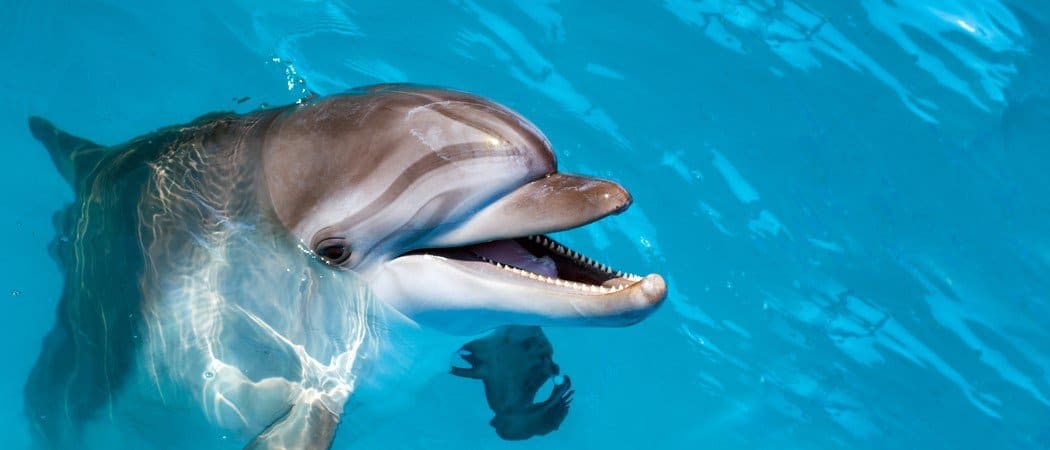
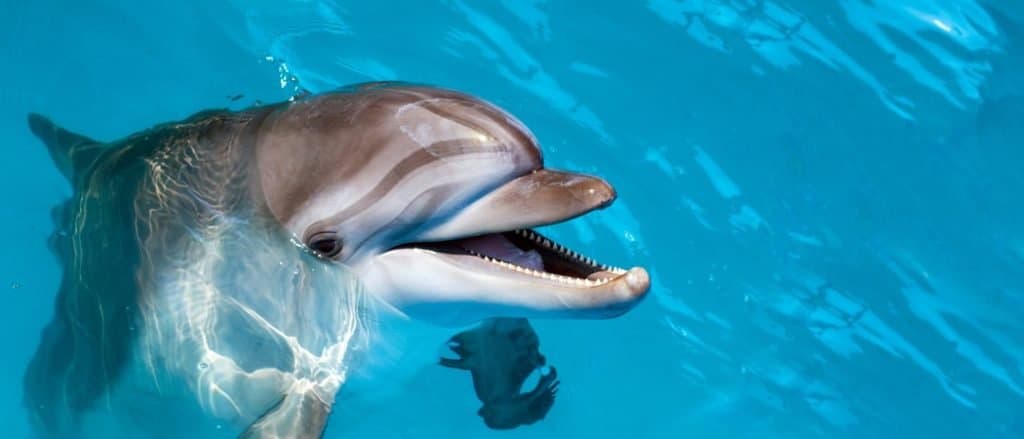
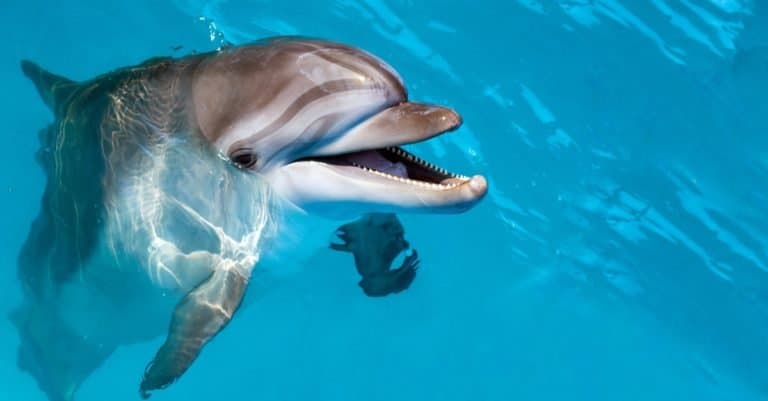
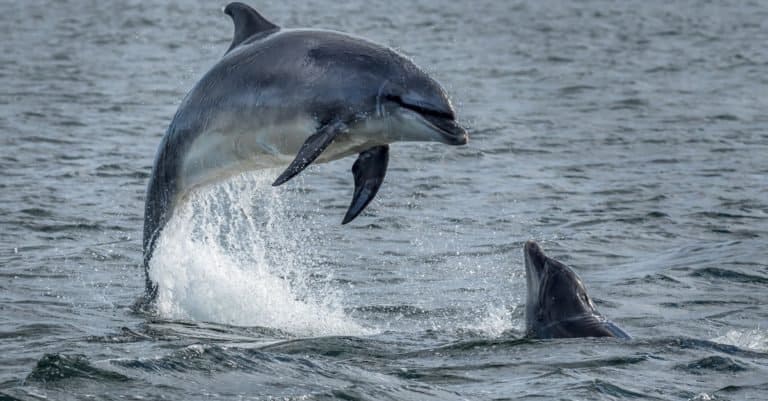
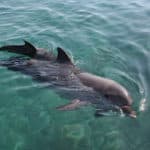
Dolphin looking with open mouth.

At a Glance

Family Overview This page covers the Dolphin family as a group. Stats below are general traits shared across the family.
Also Known As Delphinids, True dolphins, Marine dolphins, Porpoises, Blackfish
Diet Carnivore
Activity Cathemeral+
Lifespan 30 years
Weight 6000 lbs
Status Not Evaluated
Did You Know?

Size across Delphinidae ranges from ~1.2-1.7 m small dolphins (e.g., some Stenella/Cephalorhynchus) to ~9.8 m orcas; mass ranges from ~40 kg to ~10,000 kg.

Scientific Classification

Family Overview "Dolphin" is not a single species but represents an entire family containing multiple species.

Delphinidae (oceanic dolphins) are toothed whales characterized by a streamlined body, a well-developed melon used in echolocation, and complex social behavior. The family includes many of the animals most people mean by “dolphin,” from bottlenose dolphins to orcas and pilot whales.

Kingdom
Animalia
Phylum
Chordata
Class
Mammalia
Order
Cetacea
Family
Delphinidae

Distinguishing Features

  • Toothed whales with echolocation (biosonar) via the melon
  • Usually a prominent dorsal fin and elongated beak in many species (variable)
  • Conical teeth (vs. baleen plates in mysticetes)
  • Highly social; many species form pods with complex communication
  • Fast swimmers; many species exhibit bow-riding and aerial behaviors

Physical Measurements

Males and females differ in size

Length
8 ft 6 in (3 ft 7 in – 32 ft 2 in)
8 ft 2 in (3 ft 11 in – 27 ft 11 in)
Weight
441 lbs (55 lbs – 11.0 tons)
441 lbs (66 lbs – 6.1 tons)
Top Speed
37 mph
Short bursts ~30–60+ km/h

Appearance

Primary Colors
Secondary Colors
Skin Type Smooth, hairless, rubbery skin for fast swimming, backed by thick blubber for warmth and energy. Skin often shows scars, rake marks, or patchy color from fights, predators, or parasites.
Distinctive Features
  • Measurements (range across Delphinidae): adult total length roughly ~1.2-9.8 m (smallest coastal dolphins to the largest members such as male orcas); adult mass roughly ~40-6,000 kg (smallest species to large orcas).
  • Dolphins (Delphinidae) live about 15 to 90 years, depending on species, sex, habitat, and human impacts. Small dolphins often live 15 to 30+ years, while some orca females live many decades.
  • Head has a large melon (fatty forehead) that focuses echolocation clicks. Echolocation is a main sense for Delphinidae, but use and click sounds vary by species and habitat (coastal vs pelagic).
  • Toothed whales with conical teeth (number/size varies widely); jaws typically elongated to moderately short depending on genus-ranging from long-beaked forms to more robust, shorter-snouted types.
  • Highly streamlined body for efficient swimming; propulsion from powerful horizontal tail flukes; pectoral flippers for maneuvering; dorsal fin shape ranges from small and falcate to very tall and triangular (notably in adult male orcas).
  • Highly social: dolphins live in pods that work together for travel, feeding, predator defense, and calf care. Pod sizes vary from small, fluid groups to stable matrilines or huge pelagic aggregations.
  • Complex acoustic repertoire beyond echolocation (whistles, burst-pulses, calls); in some taxa, learned vocal traditions and culturally transmitted behaviors are documented (extent varies among species and populations).
  • Most dolphins eat fish and squid, but diets vary: some species dive deep for squid, while the largest dolphins are top predators that can hunt other marine mammals as well as fish.

Sexual Dimorphism

Many Delphinidae show sexual dimorphism, but it varies by species. Often adult males are larger and bulkier than females, though size gaps can be small. Some groups, for example orcas, have strong differences in body and dorsal fin size, and females often outlive males.

  • Often larger average body length and mass than females in many species (degree of difference varies).
  • In some species/populations, dorsal fin is taller and/or differently shaped (especially dramatic in adult male orcas).
  • May show more extensive tooth-rake scarring from male-male competition in some species (variable).
  • Often slightly smaller and more slender on average in many species (variable).
  • In some taxa, females tend to have greater maximum longevity and may be central to matrilineal social structure (notably documented in some species such as orcas).
  • Lactation-related body condition changes when nursing calves; otherwise external differences can be subtle in many species.

Did You Know?

Size across Delphinidae ranges from ~1.2-1.7 m small dolphins (e.g., some Stenella/Cephalorhynchus) to ~9.8 m orcas; mass ranges from ~40 kg to ~10,000 kg.

Lifespan varies widely: many smaller dolphins commonly live ~20-40 years, while some large delphinids (notably orcas) can reach ~60-90 years.

All delphinids use echolocation: the forehead "melon" helps focus clicks, and sound is received largely through fat-filled pathways in the lower jaw.

They're mammals with extreme aquatic streamlining: tail flukes provide propulsion, while pectoral flippers steer and dorsal fins aid stability (shape varies by species and habitat).

Pods can be stable or fluid ("fission-fusion"), and some populations show learned vocal "dialects" and culturally transmitted foraging tactics.

Many delphinids practice unihemispheric sleep-resting one brain hemisphere at a time-allowing them to keep surfacing to breathe.

The family is diverse: it includes "classic" dolphins, as well as larger-bodied members often called whales (e.g., pilot whales and orcas), all within Delphinidae.

Unique Adaptations

  • Echolocation system: a well-developed melon to shape outgoing clicks and specialized acoustic fat bodies/jaw pathways to channel incoming sound to the ear complex.
  • Efficient swimming design: fusiform body, reduced external protrusions, powerful axial muscles, and horizontal flukes for lift-based propulsion.
  • Thermoregulation: blubber for insulation and energy storage; heat-exchange systems help manage heat loss/gain in fins and flukes.
  • Breath-hold physiology: high blood volume and oxygen stores (including muscle myoglobin) support repeated dives; dive capability varies greatly among species.
  • Hearing specialization: sensitivity to high-frequency sound supports prey detection and navigation even in low visibility.
  • Homodont teeth and grasping jaws suited to capturing fish and squid (diet breadth varies widely; some species take large prey).

Interesting Behaviors

  • Pod living with big variation: some species form small, tight-knit groups; others gather in superpods of hundreds to thousands, especially offshore.
  • Cooperative hunting is common but highly variable-strategies can include herding fish into tight balls, coordinated chases, or shoreline-assisted tactics in certain regions.
  • Specialized, local foraging traditions exist in some populations (e.g., using marine sponges as tools to protect the rostrum while probing the seafloor; other groups develop distinct tactics suited to local prey).
  • Complex vocal behavior: whistles and burst-pulsed sounds are used for social communication; individuals in some species use "signature whistles" that function like contact calls.
  • Play and object interaction are widespread: bow-riding on ships and waves, social play, and occasional interactions with floating objects-often seen across multiple genera.
  • Long-distance movement varies: some delphinids are resident in coastal ranges, while others roam widely across ocean basins following prey and oceanographic conditions.
  • Inter-species interactions vary: some dolphins associate with other cetaceans or seabirds during feeding; others show strong territorial or predator-avoidance responses depending on local risks.

Cultural Significance

Dolphins (Delphinidae) are seen as protectors and guides by many coastal cultures, linked to bow-riding and helping people at sea. Today they drive marine ecotourism, help people care about the ocean, and show how animals communicate and learn.

Myths & Legends

In ancient Greek stories, the musician Arion was betrayed by sailors and left at sea, but a dolphin (Delphinidae) carried him to shore—told by classical writers as a sign of divine favor and kindness.

Greek myth of Dionysus and the Tyrrhenian pirates: pirates who tried to kidnap the god were driven mad by miracles aboard their ship and leapt into the sea, where they were transformed into dolphins.

Apollo as "Delphinius": traditions surrounding Apollo's dolphin form link to the founding of Delphi, where a dolphin is associated with guiding or establishing the god's sanctuary.

The legend of Taras (founder-hero of Taranto, Italy) tells of his rescue by a dolphin; the image appears in ancient iconography and coin designs showing Taras riding a dolphin.

In Hawaiian tradition, dolphins can appear as ancestral family guardians-sometimes guiding or protecting relatives at sea.

Among several Indigenous peoples of the Pacific Northwest, the killer whale (orca) is a powerful crest figure and ancestral being, often portrayed as a strong, clan-associated presence of the sea and a connector between worlds.

Conservation Status

NE Not Evaluated (family-level taxon). Individual Delphinidae species/subpopulations span a wide IUCN range from Least Concern (LC) through threatened categories up to Critically Endangered (CR), with some listed as Data Deficient (DD).

Has not yet been evaluated against the criteria.

Population Unknown

Protected Under

  • International protections are common across Delphinidae via multi-country frameworks; many species are listed under CITES (often Appendix II; some populations/species may be on Appendix I) and under the Convention on Migratory Species (CMS) appendices for various taxa.
  • National protections in many range states (e.g., marine mammal protection laws, wildlife acts) restrict intentional killing, harassment, and in some places live capture; coverage and enforcement vary widely.
  • Conservation landscape (family-level): Delphinidae is highly diverse (dozens of species across coastal to pelagic habitats). IUCN statuses across member species/populations range from LC to CR, with multiple DD listings where offshore distribution, cryptic population structure, or limited survey data impede assessment.
  • Notable at-risk examples within Delphinidae (illustrative, not exhaustive): Maui dolphin (a Hector's dolphin subspecies; CR), Atlantic humpback dolphin (CR), and several coastal/estuarine taxa and regional subpopulations that face intense bycatch and habitat degradation; some wide-ranging species may be LC globally yet contain threatened regional populations.
  • Ranges & generalizations across the family (not a single species): Measurements span from the smallest delphinids at roughly ~1.2-1.5 m and ~40-60 kg to the largest member (orca) at ~6-9+ m and several tonnes. Lifespans range from ~15-25 years in many smaller dolphins to ~40-60+ years in larger delphinids (including very long-lived orcas/pilot whales), varying by species, sex, and population.
  • Behavior/ecology (family-level generalization with variation): Most delphinids are highly social, using echolocation and complex vocal/behavioral repertoires; many form fluid fission-fusion societies, while some (e.g., pilot whales/orcas) can have stable, matrilineal social structures. Diets are typically fish and squid, with some specialized apex predation (e.g., orcas) or regional prey specializations; habitat use ranges from strictly pelagic to highly coastal/estuarine, which strongly influences threat exposure and conservation status.

You might be looking for:

Bottlenose Dolphin

28%

Tursiops truncatus

Most familiar dolphin worldwide; coastal and offshore populations; highly studied.

View Profile

Common Dolphin

14%

Delphinus delphis

Very widespread pelagic dolphin; often seen in large schools.

Orca (Killer Whale)

12%

Orcinus orca

Largest member of Delphinidae; apex predator with distinct ecotypes.

View Profile

Spinner Dolphin

8%

Stenella longirostris

Known for aerial spinning leaps; tropical/subtropical oceans.

Amazon River Dolphin (Boto)

7%

Inia geoffrensis

A true river dolphin; not in Delphinidae (family Iniidae).

View Profile

Indo-Pacific Humpback Dolphin

6%

Sousa chinensis

Coastal dolphin often in shallow waters/estuaries; some populations threatened.

Life Cycle

Birth 1 calf
Lifespan 30 years

Lifespan

In the Wild
10–90 years
In Captivity
5–50 years

Reproduction

Mating System Polygynandry
Social Structure Aggregation Group
Breeding Pattern Transient
Fertilization Internal Fertilization
Birth Type Internal_fertilization

Delphinidae mostly show polygynandry (many males and females mate with multiple partners). Mating happens in pods or temporary groups. Males may form alliances; births are live with lactation. Long-term pair bonds and true cooperative breeding are rare.

Behavior & Ecology

Social Pod Group: 20
Activity Cathemeral, Diurnal, Nocturnal
Diet Carnivore Fish and squid (varies strongly by species, region, and prey availability)
Seasonal Migratory 4,971 mi

Temperament

Highly social (strong affiliative bonds; frequent social play and tactile contact)
Curious and investigative (including object play and occasional approach to boats/other species)
Cooperative (group hunting, information sharing, coordinated movement)
Competitive (male-male competition; dominance interactions; alliance formation in some species)
Occasionally aggressive (intraspecific aggression, infanticide reported in some taxa, and interspecific harassment in certain contexts)
Risk-sensitive and context-dependent (bold near predictable food; cautious under predation or human disturbance)

Communication

echolocation clicks Biosonar for navigation and prey detection; click trains vary with task and environment
whistles Contact calls and social signaling; individually distinctive "signature" whistles in several species
pulsed calls/bursts Often associated with social excitement, aggression, or coordinated activity; structure varies across taxa
acoustic scene use and call matching Social recognition and coordination; degree varies by species/population
body postures and synchronized swimming Alignment, heading changes, leap timing as coordination cues
surface signals (tail slaps, pectoral slaps, breaching) used in display, coordination, and possibly prey herding
tactile communication Rubbing, petting with pectoral fins, contact swimming; important in bonding and reconciliation
bubble streams and underwater exhalations Display and social signaling in some contexts
jaw claps and other percussive sounds Close-range threat/display behaviors in some species

Habitat

Open Ocean Coastal Deep Sea Seabed/Benthic Coral Reef Kelp Forest Estuary Mangrove Rocky Shore Beach River/Stream Lake +6
Terrain:
Coastal Island Rocky Sandy Muddy

Ecological Role

Widely distributed mid- to apex-level marine predators that link pelagic and coastal food webs; ecological impact ranges from mesopredator regulation in small dolphins to top-down control by the largest delphinids (e.g., orca), with strong regional and species-level variation.

Regulation of fish and cephalopod populations (top-down and mesopredator effects) Influence on prey behavior and distribution (schooling, habitat use, diel movement) Nutrient redistribution via feeding and defecation across habitats (enhancing local nutrient cycling) Contribution to marine biodiversity and food-web stability through multi-level predation Sentinel/indicator value for ecosystem change (prey shifts, contamination, habitat alteration)

Diet Details

Main Prey:
Schooling and demersal fishes Cephalopods Crustaceans Elasmobranchs Marine mammals Seabirds

Human Interaction

Domestication Status

Wild

Oceanic dolphins (Delphinidae), like bottlenose dolphins, pilot whales, and orcas, are not domesticated. People can get them used to humans and train them in captivity, but there has been no long-term breeding over many generations to change traits like people did with dogs or farm animals.

Danger Level

Moderate
  • Bites and ramming injuries can occur during close contact, provisioning, capture/handling, or in managed-care settings; risk increases with habituation and inappropriate human behavior.
  • Large delphinids (notably orcas) have the physical capacity to cause severe injury; while wild attacks are rare, serious incidents have occurred in captivity and during risky interactions.
  • Boating/fieldwork hazards: accidental strikes, entanglement events during rescue attempts, and injuries to responders during disentanglement/handling.
  • Zoonotic and wound-infection risks from bites/scratches or contaminated water during handling (occupational risk for trainers, veterinarians, researchers).
  • Indirect hazards: dangerous conditions created by people approaching too closely (capsizing/surf hazards, propeller injuries to animals leading to unpredictable behavior).

As a Pet

Not Suitable as Pet

Legality: Keeping oceanic dolphins (delphinids) as private pets is usually illegal or banned. Special permits and accredited zoos, aquariums, or research centers are required; import/export is limited (e.g., CITES). Capturing wild dolphins is often banned for welfare and conservation.

Care Level: Expert Only

Purchase Cost: $100,000 - $5,000,000
Lifetime Cost: $1,000,000 - $50,000,000

Economic Value

Uses:
Ecotourism and wildlife viewing Public display/entertainment (aquaria, marine parks) and education Scientific research and conservation programs Military/police applications (limited programs using trained dolphins) Fisheries interactions (depredation, competition, bycatch costs) Subsistence/commercial hunting in some regions (species/population dependent)
Products:
  • dolphin-watching tours (boat-based and shore-based) and associated local revenue
  • managed-care exhibits and performances (controversial; varies by country and by species kept)
  • swim-with and close-interaction programs (where allowed; regulated to varying degrees)
  • research outputs (bioacoustics/echolocation, cognition, health monitoring, conservation tech)
  • naval mine-detection/object-recovery and sentinel roles (program-specific, limited scale)
  • negative economic impacts: net damage, catch loss from depredation, bycatch mitigation costs, fishery closures/gear modifications

Relationships

Related Species 10

Porpoises
Porpoises Phocoenidae Shared Order
Belugas and narwhals Monodontidae Shared Family
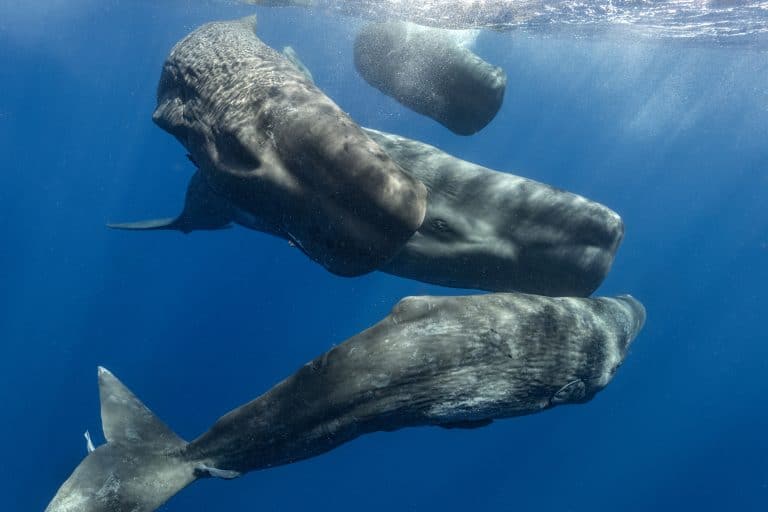
Sperm whales Physeteridae Shared Order
Beaked whales Ziphiidae Shared Family
Common bottlenose dolphin
Common bottlenose dolphin Tursiops truncatus Shared Family
Short-beaked common dolphin Delphinus delphis Shared Family
Killer whale
Killer whale Orcinus orca Shared Family
Long-finned pilot whale Globicephala melas Shared Family
Spinner dolphin Stenella longirostris Shared Family
Atlantic white-sided dolphin Lagenorhynchus acutus Shared Family

Ecological Equivalents 5

Animals that fill a similar ecological role in their ecosystem

Porpoises
Porpoises Phocoenidae Often overlap in coastal and continental-shelf habitats; have similar fish- and squid-based diets and use echolocation-based foraging, but are typically smaller-bodied and less acrobatic and less social than many delphinids.
Beaked whales Ziphiidae Share toothed-whale echolocation and, in several species, diets focused on squid. They occupy deeper offshore niches and make longer, deeper dives, especially compared with many coastal delphinids.
Fur seals and sea lions Otariidae Marine, social predators that hunt schooling fish and squid; they can strongly overlap with coastal and oceanic dolphins in prey base and foraging areas.
Large pelagic sharks Occupy similar mid-to-upper trophic niches in many ecosystems as fast, mobile marine predators of fish and cephalopods; they also interact as competitors and predators.
Tunas and other large pelagic predators Exploit the same schooling forage fish and often co-occur at fronts and upwellings; multi-species feeding assemblages can form where prey are concentrated.

Types of Dolphin

37

Explore 37 recognized types of dolphin

Common bottlenose dolphin
Common bottlenose dolphin Tursiops truncatus
Indo-Pacific bottlenose dolphin Tursiops aduncus
Burrunan dolphin Tursiops australis
Short-beaked common dolphin Delphinus delphis
Long-beaked common dolphin Delphinus capensis
Killer whale (orca) Orcinus orca
False killer whale
False killer whale Pseudorca crassidens
Pygmy killer whale Feresa attenuata
Melon-headed whale Peponocephala electra
Long-finned pilot whale Globicephala melas
Short-finned pilot whale Globicephala macrorhynchus
Risso's dolphin Grampus griseus
Rough-toothed dolphin Steno bredanensis
Atlantic spotted dolphin Stenella frontalis
Pantropical spotted dolphin Stenella attenuata
Striped dolphin Stenella coeruleoalba
Spinner dolphin Stenella longirostris
Clymene dolphin Stenella clymene
Fraser's dolphin Lagenodelphis hosei
Atlantic white-sided dolphin Lagenorhynchus acutus
Pacific white-sided dolphin Sagmatias obliquidens
Dusky dolphin
Dusky dolphin Lagenorhynchus obscurus
Peale's dolphin Lagenorhynchus australis
Hourglass dolphin Lagenorhynchus cruciger
Commerson's dolphin Cephalorhynchus commersonii
Heaviside's dolphin Cephalorhynchus heavisidii
Hector's dolphin Cephalorhynchus hectori
Southern right whale dolphin Lissodelphis peronii
Northern right whale dolphin Lissodelphis borealis
Irrawaddy dolphin Orcaella brevirostris
Australian snubfin dolphin Orcaella heinsohni
Indo-Pacific humpback dolphin Sousa chinensis
Indian Ocean humpback dolphin Sousa plumbea
Atlantic humpback dolphin Sousa teuszii
Australian humpback dolphin Sousa sahulensis
Guiana dolphin Sotalia guianensis
Tucuxi Sotalia fluviatilis

Many people have become familiar with the playful antics of dolphins through films like Flipper and Dolphin Tale. But there is much more to these animals and their behavior. Keep reading to learn more facts about these amazing animals.

5 Amazing Dolphin Facts

  • These animals are social and typically live in groups called pods. Most pods have up to 30 individuals, but superpods of more than 1,000 dolphins have been observed.
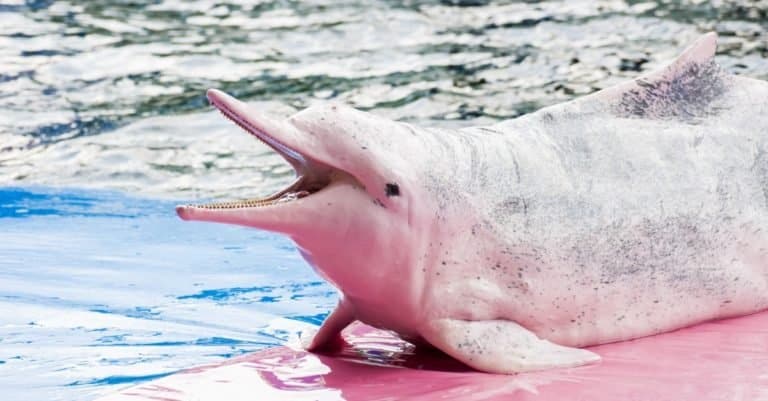
  • Not all of them live in ocean habitats. There are a few remaining species of river dolphins — one of them is pink in color.
  • They have been known to help or protect humans, often by scaring away sharks.
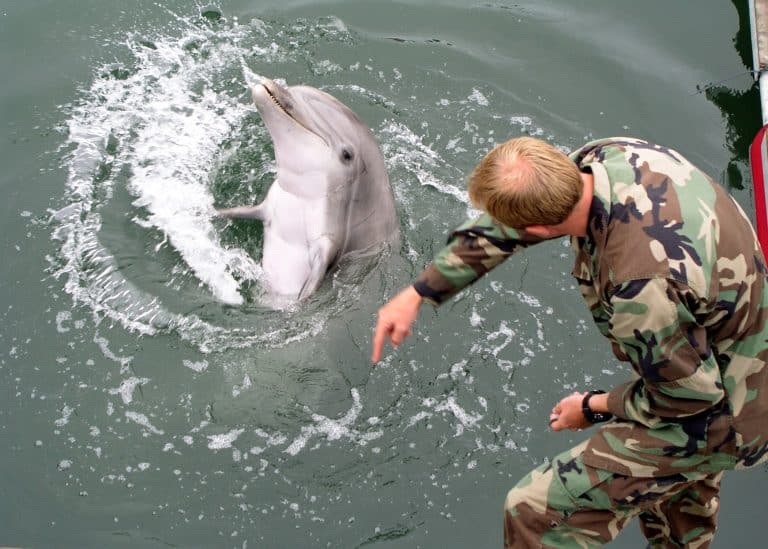
  • Beginning in the 1960s, these animals were trained for military purposes such as locating and collecting lost objects, delivering items to divers, guarding vessels, or holding a surveillance camera in their mouths. The program ended in the 1990s, and some of the retired animals began working with children as therapy animals.
  • These animals show self-awareness in that they are able to recognize themselves and experience individuality. Only a few animals — apes, elephants, dolphins, and toothed whales — demonstrate this trait.

Where to Find Dolphins

These animals can be found in all of the world’s oceans, and they are especially prominent in coastal areas. Five species live in brackish habitats or freshwater river systems in South America or Asia.

Classification and Scientific Name
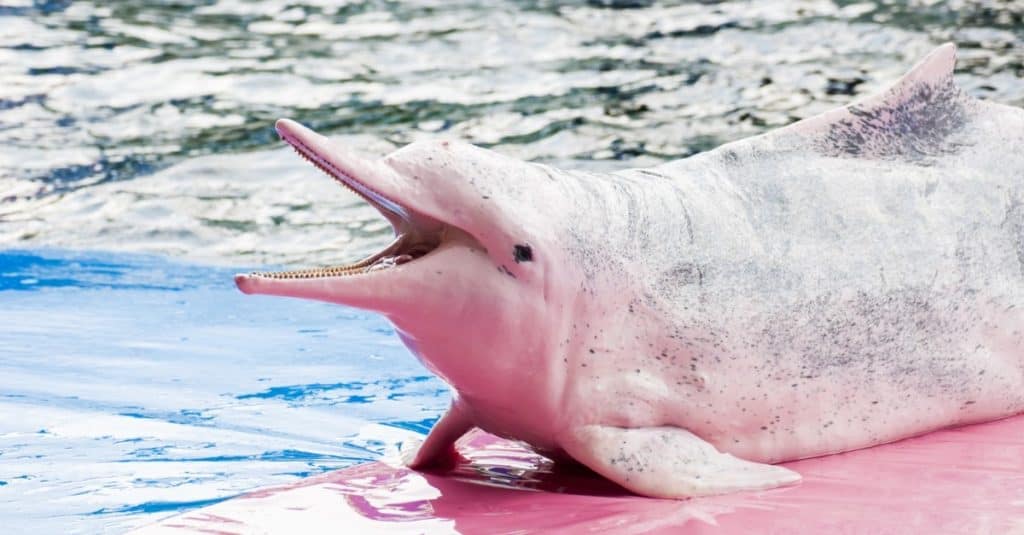
Indo-Pacific humpback dolphin (Sousa chinensis).

There are 42 extant species of dolphins.

The common name “dolphin” comes from the Greek delphis, meaning “womb.” Even these ancient observers realized dolphins’ classification as mammals, or animals with a womb. Oceanic species, along with their scientific names, are as follows:

  • Australian snubfin -, Orcaella heinsohni
  • Irrawaddy -, Orcaella brevirostris
  • La Plata -, Pontoporia blainvillei
  • Long-beaked common -, Delphinus capensis
  • Short-beaked common -, Delphinus delphis
  • Common bottlenose –, Tursiops truncatus
  • Indo-Pacific bottlenose -, Tursiops aduncus
  • Burrunan -, Tursiops australis
  • Northern right whale -, Lissodelphis borealis
  • Southern right whale dolphin, Lissodelphis peronii
  • Costero, Sotalia guianensis
  • Indo-Pacific humpback -, Sousa chinensis
  • Atlantic humpback -, Sousa teuszii
  • Atlantic spotted -, Stenella frontalis
  • Clymene -, Stenella clymene
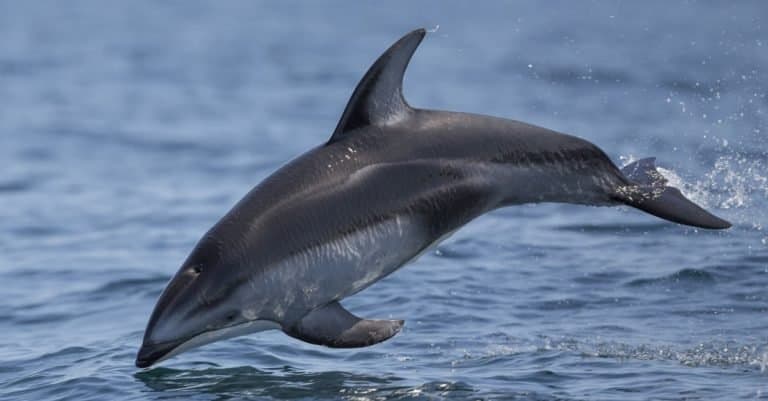
  • Pacific white-sided -, Lagenorhynchus obliquidens
  • Pantropical spotted -, Stenella attenuata
  • Peale’s -, Lagenorhynchus australis
  • Spinner -, Stenella longirostris
  • Striped -, Stenella coeruleoalba
  • Rough-toothed -, Steno bredanensis
  • Chilean -, Cephalorhynchus eutropia
  • Commerson’s -, Cephalorhynchus commersonii
  • Haviside’s -, Cephalorhynchus heavisidii
  • Hector’s -, Cephalorhynchus hectori
  • Risso’s -, Grampus griseus
  • Fraser’s dolphin, Lagenodelphis hosei
  • Atlantic white-sided -, Lagenorhynchus acutus
  • Dusky –, Lagenorhynchus obscurus
  • Pacific white-sided -, Lagenorhynchus obliquidens
  • Hourglass -, Lagenorhynchus cruciger
  • White-beaked dolphin, Lagenorhynchus albirostris

There are also a number of small “whales” that are genetically in the same classification as dolphins:

River dolphin common and scientific names are as follows:

  • Baiji, Lipotes vexillifer
  • South Asian river dolphin, Platanista gangetica
  • Amazon river dolphin, Inia geoffrensis
  • Araguaian river dolphin, Inia araguaiaensis
  • Bolivian river dolphin, Inia boliviensis
  • Tucuxi, Sotalia fluviatilis

Evolution

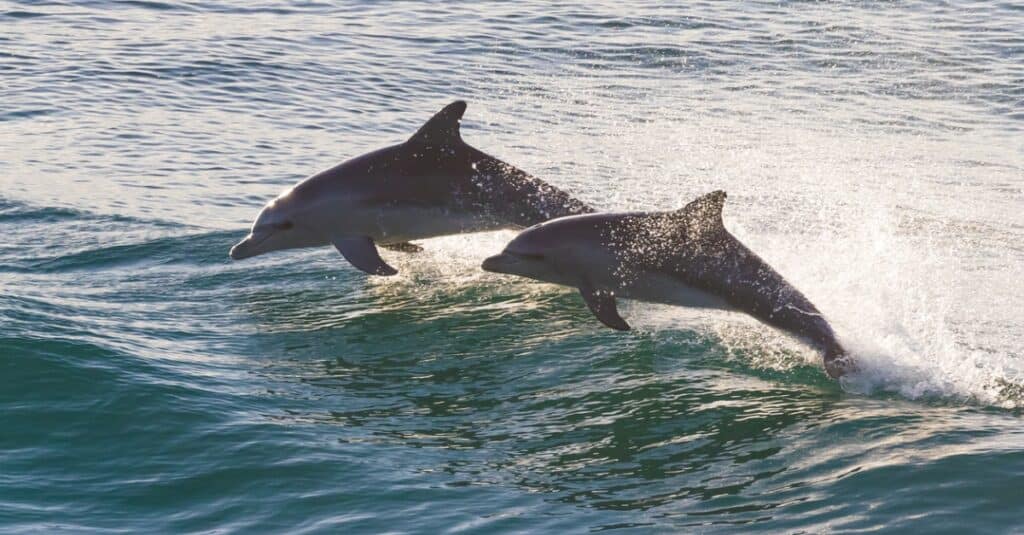
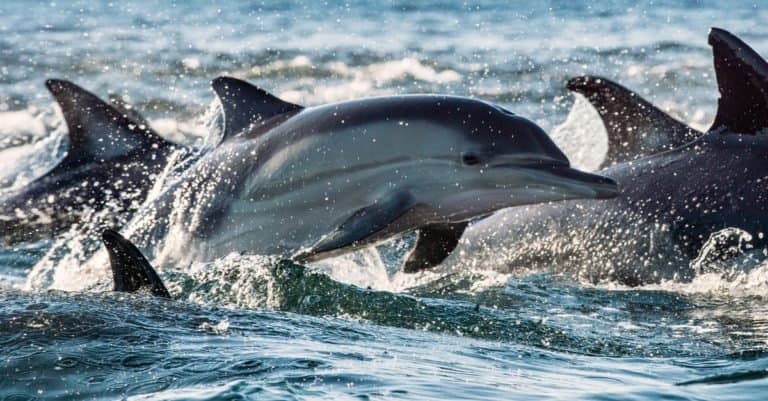
dolphins jumping out of the water

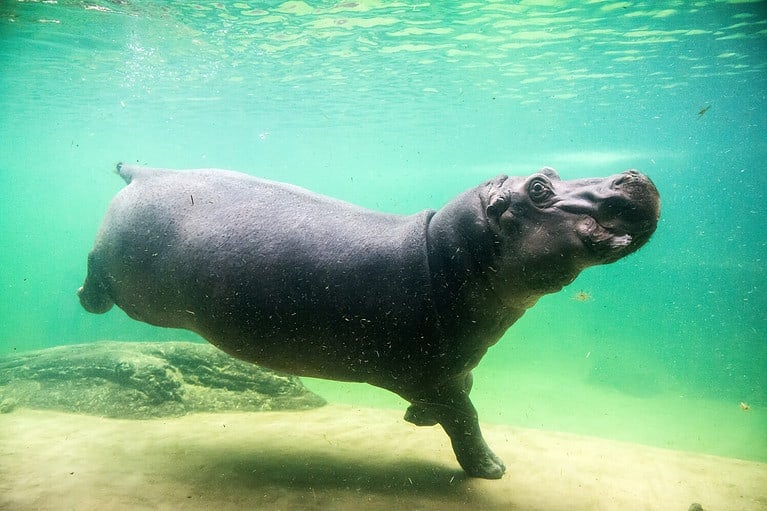
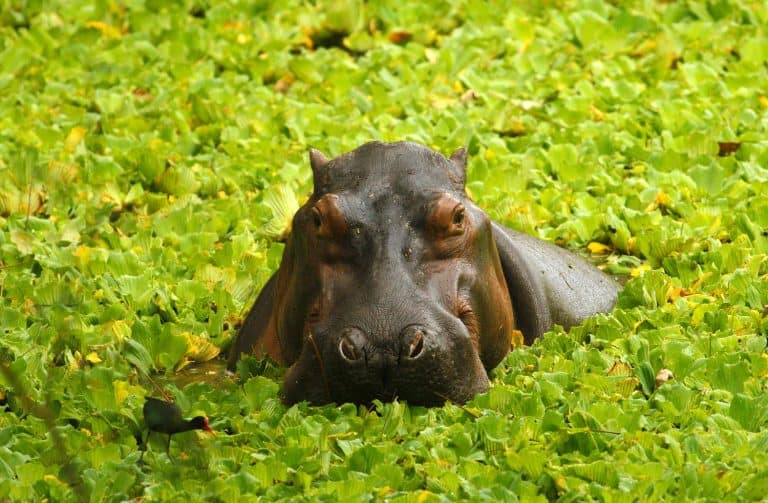
Dolphins are hippos’ distant relatives, having separated from them about 40 million years ago.

Dolphins’ earliest ancestors were terrestrial ungulates. Sixty million years ago, one of their ancestors, which was also the ancestor of the hippo, diverged from the main evolutionary branch at the time. Their distant forbears, however, first began to associate with the sea approximately 49 million years ago, and about 1 million years later, another separation occurred from a bovid-like ungulate, known as the  Indohyus. The full separation between dolphins and hippos occurred 40 million years ago as a result of their common evolutionary pathway branching into cetacea and anthracotheres.

Between 34 and 39 million years ago, their transformation from aquatic to terrestrial mammals was complete. The lineage of the anthracotheres would become extinct, 37 million years later, leaving only one line, which would provide the modern hippos.

Size, Appearance, & Behavior
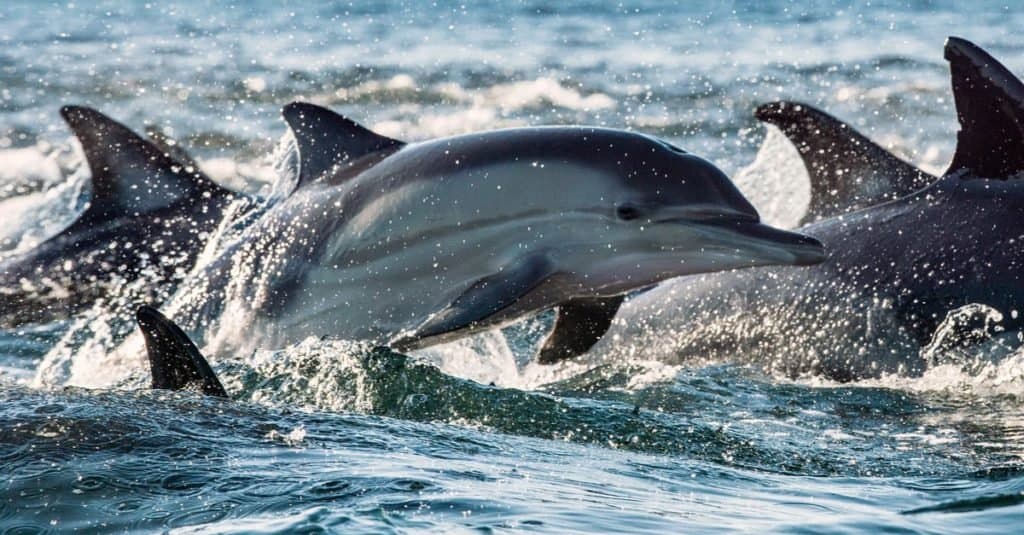
Dolphins, swimming in the ocean and hunting for fish. The Long-beaked common dolphin in Atlantic ocean.

The smallest species of dolphin is the same size as a human adult.

Maui’s dolphin is the smallest, with a length of 1.7 meters (5 ft 7 inches) and a weight of 50 kg (110 lbs). The largest is the killer whale, weighing in at 10 tons and reaching 9.5 meters (31 ft) in length.

Most people visualize them as grey in color, but many have blocks of black, white, or even yellow. Some are speckled. One species of river dolphin is even pale pink.

These are communicative social animals that live in groups called pods.

Migration

Some species migrate when the water temperature changes or in order to follow food sources.

Diet

These animals are carnivores.

What Do Dolphins Eat?
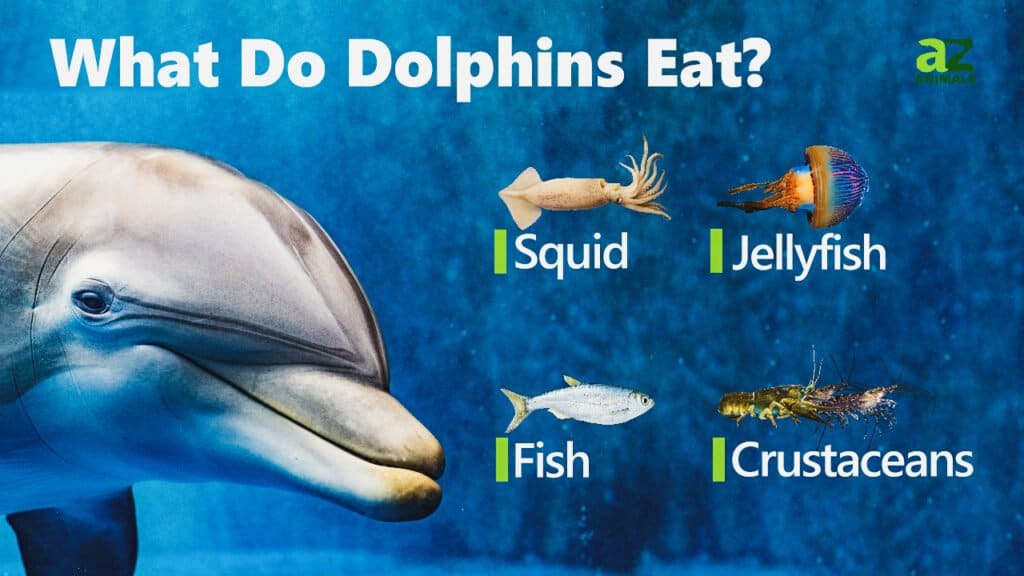
What Do Dolphins Eat
Dolphins eat squid, jellyfish, fish, and crustaceans.

These animals mainly eat fish, squid, and ocean invertebrates. They may also opportunistically feed on small birds or mammals.

Predators and Threats
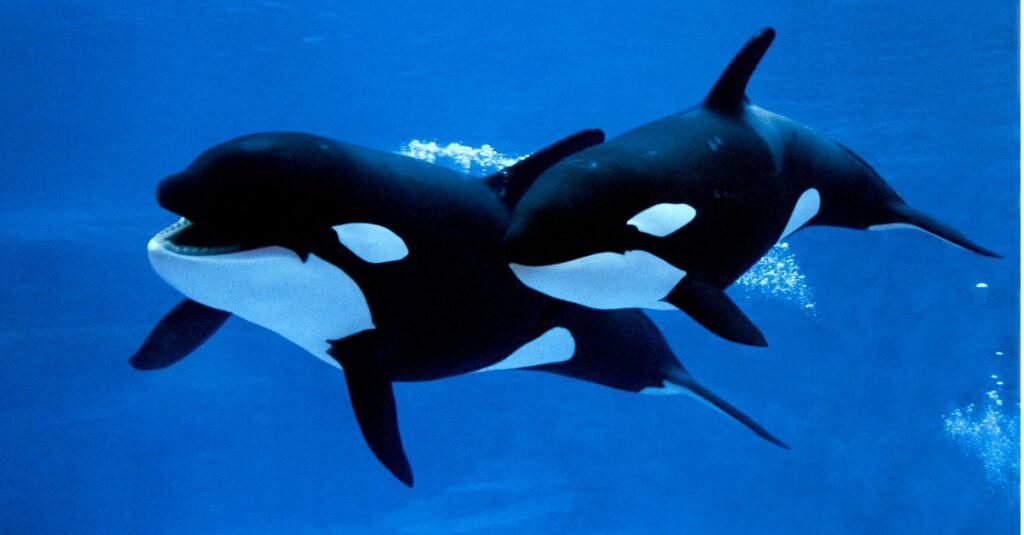
killer whales swimming side by side

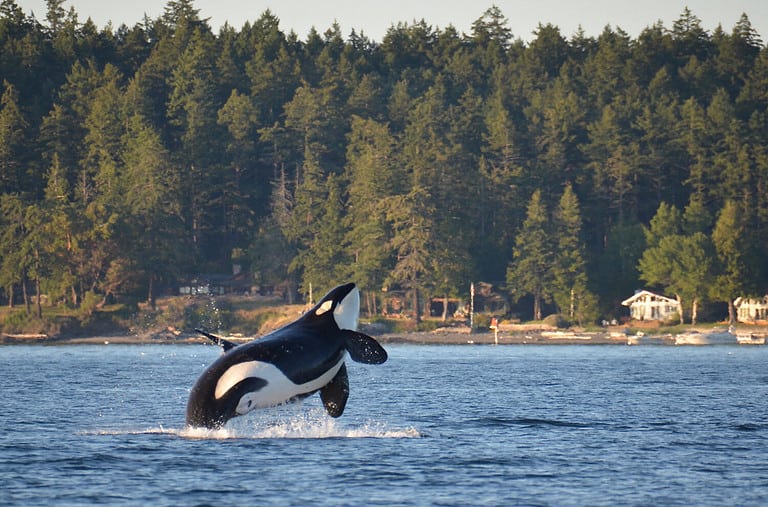
Orcas, dolphins’ largest cousins, are also known to hunt them.

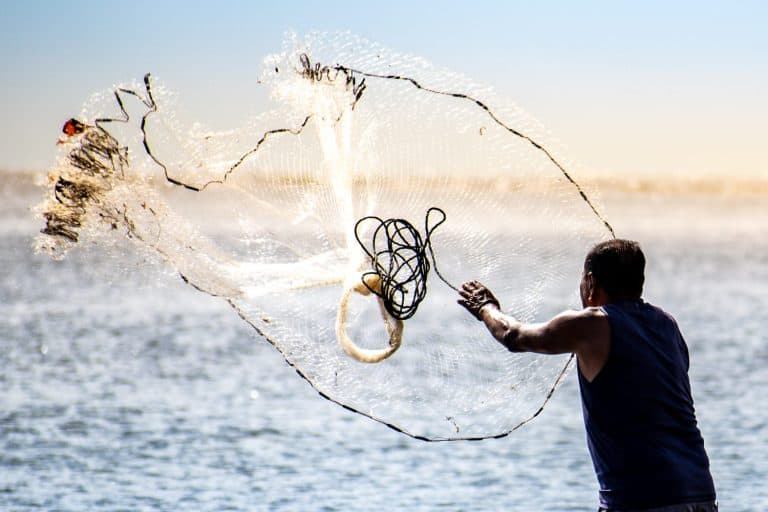
Adults have few predators. Their primary threat is humans. Many die each year after becoming entangled in fishing nets.

What Eats Dolphins?

Sharks and orcas may opportunistically prey on juveniles.

Reproduction, Babies, and Lifespan
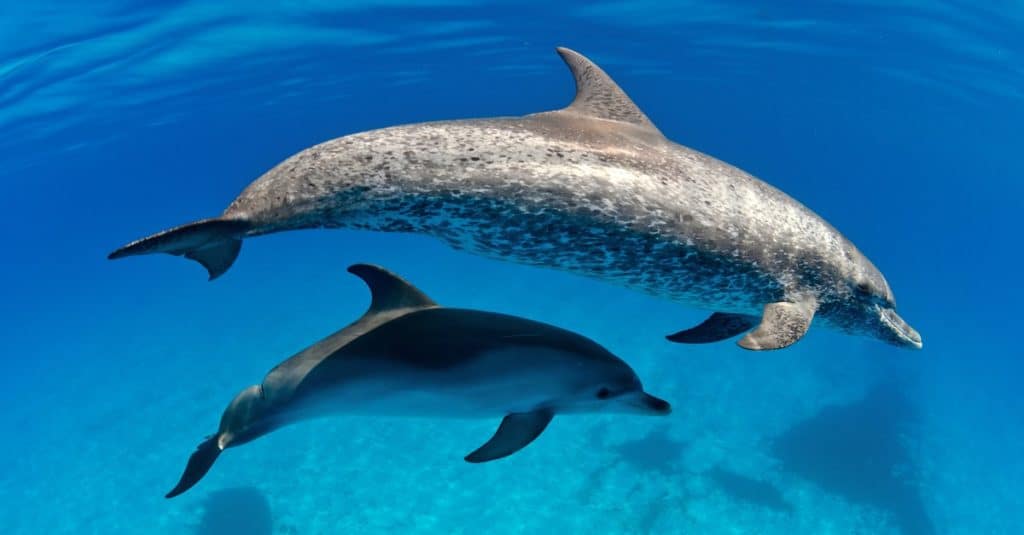
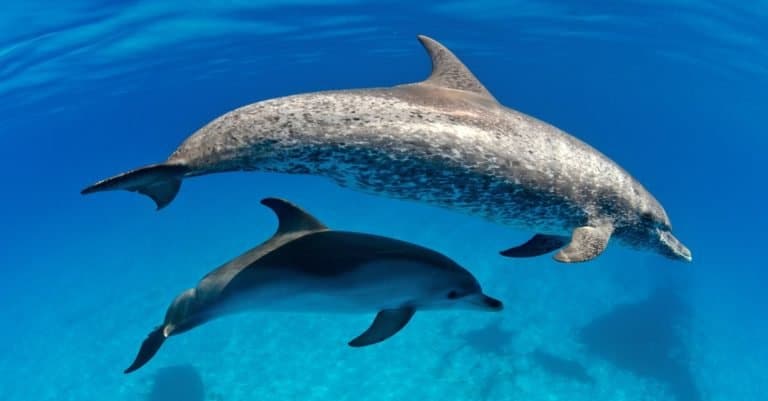
An Atlantic spotted mother dolphin with her baby in the waters of the Bahamas.

Although dolphins usually give birth to a single infant, they have also been known to give birth to twins and triplets.

These animals typically give birth to just one offspring, but twins and triplets have been observed. The infant feeds on milk, and the mothers train and care for their babies for several years. Dolphins typically live 10-20 years in the wild.

Intelligence
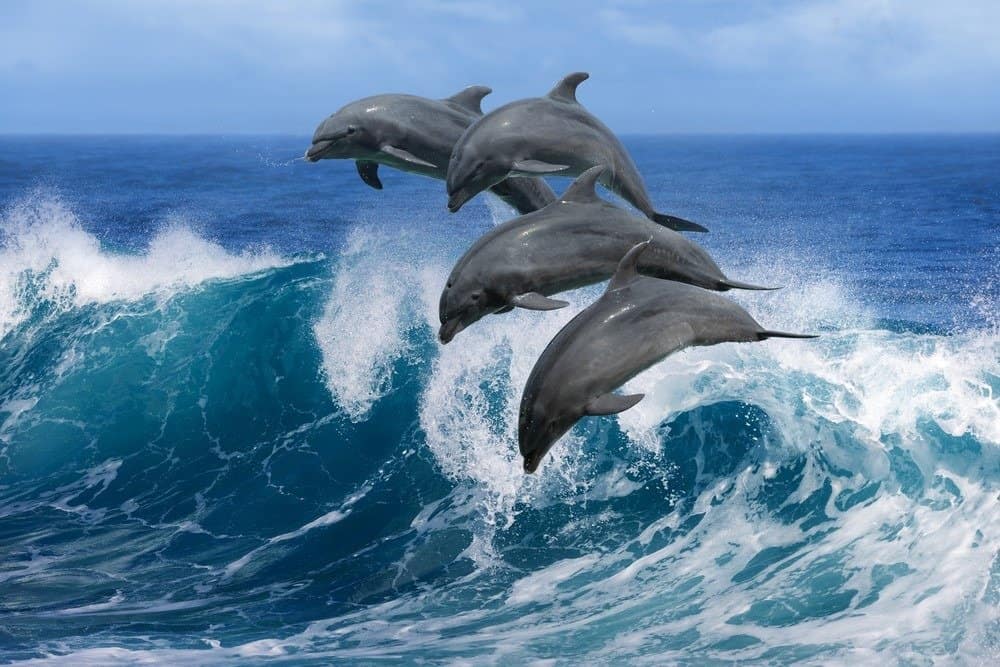
jumping animals - dolphin

Dolphins have larger brains than humans and are considered to be one of the most intelligent species on the planet.

Dolphins have brains that are larger than human brains and are among the most intelligent species on Earth. They possess surprisingly complex communication. Yet, they’re not as smart as humans. What are the key differences between human brains and dolphin brains? One difference is that dolphin brains have a relatively small prefrontal cortex and a smaller hippocampus. These smaller areas on the brain lead to dolphins having less higher-level thinking and memory when compared to humans. Yet, dolphins are still perhaps the second most intelligent species on Earth.

Population
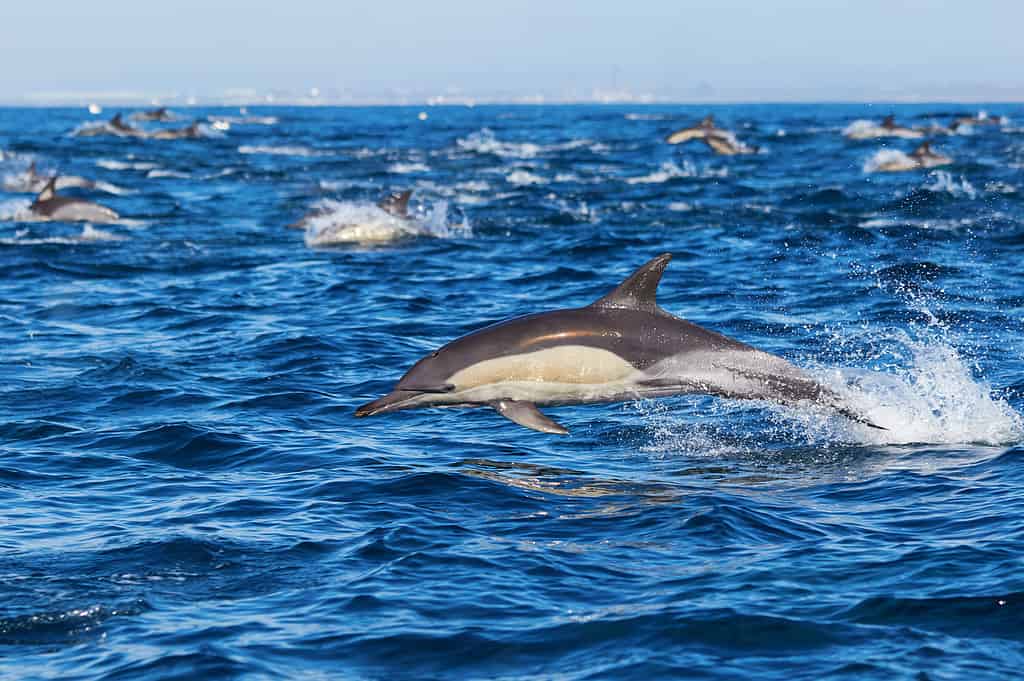
Dolphin pod

Generally, the future looks bright for the dolphin population, except for the Irrawaddy, which is endangered.

The most common species number into the hundreds of thousands or even millions. The most endangered species, the Irrawaddy dolphin, has only 92 known individuals.

View all 451 animals that start with D
How to say Dolphin in ...
German
Gemeiner Delfin
English
Common Dolphin
Hungarian
Közönséges delfin
Japanese
マイルカ
Dutch
Gewone dolfijn
Polish
Delfin zwyczajny
Swedish
Delfin
Turkish
Tırtak

Sources

  1. David Burnie, Dorling Kindersley Animal, The Definitive Visual Guide To The World's Wildlife / Accessed December 10, 2008
  2. Tom Jackson, Lorenz Books The World Encyclopedia Of Animals / Accessed December 10, 2008
  3. David Burnie, Kingfisher The Kingfisher Animal Encyclopedia / Accessed December 10, 2008
  4. Richard Mackay, University of California Press The Atlas Of Endangered Species / Accessed December 10, 2008
  5. David Burnie, Dorling Kindersley Illustrated Encyclopedia Of Animals / Accessed December 10, 2008
  6. Dorling Kindersley Dorling Kindersley Encyclopedia Of Animals / Accessed December 10, 2008
  7. David W. Macdonald, Oxford University Press The Encyclopedia Of Mammals / Accessed December 10, 2008
Dana Mayor

About the Author

Dana Mayor

I love good books and the occasional cartoon. I am also endlessly intrigued with the beauty of nature and find hummingbirds, puppies, and marine wildlife to be the most magical creatures of all.
Connect:

Thank you for reading! Have some feedback for us?


Dolphin FAQs (Frequently Asked Questions)

Dolphins live in temperate coastal waters, harbors, and bays.