D
Species Profile

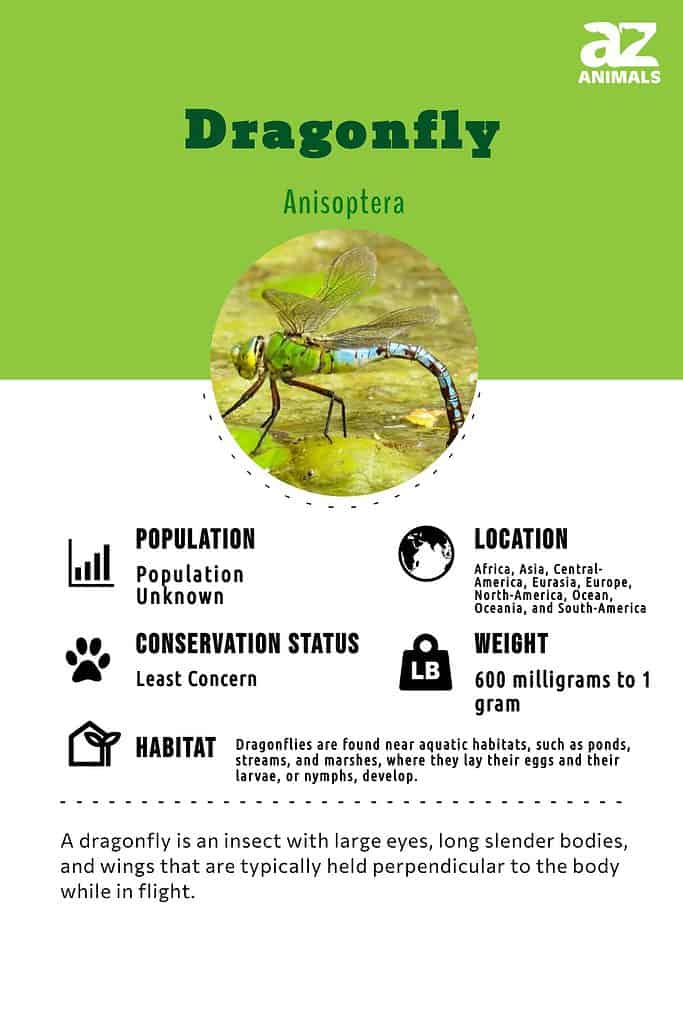
Dragonfly

Odonata

Born in water, ruler of the air
yanikap/Shutterstock.com
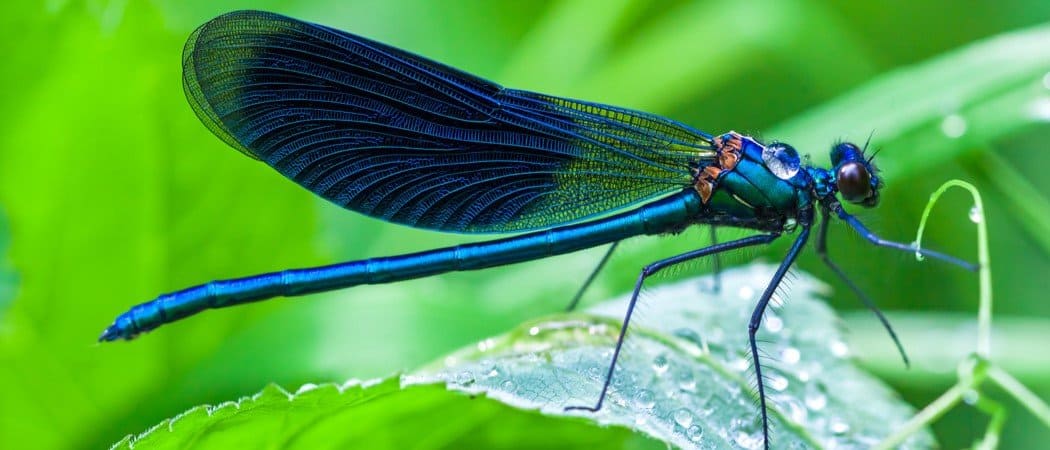
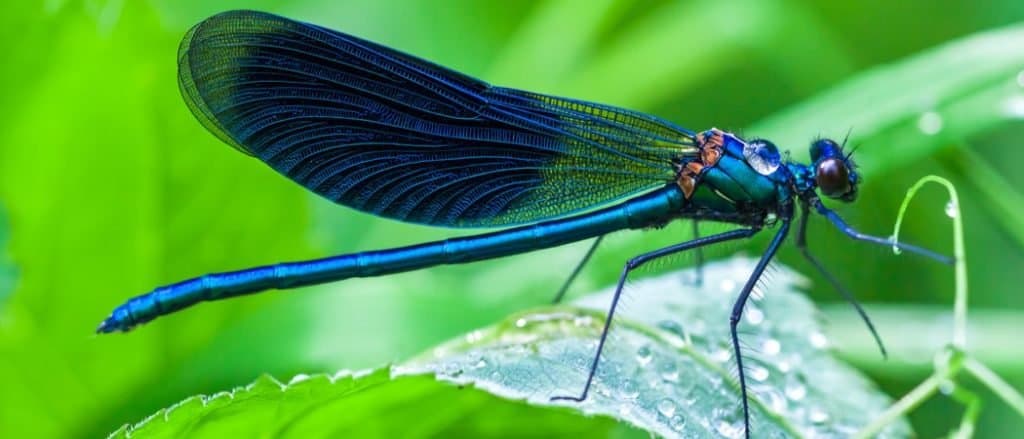
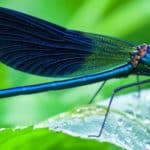
the blue dragonfly sits on a grass on a meadow

At a Glance

Order Overview This page covers the Dragonfly order as a group. Stats below are general traits shared across the order.
Also Known As Darners, Hawkers, Skimmers, Darning needle, Devil's darning needle, Snake doctor, Horse stinger, Mosquito hawk
Activity Diurnal+
Lifespan 2 years
Weight 0.005 lbs
Status Not Evaluated
Did You Know?

Dragonflies and damselflies hunt in both life stages: aquatic nymphs ambush prey underwater, while adults catch insects midair.

Scientific Classification

Order Overview "Dragonfly" is not a single species but represents an entire order containing multiple species.

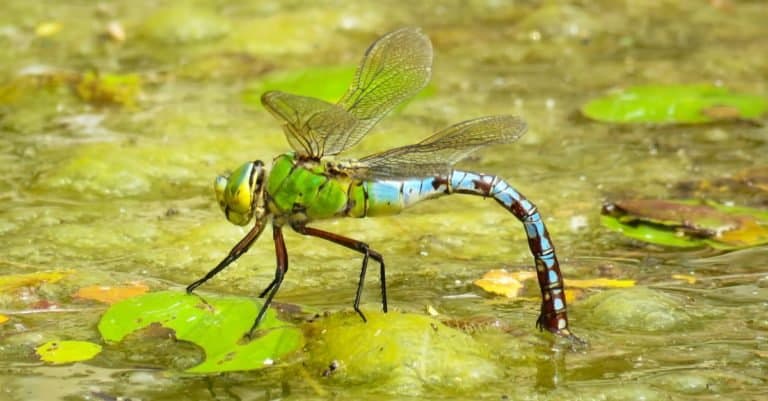
Dragonflies are predatory flying insects in the order Odonata (more precisely, the suborder Anisoptera). They are known for large compound eyes, strong flight, and aquatic juvenile stages (nymphs) that prey on other small aquatic animals.

Kingdom
Animalia
Phylum
Arthropoda
Class
Insecta
Order
Odonata

Distinguishing Features

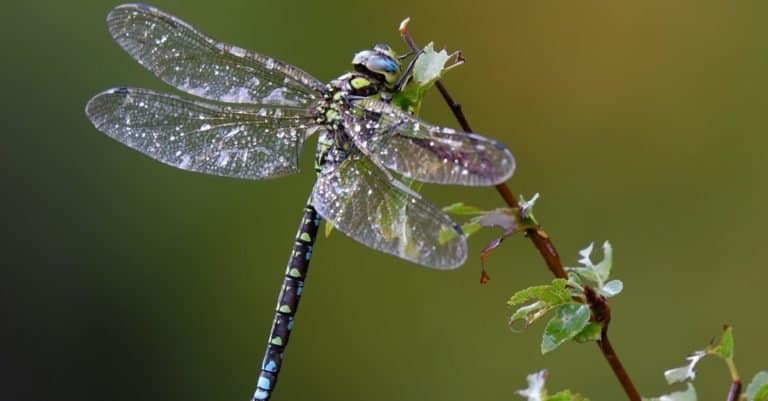
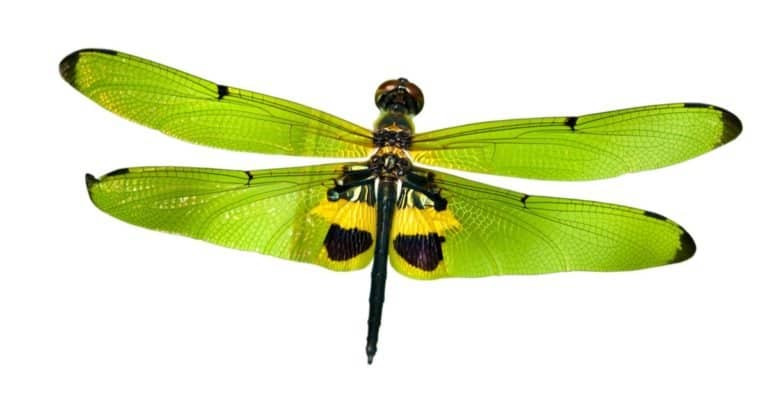
  • Two pairs of membranous wings (often held open at rest in dragonflies)
  • Very large compound eyes (typically meeting or nearly meeting on top of the head in dragonflies)
  • Long abdomen; powerful, agile flight
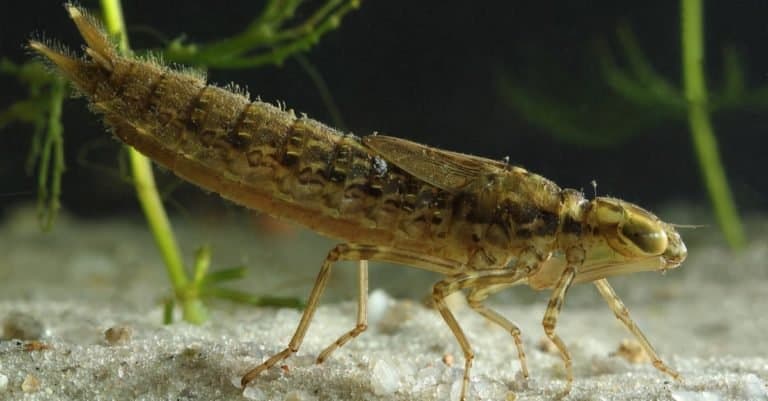
  • Aquatic nymphs with extendable prehensile labium (mask) used to catch prey

Physical Measurements

Males and females differ in size

Length
2 in (1 in – 7 in)
2 in (1 in – 5 in)
Weight
0 lbs (0 lbs – 0 lbs)
Top Speed
34 mph

Appearance

Skin Type Hard chitin exoskeleton with a waxy cuticle; adults often develop pruinescence (powdery bloom). Wings thin, clear, with many veins. Aquatic nymphs have tougher camouflaged cuticle and an extendable labium (mask).
Distinctive Features
  • Order-level size range (smallest to largest members across Odonata, including damselflies and dragonflies): adult body length ~1.5-12.5 cm; wingspan ~2-19 cm (extremes reflect the smallest damselflies and the largest odonates).
  • Life cycle: egg to aquatic nymph (naiad) to winged adult (hemimetabolous, no pupal stage). Nymphs often last months to several years; total development about 1–6+ years. Adults live weeks to months.
  • Shared adult traits across Odonata: two pairs of similarly sized wings with strong venation; very large compound eyes; short antennae; spiny legs forming a prey-catching 'basket'; strong, agile flight and visual hunting.
  • Predatory role (broad generalization): both nymphs and adults are predators. Nymphs prey on aquatic invertebrates and sometimes small vertebrates (e.g., tadpoles/fish fry in larger species); adults capture flying insects (including mosquitoes and midges).
  • Dragonflies breed in freshwater—ponds, lakes, streams, rivers, marshes, seepages. Some prefer slow, still water; others use fast-flowing streams. Ability to move ranges from local to long-distance.
  • Adults often perch then fly out or keep patrolling. Many males defend territories and guard mates, though this varies. Some species migrate long distances; others stay at one site.
  • Indicator value: many odonates are used as ecological indicators of freshwater condition and habitat integrity; sensitivity to pollution and habitat alteration varies among species (some tolerant, others highly sensitive).
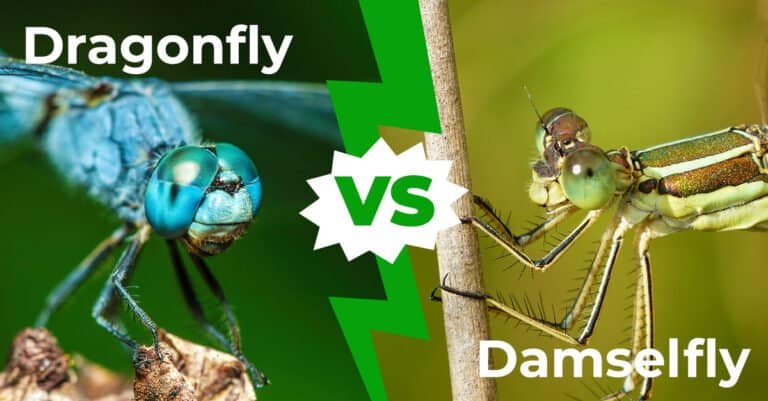
  • To tell main suborders: Anisoptera (true dragonflies) hold wings out or down at rest and often have eyes that meet; Zygoptera (damselflies) hold wings above and have wide set eyes. These are general, not absolute.
  • Nymph distinctions relevant to the order: aquatic nymphs breathe via internal rectal gills (Anisoptera) or external caudal lamellae (many Zygoptera), reflecting major suborder differences.

Sexual Dimorphism

Sexual dimorphism is common but varies widely across Odonata. Many species show male-biased bright/contrasting coloration or stronger pruinescence, while females are often duller, differently patterned, or polymorphic (including male-mimicking forms in some damselflies). Structural differences related to mating and egg-laying are consistent across the order.

  • Often brighter or more saturated body coloration (e.g., stronger blues/reds/greens) or heavier pruinescence in mature males (varies by species).
  • Secondary genitalia on abdominal segment 2 and species-specific terminal appendages (claspers/cerci) used for tandem pairing and mating; shapes are key identification characters.
  • More frequent territorial behavior and patrol displays in many species (variable among taxa and habitats).
  • Ovipositor/egg-laying adaptations; many insert eggs into plant tissue (endophytic oviposition) while others lay on/near water-strategy varies by species.
  • Often more cryptic or differently patterned coloration; in some groups, females occur in multiple color morphs (including androchromes that resemble males).
  • Abdomen often broader/heavier when gravid; may show different wing tinting or markings in some species (highly variable).

Did You Know?

Dragonflies and damselflies hunt in both life stages: aquatic nymphs ambush prey underwater, while adults catch insects midair.

Across dragonflies and damselflies, body length ranges roughly ~1.5-12.5 cm, and wingspans about ~2.5-19 cm, depending on species and group.

Some species undertake long-distance migrations; the globe-spanning migrant globe skimmer (Pantala flavescens) is a famous example.

Their compound eyes can contain tens of thousands of facets, supporting superb motion detection for aerial hunting.

Nymphs breathe with internal gills (dragonflies) or external leaf-like tail gills (many damselflies), reflecting major suborder differences.

Male clasping organs at the tip of the abdomen and a unique 'secondary' mating system enable the iconic "wheel" mating position.

Unique Adaptations

  • Metamorphic life cycle tailored to freshwater: egg → aquatic nymph (months to years) → winged adult (typically weeks, sometimes longer), linking aquatic and terrestrial food webs.
  • Highly maneuverable flight: two pairs of wings can be controlled with fine coordination for hovering, rapid acceleration, and sharp turns; details differ among groups and wing shapes.
  • Powerful visual system: very large compound eyes and strong neural motion processing support interception of fast-moving prey in cluttered environments.
  • Nymph respiration specializations: true dragonfly nymphs use internal rectal gills and can expel water for jet-like propulsion; many damselfly nymphs have external tail gills.
  • Reproductive 'secondary genitalia': males transfer sperm to a secondary structure on the abdomen, enabling the characteristic mating wheel and complex sperm competition strategies.
  • Egg-laying specializations: some species insert eggs into plant tissue (endophytic oviposition), while others drop or wash eggs into water (exophytic), reflecting habitat and predation pressures.

Interesting Behaviors

  • Predatory strategy diversity: many adults are 'perchers' that sally out from a lookout, while others are 'fliers' that patrol continuously; both styles occur across the order.
  • Aquatic nymph ambush: nymphs commonly hide in vegetation or sediment and strike with a rapid, extendable grasping mouthpart (an extendable lower lip); exact tactics vary by habitat (ponds, streams, marshes).
  • Territoriality and displays: many males defend shoreline or breeding territories, chasing rivals and performing flight displays; intensity varies widely by species and population density.
  • Complex mating routines: males may guard females during egg-laying to reduce sperm competition; egg-laying can be into plants, onto water, or within plant tissue depending on species.
  • Mass emergence timing: synchronized emergence from water can occur seasonally, reducing individual predation risk; timing varies with latitude, temperature, and rainfall patterns.
  • Migration and dispersal: some dragonflies and damselflies migrate hundreds to thousands of kilometers, while others remain localized around specific springs or forest streams.
  • Feeding ecology variation: while most are insect predators, prey size and hunting height vary-from tiny midges to larger flies, butterflies, and even other dragonflies and damselflies.

Cultural Significance

Dragonflies and damselflies (Odonata) appear a lot in art and stories. In Japan they mean bravery, victory, and autumn; an old name calls Japan the "Island of Dragonflies." Wetland sightings mark seasons, show wetland health, and teach about young that live in water, biodiversity, and clean-water care.

Myths & Legends

Japan's "Dragonfly Islands" tradition: an old legend links the naming of Japan ("Dragonfly Island(s)") to Emperor Jinmu viewing the land as dragonfly-shaped; dragonflies became auspicious symbols in poetry and warrior culture.

European and North American folk names such as "devil's darning needle" describe dragonflies as eerie stitchers-stories warn that they sew up mouths, eyes, or ears of liars or misbehaving children.

Swedish and Finnish folklore includes tales of dragonflies as agents that measure or 'weigh' people's souls, or as creatures sent by supernatural forces to inspect humans.

In some Native American traditions (varying by nation), dragonflies are associated with water, swiftness, and renewal; dragonfly imagery appears in art and dance motifs tied to rains and healthy waterways.

East Asian cultural lore often treats dragonflies as seasonal emblems-associated with summer and early autumn-appearing in poems and decorative arts as symbols of lightness and transformation.

Conservation Status

NE Not Evaluated (IUCN typically assesses Odonata at the species level; the order as a whole is not assigned a single category)

Has not yet been evaluated against the criteria.

Population Unknown

You might be looking for:

Common green darner

18%

Anax junius

Large, widespread North American darner; often seen patrolling ponds and wetlands.

Four-spotted chaser

12%

Libellula quadrimaculata

Common Palearctic skimmer with four dark wing spots; frequent around lakes and ponds.

Emperor dragonfly

10%

Anax imperator

Very large European darner, strong flier; breeds in still waters.

Blue dasher

10%

Pachydiplax longipennis

Common North American skimmer; males powder-blue with perch-and-dart behavior.

Damselflies (often confused with dragonflies)

8%

Zygoptera

Close relatives within Odonata; slimmer body, separated eyes, and wings typically held together over the abdomen at rest.

Life Cycle

Birth 500 nymphs
Lifespan 2 years

Lifespan

In the Wild
0.15–7 years
In Captivity
0.08–6 years

Reproduction

Mating System Polygynandry
Social Structure Aggregation Group
Breeding Pattern Transient
Fertilization Internal Fertilization
Birth Type Internal_fertilization

Dragonflies and damselflies (Odonata) usually mate at water. Both sexes often have many partners (polygynandry). Males may be territorial or roaming and often guard mates. Males use secondary genitalia; mating forms a wheel and sperm compete.

Behavior & Ecology

Social Aggregation Group: 30
Activity Diurnal, Crepuscular
Diet Insectivore Small, abundant dipterans (especially mosquitoes and midges) for adults; mosquito larvae and other aquatic insect larvae for aquatic juveniles (nymphs).
Seasonal Migratory, Hibernates 11,185 mi

Temperament

Predatory throughout life: aquatic nymphs (naiads) are ambush predators; adults are aerial hunters
Often territorial in adults (especially males) around oviposition sites or prime perches; strength of territorial aggression varies widely across families and habitats
Generally non-social: interactions are mainly competitive (territory/food) or reproductive (courtship, mating, guarding)
Tolerance is higher in dense feeding aggregations and during mass movements, where individuals may forage near each other with limited direct aggression
Measurements (order-wide range): adult body length roughly ~1.5-12.5 cm; wingspan roughly ~2-19 cm (small damselflies to the largest odonates)
Dragonflies (Odonata) develop in water for months to years (often 1–3 years, sometimes 5–6+). Adults live weeks to a few months. Whole life ranges about 2 months to over 6 years.

Communication

No true vocal calls; occasional incidental wing-generated rustling/clicking sounds may occur during flight in some species but are not the primary signaling channel
Visual signaling is dominant: body coloration (including sexual dimorphism), wing markings, posture, and conspicuous flight displays used in mate recognition and territorial interactions
Aerial display/interaction patterns: patrol routes, chase flights, hovering, and ritualized contests that function as signals of occupancy and condition
Tactile communication during mating: tandem linkage and grasping structures facilitate pairing; contact and positioning can function in mate guarding and oviposition contexts
Oviposition-associated behaviors: male attendance/guarding (contact or non-contact) and female site choice provide cues to rivals and potential mates
Larval (aquatic) cueing: detection of waterborne vibrations/pressure changes and visual cues for prey and predator avoidance; primarily ecological sensing but also mediates interactions at close range

Habitat

Biomes:
Freshwater Wetland Tropical Rainforest Tropical Dry Forest Savanna Desert Hot Desert Cold Mediterranean Temperate Grassland Temperate Forest Temperate Rainforest Boreal Forest (Taiga) Tundra Alpine Marine +9
Terrain:
Riverine Coastal Valley Plains Hilly Mountainous Plateau Island Muddy Sandy +4
Elevation: Up to 14763 ft 9 in

Ecological Role

Predatory meso- to top-invertebrate predators linking aquatic and terrestrial food webs (aquatic juveniles, aerial adults); population regulators of small insects and key prey for fish, birds, bats, amphibians, and spiders.

Biological control of nuisance insects (often including mosquitoes and midges) Energy/nutrient transfer between aquatic habitats (nymphs) and terrestrial/aerial ecosystems (adults) Food-web support as abundant prey for higher trophic levels Indicator value for freshwater habitat quality and wetland/river health (community composition reflects conditions)

Diet Details

Main Prey:
Flying insects Aerial insects Small-bodied insects Aquatic insect larvae and nymphs Aquatic invertebrates Small vertebrates

Human Interaction

Domestication Status

Wild

Dragonflies and damselflies (Odonata) are not domesticated. People mostly watch, photograph, study, monitor, or sometimes collect them. They help eat pest insects, can show freshwater health, and are used in culture and education. Habitat changes from water management and pollution can harm populations.

Danger Level

Low
  • Do not sting and are not venomous; risk is mainly minor pinching/bite if handled roughly (more likely with larger dragonflies).
  • Potential eye/skin irritation is rare and usually associated with improper handling or contaminants from aquatic habitats, not the insects themselves.
  • Indirect risk: wading/fieldwork around water to observe/collect odonates can involve common outdoor hazards (slips, drowning risk, exposure), especially near streams or wetlands.

As a Pet

Not Suitable as Pet

Legality: Laws about keeping dragonflies (Odonata) vary by place and species. Collecting may be banned in parks or for protected species; permits and transport rules may apply. Wild-caught dragonflies risk accidentally breaking laws.

Care Level: Expert Only

Purchase Cost: Up to $50
Lifetime Cost: $20 - $300

Economic Value

Uses:
Ecosystem services Environmental monitoring Education and outreach Recreation and ecotourism Research
Products:
  • Biological pest suppression (localized reduction of nuisance insects; variable and not a guaranteed mosquito-control solution)
  • Bioindicator value for freshwater quality assessments (surveys, indices, conservation planning)
  • Nature-based recreation (dragonfly watching, photography, guided walks) and associated tourism spending
  • Scientific and educational materials (field guides, citizen-science datasets, museum collections)

Relationships

Related Species 10

Damselflies Zygoptera Shared Order
Darners
Darners Aeshnidae Shared Order
Skimmers
Skimmers Libellulidae Shared Order
Clubtails Gomphidae Shared Order
Spiketails Cordulegastridae Shared Family
Emerald dragonflies Corduliidae Shared Order
Petaltails Petaluridae Shared Order
Pond damselflies Coenagrionidae Shared Order
Broad-winged damselflies Calopterygidae Shared Order
Spreadwings Lestidae Shared Order

Ecological Equivalents 6

Animals that fill a similar ecological role in their ecosystem

Mayflies
Mayflies Ephemeroptera They share freshwater habitats and aquatic juvenile stages. Adults are common aerial prey and are frequently present around water, though mayflies are not predatory.
Caddisflies Trichoptera Co-occur in streams and ponds; larvae occupy overlapping microhabitats and are frequent prey for odonate nymphs and fish predators.
Predaceous diving beetle Dytiscidae Aquatic predators occupying similar freshwater niches. Both adults and larvae capture small aquatic animals, including tadpoles and insect larvae.
Giant water bugs
Giant water bugs Belostomatidae Ambush aquatic predators that share habitats with odonate nymphs and can prey on them; they occupy a similar role as high-level insect predators in still waters.
Robber fly Asilidae Aerial insect predators occupying overlapping open-habitat niches; both hunt flying insects, although robber flies are terrestrial throughout development.
Swallows and martins Hirundinidae Day-flying aerial insectivores that hunt over water and fields; they commonly exploit the same flying-insect resources as adult odonates.

Types of Dragonfly

12

Explore 12 recognized types of dragonfly

Common green darner Anax junius
Emperor dragonfly Anax imperator
Four-spotted chaser Libellula quadrimaculata
Blue dasher Pachydiplax longipennis
Black-tailed skimmer Orthetrum cancellatum
Common clubtail Gomphus vulgatissimus
Golden-ringed dragonfly Cordulegaster boltonii
Hine's emerald Somatochlora hineana
Giant helicopter damselfly Megaloprepus caerulatus
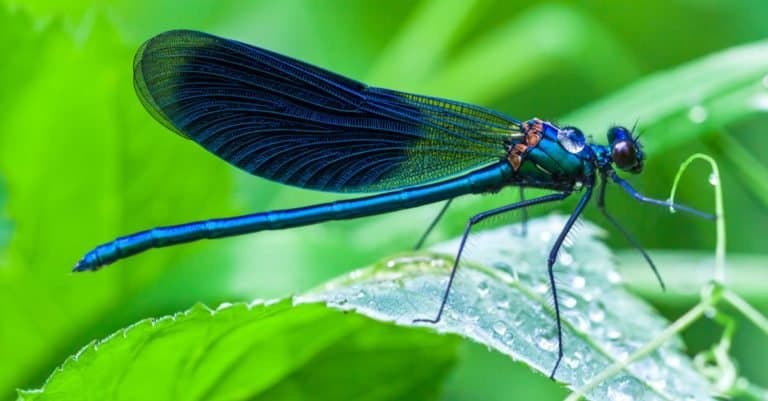
Banded demoiselle Calopteryx splendens
Blue-tailed damselfly Ischnura elegans
Common spreadwing Lestes sponsa

Dragonflies eat mosquitoes, gnats, and cicadas making them an important part of the ecosystem.

These amazing insects also serve as a food source for a variety of fish and birds. They are found on every continent with the exception of Antarctica. Wooded areas as well as freshwater lakes, ponds, marshes, and streams are all habitats of the dragonfly.

5 Incredible Dragonfly Facts!
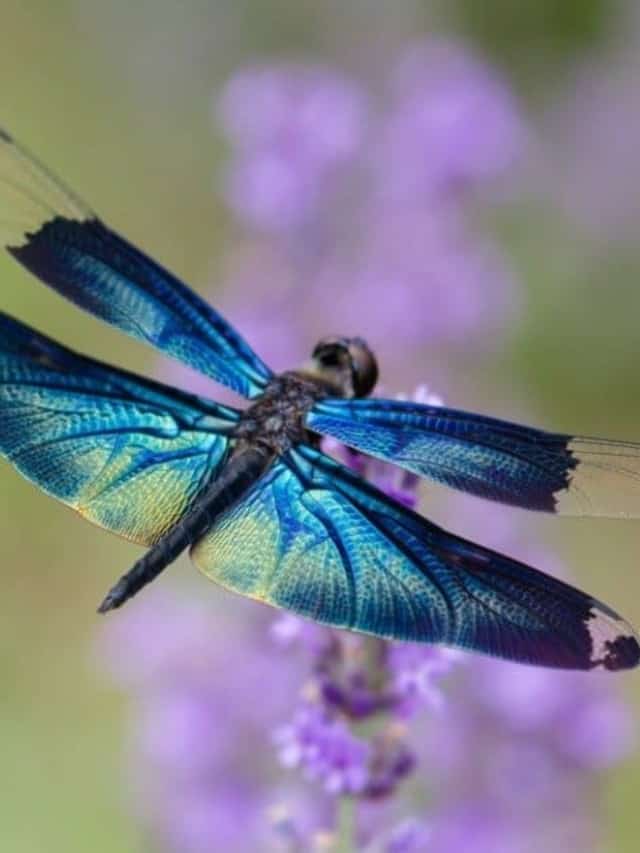
10 Incredible Dragonfly Facts Cover image
  • There are approximately 7,000 species of true dragonflies. The largest dragonfly species in the world can reach more than 5 inches in length!
  • They can fly as fast as 35 mph
  • These insects have 28,000 eyes
  • In the life cycle of this insect, its larvae stay in the water for up to 3 years
  • These insects can see 360 degrees around them

Species, Types, and Scientific Names
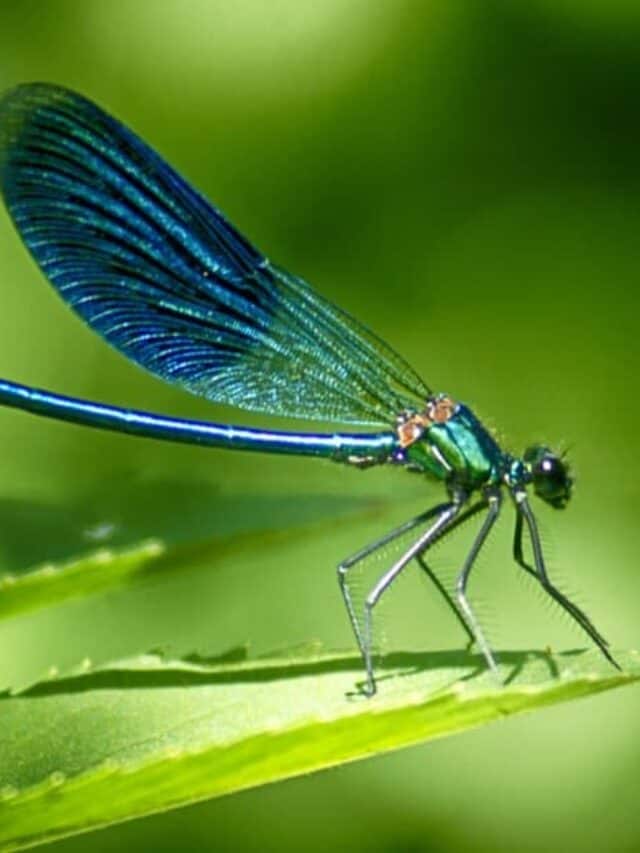
Animals that Eat Insects – Dragonfly
Adult dragonflies will consume any insect they catch.

Anisoptera is the scientific name of these insects. While Anisoptera is its family, the dragonfly belongs to the order classification of Odonata. The word Odonata is Greek meaning ‘toothed one.’ This refers to the jaws of this insect.

There are around 7,000 species of true dragonflies. These insects are closely related to the damselfly though damselflies have the suborder classification of Zygoptera.

These insects live everywhere on the globe except for Antarctica. They live in warm climates and near bodies of water including lakes, ponds, marshes, and streams. Adults are easily recognizable by their narrow, needle-like bodies and two pairs of slender, colorful wings.

There are 14 types including:

  • Petaluridae
  • Aeshnidae
  • Gomphidae
  • Austropetaliidae
  • Cordulegastridae
  • Neopetalia Punctata
  • Chlorogomphidae
  • Corduliidae
  • Libellulidae
  • Macromiidae
  • Synthemistidae
  • Darners
  • Saddlebag
  • Gliders

Evolution and Origins

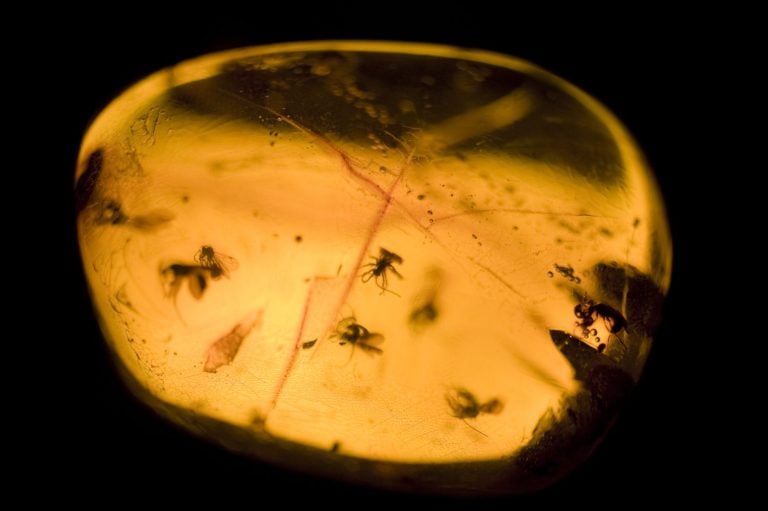
Dragonflies are an ancient species of insects that have existed for over 300 million years. They belong to the order Odonata, which also includes damselflies. The earliest dragonflies were much larger than the dragonflies we see today, with some species having wingspans of over two feet.

Dragonflies have undergone little evolutionary change over the past 300 million years, as they have already evolved to be perfectly adapted to their environment. Their long, slender bodies, large wings, and powerful flight muscles have allowed them to thrive in a variety of habitats, from freshwater streams to open skies.

The evolutionary success of dragonflies can be attributed to their adaptability and versatility. They feed on a variety of prey, including mosquitoes, flies, and other insects, and their larvae can live in a variety of aquatic habitats, from still ponds to fast-flowing streams. This has allowed dragonflies to spread to almost every corner of the world, and to occupy a wide variety of ecological niches.

The fossil record of dragonflies provides important insights into the evolution of insects and the ancient earth. It shows that dragonflies have been able to survive and thrive in a changing world and that they have been an important part of the food chain for millions of years.

Furthermore, dragonflies are a fascinating and ancient species of insects that have adapted and evolved over millions of years to become the highly successful creatures we see today. They continue to play a crucial role in many ecosystems, serving as both predators and prey, and providing valuable insights into the evolution of life on earth.

Appearance
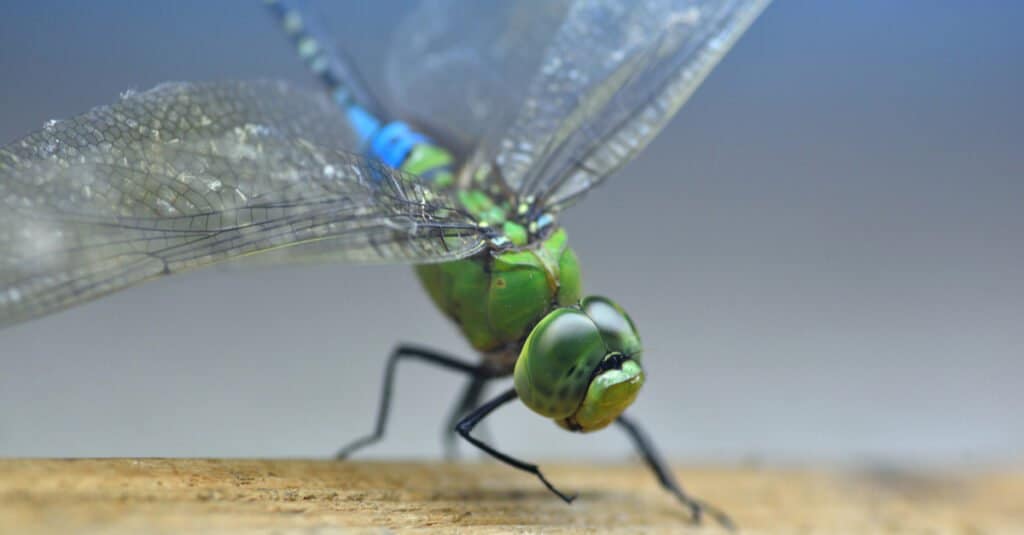
Largest dragonfly - common green darner

An adult measures from 1 to 5 inches long and weigh less than 1 ounce. They have 6 legs and 2 pairs of wings.

An adult measures from 1 to 5 inches long and weigh less than 1 ounce. They have 6 legs and 2 pairs of wings. The wingspan of the insect can measure up to 6 inches. This insect’s color depends on what type it is. They can be brown, blue, yellow, green, or red. Their wings have an iridescent or metallic appearance.

The damselfly is the closest relative of the dragonfly. They are similar in appearance with two pairs of wings and brightly colored bodies. However, a notable difference is a dragonfly rests with its wings spread out while a damselfly rests with its wings pulled together.

The largest type of dragonfly is the giant garner dragonfly. Its scientific name is Anax walsinghami. It’s 5 inches long with a 5-inch wingspan.

These insects have a few adaptations they use to protect themselves from predators. For one, they can fly up to 35 mph! Also, they can change directions mid-air allowing them to escape some predators. Their eyes provide them with a 360-degree view of their environment. So, they’re likely to see a predator soon enough to make an escape.

These insects are solitary. But, when they do form groups, they are called a flight or a cluster. Males can be aggressive when defending their territory from other males.
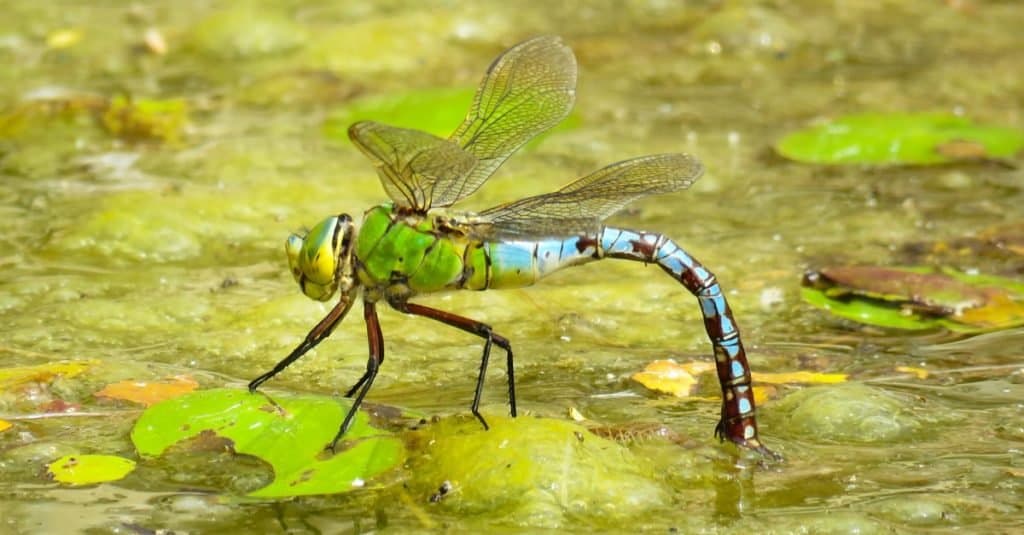
Emperor Dragonfly, UK

Habitat

These insects are found throughout the world except for Antarctica. Though they don’t live in people’s homes, some do live near people. These insects make their home around bodies of water including ponds, streams, lakes, and rivers. If a homeowner has a pond on their property, there are likely to be dragonflies in the area. Or, if a family lives near a large creek or river, they may see dragonflies moving through the area.

Diet

These insects have a carnivorous diet. Specifically, they eat insects which have earned them the classification of an insectivore.

What eats dragonflies?

Frogs, fish, birds, and large spiders are all predators of adult dragonflies. A dragonfly baby also called larvae or nymph is vulnerable to the same predators.

What do dragonflies eat?

These insects eat mosquitoes, gnats, and cicadas. An adult eats from thirty to over 100 mosquitoes each day. Some types of dragonflies hunt at night while others look for food during the day.

Want to discover more about the diets of dragonflies? Check out our complete guide: ‘What Do Dragonflies Eat.’

View all 451 animals that start with D
How to say Dragonfly in ...
Danish
Guldsmed
English
Dragonfly
Spanish
Libélula
Esperanto
Libelo
Finnish
Erilaissiipiset
French
Libellule
Hungarian
Egyenlőtlen szárnyú szitakötők
Japanese
トンボ亜目
Dutch
Echte libellen
Polish
Ważki różnoskrzydłe
Portuguese
Libelinha
Slovenian
Raznokrili kačji pastirji
Swedish
Egentliga trollsländor
Chinese
蜻蜓

Sources

  1. San Diego Zoo / Accessed February 13, 2021
  2. Wikipedia / Accessed February 13, 2021
Rebecca Bales

About the Author

Rebecca Bales

Rebecca is an experienced Professional Freelancer with nearly a decade of expertise in writing SEO Content, Digital Illustrations, and Graphic Design. When not engrossed in her creative endeavors, Rebecca dedicates her time to cycling and filming her nature adventures. When not focused on her passion for creating and crafting optimized materials, she harbors a deep fascination and love for cats, jumping spiders, and pet rats.
Connect:

Thank you for reading! Have some feedback for us?


Dragonfly FAQs (Frequently Asked Questions)

Dragonflies are Carnivores, meaning they eat other animals.