



D
Species Profile

Dugong

Dugong dugon

Seagrass Meadows' Gentle Grazer
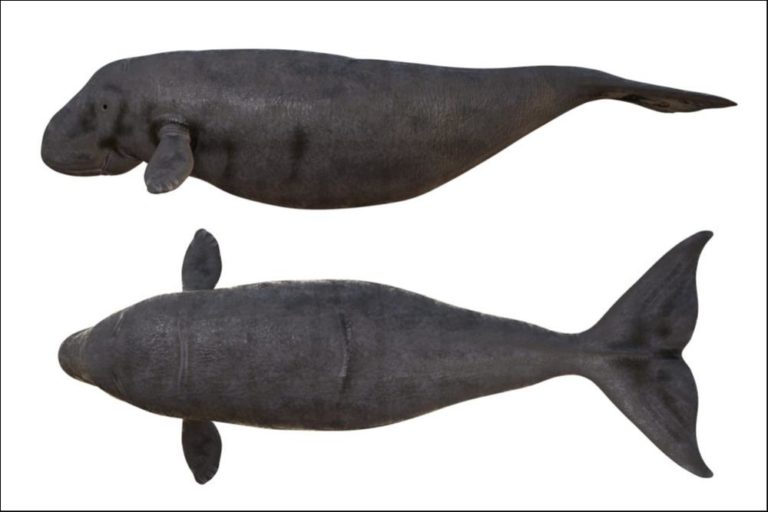
Ranveig / Public Domain, from Wikimedia Commons, the free media repository

Dugong Distribution

Click a location to explore more animals from that region

This map shows coastal regions where Dugong are found.

Loading map...
Dugong

At a Glance

Wild Species
Also Known As Sea cow, Duyung, Mermaid
Diet Herbivore
Activity Cathemeral+
Lifespan 30 years
Weight 420 lbs
Status Vulnerable
Did You Know?

Taxonomy ID: Dugong dugon is the only extant species in family Dugongidae; manatees are in Trichechidae (Marsh, O'Shea & Reynolds 2011).

Scientific Classification

The dugong is a large, fully aquatic marine mammal (a sirenian) and the only living species in family Dugongidae. It is a slow-moving herbivore specialized for grazing seagrass meadows in coastal tropical and subtropical waters.

Kingdom
Animalia
Phylum
Chordata
Class
Mammalia
Order
Sirenia
Family
Dugongidae
Genus
Dugong
Species
Dugong dugon

Distinguishing Features

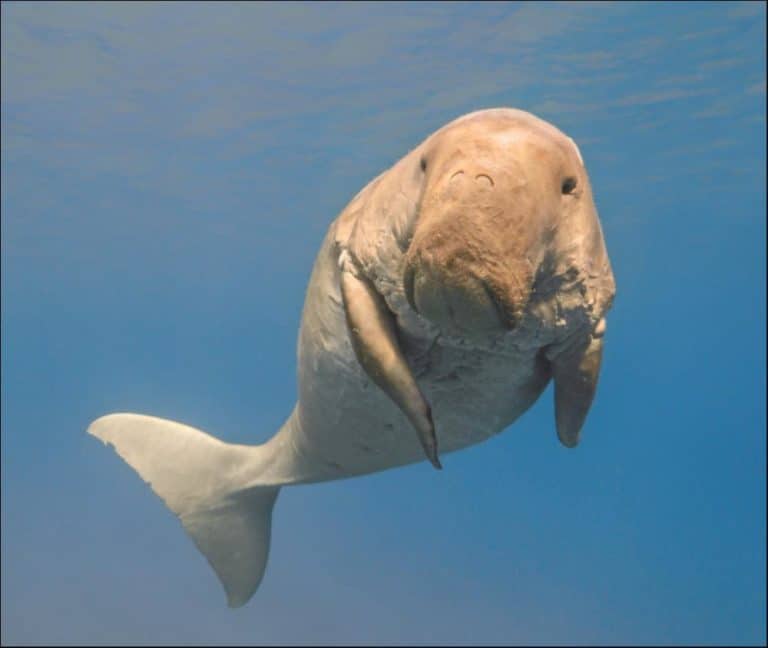
  • Marine ‘sea cow’ with a streamlined body and horizontal fluked tail (whale-like), unlike manatees’ paddle-shaped tail
  • Downturned snout and bristled upper lip adapted for uprooting/grazing seagrass
  • Adults typically gray-brown; sparse body hair
  • No hind limbs; forelimbs are flippers
  • Males develop tusk-like incisors (often not visible externally)

Physical Measurements

Males and females differ in size

Length
8 ft 10 in (7 ft 3 in – 9 ft 10 in)
8 ft 10 in (7 ft 10 in – 13 ft 5 in)
Weight
661 lbs (507 lbs – 882 lbs)
772 lbs (507 lbs – 926 lbs)
Top Speed
16 mph
Top ~25 km/h; usually slow

Appearance

Primary Colors
Secondary Colors
Skin Type Dugong (Dugong dugon) has thick, smooth or slightly wrinkled skin with short hairs and stiff whiskers (vibrissae) on muzzle; often scarred from seagrass grazing, bottom contact, or tusk fights. Aquatic Order Sirenia without dense fur.
Distinctive Features
  • Large, fully aquatic marine mammal (Class Mammalia; Order Sirenia) and the only living species in Family Dugongidae (distinct from manatees, Family Trichechidae).
  • Key ID trait vs manatees (Trichechidae): fluked, whale-like horizontal tail fluke (manatees have a rounded/paddle-shaped tail).
  • Downturned, broad rostrum and ventrally oriented mouth specialized for bottom-grazing seagrass meadows; strong seagrass specialization and coastal meadow dependence (Indo-West Pacific distribution).
  • Forelimbs are flippers used for maneuvering; typically no fingernails on the flipper edge (contrast: manatees often have nails).
  • Adult size: commonly ~2.4-3.0 m total length; maximum reported ~4.1 m total length. Typical adult mass commonly ~230-500 kg; large individuals reported substantially heavier (sources vary by region/study).
  • Longevity: reported maximum lifespan on the order of ~70 years (estimates based on age determination such as growth layer counts in ear bones/teeth in published dugong demography studies).
  • Slow-moving, predominantly solitary or in small groups; spends substantial time grazing and traveling between seagrass patches; must surface regularly to breathe (not a fish/'whale').
  • Body often shows conspicuous linear scars; males in particular may show tusk-related rake marks from social interactions.

Sexual Dimorphism

Sexual dimorphism is present but not strongly expressed in external coloration; differences are mainly in tusk development and (in some populations) average body size. The species has incisor tusks associated with Dugongidae, and tusk eruption is typically a male trait (with regional/individual variation).

  • Upper incisor tusks typically erupt and become visible externally in mature males; used in social/sexual interactions and can contribute to characteristic scar patterns on conspecifics.
  • Often show more obvious tusk-related rake/scar marks from interactions.
  • Genital opening position differs (as in sirenians generally): male genital aperture is closer to the umbilicus (mid-ventral), though this requires close observation.
  • Tusks usually remain unerupted (embedded); in some older individuals/regions tusks may partially erupt but are generally far less prominent than in males.
  • Females may be slightly larger on average in some populations (reported in multiple field studies), though overlap is substantial.
  • Genital opening is closer to the anus (posterior ventral), and females may show mammary slit areas in the axillary region (requires close observation).

Did You Know?

Taxonomy ID: Dugong dugon is the only extant species in family Dugongidae; manatees are in Trichechidae (Marsh, O'Shea & Reynolds 2011).

Size: adults typically ~2.4-3.0 m long; large individuals can reach ~4.0 m (Marsh et al. 2011; IUCN accounts).

Mass: commonly ~230-420 kg, with occasional much heavier animals reported (Marsh et al. 2011).

Longevity: can live ~70 years, estimated from tooth growth-layer studies (e.g., Marsh et al., published age/longevity work cited in Marsh et al. 2011).

Reproduction is slow: gestation ~13-15 months; usually a single calf; long calving intervals commonly several years (Marsh et al. 2011).

Food specialist: a coastal seagrass meadow grazer that can eat about 10-15% of its body mass per day in wet vegetation (Marsh et al. 2011).

Easy field mark vs manatees: dugongs have a fluked, dolphin-like tail; manatees have a rounded paddle tail (Sirenia references in Marsh et al. 2011).

Unique Adaptations

  • Seagrass-specialist head shape: a strongly downturned snout and muscular, cleft upper lip help crop and excavate seagrass from the seabed (Marsh et al. 2011).
  • Sensitive "vibrissae" bristles: stout facial bristles help detect and manipulate food in turbid, shallow water (Marsh et al. 2011).
  • Fluked tail: whale-like tail flukes provide efficient propulsion for a fully marine sirenian (key distinction from manatees' paddle tail).
  • Large lungs aid buoyancy control: extensive lung volume helps maintain trim and glide over the bottom while grazing (Sirenia functional anatomy summarized in Marsh et al. 2011).
  • Thick skin and streamlined body: reduces abrasion during bottom-feeding and improves efficiency in warm coastal waters.
  • Sexual dimorphism in teeth: males develop tusk-like incisors used in social interactions; tusk-rake scars on backs can record these encounters (Marsh et al. 2011).

Interesting Behaviors

  • Seagrass "furrow feeding": digs and uproots seagrass with its downturned snout, leaving distinctive feeding trails across meadows (Marsh et al. 2011).
  • Low-energy lifestyle: slow cruising and long resting bouts, consistent with a high-fiber herbivorous diet and warm, shallow coastal habitat use (Marsh et al. 2011).
  • Breathing and diving: typically makes short dives in shallow feeding grounds and surfaces regularly to breathe; activity is strongly shaped by depth, tides, and disturbance (Marsh et al. 2011).
  • Mother-calf bond: calves stay close alongside the mother and nurse for extended periods; dependent young can remain with the mother for a long time in this slow-breeding species (Marsh et al. 2011).
  • Social flexibility: often seen alone or in small groups; at times forms larger aggregations where seagrass is abundant or during mating activity (Marsh et al. 2011).
  • Sound communication: produces chirps/squeaks used in social contact, especially between mothers and calves (documented in dugong acoustic studies summarized in Marsh et al. 2011).

Cultural Significance

Dugong (Dugong dugon) is a culturally important coastal animal tied to seagrass country across the Indo‑West Pacific. In northern Australia and the Torres Strait it is part of Indigenous hunting, sharing, law and ceremony, and is a clan totem. Its sea‑cow and mermaid image shaped its name.

Myths & Legends

Malay-Indonesian sea-maiden traditions: the dugong's name is widely considered to come from a Malay/Indonesian word meaning a mermaid or sea-woman, linking the animal to mermaid stories by name and association.

Sailors' mermaid stories in the Indian Ocean and elsewhere often came from seeing sirenians, like dugongs, especially mothers surfacing to nurse. These tales helped inspire the group name Sirenia.

In Torres Strait and northern Australian Indigenous traditions, dugongs (Dugong dugon) feature in sea-country stories and ceremonies, seen as spiritually important and guiding respectful hunting, sharing, and care for feeding places.

The "sea cow" Dugong (Dugong dugon) is a sign of plenty in coastal Red Sea/Persian Gulf and South and Southeast Asia communities, tied to stories about rich or fading shallow seas and seagrass meadows.

Conservation Status

VU Vulnerable

Facing a high risk of extinction in the wild.

Population Decreasing

Protected Under

  • CITES: Appendix I (international commercial trade generally prohibited).
  • CMS (Convention on Migratory Species): listed on Appendices I and II in many range contexts, supporting strict protection and international cooperation for migratory populations.
  • Examples of national/regional protection: Australia-protected under the Environment Protection and Biodiversity Conservation (EPBC) Act 1999; India-protected under the Wildlife (Protection) Act 1972 (Schedule I). (Specific legal instruments vary by range state.)
  • Key biological reference points used in conservation planning (species notes): adult total length commonly ~2.4-3.0 m (exceptionally to ~3.3 m) and mass often ~230-420 kg; longevity can exceed ~70 years; slow reproduction (maturity ~8-18 years; gestation ~13-15 months; long calving intervals) makes populations highly sensitive to small increases in adult mortality.

Life Cycle

Birth 1 calf
Lifespan 30 years

Lifespan

In the Wild
0–73 years
In Captivity
0–30 years

Reproduction

Mating System Promiscuity
Social Structure Aggregation Group
Breeding Pattern Transient
Fertilization Internal Fertilization
Birth Type Internal_fertilization

Dugong (Dugong dugon) are mostly solitary but form temporary mating herds where many males chase one female (scramble competition). Internal fertilization; no lasting pair bond or male care. Gestation 13–15 months, one calf, long maternal care; interbirth 3–7 years; maturity often 6–17 years.

Behavior & Ecology

Social Herd Group: 2
Activity Cathemeral, Diurnal, Nocturnal
Diet Herbivore Halophila ovalis (paddleweed seagrass)
Seasonal Migratory 373 mi

Temperament

Generally non-aggressive and shy; typically avoids boats/people and responds to disturbance by increasing vigilance, changing dive/foraging patterns, or shifting feeding to quieter periods (documented variability among sites with different human pressure; Marsh et al., 2002).
Slow-moving, energetically conservative grazer; prolonged bouts of seagrass foraging interspersed with regular surfacing to breathe (behavioral time budgets vary by seagrass availability, tide, and disturbance; Marsh et al., 2002).
Strong maternal investment: mother-calf cohesion and protective behavior are common, consistent with long lifespan (maximum longevity reported up to ~70 years) and low reproductive rate (Marsh et al., 2002; IUCN Red List).

Communication

Chirps/squeaks Contact calls), especially associated with mother-calf interactions and close-range social contexts (reported in dugong bioacoustics studies such as Ichikawa et al., 2014
Trills/whistles Tonal calls) used in social interactions; call structure varies and is detectable in shallow coastal habitats (Ichikawa et al., 2014; subsequent dugong acoustic descriptions
Short barks/grunts and surface 'snorts' associated with surfacing and disturbance responses Described in field accounts summarized by Marsh et al., 2002
Tactile communication: nudging, rubbing, and close body contact-particularly mother-calf positioning and contact maintenance in turbid water Marsh et al., 2002
Visual signaling at close range: body orientation, following, and approach/avoidance postures; effectiveness depends on water clarity.
Hydrodynamic cues: following in another individual's wake and synchronized surfacing/movement within temporary aggregations.
Bubble release and surface noise (splash/snort) as incidental cues that may function in short-range awareness, especially in low visibility.

Habitat

Coastal Seabed/Benthic Estuary Mangrove Open Ocean Coral Reef
Biomes:
Terrain:
Coastal Island Sandy Muddy

Ecological Role

Large, fully aquatic herbivorous megagrazer that structures tropical/subtropical seagrass ecosystems.

Regulates seagrass meadow composition by preferentially grazing fast-growing species (e.g., Halophila/Halodule), influencing successional dynamics and patchiness. Creates feeding furrows that increase small-scale habitat heterogeneity and can affect sediment properties and infaunal communities (bioturbation effects). Contributes to nutrient cycling via digestion and excretion within coastal systems, potentially enhancing nutrient availability for primary production. Acts as an indicator species for seagrass meadow health and coastal ecosystem integrity due to strong dependence on seagrass resources.

Diet Details

Other Foods:
Seagrasses Halophila seagrass Halodule uninervis Halodule Seagrass Cymodocea rotundata Thalassia seagrass Syringodium isoetifolium Tape seagrass Macroalgae +4

Human Interaction

Domestication Status

Wild

Dugong (Dugong dugon) is a wild marine mammal and is not domesticated. People in the past hunted it for meat, oil, and materials. Its slow breeding and special seagrass diet make domestication impractical. Today threats include bycatch, boat strikes, habitat loss, and poor water quality. Late maturity (6–17 years), long pregnancy (13–15 months), and large size make captivity hard.

Danger Level

Low
  • Generally non-aggressive; primary human safety issues are incidental: a large animal (commonly 230-500 kg) can cause injury if a person attempts to restrain/handle it (e.g., during illegal capture or misguided interaction).
  • Boating-related interactions: collisions typically endanger dugongs most, but can also cause secondary risks to people (sudden maneuvering, capsizing in small craft, entanglement hazards when freeing animals).
  • Disease transmission risk to humans is considered low compared with many terrestrial mammals; main occupational risks are from handling large wildlife and marine environments rather than known dugong-specific zoonoses.

As a Pet

Not Suitable as Pet

Legality: Dugong (Dugong dugon) are not legal as private pets. International trade is mostly banned under CITES Appendix I except rare research. Most range countries protect them; permits go only to approved aquariums, research, or rescue centers.

Care Level: Expert Only

Purchase Cost:
Lifetime Cost: $1,000,000 - $10,000,000

Economic Value

Uses:
Subsistence and historical artisanal harvest (meat, oil, hide/bone) in parts of the range (now largely illegal/regulated) Cultural value to coastal and Indigenous communities (traditional knowledge, heritage species) Ecotourism and non-consumptive value (wildlife viewing where populations persist) Ecosystem services via seagrass meadow dynamics (grazing influences seagrass productivity/structure; seagrass meadows support fisheries and coastal protection)
Products:
  • Meat (historical/subsistence use)
  • Oil/fat (historical use)
  • Hide/leather (historical use)
  • Bone/teeth artifacts (historical use)
  • Tourism revenue from wildlife viewing (non-consumptive)

Relationships

Related Species 2

Steller's sea cow
Steller's sea cow Hydrodamalis gigas Shared Family
Mediterranean sea cow Metaxytherium medium Shared Family

Ecological Equivalents 5

Animals that fill a similar ecological role in their ecosystem

West Indian manatee Trichechus manatus Closest ecological analogue among living sirenians. A large, slow-moving, fully aquatic herbivore that grazes seagrasses and other aquatic vegetation in warm coastal and estuarine habitats; overlaps in functional role as a megaherbivore that shapes seagrass communities.
Amazonian manatee Trichechus inunguis Ecologically similar sirenian herbivore (an aquatic megaherbivore with a low metabolic rate and slow life history). Primarily riverine/floodplain, making it a useful niche comparison for plant-based diet, slow reproduction, and vulnerability to habitat change and hunting.
African manatee Trichechus senegalensis Sirenian herbivore occupying warm coastal and riverine systems, with comparable feeding ecology (aquatic macrophytes), dependence on shallow, sheltered waters, and similar life-history constraints (late maturity and low reproductive rate).
Green sea turtle Chelonia mydas Major seagrass grazer in tropical and subtropical coastal systems; overlaps strongly with dugongs in reliance on seagrass meadows and can exert comparable grazing pressure, though it is a reptile with different physiology and life history.
Humpback whale
Humpback whale Megaptera novaeangliae Shares portions of tropical coastal habitat during migration and uses shallow nearshore waters, but differs trophically (filter-feeding carnivore). Included as a commonly co-occurring large marine vertebrate in areas where human–wildlife interactions (boat strike and entanglement risk) and coastal management issues overlap.

The dugong is one of the few herbivorous marine mammals still remaining in the world.

This species is a familiar sight to any inhabitants or tourists who visit the coastal waters of the world’s tropical regions. It moves through the water with a slow, languid pace and chews up the grass on the bottom of the ocean floor to survive. Its herbivorous lifestyle and moderate temperament have earned it the nickname of the sea cow or the sea pig. Though not yet endangered, the dugong may be vulnerable to human activity and coastal development.
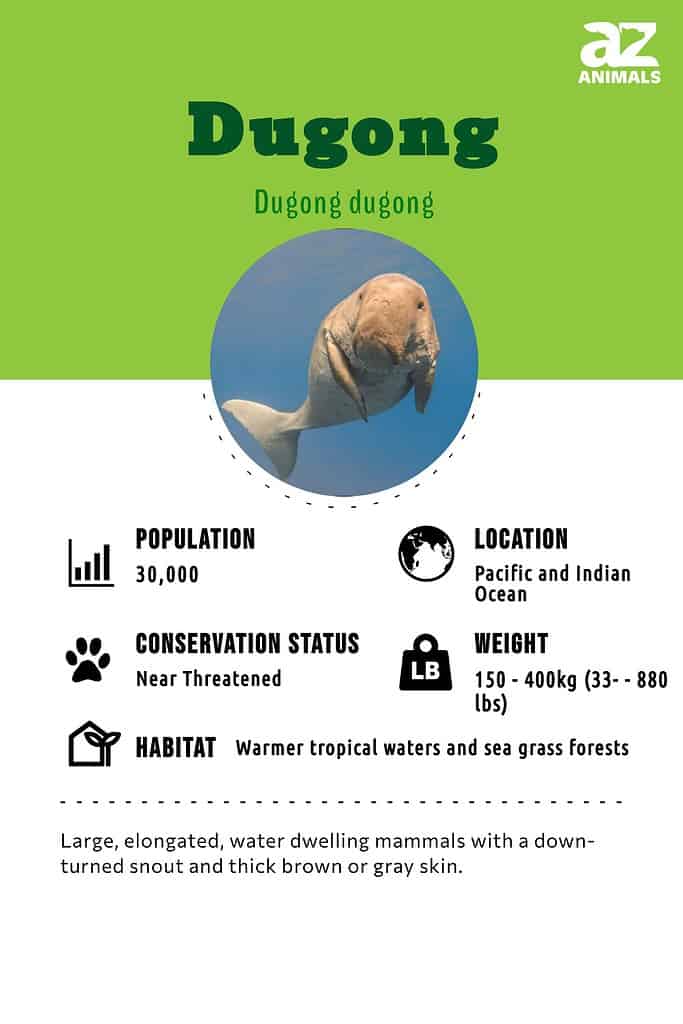
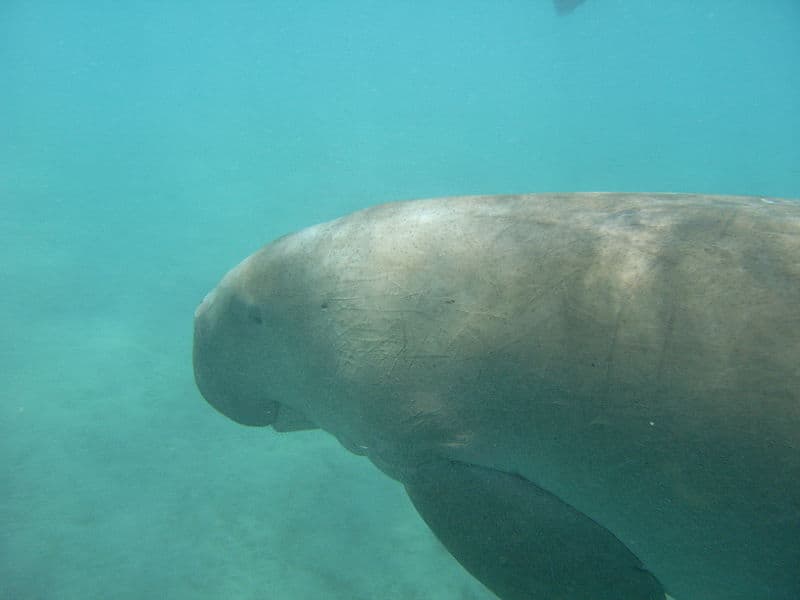
Dugongs were mistaken for the Greek mythological figures, the sirens, by European sailors.

5 Incredible Dugong Facts

  • It is believed that dugongs and the closely related manatees were sometimes mistaken for the legendary Greek mythological figures, the sirens, by some European sailors traveling far from home. This is the reason why their order was given the name Sirenia. They may have been mistaken for mermaids as well.
  • The dugong is an animal that has been an important part of some marine cultures for thousands of years. A 5,000-year-old cave painting that depicts a dugong was discovered in Malaysia.
  • Dugongs have become important tourist attractions. Their passive and gentle nature allows swimmers to observe them closely in the wild.
  • Due to their specific dietary requirements, dugongs are almost never kept in captivity by humans.
  • Dugongs may only give birth once every three to seven years.

Scientific Name

The scientific name of the dugong is simply Dugong dugon. This name probably comes from the local Visayan word for the species, which was later picked up by Europeans. Visayan is spoken in what is now the modern-day Philippines. The dugong is one of four living members of the order Sirenia — the others being three species of manatees — and the only living member of the family Dugongidae. A second member of the family, Steller’s sea cow, was driven to extinction in the 18th century due to overhunting. Nineteen total genera from the family are known from the fossil record.

Evolution
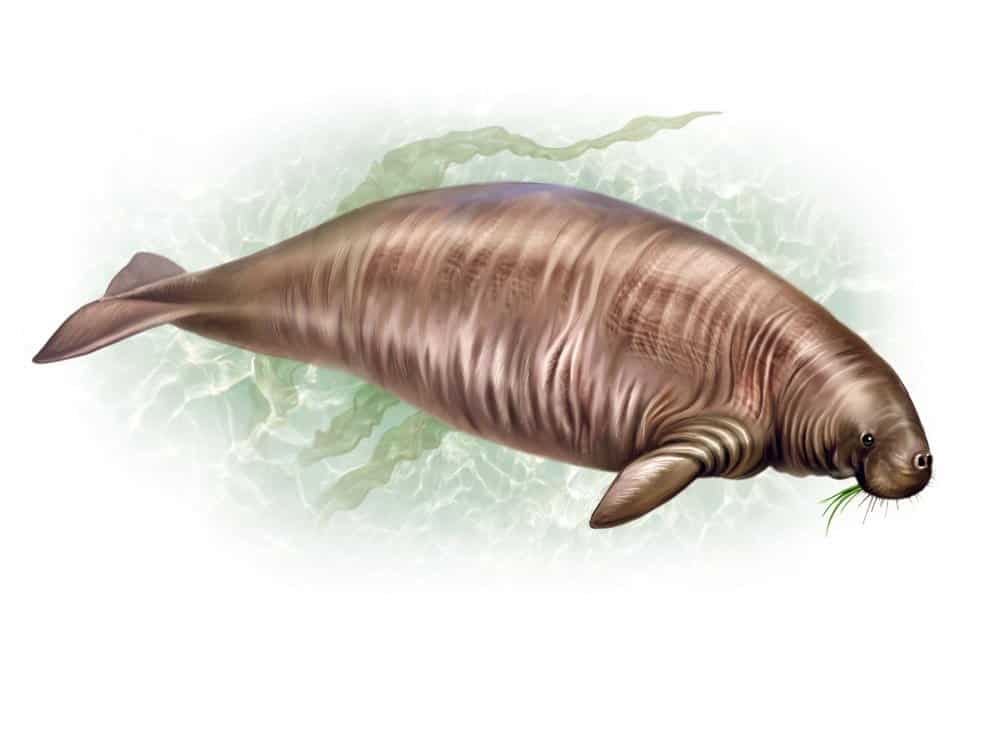
Steller's Sea Cow

Steller’s sea cow was a member of the family Dugongidae that was driven to extinction in the 1800s.


Despite the enormous physical differences, dugongs and manatees are most closely related to modern-day elephants. They are not related to any marine mammal but are thought to have descended from a primitive land mammal. The earliest Sirenians were probably four-legged amphibious mammals that could move easily between land and water. They may have been about the size of a hippopotamus, feeding on the plant matter found in shallow waters.

Elephants and dugongs likely diverged from each other more than 50 million years ago. The earliest animal that had a dugong-like appearance is believed to be the Potamosiren, which lived around 15 million years ago.

Appearance and Behavior
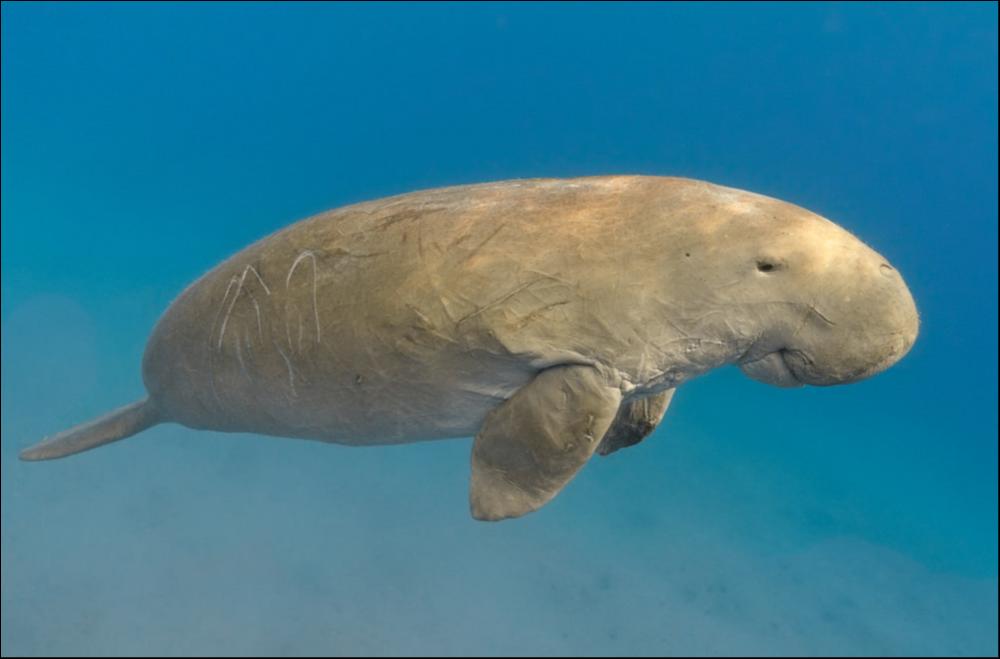
Dugongs are insulated with layers of fat and can weigh up to 1,100 pounds.

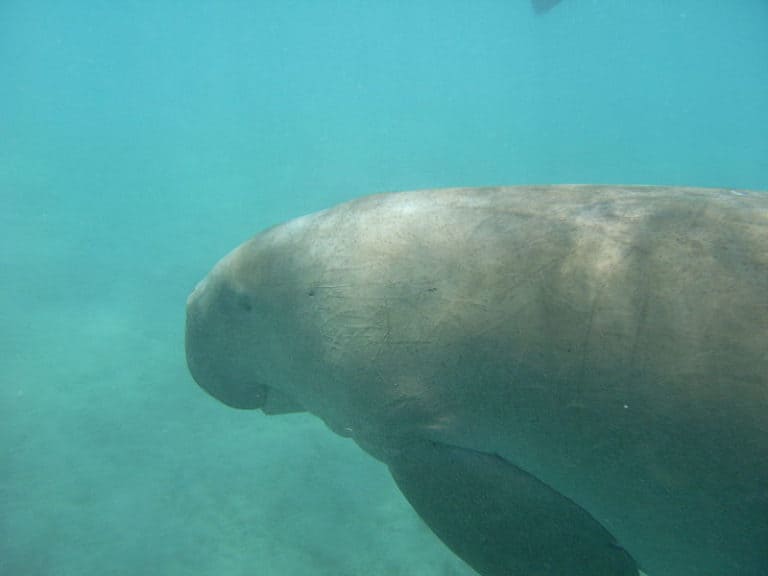
Dugongs are large, elongated animals with a down-turned snout and thick brown or gray skin. The technical term for the body shape is fusiform. This means their bodies are shaped like a spindle that is tapered at the ends. Dugongs can measure anywhere between 8 and 10 feet in length and up to 1,100 pounds in weight. Their immense weight is owed to the thick layers of fat surrounding their bodies to comfortably insulate them when the water turns cold. They are powered through the water by moving their dolphin-like fluked tails up and down, while their paddle-like front flippers help them steer and maneuver. They lack both hind limbs and a dorsal fin.

Despite their aquatic nature, dugongs share the same traits as other terrestrial mammals in almost all characteristics, including the structure of the skeleton and the presence of mammary glands directly under the fins. Apart from the usual sexual characteristics, there is little difference between male and female dugongs. Both sexes have long tusks projecting from their incisor teeth. Their ears, which lack any external flap, are located on the sides of the head.

One of the dugong’s biggest weaknesses is its poor eyesight, but this is made up for with its sharp hearing and olfactory senses. The primary means of communication with other dugongs include chirps, whistles, and barks. Each sound seems to have a specific purpose in conveying aggression or affection to other members of the species. They also have bristles all over their bodies and around their face to help them forage for food at the bottom of the sea bed.

Despite the strong adaptations for their marine habitats, dugongs can only stay underwater for around six minutes at a time before they need to return to the surface for breath. They will sometimes breathe by poking their head above the water while standing on the sea bottom with their tails. Valves in their nostrils will close during dives to prevent water from entering.

Dugongs are considered to be social creatures that prefer the company of others, and yet they have no set social group. They often travel alone or in pairs but will also gather into huge herds of hundreds at a time. Because the habitat cannot support large groups for long, these herds will form quickly and then dissipate. They are nomadic creatures that may travel immense distances around their natural habitat in search of food and resources. However, many other aspects of the dugong’s behavior remain a mystery.
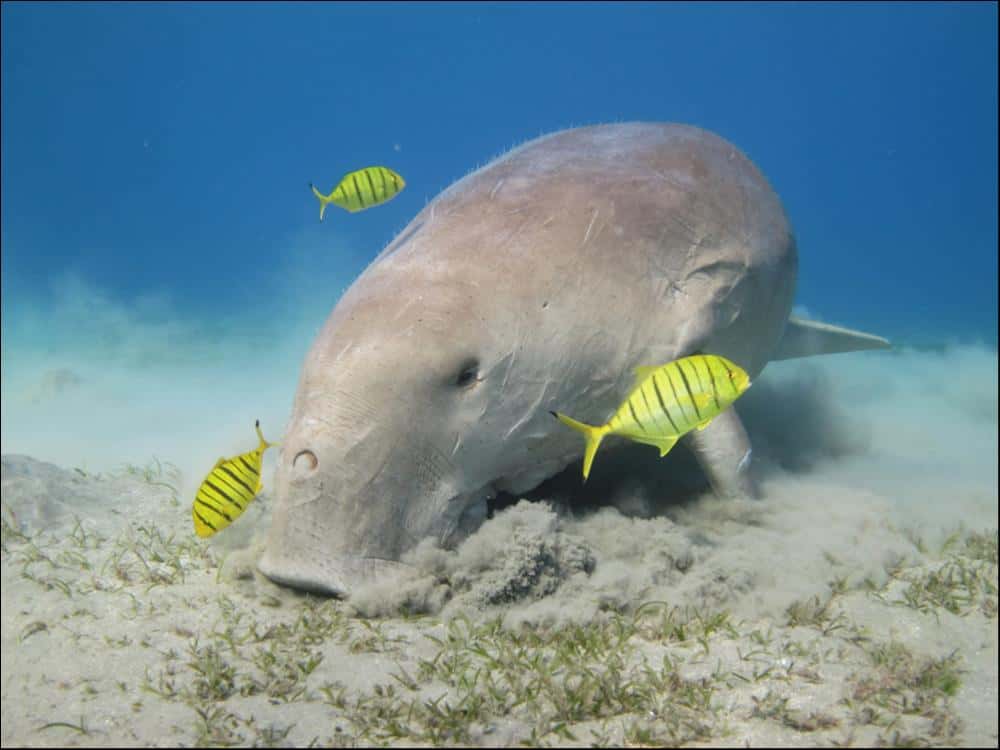
Dugong (Dugong dugon) with fish
Dugongs inhabit bays mangroves, estuaries, and other shallow water around Pacific and Indian Ocean islands.

Habitat

The dugong inhabits the nearby warm coastal regions of the Pacific and Indian Oceans. Its range is very large but also fragmented. This includes the eastern coast of Africa, Madagascar, the Persian Gulf, the coasts of India and Sri Lanka, and the Pacific region around Southeast Asia and Australia. It is also believed that they might have once inhabited the Mediterranean Sea many thousands of years ago.

Dugongs are often found in bays, mangroves, estuaries, and other shallow water around continents and islands. They prefer to graze in the water around 30 feet deep, but they can dive down to more than 120 feet for short periods of time in search of food. Some populations have also been known to frequent reefs or deeper waters for safety, despite the lack of food in these areas.

Diet

Neptune seagrass Posidonia oceanica Neptune Grass

Dugongs are mostly herbivores and eat aquatic plants, seagrass, weeds, and other plants.

Dugongs have adapted to a herbivorous lifestyle that largely revolves around the consumption of seagrass. They have the option to either feed superficially on the leaves or attempt to dig up the entire plant by the root. Less commonly, they will consume algae when seagrass cannot be found. Shellfish, sea squirts, worms, and jellyfish, hiding along the seagrass can also be consumed.

Dugongs use their bristled snouts to search for food along the shallow ocean floor. They are able to suck up large amounts of food with their muscular lips that have evolved for this purpose. Their feeding behavior actually leaves behind large furrows on the sea bed that can be seen from the surface. Dugongs are active foragers during both day and night hours. They need to consume large quantities of food every day to survive.

Predators and Threats
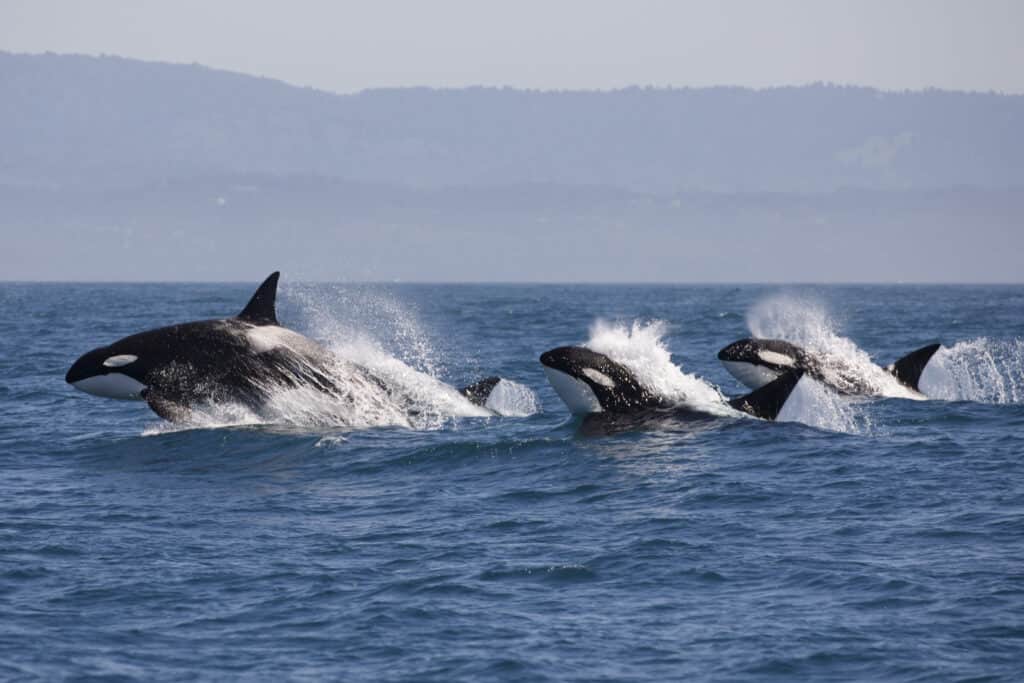
Whale pod breaches

Killer whales prey on dugongs but humans are their biggest threat.

Due to their docile nature and relative lack of defenses, a single dugong can make a tempting target for a number of hungry predators. Their one true defense is their immense size, which allows them to fend off all but the largest creatures such as sharks, crocodiles, and killer whales that patrol the coasts. The young calves are most vulnerable to predation since they are almost completely defenseless in their first few years of life. Many dugongs also die from diseases and parasites in large numbers. This is perhaps the largest threat to their survival besides human activity.

Humans have traditionally hunted dugongs for thousands of years due to the value of their oil, skin, and meat. Dugongs have often thrived in spite of this human predation. But with the rise of industrialized hunting in the 18th century, the species was placed under increasing duress. The species is now better protected from wanton hunting by international laws, but it still faces several other threats.

Habitat loss from coastal development and water pollution is a persistent problem. Oil spills, chemical runoffs, and radiation make some parts of the coastal region uninhabitable. Dugongs may also become entangled in nets or get into an accident with marine vessels. Underwater noise may disturb the dugong’s natural behavior or cause distress. Finally, climate change may alter the animal’s habitat to the point of irreversible damage.

Reproduction, Babies, and Lifespan
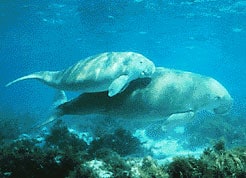
Dugong calves stay with their mothers for at least 18 months.

Unlike many other species, dugongs do not have a set mating season. Instead, they can mate all year round, whenever an opportunity presents itself. After dugongs congregate in an area, the males engage in competitive and aggressive mating displays to attract females. The mating itself can sometimes turn violent and leave permanent scars on the female’s body.

After mating, the female will take a full year to carry the young to term. Due to the longer development periods, she may only give birth once every three to seven years. Twins are relatively rare. The young dugong is born underwater and must quickly make its way to the surface to breathe. The child will continue to nurse with its mother for the next 18 months or so, sometimes hitching a ride on its mother’s back. The young calf will form a close bond with its mother, who takes sole responsibility for nurturing and care. She will teach the calf how to feed on grass, communicate, and survive in the wild. The calf will seek solace and protection behind the mother when a predator is in the area.

Both sexes exhibit quite a lot of variability with the age of sexual maturity. Dugongs can become sexually active as soon as six years of age, but it can be delayed by many years as well, perhaps due to the lack of ample food supply in the area. After they do achieve sexual maturity, they will leave their mother and begin to seek out mates. Dugongs have a remarkable life span of up to 70 years in the wild. The age can be estimated by counting the growth layers on the dugong’s tusks.

Population
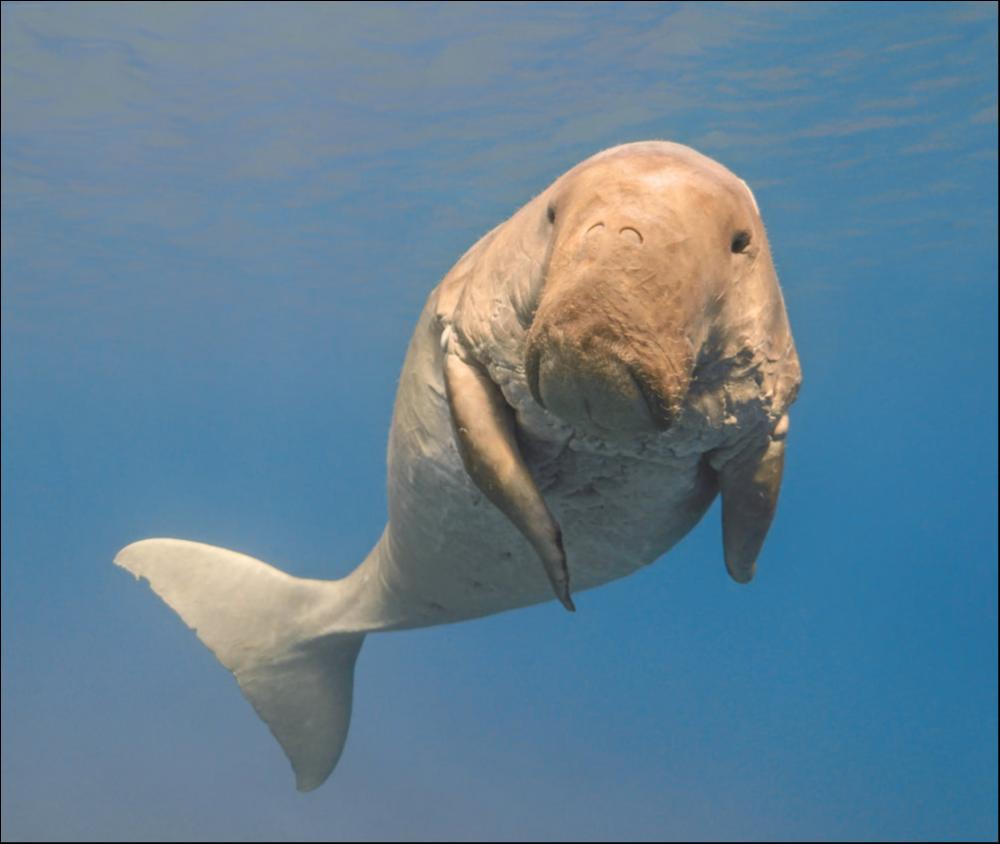
Dugongs are vulnerable to extinction despite legal protection.

The International Union for the Conservation of Nature (IUCN) Red List currently lists the dugong as vulnerable to extinction. Despite plenty of legal protection, population numbers appear to be decreasing across the world. Due to their specific dietary needs and slow reproduction times, dugongs may be particularly susceptible to population depletion.

To maintain or bolster population numbers, local peoples and governments will need to protect the coastal habitat, reduce incidences of vessel strikes and net entanglements, and implement more sustainable hunting practices. Dugong hunting still remains an important cultural practice in some cultures around the region. However, some Australian states have established protected parks for dugongs that no one can hunt in.

View all 451 animals that start with D
How to say Dugong in ...
Catalan
Dugong
Danish
Dygong
German
Dugong
English
Dugong
Esperanto
Dugongo
Spanish
Dugong dugon
Finnish
Dugongi
French
Dugong
Hebrew
תחש המשכן
Hungarian
Dugong
Italian
Dugong dugon
Japanese
ジュゴン
Latin
Dugon
Maltese
Dugongu
Dutch
Doejong
English
Dugong
Polish
Diugoń
Portuguese
Dugongo
Swedish
Dugonger
Turkish
Dugong
Vietnamese
Bò biển
Chinese
儒艮

Sources

  1. David Burnie, Dorling Kindersley (2011) Animal, The Definitive Visual Guide To The World's Wildlife / Accessed May 13, 2009
  2. Tom Jackson, Lorenz Books (2007) The World Encyclopedia Of Animals / Accessed May 13, 2009
  3. David Burnie, Kingfisher (2011) The Kingfisher Animal Encyclopedia / Accessed May 13, 2009
  4. Richard Mackay, University of California Press (2009) The Atlas Of Endangered Species / Accessed May 13, 2009
  5. David Burnie, Dorling Kindersley (2008) Illustrated Encyclopedia Of Animals / Accessed May 13, 2009
  6. Dorling Kindersley (2006) Dorling Kindersley Encyclopedia Of Animals / Accessed May 13, 2009
  7. David W. Macdonald, Oxford University Press (2010) The Encyclopedia Of Mammals / Accessed May 13, 2009
Lisha Pace

About the Author

Lisha Pace

After a career of working to provide opportunities for local communities to experience and create art, I am enjoying having time to write about two of my favorite things - nature and animals. Half of my life is spent outdoors, usually with my husband and sweet little fourteen year old dog. We love to take walks by the lake and take photos of the animals we meet including: otters, ospreys, Canadian geese, ducks and nesting bald eagles. I also enjoy reading, discovering books to add to my library, collecting and playing vinyl, and listening to my son's music.

Thank you for reading! Have some feedback for us?


Dugong FAQs (Frequently Asked Questions)

The exact number of dugongs left in the world currently remains unknown. More precise population surveys have been done in Australia. They found that some local dugong populations number in the thousands. However, because population surveys have not been done in certain regions of the world, it is difficult to estimate their total numbers with any degree of accuracy.