
E
Species Profile

Elephant Seal

Mirounga

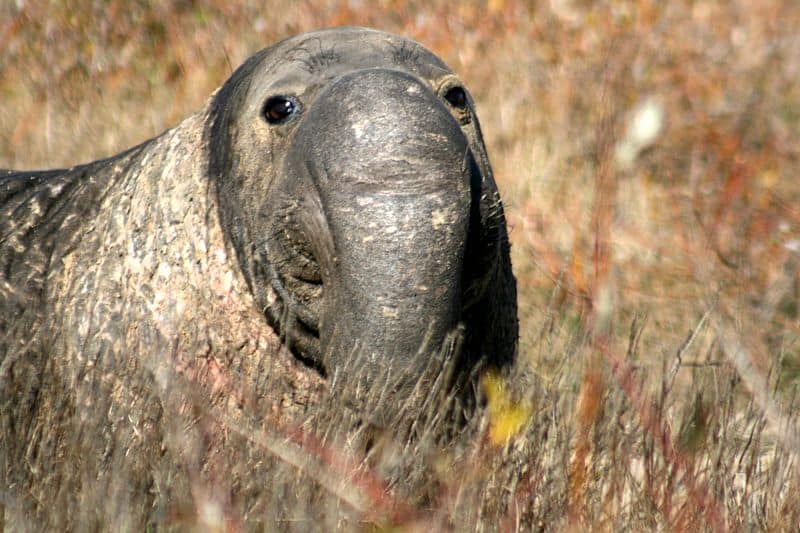
Big noses, bigger dives.
Brocken Inaglory / Creative Commons

Elephant Seal Distribution

Click a location to explore more animals from that region

This map shows coastal regions where Elephant Seal are found.

Loading map...
walrus vs elephant seal

At a Glance

Genus Overview This page covers the Elephant Seal genus as a group. Stats below are general traits shared across the genus.
Also Known As Sea elephant, Elefante marino, Éléphant de mer, Seeelefant
Diet Carnivore
Activity Cathemeral
Lifespan 15 years
Weight 3700 lbs
Status Least Concern
Did You Know?

They're the largest true seals (Phocidae): across the genus, adults range roughly ~2.4-6 m long and ~300-4,000 kg, depending on species and sex.

Scientific Classification

Genus Overview "Elephant Seal" is not a single species but represents an entire genus containing multiple species.

Elephant seals (Mirounga) are the largest true seals (family Phocidae), famous for extreme sexual dimorphism, deep/long diving ability, and the adult males’ inflatable proboscis (“elephant” nose) used in displays and combat during the breeding season.

Kingdom
Animalia
Phylum
Chordata
Class
Mammalia
Order
Carnivora
Family
Phocidae
Genus
Mirounga

Distinguishing Features

  • Very large body size; adult males far larger than females
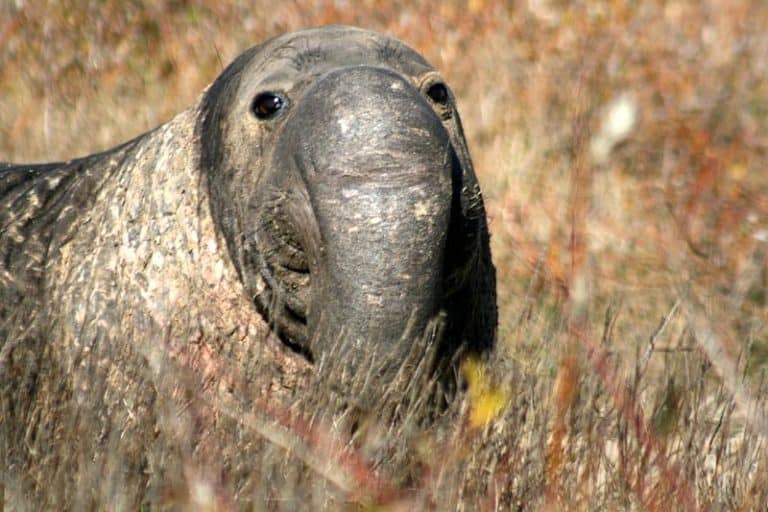
  • Adult males with an enlarged inflatable proboscis
  • True seals (no external ear flaps) with rear flippers adapted for swimming rather than land locomotion
  • Highly specialized deep-diving physiology; can spend long periods at sea between haul-outs
  • Breed in dense colonies with strongly polygynous mating system

Physical Measurements

Males and females differ in size

Length
9 ft 2 in (7 ft 7 in – 9 ft 10 in)
Weight
3.3 tons (1.7 tons – 4.4 tons)
1,213 lbs (661 lbs – 1,984 lbs)
Tail Length
5 in (4 in – 6 in)
Top Speed
12 mph
short burst swim speed

Appearance

Primary Colors
Secondary Colors
Skin Type Elephant seal (Mirounga) has mammal skin with thick blubber and short, coarse fur; adult males' head and neck look leathery from thick skin and heavy scars. They yearly shed outer hair and skin on land.
Distinctive Features
  • Genus scope: includes two species (northern elephant seal, Mirounga angustirostris; southern elephant seal, Mirounga leonina) with broadly similar body plan but different ocean basins and some size/breeding-timing differences.
  • Elephant seals (Mirounga) range about 2.5–6.0 m long and 300–4,000+ kg. Females are smallest (~2.5–3.6 m, 300–1,000 kg); southern males are largest (~4.5–6.0 m, 2,000–4,000+ kg). Northern males are slightly smaller.
  • Lifespan (range across genus): approximately ~9-23 years. Females commonly live longer than males; male lifespan is often shorter due to intense breeding competition and injury. Exact maxima vary by population and study.
  • Extreme deep divers: they make long dives to hundreds or over 1,000 m (sometimes 1,500–2,000+ m), lasting 20–60+ minutes (occasionally >90), using high blood volume, large oxygen stores (hemoglobin/myoglobin), and slow heart rate while diving.
  • Elephant seals (Mirounga) eat squid and fish in ocean mid-depths. Diet varies by region, season, age, and sex. Northern seals feed in the North Pacific; southern seals in Southern Ocean and subantarctic waters.
  • Haul-out behavior: strongly seasonally structured land periods for breeding and for an annual molt; adults often fast while ashore during these haul-outs, losing substantial body mass.
  • Breeding system: highly polygynous; dominant males defend access to groups of females (harems) on beaches/rookeries and engage in ritualized displays and violent combat; intensity and harem structure vary with colony density and local topography.
  • Mirounga: northern elephant seals breed on islands and beaches from Baja to California. Southern elephant seals breed on subantarctic/Antarctic and temperate Southern Ocean islands, coasts. Both make migrations between breeding/molting sites and feeding grounds.
  • Elephant seals faced heavy hunting in the past (especially northern elephant seals, later rebounding). Today threats include fishing bycatch, entanglement, haul-out disturbance, pollution, and climate and ocean changes.

Sexual Dimorphism

Very strong sexual dimorphism across the genus: adult males are several times heavier than adult females and have pronounced secondary sexual traits tied to breeding competition. Degree of dimorphism is extreme in both northern and southern elephant seals; southern males reach the largest absolute sizes within the genus.

  • Massive body size and thick neck/forequarters relative to females; overall more blocky profile.
  • Inflatable proboscis ("elephant" nose) that enlarges with age and is used for acoustic/visual displays; most conspicuous during the breeding season.
  • Thickened skin/dermal 'shield' on chest/neck region and extensive scarring from male-male combat (often prominent on face/neck).
  • Loud vocalizations and display postures; dominant males often show heavier scarring and more developed proboscis.
  • Much smaller, sleeker build with proportionally smaller head/neck; no enlarged proboscis.
  • Generally less scarred than adult males (though scars can occur), with a smoother head/neck profile.
  • Sex-specific foraging and migration patterns are common (degree varies by species and population), with females typically optimizing for repeated reproduction and lactation demands.

Did You Know?

They're the largest true seals (Phocidae): across the genus, adults range roughly ~2.4-6 m long and ~300-4,000 kg, depending on species and sex.

Adult males develop an inflatable proboscis ("elephant" nose) used to amplify calls and in dominance displays during breeding.

They fast on land for weeks to months during breeding and molting, living off blubber while defending territories or nursing pups.

Both species are champion divers: routine dives often hundreds of meters deep, with recorded dives reaching ~1,500-2,000+ m and lasting up to ~2 hours.

Northern elephant seals rebounded from near-extinction after 19th-century sealing; Southern elephant seals were also heavily exploited but persisted at multiple subantarctic sites.

Pups are born with a dark natal coat and gain weight rapidly on extremely rich milk; weaned pups then endure a post-weaning fast before heading to sea.

They spend the vast majority of the year at sea, returning to land mainly for breeding and their catastrophic (whole-coat) molt.

Unique Adaptations

  • Diving physiology: large blood volume and high oxygen stores in blood and muscle (myoglobin), plus the ability to slow heart rate (bradycardia) during dives.
  • Lung and chest adaptations that help manage pressure and reduce nitrogen uptake risk-supporting very deep, repeated dives.
  • Thick blubber for insulation, energy storage, and fasting endurance-critical during multi-week land stays.
  • Proboscis in adult males (genus hallmark): inflatable nasal structure that boosts vocal resonance and serves as a visual signal in dominance contests.
  • Efficient heat management: shifting blood flow and postures on land to balance overheating vs conserving warmth in cold water.
  • A "catastrophic" molt: they shed and regrow fur and outer skin layers during a concentrated haul-out, reducing time vulnerable on shore.

Interesting Behaviors

  • Extreme sexual dimorphism and harem breeding: males compete for access to many females; the intensity and outcome of fights vary by colony density and individual size/age.
  • Breeding on land with prolonged fasting: dominant males may fast while patrolling and fighting; females fast while nursing, then abruptly wean and depart to forage.
  • Two main annual haul-outs shared across the genus-breeding season and a separate molting haul-out-timing differs between the Northern vs Southern species and by region.
  • Long-distance foraging migrations: individuals travel thousands of kilometers between haul-outs and feeding areas; routes differ (North Pacific pelagic/mesopelagic zones vs Southern Ocean fronts and subantarctic waters).
  • Deep, repetitive dive cycles: long descents/ascents and brief surface intervals; dive depth and diet vary with sex, age, and oceanographic conditions.
  • Strong site fidelity: many return to the same beaches/islands to breed and molt, though dispersal and new colony formation can occur.

Cultural Significance

Elephant seals (Mirounga) are key marine mammals at rookeries like California and subantarctic islands. Once hunted for oil, they recovered in protected areas. They show ocean health, migration, and threats like entanglement, fishing, disturbance, and warming oceans.

Myths & Legends

Seal-person tales in Scotland, Orkney, Shetland and Ireland are about seal-people who shed skins to become human. If a person hides a skin, the seal-person must stay on land and longs for the sea.

In Inuit and Arctic tales, a sea woman explains how marine animals began and can bless or punish, making seals and sea life plenty or scarce; hunters must honor her with rituals and respect.

Pacific Northwest Indigenous coastal stories (told about "seals" broadly, predating modern species labels): narratives in which seals appear as helpers, spouses, or transformed beings, reflecting the close relationship between coastal peoples and marine life.

Early explorer and whaler naming lore: the "elephant" comparison entered common use because adult males' enlarged noses recalled an elephant's trunk-an example of how striking anatomy shaped maritime storytelling and popular names.

Conservation Status

LC Least Concern (both extant Mirounga species-M. angustirostris and M. leonina-are currently assessed as Least Concern; the genus itself is not typically assessed as a single unit).

Widespread and abundant in the wild.

Population Unknown

Protected Under

  • United States: Marine Mammal Protection Act (MMPA) protections for northern elephant seals in U.S. waters and at rookeries
  • Mexico and other range states: national marine mammal protections varying by jurisdiction for northern elephant seals
  • Antarctic/subantarctic management: Convention for the Conservation of Antarctic Seals (CCAS) framework (relevant to southern elephant seals) and Antarctic Treaty System conservation measures
  • Widespread site-based protection: many major rookeries/haul-outs occur within reserves or protected areas (e.g., subantarctic island nature reserves; protected coastal sites in the NE Pacific)

You might be looking for:

Northern elephant seal

50%

Mirounga angustirostris

Elephant seal of the North Pacific; breeds mainly on coastal islands and beaches of western North America.

Southern elephant seal

50%

Mirounga leonina

Elephant seal of the Southern Ocean; breeds on subantarctic islands and some southern continental coasts.

Life Cycle

Birth 1 pup
Lifespan 15 years

Lifespan

In the Wild
9–23 years
In Captivity
10–25 years

Reproduction

Mating System Polygyny
Social Structure Harem Based
Breeding Pattern Seasonal
Fertilization Internal Fertilization
Birth Type Internal_fertilization

Mirounga (northern and southern elephant seals) breed each year on dense rookeries. Males are much larger and fight; polygyny with harem "beachmasters" gains most matings. Females care for pups alone; delayed implantation occurs.

Behavior & Ecology

Social Colony Group: 200
Activity Cathemeral
Diet Carnivore Cephalopods (especially squid), with fish forming a major co-dominant component across the genus
Seasonal Migratory 1,243 mi

Temperament

At sea: largely non-social/independent; interactions are usually brief and context-specific (e.g., passing encounters, occasional competition).
On land during breeding: highly competitive and dominance-driven, especially among adult males; aggression and ritualized conflict are common around harems.
Seasonally flexible: behavior shifts strongly between solitary foraging phases and densely aggregated haul-out phases (breeding and molting).
Sex- and age-biased risk/behavior: males tend to engage in more frequent and intense physical conflict during breeding; females show strong maternal investment and protective behavior while nursing.
Genus-wide longevity spans roughly the low-teens to a bit over two decades (shorter average male lifespan, longer-lived females), varying by species, population, and survivorship conditions.

Communication

Deep roars/bellows Especially adult males during dominance displays and contests
Grunts, snorts, and rhythmic threat calls at close range
Mother-pup calls used for recognition and reunions in crowded colonies
Distress calls from pups and subadults
Visual displays: body elevation, head/neck postures, open-mouth threats, and (in males) proboscis inflation to enhance signal size
Physical contests: lunging, biting, neck-to-neck shoving, and displacement behavior; intensity varies with rank and crowding
Spatial signaling: occupying and defending positions within the breeding area Dominant males maintain proximity to females
Tactile interactions: brief contact between mothers and pups; physical enforcement of dominance by males
Chemical cues likely contribute to individual/colony recognition (e.g., scent associated with skin/secretions and substrate), though reliance varies by context

Habitat

Coastal Beach Rocky Shore Open Ocean Deep Sea Seabed/Benthic Kelp Forest Estuary Tundra +3
Biomes:
Marine Tundra Mediterranean Temperate Forest Temperate Rainforest Boreal Forest (Taiga)
Terrain:
Coastal Island Sandy Rocky Muddy
Elevation: -78740 in – 164 ft 1 in

Ecological Role

Large marine mesopredators/upper-level predators linking pelagic and benthic food webs across vast ocean regions

Regulation of mid-trophic prey populations (fish and cephalopods) across offshore and shelf ecosystems Energy and nutrient transport via long-distance migrations and localized deposition (feces/urine) at haul-outs and breeding colonies Coupling of deep scattering layer/bathypelagic production to surface and coastal ecosystems through deep foraging and return migrations Provision of prey biomass to higher predators (e.g., large sharks and killer whales), helping structure marine predator-prey networks

Diet Details

Main Prey:
Cephalopods Fish Elasmobranchs Crustaceans

Human Interaction

Domestication Status

Wild

Elephant seals (genus Mirounga) are wild mammals and are not domesticated. They were hunted for blubber and hides, causing big population drops; northern elephant seals had a severe bottleneck. Now many countries protect them, and handling is for rescue, research, or approved zoos. Today threats include disturbance at haul-out sites, entanglement, ship strikes, and pollution.

Danger Level

High
  • Severe bite injuries (large canines; risk increases if animals are approached/harassed, especially near pups or dominant males)
  • Crushing/trauma from lunging or rapid movement on land (very large body mass; can accelerate surprisingly fast over short distances)
  • Aggression during breeding season (male-male conflict zones can endanger nearby people)
  • Zoonotic and wound-infection risk from bites/saliva (general marine mammal pathogen exposure risk)
  • Indirect risks at haul-outs (crowding, people blocking escape routes, dogs provoking animals, etc.)

As a Pet

Not Suitable as Pet

Legality: Usually illegal or very restricted to keep as a pet. Elephant seals (Mirounga) are protected by marine mammal laws. Handling needs government permits for rehab, research, or accredited facilities; public harassment is banned.

Care Level: Expert Only

Purchase Cost:
Lifetime Cost: $1,000,000 - $10,000,000

Economic Value

Uses:
Ecotourism/wildlife viewing Scientific research (including oceanographic data collection via tagging) Education and conservation outreach Historical extractive use
Products:
  • Historically: blubber/oil and hides/leather (commercial sealing; now largely prohibited)
  • Modern: non-consumptive value via tourism and research services/data (no typical legal commodity product)

Relationships

Ecological Equivalents 4

Animals that fill a similar ecological role in their ecosystem

California sea lion Zalophus californianus Large pinniped marine predator that uses coastal haul-outs and rookeries. Overlaps with northern elephant seals in parts of the northeastern Pacific but differs by having external ears and generally shallower diving and foraging.
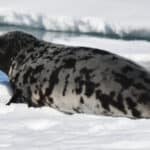
Hooded seal
Hooded seal Cystophora cristata Another highly pelagic, deep‑diving phocid that targets fish and squid and makes long foraging trips; exhibits convergent diving physiology and an offshore lifestyle.
Weddell seal Leptonychotes weddellii A Southern Ocean deep-diving phocid that shares cold-water adaptations and high-performance diving, although Weddell seals are more ice-associated and often forage nearer the continental shelf.
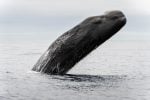
Sperm whale
Sperm whale Physeter macrocephalus Occupies a broadly similar deep-ocean squid-predator niche, foraging in meso- to bathypelagic zones; not a close relative, but overlaps in prey types and extreme diving capacity (sperm whales typically dive deeper and longer than elephant seals).

Types of Elephant Seal

2

Explore 2 recognized types of elephant seal

Northern elephant seal Mirounga angustirostris
Southern elephant seal Mirounga leonina

Elephant seals can dive more than 5,000 feet into the ocean and can hold their breath for two hours.

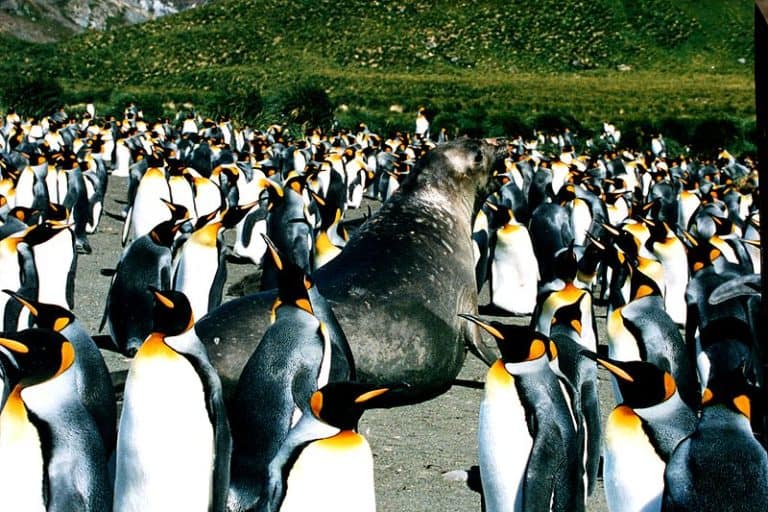
The trunk-like nose of this seal makes it easy to see how it got its name. The average lifespan of a northern elephant seal is nine years while an elephant seal living in the Antarctic region can live from 20 to 22 years. Male seals can weigh up to 4.5 tons. They are carnivores living on a diet of squid, fish, rays, penguins, and some small species of sharks.
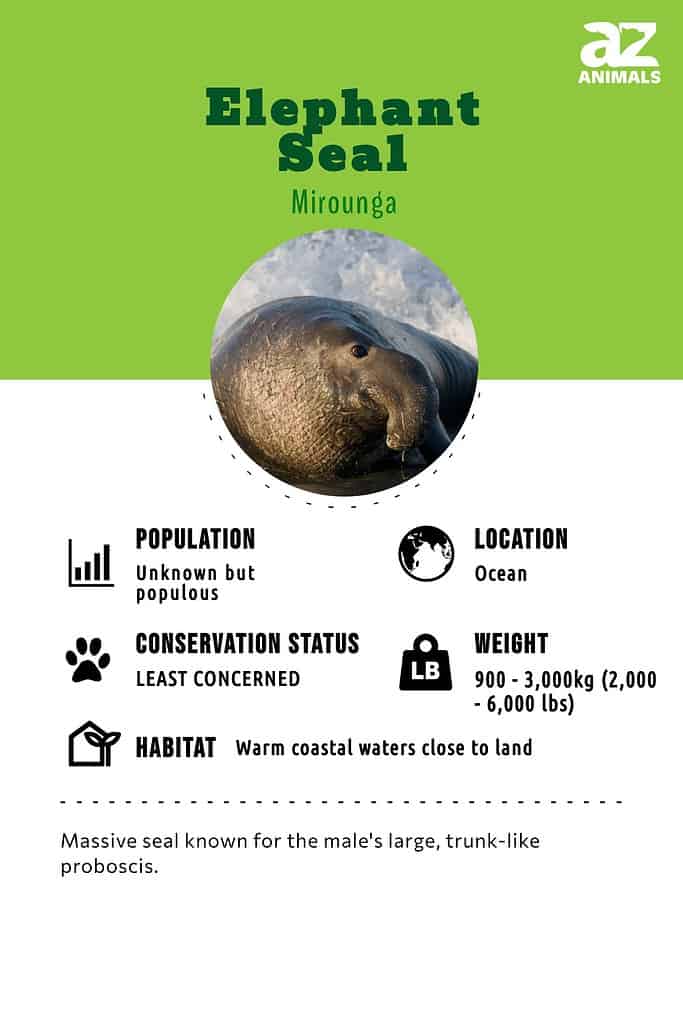
5 Elephant Seal Facts

• These seals spend approximately nine months of the year in the water.
• They are excellent swimmers but move awkwardly while on land.
• Male elephant seals are called bulls.
• These seals were hunted in the 19th century until they were almost extinct.
• An elephant seal becomes an adult at three years of age.
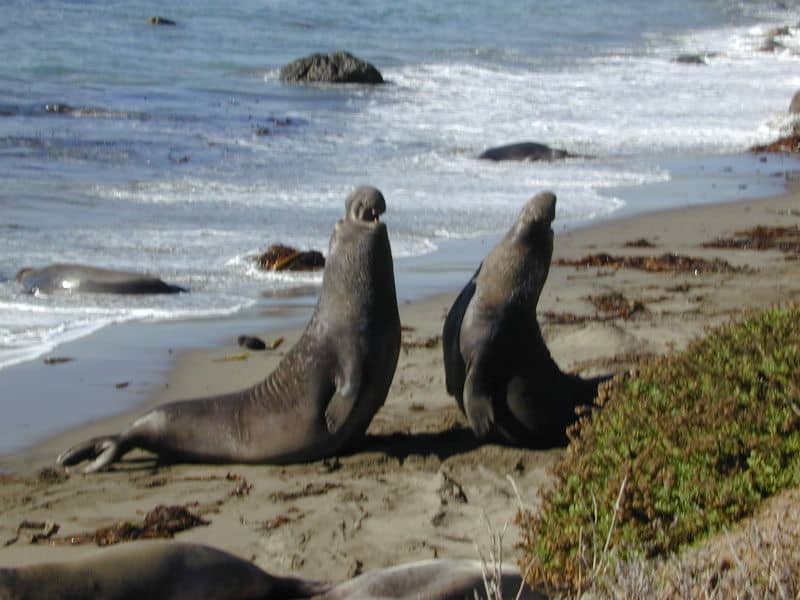
Two Elephant seals at Point Piedras Blancas, California

Northern elephant seals can be seen in California, Mexico the Aleutian Islands, and the Gulf of Alaska.

Scientific Name and Species

The scientific name for these seals is Mirounga. Mirounga, or ‘miouroung,’ is an Australian aboriginal word meaning seal. The elephant seal belongs to the Phocidae family and the class Mammalia.

There are two species of elephant seal:

  • Northern Elephant Seals (Mirounga angustirostris), can be found in the North Pacific near Baja California, Mexico, the Aleutian Islands, and the Gulf of Alaska.
  • Southern Elephant Seals (Mirounga leonina), can be found in sub-Antarctic and Antarctic waters.
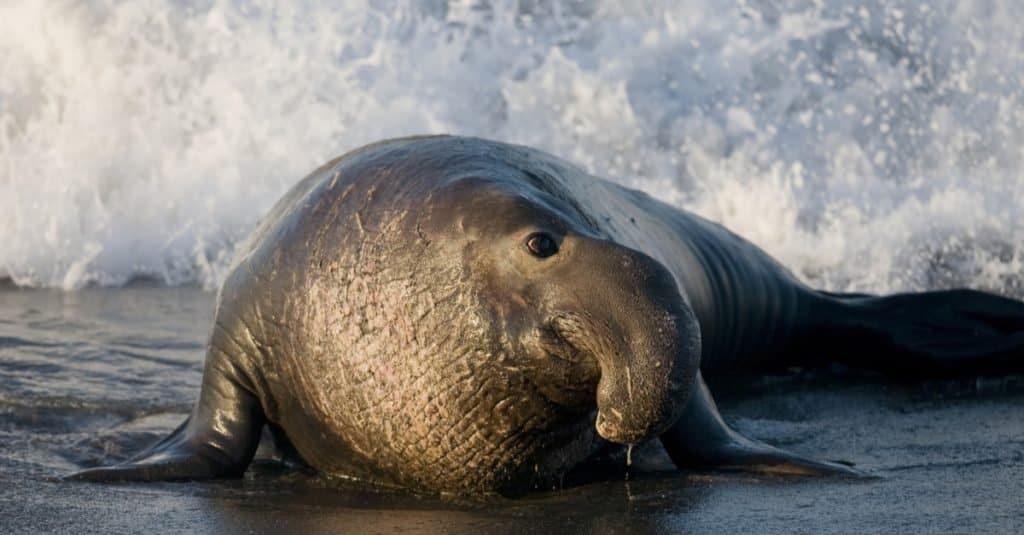
walrus vs elephant seal

Elephant Seals are pinnipeds that are believed to have evolved from land mammals like otters.

Evolution

Information about the evolution of elephant seals is spotty, however, they are pinnipeds, or, marine animals with flippers. Pinnipeds are believed to have evolved from land animals like otters or bears. (The skulls of elephant seals are very similar to the skulls of bears.) According to fossil records, pinnipeds appeared in the oceans around 25 million years ago – about 25 million years after the appearance of whales. The early pinnipeds dwelled in shallow waters and had well-developed flippers and teeth that indicate that they chewed their food like land animals. Elephant seals have since evolved to swallow food whole.

Appearance and Behavior
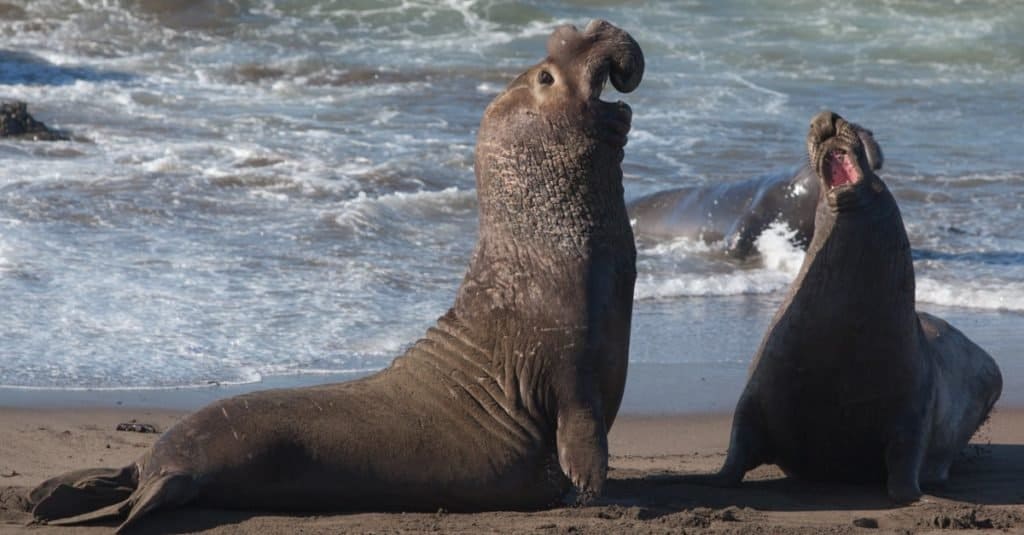
Loudest Animals: Northern Elephant Seal

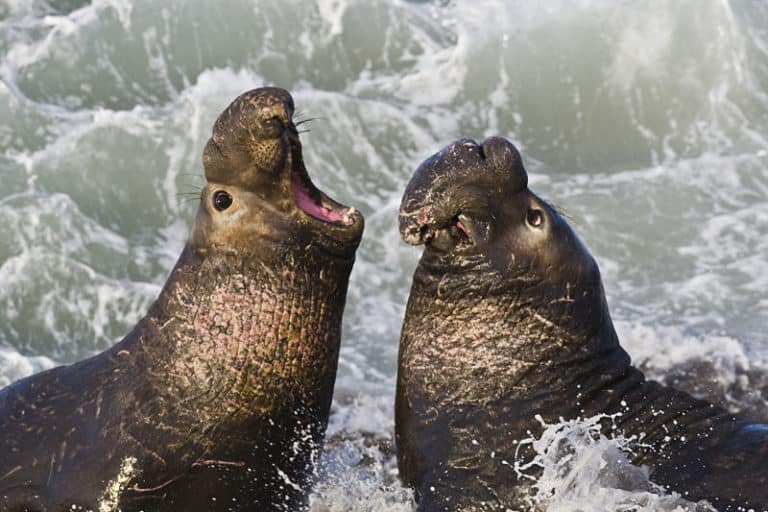
Male elephant seals fight during mating season.

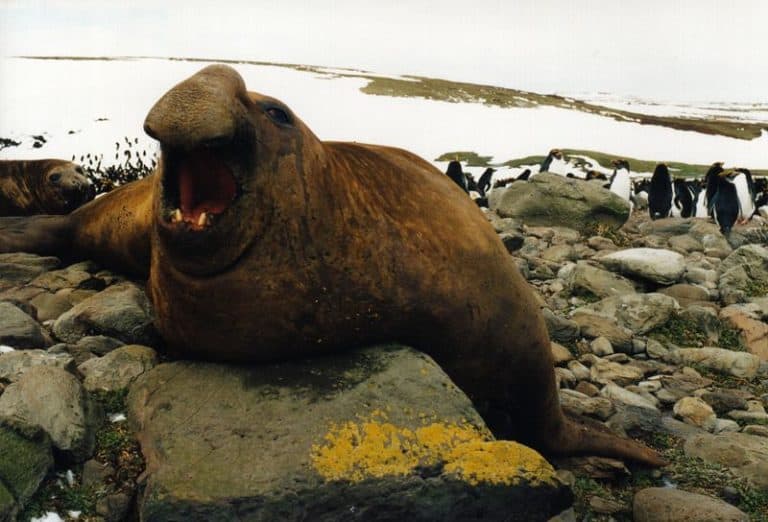
These seals are covered in a layer of light or dark tan or grayish fur. While male seals have a large trunk-like nose, also called a proboscis, female seals have a nose that’s normal in size. These seals have large, round faces, dark eyes, and whiskers.

Its two short front flippers have nails on the ends that look like long, dark fingernails. Its back flippers are webbed, making this creature one of the most expert swimmers in the ocean!

Male seals are much larger than females. A male northern elephant seal can weigh as much as 4,400 pounds and grow to over 13 feet in length. A female weighs around 1,300 pounds and grows to be about 10 feet long. Alternatively, a male southern elephant seal weighs around 11,000 pounds and grows to be about 16 feet in length! A female seal of this species weighs around 2,000 pounds and grows to be about 10 feet long.

For reference, a male seal weighing 4,400 pounds weighs about the same as a rhinoceros, while a female that weighs 2,000 pounds is equal in weight to two grand pianos. It’s no wonder why most animals steer clear of these seals!

Looking at the length of these seals, a ten-foot elephant seal is equal in size to half of an adult giraffe. A 16-foot-long seal is equal in length to two full-sized Christmas trees. A giant male elephant seal holds the record as the longest – measuring almost 22 feet!
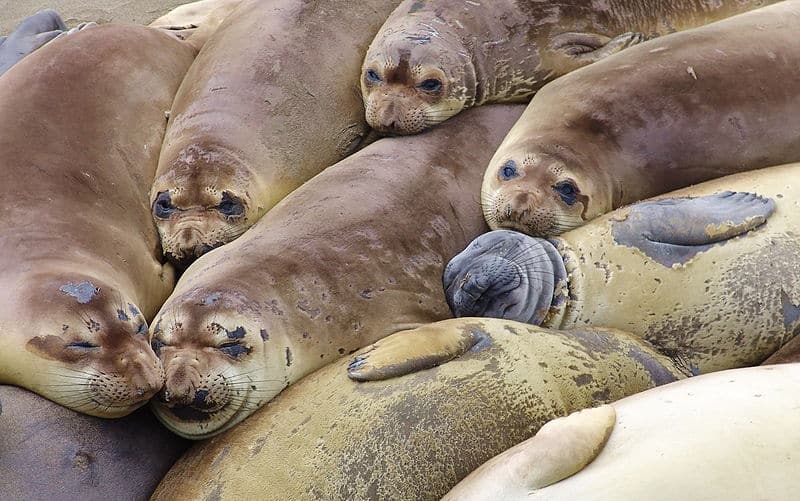
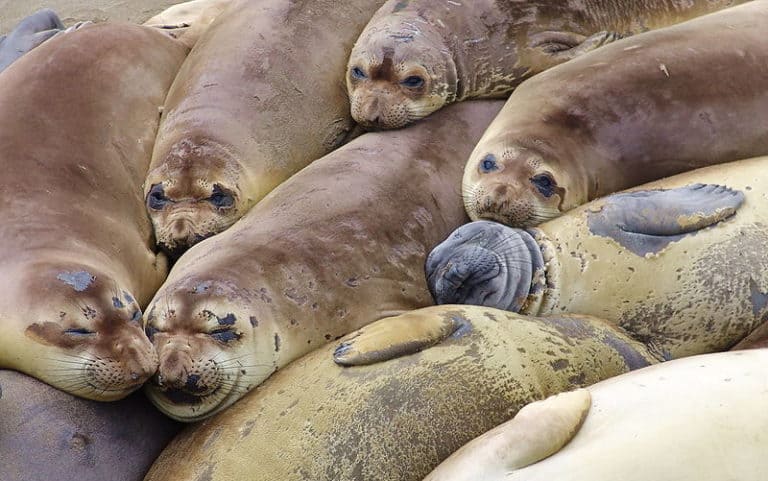
Elephant seal colony

Female elephant seals are much smaller than males and more social.


The short front flippers and hind flippers of this seal all have a specific purpose. Its front flippers help these seals to change direction when swimming while their webbed hind flippers move them forward through the ocean. When on land, these seals use their front flippers to rock themselves forward while dragging their hind flippers. It’s not hard to see why this seal prefers to be in the water!

Elephant seals are both solitary and social. When they are swimming in the ocean they are solitary. But, when they return to the land and join the rookery during breeding season they become social. A group of seals has many names including a herd, a bob, a colony, or a harem (females only).

Elephant seals are extremely territorial and can be very aggressive when defending their area of shore. A male seal gathers 40 to 50 female seals, or a harem, to stay within his territory. If one male tries to invade another’s territory, it can result in a bloody, violent fight as the territory is defended. It’s also very noisy. Male seals make deep, echoing sounds similar to drum beats as they fight with another male.
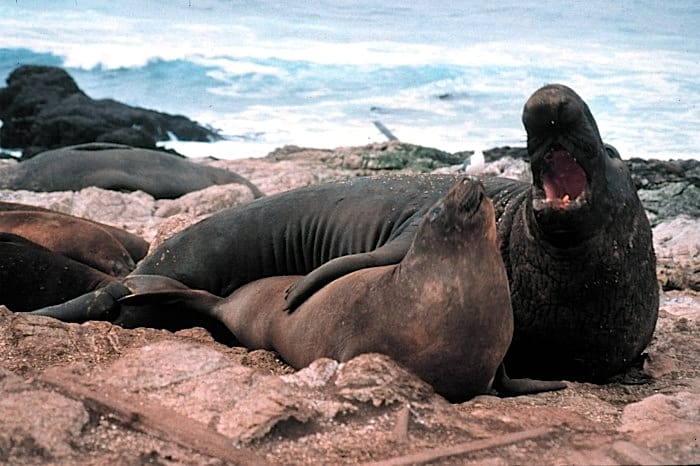
elephant seal (Mirounga angustirostris) two elephant seals
A male elephant seal can have as many as 50 females in his harem.

Habitat

Northern elephant seals live in the North Pacific near Baja California, Mexico to the Aleutian Islands and the Gulf of Alaska. Southern elephant seals live in the sub-Antarctic and Antarctic waters.

These seals migrate to the ocean spending several months hunting for food. Marine biologists have found male seals follow a similar path as they migrate while female seals choose different routes to travel in the ocean. In mid-December, these seals return to land to breed, heading back out to the ocean at the end of March.

The thick layers of fat on these seals keep them warm as they swim through the frigid waters of the ocean. Plus, they have specially developed lungs that deflate as they dive deeply into the ocean for food and refill with air when they resurface.

Diet
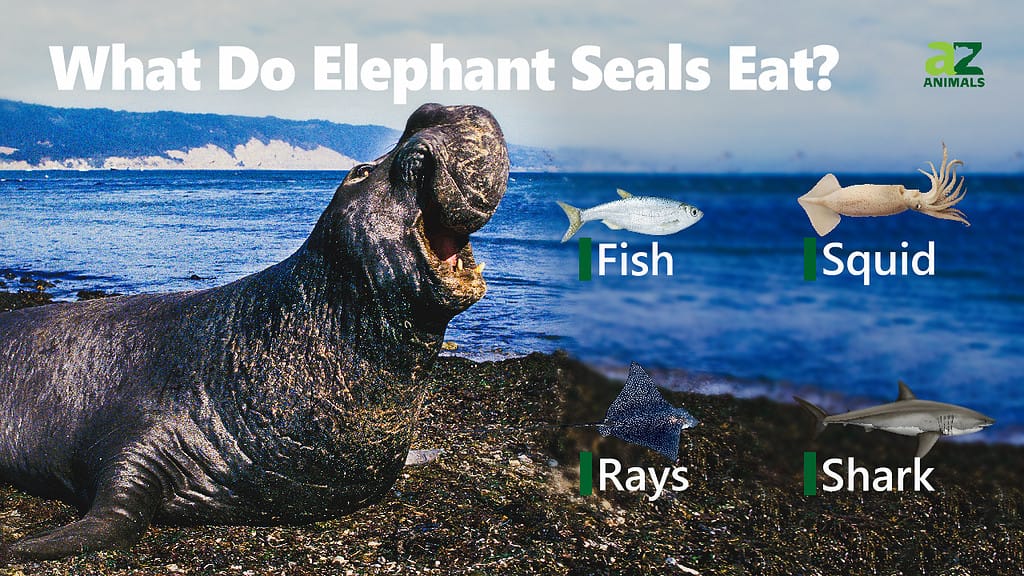
What do elephant seals eat? Squids, rays, penguins, small sharks, crabs, and fish are all on the menu of these carnivores. During their nine months or so spent in the ocean, they are rarely seen at the surface of the water. They are either swimming just beneath the surface or diving into the depths in search of food. These seals add a lot of fat to their bodies during these months. Once the mating season begins, they begin a fasting period (they don’t eat).

Predators and Threats
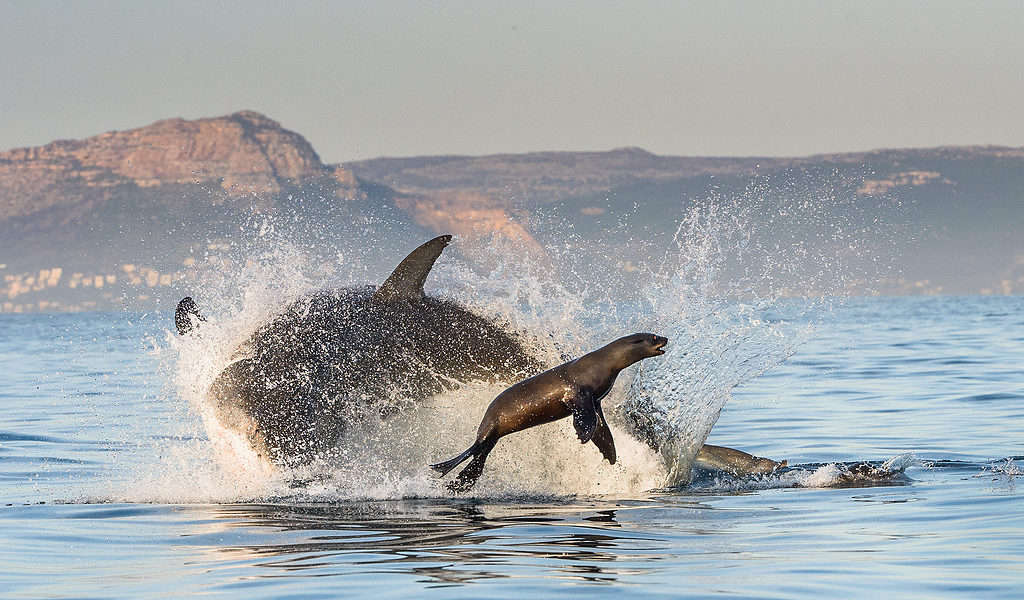
Great White Shark (Carcharodon carcharias) breaching in an attack. Hunting of a Great White Shark (Carcharodon carcharias). South Africa

Great white sharks prey on elephant seals.

Great white sharks and killer whales are two predators of these seals. They are so large, they have very few predators in the ocean.

However, the fishing activities of humans can be a threat to these seals. They sometimes become tangled in large commercial fishing nets leading to great injury or death. Also, these seals are sometimes hit by large ships and other ocean vessels which can result in their death.

Environmental events, such as hurricanes and tropical storms, can reduce the population of elephant seals. Seal pups that are not yet strong swimmers can be swept up and killed in these weather events.

At one time, these seals were hunted by poachers for the oil in their blubber. Now, they have legal protection against poaching activities. The conservation status of elephant seals, according to the International Union for the Conservation of Nature (IUCN), is the least concern.

Reproduction, Babies, and Lifespan
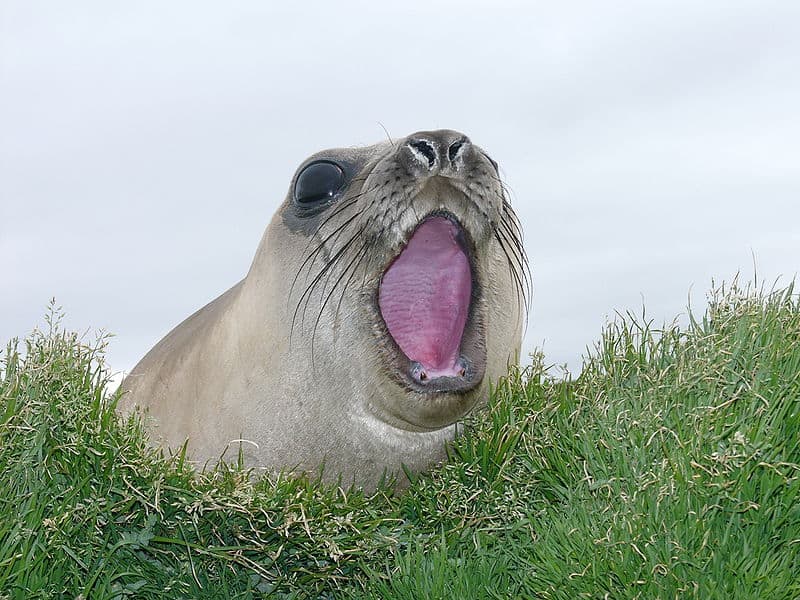
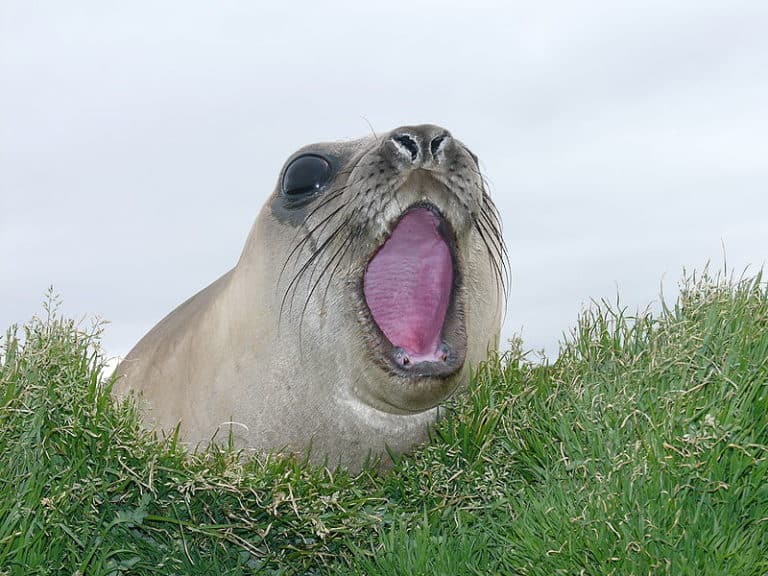
Female Elephant seal (Mirounga leonina), on Kerguelen Island

Female elephant seals live in the ocean while pregnant and come to shore to give birth and care for their baby for one month.

Mating season begins in December for elephant seals. They come out of the ocean and settle onshore. The male seal elephants also called bulls, arrive at the rookery before the females. Male seals fight with one another for territory and dominance. A male seal raises the top half of its body, sometimes allowing it to stand six feet tall. Two male seals hit each other with their elephant-like noses, bite, and push each other until one gives up or is so injured it can’t continue. This is a noisy, dangerous encounter!

Once the dominant male seals establish their territory, the female seals arrive from the ocean. A male seal has 40 to 50 females in his territory. A group of females is called a harem. The male mates with most of the females in the harem.

The gestation period of a female elephant seal is 11 months. Once a female seal becomes pregnant, she returns to the ocean. She’ll later come back to shore and give live birth to one baby, also called a pup. A newborn seal pup weighs around 75 pounds and is covered in black fur. The pup is able to see, hear, and move right from birth.

A mother seal nurses her pup for one month, then it begins to eat solid food. The mother leaves her pup after just one month and breeds with a male before leaving the rookery to return to the ocean. A month-old elephant seal pup must learn and practice its swimming and hunting skills on its own.

The average lifespan of a northern elephant seal is nine years, while the lifespan of a southern elephant seal ranges from 20 to 22 years. Female seals usually live longer than male seals because male seals must fight for territory and sometimes receive life-shortening injuries. These seals are also vulnerable to a variety of skin diseases.
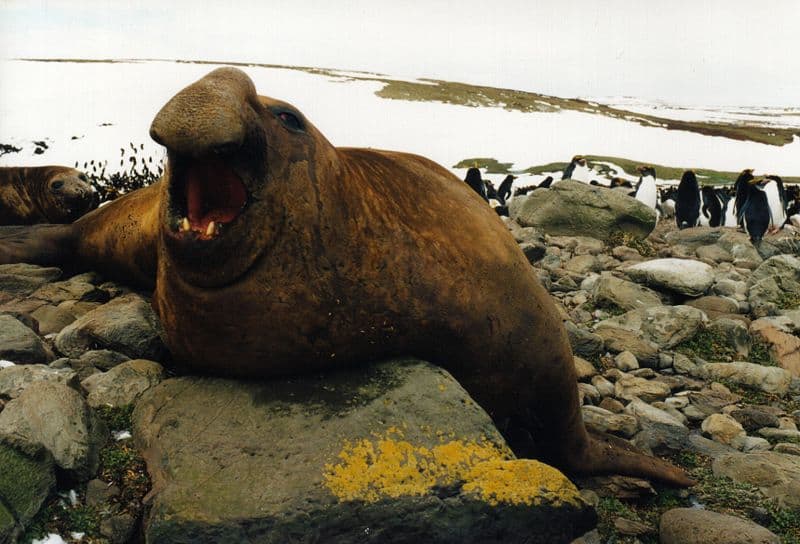
Male southern elephant-seal (Mirounga leonina) on northern shore of Kerguelen Islands

Southern elephant seal populations are three times that of the northern species.

Population

The population of northern elephant seals is believed to be around 127,000. There are 26,000 living near the Mexican coast, while the remainder lives off the coast of California. There are approximately 650,000 southern elephant seals in existence.

The population of these seals is either stable or increasing. That’s good news, considering they almost became extinct in the 19th century due to poaching activity. Today, the conservation status of both species is the least concern.

View all 185 animals that start with E

Sources

  1. David Burnie, Dorling Kindersley (2011) Animal, The Definitive Visual Guide To The World's Wildlife / Accessed December 15, 2008
  2. Tom Jackson, Lorenz Books (2007) The World Encyclopedia Of Animals / Accessed December 15, 2008
  3. David Burnie, Kingfisher (2011) The Kingfisher Animal Encyclopedia / Accessed December 15, 2008
  4. Richard Mackay, University of California Press (2009) The Atlas Of Endangered Species / Accessed December 15, 2008
  5. David Burnie, Dorling Kindersley (2008) Illustrated Encyclopedia Of Animals / Accessed December 15, 2008
  6. Dorling Kindersley (2006) Dorling Kindersley Encyclopedia Of Animals / Accessed December 15, 2008
  7. David W. Macdonald, Oxford University Press (2010) The Encyclopedia Of Mammals / Accessed December 15, 2008
Lisha Pace

About the Author

Lisha Pace

After a career of working to provide opportunities for local communities to experience and create art, I am enjoying having time to write about two of my favorite things - nature and animals. Half of my life is spent outdoors, usually with my husband and sweet little fourteen year old dog. We love to take walks by the lake and take photos of the animals we meet including: otters, ospreys, Canadian geese, ducks and nesting bald eagles. I also enjoy reading, discovering books to add to my library, collecting and playing vinyl, and listening to my son's music.

Thank you for reading! Have some feedback for us?


Elephant Seal FAQs (Frequently Asked Questions)

A male elephant seal from the north can be as large as 13 feet long and weigh 4,400 pounds. A male southern elephant seal grows to about 16 feet and can weigh up to 11,000 pounds.

A female elephant seal living in the north is about 10 feet long and weighs around 1,300 pounds. A female elephant seal living in the Antarctic region can be as long as 10 feet and weigh around 2,000 pounds.