




E
Species Profile

Emperor Tamarin

Saguinus imperator

The rainforest monkey with a moustache
Brocken Inaglory / Creative Commons

Emperor Tamarin Distribution

Click a location to explore more animals from that region

Loading map...
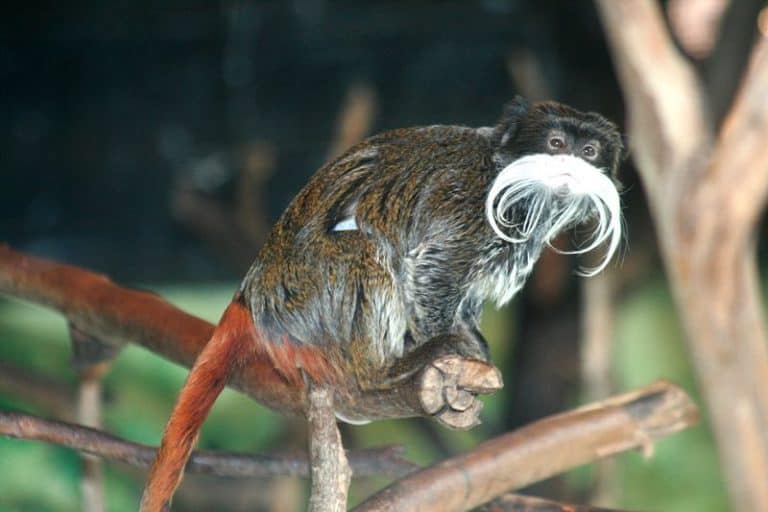
Emperor tamarin in a tree

At a Glance

Wild Species
Also Known As Emperor marmoset, tamarin, tamarin monkey, tamarino emperador
Diet Omnivore
Activity Diurnal
Lifespan 12 years
Weight 0.6 lbs
Status Least Concern
Did You Know?

Its signature long, white, drooping "moustache" is unique among tamarins and inspired its common name.

Scientific Classification

The emperor tamarin is a small New World monkey (a callitrichid) known for its long, white, drooping moustache. It is an arboreal, social primate that lives in cooperative groups and forages for fruit, insects, and tree exudates.

Kingdom
Animalia
Phylum
Chordata
Class
Mammalia
Order
Primates
Family
Callitrichidae
Genus
Saguinus
Species
imperator

Distinguishing Features

  • Very prominent long white moustache extending beyond the mouth corners
  • Small-bodied callitrichid (tamarin) with claw-like nails (tegulae) on most digits
  • Arboreal, fast-moving, group-living primate with cooperative infant care

Physical Measurements

Length
2 ft 1 in (1 ft 11 in – 2 ft 2 in)
Weight
1 lbs (1 lbs – 1 lbs)
Tail Length
1 ft 3 in (1 ft 2 in – 1 ft 4 in)

Appearance

Primary Colors
Secondary Colors
Skin Type Dense, fine mammalian fur over most of body; small areas of bare, dark facial/ear skin. Hands/feet have claw-like nails (tegulae) typical of callitrichids, aiding vertical clinging on trunks and large branches.
Distinctive Features
  • Long, white, drooping moustache hair extending well beyond the mouth corners-signature feature of the species (commonly emphasized in IUCN and primate field references).
  • Small-bodied New World callitrichid with elongated, non-prehensile tail used for balance during arboreal running and leaping.
  • Grizzled gray dorsal pelage with darker limbs and tail, creating high contrast with the white moustache.
  • Claw-like nails (tegulae) on most digits (rather than flat nails), supporting bark-clinging and foraging on trunks/vines for insects and exudates.
  • Arboreal, Amazon-forest adapted build: lightweight frame and long tail suited to moving along branches and lianas in canopy/understory.
  • Typical adult size metrics reported for the species: head-body length about 23-26 cm; tail length about 35-41 cm; body mass about 0.5 kg (reported in standard species accounts; individual variation occurs).
  • Life history commonly reported: cooperative breeding in social groups with extensive alloparental care; diet mix emphasizing fruit + insects + plant exudates (gums/sap), consistent with callitrichid foraging ecology in Amazonian habitats (IUCN/behavioral summaries).
  • Longevity reported in captivity commonly reaches ~15-16 years in callitrichids including Saguinus imperator (husbandry/compiled primate references); wild lifespans are typically shorter due to predation and disease.

Did You Know?

Its signature long, white, drooping "moustache" is unique among tamarins and inspired its common name.

Adult size is tiny: head-body length ~23-26 cm, with a longer tail ~35-41 cm used for balance (not grasping).

Adults typically weigh about 0.42-0.61 kg (reported adult mass range in major primate references/IUCN accounts).

Like many callitrichids, births are usually twins, and fathers/helpers do most infant carrying in cooperative care systems.

It often forages in the mid-to-upper canopy, running along vines and thin branches where heavier monkeys can't easily go.

Emperor tamarins can form mixed-species troops-most famously with saddleback tamarins-gaining extra vigilance while foraging.

Unique Adaptations

  • Claw-like nails on most digits (a callitrichid hallmark) improve grip on vertical supports and thin branches during rapid, squirrel-like climbing.
  • Small body mass (≈0.4-0.6 kg) allows access to terminal branches and vine networks where fruits and insects are abundant.
  • Specialized incisors for a flexible diet: while tamarins are less specialized gougers than marmosets, emperor tamarins can exploit tree exudates (gums/saps), often from naturally oozing sites or holes made by other animals.
  • High-contrast facial hair: the long white moustache likely supports individual recognition and social signaling at close range in dim forest light.
  • Long tail (often ~1.5× head-body length) acts as a dynamic counterbalance for fast canopy running and leaps (tamarin tails are not prehensile).

Interesting Behaviors

  • Cooperative breeding: typically a single dominant breeding female, with multiple adult helpers (often males and older siblings) providing infant carrying and food sharing.
  • Mixed-species association: frequently travels and forages alongside saddleback tamarins (Saguinus fuscicollis complex) to increase predator detection and expand foraging efficiency.
  • Scent marking: uses specialized scent glands (including anogenital/suprapubic regions typical of callitrichids) to mark routes, resources, and social status; scent cues help coordinate group spacing.
  • Arboreal "traplining": revisits productive feeding sites (fruiting trees, insect-rich patches, exudate sources) on repeatable daily paths through the canopy.
  • Insect-gleaning: actively searches curled leaves, bark crevices, and epiphytes for arthropods; quick pounces and short lunges are common during prey capture.
  • Contact calling and cohesion: frequent soft calls keep widely spaced foragers connected in dense rainforest vegetation; louder alarm calls mobilize group responses to raptors and other predators.

Cultural Significance

The emperor tamarin is a charismatic "flagship" primate of the southwestern Amazon (Brazil-Peru-Bolivia). Its distinctive moustache makes it a recognizable symbol in wildlife education and ecotourism, and it is frequently used to draw attention to Amazon rainforest conservation and the ecological importance of small-bodied, cooperative-breeding primates (callitrichids).

Myths & Legends

Naming story (Europe, early 1900s): the Emperor Tamarin (Saguinus imperator) got its common name because people thought its long white mustache looked like Emperor Wilhelm II's, showing history and fashion shaped animal names.

Naturalist-era lore (museum/collector tradition): early collectors and zoologists popularized the image of a 'dignified little emperor of the forest'-a recurring storytelling motif in field notes and popular animal books that emphasized its moustached 'royal' look.

In Amazon tours, guides call the Emperor Tamarin (Saguinus imperator) the 'moustached guardian' of the canopy, a memorable figure used to teach visitors about family cooperation and rainforest food webs.

Conservation Status

LC Least Concern (IUCN Red List assessment for Saguinus imperator)

Widespread and abundant in the wild.

Population Decreasing

Protected Under

  • CITES Appendix II (genus Saguinus/callitrichids are listed; international commercial trade is regulated).
  • Occurs in multiple protected areas across its tri-national range (Peru-Brazil-Bolivia), including large Amazonian forest reserves/national parks in Madre de Dios (Peru), Acre (Brazil), and Pando (Bolivia); site coverage varies by locality and subspecies occurrence.
  • HUBS (Callitrichidae / tamarins & marmosets) conservation landscape: statuses range from Least Concern to Endangered/Critically Endangered in the family; the most pervasive threats are habitat_loss from agricultural_expansion/logging/infrastructure, plus localized hunting and wildlife_trade. Notable at-risk callitrichids include several Atlantic Forest marmosets (e.g., buffy-headed marmoset Callithrix flaviceps) and narrowly distributed tamarins (e.g., some Leontocebus/Saguinus taxa with small ranges impacted by rapid deforestation).

Life Cycle

Birth 2 infants
Lifespan 12 years

Lifespan

In the Wild
8–15 years
In Captivity
12–20 years

Reproduction

Mating System Polyandry
Social Structure Cooperative Breeder
Breeding Pattern Long Term
Fertilization Internal Fertilization
Birth Type Internal_fertilization

Emperor tamarins (Saguinus imperator) live in stable, cooperative groups where one dominant female usually breeds. One to several males may mate and help care, often raising twins after a ~140–145 day pregnancy. Helpers carry, groom, feed; lower-ranking females are often kept from breeding.

Behavior & Ecology

Social Troop Group: 6
Activity Diurnal
Diet Omnivore Ripe, sugary fruits (often including figs, Ficus spp.)

Temperament

Highly social and cooperative (routine allogrooming and frequent proximity/coordination during foraging); strong helper contributions to infant care typical of callitrichids (summarized in IUCN species account and callitrichid behavioral literature).
Generally tolerant within the group but can show marked agonism toward outsiders; intergroup encounters commonly involve vocal exchanges, chasing, and avoidance/defense behaviors typical of Saguinus territoriality.
Vigilant and wary: frequent scanning and rapid alarm responses during foraging in the mid-to-lower canopy; antipredator behavior includes freezing, rapid retreat, and alarm calling.
Opportunistic, exploratory foragers (fruit/insects/exudates), with rapid patch switching; individuals may show boldness differences by age/sex (helpers often take higher-risk positions during infant care and vigilance).

Communication

Long-distance contact/spacing calls used for group cohesion and intergroup spacing Species accounts for Saguinus imperator; callitrichid comparative work
High-pitched alarm calls that differ with threat context (aerial vs terrestrial predator types), consistent with callitrichid alarm-call systems described across Saguinus.
Soft close-range contact calls (chirps/trills/twitters) during coordinated movement and foraging, especially when visually occluded in dense canopy.
Infant distress calls that elicit rapid approach/carrying/soothing and food-sharing responses from multiple group members Cooperative-care context
Scent marking via specialized glands E.g., anogenital/suprapubic depending on individual/sex) and urine marking; used in territorial advertisement and social status signaling (callitrichid-wide; referenced in Saguinus behavioral syntheses and IUCN summaries
Visual displays including piloerection, body postures, and branch shaking during arousal and intergroup tension; facial orientation and gaze used at close range.
Tactile communication: extensive allogrooming, huddling, and infant carrying (including transfer between carriers) that reinforces affiliation and cooperative breeding roles.
Food sharing and begging gestures/vocal-tactile sequences (especially directed at infants and the breeding female), functioning as both nutrition transfer and social bonding.

Habitat

Biomes:
Tropical Rainforest Wetland
Terrain:
Plains Riverine
Elevation: Up to 984 ft 3 in

Ecological Role

Omnivorous arboreal mesopredator and frugivore that links plant reproduction with arthropod population control in western Amazonian forests.

seed dispersal via endozoochory (swallowing fruits and defecating viable seeds away from parent trees) suppression of herbivorous insects through predation possible incidental pollination when visiting flowers for nectar/pollen trophic coupling of fruiting/flowering phenology to higher predators (serves as prey for raptors/snakes while consuming lower trophic levels)

Diet Details

Main Prey:
Arthropods Arachnids Small vertebrates Bird eggs and nestlings
Other Foods:
Ripe fruits Nectar and pollen Tree exudates Soft plant parts associated with fruiting/flowering

Human Interaction

Domestication Status

Wild

Emperor tamarin (Saguinus imperator) is a wild New World callitrichid, not domesticated. It is kept in zoos and research centers and appears in the regulated or illegal pet trade, without selective breeding. Small, tree-living primate (~0.42–0.50 kg), social, eats fruit, insects, gums, lives ~10+ years wild and >20 years in captivity. Callitrichidae face habitat loss, capture, zoo display.

Danger Level

Moderate
  • Bites and lacerations: small jaws/teeth but can inflict painful bites, especially when stressed, handled, or sexually mature.
  • Zoonotic disease risk typical of nonhuman primates: potential transmission of enteric pathogens (e.g., Salmonella, Shigella, Campylobacter), parasites (e.g., Giardia/Cryptosporidium), and respiratory pathogens between humans and tamarins; risk increases with close contact, poor hygiene, and improper quarantine/veterinary screening.
  • Allergy/asthma risk from dander and waste in enclosed settings.
  • Public safety/animal welfare issues: high likelihood of stress-related aggression, self-injury, and abnormal behaviors in non-specialist homes; risk of escape and subsequent injury to people/animal.

As a Pet

Not Suitable as Pet

Legality: Keeping Emperor tamarins (Saguinus imperator) as pets is often banned or limited. CITES Appendix II needs permits for trade. Laws vary by country and state; check local rules—illegal trade is a problem.

Care Level: Expert Only

Purchase Cost: $4,000 - $12,000
Lifetime Cost: $25,000 - $100,000

Economic Value

Uses:
Ecotourism/wildlife viewing Zoo exhibition and conservation education Research value (limited compared with common marmoset, but callitrichids are used in primatology and comparative biology) Illegal wildlife trade (negative economic and conservation impact)
Products:
  • non-consumptive value (wildlife viewing, education)
  • captive-breeding program value (managed populations in accredited zoos)
  • ecosystem services (seed dispersal/insect predation supporting forest dynamics; indirect value rather than a traded product)

Relationships

Related Species 7

Cotton-top tamarin
Cotton-top tamarin Saguinus oedipus Shared Genus
Moustached tamarin Leontocebus mystax Shared Genus
Golden-handed tamarin
Golden-handed tamarin Saguinus midas Shared Genus
Red-bellied tamarin Saguinus labiatus Shared Genus
White-lipped tamarin Saguinus labiatus Shared Genus
Goeldi's monkey Callimico goeldii Shared Family
Golden lion tamarin
Golden lion tamarin Leontopithecus rosalia Shared Family

Ecological Equivalents 5

Animals that fill a similar ecological role in their ecosystem

“The emperor tamarin is a species of tamarin allegedly named for its resemblance to the German emperor Wilhelm II.”

With an elegant white mustache resembling German emperor Wilhelm II, the emperor tamarin belongs to a species of small new-world monkeys and is found mostly in the forests of South America. The name was first communicated as a joke before it was joined in association with the mammal. It is identified by its tiny body size and long, thin tail, and its grey coloring is highlighted with bits of red and orange on its back and chest. It shares its genus with at least 11 other species.

4 Incredible Emperor Tamarin Facts

  • The emperor tamarin is diurnal, which means that it sleeps through the night and is active the most during the day.
  • This little primate is an omnivore, with a diet primarily made up of tree sap, nectar, fruits, insects, small reptiles, and, eggs.
  • It usually exists in groups, or troops, of 4 to 20. Each troop has an elderly female as its leader.
  • These mammals use a hissing sound, as well as chirping calls, to communicate.

Scientific Name

An emperor tamarin goes by the scientific name Saguinus Imperator and belongs to the Callitrichidae family. “Saguinus” comes from the Portuguese word “sagui” (which is Tupian for “marmoset”) and the Latin suffix -inus (“of”), while “Imperator” is Latin for the word emperor. It further belongs to the class Mammalia and genus Saguinus – from where it also gets its scientific name. Also called Goeldi’s marmoset.

Evolution And Origin

The emperor tamarin belongs to the group of new world monkeys, indigenous to the Americas, which first began to appear around 30 million years ago in the Cenozoic era. Not much is known about how they began but it is believed that they may have started as old-world monkeys, who are indigenous to Africa and Asia, that were isolated in groups and managed to gravitate to the Americas. New-world monkeys are smaller and spend more time in trees than their old-world relatives.
Types Of

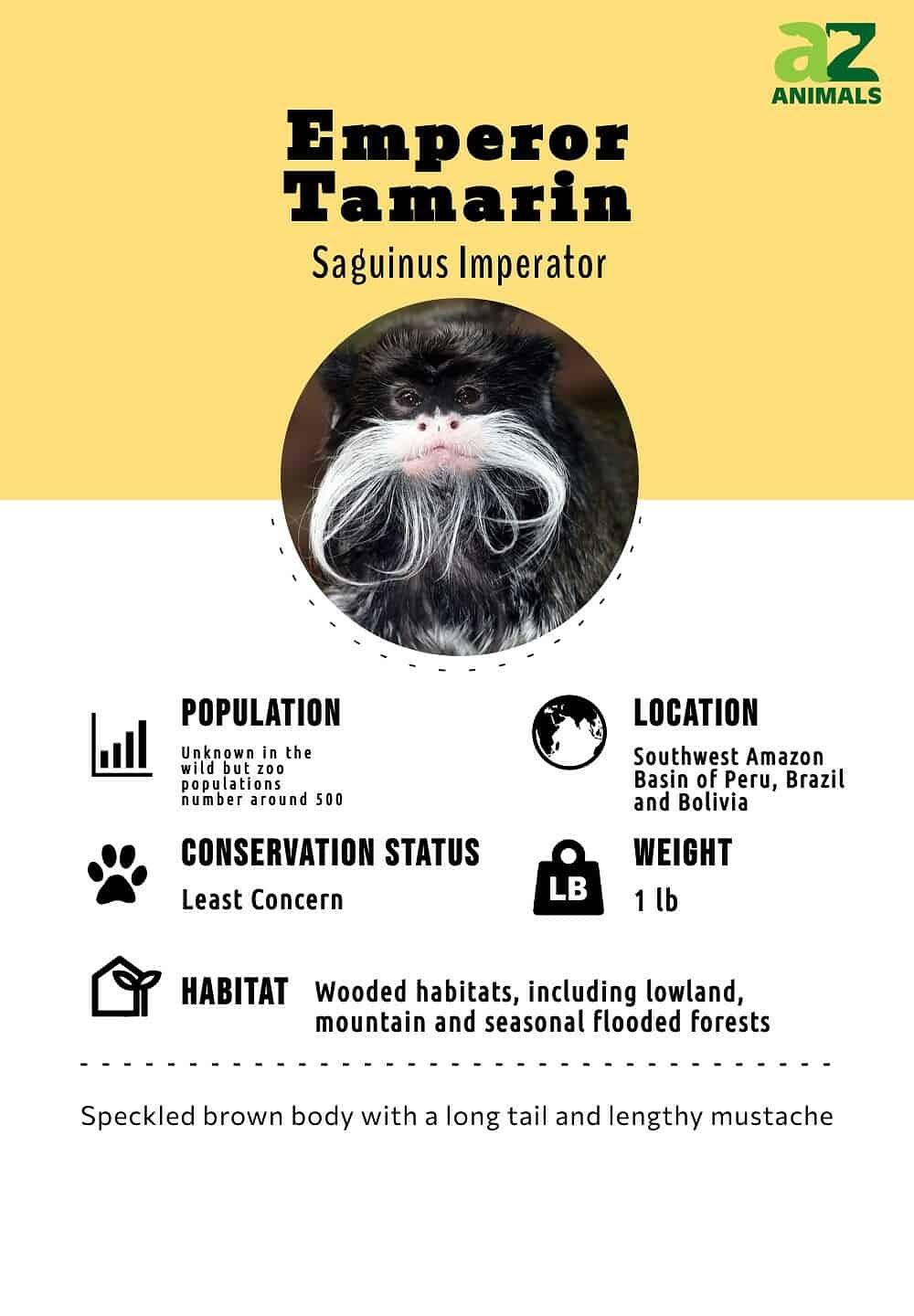
There are two subspecies of the emperor tamarin, but they both reside in different areas. One is the bearded emperor tamarin, which can be found mostly in the rainforests in Brazil and Peru. The other is the black-chinned emperor tamarin, which is found in the rainforests across Bolivia, Peru, and Brazil.

Emperor Tamarin Appearance

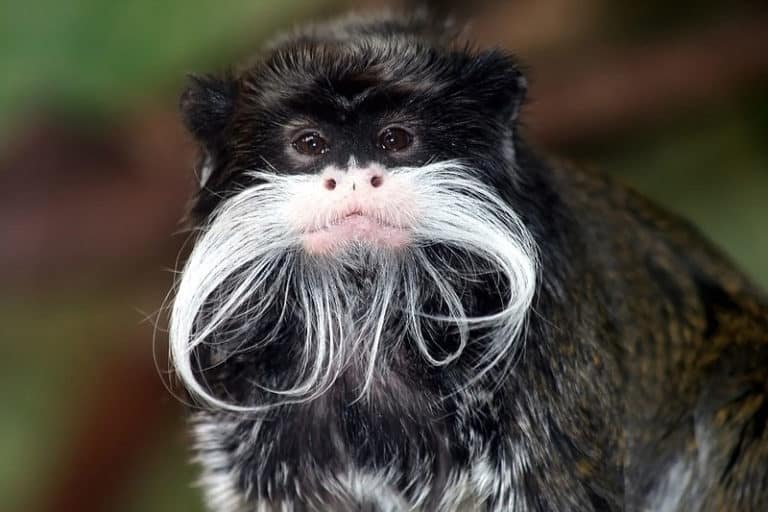
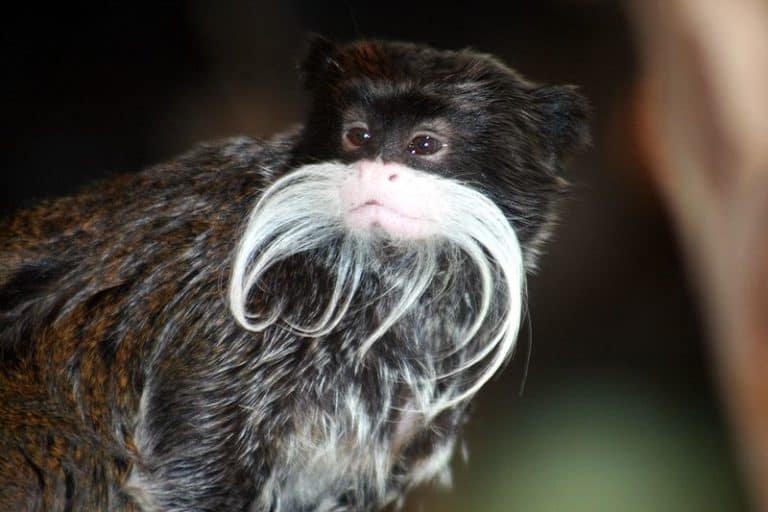
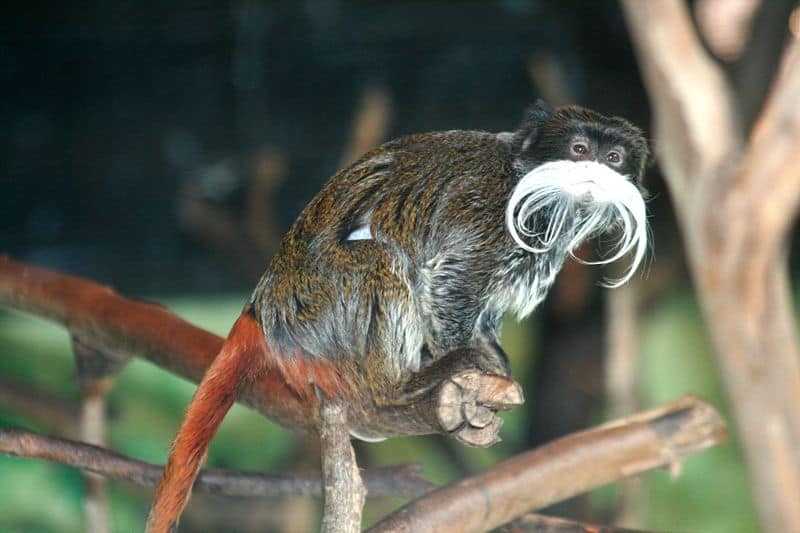
At just 9 to 10 inches tall, the emperor tamarin is a rather small animal that weighs about 1 pound. It is covered in grey fur with a bit of red and yellow on the back and the chest. It has black hands and feet and a long, brown tail. With a pink nose and mouth, what uniquely distinguishes this creature from others is its elegant white mustache, and oftentimes a beard to match.
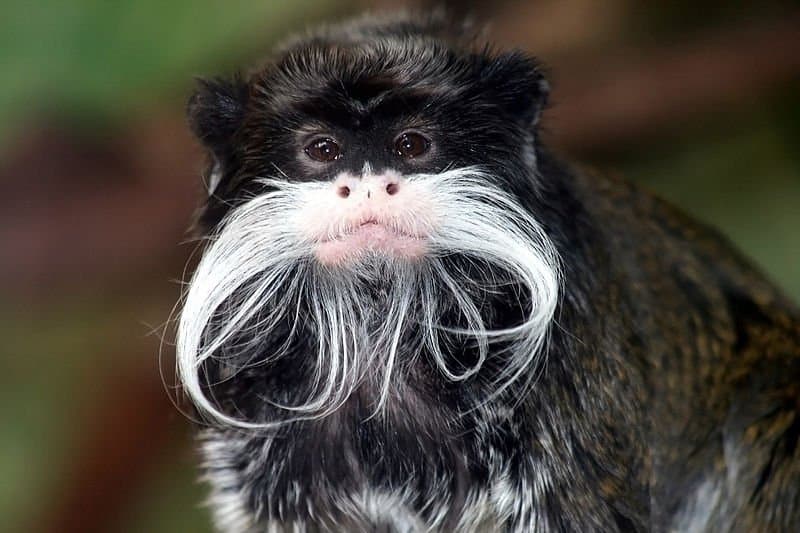
Emperor Tamarin close-up photo showing white mustache and beard

Emperor Tamarin is known for its elegant white mustache.

Behavior

These primates are diurnal, which means that they are most active in the daytime, and relaxing and sleeping through the night. Their small size and lightweight structure allow them to be able to hop from one tree branch to another, making it easier for them to be able to reach food that is usually inaccessible to other animals. Moreover, their sharp claws help strengthen their grip around tree branches, making it easier for them to stay put and in better positions than most other animals.

Emperor tamarins are known to be very sociable creatures and live with the rest of their troops in a marked territory. A group, or troop, can range anywhere between 4 to 20 tamarins. These groups are generally led by the eldest female members and also are predominantly made up of male members. It has been observed that these tiny primates are very loving and caring towards the humans they come in contact with. They maintain a close-knit relationship with all the members of their group and warmly collaborate. They are also known to feed, sleep, forage, and protect their marked territory together.

Some sources suggest that the emperor tamarins may live in groups of mixed species with other tamarins, mostly the saddleback tamarin. It is said that such coexistence often becomes a mutually beneficial relationship that helps both species protect themselves and one another from any likely predators.

These tamarins are known to have a dichromatic vision, meaning that their vision only allows them to see in two differentiating colors. This is a part of their adaptation scheme to be able to identify any possible threats and predators even when they are camouflaged in the surroundings.

Habitat
The bearded emperor tamarin is usually found in the rainforests of Brazil and Peru, while the black-chinned emperor tamarin is known to be scattered across the rainforests of Brazil, Peru, and Bolivia. Lowland tropical rainforests, which these species are known to prefer, are often the ideal habitat. They are usually found living in the tree canopies of river basins. However, lowlands are far from the only habitats where they are found in. Others include forests that are flooded during rainy seasons, rainforests that grow on flatlands, evergreen forests at altitudes below 984 feet, along the edge of remnant forests, and in broadleaf forests.


Meanwhile, it has also been observed that emperor tamarins usually don’t live in high trees and are usually not found above 80 to 90 feet off the ground.

Population

Sources suggest that there are more than 500 emperor tamarins in zoos all around the world. However, it has also been said that their population has been on a steady decline primarily due to humans looking to clear land for residential and/or industrial purposes.

Diet
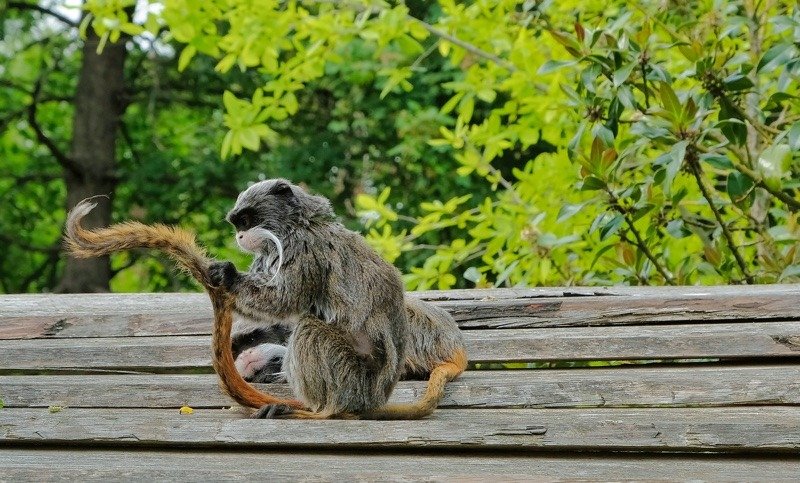
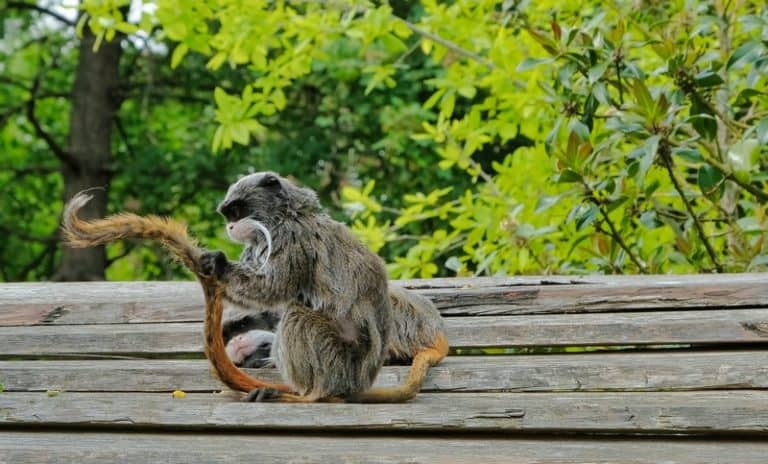
Emperor tamarin playing with its long, brown tail

Emperor tamarins eat both plants and animals.

Emperor tamarins are omnivorous, so they eat both animals and plants to survive. Fruits, nectar, eggs, and insects are some of the diet staples that make up the majority of their diet and largely come from the trees they reside in.

The size of these species facilitates them to look for food easily. Since they are so small and light, they can easily hop over tree branches and reach the usually inaccessible food. Surprisingly, the species can travel 30 hectares (0.12 square miles) as they seek out food sources for sustenance.

Predators And Threats

Due to its small size, the emperor tamarin is met with a lot of predators. Wild cats, birds, dogs, snakes, and humans, among others, together make up the predator list for the animal.

Threats to the wellbeing of emperor tamarin come from a vast variety of animals including wild cats, dogs, snakes, and even humans, who have been known to destroy the natural habitat of the species over the years. Its predators, however, find it difficult to prey on the emperor tamarin due to its ability to pass through the thickest jungles very quickly.

To protect themselves from potential threats and predators, these tamarins have a unique dichromatic vision that allows them to see their surroundings in two district colors. It helps them identify the threats and predators even in a state of camouflage.

According to the International Union for Conservation of Nature, the conservation status of the emperor tamarin is of least concern. However, reports suggest that their population has been on a steady decline mostly because of deforestation and encroachment by humans looking to clear land for other purposes.

Reproduction, Babies, And Lifespan
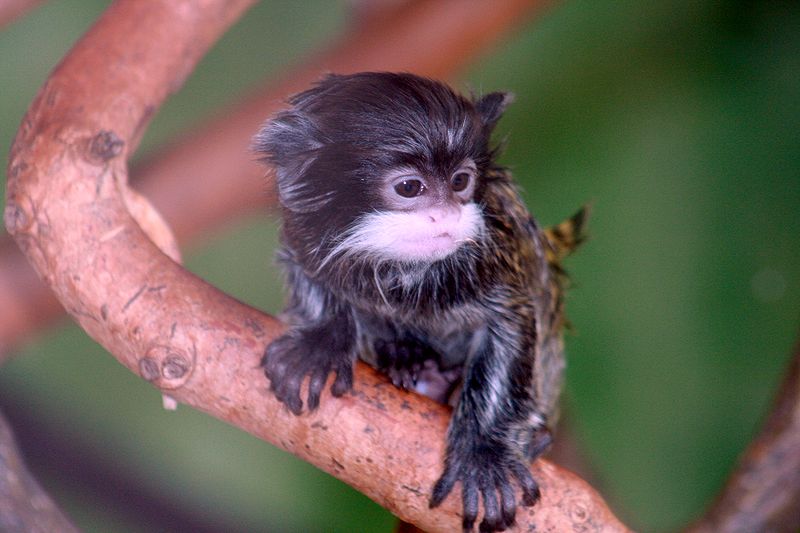
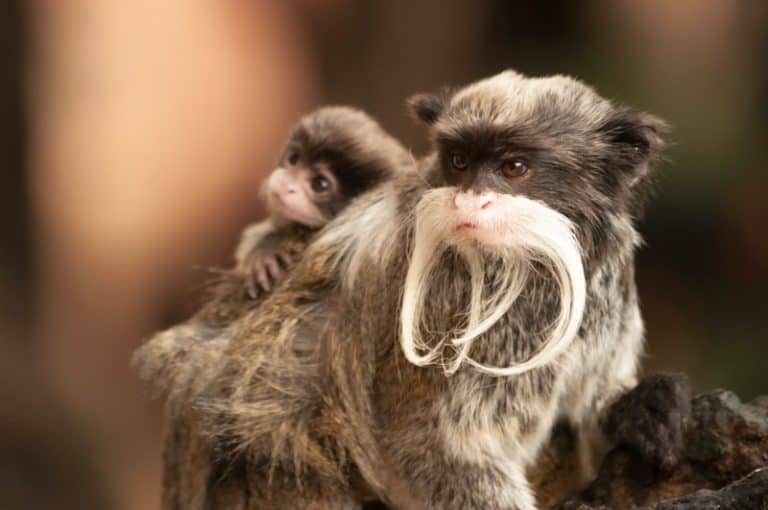
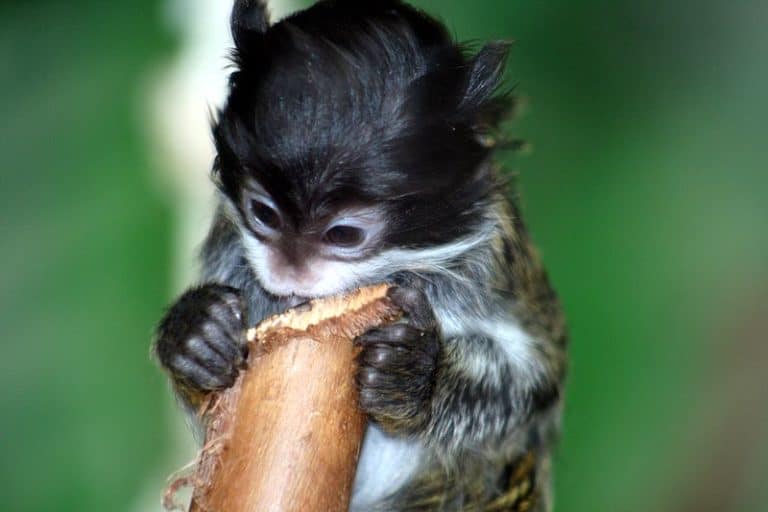
Baby emperor tamarin

Baby Emperor Tamarins mature rather quickly.

Emperor Tamarins are known to be seasonal breeders and usually bear offspring during rainy months. This may be due to the abundance of food during that season. The family groups involve one breeding female and two breeding males. Tamarins are polyandrous in their mating habits, allowing the female to mate with multiple breeding males within their group.

After conception, the gestation period is known to last for about 140 to 145 days. After this period comes to an end, the female often produces two offspring. However, one or even three offspring are also typical. Other adults in the tamarin group spring to action as soon as the baby is born. The mother is known to feed her child in intervals of two to three hours, lasting for approximately 30 minutes per session. Similarly, the fathers also take responsibility for the child and carry them on their backs and take care of them once they have been fed. It is said that the babies travel on the backs of their fathers for around 6 to 7 weeks. Baby emperor tamarins mature rather quickly, attaining sexual maturity between 16 to 20 months of age. Emperor tamarins go on to live for 10 to 20 years.

In Zoos

The emperor tamarin can be found in several zoos throughout the world, including:

View all 185 animals that start with E

Sources

  1. Animalia
  2. Smithsonian's National Zoo and Conservation Biology Institute
  3. Study.com
  4. Animal Spot
  5. It's Nature
  6. New England Primate Conservancy
  7. Wiktionary
Melissa Bauernfeind

About the Author

Melissa Bauernfeind

Melissa Bauernfeind was born in NYC and got her degree in Journalism from Boston University. She lived in San Diego for 10 years and is now back in NYC. She loves adventure and traveling the world with her husband but always misses her favorite little man, "P", half Chihuahua/half Jack Russell, all trouble. She got dive-certified so she could dive with the Great White Sharks someday and is hoping to swim with the Orcas as well.
Connect:

Thank you for reading! Have some feedback for us?


Emperor Tamarin FAQs (Frequently Asked Questions)

There is no restriction on keeping emperor tamarin as pets. However, it is much like keeping an otherwise social animal in an unnatural habitat. It, therefore, becomes possible that these tamarins are unable to thrive and cooperate as they normally would in ideal conditions.