


E
Species Profile

Emu

Dromaius novaehollandiae

Fast feet, big bird, Aussie icon
Lukas_Vejrik/Shutterstock.com

Emu Distribution

Click a location to explore more animals from that region

Endemic Species
Loading map...

Found in 1 country

Size Comparison

Human 5'8"
Emu 5 ft 9 in

Emu is 1.0x the height of an average human.

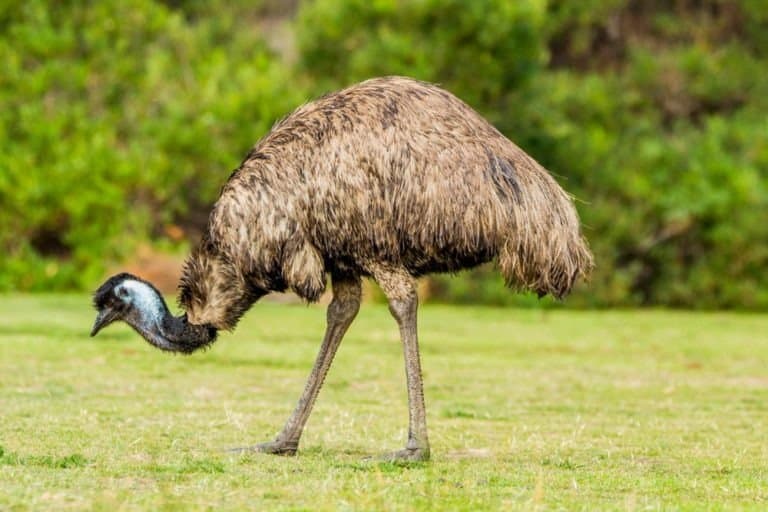
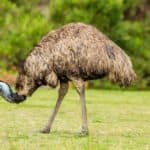
Emu (Dromaius novaehollandiae) grazing in the Australian bush.

At a Glance

Wild Species
Diet Omnivore
Activity Diurnal+
Lifespan 15 years
Weight 60 lbs
Status Least Concern
Did You Know?

Emus are the second-tallest living birds: typically 1.5-1.9 m tall (after the ostrich).

Scientific Classification

The emu is a large, flightless ratite bird native to Australia and the second-tallest living bird after the ostrich. It is an omnivorous, wide-ranging runner adapted to open habitats and is notable for its shaggy brown plumage, long legs, and strong territorial/nomadic movements depending on rainfall and food availability.

Kingdom
Animalia
Phylum
Chordata
Class
Aves
Order
Casuariiformes
Family
Dromaiidae
Genus
Dromaius
Species
Dromaius novaehollandiae

Distinguishing Features

  • Large flightless ratite; long neck and legs built for running
  • Shaggy, double-shafted brown feathers that insulate against heat
  • Small vestigial wings; cannot fly
  • Three-toed feet and powerful stride
  • Deep booming/drumming vocalizations (especially females)

Physical Measurements

Males and females differ in size

Height
5 ft 9 in (4 ft 11 in – 6 ft 3 in)
5 ft 9 in (5 ft 3 in – 6 ft 3 in)
Length
5 ft 9 in (4 ft 10 in – 6 ft 3 in)
5 ft 6 in (4 ft 10 in – 6 ft 1 in)
Weight
74 lbs (66 lbs – 82 lbs)
99 lbs (66 lbs – 132 lbs)
Top Speed
31 mph
Up to 50 km/h

Appearance

Primary Colors
Secondary Colors
Skin Type Body covered in coarse, shaggy feathers; wings are tiny with hidden flight feathers. Legs and feet have exposed hard scales like other ratites and strong claws; head and upper neck have fewer feathers.
Distinctive Features
  • Large, flightless ratite of mainland Australia; adult height typically ~1.5-1.9 m and mass commonly ~30-45 kg (reported overall range ~18-60 kg).
  • Running-adapted anatomy: long, powerful legs; three-toed feet; can reach ~48 km/h and uses an efficient long stride (reported up to ~2.75 m) for open-habitat travel.
  • Plumage is characteristically shaggy with double-shafted feathers (two shafts from a single quill), producing a loose, hair-like texture and good insulation in variable Australian climates.
  • Small vestigial wings largely hidden in body feathers; incapable of flight but uses wings for balance and display while running or turning.
  • Omnivore that walks long distances in open woodland, savanna, grassland, and shrubland, eating seeds, fruits, shoots, flowers, and insects; often uses patches after rain and can be nomadic.
  • Reproductive ecology strongly tied to open habitats: clutch typically ~5-15 dark green eggs; incubation ~56 days is performed by the male, which provides primary early parental care (male often reduces feeding during incubation).
  • Eyes are relatively large for a ground bird; head profile shows a blunt, dark bill adapted for pecking and browsing.
  • Feet and legs are notably robust with strong claws capable of defensive kicking when threatened.

Did You Know?

Emus are the second-tallest living birds: typically 1.5-1.9 m tall (after the ostrich).

Adults commonly weigh ~30-45 kg, but reported adult masses range about 18-60 kg depending on sex, season, and locality.

They can sprint at about 50 km/h and take long strides (reported up to ~2.7 m) on powerful, three-toed feet.

A typical clutch is about 5-15 dark green eggs; incubation lasts ~56 days and is done by the male.

During incubation the male usually eats and drinks very little, often losing a substantial fraction of body mass (commonly reported up to ~1/3).

Their loose, double-shafted feathers give a shaggy look and help buffer heat-useful for Australia's open, hot environments.

Emus swallow pebbles and other grit to help the muscular gizzard grind tough plant material.

They're featured on Australia's Coat of Arms alongside the kangaroo, widely associated with "moving forward."

Unique Adaptations

  • Flightless ratite build optimized for running: reduced wings; long, muscular legs; and three forward-pointing toes adapted for speed and stability on open ground.
  • Tendon-and-muscle leg mechanics that store/release energy efficiently during running, supporting long-distance travel and fast sprints.
  • Specialized feather structure: many body feathers are double-shafted and loosely packed, providing insulation and buffering against intense solar heat.
  • Large eyes and elevated head/neck for scanning open landscapes, helping detect threats and distant resources.
  • Expandable throat/neck air sac region involved in resonant, low-frequency vocalizations (notably the female's drumming calls).
  • Digestive adaptation to variable diets: a strong gizzard plus ingested grit allows effective processing of seeds and fibrous plant matter common in arid/open systems.

Interesting Behaviors

  • Nomadic, rainfall-driven movements: emus track patchy booms in grass, seeds, and insects, sometimes travelling long distances between feeding areas rather than holding a fixed territory year-round.
  • Omnivorous foraging: they browse leaves, shoots, flowers and fruits, and also take insects (e.g., beetles, caterpillars, grasshoppers) and other small animal matter when available.
  • Grit-swallowing and gizzard use: individuals deliberately ingest small stones to mechanically process fibrous foods.
  • Vocal communication: emus can produce deep drumming/booming sounds (notably females), plus grunts; low-frequency calls can carry across open country.
  • Male-only incubation and chick-rearing: after egg-laying, the male incubates for ~8 weeks and then escorts striped chicks for months, actively shepherding and defending them.
  • Thermoregulation behaviors: in heat they reduce activity, seek shade, and pant; their feather structure and posture changes help manage heat load.
  • Vigilance and predator response: in open habitat they rely on height, vision, and rapid running; they zig-zag while fleeing and can deliver strong kicks if cornered.

Cultural Significance

The emu (Dromaius novaehollandiae) is part of Australian culture and nature. It lives across mainland open lands (grassland, shrubland, open woodland, farms). It is on the Coat of Arms and important to many Aboriginal peoples for food (especially eggs), stories, and art, and is tied to the 1932 'Emu War.'

Myths & Legends

In Aboriginal Australia, Milky Way dust lanes form the 'Emu in the Sky.' The Coalsack Nebula is its head; when it looks like laying, people know emu (Dromaius novaehollandiae) eggs can be found.

Aboriginal stories explain why the emu (Dromaius novaehollandiae) cannot fly: its wings were made small by accident, punishment, or trick, so it runs on the ground—an origin tale about its body and behavior.

In ceremonies and teaching stories, Emu (Dromaius novaehollandiae) tracks, nests, and egg-gathering teach careful watching, timing, and respect for Country. Emu designs also appear in rock art and body paint.

The 1932 "Emu War" is a modern tale in Australian stories about efforts to reduce Emu (Dromaius novaehollandiae) on farms, showing their toughness, speed, and how hard they are to control.

A common national-symbol story about the Coat of Arms says the emu and kangaroo show a nation that 'always moves forward.' This idea, no matter its start, is part of public stories about the bird.

Conservation Status

LC Least Concern

Widespread and abundant in the wild.

Population Increasing

Protected Under

  • Australia (general): native wildlife protections apply; the emu is not listed as threatened under the Commonwealth EPBC Act 1999, but management (including control) may be permitted under state/territory regulations.
  • New South Wales: Biodiversity Conservation Act 2016 (native fauna protections; harm/management regulated via licensing).
  • Victoria: Wildlife Act 1975 (native wildlife protections; authorisations required for control).
  • Queensland: Nature Conservation Act 1992 (native fauna protections; permits regulate taking/keeping/control).

Life Cycle

Birth 11 chicks
Lifespan 15 years

Lifespan

In the Wild
10–20 years
In Captivity
15–35 years

Reproduction

Mating System Polyandry
Social Structure Socially Monogamous
Breeding Pattern Serial
Fertilization Internal Fertilization
Birth Type Internal_fertilization

Emu (Dromaius novaehollandiae) breeding is serial polyandry: females form short seasonal bonds, lay clutches (5–15 eggs) with one male then often leave to mate again; males incubate eggs (~56 days) and raise chicks alone.

Behavior & Ecology

Social Flock Group: 6
Activity Diurnal, Crepuscular
Diet Omnivore Fleshy fruits and large seeds (including quandong, Santalum acuminatum, where locally available), taken opportunistically when seasonally abundant.

Temperament

Generally wary and avoidance-oriented toward threats; typically flees by running rather than confronting (Marchant & Higgins 1990).
Context-dependent boldness: can habituate to humans/vehicles in agricultural and peri-urban areas, approaching for food where rewarded (Davies 2002).
Breeding-season aggression increases, especially around nests/chicks; males may charge, kick, or peck in defense (Marchant & Higgins 1990; Davies 2002).
Nomadic/irruptive movement tendency: social tolerance often increases at concentrated resources, producing temporary aggregations with low overt territoriality (Davies 2002).
Life-history context: wild longevity is commonly up to about 10 years, while captive individuals may reach about 20 years (Davies 2002; managed-care husbandry summaries).

Communication

Low-frequency resonant 'booming'/drumming calls Often described as a hollow, far-carrying sound); used in social spacing, contact, and breeding contexts; produced with an inflatable cervical/tracheal region (anatomical basis described in ratite literature; summarized for emu in Marchant & Higgins 1990; Davies 2002
Grunts and short contact notes between nearby individuals, including within temporary flocks Marchant & Higgins 1990
Hisses/snorts associated with alarm, agitation, or close-range encounters Marchant & Higgins 1990
Posture and body orientation Neck height, head angle) for threat display and dominance signaling; escalation may include rapid approach/charging (Marchant & Higgins 1990
Feather ruffling and wing-droop displays; pacing/parallel walking in courtship and tension situations Davies 2002
Foot stomping and kicking as both defensive behavior and an aggressive signal at close range Marchant & Higgins 1990
Spatial communication via movement: individuals adjust inter-individual distance, aligning travel direction in loose fission-fusion groups Davies 2002

Habitat

Biomes:
Temperate Grassland Savanna Tropical Dry Forest Mediterranean Temperate Forest Desert Hot Wetland +1
Terrain:
Plains Hilly Plateau Valley Coastal Sandy Rocky +1
Elevation: Up to 4921 ft 3 in

Ecological Role

Large-bodied omnivore functioning as a landscape-scale seed consumer and disperser, and an opportunistic invertebrate predator in Australian open ecosystems.

Long-distance seed dispersal (endozoochory) of numerous native plants via dung deposition, aiding plant colonization and gene flow across fragmented/patchy habitats Seed fate modification: both seed predation (destroying some seeds) and dispersal of others, influencing plant recruitment dynamics Seasonal suppression of invertebrate populations during pulses (e.g., orthopterans and other outbreaking insects) Nutrient redistribution through movement and defecation, transferring nutrients between habitat patches Food-web support by providing dung resources (for detritivores/coprophagous insects) and occasional carrion opportunities for scavengers if emus die naturally

Diet Details

Other Foods:
Seeds Fleshy fruits Flowers and buds Young green shoots and leaves Cultivated grains

Human Interaction

Domestication Status

Semi domesticated

Emu (Dromaius novaehollandiae) is a wild Australian bird not domesticated like chickens or turkeys. It is widely captive-bred and kept on farms, ranches, and parks. Indigenous Australians used emus for meat, fat, eggs, feathers, and culture. European settlement caused conflict, notably the 1932 'Emu War.' Commercial farming grew in the 1970s–1990s, selecting traits but without a standard domesticated breed.

Danger Level

Moderate
  • Traumatic injury from defensive kicking: emus can run at ~50 km/h and deliver strong forward kicks; the foot has three toes with claws that can cause lacerations/contusions (risk highest during breeding season, when cornered, or around chicks).
  • Pecking and body-checking at close range; more likely in habituated captive birds expecting food.
  • Zoonotic/foodborne pathogens associated with birds and bird feces (e.g., Salmonella spp., Campylobacter spp.)-risk increased with poor hygiene around enclosures/eggs/meat handling.
  • Indirect risk: vehicle collisions with wild emus on roads in Australia, especially during long-distance movements triggered by rainfall/food availability.

As a Pet

Not Suitable as Pet

Legality: Laws for Emu (Dromaius novaehollandiae) vary by place. Many areas treat them as livestock or exotic and may need permits, set enclosure, acreage, or fencing rules. Check local wildlife, farm, and zoning laws.

Care Level: Expert Only

Purchase Cost: $200 - $2,500
Lifetime Cost: $15,000 - $50,000

Economic Value

Uses:
Livestock agriculture Wildlife tourism/education Cultural/traditional use Pest/conflict management (crop depredation; mitigation/culling) Research/education (avian physiology, locomotion, incubation behavior)
Products:
  • meat (low-fat red meat; commercial cuts)
  • oil rendered from fat (sold for cosmetics/topicals; regulatory status and claims vary by country)
  • leather (hide)
  • eggs (food; decorative/carved eggshell; very large dark-green eggs)
  • feathers (craft/decorative uses)
  • live animals for breeding stock, farms, zoos, wildlife parks

Relationships

Predators 6

Related Species 3

King Island emu Dromaius novaehollandiae minor Shared Genus
Kangaroo Island emu Dromaius novaehollandiae baudinianus Shared Genus
Emu
Emu Dromaius ater Shared Genus

Ecological Equivalents 4

Animals that fill a similar ecological role in their ecosystem

Ostrich
Ostrich Struthio camelus Large running bird of open country; like the emu, it roams and forages on the ground, eating plants and animals. It uses long legs and fast running (≈48–50 km/h) and, at 1.5–1.9 m tall, relies on height and speed to spot and flee predators.
Greater rhea Rhea americana South American open-country ratite with a similar niche: large-bodied, flightless, adapted for long-distance walking and running; an opportunistic omnivore consuming insects and plant matter. Both species exhibit flexible movements linked to rainfall and food pulses, and use communal or open landscapes for foraging and predator avoidance.
Southern cassowary Casuarius casuarius Closest known relative in Casuariiformes: a large flightless ratite with strong legs, a ground seed disperser and omnivore. It inhabits rainforests and shares reproductive behavior: males incubate eggs for about 56 days, with clutches of 5-15 eggs.
Australian bustard Ardeotis australis Not a ratite; a large ground-dwelling bird in Australian open habitats with similar food habits — it walks and eats insects, small animals, and plants. Both use open landscapes and have broad diets; the bustard can fly and escapes predators differently.

“An emu has a running stride of 9 feet”

Emus are birds that make their home on the continent of Australia. They can grow as tall as 6.2 feet. This bird is similar in appearance to an ostrich.

Emus are omnivores eating seeds, fruits, insects, and small animals. Their lifespan is from 5 to 10 years in the wild.

An Incredible Bird: 5 Emu Facts!
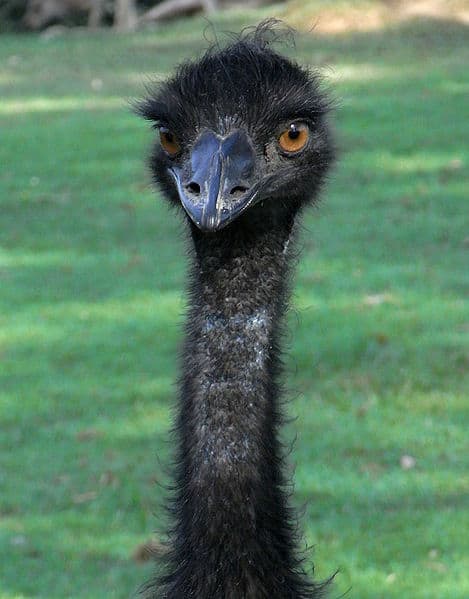
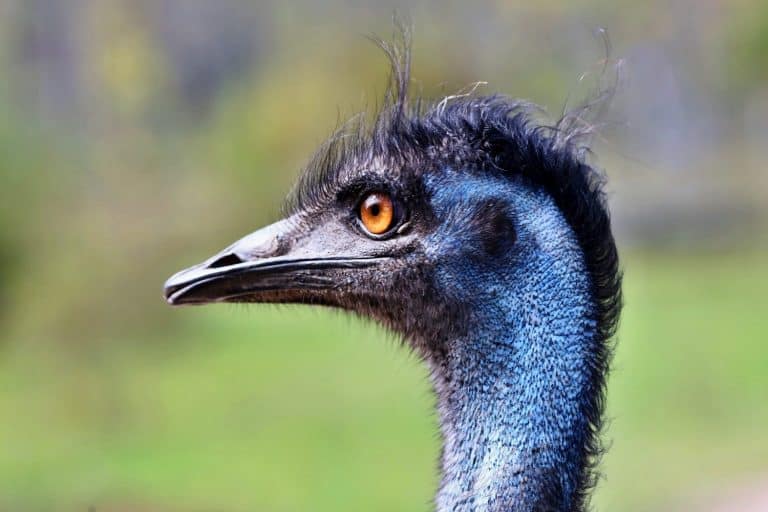
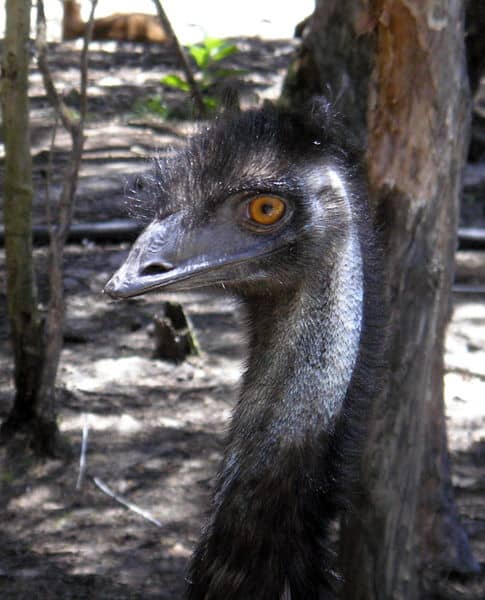
Emu portrait

Emu birds have wings but don’t fly.

  • An emu bird has a distinctive call that can be heard one mile away
  • The main predators of an emu bird are dingoes, eagles, and hawks
  • An emu has a clear membrane over each eye to protect it from dust in the air
  • Emus are on the move all the time looking for food and water
  • Emu birds have wings but don’t fly

Scientific Name
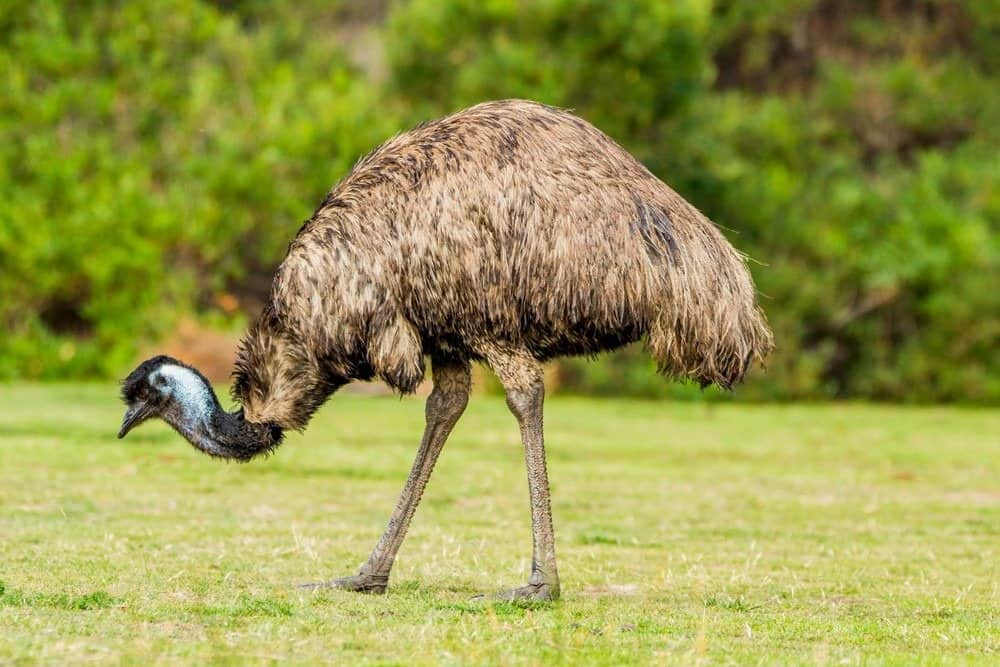
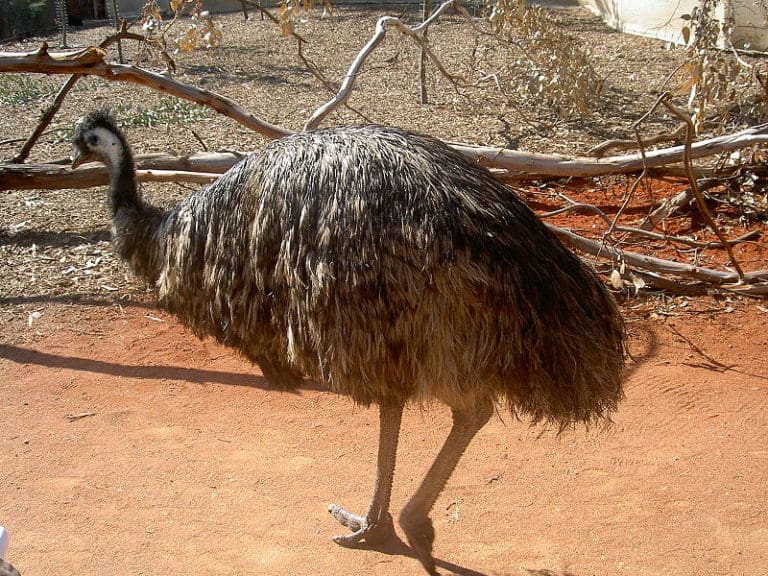
Emu (Dromaius novaehollandiae) grazing in the Australian bush.

The scientific name for an emu is Dromaius novaehollandiae.

The scientific name for an emu is Dromaius novaehollandiae. The word Dromaius is Greek meaning runner and the word novaehollandiae means New Hollander. New Hollander refers to this bird’s initial classification as the New Holland Cassowary.

It belongs to the Dromaiidae family and is in the Aves class. There are 4 subspecies of emus.

The scientific name of each one is:

D. novaehollandiae novaehollandiae
D. novaehollandiae woodwardi
D. novaehollandiae rothschildi
D. novaehollandiae diemenensis

Appearance and Behavior

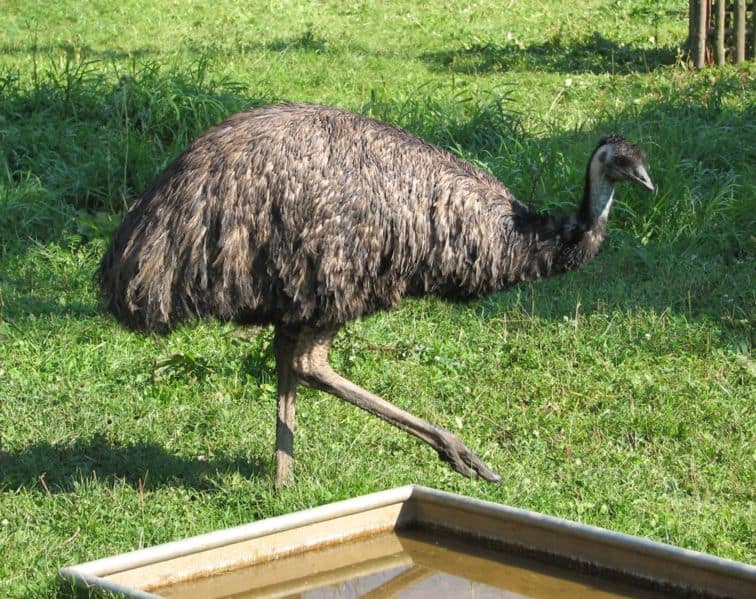
Emu drinking at a dam
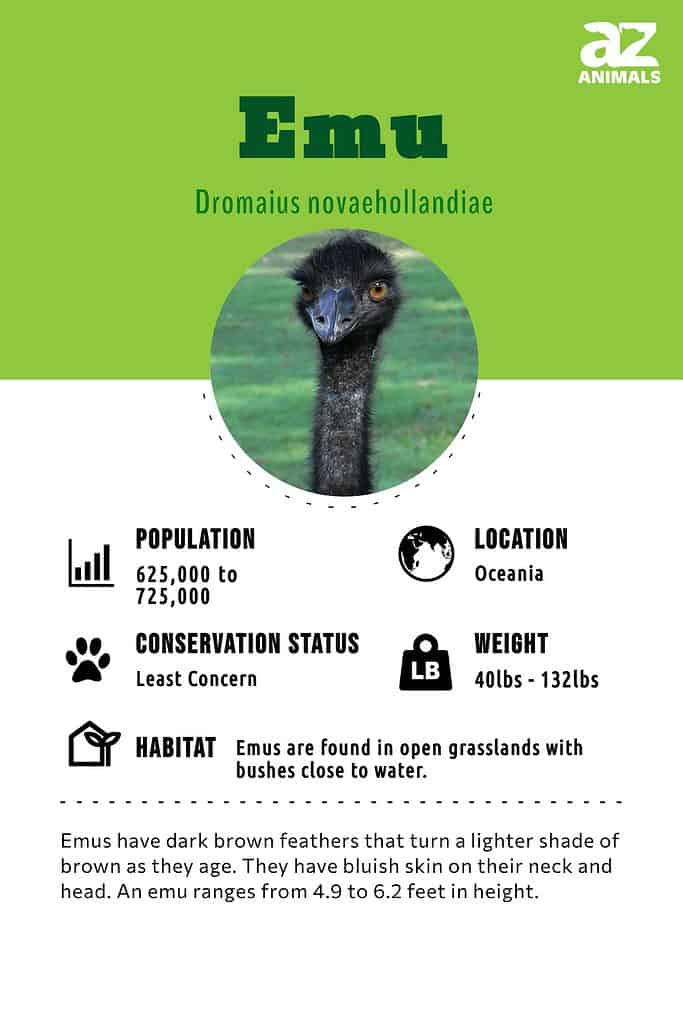
Emus have dark brown feathers that turn a lighter shade of brown as they age. They have bluish skin on their neck and head. An emu ranges from 4.9 to 6.2 feet in height.

Emus have dark brown feathers that turn a lighter shade of brown as they age. They have bluish skin on their neck and head. An emu ranges from 4.9 to 6.2 feet in height.

They weigh anywhere from 66 to 121 pounds. As an example, a 6-foot-tall emu is equal in height to a stack of 5 bowling pins. A 120-pound emu weighs two-thirds as much as an adult kangaroo.

Emus have 2 long legs with 3 toes on each foot. These birds aren’t able to fly so they use their long legs to run away from predators. They also have quite a long stride when running. One stride of an emu can be 9 feet long. Just think, 9 feet is equal to half the height of an adult giraffe.

In addition to using their legs to run, emus use them to kick at predators. Their powerful kick, along with the sharp nails on their toes, can cause injury to predators giving this bird time to escape. A swift kick from an emu can even kill a dingo.

This bird makes a lot of sounds. It communicates with other emus via grunts, barks, thumping, and drumming sounds. In fact, the name emu comes from a sound it makes. E-moo! They sometimes make sounds to warn other emus in the area of an approaching predator.

Also, emus make a lot of sounds to warn other emus to stay away from their nest and eggs. Their calls can be heard as far as a mile away. In short, these are definitely not quiet birds!

Emus are solitary birds, but they can form groups when traveling to another area to find a larger food supply. A group of emus is known as a mob. A mob of emus is made up of around 20 birds.

They are non-aggressive birds unless they feel threatened by another animal or a person. They are very aggressive toward one another during the breeding season.
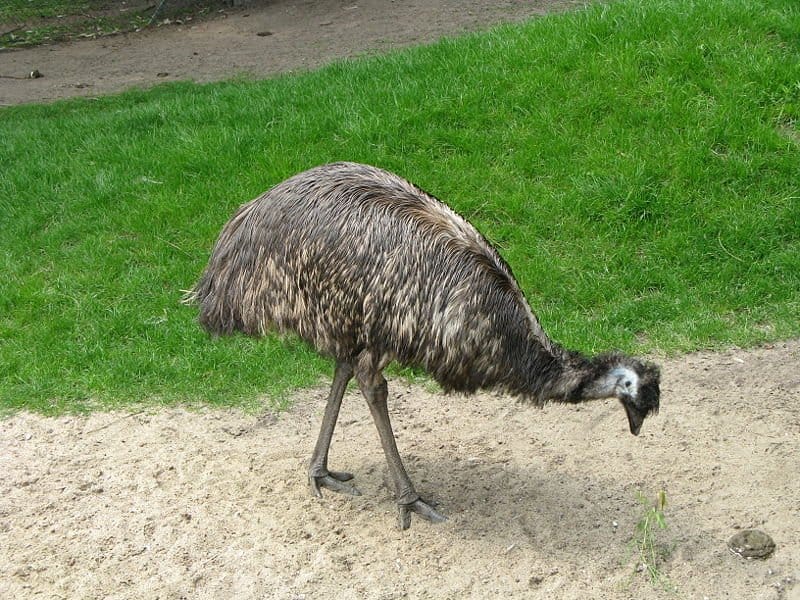
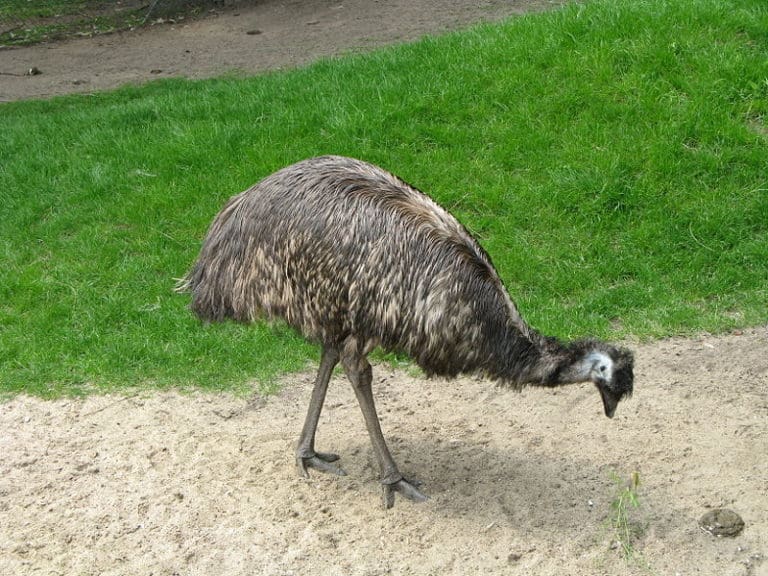
Emu looking for food in some sand

Emu looking for food in some sand

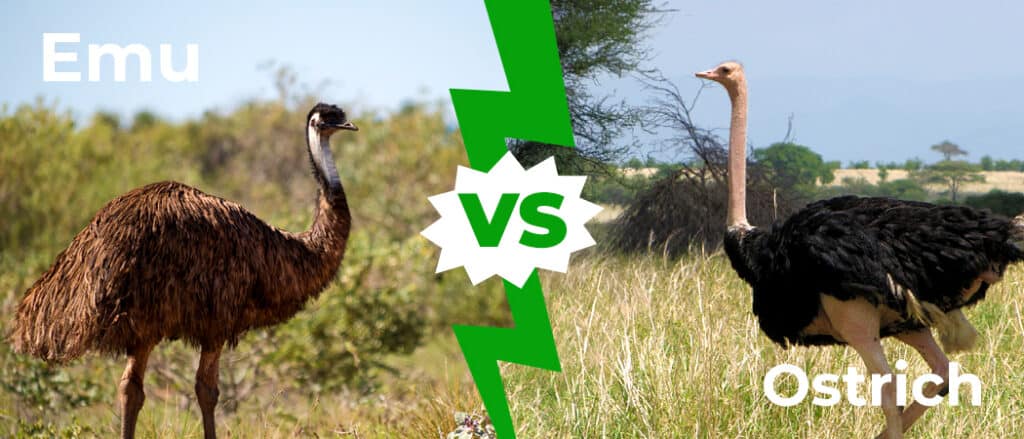
Emu vs. Ostrich

The emu and the ostrich are similar in appearance and are both flightless birds.

The emu and the ostrich are similar in appearance and are both flightless birds. But there are some distinct differences between them.

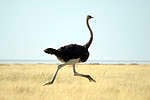
There is a big difference in size between these two birds. Emus are the second largest bird on the globe while the ostrich is the largest. Also, when running an emu has a stride of 9 feet while an ostrich has a running stride of 16 feet!

Ostriches can run faster than emus. The top speed of an ostrich is 43mph. The top speed of an emu is 31mph.

Emus drink a lot of water. In fact, they usually drink about two and a half gallons of water each day. Imagine 2-gallon jugs of milk in your refrigerator. Plus, another half a jug! Alternatively, the ostrich is able to go without water for 2 weeks. They get a lot of their moisture from grass and plants.

There are even differences between the eggs of these two birds. The egg of an emu is bright green while the egg of an ostrich is light brown. When it comes to size, one emu egg is equal in size to 10 chicken eggs. One ostrich egg is equal in size to 24 chicken eggs!

Evolution and Origins of Emu

Emus are from a group of flightless birds including the emu, ostrich, and the now-extinct moa. These animals were believed to have evolved from a flightless ancestor, however, recent studies suggest that each species of flightless bird evolved and lost its flight independently rather than all at once.

As mentioned in this article, emus are found in Australia and live throughout the continent. This ranges from coastal regions to the mountains. Additionally, there are two dwarf species of emus that live on Kangaroo Island and King island that have modernly become extinct.

Habitat
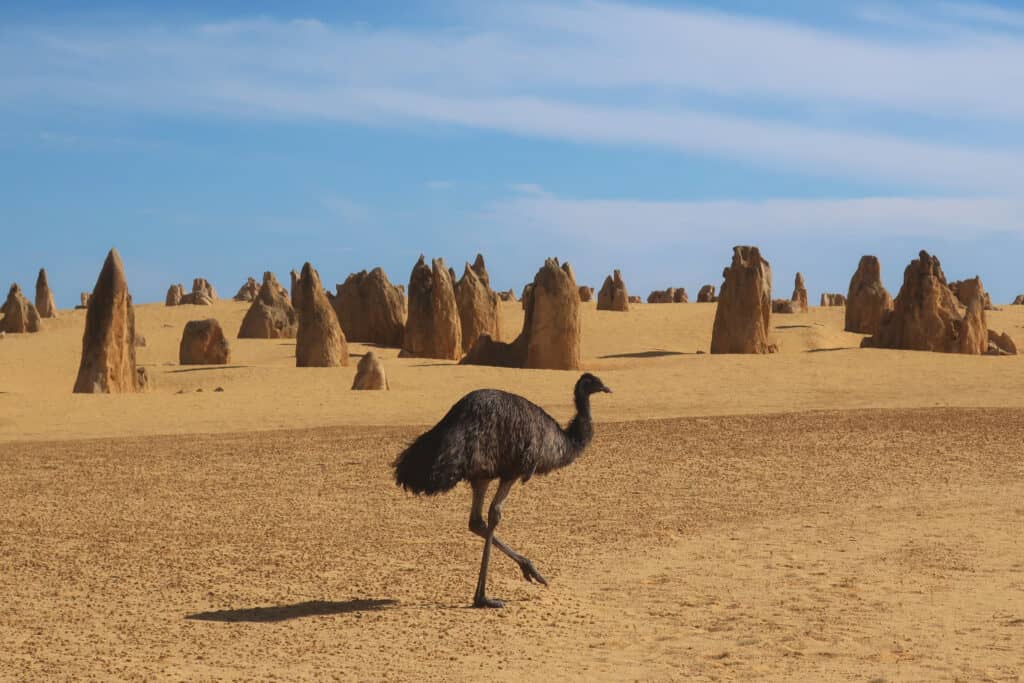
Nambung National Park, Western Australia

Emus live on the continent of Australia. Specifically, they are found in every state within Australia except for Tasmania. Grasslands and dry forests are their main habitat. They move continually in an effort to find more food and a source of water. Normally, they travel from 9 to 15 miles per day.

An emu has a clear membrane over each eye that serves as protection against dust and debris in dry habitats. This membrane also helps to keep their eyes moist.

This bird lives in a mostly temperate climate though some of them are found in the Snowy Mountains of Australia. The long feathers of an emu contribute to maintaining a steady body temperature. If an emu is in a particularly cold area, it fluffs its long feathers in an effort to trap air beneath them.

This captured air helps to insulate the bird against cold temperatures. Sometimes they pant (like a dog) to cool down in hot areas of Australia. Have you ever seen a bird panting like a dog?

These birds migrate to the south in Australia during the winter and move north in the summertime. Fortunately, they can easily adapt to a variety of climates.

Diet
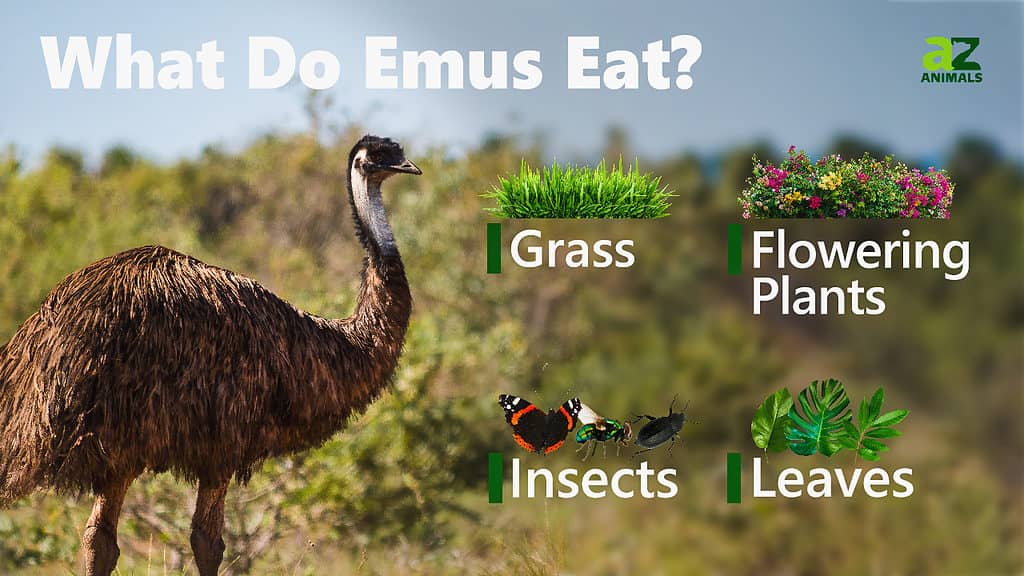
Emus eat grass, flowering plants, insects, and leaves.

What do emus eat? Emus are omnivores. They eat fruit, seeds, beetles, small reptiles, and even the droppings of other animals.

Emus have no teeth so they can’t grind up the plants and animals they eat. So, they swallow small pebbles that go into their gizzard (a part of the emu’s stomach). The pebbles grind food pieces down for proper digestion.

Emus contribute to the ecosystem by seed dispersal. These birds eat a lot of plants, fruits, and seeds. When they leave droppings behind, they disperse seeds so more plants can grow.

Think about it. Emus wander from 9 to 15 miles each day. This means they drop seeds in a variety of areas throughout their habitat.

They also help to control the insect population by eating beetles, cockroaches, and other bugs.

Predators and Threats

Dingoes are the main predators of emus. It makes sense because dingoes share the same habitat as emus. They try to steal an emu’s eggs as well as their young.

A pair of dingoes may target a particular emu’s nest. One of them distracts the parent emu sitting on the nest while the other dingo closes in and steals an egg or a young chick. Dingoes are known for their stealthy approach to hunting prey.

Dingoes also attack adult, full-sized emus. They may try to grab a bird by the neck or head to drag it down. To defend themselves emus kick at dingoes or simply try to run away. Sometimes emus try to frighten dingoes by making a hissing sound at them.

Two other predators include eagles and hawks. These predators are difficult for an emu to fight off.

The conservation status of the emu is Least Concern. The population of emus is categorized as Stable. They are plentiful throughout Australia except in Tasmania. This is because these birds were once hunted by European settlers causing a drastic drop in their population.

Emus produce oil in their bodies which have been used for medicines, creams, and other products. Sometimes these birds are hunted and killed to obtain this oil. But this poaching activity hasn’t caused a great reduction in their overall population.

In the past, emus wandered onto farms to eat seeds causing farmers to lose parts of their crops. They were considered pests. Today, many farmers build tall fences to keep emus away from their crops. Emus can’t jump these tall fences.

Reproduction, Babies, and Lifespan
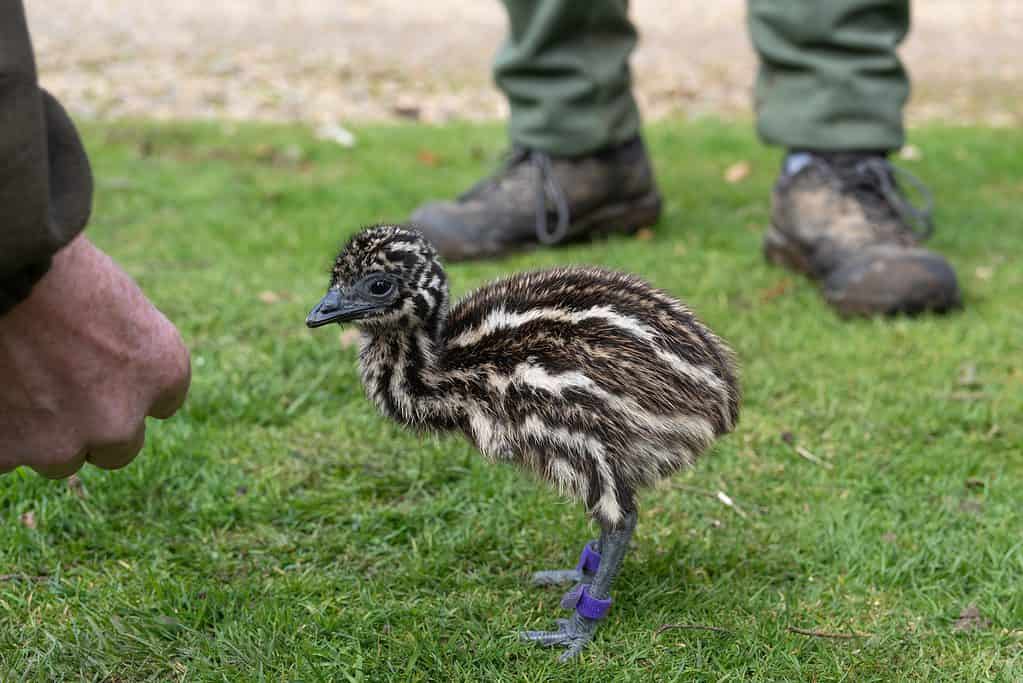
Hazel Plater

Three-day-old incubator-hatched emu chick has its first experience outdoors. A more unusual Easter chick.

The breeding season of emus falls in December and January. Females lay eggs in April, May, or June. A male emu struts around a female ruffling his feathers. The female has a certain call that tells the male she is interested. A female lays from 5 to 15 eggs in a group or clutch.

Each egg weighs a little over one pound. The male emu builds the nest and sits on the eggs. An emu nest is built on the ground out of grass and dry brush. The female doesn’t sit on the eggs at all. She leaves the eggs and sometimes pairs with other males during this time. Emus are polygamous (have multiple mates).

The incubation period of emu eggs is 56 days. As a comparison, the incubation period for ostrich eggs is around 40 days. While sitting on the eggs, the male doesn’t eat or drink. The fat stored in his body serves as nourishment and he drinks the dew from nearby plants for water. The male emu stands up and turns the eggs from time to time.

A newly hatched baby emu called a chick is 9.8 inches tall. Newborn chicks have a layer of downy feathers and their eyes are open. During the first several months after the chicks hatch, the father emu fiercely defends the nest and young against any threats.

The chicks stay with their parent for about 18 months before becoming independent. They eat small insects and vegetation, then are taught to hunt by the father emu.

Emus are vulnerable to internal parasites including roundworms and lungworms.

The lifespan of an emu is 5 to 10 years. They can live from 15 to 20 years in captivity. The oldest emu was 38 years old.

Population

According to the IUCN Red List of Threatened Species, the population of emus consists of 630,000 to 725,000 mature individuals.

The conservation status of the emu is the Least Concern with a stable population.

Where to find the Bird

• Visit the emus at the San Diego Zoo.
• Emus are on display at the Louisville Zoo.
• The Denver Zoo has emus, too!

View all 185 animals that start with E

Sources

  1. David Burnie, Dorling Kindersley (2011) Animal, The Definitive Visual Guide To The World's Wildlife / Accessed November 10, 2008
  2. Tom Jackson, Lorenz Books (2007) The World Encyclopedia Of Animals / Accessed November 10, 2008
  3. David Burnie, Kingfisher (2011) The Kingfisher Animal Encyclopedia / Accessed November 10, 2008
  4. Richard Mackay, University of California Press (2009) The Atlas Of Endangered Species / Accessed November 10, 2008
  5. David Burnie, Dorling Kindersley (2008) Illustrated Encyclopedia Of Animals / Accessed November 10, 2008
  6. Dorling Kindersley (2006) Dorling Kindersley Encyclopedia Of Animals / Accessed November 10, 2008
  7. Christopher Perrins, Oxford University Press (2009) The Encyclopedia Of Birds / Accessed November 10, 2008
  8. Animal Diversity Web / Accessed December 1, 2020
  9. Animalia / Accessed December 1, 2020
  10. The Animal Facts / Accessed December 1, 2020
Rebecca Bales

About the Author

Rebecca Bales

Rebecca is an experienced Professional Freelancer with nearly a decade of expertise in writing SEO Content, Digital Illustrations, and Graphic Design. When not engrossed in her creative endeavors, Rebecca dedicates her time to cycling and filming her nature adventures. When not focused on her passion for creating and crafting optimized materials, she harbors a deep fascination and love for cats, jumping spiders, and pet rats.
Connect:

Thank you for reading! Have some feedback for us?


Emu FAQs (Frequently Asked Questions)

Omnivore is the classification for the emu diet. They eat both plants and small animals.