















E
Species Profile

English Cocker Spaniel

Canis lupus familiaris

Feathered ears, big-hearted bird dog
Andrea Izzotti/Shutterstock.com

English Cocker Spaniel Distribution

Click a location to explore more animals from that region

Origin Location

This map shows the native origin of the English Cocker Spaniel. As a domesticated species, they are now found worldwide.

Loading map...

Size Comparison

Human 5'8"
English Cocker Spaniel 1 ft 4 in

English Cocker Spaniel stands at 23% of average human height.

Happy,English,Cocker,Spaniel,While,Playing,In,The,River

At a Glance

Domesticated
Also Known As Cocker Spaniel, Cocker, ECS, E.C.S., Woodcock dog
Diet Omnivore
Activity Diurnal+
Lifespan 4 years
Weight 16 lbs
Status Not Evaluated
Did You Know?

The name "cocker" comes from woodcock, a bird the breed was prized for flushing in British coverts.

Scientific Classification

The English Cocker Spaniel is a medium-sized gundog breed of domestic dog developed in the UK, historically used for flushing and retrieving game birds (notably woodcock). It is widely kept as an affectionate companion as well as a working/field dog.

Kingdom
Animalia
Phylum
Chordata
Class
Mammalia
Order
Carnivora
Family
Canidae
Genus
Canis
Species
Canis lupus

Distinguishing Features

  • Medium-sized spaniel with long, pendulous, feathered ears
  • Silky, feathered coat; common colors include solid and parti-colors (e.g., black, liver, red, golden)
  • Compact, athletic build; working lines often leaner than show lines
  • Characteristic soft, expressive face; dark eyes
  • Traditionally a flushing and retrieving gundog with high trainability and strong scenting ability

Physical Measurements

Males and females differ in size

Height
♂ 1 ft 4 in (1 ft 3 in – 1 ft 5 in)
♀ 1 ft 3 in (1 ft 3 in – 1 ft 4 in)
Length
♂ 2 ft 2 in (1 ft 12 in – 2 ft 4 in)
♀ 2 ft 5 in (2 ft 3 in – 2 ft 7 in)
Weight
♂ 31 lbs (26 lbs – 35 lbs)
♀ 30 lbs (24 lbs – 33 lbs)
Tail Length
♂ 10 in (9 in – 12 in)
♀ 10 in (9 in – 12 in)
Top Speed
25 mph
agile sprinter, good endurance

Appearance

Primary Colors
Secondary Colors
Skin Type Silky, medium-length double coat with heavy feathering on ears, chest, belly, legs, and tail. Long hanging ears can trap moisture and cause ear skin irritation or infection if not kept clean and dry.
Distinctive Features
  • Long, low-set, heavily feathered ears; a silky, medium-length coat with noticeable feathering on the chest, belly, and legs; a compact, sturdy body with a gently rounded head and large, expressive eyes.
  • Distinguished from the American Cocker Spaniel: generally longer muzzle, less domed skull, more moderate coat profusion, and a more athletic, field-capable outline; American Cocker typically has a shorter muzzle, rounder head, and heavier coat/feathering overall.
  • Medium-sized, compact yet athletic build with a deep chest, strong hindquarters, and a characteristic "merry" tail action; bred to work in dense cover.
  • Long, low-set, heavily feathered ears (a hallmark spaniel trait) that enhance scenting/field function but require routine ear care.
  • Silky coat texture with feathering; show lines often have heavier coat and more feathering, while working/field lines typically have a more practical, easier-care coat and lighter feathering.
  • Friendly, affectionate companion temperament with strong trainability and hunting drive; requires daily exercise and enrichment to prevent boredom-related behaviors.
  • English Cocker Spaniels often get ear infections (from ear shape and hair), itchy allergic skin, progressive retinal atrophy (PRA) and cataracts, hip dysplasia, adult-onset neuropathy (AON), and sometimes pancreatitis.
  • Needs regular grooming—brush and comb feathering, occasional trimming or stripping; clean and dry ears after swimming; consistent training and recall for scent drive; daily walks plus play or field work.

Sexual Dimorphism

Sexual dimorphism is present but modest; males are typically slightly larger and more robust, with somewhat broader heads and heavier bone, while females are often a bit lighter and more refined. Coat abundance varies more by line (working vs show) and individual than by sex.

♂
  • Slightly taller/heavier on average with more robust frame
  • Often a broader skull and stronger neck/forequarters
  • May carry marginally heavier feathering in some individuals (not a reliable sex marker)
♀
  • Slightly smaller/lighter on average with a more refined outline
  • Often a narrower head and lighter bone
  • May appear more streamlined, especially in working/field lines

Did You Know?

The name "cocker" comes from woodcock, a bird the breed was prized for flushing in British coverts.

English and American Cocker Spaniels diverged into distinct breeds in the 20th century; English typically has a longer muzzle and a more athletic build.

Many countries recognize separate "working/field" and "show" types: field lines tend to be leggier and higher-drive; show lines carry heavier coats.

Those long, feathered ears help funnel scent toward the nose but also make ear care especially important.

Classic "spaniel quartering" (zig-zag searching in front of a hunter) is a hallmark hunting pattern still seen in play.

Their dense, silky coat sheds and can mat; regular brushing is a bigger need than in many short-coated dogs.

They're often top performers in obedience, rally, scentwork, and agility thanks to biddability plus a strong nose.

Unique Adaptations

  • Feathered, water-resistant coat and furnishings that protect skin when pushing through brambles and wet grass during fieldwork.
  • Long, pendulous ears that help sweep scents up toward the nose-useful in close cover, though they require cleaning/drying.
  • Compact, athletic frame optimized for bursts through dense vegetation rather than long-distance running.
  • High olfactory engagement typical of gundogs: strong motivation for scentwork and tracking games.
  • Breed-typical biddability: selection for working closely with handlers supports trainability and recall when well trained.
  • Variation by line: working types emphasize endurance/drive; show types emphasize coat and head/ear feathering.

Interesting Behaviors

  • Quartering: instinctive side-to-side sweeping search when excited by scents, mirroring flushing work.
  • "Soft mouth" retrieving: many naturally carry toys gently, a trait selected for game retrieval.
  • Shadowing their person: strong social attachment leads to "velcro dog" behavior in the home.
  • Tail wagging "at full throttle": pronounced whole-body wiggle when greeting-common in spaniels bred for cooperative work.
  • Scent-driven foraging: frequent nose-to-ground tracking on walks; they may follow bird trails into cover if off-leash.
  • Play-bowing and invitation behaviors: sociable, people-focused play style, often including fetching and tug.
  • Sensitivity to tone: tends to respond strongly to praise or harsh correction; gentle, consistent training works best.

Cultural Significance

English Cocker Spaniel (Canis lupus familiaris) was developed in the UK as a woodland bird-hunting spaniel in Britain’s gundog tradition. It became a popular family pet but still works in field trials and dog sports. Its split from the American Cocker Spaniel shows how place and breed rules create differences.

Myths & Legends

In British shooting culture, 'cocker' became linked to tales of small spaniels that could find woodcock where people could not, a skill that helped make the name common in sporting circles.

Kennel-book anecdotes tell of early spaniels being grouped by size rather than strict breeds; tales of littermates later labeled 'springer' or 'cocker' are often repeated as origin stories for their split identities in Britain.

In rural British superstition, a good spaniel was sometimes spoken of as bringing luck to the shoot-an old sporting belief that a keen dog meant a prosperous day afield.

Victorian-era country-house stories often describe spaniels as constant hearth companions after the hunt, reinforcing the enduring image of the 'gentle gun dog' equally at home in field and family life.

Conservation Status

NE Not Evaluated

Has not yet been evaluated against the criteria.

Population Stable

Life Cycle

Birth 5 pups
Lifespan 4 years

Lifespan

In the Wild
2–8 years
In Captivity
10–14 years

Reproduction

Mating System Polygynandry
Social Structure Managed Domestic
Breeding Pattern Serial
Fertilization Internal Fertilization
Birth Type Managed_selective

English Cocker Spaniel (Canis lupus familiaris): breeding is managed by people and is serial polygynandry with internal fertilization. Planned matings, no lifelong pair bonds; mother dogs raise puppies; stud services may be used.

Behavior & Ecology

Social Pack Group: 4
Activity Diurnal, Crepuscular, Matutinal
Diet Omnivore High-quality animal protein (especially poultry or fish) paired with a moderate-fat, highly digestible diet

Temperament

Affectionate, people-focused companion drive; commonly seeks physical closeness and frequent interaction.
Energetic sporting-dog baseline: needs daily aerobic exercise plus sniffing/foraging-style enrichment; without it may develop nuisance barking, restlessness, or destructiveness.
Biddable and food/toy motivated; typically responds well to positive reinforcement and structured training (retrieve games, scent work).
Socially outgoing with familiar people/dogs; can be overly friendly with strangers unless trained for calm greetings.
High scenting and flushing instinct (breed distinction vs general domestic dog): strong interest in birds and ground scents; recall and impulse control benefit from long-line work outdoors.
Sensitivity/softness is common: harsh corrections may reduce confidence; thrives with predictable routines and clear cues.
HUBS (group-wide patterns): domestic dogs are adaptable social generalists; within English Cocker Spaniels, companion lines often show slightly lower drive and higher cuddliness, while field/working lines often show higher arousal, endurance, and stronger hunt/retrieve persistence.
Ear pain from chronic otitis (common with long, floppy ears) can make dogs irritable or head-shy; vision problems (e.g., PRA) make them startle more; hip dysplasia or patellar pain lowers rough-play tolerance.
Care requirements that shape behavior: consistent ear care (drying/cleaning after swims), grooming of feathering to prevent mat discomfort, weight management to prevent reduced activity; mental enrichment reduces demand barking and attention-seeking.
Notable but uncommon concern: breed-associated aggression episodes ('rage syndrome') are reported rarely; early evaluation, veterinary/behavior professional support, and avoiding punitive methods are important if sudden unpredictable aggression appears.

Communication

Barking Alerting, excitement, demand/attention; can become frequent without training
Whining/whimpering Proximity-seeking, anticipation, mild distress
Growling Boundary-setting, resource guarding, discomfort/pain signaling
Howling Infrequent; may occur with sirens or social arousal
Play vocalizations Short yips/grunts during play and retrieval
Tail wagging with full-body 'wiggle' Common friendly greeting display
Ear and head position changes; may avoid head handling if ears are painful Otitis
Play bow, pawing, and bouncing approach to initiate play
Mouth-carrying objects Breed-typical retrieve/carry tendency used socially to invite interaction
Scent investigation and marking behaviors; strong tracking/sniffing used to gather social/environmental information
Eye contact and 'check-ins' with handler during movement Working-dog cooperation pattern
Lip-licking, yawning, turning away as calming/stress signals; important due to the breed's often sensitive temperament

Habitat

Biomes:
Temperate Forest Temperate Grassland Temperate Rainforest Mediterranean Boreal Forest (Taiga) Tundra Alpine Wetland Freshwater Marine Savanna Desert Hot Desert Cold Tropical Dry Forest Tropical Rainforest +9
Terrain:
Plains Hilly Valley Riverine Coastal Island Mountainous +1
Elevation: Up to 14763 ft 9 in

Ecological Role

Domestic mesopredator/commensal companion and working gundog under human management

Assists humans in game-bird hunting by flushing and retrieving (reduces wounding loss, improves harvest efficiency) Pest deterrence via presence and occasional opportunistic predation on small mammals Social/health benefits to humans as a companion animal Acts as a managed consumer of human food systems rather than a self-sustaining wild predator

Diet Details

Main Prey:
Game birds Small mammals Domestic animal proteins Organ meats
Other Foods:
Rice, oats and barley Starchy vegetables Vegetables Fruits Spinach, Cucumber

Human Interaction

Domestication Status

Domesticated

Canis lupus familiaris: domestic dogs come from gray wolves and were shaped by humans. The English Cocker Spaniel, a UK gundog bred to flush and retrieve woodcock, is medium, friendly, scent-driven, with long feathered ears and coat needing regular grooming. Needs daily exercise, ear/eye checks; watch for ear disease, eye problems, hip dysplasia, allergies. Common companion, hunting and sport dog.

Danger Level

Low
  • Bites/scratches: typically low risk, but possible with fear, pain (especially ear pain), poor socialization, or rough handling-children should be supervised.
  • Zoonoses/parasites: potential transmission of fleas, ticks, intestinal parasites, and (rarely) ringworm without routine prevention.
  • Allergies/asthma triggers: dander and saliva can affect sensitive individuals.
  • Accidental injury: jumping up, leash pulling, or knocking over small children/older adults when excited.

As a Pet

Suitable as Pet

Legality: Generally legal to own as a pet in most jurisdictions. Typical requirements may include local dog licensing/registration, rabies vaccination, leash laws, and breed-neutral dangerous-dog ordinances (rarely breed-targeted for spaniels).

Care Level: Moderate

Purchase Cost: $800 - $2,500
Lifetime Cost: $20,000 - $45,000

Economic Value

Uses:
Companion animal market Sporting/working gundog services (hunting, flushing/retrieving) Dog sports and events (field trials, agility, obedience) Breeding and showing (kennel clubs, conformation) Veterinary care and preventive screening (ears, eyes, hips) Grooming services and products
Products:
  • Puppy sales/adoptions and breed rescue placements
  • Stud services and responsible breeding programs (health-tested)
  • Training services (obedience, gundog training, behavior consults)
  • Grooming (clipping/stripping, brushing tools, ear-cleaning products)
  • Veterinary diagnostics and treatments (ear infections, eye screening, allergy management)
  • Equipment (crates, leads, retrieval dummies, e-collars used responsibly where legal, sporting vests)

Relationships

Ecological Equivalents 6

Animals that fill a similar ecological role in their ecosystem

American Cocker Spaniel
American Cocker Spaniel Canis lupus familiaris Nearest cocker-type gundog: same role, size, and coat. The English Cocker was bred for field work and is more athletic; the American Cocker is more commonly kept as a pet or show dog. Both require similar ear and coat care and are prone to chronic ear problems and inherited eye diseases.
English Springer Spaniel
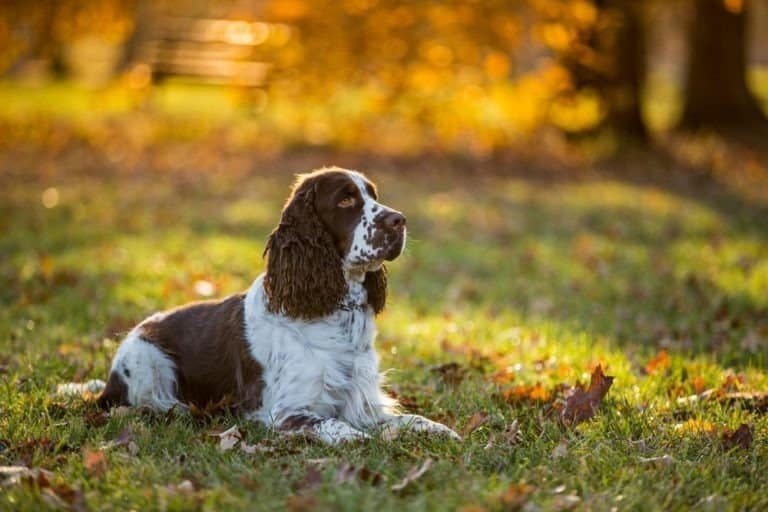
English Springer Spaniel Canis lupus familiaris UK bird-flushing gundogs (spaniels). The English Springer Spaniel is larger, with greater range and stamina; the English Cocker Spaniel is more compact and works closer in thick cover. Both need daily exercise, training, grooming, and ear checks.
Labrador Retriever
Labrador Retriever Canis lupus familiaris Both English Cocker Spaniels and Labrador Retrievers are family companions and sporting retrievers. Labrador Retrievers focus more on water work and have less ear-feather matting. English Cocker Spaniels require more grooming and have a higher risk of ear infections. Weight control protects joints in both breeds.
Brittany
Brittany Canis lupus familiaris Both hunt upland birds and are eager to please, but the Brittany usually points while the English Cocker Spaniel works close to flush and retrieve with a strong scent drive. Both require daily mental stimulation and off-leash training to prevent chasing wildlife.
Beagle
Beagle Canis lupus familiaris Shares small-to-medium scent-hound traits: a strong nose and a pronounced tracking drive. Compared with English Cocker Spaniels, beagles tend to be more independent, while English Cockers are often more handler-focused. Both breeds can become overweight without proper diet and exercise and may exhibit poor recall when distracted by scents.
Nova Scotia Duck Tolling Retriever
Nova Scotia Duck Tolling Retriever Canis lupus familiaris Similar energetic, trainable, bird-focused sporting companion. Both breeds can become high-arousal without appropriate outlets. The English Cocker's distinguishing physical adaptations are long feathering and pendulous ears, which require more ear, skin, and coat maintenance, while Tollers are more wash-and-wear but may share some immune and skin sensitivities.

Quick Take

  • Achieving AKC recognition required a 50-year selective breeding process to finalize this specific sporting breed.
  • The PRA condition creates a specific hereditary constraint that results in a total loss of eyesight.
  • Early litter division was essential to identify which pups possessed the specialized traits needed for woodcock.

English Cocker Spaniels are a sporting dog breed. Hundreds of years ago, the Spaniel breeds were developed in England. These breeds were descended from dogs from Spain, hence the name Spaniel. Originally, the breeds were classified by whether they were land or water spaniels. The three land spaniels were known as the Springing, Field, and Cocking Spaniel. The Cocking Spaniel, which was the expert at hunting woodcock, later became known as the English Cocker Spaniel.

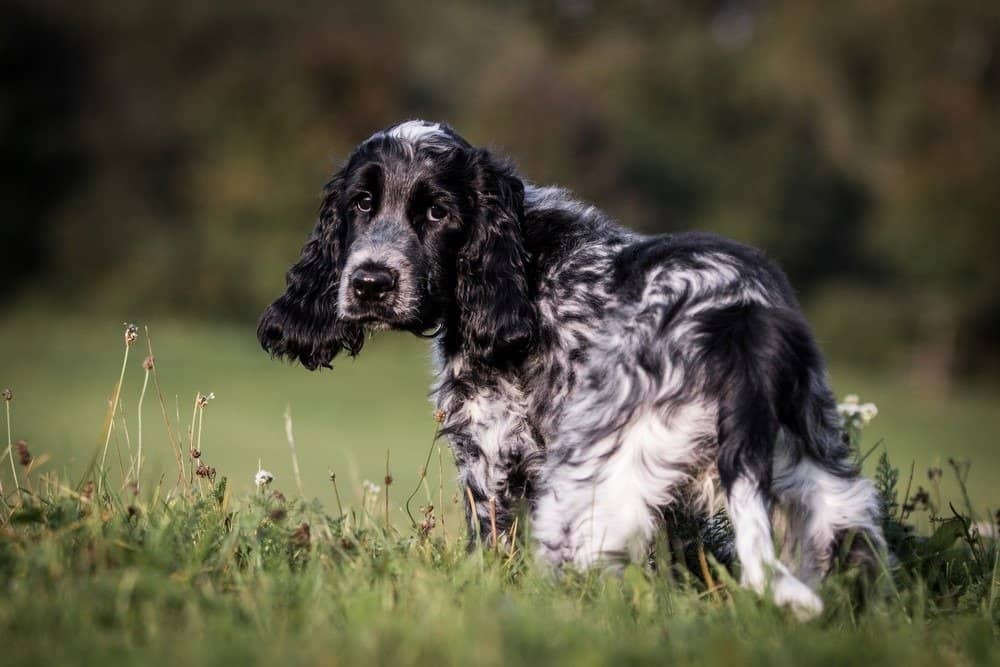
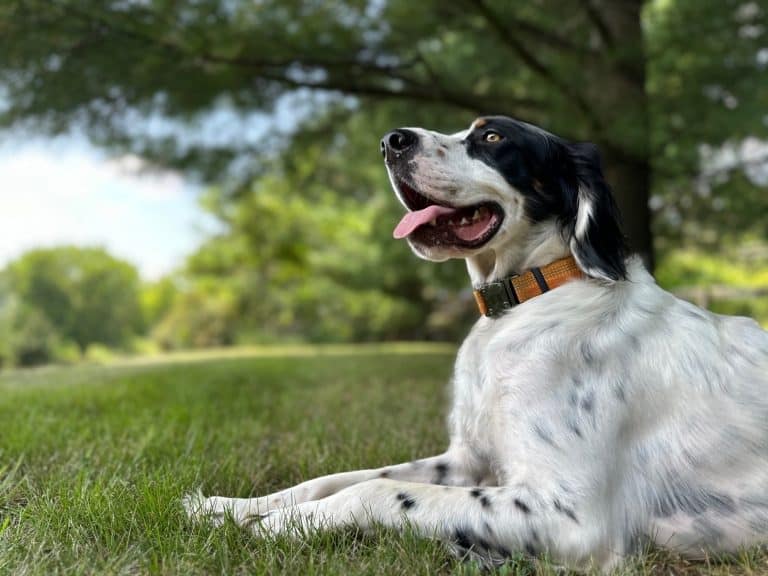
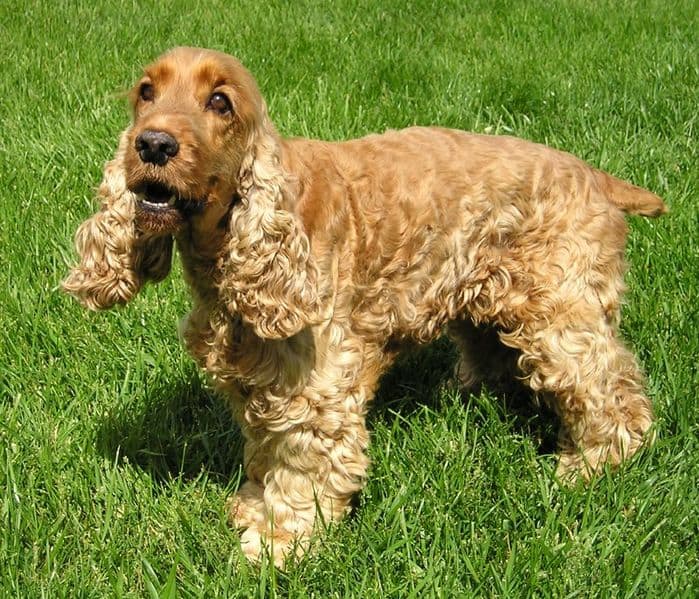
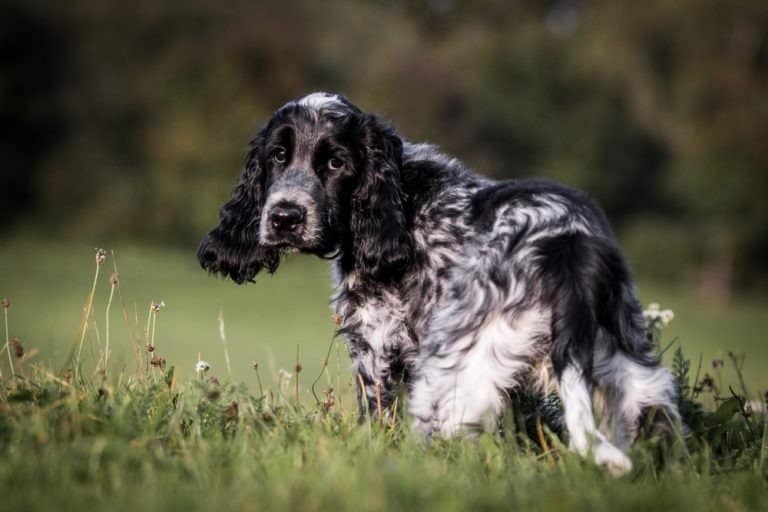
These gun dogs come in a variety of colors. They may have a solid golden, black, brown, or liver coat. Additionally, English Cocker Spaniels may also have a parti-colored coat. These may be liver roan, blue roan, orange roan with black or brown, black and white, orange and white, and a variety of other colors.

These dogs are intelligent, friendly, and affectionate. They are very loyal to their owners and can make a great family pet.

A vertical infographic about the English Cocker Spaniel featuring sections on history, size, weight, health issues, and care tips with various dog icons and green headers.
From a 50-year quest for perfection to its 16th-century Spanish roots—uncover the high stakes behind breeding the world's most specialized woodcock hunter. © A-Z Animals

3 Pros and Cons of Owning an English Cocker Spaniel

ProsCons
Easy to Train: English Cocker Spaniels are very intelligent and want to please their owners. This makes them very easy to train.Barking: These dogs bark more than some other breeds.
Good with Kids: This breed makes a great family pet. They are loving and affectionate with children.Grooming: This breed will require more grooming to maintain its coat than other breeds. Be prepared to brush your dog a few times a week and trim their hair monthly.
Playful: These dogs love to play. They would be a great addition to your family if you are looking for a playful pup or a companion for your child.Needs attention: English Cocker Spaniels do not do well when they are left home alone. They can develop separation anxiety, so this isn’t a good breed to consider if someone won’t be home with the dog most of the time.

Evolution and Origins

Running English cocker spaniel

English Cocker Spaniels were recognized as a breed in their own right by the AKC in 1946.

As far back as the 16th century, when spaniels were employed as hunting dogs, litters were divided into “springers”, which were larger pups that would be used for hunting larger game, and “cockers”, smaller pups that would grow to specialize in hunting woodcock.

However, during the late 19th century, both breeds began to be bred separately, resulting in each breed having a distinct physical appearance. 

About half a century following this selective breeding process, shortly after World War II, the AKC recognized the English cocker spaniel as a unique breed in its own right.

Size and Weight

English Cocker Spaniels are a medium-sized dog breed. Males are between 16 and 17 inches tall and weigh between 28 and 34 pounds. Females are just a bit smaller; they stand 15 to 16 inches tall and weigh between 26 and 32 pounds. At 3 months, the dog weighs between 11 and 14 pounds. By the time they are 6 months old, the puppies should weigh between 20 and 26 pounds. This breed will be fully grown somewhere between the ages of 14 and 16 months.

Common Health Issues

English cocker spaniel relaxing in grass

English cocker spaniels are prone to obesity.

Before adopting one of these dogs, there are a few common health issues faced by this breed that you’ll want to learn about. One problem that some English Cocker Spaniels face is obesity. Making sure your pup is eating the right portion of healthy and high-quality dog food is important. You will also want to make sure you give your dog enough exercise. Obesity can lead to other problems, such as digestive disorders, joint issues, and metabolic disorders, so taking steps to prevent your dog from becoming obese is important.

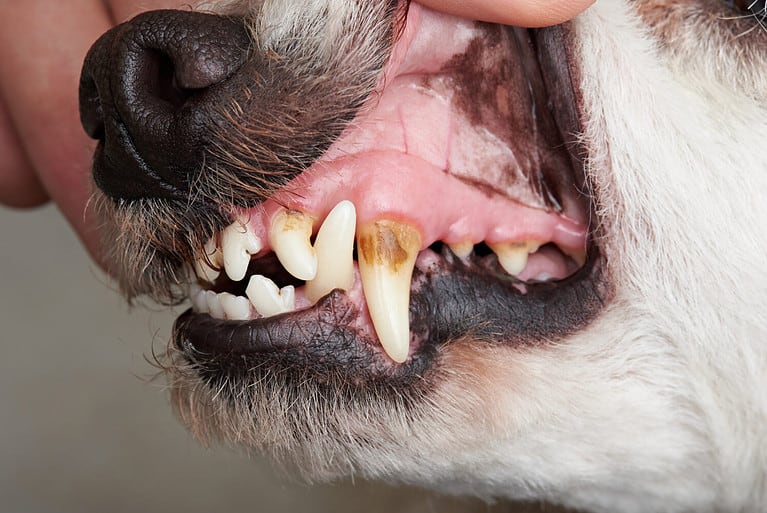
English Cocker Spaniels may also have problems with their teeth that can progress to dental disease. When tartar builds up on their teeth and isn’t removed, it can lead to an infection in the roots of their teeth and their gums. You’ll want to be sure to brush your dog’s teeth regularly and schedule dental cleanings with their veterinarian.

English Cocker Spaniel can also develop PRA, or progressive retinal atrophy. This is a degenerative eye disorder that can cause them to lose photoreceptors at the back of their eyes. This can cause an English Cocker Spaniel to completely lose their eyesight. Since PRA is hereditary, purchasing an English Cocker Spaniel from a reputable breeder is a good idea.

Bacterial and viral infections are other ailments that English Cocker Spaniels may face. Making sure your dog is properly vaccinated can help reduce the chances of them developing an infection such as rabies, distemper, or parvo.

Temperament
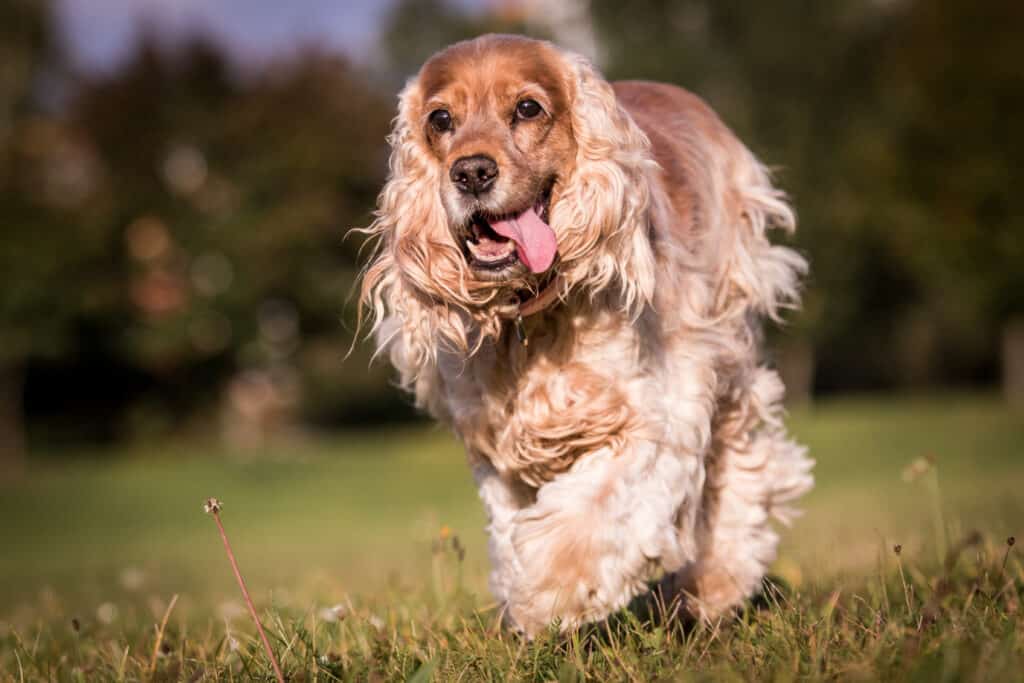
English Cocker Spaniels are very playful and amiable, but have a mind of their own

These dogs have a very affectionate personality. In general, this breed is very friendly towards people, especially those they know and trust. They may bark at a stranger or act slightly more reserved when someone they don’t know is around.

In addition to being very friendly and affectionate, they also exhibit very playful traits. When they are properly socialized, they can be a great dog to have around children and will enjoy being a playmate for a child.

English Cocker Spaniels are also known for being very intelligent and loyal dogs. Overall, these behaviors make them easy to train, but they are also known for being a bit stubborn.

How to Take Care of an English Cocker Spaniel

Before bringing home an English Cocker Spaniel, you’ll want to learn more about this breed so you can develop an appropriate care plan. The common health concerns, temperament, nutritional needs, and other factors should all be considered when you plan to care for your new dog.

The Best Dog Food

taste of the wild pacific stream puppy

Monitoring your English cocker spaniel’s calorie intake is important.

When feeding your dog, it is important to make sure you monitor their calorie intake and daily exercise levels. Since this breed often has problems with obesity, you want to be proactive to prevent your dog from facing this health concern. Keep in mind that dogs like English Cocker Spaniels that are prone to dental issues should eat kibble, not wet food.

Whether you have an adult or a puppy, you will want to select a high-quality dog food that will meet their nutritional needs. Adults should eat somewhere between 1 and 2 cups of food each day. Again, keep their activity level, weight, health concerns, and other important factors in mind when deciding the amount of food to feed your dog. You should divide their food into two meals each day.

When choosing food for a puppy, look for a food that is specially formulated for puppies. Younger puppies have a smaller stomach than older puppies and adults. Because of this, they will need to eat smaller, more frequent meals. You should plan to feed puppies that are up to 4 months old four meals each day. Puppies between 4 and 6 months should eat three meals each day. By the time a puppy is 6 months old, they should be able to handle eating two meals each day.

Maintenance and Grooming

English Cocker Spaniels are not low-maintenance dogs. Their coat will need to be brushed and combed at least once a week to keep their fur from getting matted and tangled. You will also need to schedule appointments with the groomer or trim their hair around their feet, face, and tail on your own. This should be done once every month. If you plan on doing this trimming on your own, you can purchase a pair of clippers, a stripping tool, and shears.

In addition to taking care of their coat, you will also need to clean their ears and make sure that wax or debris isn’t building up in them. A monthly nail trim and frequent tooth brushing will also be important with this dog breed.

Training

When positive reinforcement is used, these dogs can be very easy to train. They aim to please their owners, which simplifies the training process. It is important to note, though, that this breed responds very poorly to negative training methods. Stay positive and offer a lot of praise if you are looking for the best results.

In addition to training your dog, you will also want to be sure to socialize it from an early age. This can help ensure that it adjusts well to other people, pets, and places.

Exercise

You will want to make sure that your English Cocker Spaniel gets plenty of exercise each day. This breed enjoys playing, walking, or hiking with its family members. Since these dogs were bred to be hunting dogs, their exercise requirements are higher than those of some other breeds. Additionally, since this breed is prone to obesity, making sure your dog stays active can help prevent this problem as well.

Puppies

English cocker spaniel puppies

English Cocker Spaniel puppies should be taken to the vet soon after you have brought them home.

If you are bringing home a puppy, be sure to puppy-proof your home first. Remove anything that could be potentially hazardous to the puppy or that you wouldn’t want to see destroyed by the dog. You will also want to make sure you are prepared for the arrival of your new puppy. Purchase food, treats, a crate, a bed, a collar and leash, and other supplies before the new dog comes home.

After bringing your puppy home, be sure to schedule an appointment with your veterinarian. Keep your dog up to date on its vaccinations and have your veterinarian screen your dog for any health concerns. Keep in mind that puppies have a smaller stomach than a fully-grown dog. You’ll want to feed your puppy smaller, more frequent meals because of this.

Children

These dogs often make a great family dog. They have a very friendly and gentle personality, making them an excellent dog to have around children. If you have younger children who are more unpredictable, it may be best to wait until they are old enough to understand how to appropriately interact with a dog. As with all dog breeds, being in the same room and supervising your children when they are with the dog is a good idea. This will prevent any accidental injuries to either your child or the dog.

Dogs Similar to English Cocker Spaniels

Three dog breeds that are similar to English Cocker Spaniels are American Cocker Spaniels, English Springer Spaniels, and Field Spaniels.

  • American Cocker Spaniels: While the American Cocker Spaniel and English Cocker Spaniel are often confused, they are two distinct dog breeds. While both breeds have shared ancestors, breeders in North America focused on different traits than those in Europe, creating two different breeds. American breeders were looking to create Cocker Spaniels with solid colors, while British breeders preferred the parti-colored and roan Spaniels. American Cocker Spaniels are longer than they are tall, while English Cocker Spaniels have a squarer shape since they are taller than they are long. Both breeds are friendly and affectionate and can make a great family pet.
  • English Springer Spaniels: English Springer Spaniels are also sporting dogs. Both dogs are highly intelligent, playful, and easy to train. One key difference between these two breeds is their size. English Springer Spaniels are larger. They weigh around 50 pounds and are between 18 and 21 inches tall. English Cocker Spaniel, on the other hand, weigh closer to 30 pounds and are between 14 and 17 inches tall.
  • Field Spaniels: Field Spaniels are another gun dog. Both of these breeds are playful, easy to train, affectionate, and sensitive. Field Spaniels are a little easier to groom than English Cocker Spaniels and are less likely to bark.

Famous English Cocker Spaniels

These dogs have been featured in literature and film. Two poems written by Elizabeth Barrett Browning, “To Flush, My Dog” and “Flush or Faunus”, were written to her Cocker Spaniel.

Another famous English Cocker Spaniel was Lupo, who was owned by Prince William and Catherine, Duke and Duchess of Cambridge, until his death in November 2020.

View all 185 animals that start with E

Sources

  1. David Burnie, Dorling Kindersley Animal, The Definitive Visual Guide To The World's Wildlife / Accessed November 10, 2008
  2. Tom Jackson, Lorenz Books The World Encyclopedia Of Animals / Accessed November 10, 2008
  3. David Burnie, Kingfisher The Kingfisher Animal Encyclopedia / Accessed November 10, 2008
  4. David Burnie, Dorling Kindersley Illustrated Encyclopedia Of Animals / Accessed November 10, 2008
  5. Dorling Kindersley Dorling Kindersley Encyclopedia Of Animals / Accessed November 10, 2008
  6. American Kennel Club / Accessed November 4, 2020
  7. Wikipedia / Accessed November 4, 2020

A-Z Animals Staff

About the Author

A-Z Animals Staff

AZ Animals is a growing team of animals experts, researchers, farmers, conservationists, writers, editors, and -- of course -- pet owners who have come together to help you better understand the animal kingdom and how we interact.
Connect:

Thank you for reading! Have some feedback for us?


English Cocker Spaniel FAQs (Frequently Asked Questions)

The cost of adopting an English Cocker Spaniel can vary, but on average you should expect to spend between $800 and $1,200. In addition to the cost of adopting the dog, be sure to think about the other related expenses you’ll need to cover. These can include medical bills, food, treats, crates, dog beds, leashes, collars, and other supplies. This could add up to $1,000 or more for the first year you own the dog, and you should budget at least $500 for every year after that.