

E
Species Profile

English Shepherd

Canis lupus familiaris

One dog, a whole farm's worth of skills
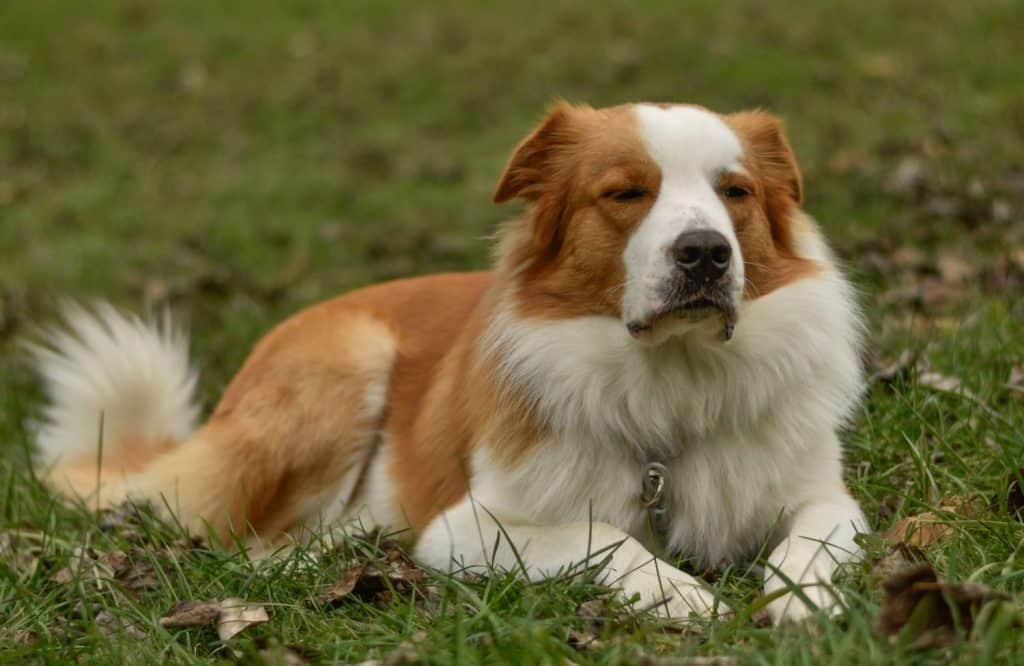
TheLaceratingLynx/Shutterstock.com

English Shepherd Distribution

Click a location to explore more animals from that region

Origin Location

This map shows the native origin of the English Shepherd. As a domesticated species, they are now found worldwide.

Loading map...

Size Comparison

Human 5'8"
English Shepherd 1 ft 9 in

English Shepherd stands at 31% of average human height.

Beautiful English Shepherd Dog watching his flock of Sheep

At a Glance

Domesticated
Diet Omnivore
Activity Diurnal+
Lifespan 12 years
Weight 27 lbs
Status Not Evaluated
Did You Know?

Despite the name, the English Shepherd was developed mainly in North America from British Isles collie-type farm dogs.

Scientific Classification

The English Shepherd is a North American farm and herding dog type developed from British Isles collie-type dogs. It is typically an all-purpose working dog used for herding livestock, farm guarding/alarm barking, and general chores, noted for biddability and versatility.

Kingdom
Animalia
Phylum
Chordata
Class
Mammalia
Order
Carnivora
Family
Canidae
Genus
Canis
Species
lupus

Distinguishing Features

  • Medium-sized, athletic farm-collie build
  • Often black-and-tan, sable-and-white, tricolor, or black-and-white coats; moderate coat length
  • Strong herding instinct with an ‘all-around farm dog’ temperament
  • Typically semi-erect or prick ears; agile movement suited to stock work

Physical Measurements

Males and females differ in size

Height
♂ 1 ft 9 in (1 ft 7 in – 1 ft 11 in)
♀ 1 ft 8 in (1 ft 6 in – 1 ft 10 in)
Length
♂ 3 ft 8 in (3 ft 1 in – 4 ft 3 in)
Weight
♂ 53 lbs (44 lbs – 60 lbs)
♀ 44 lbs (35 lbs – 55 lbs)
Tail Length
♀ 1 ft 1 in (11 in – 1 ft 3 in)
Top Speed
30 mph
Fast, agile herding dog

Appearance

Primary Colors
Secondary Colors
Skin Type English Shepherd (Canis lupus familiaris) has a weather‑proof double coat: medium-length dense undercoat and straight to slightly wavy outer coat. Pigment matches coat; hardy outdoors but can get irritated if undercoat stays damp or matted.
Distinctive Features
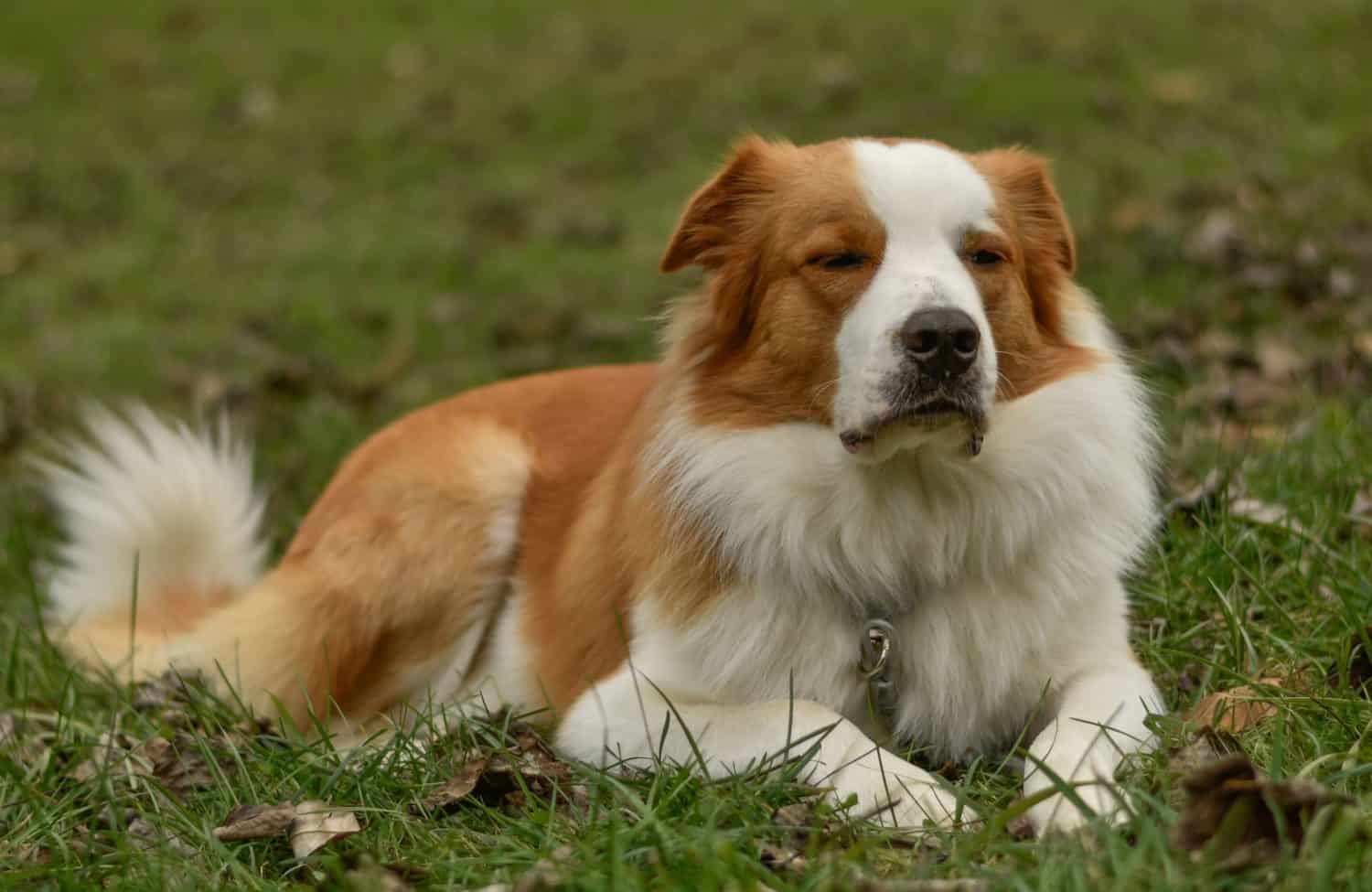
  • Medium sized, balanced herding dog with an athletic, slightly longer-than-tall body; medium double coat straight or wavy; semi-erect or drop ears; long tail; common colors include sable, black and tan, black and white, or tricolor.
  • Overall build: medium-sized, athletic, and agile rather than heavy; built for all-day trotting, quick turns, and short bursts of speed while herding and doing chores.
  • Head/ears: wedge-shaped collie-like head with alert expression; ears commonly semi-erect or tipped, enhancing the characteristic "always listening" farm-dog look.
  • Tail: typically medium-to-long and carried low-to-level when relaxed, with a fuller tail coat; tail carriage may rise when excited/working but usually not tightly curled.
  • Coat: practical, medium-length double coat with protective feathering (neck ruff, back of legs, tail) that sheds debris; seasonal shedding can be heavy.
  • Working roles: an all-purpose farm and herding dog-used for moving livestock, boundary work, alarm barking, vermin awareness, and general utility tasks; notable for reading stock, responsiveness, and switching between drive and control.
  • Temperament/ability: highly trainable and biddable with strong handler focus; typically steady and sensible with an 'off switch' when adequately exercised, but can become noisy/anxious or develop nuisance herding if under-stimulated.
  • A traditional farm-collie type, the English Shepherd is lighter coated than the Old English Sheepdog and lacks the merle color and stockier body seen in many Australian Shepherds, though similarly mid-sized.
  • Care requirements: needs daily physical exercise plus mental work (obedience, herding-style games, scentwork); best with structured training and a job-like routine; early socialization helps prevent over-guarding or suspicion of strangers.
  • Grooming: weekly brushing to prevent undercoat matting; more frequent during seasonal coat blow; check ears/feet for debris after field work.
  • Collie-type dogs often have hip dysplasia, elbow problems, epilepsy in some lines, and eye issues (collie-type eye concerns). They can have MDR1 drug sensitivity; breeders may test and owners should ask vets about meds.

Sexual Dimorphism

Sexual dimorphism is moderate: males are typically larger and more robust in head/neck and overall frame; females are often slightly smaller and more refined, but both remain athletic and work-capable.

♂
  • Slightly taller/heavier overall with a broader skull and stronger muzzle.
  • More pronounced neck ruff and chest if heavily coated.
  • May show more territorial posturing in adolescence without training/socialization.
♀
  • Slightly lighter frame with a more refined head and narrower chest.
  • Often matures a bit earlier behaviorally; may appear more agile/quick in tight stock work.
  • Heat cycles and reproductive status can influence coat fullness and energy level.

Did You Know?

Despite the name, the English Shepherd was developed mainly in North America from British Isles collie-type farm dogs.

It's an "all-purpose" farm dog: herding livestock, alerting to strangers, and helping with everyday chores.

Many have a natural "loose-eyed" herding style-upright, practical movement rather than the intense crouch seen in some Border Collies.

Common coat patterns include black & tan, sable, tricolor, and black & white-often with a classic collie-like outline.

Because it's a working type/landrace in practice, you may see more variation in looks than in many modern show-bred breeds.

They're known for strong handler focus and quick learning-traits shaped by generations of daily farm problem-solving.

Good ones can switch gears fast: calm around family, serious when stock or property needs attention.

Unique Adaptations

  • Domestic-dog specialization (vs. gray wolf): reduced fear and increased responsiveness to human cues, enabling cooperative herding and farm guardianship.
  • Selection for biddability: high trainability and willingness to take direction at distance (whistles/voice), unlike the more self-directed hunting strategy of wolves.
  • All-weather double coat common in the type: insulating undercoat with protective outer coat, fitting year-round outdoor farm work.
  • Athletic, efficient build: typically medium-sized and agile for repeated sprints, sharp turns, and long workdays without the heavier mass of many guardian breeds.
  • Behavioral "switch": ability to alternate between family companion and working mode-an outcome of selection for stable temperament on busy farms.
  • Broad working toolkit: blending herding, watchdogging, and vermin-alert tendencies rather than extreme specialization in a single task.

Interesting Behaviors

  • "Gather-and-drive" versatility: many individuals can both bring stock to the handler and push animals forward, adjusting to the job.
  • Natural perimeter checking: patrolling fence lines and property edges, paired with quick alarm barking when something changes.
  • Context-sensitive voice: using bark strategically (alerting/pressure on stock) rather than constant noise-though under-stimulated dogs may become more vocal.
  • Shadowing and "helping": following a farmer closely, anticipating tasks, and inserting themselves into routines (e.g., moving ahead to head off livestock).
  • Strong motion sensitivity: quick orientation to running animals, vehicles, or kids-useful for work, but requires training to prevent inappropriate chasing.
  • Problem-solving with persistence: figuring out gates, moving around obstacles to control stock, or choosing angles to block escapes.
  • Soft-to-firm pressure: many modulate intensity-calm presence for compliant animals, increased push when stock tests boundaries.

Cultural Significance

The English Shepherd (Canis lupus familiaris) is a North American farm dog, a collie-descended worker that does many jobs—moving cattle, sheep, and poultry; alerting the home; and helping with daily chores—tied to British working-collie roots and keeping farms running.

Myths & Legends

Old farm 'collie' tales say one steady farm dog could do the work of three—herd animals, guard the yard, and still rest by the stove. English Shepherds (Canis lupus familiaris) are often named.

Naming lore: families sometimes passed down the idea that these dogs were the direct continuation of British 'English' farm collies brought by settlers-an origin story that reinforced the breed's reputation as a practical, traditional helper.

The 'stockman's shadow' story in herding communities tells of a trusted farm collie that would lead animals to the barn or hold a gate when its handler stepped away, showing almost instinctive loyalty and understanding.

Barnyard superstition held that keeping a reliable black-and-tan or tri-colored collie-type dog in the yard acted as a living 'warning bell' against thieves and predators, linking coat color to watch in local lore.

Conservation Status

NE Not Evaluated

Has not yet been evaluated against the criteria.

Population Stable

Life Cycle

Birth 6 pups
Lifespan 12 years

Lifespan

In the Wild
10–13 years
In Captivity
10–13 years

Reproduction

Mating System Polygynandry
Social Structure Managed Domestic
Breeding Pattern Not Applicable
Fertilization Managed Selective
Birth Type Managed_selective

English Shepherd (Canis lupus familiaris) breeding is managed by humans with planned pairings. Dogs may breed with many partners in life (polygynandry). Mating is internal; a mating "tie" is common. Pair bonds and cooperative breeding are not typical.

Behavior & Ecology

Social Pack Group: 2
Activity Diurnal, Crepuscular, Cathemeral
Diet Omnivore Meat-forward, animal-protein-rich meals (e.g., beef or chicken-based diets)

Temperament

Biddable, cooperative, and human-focused; readily takes direction compared with the base species (wolf), reflecting selection for handler responsiveness and reduced fear/aggression thresholds toward people.
Versatile working drive: herding, farmyard patrol, and general-purpose chores; tends to prefer having a job and may become restless or nuisance-bark if under-stimulated.
Alert and watchful; commonly an 'alarm barker' with strong territorial awareness, but typically not indiscriminately aggressive when well-socialized.
Sensitive and quick to learn; responds best to consistent, fair training and can shut down with harsh handling.
Moderate to high energy with an off-switch when needs are met; thrives on daily exercise plus problem-solving (training, scent games, stock work).
Sociability varies by individual and line: many are reserved with strangers but affectionate with family; early socialization is important to prevent over-suspicion.
Herding behaviors (circling, blocking, eye contact, occasional heel-nip) may appear toward children/pets if not given appropriate outlets and training.
Care requirements: regular mental enrichment, structured exercise, and clear boundaries; medium-length double coat typically needs routine brushing (more during shedding seasons).
Health concerns seen in the broader collie-type/herding-dog population may occur: hip dysplasia, elbow dysplasia, eye disorders (e.g., CEA/PRA), epilepsy; some lines may carry MDR1 drug-sensitivity-responsible screening/testing is recommended.
HUBS (common patterns across the breed group): strong handler engagement, flexible 'all-around farm dog' role, and vocal alarm tendencies; variation is driven by working vs companion selection, early environment, and opportunity for stock work.

Communication

Alarm barking (often rapid, repetitive) to announce strangers/changes on the property; more pronounced than in many pet-bred dogs due to farm-guarding/alarm selection.
Low growls and sharper barks during boundary enforcement or when controlling livestock movement Typically more communicative than threatening
Whines/whimpers for attention, frustration, or anticipation E.g., before work
Intense eye contact ('herding eye') and head/shoulder orientation to apply pressure and steer livestock; modified from the wolf predatory sequence but inhibited at the grab/kill stages.
Body blocking, circling, and quick directional feints to influence movement; may use controlled nipping at heels in some individuals if not trained otherwise.
Tail carriage, ear set, and posture shifts (upright alert vs relaxed) to signal arousal level to humans, dogs, and stock.
Scent marking and investigative sniffing around territory; uses olfaction to monitor farm changes and visitor routes.
Human-directed signaling (checking back, pointing with muzzle, pacing to the target area) reflecting domestication-driven interspecific communication.

Habitat

Biomes:
Temperate Forest Temperate Grassland Mediterranean Boreal Forest (Taiga) Tundra Alpine Desert Hot Desert Cold Wetland Freshwater +4
Terrain:
Plains Valley Hilly Mountainous Riverine
Elevation: Up to 16404 ft 3 in

Ecological Role

Domestic working omnivore and human-associated mesopredator on farms; differs from the base wild-type wolf in relying primarily on human-provided nutrition and performing herding/guarding tasks rather than sustained pack hunting.

Rodent and small-pest suppression around farmsteads Livestock management via herding (reduces animal losses and improves pasture use) Deterrence/alarm signaling against intruders and some predators Scavenging prevention when managed (by removing carcasses/secure storage) and reduced disease risk through controlled feeding Human companionship and working support

Diet Details

Main Prey:
Rodents Rabbits and other small lagomorphs Small birds and ground-nesting bird eggs Invertebrates
Other Foods:
Fruits Vegetables Cooked grains and starches Grasses and other plant matter

Human Interaction

Domestication Status

Domesticated

Dogs (Canis lupus familiaris) come from the gray wolf and were shaped by people to be tame and helpful. The English Shepherd grew in North America from British collie-type dogs brought by settlers and was bred in the U.S. and Canada for farm work—herding, vermin control, guarding, and chores—favoring obedience, focus, the ability to solve problems, and controlled herding instincts.

Danger Level

Low
  • Herding-related nipping/chasing of running children or cyclists if under-stimulated or untrained
  • Protective/alarm behavior can escalate to defensive aggression with poor socialization or mishandling
  • Bite risk increases when pain is present (e.g., orthopedic issues) or when stressed/guarding resources
  • Zoonotic/health considerations typical of pet dogs (bite wound infection risk; parasites if not on prevention)

As a Pet

Suitable as Pet

Legality: English Shepherd (Canis lupus familiaris) is usually legal as a pet and not often banned by breed laws. Owners must follow normal rules: license, leash, shots, nuisance/livestock rules; renters or HOAs may limit size or behavior.

Care Level: Moderate

Purchase Cost: $300 - $1,800
Lifetime Cost: $20,000 - $55,000

Economic Value

Uses:
Agricultural labor (herding/stock management) Companion animal Sport and competition (herding, obedience, agility) Breeding and training services
Products:
  • Herding/stock-dog services (moving, sorting, penning livestock)
  • Farm utility work (property alerting, deterrence of pests/strays)
  • Puppy sales/adoptions and stud services
  • Training, lessons, and trial participation (herding/obedience)
  • Therapy or community outreach work (individual-dependent)

Relationships

Ecological Equivalents 6

Animals that fill a similar ecological role in their ecosystem

English Shepherds descended from shepherds’ dogs from southern Scotland and England. They are also related to Border Collies, Scotch Collies, and Australian Shepherds, though English Shepherds were more of a working dog than a show dog, like many of their cousins.

While the English Shepherd is not currently recognized by the American Kennel Club, it has been recognized by the United Kennel Club since 1927. English Shepherds are very eager to please. They can make an excellent family dog and can excel in agility and obedience training events.

Owning an English Shepherd: 3 Pros and Cons

ProsCons
Loyal and protective: English Shepherds are very loyal. They can be very protective of the people in their family, including children.High activity needs: English Shepherds are very active and require between one and two hours of exercise every day.
Healthy: Overall, English Shepherds are a healthy breed.Shedding: This breed sheds a lot. Be prepared to have hair all over.
Easy to train: This breed is very eager to please and intelligent. This makes them easier to train than many other breeds.Territorial: English Shepherds can be territorial and may bark at visitors or people who walk by your home.

Evolution and Origins

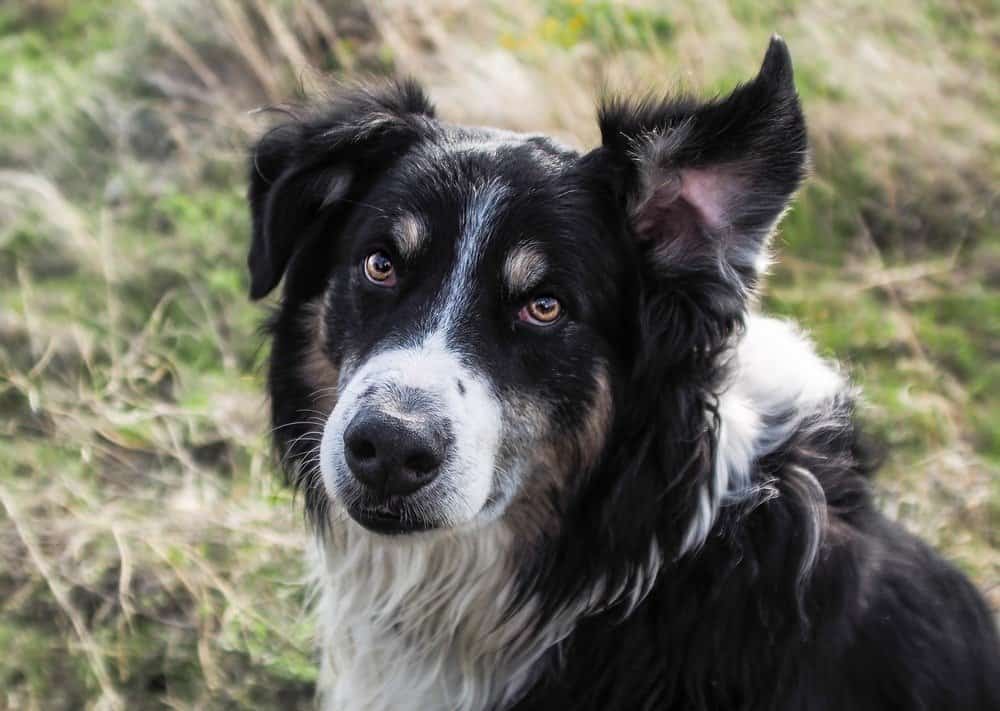
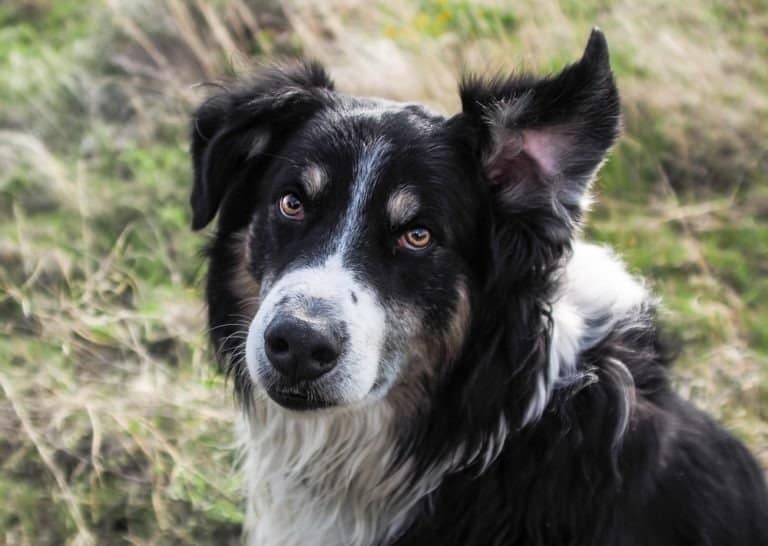
An English Shepherd at full attention with one ear in the air.

English shepherds are believed to have descended from collies, which herded sheep for centuries in Britain.

In spite of their name, English shepherds are actually quite American. However, they owe their name to the fact that English settlers in America brought their beloved herding dogs with them, which were named Scotch collies. Due to their history as farm dogs, they are also known as farm collies or farm shepherds.

A peek into their distant past reveals that they are a variety of collie, a breed which is believed to be one of the oldest on the British Isles and to have also been employed as a canine shepherd for centuries.

Size and Weight

English Shepherds are a medium-sized breed. Male dogs are slightly larger than female dogs. A male weighs between 45 and 60 pounds and stands between 19 and 23 inches tall. Females weigh between 40 and 50 pounds and are between 18 and 22 inches tall.

Common Health Issues
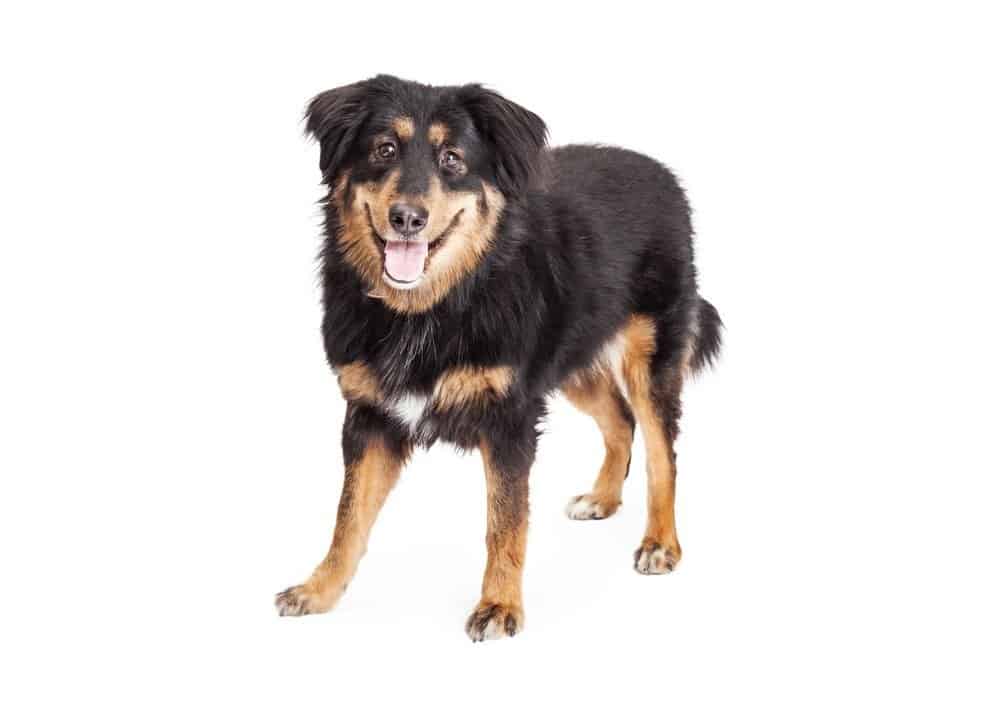
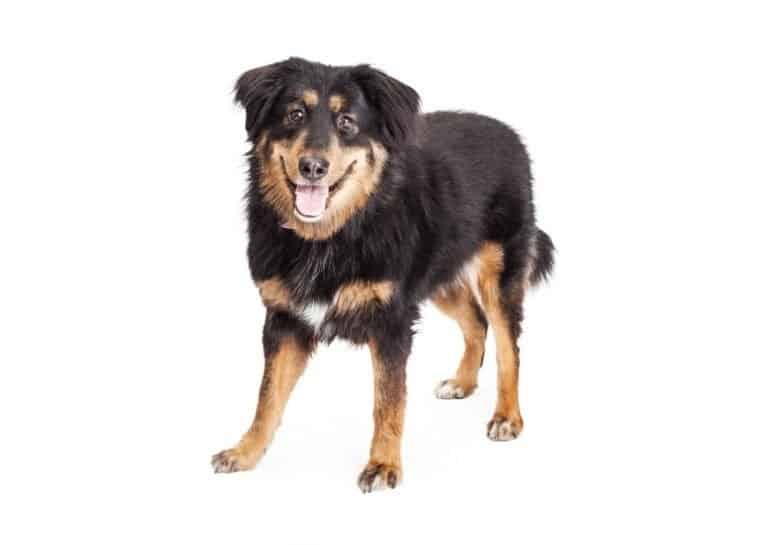
An English Shepherd n white background

English shepherds are prone to luxating patella and elbow dysplasia.

These dogs are a healthy breed. Still, there are a few health issues you should be aware of that could develop.

As an active breed, they may have bone and joint issues. One condition they may develop is hip dysplasia. This is a condition in which the thighbone doesn’t connect smoothly with the hip bone. The two bones rub against each other, which can be painful or cause the dog to limp.

Similarly, English shepherds may also develop elbow dysplasia. Like hip dysplasia, this condition is a result of the bones at the elbow not connecting properly and rubbing against one another. This can cause the dog to limp and will also be painful.

Another possible concern for this breed is a luxating patella. Dogs with this condition have a kneecap that slips in and out of place. You may notice that your English Shepherd slips as he walks, but then appears to be back to normal for the next step.

Temperament and Behavior

These dogs have a very loyal personality. They were used as herding dogs, so they can make excellent working dogs. However, this breed also exhibits traits and behaviors that make it an ideal family pet. They are protective and eager to please. Additionally, they are very intelligent dogs, which makes it easier to train this breed.

How To Take Care of an English Shepherd
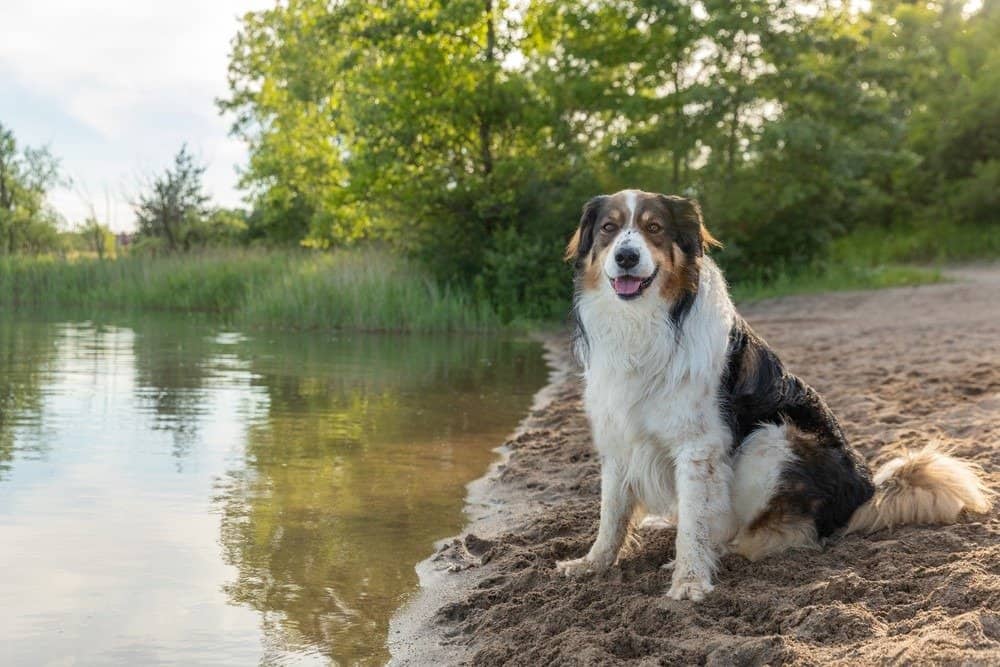
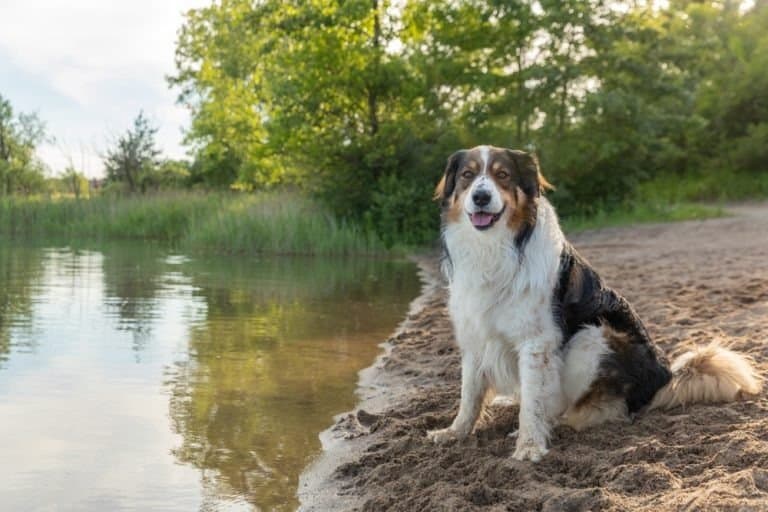
An English Shepherd at the edge of a lake

English shepherds require a spacious play area and about one to two hours of exercise daily.

You will need to take your English shepherd’s health concerns, temperament, nutritional needs, and other unique characteristics into account when you create a care plan for your pup.

Because an English shepherd is a working dog breed, it requires a lot of exercise. English shepherd dogs aren’t suitable for apartment living and do much better in homes with a large, fenced backyard with plenty of room to run and play, as they require a lot of mental stimulation.

Without the right type of training and socializing, this dog breed can become stubborn and bossy. They have thick, soft fur that requires regular brushing and grooming with an occasional bath.

The Best Dog Food for English Shepherds
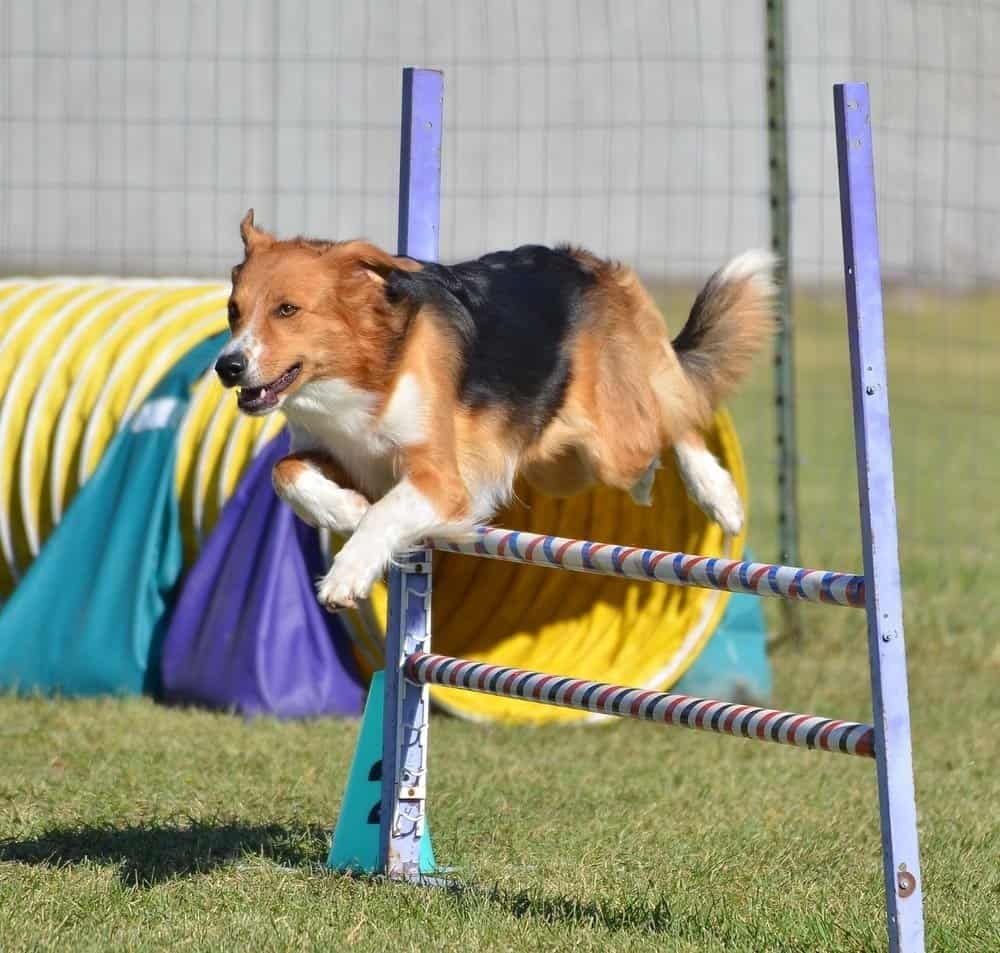
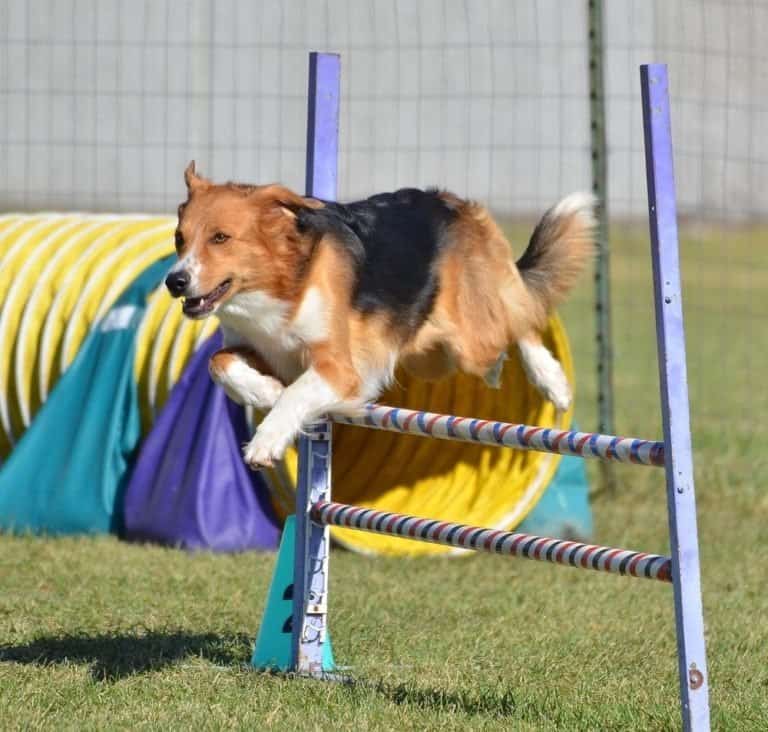
English Shepherd Leaping Over a Jump at a Dog Agility Trial

The best foods for shedding and bone health should be considered when planning an English shepherd’s diet.

Look for high-quality and nutritious food for your dog. Many English Shepherd owners recommend feeding this breed a mix of dry and wet foods. The amount of shedding that comes with English Shepherds can be hard to keep up with. While this probably won’t dramatically reduce shedding, you can read up on the best dog foods for shedding and which nutrients can nourish the skin and fur for some degree of shedding control.

Most dogs of this breed will need about three cups of food each day, split into two or three smaller meals. The exact amount of food your dog will need may vary based on its weight, age, health concerns, and activity level. Consult their veterinarian if you are unsure how much food you should feed them.

Puppies have a smaller stomach than adults and can’t handle as much food at a time. For this reason, they should be fed smaller meals more frequently throughout the day.

Maintenance and Grooming

These are heavy-shedding dogs. You will need to brush their coat between two and three times each week to reduce the amount of shedding around your house. While you will need to brush them pretty frequently, the dog won’t need to be bathed very often. They have a waterproof and dirt-proof coat that keeps itself looking pretty good.

Their nails should be trimmed to keep them short and prevent them from causing the dog discomfort when he walks. Their teeth should be brushed a few times each week, and their ears should be cleaned out regularly to keep them from getting clogged with dirt.

Training

These dogs are easier to train than many other breeds. They are very eager to please and intelligent, so they’ll pick up on commands and expectations rather quickly. Using positive reinforcement training techniques is the best way to help this breed learn expectations, so be sure to follow up with lots of praise or treats when they do what you want them to.

If you have young children or other pets in the home, you may need to train your English Shepherd not to herd them. Since they were bred to be herding dogs, their instincts may kick in, and they could attempt to corral children or other pets in the home.

Exercise

These are highly active dogs that require a lot of exercise. They should get between one and two hours of activity each day, so they are best suited for very active owners. Some ways you can help your dog get the exercise he needs include taking him for long walks, going hiking, visiting the dog park, letting him swim, or playing in a large fenced-in backyard together.

In addition to physical exercise, these dogs also require plenty of mental stimulation. Without it, they can easily become bored and may be destructive. Agility and obedience training are great ways to provide mental stimulation to these dogs. Food toys can also offer some mental stimulation for this breed.

Puppies

Bringing home an English Shepherd puppy is a big commitment. This breed lives an average of 12 to 14 years, so you shouldn’t bring one home unless you’re ready to provide them the care they need for their entire life.

There is more variability in this breed than with some others. Before selecting a puppy to bring home, talk to the breeder to learn about the puppies in their litter. Try to find a few different breeders with puppies available and schedule visits to get to know each dog. This can help you find the right fit for you and your family. You should also request information about the parents’ history to confirm that they didn’t have any genetic conditions that could be passed on to a puppy.

Before you bring home your new puppy, you should make sure that your home is ready. Puppy-proof all the rooms the dog will have access to and purchase food, toys, and all the supplies they’ll need.

Children
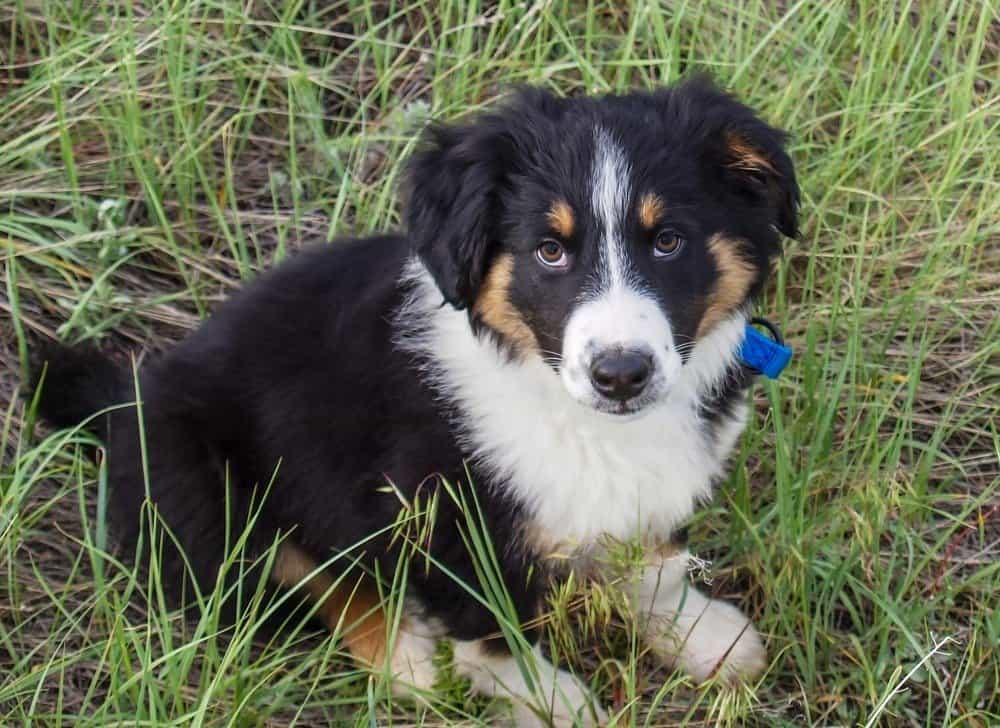
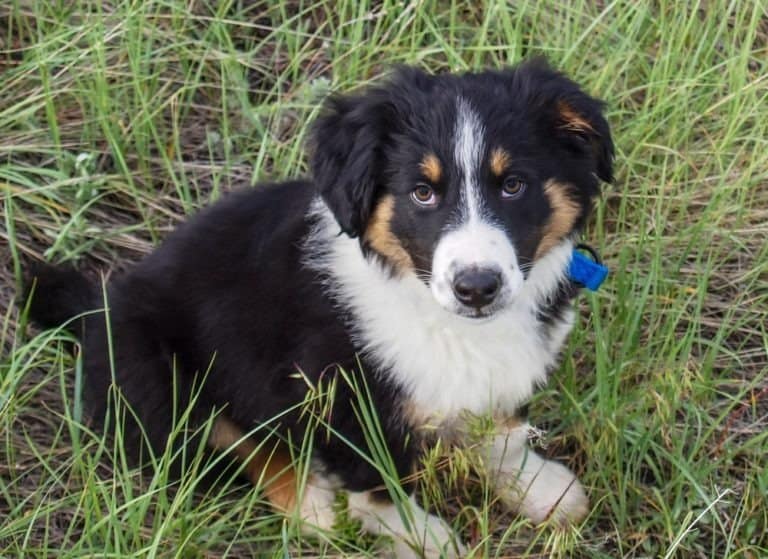
A English Shepard puppy in a grassy field

English shepherds tend to get along well with children.

English shepherds are ideal for families with children. They are eager to please and easy to train, so it will be easy to teach your dog how to interact with a child. They are also very protective and will look out for a child.

Similar Breeds

Border Collies, German Shepherds, and Miniature Australian Shepherds are three breeds that are similar to these dogs.

  • Border Collie: Border Collies and English Shepherds share common ancestors. They are both excellent herding dogs and are highly intelligent. English Shepherds are larger in size than Border Collies, though. Male English Shepherds typically weigh between 45 and 60 pounds, while male Border Collies usually weigh between 30 and 55 pounds.
  • German Shepherd: German Shepherds and English Shepherds are both affectionate and playful. Both breeds are also easy to train and can be territorial. German Shepherds are a larger breed. Male German Shepherds typically weigh between 66 and 88 pounds, while male English Shepherds usually weigh between 45 and 60 pounds.
  • Miniature Australian Shepherd: Miniature Australian Shepherds and English Shepherds can both be used for herding livestock. Both breeds are easy to train and are very territorial. Miniature Australian Shepherds are smaller than English Shepherds, though. Miniature Australian Shepherds typically weigh between 20 and 40 pounds, while male English Shepherds usually weigh between 45 and 60 pounds.

View all 185 animals that start with E

Sources

  1. English Shepherd Club / Accessed December 1, 2020
  2. Pet Finder / Accessed December 1, 2020
  3. Wikipedia / Accessed December 1, 2020
  4. Perfect Dog Breeds / Accessed December 1, 2020
  5. Go Pup! / Accessed December 1, 2020
Dana Mayor

About the Author

Dana Mayor

I love good books and the occasional cartoon. I am also endlessly intrigued with the beauty of nature and find hummingbirds, puppies, and marine wildlife to be the most magical creatures of all.
Connect:

Thank you for reading! Have some feedback for us?


English Shepherd FAQs (Frequently Asked Questions)

Purchasing an English Shepherd from a breeder can be expensive. This breed typically costs between $800 and $4,000. The dog’s pedigree and training as well as the breeder’s reputation can impact how much you’ll end up paying. If you choose to adopt an English Shepherd, you should expect to spend about $300 for vaccinations and application fees.

You will also want to consider the other costs associated with taking care of an English Shepherd. Your English Shepherd will need food, a collar and leash, toys, a bed, a crate, and other supplies. You will also need to budget money for veterinary bills and training. This could cost well over $1,000 the first year you own the dog and may cost between $500 and $1,000 each subsequent year.