

F
Species Profile

Ferret

Mustela putorius furo

Small body, big mischief.
Clement Morin/Shutterstock.com

Ferret Distribution

Click a location to explore more animals from that region

Invasive Species
Origin Location

This map shows the native origin of the Ferret. As a domesticated species, they are now found worldwide.

Loading map...
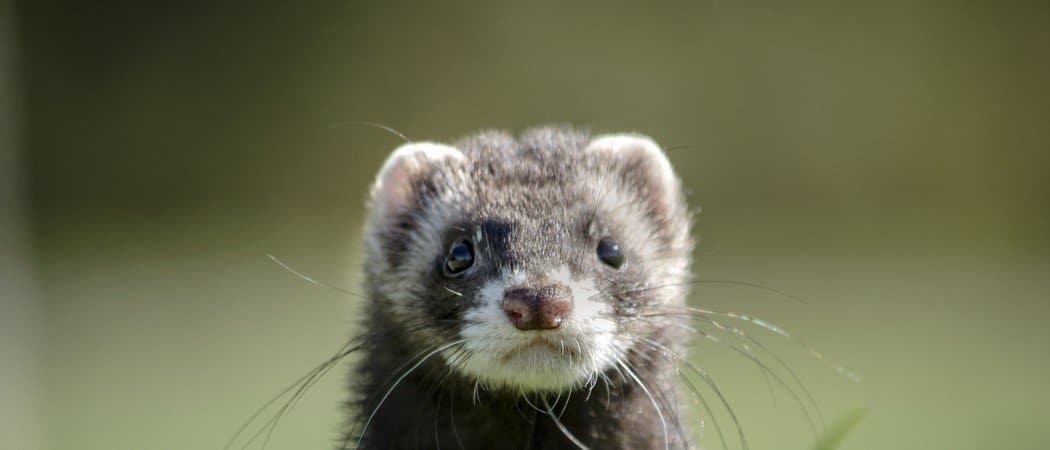
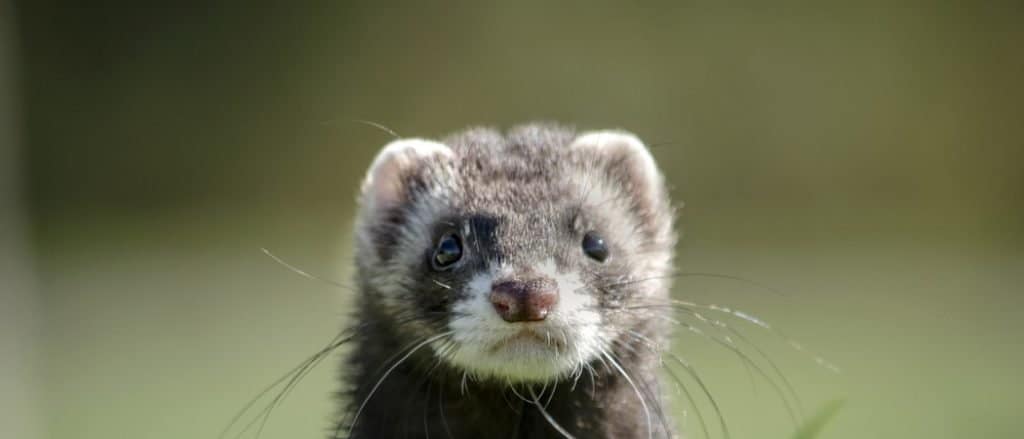
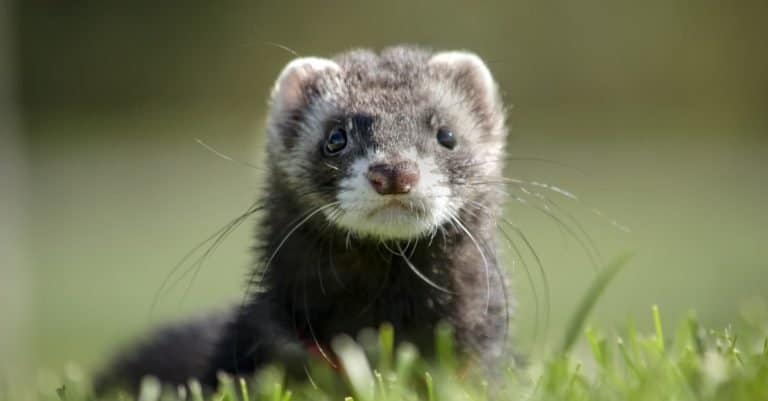
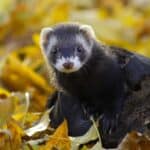
adark grey ferret is posing in the grass

At a Glance

Domesticated
Also Known As Ferret, Polecat, Domestic polecat, Pet ferret, House ferret, Fitch
Diet Carnivore
Activity Crepuscular+
Lifespan 8 years
Weight 2 lbs
Status Not Evaluated
Did You Know?

Scientific name literally hints at behavior: *furo* comes from Latin for "thief," reflecting their love of stealing/caching objects.

Scientific Classification

The domestic ferret is a small, long-bodied mustelid kept as a companion animal and historically used for hunting rabbits (“ferreting”). It is closely related to the European polecat and readily hybridizes with it.

Kingdom
Animalia
Phylum
Chordata
Class
Mammalia
Order
Carnivora
Family
Mustelidae
Genus
Mustela
Species
Mustela putorius

Distinguishing Features

  • Elongate body with short legs and a long tail
  • Prominent facial mask common in many color morphs
  • Strong musk odor from scent glands (often reduced via descenting in some regions)
  • Highly flexible spine and inquisitive, tunnel-exploring behavior typical of mustelids

Physical Measurements

Males and females differ in size

Height
6 in (5 in – 6 in)
Length
1 ft 10 in (1 ft 7 in – 2 ft)
1 ft 6 in (1 ft 4 in – 1 ft 8 in)
Weight
3 lbs (2 lbs – 5 lbs)
2 lbs (1 lbs – 2 lbs)
Tail Length
5 in (4 in – 6 in)
4 in (3 in – 5 in)
Top Speed
15 mph
About 24 km/h

Appearance

Primary Colors
Secondary Colors
Skin Type Mammalian skin covered by dense fur, typically a double coat (soft underfur with longer guard hairs) that molts seasonally; prominent whiskers (tactile facial hairs) and small, non-retractile claws.
Distinctive Features
  • Elongated, flexible body with short limbs and a long neck; adapted for moving through burrows-consistent with historical use in rabbit hunting ("ferreting").
  • Adult size is strongly sex-dependent: typical head-body length ~33-40 cm with tail ~7-10 cm; body mass commonly ~0.6-2.0 kg (reported in veterinary references for the domestic ferret; e.g., Fox, 1998; Quesenberry & Carpenter, Ferrets/Rabbits/Rodents).
  • Broad, slightly flattened head with short muzzle; facial 'mask' common in polecat/sable pattern (dark eye/cheek area contrasting with lighter forehead and muzzle).
  • Dense coat with noticeable seasonal molt; individuals may show stronger guard-hair darkening in winter coat and lighter, shorter coat in summer (commonly noted in husbandry/veterinary texts).
  • Domestic ferrets (Mustela putorius furo) are most active at dawn and dusk, often sleeping about 14–18 hours a day; when awake they are curious, social, and playful—typical of a pet mustelid.
  • Close relationship to the European polecat with ready hybridization; hybrids often show polecat-like masking and darker dorsal guard hairs, affecting overall appearance.

Sexual Dimorphism

Pronounced sexual size dimorphism typical of domestic ferrets: males (hobs) are substantially larger and more robust than females (jills), with broader head/neck and heavier build; coloration/pattern is not sex-specific but body proportions are.

  • Larger body mass commonly ~1.0-2.0 kg; head-body length often toward the upper end of ~38-40 cm with a thicker neck and broader skull (reported ranges in veterinary references; e.g., Fox, 1998).
  • More muscular shoulders/forelimbs and a stockier torso; overall more 'bulky' silhouette.
  • Smaller body mass commonly ~0.6-1.0 kg; head-body length often ~33-35 cm with a narrower head and more slender neck (reported ranges in veterinary references; e.g., Quesenberry & Carpenter).
  • More slender overall build with finer facial features compared with males.

Did You Know?

Scientific name literally hints at behavior: *furo* comes from Latin for "thief," reflecting their love of stealing/caching objects.

Size is strongly sex-dimorphic: males typically ~0.9-2.0 kg; females ~0.5-1.0 kg (commonly cited in veterinary and mammalogy references, incl. Walker's/Nowak).

Body proportions are built for burrows: head-body length often ~33-46 cm with a ~7-15 cm tail (ranges vary by line/sex).

They sleep a lot: domestic ferrets commonly spend ~14-18 hours/day asleep, switching to intense bursts of activity.

Reproduction is very "mustelid": seasonal (long-day) breeders and induced ovulators; gestation is ~41-42 days, with litters commonly ~3-14 kits (often ~6-8).

They have 34 adult teeth (dental formula typical of *Mustela*), suited to an obligate carnivore diet.

Beyond pets and hunting, ferrets are important biomedical models-especially for human respiratory viruses (notably influenza), because they show similar clinical signs and transmission patterns.

Unique Adaptations

  • Elongated, low-slung body and highly flexible spine: enables movement through narrow burrows and tight spaces-exactly what made them effective for ferreting rabbits.
  • Short gastrointestinal tract and rapid digestion typical of mustelids: supports a high-protein, high-fat obligate carnivore metabolism (and contributes to frequent small meals in husbandry).
  • Seasonal biology tuned to day length: photoperiod strongly influences reproduction; females are induced ovulators, an adaptation common in several mustelids.
  • Dense tactile sensing: prominent vibrissae (whiskers) and strong olfactory exploration support navigation and hunting in low-light, confined spaces.
  • Powerful neck and jaw musculature relative to body size: useful for gripping prey and carrying objects (and, in pets, for enthusiastic toy-transport).

Interesting Behaviors

  • Crepuscular tendency: many ferrets are most energetic at dawn/dusk, though household schedules can shift activity patterns.
  • "Weasel war dance": rapid sideways hops, back-arching, and spinning during high-arousal play.
  • "Dooking": a rapid, chuckling vocalization often heard during excited exploration or play.
  • Object caching/hoarding: repeatedly carrying preferred items to a "stash" site (a common companion-animal behavior tied to mustelid prey/den instincts).
  • Tunnel-seeking and burrow play: persistent attempts to get under furniture, into blankets, boxes, and tubes-mirroring the species' use in flushing rabbits from warrens.
  • Social flexibility: can live singly but often form stable group dynamics ("a business" of ferrets) with play-wrestling, mutual grooming, and sleeping in piles.
  • Scent communication: rubbing/chinning and occasional use of anal glands (even when descented, other skin glands still contribute to odor signals).

Cultural Significance

Domestic ferrets (Mustela putorius furo) are one of few truly domesticated mustelids. Used to ferret rabbits, they can have fertile young with European polecats (Mustela putorius). Today they are playful pets and used in flu research.

Myths & Legends

Classical-era rabbit-hunting lore: ancient Mediterranean writers (often interpreted as describing early ferret use) mention small mustelids used to drive rabbits from burrows-an origin-story thread frequently repeated in European ferreting traditions.

Medieval and early modern hunting tradition: European manuals and countryside practice treated ferrets as specialized working animals-kept, trained, and carried to warrens-embedding them in rural seasonal rituals around rabbiting and food security.

Name-as-fate folklore: the long-standing etymology linking *furo* ("thief") to the ferret fed a popular belief that ferrets are natural pilferers-animals that "must" hide what they take-often told as humorous household tales.

In parts of Britain and North America, people warned that ferrets (and sometimes polecats or weasels) might slip into cradles and "steal a baby's breath"—a home warning like other nursery animal tales.

In colonial times, domestic ferrets (Mustela putorius furo) introduced to control rabbits were said to turn from helpers into pests, a warning about the bad results of moving animals for people.

Language legacy as a cultural story: the verb "to ferret out" (to search persistently and extract what's hidden) reflects a long cultural association between the animal's burrow-work and human ideas of relentless investigation.

Conservation Status

NE Not Evaluated

Has not yet been evaluated against the criteria.

Population Stable

Life Cycle

Birth 8 kits
Lifespan 8 years

Lifespan

In the Wild
6–10 years
In Captivity
5–12 years

Reproduction

Mating System Polygynandry
Social Structure Managed Domestic
Breeding Pattern Transient
Fertilization Internal Fertilization
Birth Type Internal_fertilization

Behavior & Ecology

Social Business Group: 2
Activity Crepuscular, Cathemeral
Diet Carnivore Whole-prey mammals (especially rabbit or rodents)

Temperament

Highly playful and exploratory; frequent social play (chasing, wrestling) with inhibited biting in well-socialized individuals
Curious and persistent (notably strong motivation to investigate tunnels/enclosures; manipulative/problem-solving behavior reported in laboratory and pet contexts)
Often tolerant and affiliative with familiar conspecifics (co-sleeping, allogrooming), but can show intra-sex aggression or resource guarding depending on individual, early socialization, and housing density
Predatory play/drive toward small animals; risk of chasing/biting non-conspecifics (individual variation)
Habituates to routine and can shift activity timing toward owner schedule; may display frustration-related nipping when under-stimulated (husbandry/clinical behavior observations summarized in Fox et al., 2014; Quesenberry & Carpenter, 2012)

Communication

Dook/dooking Often during play/exploration; commonly described as a low clucking
Hiss Defensive/irritation; warning signal
Scream/screech High arousal-pain, fear, or intense conflict
Soft clucks/whimpers Contact or mild distress; individual variation
Bark Reported but uncommon; often alarm/excitement-individual variation
Scent communication via anal sac secretions Strong odor release when frightened/excited) and generalized body scent; also urine/fecal scent cues used in marking and recognition (mustelid-typical; summarized in Fox et al., 2014
Tactile signaling: play-biting with bite inhibition (when socialized), neck-grabbing/pinning during dominance/play, pawing and nudging to solicit interaction
Visual/postural displays: arched back with tail bristling ("bottlebrush") during aroused play or alarm; sideways hop/'weasel war dance' as a common play solicitation; freezing/stiff posture as threat/uncertainty
Olfactory investigation Nose-to-nose and anogenital sniffing) for individual recognition and reproductive status cues (even in neutered animals

Habitat

Urban Suburban Agricultural/Farmland Grassland Woodland Shrubland Wetland River/Stream Lake Deciduous Forest Coniferous Forest Tundra Alpine Meadow Mountain Coastal Rocky Shore Open Ocean Marsh Bog Swamp +14
Biomes:
Temperate Grassland Temperate Forest Mediterranean Wetland Freshwater Marine Boreal Forest (Taiga) Tundra Alpine Savanna Tropical Rainforest Tropical Dry Forest Desert Hot Desert Cold +8
Terrain:
Plains Hilly Valley Plateau Mountainous Coastal Island +1
Elevation: Up to 6561 ft 8 in

Ecological Role

Small mesopredator (human-associated/domestic; can become feral) and rabbit/rodent predator

Predation pressure on rabbits and commensal rodents (pest control in working/ferreting contexts) Energy transfer as a small mammalian predator within human-modified ecosystems When feral or released, can negatively impact native small mammals, birds, and herpetofauna by direct predation (not a service but a key ecological effect)

Diet Details

Main Prey:
European rabbit House mouse Brown rat Voles Young ground-nesting birds Bird eggs Small reptiles and amphibians +1

Human Interaction

Domestication Status

Domesticated

The domestic ferret (Mustela putorius furo) comes from the European polecat (Mustela putorius) and can breed with polecats. Humans kept ferrets for rabbit hunting ("ferreting") and rodent control since classical times, and they were commonly used across Europe by the medieval period. They later became pets, working animals, and lab models.

Danger Level

Moderate
  • Bites and puncture wounds (often from fear, pain, or rough play); children are higher-risk due to handling errors and ferret prey-drive/nipping behavior.
  • Zoonotic/foodborne pathogens from fecal contamination (e.g., Salmonella spp. reported in small mammals); strict hygiene reduces risk.
  • Respiratory virus sharing: ferrets are susceptible to human influenza A and can transmit influenza among ferrets; sick humans can infect ferrets and vice versa in close-contact settings (well documented in influenza research literature).
  • Allergy/asthma triggers from dander and bedding/litter dust in sensitive individuals.
  • Public safety/ecological risk from escape: can prey on small pets/wildlife and, in some regions, contribute to feral populations (and can hybridize with European polecats), motivating legal restrictions in certain jurisdictions.

As a Pet

Suitable as Pet

Legality: Laws differ by place. In the US ferrets (Mustela putorius furo) are legal in most states but banned in California and Hawaii. Some areas require vaccines or microchips; others restrict ownership as invasive.

Care Level: Moderate

Purchase Cost: $50 - $400
Lifetime Cost: $5,000 - $15,000

Economic Value

Uses:
Companion animal (pet industry) Working animal for rabbit hunting/ferreting Pest control (limited/occasional modern use) Biomedical research model (notably influenza) Veterinary services and specialized pet products
Products:
  • sale/adoption of animals (breeder, pet-store, rescue)
  • caging, enrichment, diets, litter, harnesses
  • vaccination and veterinary care (including advanced care for common endocrine/neoplastic diseases)
  • working/field services for rabbiting (where practiced)
  • research services/animals for infectious disease and respiratory research (institutional settings)

Relationships

Ecological Equivalents 5

Animals that fill a similar ecological role in their ecosystem

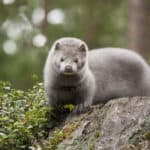
American mink
American mink Neogale vison Occupies a small-bodied mustelid mesopredator niche as a semi-terrestrial/semiaquatic generalist; overlaps in prey (small mammals, birds, amphibians) and denning sites. Primarily terrestrial, hunts by quick chases and delivers a neck bite to kill, with bursts of activity followed by long rest periods.
Stoat
Stoat Mustela erminea Similar small terrestrial carnivore that hunts small mammals and uses burrows and crevices for hunting and shelter. Has a long body adapted for chasing prey in tunnels. Stoat (Mustela erminea) is a wild species and undergoes seasonal coat changes.
Steppe polecat
Steppe polecat Mustela eversmanii Closest niche analog among polecats: a burrow‑hunting predator of rodents and lagomorphs in open habitats; has similar skull morphology, dentition, and prey‑handling behavior. Domestic ferrets retain the polecat‑type predatory motor pattern used in rabbit hunting ("ferreting"), even when captive‑bred.
Small Indian mongoose Urva auropunctata Comparable role as a small, opportunistic mesocarnivore that hunts vertebrate prey in confined spaces (burrows and ground cover) and can impact ground-nesting birds and small mammals when introduced or feral; similar ecological impacts have been reported for feral ferrets in some regions.
Domestic cat
Domestic cat Felis catus Not taxonomically close but fills a similar human-associated mesopredator niche to ferrets when they become feral: predation on small mammals and birds, high conflict risk with native fauna, and frequent subsidy by human environments.

The ferret is a small domesticated mammal in the weasel family Mustelidae whose name comes from the Latin word furittus meaning “little thief.” If you’ve ever heard of someone “ferreting away” or “ferreting out” something, it’s thanks to the ferret’s curious and hoarding behavior in which it finds and hides items.

The domestication of this miniature predator began over 2,500 years ago. It has historically been used for hunting mice, rabbits, and gophers and became a popular pet in the US in the 1980s. Today, the long, slender carnivorous animal makes an endearing, intelligent, playful, mischievous, and lively pet, that is, when it’s not sleeping. However, check with your local state laws as they are illegal to own in many states, one of which happens to be California.

Incredible Ferret Facts!
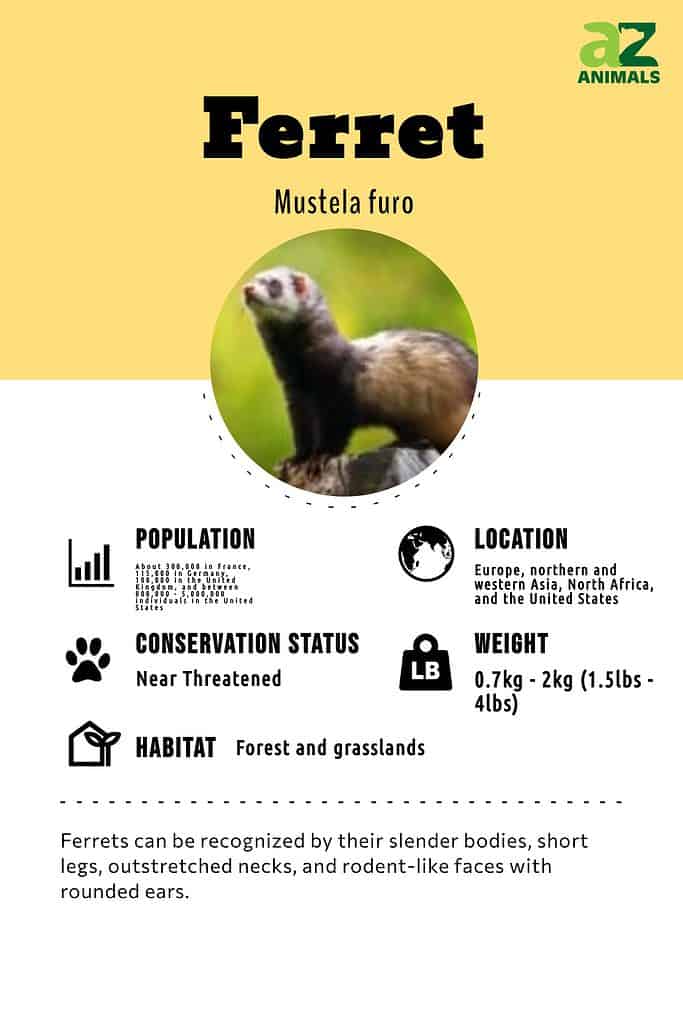
  • Ferrets can be trained to do tricks like dogs.
  • In their wild form, they are called fitchet, fitchew or fitch.
  • Ancient Egyptians took these animals with them on sailing ships to hunt rodents, and as early as 63 BC ferrets were being used to help control rabbit populations on the Balearic Islands.
  • Ferrets were used to protect grain stores during World War II.
  • Genghis Khan hunted with them circa 1221.
  • They were named official mascots of the Massachusetts Colonial Navy in honor of their service.
  • A ferret’s normal heart rate is 200 to 250 beats per minute.
  • The longest record for the sport of ferret legging was set in 1983 by a 72-year-old Englishman at 5 hours and 26 minutes.

Scientific Name
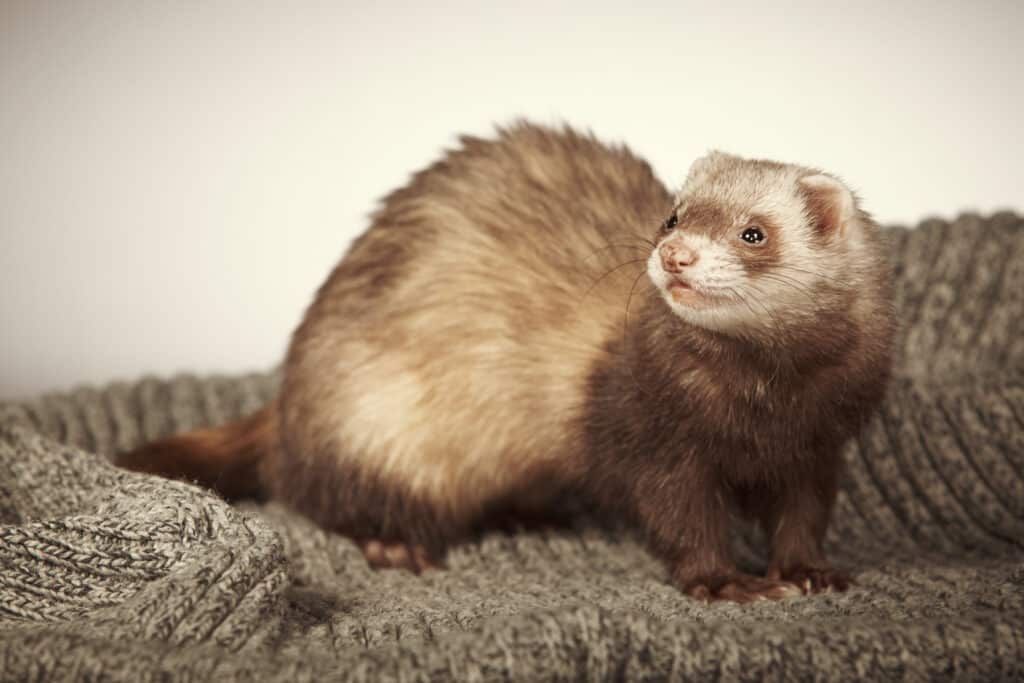
Chocolate ferret

Ferrets are related to ermines, minks, and weasels

The scientific name of this animal is Mustela furo, which is a distinct species. It was formerly considered a subspecies of polecat and had the scientific name Mustela putorius furo. Mustela putorius is the scientific name for the European polecat from which the ferret originated. Depending on opinion, a ferret is a close relative of the polecat or a domesticated European polecat.

It is also believed that the Steppe Polecat (scientific name Mustela eversmanni) may have been bred to produce European Polecats or Domestic Ferrets. The ferret can interbreed with both and have fertile offspring. In fact, a polecat-ferret hybrid has a somewhat different coloring but is genetically indistinguishable from pure polecats using DNA analysis.

The term “Ferret” also refers to other mustelids such as the North American black-footed ferret, also called the American polecat or prairie dog-hunter (scientific name Mustela nigripes). The Mustelidae is a large family of carnivorous mammals that includes weasels, polecats, ferrets, badgers, martens, minks, otters, and wolverines. The Mustela genus specifically includes weasels, polecats, ferrets, minks, stoats, and ermines.

Types

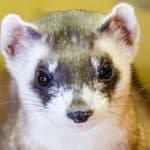
  • Black-footed ferret (Mustela Nigripes): The only species of ferret in America, this carnivore specialises in hunting down priarie dogs. Its slender form and large eyes enable it to enter the narrow tunnels dug by its prey and spot them in the gloom.

Appearance
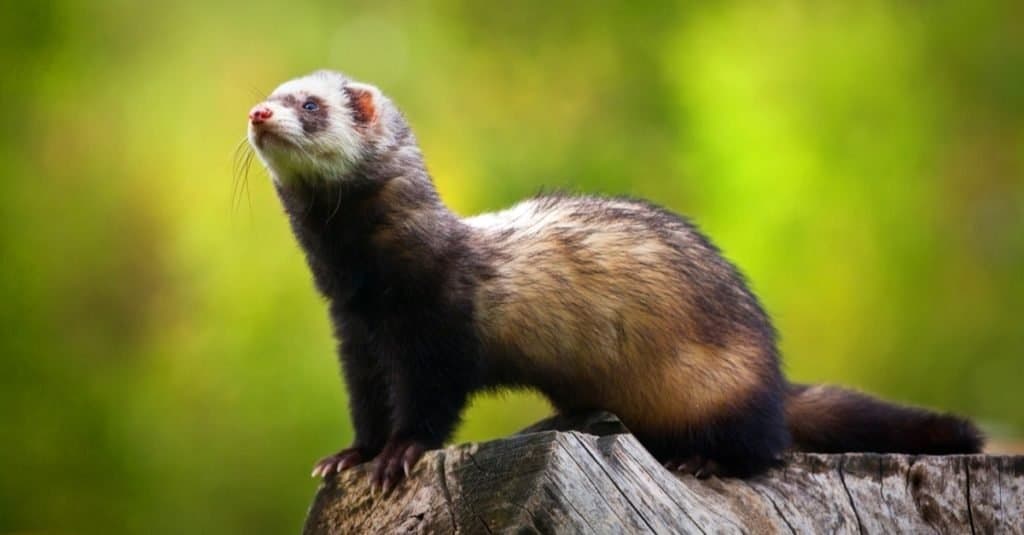
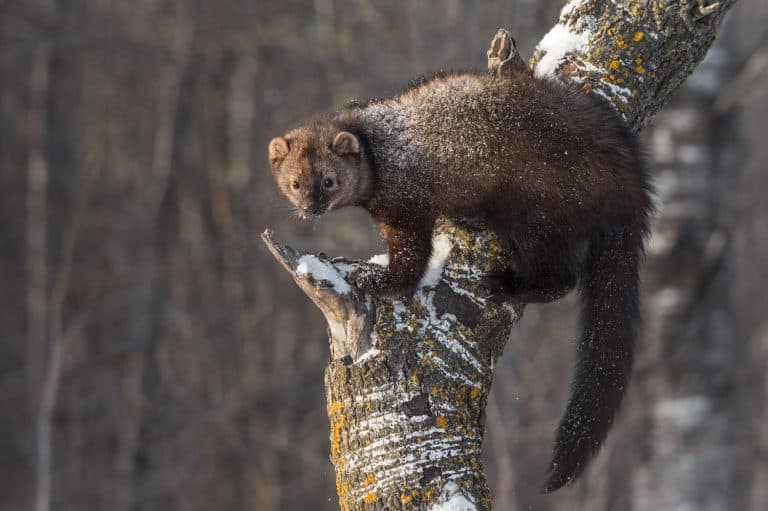
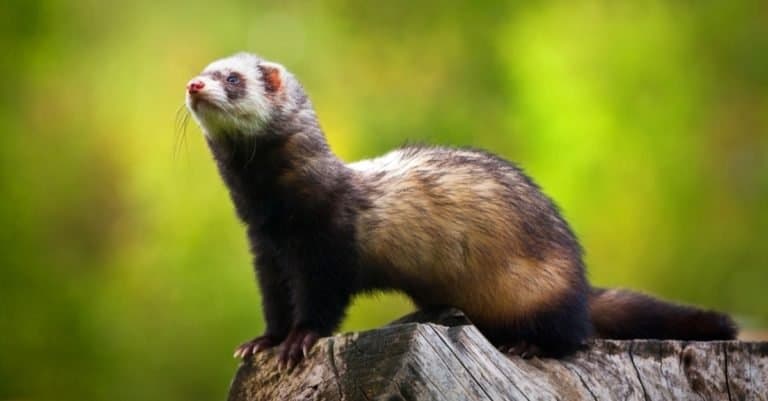
Ferret standing on tree stump

Ferrets are known for their long, slender bodies.

There is only one species of domesticated or common ferret, although it has been divided into “breeds” or types known as Standard, Angora, and European. The Angora ferret or simply “Angora” has a mutation resulting in longer fur. There are also “Angora type” dilutions. According to the American Ferret Association, there are 20 different types of these animals based on fur color, length, and pattern. Albino, Blaze, and Panda are just a few other examples. All facts about their behavior remain the same.

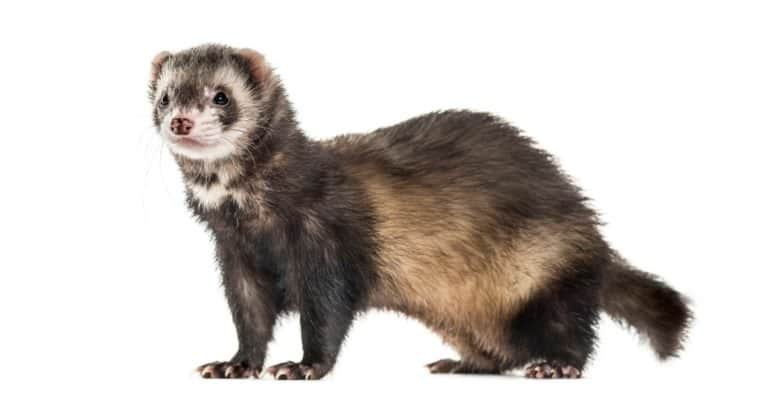
The different types of ferret and other mustelids share similar physical features; namely, their small size, long and slender bodies, and short legs. The common ferret can measure between 40cm – 50cm (18in – 21in) with an average length of 50 cm (20 in) including a 13 cm (5.1 in) tail and weigh between 0.7 and 2.0 kg (1.5 and 4.4 lb). Compared to the weasel, it has a longer body and a shorter tail. It has fur colors of brown, white, and black. Males are larger in size and weight than females, with more body muscle and larger, wider, and rounder heads and thicker, blunter noses.

Read here to learn more about how big ferrets get.

Differences vs. Weasels, Polecats, and other Related Animals

Ferrets are most closely related to weasels, polecasts, minks, and ermines. While ferrets have been domesticated for thousands of years, their relatives are mostly wild. Compared to weasels, ferrets are longer. In addition, non-domesticated ferrets prefer grasslands while polecats inhabit a wider variety of habitats that include marshes. Weasels are also much more aggressive animals and are known for being ferocious predators capable of hunting prey significantly larger than themselves.

Evolution
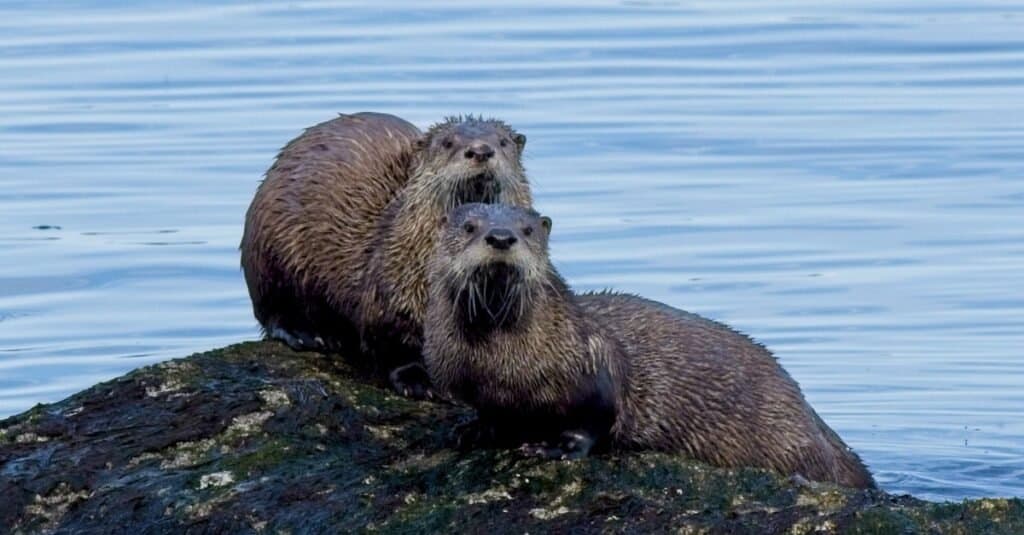
Most Romantic Animals

Ferrets are related to otters and several other mammals which belong to the Mustelid family

According to experts, mustelids, the genetic family ferrets belong to, first appeared on the evolutionary scene 33 million years ago.

They were able to make their way to the Americas from Eurasia where they originated, via the Bering land bridge.

With the exceptions of Antarctic and Australia, they were also able to spread to every other continent.

The sum total of these evolutionary processes which took place over the course of millions of years gave rise to nine subfamilies and 66 species.

Included in this large family are badgers, ermines, ferrets, fishers, marten, mink, otters, sable, tayras, weasels, and wolverines.

Behavior
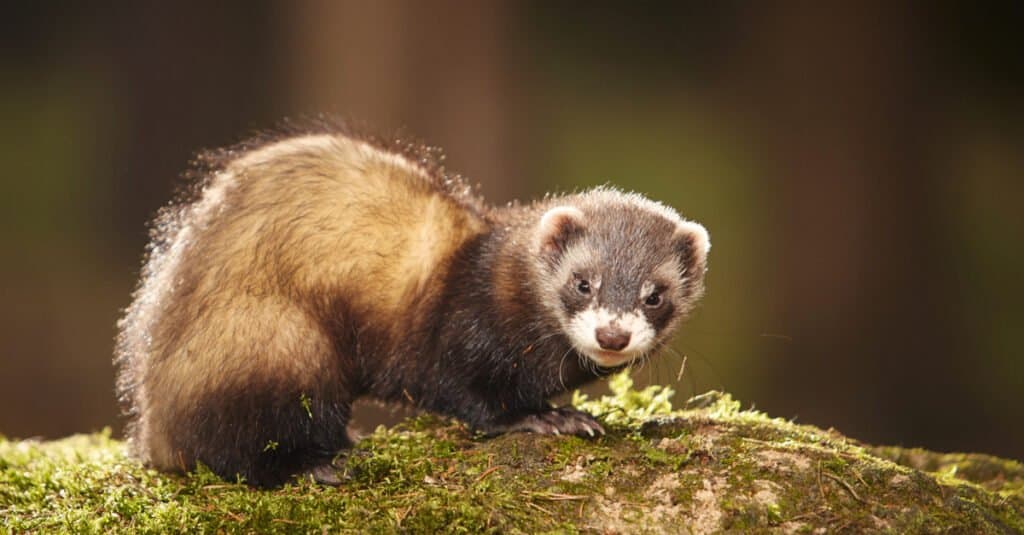
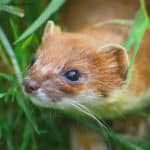
stoat vs ferret

Ferrets were used to introduce cables and wires in narrow tunnels

The English writer and poet D.H. Lawrence once wrote, “Do come back and draw the Ferrets; they are the most lovely noble darlings in the world.” Like other mustelids, these animals display complex social behaviors. A group of them is called a “business” or “fesnyng” or historically a “busyness.” Unlike polecats, ferrets are not solitary but are happy in social groups. They are territorial and enjoy burrowing.

The domestication of these animals resulted in their being used for forcing mice, rabbits, and gophers out of burrows as well as hunting rodents on ships or in grain stores. First imported into the USA in the 1700s and often kept in warehouses and barns rather than cages, they were sometimes paired with terriers while hunting, a practice called “ferreting.” Ferreting was popular for about 200 years and only declined with the invention of chemical rodenticides.

Before mechanical runners were invented for the oil, the telephone, and airline repair industries, these animals were used to place wires and cables in narrow tunnels. There is a sport called “ferret legging,” popular among pub patrons in England, in which 2 angry ferrets are put inside participants’ tied baggy pants, and participants can discourage from biting only from outside the pants.

Facts about their behavior also depend on the sex involved. Although ferrets are sexually dimorphic, they can sometimes be hard to distinguish from one another. Females are said to be more unpredictable, whereas males are mellower. Regardless, intact males and females do not make good pets, and altering them mellows them out significantly. Ferrets might bite humans in some cases if they are not properly trained.

These animals sleep 14-18 hours a day and enjoy sleeping in enclosed areas such as cages. They have anal scent glands that produce musk, used for individual recognition and marking territory. They mark territory by dragging their rear ends across the ground or spraying with urine. The musk is an unpleasant odor, so animals sold in the US are already descented, whereas descenting is considered unnecessary mutilation in other parts of the world. They are also messy, burrowing into the bedding of their cages to gather and sleep together. They sleep so deeply that one can hold, poke and yell at them and they won’t wake up. This is called being “ferret dead asleep,” a behavior resulting from their need to rest after playing hard. They enjoy dancing for joy, wrestling (especially dominant males), and chasing each other.

Other behaviors include nipping at their owner’s toes, digging food out of their bowls (an example of burrowing), hissing like a snake (when angry or scared), hoarding small objects, wagging their tail (when happy or excited), clucking or chortling (when happy or excited; called “dooking”), and poofing out their tails (when threatened or scared). They also have what’s called a “weasel war dance” which looks similar to their dance of joy but with their tails poofed out, coats bristled and hissing. On the other hand, when they dance for joy, they engage in dooking and will run, jump, hop and clumsily bump into things. Sometimes this joyous dance is called a weasel war dance.

When kept in cages, these animals need at least an hour and ideally up to four hours of play every day. They are most active at dawn and dusk, making them crepuscular.

Read here to learn more about how to care for your pet ferret.

Learn more about the most interesting non-traditional pets here.

Habitat
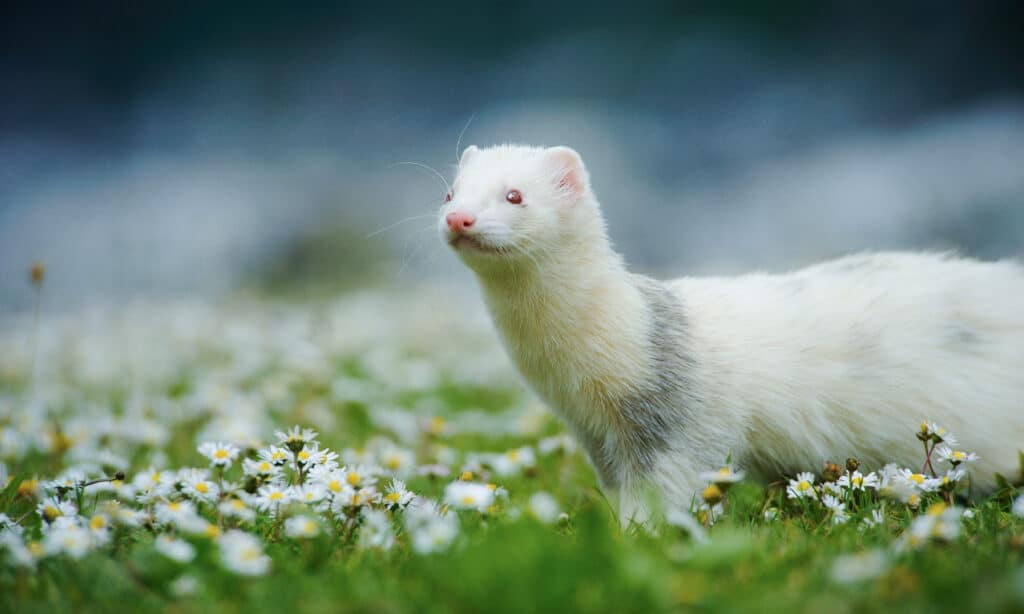
White albino Ferret

Ferrets can be found in Africa, Asia, Europe, and North America

In the wild, ferrets live throughout Europe, northern and western Asia, and North Africa. Their habitats include forests, meadows, parks, villages, farms, and barns or anywhere there is food. The black-footed ferret species lives in the shrublands and grasslands of North America and hence is also called the North American black-footed ferret.

Diet
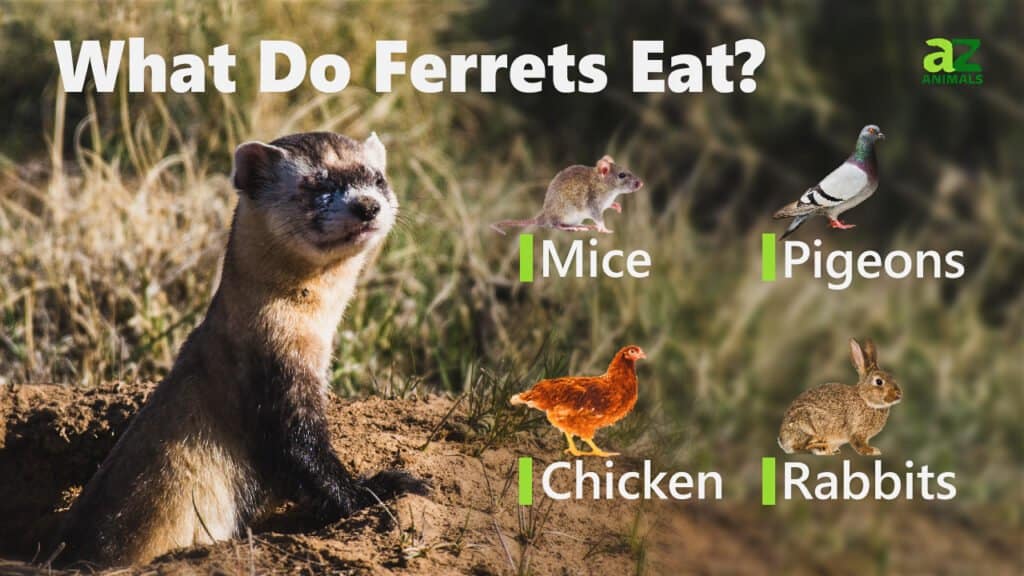
Ferrets are carnivores and hunt small mammals. They also enjoy cooked protein as pets

These animals have sharp teeth and claws, a top speed of 15mph, and a long and slender body for finding and catching their prey. They are obligate carnivores, meaning they must eat only meat and cannot survive without it. Their short digestive tracts mean they need food several times a day.

What do ferrets eat?

In the wild, these animals consume whole small animals as their food. Their prey includes rodents such as mice, rats, and gophers, prairie dogs, rabbits, and other small mammals, birds, reptiles, and amphibians. As pets, they may be fed pre-killed or live prey such as mice and rabbits or commercial ferret food. They also enjoy eating cooked egg, chicken, turkey, lamb and cat treats. Balanced commercial ferret food has 40% protein and 20% fat. When ferrets are sick, it is good to give them baby food.

What foods are bad or poisonous for ferrets?

These animals should not eat fruit, vegetables, grains, or anything that is not animal protein. They imprint on their food when they are about six months old, so it’s important to feed them the right food from the start.

Predators and Threats
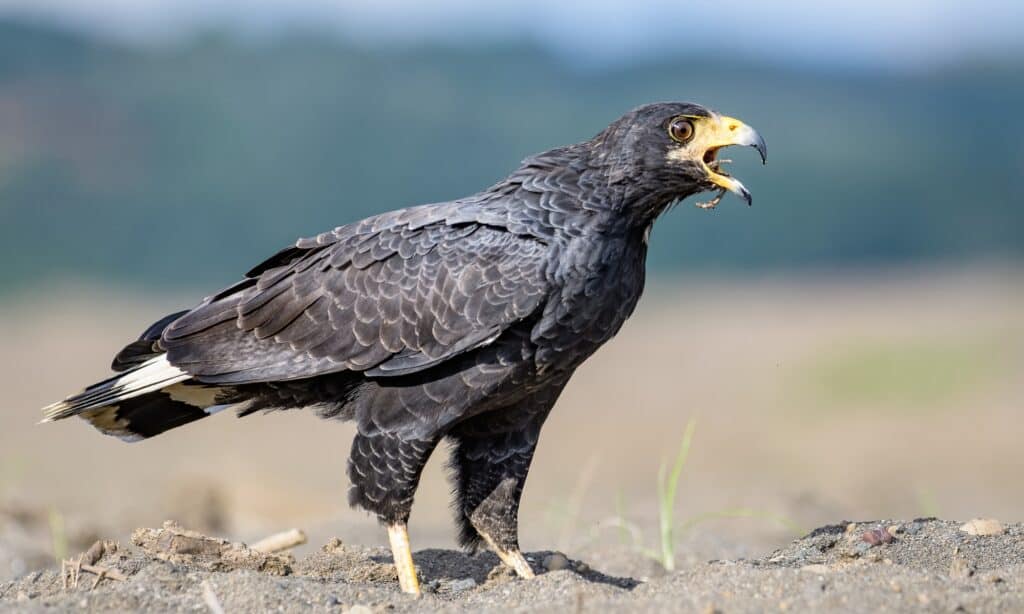
Common black hawk

Hawks and other birds of prey hunt ferrets

Birds of prey such as hawks and owls eat these animals. Large carnivorous mammals including dogs, coyotes, foxes, and badgers also eat ferrets. Threats that the Black-footed Ferret face are land development, agriculture, hunting and trapping, invasive species, and viral or prion-induced diseases.

These animals have a history of being raised on fur farms in Europe for several centuries. Despite efforts to establish the ferret fur farm industry in the US, they failed in the early 1900s.

These animals can get heartworm from being bitten by an infected mosquito. They can be treated with the same heartworm prevention treatment as cats. They can also suffer from hairballs and dental problems, as well as losing their hair. If they chew on and swallow foreign objects, they can get bowel obstruction. Their most common health issues are cancers of the adrenal glands, pancreas, and lymphatic system, followed by viral diseases such as canine distemper and influenza. Also, certain colors of the ferret (Blaze, Badger, and Panda) can carry a genetic defect known as Waardenburg syndrome. Overfeeding a ferret can also cause problems in the long run.

Unspayed females can also suffer from health problems when not being used for breeding, while health issues can also occur if ferrets are neutered too early — before reaching sexual maturity. Impacted anal glands can occur in ferrets which have not been descented.

Reproduction, Babies, and Lifespan
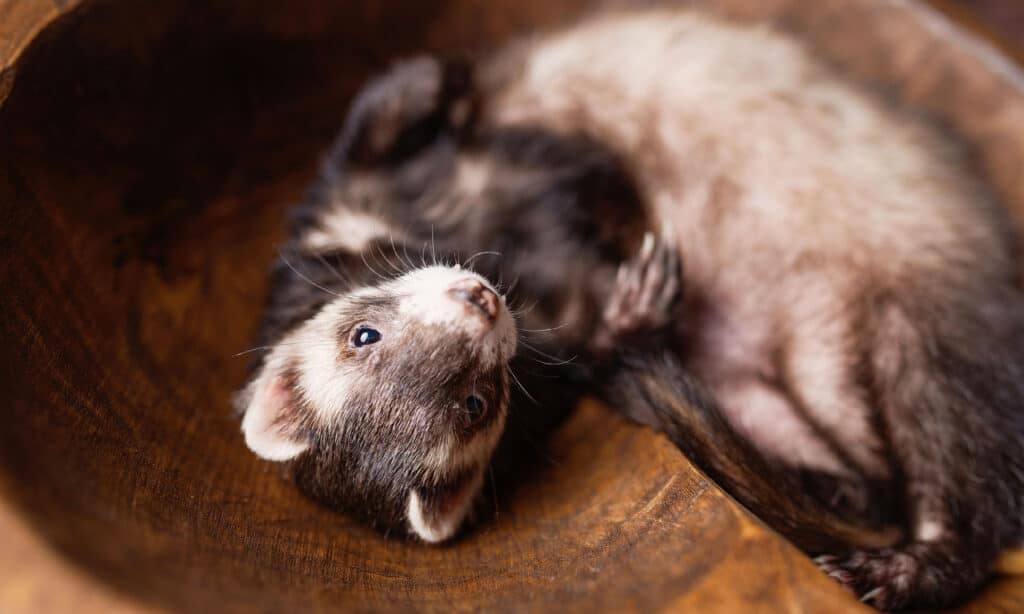
ferret

Ferrets can live for up to a decade

Females go into constant oestrus, or heat, between late March and early August if they are not bred. Ferrets reach sexual maturity between 4-8 months of age, with females reaching puberty between 8-12 months. Almost all ferrets from pet stores or shelters are spayed or neutered, so owners who want to breed them should seek out unaltered ferrets from private breeders.

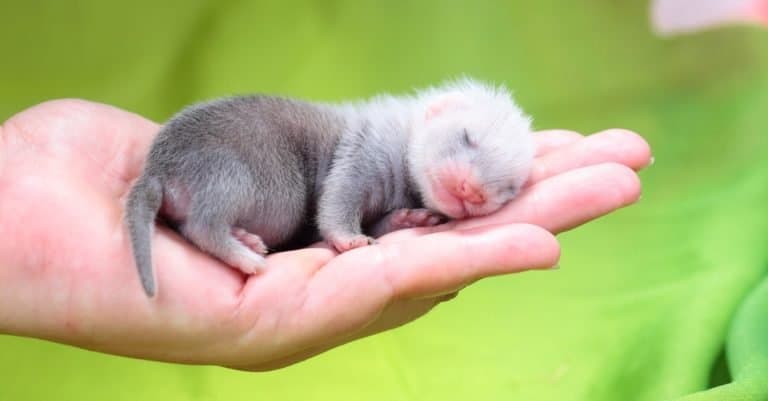
Ferrets raise each baby communally. A ferret baby is called a kit. All kits have white fur when they are born and get their adult color at 3 weeks. An intact female is a jill, and a spayed female is a sprite. An intact male is a hob, and a neutered male is a gib.

The lifespan of a ferret is 7-10 years with an average lifespan of 8 years.

Ferret Population
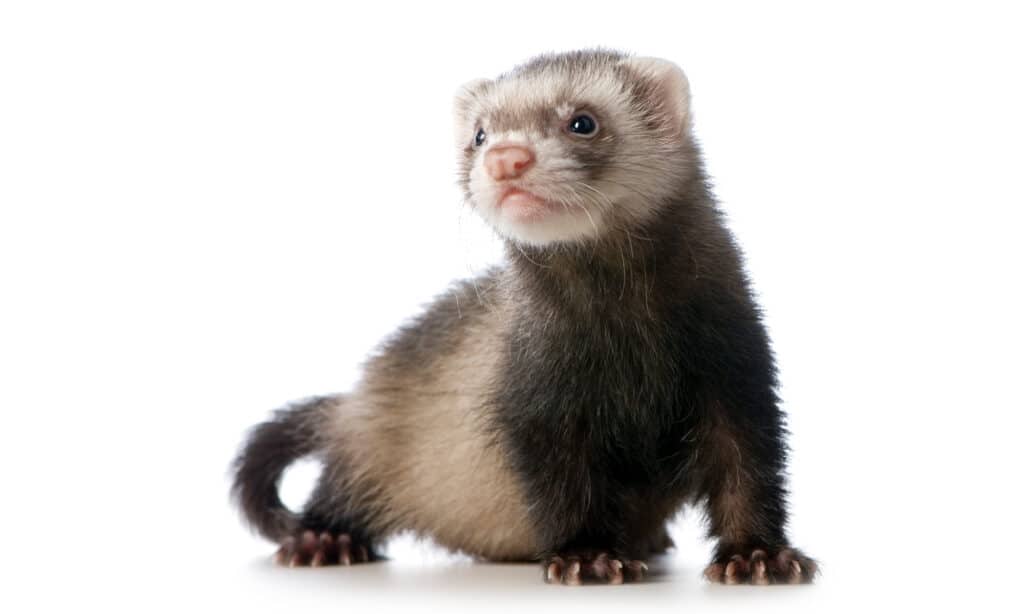
Ferret, Cut Out, White Background, Polecat, Young Animal

Conservation efforts have enabled the black-footed ferret population to rise

The Black-footed Ferret is endangered and 206 mature individuals exist. It was once believed extinct due to a rabies epidemic and the remaining 10 individuals were taken into captivity and initiated in a breeding program. So far, more than 5,000 kits have been born, with 2,000 released into the wild since a reintroduction effort was begun in 1991. The species lives in protected natural habitats in Arizona, Colorado, Montana, South Dakota, Utah, Wyoming, and northern Mexico.

By 1996, it was estimated in a government study by the California State Bird and Mammal Conservation Program that about 800,000 domestic ferrets were being kept as pets in the United States.

Ferrets In the Zoo

Besides the National Black-footed Ferret Conservation Center in Colorado, there are five other breeding facilities for the species and they are all in zoos. You can see the ferrets at the Smithsonian’s National Zoo, Phoenix Zoo, Cheyenne Mountain Zoo, Louisville Zoo, and San Diego Zoo Institute for Conservation Research.

View all 170 animals that start with F

Sources

  1. Wikipedia / Accessed February 8, 2021
Dana Mayor

About the Author

Dana Mayor

I love good books and the occasional cartoon. I am also endlessly intrigued with the beauty of nature and find hummingbirds, puppies, and marine wildlife to be the most magical creatures of all.
Connect:

Thank you for reading! Have some feedback for us?


Ferret FAQs (Frequently Asked Questions)

Ferrets are carnivores; that is, they eat meat. And they are obligate carnivores, meaning they must eat only meat and cannot survive without it.