




F
Species Profile

Field Spaniel

Canis lupus familiaris

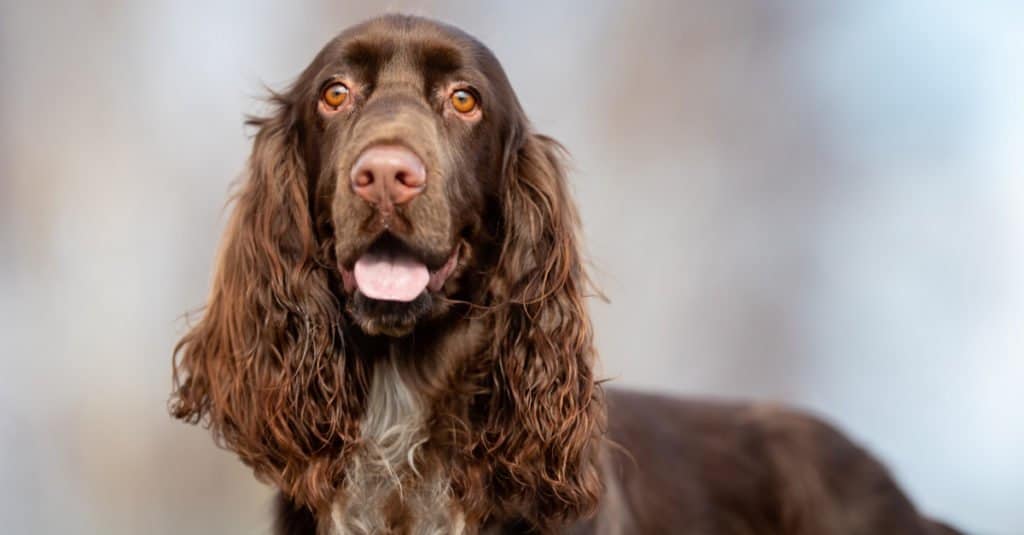
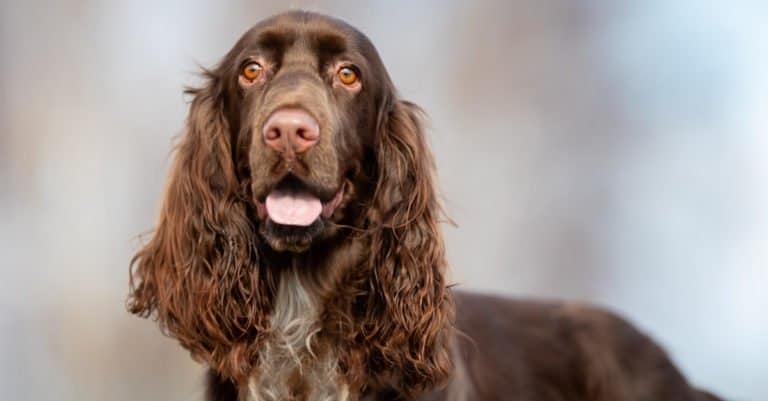
Silky spaniel, serious gundog.
BIGANDT.COM/Shutterstock.com

Field Spaniel Distribution

Click a location to explore more animals from that region

Origin Location

This map shows the native origin of the Field Spaniel. As a domesticated species, they are now found worldwide.

Loading map...

Found in 1 country

Size Comparison

Human 5'8"
Field Spaniel 1 ft 6 in

Field Spaniel stands at 26% of average human height.

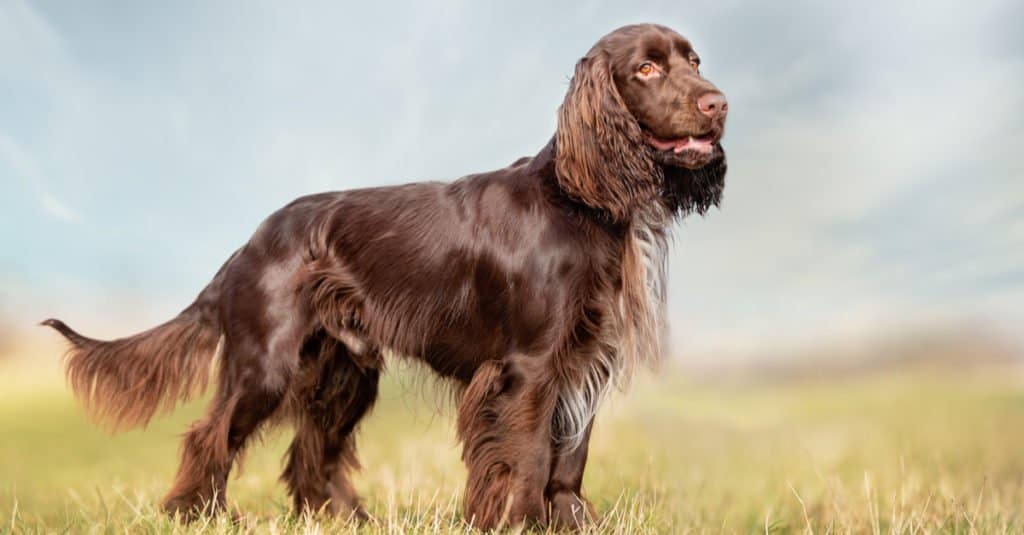
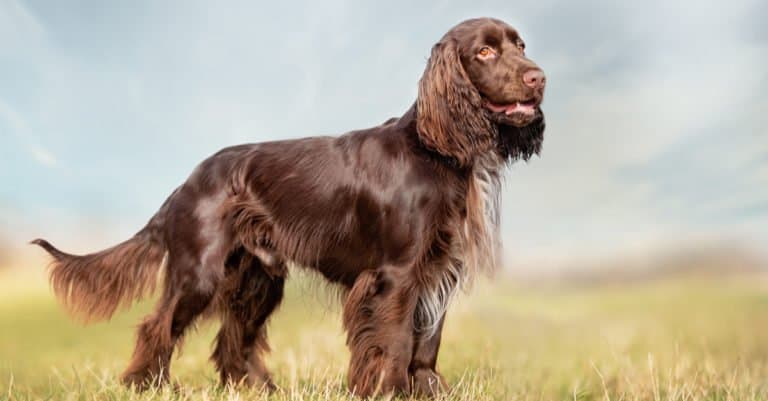
Field Spaniel standing in the grass

At a Glance

Domesticated
Diet Omnivore
Activity Diurnal+
Lifespan 13 years
Weight 25 lbs
Status Not Evaluated
Did You Know?

The Field Spaniel is a domesticated dog (Canis lupus familiaris), generally classified as a domestic subspecies of the gray wolf (Canis lupus).

Scientific Classification

The Field Spaniel is a medium-sized British spaniel breed developed as a gundog for flushing and retrieving game. It is a domesticated dog variety within the gray wolf species (Canis lupus).

Kingdom
Animalia
Phylum
Chordata
Class
Mammalia
Order
Carnivora
Family
Canidae
Genus
Canis
Species
Canis lupus

Distinguishing Features

  • Medium-sized, longer-bodied spaniel with a silky, moderately long coat
  • Low-set, long feathered ears typical of spaniels
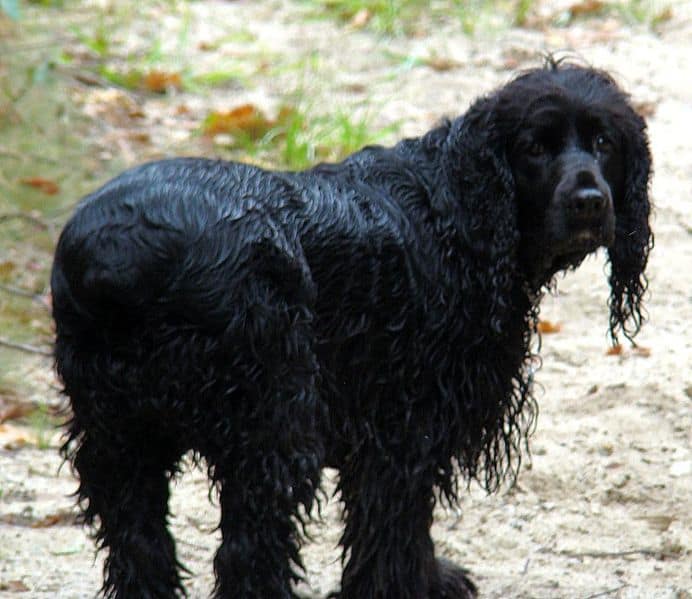
  • Common coat colors include black, liver, or roan; feathering on legs, chest, and tail
  • Bred for flushing and retrieving; generally steady, biddable temperament

Did You Know?

The Field Spaniel is a domesticated dog (Canis lupus familiaris), generally classified as a domestic subspecies of the gray wolf (Canis lupus).

It was developed in Britain as a land gundog-working close to the hunter to flush game from cover and retrieve it.

The breed nearly disappeared in the early 1900s after fashion-driven show breeding reduced working utility; mid-20th-century enthusiasts rebuilt a more functional type.

Typical colors include solid liver or black, often with tan points or roan; the coat is silky with feathering on legs, chest, and tail.

Their long, low-set ears help trap scent near the nose while working cover, but also make them more prone to ear infections without routine care.

Field Spaniels are among the rarer spaniel breeds worldwide, so responsible breeding programs often emphasize genetic diversity and health testing.

Unique Adaptations

  • Feathered, weather-shedding coat: Provides protection from brambles and damp vegetation encountered during flushing and retrieving.
  • Long ears and broad nasal cavity typical of spaniels: Support scenting in dense cover (with the tradeoff of higher ear-care needs).
  • Athletic, moderately long body: Built to push through undergrowth efficiently while remaining agile for quick turns and retrieves.
  • Human-directed social cognition: As a domestic dog breed, Field Spaniels are especially responsive to human cues (voice, gesture), a key difference from their wild gray wolf ancestry.
  • Endurance-oriented gait: Designed for steady, methodical field work rather than short bursts alone.

Interesting Behaviors

  • Quartering in a zig-zag pattern: Many Field Spaniels naturally sweep back and forth in front of a handler to locate scent in cover.
  • "Soft mouth" retrieving: Like many gundogs, they tend to carry game or toys gently rather than crushing them.
  • Close-working teamwork: They often check in visually and stay within a manageable range, reflecting selection for cooperative hunting.
  • Scent-first curiosity: Nose-to-ground exploration is common, especially on walks through grass, hedgerows, and woodland edges.
  • Velcro-at-home, active-outside: Calm and affectionate indoors after exercise, but eager and driven when a job appears.
  • Ear-and-coat self-management: They may shake their ears frequently after wet or brushy outings and may seek comfort routines (rubbing, rolling) to clear debris.

Cultural Significance

Field Spaniel (Canis lupus familiaris) comes from Britain’s gundog tradition. Once a general land spaniel, Victorian dog shows shaped it. Later breeders brought back its strong body and field skills. Fans praise it as a gentle working companion and link to Britain’s sporting dogs.

Myths & Legends

In Britain and Ireland, tales of ghostly black dogs like Black Shuck tell of large, dark, shaggy, spaniel-like hounds haunting lanes and churchyards, and show links to dark-coated dogs before breed standards.

Field Spaniels (Canis lupus familiaris) appear in European hunting tales and noble stories as loyal dogs that "find what the eye cannot," using their noses and by keeping at it to find hidden game.

Late 1800s–early 1900s show fashions pushed some Field Spaniel (Canis lupus familiaris) lines toward extreme looks. Later breeders told a "return to the field" story, rebuilding a practical gundog and breed pride.

Conservation Status

NE Not Evaluated

Has not yet been evaluated against the criteria.

Population Stable

Life Cycle

Birth 5 pups
Lifespan 13 years

Lifespan

In the Wild
12–14 years
In Captivity
12–14 years

Reproduction

Mating System Polygynandry
Social Structure Managed Domestic
Breeding Pattern Not Applicable
Fertilization Managed Selective
Birth Type Internal_fertilization

Field Spaniel (Canis lupus familiaris): polygynandry—multiple males and females used. managed_domestic and managed_selective: owners and breeders plan and pick matings. Reproduction is by internal fertilization with a copulatory tie. No lifelong pair bonds or cooperative breeding.

Behavior & Ecology

Social Pack Group: 4
Activity Diurnal, Crepuscular, Cathemeral
Diet Omnivore high-quality, meat-forward meals (commonly poultry such as chicken or turkey)

Temperament

Affectionate, people-oriented companion; strong preference for staying near family (can be prone to separation distress if under-stimulated or left alone for long periods).
Biddable and cooperative with training; responds best to calm, reward-based methods-can shut down with harsh handling (breed-typical sensitivity).
Steady, gentle demeanor indoors when exercised; moderately energetic outdoors with good endurance from gundog roots (needs regular outlets for sniffing, retrieving, and exploring).
Often polite/reserved with unfamiliar people or novel situations; early socialization supports confident neutrality rather than timidity.
Generally sociable with other dogs when well-socialized; may show mild resource guarding (food/toys) if not taught sharing and impulse control.
Prey interest/scent curiosity typical of spaniels; may chase birds/small animals-use recall training and leash management in high-stimulus areas.
Field Spaniel prone to ear infections (otitis) from pendant ears causing head shaking and irritation; hip dysplasia may limit jumping/running; thyroid or skin allergies cause itching. Regular vet checks keep them comfortable.
Field Spaniels need daily exercise and brain work (fetch, nose work, field-style quartering). Keep a routine, brush coat several times weekly, check and clean ears often, and keep them lean to protect joints.

Communication

Alert barking Typically moderate; increases with boredom or insufficient exercise
Whining/whimpering to solicit attention, during anticipation (leash-on, food, play), or mild distress.
Growling as a boundary signal during discomfort, resource tension, or rough play-often low intensity if well-socialized.
Howl-like vocalization is possible but usually infrequent compared with more northern breeds.
Play grumbles/snorts during excited greeting or tug/retrieve games.
Rich canine body language: soft eyes, loose wag, play bow; stress signals such as lip-licking, yawning, turning away Important due to breed sensitivity
Scent-based investigation and information gathering Intense sniffing; uses olfaction heavily in social and environmental assessment
Mouth-carrying and object presentation as an affiliative/learned communication Gundog-derived retrieving behavior: bringing toys/items to initiate interaction
Physical contact: leaning, nudging, pawing, and licking to seek proximity and reassurance.
Redirected behaviors when over-aroused: zoomies, grabbing a toy to self-regulate; improved by structured exercise and calm reinforcement.
Marking Urine) and scratching as context signals, especially in multi-dog environments (more common in intact individuals

Habitat

Biomes:
Temperate Forest Temperate Grassland Wetland Freshwater Boreal Forest (Taiga) Tundra Alpine Mediterranean Desert Hot Desert Cold Savanna Tropical Dry Forest +6
Terrain:
Plains Hilly Valley Riverine Coastal Island
Elevation: Up to 16404 ft 3 in

Ecological Role

Domesticated companion and working gundog (flushing/retrieving specialist); human-supported omnivore rather than an independent apex predator.

assists hunters by locating, flushing, and retrieving downed game can help reduce local pest populations (rodents) opportunistically provides companionship and social/therapeutic benefits to humans supports outdoor recreation/field work and canine sport activities

Diet Details

Main Prey:
Small game birds Rabbits and hares Rodents Fish Animal-based foods provided by humans
Other Foods:
Human-provided carbohydrate sources Vegetables Fruits Fiber sources Plant oils

Human Interaction

Domestication Status

Domesticated

Domestic dogs (Canis lupus familiaris) come from gray wolves and were shaped by humans for tame behavior and work. The British Field Spaniel was made in the 19th century from land spaniels for flushing and retrieving in thick cover. Human breeding gave it a low, longer body, lots of feathering, calm, obedient nature. Breed clubs keep them healthy and rare.

Danger Level

Low
  • Bites or nips, usually associated with fear, pain, rough handling, or poor socialization
  • Accidental knocks/jumps due to enthusiasm
  • Zoonotic risks common to dogs in general if preventive care is neglected (e.g., parasites, ringworm); typically low with routine veterinary care

As a Pet

Suitable as Pet

Legality: Field Spaniel (Canis lupus familiaris) is generally legal to own. Owners must follow local rules like dog licenses, leashes, shots, and animal control. Rarely subject to breed-specific bans; rules are usually general.

Care Level: Moderate

Purchase Cost: $1,200 - $3,000
Lifetime Cost: $18,000 - $45,000

Economic Value

Uses:
Companion animal/pet industry Sporting and working dog roles (gundog) Breeding and showing Veterinary and preventive healthcare services Grooming services Training/behavior services
Products:
  • Purchase/adoption fees and stud services
  • Food and supplements
  • Veterinary care (vaccines, parasite prevention, screening tests, surgery)
  • Grooming tools and professional grooming (coat/feathering, ears)
  • Training classes (obedience, field work, scentwork)
  • Hunting/field equipment (whistles, bumpers/dummies, vests)
  • Crates, leashes, collars, ID microchips

Relationships

In the late 1800s, dog shows became more popular in England. This led breeders to create more distinct breeds and types of dogs. The Field Spaniel was developed in the 19th century in England, with its foundation involving crosses between Cocker Spaniels, Sussex Spaniels, and English Springer Spaniels. These dogs made great companions on a hunting trip, but they also performed well in dog shows.

Field Spaniels became very popular quickly; however, breeders tried to make a more ‘show-worthy’ dog and exaggerated some of the traits, making the breed less attractive. This caused their popularity to sink, and the variety nearly went extinct.

In the mid-20th century, particularly during the 1940s and 1950s, breeders used related spaniel breeds, such as Cocker, Sussex, and English Springer Spaniels, to help restore the Field Spaniel population These dogs make an excellent family pet. They are playful, intelligent, and tolerant of children. This breed is also sweet and sensitive.

3 Pros and Cons of Ownership

ProsCons
Intelligent: They are a very intelligent dog breed, which makes them easier to train than some other breeds.High activity needs: They have a lot of energy and require regular physical activity.
Good with kids: This makes a good family dog. They are playful and patient around children.Can be destructive: When this dog doesn’t get the exercise they need, they can become destructive
Grooming: They are relatively easy to groom.Expensive: They may cost more to adopt than some other dog breeds.
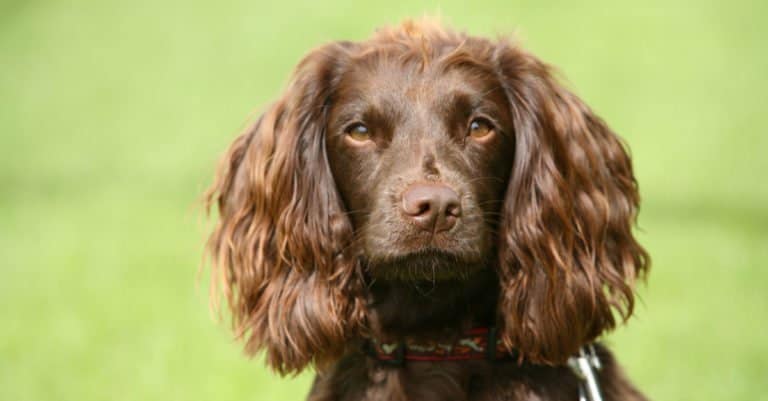
Field Spaniel Adult headshot

Field Spaniels are a playful and very intelligent dog breed, which makes them easier to train than some other breeds.

Size and Weight

These animals are a medium-sized dog breed. Males and females both weigh between 35 and 50 pounds. Males are a little taller at around 18 inches compared to a female’s height of 17 inches. 6-month-old puppies weigh between 20 pounds and 45 pounds and should be fully grown by the time they are 12 months old.

Common Health Issues

These dogs may suffer from some of the health issues shared below. While these are known issues for this breed, it does not mean that every dog will be impacted by them.

One possible concern is hip dysplasia. Hip dysplasia is a genetic condition where the hip bone doesn’t develop properly. The bones at the hip rub together, which causes the dog pain and makes it difficult to walk. Surgery may be required for this condition.

Field Spaniels are also often impacted by low thyroid. Symptoms of low thyroid include weight gain and poor coat growth. Your veterinarian can perform blood work to check your dog’s thyroid levels and can prescribe medication to regulate the levels and keep them where they should be.

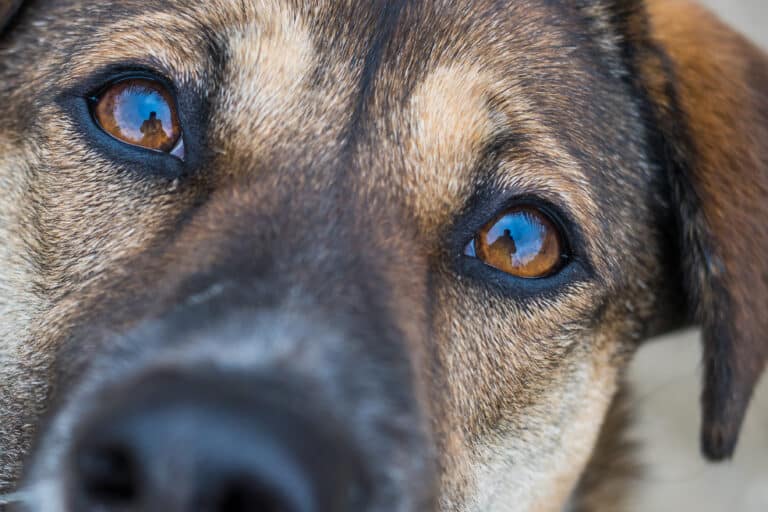
Some Spaniels may also develop eye problems. ‘Ectropion and entropion are two eyelid disorders. Ectropion causes the eyelids to sag outward, while entropion causes them to roll inward. Both conditions can lead to eye irritation or infections. Rolling eyelids could require surgery, but these are not as common in the Field Spaniel breed.

Temperament and Behavior

Fields are very sweet and sensitive dogs. They have a very fun-loving personality, and their behavior and traits can make them great family pets. In general, these dogs are very patient with children, but they do not like roughhousing or overly loud noises. However, they will typically just walk away from children who are being a bit too rough for their liking and won’t snap like some other dog breeds.

Field Spaniels were bred to be hunting dogs. They have a high energy level and require a good amount of physical activity. If they don’t get enough activity and are left alone for too long, they may become bored and exhibit destructive behaviors.

How to Take Care of One

As you think about caring for these dogs, you’ll want to keep the unique characteristics of this breed in mind. Consider their temperament, nutritional needs, exercise needs, grooming needs, and potential health concerns to offer the best care possible to your pet.

The Best Dog Food

Field Spaniels can be very motivated by food. It is generally recommended to feed your pet between 1.5 and 2 cups of food each day. The ideal amount for each dog will vary based on their age, activity level, metabolism, health, and other factors. Check with your veterinarian if you are unsure about exactly how much food your dog will need. The total amount of food should be partitioned into two meals each day.

Puppies have a smaller stomach and will need to eat between three and four times daily. As the puppy gets older, typically around the age of six months, moving them to two meals each day should be sufficient. Look for high-quality puppy food and check with your veterinarian if you need suggestions on which formulation is ideal for your dog.

Maintenance and Grooming

While Field Spaniels can be relatively heavy shedders, they are easier to groom than many other dog breeds. However, you’ll still want to brush their coat at least once a week to keep the shedding controlled and the coat looking shiny. These dogs also sometimes need a little hair trim around their feet or head.

In addition to brushing your dog regularly, don’t forget to also keep his ears cleaned, trim his nails regularly, and brush his teeth a few times each week.
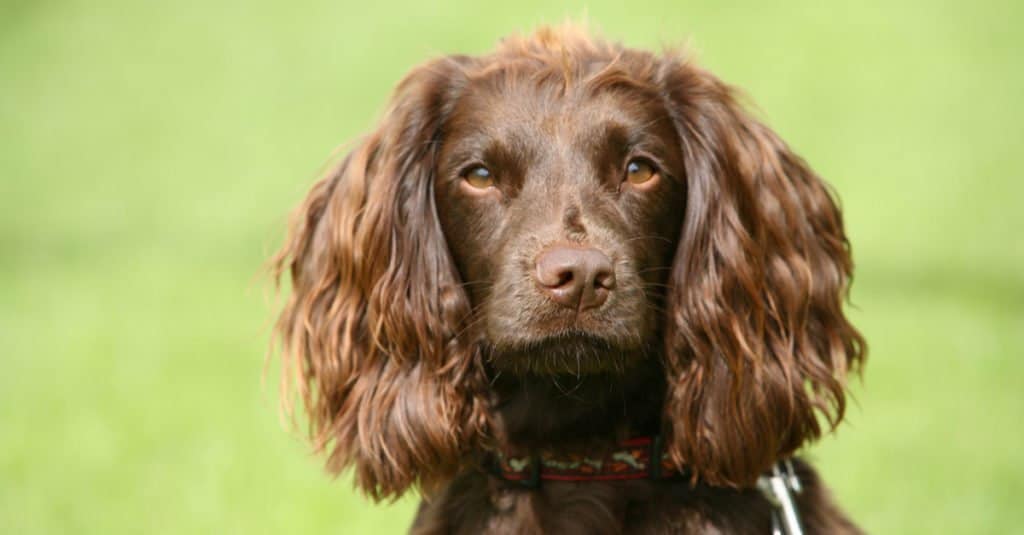
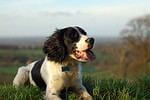
Field Spaniel headshot

While Field Spaniels can be relatively heavy shedders, they are easier to groom than many other dog breeds.

Training

Field Spaniels can be easy to train since they are a more intelligent breed and generally aim to please their owners. They are more sensitive than some other dogs and will respond best to positive training methods. Early socialization is also important for this breed to help them learn how to act in different situations. Once trained, Spaniels can do well in different canine sporting events.

Exercise

Field Spaniels are active dogs and require regular mental and physical exercise. Find time each day to take your dog for a walk or play with it in the yard to make sure its exercise needs are met.

Puppies

Before bringing a puppy into your home, make sure your space is set up and ready for a new dog. Remove anything that could be potentially hazardous to the dog or personal items that you wouldn’t want to be destroyed by a young puppy. You will also want to make sure you have food and all the other supplies ready for your new dog before they come home.

Field Spaniels are generally easier to train than some other dog breeds, but you’ll still want to start training and socializing your new puppy from an early age. This will help ensure that he knows how to act in different scenarios and around different people or other dogs.
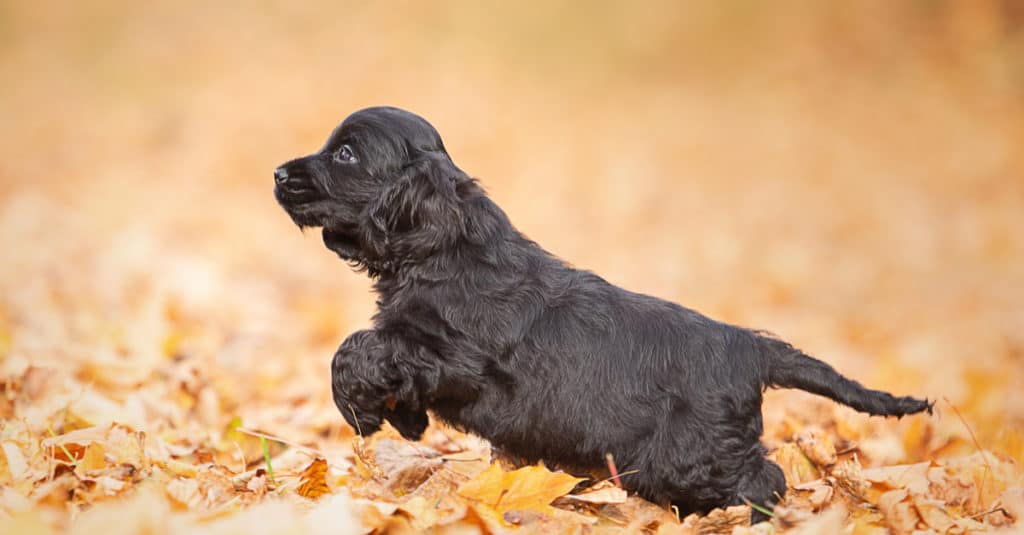
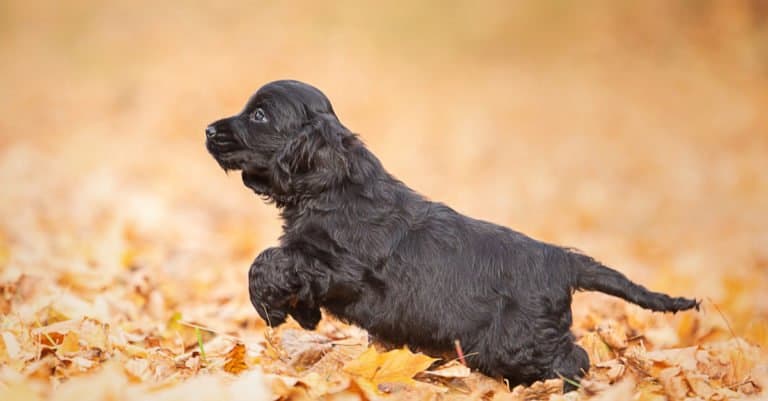
Field Spaniel Puppy playing in the leaves

Field Spaniels are generally easier to train than some other dog breeds, but you’ll still want to start training and socializing your new puppy from an early age.

With Children

These dogs generally do very well with children. They are patient and enjoy getting attention and being near children and other family members. These dogs don’t like playing rough or a lot of noise, and if children are being too much for them, they may simply walk away.

Similar Dogs

English Springer Spaniels, Clumber Spaniels, and American Water Spaniels are three breeds that are similar to the Field Spaniel.

  • English Springer Spaniel: English Spring Spaniels and Field Spaniels both originated from England and were bred to be hunting dogs. The English Springer Spaniel is one of the breeds that was used to make the Field Spaniel. Both breeds are very intelligent and social. Fields are a bit smaller than English Spring Spaniels, with an average male weight of 42.5 pounds compared to the average weight of 50 pounds for a male English Springer Spaniel.
  • Clumber Spaniel: Clumber Spaniels are another gun dog that originated from England, like the Field Spaniel. Both breeds can make a good family pet and generally do well with other dogs. Fields have more energy and require a greater amount of energy than Clumber Spaniels.
  • American Water Spaniel: American Water Spaniels and Field Spaniels are both affectionate, playful, and easy to train. American Water Spaniels are more protective of their territory and can make a better watchdog than a Field Spaniel.
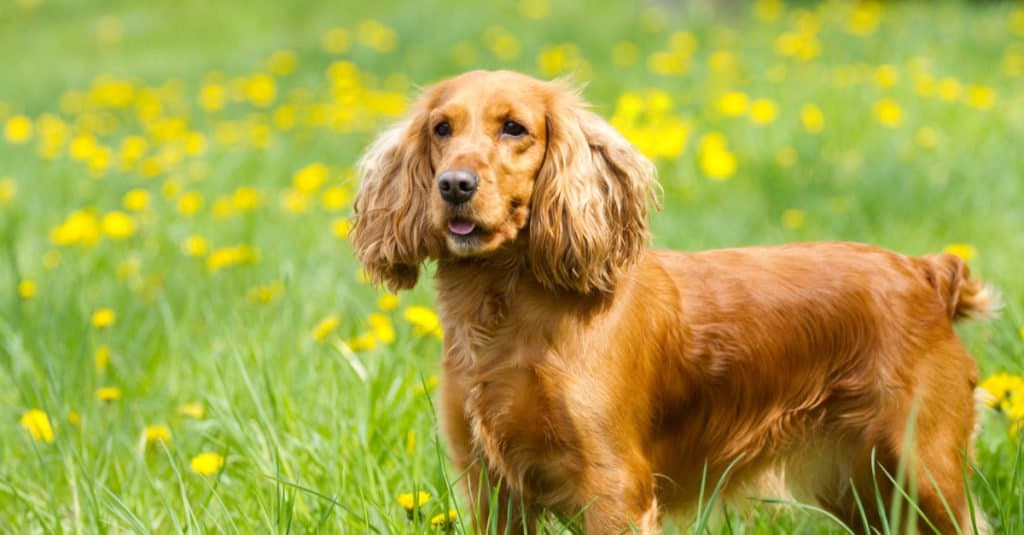
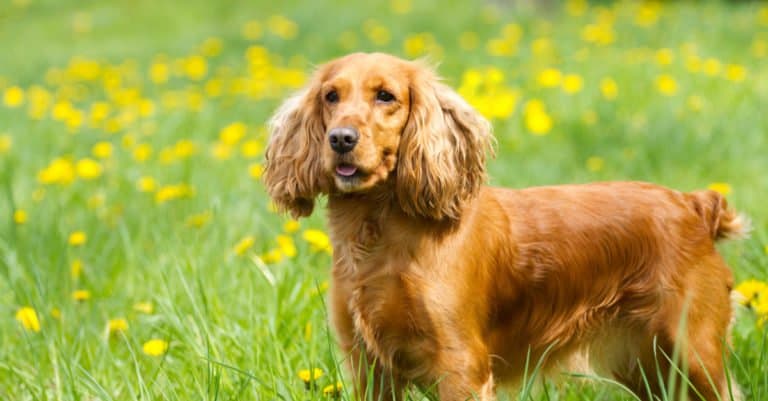
Field Spaniel standing in a field of flowers

Field Spaniels can be a mix of Cocker Spaniels, English Spring Spaniels, and Sussex Spaniels.

View all 170 animals that start with F

Sources

  1. AKC / Accessed February 9, 2021
  2. Dogtime / Accessed February 9, 2021
  3. Wikipedia / Accessed February 9, 2021
  4. Hillspet / Accessed February 9, 2021
  5. The Goodypet / Accessed February 9, 2021
  6. Killara Spaniels / Accessed February 9, 2021
  7. Dogbreed Atlas / Accessed February 9, 2021
  8. Dogell / Accessed February 9, 2021
  9. Dogell / Accessed February 9, 2021
  10. Dogell / Accessed February 9, 2021
  11. Field Spaniel Society of America / Accessed February 9, 2021
  12. Facebook / Accessed February 9, 2021
Heather Ross

About the Author

Heather Ross

Heather Ross is a secondary English teacher and mother of 2 humans, 2 tuxedo cats, and a golden doodle. In between taking the kids to soccer practice and grading papers, she enjoys reading and writing about all the animals!

Thank you for reading! Have some feedback for us?


Field Spaniel FAQs (Frequently Asked Questions)

The Field Spaniel is a sociable and adaptable breed!