

F
Species Profile

Fishing Cat

Prionailurus viverrinus

Spotted swimmer of Asia's wetlands
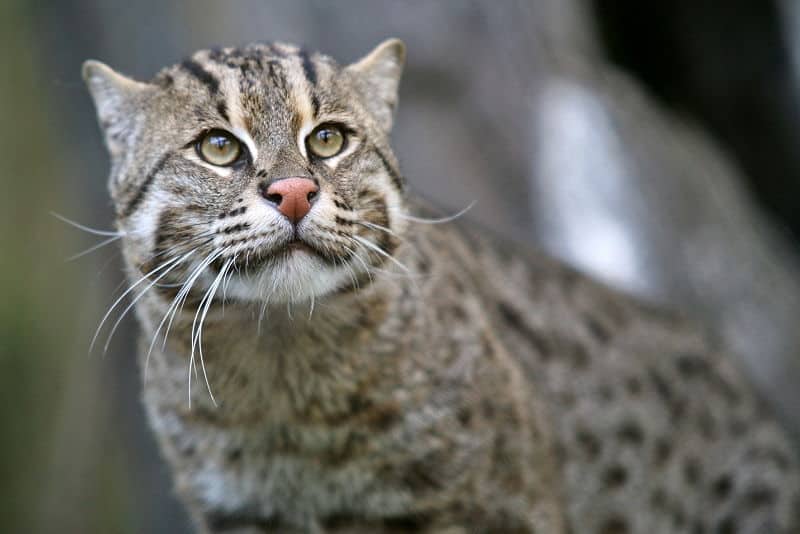
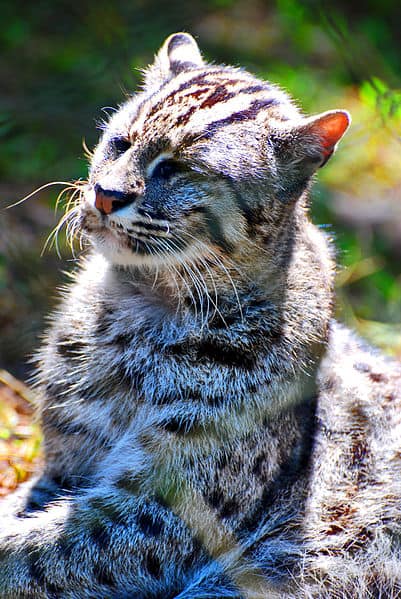
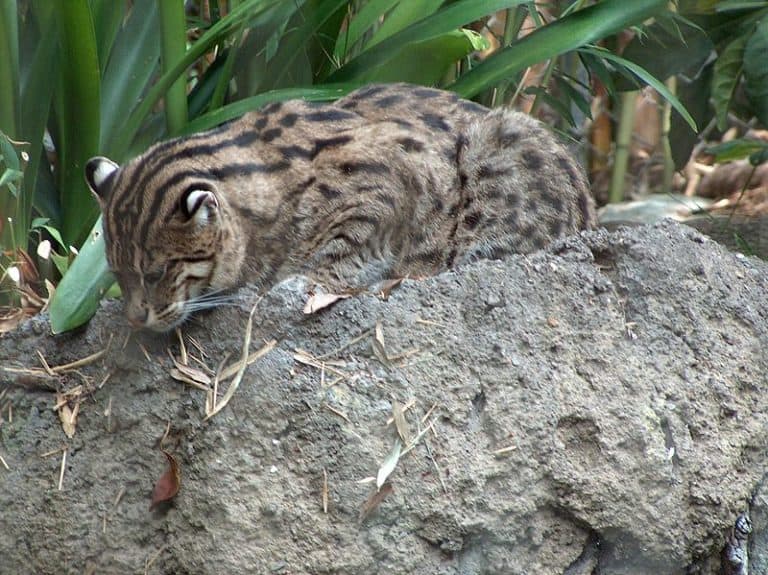
Ltshears - Public Domain

Fishing Cat Distribution

Click a location to explore more animals from that region

Loading map...

Size Comparison

Human 5'8"
Fishing Cat 1 ft 2 in

Fishing Cat stands at 21% of average human height.

At a Glance

Wild Species
Also Known As Water cat, Fisher cat, Mangrove cat, River cat, Swamp cat
Diet Piscivore
Activity Nocturnal+
Lifespan 10 years
Weight 16 lbs
Status Endangered
Did You Know?

Adult size (reported): head-body 57-78 cm; tail 20-30 cm; weight ~5-16 kg (males larger).

Scientific Classification

The Fishing Cat (Prionailurus viverrinus) is a medium-sized wild cat of South and Southeast Asia specialized for hunting in and around wetlands, often taking fish, amphibians, and other aquatic prey.

Kingdom
Animalia
Phylum
Chordata
Class
Mammalia
Order
Carnivora
Family
Felidae
Genus
Prionailurus
Species
viverrinus

Distinguishing Features

  • Stocky, muscular build with relatively short legs
  • Dense, water-resistant coat with olive-gray background and dark spots/stripes
  • Partly webbed feet aiding swimming and prey capture
  • Tail relatively short compared with many other small cats
  • Often associated with wetlands; known to actively hunt fish in shallow water

Physical Measurements

Males and females differ in size

Height
1 ft 3 in (1 ft 1 in – 1 ft 4 in)
1 ft 3 in (1 ft 2 in – 1 ft 4 in)
Length
3 ft 1 in (2 ft 9 in – 3 ft 5 in)
2 ft 11 in (2 ft 6 in – 3 ft 3 in)
Weight
29 lbs (24 lbs – 35 lbs)
14 lbs (11 lbs – 18 lbs)
Tail Length
10 in (9 in – 12 in)
10 in (9 in – 11 in)
Top Speed
30 mph
Estimated, not measured: 48 km/h

Appearance

Primary Colors
Secondary Colors
Skin Type Dense, short fur with water-resistant guard hairs and a thick undercoat suited to wetland hunting; skin/fur adapted to frequent wetting and swimming (semi-aquatic specialization) (Sunquist & Sunquist 2002).
Distinctive Features
  • Stocky, muscular build with relatively short legs and a broad head-adapted for moving through marsh vegetation and striking aquatic prey.
  • Semi-aquatic adaptations: commonly described with partially webbed feet and non-retractile/clawed toe tips aiding traction on muddy banks and capturing slippery fish (Nowell & Jackson 1996; Sunquist & Sunquist 2002).
  • Ears short and rounded; pale/whitish markings around the eyes and muzzle with prominent dark facial lines (forehead stripes).
  • Tail proportionally short compared with many felids; typically distinctly ringed and ends in a darker tip.
  • Fishing Cat (Prionailurus viverrinus) is a wetland specialist that often hunts at water edges and in shallow water, catching fish as main food, plus frogs and water crustaceans.
  • Typical size metrics reported for the species: head-body length 57-78 cm; tail length 20-30 cm; adult mass commonly ~6-16 kg (males averaging larger than females) (Nowell & Jackson 1996; Sunquist & Sunquist 2002).
  • Longevity reported: up to ~15 years in captivity; wild longevity is generally lower (often cited around ~10-12 years) (zoo husbandry/field summaries; e.g., Sunquist & Sunquist 2002; regional species accounts).
  • Conservation-linked appearance/field context: often encountered near human-dominated wetlands (paddies, fish ponds), increasing risk of conflict and retaliatory killing; principal threats include wetland loss and degradation (IUCN Red List: Prionailurus viverrinus).

Sexual Dimorphism

Sexual dimorphism is primarily in size and mass: males are typically heavier and slightly longer-bodied than females; both sexes share the same spotted pattern and water-adapted coat (Nowell & Jackson 1996; Sunquist & Sunquist 2002).

  • Typically larger/heavier: adult mass commonly reported in the upper part of the ~6-16 kg range; more robust neck/shoulders (Nowell & Jackson 1996).
  • Broader head and more muscular overall build, especially across chest and forelimbs (field descriptions).
  • Typically smaller/lighter within the ~6-16 kg range; otherwise similar coat patterning and wetland-adapted pelage (Nowell & Jackson 1996).
  • Slightly more slender overall profile compared to males, without distinctive color/pattern differences.

Did You Know?

Adult size (reported): head-body 57-78 cm; tail 20-30 cm; weight ~5-16 kg (males larger).

Its feet are partially webbed, improving propulsion and grip on slippery prey at the water's edge.

Diet can be strongly fish-based, but it also takes frogs, crabs, snakes, waterbirds and small mammals-whatever wetlands provide.

Captive reproduction data: gestation about 63-70 days; litters typically 1-4 (often 2).

Unlike most cats, it readily enters water and may swim after prey; it often drags catches onto land to eat.

Conservation status: Vulnerable (IUCN Red List; major drivers include wetland drainage, pollution, and conflict near fisheries/poultry).

Unique Adaptations

  • Partially webbed toes: increases surface area for paddling and stability on mud and wet vegetation.
  • Water-resistant coat: dense underfur and guard hairs help reduce water penetration and maintain insulation after swimming.
  • Stocky build with relatively short legs: lowers the center of gravity for stalking and striking in shallow water and marshy terrain.
  • Shorter tail (20-30 cm) relative to body: can reduce drag and snagging in dense wetland vegetation.
  • Camouflaging spot pattern: broken rosettes/spots blend with dappled reed and mangrove shade at the water's edge.
  • Robust canines and strong jaw musculature (felid trait expressed strongly here): useful for gripping slippery fish and hard-shelled aquatic prey like crabs.

Interesting Behaviors

  • Edge-wait hunting: crouches at the bank and makes rapid forepaw swats to hook fish out of shallow water.
  • Active aquatic pursuit: will wade chest-deep and can swim after fish or dive briefly when striking.
  • Prey-handling: frequently carries fish or crabs away from the shoreline before feeding, reducing loss to water or competitors.
  • Mostly solitary and territorial: uses scent-marking (urine spray, cheek rubbing, scratching) along travel routes in reedbeds and mangroves.
  • Activity shifts with people: tends to be more nocturnal/crepuscular in human-dominated wetlands, with increased daytime activity in quieter protected marshes.
  • Denning in dense cover: uses reedbeds, thick mangroves, or vegetated banks to hide kittens and to rest near hunting areas.

Cultural Significance

The fishing cat (Prionailurus viverrinus) lives in marshes, mangroves, floodplains and rice-fish areas. People see it as a fish-catching wild cat that can raid ponds or poultry, leading to people harming or killing it, but it is also a symbol for protecting wetlands, fisheries, waterbirds, and water quality.

Myths & Legends

In Bengal, local names like "fish cat" for the Fishing Cat (Prionailurus viverrinus) come from watching it take fish from ponds and canals, a simple everyday story behind the animal's name.

In Sundarbans villages by mangroves, night losses of livestock and fish are blamed on an unseen "marsh cat." The Fishing Cat (Prionailurus viverrinus) is often called in these warning stories.

In Sri Lanka, villagers call the wetland wild cat (Fishing Cat, Prionailurus viverrinus). Stories say it sneaks into fish traps and steals backyard ducks, so people lock nets and coops.

Natural-history origin story: the species entered science from early 19th-century accounts emphasizing its fish-eating habits-an example of how repeated local observations were converted into the animal's enduring common name, 'Fishing Cat.'

Conservation Status

EN Endangered

Facing a very high risk of extinction in the wild.

Population Decreasing

Protected Under

  • CITES Appendix II (Prionailurus viverrinus)
  • India: Wildlife (Protection) Act, 1972 (Schedule I)
  • Bangladesh: Wildlife (Conservation and Security) Act, 2012
  • Nepal: National Parks and Wildlife Conservation Act, 1973
  • Sri Lanka: Fauna and Flora Protection Ordinance (as amended)

Life Cycle

Birth 2 kittens
Lifespan 10 years

Lifespan

In the Wild
5–12 years
In Captivity
10–20 years

Reproduction

Mating System Polygyny
Social Structure Solitary
Breeding Pattern Transient
Fertilization Internal Fertilization
Birth Type Internal_fertilization

Fishing cats (Prionailurus viverrinus) are mainly solitary. Males have larger ranges that can overlap several females, suggesting a polygynous system. Pairing is brief around heat. Females alone care for kittens; no long-term pair bonds.

Behavior & Ecology

Social No stable group (solitary) Group: 1
Activity Nocturnal, Crepuscular, Cathemeral
Diet Piscivore Fish (captured in shallow water along wetland edges)

Temperament

Secretive
Wary of humans
Strongly territorial (scent-marking and patrol behavior)
Persistent/tenacious hunter around water
Can be defensive and aggressive when cornered or at den sites
Maternal females show heightened defensiveness around kittens

Communication

meow-like contact calls Reported in captivity and field encounters
hiss/spit Threat
growl Threat
yowl/caterwaul Estrus/mating context in small felids; reported for Fishing Cat in captive observations
purr Affiliative/mother-young context in captivity
scent marking: urine spraying and directed urination on vegetation/objects Territorial/sexual signaling
fecal marking Latrine-like placement reported for many small cats; used for spacing/territory information
scraping/scratch marks with hindfeet and/or claw scratching on substrates Visual + scent from glands
facial rubbing (cheek/chin glands) on objects in captive observations
body postures and tail/ear signaling during aggression, courtship, and mother-young interactions

Habitat

Biomes:
Wetland Freshwater Marine Tropical Dry Forest Tropical Rainforest
Terrain:
Coastal Riverine Plains Muddy Sandy
Elevation: Up to 4921 ft 3 in

Ecological Role

Wetland mesopredator specializing on aquatic prey, linking aquatic and terrestrial food webs.

Regulates populations of small-medium wetland fish and amphibians (top-down control) Helps structure wetland community dynamics through predation on multiple aquatic prey guilds (fish, crustaceans, amphibians) Serves as an indicator/flagship for intact wetland habitat quality due to strong dependence on marshes, mangroves, and floodplains [IUCN]

Diet Details

Main Prey:
Freshwater fish Crabs and other crustaceans Amphibians Wetland reptiles Waterbirds Small mammals

Human Interaction

Domestication Status

Wild

Fishing Cat (Prionailurus viverrinus) is a wild cat with no domesticated form. Adults are about 57–78 cm long, tail 20–30 cm, weigh 6–16 kg, live ~10–12 years in the wild, 15–20 years in zoos. They live in marshes, mangroves and river edges, hunt fish, and meet people at fisheries, rice fields and ponds, causing conflict or harmed by wetland loss.

Danger Level

Moderate
  • Defensive aggression if cornered, trapped (e.g., in snares), or handled-bites and deep scratches are plausible given adult size (~6-16 kg) and carnivore dentition/claws.
  • High-risk handling contexts: rescue from nets/snares, capture/transport, or private keeping; injury risk increases without sedation and professional restraint.
  • Zoonotic disease considerations typical for wild felids (risk depends on local context): potential exposure to rabies in endemic regions, parasites (e.g., toxoplasmosis), and bacterial infections from bites/scratches.
  • Conflict situations near aquaculture ponds can trigger close encounters, but unprovoked attacks on humans are not commonly reported in scientific or management literature; most risk is situational/defensive.

As a Pet

Not Suitable as Pet

Legality: Fishing Cat (Prionailurus viverrinus) is generally unsuitable as a pet and is often illegal or tightly restricted. It is CITES-listed; private keeping is usually banned or needs special permits. Check local wildlife authorities.

Care Level: Expert Only

Purchase Cost: $5,000 - $20,000
Lifetime Cost: $60,000 - $200,000

Economic Value

Uses:
Ecotourism and wildlife viewing Conservation breeding/education (zoos, sanctuaries) Ecosystem services indicator (wetland conservation flagship) Human-wildlife conflict costs (aquaculture and poultry losses)
Products:
  • non-consumptive tourism revenue in wetland protected areas
  • conservation program funding (captive management, reintroduction feasibility work in some regions)
  • educational exhibits and outreach materials
  • negative economic impacts: depredation at fish ponds and occasional poultry predation; costs of fencing, netting, night enclosures, and compensation schemes

Relationships

Predators 6

Related Species 8

Flat-headed Cat Prionailurus planiceps Shared Genus
Leopard cat
Leopard cat Prionailurus bengalensis Shared Genus
Sunda Leopard Cat Prionailurus javanensis Shared Genus
Rusty-spotted Cat Prionailurus rubiginosus Shared Genus
Jungle Cat Felis chaus Shared Family
Leopard
Leopard Panthera pardus Shared Family
Tiger
Tiger Panthera tigris Shared Family
Clouded Leopard
Clouded Leopard Neofelis nebulosa Shared Family

Ecological Equivalents 5

Animals that fill a similar ecological role in their ecosystem

Flat-headed Cat Prionailurus planiceps Most similar felid niche: a wetland and river-edge specialist that takes a high proportion of aquatic prey (notably fish and crustaceans). Behaviorally overlaps with fishing cats in being strongly associated with lowland freshwater systems and in exhibiting hunting adaptations for capturing slippery aquatic prey.
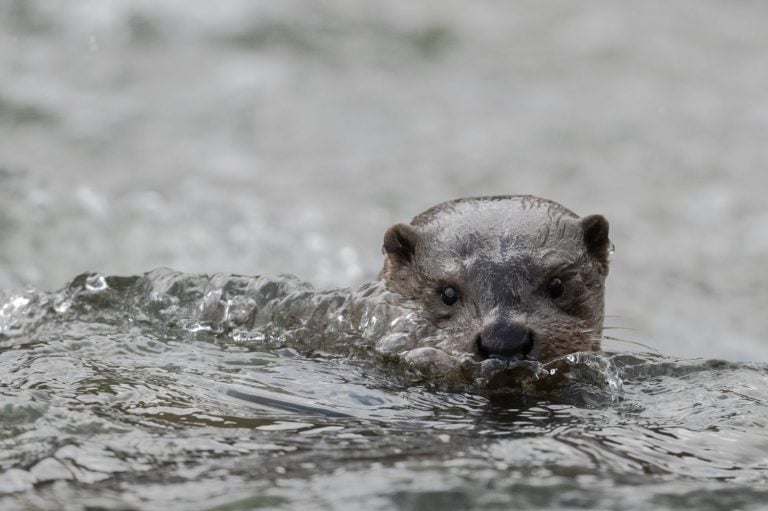
Eurasian Otter Lutra lutra Convergent piscivore in freshwater wetlands and rivers. Both are primarily nocturnal/crepuscular in many areas and forage by swimming and diving in shallow water. A similar prey base (fish, amphibians, crustaceans) creates niche overlap despite distant taxonomy.
Smooth-coated Otter Lutrogale perspicillata A South/Southeast Asian wetland piscivore that uses lakes, marshes, and mangroves; it strongly overlaps in habitat and prey (fish and crabs) and can compete for the same shallow-water foraging patches.
Water Monitor
Water Monitor Varanus salvator Large, semi-aquatic wetland predator and scavenger in South and Southeast Asia. Occupies marshes, canals, and mangrove edges and targets similar prey (fish, amphibians, birds), resulting in functional niche similarity.
Mugger Crocodile Crocodylus palustris Apex wetland predator within parts of the Fishing Cat's range; shares river and lake margins and preys on overlapping species (fish, birds, mammals). It represents a major predation risk at the waterline, shaping Fishing Cat behavior around wetland edges.

The Fishing Cat is a small to medium-sized feline that is natively found throughout a number of countries in Southeast Asia. Unlike other cat species found around the world (with the notable exception of the Jaguar) the Fishing Cat spends most of its life in areas of dense vegetation close to the water and is an excellent swimmer. However, despite its love of water, the Fishing Cat is not particularly specially adapted to its semi-aquatic lifestyle with small teeth that are not well designed for holding onto slippery prey and only slight webbing between the toes on its front paws to help it to negotiate the slippery banks. Although the Fishing Cat is known to still be locally common in certain areas, the global population is severely under threat as it is thought that nearly 50% of their specific wetland habitats are under threat from increasing levels of Human activity throughout much of its natural range.
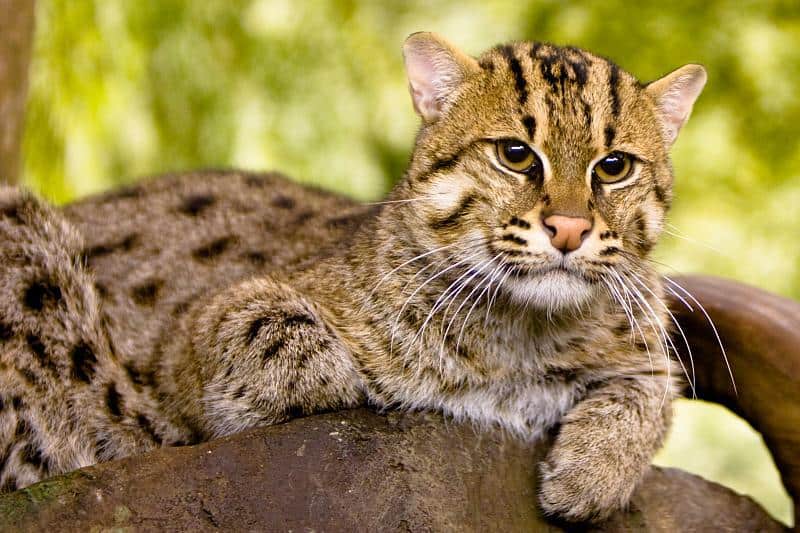
The fishing cat is a small to medium wild cat that has adapted to a semi-aquatic lifestyle.

Anatomy and Appearance

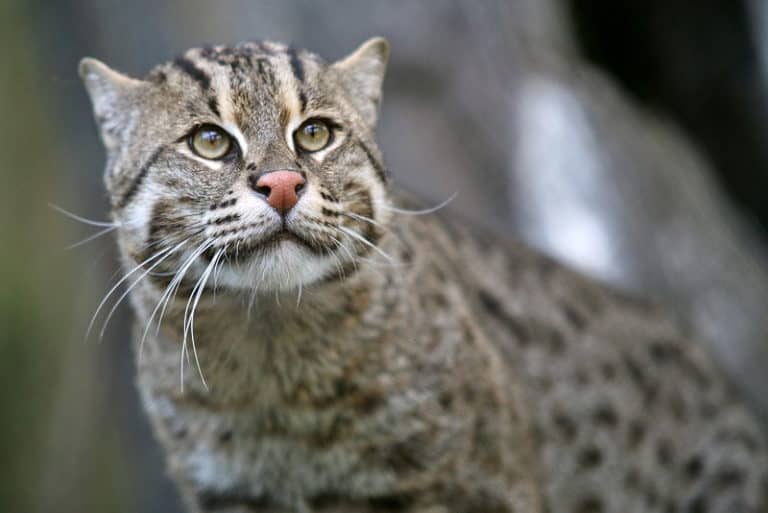
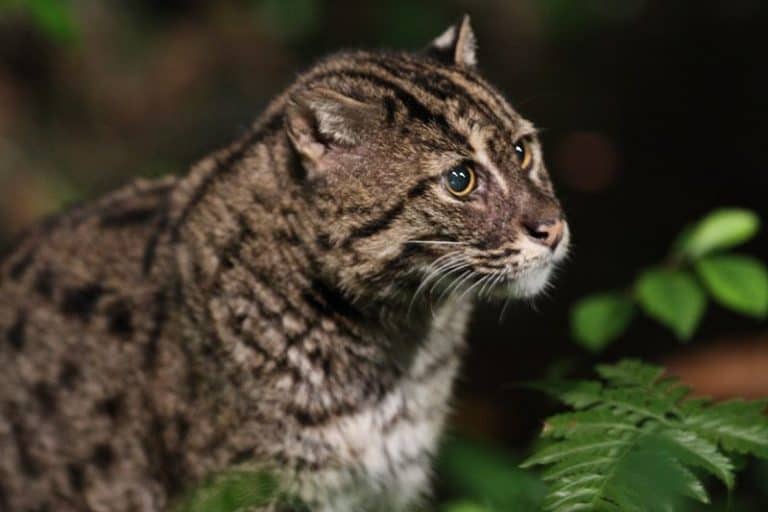
The Fishing Cat has a stocky and powerful body that is quite long in comparison to its short legs. Their short and coarse coat of fur is olive-grey in color and patterned with solid black spots that run the length of their body and often turn into black lines along the spine. The Fishing Cat has a short and flattened tail that is marked with black rings and can be used by the animal when swimming as it works in a similar way to a rudder on a boat, steering the Fishing Cat in the right direction through the water. Their small feet are slightly webbed but not any more so than many other feline species, but one of the biggest differences between the Fishing Cat and its relatives is that their claws are not fully retractable with the tips still sticking out slightly from the protective sheath of skin on their toes (most felines are able to completely retract their claws to prevent them from becoming blunt when they are not in use). Fishing Cats have quite broad heads in relation to their body with small, rounded ears that are black on the back and have a distinctive white spot in the center.

Distribution and Habitat

Khao Khiao Thailand

The fishing cat is native to a number of countries in Southeast Asia including Thailand.

The Fishing Cat is natively found throughout a number of countries in south-east Asia including Bangladesh, Bhutan, Brunei, Cambodia, China, India, Laos, Malaysia, Myanmar, Nepal, Pakistan, Sri Lanka, Thailand, and Vietnam along with the Indonesian Islands of Java and Sumatra. Although the Fishing Cat appears to have a wide geographical range, due to the fact that they prefer dense, wetland habitats they are only found in certain regions throughout these countries. Ideally, the Fishing Cat inhabits wetland areas where there is plenty of dense vegetation to provide cover both from predators but also to hide from potential prey and can be found in a variety of aquatic regions that include mangrove swamps, rivers, lakes, marshes, reed beds and areas of the forest close to streams. They are, however, severely threatened throughout much of their natural range as wetlands are drained for agriculture or often polluted by industry in the area. It is thought that 98% of the globally significant wetlands throughout southeast Asia are under threat and could even disappear completely.

Behavior and Lifestyle
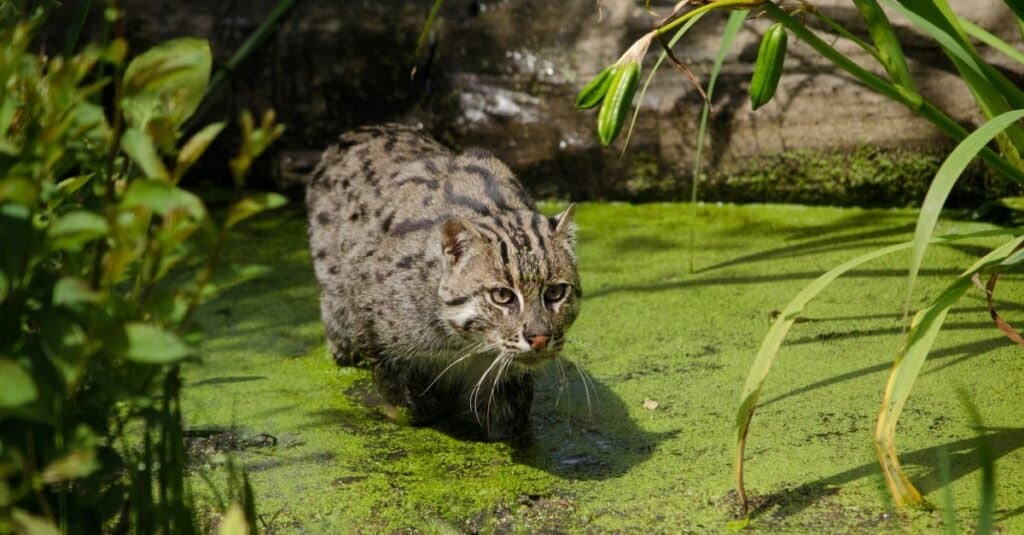
Types of wild cats - Fishing Cat

The fishing cat stands out among other types of wild cats because it is a strong, skilled swimmer.

The Fishing Cat is a nocturnal and solitary hunter that rests amongst dense vegetation during the day before heading to the water at night to find food. They are incredibly strong and capable swimmers and have been known to swim vast distances often in pursuit of a fish trying to get away. Fishing Cats are largely territorial animals that occupy home ranges of up to 22 square kilometers (although the range of a female is often much less), with that of a male Fishing Cat overlapping the patches occupied by a number of females in the area. Fishing Cats are known to be relatively adaptable animals and in certain areas are even known to live around city suburbs with little vegetation and close to Human settlements. Their incredibly elusive and nocturnal lifestyle means that they are often hard to spot but are susceptible to being trapped, poisoned, or accidentally caught in snares that are set up to catch other forest animals, such as Deer.

Reproduction and Life Cycles
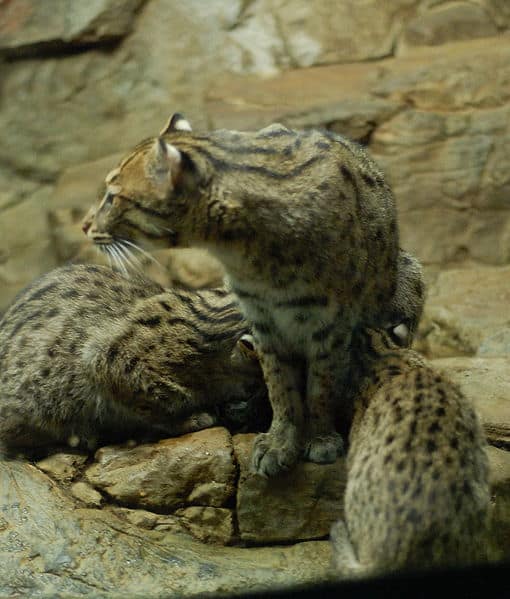
Fishing cat kittens are dependent on their mothers until they are nine months old.

Although little is really known about their breeding or social behavior in the wild, mating is thought to take place in January and February when a female Fishing Cat will call to males in the area, indicating that she is ready to mate. After a gestation period that lasts for between 60 and 70 days, she gives birth to 1 – 4 kittens that weigh about 150 grams and are born blind. Fishing Cat kittens develop relatively slowly at first putting on an average of 11 grams in weight a day and don’t open their eyes until they are just over two weeks old. At around 50 days old the kittens are able to start eating meat but are not weaned for at least another couple of months. Fishing Cats reach their adult size and are able to breed by the time they are nine months old and become completely independent of their mother about a month later when they leave to establish a territory of their own. Although it is thought that it is just the female who rears her young in the wild, captive males have been observed helping her to raise their offspring.

Diet and Prey
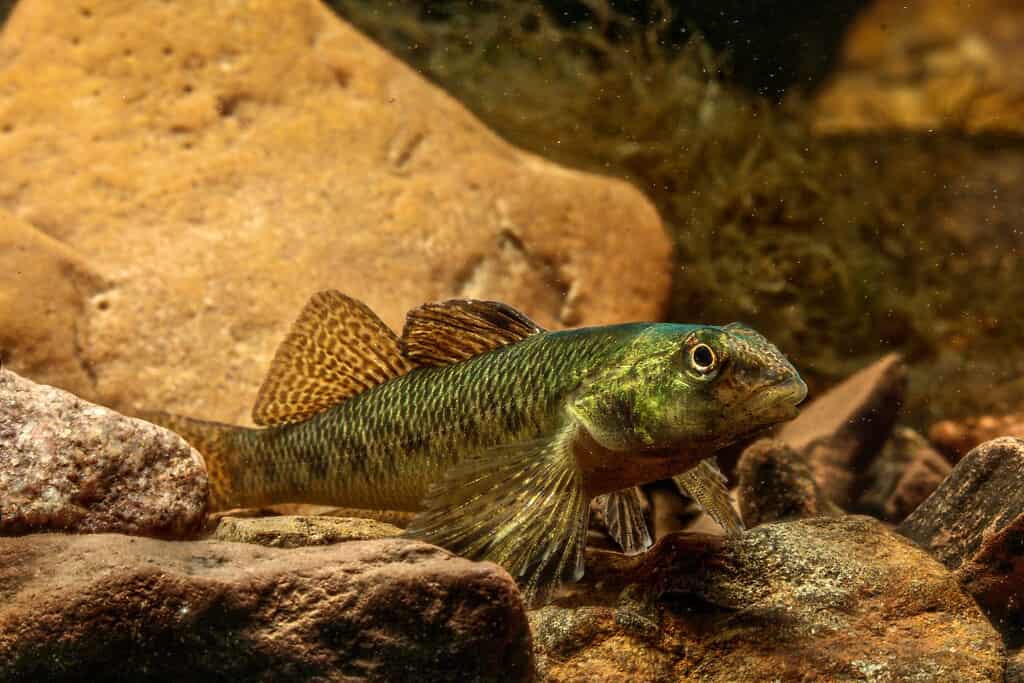
Johnny darter fish, Etheostoma nigrum

Freshwater fish make up 70% of the fishing cats’ diet – followed by frogs, mollusks, snails, and snakes.

The Fishing Cat is a carnivorous animal that only hunts and consumes other animals in order to acquire all of the nutrients that it needs to survive. As its name suggests, aquatic animals make up the bulk of the Fishing Cat’s diet with more than 70% of the food thought to be fish, followed by mollusks, frogs, snails, and snakes that are found in or close to the water. Fishing Cats are also known to hunt small mammals such as mice on land and will even target larger prey like civets, dogs, and livestock in areas close to settlements. Fishing Cats catch their prey in a couple of different ways but tend to dive into the water once a fish has been spotted before catching it in its mouth (they are even known to dive into quite deep water and can surface under aquatic birds to catch them). The other method they use involves them sitting at the water’s edge either on the bank or rock and using their paw, they lightly tap the surface in a way that mimics an insect to attract fish. Once it is close enough the Fishing Cat then scoops the fish out of the water using its paw and flicks it onto dry land before eating it.

Predators and Threats
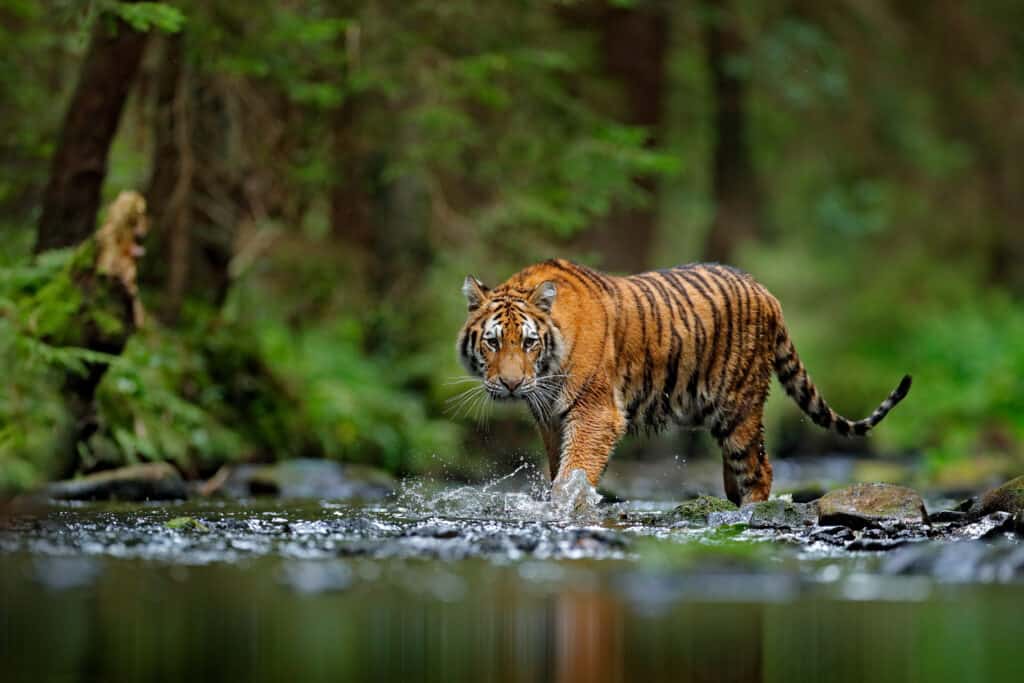
Tiger, Animals In The Wild, Forest, Water, Animal Head

Tigers are a threat to the fishing cat in areas where they share habitats.

Due to the powerful build and aquatic nature of the Fishing Cat, they are thought to have very few (if any) real natural predators in the wild. However, the Fishing Cat is often found in areas where they share their habitats with larger carnivorous mammals such as tigers and bears which could be of threat to them. People are the biggest threat to the Fishing Cat as they have not only destroyed much of their unique wetland homes with increasing levels of industrial and commercial activity but they have also been known to hunt Fishing Cats over the years for their meat and fur. Despite now being a protected animal species, large seizures of Fishing Cat skins at local markets still occur which indicates that poachers are still decimating populations, particularly in certain areas. Another problem for Fishing Cats caused by Humans is the fact that in areas close to growing settlements, locals are often overfishing in the nearby lakes and rivers which means that the food available for the Fishing Cats is also declining fast.

Evolution

Prionailurus diverged from a common ancestor between 8.76 to 4.53 million years ago. The rusty-spotted cat (P. rubininosus) was believed to be the first cat to genetically diverge, followed by the flat-headed cat (P. planiceps) and then the fishing cat (P. viverrinus). The fishing cat diverged together with the leopard cat between 4.25 to 0.02 million years ago.
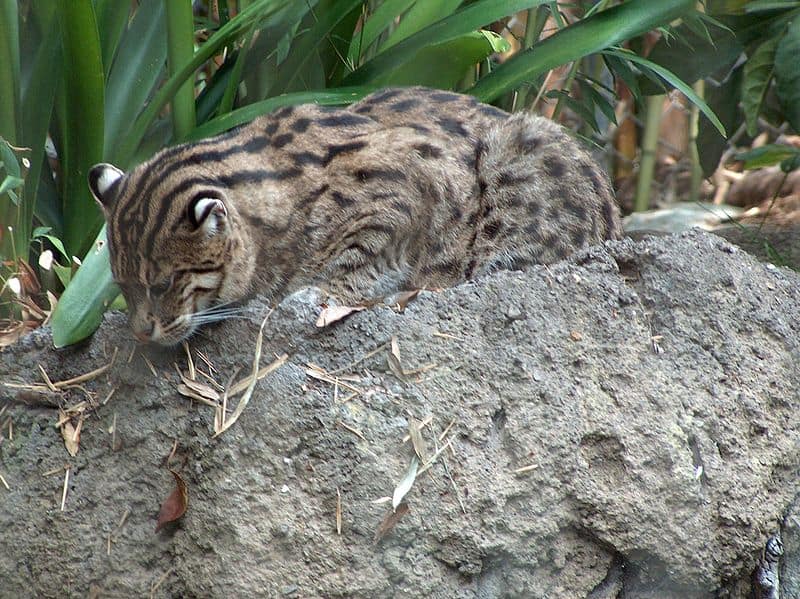
The fishing cat and the leopard cat diverged together and are closely related.

The Fishing Cat was first described scientifically by Edward Turner Bennet in 1833 and was given its scientific name with the last past meaning “civet-like”. Although they are not closely related at all, the Fishing Cat has a long, stocky body with short legs and a short tail which makes it look remarkably similar to these small carnivores. Although Fishing Cats tend to be most commonly found in a variety of watery lowland habitats, they are also known to inhabit areas at elevations of up to 5,000 ft depending on the waterways in the area (a small population is actually found in parts of the Himalayas). The Fishing Cat is classed as part of the Leopard Cat lineage. Other members of this feline group include the Leopard Cat itself, the Pallas Cat, and the Flat-Headed Cat, to which the Fishing Cat is most closely related.

Species

There are two subspecies of the fishing cat with geographical differences:

Relationship with Humans

Fishing cats are hunted for their fur and their habitats are shrinking due to human activity.

Due to the fact that the Fishing Cat is seldom seen in the wild as they are nocturnal and their preferred habitats would have been quite inaccessible to people for some time, until the middle of the last century, they were locally common throughout much of their native regions. However, the hunting of them by people for their meat and fur has obliterated populations in many areas, and even today, they are still illegally killed in their hundreds to sell their skins on the black market. The biggest problem facing the Fishing Cat though is the drastically increasing levels of Human activity in their natural environments that is severely affecting not just the Fishing Cats, but also the incredibly unique and bio-diverse wetland habitats in which they live. Water draining for agriculture and to make way for roads, growing Human settlements, and high levels of an industry that pollute the water with toxic substances has reduced their once vast natural range by nearly 50%.

Conservation Status and Life Today
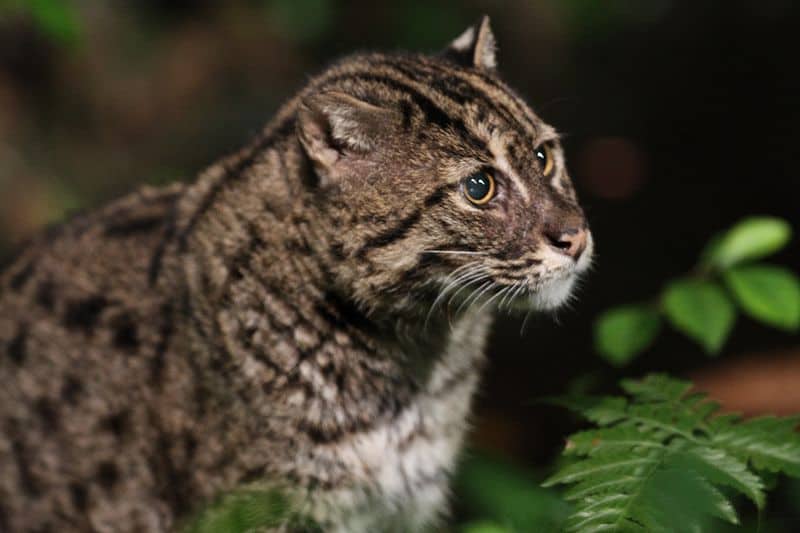
The fishing cat is now listed as an endangered species by the IUCN.

Today, the Fishing Cat is listed by the IUCN as an animal species that is Endangered in its natural environment and could therefore be threatened with extinction in the not-too-distant future. The biggest threat to the Fishing Cat is habitat loss with many of their remaining pockets of wetland homes now considered to be protected areas (illegal activity in these areas though is still contributing to the loss of species in these regions). Conservation projects have been set up in a number of areas to protect both the Fishing Cats and their unique wetland habitats and the hunting and trade of the species are now illegal. Poaching, however, still continues with skins still being seized from markets in the far east.

View all 170 animals that start with F
How to say Fishing Cat in ...
Bulgarian
Котка рибар
Czech
Kočka rybářská
Danish
Fiskekat
German
Fischkatze
English
Fishing Cat
Esperanto
Fiŝa kato
Spanish
Prionailurus viverrinus
Finnish
Kalastajakissa
French
Chat viverrin
Hungarian
Halászmacska
Italian
Prionailurus viverrinus
Japanese
スナドリネコ
Dutch
Vissende kat
English
Fiskerkatt
Polish
Taraj
Portuguese
Gato-pescador
Swedish
Fiskarkatt
Turkish
Balıkçı kedi
Chinese
漁貓

Sources

  1. David Burnie, Dorling Kindersley (2011) Animal, The Definitive Visual Guide To The World's Wildlife / Accessed May 24, 2010
  2. Tom Jackson, Lorenz Books (2007) The World Encyclopedia Of Animals / Accessed May 24, 2010
  3. David Burnie, Kingfisher (2011) The Kingfisher Animal Encyclopedia / Accessed May 24, 2010
  4. Richard Mackay, University of California Press (2009) The Atlas Of Endangered Species / Accessed May 24, 2010
  5. David Burnie, Dorling Kindersley (2008) Illustrated Encyclopedia Of Animals / Accessed May 24, 2010
  6. Dorling Kindersley (2006) Dorling Kindersley Encyclopedia Of Animals / Accessed May 24, 2010
  7. David W. Macdonald, Oxford University Press (2010) The Encyclopedia Of Mammals / Accessed May 24, 2010
  8. Fishing Cat Facts / Accessed May 24, 2010
  9. Fishing Cat Research / Accessed May 24, 2010
  10. Fishing Cat Conservation / Accessed May 24, 2010
Lisha Pace

About the Author

Lisha Pace

After a career of working to provide opportunities for local communities to experience and create art, I am enjoying having time to write about two of my favorite things - nature and animals. Half of my life is spent outdoors, usually with my husband and sweet little fourteen year old dog. We love to take walks by the lake and take photos of the animals we meet including: otters, ospreys, Canadian geese, ducks and nesting bald eagles. I also enjoy reading, discovering books to add to my library, collecting and playing vinyl, and listening to my son's music.

Thank you for reading! Have some feedback for us?


Fishing Cat FAQs (Frequently Asked Questions)

Fishing cats and minks look very similar to one another. However, the primary difference is that fishing cats are substantially larger than minks. Fishing cats are also mostly located in Canada while minks have a range that extends further south.