













Origin and History
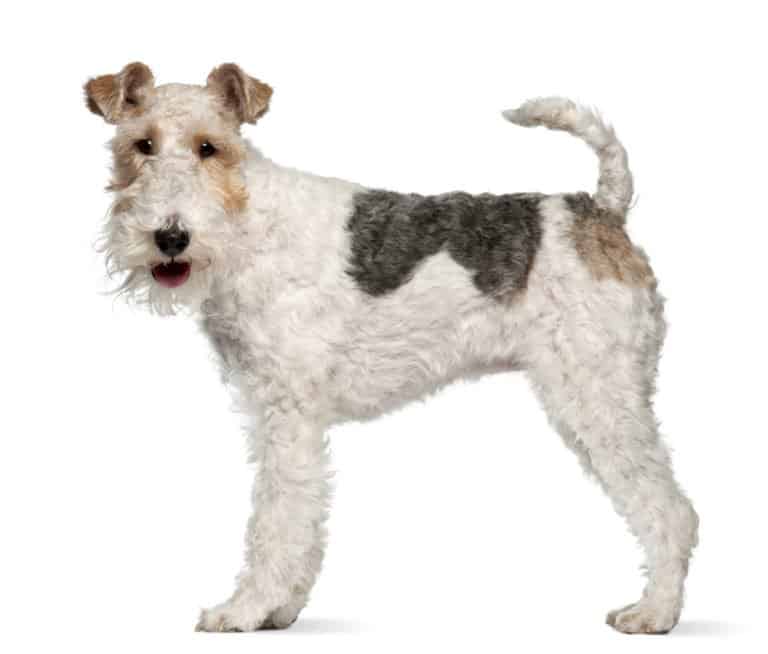
Fox terriers originated in 19th-century England, where they took part in fox hunts with the landed gentry. Bred to hunt rodents, going underground as necessary, fox terriers are energetic and persistent. There are two main types of fox terriers: the Smooth Fox Terrier and the Wire Fox Terrier. The Toy Fox Terrier is a separate breed. Although on the surface, their appearance is different, they share similar profiles, personalities, and instinctual behaviors. Topping out at around 18 pounds and 15 inches in height, this breed from England is ideally sized for the house, and its rugged nature is suited to the outdoors too.
After 1870, the fox terrier breed had a complete pedigree; before that, many terriers in England were brown and black and wire-haired, though smooth-coated and white terriers also existed. At some point early in the 1800s, a Colonel Thornton is said to have developed a breed that had some white hair. It is speculated that he must have incorporated other breeds, like beagles, pointers, and bulldogs. Three of the colonel’s dogs are known to be the ancestors of the white-haired terriers.
Fox terriers are often loyal family dogs who love to play, but early socialization is important to ensure they get along well with children and other pets. With their energetic drive, curiosity, and friendly nature, they are incredibly fun pets. Beware, however, that their independent character sometimes makes training a challenge.
3 Different Types of Fox Terrier Breeds
There are three breeds of fox terriers. These are:
- Toy Fox Terrier: The Toy Fox Terrier is a petite terrier that can come in a mix of brown and tan colors. With an amusing mix of charisma and sturdiness that belies its size, they are fearless.
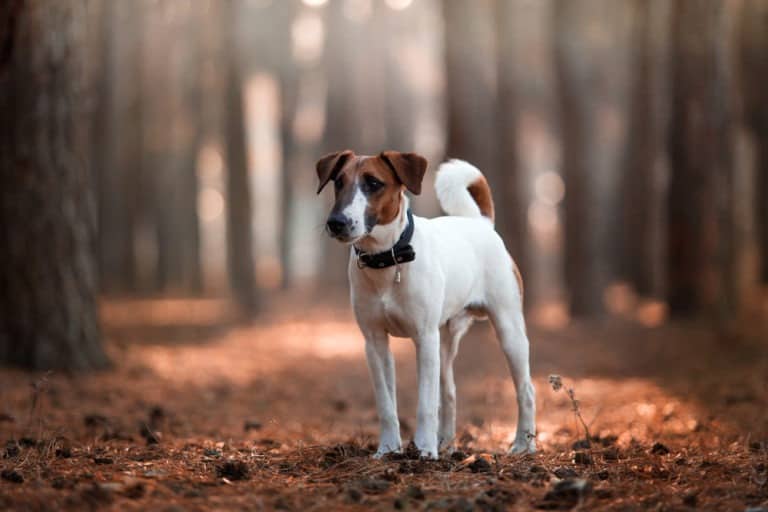
- Smooth Fox Terrier: The Smooth Fox Terrier is an expert digger and won’t give up until they find what they’re looking for! This breed dates back to England in the mid-1800s. They accompanied British royalty on foxhunts. As their name implies, their hair is much smoother than that of their relatives.
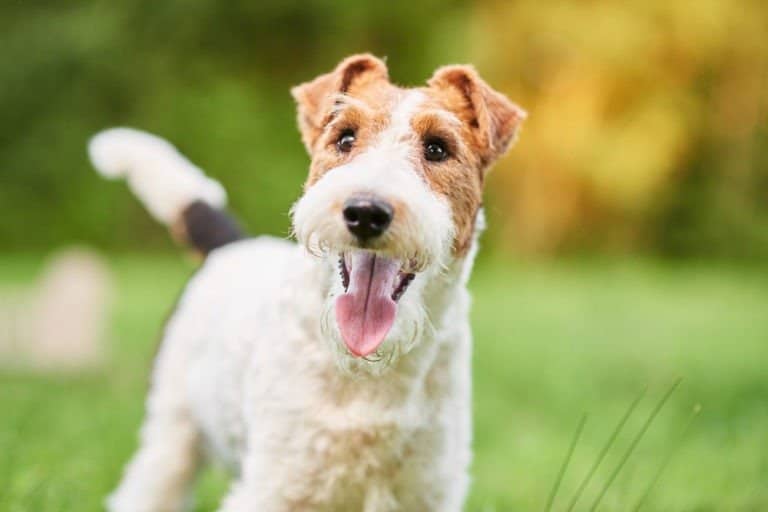
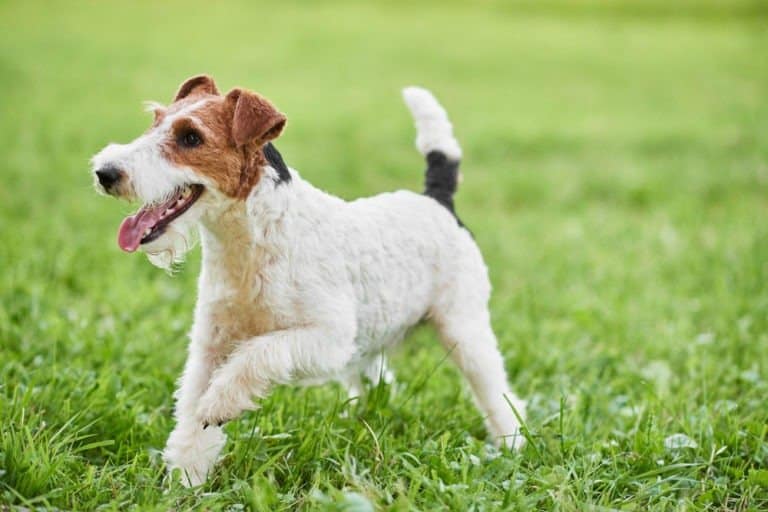
- Wire Fox Terrier: The Wire Fox Terrier has a broken coat, for which it’s named, has a white base and brown markings around the face with additional black and brown markings all over the body. The long hair around the face gives it the appearance of a mustache and beard.
Fox Terriers were primarily developed from the Rough Coated Black and Tan Terrier, along with contributions from other breeds such as the Beagle and Bull Terrier. Their strong prey drive, plucky, independent mind, and specialized training gave them the ability to drive foxes from the den.
Descendent Breeds
- Miniature Fox Terrier: These Australian-bred, diminutive hounds are closely related to the toy version of the Fox Terrier, which originated in England.
- Brazilian Terrier: Brazilian Terriers are known for ratting and hunting, much like the other terriers. As fox terriers were brought across the world, in Brazil, they mixed the breed with other small breeds, like Chihuahuas, to develop the Brazilian Terrier.
- Chilean Rat Terrier: Chilean Rat Terriers, similar to Brazilian Terriers, are descendants from fox terriers brought to the country; however, this particular breed was a result of native dogs being bred with them to produce the Chilean Rat Terrier.
- Japanese Terrier: Like some of the other worldwide descendants, the Japanese Terrier was, of course, developed in Japan. Smooth Fox Terriers were introduced to Japan by Dutch traders in the 19th century, leading to the development of the Japanese Terrier.
- Ratonero Bodeguero Andaluz: With the best name of the group, the Ratonero Bodeguero Andaluz was created in Spain. The name really says it all! When translated, the breed’s name means “wine cellar rat hunting dog from Andalusia”. This region of Europe is known for its bodegas and wine.
- Rat Terrier: An American breed, the Rat Terrier was bred for hunting and working on farms in the rural United States. They were bred from a combination of Fox Terriers, Manchester Terriers, and other small hunting breeds. You can find them in three different versions: standard, toy, and miniature.
- Teddy Roosevelt Terrier: The Teddy Roosevelt Terrier was not developed by the U.S. president, but his family did own similar types of early terrier breeds, as was common for the time, because they were used around farms and hunting. The breed was named in his honor, though, and they do have a lower stance due to their shorter legs and stocky build.
- Tenterfield Terrier: Much like its cousins, the Tenterfield Terrier was developed in another part of the world, Australia, as immigrants were breeding dogs to hunt small animals and help with rats in rural areas.
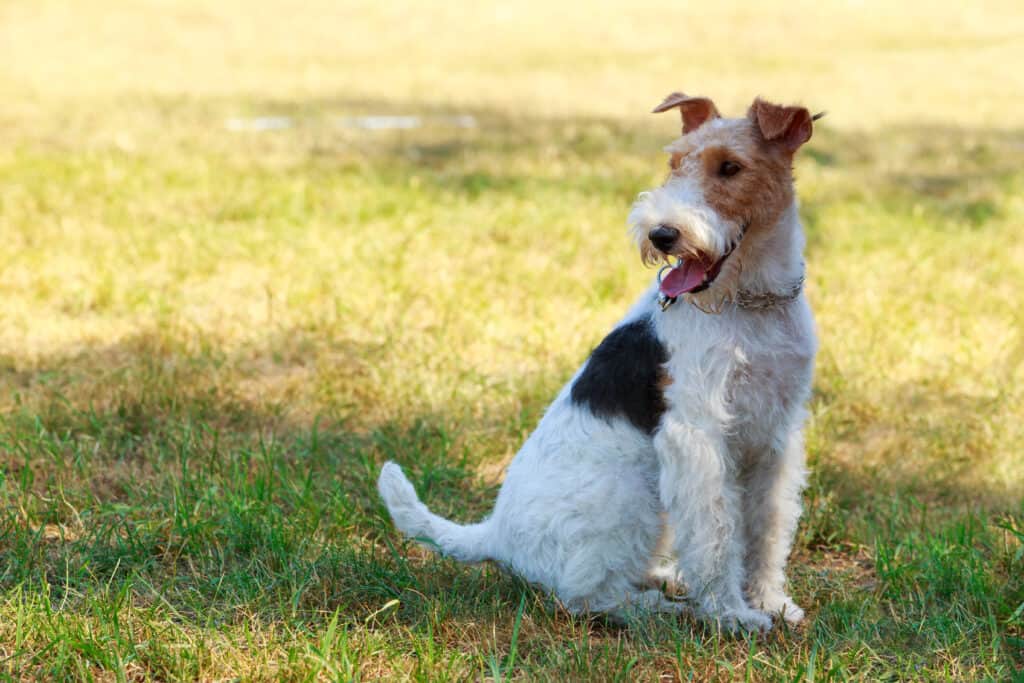
The Wire Fox Terrier was once a quintessential part of the British fox hunting scene.
©iStock.com/DevidDO
3 Pros and Cons of Ownership
| Pros! | Cons! |
|---|---|
| Fox terriers are friendly and fun-loving. | Fox terriers can be headstrong, so training is challenging. |
| Smooth fox terriers need little grooming. | Wire fox terriers need regular grooming. |
| Their compact size makes them perfect lap dogs. | They are high-energy dogs that need lots of exercise. |
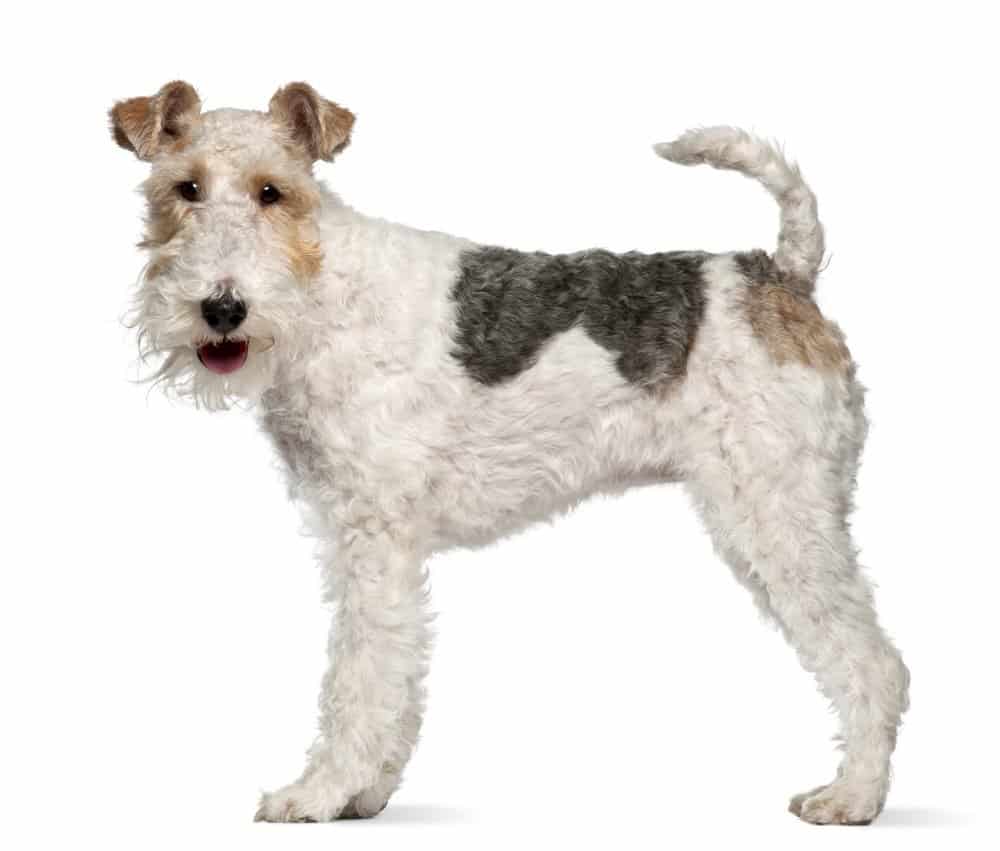
Fox terriers are friendly and fun-loving, but they are high-energy dogs that need lots of exercise.
©Eric Isselee/Shutterstock.com
Size and Weight
Standing an average of 15 inches from ground to shoulder, fox terriers are small and agile. The weight of a healthy adult should be below 20 pounds. Most males are somewhat larger than most females.
- Male fox terrier height: 15.5 inches at withers
- Male fox terrier weight: 19 pounds
- Female fox terrier height: 14 inches at withers
- Female fox terrier weight: 15 pounds
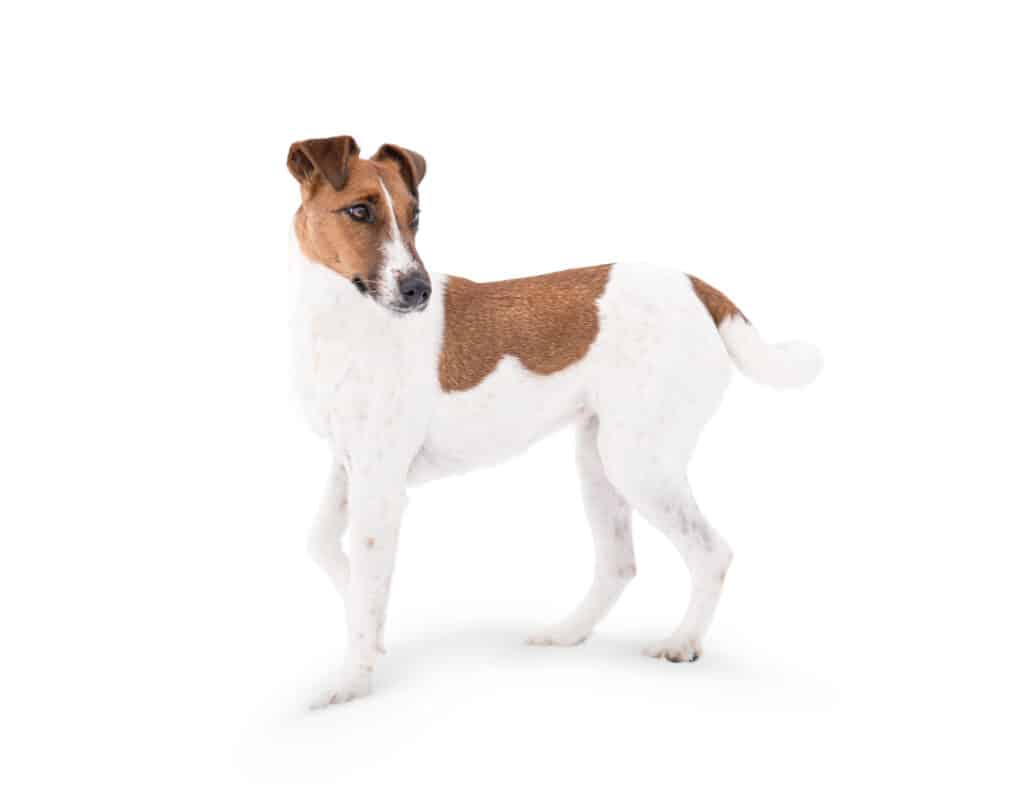
Standing an average of 15 inches from ground to shoulder, fox terriers are small and agile.
©iStock.com/NINA KULAGINA
Common Health Issues
Some smooth fox terriers carry a recessive gene for myasthenia gravis, a neuromuscular disease that has symptoms such as weakness and wasting in the muscles, enlargement of the esophagus, and aspiration pneumonia. Cataracts can also be an issue for smooth fox terriers. Both wire and smooth types may develop skin sensitivities or allergies.
You should also be aware of the following less common health issues among fox terriers:
- Glaucoma
- Lens luxation
- Luxating patellas (knees)
- Legg-Perthes disease (hips)
Their average lifespan is typically 12 to 15 years.
Temperament
This lively pet generally enjoys a sunny disposition and a desire to please. Most are naturally good with children and will play all day long if possible.
Fox terriers have a strong prey drive that can override their good manners, leading them wherever their nose takes them. This instinct also makes them persistent diggers unless their owners are firm and vigilant outdoors.
The dogs’ fierce independent streak makes them more difficult to train, but their eagerness to please their people eventually wins out. As an owner, you must be just as persistent as your small canine ball of energy in reinforcing boundaries and obedience. Patience brings results.
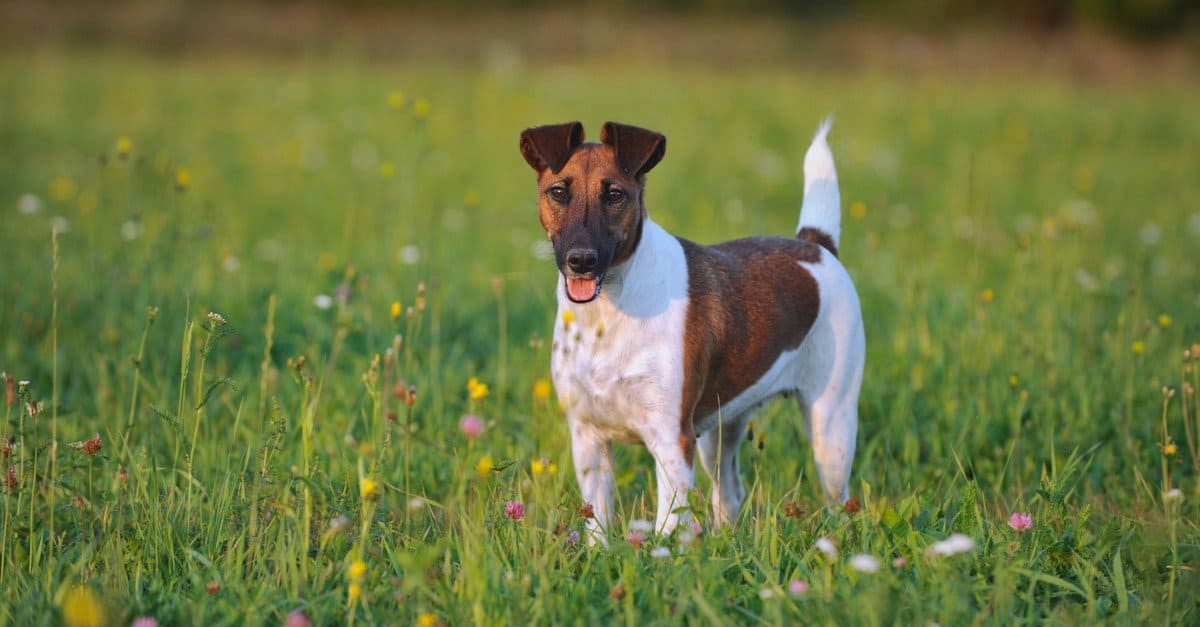
Fox terriers enjoy a sunny disposition and a desire to please.
©anetapics/Shutterstock.com
How to Take Care of Yours
When you bring home a fox terrier puppy, the first order of business is house training. Just like all the other skills you will teach your terrier, patience and consistency from you will bring positive results.
The Best Dog Food
New fox terrier puppies need food specially formulated for early development. From three to six months of age, puppies need three feedings per day to get the nutrition their growing bodies need. From six months to a year old, two feedings each day are enough to supply nutrition and fuel your puppy’s high energy level.
Once fox terriers are than one year old, they should graduate to adult dog food such as bite-sized kibble. Sometimes, fox terriers develop dry, itchy skin. If this becomes an issue, feed your pet a dog food with Omega fatty acids that helps support healthy, supple skin.
Be sure to watch for signs you are overfeeding, such as food left in the bowl at mealtime. Also, if you give your pet training treats throughout the day, adjust the amount you feed at mealtime accordingly.
Maintenance and Grooming
Whether you have a smooth fox terrier or a wire fox terrier, you should brush its coat on a regular basis. Brushing stimulates the hair follicles, promoting healthy skin and your dog’s comfort. Even though this breed sheds little, it still needs grooming time.
In the case of wire fox terriers, brushing also keeps the fur from tangling and removes any excess. A wire fox terrier needs to have its coat stripped a few times each year, which consists of pulling out the looser, wiry topcoat hair to encourage new growth.
To preserve the wiry texture, insulating qualities, and deep colors of the wire fox terrier’s coat, you should avoid conventional clipping. Although it will get rid of excess fur for a neater, cooler dog in the summer, clipping cuts through both the top and undercoats of the fur, causing the entire coat to become softer and fluffier when it grows out. It eliminates the natural protections afforded by the wiry top coat. Your dog’s skin may suffer as a result. The rich black, tan, and brown markings of the fox terrier will look faded, too.
Your professional dog grooming shop should be able to strip rather than clip rough-coated dogs like wire fox terriers, Scottish terriers, and Airedales. If not, find a groomer who can, so you can keep your dog as healthy and handsome as possible.
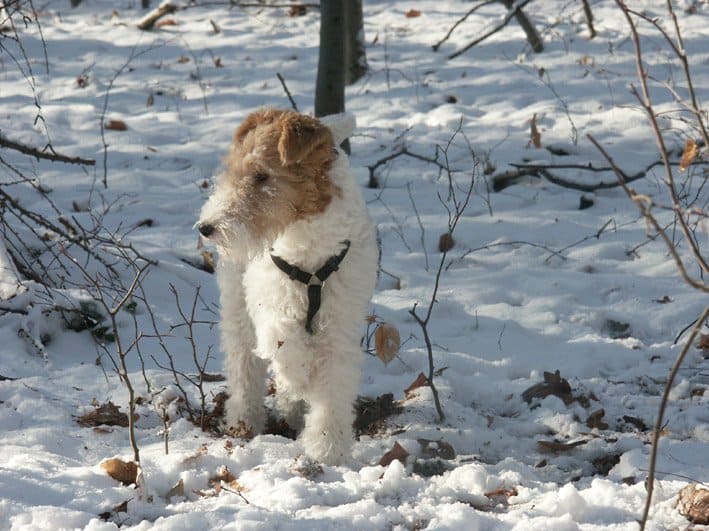
A wire fox terrier needs to have its coat stripped a few times each year, which consists of pulling out the looser, wiry topcoat hair to encourage new growth.
©Beate Klose / Creative Commons – Original
Training
It is a good idea to start training your fox terrier at an early age, when it can learn basics like sit and stay. You should continue training on a consistent basis until your dog comes each time you call, as well as other tasks you have worked on, without hesitation.
It is helpful to use a training aid, such as a small treat, to reward good behavior. You should be consistent with your rewards to get results while your pet is in training. It may take more time than it would to train a more cooperative breed, but with patience and positive feedback on your part, your fox terrier will learn manners.
This type of terrier is very intelligent but easily distracted if something else captures its attention. The key is to keep it engaged with you through frequent rewards and play breaks. You will find that the time you devote to training your fox terrier will help you form a strong bond with your pet for life.
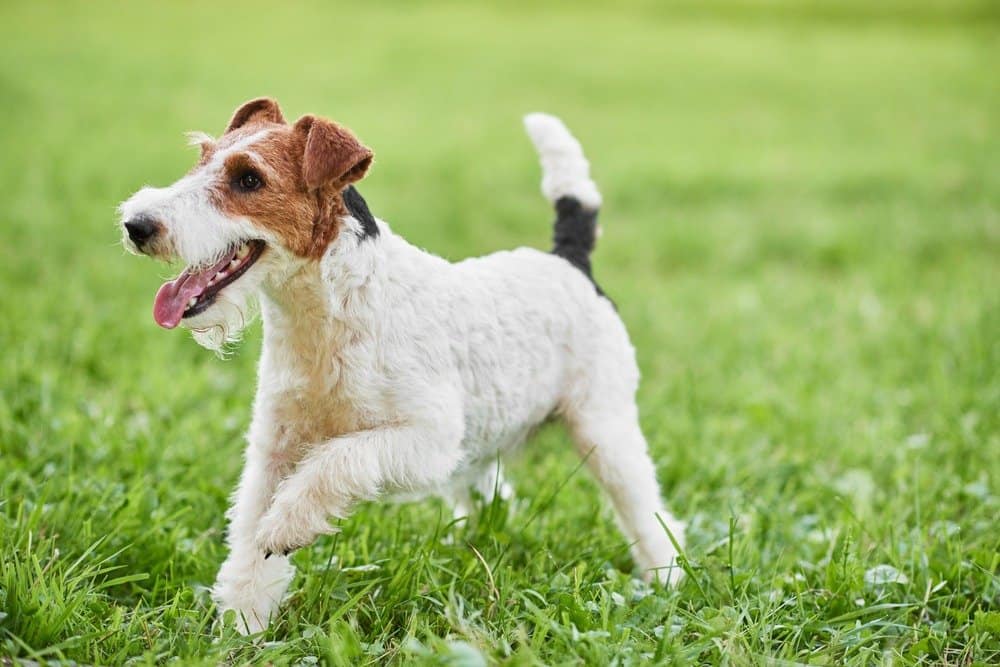
This type of terrier is very intelligent but easily distracted if something else captures its attention.
©Serhii Bobyk/Shutterstock.com
Exercise
Pets like to know what to expect, and they enjoy daily routines. Fox terriers are no different. Try to establish a time in the morning or right after work for a regular walk so you both get the exercise you need to stay healthy.
Create a regular play time, indoors or out, when you can engage in some of your fox terrier’s favorite games like fetch, tug of war, and tricks. These little dogs are quite agile and inventive, and above all, they love to play.
One issue you may encounter when you take your pet outdoors is its innate desire to run. If unleashed, a terrier is likely to rush off to follow an interesting scent or just to explore. That’s why two of the most important things to reinforce are “stay” and “come.”
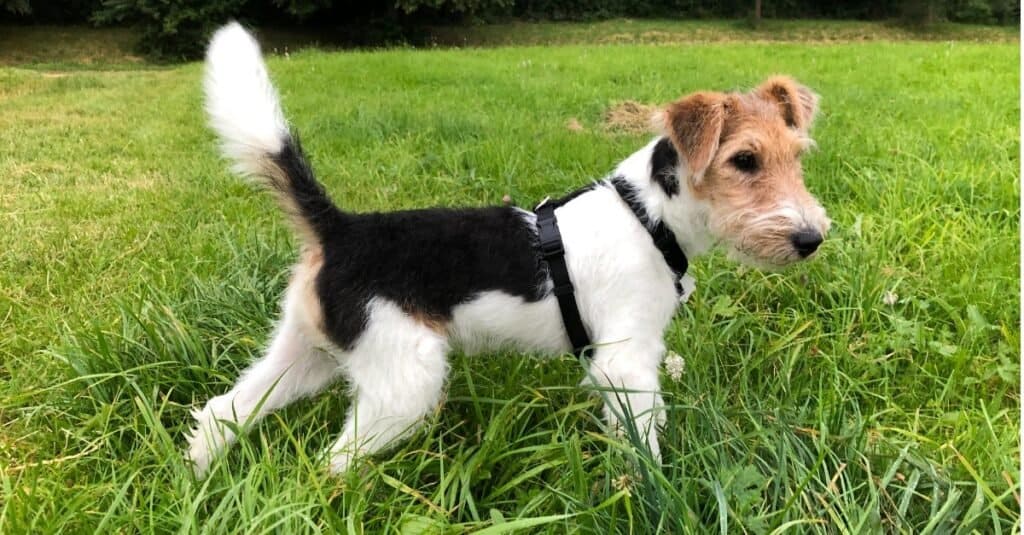
If unleashed, a terrier is likely to rush off to follow an interesting scent or just to explore.
©Martin Zaiser/Shutterstock.com
Puppies
Just like with any purebred dog, you should only purchase a fox terrier puppy from a breeder who has a good reputation in the canine community for raising healthy, well-bred puppies. Do your research before going to look at any puppy for sale, because you will fall in love at first glance.
Fox terrier puppies have a mischievous drive, especially before they learn the dos and don’ts of your household. Avoid leaving them alone without containment. Otherwise, you may return to significant damage to your shoes, clothes, and/or furnishings. If you leave your pet in an outdoor dog run while you are gone for the day, you may return to a freshly dug tunnel under the fence, and no puppy in sight.
Many puppy owners find crate training to be a safe and effective way to prevent such situations. If you make crating your puppy a positive experience, offering a treat and praise when it goes in, the dog will come to consider the crate as its own safe space.

Fox terriers are great family dogs and wonderful companions.
©Angyalosi Beata/Shutterstock.com
With Children
These playful, energetic pets typically love children. They are up for play and adventure at a moment’s notice. However, if your fox terrier has not been around children, be sure to introduce them slowly in a neutral setting where everyone is comfortable.
Keep an eye on their interactions to ensure that both the dog and the kids are getting along. Also, make sure the kids know how to approach and interact with your pet appropriately.
Similar Dogs
Several different breeds make up the AKC Terrier Group, ranging in size from miniature to large. Some of the terriers similar to the fox terrier in size, temperament, and appearance include:
- Jack Russell: This breed is a bit smaller, averaging about 12 pounds, and has shorter legs, but it is similar in coat and coloring to wire fox terriers.
- Welsh: A relatively rare breed, the Welsh terrier is similar in size to a wire fox, and has the same type of wiry coat. Its black and brown coloring is different.
- Brazilian: A smooth-coated breed with similar coloring to the smooth wire fox terrier, this terrier originated in Brazil rather than England.
Famous Examples
Fox terriers are a popular breed, having enjoyed the spotlight in everything from movies to palaces. Here are a few examples:
- Asta from The Thin Man movies
- Caesar, pet of King Edward VII of England
- Sky, 2012 Westminster Dog Show champion
- Wessex, the pet of Thomas Hardy
- Vicki, pet of Rudyard Kipling
- Polly, Charles Darwin’s dog
- Igloo, who accompanied owner Richard E. Byrd to Antarctica
Fox Terrier Pictures
View all of our Fox Terrier pictures in the gallery.

Sources
- American Kennel Club / Accessed November 8, 2019
- Wikipedia / Accessed November 8, 2019
- PubMed / Accessed November 8, 2019
- Groom Arts / Accessed November 8, 2019
- Daily Dog Stuff / Accessed November 8, 2019
- PDSA / Accessed November 8, 2019
- Canis Major / Accessed November 8, 2019