













F
Species Profile

French Bulldog

Canis lupus familiaris

Big charm, small bulldog.
Patryk Kosmider/Shutterstock.com

French Bulldog Distribution

Click a location to explore more animals from that region

Origin Location

This map shows the native origin of the French Bulldog. As a domesticated species, they are now found worldwide.

Loading map...

Found in 1 country

Size Comparison

Human 5'8"
French Bulldog 12 in

French Bulldog stands at 17% of average human height.

French bulldog lying down tired after walk

At a Glance

Domesticated
Also Known As Frenchie, Bouledogue français, Bouledogue francais
Diet Omnivore
Activity Diurnal+
Lifespan 5 years
Weight 14 lbs
Status Not Evaluated
Did You Know?

French Bulldogs were popularized in 19th-century Paris, especially among artisans and café culture.

Scientific Classification

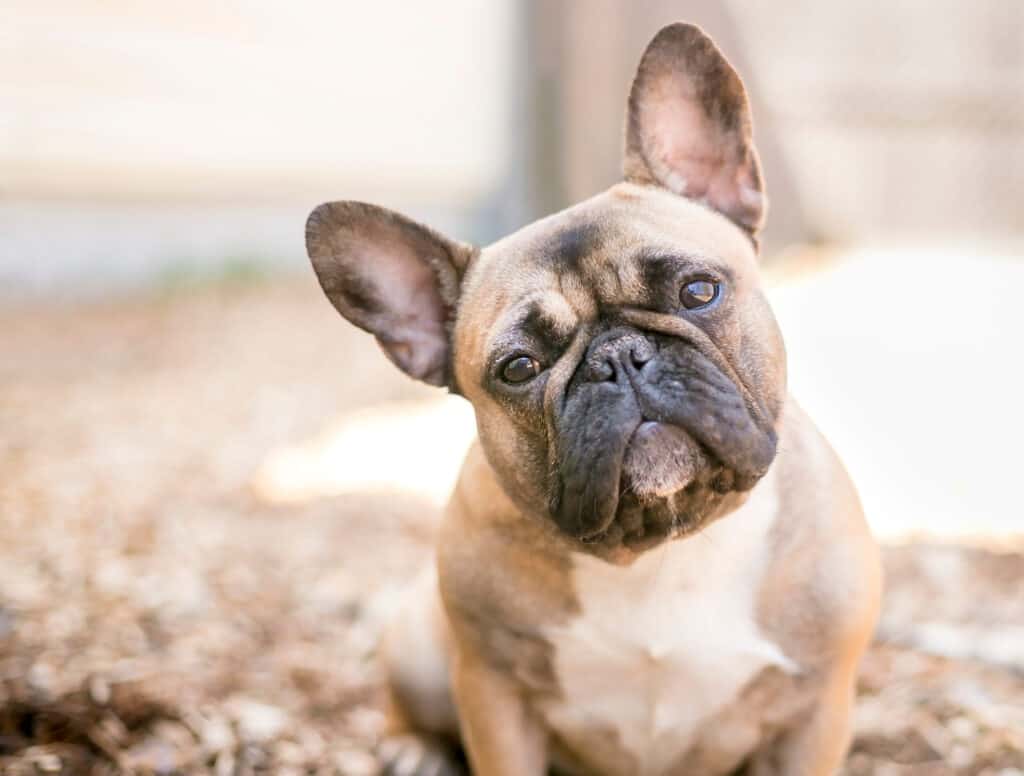
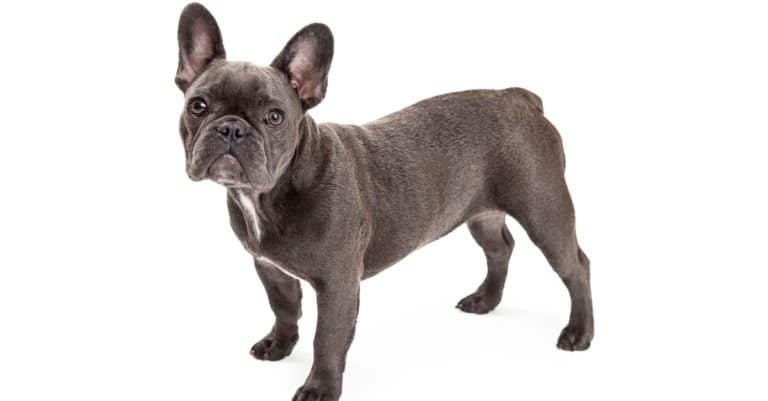
The French Bulldog is a small companion dog breed characterized by a compact, muscular body and distinctive upright “bat” ears. It is a brachycephalic (short-muzzled) breed developed primarily for companionship.

Kingdom
Animalia
Phylum
Chordata
Class
Mammalia
Order
Carnivora
Family
Canidae
Genus
Canis
Species
Canis lupus

Distinguishing Features

  • Upright, broad-based “bat” ears
  • Brachycephalic short muzzle; facial wrinkles
  • Compact, muscular body; small stature
  • Short, smooth coat in various color patterns
  • Naturally short tail (often screw or straight)

Physical Measurements

Males and females differ in size

Height
1 ft (11 in – 1 ft 2 in)
12 in (11 in – 1 ft 1 in)
Length
1 ft 8 in (1 ft 6 in – 1 ft 10 in)
Weight
25 lbs (20 lbs – 31 lbs)
23 lbs (18 lbs – 28 lbs)
Tail Length
2 in (1 in – 2 in)
2 in (1 in – 3 in)
Top Speed
12 mph
Slow, short sprints

Appearance

Primary Colors
Secondary Colors
Skin Type Short, smooth single coat over sensitive skin; skin folds (especially facial) and a tightly curled/screw tail can predispose to moisture trapping and dermatitis. Generally low-shedding compared with longer-coated breeds but does shed year-round.
Distinctive Features
  • Domestic dog (Canis lupus familiaris) breed selectively developed for companionship; differs from the base species (wolf-like domestic dog archetype) by extreme brachycephalic skull, compact build, and reduced endurance/thermoregulatory capacity.
  • Brachycephalic anatomy: very short muzzle, stenotic nares risk, elongated soft palate risk; predisposed to BOAS (Brachycephalic Obstructive Airway Syndrome) with noisy breathing, exercise intolerance, and heat sensitivity.
  • Distinctive upright "bat" ears (large, broad-based, erect) compared with other bulldog-type breeds that may have rose ears; ears contribute strongly to the breed's silhouette.
  • Compact, muscular, cobby body; broad chest, heavy bone for size; short, sturdy limbs.
  • Naturally short tail, often a screw/curled tail; can be associated with vertebral anomalies (hemivertebrae) and tail-fold skin irritation.
  • Prominent facial wrinkles and a short, upturned nose; requires routine facial fold hygiene to prevent skin-fold dermatitis and yeast/bacterial overgrowth.
  • Temperament/uses: affectionate, people-oriented companion; typically playful, clownish, and adaptable to apartment living; may be stubborn but generally not high-drive working dogs.
  • Health concerns: BOAS and heatstroke risk; spinal problems (hemivertebrae/IVDD); patellar luxation and hip issues; allergies (atopic dermatitis); ear and skin infections; eye problems (corneal ulcers, cherry eye); crowded teeth and anesthesia risk from short muzzle.
  • Care requirements: avoid overheating (no strenuous exercise in heat/humidity; never leave in hot cars); use a harness instead of neck collars to reduce airway pressure; maintain lean body condition to reduce respiratory and orthopedic strain.
  • Grooming/care: weekly brushing; regular cleaning/drying of facial folds and tail pocket; routine nail/ear care; proactive dental care (small, crowded teeth).
  • Reproduction note (health-related): many French Bulldogs require veterinary-assisted breeding/whelping (e.g., C-section) due to large head size relative to pelvic canal; important ethical consideration when breeding.

Sexual Dimorphism

Sexual dimorphism is modest. Males tend to be slightly larger and heavier with broader heads/neck musculature; females often appear a bit lighter and more refined but share the same compact, muscular build and head type.

  • Slightly greater overall mass and chest/neck thickness
  • Often broader skull and more pronounced cheek/neck musculature
  • Slightly smaller frame and lighter bone for the same height
  • Often a marginally narrower head/neck profile

Did You Know?

French Bulldogs were popularized in 19th-century Paris, especially among artisans and café culture.

Their hallmark "bat ears" became a defining standard-unlike the rose ears common in some bulldog relatives.

They're a domestic dog (Canis lupus familiaris), a selectively bred form of the gray wolf (Canis lupus) within Canidae.

Frenchies often communicate with a wide range of snorts, snores, grunts, and "talky" sounds due to their short muzzle and soft palate anatomy.

They're typically low-endurance sprinters rather than distance athletes-many prefer short bursts of play and lots of lounging.

Because of body proportions and head shape, many French Bulldogs are delivered by cesarean section in modern breeding programs (a welfare-relevant reality of the breed).

Despite their "bulldog" name, modern Frenchies were developed chiefly as companion animals, not for working or guarding roles.

Unique Adaptations

  • Brachycephalic skull shape: shortened muzzle and altered upper-airway anatomy that affects breathing efficiency, thermoregulation, and exercise tolerance compared with the base species (gray wolf) and many non-brachycephalic dogs.
  • Distinct upright "bat ears": large, erect pinnae that are a breed hallmark among bulldog-type dogs and can aid directional hearing, though not a substitute for scent-driven canine perception.
  • Compact, muscular build: suited to indoor life and short bouts of activity rather than the endurance travel and hunting patterns typical of wild Canis lupus.
  • Strong human-directed social selection: temperament shaped for close cohabitation, handling tolerance, and companionship behaviors beyond what natural selection favored in wolves.
  • Reduced heat-dissipation margin: reliance on panting for cooling is constrained by upper-airway conformation, making environmental management (cooling, shade, hydration) a critical "adaptation" in care.

Interesting Behaviors

  • Velcro companionship: frequently follows family members room-to-room and seeks close physical contact.
  • Heat-avoidance self-management: choosing cool floors, shade, and rest breaks; may refuse activity in warm weather.
  • Play style tends to be short, comedic bursts-zoomies, tug, and wrestling-followed by long recovery naps.
  • Vocal repertoire: snuffles, snorts, and grumbles used as social signals during greeting, play, or mild frustration.
  • Socially bold greeting behavior (common in well-socialized individuals), often approaching people readily compared with many working-line breeds.
  • Preference for face-to-face interaction; many use pawing or leaning to initiate attention.
  • "Perching" or sitting upright like a little sentinel-often to watch household activity without roaming far.

Cultural Significance

French Bulldog (Canis lupus familiaris) became a symbol of late-1800s Paris life, linked to workers, cafés, artists, and fashion. Its bat ears and small size made it a city companion. Today it's a companion pet, not a working dog, in ads and social media.

Myths & Legends

Parisian origin lore: popular stories place early Frenchies with lace workers who moved between England and France, carrying small bulldog companions that became fixtures in Paris neighborhoods and cafés.

Bat-ear legend in breed circles: enthusiasts recount that the striking upright ears were championed and celebrated by early fanciers-particularly in transatlantic show culture-until they became inseparable from the breed's identity.

"City dog of artists" anecdotes: historical accounts and period imagery link French Bulldogs with bohemian life in turn-of-the-century Paris, portraying them as mascots of studios, salons, and cabarets.

Name-and-nation tale: despite the 'French' name, many tell the story of a breed shaped by cross-Channel movement-English small bulldogs refined in France-reflecting a shared cultural heritage rather than a single-place invention.

Good-luck companion belief (modern folklore): in some contemporary pet-owner storytelling, the Frenchie is treated as a household 'little guardian' whose presence brings cheer and steadiness, echoing older traditions of valued hearth companions.

Conservation Status

NE Not Evaluated

Has not yet been evaluated against the criteria.

Population Stable

Life Cycle

Birth 3 pups
Lifespan 5 years

Lifespan

In the Wild
1–12 years
In Captivity
10–12 years

Reproduction

Mating System Polygynandry
Social Structure Managed Domestic
Breeding Pattern Not Applicable
Fertilization Managed Selective
Birth Type Managed_selective

French Bulldog (Canis lupus familiaris) breeding is managed by people, often polygynandry (multiple males and females) with temporary pairings. Helped methods (timed matings, artificial insemination) and planned C-sections are common due to brachycephaly (short skull) and birth problems.

Behavior & Ecology

Social Pack Group: 3
Activity Diurnal, Crepuscular, Cathemeral
Diet Omnivore Lean poultry (especially chicken/turkey) in highly palatable, easily chewed formats (softened kibble or wet food).

Temperament

Companion-focused, people-oriented; often seeks physical closeness (leaning, lap-sitting) more than many base-species dogs bred for work
Generally friendly and sociable with familiar people; can be reserved with strangers without early socialization
Playful in short bursts; tires quickly and may switch from active play to resting abruptly (breed-typical low endurance)
Stubborn/independent streak; responds best to consistent, reward-based training rather than harsh corrections
Moderate watchdog tendency: may alert-bark but typically not persistent guarders
Dog-dog sociability varies widely: some are highly gregarious, others selective or easily overwhelmed; early, controlled exposure strongly shapes outcomes
Sensitivity to heat and exertion: brachycephalic airway syndrome risk; behavior may include avoiding activity, seeking cool surfaces, or distress during excitement
Handling tolerance varies; many enjoy gentle contact but may dislike rough play-especially around face/neck due to airway/soft palate vulnerability
Care requirements that affect behavior: prefer harness over collar (reduces airway pressure), need weight control to limit breathing strain, and benefit from frequent short walks plus indoor enrichment
Common health concerns influencing social/behavioral patterns: brachycephalic obstructive airway disease, overheating risk, skin-fold irritation (may reduce touch tolerance), allergies/itching (may increase irritability), and spinal issues (may reduce play/jumping and increase guarding of body)

Communication

Short, sharp barks Alerting
Whines/whimpers Attention-seeking or discomfort
Grunts and "talking" noises during greeting/handling
Snorts/snuffles associated with brachycephaly Often during excitement; can accompany social solicitation
Growls during resource guarding or boundary-setting
Sighs/huffs during settling or frustration
Strong use of proximity/contact signals: leaning, climbing into laps, nudging hands for petting
Facial expressions emphasized by short muzzle: widened eyes, head tilts; clear gaze alternation between person and desired object
Pawing and gentle mouthing as attention bids; may escalate if inadvertently reinforced
Play signals: bouncy approaches, brief chase invites, toy presentation; tends toward low-impact wrestling over endurance running
Body posture shifts: quick freeze/turn-away when overstimulated; uses disengagement rather than long pursuits
Scent investigation and light marking typical of domestic dogs; less territory-driven than many working breeds but individuals vary
Thermoregulatory behaviors as "signals": seeking shade/cool floors, refusing to continue, spreading out to rest-important to read due to heat/airway risk

Habitat

Biomes:
Temperate Forest Temperate Grassland Mediterranean Savanna Desert Hot Desert Cold Boreal Forest (Taiga) Tundra Alpine Tropical Rainforest Tropical Dry Forest Freshwater Wetland Marine +8
Terrain:
Plains Hilly Valley Coastal Island
Elevation: Up to 8202 ft 1 in

Ecological Role

Domesticated omnivorous companion in human-associated ecosystems (urban/suburban household niche).

Provides companionship and social bonding benefits to humans Minor pest deterrence/alerting behavior in the home environment Consumes human-provided food resources and converts them to biomass; contributes to nutrient cycling via waste in managed systems Can influence local urban wildlife interactions indirectly through presence and human-managed activity

Diet Details

Main Prey:
Other Foods:
Cooked grains and starches fiber sources Vegetables Fruits

Human Interaction

Domestication Status

Domesticated

French Bulldogs (Canis lupus familiaris) began in the 19th century from small 'toy' Bulldogs kept by lace workers in England. When workers moved to France, these dogs were bred as pets for small size, a compact muscular body and upright 'bat' ears. They have reduced prey drive and a brachycephalic (flat) skull needing human care.

Danger Level

Low
  • Bites/scratches (usually low severity; risk increases with poor socialization, pain, or resource guarding)
  • Zoonotic disease risks typical of domestic dogs (e.g., intestinal parasites) if hygiene and veterinary care are neglected
  • Allergen exposure (dander/saliva)
  • Accidental injury from jumping/being underfoot (small dog hazard)

As a Pet

Suitable as Pet

Legality: Generally legal to own as a domestic dog in most jurisdictions. Exceptions may include local breed restrictions, housing/HOA rules, airline transport limitations (common for brachycephalic dogs), and occasional municipal regulations that restrict intact animals or require licensing/vaccination.

Care Level: Experienced

Purchase Cost: $1,500 - $6,000
Lifetime Cost: $18,000 - $45,000

Economic Value

Uses:
Companion animal/pet market Breeding and showing Veterinary services (notably brachycephalic/dermatologic care) Pet products (insurance, specialty harnesses, cooling gear)
Products:
  • Sale of puppies from registered and non-registered breeders
  • Stud services and semen shipping (where legal/regulated)
  • Show/competition participation (conformation)
  • Pet insurance policies and wellness plans
  • Specialty items: cooling vests, ramps/stairs, sensitive-skin diets, orthopedic beds

Relationships

French bulldogs were originally bred to be great companions, and their small build makes them ideal pups for all homes. The French bulldog is a medium-sized, non-sporting dog, featuring uniquely shaped ears commonly referred to as “bat ears.” While other dogs have a rounded scalp, the skull of these dogs lies flat between their ears instead.

These dogs are muscular, but their small bodies are compact. They have a short coat and come in various colors, which predominantly include brindle, white, blue, black, and fawn. Some of them have a genetic condition called Merle that creates an interesting pattern on their coat.

3 Pros and Cons of Owning a French Bulldog

To understand what any new pet owner is in for, here are a few pros and cons of owning a French bulldog:

Pros!Cons!
Quiet dogs: They do make noises to communicate, but they are not generally disturbing and are known to be quiet dogs.Prone to health issues: These dogs are prone to a lot of health issues, which means that they may need more veterinary attention than other breeds.
Low-maintenance: French bulldogs are low-maintenance and require little grooming. With the minimal extra care to pay for (apart from their food and regular veterinary visits), this dog may be a good match for someone with a more restricted budget.Drooling: These dogs drool a lot, creating quite a mess that owners will need to clean up.
Great companions: Are you looking to adopt a dog because you want a companion for yourself? Well, the French bulldogs will solve that purpose as they make great companions that dote on their loved ones.Expensive: French Bulldogs are expensive. One can expect the price of French Bulldogs to be anywhere between $1,500 and $8,500. Mini French bulldogs are even more costly.

Evolution and Origins

French Bulldog walking in park

In spite of their name, French bulldogs have very British origins.

The history of the diminutive bat-eared canine begins with its bulldog forbears, which were originally bred for bull-baiting, but the ancestors of French Bulldogs were later developed as companion animals and exhibited at shows. 

The smallest of them all became favorites of lace machine operators in the 19th century and made the move with them to Northern France, where their skills were still in demand in the wake of the Industrial Revolution, which swept Britain.

It wasn’t long before those squishy faces, rambunctious personalities, and those cute ears won the hearts of the French, too.  These little bulldogs soon became a fixture in the brothels of Montmartre, where ladies used them as icebreakers when entertaining visitors.

From there, their charm spread, through the Russian Imperial court, to individuals of means, and subsequently, across the Atlantic, and all over the world. Currently, these adorable, willful furballs are one of the most popular canines on the globe.

Size and Weight

These dogs are medium-sized and come in a variety of colors like fawn, brindle, white, blue, and black. Both females and males are about 11 to 12 inches in size. Meanwhile, the females usually weigh around 16 to 24 pounds, while the males typically weigh around 20 to 28 pounds.

Common Health Issues
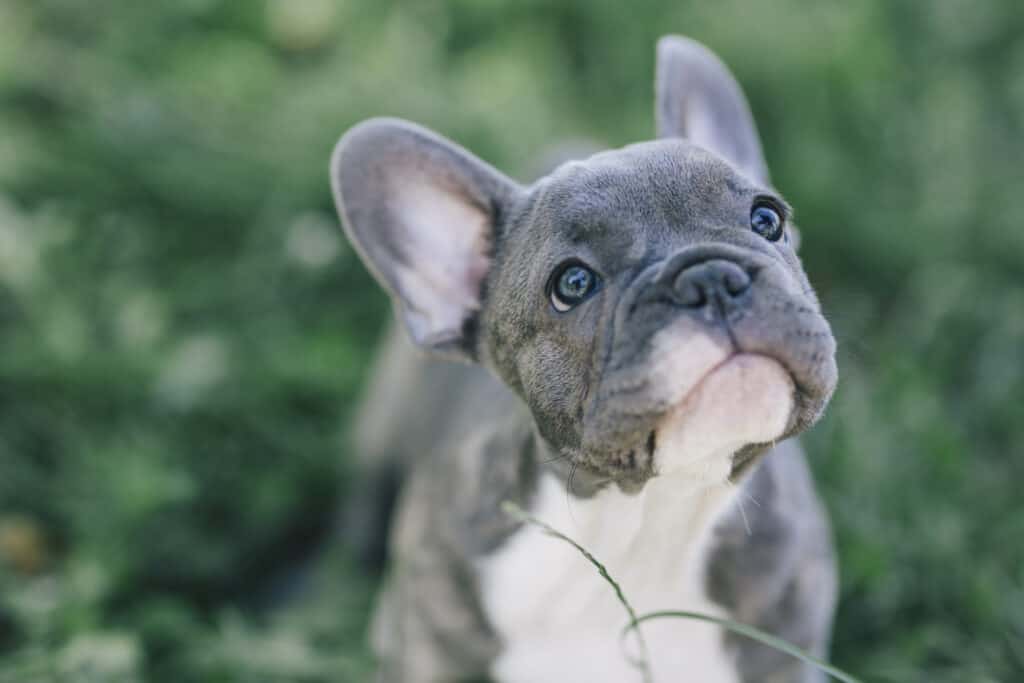
french bulldog

French bulldogs generally suffer from breathing issues

These dogs are prone to a lot of health issues, though some of the most common include the risk of heatstroke, regular allergic sneezing fits, ear infections, and breathing problems.

More specifically, some of these dogs are born with a cleft palate. Due to the detrimental effects that a cleft palate can have on breathing and eating alike, many puppies born with this condition are euthanized.

Intervertebral disc disease is another concern for these dogs. It occurs when the inner disc protrudes into the spinal cord’s nerve tissue. Dogs experience substantial pain and inflammation in the spinal cord with this disease, and pet owners might need to raise their dishes for food and water to a higher level to avoid putting more pressure on their spine.

Overall, some of the issues that they suffer from include:

  • Chronic allergies
  • Cleft palate
  • Heatstroke
  • Intervertebral disc disease
  • Eye infections
  • Ear infections
  • Breathing issues

Temperament

french bulldog

French bulldogs enjoy loads of attention and may exhibit a jealous streak.

As per temperament, they are even-tempered house dogs, requiring a considerable amount of attention at home for their emotional and intellectual health. They might even compete with other family members for your attention and can be quite demanding, showing a jealous nature.

If the dog is excited, it may also bark excessively, but they use their other sounds to show their excitement as well. Otherwise, these dogs are happy in any kind of house setting and usually do not require a large yard. These dogs are almost always happy to accompany you on a long walk. French bulldogs are considered to be one of the best dogs for city living.

They also do not require excessive amounts of food and need minimal grooming. However, these dogs do snore and would almost always love to be inside the house, trying to grab all the attention that they can.

How to Take Care of French Bulldogs

french bulldog on couch

Overall, French bulldogs are low-maintenance with minimal grooming needs and an ability to thrive in a small space, such as an apartment.

Before keeping any pet (especially the French Bulldog), you need to have an idea about what to do to take care of them to keep them well-fed and in good health. Here are a few things that you should know about taking good care of the French Bulldogs.

The Best Dog Food for French Bulldog

French bulldog eating from bowl

French bulldogs thrive best on a legume-free diet.

You can feed your dogs some high-quality dry dog food. In total, they should only need about 1.5 cups of food a day, split among three meals to prevent overeating and digestive issues. The meals can also be reduced to two a day, as long as they still get the same amount.

Though owners should always be cautious about the human food that French Bulldogs consume, it is safe to feed them fully cooked chicken, brown rice, peas, oatmeal, and flaxseeds. This breed often suffers from allergies, but luckily, there are many limited-ingredient dog foods available to help out dogs with allergies. With any breed that is susceptible to so many different health issues, it’s important to find quality dog food that provides your dog with complete nutrition.

Maintenance and Grooming

These dogs are usually low-maintenance dogs, and their short coats do not require a lot of grooming. They don’t even need regular haircuts. To remove loose hair, they should be brushed periodically and bathed every month or every other month.

These dogs also need regular nail trims and teeth-brushing sessions. Their wrinkles need to be cleaned regularly to avoid infection or bacterial buildup.

Training
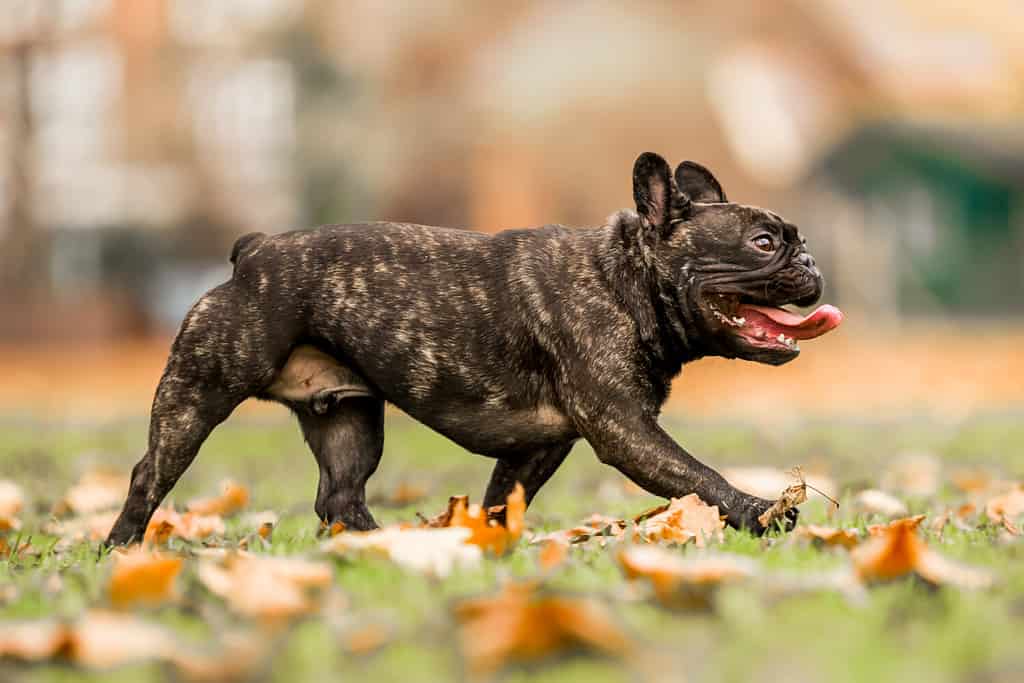
French bulldog dark running or walking with mouth open and tongue out. A young french bulldog puppy in a park, countryside meadow or field of grass. green background. clear eyes. sunny but autumn

A young French bulldog puppy in a park.

While these dogs can be easy to train, they can still be very stubborn. However, if trained with a positive attitude, they can achieve great results. French Bulldogs are usually quick learners. Maintain a calm disposition during training for the best results.

Exercise

These dogs usually need a minimum of one hour of exercise each day, but that doesn’t have to be set up in just one session. They can do very well with short walks spread out across the day, but pay attention to how much they are exerting themselves. When the warmer months come, they may experience issues with breathing.

Puppies

Puppies are to be taken care of in a similar manner to how you would take care of an adult. However, you would need to split their meals into three to four small meals throughout the day, unlike an adult.

Puppies should start being trained while they are still young to improve their obedience as they get older.

Children

French Bulldog puppies playing

French bulldogs are excellent companions for children since they enjoy their company.

These dogs do very well around children. They are friendly and make great companions. They thrive on the human contact that they get in the family and get especially excited around children.

Dogs Similar to French Bulldogs

If a French bulldog is not a good match for your home, many other breeds can find their way into your heart. Here are some of the dogs that are similar to them:

  • Boston Terrier: These dogs are very similar to the French Bulldogs (as evidenced above). However, they also have a few differences in terms of how they walk, how much they bark, and how dense their coat is.
  • Golden Retriever: These dogs are friendly and affectionate, much like the French Bulldogs. They also need a lot of exercise, but they have a social nature that makes them a great family dog.
  • Havanese: These dogs are native to Cuba and have soft fur. They socialize a lot and are usually easy to train (like the French bulldog).
View all 170 animals that start with F

Sources

  1. Hill's Pet / Accessed January 23, 2021
  2. Mental Floss / Accessed January 23, 2021
  3. My Dog's Name / Accessed January 23, 2021
  4. Pet Qwerks Toys / Accessed January 23, 2021
  5. Healthy Paws Pet Insurance & Foundation / Accessed January 23, 2021
  6. Dog Lover's Digest / Accessed January 23, 2021
  7. French Bulldog Owner / Accessed January 23, 2021
  8. Trending Breeds / Accessed January 23, 2021
  9. Pet Place / Accessed January 23, 2021
  10. Dogtime / Accessed January 23, 2021
  11. Borrow My Doggy / Accessed January 23, 2021
Dana Mayor

About the Author

Dana Mayor

I love good books and the occasional cartoon. I am also endlessly intrigued with the beauty of nature and find hummingbirds, puppies, and marine wildlife to be the most magical creatures of all.
Connect:

Thank you for reading! Have some feedback for us?


French Bulldog FAQs (Frequently Asked Questions)

The price of a French Bulldog can be anywhere around $1,500 to $8,500 but expect an additional price of about $2,000 annually for their maintenance, grooming, nutrition, and more. Mini French Bulldogs cost about $2,000 to $8,000.