F
Species Profile

Frigatebird

Fregatidae

Born to soar, built to steal
Don Mammoser/Shutterstock.com

Frigatebird Distribution

Click a location to explore more animals from that region

This map shows coastal regions where Frigatebird are found.

Loading map...
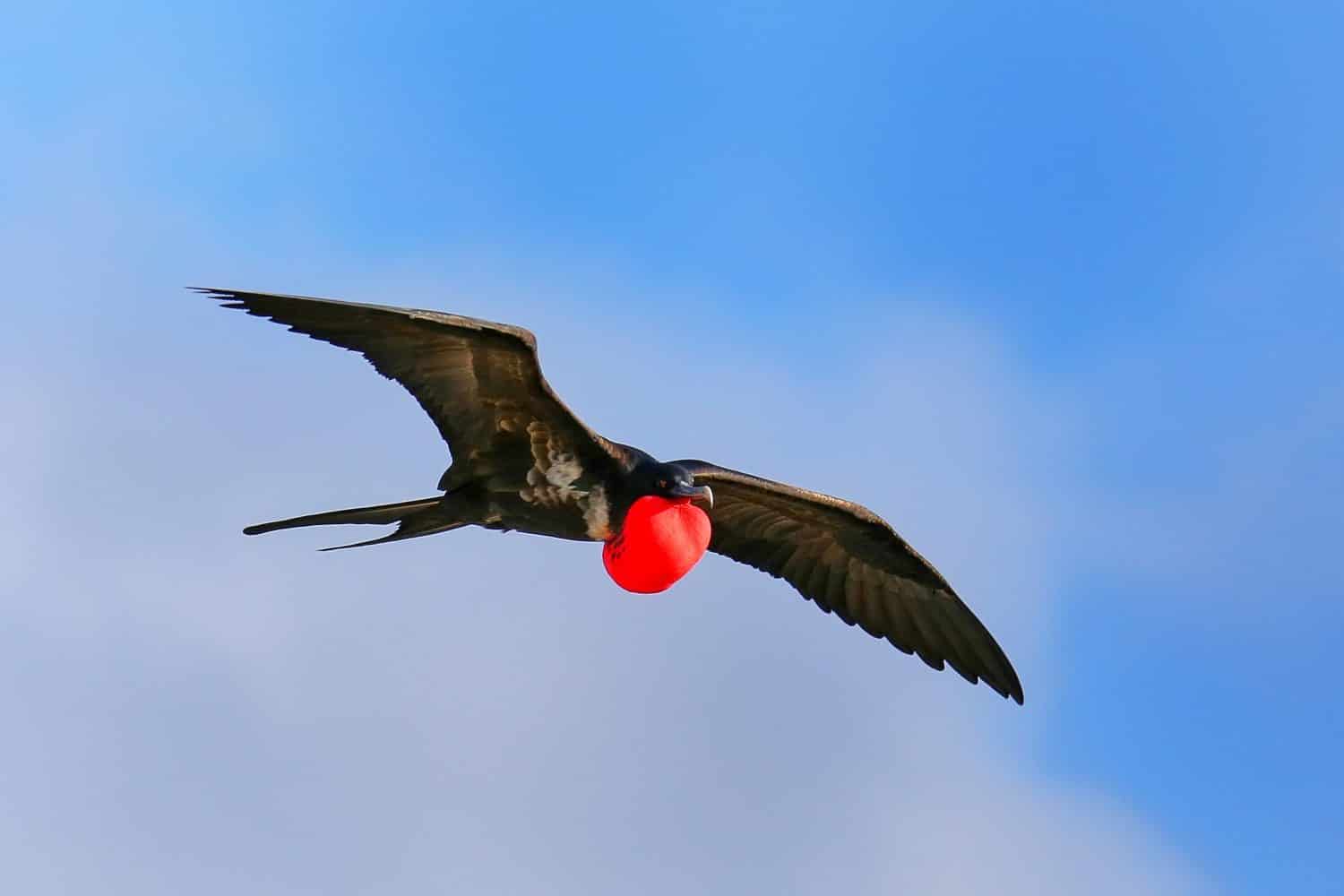
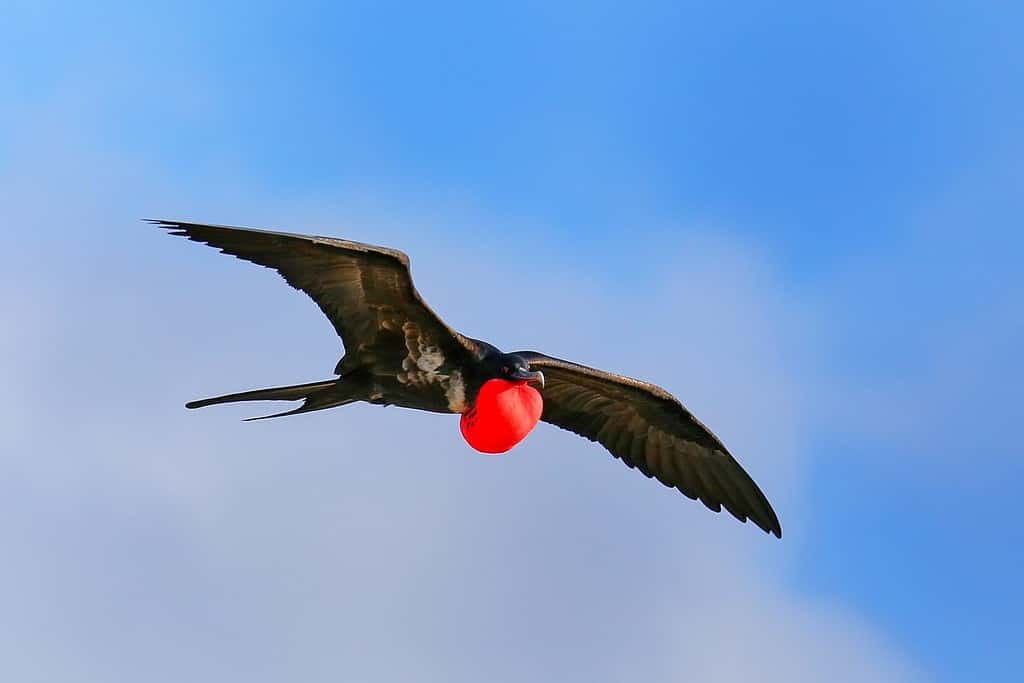
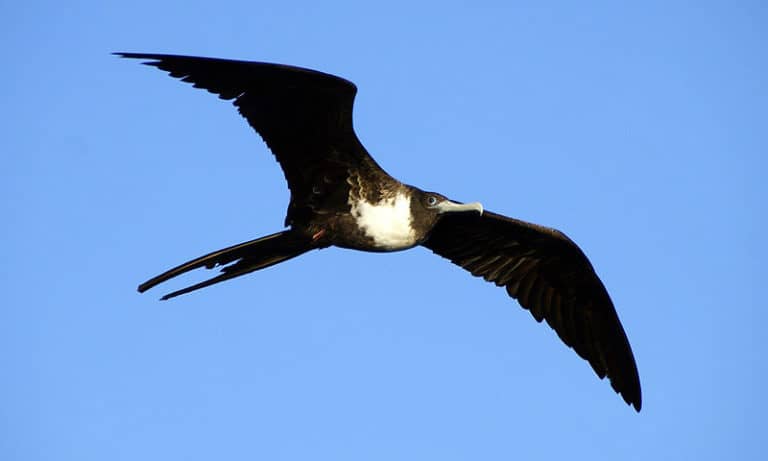
Male Great Frigatebird (Fregata minor) flying in blue sky, Galapagos National Park, Ecuador

At a Glance

Family Overview This page covers the Frigatebird family as a group. Stats below are general traits shared across the family.
Also Known As Man-of-war bird, Man o' war bird, Frigate
Diet Carnivore
Activity Diurnal+
Lifespan 30 years
Weight 1.9 lbs
Status Not Evaluated
Did You Know?

Family diversity: 5 living species spread across tropical/subtropical oceans, including island endemics (e.g., Christmas & Ascension frigatebirds).

Scientific Classification

Family Overview "Frigatebird" is not a single species but represents an entire family containing multiple species.

Frigatebirds are highly aerial tropical seabirds known for extreme maneuverability, long wings, and kleptoparasitic behavior (harassing other seabirds to drop food). They are poor swimmers with small feet and typically avoid landing on water, instead feeding on flying fish, squid, and other surface prey.

Kingdom
Animalia
Phylum
Chordata
Class
Aves
Order
Suliformes
Family
Fregatidae

Distinguishing Features

  • Very long, narrow wings and deeply forked tail for efficient soaring
  • Light body with small feet; typically do not land on water
  • Strongly hooked bill; aerial piracy (kleptoparasitism) common
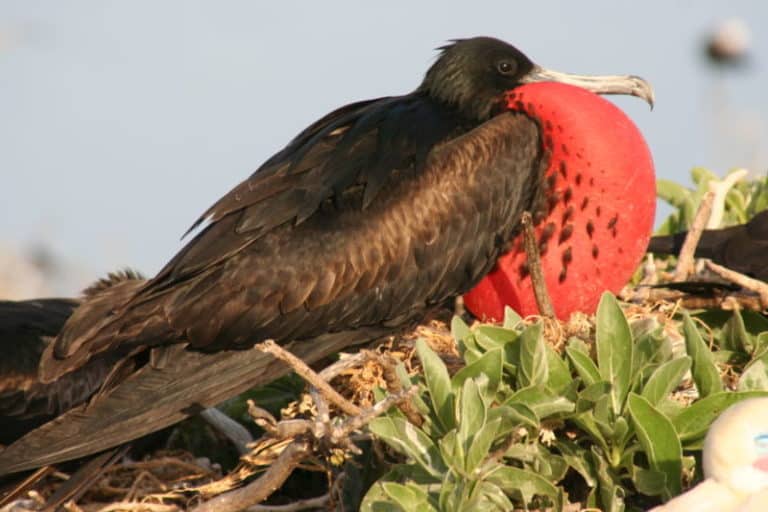
  • Males of several species have an inflatable red gular pouch used in courtship displays

Physical Measurements

Males and females differ in size

Length
2 ft 11 in (2 ft 4 in – 3 ft 5 in)
3 ft (2 ft 4 in – 3 ft 9 in)
Weight
3 lbs (2 lbs – 4 lbs)
Tail Length
9 in (7 in – 12 in)
Top Speed
56 mph
Peak flying speed varies

Appearance

Primary Colors
Secondary Colors
Skin Type Frigatebirds (Fregatidae) have feathers with long, narrow stiff flight feathers for soaring, limited bare skin on the face and gular area, and small, fully webbed (all four toes joined) feet weak for swimming.
Distinctive Features
  • Measurements (range across Fregatidae): total length roughly ~70-115 cm; wingspan ~175-245 cm; mass commonly ~0.6-1.8 kg (females often heavier/larger than males in many species).
  • Lifespan (range across the family): long-lived seabirds; commonly multi-decade longevity, often ~20-40+ years, with some individuals documented into the 30s and beyond.
  • Extremely long, narrow wings and a deeply forked tail give exceptional aerial maneuverability; buoyant soaring on thermals and wind is typical across species, with long periods aloft.
  • Very small legs/feet relative to body size; awkward on land and generally avoid landing on water (they are poor swimmers and do not routinely dive).
  • Surface-feeding ecology: most prey taken by snatching from/near the surface (e.g., flying fish, squid, fish scraps) and by opportunistic piracy; plunge-diving is limited and typically shallow/brief compared with true diving seabirds.
  • Kleptoparasitism is common family-wide (harassing other seabirds until they drop food), but its frequency varies by species, region, and local prey availability-some populations rely more on direct surface-seizing than piracy.
  • Typically tropical/subtropical, pelagic-to-coastal: many forage far offshore yet breed on islands, cays, or mangrove islets; degree of pelagic vs coastal use varies among species (e.g., some are more oceanic, others more coastal).
  • Colonial breeders nest in low trees, shrubs, or mangroves on islands with few predators and often return to the same sites. Many island endemics have small ranges and face habitat loss, disturbance, and invasive predators.

Sexual Dimorphism

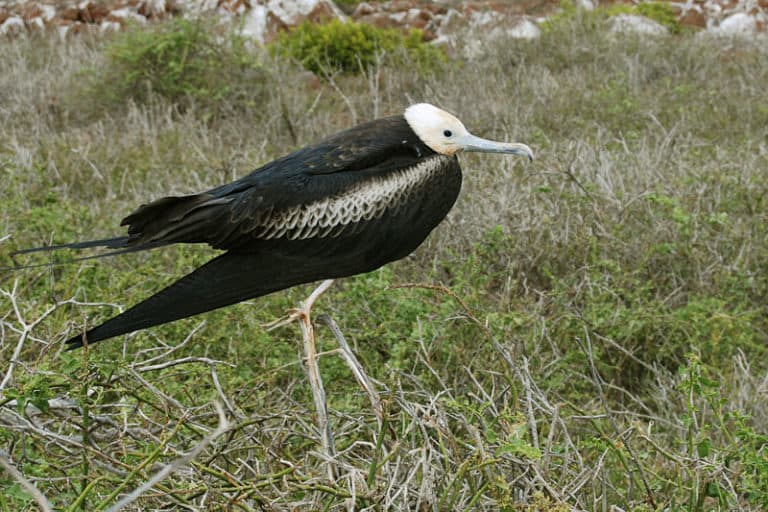
Frigatebirds (Fregatidae) show clear sexual dimorphism. Males are usually darker and have an inflatable red gular pouch used in courtship. Females are often larger and show more white or cream on the belly, head, or neck; patterns vary by species and age.

  • Typically slimmer/smaller than females in many species (though overlap occurs).
  • Plumage often all-black or nearly all-black with glossy/iridescent sheen.
  • Inflatable gular pouch used in display; conspicuous red when breeding.
  • Courtship involves prolonged aerial and perch displays emphasizing pouch, wing posture, and calls (intensity and timing vary by species and colony).
  • Often larger/heavier-bodied than males (common pattern across the family).
  • More likely to show contrasting white/cream on breast/underparts and sometimes a paler head/neck, depending on species.
  • Generally lacks an inflatable display pouch; facial/throat skin not expanded into the same courtship structure.
  • In many species, female plumage pattern provides stronger black-white contrast than males, though degree varies among species and age.

Did You Know?

Family diversity: 5 living species spread across tropical/subtropical oceans, including island endemics (e.g., Christmas & Ascension frigatebirds).

Size range across Fregatidae: ~65-114 cm long; wingspan ~1.5-2.3 m; mass ~0.6-1.9 kg (sex and species vary).

Longevity: many frigatebirds can live ~20-30+ years; banding studies have recorded individuals surpassing 30 years.

They're among the most aerial seabirds-built for soaring and agility, but with small feet and limited waterproofing, they usually avoid landing on the sea.

Kleptoparasitism is common: they often chase boobies, tropicbirds, and other seabirds until the victim drops or regurgitates food-yet they also catch plenty of prey themselves.

Males inflate a bright red (or red-orange) throat pouch during courtship; females are typically larger and often have more extensive white on the underparts in several species.

Breeding is slow: many populations have long courtship and extended chick-rearing, so pairs may breed only every other year or less, making some island endemics especially vulnerable.

Unique Adaptations

  • Long, narrow wings with low wing-loading enable efficient dynamic/thermal soaring and sharp aerial maneuvering across tropical winds.
  • Deeply forked tails and responsive flight control make them exceptionally agile during chases and midair prey grabs.
  • Reduced waterproofing and small, weak feet reflect an aerial lifestyle-excellent for perching and nesting, poor for swimming and taking off from water.
  • Gular pouch (males): an inflatable throat sac used as a visual signal in courtship; size/color intensity can influence mating success.
  • Lightweight build and strong flight musculature support long-distance ranging; some species are more oceanic while others frequently patrol coasts and reefs.
  • Salt glands (as in many seabirds) help handle marine salt loads, supporting life far from freshwater.

Interesting Behaviors

  • Kleptoparasitism (varies by place and species): individuals may specialize in piracy around dense seabird foraging areas, while others rely more on direct hunting.
  • Surface-feeding on the wing: they snatch flying fish, squid, and other prey at or near the surface without plunging like gannets-often tracking tuna/dolphin-driven bait balls.
  • Extreme aerial time budgets: outside breeding, they can remain aloft for very long periods, using rising air to travel and forage over vast ocean areas.
  • Colony life on predator-free islands: nesting is typically in shrubs, low trees, or mangroves; colony density and habitat vary widely among islands and species.
  • Courtship displays: males advertise with inflated gular pouches, wing-drumming, and posture displays; female choice is prominent, and pair bonds can last through long chick-rearing periods.
  • Parental investment and slow pace: prolonged chick dependence and post-fledging care are common, but exact timing varies among species and colonies.

Cultural Significance

Frigatebirds (Fregatidae) are known in tropical sailing cultures as signs of land and weather. Sailors called them 'man-o'-war birds.' A frigatebird image appears on Kiribati's flag and coat of arms.

Myths & Legends

In Hawaiian tradition, the frigatebird is connected to theft; a traditional Hawaiian name for the bird also means "thief," showing its food-stealing ways and appearing in sayings about stealing.

Polynesian and Micronesian voyaging traditions: frigatebirds are commonly treated as meaningful sea signs-birds watched by navigators because their daily movements can indicate the direction of land and offshore feeding events.

Sailor lore across the tropics: "man-o'-war bird" became a traditional seafaring nickname likening frigatebirds to fast naval raiders, a label that entered maritime storytelling and travel accounts.

Oceania emblem tradition: the frigatebird's role as a national/communal emblem (e.g., Kiribati) has fostered ceremonial and artistic uses-appearing in flags, crests, and public iconography tied to ocean heritage.

Conservation Status

NE Not Evaluated (family-level taxon; IUCN assesses frigatebirds at species level). Across Fregatidae, Red List categories span from Least Concern (most species) to Critically Endangered (notably the Christmas Island Frigatebird, Fregata andrewsi) and Vulnerable (Ascension Frigatebird, F. aquila). Family-wide generalizations (ranges, not a single representative species): Measurements-total length ~65-115 cm; wingspan ~175-245 cm; mass ~0.9-1.9+ kg (males typically lighter than females). Lifespan-roughly ~15-35+ years (long-lived, late-maturing seabirds). Behavior/ecology-highly aerial tropical/subtropical seabirds with very long wings and low wing-loading; feed mainly on surface/surface-near prey (flying fish, squid, fish scraps) and commonly engage in kleptoparasitism; poor swimmers and usually avoid resting on water. Breed colonially, typically on remote islands/cays/coastal mangroves or scrub; strong site fidelity is common. Variation across species includes differences in breeding interval (often prolonged; some populations may not breed annually), colony habitat (mangroves vs open scrub/rocky islets), and typical foraging range and overlap with fisheries.

Has not yet been evaluated against the criteria.

Population Unknown

Protected Under

  • Most frigatebird species are legally protected from hunting/collection under national wildlife laws in many range states; enforcement and coverage vary by country/territory.
  • Key breeding colonies occur within protected areas (e.g., national parks, nature reserves) and are frequently identified as Important Bird Areas/Key Biodiversity Areas; effectiveness varies with biosecurity, predator control, and disturbance management.
  • Conservation actions commonly used across the family include invasive predator prevention/eradication on breeding islands, strict colony access control during breeding, and habitat protection/restoration (especially mangroves/coastal scrub).

You might be looking for:

Magnificent Frigatebird

26%

Fregata magnificens

Large tropical frigatebird of the Atlantic and eastern Pacific; common around coasts and islands.

Great Frigatebird

25%

Fregata minor

Widespread Indo-Pacific species; very large with strong aerial presence over tropical seas.

Lesser Frigatebird

20%

Fregata ariel

Smaller, widespread Indo-Pacific frigatebird; often over lagoons and tropical waters.

Ascension Frigatebird

17%

Fregata aquila

Endemic breeder of Ascension Island in the tropical Atlantic; conservation concern due to restricted range.

Christmas Frigatebird

12%

Fregata andrewsi

Breeds mainly on Christmas Island (eastern Indian Ocean); notable for its limited breeding distribution.

Life Cycle

Birth 1 chick
Lifespan 30 years

Lifespan

In the Wild
15–45 years
In Captivity
20–50 years

Reproduction

Mating System Monogamy
Social Structure Socially Monogamous
Breeding Pattern Seasonal
Fertilization Internal Fertilization
Birth Type Internal_fertilization

Frigatebirds (Fregatidae) usually pair with one mate during a nesting attempt. Females pick males after loud displays in dense island colonies. Pairs share incubation and early chick care of one egg; long breeding cycles; extra-pair mating unclear.

Behavior & Ecology

Social Colony Group: 2000
Activity Diurnal, Crepuscular
Diet Carnivore Flying fish and other surface-schooling fish forced to/near the surface
Seasonal Migratory 3,107 mi

Temperament

Highly aerial, wide-ranging, and strongly adapted to remaining airborne for long periods; generally avoids sitting on the water.
Opportunistic and competitive around food; kleptoparasitism (harassing other seabirds) is common but varies in frequency by species, age, and local prey conditions.
Territorial and aggressive at nest sites (especially males defending display/nest areas); otherwise often tolerant of close neighbors in dense colonies.
Socially responsive to conspecific cues at prey patches (joining loose feeding aggregations), yet typically low-cohesion and not coordinated like true 'packs'.
Strong site fidelity to breeding areas is common; timing of breeding and colony attendance can vary with regional oceanography and food availability.
Prolonged parental investment and slow life history (late maturity, long dependency) shape social dynamics around colonies and roosts.

Communication

Bill clattering and rapid rattling during close-range interactions Courtship and aggression
Croaks, grunts, and cackling notes at nests and in disputes; call types and pitch vary among species and sexes.
Chick begging calls that become louder and more persistent with age.
Short alarm or agitation calls in response to intruders Including humans and predators
Prominent visual courtship displays: males inflate the red gular pouch (in species with pouches) and use head/neck postures, wing spreading, and sky-pointing to attract females; intensity and display style vary by species.
Aerial displays and chase flights used in mate attraction, territory defense, and kleptoparasitic pursuits.
Threat postures at nests (bill up, wing spreading, pecking) and ritualized spacing to manage dense colony living.
Nest-material presentation and nest-site occupation as signals of status and pair formation.
Long-distance recognition likely relies heavily on silhouette/flight style and colony location; close-range interactions rely on visual cues and sound.

Habitat

Open Ocean Coastal Coral Reef Rocky Shore Beach Mangrove Estuary Wetland +2
Biomes:
Marine Wetland Tropical Rainforest Tropical Dry Forest
Terrain:
Coastal Island Sandy Rocky Volcanic
Elevation: Up to 1640 ft 5 in

Ecological Role

Aerial marine predator and kleptoparasite in tropical/subtropical pelagic ecosystems

regulates near-surface prey populations (small fish and squid) links pelagic food webs with seabird communities via kleptoparasitism and predation on chicks/eggs (variable) redistributes marine-derived nutrients to nesting islands through guano deposition acts as an indicator of surface prey availability and oceanographic conditions

Diet Details

Main Prey:
Small epipelagic fish Squid and other cephalopods Crustaceans Seabird chicks and eggs Carrion and fish offal

Human Interaction

Domestication Status

Wild

Frigatebirds (family Fregatidae) are wild tropical seabirds with no domesticated history. People mainly protect colonies (often on remote islands), rescue and care for injured birds, and watch them for ecotourism. Colonies are sensitive to disturbance. Common threats are invasive predators, plastic and fishing gear, and food changes from climate shifts.

Danger Level

Low
  • Bites and puncture wounds from the hooked bill when handled (rehab/research)
  • Scratches from claws/wings during restraint
  • Aggressive nest defense near colonies (swooping/pecking), especially if people approach too closely
  • Zoonotic risk typical of wild birds (e.g., Salmonella/Campylobacter; avian influenza exposure risk is generally low but possible in wildlife-handling contexts)
  • Indirect hazards in shared airspace near airports/coastal flight paths (rare bird-aircraft strike risk in some regions)

As a Pet

Not Suitable as Pet

Legality: Frigatebirds (Fregatidae) are usually illegal or very restricted to own. They are protected wildlife; people need government permits for care, research, or zoos (in the U.S., covered by the Migratory Bird Treaty Act).

Care Level: Expert Only

Purchase Cost:
Lifetime Cost: $10,000 - $100,000

Economic Value

Uses:
Ecotourism and birdwatching (colony visits, guided tours) Conservation funding and protected-area justification (flagship species) Scientific research value (seabird ecology, ocean productivity indicators, movement ecology) Cultural/heritage significance in some island communities
Products:
  • Non-consumptive tourism services (tours, guides, park fees)
  • Educational/media content (photography, documentaries)
  • Research outputs (tracking datasets, publications)

Relationships

Predators 8

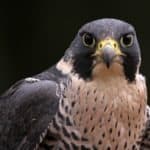
Peregrine Falcon
Peregrine Falcon Falco peregrinus
White-bellied Sea Eagle Haliaeetus leucogaster
Brahminy Kite Haliastur indus
Great Horned Owl Bubo virginianus
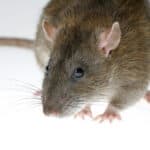
Brown Rat
Brown Rat Rattus norvegicus
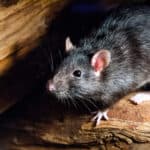
Black Rat
Black Rat Rattus rattus
Feral Cat Felis silvestris catus
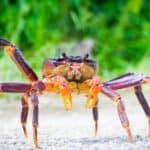
Coconut Crab
Coconut Crab Birgus latro

Ecological Equivalents 5

Animals that fill a similar ecological role in their ecosystem

Tropicbird
Tropicbird Phaethontidae Tropical, oceanic seabirds that forage over warm waters for fish and squid. They overlap in distribution and aerial hunting behavior — tropicbirds more commonly plunge-dive, while frigatebirds primarily seize prey at or near the surface.
Terns and Noddies Both are surface-feeding seabirds that nest on coasts and islands. Frigatebirds often track and harass them, exploiting the same prey patches and sometimes engaging in kleptoparasitism.
Skuas and Jaegers Stercorariidae Occupy a similar "pirate seabird" niche via kleptoparasitism. Both may force other seabirds to drop fish, though skuas and jaegers are generally more capable on the water and on land.
Shearwaters and petrels Procellariidae Wide-ranging pelagic foragers over productive waters; overlap in prey (small fish, squid), and can be targets or competitors around feeding aggregations, though shearwaters and petrels are better adapted to sitting on the water.
Boobies and gannets Sulidae Often forage in the same marine systems and around the same prey schools. Boobies and gannets locate prey and plunge-dive, while frigatebirds often capitalize by surface-snatching and/or harassing them to force disgorgement or dropping of food.

Types of Frigatebird

5

Explore 5 recognized types of frigatebird

Magnificent frigatebird Fregata magnificens
Great frigatebird Fregata minor
Lesser frigatebird Fregata ariel
Christmas Island frigatebird Fregata andrewsi
Ascension frigatebird Fregata aquila

Quick Take

  • A wingspan exceeding 6.6 feet is required to support their unique aerial endurance.
  • Reaching sexual maturity at 11 years creates a significant bottleneck for population recovery.
  • Surprisingly, 5 species of seabirds with webbed feet cannot actually swim.
  • The head-snaking ritual is a mandatory stage for pairs to finalize their seasonal bond.

There are five species of frigatebirds found along tropical and subtropical coasts worldwide. These birds can fly for hours, days, or even weeks at a time due to their large wingspan. They have a slender black body and wings, and the males have a distinctive red pouch that inflates when they try to attract a mate.

An infographic detailing frigatebird facts, showing a male with a large red throat pouch and sections on their 11-year maturity, aerial endurance, and kleptoparasitic feeding habits.
From stealing meals mid-air to staying aloft for weeks, these aerial pirates rule the tropics—but one touch of the water could be fatal. © A-Z Animals

5 Incredible Frigatebird Facts

  • Frigatebirds are also known as man-o’-war birds.
  • Compared to their body size, this bird’s wingspan is larger than that of any other bird.
  • Females can spend up to one-and-a-half years rearing their chick before it will be ready to go out on its own.
  • These birds often steal fish and other food from other seabirds using their hooked beak.
  • On land, frigatebirds live in a large colony with up to 5,000 other birds.

Evolution

The tale of frigatebirds goes all the way back to the Eocene, about 34 to 56 million years ago. Three species of frigatebird lived during the early part of this epoch, including Limnofregata azygosternon, Limnofregata hasegawai, and Limnofregata hutchisoni. They were pretty similar to frigatebirds in their current form, although their legs were longer and their beaks shorter.

Classification and Scientific Name

The frigatebird belongs to the genus Fregata, in the Pelecaniformes order. They belong to the Fregatidae family. They are defined as being seabirds with webbed feet.

There are five different species, which include:

  • Ascension frigatebird (Fregata aquila): This bird’s distinguishing features include a blue-gray beak, dark plumage, and a scarlet gular sac in males to attract females. It can be found on Ascension and Boatswain Bird Islands in the Atlantic.
  • Christmas frigatebird (Fregata andrewsi): This resident of Christmas Island in the Indian Ocean can be recognized by its dark plumage, a white oval patch on its stomach, and a vivid red gular sac.
  • Great frigatebird (Fregata minor): Members of this species are covered in plumage that is black for the most part. For some reason, they are less prone to divesting other birds of their sustenance.
  • Lesser frigatebird (Fregata ariel): With a length of 2 ½ feet, lesser frigatebirds are the smallest members of this rather compact unit.  Their plumage is black-brown, although females have white chest feathers.
  • Magnificent frigatebird (Fregata magnificens): The largest species of the bunch, members may measure 3 feet – 3 feet 9 inches in length. They are covered in black-brown feathers and exhibit the same penchant for snatching other birds’ meals from them as other members of their family.
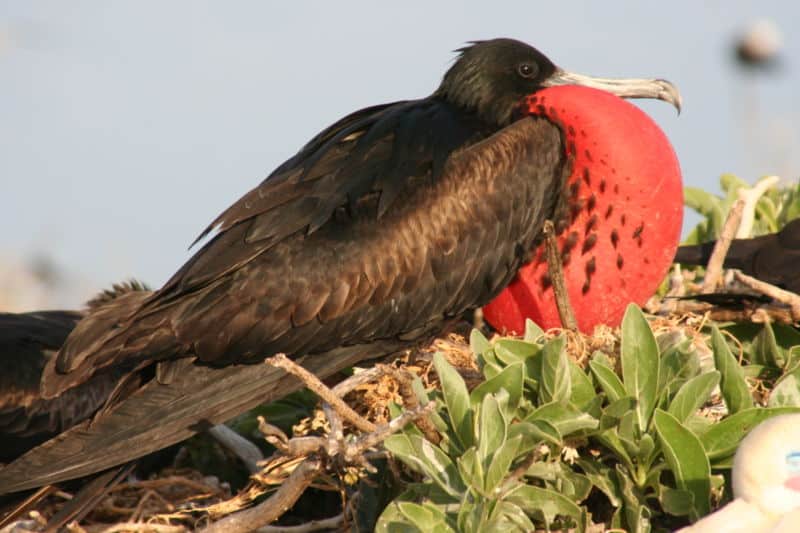
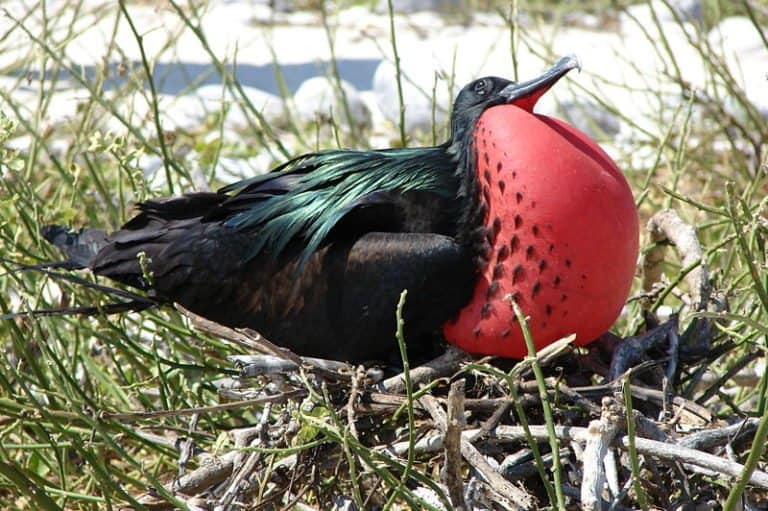
Profile of male frigratebird with red puffy chest

Great frigatebirds practice kleptoparasitism to a lesser degree than other species.

Appearance and Behavior

These birds are mostly black in color, and they have a hooked bill, which is used to catch and/or steal fish from other birds. They also have very small webbed feet. During their courting season, males can be easily identified by their bright red, inflated pouch on their throats, known as a gular pouch. This area of their body becomes as large as a person’s head when they are trying to attract females. Adult females have white markings on their undersides.

Four of the five species (magnificent frigatebirds, Christmas frigatebirds, Ascension frigatebirds, and great frigatebirds) are all relatively similar in size. They have a short neck with a very slender body. The magnificent frigatebird is about 45 inches long, and the other three subspecies are nearly as large. The lesser frigatebird is significantly smaller than its counterparts and is only around 28 inches long.

These birds have very distinct wings. They are narrow and taper down to a point on either side. Additionally, these birds are known for their very long wingspan. A male’s wingspan can be over 6.6 feet long. This is as tall as Michael Jordan. In fact, when compared to their body size, this bird’s wingspan is larger than that of any other bird.

The face and legs are covered in black feathers. They have 11 primary flight feathers on their wings and 23 secondary feathers.

Due to their wingspan and small body, a frigatebird is very aerial. They are able to soar for very long periods of time without needing to flap their wings. Because of this, these birds spend a lot of time flying and may stay airborne for days or even weeks, only returning to land when it is time to roost.

These birds are unable to swim, unlike some other birds. They also have very short legs, which prevent them from being able to take flight from the water and make it challenging for them to walk on land.

Habitat
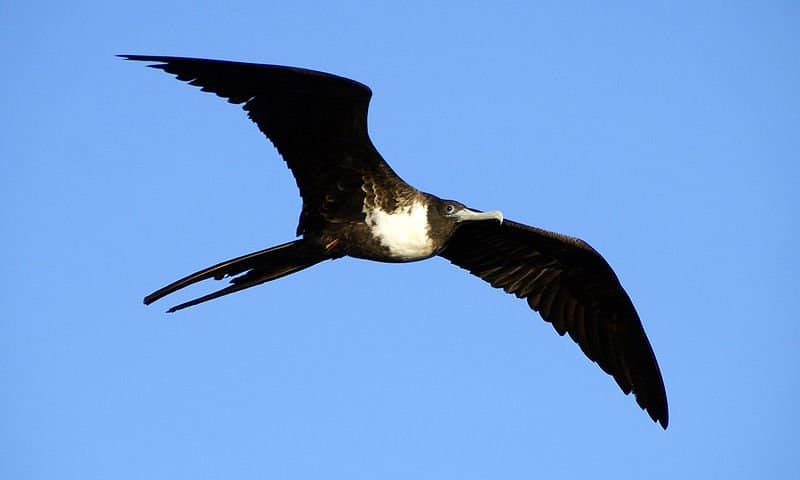
Frigatebird in flight showing its massive wingspan

Frigatebirds live near tropical and semi-tropical coasts all around the world.

Frigatebirds live near tropical and semi-tropical coasts all around the world. In most cases, they stay within a 100-mile range of land so they can easily return to breed and nest. The exact range and location of these birds can vary based on where they are able to find food. Since they fly with the updrafts beneath cumulus clouds, the trade winds can also influence where they may fly.

The magnificent frigatebird can be found in different areas along the tropical portions of the Atlantic Ocean, such as Florida and the Caribbean. These birds can also be found along the Pacific Ocean off the coast of Central and South America between Mexico and Ecuador. They also live on the Galapagos Islands.

Great frigatebirds are also found in different tropical areas around the globe. These birds live along the Pacific Ocean as far north as Hawaii. They can also be found near Wake Island, New Caledonia, and the Galapagos in the Central and South Pacific. Additionally, you can also find the great frigatebird in the Indian Ocean near Christmas Island, the Maldives, Mauritius, and Aldabra.

Christmas frigatebirds live near Christmas Island, Australia, which is located in the Indian Ocean.

Ascension frigatebirds live near Boatswain Bird Island, which is located in the South Atlantic Ocean off the coast of Ascension Island.

The lesser frigatebird lives over the seas around Australia. These birds can often be found near some of the more remote islands, like Christmas Island, where they like to breed.

Population
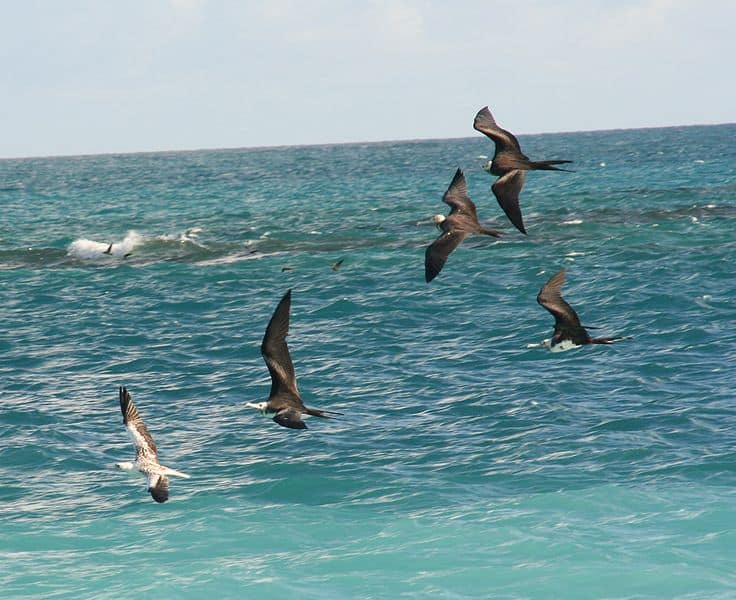
Frigatebirds stealing food from other seabirds

The overall population of frigatebirds numbers in the hundreds of thousands.

It is challenging for scientists to monitor the population of these birds since they move around often and don’t reproduce as much as some other species. It is estimated that there are about 130,000 mature individuals of magnificent frigatebirds worldwide, putting their conservation status as of least concern. The number of these creatures worldwide is currently decreasing.

Scientists believe there are between 2,400 and 5,000 (best estimate: 3,700) Christmas frigatebirds, deeming them vulnerable.

There are likely several hundred thousand lesser frigatebirds, though their population is decreasing as well, with a conservation status of least concern.

It is estimated that there are between 17,000 and 21,000 Ascension frigatebirds left in the world. They have a conservation status of vulnerable.

The great frigatebird has a conservation status of least concern. There are still about 120,000 of these birds located throughout the world.

Diet
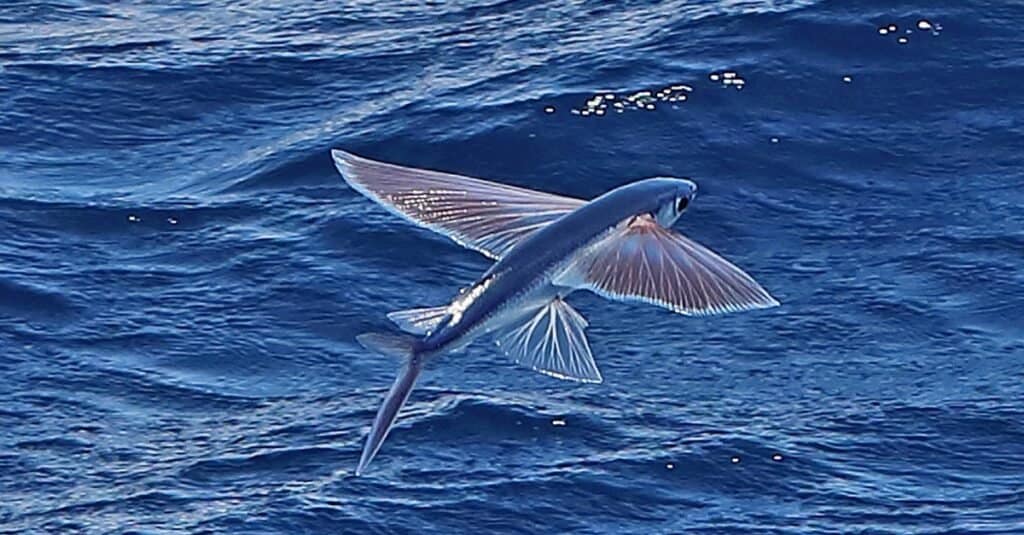
Fastest Water Animals

Frigatebirds catch their food in flight, and flying fish are one of their favorite foods.

These birds will use their hooked bills to grab prey from the ocean. Unlike other birds, they do not land on the water to catch food. Flying fish is one of the main foods these birds prefer. They also enjoy cephalopods, like squid, jellyfish, menhaden, large plankton, and even hatchling turtles. Oftentimes, they will follow fishing boats and snatch fish from the boats. They are also known for stealing fish from other seabirds.

In addition to catching fish and other sea creatures, these birds sometimes eat the eggs or chicks from other seabird species, some of which include shearwaters, terns, petrels, and boobies.

Predators and Threats
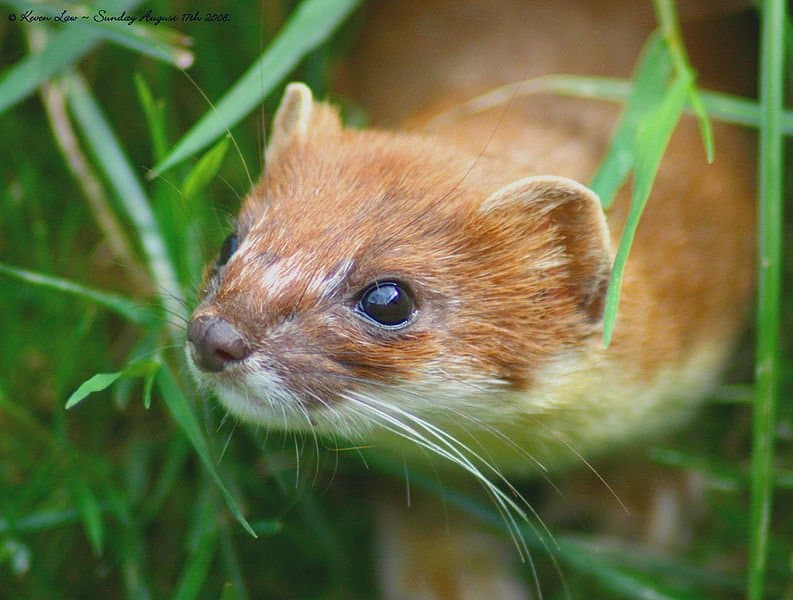
Stoat in the grass

Stoats consider frigatebird eggs to be especially tasty.

Frigatebirds do not have too many natural predators since they are a larger bird and spend most of their time airborne. However, there are a few predators that threaten them when they are on land. Stoats, domestic cats, and rats may hunt for these birds or eat their eggs.

Humans pose the greatest threat to this bird. Many of the fish they eat are being overfished, which decreases the amount of food that is available to them, putting more frigatebirds at risk of dying. Many also nest in dense colonies, which could mean a large portion of their population could be wiped out in the event of a local or natural disaster.

Each of the five subspecies faces different threats based on where they live. For example, the Christmas Island frigatebird suffered when much of its breeding habitat was cleared during World War II. These birds were also exposed to dust pollution from phosphate mining, which has led to decreased numbers. Due to these threats and habitat changes, the Christmas Island frigatebird’s conservation status is vulnerable.

The Ascension frigatebird once bred and nested on Ascension Island. However, in 1815, feral cats were introduced to the island and wiped out the population. This left a smaller number of Ascension frigatebirds that were able to breed offshore on a rocky outcrop. Between 2002 and 2004, the feral cats were eradicated from Ascension Island, and some Ascension frigatebirds have begun nesting there once again. However, the damage deems Ascension frigatebirds vulnerable.

While the other three subspecies — the great frigatebird, the magnificent frigatebird, and the lesser frigatebird — still face threats, their population numbers are not as worrisome. These three subspecies share a conservation status of least concern.

Reproduction, Babies, and Lifespan
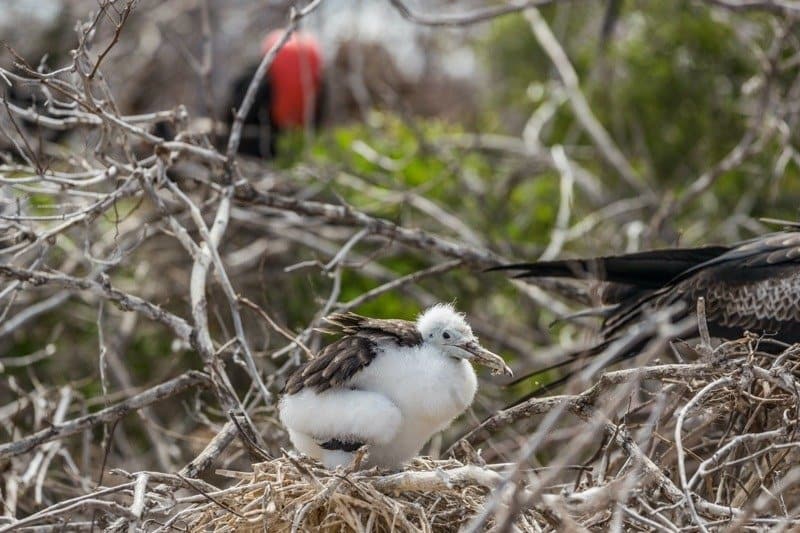
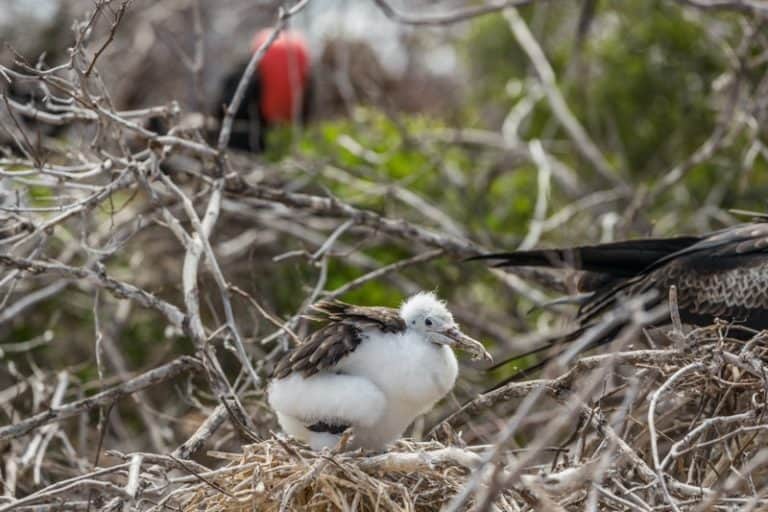
Frigatebird chick with white feathers

Frigatebird chicks are cared for by both parents during the first three months of their lives

Frigatebirds choose to breed on more remote islands. They typically live in larger colonies made up of as many as 5,000 birds, though their nesting groups are smaller, typically between 10 and 30, and possibly up to 100. There is no specific mating season for frigatebirds; they may breed at anytime throughout the year, often choosing to breed when the dry season starts and food is less easy to find.

Frigatebirds do not mate for life. However, they do stay with the same mate for an entire breeding season. To attract a mate, male birds will begin residing in one of the colonies. They perform a mating display to attract a female. They inflate their large red gular pouch, vibrate their wings, and point their bills up. During this display, a male also vibrates its bill to make a drumming sound for the females. When a female chooses a male, she will fly to him and let him put her bill inside his. The two birds will then begin “head-snaking.”

The male will gather sticks, and the female will use these sticks to create a woven nest after the birds have copulated. Guano is then added on top of the nest for added stability. Typically, these birds make their nests in bushes or trees, but they sometimes nest on the ground if no trees or bushes are available.

Female frigatebirds lay one white egg, which typically weighs between 6% and 7% of the weight of the mother. Incubation takes between 41 and 55 days, and both the male and female frigatebirds take turns keeping the egg warm.

When chicks hatch from their eggs, they have no feathers. After about two weeks, they begin to develop a white down covering. The male and female share the responsibility of keeping a continuous eye on their chick for the first four to six weeks. They also both feed their chick for the first three months or so. After this time, the male leaves the colony, and the female must continue caring for the chick on her own. The chicks stay in their nests for the first five or six months of their lives.

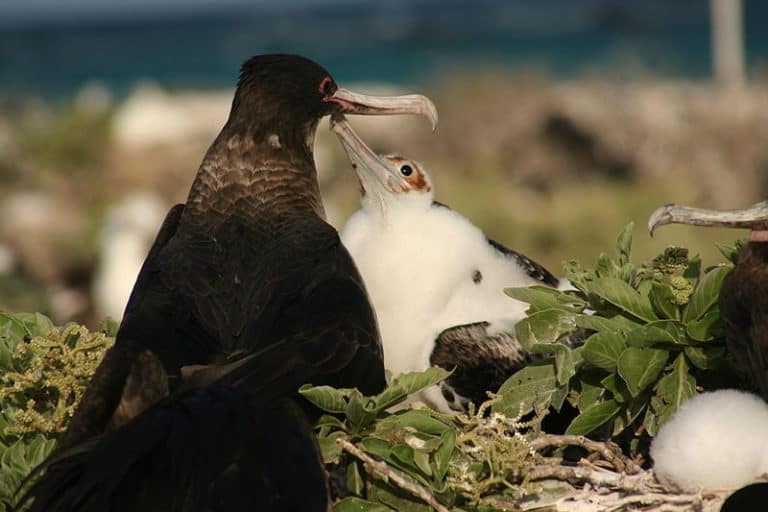
Adult frigatebirds feed their chicks by offering them regurgitated food. The parents open their mouths so the chicks can reach into their throats to get the food. Initially, the chicks will need to eat multiple times a day, but after a while, they will only need to be fed once every day or even every other day.

Rearing a frigatebird chick can take between 9 and 12 months. This is longer than most other species of birds, with the exception of the southern ground hornbill and some accipitrids. Because of how long it takes to care for a chick, frigatebirds typically breed every other year instead of every year.

The chicks take their first flight somewhere between the ages of 20 and 24 weeks. Frigatebirds take longer to reach the age of sexual maturity than other birds. For females, this is typically between the ages of 8 and 9 years old, and for males, it is between the ages of 10 and 11 years old.

Frigatebirds have a long lifespan compared to many other species of birds. The magnificent frigatebird’s lifespan is around 34 years, the great frigatebird’s lifespan is between 30 and 34 years, the Christmas frigatebird’s lifespan is about 25 years, and the lesser frigatebird’s lifespan is between 17 and 23 years.

In the Zoo

There are very few zoos and aquariums offering an up-close look at this amazing animal. Two places where you can go are the Texas State Aquarium and Sea Life Park in Hawaii.

View all 170 animals that start with F

Sources

  1. Britannica / Accessed November 8, 2019
  2. Audubon / Accessed November 8, 2019
  3. Edge of Existence / Accessed November 8, 2019
  4. Blue Bulb Projects / Accessed November 8, 2019
  5. World Life Expectancy / Accessed November 8, 2019
  6. Tree Hugger / Accessed November 8, 2019
Dana Mayor

About the Author

Dana Mayor

I love good books and the occasional cartoon. I am also endlessly intrigued with the beauty of nature and find hummingbirds, puppies, and marine wildlife to be the most magical creatures of all.
Connect:

Thank you for reading! Have some feedback for us?


Frigatebird FAQs (Frequently Asked Questions)

Frigatebirds are carnivores. They eat fish, squid, turtles, eggs, and even other seabird chicks.