
G
Species Profile

Galapagos Penguin

Spheniscus mendiculus

The penguin that lives on the equator

Galapagos Penguin Distribution

Click a location to explore more animals from that region

Endemic Species

This map shows coastal regions where Galapagos Penguin are found.

Loading map...

Found in 1 country

Size Comparison

Human 5'8"
Galapagos Penguin 1 ft 7 in

Galapagos Penguin stands at 28% of average human height.

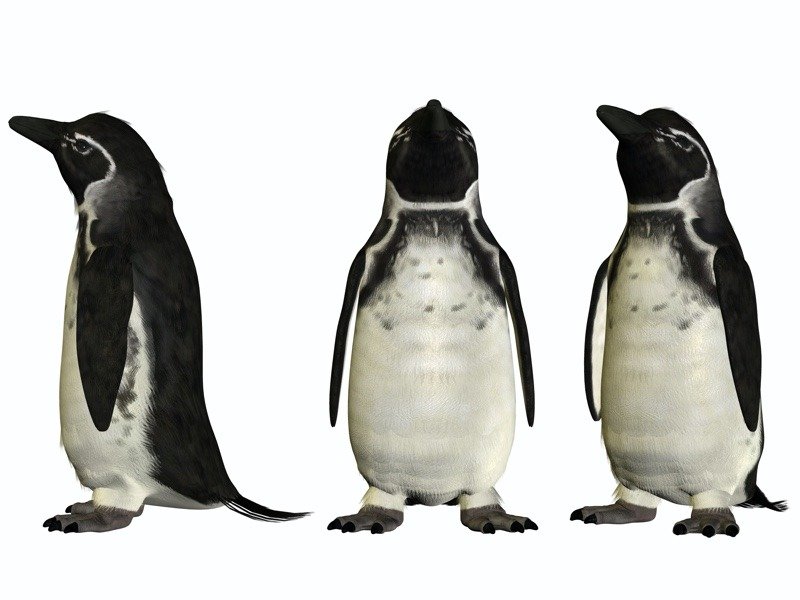
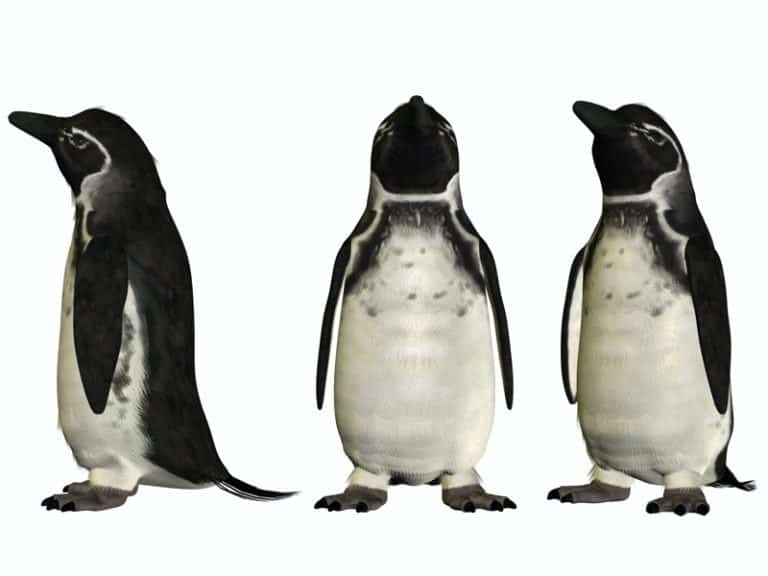
Galapagos penguins on isolated background

At a Glance

Wild Species
Also Known As pingüino de Galápagos, pingüino de las Galápagos, pinguino de Galapagos, pinguim das Galápagos
Diet Piscivore
Activity Diurnal+
Lifespan 10 years
Weight 2.5 lbs
Status Endangered
Did You Know?

It's the only penguin that naturally occurs north of the equator (though most of its range is just south of it).

Scientific Classification

The Galápagos penguin is the only penguin species that naturally occurs north of the equator, breeding mainly on the western Galápagos Islands and closely tied to cool, nutrient-rich upwelling waters.

Kingdom
Animalia
Phylum
Chordata
Class
Aves
Order
Sphenisciformes
Family
Spheniscidae
Genus
Spheniscus
Species
Spheniscus mendiculus

Distinguishing Features

  • Small, banded penguin in genus Spheniscus ("banded penguins")
  • Narrow white stripe running from above the eye down along the face/neck; black head with white facial markings
  • Black chest band and darker plumage typical of Spheniscus; adapted to warm climate with behaviors like panting/wing-shading
  • Restricted range: endemic to the Galápagos Islands; often associated with cold upwelling zones

Physical Measurements

Males and females differ in size

Height
♂ 1 ft 7 in (1 ft 7 in – 1 ft 8 in)
Length
♂ 1 ft 8 in (1 ft 7 in – 1 ft 9 in)
♀ 1 ft 7 in (1 ft 6 in – 1 ft 7 in)
Weight
♂ 5 lbs (5 lbs – 6 lbs)
♀ 4 lbs (4 lbs – 5 lbs)
Tail Length
♂ 4 in (3 in – 4 in)
Top Speed
22 mph
Swims up to ~35 km/h

Appearance

Primary Colors
Secondary Colors
Skin Type Dense, waterproof contour feathers over most of the body; localized bare facial skin (notably around the bill/eye region) and dark, scaly skin on feet/flippers.
Distinctive Features
  • Endemic range: restricted to the Galápagos Islands (Ecuador), mainly breeding on the western islands (especially Isabela and Fernandina); it is the only penguin that naturally occurs at/just north of the equator.
  • Adult size (small Spheniscus): total length commonly reported ~48-53 cm; body mass typically ~1.7-2.6 kg (values summarized in major penguin references and species factsheets such as Williams 1995; BirdLife/IUCN accounts).
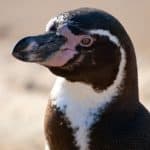
  • Key field marks (adult): black head with a conspicuous white stripe curving from above/behind the eye down the side of the head/neck; black breast band across a white belly; dark upperparts.
  • Juvenile field marks: grayer head and body with less distinct facial stripe; breast band reduced or absent compared with adults.
  • Thermoregulatory trait for equatorial living: relatively sparse feathering on parts of the face with bare skin that can aid heat dissipation compared with cold-climate penguins; often shelters in lava crevices/shade to avoid overheating.
  • Foraging ecology tightly linked to cool, nutrient-rich upwelling (Cromwell Current and associated local upwelling): tends to forage in nearshore waters; diet dominated by small schooling fish (e.g., sardines/anchovies) and is highly sensitive to prey availability.
  • Breeding behavior: capable of breeding opportunistically in multiple seasons when food is sufficient; nests in lava crevices/caves and shaded sites to reduce heat stress and egg overheating.
  • High vulnerability to El Niño-Southern Oscillation events: warm-water El Niño periods reduce upwelling and prey, causing sharp declines in breeding success and adult survival documented in long-term monitoring.
  • Listed as Endangered on the IUCN Red List. Main threats are El Niño food shortages, introduced predators (cats, dogs, rats), disease and parasites, human disturbance, fishing risks, and pollution or oil spills.

Sexual Dimorphism

Sexes are similar in plumage (monomorphic coloration); dimorphism is subtle and mostly size/bill-based, with males averaging slightly larger/heavier and often having a thicker/longer bill than females (typical of Spheniscus).

♂
  • Slightly larger average body size and heavier build; bill often more robust (sexual size dimorphism is subtle and overlapping).
  • No consistent plumage differences from females; same adult banded pattern.
♀
  • Slightly smaller average body size; bill often a bit finer than male on average.
  • No consistent plumage differences from males; same adult banded pattern.

Did You Know?

It's the only penguin that naturally occurs north of the equator (though most of its range is just south of it).

Adults are small: ~49 cm long and typically ~2.0-2.5 kg-among the smallest penguin species.

Core breeding is on western Isabela and Fernandina, where the Cromwell Current upwelling keeps waters cool and fish-rich.

It's a banded penguin: black head, white facial stripe, and a bold black chest band are key field marks shared with African, Humboldt, and Magellanic penguins.

Major ENSO warm-phase events can cause catastrophic declines by weakening upwelling and reducing prey; the 1982-83 event caused an estimated 77% population drop in the Galapagos penguin.

Typical clutch size is 2 eggs; incubation is about ~38-40 days, and chicks fledge roughly ~60-65 days after hatching (timing varies with food).

Diving is generally shallow compared with many penguins: commonly tens of meters (often <50 m), targeting small schooling fish like sardines/anchovies in nearshore waters.

Unique Adaptations

  • Tropical thermoregulation: compared with cold-climate penguins, Galápagos penguins rely heavily on behavioral cooling (shade, panting, flipper-spreading) to balance heat stress near the equator.
  • Upwelling specialization: life history is tightly coupled to the Galapagos' cold, nutrient-rich currents; breeding effort and survival track prey pulses driven by the Cromwell Current.
  • Lava-land nesting strategy: use of volcanic crevices reduces egg/chick heat exposure and can lower predation risk versus open ground nesting.
  • Flexible timing of reproduction: ability to delay or skip breeding during warm-water, low-prey periods (e.g., El Niño) is key to persistence in a highly variable environment.
  • Banded-penguin build: streamlined body and strong flippers optimized for pursuit-diving on small schooling fish in coastal waters.

Interesting Behaviors

  • Opportunistic breeding: rather than a fixed season, nesting often ramps up when upwelling boosts fish availability; in good years, pairs may attempt more than one brood.
  • Crevice nesting in lava: pairs commonly place nests in lava tubes, cracks, and rocky cavities that provide shade and stable temperatures.
  • Heat-management behavior on land: panting (gular fluttering), holding flippers out, and seeking shade are frequently used to avoid overheating in a tropical climate.
  • Nearshore foraging: typically feeds close to the coast in productive upwelling zones, often making repeated short trips rather than long pelagic journeys.
  • Strong pair bonds with shared parental care: both adults incubate and provision chicks; coordination is crucial when food is scarce.
  • Group vigilance at haul-outs: birds often pause to scan for predators (including introduced cats and dogs) before entering/exit routes to nests.

Cultural Significance

The Galápagos penguin (Spheniscus mendiculus) is an iconic species for the islands and Ecuador, used in ecotourism and education. It needs upwelling, is sensitive to El Niño, and faces threats from cats, dogs, rats, human disturbance, and prey shortages; listed Endangered on the IUCN Red List.

Myths & Legends

Name story (scientific etymology): the species epithet is Latin for "beggar" or "poor," a historical naming choice often interpreted as referring to its small size and "humble" appearance compared with other banded penguins.

Often described in popular and travel writing as "the penguin at the equator," because it lives in the Galapagos Islands and is the only penguin species that occurs naturally north of the equator.

Local Galápagos guides and fishers say cold upwelling from the Cromwell Current (Equatorial Undercurrent) "brings the Galápagos penguin (Spheniscus mendiculus)," tying their presence to seasonal rises in sea food, not to old myths.

Conservation Status

EN Endangered

Facing a very high risk of extinction in the wild.

Population Decreasing

Protected Under

  • Ecuador: Galapagos National Park (established 1959) - major breeding areas occur within protected land managed by the Galapagos National Park Directorate.
  • Ecuador: Galapagos Marine Reserve (created 1998; later expanded/strengthened through subsequent zoning and reserve measures) - protects key foraging habitat and regulates fisheries and vessel activity.
  • CITES: Spheniscus mendiculus (Galapagos penguin) is listed in CITES Appendix I (international commercial trade is generally prohibited; non-commercial trade is tightly controlled).
  • UNESCO World Heritage: Galapagos Islands World Heritage Site (international recognition supporting conservation governance).
  • Species field notes (requested exact biological data; widely reported in primary references such as species accounts used by IUCN/BirdLife): adult length ~48-50 cm; typical mass ~1.5-2.5 kg; clutch usually 2 eggs; incubation ~38-40 days; fledging commonly ~60-65 days; breeding can occur year-round when prey is abundant (often peaking in cooler/upwelling periods) and nests are typically in lava crevices/burrows to reduce heat stress; recorded dives can exceed ~50 m (maximum reported ~52 m in telemetry studies), with foraging closely tied to upwelling-driven prey availability.

Life Cycle

Birth 2 chicks
Lifespan 10 years

Lifespan

In the Wild
5–20 years
In Captivity
10–20 years

Reproduction

Mating System Monogamy
Social Structure Socially Monogamous
Breeding Pattern Long Term
Fertilization Internal Fertilization
Birth Type Internal_fertilization

Galápagos penguins (Spheniscus mendiculus) are socially monogamous, often forming long-term pairs if both survive. Breeding follows cool-water upwelling; pairs court, nest in lava crevices, lay 1–2 eggs, share incubation (~38–40 days) and chick care; no helpers; genetic monogamy unknown.

Behavior & Ecology

Social Colony Group: 30
Activity Diurnal, Crepuscular
Diet Piscivore small schooling fish concentrated by cool, nutrient-rich upwelling (especially sardine-/anchovy-like clupeids/engraulids)

Temperament

Generally gregarious and tolerant of conspecifics at shared haul-out and breeding areas, but aggressively territorial within a short radius of the nest (bill-jabbing, pecking, chasing) (Williams 1995).
They stay near shaded nest sites, but they breed only when conditions allow and may skip warm, low-food years like El Niño, causing more movement and weaker colony bonds.
Heat-avoidant on land: spends prolonged periods resting in shade/crevices and limits mid-day surface activity; this ecological constraint drives smaller, more dispersed nesting aggregations than many other penguins (Boersma 1976).
Typically cautious/shy around threats; anti-predator behavior includes rapid retreat to water, alarm calling, and group vigilance when hauled out (IUCN/ BirdLife species accounts).

Communication

Ecstatic/display call Bray-like) used in mate attraction, pair-bond maintenance, and individual recognition within breeding areas (Williams 1995
Mutual/duet-like calls between mates at nest during changeovers and reunions Williams 1995
Contact calls between adults and between parents and chicks at close range, especially in crevices where visibility is limited Williams 1995
Alarm calls given in response to predators/disturbance; often accompanied by upright posture and orientation toward the threat Williams 1995
Aggressive vocalizations Hissing/growling) during nest defense and territorial disputes (Williams 1995
Visual displays: bill-pointing, head-swinging, and upright postures during courtship and territorial signaling Williams 1995
Flipper beating and lunging as escalation in aggressive encounters near nests Williams 1995
Allopreening/mutual preening between mates to reinforce pair bond, common across Spheniscus penguins Williams 1995
Nest-site advertisement and defense through repeated posture displays at the crevice entrance; physical positioning Blocking) is important in confined nest spaces (Boersma 1976; Williams 1995

Habitat

Coastal Rocky Shore Cave Cliff/Rocky Outcrop Beach Open Ocean Seabed/Benthic Coral Reef +2
Biomes:
Terrain:
Island Coastal Volcanic Rocky
Elevation: Up to 98 ft 5 in

Ecological Role

Nearshore marine mesopredator tightly coupled to equatorial upwelling; transfers marine-derived energy to island coastal ecosystems and reflects short-term ocean productivity shifts.

Regulates local abundance of small pelagic fish in nearshore upwelling zones Nutrient translocation to land via guano deposition near colonies (marine-derived nitrogen/phosphorus enrichment) Bioindicator of oceanographic conditions (especially upwelling strength and ENSO impacts) Supports higher trophic levels as prey for native predators (e.g., large fish/sharks and pinnipeds)

Diet Details

Main Prey:
Small schooling pelagic fish Mullet Silversides Scads and jacks

Human Interaction

Domestication Status

Wild

Galápagos penguin (Spheniscus mendiculus) is fully wild with no domestication history. Endemic to the Galápagos and the only penguin north of the equator. Small (≈49 cm, 1.7–2.6 kg), breeds on western islands (Fernandina, Isabela). Human interactions: ecotourism, research, conservation (habitat protection, invasive predator control, reducing bycatch, oil‑spill planning), and threats from disturbance, entanglement, disease, pollution, and climate-driven prey loss.

Danger Level

Low
  • minor bites/pecks if handled at close range (rehab/research contexts)
  • slip/fall hazards for people on rocky shorelines where penguins haul out
  • low but non-zero zoonotic risk typical of wild birds (e.g., Salmonella/Campylobacter exposure) primarily for handlers without proper hygiene/PPE

As a Pet

Not Suitable as Pet

Legality: Galápagos penguin (Spheniscus mendiculus) cannot be kept as a private pet. It is protected by Ecuadorian law and CITES; only accredited zoos, aquariums, or rescue/rehab centers with permits may have them.

Care Level: Expert Only

Purchase Cost:
Lifetime Cost: $200,000 - $800,000

Economic Value

Uses:
Ecotourism (non-consumptive wildlife viewing in the Galapagos) Scientific/research value (indicator species for marine productivity and ENSO impacts) Conservation employment and funding (park management, monitoring, invasive species control)
Products:
  • no legal consumptive products; value is primarily non-consumptive (tourism) and scientific

Relationships

Ecological Equivalents 4

Animals that fill a similar ecological role in their ecosystem

Flightless cormorant Nannopterum harrisi Both are coastal, pursuit-diving species: the Galápagos penguin (Spheniscus mendiculus) hunts in the cool, nutrient-rich western-island upwelling. They overlap in nearshore feeding, both depend on the Cromwell Current, and both breed when food is available.
Galápagos sea lion Zalophus wollebaeki Galápagos penguins and nearby sea lions both rely on eastern Pacific upwelling and feed on small pelagic fish and squid. During warm El Niño events, both experience reduced feeding success and reduced breeding ability.
Peruvian booby Sula variegata Seabird of eastern Pacific upwelling zones that eats small schooling fish, dives to capture prey, and, like Galápagos penguins, has population size and breeding tied to ENSO-driven changes in prey availability.
Marine iguana
Marine iguana Amblyrhynchus cristatus Endemic to the Galápagos; its ability to find food depends on cool-water upwelling and algal growth. Although it eats algae rather than fish, it and the Galápagos penguin respond strongly to El Niño.

The Galapagos penguin is located farther north than any other penguin species in the world.“

It is a very rare and unusual sight indeed: a penguin living in warm climates. Charles Darwin never saw these creatures on his trip to the Galapagos, but today they are a fascinating spectacle for visiting tourists and nature lovers coming to the island chain from around the world. However, population numbers are currently in sharp decline due to dropping food supplies and changes in the natural climate cycle. If something isn’t done to reverse their decline, then they may be vulnerable to complete extinction.
3 Galapagos Penguin Facts

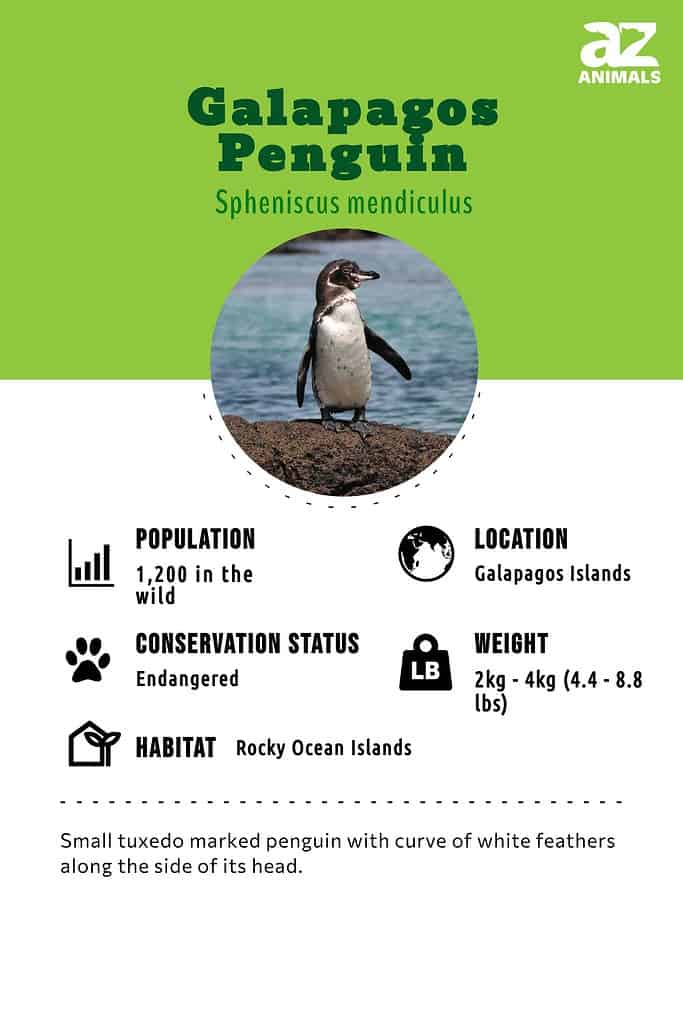
  • The Galapagos penguin species have adapted closely to the annual environmental cycles of the Galapagos Islands. The timing of its breeding, molting and feeding is all based on changes in this cycle.
  • The Galapagos penguin molts twice per year. Each molt takes approximately two weeks to complete.
  • Penguins likely evolved around the Antarctic-New Zealand region some 30 to 40 million years ago, when both landmasses were practically connected with each other. One group of penguins later split off from the others and traveled north, giving rise to the so-called banded penguins.
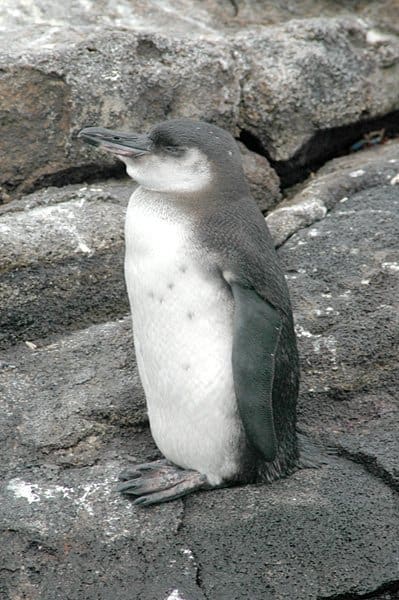
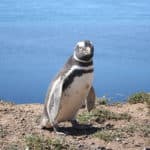
Galapagos penguin on the rocks
Galapagos Penguin

Scientific Name

The scientific name of the Galapagos penguin is Sphensiscus mendiculus. The word mendiculus is a Latin term that roughly translates to a squalid or little beggar. The first person to classify it was the Swedish zoologist Carl Jakob Sundevall in 1871, decades after Darwin’s famous voyage to the island.

The Galapagos penguin is only one of four living species of the banded penguin genus. The other three are the Magellanic penguin, the Humboldt penguin, and the African penguin, all of which inhabit the coasts of South America and Africa. They are named for the banded markings around their face and body. The family of Spheniscidae, as well as the entire order of Sphenisciformes, also includes every currently living species of penguin.

Evolution

Fossil records indicate that the common ancestor of all penguins lived as long as 40 million years ago and was around five feet tall. They are believed to have originated in Antarctica, which was covered in forests at that time and connected to what would become New Zealand, Australia, South America, and surrounding islands. These ancient ancestors of penguins had diverged from the ancestors of petrels and albatrosses around 71 million years ago.

Galapagos penguin
Galapagos penguins diverged from their ancestors during the ice age.

The arrival of the ice age 35 million years ago brought brutal changes to the ancient ancestors of the penguin. The continents of Australia and South America drifted away from Antarctica while ocean currents encircled it. This cooling climate likely killed the older penguins – leaving them to compete with whales for the same prey.

While most of the ancient penguins became extinct, others, like the Galapagos penguin, swam to warmer waters to found new lineages. Some species, like the emperor penguin, stayed in Antarctica and evolved adaptations to living in the cold environment.

Appearance and Behavior

The Galapagos penguin is very much a quintessential member of the penguin family. It features the familiar black body and white belly that characterizes many species of penguins. One major difference in appearance is the curved stripe of white feathers along the sides of the head and the breast area. Other interesting colorations include the red eyes and the white and pink patches along the lower bill and throat area.

The Galapagos penguin measures about 20 inches in height and weighs 4 to 6 pounds. It is the second smallest penguin species in the world, beaten only by the little penguin of Australia and New Zealand. Males are slightly larger than females on average, but both sexes are similar in appearance.
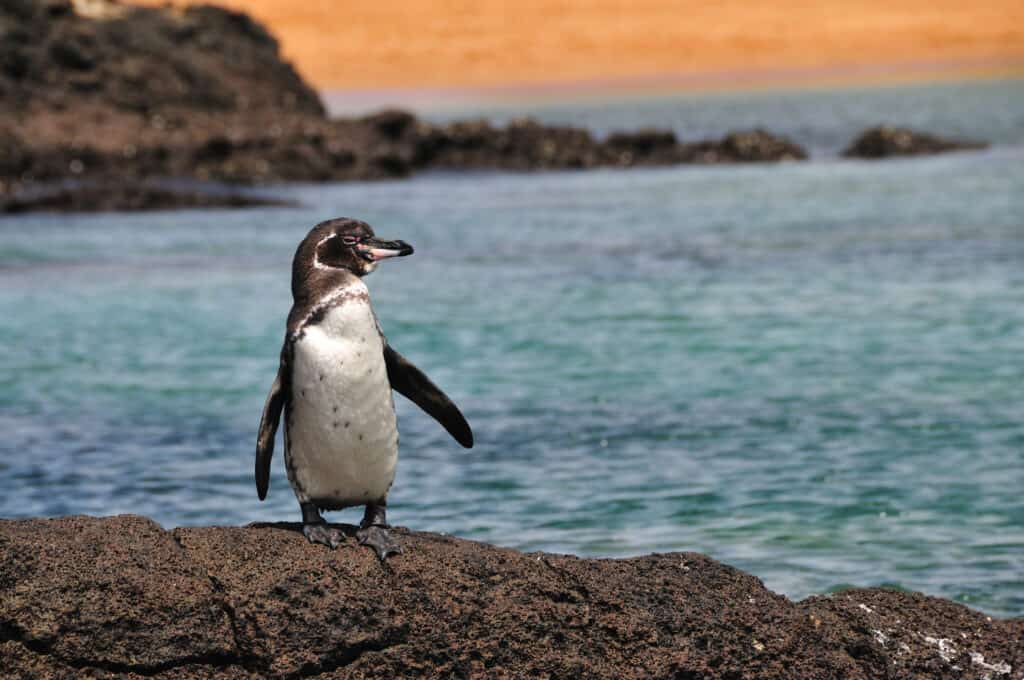
The Galapagos penguin is the second smallest penguin in the world weighing only four-six pounds.

The Galapagos penguin is specially adapted for a marine environment, where it spends a great deal of its time hunting and bathing. The eyes are modified to properly refract light in the water, and the ears are protected from pressure changes by specialized organs. One glance at the wings will tell you that they are modified aerial organs that allow the penguin to glide effortlessly through the water.

Due to its awkward gait and poor balance, the penguin is just as clumsy on land as it is fast and agile in the water. That is one major reason why the center of the penguin’s social life is the colony. Characterized by loud squawking and constant movement, the colony provides protection and safety to all vulnerable members. The group also offers guaranteed hunting partners when in search of food.

Galapagos penguins communicate with each other through vocalizations and body movements. The calls help to maintain group cohesion in the colony and on the hunt. Despite their social nature, these penguins are highly territorial and will defend their nests from outside intruders. They have likewise adapted several antagonistic calls and movements to ward off unwanted visitors. This is somewhat analogous to the way that humans have formed both homes and larger communities. Penguins will welcome neighbors as long as they don’t get too close to the nest.

Because penguins are normally adapted to the cold, frigid environments of the extreme south, this species lives a rather fragile and precarious existence in the warmer climates of the Galapagos Islands. The high air temperature (which can reach the 80s Fahrenheit) is a consistent problem for the penguin, but it has adapted several strategies to deal with this. For example, the penguin will spend a good deal of its time in the colder water to cool off. It will also spread out its flippers and hunch over to prevent the sun from shining on its feet. The featherless patch on the face provides some relief from the warm weather. If all else fails, this species has the ability to work off excess heat by panting.
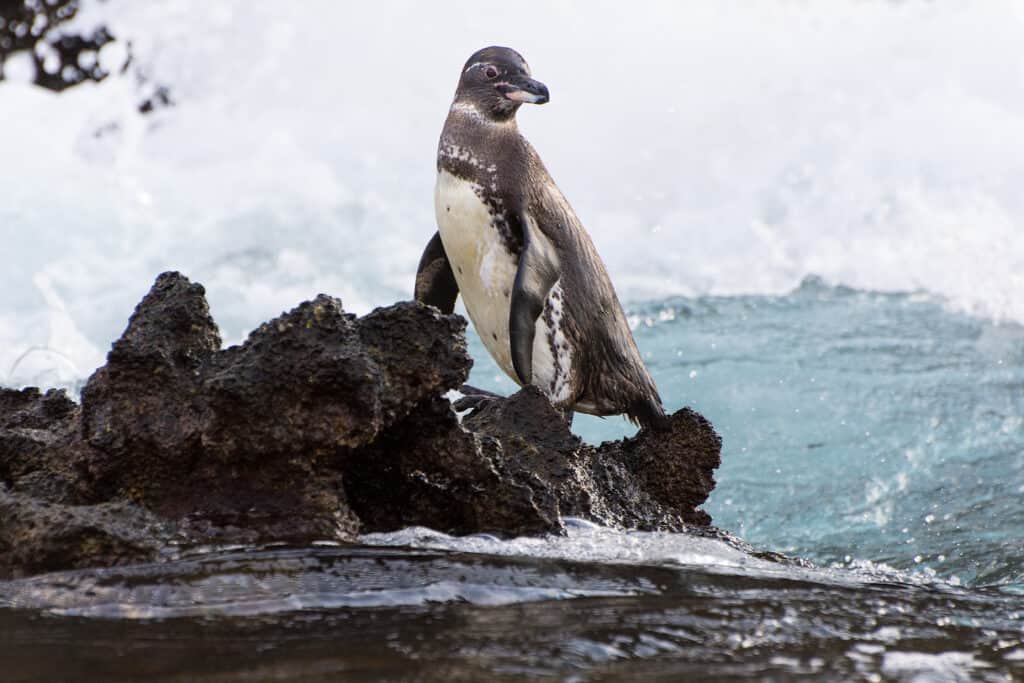
Galapagos penguins live on the rocky shores of the Galapagos Islands.

Habitat

Galapagos Island Ecuador

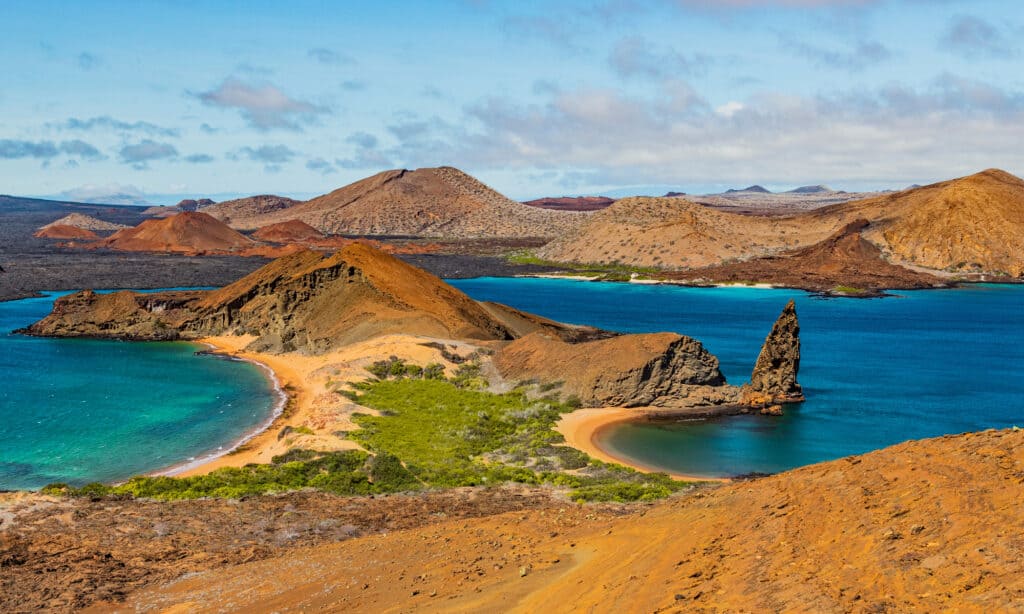
The Galapagos islands, located to the west of Ecuador, are the home of the Galapagos penguins.

As the name implies, the Galapagos penguin exclusively inhabits the Galapagos Islands, located to the west of Ecuador in South America. It is the only species located north of the Equator, but only the northern tip of the foremost island in the chain crosses the line. These penguins mostly stick to the rocky beaches of the coast, where the cold Cromwell Current and Humboldt Current meet up with the island chain to bring in an ample year-long food supply. Almost all of the penguins are located on the western end of the island chain.

Penguin Diet
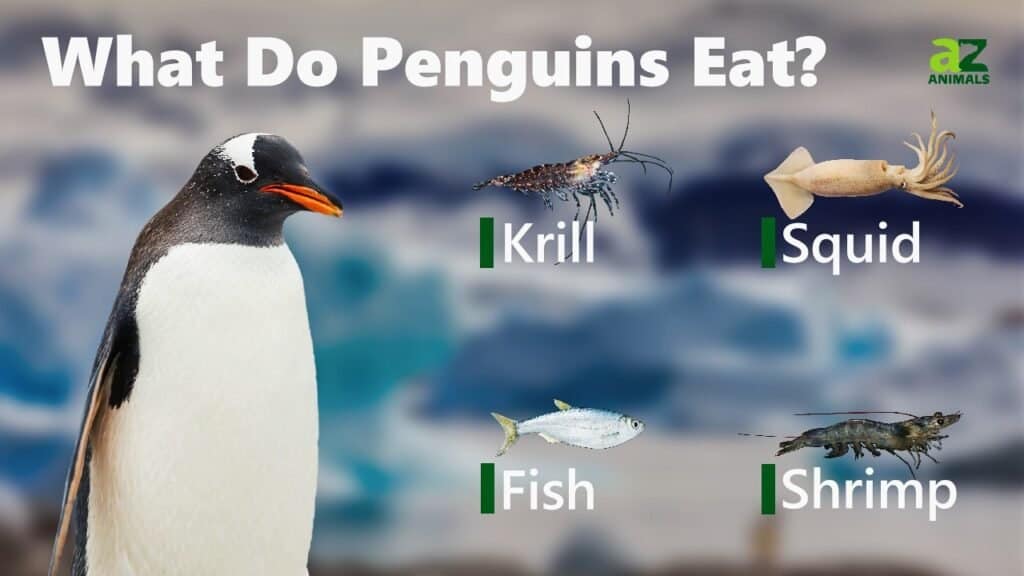
What Do Penguins Eat
Penguins primarily eat fish, with other seafood like crustaceans and krill added to the mix.

The Galapagos penguins are carnivorous birds that feed almost exclusively on small sea creatures, including sardines, anchovies, mullets, and invertebrates, all of which are typically less than an inch in size. These penguins work in teams to chase prey into a desirable spot and then snatch the food from below with their sharp beaks. The sense of smell may also play a role in finding prey. Virtually none of its diet comes from land animals.

The greatest threat to this food supply is disruption from the El Niño cycle. These are unusually warm phases in the movement of ocean water throughout the Pacific. The warm water slows down the pace at which nutrients rise to the surface of the ocean, which causes fish stocks to decline. If the water warms too much, then the penguins may stop breeding altogether and even starve to death.

Predators and Threats
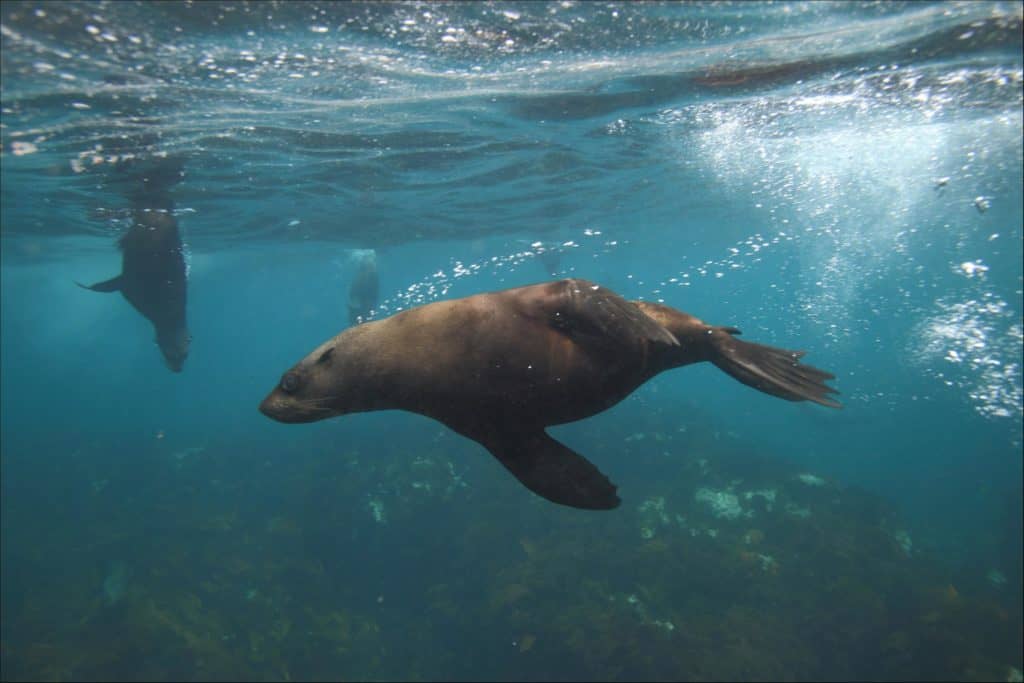
Fur seals prey on Galapagos penguins.

The small and plump Galapagos penguin faces numerous threats from voracious predators. When the penguin is swimming through the water, it could be eaten by sharks or Galapagos fur seals. The penguin’s coloration provides a good source of camouflage. When seen from above, the black underside blends in with the dark water below. When seen from below, the white stomach blends in with the light shallow water above. If this camouflage fails, then the speed and agility provide a good defense.
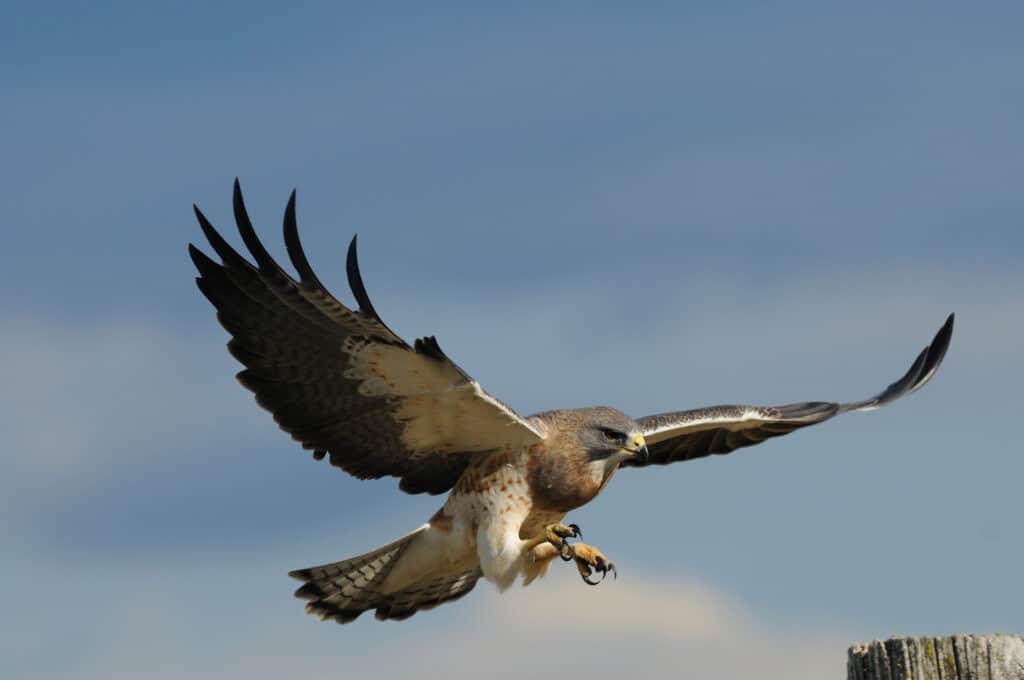
Swainson Hawk

Hawks prey on the slow-moving Galapagos penguins.

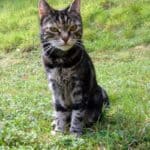
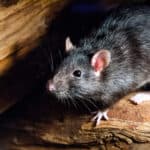
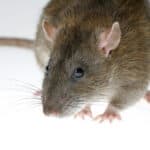
On land, the penguin faces a considerable threat from its longtime predator, the Galapagos hawk, which can swoop down at any time and kill the slow, awkwardly moving penguin. Introduced species like dogs, cats, rats, and other large birds have posed a new threat and destabilized otherwise stable penguin groups. The introduced species also carry diseases with them that can decimate native wildlife populations.

Humans don’t necessarily pose a direct threat to this species, but our actions may be contributing to their demise. Because of the changes wrought by the El Niño cycle, these penguins are highly vulnerable to slight disruptions in their food supply. This is exacerbated by the destruction of fish from pollution and overfishing. Another source of danger is the loss of natural nesting sites due to flooding and competition with other species.

Reproduction, Babies, and Lifespan

The Galapagos penguin is a monogamous species that mate for life. The courtship process to secure a mate involves long and affectionate rituals such as preening, bill tapping, and flipper patting. These signs of affection continue even after they hook up to strengthen the pair’s bond for their remaining years together. The Galapagos penguin has no established breeding season. Although it can mate at any time of the year, its decision to breed is usually dictated by the abundance of food and therefore the environmental conditions of the surrounding ocean.

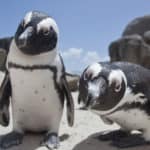
Two Galapagos penguins. The penguin on the left is facing right, and
Galapagos penguins mate for life and share chick-rearing responsibilities.

After pairing up, the penguins will create a nest together out of rocks and twigs within small depressions along the shore. The nest provides protection for the young chicks against predators and the blistering heat of the sun. In order to copulate, the female lays down on the ground, while the male attempts to climb aboard. The entire process only lasts about a minute or two.

Once impregnated, the female penguin will produce three clutches of eggs throughout the year with two eggs per clutch. These eggs will hatch after about 38 to 42 days. Both parents share incubation, feeding, and protection duties, often alternating with each other between tasks.

The young chick starts out with gray, fluffy, downy feathers on the head and back, along with white patches on the stomach and cheeks. It takes about two months to fully fledge. This means they gain their full set of feathers. In penguins, of course, the feathers are not used for flight, but rather to help them swim and keep them warm in the cold water.

At around three to six months of age, the penguins will achieve independence from their parents. However, sexual maturity comes much later. Females will reach maturity after three to four years, while males take about four to six years to accomplish the same thing. The maximum lifespan in the wild is between 15 and 20 years of age, but predation or starvation may significantly reduce its potential life.

Population

Galapagos penguin by the water
Galapagos penguins are an endangered species.

Due to years of decline, only about 1,200 Galapagos penguins currently remain in the wild. Almost all of these remaining penguins are clustered in a small stretch of territory along the coast of the island chain.

Conservation Status

According to the IUCN Red List, the Galapagos penguin is currently an endangered species. The fate of this species was long neglected until the 21st century when researchers finally sought to preserve it from extinction. Some of these conservation efforts have been directed toward building new nest sites and preventing the depletion of fish in the surrounding waters. A lot of the effort to save the species will depend on humanity’s effort to prevent climate change from raging out of control.

View all 261 animals that start with G

Sources

  1. Animal Diversity
  2. Galapagos Conservancy
  3. IUCN Red List
Lisha Pace

About the Author

Lisha Pace

After a career of working to provide opportunities for local communities to experience and create art, I am enjoying having time to write about two of my favorite things - nature and animals. Half of my life is spent outdoors, usually with my husband and sweet little fourteen year old dog. We love to take walks by the lake and take photos of the animals we meet including: otters, ospreys, Canadian geese, ducks and nesting bald eagles. I also enjoy reading, discovering books to add to my library, collecting and playing vinyl, and listening to my son's music.

Thank you for reading! Have some feedback for us?


Galapagos Penguin FAQs (Frequently Asked Questions)

The Galapagos penguin is exclusively endemic to the island chain which gave the species its name. The majority of penguin populations inhabit the two main western islands, Fernandina and Isabela. There are also some scattered penguin populations along the eastern islands of the chain.