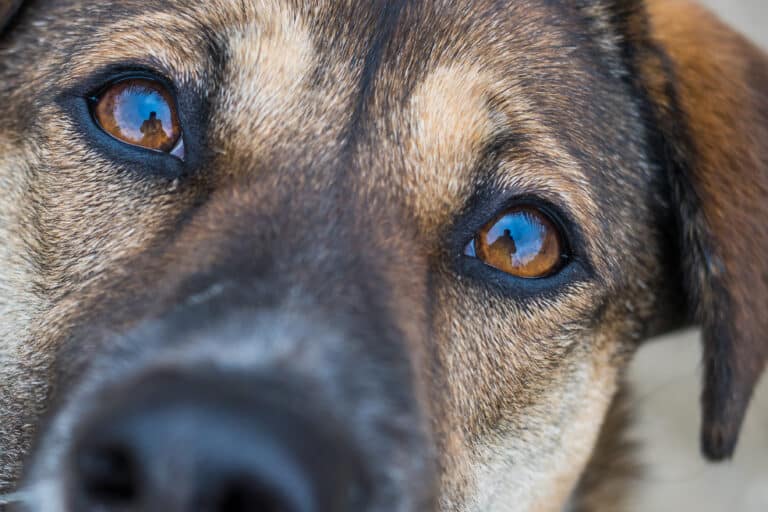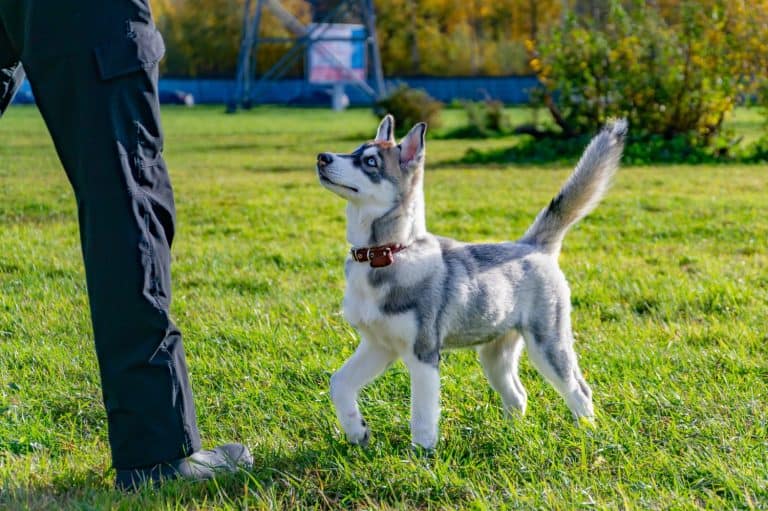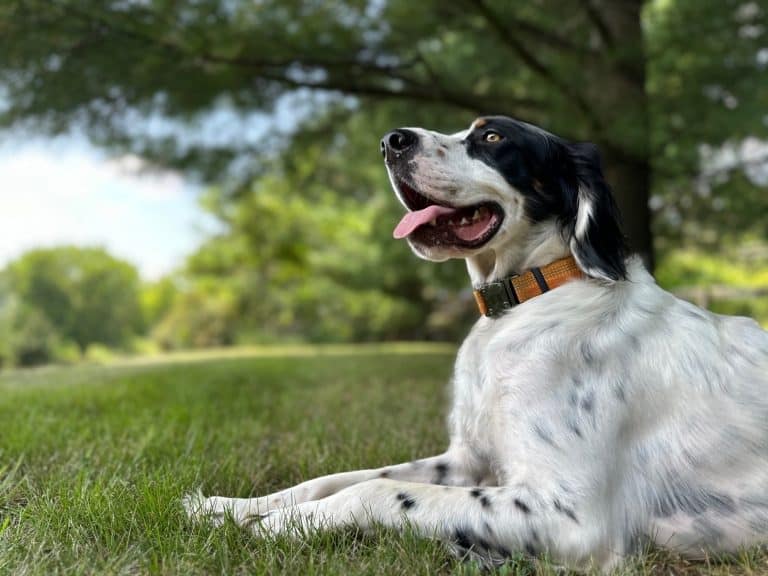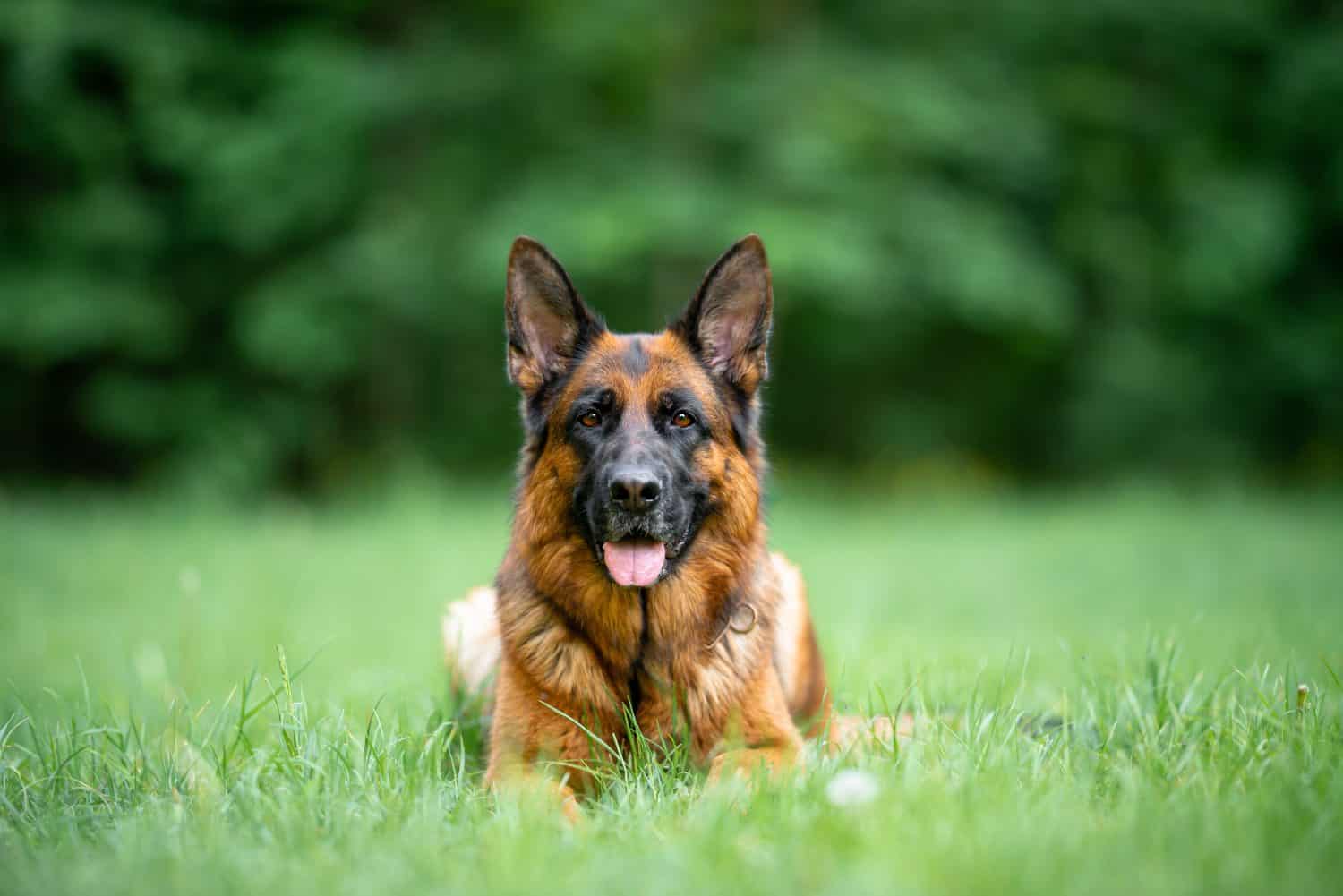
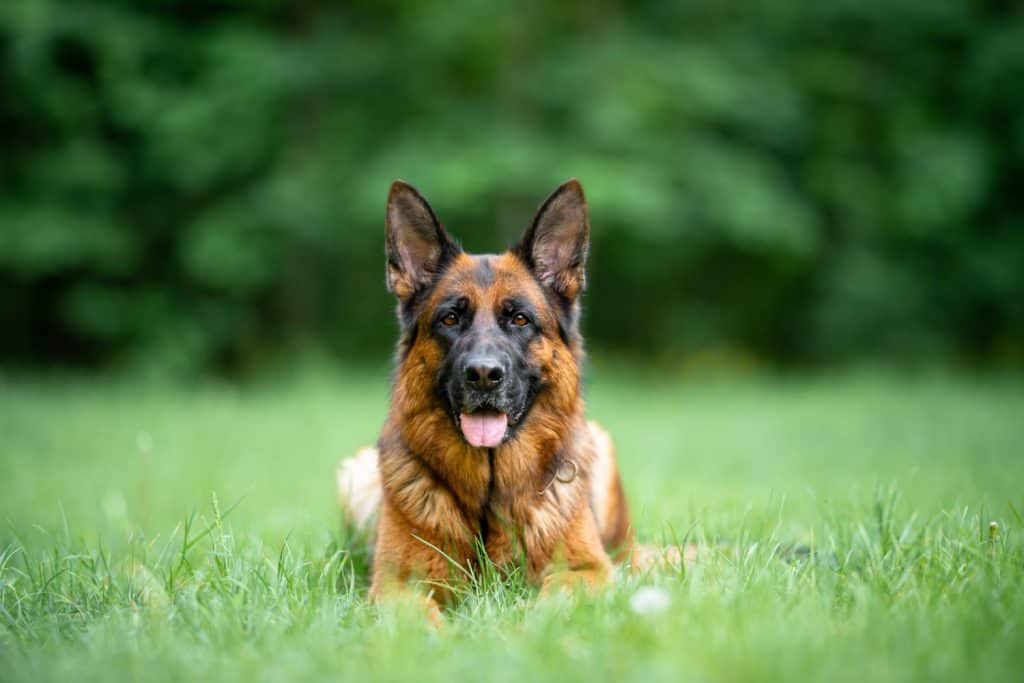
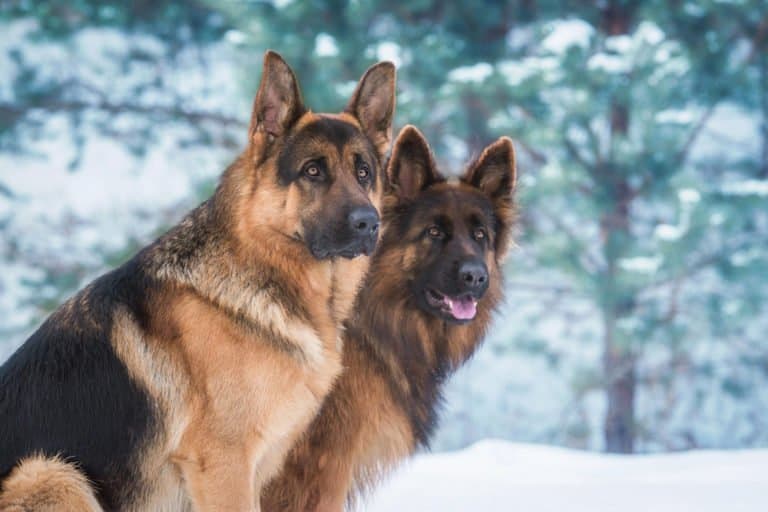
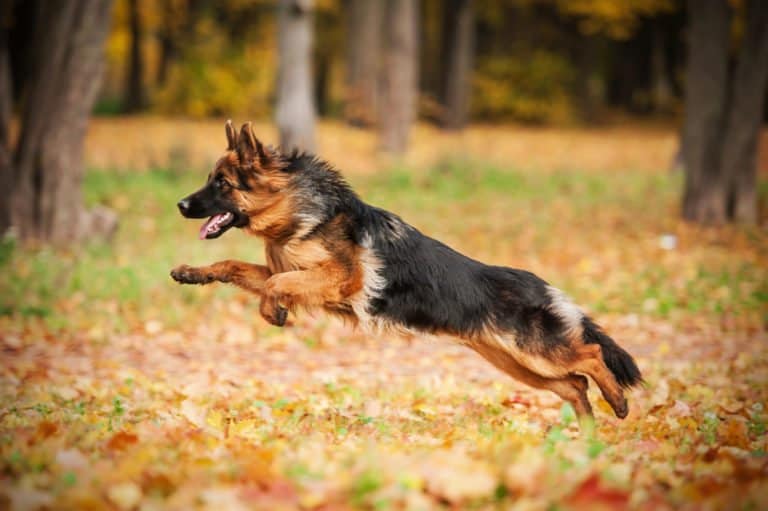
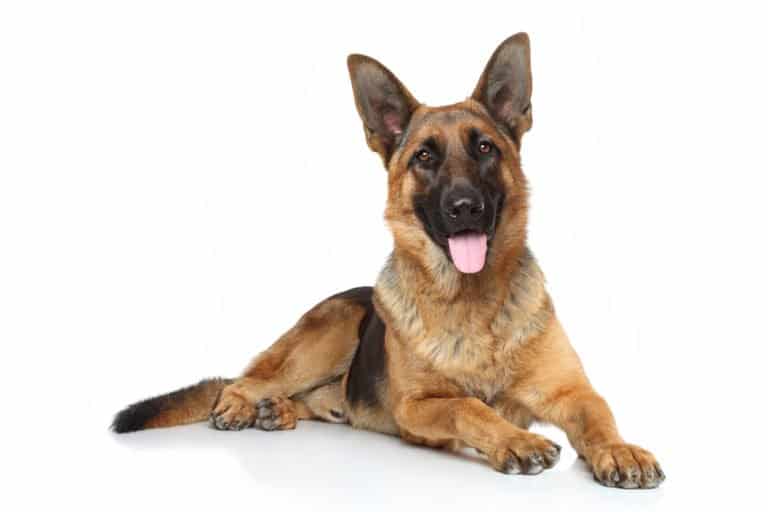
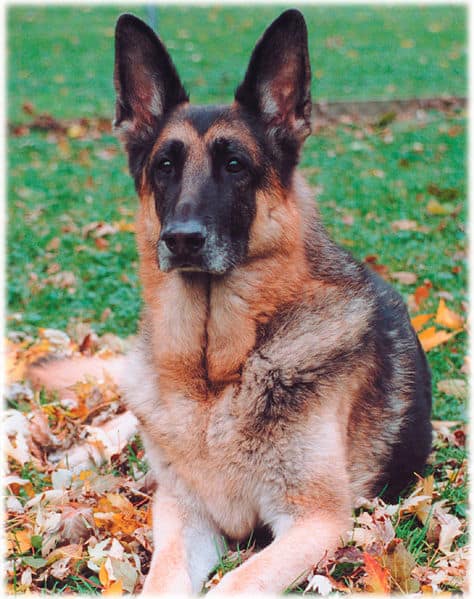








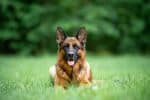




This working dog from the herding group features a luxurious double coat that can be anywhere from medium to long and comes in a variety of attractive colors like black and tan, solid black, sable, and bi-color; while white-coated German Shepherds exist, they are not recognized as a standard color by major breed registries such as the AKC. Their exceptional intelligence and adaptability make them well-suited for a wide array of jobs, including police work, service training, and, of course, loving companions.
This breed gets a bad reputation for aggressive behavior, but in reality, these dogs are more aloof with strangers than aggressive. As with any other breed, reputable breeders and early and consistent training determine the dog’s personality. These dogs can alter their personalities to fit their owner and training, so it’s up to the owner to show them how they should behave.
3 Pros and Cons of Owning a German Shepherd
| Pros | Cons |
|---|---|
| They are beautiful dogs German shepherds are well known for their thick, luxurious coats and come in a variety of attractive colors like black and tan, solid black, and solid white. | They have an aggressive reputation Though their reputation isn’t accurate, many people see this breed as aggressive. Due to this misconception, your dog may not be welcome in dog parks, and new friends may be hesitant to visit your home. Your homeowner’s insurance premium could be higher than average as well. |
| They have a long lifespan German shepherds live for about 10 to 14 years, which means you’ll get to enjoy time with your canine companion for years to come. | They shed excessively Throughout most of the year, a German shepherd’s hair is manageable when you brush them multiple times a week, but during the two times they shed their coats each year, you’ll need to brush them at least once each day to keep ahead of the shedding. |
| They are highly intelligent and easy to train Unlike most intelligent breeds, German shepherds are eager to please their masters, which makes training them a joy. This trait is what makes them highly skilled working dogs in both service fields and police work. | They can be destructive if they don’t get enough attention German shepherds thoroughly attach themselves to their families, so if you leave them home alone for long periods, they will develop separation anxiety. This anxiety can lead to extremely destructive behavior that will not only destroy your home but can also cause health issues in your pup as well. |
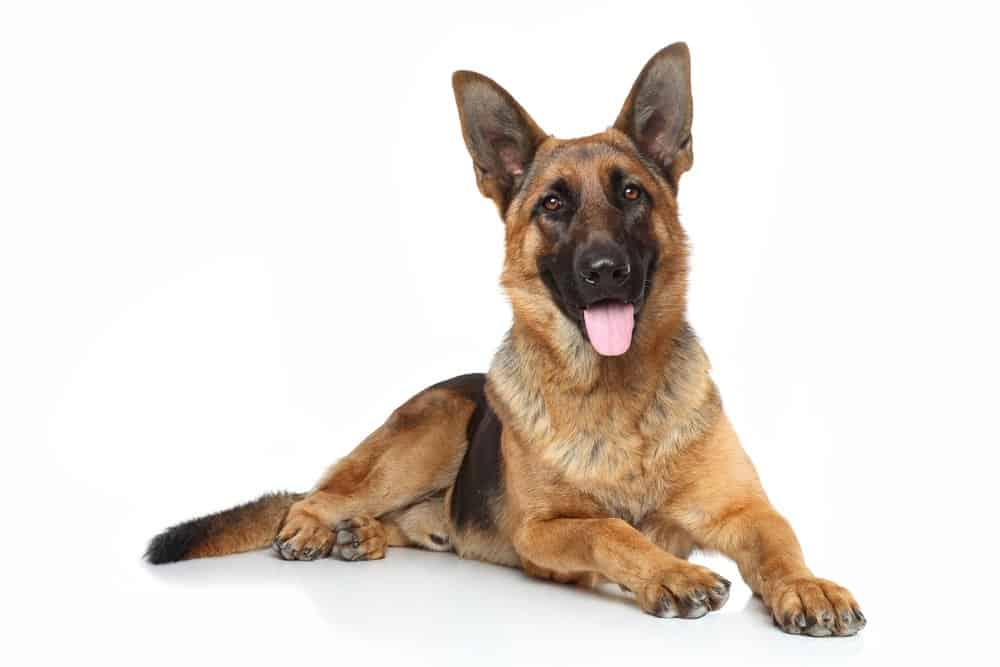
German shepherds are well known for their thick, luxurious coats and come in a variety of attractive colors like black and tan, solid black, and solid white.
©Jagodka/Shutterstock.com
Size and Weight
Adult male German Shepherds typically weigh 65 to 90 pounds, while females usually weigh 50 to 70 pounds. Both sexes generally stand 22 to 26 inches high at the shoulder.
Common Health Issues
Like many purebred dogs, German shepherds are prone to some fairly serious health conditions. One such condition, degenerative myelopathy, is a neurological disease that targets the spinal cord. It tends to come on later in life and leads to reduced mobility.
Bloating is another life-threatening concern for this breed, so owners should establish proper eating routines from an early age. Owners can reduce the occurrence of bloating by feeding smaller meals throughout the day, using a dish that forces a dog to eat slowly, and preventing heavy exercise for up to two hours after each meal.
This breed can also develop other serious conditions, such as:
- Epilepsy
- Hip or elbow dysplasia
- Von Willebrand’s Disease
- Thyroid disorders
- Skin allergies
- Lupus
- Progressive retinal atrophy
- Perianal fistulas
- Pannus
- Pancreatic enzyme inefficiency
- Panosteitis
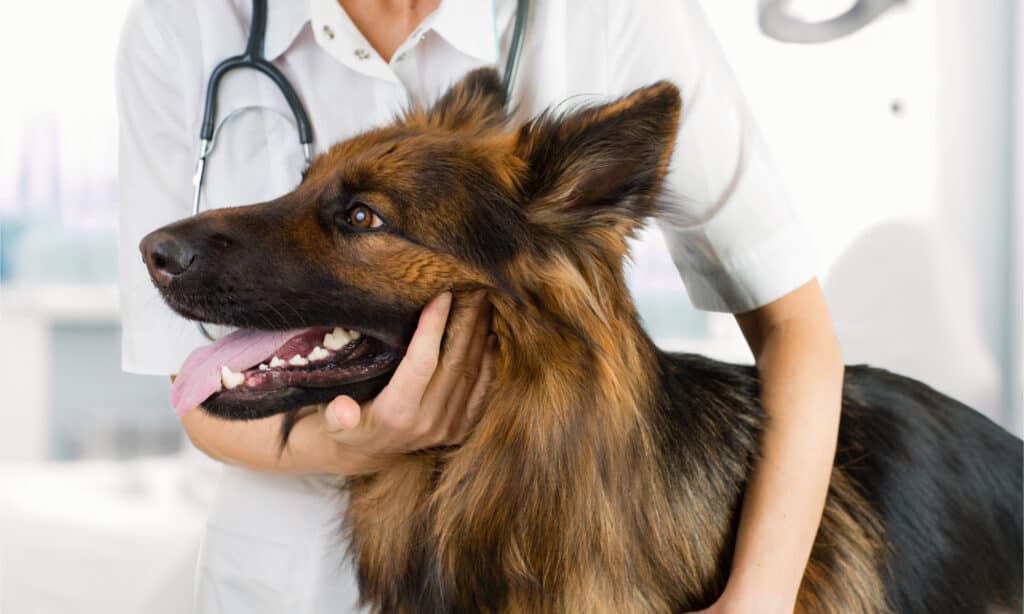
Like many purebred dogs, German shepherds are prone to some fairly serious health conditions.
©Andrey_Kuzmin/Shutterstock.com
Temperament
This breed has a certain level of dignity that many other breeds don’t possess, which means you’ll have to work for their friendship. Though it may take them longer to bond and make new friends than other dogs, once that friendship is forged, they make extremely loyal companions.
These dogs are among the most intelligent dog breeds, which enables them to excel at any job their owner chooses. They are also quite sensitive and hate being left alone, so if you spend much of your time away from home and can’t take your dog with you, a German Shepherd is not the right dog for you.
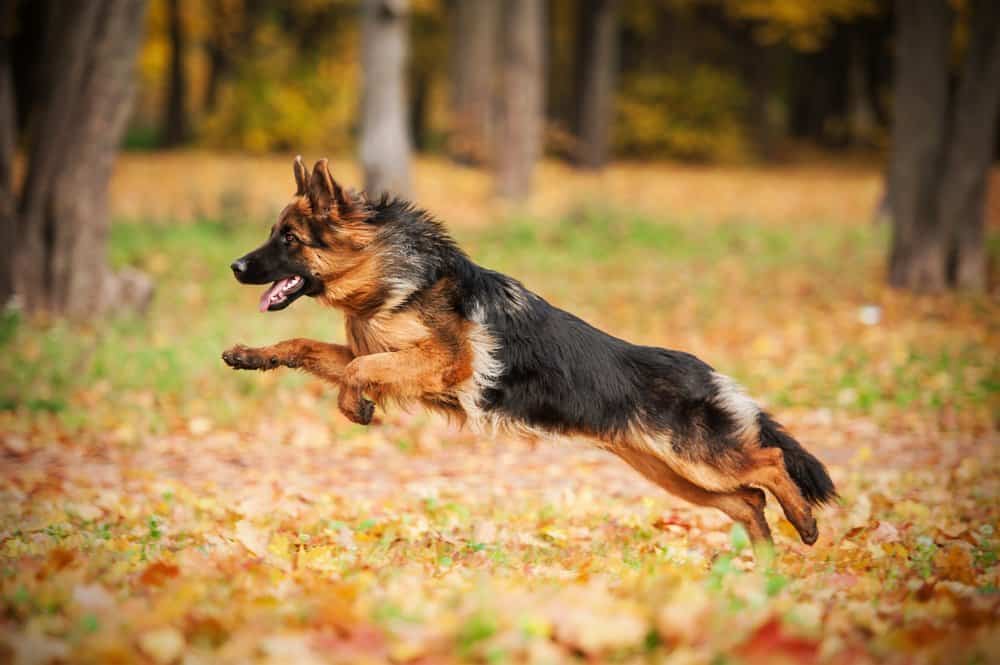
Though it may take them longer to bond and make new friends than other dogs, once that friendship is forged, they make extremely loyal companions.
©Rita_Kochmarjova/Shutterstock.com
Aggression
Another myth is that German shepherds aren’t good with kids. On the contrary, their high energy, extreme trainability, and loyalty are all excellent traits for family pets. Due to their adult size and strength, early training and socialization around children are imperative to prevent injuries. It is also vital that parents teach their children how to interact with dogs safely.
Contrary to popular belief, these dogs are not naturally aggressive. One of the biggest myths about this breed is that even if they begin life as docile animals, they will develop aggression. Many times, the public bases its opinion of this breed on dogs that work in jobs that require selective aggressive tendencies, like the kind that is common in police dogs. Training is the most important factor in determining aggression in any dog. Since German shepherds are so adaptable and eager to please, owners can teach them calm behavior just as easily as aggressive behavior. That’s not to say a well-trained German shepherd will never become aggressive; any dog that feels threatened may display aggressive behaviors to defend itself.
Along these lines, German shepherds also have a bad and unfairly earned reputation for biting. This reputation is another behavior that some owners train in their dogs, leaving all German shepherds with a bad rap. In reality, Labrador retrievers account for more bites yearly than German shepherds do. For most dogs, biting occurs when they are afraid, so proper training and socialization are imperative to keep your dog from displaying behaviors that could be deemed aggressive.
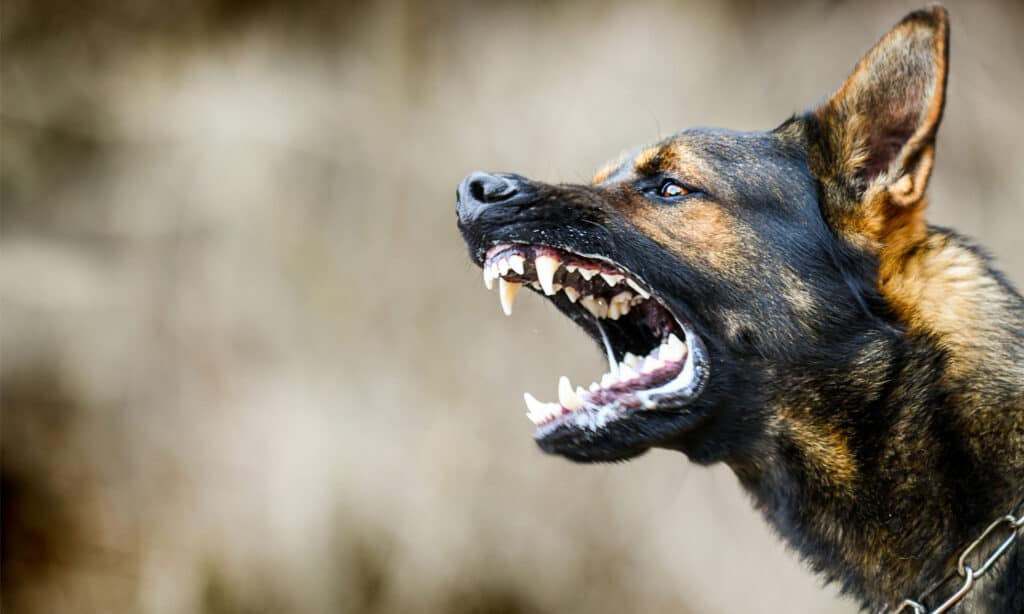
Training is the most important factor in determining aggression in any dog, and since German shepherds are so adaptable and eager to please, owners can teach them calm behavior just as easily as aggressive behavior.
©iStock.com/Milan Krasula
Origin and History
The origins of the German Shepherd date back to just before the turn of the 20th century. They, of course, came from Germany but did not look like they do today until after World War II, after many years of breed solidification. These early shepherds were developed by a cavalry officer named Max von Stephanitz after he retired from the military. He worked with country sheep dogs to produce an extreme working dog that would be able to herd all day and run for long stretches of the day. The first versions had short tails and rough fur coats.
As mentioned, in the United Kingdom, German Shepherds are sometimes referred to as “Alsatians”, which draws some confusion. Many of this breed were often found in the Alsace area of France, which was once a region of Germany. Moreover, due to the two world wars, avoiding using “German” in the name may have been a marketing choice to help make the breed more popular.
How To Take Care of a German Shepherd
The Best Dog Food
If you want the best dog food for your German Shepherd, first you need to consider whether your dog is still a puppy, an adult, or a senior dog. Smaller breeds mature to adulthood in about 10 months, a little under a year. Larger breeds, like German Shepherds, typically mature at 16 months, or about a year and a half. Most breeds are considered a senior at 10 years, though some very large breeds (100lb+) hit that milestone a little earlier, around year 8.
German shepherds do well on high-quality food formulated especially for large breeds. These dogs tend to have somewhat sensitive stomachs, so they should only eat human food sparingly, if at all. If you do choose to feed your dog table scraps, you should avoid fatty foods and never feed them cooked bones. When dogs eat cooked bones, the bones break into splintery shards that can perforate their stomach or bowels on their way through the digestive system.
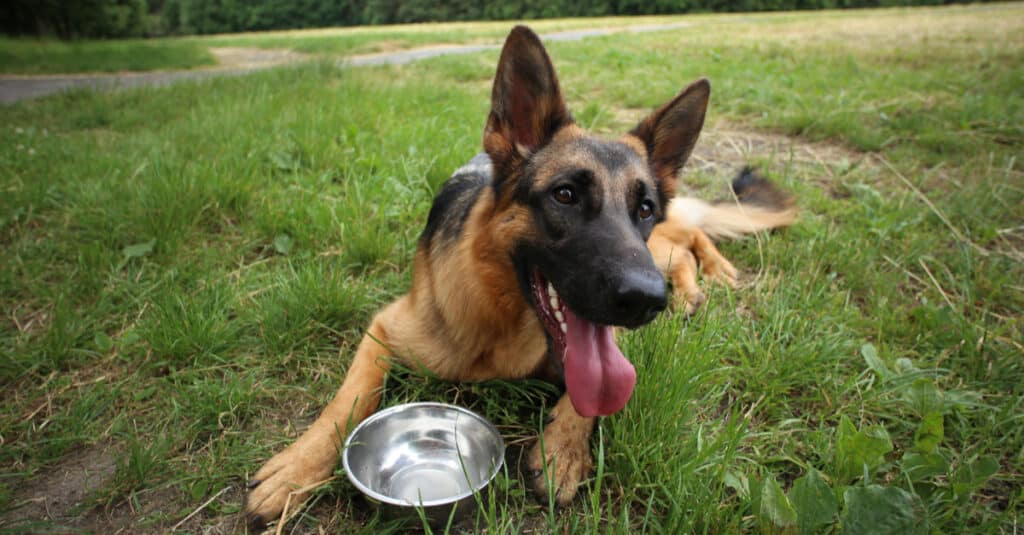
German shepherds tend to have somewhat sensitive stomachs.
©Aleksandra Dabrowa/Shutterstock.com
Best Insurance
Like any other purebred dog, you’ll need to find pet insurance that covers the hereditary genetic disorders associated with a German Shepherd.
Maintenance And Grooming
All German Shepherds have a thick double coat consisting of a soft, dense undercoat and a coarse, water-resistant topcoat that is medium to long. Their coat is easy to maintain most of the year by brushing them every few days. Twice a year, they go through a major shedding spree called blowing, a month-long process in which they lose their seasonal undercoat. During the blowing season, you will need to brush your dog daily to avoid matting and hair build-up around the house.
Aside from brushing, the maintenance routine for a German Shepherd is straightforward. All you need to do is brush their teeth regularly and trim their nails monthly. This breed is fairly clean with only a slight odor, so they only need bathing a few times a year.
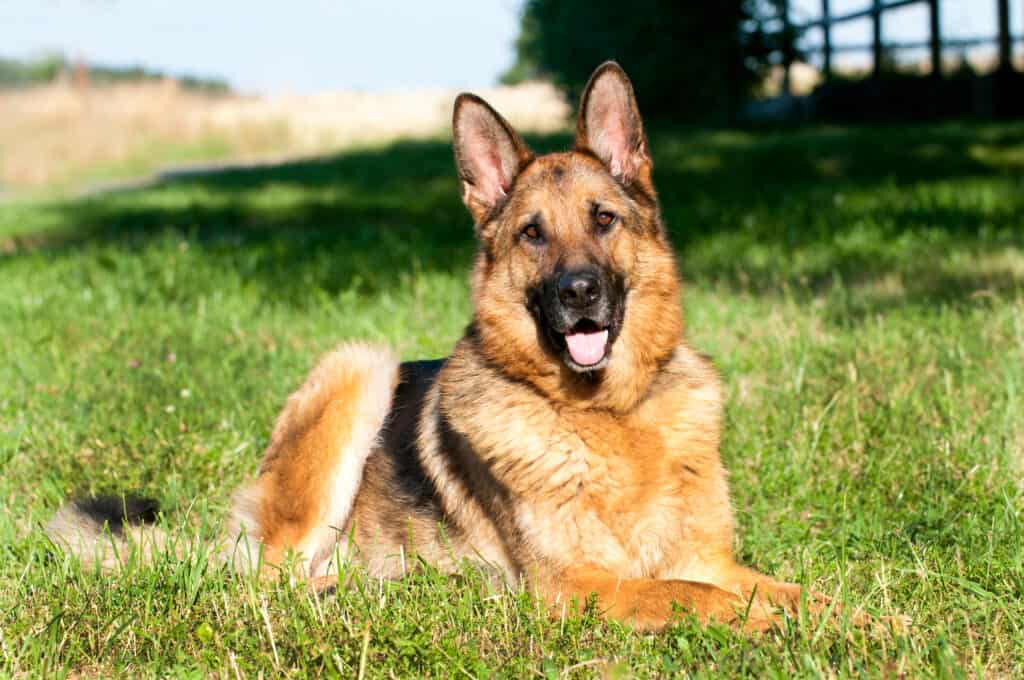
A German Shepherd’s coat is easy to maintain most of the year by brushing it every few days.
©Dora Zett/Shutterstock.com
Training
Unlike many intelligent breeds, German Shepherds are eager to please their owners, which makes them a joy to train. All herding dogs have a certain level of protectiveness toward their families, so proper training and socialization should start immediately to show them that not every stranger means them harm.
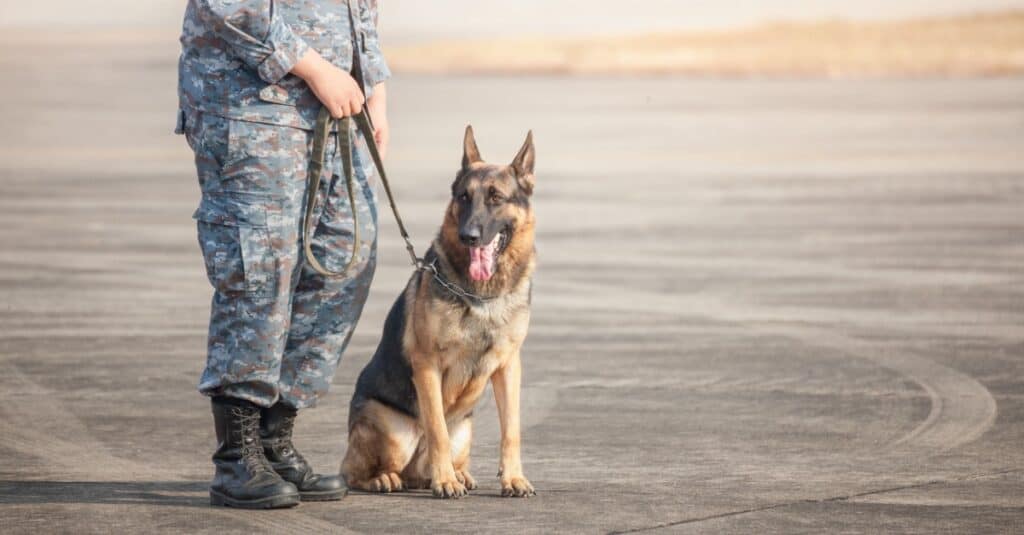
German Shepherds were bred to be the ultimate working dog.
©iStock.com/Puttachat Kumkrong
Exercise
German Shepherds are an active breed that requires a significant amount of exercise to stay happy and healthy. Since these dogs are highly intelligent, their exercise choices need not end at walks or backyard play. Dogs and owners alike can enjoy intellectual and agility-based activities like tracking and herding to create an unbreakable bond between them.
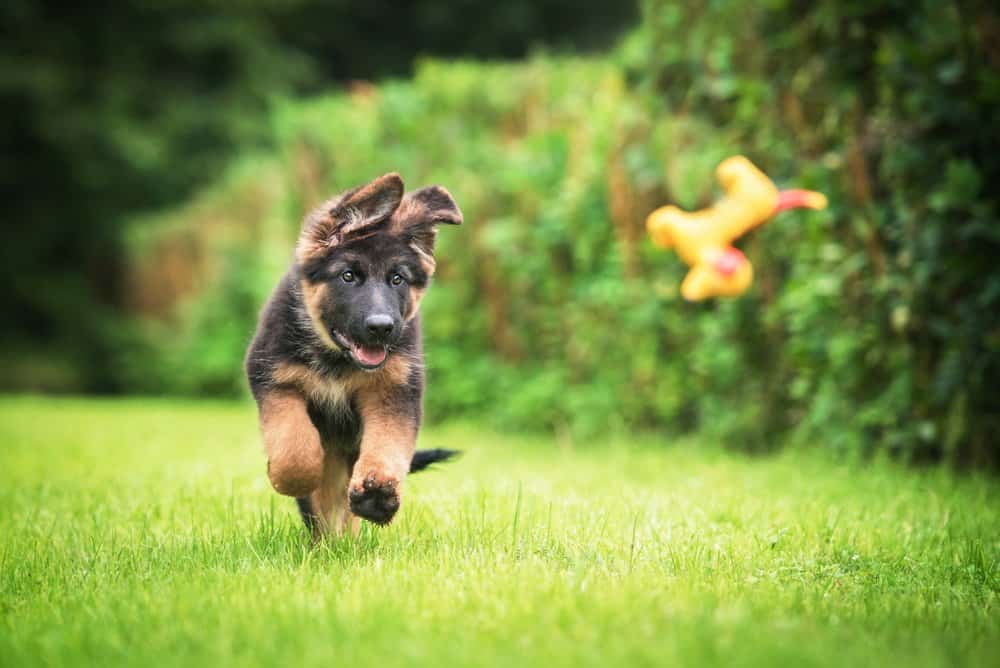
German Shepherds are an active breed that requires a significant amount of exercise to stay happy and healthy.
©Rita_Kochmarjova/Shutterstock.com
Puppies
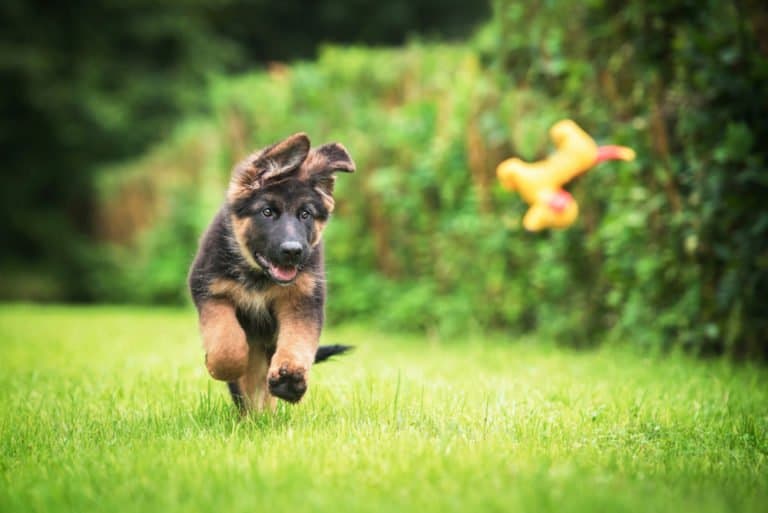
As with all puppies, weeks 7 to 12 are the most crucial when it comes to proper socialization for German shepherds. If you want your dog to get along well with children or other pets, this is the optimal window to have them accept other members of their new family without many questions. That’s not to say you can’t teach your dog to get along with kids and other animals down the road, but the more exposure you can give your pup to all types of situations when they are young, the more likely you will be to have a calm, well-adjusted adult dog.
German Shepherds don’t become adults until they are about 3 years old, so remember to be patient with your dog even when he looks like he’s outgrown his puppyhood.
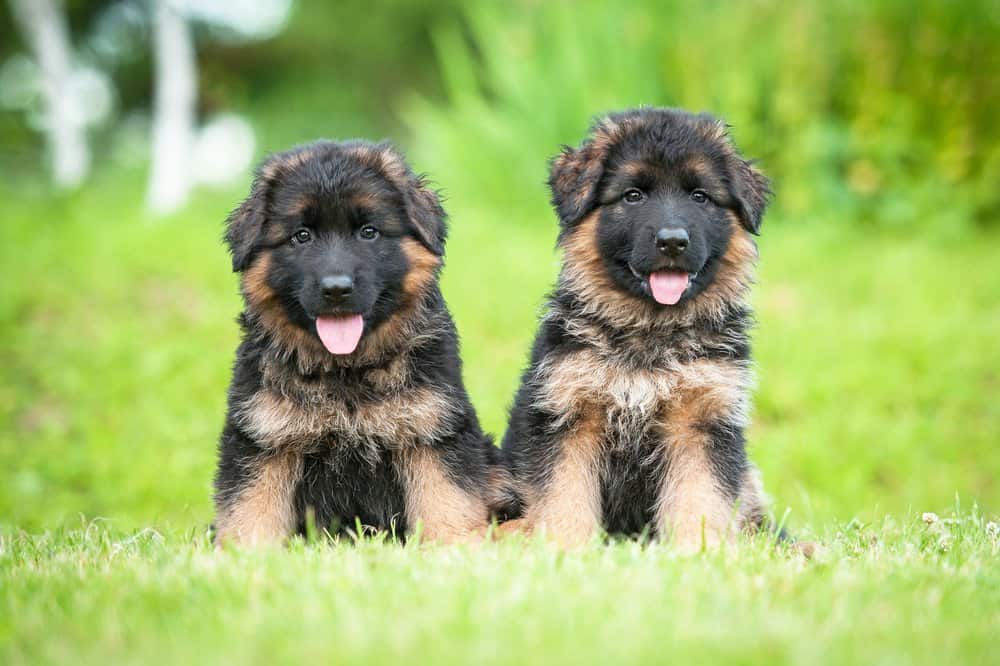
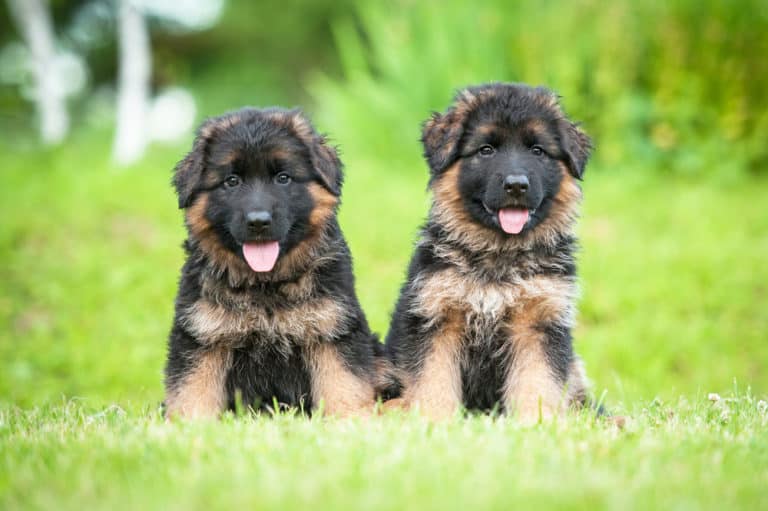
As with all puppies, weeks 7 to 12 are the most crucial when it comes to proper socialization for German Shepherds.
©Rita_Kochmarjova/Shutterstock.com
With Children
If you raise your German Shepherd with children from the start, they get along famously with all members of the family. That said, they are high-energy dogs who don’t always realize how big they are. Owners should take time to teach both dog and child how to safely interact with one another and never leave them unsupervised to avoid accidental injuries.
It is in the nature of a German Shepherd to be aloof towards strangers, however, and children are no exception. It is vital for any owner who plans to have their dog around unfamiliar children to socialize them extensively and train them for this task at a young age. At the same time, parents should take care to teach their children the proper way to approach any unknown dog.
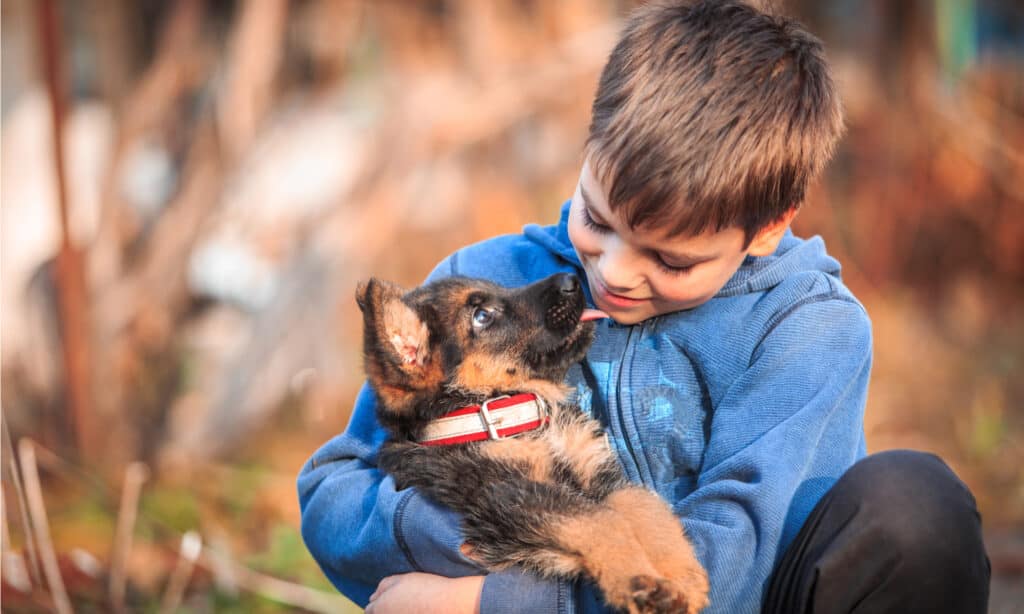
Owners should take time to teach both dog and child how to safely interact with one another and never leave them unsupervised to avoid accidental injuries.
©Stone36/Shutterstock.com
Similar Dogs
A few breeds that are similar in size or personality to German shepherds are Australian shepherds, Collies, and Old English sheepdogs.
- Australian shepherd: Australian shepherds have the same loyal and intelligent personality as a German Shepherd, but in a smaller package.
- Collie: Collies are somewhat smaller than German Shepherds but share a similar devotion to their families and tend to have a slightly longer lifespan.
- Old English sheepdog: Old English sheepdogs are adaptable and intelligent, like German Shepherds, but they don’t need as much exercise.
Famous German Shepherds
Though there have been several famous German shepherds throughout history, the one who brought his breed into the spotlight was Rin-Tin-Tin. Corporal Lee Duncan found Rin-Tin-Tin and his littermates during World War 1 in the small French village of Flirey. Duncan raised the pup as his own and taught him an expansive collection of tricks. Rin-Tin-Tin’s impressive intelligence ultimately landed him a number of movie deals. Over the course of his illustrious career, he often played the part of a wolf because movie directors found him much easier to work with than an actual wolf. This famous pup was the original key to the success of the Warner Bros. film company.
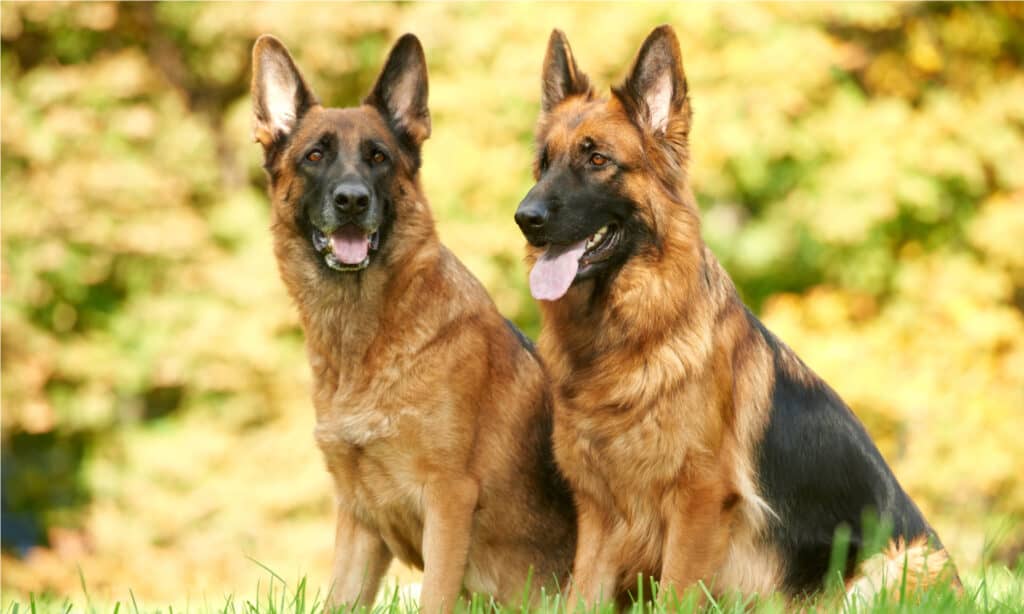
There have been quite a number of famous German Shepherds throughout history.
©Dmitry Kalinovsky/Shutterstock.com
German Shepherd Pictures
View all of our German Shepherd pictures in the gallery.

Rita_Kochmarjova/Shutterstock.com
Sources
- American Kennel Club / Accessed September 10, 2018
- Dogtime / Accessed September 10, 2018
- Jubilant Pups / Accessed September 10, 2018
- Mid-Atlantic German Shepherd Rescue / Accessed September 10, 2018
- Deutscher Schaeferhund / Accessed September 10, 2018
- Total German Shepherd / Accessed September 10, 2018
- The Happy Puppy Site / Accessed September 10, 2018
- War History Online / Accessed September 10, 2018