
G
Species Profile

Grasshopper

Orthoptera

Jump, chirp, and shape ecosystems
Gvanosh/Shutterstock.com

Grasshopper Distribution

Click a location to explore more animals from that region

Invasive Species
Loading map...
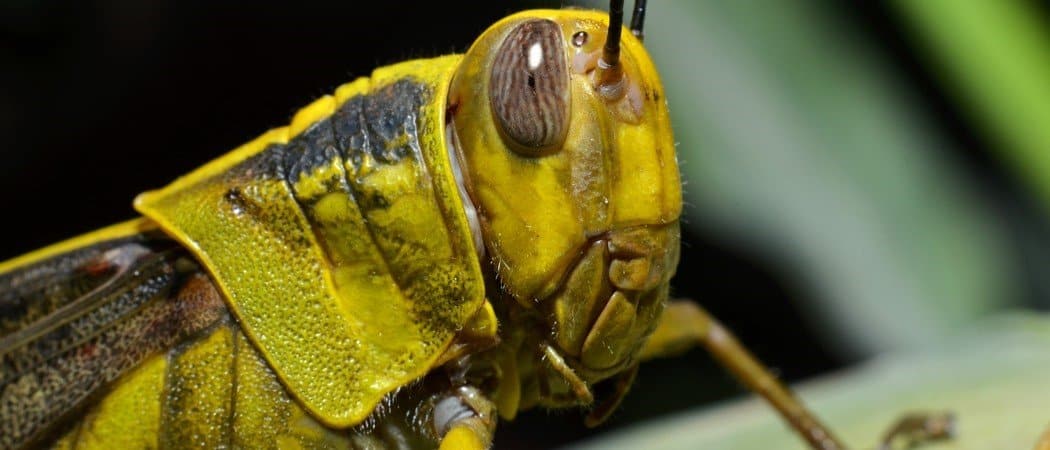
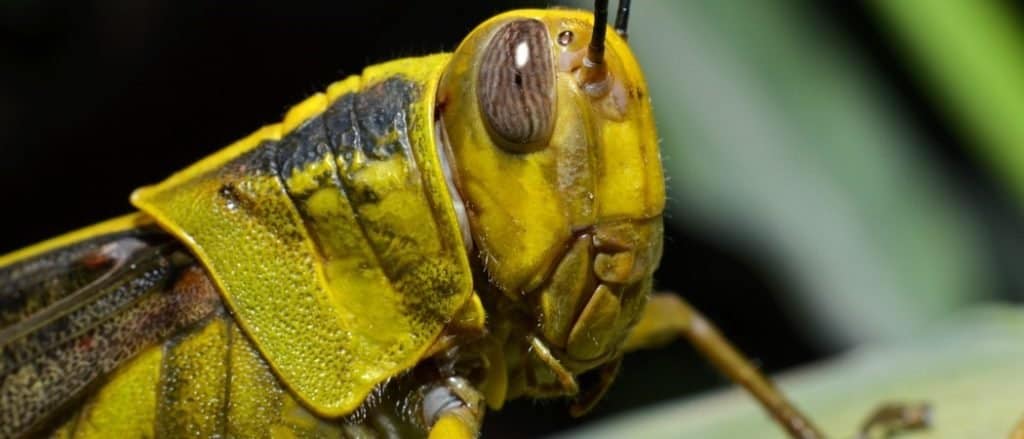
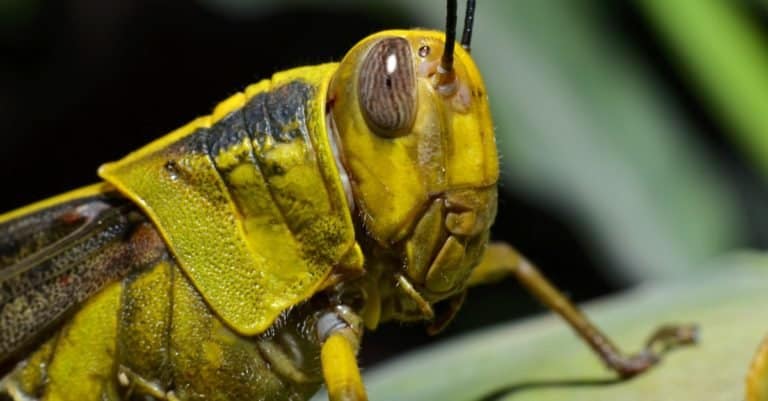
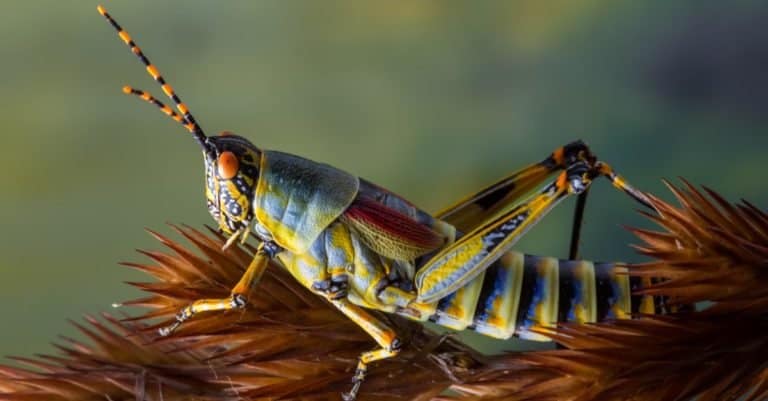
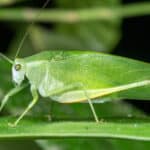
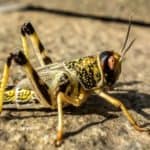
the yellow grasshopper with round oval gray eyes

At a Glance

Order Overview This page covers the Grasshopper order as a group. Stats below are general traits shared across the order.
Also Known As Locust, Hopper, Saltamontes, Sauterelle, Heuschrecke, Gafanhoto, Cavalletta
Diet Herbivore
Activity Diurnal+
Lifespan 1 years
Weight 0.07 lbs
Status Not Evaluated
Did You Know?

Orthoptera range from tiny ant-loving crickets (~2-5 mm) to hefty giants like some wetas and large grasshoppers (~10-12+ cm).

Scientific Classification

Order Overview "Grasshopper" is not a single species but represents an entire order containing multiple species.

Grasshoppers are orthopteran insects best known for their powerful hind legs for jumping and, in many species, the ability to produce sound (stridulation). In everyday usage, "grasshopper" most often refers to the short-horned grasshoppers (Caelifera), including locusts (swarming phase of certain species).

Kingdom
Animalia
Phylum
Arthropoda
Class
Insecta
Order
Orthoptera

Distinguishing Features

  • Enlarged hind femora and long hind legs adapted for jumping
  • Chewing mouthparts; predominantly herbivorous (some omnivory occurs)
  • Typically short antennae in the common "short-horned grasshopper" sense (vs. crickets/katydids with longer antennae)
  • Many species produce sound via stridulation and/or wing snapping
  • Incomplete metamorphosis (egg → nymph → adult), with nymphs resembling small adults

Physical Measurements

Males and females differ in size

Length
2 in (0 in – 5 in)
Weight
0 lbs (0 lbs – 0 lbs)
Top Speed
16 mph
Up to 20-25 km/h

Appearance

Primary Colors
Secondary Colors
Skin Type Chitinous exoskeleton with a matte to slightly glossy cuticle; forewings often leathery (tegmina) covering membranous hindwings. Legs and abdomen have fine spines or setae. Cuticle ranges from thin, flexible to thick, hardened forms.
Distinctive Features
  • Order-level size range is broad: roughly about 0.5 cm to about 13 cm body length across Orthoptera (many grasshoppers fall within about 1-8+ cm).
  • Powerful saltatorial hind legs: enlarged hind femora packed with extensor muscles and elastic energy-storage structures enable rapid jumping; hind tibiae often armed with spines for traction and defense.
  • Head and antennae vary widely, but grasshopper-like forms typically have comparatively short antennae relative to many crickets/katydids; mouthparts are chewing, suited to cutting plant material (with exceptions).
  • Sound production (stridulation) is common but not universal: many grasshoppers rub hind femur pegs against wing/abdomen or use wing-to-wing mechanisms; some species are relatively silent and rely more on visual displays or flight sounds.
  • Hearing organs (tympana) vary by lineage: in many grasshopper-like orthopterans they occur on the sides of the first abdominal segment; acoustic communication ranges from simple clicks to complex calling/courtship signals.
  • Hemimetabolous development: eggs hatch into nymphs that resemble small, wingless/short-winged adults and pass through multiple instars; wings develop externally over successive molts (no pupal stage).
  • Coloration commonly supports camouflage in grasses, shrubs, bare ground, or leaf litter; some lineages show warning/flash colors, startle displays, or strong seasonal/habitat-linked color morphs.
  • Ecology spans strong generalizations with notable exceptions: many Caelifera are primarily herbivorous (grasses/forbs), influencing plant community dynamics and nutrient cycling; other orthopterans may be omnivorous or occasionally predatory/scavenging.
  • Locust swarming is a special case limited to certain grasshopper lineages: some species exhibit density-dependent phase change (behavior, coloration, morphology) leading to mass aggregation and migratory swarms; most Orthoptera do not swarm.
  • Adults usually live weeks to a few months; the full life cycle often lasts several months to about a year. Some groups (large, slow-developing or with egg dormancy) may take 2–3 years.
  • Wings vary from fully winged strong fliers to short-winged or flightless forms; many grasshoppers use short flights plus jumps, with some capable of long-distance dispersal (especially in migratory/locust contexts).

Sexual Dimorphism

Sexual dimorphism is common but variable across Orthoptera. Many grasshopper-like species show modest differences (often size and terminal abdominal structures), while others show stronger differences in coloration, wing length, or sound-producing/receiving structures. In some species, sexes are difficult to distinguish without examining the abdomen.

  • Often smaller or more slender than females in many grasshopper-like taxa, though this varies by lineage and ecology.
  • More specialized stridulatory structures in many sound-producing species (e.g., modified wing/femur surfaces) and species-specific calling behavior for mate attraction/territoriality.
  • In some species, relatively longer wings or greater tendency to disperse (not universal); may show brighter contrast markings used in courtship displays.
  • Often larger-bodied with broader abdomen linked to egg production; size dimorphism can be pronounced in some taxa.
  • Ovipositor/egg-laying structures are typically more developed or conspicuous; in many grasshopper-like forms, females use the abdomen tip to insert eggs into soil or plant material.
  • In some species, more cryptic coloration and heavier build; in others, females may show distinctive patterning or different wing length (direction of difference varies).

Did You Know?

Orthoptera range from tiny ant-loving crickets (~2-5 mm) to hefty giants like some wetas and large grasshoppers (~10-12+ cm).

Most develop by hemimetabolism: egg → multiple nymph stages → adult (no pupal stage).

Many "songs" are made by stridulation-rubbing legs and wings-and some species also signal by vibrational drumming.

Grasshopper-like orthopterans (Caelifera) often hear with tympanal "eardrums" on the abdomen; many crickets/katydids (Ensifera) hear with tympana on the forelegs.

Jumping power comes from oversized hind legs that store and release elastic energy, letting some species leap tens of body lengths.

Locust swarms are not a separate taxon: in certain species, crowding can trigger a behavioral and color shift to a gregarious, mass-migrating phase.

Across Orthoptera, lifespans vary widely: many live a single season (~3-12 months), while some large, slow-developing forms can persist for multiple years (up to ~5+).

Unique Adaptations

  • Hind-leg biomechanics: Enlarged femora with powerful extensor muscles and elastic cuticular structures enable rapid energy storage and explosive takeoff for jumping.
  • Stridulatory "instruments": Diverse sound-producing structures evolved repeatedly-e.g., grasshopper-like forms often rub hind femur against forewing; many crickets rub forewings together; some katydids use specialized wing veins as files and scrapers.
  • Hearing specializations: Tympanal organs occur in different places across the order (abdomen vs. forelegs), tuned to the frequencies used in their own communication and to predator cues.
  • Color plasticity and phase polyphenism: Some locust-capable species can shift color/behavior depending on density; many species also show seasonal or habitat-matching coloration for camouflage.
  • Efficient plant processing: Mandibles and gut physiology support fibrous diets; in many herbivorous orthopterans, gut microbes aid digestion of tough plant material.
  • Long ovipositors in many Ensifera: Sword-like egg-layers allow precise placement of eggs in soil, wood, or plant stems; grasshopper-like forms typically use shorter, robust ovipositors for soil pods.
  • Flight-jump trade-offs: Wing length and flight ability vary enormously-from flightless ground-dwellers to strong fliers-reflecting habitat stability, predation, and dispersal needs.

Interesting Behaviors

  • Size & life-history diversity (order-wide range): Adults can be ~2 mm to ~12+ cm long; most species are seasonal (months to ~1 year), but some (e.g., certain wetas/katydids) may live several years-timing depends on climate, diapause, and food.
  • Hemimetabolous growth: Nymphs resemble small, wingless adults and molt repeatedly; in many grasshopper-like species, nymph cohorts can track seasonal plant growth.
  • Feeding ecology (common pattern, notable variation): Many grasshopper-like orthopterans are herbivores that clip grasses/forbs; others are omnivores or predators (more common among some katydids and crickets). This makes the order important in both plant control and food webs.
  • Thermoregulation by behavior: Many grasshoppers bask to warm flight/jump muscles and shift posture or microhabitat to avoid overheating; activity windows can be strongly temperature-dependent.
  • Communication and mate choice: Males of many species produce species-specific songs; females may choose mates based on rhythm/tempo, and calls can also deter rivals or attract predators/parasitoids.
  • Locust phase change (special case): In some short-horned grasshoppers, crowding and repeated contact can trigger gregarious behavior, coordinated movement, long-distance migration, and dramatic changes in coloration and physiology.
  • Predator avoidance: Startle flights, sudden jumps, hiding in vegetation, and sometimes flashing colored hindwings are widespread; some species rely on camouflage while others advertise chemical defenses.
  • Egg-laying strategies: Many grasshopper-like species lay eggs in soil in pods/packets; others insert eggs into plant tissue-strategies vary with moisture, substrate, and winter survival needs.

Cultural Significance

Orthopterans (grasshoppers, locusts, crickets) link to music and trouble: their songs mean summer, while locust plagues have shaped farming and rule in Africa, the Middle East, and Asia. People use them as bait, feed, food, and keep singing insects as a hobby in China.

Myths & Legends

Aesop's fable "The Ant and the Grasshopper" (later retold by La Fontaine) uses the grasshopper as a symbol of song, leisure, and the consequences of failing to prepare for winter.

In the Hebrew Bible's Exodus narrative, locusts arrive as one of the Ten Plagues of Egypt, an enduring religious story about divine judgment and upheaval.

The Book of Joel portrays an overwhelming locust invasion as a catastrophic, almost army-like force-imagery that influenced later religious and literary depictions of locust swarms.

In the New Testament (Gospels), John the Baptist is described as eating "locusts and wild honey," a long-cited religious association linking locusts with ascetic desert living.

In Islamic tradition, locusts are mentioned in the Qur'an as part of signs sent upon Pharaoh's people, and later Muslim scholarship preserved details on locust swarms as notable natural events affecting communities.

You might be looking for:

Migratory Locust

22%

Locusta migratoria

A well-known swarming short-horned grasshopper (a locust phase) in family Acrididae.

Desert Locust

18%

Schistocerca gregaria

Famous locust species capable of massive swarms; family Acrididae.

View Profile

Eastern Lubber Grasshopper

14%

Romalea microptera

Large, colorful North American short-horned grasshopper; family Romaleidae (often treated within Acrididae by some sources).

Differential Grasshopper

12%

Melanoplus differentialis

Common North American grasshopper; family Acrididae.

Lubber Grasshoppers (group)

8%

Romaleidae

A family/subfamily grouping of robust grasshoppers sometimes specifically referred to as "grasshoppers" in regional contexts.

Life Cycle

Birth 30 nymphs
Lifespan 1 year

Lifespan

In the Wild
0.2–5 years
In Captivity
0.2–2 years

Reproduction

Mating System Polygynandry
Social Structure Solitary
Breeding Pattern Transient
Fertilization Internal Fertilization
Birth Type Internal_fertilization

Grasshoppers are generally polygynandrous: both males and females mate with multiple partners. Males mount females and transfer a spermatophore; copulation may last hours and can function as mate guarding. Eggs are laid in soil with no parental care.

Behavior & Ecology

Social Aggregation Group: 5
Activity Diurnal, Nocturnal, Crepuscular, Cathemeral
Diet Herbivore Tender green plant tissue-especially grasses and soft leaves-though many Orthoptera also take protein-rich animal prey opportunistically (degree varies widely by family).
Seasonal Hibernates 3,107 mi

Temperament

Generally non-social (tolerant to mildly aggressive depending on density and resources)
Territoriality or spacing in some singing males (acoustic/physical interference), but many species simply avoid close contact
Density-dependent shift in some taxa from avoidant/solitary to gregarious with synchronized movement (locust phase)
Predator-avoidant and startle-prone; defensive displays vary (cryptic behavior, sudden jumps/flight, startle flashes, spines in some groups)

Communication

Stridulatory calling songs for mate attraction and species recognition Chirps, trills, buzzes; highly diverse across lineages
Rival/spacing songs and aggressive signals in some taxa Often short, louder, or more broadband
Courtship songs at close range Often distinct from calling song
In some grasshoppers, flight-produced sounds (crepitation/clicking) used in display or startle contexts
Substrate-borne vibrations (tremulation, drumming, tapping) transmitted through plants/ground; common where acoustic signaling is reduced or at close range
Visual displays Leg/antenna waving, body postures, wing/tegmina flashing; sometimes color-based startle or courtship cues
Chemical cues/pheromones for mate recognition or aggregation in some species Strength and documentation vary by group
Tactile interactions during courtship and mating; in dense settings, frequent contact can mediate spacing or trigger gregarious behavior in locust-forming taxa

Habitat

Biomes:
Tropical Rainforest Tropical Dry Forest Savanna Desert Hot Desert Cold Mediterranean Temperate Grassland Temperate Forest Temperate Rainforest Boreal Forest (Taiga) Tundra Alpine Freshwater Wetland +8
Terrain:
Mountainous Hilly Plateau Plains Valley Coastal Island Riverine Volcanic Karst Rocky Sandy Muddy +7
Elevation: -3937 in – 18044 ft 8 in

Ecological Role

Orthoptera function primarily as dominant terrestrial primary-consumer/omnivore guild members and as key prey items linking plant production to higher trophic levels; some lineages also act as mesopredators on other arthropods. Impacts range from routine background herbivory to episodic landscape-scale defoliation in outbreaking/swarming taxa.

Major transfer of plant biomass to animal food webs (prey base for birds, reptiles, amphibians, mammals, and spiders) Herbivory shaping plant community composition and productivity; in some cases severe crop/grassland damage during outbreaks Nutrient cycling via frass deposition and occasional detritus consumption Seed and tissue pruning that can influence plant regrowth and competitive dynamics Occasional biocontrol contributions where omnivorous/predatory species consume pest arthropods

Diet Details

Main Prey:
Grasses Leaves Seed heads and grains Crop foliage
Other Foods:
Grasses Herbaceous leaves and stems Shrubs and tree foliage Flowers, pollen and nectar Seeds and grains Fallen fruit and soft plant tissues Fungi and decaying plant matter +1

Human Interaction

Domestication Status

Semi domesticated

Orthoptera (grasshoppers, locusts, crickets, katydids, wetas) are not domesticated like cows or chickens. But many species have been bred in captivity for decades or centuries for feeder insects, bait, research, and human food. Long breeding that favors many eggs, fast growth, calm behavior, and ability to handle crowding is called semi-domestication, while most remain wild.

Danger Level

Low
  • Indirect harm via major agricultural losses from locust/grasshopper outbreaks (subset of the order, but high societal impact where it occurs)
  • Allergic reactions or asthma triggers from insect fragments, frass, or handling (occupational exposure can increase risk)
  • Minor bites or pinches from larger species; scratches from spines (usually superficial)
  • Food safety risks if eaten when improperly handled/processed (e.g., contamination) or if individuals have shellfish/insect allergies (cross-reactivity)
  • Rare eye/skin irritation from defensive regurgitation or contact with irritant debris (varies by species)

As a Pet

Suitable as Pet

Legality: Usually legal to keep common local Orthoptera and commercially raised feeder species in many places. Non-native species, agricultural pests (including some locusts), and cross-border moves often have rules or need permits—check local agriculture or plant protection rules.

Care Level: Moderate

Purchase Cost: Up to $50
Lifetime Cost: $20 - $300

Economic Value

Uses:
Agriculture (pest and pest-control spending) Food (human consumption/entomophagy) Animal feed (feeder insects, livestock/fish feed ingredients) Research and education (model systems for neurobiology, acoustics, locomotion) Pet and hobby trade (keepers, vivaria, feeder supply chain) Cultural value (soundscapes, arts, folklore)
Products:
  • fresh/frozen/dried edible insects and insect-based foods
  • live feeder insects for reptiles/amphibians/birds/fish
  • fishing bait
  • insect meal/protein ingredients (where legally produced)
  • frass (insect waste) used as plant fertilizer/soil amendment
  • laboratory cultures and educational specimens

Relationships

Predators 9

Songbirds and insectivorous birds
Songbirds and insectivorous birds Passeriformes
Lizards
Lizards Lacertidae, Phrynosomatidae
Frogs and toads
Frogs and toads Anura
Spider
Spider Araneae
Praying mantis
Praying mantis Mantodea
Robber fly
Robber fly Asilidae
Parasitic wasps Various families (e.g., Scelionidae, Ichneumonidae)
Tachinid flies Tachinidae
Small mammals Soricidae, Muridae

Ecological Equivalents 4

Animals that fill a similar ecological role in their ecosystem

Praying mantis
Praying mantis Mantodea Often share the same grassland and edge habitats as many orthopterans and interact strongly with them—mantises frequently prey on grasshoppers and katydids. Both occupy low vegetation and employ limited movement or sit-and-wait strategies, though mantises are primarily predatory while many orthopterans are primarily herbivorous or omnivorous.
Leafhoppers Cicadellidae Occupy similar plant-canopy and grass-layer niches and can be abundant herbivores in the same ecosystems. They overlap in feeding on grasses and forbs, though leafhoppers feed by sap-sucking while most orthopterans chew leaves and stems.
Stick insects Phasmatodea Share foliage-feeding roles and plant-mimic strategies in many habitats, especially shrubs and forests. Both can be important defoliators, though orthopterans also include many grassland specialists and acoustically signaling species.
Caterpillars Lepidoptera (larvae) Fill comparable herbivore roles on grasses and broadleaf plants and are prey for many of the same predators (birds, spiders, wasps). Orthopterans differ by being primarily adult-stage herbivores with jumping locomotion and often producing sound.

Types of Grasshopper

10

Explore 10 recognized types of grasshopper

Migratory locust Locusta migratoria
Desert locust
Desert locust Schistocerca gregaria
Differential grasshopper Melanoplus differentialis
Meadow grasshopper Chorthippus parallelus
Eastern lubber grasshopper Romalea microptera
American bird grasshopper Schistocerca americana
Two-striped grasshopper Melanoplus bivittatus
Red-legged grasshopper Melanoplus femurrubrum
Field cricket
Field cricket Gryllus campestris
Giant weta
Giant weta Deinacrida heteracantha

Grasshoppers comprise one of the oldest insect families on earth. The first grasshoppers probably appeared 250 million years ago during the Triassic period.

They belong to the Arthropoda phylum, which includes other insects as well as spiders, scorpions, crabs, and their relatives. Phylum is a category that biologists slot living things into, and Arthropoda, which means “joint-footed” is the largest phylum.

Grasshoppers also belong to the Caelifera suborder as well as a multitude of families, subfamilies, tribes, subtribes, and species. They’re found all over the world save Antarctica.

6 Incredible Grasshopper Facts!
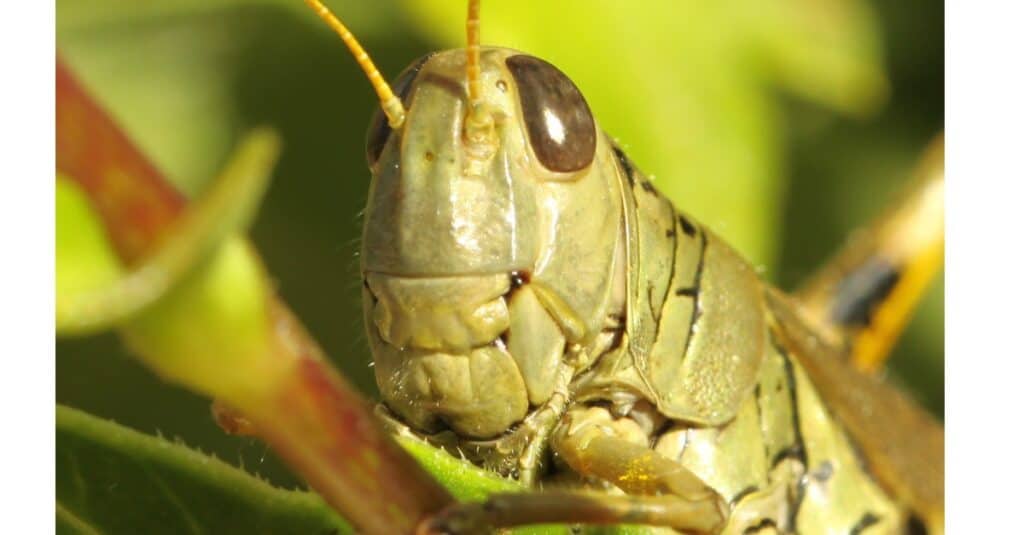
Largest Grasshoppers - Marsh Grasshopper

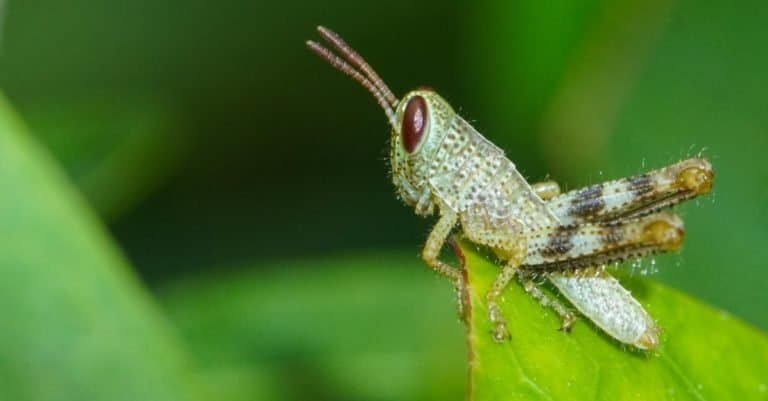
Grasshoppers don’t undergo complete metamorphosis the way many other insects do. They hatch out as nymphs or hoppers, which simply look like tiny, wingless adults.

  • Grasshoppers don’t undergo complete metamorphosis the way many other insects do. They hatch out as nymphs or hoppers, which simply look like tiny, wingless adults. It takes them five molts to reach adult size.
  • Under the right conditions, grasshoppers can change their characteristics, including their color and even their behavior to form great swarms.
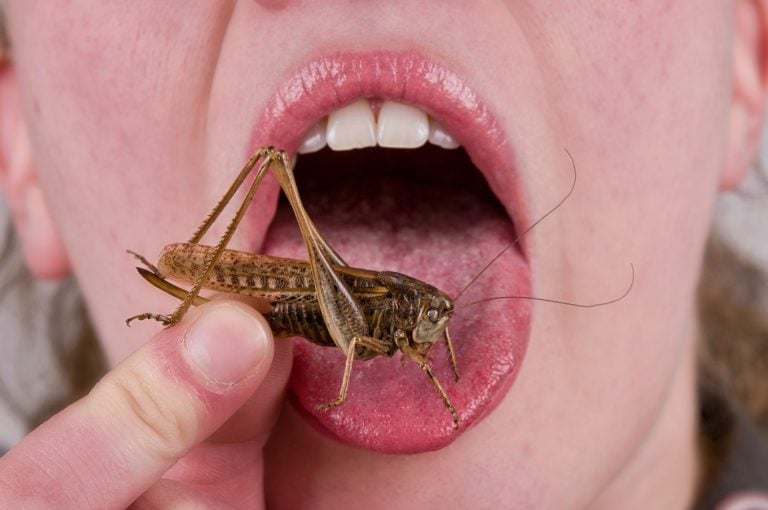
  • There are places on earth, such as Indonesia and Africa, where grasshoppers are a regular part of the diet. They are a good source of protein.
  • Acridology is the study of grasshoppers.
  • Scientists know of at least 11,000 species of grasshopper, but they are certain there are more to be discovered.
  • The largest grasshopper in the world is the hedge grasshopper. The species lives in Australia and can grow to 3.5 inches in length!

You can check out more incredible facts about grasshoppers.

Species, Types, and Scientific Names
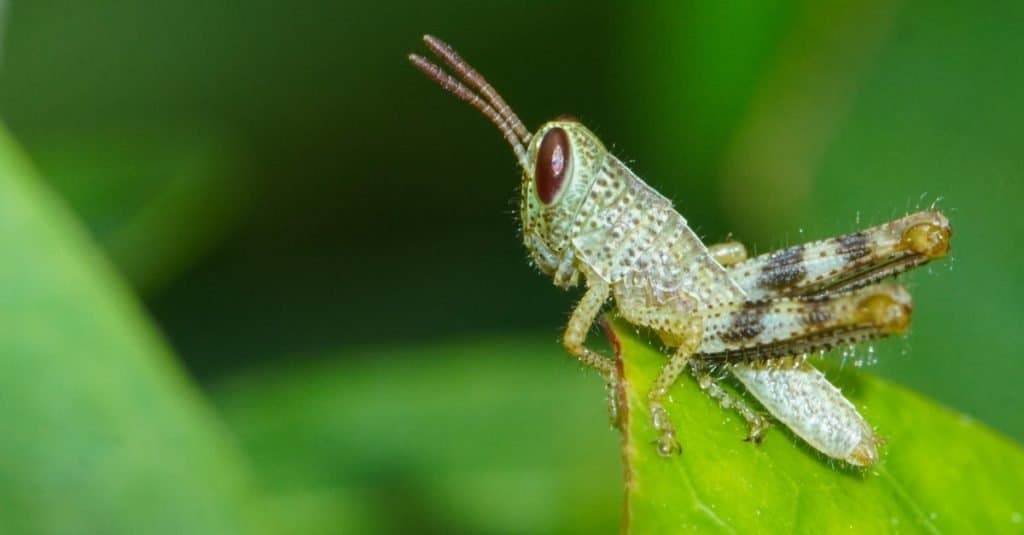
Close up photo of baby grasshopper on green leaf

The known 11,000 plus species and types of grasshoppers can’t be listed in this space, but one of their defining characteristics is the ability to leap many times their own body length.

The known 11,000 plus species and types of grasshoppers can’t be listed in this space, but one of their defining characteristics is the ability to leap many times their own body length.

A “typical” grasshopper can jump 10 times its height and 20 times its length. They hop to escape predators or just because they need to move from one place to the other. Learn more about the highest jumping animals on earth here.

Many species are so well camouflaged that they seem to disappear when they hide in the tall grass. On the other hand, when they’re disturbed some species open their wings and startle potential predators with a bright flash of color.

There are three types of green-striped grasshoppers. They are:

  • Green-striped grasshopper, whose scientific name is Chortophaga viridifasciata.
  • Southern green-striped grasshopper, whose scientific name is Chortophaga viridifasciata australior.
  • Northern green-striped grasshopper, whose scientific name is Chortophaga viridifasciata viridifasciata.

There are six types of Xanthippus grasshoppers:

  • Sierra grasshopper, whose scientific name is Xanthippus sierra.
  • Sandhills band-wing grasshopper, whose scientific name is Xanthippus montanus.
  • Redshanked grasshopper, whose scientific name is Xanthippus corallipes.
  • Xanthippus aquilonius
  • Xanthippus olancha
  • Xanthippus brooksi

There are three types of Differential grasshoppers:

  • Differential grasshopper, whose scientific name is Melanoplus differentialis.
  • Melanoplus differentialis differentialis
  • Melanoplus differentialis nigricans

The full list of representative species of grasshopper includes the following:

  • Conozoa hyalina
  • Trimerotropis occulens
  • Omocestus viridulus
  • Eastern lubber grasshopper
  • Migratory locust
  • Atractomorpha crenulata
  • Desert locust
  • Chorthippus brunneus
  • Brown locust
  • Red-legged grasshopper
  • Gray bird grasshopper
  • Pseudochorthippus parallelus
  • Chinese grasshopper
  • Chorthippus biguttulus
  • Large Marsh Grasshopper
  • Atractomorpha similis
  • Two-striped grasshopper
  • Rocky Mountain locust
  • Acanthopyrgus finoti
  • Australian plague locust
  • Pallid-winged grasshopper
  • Atractomorpha lata
  • Ceracris kiangsu
  • Red locust
  • Calliptamus italicus
  • Oedipoda caerulescens
  • Violet-winged grasshopper
  • Oedaleus infernalis
  • Chorthippus albomarginatus
  • Slender Blue-winged Grasshopper
  • Chrysochraon dispar
  • Chorthippus dorsatus
  • Phymateus aegrotus
  • Chorthippus pullus
  • Podisma pedestris
  • Zayante band-winged grasshopper
  • Spur-throated locust
  • Trimerotropis fontana
  • Melanoplus bispinosus
  • Chorthippus acroleucus
  • Schistocerca camerata
  • Eximacris superbum
  • Prionotropis ancosae
  • Austracris proxima
  • Phaulacridium crassum
  • Opeia obscura
  • Phaulacridium vittatum
  • Trimerotropis thalassica
  • Trimerotropis occidentiloides
  • Stauroderus scalaris

Evolution and Origins

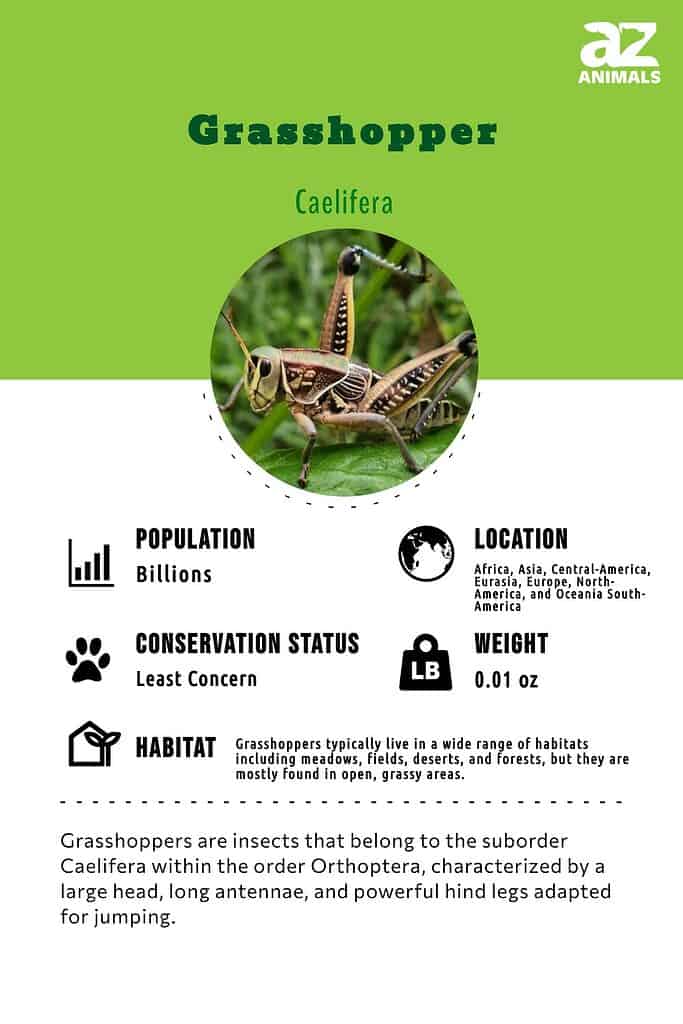
Grasshoppers are insects that belong to the suborder Caelifera within the order Orthoptera. They are believed to have evolved from a common ancestor around the Triassic period, around 220 million years ago. Fossil evidence shows that grasshoppers have remained relatively unchanged in terms of their physical characteristics and behavior over the course of their evolutionary history.

They have a distinct body plan, characterized by a large head, long antennae, and powerful hind legs, which are adapted for jumping. The origins of the grasshopper are not well understood, but it is believed to have evolved from a common ancestor with other Orthopterans like crickets, katydids, and locusts.

Their evolution is characterized by the development of the hind legs and the ability to jump, which allowed them to escape predators and move quickly in search of food.

Appearance
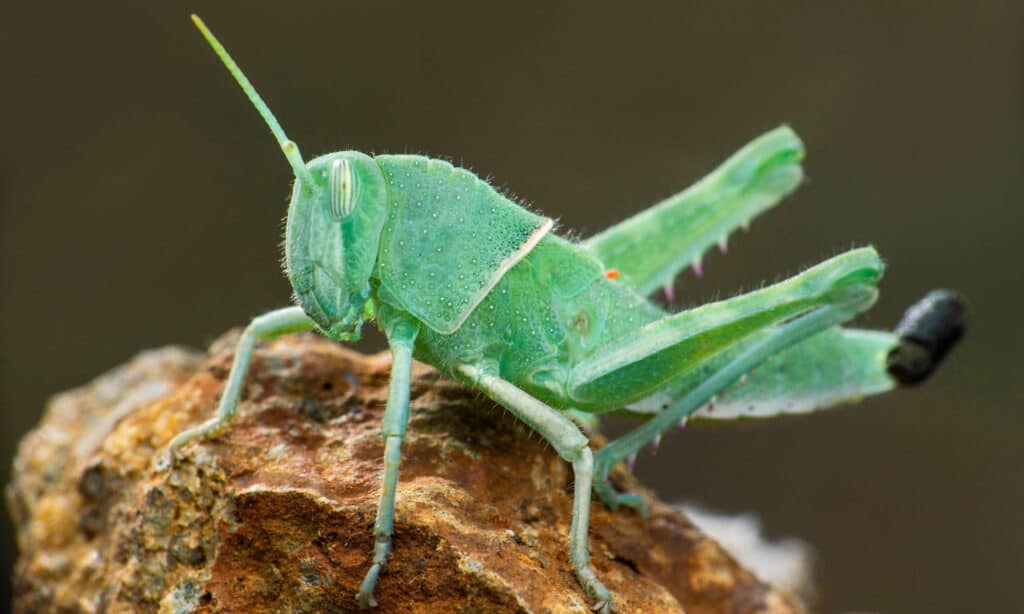
grasshopper pooping

Grasshoppers are herbivore insects.

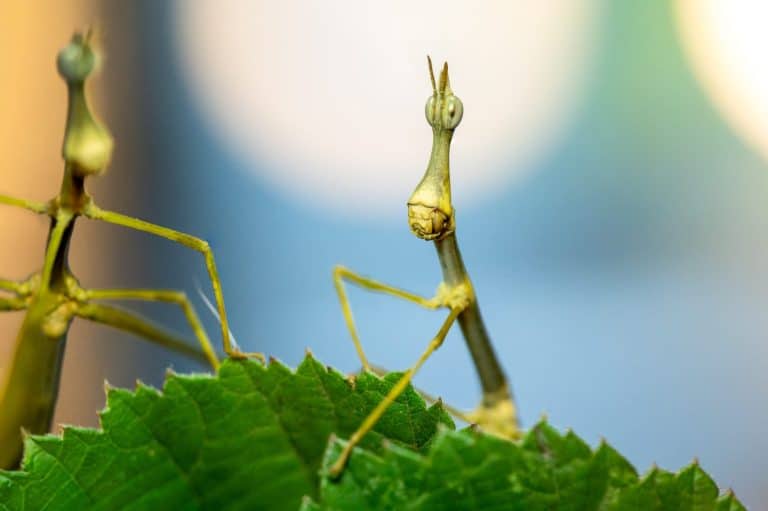
Grasshoppers can look surprisingly different from each other, and some don’t quite look like grasshoppers at all. The leaf grasshopper, Phyllochoreia ramakrishnai for example, mimics a fresh green leaf. But what they all have in common are the usual characteristics of an insect, which is a body plan that has a head, a thorax, and an abdomen.

The grasshopper’s head is arranged vertically at a not quite 90-degree angle at the front of the thorax, and its mouth is found at the bottom of the head. The jaws there allow the grasshopper to bite and chew its food, though it doesn’t bite people.

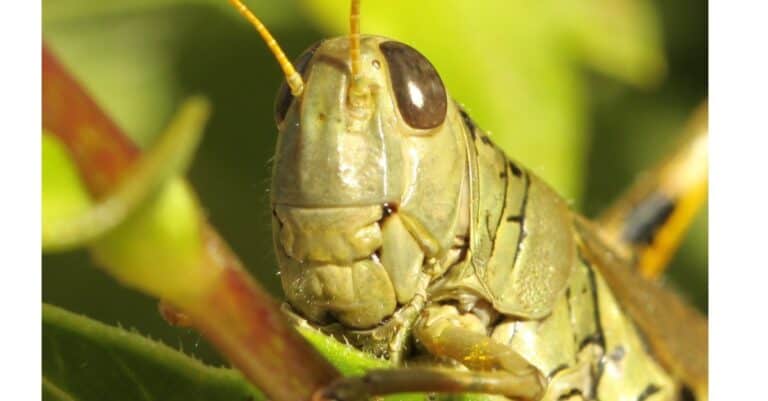
Grasshoppers have two large compound eyes, three simple eyes, and a pair of antennae that serve as organs of smell and touch. Biologists use the length of the antennae to determine whether the insect is an “ordinary grasshopper” or a locust. An ordinary grasshopper’s antennae are long, while those of a locust is short.

The grasshopper’s thorax and abdomen have segments made of chitin. The animal’s six legs and wings, if it has wings, are found on the thorax. The final pair of legs are diagnostic for the grasshopper because they are powerful, with strong “thighs.” The back edge of the legs has spines and spurs.

The grasshopper’s abdomen has 11 sections. The first is attached to the thorax and holds the insect’s auditory system. The last four segments are reduced, and the last two have the insect’s reproductive organs. Female grasshoppers are usually bigger than males, and their ovipositors give the suborder its name. Caelifera is a Latin word that means “chisel-bearing.” This refers to the ovipositor’s shape and how it is used to drill down into the ground so the female can lay her eggs.

Some types of grasshoppers make noise or stridulate by rubbing pegs on their hind legs against parts of their forewings. It’s usually males who stridulate to attract mates, but females have been known to stridulate. Other grasshoppers make a clacking sound when they fly by clashing their front and hind wings together.

Grasshoppers are usually solitary, but when conditions are right, they can form groups called swarms. Swarms are sometimes made up of billions of individuals.

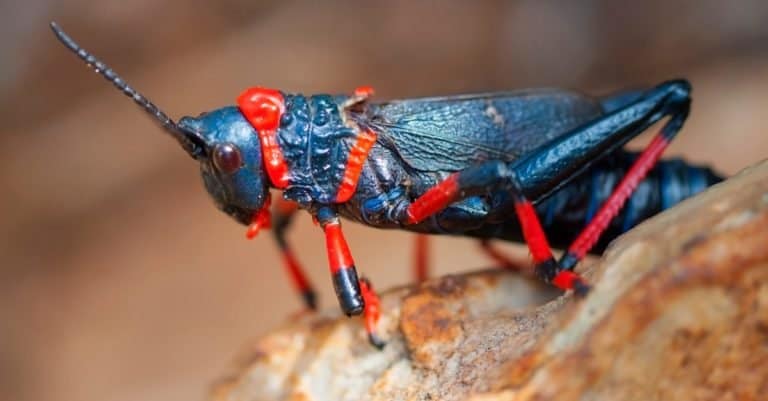
Adult grasshoppers range in size from 0.39 inches to 2.75 inches, depending on the species. The average weight of a grasshopper is 0.01 ounces, and most grasshoppers are shades of green or brown. Some species, such as the horse lubber and the rainbow grasshopper, have a coloring that mimics the coloring of wasps. Grasshoppers’ colors serve as camouflage or to fool would-be predators into thinking they are dangerous. The lifespan of a grasshopper is around 12 months.

Habitat: Where to Find Grasshoppers
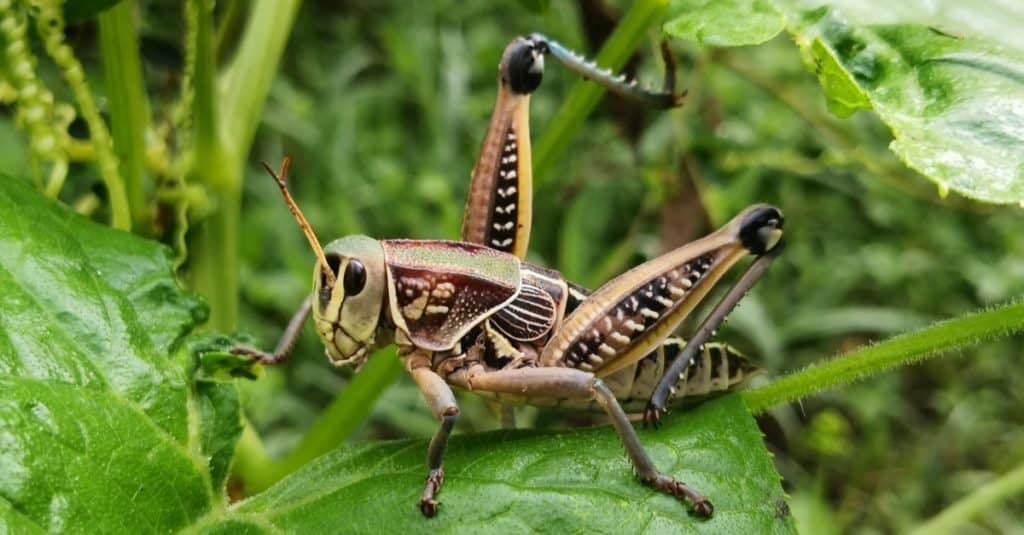
Eastern lubber grasshopper

The grasshopper’s name gives a clue as to where it can be found. It is found in habitats where grass and other food plants are abundant. This means, basically, any place on earth where it is not extremely dry or extremely cold.

Many species of grasshoppers prefer places where plants do not grow very tall, though some can be found in moist forests or jungles. Grasshoppers are also easily found in urban parks and suburban yards and gardens.

Diet: What Do Grasshoppers Eat?
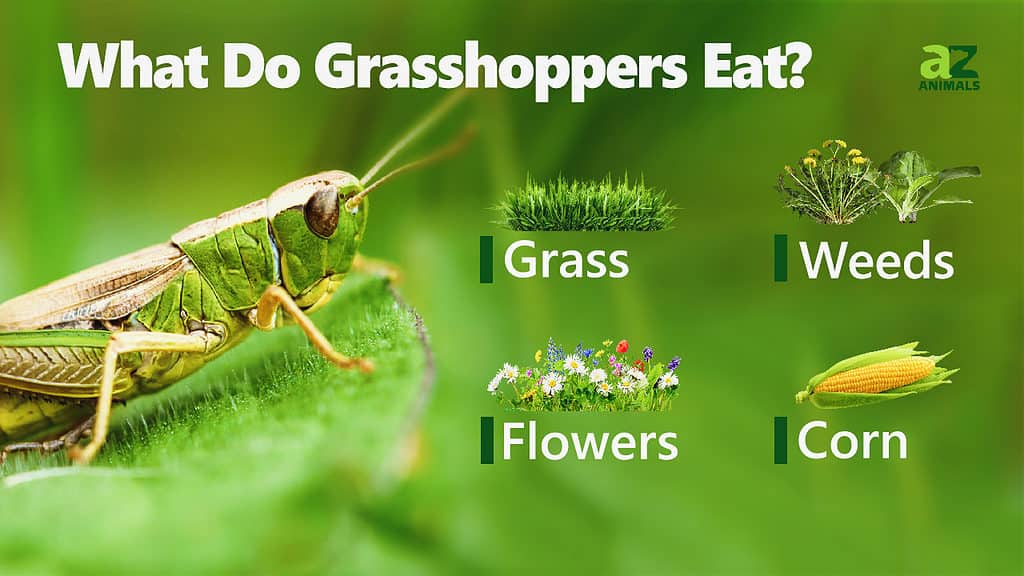
Grasshoppers, famously, eat all manner of plants, even those grown on farms.

Grasshoppers, famously, eat all manner of plants, even those grown on farms. This makes them considerable pests in many areas of the world. They will eat new, tender leaves, flowers, and stems. Some grasshoppers eat poisonous plants to transfer that poison into their own bodies to make them distasteful to predators. They also eat seeds, and sometimes they will eat dead insects. Locusts have been known to eat each other when food is scarce.

Grasshoppers aren’t fussy about the plant material they eat, but plants sprayed with enough pesticide can kill them. It’s not unusual for a grasshopper to eat 16 times its own weight at a sitting.

Want to learn more about what grasshoppers eat? Check out our complete guide ‘What Do Grasshoppers Eat.’

Prevention: How to Get Rid of Grasshoppers
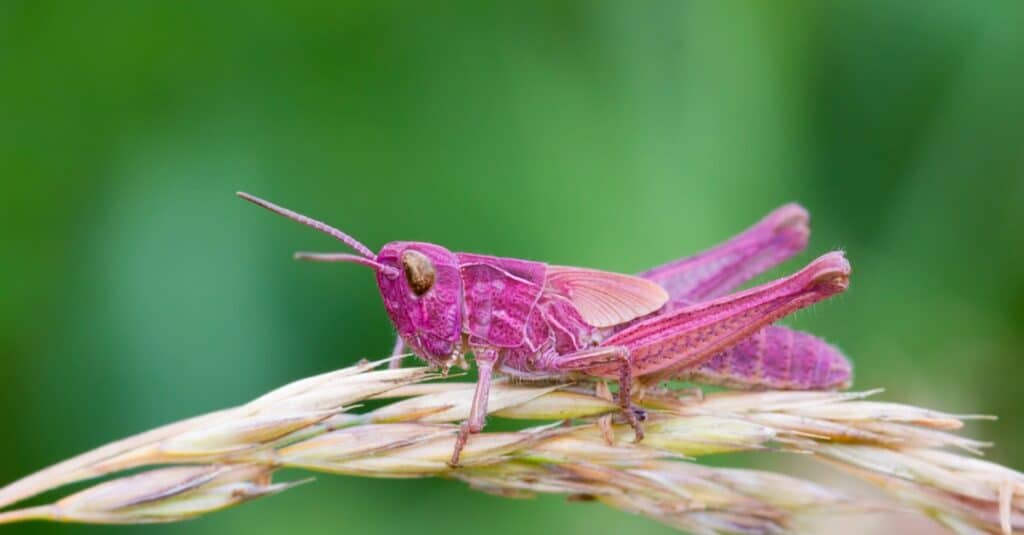
pink grasshopper on leaf with blurred background

The pink grasshopper, also known as a katydid, is the result of a genetic mutation.

Normally, grasshoppers don’t do too much damage to lawns and gardens. They fall prey to a great many predators such as ants, tachinids,s and robber flies, spiders, birds, cats, and dogs. They are also subject to many sorts of diseases.

Most grasshoppers don’t even manage to hatch out of their eggs, and nearly all die during the winter in places where the winters are very cold. Even those who aren’t winter-killed only live for a few years if they avoid predators or disease.

Grasshoppers can become a huge problem when they swarm. Scientists really don’t know why locusts form swarms. It might be because lots of rainfall made food abundant and caused the population to explode.

It might also be because conditions were dry, warm, and sunny and also caused the population to explode. When the food runs out, the swarm takes to the air and flies in search of more of it. It won’t matter if it’s a field of wheat or another crop that a farmer needs to make a living.

The best way to control grasshoppers is to make the environment unattractive to them. This may be as simple as removing the tough weeds near drainage ditches that are near croplands or gardens.

Farmers and gardeners can mix a grasshopper parasite called Nosema locustae with bait, infect the insects with Metarhizium acridum, a type of fungus, or spray plants with neem oil. Insecticides are not very effective for tough and mobile adult grasshoppers, though they might work on hoppers.

View all 261 animals that start with G

Sources

  1. Health Line / Accessed March 15, 2021
  2. Oak Trust / Accessed March 15, 2021
  3. The Astrology Web / Accessed March 15, 2021
  4. Wikipedia / Accessed March 15, 2021
  5. Britannica / Accessed March 15, 2021
  6. EOL / Accessed March 15, 2021
  7. University of Wisconsin / Accessed March 15, 2021
  8. New World Encyclopedia / Accessed March 15, 2021
  9. Ecotourism World / Accessed March 15, 2021
Rebecca Bales

About the Author

Rebecca Bales

Rebecca is an experienced Professional Freelancer with nearly a decade of expertise in writing SEO Content, Digital Illustrations, and Graphic Design. When not engrossed in her creative endeavors, Rebecca dedicates her time to cycling and filming her nature adventures. When not focused on her passion for creating and crafting optimized materials, she harbors a deep fascination and love for cats, jumping spiders, and pet rats.
Connect:

Thank you for reading! Have some feedback for us?


Grasshopper FAQs (Frequently Asked Questions)

Since grasshoppers mostly eat plants, they are herbivores.