


Quick Take
- The name 'Great Dane' is actually misleading, and the reason behind it is more calculated than most owners realize. Explore the naming history →
- Most people are surprised to learn what the number one killer of Great Danes actually is, and the way you feed them can make all the difference. See feeding recommendations →
- Despite weighing as much as a grown adult, Great Danes have one care requirement that completely defies expectations for a dog their size. See their exercise needs →
- American and European Great Danes share a name, but one type can grow to a size that might make you reconsider which version you're actually getting. Compare the two types →
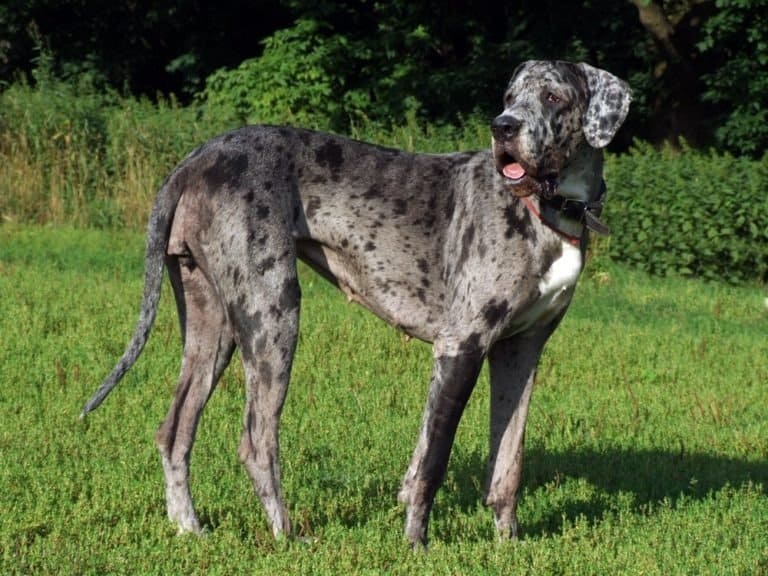
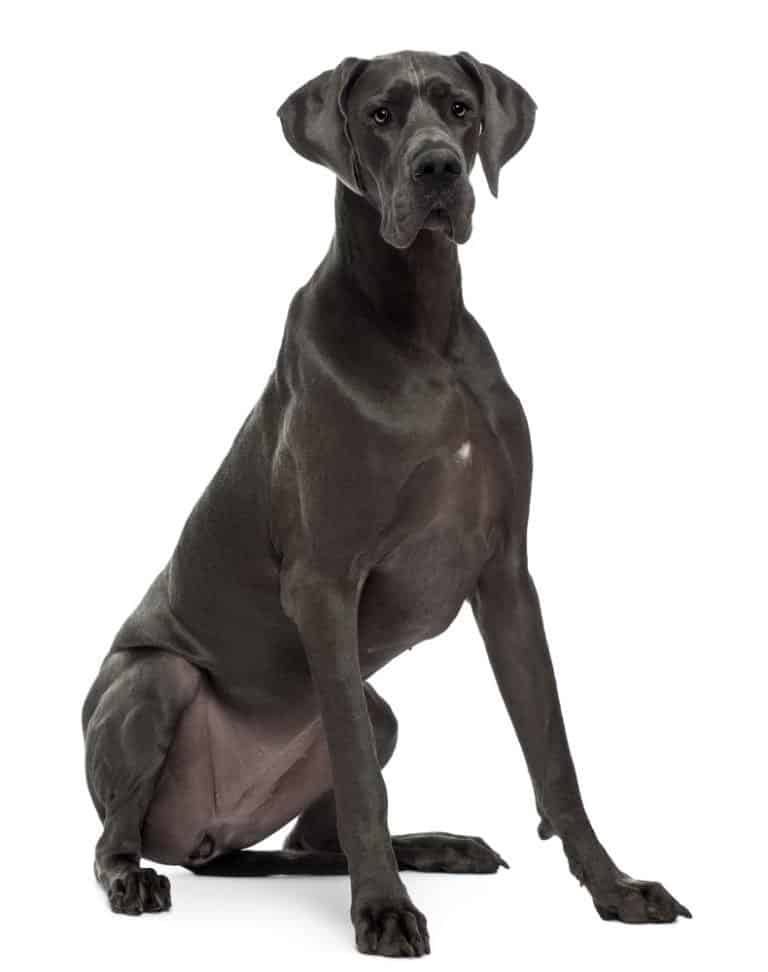
These gentle giants will steal your heart as well as your sofa. They have short, smooth coats that come in a variety of colors, including fawn, brindle, steel blue, black, mantle, harlequin, and merle. This breed only requires moderate daily exercise, but due to their size, they do need space. Unfortunately, that size makes them ill-suited for apartment living; they won’t have enough room.
Great Danes are well-known for their affectionate and gentle nature. They get along famously with children and other animals, which makes them excellent family pets.

3 Pros and Cons of Ownership
| Pros | Cons |
|---|---|
| They are easygoing and affectionate Great Danes are well-known for their easygoing and affectionate nature, which makes them wonderful family pets. | They drool a lot Given their size, it’s not exactly surprising that Great Danes tend to drool excessively. If you choose to own this breed, you should expect that your clothes, furniture, and floors will all end up covered in drool at some point. |
| They only require moderate exercise Unlike most other large and giant breeds, Great Danes only require moderate daily exercise. They will be quite happy with a daily walk or game of fetch in the backyard. | They take up a lot of space Great Danes can weigh as much as the average man and will easily take up an entire sofa when they lie down. If you live in a small apartment, this is not the right breed for you. |
| They are easy to train Great Danes are eager to please their masters, which makes training a breeze. | They have a short lifespan As with all giant breeds, the life expectancy of a Great Dane is unfortunately short. They only live for an average of 7 to 10 years. |
Size and Weight
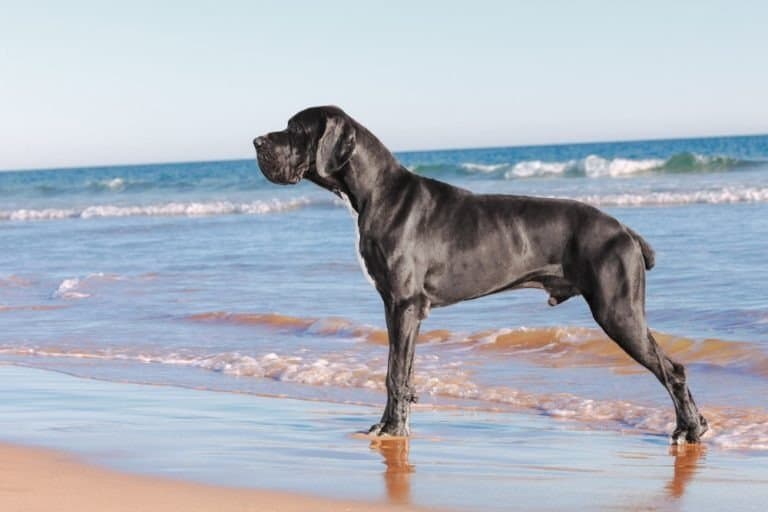
On average, Great Danes can weigh anywhere from 110 pounds to 175 pounds and stand between 28 and 32 inches high at the shoulder. The males of this breed tend to be slightly taller than the females.
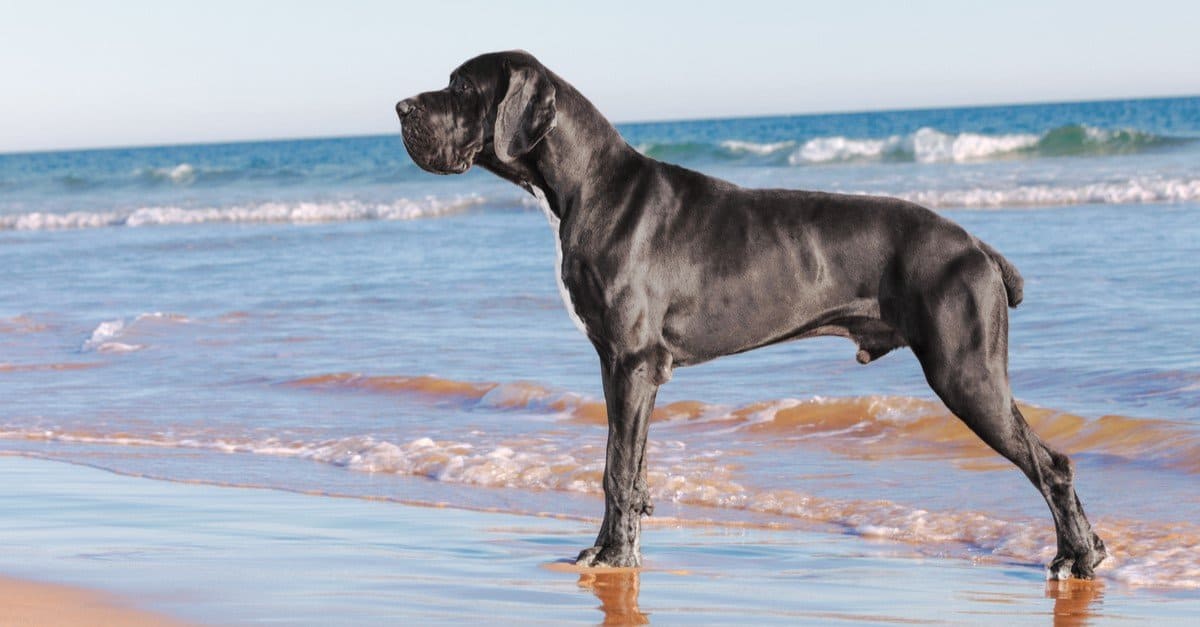
Although one of the biggest dog breeds, Great Danes are truly gentle giants!
©Jose Arcos Aguilar/Shutterstock.com
Types of Great Danes
American vs. European
There is little difference in height between these two types. American Great Danes are distinguished by their long, graceful, and sleek appearance, which gives them the appearance of being taller. Male American Great Danes range in height from 30 to 34 inches, while females stand between 28 and 32 inches tall.
Weight is one area where the two types diverge significantly. American Great Danes are slightly smaller in stature than their European counterparts, weighing between 99 and 200 pounds depending on gender and maturity. European Great Danes are even larger and more muscular than American Great Danes. When completely mature, Great Danes in Europe can weigh between 180 and 240 pounds!
7 Different Colors, Coats, and Patterns for This Breed
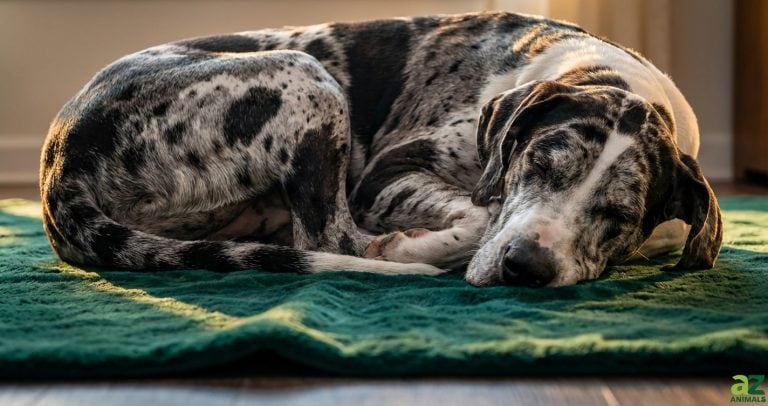
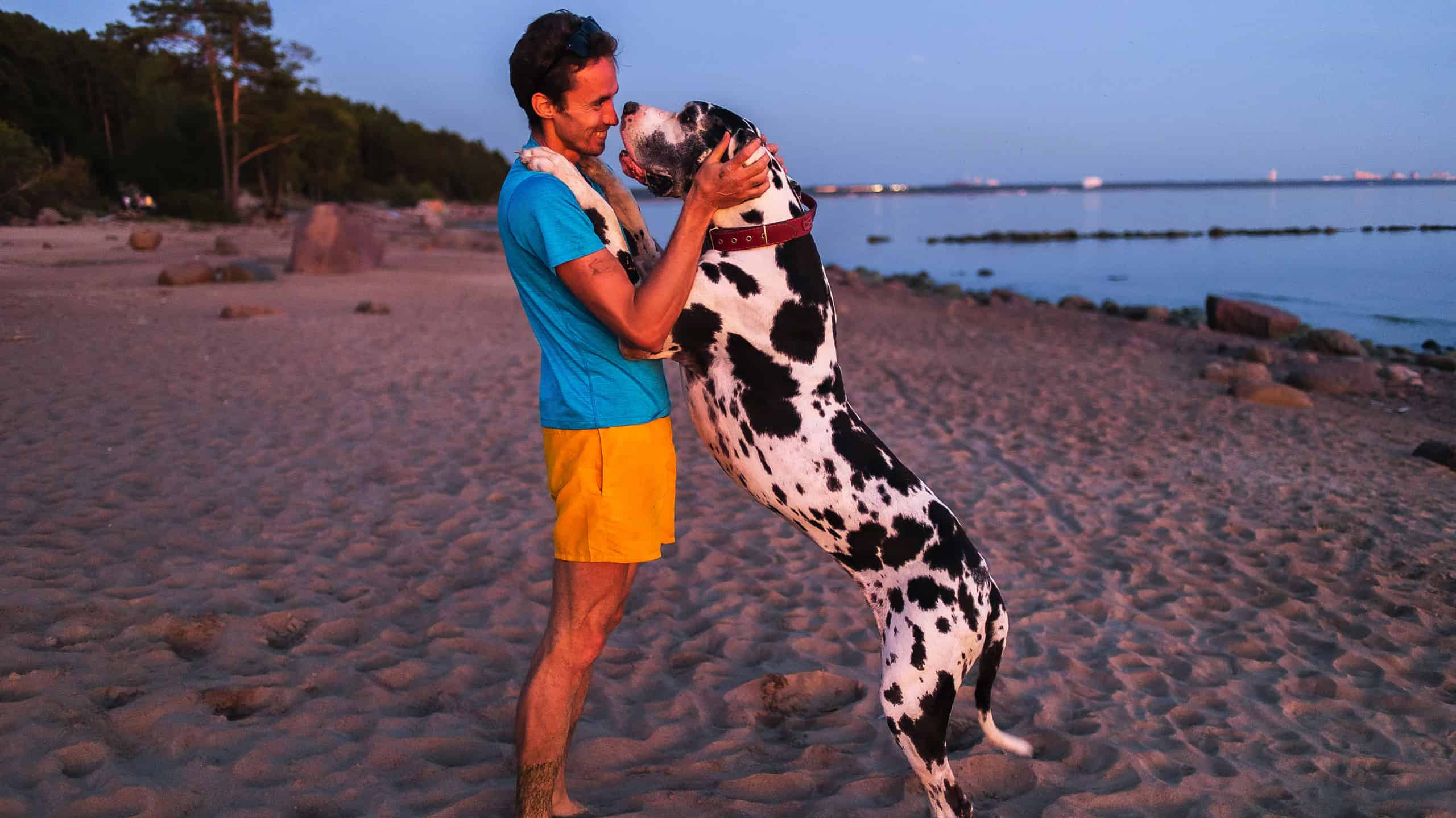
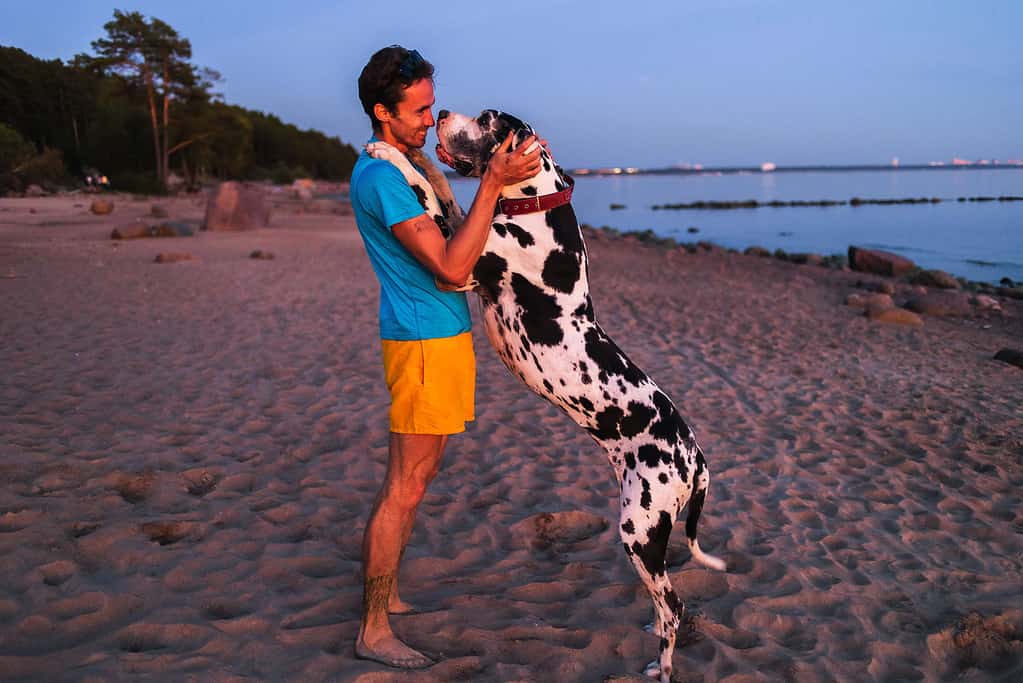
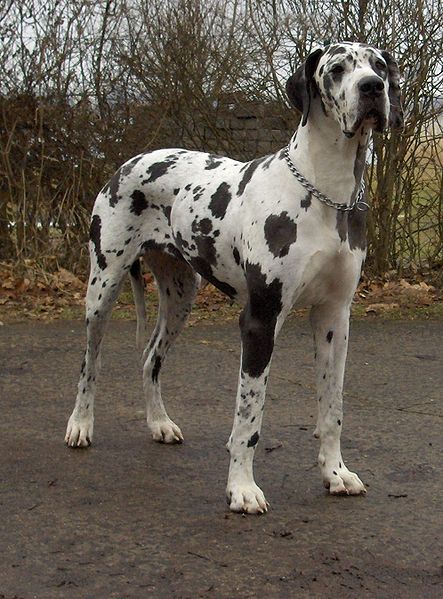
- Harlequin: Harlequin Great Danes have a a striking, random, modern-art-style look, with a white base coat and black splotches.
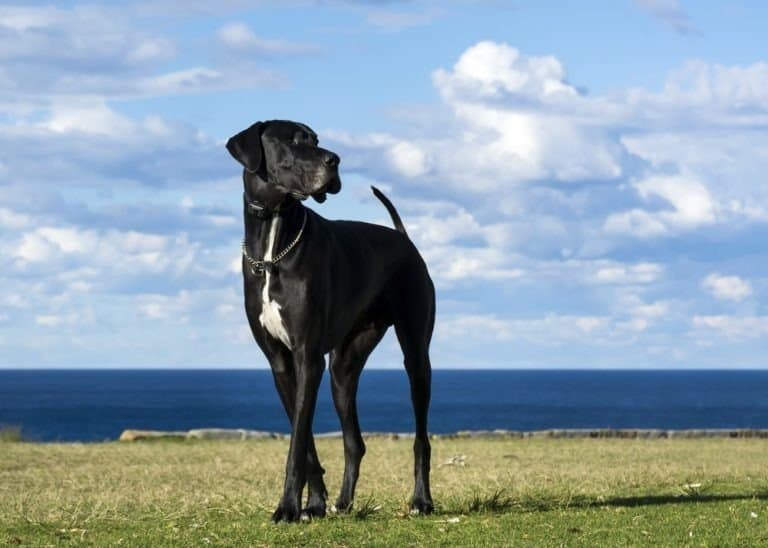
- Black: Black Great Danes have a beautifully rich, black coloration to their fur and must be entirely black to meet AKC registration standards.
- Merle: Merle Great Danes are similar to Harlequins except that their “undercoat” is more of a gray instead of white.
- Brindle: Brindle Great Danes, much like other brindle-colored breeds, are a mix of colors and patterns, yet they do have a fawn coloration underneath their fur.
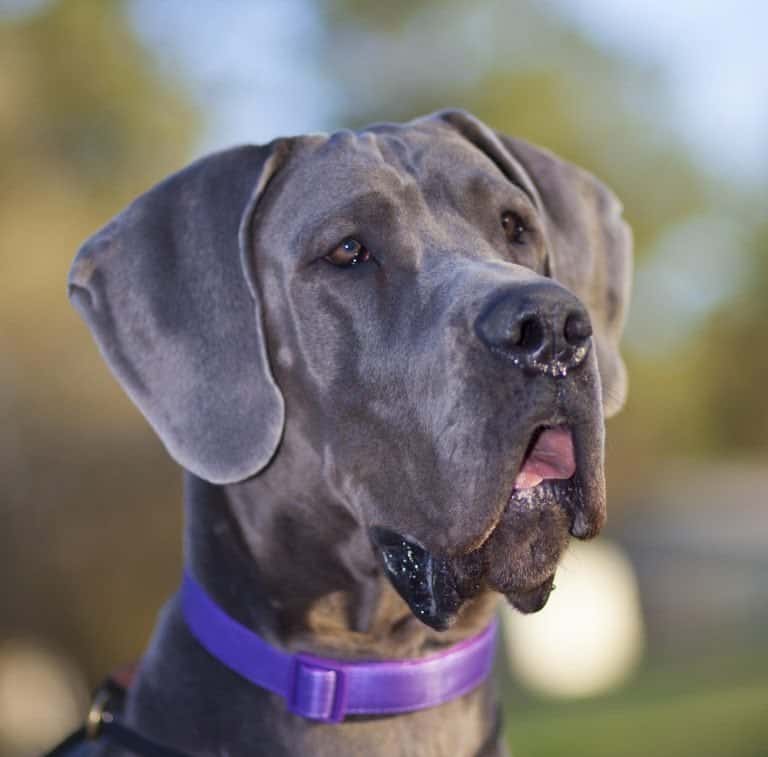
- Blue: Blue Great Danes have regal coats that range from light to dark grey. Ideally, they will have no other colors on their fur.
- Fawn: Fawn Great Danes are the most common of the breed. They have a tan color across their whole body except for a darker “mask” on their face.
- Mantle: Mantle Great Danes have consistent markings across their body that consist of a black base coat and white on their feet, face, and chest.
Origin and History
Although the name Great Dane fools a lot of people, these dogs actually originated from Germany, all the way back in the 1500s. They were a combination of Irish Wolfhounds and English Mastiffs, plus other similar big canines. The goal was to produce dogs that could hunt the largest game animals and provide protection. Their great size was enough to get the job done.
It is speculated that avoiding the word “German” in the breed’s name—due to Germany’s association with the World Wars—was a marketing choice to make the breed more appealing in Europe and America.
Common Health Issues
The number one health issue that Great Danes face is gastric dilatation-volvulus, more commonly known as bloat. Owners should take preventive measures to reduce the risk of bloat. Owners should also familiarize themselves with the symptoms of bloat and know what to do if it occurs.
Great Danes may fall victim to conditions such as diseases involving their heart, eyes, or thyroid, and hip or elbow dysplasia.
Temperament
Despite their intimidating appearance, Great Danes are one of the friendliest dog breeds in the world. They are also remarkably gentle with children, and their eagerness to please their owners makes them a joy to train. They are quite affectionate with their families and hate being left alone, so if you spend a lot of time out of the house and can’t take your dog with you, this is not the breed for you. When left to their own devices for too long, they can become quite destructive. That’s not good for any dog, but destructiveness in a dog of this size is a homeowner’s worst nightmare.
Due to their social nature, these dogs are excellent with other pets and children, making them wonderful family dogs. Just be aware that despite their size, they often decide that they are lap dogs. If you’re not prepared to share your couch with your giant pup, you may want to consider a different breed.
How To Take Care of One
Due to their size and the nature of their breed, owners should put together a strict feeding and exercise routine. Beyond that, the Great Dane is a generally low-maintenance breed, needing only moderate daily exercise and casual grooming. Since adults of this breed can easily outweigh their owners, it’s important to start obedience training early. It’s much easier to teach a 60-pound pup good manners than it is to re-train an unruly 150-pound adult.
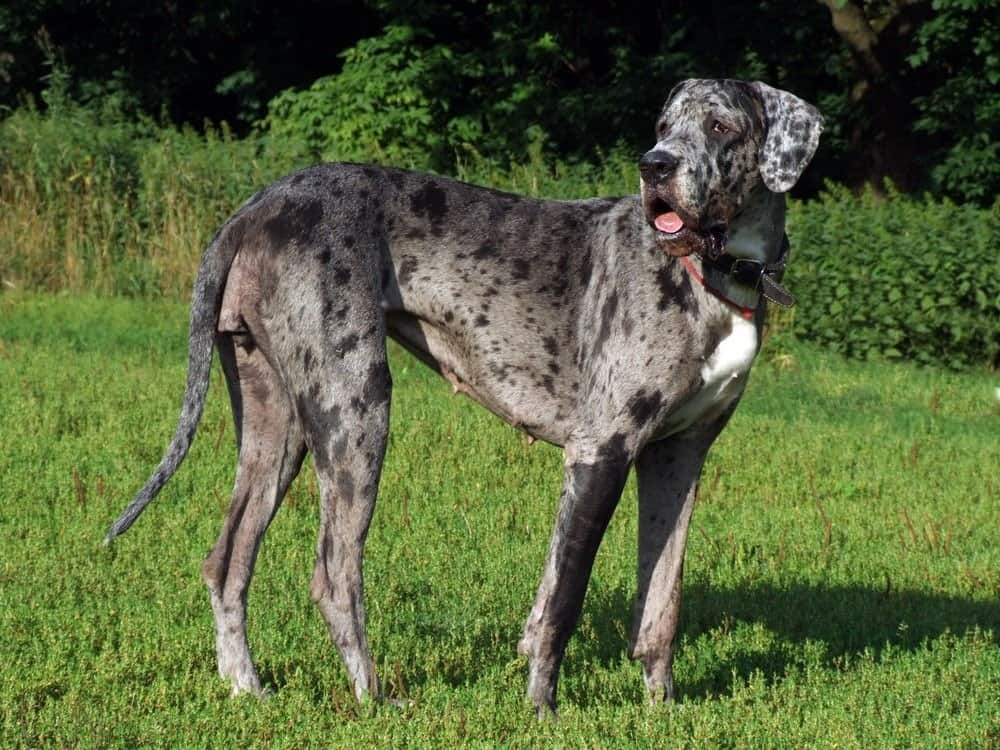
Great Danes are a generally maintenance-free breed, needing only moderate daily exercise and casual grooming.
©velora/Shutterstock.com
The Best Dog Food
Great Danes should only eat high-quality food specially formulated for giant breeds. Owners should only allow these dogs to eat human food sparingly and use caution in choosing which foods they receive. The number one killer of this breed is bloat, so taking care of a feeding routine is of the utmost importance. To lower the chances of bloating, be sure to feed your Great Dane multiple small meals each day, use a food dish that forces slower eating, keep food and water in raised dishes, and limit exercise before and after meals.
Great Danes are one of those giant breeds with big, loving hearts that can, unfortunately, struggle to physically sustain such a large body. Therefore, due to the link between heart failure and legumes in dog food, Great Dane owners may want to look into the benefits of legume-free dog food.
Best Insurance
Since most pet insurance companies don’t cover pre-existing conditions and Great Danes are prone to quite a few health problems, it’s a good idea to get health coverage for them at an early age. Since bloat is so common in this breed, it’s more important than ever to have coverage for an emergency.
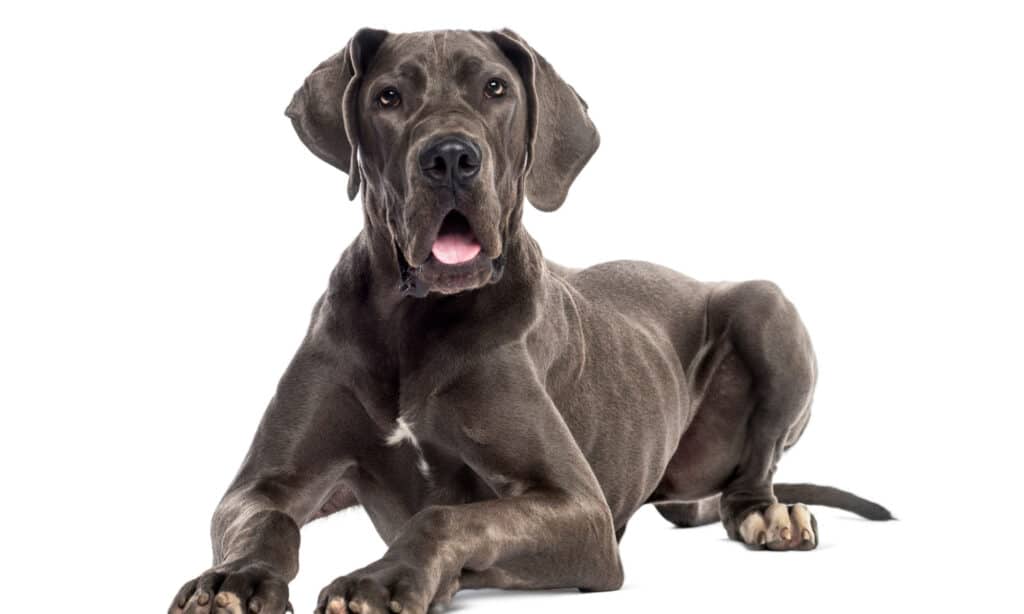
Great Danes cost more to insure because they’re prone to certain health issues.
©iStock.com/GlobalP
Maintenance and Grooming
Great Danes don’t shed too much throughout most of the year, so weekly brushing is enough to keep shedding to a minimum. They do, however, have seasonal shedding cycles twice each year, during which time they will need daily brushing to keep your home from getting covered in dog hair. They are not an overly dirty breed, so they will only need bathing a few times each year. Outside of brushing and bathing, the only maintenance a Great Dane needs is frequent tooth brushing and ear cleaning, as well as monthly nail trimming.
Training
Due to the Great Dane’s massive adult size, early training and socialization are imperative. This breed is friendly and loves to please its master, so with gentle and consistent guidance, it will excel at obedience training.
Exercise
Despite their size, Great Danes are not overly active dogs. The only exercise they need is a daily walk or a nice game of fetch in the backyard. When they are older, they can make great hiking or jogging companions, but activities of this nature should wait until your dog reaches at least two years old so that they don’t put too much strain on growing bones and joints.
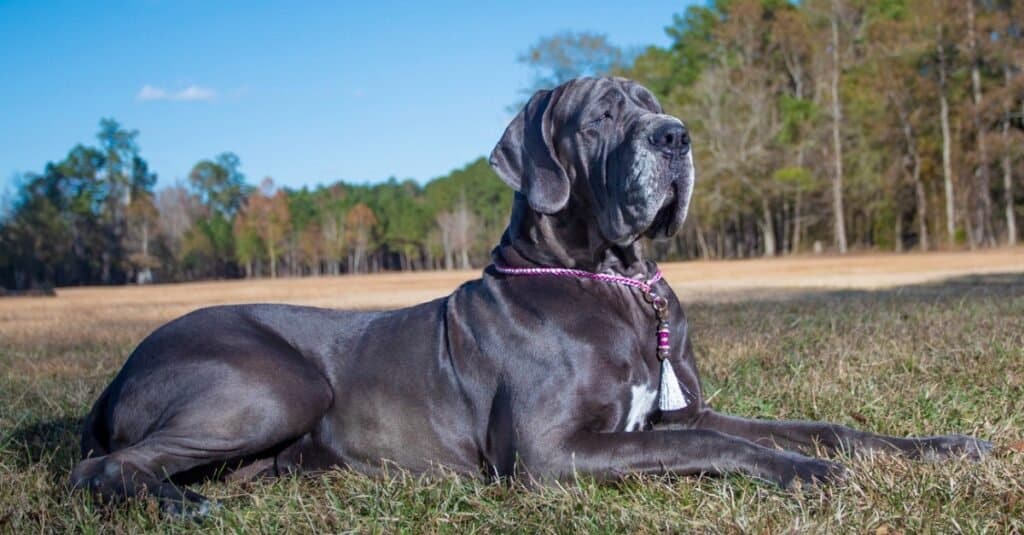
Despite their size, Great Danes are not overly active dogs.
©iStock.com/gsagi
Puppies
Like all breeds, Great Dane puppies are full of energy and need constant care and attention. Since this breed gets so big when fully grown, it’s a good idea to start obedience training and socialization early. These dogs are eager to please and highly sociable, so gentle and consistent training will make these pups into model citizens in no time.
As with other giant breeds, you should take care when playing with your Great Dane pup. Since vigorous activity can put a lot of strain on growing bones and joints, you shouldn’t let your puppy jump or participate in high-impact activities like jogging until they are about two years old.
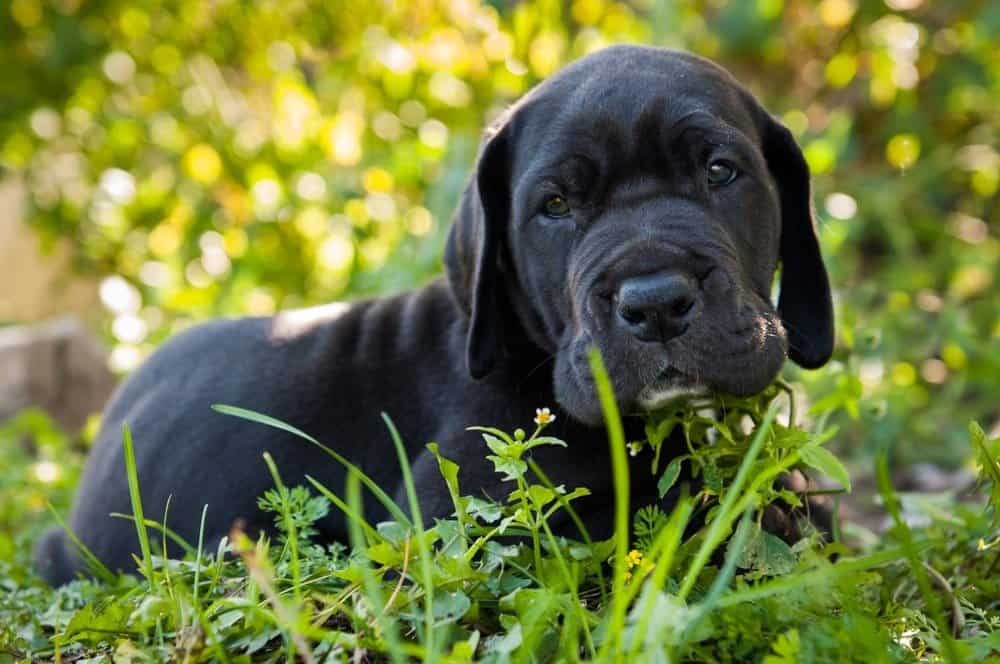
Since this breed gets so big when fully grown, it’s a good idea to start obedience training and socialization early.
©Zanna Pesnina/Shutterstock.com
With Children
Despite their hulking size, Great Danes are one of the most gentle and affectionate breeds in the world, making them ideal companions for children of all ages. However, they often forget how big they are and can accidentally knock over or crush a small child. Owners should take care to teach their Great Danes how to interact politely with little ones while the dogs are still puppies, to reduce accidental injuries, and should never leave dogs and children unsupervised.
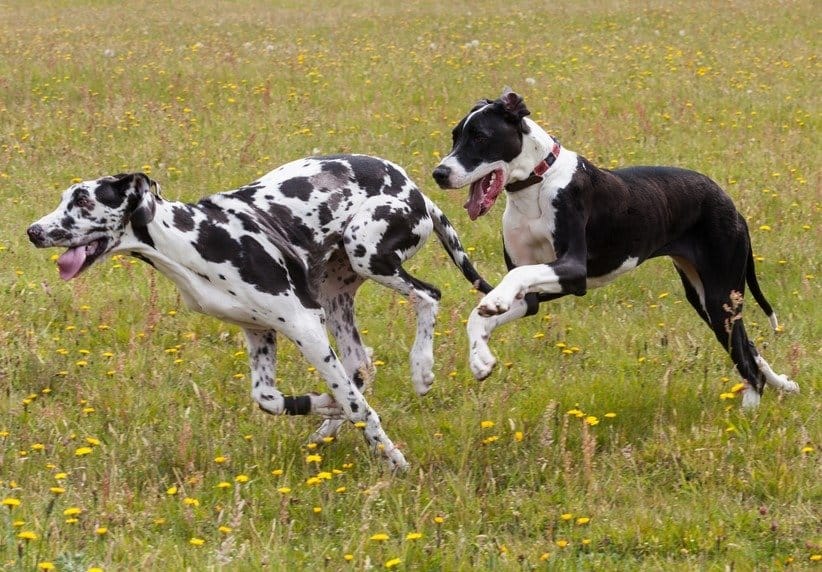
Great Danes are among the most gentle and affectionate breeds in the world, making them ideal companions for children of all ages.
©Claire Plumridge/Shutterstock.com
Similar Dogs
If you’d like a dog that’s similar in size or personality to the Great Dane, here are a few breeds to check out.
- Mastiff: Mastiffs are roughly the same size as Great Danes and are just as easy to train.
- Doberman Pinscher: Doberman Pinschers are a good deal smaller than Great Danes and are a more athletic breed.
- Bullmastiff: Bullmastiffs are slightly smaller than Great Danes and equally affectionate family dogs.
Famous Examples
Though there’s not much record of famous Great Danes in real life, this breed has been quite popular in the fictional world of cartoons. The three most famous fictional Great Danes are Astro from The Jetsons, Marmaduke from the Sunday newspaper comic strip of the same name, and Scooby-Doo.
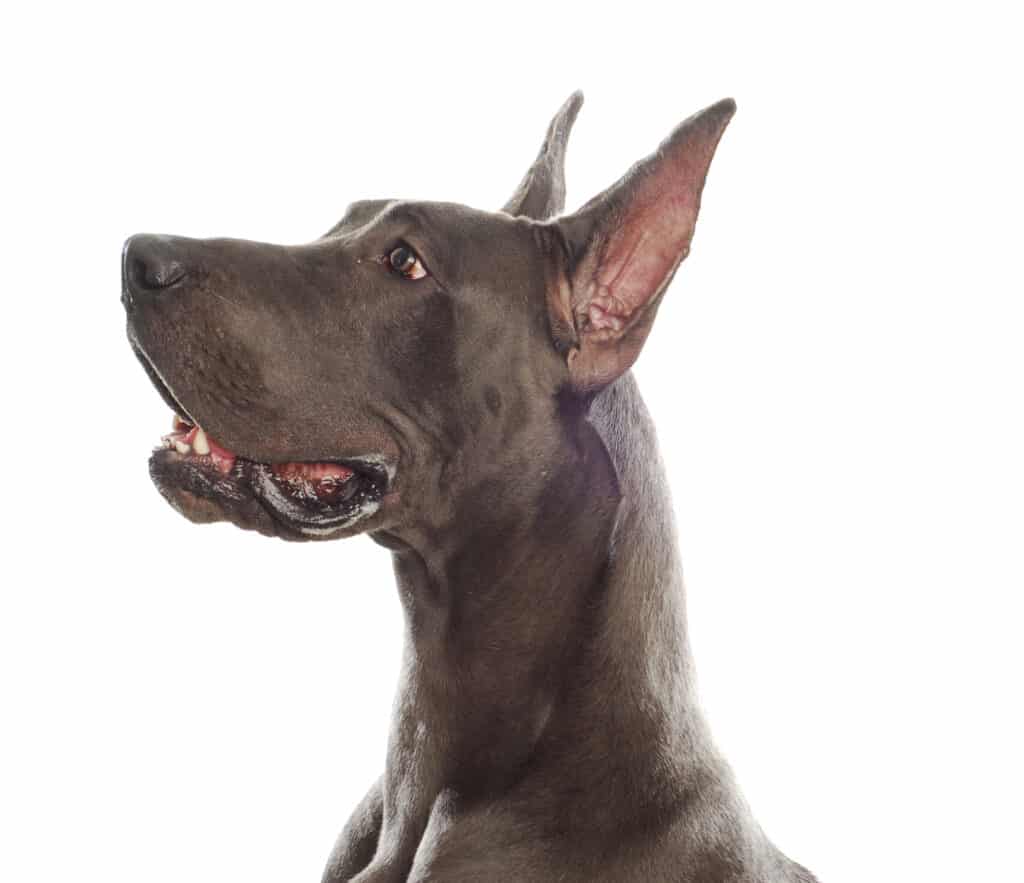
There are several Great Danes in famous cartoons and TV shows!
©WilleeCole Photography/Shutterstock.com
Great Dane Pictures
View all of our Great Dane pictures in the gallery.

Sources
- David Burnie, Dorling Kindersley Animal, The Definitive Visual Guide To The World's Wildlife / Accessed November 10, 2008
- Tom Jackson, Lorenz Books The World Encyclopedia Of Animals / Accessed November 10, 2008
- David Burnie, Kingfisher The Kingfisher Animal Encyclopedia / Accessed November 10, 2008
- David Burnie, Dorling Kindersley Illustrated Encyclopedia Of Animals / Accessed November 10, 2008
- Dorling Kindersley Dorling Kindersley Encyclopedia Of Animals / Accessed November 10, 2008
- American kennel Club / Accessed November 2, 2020
- Great Dane Care / Accessed November 2, 2020