

Quick Take
- Reaching a 12 to 18 year lifespan requires navigating specific wild habitat decline.
- The 80% diet of honeybees triggers a critical vulnerability due to prey population instability.
- This bird displays a counter-intuitive theory of mind previously attributed almost exclusively to primates.
- Constructing 5-foot-long tunnels is necessary to protect the 3 to 8 egg clutches.
The green bee-eater, or little green bee-eater, is one of the smallest birds in the bee-eater family. It is known for its small size, unique sound, slender body, and bright plumage, as well as for being one of the most beautiful birds. It is found in a variety of wooded areas throughout sub-Saharan Africa, western Arabia, and eastern Asia. Although it is in no danger of extinction, the green bee-eater’s population is currently stable or increasing in many areas, as agricultural expansion and irrigation have created new suitable habitats. However, local declines in honeybee populations could pose future risks.

Green Bee-Eater Amazing Facts
- True to its name, 80% of its diet consists of honeybees.
- Although it is not known to migrate, it does travel seasonally due to rainfall.
- The green bee-eater is a natural-born bee-killer.
- It has predator-avoidance behavior with “theory of mind” awareness, usually only found in humans and other primates.
Where To Find Green Bee-Eaters
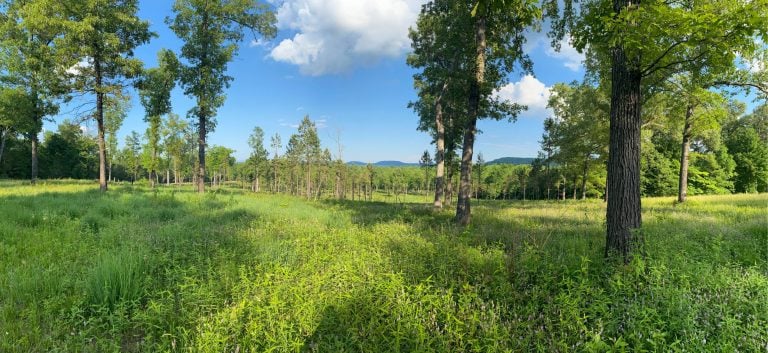
Green bee-eaters find several habitat types from Mauritania to central China, including the Nile River and the Himalayas. Other countries include Greece, Senegal, Gambia, Egypt, Iran, India, Pakistan, Nepal, Bhutan, Afghanistan, Bangladesh, Cambodia, Thailand, Laos, Myanmar, and Vietnam. Its habitat is forest, grassland, and thin scrub.
The best place to find green bee-eaters is arid areas, plains, savannahs, scrub, grasslands, open forests, fields, and farmlands in parts of Africa and Asia. They can even be seen perched on television antennas in urban and suburban neighborhoods. They are also visitors in some parts of Pakistan, flying there during the summer, making riverside habitats in southern India or high ones in the Himalayas. The social birds roost in numbers from 30 to 300 and usually dust-bathe in groups of 20. Remember that they roost high in trees and have a unique sound.
Nests
Green bee-eaters typically nest in May or June. Their nests are in the hollows of sandbanks or mud banks, which both sexes create by digging tunnels or burrows, which are 2 to 3 feet deep and can be up to 5 feet long (1 to 2 m). The tunnels in Africa are dug into flat ground or gentle slopes, while in Asia, they are dug into low shores. The females lay 3 to 8 eggs on the bare ground at the end of the tunnel, in a cavity measuring about 15 cm (5.9 in).
Classification and Scientific Name
There are three to four subspecies of green bee-eater. Its scientific name is Merops orientalis. The bee-eater family Meropidae has three genera, one of them being the large genus Merops.
Size, Appearance & Behavior
The little green bee-eater has a size of about 9 inches (16 to 19 cm), including 2 inches of long central tail feathers. It has a wingspan of 29 to 49 cm (11.4 to 19.3 in) and a weight of 15 to 25 g.
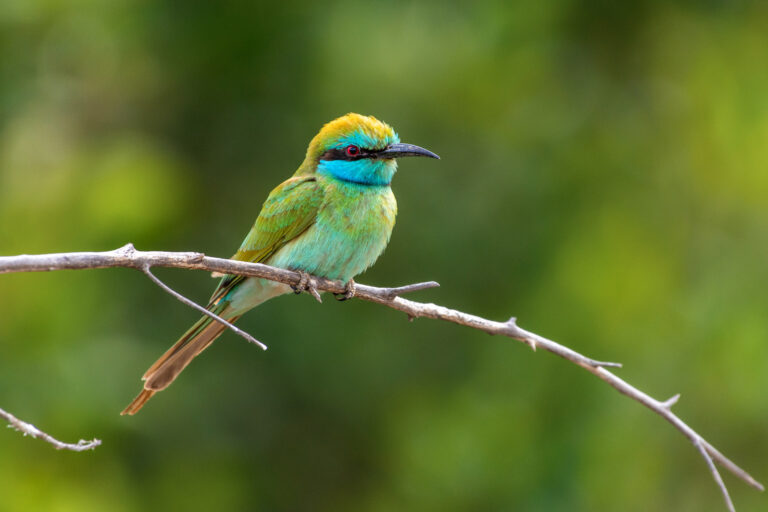
Bright emerald green is its main color, but several subspecies have partial red, yellow, blue, or purple coloring depending on the region. There are also variations such as a rusty crown and bright blue throat, as well as leucistic individuals. A similar species based on grouping by plumage features is Merops leschenaulti, with subspecies Merops orientalis ferrugeiceps being most similar.
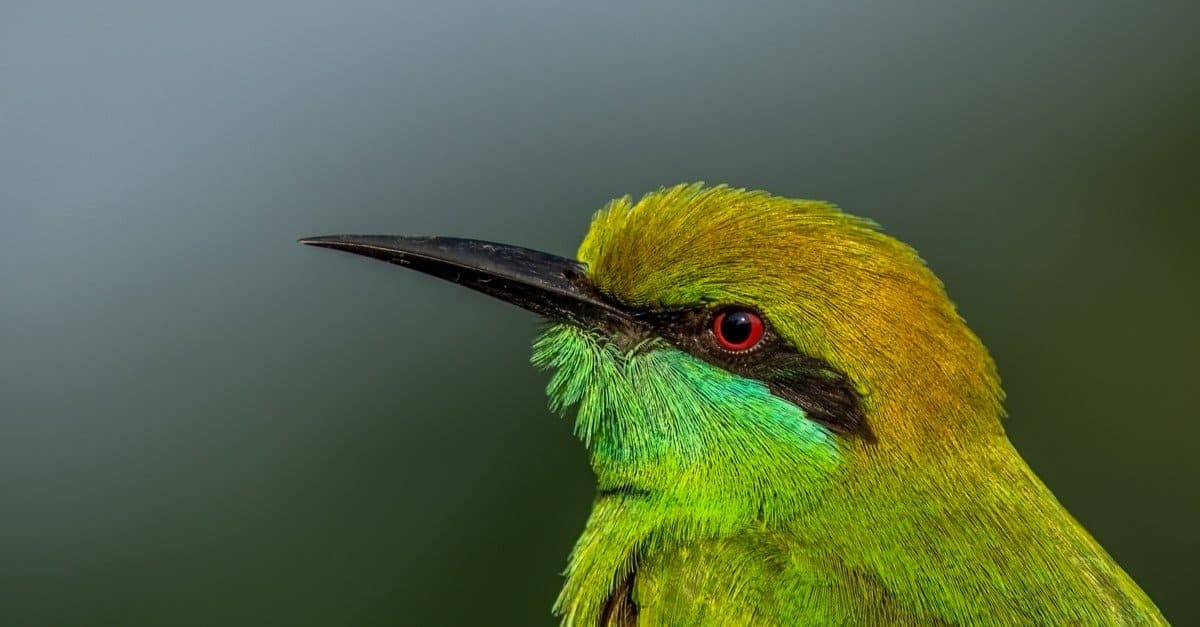
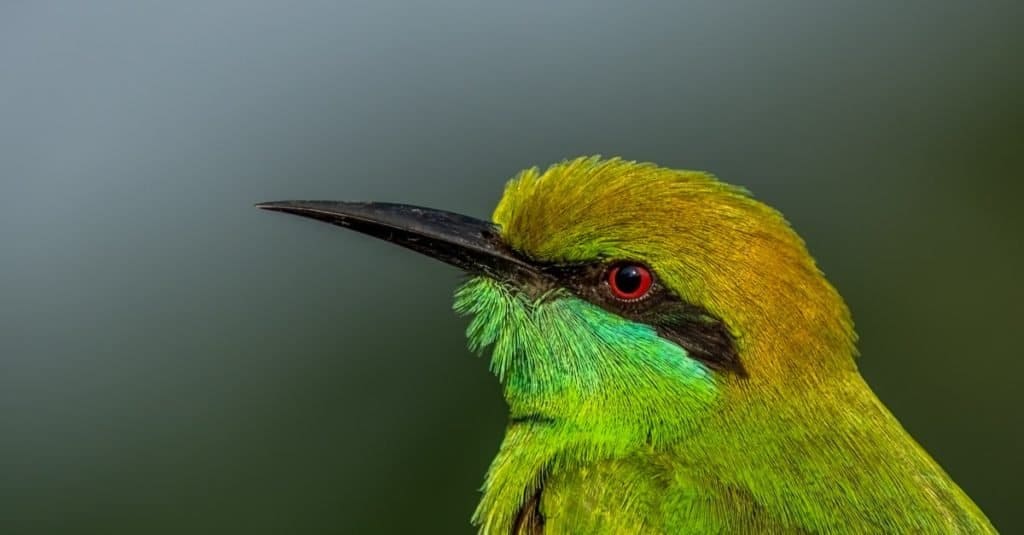
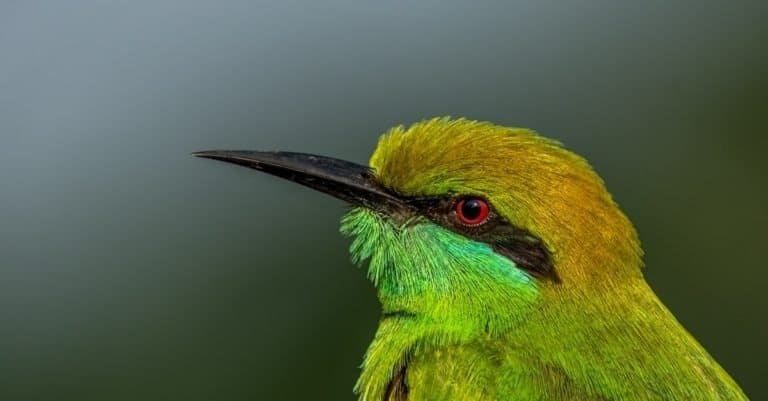
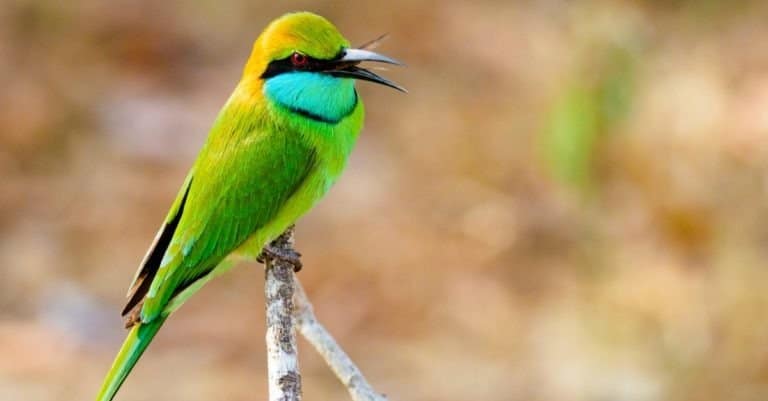
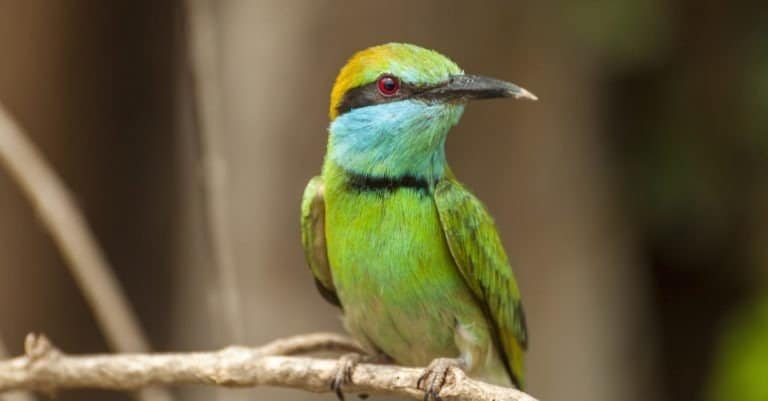
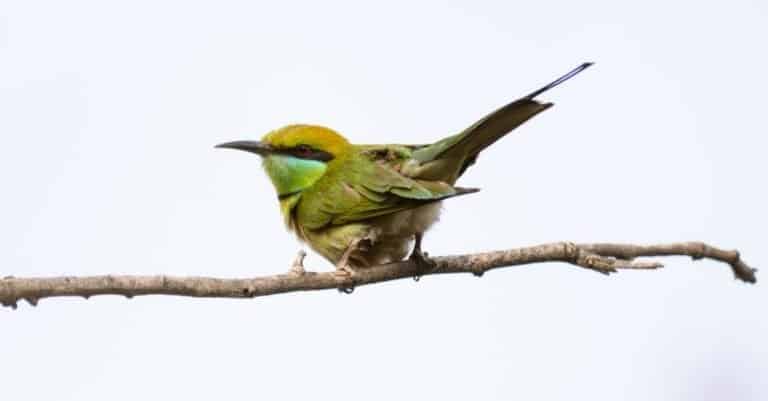
Generally, however, there is blue on the chin and throat, with golden rufous on the crown and back. Its flight feathers are rufous and green. It has a long, slightly curved black bill ending in a sharp point, a narrow black stripe called a “gorget” on its throat, a black mask through its crimson eyes, and two central, narrow, long black tail streamers. Its legs are dark gray, and it has weak feet with three toes.
The juvenile’s colors are dull in comparison. It does not have the long tail feathers unique to adults. The female has similar coloring and physical measurements as the male, but with a duller throat, narrower half-collar, and shorter tail streamers.
The green bee-eater sand-bathes more than other bee-eater species and dips in the water while flying. Usually calling in flight, its sound is a gentle, pleasant, nasal tree-tree-tree-tree that is long and repetitive. It is graceful and makes a zigzag movement when returning to its perch to consume its prey. Most active during the day, it starts hunting after 7:00 or 8:00 am and again around 4:00 pm.
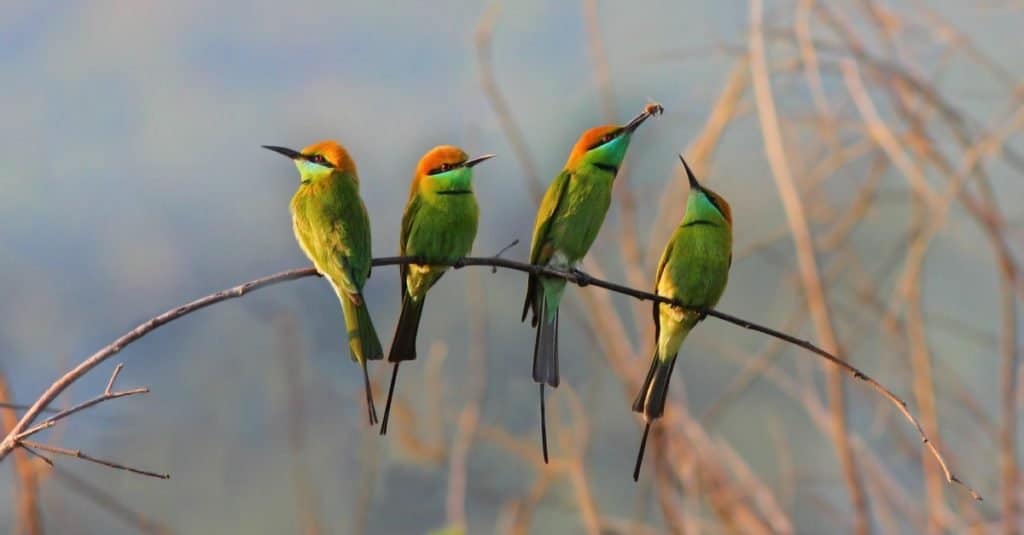
The diet of Green Bee-Eaters is mainly insectivorous.
©duangnapa_b/Shutterstock.com
Diet
The green bee-eater has an omnivorous diet that is primarily insectivorous.
What do green bee-eaters eat?
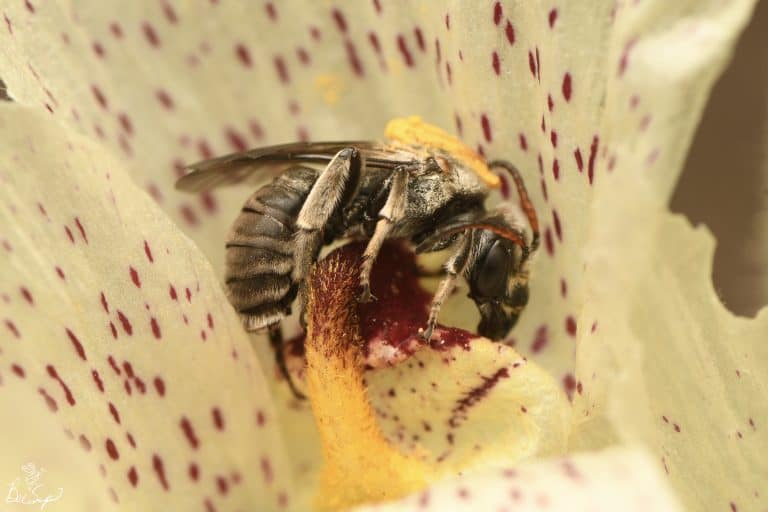
80% of the green bee-eater’s diet is honeybees. The rest are other bee species, wasps, ants, flies, butterflies, moths, dragonflies, beetles, and other flying insects. It supplements its diet with ground-dwelling insects, such as termites, caterpillars, and spiders, along with fruits and berries. It avoids insects from the order Orthoptera, which includes grasshoppers, locusts, crickets, katydids, and weta.
Predators and Threats
The green bee-eater has a unique predator-avoidance behavior in which it does not enter its nest as long as a predator is looking at it. This type of awareness of a predator’s mental state shows “theory of mind”, typically shared only by primates. Although the IUCN lists the green bee-eater as “Least Concern“, it is still vulnerable to native habitat destruction and decline of its primary prey of bees.
What eats green bee-eaters?
Green bee-eaters and their eggs are preyed upon by larger birds as well as smaller reptiles and mammals. They sometimes get gizzard infections from the endoparasitic nematode (Torquatoides balanocephala). In India, they have been known to get a protozoan parasite in their blood (Haemoproteus manwelli).
Reproduction, Babies, and Lifespan
Green bee-eaters have a breeding season from either March to June or July to August.
Although both sexes participate in incubation, it is primarily done by the female. They are monogamous and mate for life. In Africa and Asia, they are solitary nesters with helpers, which include juvenile and adult young. They create small colonies in India, with larger ones in Myanmar and Pakistan, ranging from 10 to 30 breeding pairs. Both parents feed the young, known as chicks, while they stay in the nest for 22 to 31 days. The juveniles do not need to be taught how to handle stinging insects, as the birds are born with the ability to kill bees.
Population
Green bee-eaters are common in their habitat range and do not migrate. Although their bright plumage and small size attract many larger predators, they display predator-avoidance behavior when seeing predators near their nests. With 26 species, habitats in several countries, and listed as “least concern” by the IUCN, their exact numbers have not been assessed. However, the populations of the African green bee-eater, the Asian green bee-eater, and the Arabian green bee-eater are increasing.
Green Bee-Eater Pictures
View all of our Green Bee-Eater pictures in the gallery.

Sanjay M Dalvi/Shutterstock.com
Sources
- eBird / Accessed January 3, 2021
- Animalia / Accessed January 3, 2021
- Wikipedia / Accessed January 3, 2021
- Nature Conservation / Accessed January 3, 2021