




G
Species Profile

Grey Reef Shark

Carcharhinus amblyrhynchos

Guardian of the reef drop-off
cbpix/Shutterstock.com

Grey Reef Shark Distribution

Click a location to explore more animals from that region

This map shows coastal regions where Grey Reef Shark are found.

Loading map...
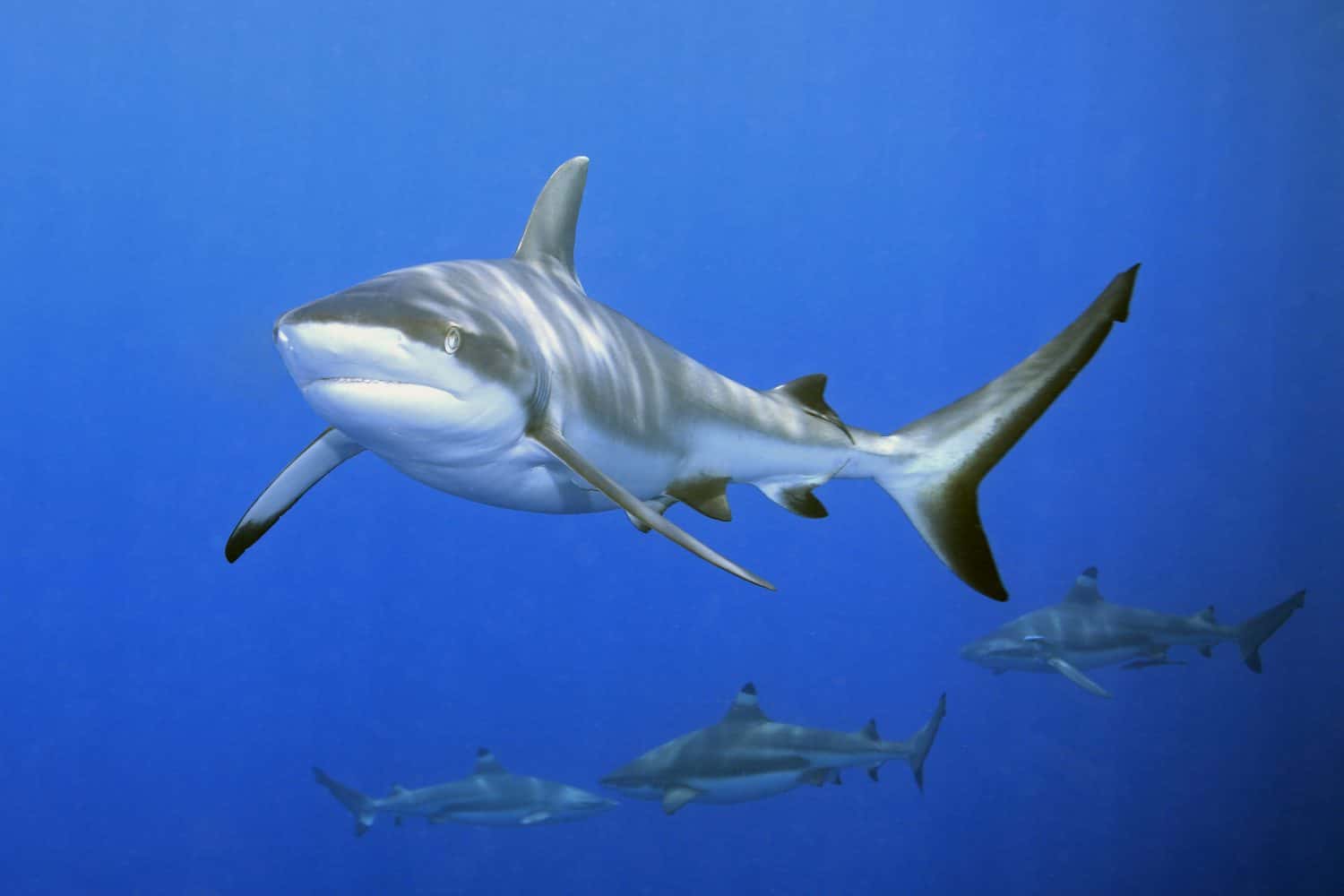
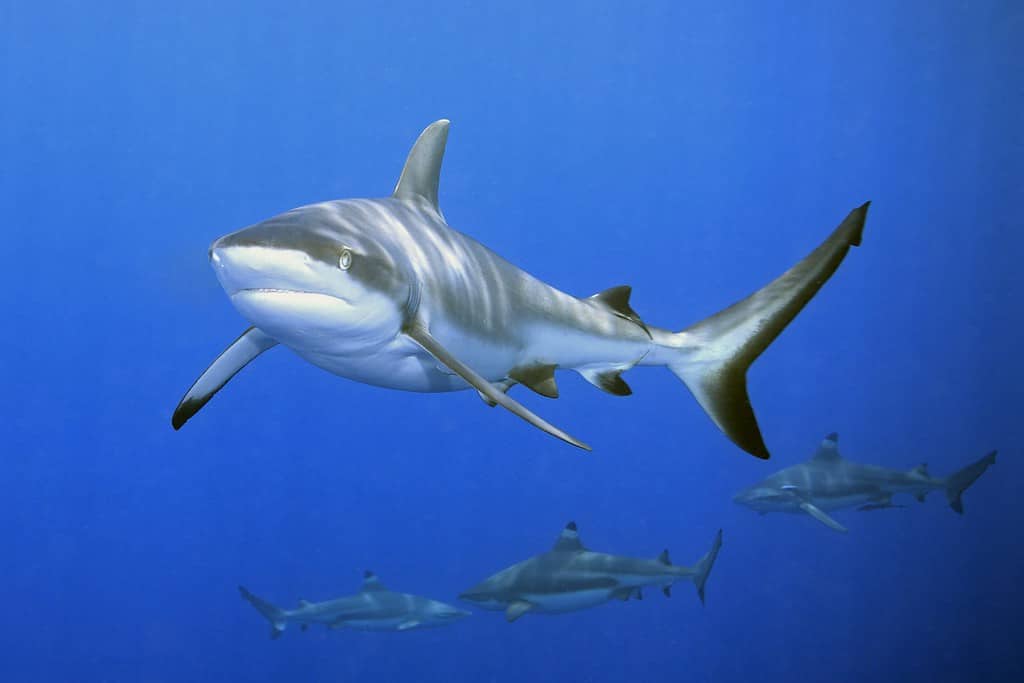
a large grey reef shark showing the mouth and teeth. There are three blacktip reef sharks in the background

At a Glance

Wild Species
Also Known As Gray reef shark, tiburón gris de arrecife, requin gris de récif
Diet Carnivore
Activity Cathemeral+
Lifespan 18 years
Weight 33.7 lbs
Did You Know?

Maximum recorded size is about 255 cm total length (TL); adults commonly ~185 cm TL (FishBase/IUCN accounts).

Scientific Classification

A medium-to-large requiem shark common on coral reefs and outer reef slopes in the Indo-Pacific, known for active patrolling behavior, occasional aggregations, and a role as an important apex/mesopredator on reef ecosystems.

Kingdom
Animalia
Phylum
Chordata
Class
Chondrichthyes
Order
Carcharhiniformes
Family
Carcharhinidae
Genus
Carcharhinus
Species
Carcharhinus amblyrhynchos

Distinguishing Features

  • Robust, streamlined grey body with a pale underside
  • Broad, rounded snout typical of many Carcharhinus requiem sharks
  • Often a faint darker margin on the tail and fins (not the bold black tips of blacktip reef sharks)
  • Commonly seen cruising along reef drop-offs and in channels with current

Physical Measurements

Males and females differ in size

Length
4 ft 11 in (4 ft 3 in – 6 ft 1 in)
5 ft 7 in (4 ft 3 in – 6 ft 7 in)
Weight
55 lbs (26 lbs – 73 lbs)
Top Speed
12 mph
Estimated burst speed unknown

Appearance

Primary Colors
Secondary Colors
Skin Type Tough, sandpaper-like shark skin with placoid scales (dermal denticles) typical of requiem sharks (Family Carcharhinidae; Order Carcharhiniformes). Denticles reduce drag and protect against abrasion on reef edges (general chondrichthyan integument; Compagno, 1984).
Distinctive Features
  • Medium-to-large requiem shark (Carcharhinidae): robust body, moderately long, broad-rounded snout; large eyes adapted to clear reef-slope waters (Compagno, 1984).
  • Typical adult total length commonly ~1.5-1.9 m; maximum recorded/commonly cited about 2.55 m TL (Compagno, 1984; FishBase for Carcharhinus amblyrhynchos, accessed 2025).
  • First dorsal fin moderate, originating roughly over/just behind the pectoral fin rear tips; second dorsal small; interdorsal ridge absent-useful for distinguishing from some similar Carcharhinus species (Compagno, 1984).
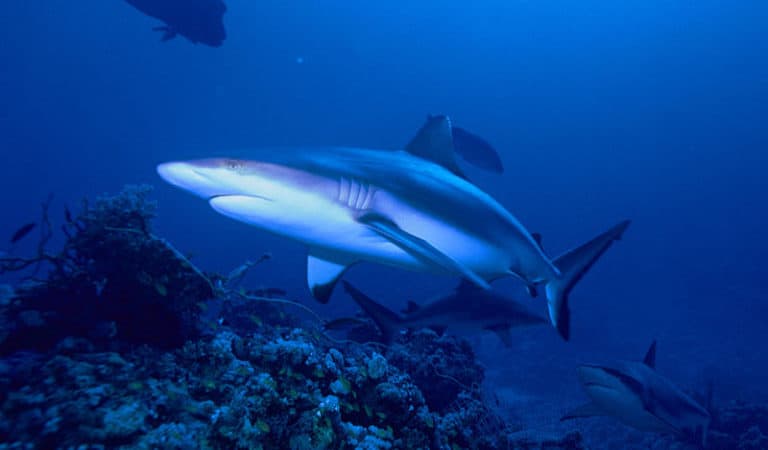
  • Grey Reef Shark (Carcharhinus amblyrhynchos) has a dark or black trailing edge on the tail, especially the upper lobe. Unlike Blacktip Reef Shark (C. melanopterus), its first dorsal fin doesn't have a bold black tip.
  • Grey Reef Shark (Carcharhinus amblyrhynchos) lives on reef edges and drop-offs across the Indo-Pacific, often patrolling reef fronts and strong-current areas, forming daytime groups in passes and atolls, and feeding more at dusk and night.
  • Characteristic agonistic/threat display when stressed: exaggerated swimming with arched back, pectoral fins depressed, and snout elevated-commonly reported for this species in diver interactions (documented in reef-shark behavior literature; commonly summarized in species accounts).
  • Ecological role: important upper-level predator on coral reefs and reef slopes, taking bony fishes and cephalopods; behaviorally conspicuous "patrolling" makes it a key meso/apex predator in many Indo-Pacific reef systems (IUCN/FishBase species summaries; Compagno, 1984).

Sexual Dimorphism

Sexes are similar in coloration/pattern; dimorphism is primarily size-related and reproductive anatomy typical of sharks (males with claspers). Females tend to reach larger maximum sizes in many populations; maturity sizes differ by sex (Compagno, 1984; FishBase, accessed 2025).

  • External claspers on pelvic fins (diagnostic of male elasmobranchs).
  • Reported male size at maturity commonly ~1.2-1.4 m TL (values vary among regions; summarized in FishBase and species accounts; Compagno, 1984).
  • No claspers; pelvic fins without intromittent organs.
  • Reported female size at maturity commonly ~1.3-1.6 m TL (regional variation; summarized in FishBase and species accounts; Compagno, 1984).
  • Often slightly larger-bodied adults on average in mixed aggregations; maximum size frequently attributed to females in field reports (species-account summaries).

Did You Know?

Maximum recorded size is about 255 cm total length (TL); adults commonly ~185 cm TL (FishBase/IUCN accounts).

Recorded maximum weight is ~33.7 kg (FishBase).

Depth range is from the surface to at least ~280 m, but it is most typical on outer reef slopes and drop-offs in the upper tens of meters.

It's viviparous (placental): pups develop inside the mother and are born live; litters are typically 1-6 pups (often 3-4).

Gestation is about 12 months, and newborns are roughly 45-60 cm TL (commonly reported in species accounts).

Grey reef sharks can form predictable daytime aggregations in reef passes with strong current, especially around oceanic atolls (a well-known pattern in places like Palau).

When stressed or competing, they perform a classic agonistic display - back arched, pectoral fins dropped, and snout raised - often before escalating to a charge.

Unique Adaptations

  • Countershading (dark grey above, pale below) reduces visibility from above and below - effective camouflage along bright reef slopes and blue-water edges.
  • Nictitating membrane (a "third eyelid," typical of requiem sharks) helps protect the eye during prey capture or close-quarters interactions on reefs.
  • Electroreception via ampullae of Lorenzini allows detection of weak bioelectric fields from hidden or low-visibility prey in crevices and over sand near reef structure.
  • Hydrodynamic, high-aspect tail and streamlined body support efficient cruising - well-suited to constant patrols along current-swept drop-offs.
  • Live-bearing placental reproduction (common in Carcharhinidae) produces relatively large, capable newborns (often ~45-60 cm TL), improving early survival around predator-rich reefs.
  • Identification-relevant traits among reef Carcharhinus: lacks the bold black fin tips of blacktip reef sharks (C. melanopterus) and lacks the bright white fin margins typical of silvertip sharks (C. albimarginatus); commonly noted is a darker trailing edge/band on the caudal fin and a robust "reef patrol" body form.

Interesting Behaviors

  • Reef-edge patrolling: Individuals routinely cruise along outer reef slopes and drop-offs, using the reef as a hunting boundary and navigation cue.
  • Pass/Channel aggregations: They may gather in reef passes where current concentrates scents and prey; these aggregations can be highly site-faithful.
  • Diel shift in foraging: Often more actively hunting around dusk/night, while daytime can include cruising, holding station in current, or social interactions.
  • Agonistic "threat display": A stereotyped posture (arched body, lowered pectorals) used in competitive or defensive contexts - one of the best-known shark warning displays.
  • High site fidelity: Tagging/telemetry studies commonly report repeated use of the same reefs and passes over long periods, suggesting strong residency in suitable habitat.
  • Opportunistic predation: Diet is dominated by bony reef fishes, plus cephalopods and crustaceans; hunting includes quick bursts from cruising speed to seize schooling fish near ledges.

Cultural Significance

Grey reef sharks (Carcharhinus amblyrhynchos) are key reef animals in the Indo-Pacific. In places like Palau they are iconic, protected, and central to dive tourism and conservation. Across Oceania they are respected and shape fishing rules and taboos.

Myths & Legends

In Hawaiian tradition, some families honor an ancestral guardian spirit (a family protector) that may take the form of a shark and is believed to watch over, protect, or guide descendants.

In Fiji, the shark deity Dakuwaqa appears in oral tradition as a powerful sea guardian who can protect fishers and punish wrongdoing at sea-sharks are treated as beings with agency rather than mere animals.

Across parts of Polynesia and Micronesia, stories describe sharks as ocean sentinels or messengers that escort canoes, warn of danger, or enforce sea-use rules - reflecting the cultural weight of reef-edge predators in island life.

In some Pacific island oral histories, sharks are linked to origin or transformation tales (humans becoming sharks or sharks becoming protectors), expressing kinship between people and the reef environment where grey reef sharks commonly patrol.

Modern Palauan cultural association: reef sharks (commonly including grey reef sharks on local reefs) have become symbols of national marine identity through shark-protection measures and public storytelling around the value of living sharks.

Conservation Status

NT Near Threatened

Likely to qualify for a threatened category in the near future.

Population Decreasing

Protected Under

  • CITES Appendix II (Carcharhinus spp., incl. Carcharhinus amblyrhynchos; international trade requires permits/non-detriment findings; listing adopted at CoP19, entered into force 2023).
  • Protected in parts of its range through national shark sanctuaries and shark-finning prohibitions (e.g., Palau National Shark Sanctuary 2009; Maldives shark fishing ban 2010) and through no-take zones/MPAs that include reef passes and outer reef slopes; protections are spatially uneven and enforcement varies.

Life Cycle

Birth 4 pups
Lifespan 18 years

Lifespan

In the Wild
8–25 years
In Captivity
5–20 years

Reproduction

Mating System Promiscuity
Social Structure Aggregation Group
Breeding Pattern Transient
Fertilization Internal Fertilization
Birth Type Internal_fertilization

Grey reef shark (Carcharhinus amblyrhynchos) is placental viviparous with internal fertilization via male claspers. Mating is brief and occurs in loose aggregations, often with separate male and female groups; it is promiscuous. No parental care after pups are born.

Behavior & Ecology

Social Shiver (loose shoal/school) Group: 4
Activity Cathemeral, Crepuscular
Diet Carnivore Reef-associated bony fishes (teleost reef fishes)

Temperament

Bold/curious around novel stimuli (e.g., divers) and can approach closely; risk increases when multiple individuals aggregate
Can be strongly assertive/territorial in high-value space (passes, drop-offs), showing agonistic threat displays that may precede charges or bites
Social tolerance is higher in predictable aggregation sites (daytime), while spacing increases during foraging dispersal (night)

Communication

No confirmed sound-producing vocalizations; communication is not known to rely on acoustic calls Elasmobranchs generally lack specialized vocal organs
Visual postural displays: the species' well-documented agonistic/threat display includes exaggerated swimming with arched back, depressed pectoral fins, raised snout, and rapid side-to-side movements; used to deter close approach by conspecifics or perceived threats Nelson et al., 1986
Tactile signaling: contact and close-following during courtship/mating interactions Reported for C. amblyrhynchos in Johnson & Nelson, 1978
Chemical cues (olfaction): tracking prey and potentially reproductive state cues in conspecifics, consistent with carcharhinid sensory ecology
Electroreception and mechanosensation (lateral line): short-range localization of prey/nearby animals and coordination/spacing within aggregations in low visibility or complex reef terrain

Habitat

Coral Reef Coastal Rocky Shore Seabed/Benthic Open Ocean
Biomes:
Terrain:
Coastal Island Rocky Sandy
Elevation: Up to 918 ft 8 in

Ecological Role

Upper-level reef predator (apex/mesopredator depending on local predator assemblage) that links reef and slope food webs.

Regulates abundance and behavior of mid-trophic reef fishes and cephalopods via predation risk Helps maintain reef community structure and trophic balance (top-down control) Removes weaker/ill individuals, potentially reducing disease transmission in prey populations Connects energy flow between reef flats, channels, and outer slopes through wide-ranging foraging patrols

Diet Details

Main Prey:
Reef-associated bony fishes Cephalopods Crustaceans Elasmobranchs

Human Interaction

Domestication Status

Wild

Grey reef shark (Carcharhinus amblyrhynchos) is not domesticated. Human contacts are mainly extractive (fisheries/bycatch) or non-extractive (dive tourism, research). It patrols reef edges and outer slopes daytime, forms loose groups at passes and drop-offs. It reaches ~2.55 m, is viviparous (gives live young) with small litters (commonly 3–4; 1–6), ~12-month gestation, with low population recovery under fishing pressure.

Danger Level

Moderate
  • May approach closely and display territorial/defensive behaviors (arched back, pectoral-fin depression, exaggerated swimming) that can precede a bump or bite if divers persist or corner the animal-especially around food, spearfishing activity, or in strong-current passes.
  • Bites are uncommon but possible; risk increases with poor visibility, baiting/chumming, carrying speared fish, or harassing/attempting to touch the shark.
  • Group-level (HUBS) context for reef-associated requiem sharks: interactions span high-value ecotourism (predictable aggregations at reef passes), incidental capture in reef and pelagic fisheries (gillnets/longlines), targeted local harvest in some areas, and occasional management removals/culls near bathing areas; most incidents involve close-range diver encounters rather than surface swimmers.

As a Pet

Not Suitable as Pet

Legality: Grey reef sharks are not practical or legal as pets in most places. They are kept only in licensed public aquariums or research centers with permits for animal welfare, public safety, and wildlife collection, and are regulated across the Indo-Pacific.

Care Level: Expert Only

Purchase Cost:
Lifetime Cost: $1,000,000 - $5,000,000

Economic Value

Uses:
Commercial and artisanal fisheries/bycatch Shark fin and meat trade (region-dependent) Dive tourism/ecotourism Public aquarium display (institutional) Scientific research and monitoring
Products:
  • fins (where traded/landed)
  • meat (fresh/salted/dried, depending on local markets)
  • skin/leather and cartilage/oil (minor, opportunistic uses in some regions)
  • tourism services (reef-shark diving/snorkeling experiences)

Relationships

Ecological Equivalents 5

Animals that fill a similar ecological role in their ecosystem

Silvertip shark Carcharhinus albimarginatus Overlaps strongly in Indo-Pacific outer-reef and reef-slope habitats and plays a similar role as a large, mobile predator; both frequently patrol drop-offs and can form loose aggregations at reef passes where currents concentrate prey.
Blacktip reef shark
Blacktip reef shark Carcharhinus melanopterus Sympatric, reef-associated carcharhinid that uses the same coral-reef food webs. Generally smaller and more lagoon- and shallow-water–biased than grey reef sharks, but the niche overlaps as a daytime-active hunter of reef fishes and cephalopods.
Whitetip reef shark Triaenodon obesus Shares the coral-reef predatory niche but differs behaviorally: it is more nocturnal and hunts in crevices. Included as a functional analog on Indo-Pacific reefs where grey reef sharks are more pelagic and edge-patrolling by day.
Galapagos shark
Galapagos shark Carcharhinus galapagensis Island-associated carcharhinid predator at oceanic islands. Overlaps in use of reef slopes and drop-offs and in mid-water hunting around insular reefs.
Silky shark
Silky shark Carcharhinus falciformis More oceanic, but often mixes at reef edges and seamounts, and can share prey resources (schooling pelagic fishes) with grey reef sharks on outer slopes and in passes.

Grey reef sharks are voracious marine predators that prefer shallow waters and are among the most common sharks found in coral reef habitats throughout the Indo-Pacific region. They share many characteristics with other reef shark species, including a wide, circular snout positioned directly in front of relatively large eyes. While they have many classic features seen among related shark species, they can be quickly identified by the dark lining along the back side of their tail fin.

3 Incredible Grey Reef Shark Facts

  • Site fidelity: While these sharks often migrate short distances as they seek prey, they are very loyal to their home turf and seldom leave an area once they are established.
  • Violent mating: The mating practices of mature sharks can be remarkably violent and leave females with multiple open wounds that make them more vulnerable to predators.
  • Tail highlight: One of the distinguishing features of the grey reef shark is the distinct black lining along the rear edge of the tail fin.

Grey Reef Shark Classification and Scientific Name

Grey reef sharks also go by many other names, including: bronze whalers, whaler sharks, and blacktail reef sharks. Their scientific name is Carcharhinus amblyrhynchos. The genus Carcharhinus is named after two Greek words that mean “sharpen” and “nose.” They are members of the taxonomic family Carcharhinidae, which is part of the class Chondrichthyes along with other types of cartilaginous fish.

Grey Reef Shark Appearance
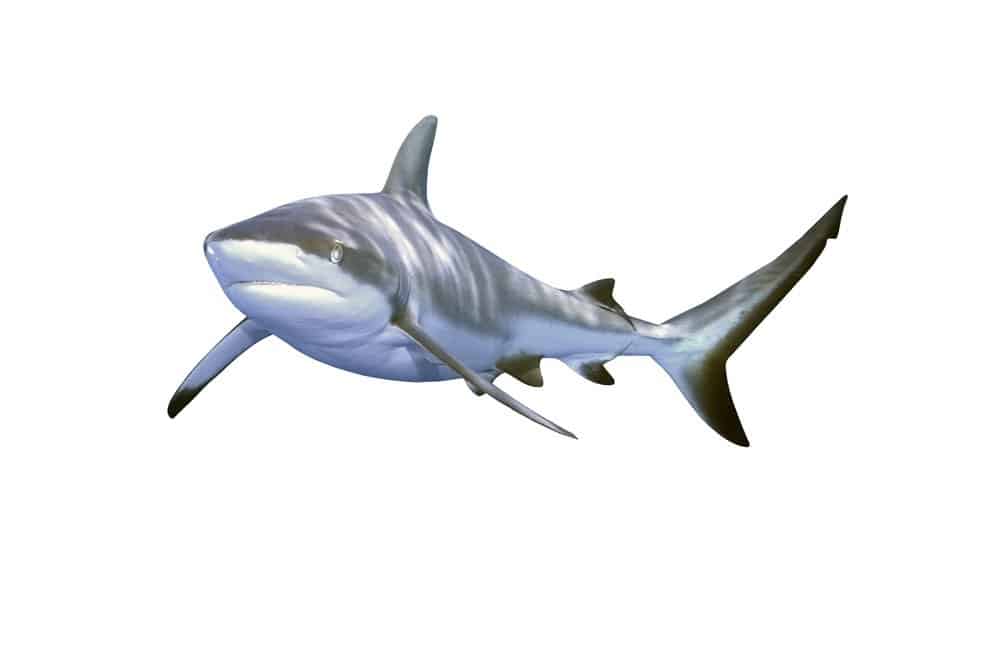
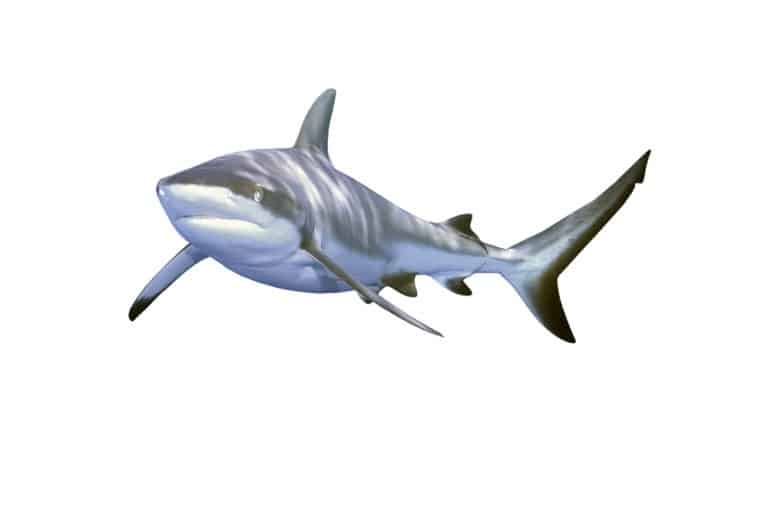
Grey Reef Shark isolated on white background

A Grey Reef shark can be easily identified by the color of its fins.

This species has an average size compared to other sharks, with a length of around 4 to 5 feet for mature adults. The largest specimens reported to date have reached a length of 8.5 feet and a body weight of around 74lbs. Their camouflage adaptations include a graduating color scale that transitions from darker gray on the upper side of the animal to pale white on the lower side. They have an extended nose that has a rounded tip as well as relatively large eyes.

Like many other shark species, observers can identify the grey reef shark through a quick examination of its fins. This species has a distinct dark margin along the entire backside of the caudal fin on its tail. It also has a dark or bronze gray dorsal fin on its top side, with some local populations in the Indian Ocean also displaying a white edge along this fin.

Grey Reef Shark Distribution, Population, and Habitat

These sharks are purely marine animals that stalk prey in shallow waters throughout the Indo-Pacific region. They prefer tropical and subtropical climates with a wide geographic distribution that encompasses much of the coast of Indonesia, northern Australia, various Pacific Islands, and the eastern coastline of Africa. Encounters with humans most frequently occur off the coasts of various islands, including Fiji, Tahiti, and Papua New Guinea.

As their name suggests, this species prefers to stalk prey along coral reefs that are typically located in shallow waters near coastlines. They often stay within 200 feet of the ocean’s surface, but are sometimes known to plunge to over 3,000 feet. They tend to lurk around rugged terrain, particularly around continental shelves, in relatively clear and calm waters.

While overall population numbers for these sharks are unknown, they are considered Endangered due to habitat loss. Their preference for coral reefs is a significant vulnerability due to the continued destruction of these habitats around the world. Pollution, commercial fishing operations, and changing ocean temperatures are all considered threats to coral reef habitats.

Grey Reef Shark Predators and Prey

What Eats Grey Reef Sharks?

Even though they often sit near the top of the food chain in their habitat, grey reef sharks aren’t without some risk of being eaten. In fact, they are a known source of food for larger species like tiger sharks, silvertip sharks, and the great hammerhead shark. While not a high-priority target, they are also caught by commercial fishermen and harvested for fins and fishmeal.

The Diet of a Grey Reef Shark

Like most sharks, this species isn’t very picky about what it eats. Grey reef sharks are voracious carnivores and nocturnal predators that prey on almost anything they can catch. Since they tend to inhabit coral reefs, cowfish, butterfly fish, and other fish species that prefer this environment are common targets. Various crustaceans, including shrimp and lobsters, as well as squid and octopus, are also potential components of a hungry shark’s diet.
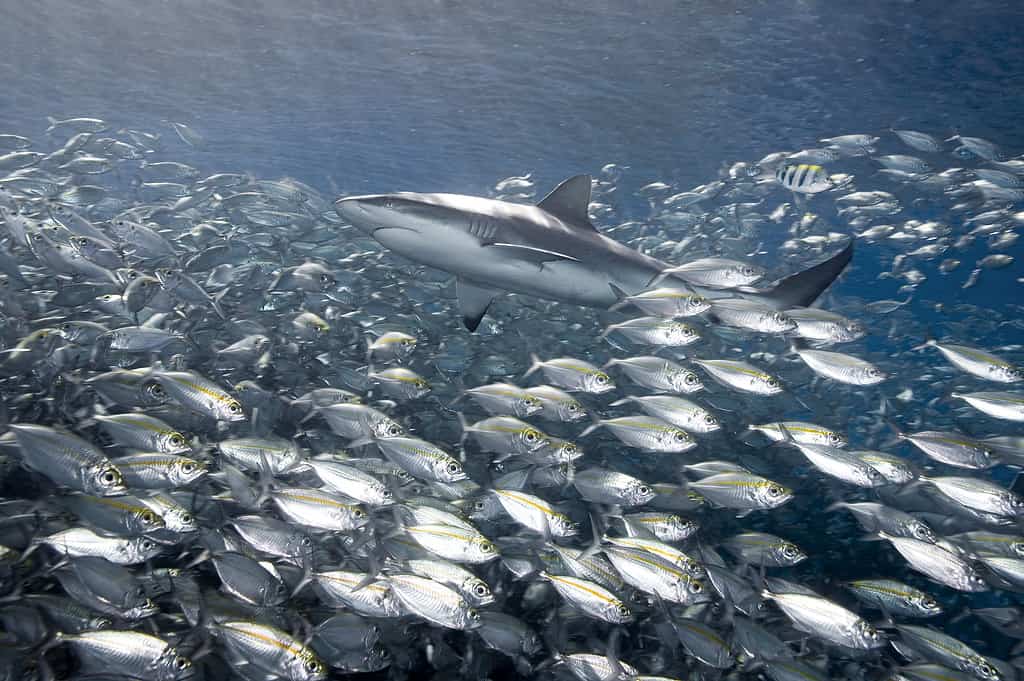
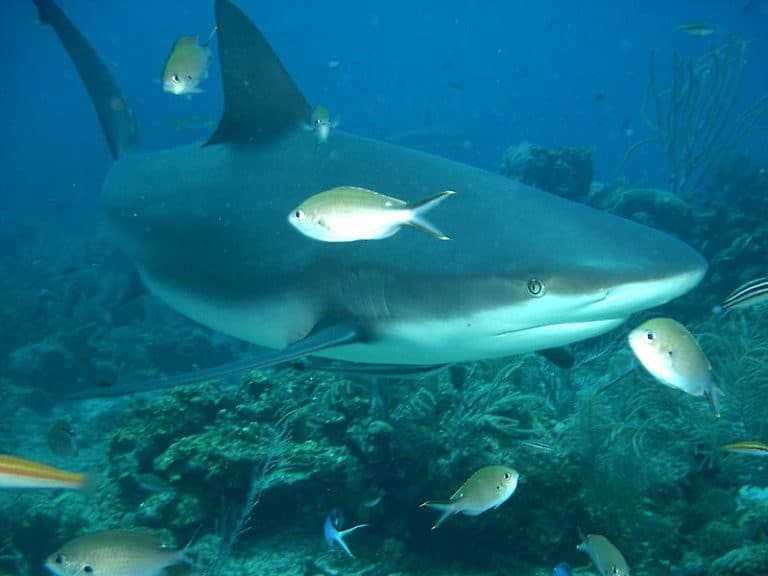
Grey Reef Shark, Carcharhinus amblyrhynchos

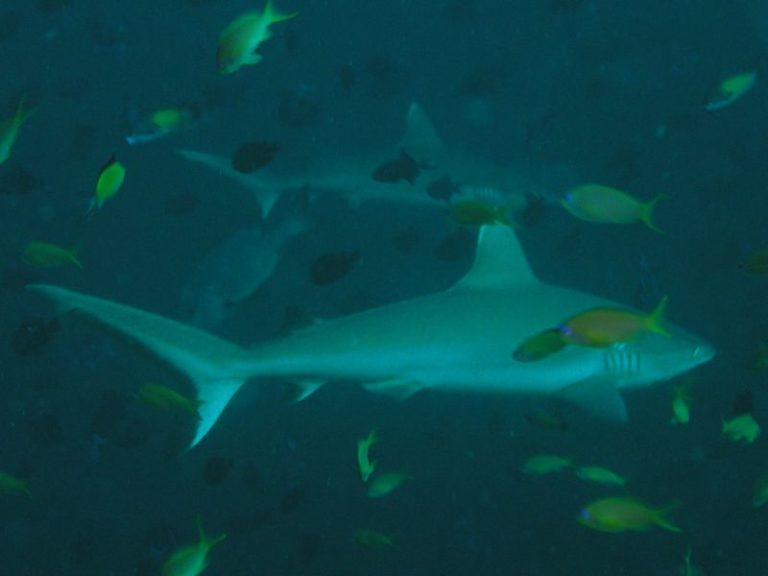
Grey Reef Shark, also known as a Grey Whaler Shark, swimming through a school of ox-eye scad.

Grey Reef Shark Reproduction and Lifespan

Mature female sharks release pheromones into the water to attract males when they are ready to breed. The complex mating dance the males use to compete for attention from females is one of the more distinct and interesting facts about the species. The male often bites the female throughout this process, which can leave notable wounds and leave both individuals vulnerable to predators.

One of the biggest threats to the long-term survival of this species is its relatively slow reproductive rate. It takes about one year for females to give birth to litters ranging from 1 to 6 pups. Their lifespan can extend to over 25 years, although they are more likely to succumb to predators, parasites, and diseases as they get older.

Grey Reef Shark in Fishing and Cooking

While they are not a distinct part of local diets throughout their native range, grey reef sharks are frequently caught by commercial fishermen. They are targeted for their fins, which are the key ingredient in shark fin soup. Their meat can also be cooked as a meal or as a general ingredient in ground fishmeal, but is not sought after to the same degree as blacktip sharks and other species of requiem shark.

Grey Reef Shark Population

Even though exact population numbers are unknown, researchers and conservationists are concerned about the longevity of stable populations. These sharks are still thriving in pristine coral reef environments, but are likely to face serious threats as these habitats continue to degrade. High site fidelity is one of the key facts that distinguish this species, so they are unlikely to develop adaptations or explore new habitats as coral reefs are lost.

View all 261 animals that start with G

Sources

  1. Brittanica / Accessed September 10, 2018
  2. Florida Museum / Accessed September 10, 2018
  3. Wikipedia / Accessed September 10, 2018
  4. Shark Research Institute / Accessed September 10, 2018
  5. Marine Bio / Accessed September 10, 2018
  6. Animal Diversity Web / Accessed September 10, 2018
A-Z Animals Staff

About the Author

A-Z Animals Staff

AZ Animals is a growing team of animals experts, researchers, farmers, conservationists, writers, editors, and -- of course -- pet owners who have come together to help you better understand the animal kingdom and how we interact.
Connect:

Thank you for reading! Have some feedback for us?


Grey Reef Shark FAQs (Frequently Asked Questions)

These sharks are found throughout the coastal waters of the Pacific and Indian oceans, especially around islands. They have a strong preference for hunting around coral reefs and other types of populated, rugged terrain in shallow waters.