G
Species Profile

Greyhound

Canis lupus familiaris

Born to sprint, built to lounge
Kasefoto/Shutterstock.com

Greyhound Distribution

Click a location to explore more animals from that region

Origin Location

This map shows the native origin of the Greyhound. As a domesticated species, they are now found worldwide.

Loading map...

Found in 1 country

Size Comparison

Human 5'8"
Greyhound 2 ft 4 in

Greyhound stands at 41% of average human height.

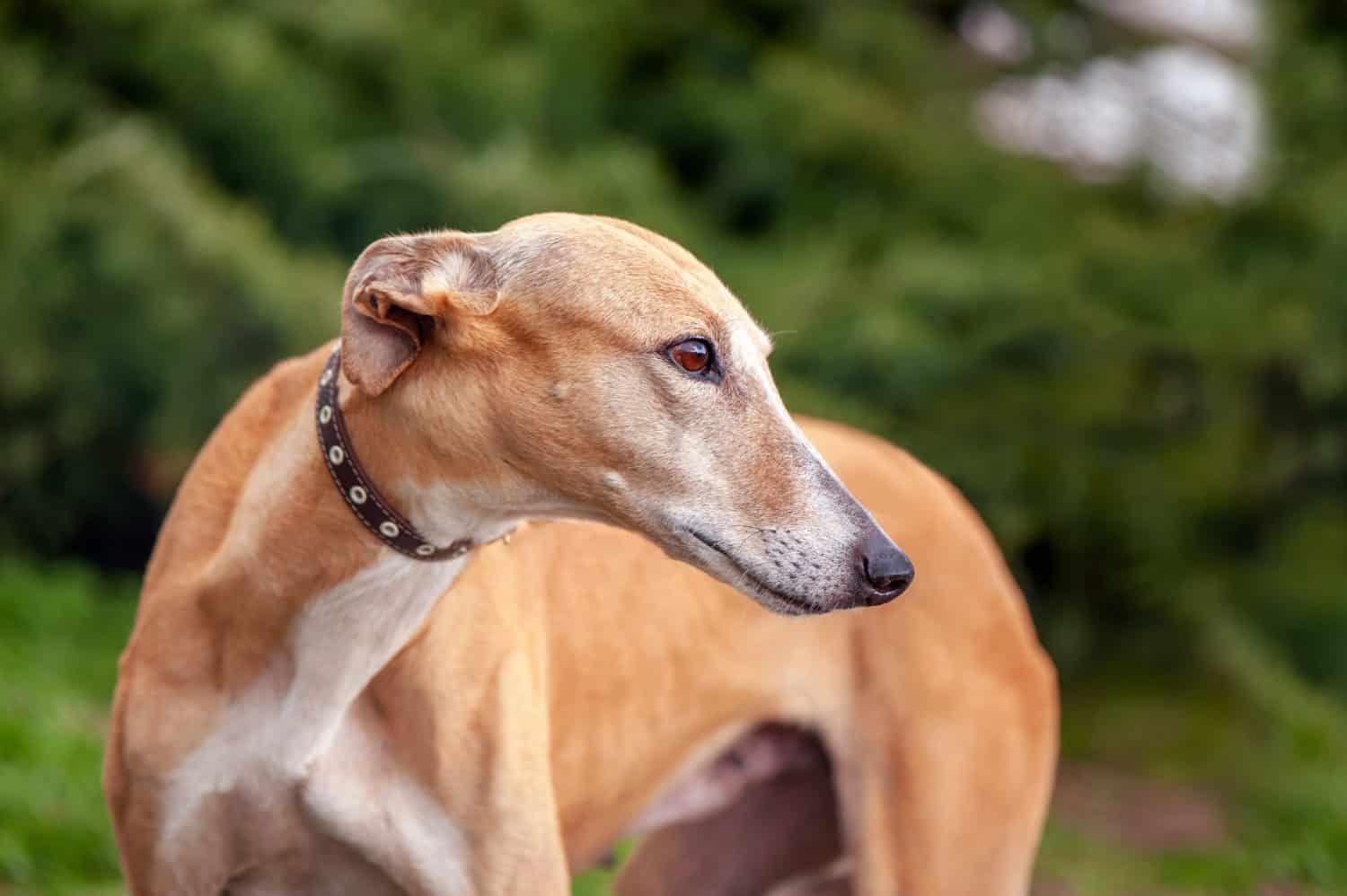
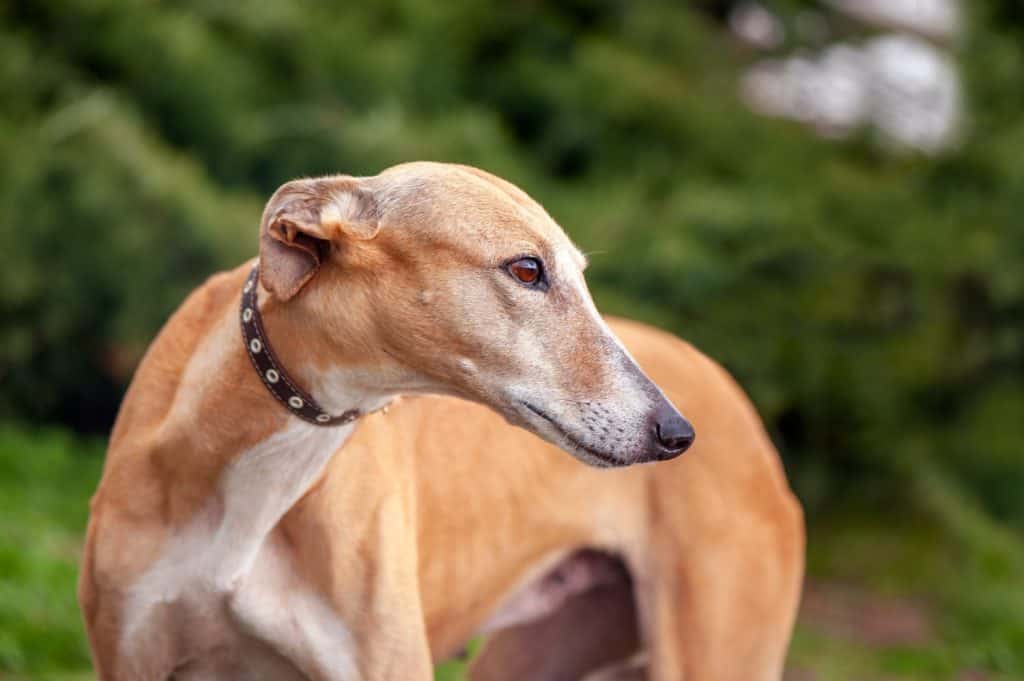
Red greyhound dog looking back closeup portrait

At a Glance

Domesticated
Also Known As Racing Greyhound, Racer, Sighthound, Gazehound, Coursing Hound, Track Dog
Diet Omnivore
Activity Crepuscular+
Lifespan 12 years
Weight 40 lbs
Status Not Evaluated
Did You Know?

Greyhounds are among the fastest dog breeds, built for short sprinting bursts rather than endurance.

Scientific Classification

The Greyhound is a domestic dog breed (family Canidae) in the sighthound group, historically selected for speed and visual tracking of prey; today it is also kept as a companion animal and is well known from racing and lure coursing.

Kingdom
Animalia
Phylum
Chordata
Class
Mammalia
Order
Carnivora
Family
Canidae
Genus
Canis
Species
Canis lupus familiaris

Distinguishing Features

  • Streamlined, deep-chested body with narrow waist (athletic build)
  • Long legs and flexible spine adapted for high-speed gallop
  • Long, narrow head and muzzle typical of sighthounds
  • Short, smooth coat in many colors

Physical Measurements

Males and females differ in size

Height
2 ft 5 in (2 ft 4 in – 2 ft 6 in)
2 ft 2 in (2 ft 1 in – 2 ft 3 in)
Length
4 ft 1 in (3 ft 7 in – 4 ft 5 in)
Weight
73 lbs (60 lbs – 88 lbs)
64 lbs (55 lbs – 75 lbs)
Tail Length
1 ft 8 in (1 ft 6 in – 1 ft 10 in)
1 ft 7 in (1 ft 4 in – 1 ft 10 in)
Top Speed
45 mph
Top speed about 72 km/h

Appearance

Primary Colors
Secondary Colors
Skin Type Mammalian skin with very short, fine coat; notably thin, tight, and low-fat coverage compared with many other domestic dog breeds-prone to scrapes/tears and pressure sores without padding (bedding).
Distinctive Features
  • Domestic dog breed (Canis lupus familiaris) selectively bred as a sighthound: pursues prey primarily by sight and speed rather than scent work.
  • Extreme cursorial build: very deep chest (large heart/lung capacity), narrow waist with pronounced tuck-up, long limbs, and flexible spine optimized for galloping.
  • Dolichocephalic (long, narrow) head with a streamlined muzzle; ears typically 'rose' ears folded back, may lift when alert.
  • Very low body fat and prominent musculature; bony prominences (hips/spine) may be visible in fit individuals (normal for the breed).
  • Short, smooth coat with minimal undercoat; limited natural insulation-often needs coats in cold/wet weather.
  • Laterally placed eyes and a wide field of view typical of sighthounds; strong motion detection and chase drive.
  • Often uses a thin, whip-like tail carried low with a gentle curve; tail tip may show white or darker pigment.
  • Common modern roles: companion animal, racing/lure coursing, and rehomed ex-racing dogs; typically calm indoors with bursts of high-speed activity outdoors.
  • Breed-specific health tendencies vs the general domestic dog population: higher risk of gastric dilatation-volvulus (bloat), osteosarcoma, corns/foot pad issues, dental disease in some lines, and sensitivity to certain anesthetic/sedative protocols (requires sighthound-experienced veterinary dosing).
  • Because of their build and chase drive, Greyhounds (Canis lupus familiaris) need secure fencing or leash, soft thick bedding to prevent sores, routine nail and dental care, gentle handling for thin skin, and slow exercise.

Sexual Dimorphism

Males are typically taller and heavier with more obvious muscle mass and broader head/neck; females are usually slightly finer-boned with a narrower head and lighter frame. Differences are moderate and overlap occurs.

  • Generally larger overall frame (height/weight) and deeper musculature, especially through shoulders and thighs.
  • Broader head and thicker neck; chest may appear more robust.
  • Slightly smaller, more refined build with a narrower head/neck and lighter musculature.
  • Often appears more slender through the shoulders and waist, while retaining the breed's deep-chested silhouette.

Did You Know?

Greyhounds are among the fastest dog breeds, built for short sprinting bursts rather than endurance.

They're classic sighthounds: they hunt by sight and motion, not primarily by scent like many other dogs.

Many retired racing Greyhounds transition well to home life and are often surprisingly calm indoors.

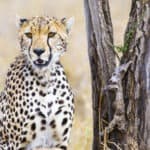
Their body design-deep chest, long legs, flexible spine-resembles other sprint specialists like cheetahs (convergent form).

Greyhounds often have low body fat and thin skin, which affects anesthesia choices and temperature comfort.

"Roaching" (lying on the back with legs tucked) is a common Greyhound relaxation pose.

Their coat is short and low-odor, with relatively modest grooming needs compared with many breeds.

Unique Adaptations

  • Sprint biomechanics: long stride length, highly flexible spine, and powerful hindquarters optimized for rapid acceleration.
  • Deep chest/large heart-lung capacity relative to body: supports explosive sprint performance (with breed-typical hematology differences seen in many Greyhounds).
  • Wide visual field and motion sensitivity: sighthound-style tracking that prioritizes detecting movement at distance.
  • Low body fat and short coat: enhances heat dissipation during sprinting but increases sensitivity to cold and pressure sores.
  • Aerodynamic, lightweight frame: narrow waist and long limbs reduce energy cost for fast galloping over short distances.

Interesting Behaviors

  • High prey-drive chasing: sudden fast pursuit of moving objects (squirrels, cats, plastic bags) triggered by sight and motion.
  • "Zoomies" in short, intense bursts: quick laps or straight-line sprints, then long rest periods.
  • Roaching: resting belly-up with curved spine and tucked legs, often on soft bedding.
  • "Leaning" affection: many Greyhounds press their bodies against people as a calm social contact behavior.
  • Selective recall when something is running: visual stimulation can override training without strong management.
  • Preference for soft surfaces: they often seek couches, beds, and padded areas due to bony build and thin skin.

Cultural Significance

Greyhounds are one of the oldest sighthound dogs, linked to nobles and hunting in Europe and the Mediterranean. They show grace and loyalty in art. Modern racing made them famous and led to retirement and rehoming programs.

Myths & Legends

In the Welsh tale of Gelert, a faithful hound is mistakenly killed after protecting a child-the story became a lasting legend of canine loyalty and is popularly tied to Beddgelert, Wales.

Medieval European hunting lore treated swift hounds-especially greyhound-like coursing dogs-as near-mythic instruments of nobility, with stories of unmatched speed and unwavering devotion accompanying aristocratic hunts.

In English folklore, spooky "black dogs" are not always Greyhounds, but the image of a fast, silent, long-legged hound at night looks like sighthounds and shaped ghost dog stories.

Racing-era stories turned into modern legends: famous track champions are kept alive in local tales. Communities remember them like folk heroes, and fans and handlers tell of amazing finishes and once-in-a-lifetime speed.

Conservation Status

NE Not Evaluated

Has not yet been evaluated against the criteria.

Population Stable

Life Cycle

Birth 7 pups
Lifespan 12 years

Lifespan

In the Wild
10–13 years
In Captivity
10–14 years

Reproduction

Mating System Polygynandry
Social Structure Managed Domestic
Breeding Pattern Transient
Fertilization Managed Selective
Birth Type Managed_selective

Greyhound (Canis lupus familiaris) breeding: polygynandry, human-managed. No long-term pair bonds; multiple mates possible. Breeding is selective (natural or assisted), transient at estrus. Bitches cycle 1–2 times/year, gestation ~63 days, litters mid-single digits.

Behavior & Ecology

Social Pack Group: 3
Activity Crepuscular, Diurnal
Diet Omnivore Highly palatable animal-protein meals (e.g., lean cooked meat or meat-based complete kibble); many Greyhounds also strongly prefer smelly, meat-forward foods.

Temperament

Breed-distinguishing profile (vs. general domestic dog): sighthound specialized for visual tracking and extreme sprint speed; typically shows short bursts of intense activity followed by long periods of rest (often "72-km/h couch potato").
Generally gentle, affectionate, and sensitive; often polite/reserved with strangers rather than overtly gregarious-social warmth increases with routine and predictable handling.
Greyhounds often have a strong chase drive; quick-moving animals (cats, squirrels, small dogs) can cause them to chase. Use secure fencing, leashes, and careful testing with pets; varies by individual.
Usually low-to-moderate barking and low nuisance behaviors; many are calm indoors and prefer soft bedding and quiet spaces.
Handling sensitivity: may startle with sudden touch/noise; benefits from positive reinforcement and gentle desensitization (especially retired racers adapting to homes).
HUBS (group-wide patterns with variation): most Greyhounds prefer cooperative, non-rough play; many enjoy parallel walking and short chase games; some are very dog-social, others are dog-selective or prefer human company.
Greyhounds need daily walks and chances for safe, controlled sprints (lure coursing or fenced runs). Avoid too much hard running in unfit dogs. Give warm coats and thick bedding.
Greyhounds have higher risk of bloat (gastric dilatation‑volvulus), osteosarcoma, dental disease, corns and paw calluses, some heart issues (murmurs/arrhythmias), and anesthesia sensitivity; they tolerate heat and cold poorly.

Communication

low-frequency bark Often infrequent compared to many breeds
whine/whimper Attention, discomfort, or anticipation
howl Less common; may occur with separation or siren-like sounds
grumble/groan/sigh Common during settling, contentment, or mild protest
highly visual body language: fixed gaze, head/ear orientation, freeze-then-launch posture when a moving trigger is detected
subtle calming/appeasement signals (averted gaze, lip-licking, soft posture), reflecting a sensitive temperament
physical contact seeking: leaning, "rooing" posture changes, gentle nudging for attention
play invitations: light bows and quick sprint-starts; often prefers chase games over wrestling
scent communication typical of domestic dogs: sniffing, urine marking, ground-scratching Usually less intense than some terriers but varies by individual
sleep/rest positioning as social signal: choosing proximity to trusted humans/dogs; shared resting is a common affiliative behavior in the breed

Habitat

Biomes:
Temperate Grassland Temperate Forest Mediterranean Desert Hot Desert Cold Boreal Forest (Taiga) Tundra Alpine Savanna Tropical Dry Forest Tropical Rainforest Wetland Freshwater Marine +8
Terrain:
Plains Coastal Hilly Valley
Elevation: Up to 11482 ft 11 in

Ecological Role

Domesticated, human-associated omnivore; historically a cursorial predator of small-to-medium prey, now primarily a companion animal with occasional predation/scavenging behaviors.

Companionship and cultural roles (sport/lure coursing, recreation) Deterrence/predation pressure on small pest animals in human-modified environments (variable by individual and management) Scavenging of food waste when accessible (generally managed/limited by owners)

Diet Details

Main Prey:
Small mammals Rodents Birds
Other Foods:
Starchy plant foods Vegetables Fruits

Human Interaction

Domestication Status

Domesticated

Greyhound (Canis lupus familiaris) is an ancient sighthound breed bred from domesticated wolves long ago. Used for visual hunting (coursing), they were bred in the 19th and 20th centuries for sprint speed and chase for track racing and lure coursing. Today people adopt ex-racers, keep them as pets, race them where legal, and support welfare efforts.

Danger Level

Low
  • Like all dogs, can bite if fearful, injured, or cornered; risk increases with poor socialization or pain
  • Large body size means accidental knocks/foot injuries to small children during zoomies/sprints
  • High prey drive may lead to chasing small animals (risk to other pets more than humans)
  • Startle sensitivity in some ex-racers can cause defensive reactions if handled abruptly while resting

As a Pet

Suitable as Pet

Legality: Generally legal as a pet in most jurisdictions; may be subject to standard dog ownership laws (licensing, leash requirements) and breed-neutral dangerous-dog ordinances. Racing ownership/retirement and transport can be regulated locally; check city/state rules and HOA/landlord policies.

Care Level: Moderate

Purchase Cost: Up to $3,000
Lifetime Cost: $15,000 - $35,000

Economic Value

Uses:
Companion animal ownership (pet industry) Sport and events (lure coursing, conformation, performance) Racing industry (where legal) and associated employment/services Veterinary services (including breed-specific issues) Rescue/rehoming networks and charities
Products:
  • Dog food formulated for large breeds; high-quality protein diets
  • Leashes/martingale collars (commonly used for narrow heads)
  • Coats/jackets (thin coat and low body fat increase cold sensitivity)
  • Crates and orthopedic bedding (bony prominences)
  • Muzzles for group play/kennel management (common in racing/rescue transitions)
  • Entry fees/training services for lure coursing and shows

Relationships

The greyhound has the highest percentage of fast-twitch muscle of any breed. Despite this reputation, retired racing greyhounds make for calm and sweet pets. It is also called the English greyhound to avoid confusion with the Italian greyhound. Since its breed registration in 1885 by the American Kennel Club, it has enjoyed a following as a friendly, noble sporting show dog and pet.

History and Origins

The breed is a hunting type and a sighthound whose ancient remains were discovered in modern Syria and dated 4,000 years ago. Originally, however, it was used for hunting desert wildlife by the Egyptian pharaohs 5,000 years ago, and depictions of the dogs have been found in their tombs. It has a history in coursing of deer, foxes, and hare, and racing and companionship in England, Great Britain, and the British Isles.

Greyhounds feature in Greek and Roman mythology and are the only dog mentioned in the Bible (King James Version). They have long been associated with royalty and aristocracy. During the Dark Ages, they nearly became extinct due to famine, but were saved by priests, who bred them for the nobility. Medieval English laws, particularly after the Norman conquest, restricted ownership of greyhounds and other hunting dogs to the nobility for several centuries.

Due to their speed and agility, the breed was used for dog racing, with greyhound racing becoming popular in the 20th century, first in England after 1926 and then in America. Owing to the cruelty of greyhound racing, including overbreeding, these days it is legal in only a handful of countries and a few states in the U.S.
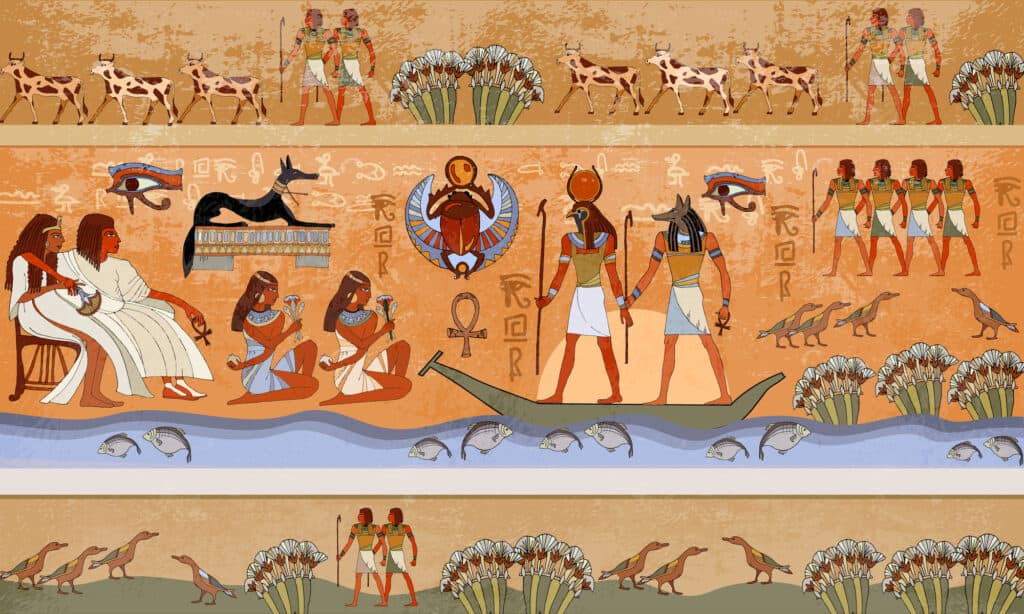
Greyhounds were revered in Ancient Egypt and appear on pharaohs’ tomb walls.

3 Pros and Cons of Owning Greyhounds

Pros!Cons!
They don’t need much exercise.
They only need a 20-30 minute walk each day.
Hyperactive and destructive tendency
If the puppies don’t get enough play with the proper toys, they will mouth on various things in the house.
They get along with everyone.
They enjoy getting to know adults, children, and other pets.
Sensitive skin
They need soft bedding to sit and sleep in. And since they’re vulnerable to extreme temperatures, they need to live indoors, especially when it’s cold. They also need to avoid sunburn.
They don’t trigger allergic reactions as much.
They have no undercoats, unlike other dogs.
Familiar vet
Their vet needs to know the breed to properly anesthetize them and treat their unique issues.

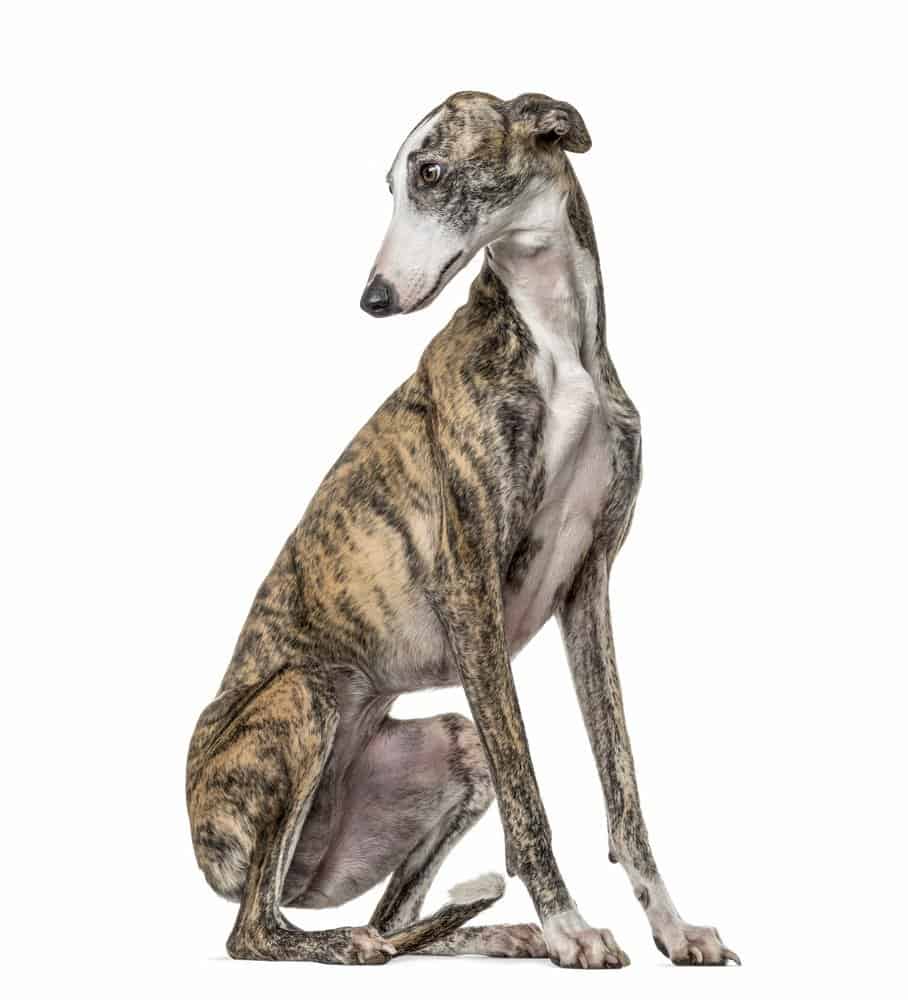
The greyhound is a tall, slim, and graceful dog.

Size and Weight

This dog is tall, slim, graceful, and a smooth-coated large dog with powerful, long legs under a deep chest, flexible spine, and slender build. They have a height of 28 to 30 inches for males and 27 to 28 inches for females. Males weigh 60 to 88 lbs, and females weigh 55 to 75 lbs. They both weigh on average about 70 lbs. Most greyhounds in family homes today are adopted as adult racing dogs. They are considered adults at 18 months.

Common Health Issues

Greyhounds tend to be healthy and live long lives of 10 to 14 years. However, there have been some cases of greyhounds developing esophageal achalasia, gastric dilatation volvulus (also called bloat), gastric torsion, heart and eye conditions, osteosarcoma, and corns on the paw pads. There is also a condition called greyhound neuropathy. They can develop Alabama rot, a rare but serious disease with an unknown cause. If they are on hard surfaces, they develop skin sores. Flea collars, flea spray, and other insecticides are not safe to use on them. If they are outside, they will have more health issues from exposure to extreme heat or cold, though they tolerate heat better than cold.

Some racing greyhounds develop an arched back — while they run, they extend their long legs and stretch their spines for a better stride to cover more ground in less time. An arched back makes it impossible for them to do so, although some dogs can run very fast. Recommended health tests for the breed are an ophthalmologist evaluation, a greyhound polyneuropathy NDRG1 DNA test, and a cardiac exam.
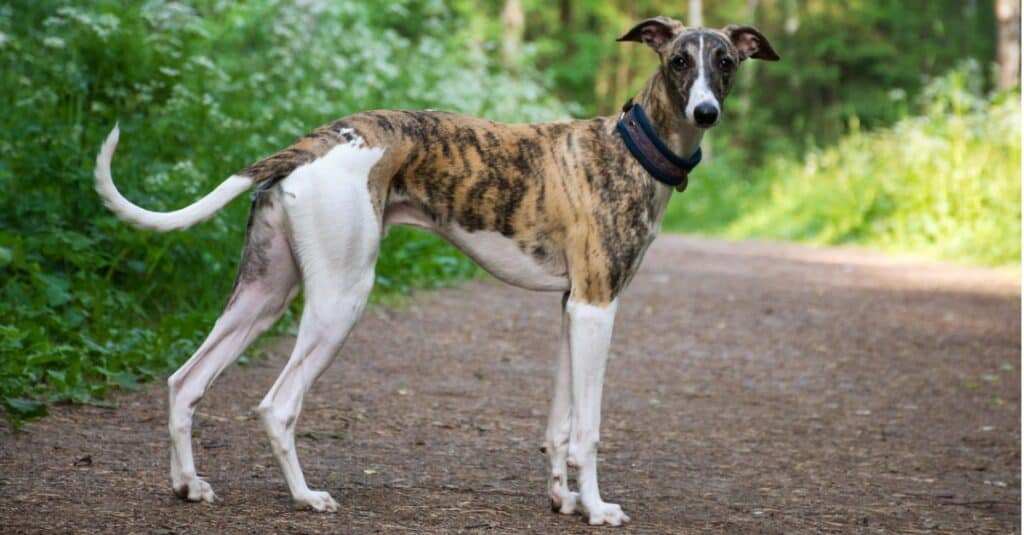
greyhound standing tall on path outside

If greyhounds are outside, they have more health issues from exposure to extreme temperatures.

Temperament and Behavior

Notably, Greyhounds are docile, quiet, gentle, and loving pets. They each have their own personality, with different traits and behavior depending on whether they were purely show or working dogs. Although many adopted greyhounds are retired racing dogs, they adjust very well as adults to their new homes. They don’t tend to bark or howl, but they are mistrustful of strangers. When they are not sprinting outside, they are couch potatoes at home, mostly relaxing or sleeping for 18 hours a day. However, it is difficult for them to be left alone for several hours, as they need a lot of attention and care. That’s because they enjoy being around people and other pets.

As puppies, they are more demanding than adults, with a need for playtime of 1 to 2 hours a day. Likewise, they need chew toys to learn not to mouth on people.
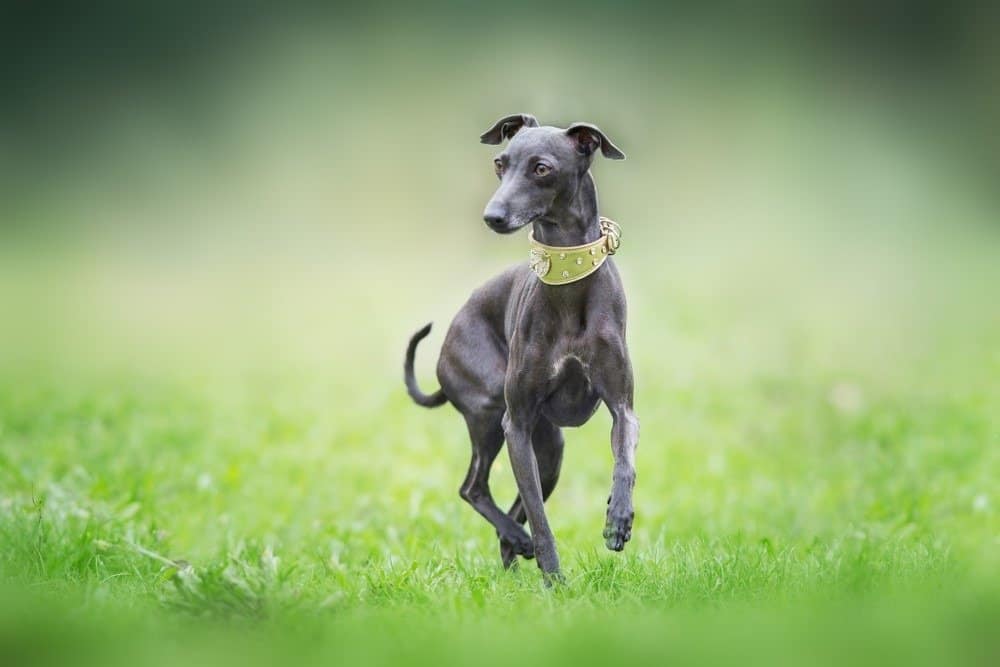
Italian greyhound on green grass

Greyhounds are known to be docile, quiet, and gentle dogs.

How To Take Care of Greyhounds

The most important decision in adopting a greyhound is whether it should be a puppy or an adult, because they are different in their needs and behavior. From there, new pet owners can learn about how to care for these dogs at various ages. The breed also has unique health factors that must be considered.
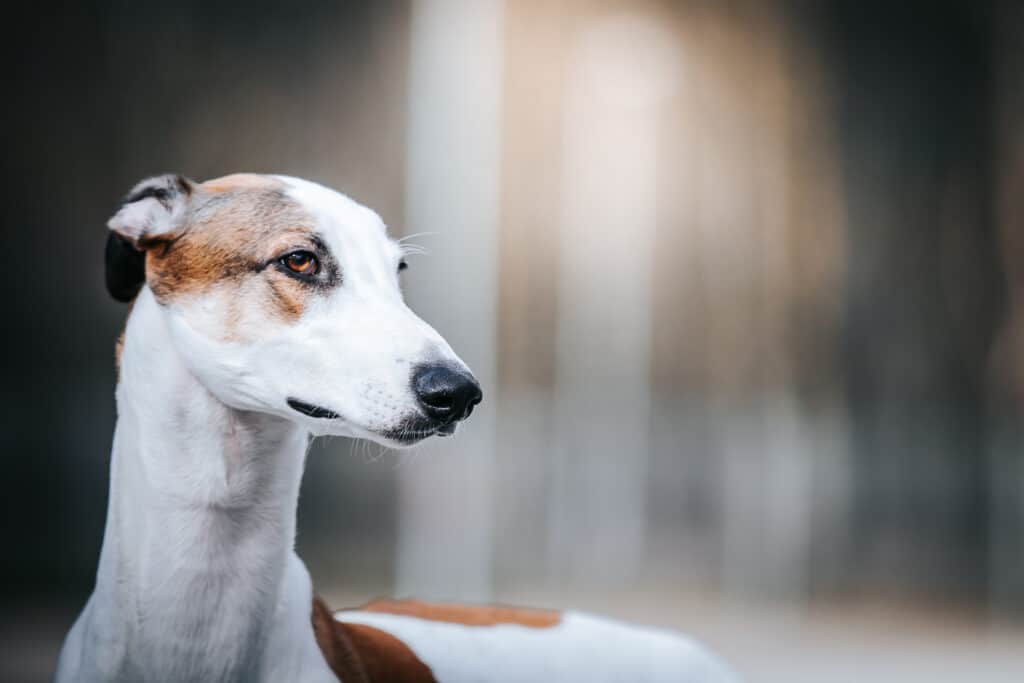
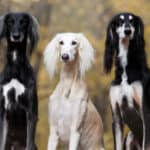
saluki

Be aware of greyhounds’ unique health factors before adopting.

The Best Dog Food for Greyhounds

Most importantly, greyhounds demand a diet higher in fat, calories, and protein than some other dogs. More specifically, they need high-quality dog food for their age.

At first, puppies enjoy puppy kibble and pureed meat. Later, to meet the dietary needs of adults, feed them a mixture of dry food and chopped meat. In particular, they need 250 to 300g of meat a day. Like other pets, you should remember what human foods are safe for them to eat. Some examples of greyhound-safe fruit are bananas, apples, oranges, and watermelons. Also, vegetables they can eat are carrots, green beans, zucchini, cucumber, and cooked potatoes. Additionally, they can eat rice and pasta.

Best Greyhound Insurance

The best insurance for your greyhound is a plan that allows them to see any vet, emergency clinic, or specialist in the country. Importantly, it should have unlimited or no restrictions on coverage. Also, keep in mind that some insurance companies have exclusions for performance dogs.

Maintenance and Grooming

This breed’s short coat goes through light seasonal shedding. It needs no more than a monthly bath and weekly rubdown with a damp cloth or grooming glove. Secondly, nails should be trimmed and ears cleaned regularly. Finally, you should brush their teeth every day with a special toothpaste formulated for dogs.
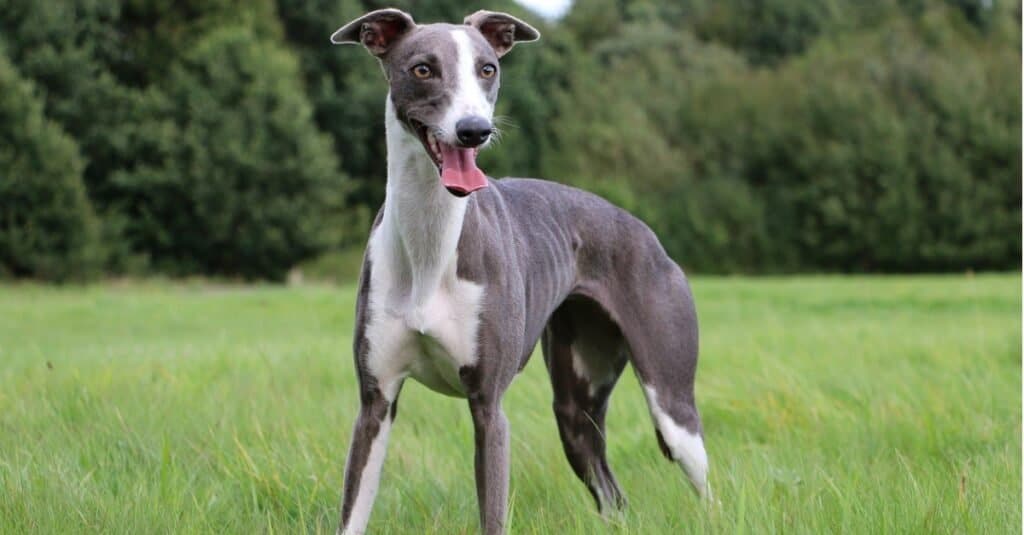
Gray Dog Breeds

Greyhounds experience light seasonal shedding and only need a bath about once a month.

Training

Greyhounds are playful and have a lot of wanderlust, but they are very smart and easy to train as adults. As puppies, they are more difficult to train since they have difficulty with recall. Like other sighthounds, they have a very strong prey drive and therefore tend to give chase, being able to see far ahead. When you practice letting them go off-lead in a safe area, they will remember to come back. It becomes easier as they get older.
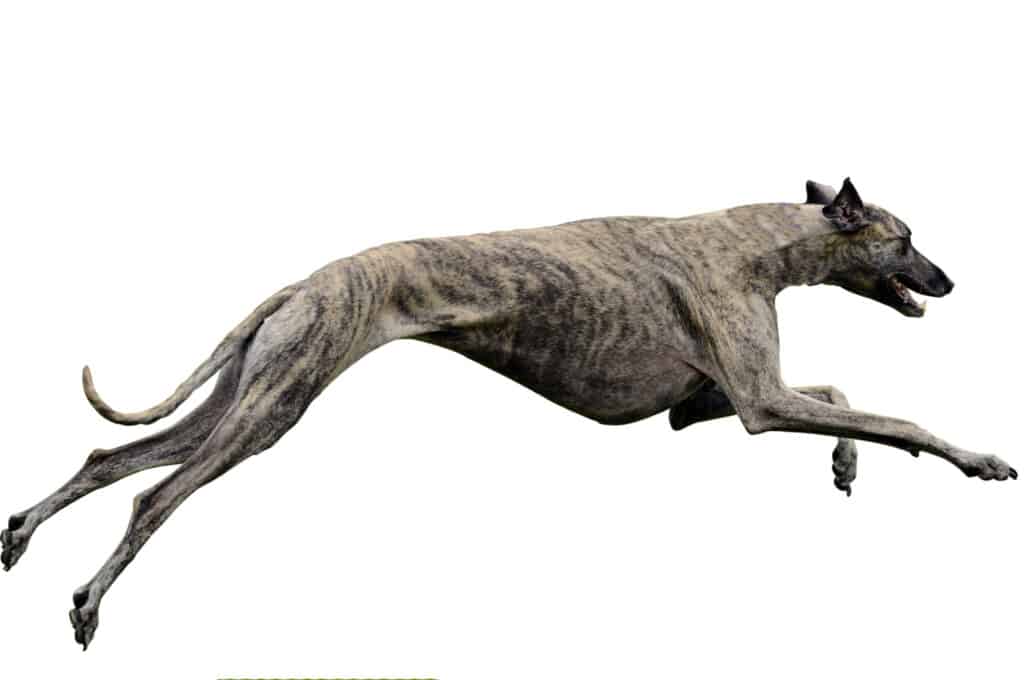
Greyhound with white backdrop running at full speed

Greyhounds have an extremely strong prey drive and tend to give chase.

Exercise

Greyhounds enjoy sprinting, with an average high speed of 45 mph. Part of their exercise is mental stimulation, so they could enjoy games or hidden treats. Other than a daily walk, they need an additional 30 to 40 minutes of exercise each day. They do well living in apartments if they get to be walked. If there is no yard, they will require more frequent walking. To burn off excess energy, greyhounds sprint in the backyard or through the house. Walk them in the early morning and evening to avoid sunburn, and wait an hour after feeding them before playing to avoid bloat or torsion.
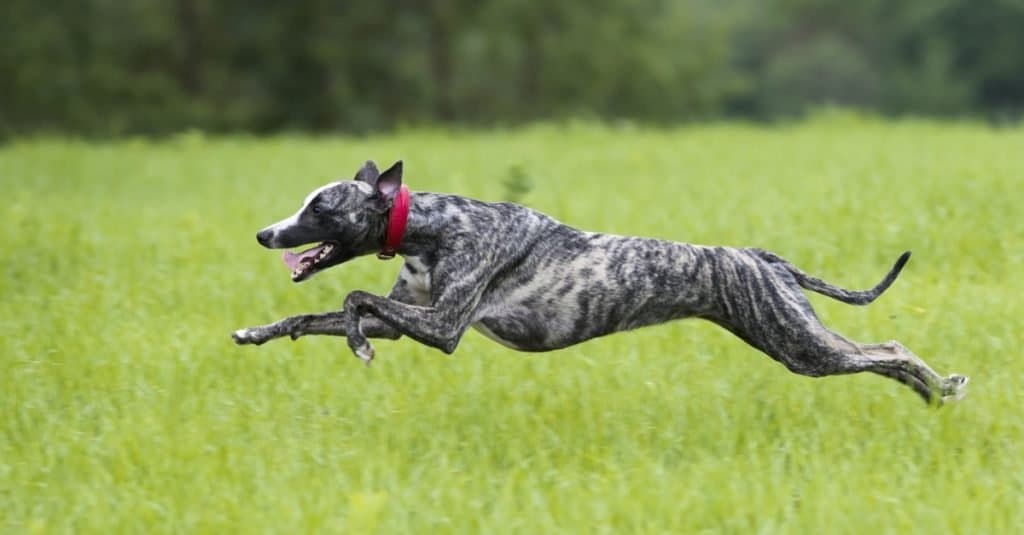
Dog Facts for Kids: A greyhound

Greyhounds love sprinting and can reach an average high speed of 45 mph.

Puppies

Puppies are born in litters of 1 to 12. Like most breeds, during puppyhood, greyhounds express mouthiness and the tendency to chew on, nip, or play-bite. Mouthy dogs tend to use their mouths to hold or “herd” humans, so they need to learn to redirect to chew toys. Like other mouthy breeds, greyhounds love to play fetch, and they also enjoy chewing on stimulating and rewarding toys stuffed with kibble or treats. This breed needs a lot of attention and training during puppyhood.
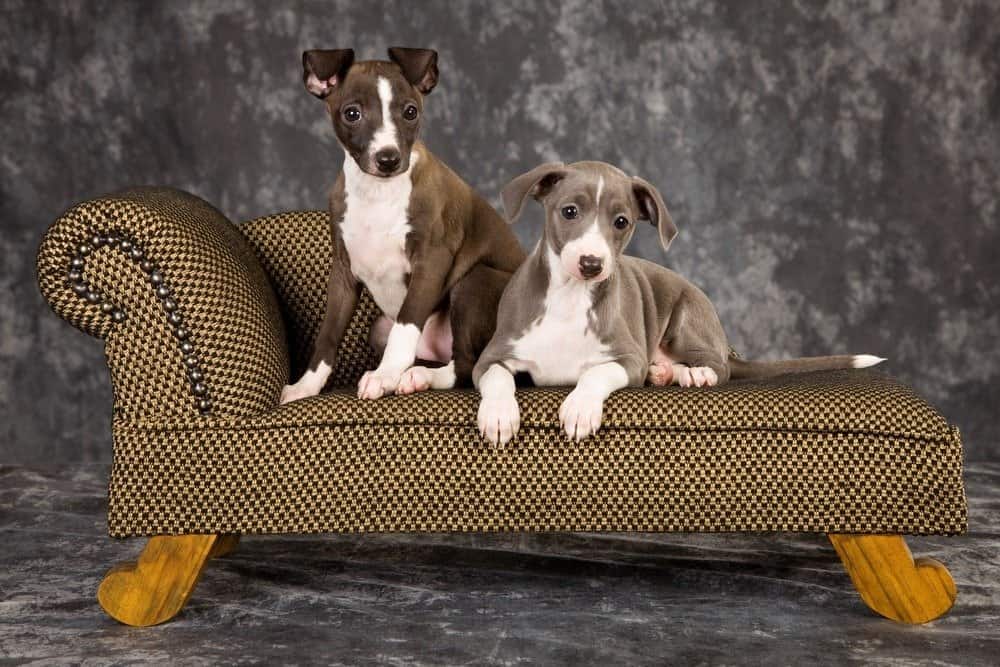
2 Italian Greyhound puppies lying on miniature couch

Greyhound puppies require a lot of attention and training.

Greyhounds and Children

Greyhounds need to be socialized from a young age with other animals and children. Although very people-oriented, the breed prefers quiet and soft-spoken families rather than a family that has very young children. Their skin tears easily, making it difficult for them to be around rowdy toddlers. Rather, they are independent while playing, being more self-motivated than other hunting breeds that require direction.
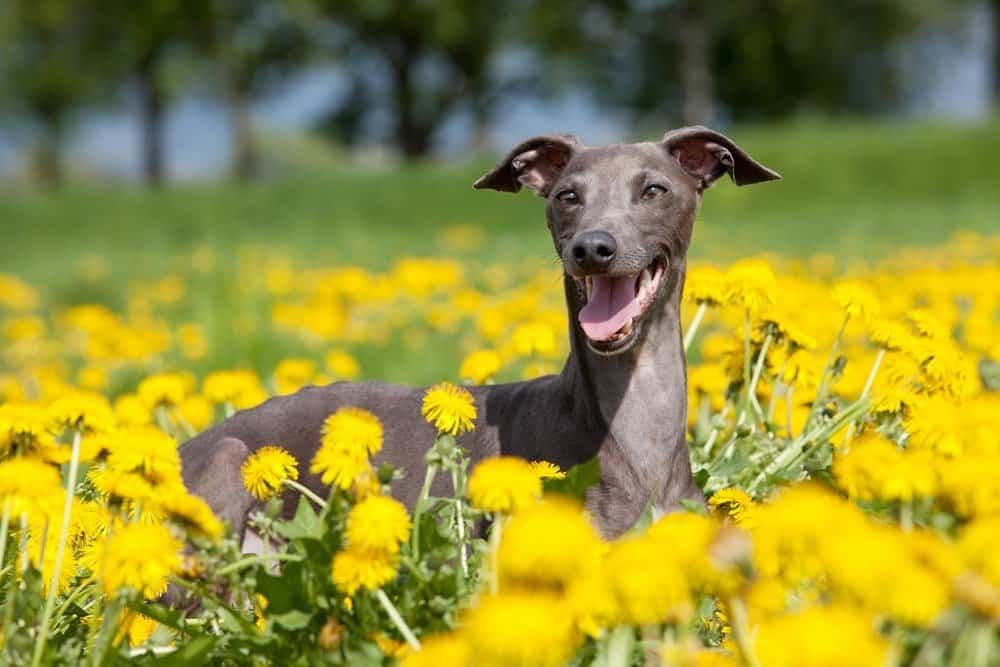
Italian greyhound in field of flowers

Although very people-oriented, greyhounds are independent while playing.

Types of Greyhounds

The English greyhound belongs to the sighthound group, which includes other dogs that carry the greyhound name. These types of greyhounds, such as the Italian Greyhound and Scottish Greyhound, are separate breeds closely related to the English greyhound in appearance, temperament, and traditional use as a hunting dog.

  • Italian Greyhound: A miniature version of the English greyhound, the “Iggy” has a more slender build and weighs no more than 15 pounds when fully grown. Bred to be more of a lap dog than a hunting dog, it’s believed they date back to the Roman Empire and were considered a status symbol during the Renaissance.
  • Russian Greyhound: Known also as the Russian Wolfhound and the Borzoi, this wavy-haired breed is larger than a standard greyhound, and may grow as tall as 33 inches and weigh up to 100 pounds. Their size means they can suffer health issues such as arthritis, hip and elbow dysplasia, and heart disease, and their average lifespan of 12 years is shorter than other breeds.
  • Persian Greyhound: More commonly known as the Saluki, the Persian Greyhound is one of the oldest known dog breeds. They can be traced back to 7000 B.C. and were favorites of Egyptian pharaohs. Used as a hunting hound by royalty, they are among the fastest dogs in the world. They have longer, coarser fur than other greyhounds, and their silky ears hang lower.
  • Spanish Greyhound: Often called the Spanish Sighthound, or Galgo Español, the Spanish Greyhound has a long lineage, appearing on Egyptian tombs and evidence recording their presence in Spain in 100 A.D. Developed to hunt hares, they are smaller and lighter than English greyhounds, and have two coat types (smooth and rough).
  • Scottish Greyhound: Originally bred to hunt and course red deer in the Scottish Highlands, these dogs are also known as Scottish Deerhound and are closely related to the Irish Wolfhound. They are a large, heavy-boned hound breed with a wiry coat and can weigh up to 110 pounds and grow as tall as 32 inches at the shoulder.
  • Arabian Greyhound: Also known as the Sloughi, these greyhounds were first bred by the Bedouin and Berber tribes in North Africa and are commonly found in Morocco. While greyhounds are generally many different colors, these dogs are usually one shade of grey or tan. As they are considered louder than other greyhounds, they are used in Africa as guard dogs.
  • Afghan Greyhound: Better known as the Afghan Hound, this breed is famed for its long, flowing coat of silky hair. It is said by some to be the oldest purebred dog in the world and predates written history. First bred as a hunting dog capable of withstanding the cold temperatures of mountainous Afghanistan, they now regularly feature in dog shows.
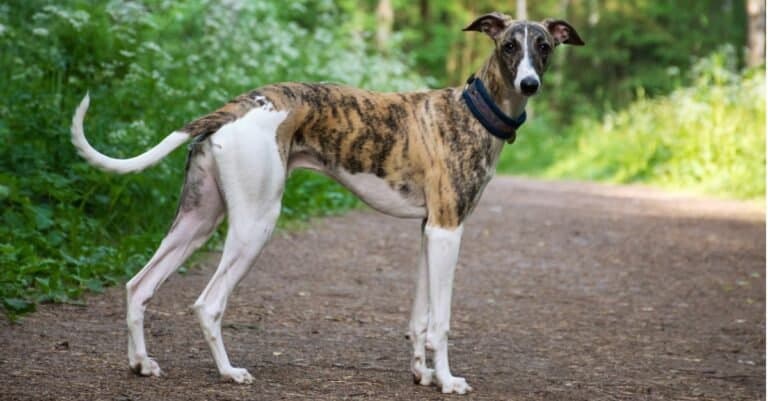
  • Whippet: Bred to be a smaller version of the English greyhound, reaching up to 22 inches in height, Whippets grew popular with coal miners in Northern England, where they were used in amateur racing competitions and nicknamed the “poor man’s racehorse.” They are known to have the fastest acceleration time among dogs. They’ll want to jog with you, while the greyhound would rather cuddle.
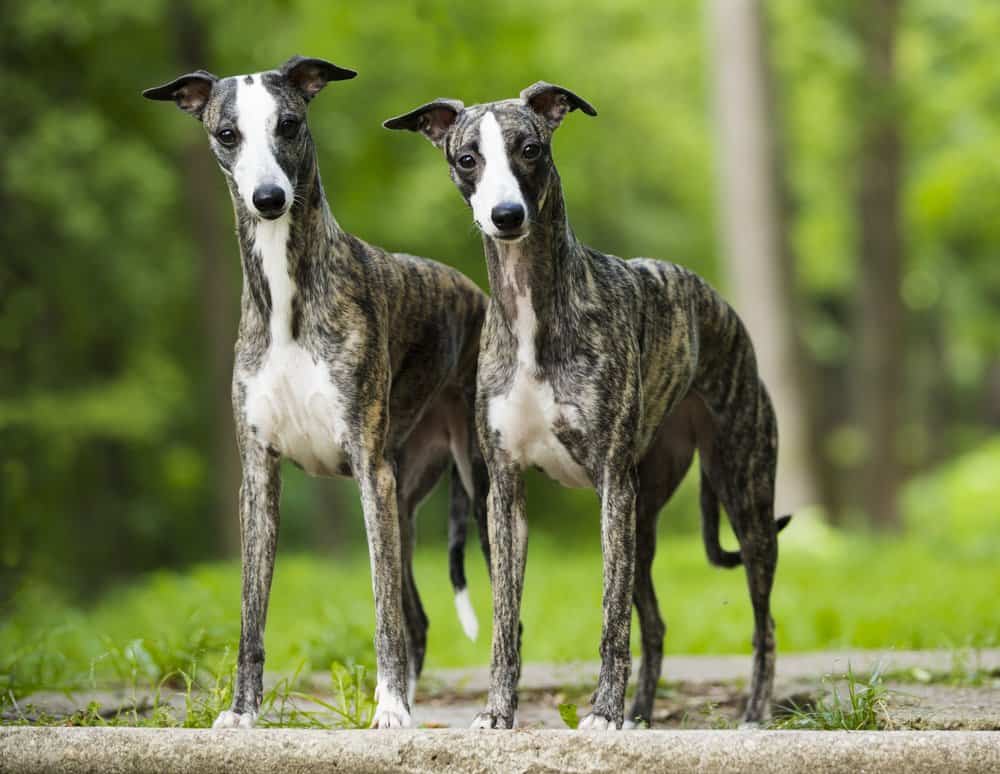
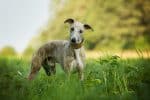
Whippet (Canis familiaris) - standing side by side in woods

Whippets are similar to greyhounds but smaller and more active.

Famous Greyhounds

  • General George A. Custer was famous for his love of and ownership of greyhounds. He traveled with about 40 hounds of various coursing breeds.
  • The United States’ 19th President, Rutherford B. Hayes, owned a greyhound named Grim.
  • Mick the Miller is the most famous racing greyhound in Great Britain. He became an icon of dog racing in spite of his short three-year career, winning 19 races in a row. After his retirement, he became a feature of films and social events as a sports dog hero.
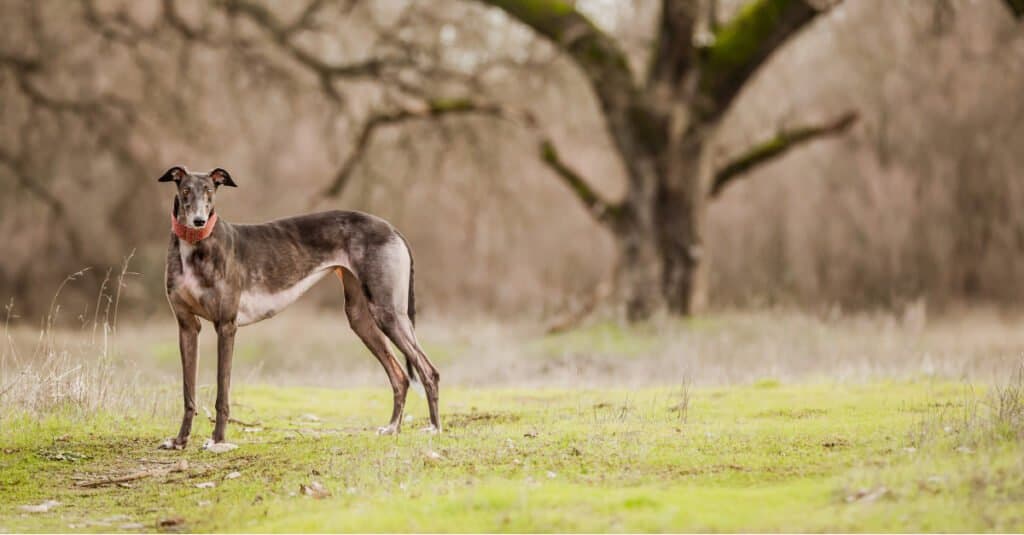
Calmest dog - greyhound standing in the field

General George A. Custer was known for his love of and ownership of greyhounds.

View all 261 animals that start with G

Sources

  1. Doggie Designer / Accessed September 10, 2018
  2. Rover / Accessed September 10, 2018
  3. Wag! / Accessed September 10, 2018
  4. Pet Helpful / Accessed September 10, 2018
  5. Gumtree Greys / Accessed September 10, 2018
  6. Greyhound Racing Victoria / Accessed September 10, 2018
  7. Racing Insider / Accessed September 10, 2018
  8. Three Rivers Greyhound / Accessed September 10, 2018
Catherine Gin

About the Author

Catherine Gin

Catherine Gin has more than 15 years of experience working as an editor for digital, print and social media. She grew up in Australia with an alphabet of interesting animals, from echidnas and funnel-web spiders to kookaburras and quokkas, as well as beautiful native plants including bottlebrushes and gum trees. Being based in the U.S. for a decade has expanded Catherine's knowledge of flora and fauna, and she and her husband hope to have a hobby farm and vegetable garden in future.

Thank you for reading! Have some feedback for us?


Greyhound FAQs (Frequently Asked Questions)

A greyhound can reach an average race speed that exceeds 40mph and a full speed of 43mph in 98 feet. It can travel at about 68feet/second  for the first 820 feet of a race.