G
Species Profile

Grizzly Bear

Ursus arctos horribilis

Hump, claws, and wild omnivory
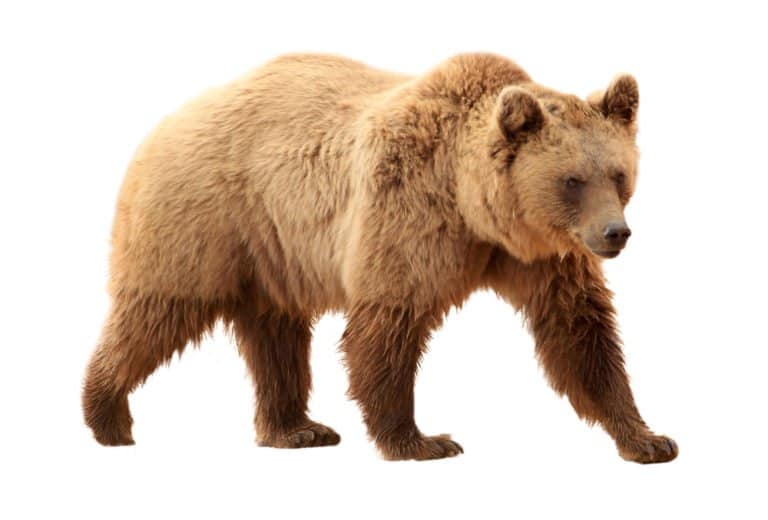
John Good - Public Domain

Size Comparison

Human 5'8"
Grizzly Bear 3 ft 7 in

Grizzly Bear stands at 64% of average human height.

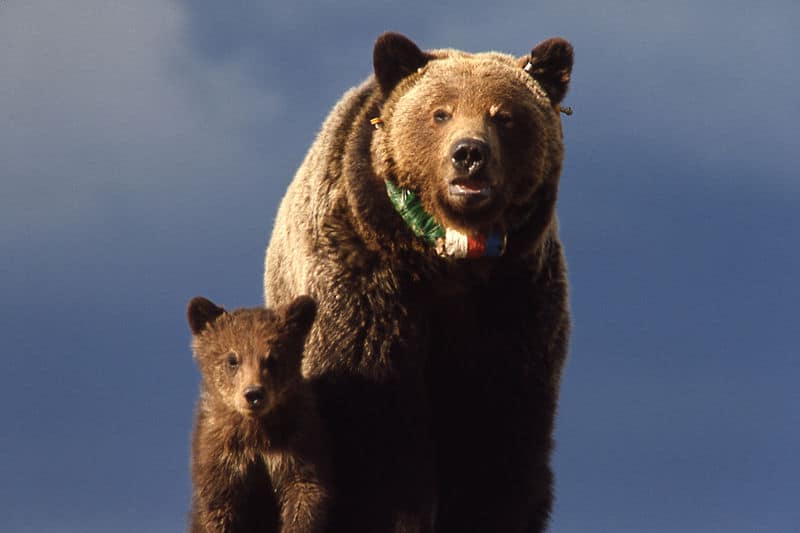
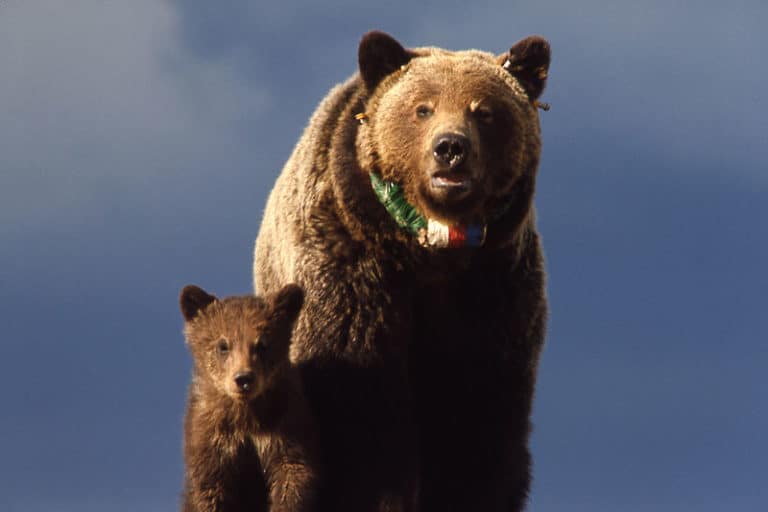
Grizzly Bear with cub

At a Glance

Wild Species
Also Known As Brown bear, Silvertip, Silvertip bear, Bruin
Diet Omnivore
Activity Cathemeral+
Lifespan 22 years
Weight 360 lbs
Status Not Evaluated
Did You Know?

Field mark: the shoulder "hump" is enlarged muscle mass (trapezius, etc.) powering forelimb digging and turning over heavy substrates (Herrero, 2002).

Scientific Classification

The grizzly bear is a North American form of the brown bear, typically treated as the subspecies Ursus arctos horribilis. It is a large omnivorous carnivoran with a prominent shoulder hump, long foreclaws adapted for digging, and a diet that varies seasonally from plant matter to insects, fish, and ungulates.

Kingdom
Animalia
Phylum
Chordata
Class
Mammalia
Order
Carnivora
Family
Ursidae
Genus
Ursus
Species
Ursus arctos

Distinguishing Features

  • Prominent muscular shoulder hump (especially noticeable in many inland populations)
  • Long, curved foreclaws well-suited for digging
  • Grizzled (silver-tipped) guard hairs common, though coat color varies widely
  • Robust skull and strong bite adapted to an omnivorous diet

Physical Measurements

Males and females differ in size

Height
0 in (0 in – 0 in)
3 ft 3 in (2 ft 11 in – 3 ft 7 in)
Length
5 ft 11 in (4 ft 11 in – 6 ft 11 in)
Weight
595 lbs (397 lbs – 794 lbs)
353 lbs (287 lbs – 441 lbs)
Tail Length
5 in (2 in – 9 in)
5 in (2 in – 9 in)
Top Speed
35 mph
Sprints up to 56 km/h

Appearance

Primary Colors
Secondary Colors
Skin Type Thick mammalian skin covered by dense double-layer pelage: coarse guard hairs over a woolly insulating underfur; seasonal molting with fur density increasing prior to winter denning.
Distinctive Features
  • Prominent shoulder hump formed by enlarged muscles (especially for forelimb power in digging); a key field mark distinguishing many grizzlies from black bears in North America.
  • Foreclaws long and relatively straight, commonly ~5-10 cm on the front feet; adapted for digging roots, bulbs, ground squirrels, and excavating dens.
  • Head profile often appears more 'dished' (concave) than American black bear; ears tend to look shorter and more rounded relative to head size.
  • Body size (adult): head-body length commonly ~1.5-2.4 m; standing height on hind legs often ~1.8-2.4 m; shoulder height on all fours commonly ~0.9-1.1 m (population- and sex-dependent).
  • Mass (adult, typical inland grizzly ranges): males commonly ~180-360 kg; females commonly ~130-200 kg (coastal brown bears can exceed these values, but are not always referred to as 'grizzly' in all classifications).
  • Tail very short and inconspicuous (typically ~6-22 cm) and hidden by fur.
  • Omnivorous, strongly seasonal diet reflected in dentition and robust jaw musculature: spring forbs/carrion; summer insects, berries; fall hyperphagia with heavy fruit/seed intake; in some regions significant salmon and ungulate use.
  • Seasonal denning/hibernation: typically dens for ~5-7 months in much of the range (varies with latitude, elevation, sex, and food availability).
  • Grizzlies in North America (Alaska, western Canada, northwestern U.S.) live in tundra, alpine/subalpine, boreal and mountain forests, river areas, and shrub and grass patches; coat thickness and color change with habitat and season.

Sexual Dimorphism

Sexes overlap in coloration and overall form, but males average substantially larger and more robust than females; differences are most apparent in mass, skull breadth, and neck/shoulder musculature (hump often more pronounced in large adult males).

  • Typically heavier and larger-bodied: adult males commonly ~180-360 kg with a broader skull and thicker neck/shoulder musculature.
  • Forequarters often appear more massive; shoulder hump can look especially prominent in large adult males.
  • Larger head with more pronounced sagittal crest region and wider muzzle (population-dependent).
  • Typically smaller: adult females commonly ~130-200 kg; body and head proportionally less massive.
  • Often relatively slimmer neck/forequarters; hump still present but commonly less visually pronounced than in large adult males.
  • Females are the sex most often observed with dependent young; lactation and seasonal fat storage can change body profile across the year.

Did You Know?

Field mark: the shoulder "hump" is enlarged muscle mass (trapezius, etc.) powering forelimb digging and turning over heavy substrates (Herrero, 2002).

Foreclaws are long and relatively straight-commonly ~5-10 cm-adapted for digging roots, ground squirrels, and constructing dens (Pasitschniak-Arts, 1993).

Adult size varies strongly by habitat/food: males commonly ~180-360 kg; females ~130-200 kg; total length often ~1.8-2.4 m (Pasitschniak-Arts, 1993; Schwartz et al., 2003).

Speed: despite their mass, grizzlies can sprint up to ~56 km/h over short distances (Herrero, 2002).

Reproduction: implantation is delayed; cubs (usually 1-3, often 2) are born in the den in midwinter (typically Jan-Feb) and emerge with the female in spring (Pasitschniak-Arts, 1993).

Longevity: commonly ~20-25 years in the wild; captive individuals can exceed 30 years (records into ~40 years) depending on husbandry (Pasitschniak-Arts, 1993; AZA husbandry summaries).

Unique Adaptations

  • Shoulder hump (power musculature) enabling high-force digging and rapid forelimb strikes-key to accessing subterranean foods and making dens (Herrero, 2002).
  • Long foreclaws (~5-10 cm) optimized for digging rather than climbing; typically longer/straighter than many black bear claws (Pasitschniak-Arts, 1993).
  • Dense coat with "grizzled" guard hairs (light-tipped hairs) that can provide camouflage in open/alpine and tundra habitats-one of the classic field marks.
  • Flexible omnivore dentition and gut physiology supporting a broad diet (plants, insects, fish, carrion, ungulates) with strong seasonal shifts (Schwartz et al., 2003).
  • Delayed implantation (embryonic diapause): allows mating in late spring/early summer but timing of birth to midwinter denning, with pregnancy proceeding only if the female has sufficient fat reserves (Pasitschniak-Arts, 1993).
  • High fat deposition and metabolic suppression during winter dormancy, enabling survival through months of little/no feeding while maintaining core body function (Pasitschniak-Arts, 1993).

Interesting Behaviors

  • Seasonal diet switching: spring grazing on sedges/forbs and winter-killed ungulates; summer insects (ants), berries; salmon where available; autumn hyperphagia to build fat for denning (Schwartz et al., 2003; Hilderbrand et al., 1999).
  • Excavation and "digging pits": individuals dig extensively for roots, bulbs, and burrowing rodents, leaving visible foraging pits that can alter soil structure and plant communities (Tardiff & Stanford, 1998).
  • Food caching: some individuals cover carcasses or high-value foods with soil/vegetation and return later, especially when scavenging or defending kills from other bears/wolves (Herrero, 2002).
  • Denning/hibernation: enters winter dormancy for ~5-7 months in much of the range; pregnant females den earlier and emerge later; den sites often on steep slopes with deep snow or stable soils (Pasitschniak-Arts, 1993).
  • Large home ranges and dispersal: males generally range farther than females; subadult males often disperse long distances from natal areas, influencing gene flow and conflict patterns (McLellan & Hovey, 2001; Schwartz et al., 2003).
  • Communication: rub trees, scent mark, and use body postures/vocalizations; chemical cues help reduce surprise encounters and mediate breeding/spacing (Green & Mattson, 2003).

Cultural Significance

Grizzly Bear (Ursus arctos horribilis) is a strong symbol in Indigenous art, regalia, and ceremony, and a key figure in conservation history (e.g., Yellowstone recovery). It helps with land care, human-wildlife living together, and park identity in Alaska, Canada, and the northern U.S.

Myths & Legends

'The Bear Mother,' a Northwest Coast tale, shows a woman marrying or joining a bear family, returning to people, teaching that bears are like family and deserve respect, and explaining hunting rituals and giving back.

Tlingit and Haida bear stories on the Northwest Coast show bears as powerful forest beings linked to human clans. Some tales say families come from bears and teach rules for behavior in bear country.

Blackfoot/Blackfeet traditions of Napi (Old Man) and bear encounters: stories in which Napi's dealings with bears teach lessons about humility, proper behavior, and the consequences of disrespecting formidable beings of the prairie-edge and mountains.

Plateau and Interior Salish Coyote-and-Bear tales: episodes where Coyote's cleverness (or foolishness) contrasts with Bear's strength and authority, using Bear as a moral counterweight and a teacher figure in the world's ordering.

Ute and other Rocky Mountain "Bear Dance" traditions: ceremonies connected to bears' emergence in spring, celebrating renewal and calling on bear power for health and balance-reflecting close observation of bear seasonality and denning cycles.

Explorers and settlers told stories in journals and by campfires that made Ursus arctos horribilis seem more fearsome; the subspecies name horribilis ("terrifying") reflects that view and its real defense of cubs.

Conservation Status

NE Not Evaluated (this subspecies is not separately assessed by the IUCN Red List; the species Ursus arctos is assessed globally as Least Concern)

Has not yet been evaluated against the criteria.

Population Unknown

Protected Under

  • United States Endangered Species Act (ESA): Grizzly bear listed as Threatened in the contiguous United States (lower 48 Distinct Population Segment, with recovery zones and management under the U.S. Fish & Wildlife Service)
  • Canada Species at Risk Act (SARA): Grizzly bear (Ursus arctos) is listed by population; the Western population is listed as Special Concern and the Ungava population is listed as Extirpated.
  • CITES: Ursus arctos listed under Appendix II (with some country populations under Appendix I)
  • Protected areas frameworks: occurrence in numerous national/provincial/state parks and protected areas across Alaska/Canada/contiguous U.S., where take and habitat impacts are restricted relative to surrounding lands

Life Cycle

Birth 2 cubs
Lifespan 22 years

Lifespan

In the Wild
15–34 years
In Captivity
20–47 years

Reproduction

Mating System Polygynandry
Social Structure Solitary
Breeding Pattern Transient
Fertilization Internal Fertilization
Birth Type Internal_fertilization

Behavior & Ecology

Social None (typically solitary; temporary aggregations at concentrated foods) Group: 1
Activity Cathemeral, Crepuscular
Diet Omnivore Spawning salmon (Oncorhynchus spp.) when locally available
Seasonal Hibernates

Temperament

Predominantly solitary and avoidance-oriented toward conspecifics; interactions are typically brief and context-dependent (breeding, mother-offspring, or food aggregation).
Strongly context-dependent aggression: defensive aggression is most likely when surprised at close range, when a female is with cubs, or when an individual is food-conditioned/defending a concentrated resource (Herrero 2002).
Dominance-structured tolerance at rich food sources (HUBS across populations): higher-ranking adults (often large males) can displace others; subadults commonly avoid adults to reduce injury risk.
Grizzly Bear (Ursus arctos horribilis) behavior shifts with human disturbance: in heavily used areas they become more nocturnal, while in remote areas they stay more diurnal or crepuscular; reported across studies.
Female grizzly bears (Ursus arctos horribilis) first breed in mid-single-digit years and often have about three-year gaps between litters, making mother-cub bonds last longer and reducing breeding time.

Communication

Huffs/woofs Often associated with agitation, alarm, or defensive contexts
Moans/groans Frequently heard in close-range social tension or courtship/interaction
Jaw popping/teeth clacking Common threat signal at close range
Roars Uncommon; higher-intensity conflict/arousal
Cub bawls/squeals Distress/contact calls with mother
Olfactory communication via scent marking: rubbing/scratching on trees, posts, and other substrates; chemical cues used for individual recognition and reproductive status Widely documented in brown bears; summarized in Schwartz et al. 2003
Foot/pedal marking and trail marking (leaving scent from glands/urine along travel routes), especially by adult males during breeding season.
Visual/body-language signaling: lateral displays, head/neck posture changes, approach-retreat patterns, and bluff charges as escalatory/spacing signals.
Acoustic non-vocal signals: heavy stomping, vegetation thrashing, and ground raking associated with agitation or dominance at close range.

Habitat

Coniferous Forest Deciduous Forest Forest Woodland Shrubland Grassland Tundra Alpine Meadow Mountain River/Stream Lake Wetland Marsh Coastal Beach Rocky Shore Agricultural/Farmland Suburban Urban +13
Biomes:
Temperate Forest Temperate Grassland Boreal Forest (Taiga) Tundra Alpine Freshwater Wetland Marine +2
Terrain:
Mountainous Hilly Plateau Plains Valley Riverine Rocky +1
Elevation: Up to 11482 ft 11 in

Ecological Role

Keystone omnivorous predator-scavenger and ecosystem engineer (large-bodied nutrient mover)

Regulates prey populations and influences ungulate recruitment through predation on neonates Scavenging accelerates carrion removal and subsidizes scavenger communities (ravens, eagles, wolves, wolverines, etc.) Seed dispersal via endozoochory of berries/soft mast; promotes plant gene flow across landscapes Nutrient translocation: moves aquatic-derived nutrients into terrestrial/riparian food webs where salmon are consumed (documented via salmon-derived N signatures in riparian vegetation/soils) Soil disturbance and aeration through digging for roots and fossorial prey; creates microsites that can enhance plant establishment and invertebrate habitat Creates carrion and partial carcasses that redistribute energy to detrital and decomposer pathways

Diet Details

Main Prey:
Ungulate neonates and juveniles Small mammals Fish Invertebrates Birds and eggs Ungulate carrion
Other Foods:
Graminoids and sedges Forbs and herbaceous vegetation Roots, rhizomes, bulbs, and corms Berries Hard mast Fungi Riparian vegetation and tubers +1

Human Interaction

Domestication Status

Wild

Grizzly bear (Ursus arctos horribilis) is not domesticated and has no credible history of domestication or selective breeding. Humans interact by hunting, conflict management, moving bears, captivity, research, tourism, and Indigenous cultural ties. Adult males ~180–360 kg, females ~130–200 kg; wild lifespan ~20–25 years, up to ~40 in captivity.

Danger Level

High
  • Maulings/fatal attacks in close-range surprise encounters, especially in dense cover or poor visibility
  • Defensive aggression by females with cubs
  • Aggression around carcasses (bear guarding a kill/carrion) and during food conflicts
  • Increased attack probability when bears are food-conditioned/habituated to anthropogenic foods (garbage, livestock feed, crops)
  • Human injury risk during capture/handling/translocation operations and from vehicle collisions involving large-bodied animals

As a Pet

Not Suitable as Pet

Legality: Grizzly Bear (Ursus arctos horribilis) keeping as a pet is generally banned or tightly restricted in the U.S. and Canada for safety, welfare, and conservation. Only accredited zoos, sanctuaries, or permitted facilities with strict rules and federal oversight (USDA AWA).

Care Level: Expert Only

Purchase Cost: Up to $20,000
Lifetime Cost: $250,000 - $750,000

Economic Value

Uses:
Ecotourism and wildlife viewing Regulated hunting revenue (where legal) Ecosystem services (seed dispersal, nutrient transfer via carrion, trophic effects) Cultural value and Indigenous stewardship Management and research economy (monitoring, conflict response, conservation staffing) Conflict-related costs (livestock losses, property damage, attractant control, relocation/euthanasia)
Products:
  • park visitation and guided bear-viewing services
  • hunting license/tag revenue and outfitting services (jurisdiction-dependent)
  • bear-resistant infrastructure market (containers, fencing, food storage)
  • livestock depredation compensation programs and mitigation services
  • scientific data products (population estimates, habitat models) supporting land-use planning

Relationships

The Grizzly Bear–A Misunderstood Creature

The Grizzly bear is a type of brown bear that was once plentiful in the western and northwestern United States. The animal is also known as the North American Brown Bear. The name “grizzly” comes from the light tips on the bear’s fur, which gives it a grizzled or silvery appearance.

Grizzly Bear Facts

  • About 1,500 Grizzly bears live in the Lower 48 states.
  • Grizzly bears are a threatened species in the United States.
  • The California grizzly bear is extinct.
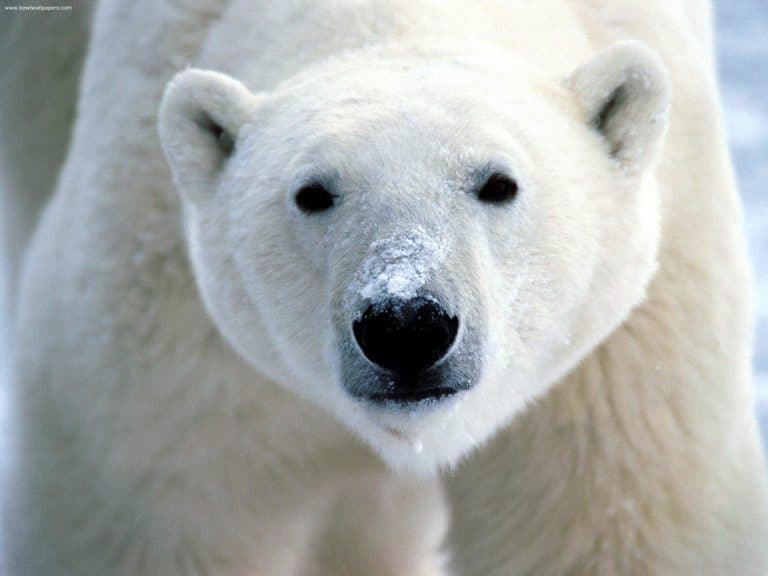
  • The grizzly-polar bear hybrid is named the ‘pizzly bear.’ In altercations that pit polar bears vs. grizzly bears, in most cases the grizzly bear has reigned supreme.

Want more grizzly bear facts? Check out ’10 Incredible Grizzly Bear Facts.’ Here’s a preview of what you’ll discover inside, a grizzly bear’s sense of smell is 2,100 times more sensitive than a human’s!
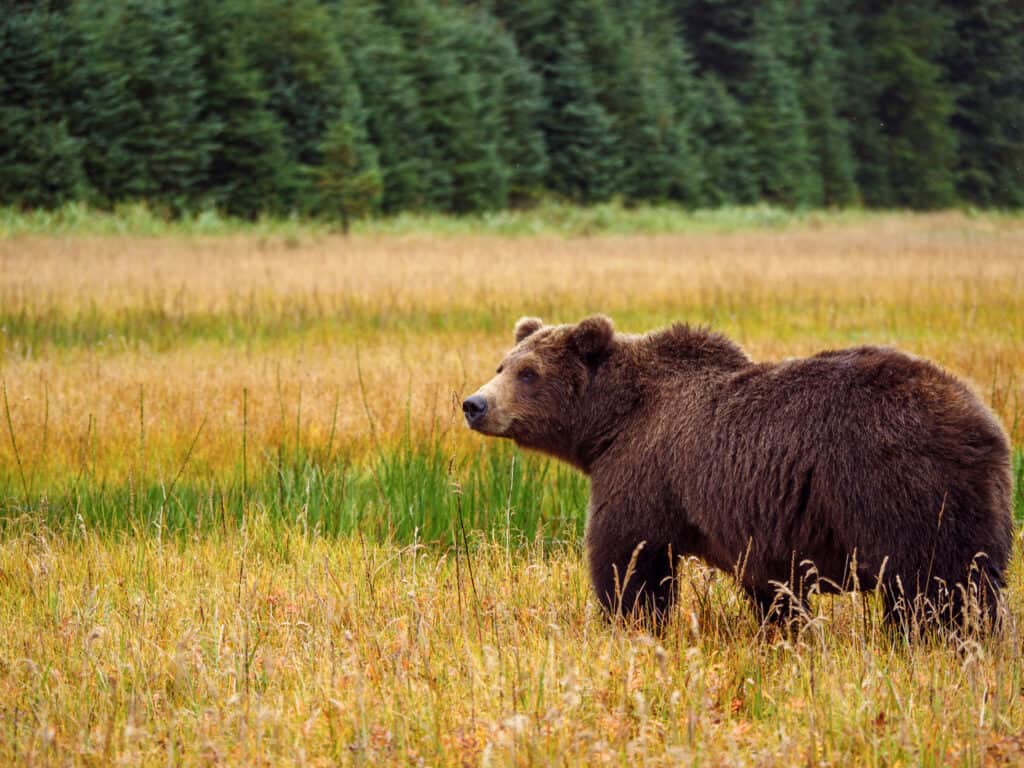
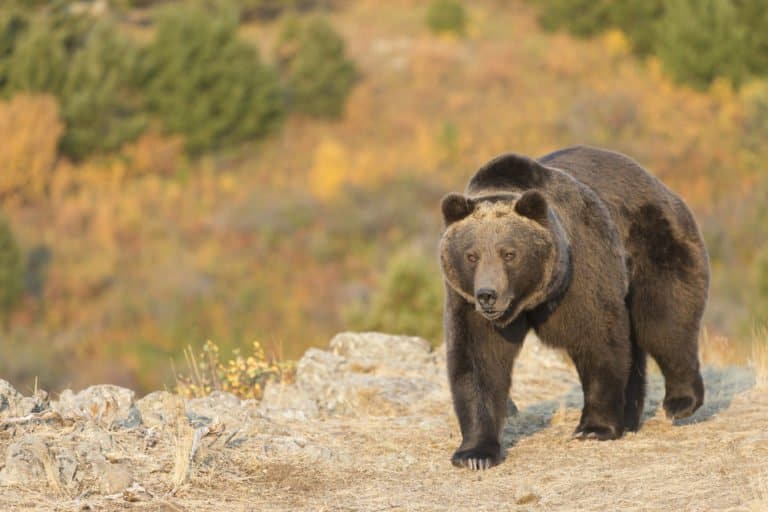
Grizzly bear in Alaska

The grizzly bear is a type of brown bear.

Scientific Name

The grizzly bear is a subspecies of the brown bear known as Ursus arctos. Ursus arctos horribilis is the scientific name for these bears. Ursus is Latin for bear, and Arctos comes from Arktos, which is Greek for the word bear. Horriblilis is a Latin term that means horrible.

Appearance & Behavior

Grizzly bears are animals that may be very light brown or dark brown. Grizzlies have large heads, dish-shaped faces, short round ears, and short tails. The stout bears have a large muscular hump on the upper back that provides strength for digging. The claws on the grizzly’s front paws are curved, large, and sturdy, which help the bear dig in the ground for food. The grizzly’s claws are also handy for turning over rocks to find insects. It is not unusual for a male grizzly to be eight feet tall, which is taller than any basketball player. The male can weigh up to 900 pounds. Females are smaller, weighing 300-400 pounds. Grizzlies that live where food is plentiful tend to weigh more. The bears spend most of their time alone, roaming their habitat and searching for food.

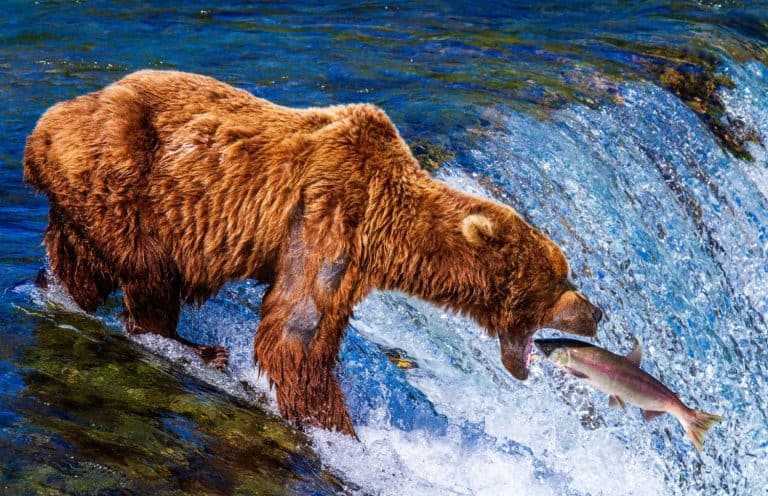
Although the grizzly is a loner, it is not unusual to see several grizzlies feeding on the fish near rivers where salmon are plentiful. Grizzly bears are animals that hibernate or are inactive during the cold months. They store enough fat during the summer to sustain them during hibernation. Grizzlies dig a den or find a cave for hibernation. Once a grizzly enters hibernation, it rests there for about five months. During that time, the bear does not eat, drink, urinate, or defecate. In early spring, grizzlies come out of hibernation.

Read about the “Boss” grizzly bear that was hit by a train and survived.
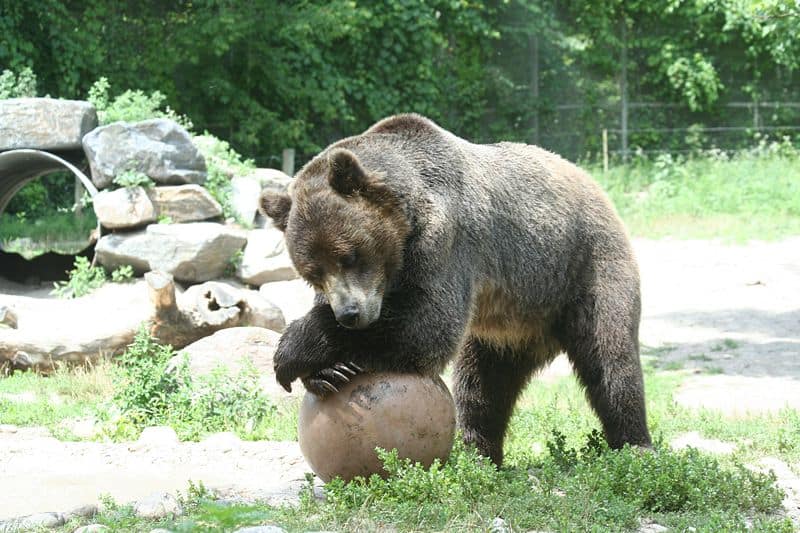
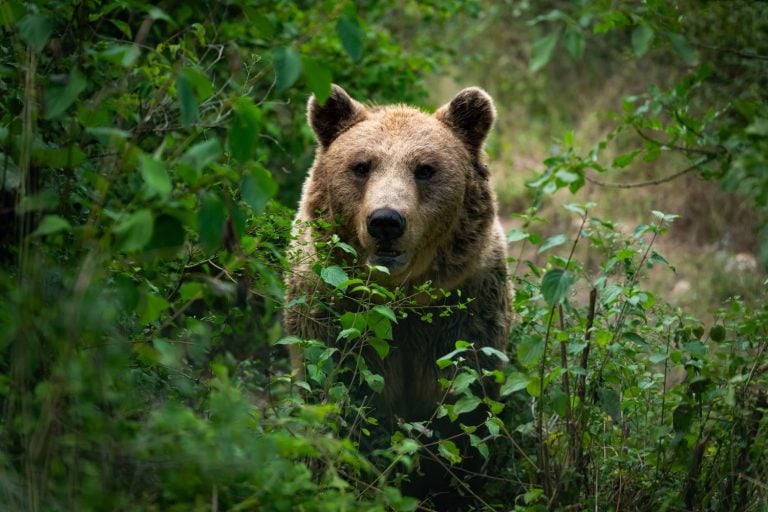
Grizzlies may be very light brown or dark brown and have large heads, dish-shaped faces, short round ears, and short tails.

Evolution and History

While there may be some confusion, the grizzly bear is a subspecies of the brown bear, which migrated from Asia to North America 40,000 – 60,000 years ago. Then, the brown bear seems to have fractured into basically two groups: the coastal brown bear and the grizzly bear.

In the 1800s and early 1900s, biologists determined that there were many species of the grizzly bear – up to almost 90! As time went on, this diminished to less than ten, and now it is only one, which has been confirmed through genetic testing.

There are many similarities and appearances between the Kodiak bear (Ursus Arctos Middendorffi) and the grizzly bear (Ursus Arctos Horribilis), but they are both subspecies of the brown bear. In North America, if you see a brown bear, it could be just a brown bear, or it could be a Kodiak or a grizzly!

Habitat

Grizzlies require large areas of habitat for roaming and hunting. Females need up to 300 square miles, and males require up to 500 square miles, but grizzly habitats can overlap. The western United States was once a place where grizzlies roamed freely, as far south as Mexico. However, when settlers moved westward, rural development resulted in habitat loss. The invasion of humans sent grizzlies to higher grounds such as the Northern Rocky Mountains and other remote areas of the Northwest. The California Grizzly Bear or Ursos arctos californicus has been extinct since the early 1900s. The grizzly bear is California’s state animal, and the state proudly displays it on the state flag.

Of the remaining 1,500 grizzlies in the lower 48 states, most live in northwestern Montana and in or around Yellowstone National Park. Northern Canada and inland Alaska both have large numbers of grizzly bears. Although grizzlies are considered big game animals, in the continental United States, there are laws to protect the bears from becoming extinct. In 1975, the U.S. Fish and Wildlife Service placed the bears in the lower 48 states on the list of threatened species under the Endangered Species Act.

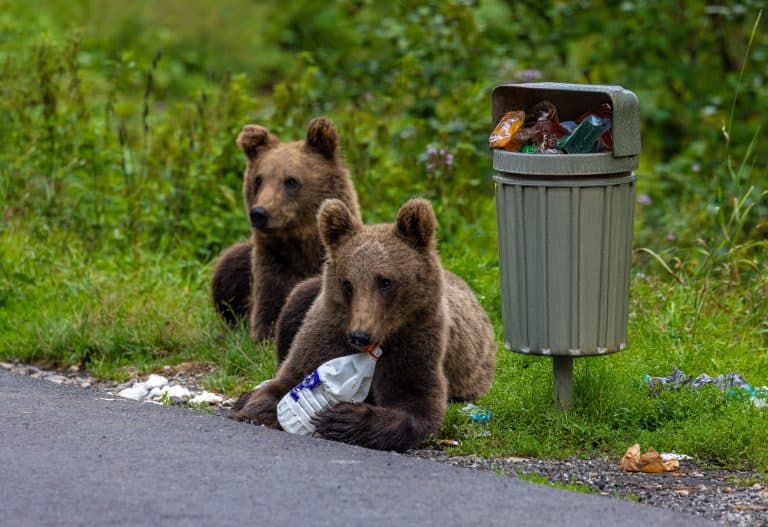
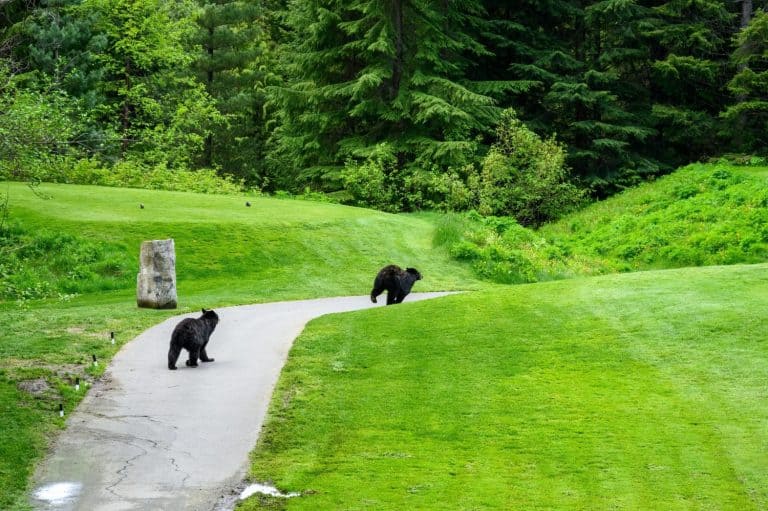
Humans continue to threaten the grizzly’s habitat. Bears that live near campgrounds can become accustomed to searching for food left behind at campgrounds and garbage disposal areas. Humans who feel threatened by the bears sometimes kill them. Illegal hunting or poaching is still a threat to grizzly bears despite their being on the endangered species list.
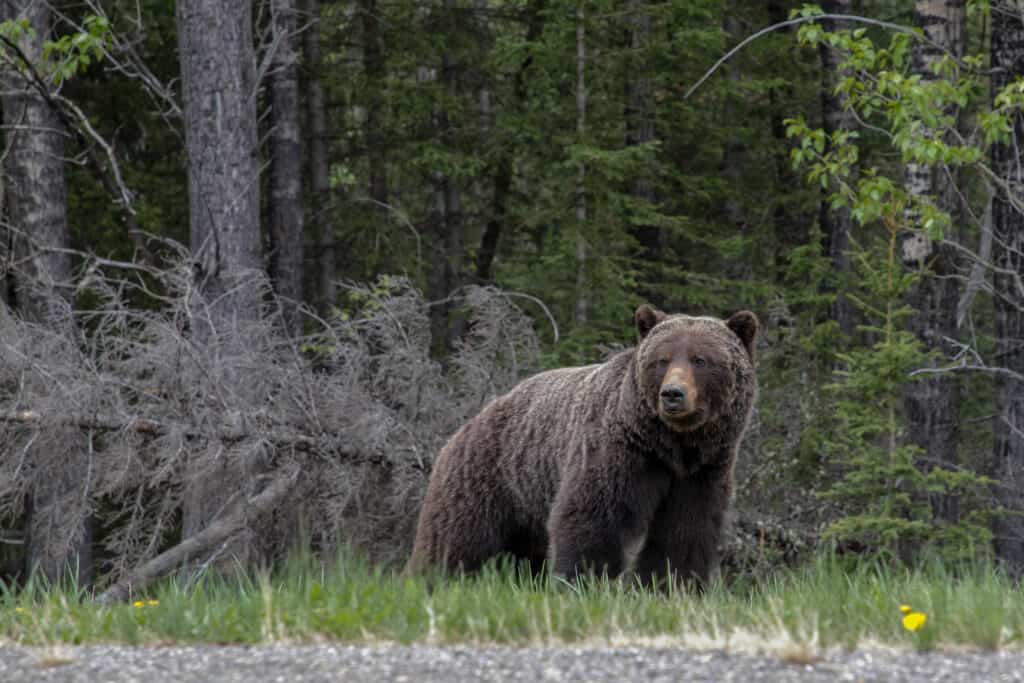
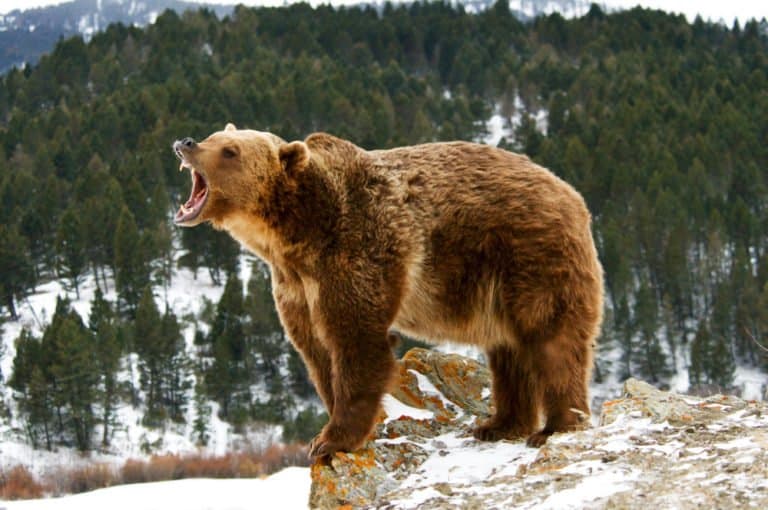
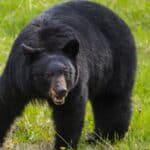
A brown Canadian grizzly bear in the Rocky Mountains of Alberta, Canada, standing in the green grass in a clearing, with dense woods in the background

Male grizzlies need about 500 square miles to roam and hunt.

Diet

Grizzlies are omnivores, meaning they eat plants and animals. Grizzlies eat plant foods such as berries, grasses, roots, mushrooms, insects, and animals like deer, elk, and mice. This bear is known for its love of fish and often lives near remote rivers. The bears are big eaters and can consume as much 90 pounds of food each day, which is like eating more than 350 large hamburgers! When food is scarce, the grizzly may rummage through trash or try to find food at a campground.

The grizzly’s hunting and eating habits play a role in keeping the ecosystem healthy in the areas where they live. When grizzlies consume plant-eating animals, it helps prevents those animals from ruining the plant life in areas where grizzlies roam. As they dig for food, grizzlies turn or till the soil. After feeding, grizzlies leave behind uneaten animal parts and carcasses that decay and serve as a natural soil fertilizer.
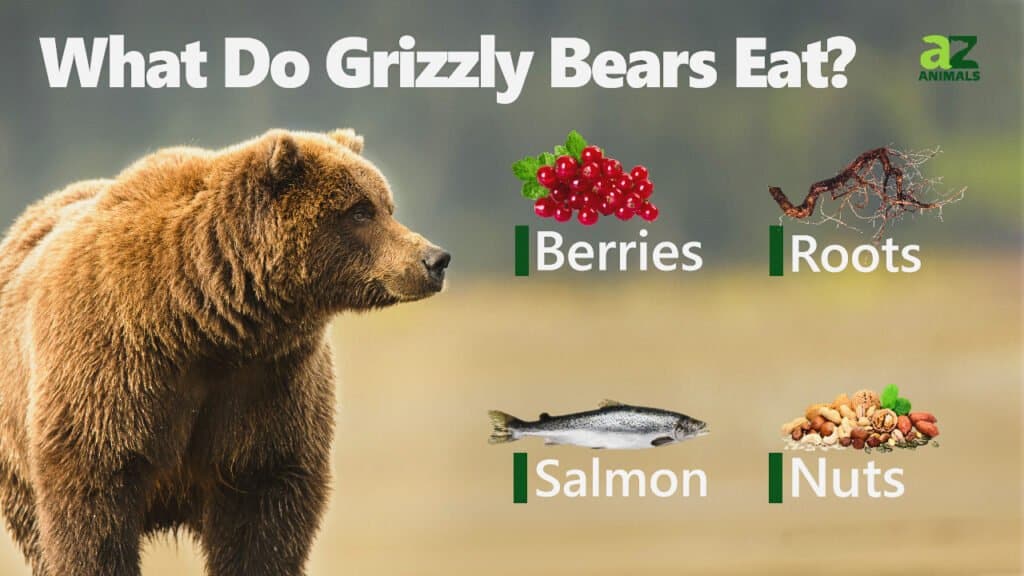
What Do Grizzly Bears Eat
Grizzlies eat berries, roots, salmon, and nuts.

Predators & Threats

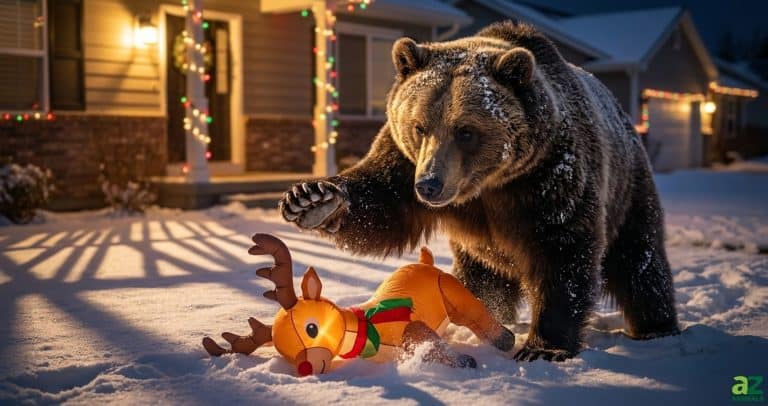
Movies and television shows portray grizzlies as aggressive toward humans. However, humans are the greatest threat to the bears. These bears keep to themselves and avoid humans. They will flee from dangerous situations but will become aggressive when threatened. If animals or humans try to harm grizzlies or their cubs, the bears can become violent quickly and will attack. About half of grizzly cubs do not live to reach adulthood because of diseases and grizzly predators that include mountain lions, wolves, and adult male grizzlies.
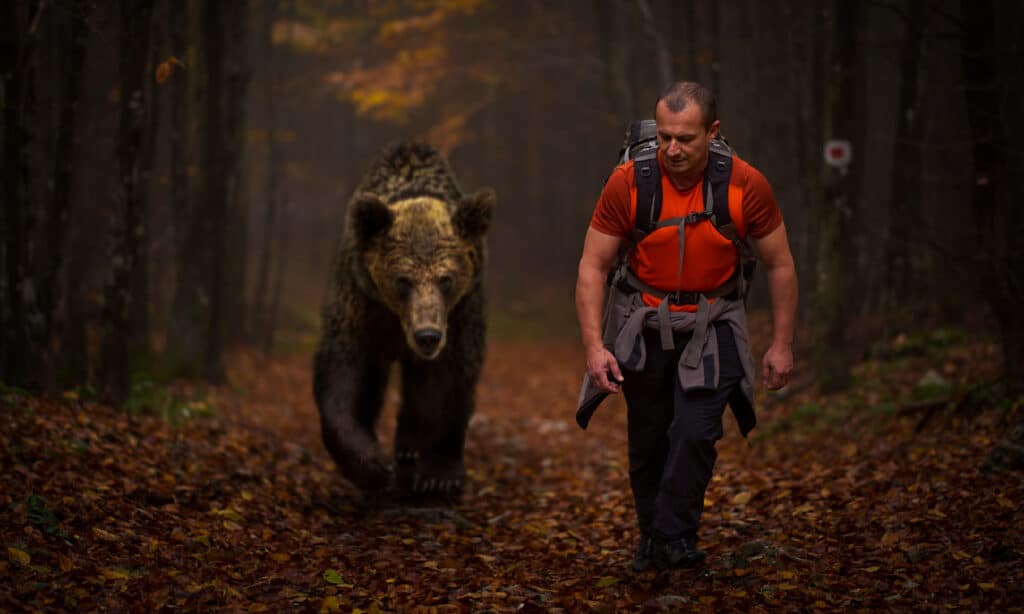
Hiking, Bear, People, Men, Grizzly Bear

Humans are the greatest threat to grizzlies.

Reproduction, Babies, and Lifespan

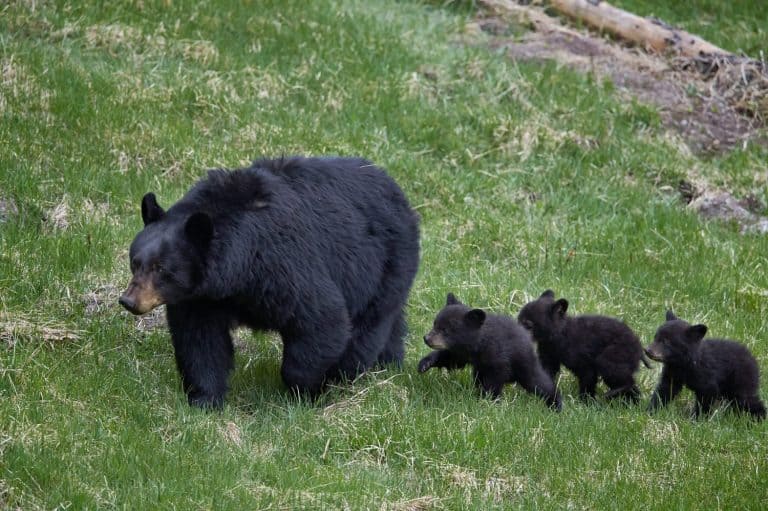
Grizzlies breed when they are mature, between three and eight years old. The bears mate from May through July with June and July being the peak months for breeding. During the mating period, a male spends about a month with a female and then leaves. The female goes into a den and hibernates during the winter. After about five months, between January and March, the female typically gives birth to two babies, known as cubs, but can produce up to four. Young grizzly cubs feed on their mother’s milk, which is high in fat. The cubs remain under their mother’s protection until they are about two years old. Half of all grizzly cubs are at risk of dying before reaching adulthood because of diseases and predators. Grizzly bears usually live to be 20-25 years old, but some can live up to 30 years.
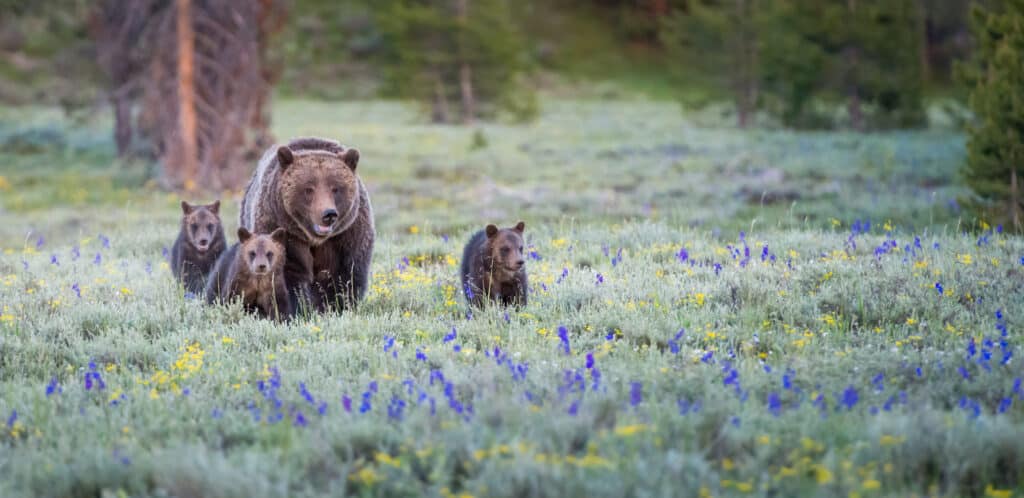
Grizzly bear with cubs

Grizzlies typically give birth to two cubs but can produce up to four.

Population

There are an estimated 1,500 grizzlies in the lower 48 states, down from 50,000 in the early 1800s. Alaska has about 30,000 Grizzlies, and Canada is home to 26,000. A light-colored grizzly called the prizzly-bear also lives in Alaska. This grizzly-polar bear hybrid is a cross between a polar bear and a grizzly bear.
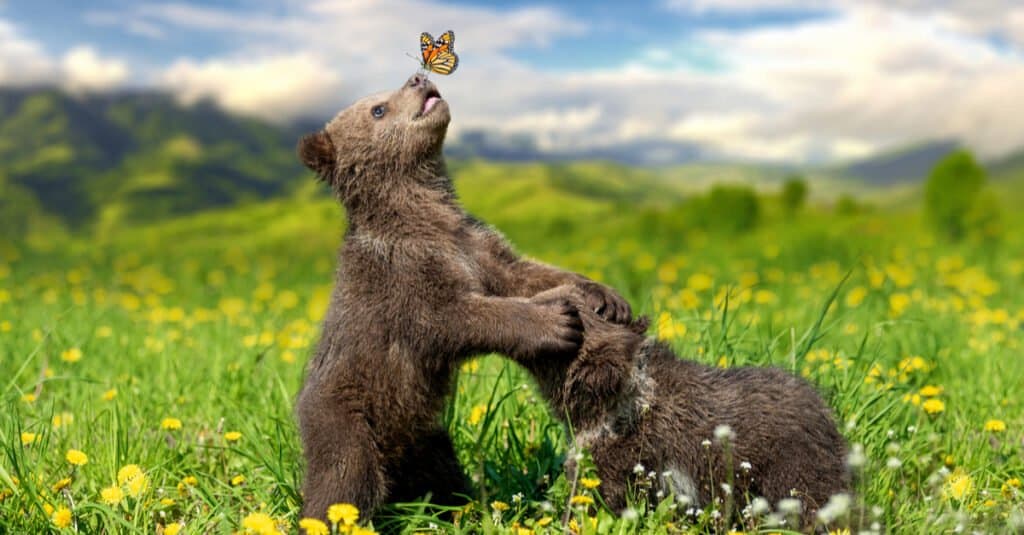
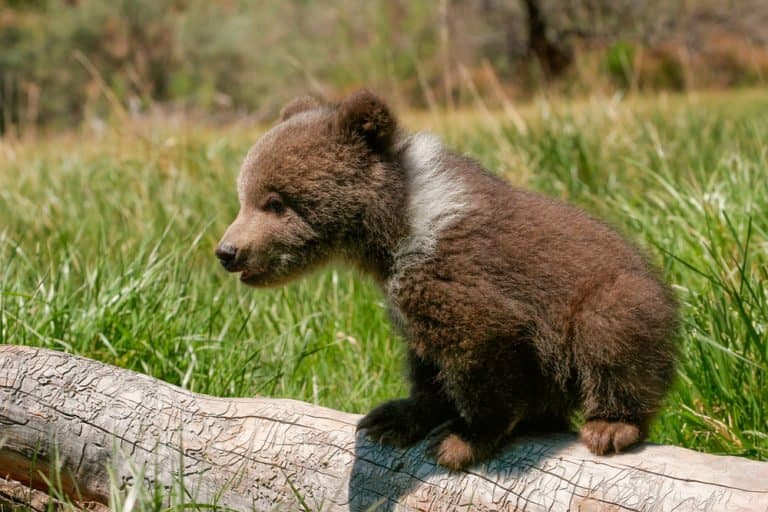
What do grizzly bears eat - grizzly bear cubs

There are an estimated 1,500 grizzlies in the lower 48 states.

More on Grizzly Bears

  • Grizzly Bear Poop: Everything You’ve Ever Wanted to Know. Do you need to know? Well, it can be interesting!
  • Are Grizzly Bears Extinct? 11 Places They’re No Longer Found. Most animals have had their habitats shrunk in modern times, but here are some places that have completely pushed the grizzly out.
  • Are There Grizzly Bears in Colorado? Are these bears found in Colorado? The answer may surprise you.
View all 261 animals that start with G

Sources

  1. David Burnie, Dorling Kindersley (2011) Animal, The Definitive Visual Guide To The World's Wildlife / Accessed November 10, 2008
  2. Tom Jackson, Lorenz Books (2007) The World Encyclopedia Of Animals / Accessed November 10, 2008
  3. David Burnie, Kingfisher (2011) The Kingfisher Animal Encyclopedia / Accessed November 10, 2008
  4. Richard Mackay, University of California Press (2009) The Atlas Of Endangered Species / Accessed November 10, 2008
  5. David Burnie, Dorling Kindersley (2008) Illustrated Encyclopedia Of Animals / Accessed November 10, 2008
  6. Dorling Kindersley (2006) Dorling Kindersley Encyclopedia Of Animals / Accessed November 10, 2008
  7. David W. Macdonald, Oxford University Press (2010) The Encyclopedia Of Mammals / Accessed November 10, 2008
Heather Ross

About the Author

Heather Ross

Heather Ross is a secondary English teacher and mother of 2 humans, 2 tuxedo cats, and a golden doodle. In between taking the kids to soccer practice and grading papers, she enjoys reading and writing about all the animals!

Thank you for reading! Have some feedback for us?


Grizzly Bear FAQs (Frequently Asked Questions)

The grizzly bear is an omnivore, meaning that it consumes plants and animals. Grizzly bears enjoy dining on berries, plants, small and large animals. Grizzlies love eating fish, and especially salmon found the rivers in the Northwestern United States, Alaska, and Canada.