
G
Species Profile

Guinea Fowl

Numididae

Spotted sentinels of the savanna
Peter Fodor/Shutterstock.com

Guinea Fowl Distribution

Click a location to explore more animals from that region

Loading map...

Size Comparison

Human 5'8"
Guinea Fowl 1 ft 6 in

Guinea Fowl stands at 26% of average human height.

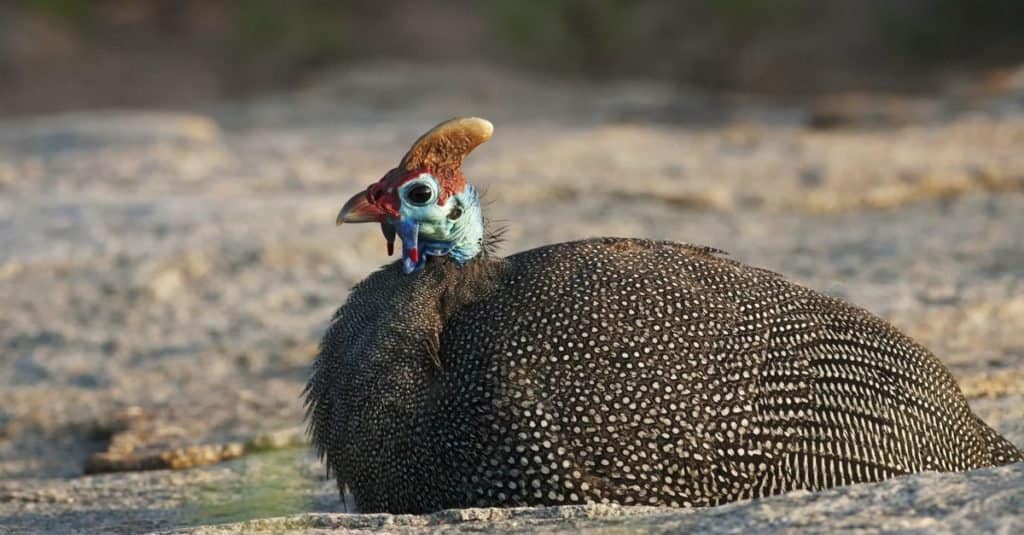
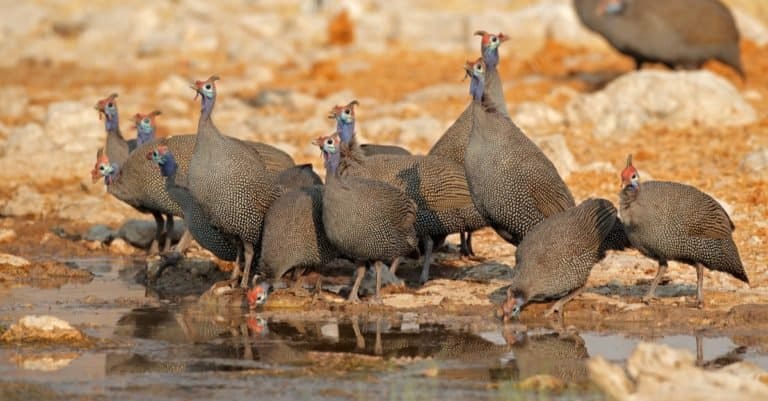
Helmeted Guineafowl, Numida meleagris, Kruger National Park, South Africa

At a Glance

Family Overview This page covers the Guinea Fowl family as a group. Stats below are general traits shared across the family.
Also Known As guinea hen, guinea cock, guinea, poule de Guinée
Diet Omnivore
Activity Diurnal+
Lifespan 7 years
Weight 1.8 lbs
Status Not Evaluated
Did You Know?

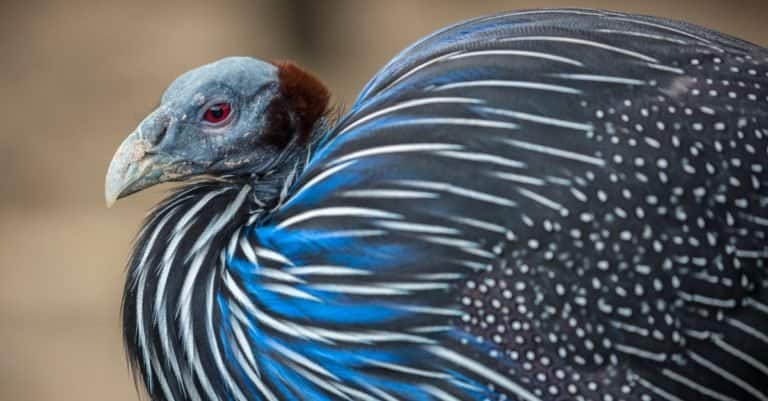
Numididae spans open-country runners (Numida) to forest-dwelling, secretive species (Agelastes), plus the long-necked vulturine guineafowl (Acryllium).

Scientific Classification

Family Overview "Guinea Fowl" is not a single species but represents an entire family containing multiple species.

Guinea fowl are medium-sized ground-dwelling birds in the family Numididae (order Galliformes). They are native to sub-Saharan Africa and are known for their spotted plumage, social flocking behavior, and loud alarm calls. The helmeted guineafowl is widely domesticated and introduced globally.

Kingdom
Animalia
Phylum
Chordata
Class
Aves
Order
Galliformes
Family
Numididae

Distinguishing Features

  • Chicken-like galliform body plan adapted for terrestrial foraging
  • Often bold spotting or vermiculation on plumage
  • Bare head/neck skin in many species; some with casque/helmet or crests
  • Strong running ability; generally reluctant fliers but capable of short bursts
  • Gregarious flocking and prominent vocalizations

Physical Measurements

Males and females differ in size

Height
♂ 1 ft 8 in (1 ft 2 in – 2 ft 4 in)
♀ 1 ft 4 in (12 in – 1 ft 10 in)
Length
♂ 1 ft 10 in (1 ft 4 in – 2 ft 4 in)
Weight
♂ 3 lbs (1 lbs – 4 lbs)
♀ 3 lbs (2 lbs – 4 lbs)
Tail Length
♂ 6 in (4 in – 10 in)
♀ 6 in (4 in – 8 in)
Top Speed
31 mph
Runs 35–50 km/h; short flights

Appearance

Primary Colors
Secondary Colors
Skin Type Body heavily feathered; head and upper neck commonly have bare, thickened skin with species-specific coloration (often blue/red/black), plus keratinous/bony adornments (casque/helmet) and/or fleshy wattles. Legs are robust and scaled for terrestrial walking/scratching.
Distinctive Features
  • Overall size range across the family (smallest to largest members): ~40-76 cm total length; approximate mass ~0.7-2.0+ kg (heaviest typically in larger, open-country taxa; lighter in smaller forest taxa).
  • Wing and silhouette: broad, rounded wings suited to short, explosive flight; long-distance flight uncommon-birds usually run first, then flush noisily.
  • Head ornaments vary by genus: Numida usually has a large casque (helmet) and wattles; Guttera a curly tufted crest; Acryllium (vulturine) small head with long shaggy neck/breast hackles; Agelastes plainer-headed and more forest-adapted.
  • Plumage texture: tight, hard-looking body feathers that emphasize 'pearl' spotting where present; hackle feathers on neck/breast can be elongated and more hairlike in some taxa.
  • Legs and feet: strong, terrestrial build for ground foraging (walking, running, scratching); spurs may be present or more developed in males in some species.
  • Most guinea fowl are ground-foraging omnivores (eat seeds, plants, bugs). They are very watchful, give loud alarm calls, and often form social flocks. Forest Agelastes are shyer than open-country Numida and Guttera.
  • Roosting: many species commonly roost off the ground (often in trees) where available; degree of arboreal roosting varies with habitat (woodland vs dense forest vs open savanna).
  • Lifespan (family-level range): commonly ~7-15 years depending on species and conditions; wild longevity often limited by predation/hunting, while captive/domesticated birds (notably domestic forms derived from Numida) can reach the upper end of the range.
  • Human association: one species in Numida is widely domesticated and introduced globally; domestication tends to increase plumage color variability and body size range relative to strictly wild populations.

Sexual Dimorphism

Sexual dimorphism is generally weak across Numididae: sexes usually look very similar in overall plumage and patterning. Where differences occur, they are subtle and often involve head ornament size (casque/wattles), body size, and voice rather than distinct male/female color morphs. Degree of dimorphism varies by genus and species.

♂
  • Often slightly larger/heavier on average (species-dependent).
  • Casque/helmet and/or wattles may be marginally larger or more pronounced; facial skin can appear more vivid during display.
  • Calls may be sex-differentiated in some taxa (males often producing a single-syllable/less 'two-part' call pattern, though this varies and is not universal).
  • Leg spurs can be more developed in some species (variable).
♀
  • Typically similar plumage to males; differences most often seen as slightly smaller average size.
  • Head ornaments (casque/wattles/crest) may be a bit smaller or less robust on average (variable).
  • Calls may differ in pattern in some taxa (e.g., more distinctly two-part in certain open-country forms), but this is not consistent across all genera.

Did You Know?

Numididae spans open-country runners (Numida) to forest-dwelling, secretive species (Agelastes), plus the long-necked vulturine guineafowl (Acryllium).

Across the family, adults are typically ~40-76 cm long and ~0.7-1.6+ kg, with the largest species notably longer-legged and longer-necked.

Most guineafowl are expert "early warning systems": their loud, distinctive calls often alert other animals-and people-to predators.

Many species roost in trees at night despite feeding mostly on the ground by day.

Their diets are broadly omnivorous-seeds, shoots, and many invertebrates-so their ecological role ranges from seed dispersal to insect control.

The helmeted guineafowl has been domesticated for centuries and has been introduced widely outside Africa as a farm bird and alert animal.

A famous classical legend says guineafowl originated from the grieving sisters of the hero Meleager; their "tears" became the birds' white spots.

Unique Adaptations

  • Bare head and neck skin (in several species) can help with heat loss and keeping feathers clean when foraging in dusty or dense vegetation; the extent of bare skin differs strongly across genera.
  • Bony casque/"helmet" (especially in Numida) and facial wattles are used in signaling and may aid species/sex recognition in noisy, social flocks.
  • High-contrast spotting and barring break up body outline in grass and dappled light; patterns vary from finely speckled to boldly marked across the family.
  • Powerful legs for rapid running and long-distance walking; flight is typically strong but often in short, explosive bursts when threatened.
  • Social information networks: their tendency to react collectively (group scanning + vocal alarms) reduces individual predation risk-an adaptation tightly linked to flock life.

Interesting Behaviors

  • Flocking with variation: many species form cohesive groups (often dozens outside breeding), while forest species (notably Agelastes) may occur in smaller parties and stay hidden in dense cover.
  • Ground-foraging "beat": groups walk and run steadily while pecking and scratching, often spreading out in a loose line to flush insects.
  • Alarm-calling and vigilance: individuals frequently act as sentinels, giving rapid, far-carrying calls at raptors, carnivores, or unfamiliar disturbance; intensity and call types vary among genera.
  • Roosting strategy: even ground-focused species commonly fly up to tree branches at dusk to avoid nocturnal predators; some populations use the same roosts repeatedly.
  • Breeding ecology (general pattern, variable details): nests are usually shallow ground scrapes with many eggs; chicks are precocial (mobile soon after hatching). Pair-bonding and group structure during breeding can differ by habitat and species.
  • Seasonality: in many regions breeding and flock size track rainfall and food availability, with larger flocks forming in nonbreeding periods.

Cultural Significance

Guineafowl, especially the helmeted guineafowl (Numida meleagris), were kept as game and farm birds in the Mediterranean and spread worldwide. People use them as loud watchbirds and to eat pest insects. "Guinea fowl" names the Guinea coast; Numididae names ancient Numidia in North Africa.

Myths & Legends

In Greek myth, after hero Meleager died, his sisters (the Meleagrides) turned into guineafowl. People said their sad tears became the birds' pale spots, giving the old name 'meleagris.'

Classical Mediterranean lore and symbolism: in Greco-Roman tradition guineafowl were exotic, prestigious birds; ancient writers treated them as notable imports from Africa, and they became associated with feasting and status in elite households.

In West and Central African folktales, the guineafowl (Numididae)'s loud, constant call is said to be a god-given job as the village watcher, warning of danger and keeping people alert, unlike quiet forest birds.

European names like 'guinea' for guinea fowl (Numididae) and links to North Africa come from trade routes. People saw these birds as foreign, from across the sea, shaping stories about their origins and movement.

Conservation Status

NE Not Evaluated (family level; IUCN Red List assessments are primarily conducted at the species level, and Numididae as a family is not assigned a single category)

Has not yet been evaluated against the criteria.

Population Unknown

Protected Under

  • National hunting and wildlife protection regulations vary across sub-Saharan African range states (species-level protection and enforcement differ by country)
  • Many populations occur within protected areas (national parks, game reserves, forest reserves), though coverage and effectiveness are uneven
  • Some range states regulate hunting seasons/bag limits for wild guineafowl; implementation and compliance vary widely

You might be looking for:

Helmeted guineafowl

70%

Numida meleagris

The most widespread and commonly domesticated guinea fowl; native to Africa and widely introduced elsewhere.

Vulturine guineafowl

12%

Acryllium vulturinum

Striking long-necked, blue-and-black patterned species of arid savannas in East Africa.

Crested guineafowl

7%

Guttera pucherani

Forest and woodland guinea fowl with a distinctive curly crest; eastern and southern Africa.

Plumed guineafowl

5%

Guttera plumifera

Central African forest species with prominent head plumes/crest.

Black guineafowl

3%

Agelastes niger

Dark, forest-dwelling guinea fowl of West Africa.

White-breasted guineafowl

3%

Agelastes meleagrides

Threatened Upper Guinean forest species with pale underparts.

Life Cycle

Birth 8 chicks
Lifespan 7 years

Lifespan

In the Wild
3–15 years
In Captivity
5–20 years

Reproduction

Mating System Monogamy
Social Structure Socially Monogamous
Breeding Pattern Seasonal
Fertilization Internal Fertilization
Birth Type Internal_fertilization

Behavior & Ecology

Social Flock Group: 20
Activity Diurnal, Crepuscular
Diet Omnivore insects (especially termites and grasshoppers)

Temperament

Generally wary and vigilant; strong anti-predator awareness with rapid group cohesion and frequent scanning.
Often bold and noisy in open habitats yet quick to retreat to cover; tolerance of humans increases in domesticated/urban-adapted populations.
Socially cohesive but may show pecking-order aggression, especially around food, roost sites, and during breeding; intensity varies by species and crowding.
Body size across Numididae spans roughly ~40-71 cm in length and ~0.6-1.6 kg in mass (species-, sex-, and population-dependent).
Lifespan across the family is commonly ~5-10 years in the wild; in captivity (including domesticated helmeted guineafowl) often ~10-15+ years, with occasional reports approaching ~20 years.

Communication

Loud, repetitive alarm calls that can recruit flock members and advertise danger; call structure and intensity vary among species and contexts.
Contact calls used to maintain cohesion during foraging/travel and to reunite separated individuals Including distinct calls from chicks/keets
Agonistic calls associated with chasing, threat displays, and dominance interactions at food or roosts.
Courtship/breeding-associated calls (often sex- or role-biased), varying among species and populations.
Visual displays: posture changes, head/neck presentation (including helmet/wattle emphasis where present), wing-droop/wing-flicks, and direct staring/threat orientations.
Group movement cues: sudden freezing, synchronized running, and collective flight-to-roost as shared anti-predator signals.
Spatial signaling: tight clustering of chicks, roost-site choice and spacing that convey social status and reduce predation risk.
Occasional tactile interactions (pecking, nudging) in dominance and mate/bond maintenance; frequency varies with density and domestication.

Habitat

Biomes:
Savanna Tropical Dry Forest Wetland Mediterranean Temperate Grassland Temperate Forest Tropical Rainforest Desert Hot +2
Terrain:
Plains Hilly Plateau Valley Rocky Sandy Riverine Coastal +2
Elevation: Up to 9842 ft 6 in

Ecological Role

Generalist ground-foraging omnivores that function as major invertebrate consumers and seed/plant-matter foragers in savannas, woodlands, and anthropogenic landscapes (with notable among-species and seasonal shifts in insect vs. seed/fruit reliance).

invertebrate pest suppression (e.g., grasshoppers, termites, ticks and other arthropods) seed movement and occasional seed dispersal via fruit consumption soil/leaf-litter turnover and nutrient cycling through scratching and foraging prey base support for native predators (raptors, carnivores) and scavengers via mortality/carcasses in some systems

Diet Details

Main Prey:
Termite Ants Beetles Grasshoppers and crickets Caterpillars Flies and other insects Spiders and other arachnids Snails and small mollusks Earthworms and other soft-bodied invertebrates Small vertebrates +4
Other Foods:
Grass and sedge seeds Grains Herbaceous shoots and leaves Fallen fruits and berries Bulbs, tubers and other underground plant parts Forbs and weed seeds Crop gleanings +1

Human Interaction

Domestication Status

Semi domesticated

Most guineafowl (family Numididae) stay wild. Only the helmeted guineafowl (Numida meleagris) was domesticated in Africa and kept for meat, eggs and loud alarm calls used as guard birds. It spread to the Mediterranean and later worldwide. Other species like crested (Guttera) and vulturine (Acryllium vulturinum) remain wild in captivity.

Danger Level

Low
  • Aggressive pecking/spurring or scratching (especially territorial males during breeding season)
  • Noise-related nuisance and stress (loud alarm calls)
  • Zoonotic/food-safety risks typical of poultry (e.g., Salmonella/Campylobacter exposure via feces/handling)
  • Allergic reactions to dander/feathers in sensitive individuals
  • Vehicle/traffic hazards when flocks cross roads, especially in introduced/feral populations

As a Pet

Not Suitable as Pet

Legality: Laws vary by country or state. Domesticated helmeted guineafowl are often allowed as poultry but may be subject to local zoning, noise, enclosure, or livestock-permit rules. Wild or exotic Numididae may need permits or be banned.

Care Level: Experienced

Purchase Cost: $15 - $250
Lifetime Cost: $500 - $3,000

Economic Value

Uses:
Food production (meat, eggs) Smallholder/backyard poultry Pest and tick control services Hunting/game and wild harvest Ornamental/aviary trade (limited; highly regulated in places) Feather/byproduct use Ecotourism/wildlife viewing
Products:
  • meat
  • eggs
  • live birds for breeding/stocking
  • insect/tick reduction on farms and homesteads (service value)
  • feathers (decorative/craft in some contexts)

Relationships

Related Species 5

Pheasants, chickens, and allies
Pheasants, chickens, and allies Phasianidae Shared Order
Turkeys Meleagris Shared Order
New World quail
New World quail Odontophoridae Shared Order
Megapodes Megapodiidae Shared Order
Curassows, guans, and chachalacas Cracidae Shared Family

Ecological Equivalents 4

Animals that fill a similar ecological role in their ecosystem

Spurfowls and francolins Phasianidae Terrestrial, ground-feeding galliforms of African savannas and woodlands; they overlap in diet (seeds and invertebrates), predator-avoidance strategies (burst flight), and use of cover and roosting sites.
Sandgrouse Pterocles spp. Share open-country, ground-dwelling habits and flocking/communal movements; have partial niche overlap in arid and semi-arid habitats, traveling between feeding and water/roost sites (though sandgrouse are more specialized granivores).
Bustard Otididae Occur in similar open grassland and savanna landscapes and forage on mixed diets including invertebrates; both rely on vigilance and camouflage, but bustards are generally larger and less tightly flocking.
Ground-hornbills Bucorvus Overlap in terrestrial foraging for insects and small vertebrates in savanna systems; differ strongly in body size and trophic role, with ground-hornbills being more predatory.

Types of Guinea Fowl

6

Explore 6 recognized types of guinea fowl

Helmeted guineafowl Numida meleagris
Crested guineafowl Guttera pucherani
Plumed guineafowl Guttera plumifera
Vulturine guineafowl Acryllium vulturinum
Black guineafowl Agelastes niger
White-breasted guineafowl Agelastes meleagrides

Guinea fowls are often seen roaming the plains of Africa and picking at the ground for food. The guinea fowl family consists of about 7 to 10 species, each with its own unique appearance and behavior. Together, they fill a similar ecological niche to many other big-bodied fowl elsewhere.

3 Amazing Facts

  • The helmet guinea fowl is the only species in the family to be domesticated by humans as a source of food, fulfilling a similar role as the chicken. It is sometimes mixed in with other fowl because its naturally harsh sounds serve as a warning against predators or because it keeps in check Lyme disease-carrying ticks and other pests.
  • There have been rare reports of guinea fowl attempting to mate with chickens or peafowl, but there is no scientific evidence that they can produce viable offspring together.
  • Most guinea fowl can go long periods without water.

Classification and Scientific Name
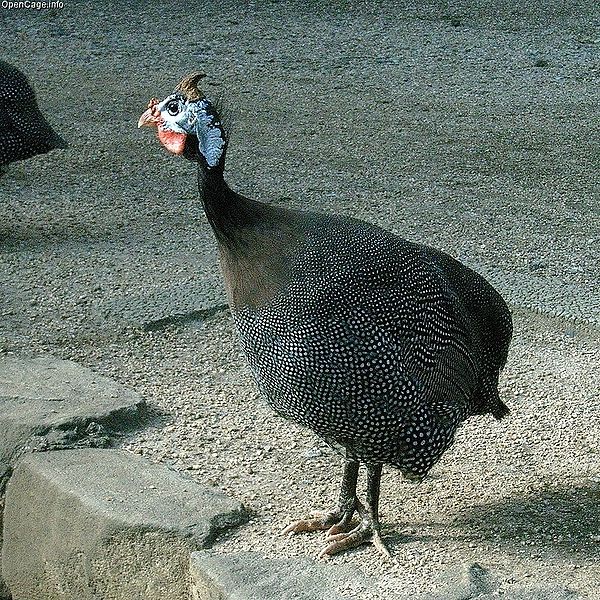
The Guinea Fowl is a member of the Family Numididae, named after Numidia, the old Roman region of Africa that is now Algeria.

The scientific name for the family of guinea fowl is Numididae. This is the Latin name for the ancient region of Numidia, which used to be part of the Roman Empire and is now covered by the country of Algeria. Today, therefore, the scientific name is a bit of a misnomer because all species are native to sub-Saharan Africa and not Algeria. These birds belong to the order of Galliformes along with quail, partridges, pheasants, peacocks, chickens, and turkeys.

The family Numididae contains four genera and six recognized species:

  • genus Agelastes, species White-breasted guineafowl (Agelastes meleagrides) and Black guineafowl (Agelastes niger)
  • genus Acryllium, species Vulturine guineafowl (Acryllium vulturinum)
  • genus Numida, species Helmeted guineafowl (Numida meleagris)
  • genus Guttera, Plumed guineafowl (Guttera plumifera) and Crested Guineafowl (Guttera pucherani)

      These birds are called guinea fowl (or guineafowls) because they were first domesticated on the Guinea Coast of West Africa. As a food source, the wild guinea fowl has been hunted for 2,000 years or more, according to records of the ancient Romans and Egyptians.

      Appearance

      These birds have almond-shaped bodies, a very long neck, and a very small, featherless head (which probably serves the purpose of releasing excessive heat) with a short beak. They measure around 16 to 28 inches in length and weigh up to 4 pounds, although the average is 2.8 pounds. Most species have black or brown feathers with white spots on them, but the white-breasted guinea fowl has, of course, a white breast.

      The head is usually covered by some combination of red, blue, brown, or tan leathery skin. However, a few species exhibit some exotic tops. Both the plumed and crested guinea fowl carry a black crest on the head, while the vulturine guinea fowl has a series of lance-shaped feathers that stick out visibly from the body. Despite the name, the vulturine guinea fowl bears only a superficial resemblance to the vulture. This species is in all other respects a pure guinea fowl.

      Behavior
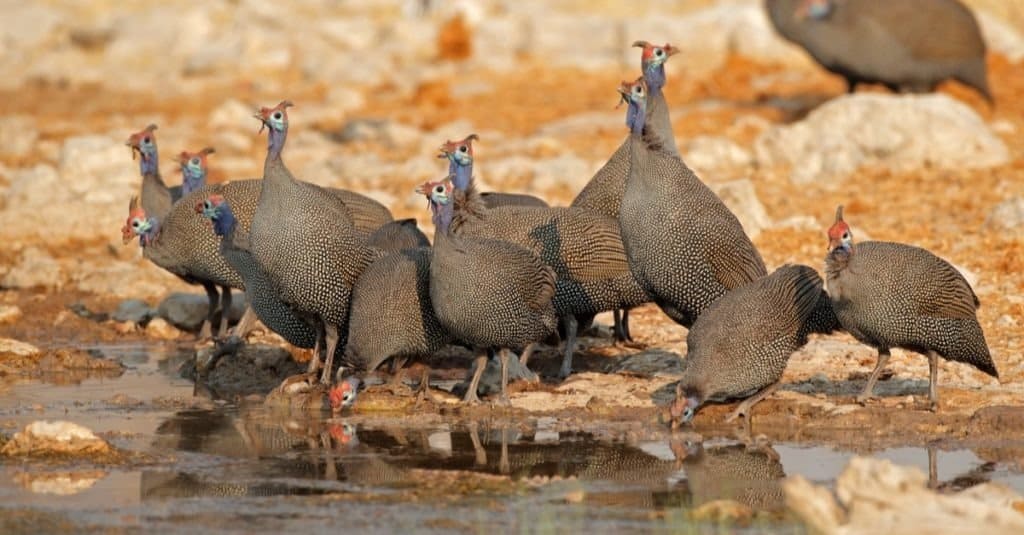
      Guinea fowls are gregarious, social birds that congregate in communal flocks.

      These birds are very gregarious, social birds that organize themselves into flocks of varying sizes. These communal flocks usually spend the day pecking the ground for food and using their strong claws to dig through the dirt. They are most active in the morning and late afternoon hours when the heat is more tolerable, but at night they take to the trees for sleep. The flock sticks closely together and sometimes moves in a single-file line.

      The birds communicate with each other through harsh and repetitive sounds that are distinctive to their sex. They are generally a friendly bunch, but sometimes interactions between males can turn into serious fights. To make themselves appear bigger, the males will stretch out their wings, bristle their feathers, and make aggressive sounds. They will also sometimes charge at each other with the intention to injure or harm.

      Although its breasts and wings are very strong, the guinea fowl is not a migratory bird or much of a flyer at all. It is a terrestrial bird that would rather stick to the ground and outrun its predators, but the wings do enable it to escape from particularly tough situations with short bursts of flight.

      Habitat and Location
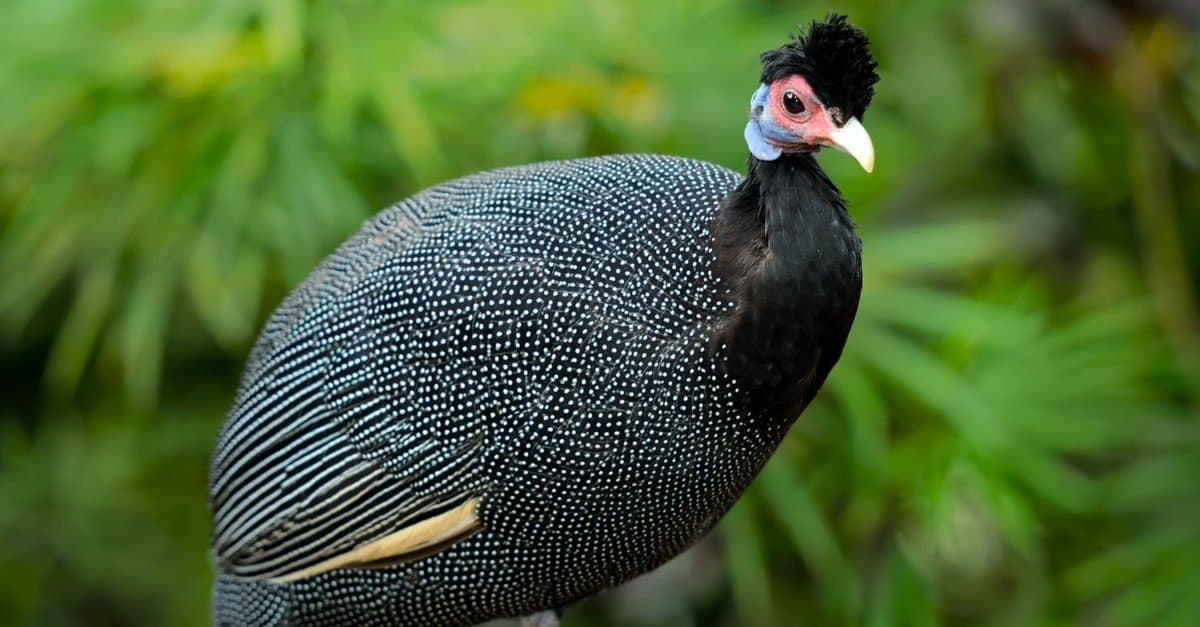
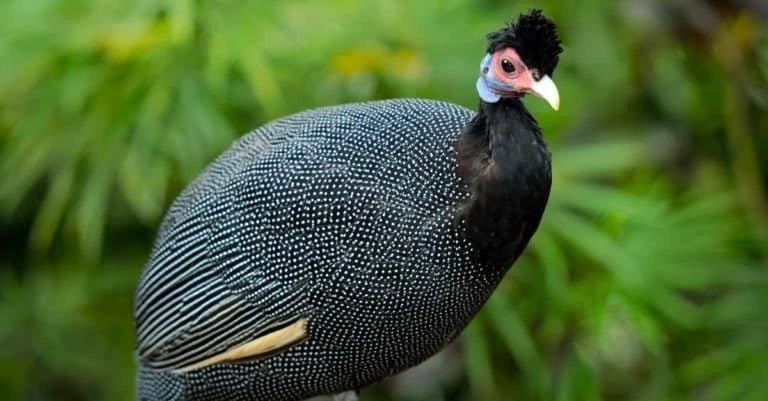
      Close up of Crested Guineafowl

      This crested guinea fowl is one of several types of guinea fowl that live in sub-Saharan Africa.

      Guinea fowl are birds that are completely endemic to the warm and tropical forests, savannas, scrublands, farmlands, and even semi-deserts of sub-Saharan Africa. Flocks of these birds will sometimes roam in urban areas as well. They have several adaptations to deal with the harsher African climate.

      The helmeted guinea fowl is probably the most widespread among all the guinea fowl species. Occupying a massive stretch of territory south of the Sahara, the helmeted guinea fowl has nine recognized subspecies, plus a domesticated variant.

      The domesticated helmeted guinea fowl is the only species in this family to be widely introduced elsewhere in the world. It has been introduced to North and South America, Europe, and India.

      Prey and Predators

      These birds occupy an intermediate part of the food chain. They consume vast quantities of small prey and vegetation (sometimes even helping to disperse seeds around the environment), but in turn, the guinea fowls are also a common source of food for many of Africa’s more voracious predators.

      What does the guinea fowl eat?

      The guinea fowl is an omnivorous bird that consumes roots, tubers, seeds, reptiles, rodents, insects, and fruit. The helmeted guinea fowl is known for its voracious appetite and therefore makes for a very good domestic pest killer.

      What eats the guinea fowl?

      These birds have a long list of potential predators, including crocodiles, snakes, leopards, and other big cats. In a domestic setting, any predator that would attack a chicken would also attack them, including foxes, wolves, coyotes, and bears. These birds do have a few defenses, such as their ability to fly, but head to head it is no real match for a dangerous carnivore.

      Reproduction, Young, and Lifespan
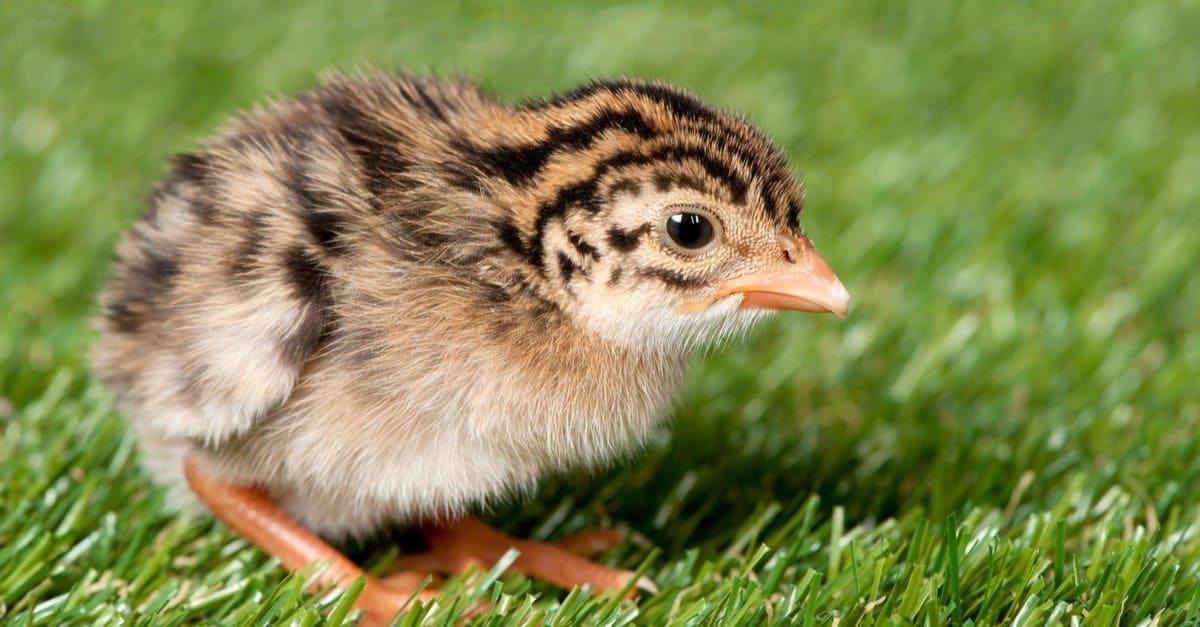
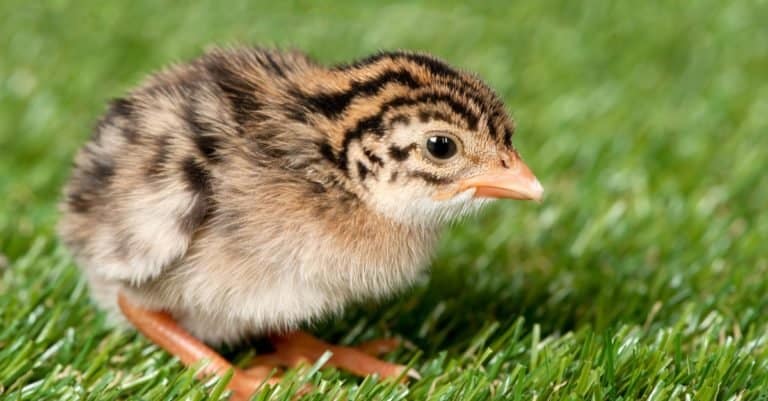
      Guinea fowl chick

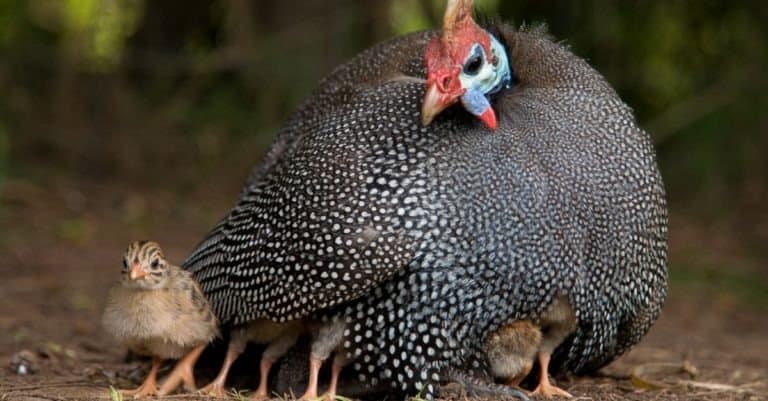
      Guinea fowls are born with downy feathers but will grow into their adult feathers in several months.

      The helmeted guinea fowl, which is the most closely studied and well-understood species, forms a close monogamous bond with a single mate over its lifetime.

      When the breeding season arrives, the guinea fowls build communal nests in isolated and shallow depressions. Lined with light vegetation, these nests are usually hidden in cover to prevent predators from consuming the eggs. A couple’s nest may contain up to 20 eggs at a time, but since the nest is communal, it may contain eggs from multiple pairs.

      As seasonal breeders, these birds usually lay eggs in the spring and summer, right after the height of the annual rainfall when resources are most abundant. The young chicks or keets, as they’re often called, emerge from the eggs after about four weeks of incubation. Born with downy feathers, the birds can start walking around with their parents immediately, but they still require about four months to grow, learn the ropes, and develop their full flight feathers.

      The parents are highly involved in the care of their offspring to give them the best chance of success. They are naturally inclined to split duties: the mother incubates the eggs, while the father stands guard and provides protection.

      After some eight months to a year, the offspring are ready to begin a new, independent life of their own. They will reach sexual maturity then, but the female has only a limited time to reproduce. Her egg production ability often slows down by the age of five and stops completely at eight. The life expectancy of the guinea fowl is between 10 and 15 years.

      Population

      These birds are a very common family and widely distributed across most of sub-Saharan Africa. According to the IUCN Red List, which tracks their conservation status, seven species are classified as least concern, the best possible ranking. Only the white-breasted guinea fowl is vulnerable to extinction. Population numbers are hard to come by, but just to take one species, it’s believed there are at least 10,000 mature vulturine guinea fowl left in the wild.

      These birds have a few advantages over other animals. First, they can adapt to a variety of different habitats and circumstances, from forests to plains. Second, since domesticated birds are raised for meat, the wild guinea fowl are hardly disturbed by humans. In fact, human activity may actually benefit them, since we hunt and eliminate their larger predators.

      View all 261 animals that start with G

      Sources

      1. Britannica / Accessed December 24, 2020
      2. Sea World / Accessed December 24, 2020
      3. Guinea Fowl / Accessed December 24, 2020
      Thank you for reading! Have some feedback for us?


      Guinea Fowl FAQs (Frequently Asked Questions)

      The guinea fowl usually lay about 20 eggs per year in two clutches.