


G
Species Profile

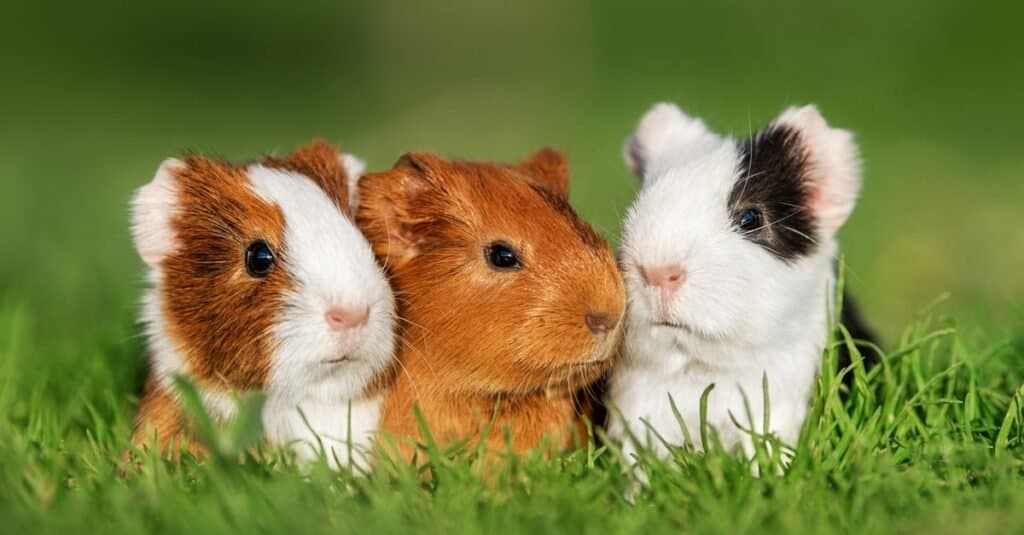
Guinea Pig

Cavia porcellus

Small cavy, big personality.
Rita_Kochmarjova/Shutterstock.com

Guinea Pig Distribution

Click a location to explore more animals from that region

Origin Location

This map shows the native origin of the Guinea Pig. As a domesticated species, they are now found worldwide.

Loading map...
Guinea pig names

At a Glance

Domesticated
Also Known As Cavy, Cuy, Conejillo de Indias, Cochon d'Inde, Porquinho-da-Índia
Diet Herbivore
Activity Cathemeral+
Lifespan 6 years
Weight 1.2 lbs
Status Not Evaluated
Did You Know?

Adults typically measure ~20-25 cm in head-body length and commonly weigh ~0.7-1.2 kg (males often heavier than females).

Scientific Classification

The guinea pig is a domesticated South American cavy (a hystricomorph rodent) widely kept as a companion animal and used historically in biomedical research. It is characterized by a compact body, short limbs, and continuously growing incisors.

Kingdom
Animalia
Phylum
Chordata
Class
Mammalia
Order
Rodentia
Family
Caviidae
Genus
Cavia
Species
Cavia porcellus

Distinguishing Features

  • Stocky, tailless rodent with short legs and rounded head
  • Continuously growing incisors typical of rodents
  • Highly social; communicates with a variety of vocalizations
  • Domesticated forms show many coat colors and hair types (e.g., smooth, rosetted, long-haired)

Physical Measurements

Males and females differ in size

Length
10 in (8 in – 12 in)
9 in (8 in – 10 in)
Weight
2 lbs (2 lbs – 3 lbs)
2 lbs (2 lbs – 2 lbs)
Tail Length
Up to 0 in
Top Speed
6 mph
Top speed unknown

Appearance

Primary Colors
Secondary Colors
Skin Type Guinea pigs (Cavia porcellus) have fully furred, dense coats; breeds vary: short smooth, rosetted Abyssinian, long-haired Peruvian/Silkie, curly Texel. Skin is delicate and prone to parasites and ringworm; tailless.
Distinctive Features
  • Domesticated, tailless, stocky-bodied cavy (Rodentia: Caviidae) with short limbs and a relatively large head; adapted for terrestrial locomotion.
  • Adult size commonly reported for Cavia porcellus: head-body length ~20-25 cm; adult body mass typically ~0.7-1.2 kg (sex, line, and husbandry dependent) (e.g., Quesenberry & Carpenter, 2012; Merck Veterinary Manual).
  • Continuously growing incisors and cheek teeth (hypsodont); characteristic rodent dentition with a diastema; dental formula: I 1/1, C 0/0, P 1/1, M 3/3 = 20 (standard caviid condition used in laboratory/veterinary references).
  • Forefeet typically have 4 toes; hindfeet have 3 toes (useful external ID vs. many other small mammals).
  • Large, laterally placed eyes; short, rounded ears; prominent vibrissae; no external tail.
  • Behavior: strongly social (group-living), generally crepuscular/cathemeral in captive settings, with a rich vocal repertoire (notably loud 'wheek'/food call, purrs, chatters) documented in classic behavioral work (e.g., Berryman, 1976).
  • Husbandry-relevant morphology/physiology: obligate dietary vitamin C requirement (cannot synthesize ascorbic acid), making diet a key determinant of coat/skin quality and overall health (standard laboratory and veterinary consensus).
  • Caecotrophy (re-ingestion of soft cecal pellets) as part of normal digestion in hindgut fermenters; supports B-vitamin and nutrient recovery.
  • Reproductive biology often cited for the species: gestation typically ~59-72 days; precocial young (fully furred, eyes open) (common laboratory/veterinary references, e.g., Quesenberry & Carpenter, 2012).
  • Captive longevity commonly cited ~4-8 years, with variation by genetics and care (veterinary/laboratory husbandry references).

Sexual Dimorphism

Sexual dimorphism is subtle in external body form; sex is more reliably determined by anogenital morphology than by coat/size alone. Adult males often average slightly larger/heavier, but overlap is substantial (laboratory/veterinary husbandry references).

  • Often slightly larger/heavier on average, though strongly overlapping with females (population and husbandry dependent).
  • Anogenital distance generally greater; penis can be extruded with gentle pressure; mature males may show more prominent perineal/anal gland secretions and scent-marking behavior (boar odor).
  • Behavioral tendency toward mounting and dominance displays in same-sex groups, especially if space is limited or introductions are poorly managed.
  • External genital opening typically forms a characteristic 'Y' shape; shorter anogenital distance than males.
  • Pubic symphysis becomes less flexible with age; first breeding after ~6-7 months is associated with increased risk of dystocia in veterinary literature (management-relevant sex/age difference).
  • Two inguinal mammary glands; lactation/teat prominence in nursing females.

Did You Know?

Adults typically measure ~20-25 cm in head-body length and commonly weigh ~0.7-1.2 kg (males often heavier than females).

They can't synthesize vitamin C (lack L-gulonolactone oxidase), so dietary vitamin C is essential-like in humans and other primates.

Pregnancy is long for a rodent: gestation typically ~59-72 days, and pups are born precocial (furred, eyes open, and mobile).

Dental formula is 1/1, 0/0, 1/1, 3/3 (=20 teeth); incisors and cheek teeth grow continuously and require constant wear from fibrous foods.

Typical litter size is about 1-6 (often 2-4), and pups begin nibbling solid food within days; weaning is commonly around 2-3 weeks.

They practice cecotrophy (re-ingesting soft cecal pellets) to recover B-vitamins and microbial protein from hindgut fermentation.

The English phrase "guinea pig" became a common metaphor for a test subject because this species was heavily used in laboratory research from the 19th-20th centuries.

Unique Adaptations

  • Precocial young supported by relatively long gestation (~59-72 days), improving neonatal survival in open habitats and in social groups.
  • Hindgut fermentation with an enlarged cecum plus cecotrophy-an efficient system for extracting nutrients from high-fiber plant diets.
  • Continuously growing teeth (incisors and cheek teeth), an adaptation to abrasive grasses and constant chewing.
  • Tailless, compact body with short limbs-well suited for quick dashes to cover rather than climbing or jumping.
  • Physiological vitamin-C dependence (loss of endogenous synthesis), which strongly shapes dietary ecology and husbandry requirements in captivity.

Interesting Behaviors

  • Highly social: commonly forms stable groups; many individuals show distress when isolated and relax with compatible companions.
  • Rich vocal repertoire used in social communication: "wheeking" (food/attention solicitation), "purring" (contentment), "rumbling" (courtship/dominance), and teeth chattering (warning).
  • Rumble-strutting: a characteristic courtship/dominance display combining a low rumble vocalization with swaying gait.
  • Startle-freeze response: when alarmed, they often freeze motionless before fleeing to cover-typical prey behavior.
  • Cecotrophy (soft feces re-ingestion), usually performed quickly and directly from the anus, supporting nutrient recycling.
  • Crepuscular-leaning activity in many settings (often most active around dawn/dusk), with naps interspersed through the day.
  • Scent marking and chin rubbing to investigate and claim space, especially in new environments or during introductions.

Cultural Significance

Cavia porcellus was domesticated in the Andes (Peru, Ecuador, Bolivia) thousands of years ago and is used as food, to help family incomes, and in traditional healing. Later it became a lab animal and a popular pet, so "guinea pig" means someone used in experiments.

Myths & Legends

In parts of Peru and Ecuador, Andean healers pass a guinea pig (Cavia porcellus) over a person in a cleansing ritual, then inspect it to find the cause, believing it showed or took on sickness.

Household-protection beliefs in Andean folklore: keeping guinea pigs within the home has been described in traditional contexts as bringing practical and symbolic benefits-food security, warmth, and a sense of domestic well-being tied to ancestral practice.

In Europe, after their 16th-century arrival as exotic pets, English speakers called Cavia porcellus "guinea pig," a name tied to sea trade and "guinea" meaning distant lands or a coin, a lasting folk story.

Conservation Status

NE Not Evaluated

Has not yet been evaluated against the criteria.

Population Stable

Life Cycle

Birth 3 pups
Lifespan 6 years

Lifespan

In the Wild
4–8 years
In Captivity
4–8 years

Reproduction

Mating System Polygyny
Social Structure Harem Based
Breeding Pattern Transient
Fertilization Internal Fertilization
Birth Type Internal_fertilization

Behavior & Ecology

Social Herd Group: 6
Activity Cathemeral, Crepuscular
Diet Herbivore Timothy hay (high-fiber grass hay; commonly the staple roughage used for guinea pigs)

Temperament

Strongly gregarious; prolonged isolation is associated with elevated stress reactivity and behavioral suppression relative to socially housed animals (social-buffering is a common species-wide pattern; Hennessy et al. 2009).
Generally non-predatory-avoidant, cautious/neophobic; startle/flight responses are common to sudden stimuli, with substantial individual differences (bold-shy continuum).
Males show clearer dominance/territorial tendencies than females; agonistic behaviors (chasing, biting) are most likely during introductions, competition for space/food, or presence of estrous females.
Affiliative behaviors are frequent: huddling, social resting, allogrooming, and gentle nose-contact; tolerance varies by sex composition, early familiarity, and enclosure complexity.

Communication

Contact/food solicitation call ("wheek"/whistle) commonly produced in anticipation of feeding or caregiver approach.
Low-frequency "purr" Often during relaxed exploration or contact
Courtship/dominance "rumble" and stereotyped "rumble-strut" display by males Also seen in dominant females
Teeth chattering Warning/aggression signal
High-intensity squeal/scream during distress/pain or intense conflict.
Olfactory signaling via urine and glandular scents; scent marking and investigation (anogenital sniffing) are central to recognition and reproductive context.
Tactile/visual displays: rumble-strutting, piloerection, head-raising, mounting (dominance and sexual contexts), nose-to-nose greetings, and huddling for affiliation/thermoregulation.
Allogrooming and social resting as cohesion-maintaining behaviors; aggression signals include lunging, chasing, and biting when escalation occurs.

Habitat

Biomes:
Temperate Grassland Savanna Tropical Dry Forest Temperate Forest Wetland Freshwater
Terrain:
Mountainous Hilly Plateau Valley Plains Coastal
Elevation: Up to 13779 ft 6 in

Ecological Role

Primary consumer (small-bodied herbivorous grazer/browser); in domestic/feral settings functions as a forage converter and a prey-base species where predators are present.

Vegetation grazing/browsing (biomass removal and plant community shaping at small scales) Nutrient cycling via high-fiber fecal output (adds organic matter and supports decomposer communities) Potential seed dispersal via epizoochory/endzoochory for small seeds (context-dependent in outdoor/feral populations) Prey resource for mesopredators/raptors where free-ranging populations occur

Diet Details

Other Foods:
Grasses and sedges Hay Leafy forbs and greens Herbaceous stems and shoots Non-starchy vegetables with high vitamin C Fruit and sweet vegetables

Human Interaction

Domestication Status

Domesticated

Cavia porcellus is a fully domesticated South American cavy from the central Andes, domesticated about 5,000–7,000 years ago. People kept them for meat, rituals, and later as pets. They reached Europe by the 1500s and spread worldwide as pets and lab animals, used in food, research, education, and small businesses.

Danger Level

Low
  • Bites/scratches: typically minor; risk increases with improper handling or fear responses.
  • Allergy/asthma triggers: dander, urine proteins, and bedding dust can provoke allergic rhinitis/asthma in sensitized people (occupational exposure risk in breeding/research settings).
  • Zoonotic pathogens (uncommon with good hygiene): potential transmission of dermatophytosis (ringworm) and enteric bacteria; standard handwashing after handling, cage cleaning, or contact with feces/urine reduces risk.
  • Pregnancy-related consideration: while not a classic high-risk species, any rodent/feces handling warrants strict hygiene for pregnant or immunocompromised individuals.

As a Pet

Suitable as Pet

Legality: Guinea pigs (Cavia porcellus) are generally legal to own as pets in the U.S. and many countries, but local rules (housing, rentals, sales) may limit ownership. Research use is regulated (Animal Welfare Act, IACUC).

Care Level: Easy

Purchase Cost: $20 - $150
Lifetime Cost: $1,500 - $6,000

Economic Value

Uses:
Companion animal/pet trade (breeding, retail, rescue/adoption) Veterinary services (exotics medicine) Animal feed/hay supply chain (timothy/orchard hay, pelleted diets, vitamin C supplementation) Biomedical research and laboratory animal supply Food animal (guinea pig) in parts of South America Education/outreach (classroom animals, 4-H style showing where applicable)
Products:
  • Live animals (pets; laboratory stock)
  • Husbandry supplies (cages, bedding, enrichment items, water bottles)
  • Feeds (grass hay, pelleted guinea pig diets with stabilized vitamin C, fresh produce supply)
  • Veterinary care services (preventive care, dental care for malocclusion, treatment of respiratory and GI disease)
  • Meat (guinea pig) and associated culinary products in regions where culturally/economically important

Relationships

Related Species 9

Brazilian guinea pig Cavia aperea Shared Genus
Tschudi's guinea pig Cavia tschudii Shared Genus
Shiny guinea pig Cavia fulgida Shared Genus
Greater guinea pig Cavia magna Shared Genus
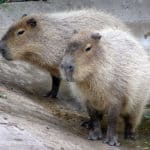
Capybara
Capybara Hydrochoerus hydrochaeris Shared Family
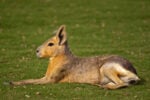
Patagonian mara
Patagonian mara Dolichotis patagonum Shared Family
Rock cavy Kerodon rupestris Shared Family
Common yellow-toothed cavy Galea musteloides Shared Family
Southern mountain cavy Microcavia australis Shared Family

Ecological Equivalents 4

Animals that fill a similar ecological role in their ecosystem

Domestic rabbit Oryctolagus cuniculus Guinea pigs (Cavia porcellus) and rabbits are small, social, terrestrial herbivores and hindgut fermenters that require high-fiber diets and are crepuscular (active at dawn and dusk). Rabbits (lagomorphs) perform cecotrophy; guinea pigs (rodents) require vitamin C in their diet.
Chinchilla
Chinchilla Chinchilla lanigera Long-tailed chinchilla. Chinchillas are small, social herbivores similar to guinea pigs. Both live in groups, have ever-growing front teeth, and require rough, high-fiber diets for dental and gut health. Chinchillas live in cool, dry places and do not need vitamin C.
Degu Octodon degus Both are diurnal and crepuscular, group-living small herbivores commonly kept in captivity; they use many vocalizations and eat high-fiber forage processed by hindgut fermentation. Degus are sugar-intolerant; guinea pigs require vitamin C and have precocial young (gestation ~59–72 days).
Rock cavy Kerodon rupestris Close ecological analogue within Caviidae: a small-to-medium terrestrial herbivore with social group structure and similar dentition and foraging style; differs in being more rupicolous (rock-dwelling) and not domesticated.

Guinea Pig Breeds

8

Explore 8 recognized breeds of guinea pig

Coat Variety (long Haired With Crest) (1)

Coronet Origin: United Kingdom

Coat Variety (long Haired, Curly) (1)

Texel Origin: United Kingdom

Coat Variety (long Haired, Straight) (1)

Coat Variety (long Haired, Swept Back) (1)

Silkie (Sheltie) Origin: United Kingdom

Coat Variety (rosetted) (1)

Coat Variety (short, Dense, Plush) (1)

Coat Variety (short, Smooth) (1)

American (Smooth-coated) Origin: United States (standardized in North American fancy) / widely distributed

Hairless Variety (1)

Skinny Origin: Canada / United States (laboratory-origin hairless line; later fancy)

Classification and Evolution
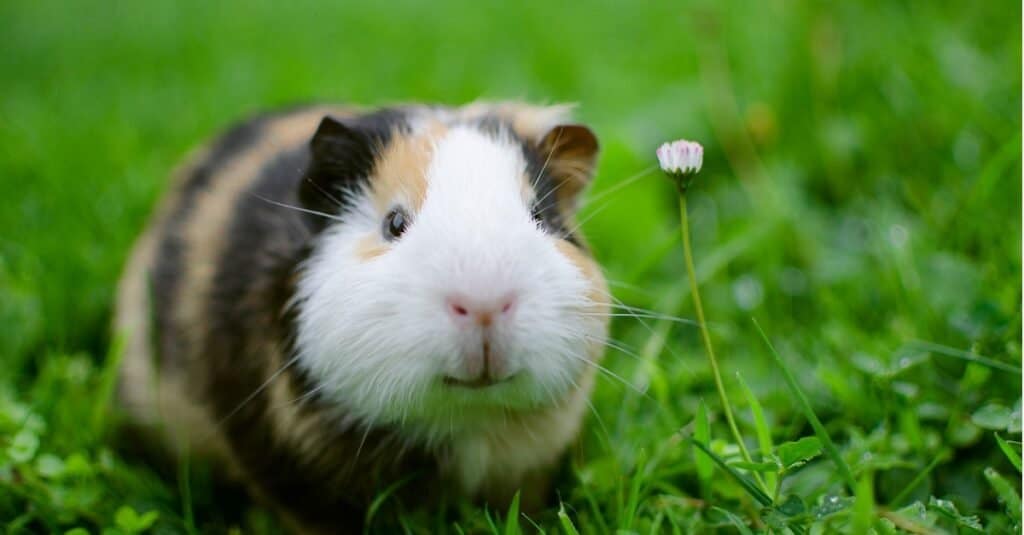
Emotional Support Animals

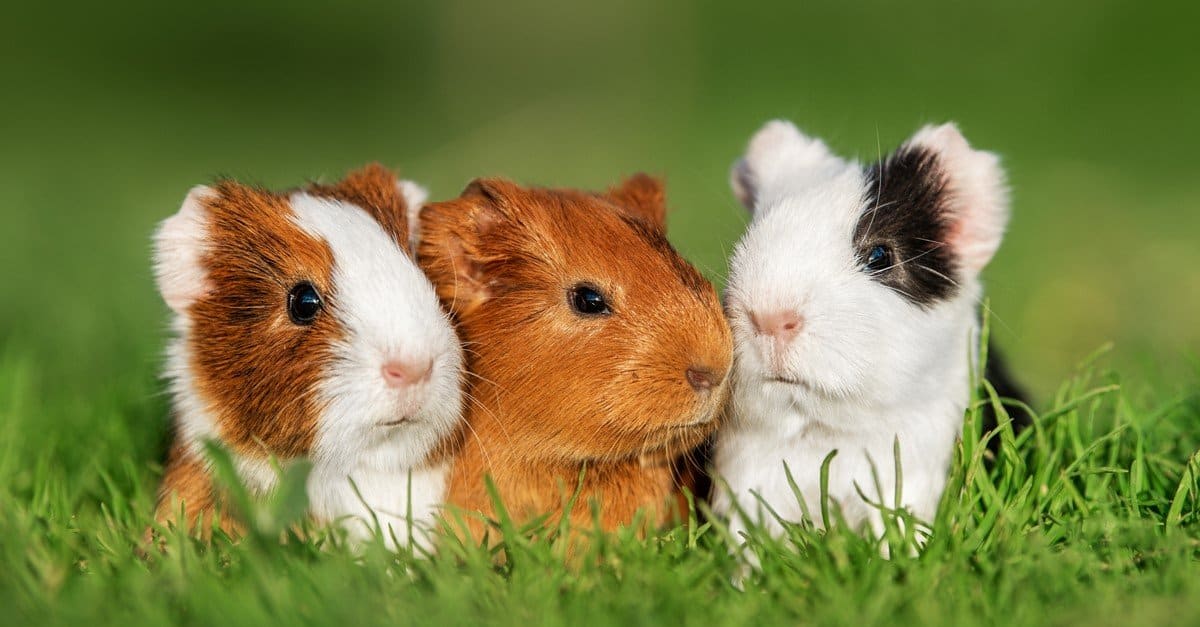
The Guinea Pig is a small species of rodent that is found inhabiting the Central Andes Mountains in South America.

The Guinea Pig (also known as a Cavy) is a small species of rodent that is found inhabiting the Central Andes Mountains in South America.

Named after Guyana where they are found in the wild and “pig” resembling their short and stout bodies, Guinea Pigs have been domesticated by people for over 3,000 years as they were originally kept and farmed as a source of food throughout much of their natural range in South America.

With the arrival of the Spanish to the continent in the 1500s, Guinea Pigs were then more selectively bred to be kept as pets and today are one of the most common domestic household pets, loved and kept by people all around the world due to their calm and docile nature, coupled with their small size.

Today there are five species of Guinea Pig found in the wild and fourteen different breeds of domestic Guinea Pig bred all around the world.

Different Types of Guinea Pig

Anatomy and Appearance

Guinea pig names

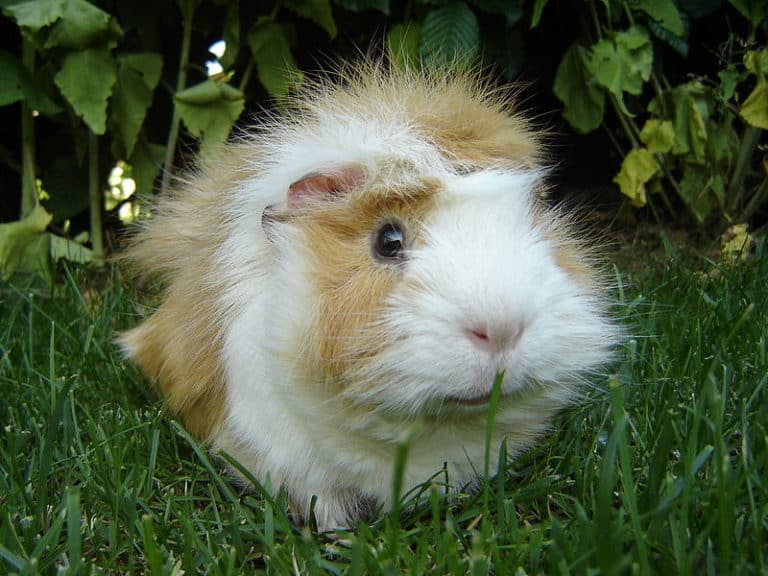
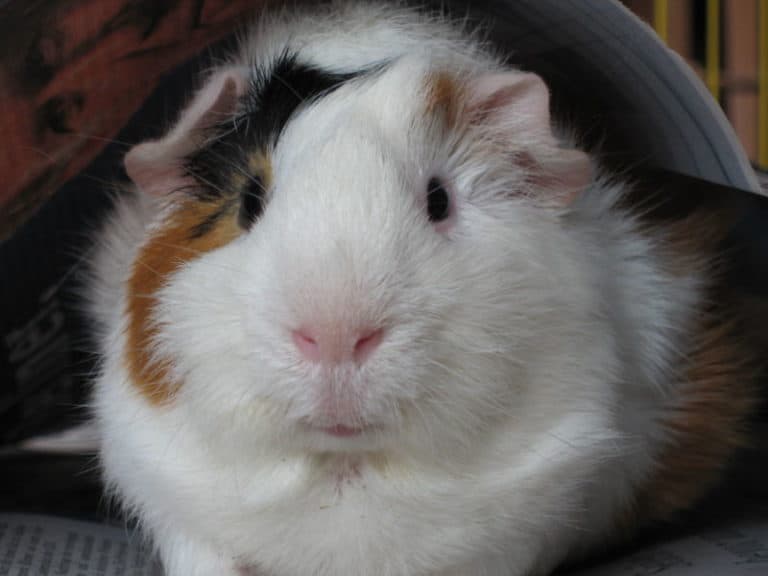
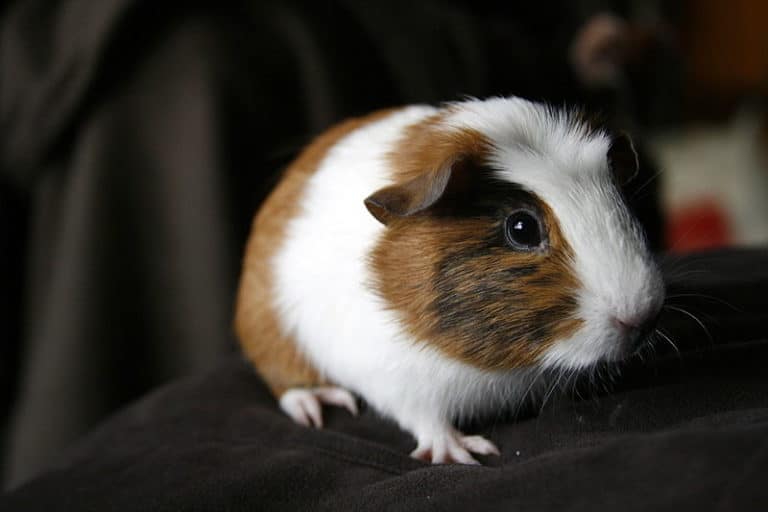
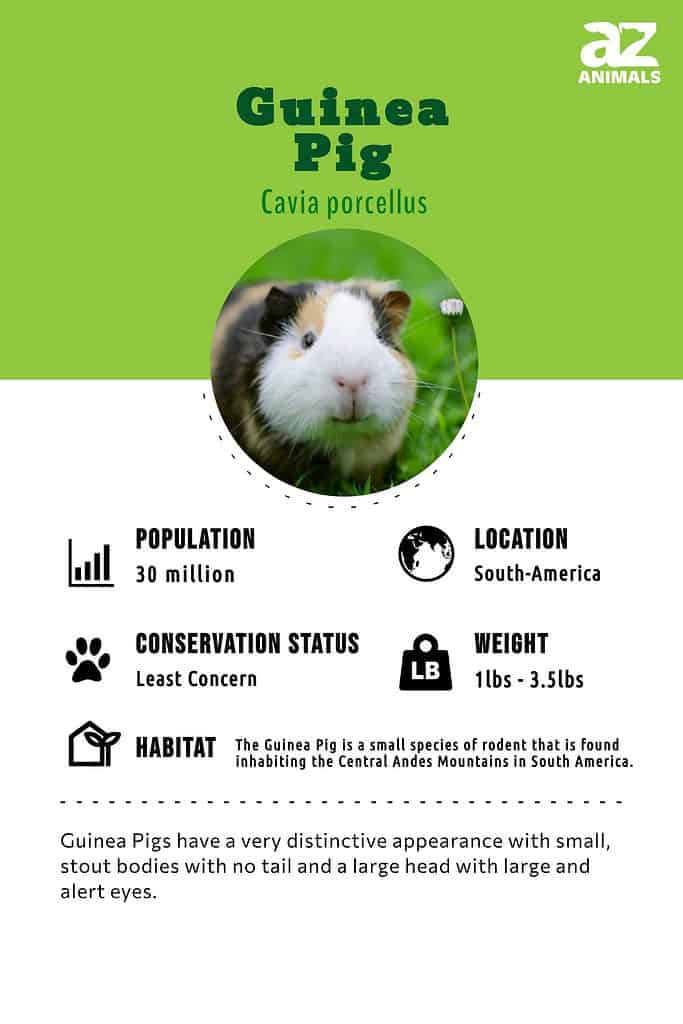
Guinea Pigs have a very distinctive appearance with small, stout bodies with no tail and a large head with large and alert eyes.

Guinea Pigs have a very distinctive appearance with small, stout bodies with no tail and a large head with large and alert eyes.

They have strong, short legs with four toes on their front feet and three on the back, all with sharp claws that help them when they are burrowing and scrabbling around in the wild. Like other species of rodents, Guinea Pigs have an exceptional sense of smell and hearing that coupled with their long whiskers, gives them a heightened awareness of changes in their surroundings so they are able to detect predators more effectively.

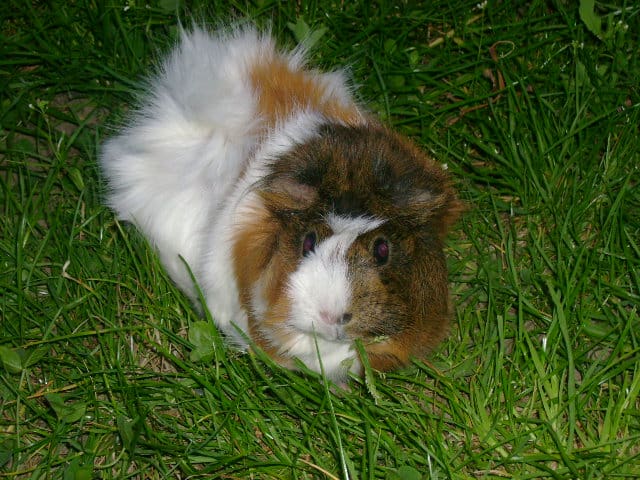
Guinea Pigs have long, coarse fur that in the wild is grey, brown, or black in color. Domestic Guinea Pigs, however, can be found in a variety of different colors with different hair lengths and smoothness. One of the most characteristic features of Guinea Pigs (and indeed all rodents compared to other mammal species) is the four large incisors at the front of their mouths.

These teeth are long and curved and grow continuously, but only the fronts are protected by a hard enamel coating. The backs of their teeth are made of a softer material that corrodes easily with constant gnawing which allows Guinea Pigs to keep their teeth as sharp as possible at all times.

Distribution and Habitat
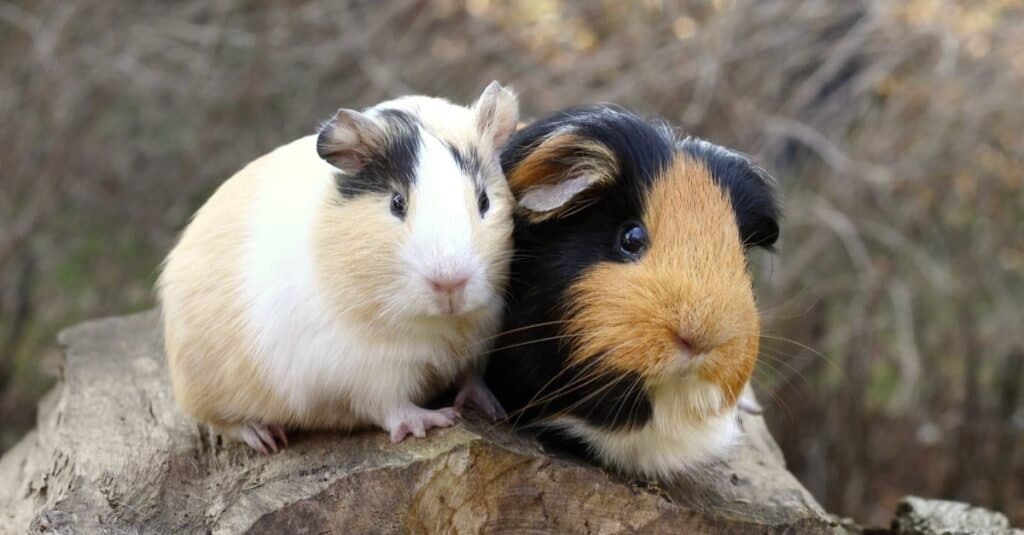
Male vs female guinea pig

Guinea Pigs are also found inhabiting regions of varying altitudes from 300 meters to 3,000 meters above sea level provided they are able to have good access to food and in areas that are suitable for burrowing.

Guinea Pigs are found in a variety of habitats throughout the Central Andes Mountain Range in South America, from Colombia in the North to Southern Argentina with the exception of the more tropical regions of the Amazon Basin. They prefer grasslands, swamps, and rocky hillsides in areas with plenty of vegetation but that is predominantly open so they are more easily able to locate the threat of approaching predators.

Guinea Pigs are also found inhabiting regions of varying altitudes from 300 meters to 3,000 meters above sea level provided they are able to have good access to food and in areas that are suitable for burrowing.

Although they are capable of digging their own burrows, Guinea Pigs often prefer to move into abandoned burrows created by other small mammals or reside in rocky crevices on the hillside.

Behavior and Lifestyle

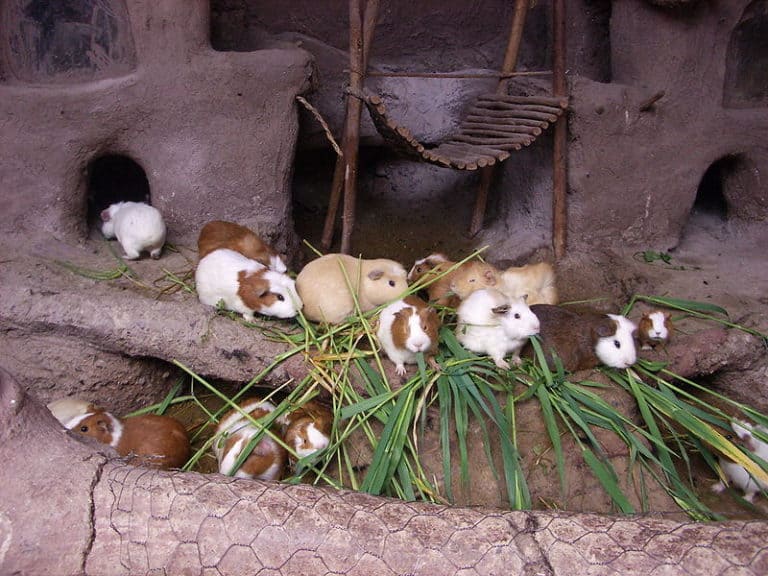
Guinea Pigs are diurnal animals that are most active during dawn and dusk. This is thought to be due to lower levels of activity from predatory species that struggle during these hours with the drastic changes in light. They are highly sociable living together in small groups of up to 10 individuals. Guinea Pig groups have a well-established hierarchy that is ruled by a single male and female, competition for which can often lead to fatalities.

Guinea Pigs are highly vocal, communicating with each other using an extensive range of vocalizations including chirps, squeaks, or burbles to show excitement or to warn others of approaching danger. They are also known to communicate by smell, excreting odors through scent glands on their bodies.

Guinea Pigs settle in burrows close to good sources of food with their little groups but often have their own individual nests where they sleep and hide.

Pets

Guinea Pigs make excellent pets due to their playful, social nature. They also live for several years, longer than most other rodents, so you can enjoy them longer than other pet rodents.

As noted above; Guinea Pigs are highly vocal and use their voice to express their personality. They make an excellent first pet for a child as they are fun to play with and require minimal maintenance.

If you’re considering a Guinea Pig for a pet, or already have one be sure to check out our guide to keeping guinea pigs as pets!

Reproduction and Life Cycles
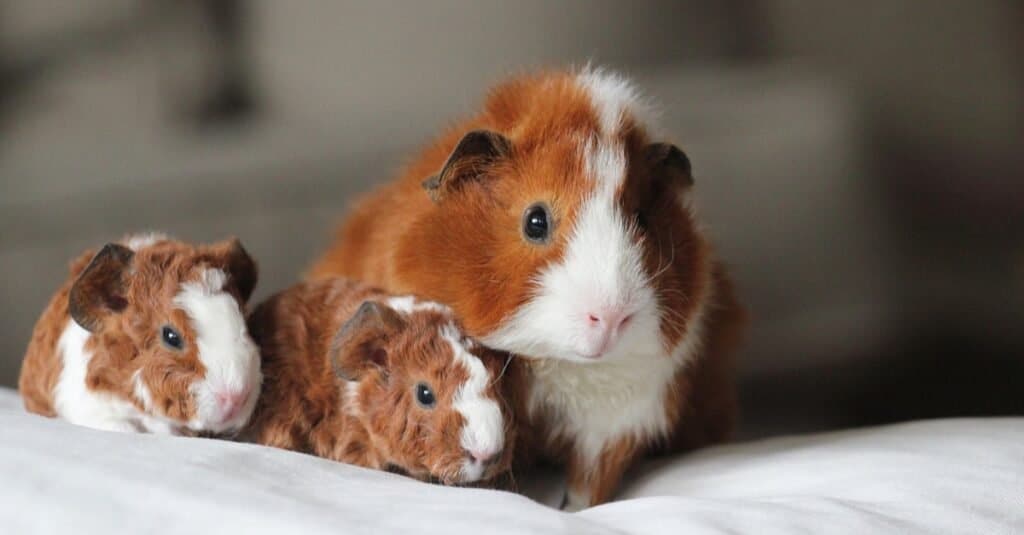
Pregnant Guinea Pigs

Pregnant Guinea Pigs

Guinea Pigs are able to breed when they are around three months old. In the wild, there is no distinct breeding season as they are known to produce litters of young all year round but there are fewer born in the colder winter months. After a relatively long gestation period of between 58 and 72 days, the female Guinea Pig (known as a sow), gives birth to as many as 13 young although the average in the wild is closer to three or four.

Guinea Pig pups are very well developed at birth and unlike a number of other rodent species, are born with their long fur. They suckle on their mother’s milk for the first 21 days but are able to begin grazing independently within the group on solid foods by the end of their first week. During the course of a year, a female Guinea Pig may give birth to up to five litters that have a lifespan in the wild of three or four years.

Domestic Guinea Pigs are known to live a great deal longer than their wild counterparts, normally reaching the age of 6 although some have been known to live for even longer with the oldest recorded Guinea Pig being 15 years old.

Diet and Prey
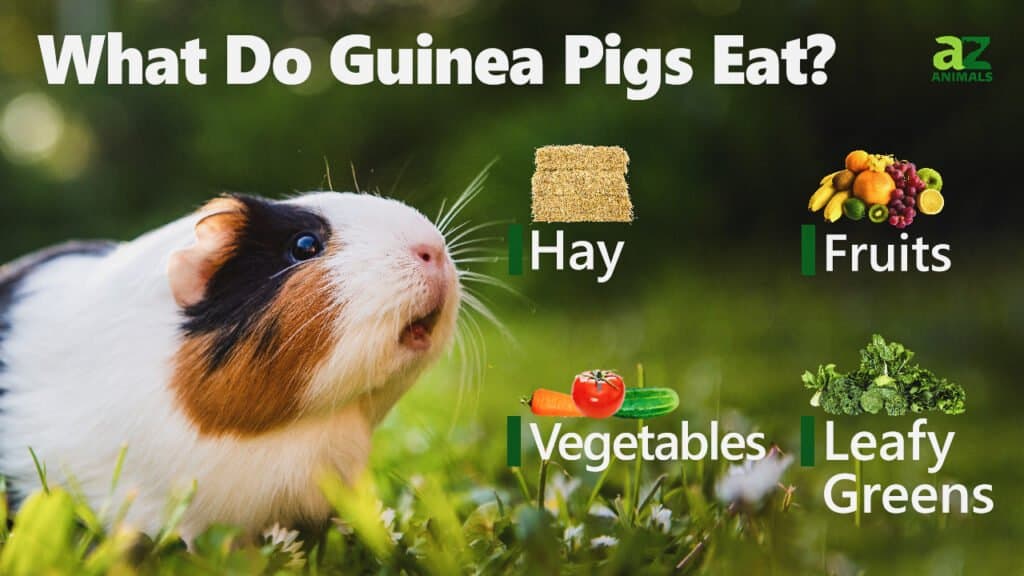
What Do Guinea Pigs Eat
Guinea Pigs eat hay, fruits, vegetables, and leafy greens.

Guinea Pigs are herbivorous animals which means that they only eat plant material in order to gain all of the nutrients that they need to survive. Grasses, leaves, seeds, bark, and flowers make up the majority of their diets on the mountain slopes in South America. Guinea Pigs are constantly grazing rather than eating large amounts of food in one go, which they primarily do during the twilight hours when there are fewer predators around.

They have well-trodden paths that they use to get between their food sources and their burrows and can often be seen in a mass gathering when a number of Guinea Pig groups are in the same area where food is in abundance. The natural diet of Guinea Pigs is very high in vitamin C so it is essential that domesticated pet Guinea Pigs are provided with a diet that contains plenty of it.

Along with grasses, hay, and vegetables, domestic Guinea Pigs are often supplemented with special nuggets that contain plenty of the nutrients that they need in order to effectively and healthily survive.

Predators and Threats
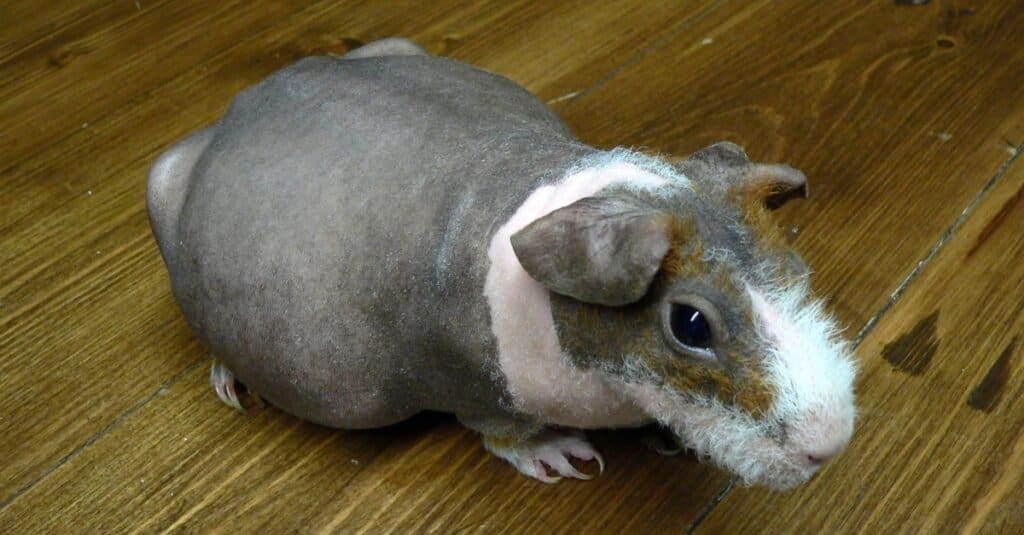
Pregnant Guinea Pigs

Due to their small size and natural instincts to freeze before attempting to quickly escape back to their burrows

Due to their small size and natural instincts to freeze before attempting to quickly escape back to their burrows, Guinea Pigs are preyed upon by a number of other animal species throughout their mountain habitats. Mammals including weasels and birds of prey are the main predators for wild Guinea Pigs along with domesticated dogs and cats in regions where they reside close to human populations.

Although some populations are heavily affected by habitat degradation, Guinea Pigs are fairly adaptable animals that are able to inhabit areas where other species may not thrive. They are also still captured and farmed for food by people throughout much of their natural range in South America.

Some populations have also been known to be severely affected by diseases from other animals in places where they are coming into regular and close contact with other domestic species.

Interesting Facts and Features

Guinea Pigs are known to exhibit a behavior known as “popcorning” when they become excited. Mostly displayed by young Guinea Pigs, they are able to jump into the air whilst running and quickly turn around in order to jump again in excitement.

Oddly enough, Guinea Pigs are known to very rarely close their eyes even while they are sleeping. Most commonly observed with domestic animals, it is thought to be a protective trait that enables them to stay as alert as possible at all times.

Interestingly enough, it has been reported that Guinea Pigs have been used by doctors to help to find illnesses in people. By placing the Guinea Pig on the person, they will give a little squeak when they have detected the location of the problem.

Click here to read more interesting Guinea pig facts.

Relationship with Humans
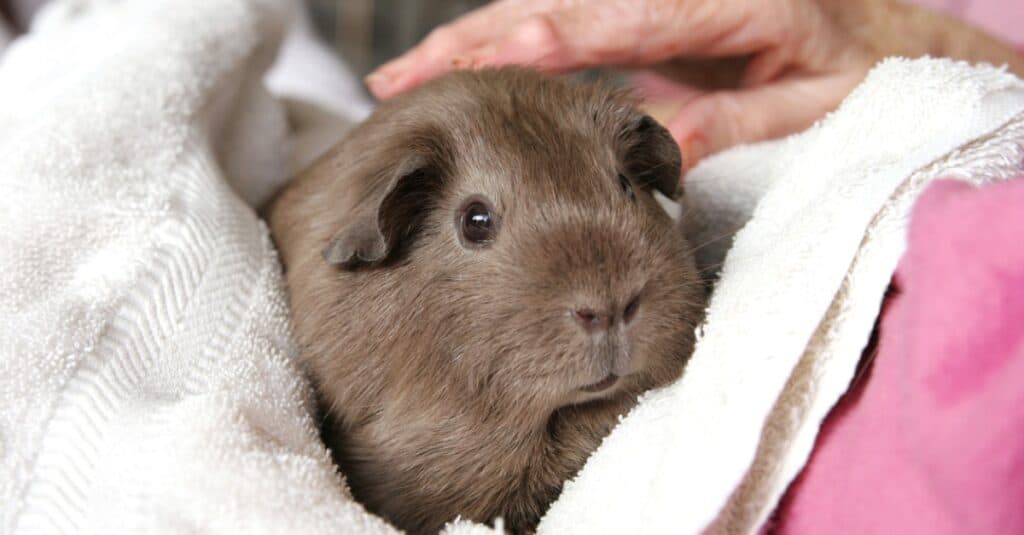
pet Guinea pig wrapped in towel being pet on the head

Guinea pigs are social companion animals.

Due to their small size and ease of keeping, Guinea Pigs have been farmed by local people for food for thousands of years. Their calm and docile nature has led to them becoming one of the most commonly kept household pets all around the world, and they are now found in a wide variety of sizes and colors due to selective breeding.

The sweet and chatty temperament of Guinea Pigs has led to them becoming a favorite amongst pets for children, who are able to look after them with relative ease (providing they are overseen by a responsible adult). Their placid nature however has also sadly led to them being widely used in laboratory experiments for many years.

Conservation Status and Life Today

Today, four of the five Guinea Pig species found throughout South America are listed by the IUCN as animals that are of Least Concern of becoming extinct in the wild in the near future.

Despite declining population numbers in specific regions, their ability to breed so effectively and in a wide variety of changing habitats has allowed Guinea Pig population numbers to remain relatively stable.

The exception to this is the Santa Catarina’s Guinea Pig which is found in one area of Brazil. With only 42 individuals thought to remain in the wild and only in one small area, they have been listed as Critically Endangered in their natural environment.

Even More Guinea Pig Information

If you would like to learn even more about Guinea pigs, check out the following articles:

  • Discover the Largest Guinea Pig Ever
  • The World’s Oldest Guinea Pig
  • Guinea Pig Names: Boy and Girl Names for Your Guinea Pig
  • Guinea Pig as a Pet: How to Care for Your Guinea Pig
  • Guinea Pig Types: The Ultimate Guide to Guinea Pig Breeds
  • Guinea Pig Nail Clipping: How to Trim Guinea Pig Nails
  • Discover Hairless Guinea Pigs: Skinny Pigs & Baldwin Guinea
  • Bladder Stones in Guinea Pigs: Everything You Need to Know
  • Do Female Guinea Pigs Have Periods?
  • Guinea Pig Lifespan: How Long Do Guinea Pigs Live?
  • What Temperature is Too Hot for Guinea Pigs?
  • 7 Best Places to Adopt Guinea Pigs
  • Do Guinea Pigs Bite? Everything to Know About Guinea Pig & Human Interaction
  • Pregnant Guinea Pigs: How to Tell if Your Guinea Pig is Pregnant
  • Are Guinea Pigs Nocturnal?
  • Where Do Guinea Pigs Come From Originally?
  • Why Do Guinea Pigs Squeak?
  • Do Guinea Pigs Sleep?
  • Male Guinea Pigs vs Female Guinea Pigs: What’s the Difference?
  • How Long Are Guinea Pigs Pregnant?
  • How Much Does a Guinea Pig Cost Per Year?
View all 261 animals that start with G

Sources

  1. David Burnie, Dorling Kindersley (2011) Animal, The Definitive Visual Guide To The World's Wildlife / Accessed November 7, 2008
  2. Tom Jackson, Lorenz Books (2007) The World Encyclopedia Of Animals / Accessed November 7, 2008
  3. David Burnie, Kingfisher (2011) The Kingfisher Animal Encyclopedia / Accessed November 7, 2008
  4. Richard Mackay, University of California Press (2009) The Atlas Of Endangered Species / Accessed November 7, 2008
  5. David Burnie, Dorling Kindersley (2008) Illustrated Encyclopedia Of Animals / Accessed November 7, 2008
  6. Dorling Kindersley (2006) Dorling Kindersley Encyclopedia Of Animals / Accessed November 7, 2008
  7. David W. Macdonald, Oxford University Press (2010) The Encyclopedia Of Mammals / Accessed November 7, 2008
Rebecca Bales

About the Author

Rebecca Bales

Rebecca is an experienced Professional Freelancer with nearly a decade of expertise in writing SEO Content, Digital Illustrations, and Graphic Design. When not engrossed in her creative endeavors, Rebecca dedicates her time to cycling and filming her nature adventures. When not focused on her passion for creating and crafting optimized materials, she harbors a deep fascination and love for cats, jumping spiders, and pet rats.
Connect:

Thank you for reading! Have some feedback for us?


Guinea Pig FAQs (Frequently Asked Questions)

Guinea pigs and hamsters are often compared as they’re two of the most popular pet rodents. The primary difference between the two is that guinea pigs are several times larger. In addition, guinea pigs live longer than hamsters and are less nocturnal as well.