
















With their small and sturdy build, Havanese dogs are affectionate and playful. They are often welcomed into families for their soft fur, intelligence, and desire to please their loving owners.
The lack of shedding and clever mind of the Havanese dog have earned it a place as a common therapy dog in hospitals, bringing joy to patients who need their spirits lifted. Their mental focus and agile bodies also make it easy to teach them tricks. As such, they are sometimes bred with other canines for mixed-breed toy dogs.

An adult Havanese sizes up the photographer.
©Dorottya Mathe/Shutterstock.com
History of the Breed
The national dog of Cuba, the Havanese, was developed from a now-extinct dog called the Blanquito de la Habana. Both the Havanese and the Blanquito descend from the Tenerife, a Bichon-type dog that is also extinct. The Tenerife came to Cuba in the 1500s with Spanish farmers and noblemen.
By the 18th century, Europeans vacationing in Cuba discovered the Havanese, and the breed became quite trendy in Europe. The UK’s Queen Victoria and author Charles Dickens even enjoyed their company.
Also known as the Havana Silk Dog, Cuban Bichon, and the Bichon Havanais, the Havanese comes in 16 different colors, the most common of which are cream, gold, fawn, red, chocolate, silver, blue, brindle, and sable. There is little to no difference between the size and weight of male and female Havanese. The breed typically weighs between 7 and 13 pounds and is between 8 and 11 inches in stature. However, when the Havanese is mixed with other toy dogs (e.g., like the poodle), they may be as tall as 15 inches.
Common Health Issues
Thanks to relatively responsible breeding, Havanese dogs live long lives with few health concerns. Nevertheless, there are still a few things to watch out for, principally deafness, eye disorders, and heart problems, which a veterinarian can screen for.
Havanese dogs have a genetic predisposition, due to their size, to chondrodysplasia or achondroplasia, conditions that cause the bones not to reach their full adult size. Often, these dogs have fairly short legs, a trait that is passed down to them by their parents.
Another hereditary condition common to the Havanese is Legg-Calve-Perthes disease, which also impacts the poodle, chihuahua, Pomeranian, and other toy or terrier breeds. It impacts the hips in younger dogs when the blood supply to the hip bones, specifically the femoral head, is compromised, which can then cause necrosis or death of the bone. Most dogs with this problem will limp on the affected leg.
Patellar luxation, often linked to genetics but can also arise following a traumatic event, occurs when the kneecap dislocates. Often, when one kneecap is pushed out of place, the other one will dislocate as well.

While petite in stature, the Havanese is also quite statuesque in appearance.
©Dorottya Mathe/Shutterstock.com
Temperament and Exercise
If you are looking for a happy-go-lucky, social, moderately energetic, intelligent, and affectionate (petite) dog, the Havanese meets the bill. Havanese dogs love to be with their owner(s), whether it’s learning new tricks and commands, which this breed is very good at, playing games, or running errands with you.
This also means this breed does not make a great kennel dog, as they can become quite anxious if separated from their humans for too long. Socialization with other people and dogs goes a long way in making sure your Havanese pup doesn’t become overly shy and timid. The Havanese is considered a great breed for city living.
The breed is also quite good with children, as the Havanese are no physical obstacle to even the smallest little ones and make great play companions and watchdogs. One concern might be that the dog could nip a child, but both Havanese puppies and adults are easy to train out of any aggressive behaviors.
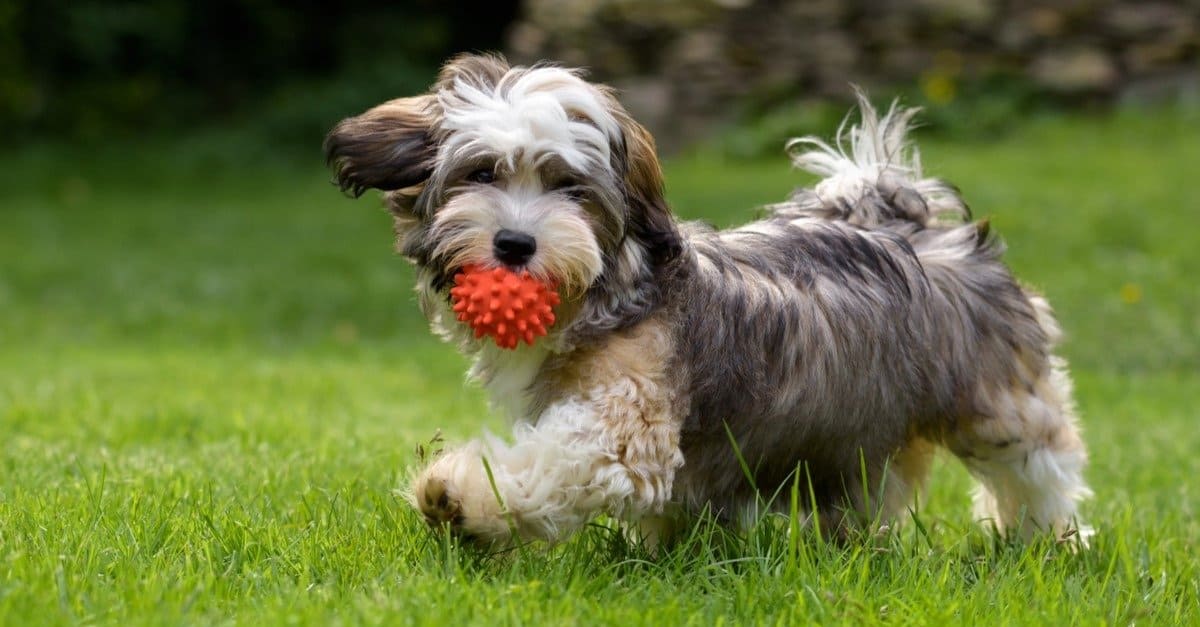
A Havanese picks up commands quickly. This dog breed is the only one entirely native to Cuba.
©Dorottya Mathe/Shutterstock.com
The breed makes for a good lookout as they are quick to alert their owners of the presence of strangers, but their petite size puts them at a significant disadvantage as a guard dog (as much as they might like to believe differently). They are generally good with other pets in the house, although they may bark excessively without additional training.
The Best Dog Food for Havanese Dogs
Havanese dogs need a restricted diet, as gaining even a pound or two — which is minor for a large breed like a Labrador or a German Shepherd — is quite significant for this tiny dog It is suggested that they be fed a 1/2 to 1 cup of dry dog food daily, divided into two servings.
You can mix turkey, chicken, or beef into their dry food as an additional protein source if prepared without oils and seasoning. Do not feed human food to your Havanese dog, as it can cause health problems for them. Since the Havanese can be prone to heart conditions, it is recommended that they avoid foods containing legumes, as there is a link between legumes and heart failure in dogs.

Keep your Havanese dog’s diet legume-free.
©Sandra Huber/Shutterstock.com
Maintenance and Grooming
The Havanese breed requires regular grooming sessions. Brush your Havanese’s coat at least two to three times a week, removing any knots or tangles that could eventually result in matting. Though the expense can be high, professional grooming is often the most effective. They would need a bath every 1 to 2 weeks, but the frequency depends on the thickness of the coat and how dirty they may become.
Never brush its coat when it is dry. If you brush the coat when they have not recently had a bath, spray water or waterless shampoo on the coat before brushing.
Puppies
Much like adults, Havanese puppies are also not difficult to train. Puppies of this breed are often only 2.5-4 pounds at 8 weeks old, so it is helpful to divide their meals up throughout the day to ensure they receive the nutrition they need to grow big(ger) and stronger. Adult maturation is reached at age 1, but many are fully grown by 8 months.

A Havanese puppy is on his way to charm his humans.
©Sandra Huber/Shutterstock.com
Havanese Pictures
View all of our Havanese pictures in the gallery.

Dorottya Mathe/Shutterstock.com
Sources
- Wikipedia / Accessed January 25, 2025
- Havsluv Havanese / Accessed January 25, 2025
- American Kennel Club / Accessed January 25, 2025
- Gateway Havanese / Accessed January 25, 2025
- Dogtime / Accessed January 25, 2025
- Hillspet / Accessed January 25, 2025
- HCA Horizons / Accessed January 25, 2025
- Dog Breeds Expert / Accessed January 25, 2025
- Puppies Club / Accessed January 25, 2025
- Havanese / Accessed January 25, 2025