H
Species Profile

Hermit Crab

Anomura (hermit-crab lineages; chiefly Paguroidea and Coenobitoidea)

Borrowed shells, bold lives
marima/Shutterstock.com

Hermit Crab Distribution

Click a location to explore more animals from that region

This map shows coastal regions where Hermit Crab are found.

Loading map...

Size Comparison

Human 5'8"
Hermit Crab 2 in

Hermit Crab stands at 3% of average human height.

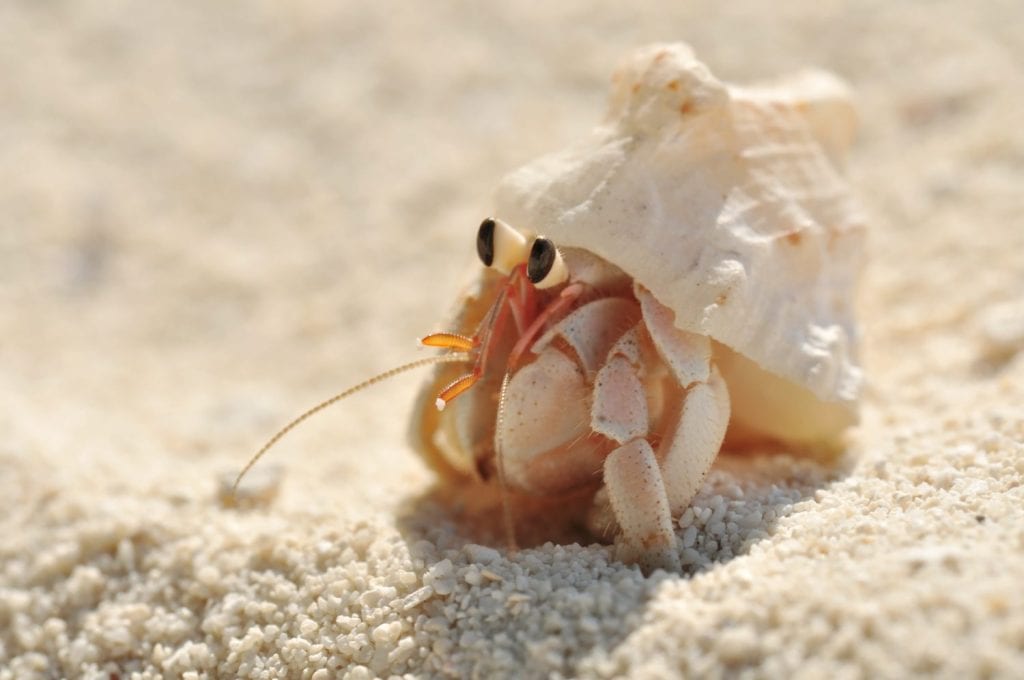
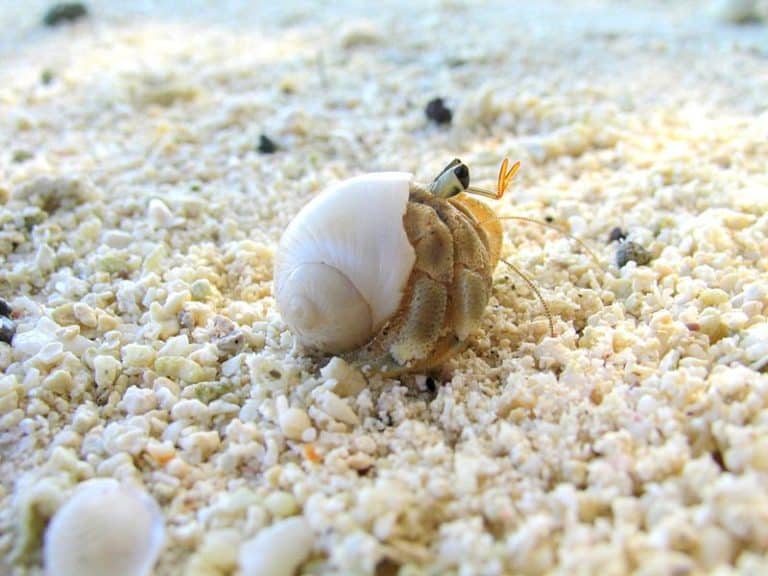
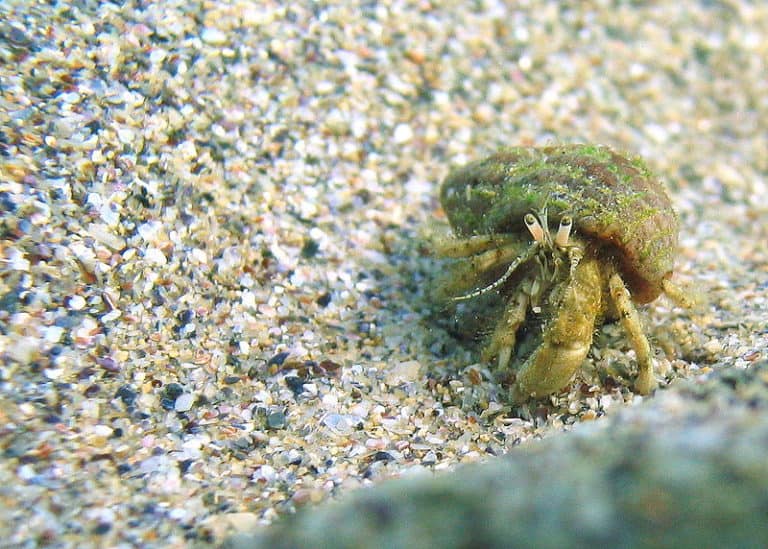
small hermit crab in the sand

At a Glance

Infraorder Overview This page covers the Hermit Crab infraorder as a group. Stats below are general traits shared across the infraorder.
Diet Omnivore
Activity Nocturnal+
Lifespan 6 years
Weight 4 lbs
Status Not Evaluated
Did You Know?

Size spans extremes: some marine hermits have shields only a few millimeters long, while the coconut crab (a hermit-crab lineage) can reach ~4 kg and ~1 m leg span.

Scientific Classification

Infraorder Overview "Hermit Crab" is not a single species but represents an entire infraorder containing multiple species.

Hermit crabs are anomuran decapod crustaceans best known for occupying empty gastropod shells (or other shelters) to protect their soft, asymmetrical abdomen. They occur in marine habitats worldwide, and some lineages (Coenobitidae) are largely terrestrial but must return to the sea to release larvae.

Kingdom
Animalia
Phylum
Arthropoda
Class
Malacostraca
Order
Anomura

Distinguishing Features

  • Soft, often coiled/asymmetrical abdomen typically protected inside a borrowed shell
  • Enlarged claws (chelae) used for defense and to block shell openings in some species
  • Decapod body plan (10 legs), with some legs specialized for gripping the shell interior
  • Frequent shell switching as the animal grows; competition for suitable shells is common

Physical Measurements

Males and females differ in size

Height
♂ 2 in (0 in – 10 in)
Length
♂ 4 in (0 in – 1 ft 4 in)
Weight
♂ 0 lbs (0 lbs – 9 lbs)
♀ 0 lbs (0 lbs – 7 lbs)
Top Speed
1 mph

Appearance

Primary Colors
Skin Type Hermit crabs (Anomura: Paguroidea, Coenobitoidea) have a segmented exoskeleton made of chitin with bristles; their soft, less-hard, uneven abdomen fits into shells, and one claw often grows large to block the opening.
Distinctive Features
  • Taxonomic placement and build: anomuran decapod crustaceans (not 'true crabs'/Brachyura), typically with an elongated body plan and a reduced/modified abdomen compared with many other decapods.
  • Signature asymmetry: abdomen is commonly twisted/asymmetrical and fits the spiral of gastropod shells; asymmetry is a core adaptation across many hermit-crab lineages (degree varies).
  • Most hermit crabs live in empty snail shells, but some use scaphopod tubes, rock crevices, sponges, corals, wood, or human debris. Some coenobitoids may outgrow shells as adults.
  • Shell-gripping adaptations: specialized posterior appendages (modified pleopods/uropods and/or 'gripping' legs) anchor the animal inside the shell; strong abdominal musculature and hooks/spines may assist retention.
  • Cheliped specialization: commonly one claw is enlarged and may act as an operculum to barricade the shell entrance; both chelae can be robust for defense, feeding, and shell contests.
  • Antennae and sensory ecology: long antennae/antennules used for chemical sensing; eyes often on stalks and may be prominent in visually oriented reef/intertidal species.
  • Hermit crabs (Paguroidea, Coenobitoidea) range from tiny marine types with carapaces of a few millimeters (body <1 cm) to large coenobitoids with tens-centimeter leg spans and kilograms; many marine ones are 1–5 cm (no shell).
  • Lifespan varies: small marine hermit crabs often live 1–3 (sometimes 5) years; many larger land hermits live for decades, and some coenobitoids reach 40–60+ years. They vary by species, predators, growth, habitat.
  • Hermit crabs often switch shells as they grow, fight or rap shells for them, and use chemical cues. Paguroidea are marine scavengers; Coenobitidae are land/shore scavengers needing humidity and sea for larvae.
  • Molting constraints: growth occurs via molting; individuals are often vulnerable during/after molts and may burrow, hide, or (in land hermits) seek humid shelters. Molting frequency and growth rate vary widely with temperature, diet, and species.

Sexual Dimorphism

Sexual dimorphism occurs across many hermit-crab lineages (Anomura: Paguroidea, Coenobitoidea) and varies a lot. Differences are often anatomical—sex openings (gonopores), abdomen shape for eggs, sometimes larger males or big claws (chelae); others look similar.

♂
  • Often (not universally) larger average body size and/or more robust chelae in species with strong male-male competition for shells or mates.
  • Gonopores typically associated with male reproductive openings on specific walking legs (leg-pair position varies by lineage), requiring close examination rather than obvious external ornamentation.
  • In some taxa, comparatively narrower abdomen (because females brood eggs on abdominal pleopods/structures), though abdomen is usually hidden within the shell.
♀
  • Typically broader abdomen/pleonal area and/or more developed egg-carrying structures (pleopods where present) for brooding eggs inside the shell; differences may be subtle externally.
  • Gonopores typically located on a different pair of walking legs than in males (diagnostic but not conspicuous at a distance).
  • In many species, females may be similar in coloration to males; when size dimorphism exists, females can be smaller or similar-sized depending on species and ecology.

Did You Know?

Size spans extremes: some marine hermits have shields only a few millimeters long, while the coconut crab (a hermit-crab lineage) can reach ~4 kg and ~1 m leg span.

They're decapod crustaceans (order Anomura): "ten-legged," but one pair is often specialized (small, used for grooming/handling) and not obvious.

Most have a soft, asymmetrical abdomen adapted to coil into a spiral shell-right/left "handedness" varies by lineage.

Shell choice is a major ecological limiter: when suitable shells are scarce, growth and reproduction can slow, and competition intensifies.

Not all use snail shells: some occupy tusk shells, worm tubes, barnacle plates, coral crevices, driftwood, or even human litter (bottlecaps, plastic).

Lifespan varies widely: many small marine hermits live on the order of a few years, while several land hermits can live for decades; coconut crabs are often estimated to exceed 40 years.

Land hermit crabs (Coenobitidae/Coenobitoidea) are "terrestrial" adults but still must return to the sea to release larvae, linking land and ocean ecosystems.

Unique Adaptations

  • Asymmetrical, lightly calcified abdomen that fits and grips a spiral shelter; the mismatch between soft rear and hard front is central to the "mobile home" lifestyle.
  • Modified rear legs and uropods that act like hooks/clamps to anchor the crab inside its shell; effectiveness differs among families and shell types used.
  • Strong, often unequal claws (chelae): one may act as a defensive "door" closing the shell opening; which claw is larger varies among groups.
  • Highly tuned chemical sensing (antennae/antennules) to locate food, carrion, shells, and sometimes conspecific cues over distance.
  • Terrestrial innovations in Coenobitidae: a humidified branchial chamber functioning like a "lung," plus behaviors for water management (seeking damp shelters, carrying water).
  • Behavioral engineering: adjusting posture and shell orientation for stability, drag reduction, and predator defense; some species decorate shells with organisms or debris.
  • Developmental flexibility in shelter use: many lineages start life requiring small shells, then shift through progressively larger shelters; in coconut crabs, juveniles use shells before transitioning to a hardened abdomen and freer living.

Interesting Behaviors

  • Shell selection and "housing markets": individuals assess shell size/weight/opening shape; in some species, multiple crabs form vacancy chains where shells are exchanged in sequence when a better one appears.
  • Shell contests: rivals may grapple, pry, or "rap" shells together to evict an occupant-intensity varies by species and shell scarcity.
  • Omnivorous scavenging is common (detritus, carrion, algae), but diets vary from more herbivory to active predation (e.g., on small invertebrates).
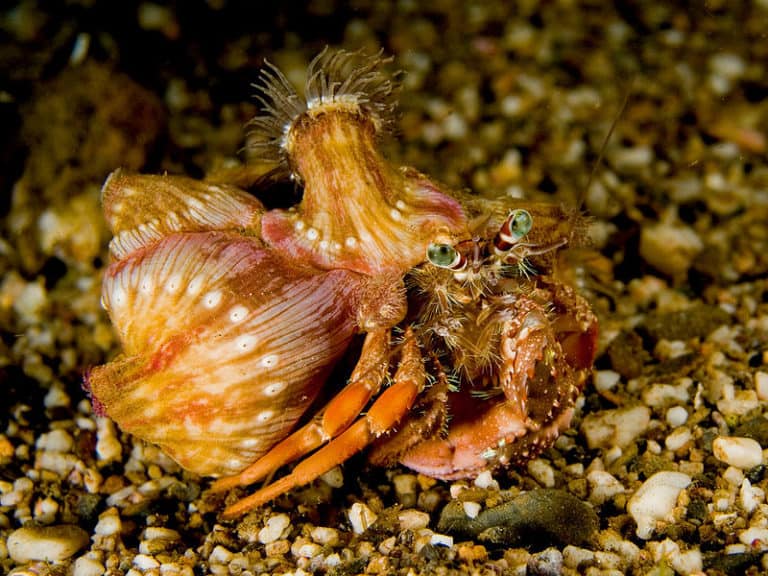
  • Symbioses: some marine hermits carry sea anemones or hydroids on their shells, gaining stinging defense while the cnidarians gain transport and food scraps.
  • Aggregation and migration: many land hermits gather in large groups and may move seasonally toward coasts for breeding, then back inland to humid refuges.
  • Nocturnal/crepuscular activity is common-especially in terrestrial forms-to reduce water loss and overheating, though many marine species are active by day as well.
  • Larval life is usually planktonic (multiple zoeal stages), promoting dispersal; timing and duration vary greatly among lineages and environments.

Cultural Significance

Hermit crabs (Anomura, especially Coenobita) are common beach animals and pets, though wild-caught ones often get poor care. In Indo-Pacific islands, coconut crabs are important food and symbols that help conservation because overharvest and habitat loss threaten them. Hermit crabs also teach behavior and senses.

Myths & Legends

In Japanese, the common name for a hermit crab literally translates as "borrowed lodging," reflecting the animal's habit of living in a shell it did not make.

Across parts of the Indo-Pacific, coconut crabs are popularly portrayed in local storytelling as clever "robbers" that climb palms and steal coconuts-an origin for the widespread common name "robber crab."

In 18th and 19th century European coastal nature writing, hermit crabs' 'borrowed houses' became a moral lesson about making do, a lasting tale that shaped seaside folklore and children's stories.

In seaside tourism, especially in the Caribbean and Pacific, hermit crabs became a symbol 'beach nomads,' sparking local tales of them 'choosing' new shells that mirror real shell choice seen by beachgoers and fishers.

Conservation Status

NE Not Evaluated

Has not yet been evaluated against the criteria.

Population Unknown

You might be looking for:

Caribbean hermit crab

28%

Coenobita clypeatus

Common pet-trade land hermit crab; breathes with modified gills and must keep them moist.

European hermit crab

20%

Pagurus bernhardus

Widespread NE Atlantic marine hermit crab; typical shell-dwelling pagurid.

Giant hermit crab

16%

Dardanus megistos

Large Indo-Pacific marine hermit crab often seen with symbiotic anemones on its shell.

Ecuadorian hermit crab

12%

Coenobita compressus

Common Central American land hermit crab, also frequent in captivity.

Life Cycle

Birth 10000 larvas
Lifespan 6 years

Lifespan

In the Wild
1–30 years
In Captivity
2–40 years

Reproduction

Mating System Polygynandry
Social Structure Aggregation Group
Breeding Pattern Transient
Fertilization Internal Fertilization
Birth Type Internal_fertilization

Behavior & Ecology

Social Aggregation Group: 8
Activity Nocturnal, Crepuscular, Diurnal, Cathemeral
Diet Omnivore High-odor animal carrion (e.g., fish/squid scraps) and readily available algae/shore wrack-preferences vary widely by habitat and species.
Seasonal Migratory, Hibernates 9 mi

Temperament

Generally cautious and shelter-dependent; retreat behavior is common, with boldness increasing when well-protected by shell/shelter quality.
Often opportunistic omnivores/scavengers; feeding can shift with habitat (marine intertidal/subtidal vs. terrestrial coastal forests), season, and body size.
Competition is common, especially over shells/shelters: behaviors range from avoidance and assessment to escalation (grappling, pushing, shell rapping) depending on species, size asymmetry, and resource scarcity.
Sociability is typically resource-driven rather than cooperative: gregarious around food/shells/refuges but not forming stable social units; tolerance varies from high-density coexistence to localized territoriality at prized shelters.
Hermit crabs (Anomura: Paguroidea, Coenobitoidea) range from millimeters to huge coenobitoids (coconut crabs). They live in sea or on land, release larvae at sea, and live about 1 to 40–60 years.

Communication

Mostly none; some terrestrial coenobitoids can produce audible stridulatory squeaks/chirps by rubbing body parts Varies by taxon and context
Chemical cues/olfaction: attraction to food odors, detection of conspecific cues, and assessment of shell/shelter via chemical signatures; important in both marine and terrestrial environments.
Tactile signaling: antennal tapping, claw contact, and pushing during assessment, courtship, and disputes.
Shell-based signals: shell rapping/knocking and vibration transmission during contests and shell negotiations; intensity and pattern can affect escalation.
Visual displays: posture changes, cheliped presentation, approach/retreat patterns; importance varies with light level and habitat Often less prominent in nocturnal/cryptic contexts
Substrate-borne vibrations: movement and tapping that can be detected at close range, especially in dense aggregations or during contests.

Habitat

Biomes:
Marine Wetland Tropical Rainforest Tropical Dry Forest Savanna Desert Hot Mediterranean Temperate Forest Temperate Rainforest Boreal Forest (Taiga) Tundra +5
Terrain:
Coastal Island Rocky Sandy Muddy Karst Volcanic +1
Elevation: -236221 in – 1640 ft 5 in

Ecological Role

Opportunistic omnivorous consumers that commonly function as scavengers and detritus processors; some populations also act as important mesograzers/mesopredators depending on habitat.

carrion removal and reduction of organic waste accumulation nutrient recycling via detritus processing and shredding of wrack/leaf litter algal/biofilm grazing that can influence benthic community composition bioturbation and sediment/organic-matter mixing during foraging and burrowing (variable among habitats) trophic linking of shoreline/terrestrial inputs to marine food webs in coenobitid systems

Diet Details

Main Prey:
Carrion Small benthic invertebrates Mollusks Barnacles and other sessile invertebrates Insects and other terrestrial invertebrates
Other Foods:
Macroalgae and seaweeds Microalgae, diatoms, and biofilm Seagrass and other marine plants Detritus and decomposing organic matter Leaf litter and decaying wood Fruits, seeds, and other plant scraps Fungal material on decaying plant matter +1

Human Interaction

Domestication Status

Wild

Hermit crabs (Anomura — mainly Paguroidea and Coenobitoidea) are not domesticated. Almost all in trade are wild-caught or kept in captivity, not bred for many generations. People catch them as bycatch, collect them on shores, sell them as pets (especially Coenobitidae and small marine paguroids), use them for bait, or eat larger coenobitids like coconut crabs where allowed.

Danger Level

Moderate
  • Pinches/claw injuries (usually minor with small species; potentially severe with very large terrestrial coenobitids)
  • Bacterial contamination from poor husbandry/aquaria (e.g., opportunistic marine bacteria in tank water)
  • Allergic reactions/irritation (rare; handling marine organisms and substrates)
  • Zoonotic risk is generally low, but safe hygiene is advised after handling animals, tank water, or beach-collected shells
  • Property/husbandry risks: larger individuals can damage equipment/enclosures and may bite/pinch when stressed

As a Pet

Suitable as Pet

Legality: Rules vary by place and species. Many small marine and land hermit crabs are sold as pets, but wild collection, big coenobitids (coconut-crab lineage), transport, or import may be limited. Check local laws.

Care Level: Experienced

Purchase Cost: $1 - $300
Lifetime Cost: $100 - $5,000

Economic Value

Uses:
Pet and aquarium trade (live animals, supplies) Fisheries/food (regional; especially larger terrestrial coenobitids where legal) Bait (regional/local use) Ecotourism and wildlife viewing (notably large terrestrial forms) Scientific research and education (behavior, symbiosis, sensory biology, ecology)
Products:
  • live hermit crabs for aquaria/terraria
  • habitat supplies (shells, substrates, salt mixes) associated with the trade
  • meat/food products in regions where harvest is permitted
  • bait in some coastal fisheries
  • educational/research specimens (where permitted)

Relationships

Predators 8

Octopus
Octopus Octopus spp.
Reef groupers and other benthic-feeding fishes Epinephelus spp.
Wrasses
Wrasses Labridae
Triggerfishes
Triggerfishes Balistidae
Swimming crabs Portunidae
Gulls and shorebirds Laridae and Scolopacidae
Raccoon
Raccoon Procyon lotor
Monitor lizard
Monitor lizard Varanus

Related Species 5

King crabs
King crabs Lithodidae Shared Order
Porcelain crabs Porcellanidae Shared Order
Squat lobsters Galatheoidea Shared Order
Mole crabs
Mole crabs Hippidae Shared Order
Aeglids Aeglidae Shared Family

Ecological Equivalents 5

Animals that fill a similar ecological role in their ecosystem

Decorator crabs
Decorator crabs Majoidea Share benthic, omnivorous/scavenging lifestyles and heavy use of camouflage or armor (decorating versus shell-carrying) to reduce predation risk.
Caddisfly larvae Trichoptera Portable case-building larvae that live in, enlarge, and sometimes swap protective cases as they grow—an ecological strategy analogous to animals that inhabit and exchange borrowed shells.
Whelks and other predatory snails Neogastropoda Strong overlap in microhabitats and diet (carrion, bivalves, and other invertebrates); they also interact via shell availability because hermit crabs frequently occupy empty gastropod shells.
Brittle stars Ophiuroidea Commonly share reef and soft-bottom scavenging roles, feeding on detritus and carrion; often occur in the same shelters and crevices and compete for food.
Intertidal amphipods Amphipoda Have a similar trophic role in shoreline ecosystems as omnivorous detritivores and scavengers, though much smaller and not shell-dependent.

Types of Hermit Crab

19

Explore 19 recognized types of hermit crab

Caribbean hermit crab Coenobita clypeatus
Ecuadorian hermit crab Coenobita compressus
Rugose land hermit crab Coenobita rugosus
Strawberry hermit crab
Strawberry hermit crab Coenobita perlatus
Indonesian land hermit crab Coenobita brevimanus
Violet land hermit crab Coenobita violascens
Coconut crab
Coconut crab Birgus latro
Common European hermit crab Pagurus bernhardus
Longwrist hermit crab Pagurus longicarpus
Flat-clawed hermit crab Pagurus pollicaris
Giant hermit crab Dardanus megistos
Red sea hermit crab (giant reef hermit) Dardanus arrosor
Striped hermit crab Clibanarius vittatus
Blue-legged hermit crab Clibanarius tricolor
Common Mediterranean hermit crab Diogenes pugilator
Halloween hermit crab Ciliopagurus strigatus
Electric blue hermit crab Calcinus elegans
Giant hermit crab (Atlantic) Petrochirus diogenes
Green hermit crab Paguristes tortugae

Hermit crabs are small crustaceans that live in shallow waters around the world. Contrary to their common name, hermit crabs are not solitary creatures but frequently live in communities of 100 or more. These crustaceans get their name from the mollusk shells that they carry on their backs and must periodically swap out as they grow. Hermit crabs need these appropriate shells, as, unlike other crustaceans, they have soft bodies and only have hard exoskeletons for the front part of their bodies.

Fun Facts

  • There are more than 800 hermit crab species worldwide
  • Hermit crabs do not breed in captivity; thus, all that are sold as pets have been harvested from the wild
  • Some crabs eat their soft, molted shells to get vitamins, minerals, and calcium
  • Competition for shells can be fierce and often results in fights between two crabs to secure a prime shell

Scientific Name
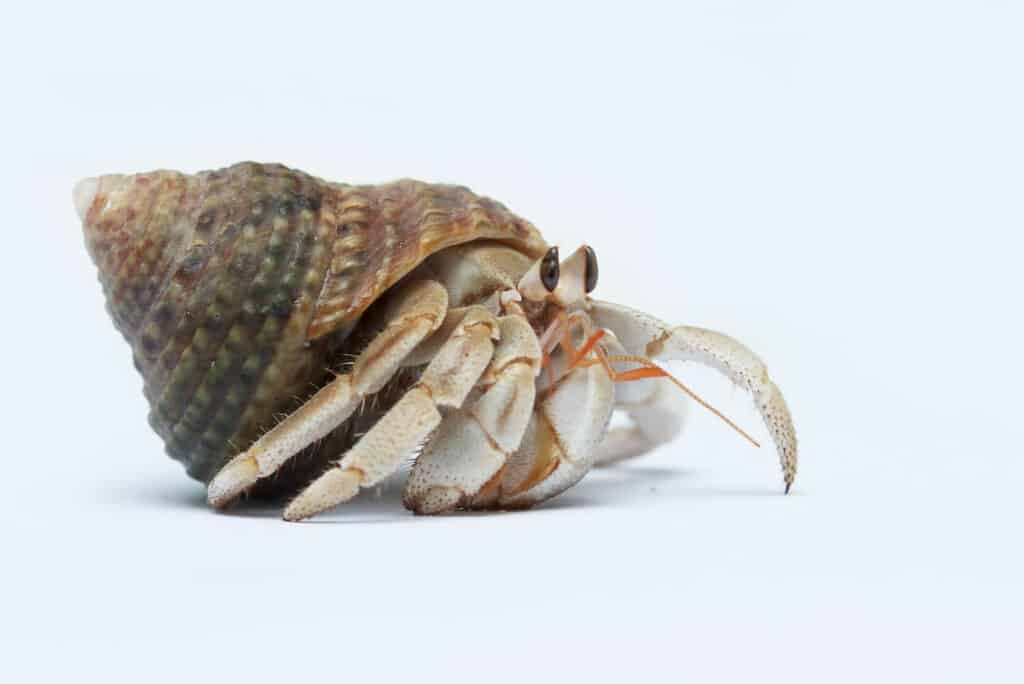
Hermit crab on white background in profile

Hermit crabs are classified in the family Paguroidea.

Hermit crabs are classified in the family Paguroidea, representing a superfamily of decapod crustaceans that have a soft, asymmetrical abdomen and occupy empty shells of other mollusks. The taxonomy of Paguroidea is further organized into seven subfamilies that represent both land and marine species.

Evolution
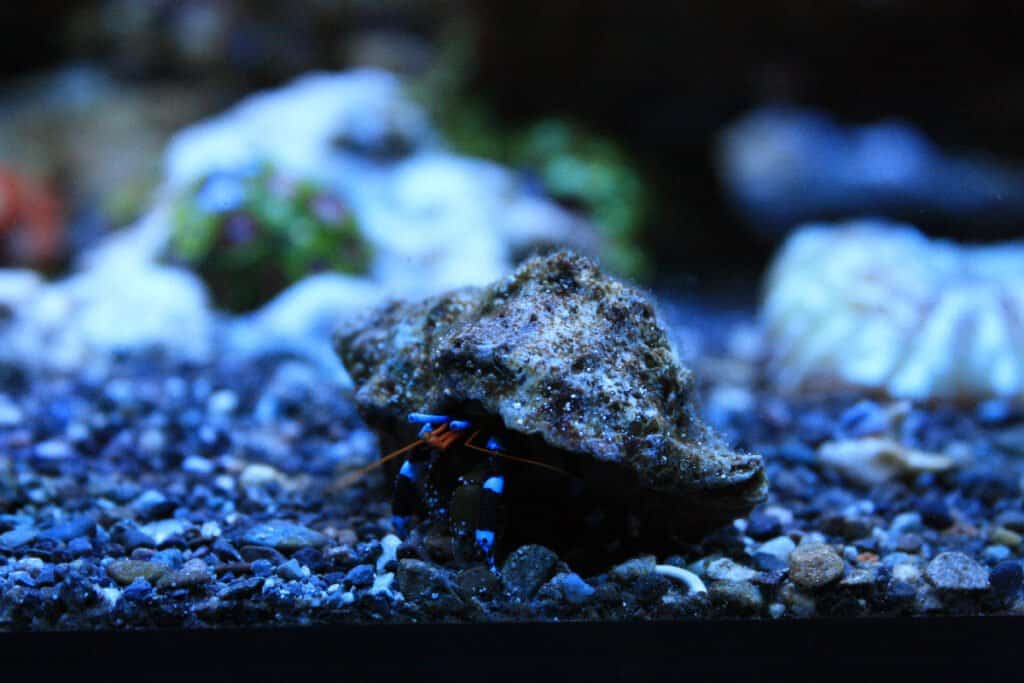
Elegant hermit crabs can reach three inches or more.

The hermit crab is a unique species of crustacean that has evolved over millions of years. It belongs to the family Paguridae and can be found in oceans all around the world. Hermit crabs have adapted to their environment by carrying their own home with them, where they are able to hide from predators or seek shelter when needed.

Hermit crabs first appeared during the Cambrian period, approximately 540 million years ago, but it wasn’t until much later (the Jurassic period) that they began using gastropod shells as homes. This allowed them to survive better in their environment since these shells provided strong protection against predators and harsh environmental conditions, such as temperature changes.

Over time, different species of hermit crab emerged due to selective pressures caused by changing climates and habitats, which led to adaptations such as varying shell sizes and shapes depending on what type of habitat they inhabited. These variations made it possible for some hermit crabs to live in deeper waters, while others preferred shallow areas close to shorelines.

Today, there are hundreds of species of hermit crab worldwide. However, despite this diversity, most still rely on gastropod shells for protection and shelter, just like their ancient ancestors did millions of years ago! 

Appearance and Behavior
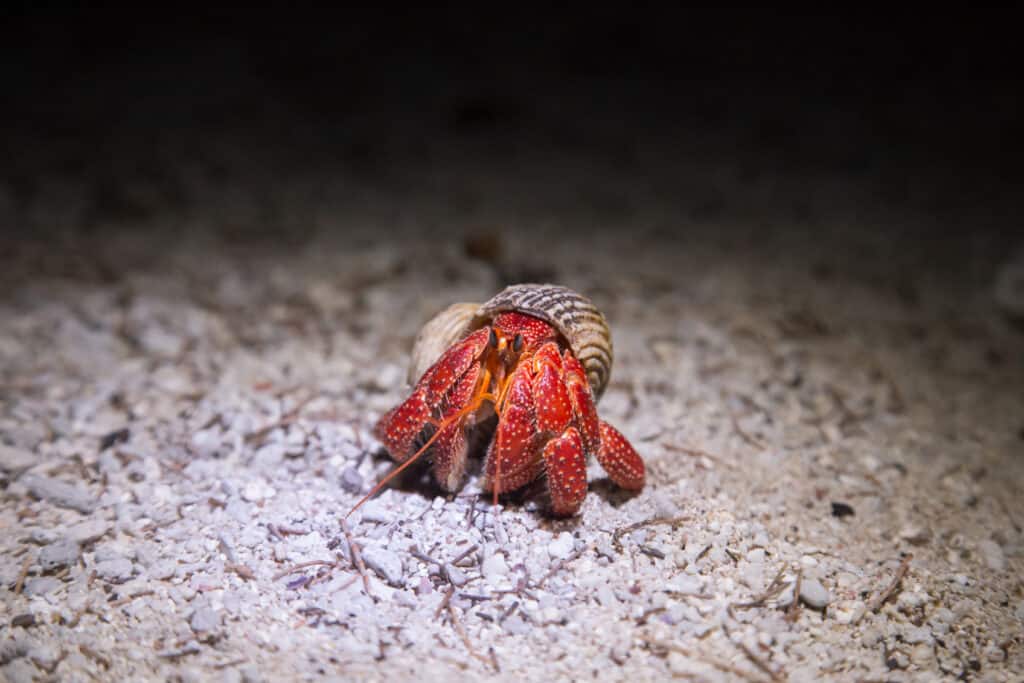
A strawberry hermit crab walking on the beach at night

Strawberry hermit crabs are nocturnal.

Because hermit crabs encompass so many different species, they generally range in size from about a half-inch to over four inches in length. A few exotic species grow to 11 inches. You can also find them in many different colors, including green, red, blue, yellow, orange, brown, pink, and white.

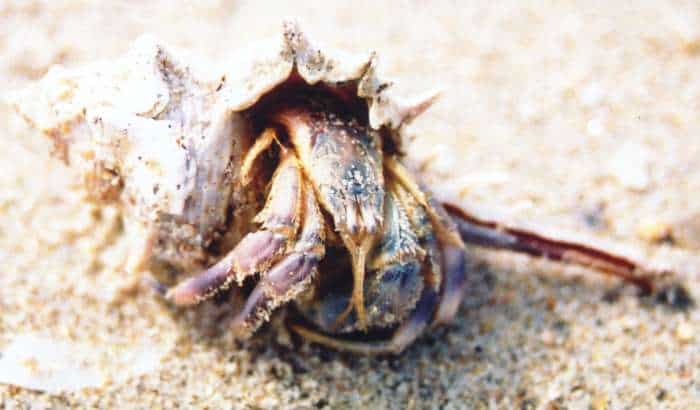
A hard exoskeleton covers the front half of the hermit crab’s body, like that of other crabs. Where hermit crabs differ is that they have long, sometimes twisted, abdomens that are soft and can fit into a discarded shell. As hermit crabs grow, they need to find larger shells to accommodate growth.

Hermit crabs molt when they grow, building up water inside their bodies to split the old shells. Some species will leave their shell and bury themselves in the sand to molt, while others remain in their shell and only emerge right before molting. The process takes 45 to 120 days. Newly molted crabs are blue. To fit inside a shell, a hermit crab presses its abdomen, its fourth and fifth pairs of legs, and its uropods against the shell’s inner wall.

Land and marine hermit crabs have gills with highly vascular areas for oxygen exchange. Land crabs keep their gills moist by storing water in their bodies. Their eyes are atop stalks, and their heads have two pairs of antennae. They use the longer ones for feeling and the shorter pair for tasting and smelling. The antennae are also vibration sensors. The first pair of legs is a set of pincers, with one side larger than the other. Hermit crabs walk on their second and third set of legs.

The largest hermit crabs in the world

The largest species of hermit crab is the coconut crab, a species that can grow to 40 inches in length! The coconut crab is an outlier in terms of size, but other species can grow much larger than average hermit crabs. The giant red hermit crab is a marine crab that can reach 12 inches in length. They live off the Eastern Seaboard of the United States.

Habitat
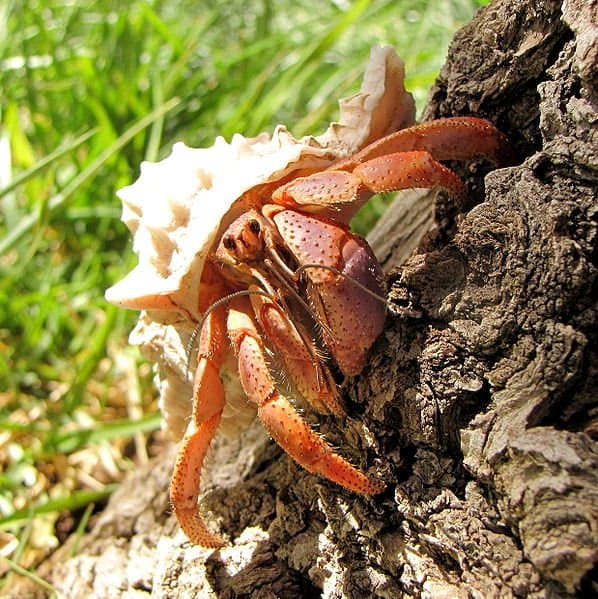
Hermit crabs hide from predators under rocks and in the holes of trees.

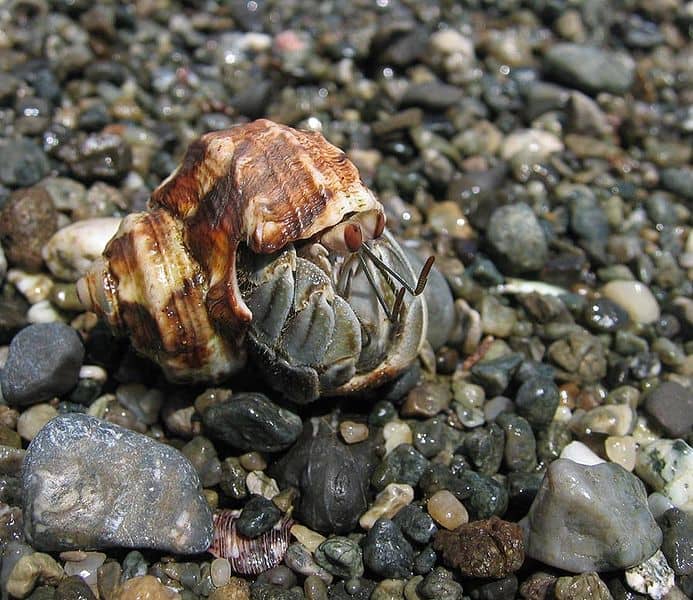
Whether a land or marine species, hermit crabs are usually found near the shoreline because of abundant food and places to hide. Land crabs use pools of seawater to wet the interior of their shells and their gills. They also use these pools for reproduction. Semi-terrestrial species live in tubes or plant stems, sections of bamboo, and broken coconut shells in addition to seashells. Habitats can include coastal forests and salt marshes. You’ll often find them hiding under vegetation, under rock ledges, and in holes in trees where predators can’t find them.

Aquatic species live in sandy- or muddy-bottomed environments and occasionally venture out into deeper water. Pylocheles, a species that lives in the Indian Ocean, can be found at depths of 600 to 1,200 feet, where it lives in hollow wood. Other species live inside coral or sponges. Some species, such as Pagurus bernhardus, a red crab found in North American and European waters, often live with anemones on their shells. 

Diet
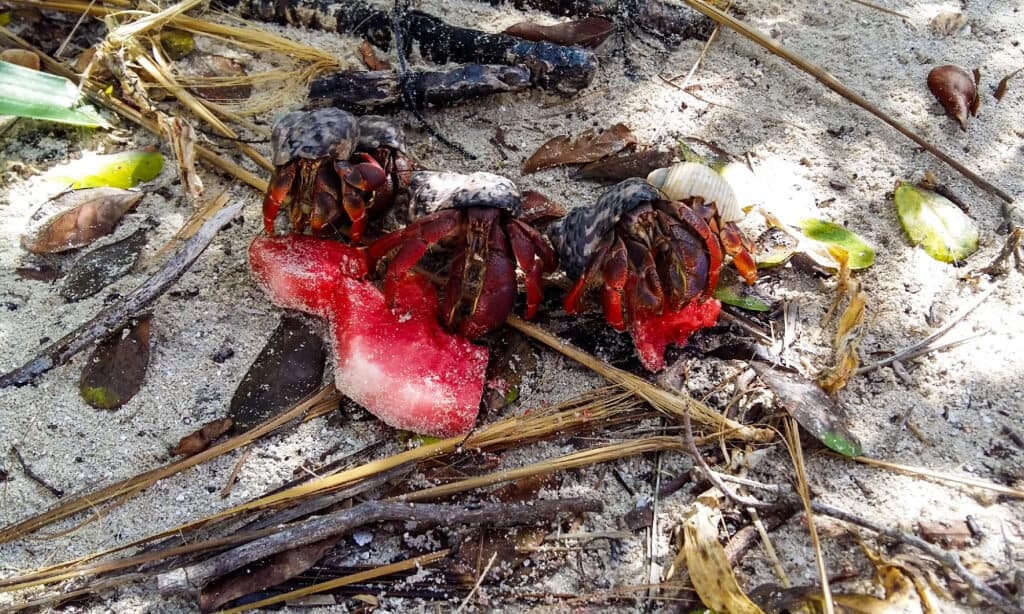
hermit crab

Hermit crabs are scavenging omnivores that eat plants and animals.

All species of hermit crabs are active in their quest for food, usually moving about at night. They are foragers, meaning that they are omnivores and eat a variety of detritus that other creatures won’t eat. They play an essential role in the benthic or bottom-dwelling marine community by cleansing the environment. Their favorite food consists of small fish and invertebrates, such as worms, along with plankton and other similar particles in the water. They will even consume dead hermit crabs if given a chance.

Predators and Threats

The small size of most hermit crabs makes them vulnerable to many different predators, including sharks, many different fish species, cuttlefish, squid, and octopus. Although fisheries don’t target these crabs for food, they often get caught up when fisheries try to trap other types of seafood.

Conservation
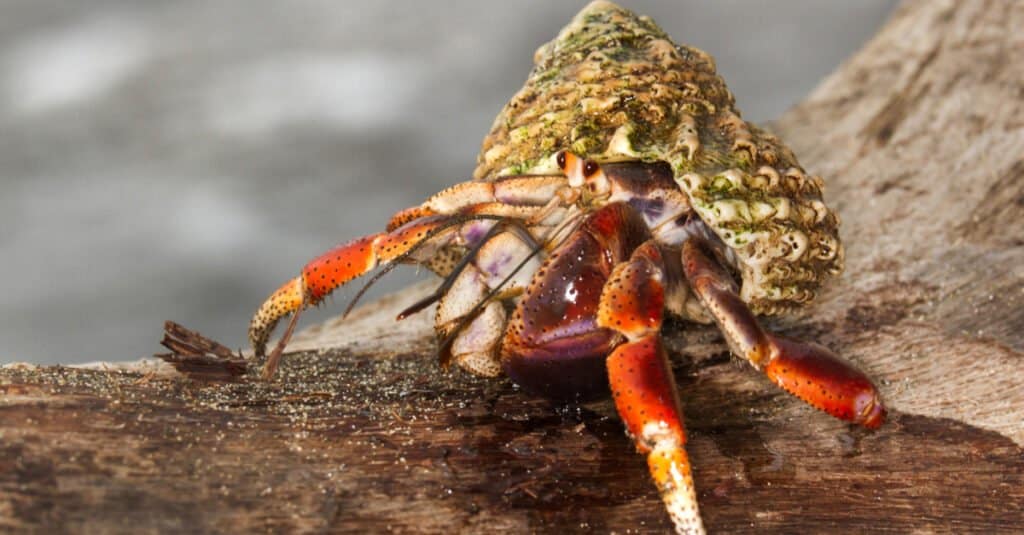
Largest Hermit Crab - Caribbean hermit crab ( Coenobita clypeatus)

The pet trade harvests wild hermit crabs, which is harmful to the ecosystem.

Hermit crabs are one of the most interesting and unique creatures that inhabit our planet. Unfortunately, their conservation status is not as well-known or cared for as it should be. Hermit crabs face a variety of threats in their natural habitat, including habitat destruction due to human activities such as coastal development and pollution from plastic garbage entering the ocean. In addition, many hermit crab species are being threatened by overfishing, climate change, and disease outbreaks caused by pathogens introduced by humans.

It is unethical to keep a hermit crab as a pet because the pet trade is harvesting wild hermit crabs, which is drastically reducing their populations. It can be dangerous for wild populations and the delicate balance of the ecosystem as a whole when people collect them from the wild instead of buying captive-bred specimens from reputable breeders — this practice disrupts local ecosystems and increases pressure on already limited resources available in nature. 

Reproduction, Babies, and Lifespan
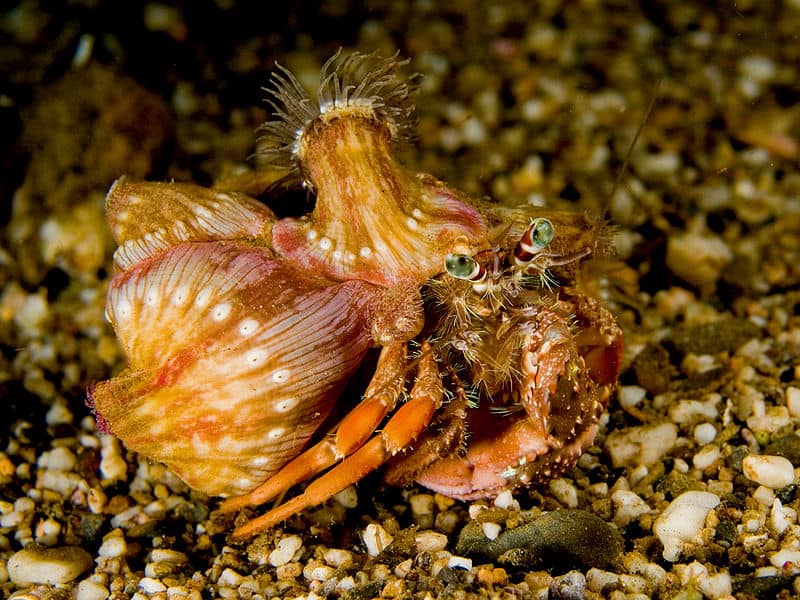
Hermit Crabs need shallow sea water to mate and reproduce.

Hermit crabs need seawater to reproduce, which is why land crabs head to shallow waters to mate. Both males and females need to emerge partially from their borrowed shells to reproduce. Mating occurs once a year. The male holds the female with one claw, pulling her back and forth while stroking her to fertilize her. Each female has abdominal appendages that allow her to carry the eggs until they are ready to hatch. Incubation is approximately one month. The females must be in the water to release the eggs, which turn into swimming larvae called zoea upon release. These larvae live like plankton for a time until finally descending to the seafloor. Zoea grows and molts several times to become megalops and then grows and molts into juveniles, eventually reaching the stage where they must find their shells. Terrestrial species of hermit crabs only return to land when they are adults. Younger hermit crabs molt every few months, while older ones may not molt for as long as 18 months.

Most hermit crabs have an average lifespan of one to 10 years. Some species, however, can live for as long as 30 years. One land species, the Coenobita brevimanus, can live as long as 70 years. 

Population

Hermit crabs are found all over the world in tropical and sub-tropical waters as well as in many temperate zones in the northern hemisphere. They are not considered endangered, although the condition of many of their habitats threatens their survival. In some places, hermit crabs are beginning to mistake plastic containers for shells, which is further threatening their survival. The number of these animals worldwide is unknown.

Even though hermit crabs make interesting pets, they are not recommended for beginners. Furthermore, many animal rights groups recommend not buying them, as all hermit crabs sold in pet stores have been harvested from the wild. The painted shells that the crabs are often sold in are slowly poisoning the animals. This practice of keeping them as pets is unsustainable, as hermit crabs do not breed in captivity. Therefore, keeping these animals as pets is inadvisable.
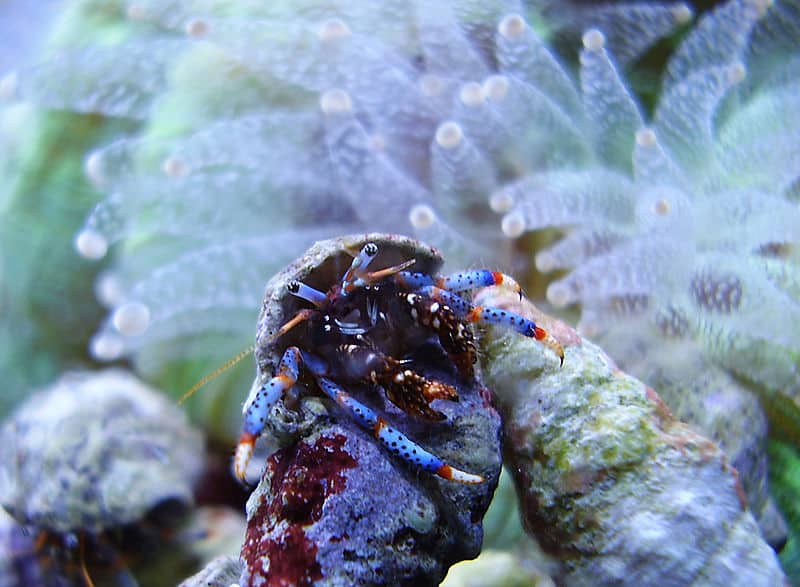
There are over 800 different species of hermit crabs in the world.

View all 287 animals that start with H

Sources

  1. David Burnie, Dorling Kindersley Animal, The Definitive Visual Guide To The World's Wildlife / Accessed January 25, 2010
  2. Tom Jackson, Lorenz Books The World Encyclopedia Of Animals / Accessed January 25, 2010
  3. David Burnie, Kingfisher The Kingfisher Animal Encyclopedia / Accessed January 25, 2010
  4. Richard Mackay, University of California Press The Atlas Of Endangered Species / Accessed January 25, 2010
  5. David Burnie, Dorling Kindersley Illustrated Encyclopedia Of Animals / Accessed January 25, 2010
  6. Dorling Kindersley Dorling Kindersley Encyclopedia Of Animals / Accessed January 25, 2010
Heather Hall

About the Author

Heather Hall

Heather Hall is a writer at A-Z Animals, where her primary focus is on plants and animals. Heather has been writing and editing since 2012 and holds a Bachelor of Science in Horticulture. As a resident of the Pacific Northwest, Heather enjoys hiking, gardening, and trail running through the mountains with her dogs.

Thank you for reading! Have some feedback for us?


Hermit Crab FAQs (Frequently Asked Questions)

The larger pincer serves as a protective door when the crab retreats inside its shell.