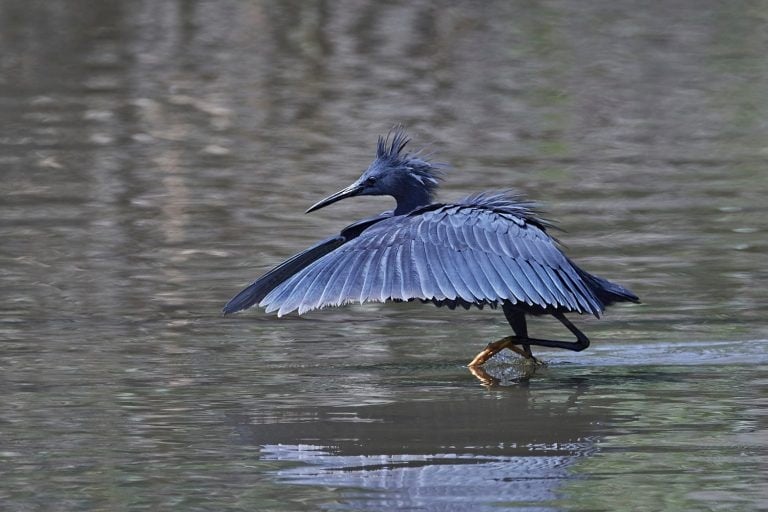
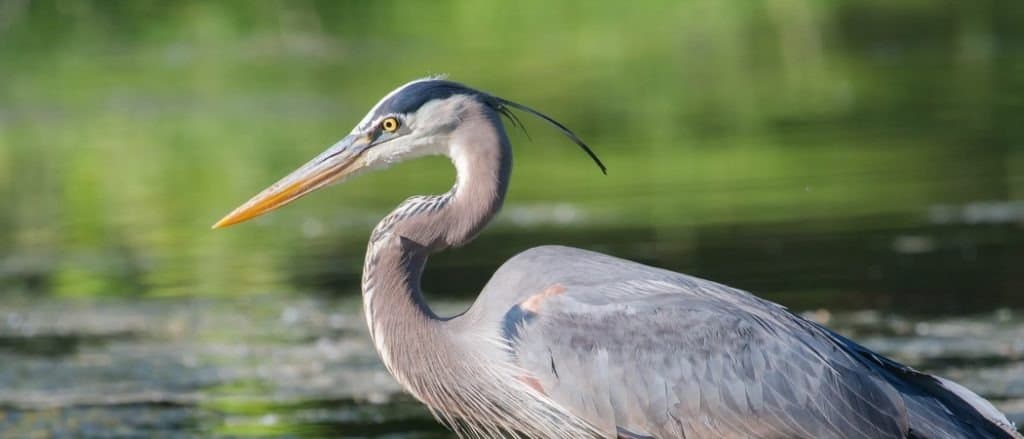
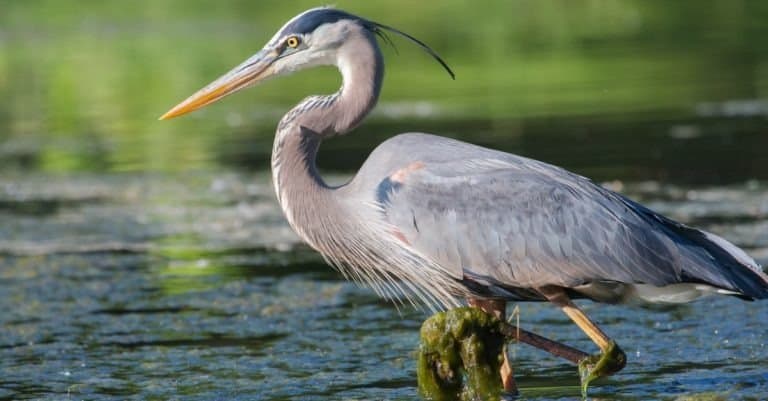
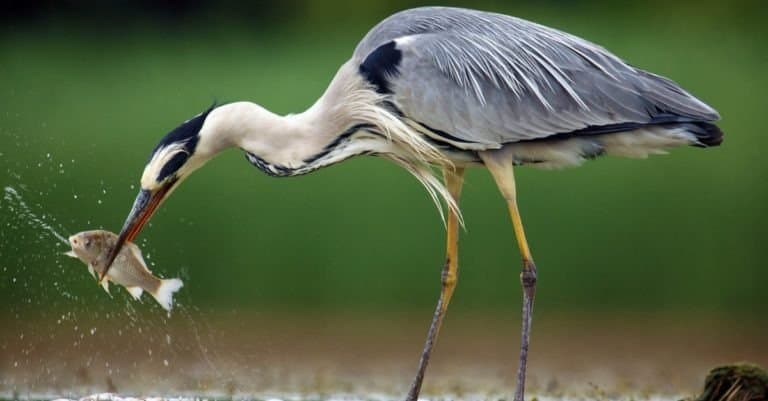
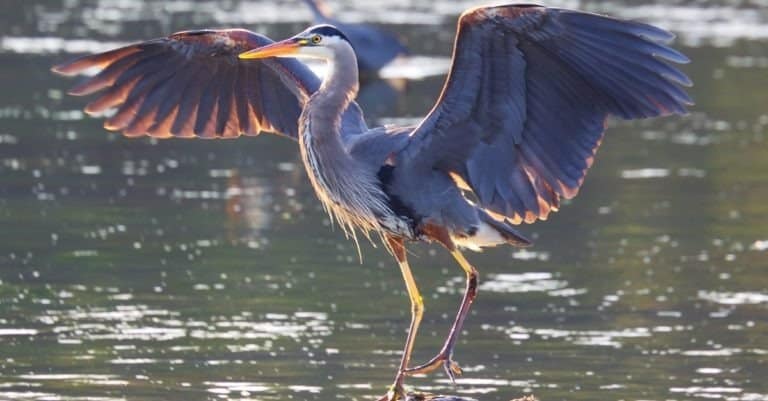
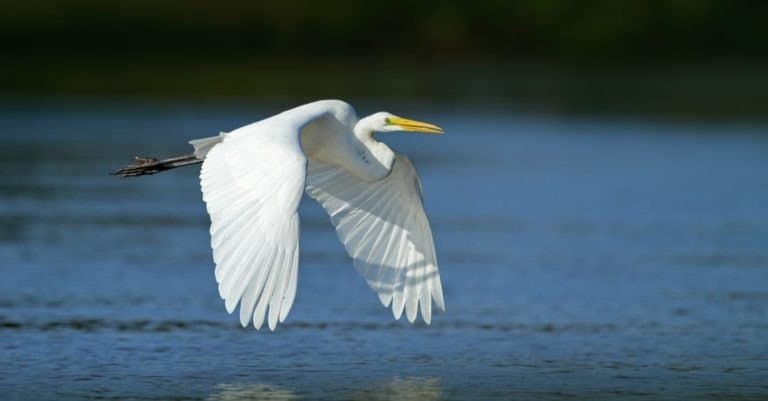
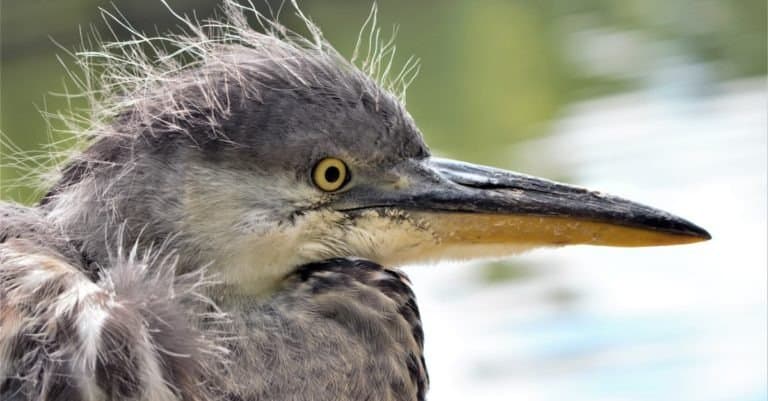














Herons are tall, long-legged wading birds found in wetlands across much of the world, where they hunt with patience and precision. Known for their S-shaped necks, sharp bills, and stealthy movements, they are highly adapted predators of aquatic environments. Despite their often solitary nature, many species gather in large breeding colonies and display surprisingly complex social and courtship behaviors.
3 Amazing Facts
- The heron is a solitary predator with a highly territorial streak, but some species come together in large colonies consisting of more than a hundred birds for the breeding season.
- The heron has several different calls to express surprise and alarm or to identify other members of the species.
- Some male herons develop all manner of elaborate plumages and crests for attracting females in the breeding season.
Classification and Scientific Name
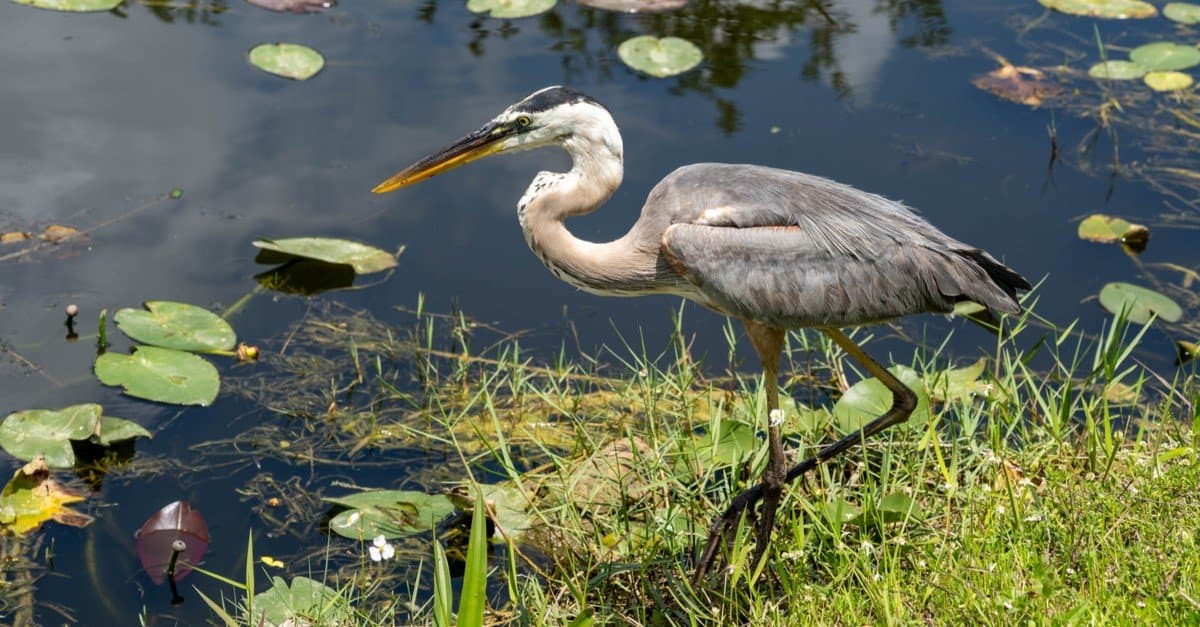
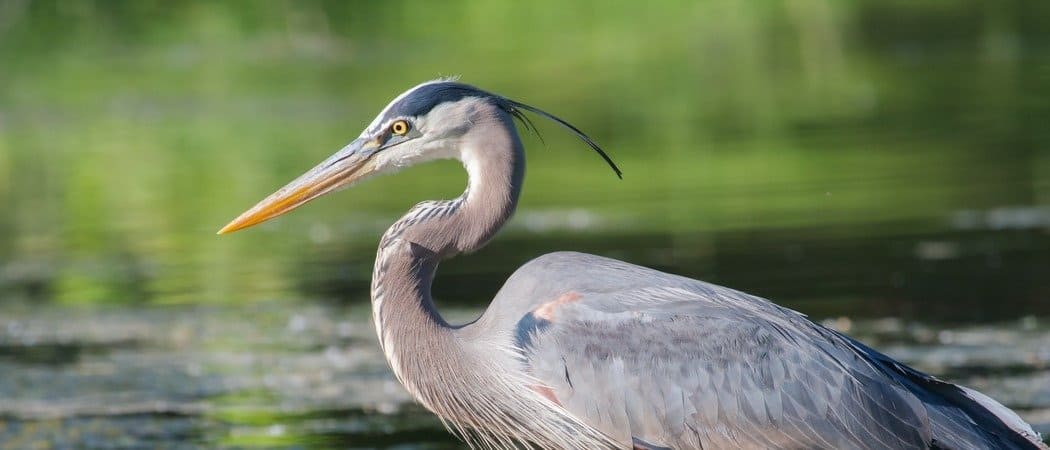
The Great Blue Heron (Ardea herodias) is a day heron, meaning it feeds during the day.
©ttomasek15/Shutterstock.com
Herons are classified in the family Ardeidae, which is derived from the Latin word for the heron: ardea. There are 65 to 72 recognized species in this family, but some of these species are egrets and bitterns instead of true herons. This mix-up of species has resulted from much confusion and disagreement about the classification of herons, but they are ordinarily placed in one of two genera: Ardea and Egretta.
There are three main types, each with its own distinct anatomy and social behavior.
- The day herons, including the Great Blue, the Black-headed, the Grey, and the Goliath heron. They feed during the day with their long necks stretched out into the water.
- The night herons, including the Black-crowned night heron and the Yellow-crowned night heron. They feed at night with their short legs and thicker bills.
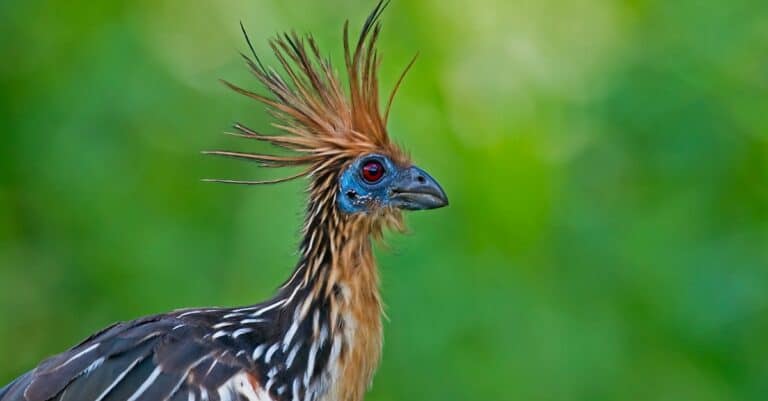
- The Tiger herons, including just six species, are solitary birds with striped plumage that resemble a tiger. Most of these reside in Central or South America.
Heron vs. Crane
Unlike herons, which belong to the order Pelecaniformes, cranes belong to the order Gruidae, and have only 15 species as opposed to herons which have about 72 species.
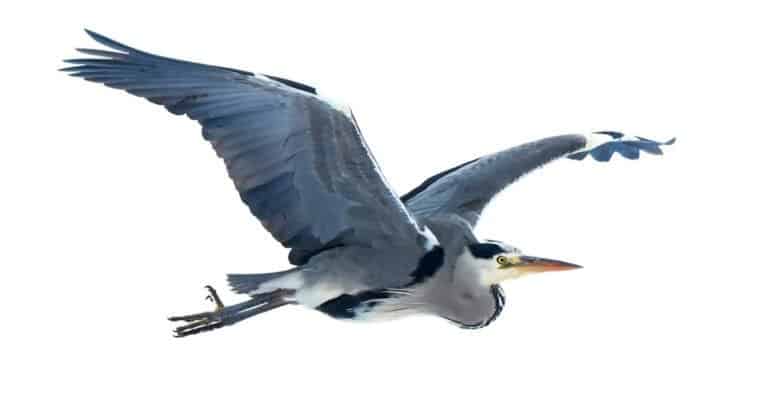
While there’s no doubt that herons and cranes bear a close resemblance to each other, it is worth noting that the former fly with their necks tucked in while the latter fly with their necks outstretched. Herons also have longer necks and usually have longer beaks too; they usually lay between 2 and 6 eggs, while cranes usually lay only a pair.
Heron vs. Egret
The biological differences between the heron and egret are fairly minimal, besides the fact that egrets have a whiter appearance, especially in the breeding season. They can even occur in the same genus together.
Size, Appearance & Behavior
This tri-colored heron is an example of the unique color schemes found in the heron family.
©Karel Bartik/Shutterstock.com
These birds are a highly diverse family with all kinds of unique color schemes and appearances, including black, grey, blue, yellow, and much more. The most common and prominent characteristic is its very long neck, crooked in the middle to resemble an S shape, which helps to support the heavy bill and head. When the heron takes flight, its head curves back against the body, and the feet dangle down. Few other birds fly in this manner.
Other prominent characteristics of the bird include the large wings, the big, sharp bill, and the exceptionally long legs to wade in the water. Part of the body is covered in a fine powder, created as a result of disintegrating feathers, which enables the bird to clean itself.
Herons are generally large birds, with most species standing between 2.5 and 4.5 feet tall. The largest species, the goliath heron, can reach up to five feet in height and has a wingspan of about 7.7 feet.
Habitat and Location
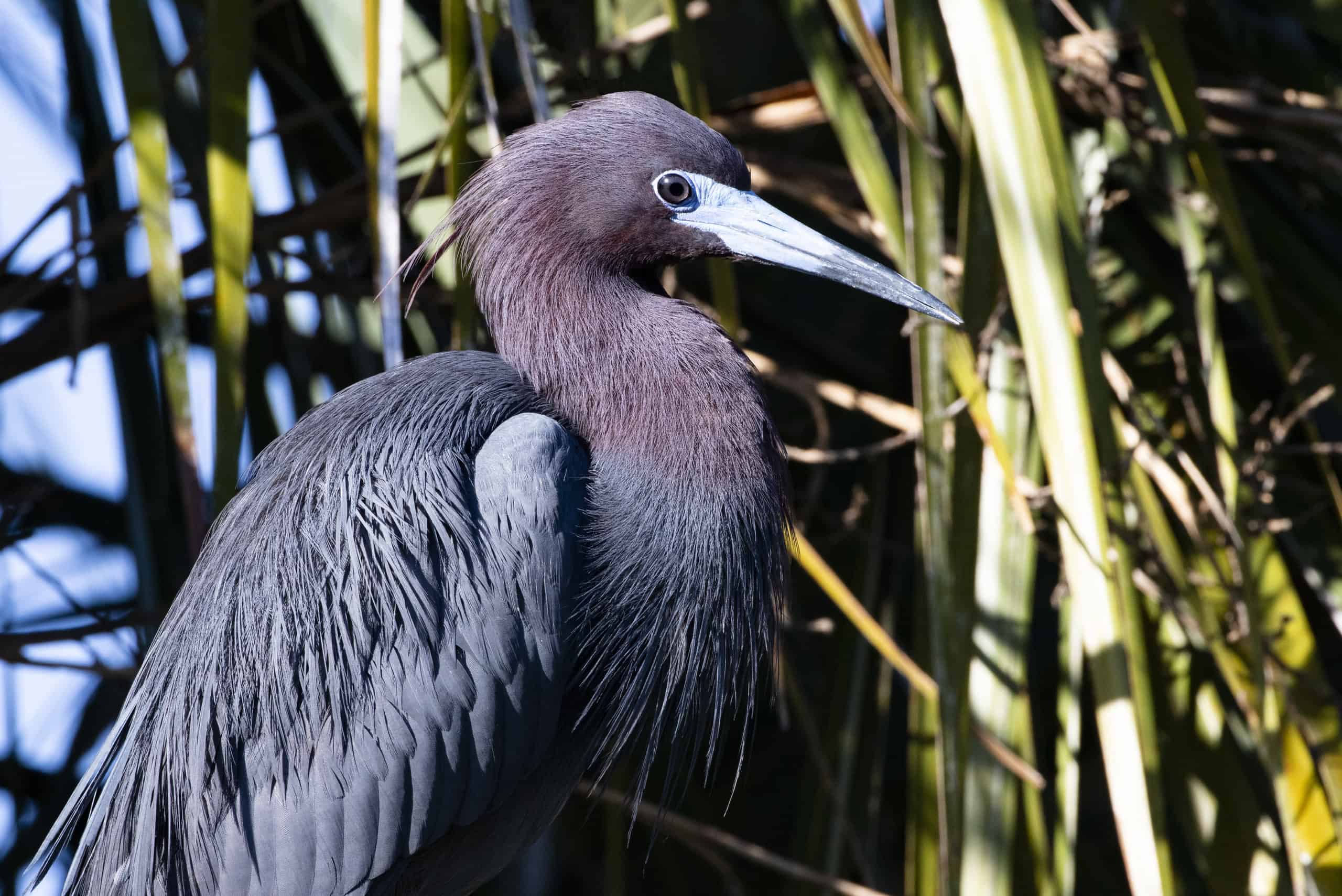
The little blue heron lives along the coast in marshes and swamps.
©iStock.com/Florence and Joseph McGinn
These birds are endemic to freshwater wetlands, lakes, and ponds all over the world. Although most common in the tropics, it is found in almost every single region except for the driest deserts, the tallest mountains, and the frigid Arctic and Antarctic. It is exceptionally well-adapted for the environment in which it lives. This also means the heron is highly sensitive to any disruptions in its native habitat.
Migration Pattern and Timing
These are highly nomadic birds, moving from place to place as circumstances dictate. The distance over which it will travel depends on the climate of its normal breeding grounds. Southern populations reside in a similar place all year round, while the northernmost populations tend to move south for the winter, where the water will not freeze over and prevent them from feeding. The Great Blue Heron, for instance, will travel between Southern Canada and the Southern United States or even Central America.
Diet
Given its wide distribution across the world, these birds have a very eclectic diet. There are generally two types of feeding strategies: the generalist, which feeds on whatever happens to be available, or the specialist, which feeds on a very specific set of prey. Either way, it plays a vital role in controlling prey populations.
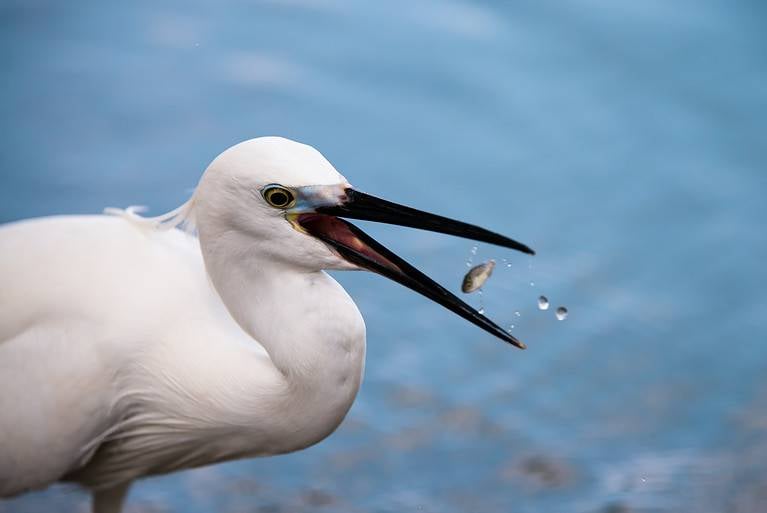
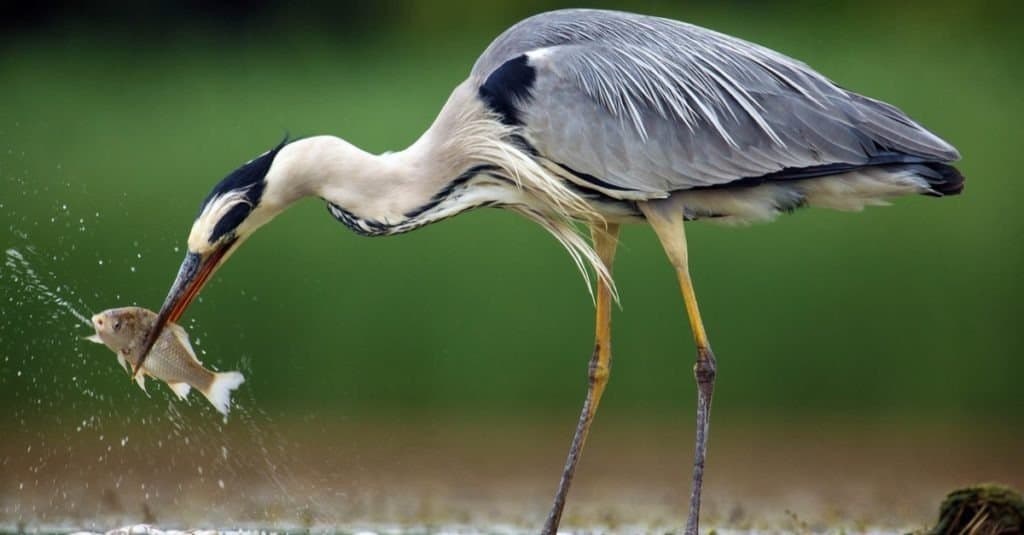
These birds prey upon fish, reptiles, amphibians, crustaceans, mollusks, and aquatic insects near the shore. After wading into the shallow parts of the water, the bird identifies animal prey with its sharp sight and then strikes out quickly with its beak.
Reproduction, Young, and Molting

The Hawaiian Black Crowned Night Heron, like other herons, makes its nest in a colony of nests called heronries or rookeries.
©Jeff W. Jarrett/Shutterstock.com
Reproductive strategies tend to vary by species, but generally, in the breeding season, the male attracts a single mate with an impressive courtship display in which he ruffles his plumage and flies around. Once the female has chosen an appropriate mate, the pair produces up to seven eggs at a time.
These birds construct a large platform of sticks in bushes, cliffs, or trees. These nests are part of larger colonies called heronries or rookeries.
After an incubation period lasting for several weeks, the chicks emerge from the eggs with undeveloped bodies. Both parents put a significant amount of time into the care of their young to ensure they grow properly. They share incubation, nest construction, and feeding duties. The largest chicks tend to receive the most food from the parents since they are the most likely to survive.
It usually takes anywhere between two and three months before the chicks grow their full flight feathers and become more independent. Many of these chicks won’t survive their first year of life, but those that do usually live up to 15 or 20 years in the wild.
Predators, Threats, and Conservation Status
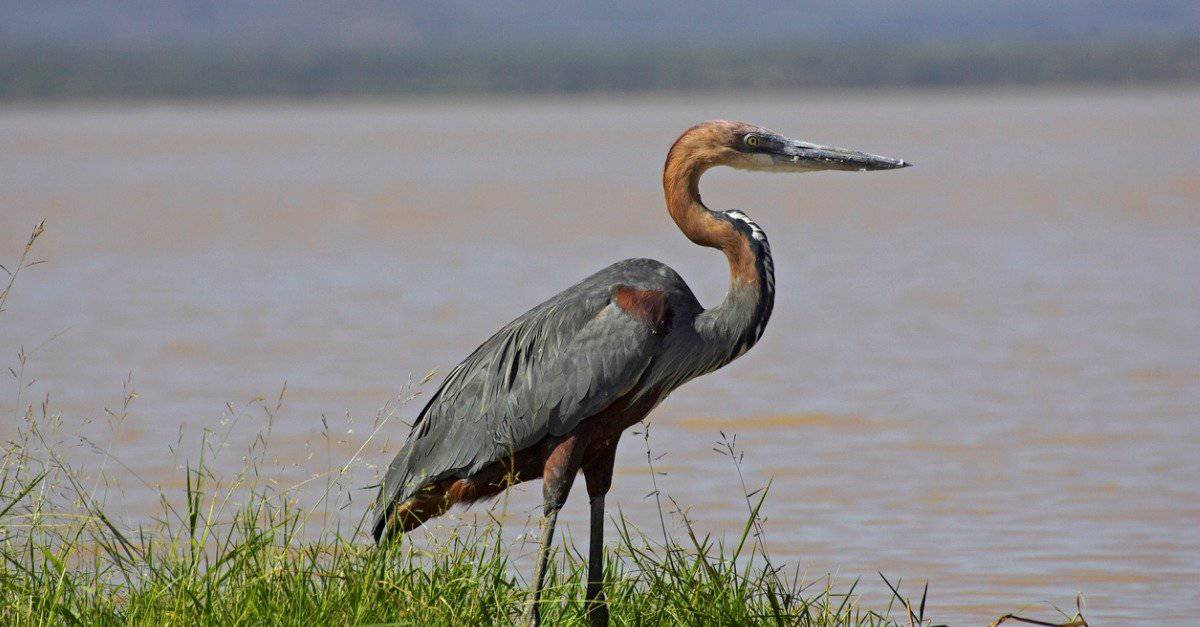
An adult heron, like this Goliath heron, has few consistent predators.
©iStock.com/slowmotiongli
Due to its size, an adult bird has few consistent predators. However, several animals prey on eggs, juveniles, and smaller herons, including raccoons, hawks, eagles, ravens, crows, bears, vultures, and many more.
Given their massive range, most species are currently classified as least concern by the IUCN Red List and require no special conservation efforts. But a few, in particular, are endangered or critically endangered, including the white-bellied heron of the Himalayas and the Malagasy pond heron. The island-specific night heron from Mauritius, Bermuda, and elsewhere was driven to extinction shortly after it was discovered. More often than not, the bird is threatened by the loss and degradation of wetland habitat.
Population
These are some of the most common water birds around the world. It is estimated that the Great Blue Heron of North America has up to 5 million mature individuals remaining in the wild, while the Grey Heron of Eurasia and Africa contains up to 2.5 million mature individuals; however, particularly where habitat is threatened, some of the rarer species are on the precipice of extinction.
Heron Pictures
View all of our Heron pictures in the gallery.

Joseph Scott Photography/Shutterstock.com
Sources
- Britannica / Accessed February 2, 2021
- National Wildlife Federation / Accessed February 2, 2021