
H
Species Profile

Highland Cattle

Bos taurus

Built for bad weather, born in Scotland
Edradour / Creative Commons

Highland Cattle Distribution

Click a location to explore more animals from that region

Origin Location

This map shows the native origin of the Highland Cattle. As a domesticated species, they are now found worldwide.

Loading map...

Size Comparison

Human 5'8"
Highland Cattle 4 ft

Highland Cattle stands at 71% of average human height.

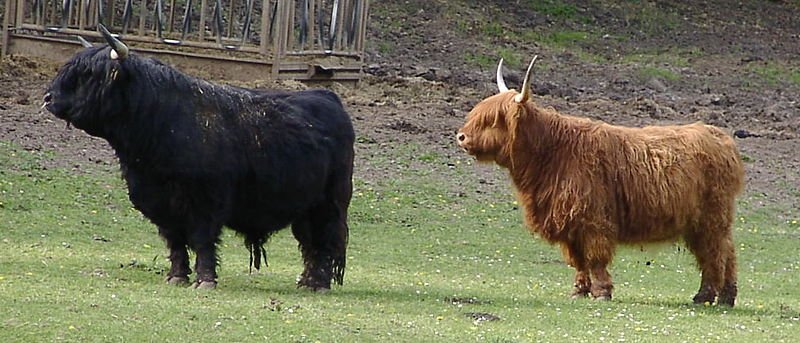
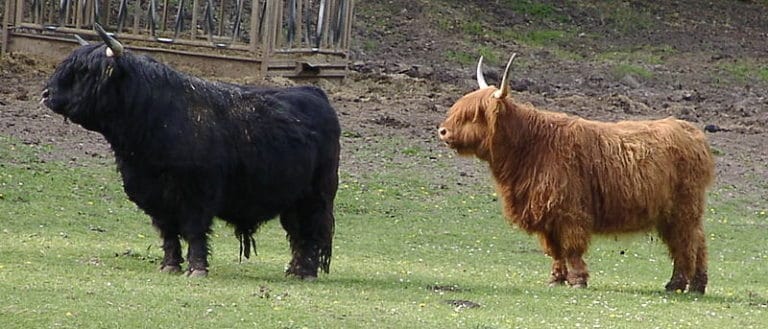
A black and brown Highland cattle shown from the side

At a Glance

Domesticated
Also Known As Highland cow, Heilan' coo, Heilan coo, Highland coo, Kyloe, Scots Highland
Diet Herbivore
Activity Diurnal+
Lifespan 12 years
Weight 850 lbs
Status Not Evaluated
Did You Know?

Highland cattle are among the oldest recorded cattle breeds, long associated with Scotland's Highlands and Islands.

Scientific Classification

Highland cattle are a hardy, long-haired cattle breed originating in the Scottish Highlands, widely kept for beef and conservation grazing in cool, wet, or exposed environments.

Kingdom
Animalia
Phylum
Chordata
Class
Mammalia
Order
Artiodactyla
Family
Bovidae
Genus
Bos
Species
Bos taurus

Distinguishing Features

  • Long, shaggy double coat adapted to cold/wet conditions
  • Long, wide-spreading horns (both sexes commonly horned)
  • Typically smaller-framed and very hardy compared with many modern beef breeds
  • Color varies (often reddish-brown, but also black, dun, brindle, etc.)

Physical Measurements

Males and females differ in size

Height
♂ 4 ft 3 in (3 ft 11 in – 4 ft 7 in)
♀ 3 ft 8 in (3 ft 4 in – 3 ft 11 in)
Length
♂ 9 ft (7 ft 10 in – 10 ft 2 in)
Weight
♂ 1,764 lbs (1,433 lbs – 1.1 tons)
♀ 992 lbs (772 lbs – 1,213 lbs)
Tail Length
♂ 3 ft 1 in (2 ft 7 in – 3 ft 7 in)
♀ 2 ft 9 in (2 ft 4 in – 3 ft 3 in)
Top Speed
28 mph
About 45 km/h

Appearance

Primary Colors
Secondary Colors
Skin Type Highland cattle, Bos taurus, have a thick, weather-proof hide with a dense double coat: long, coarse outer hairs over a soft insulating undercoat. Suited to cold, wet, windy Highlands; sheds seasonally and can trap mud.
Distinctive Features
  • Breed context (domestic cattle): Domestic cattle breed, not a separate wild species; distinguished from typical short-coated cattle by an exceptionally long double coat and prominent sweeping horns adapted to harsh climates.
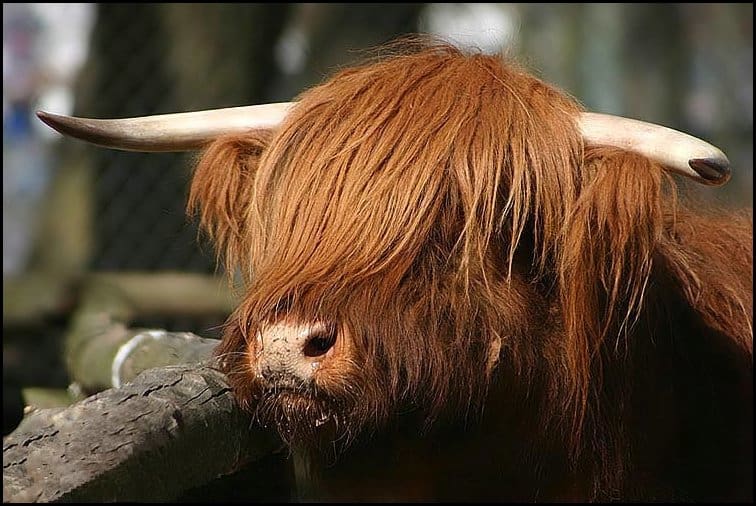
  • Long, shaggy hair often obscures the eyes/forehead ("fringe"), giving a distinctive rounded head profile.
  • Prominent horns in both sexes: typically long and laterally sweeping; horn shape varies with sex and individual (can curve upward more in cows, forward/outward heavier in bulls).
  • Compact, hardy build with strong legs and a deep body; generally smaller-framed than many modern beef breeds but very robust in rough terrain.
  • Excellent cold tolerance and ability to thrive on poorer forage; commonly used for conservation grazing on rough, wet, or exposed pasture.
  • Breed-specific care: coat can conceal body condition-regular hands-on condition scoring is important, especially in winter; provide shelter/shade in hot climates because the heavy coat predisposes to heat stress compared with many other domestic cattle breeds.
  • Breed-specific management: horns increase handling and housing considerations (space at feeders, safe fencing, careful head-gate/chute design).
  • Highland cattle (Bos taurus) can suffer heat stress in warm, humid areas. Their heavy coat may hide external parasites. Horns can cause injury in tight spaces, but they are generally hardy with easy calving.

Sexual Dimorphism

Sexual dimorphism is moderate: both sexes are horned and long-coated, but bulls are typically larger and more heavily muscled with thicker horn bases and a heavier neck/forequarter; cows are finer-boned with more slender horns.

♂
  • Larger body mass, heavier muscling through neck/shoulders and forequarter.
  • Horns often thicker at the base and appear heavier; may project more forward/outward depending on lineage.
  • Coarser, heavier mane/ruff and overall more massive head/neck appearance.
♀
  • Smaller, finer-boned frame with a more refined head.
  • Horns typically slimmer and may sweep more upward with a lighter overall appearance.
  • Often appears more angular/less heavily crested through the neck than bulls.

Did You Know?

Highland cattle are among the oldest recorded cattle breeds, long associated with Scotland's Highlands and Islands.

Their double coat (coarse outer hair + soft insulating undercoat) is a key breed trait for cold, wet, windy climates.

They come in several traditional colors-red is iconic, but black, dun, yellow, brindle, and white also occur.

Both sexes can have impressive horns; horn shape varies by sex and lineage and helps with display and foraging.

Highlands are widely used in conservation grazing because they can thrive on rough pasture and help maintain diverse habitats.

Highland beef is often marketed for fine marbling and a reputation for good eating quality, reflecting the breed's ability to finish on grass in many systems.

Their "hairy" look is partly seasonal: coats are typically heaviest in winter and shed/thin in warmer months.

Unique Adaptations

  • Double coat insulation: compared with typical Bos taurus breeds, Highlands rely more on hair and undercoat for warmth, reducing the need for heavy subcutaneous fat for insulation.
  • Efficient use of marginal forage: selective grazing and a robust rumen allow them to maintain condition on upland/low-input pasture where some other breeds need supplementation.
  • Hardy feet and mobility: long history on rocky, boggy, uneven ground selected for soundness and sure-footedness.
  • Horn utility: horns aid in social signaling and can help animals clear snow or move through coarse vegetation when foraging (management must consider safety).
  • Climate resilience: strong tolerance of cold, rain, and wind; in hot climates, the heavy coat can become a liability without shade, water, and parasite control.

Interesting Behaviors

  • Foraging versatility: they will browse and graze, using their muzzle (and sometimes horn movement) to access grasses, heather, rushes, and brambles on rough ground.
  • Strong herd social structure: cattle form stable groups; individuals maintain personal space and show dominance through posture, head carriage, and horn display rather than constant fighting.
  • Maternal attentiveness: Highland cows are known for being protective mothers; good stockmanship and calm handling are important around calves.
  • Weather-seeking behavior: in exposed conditions they often choose natural shelter (banks, gorse, woodland edges) and orient their bodies to reduce wind chill.
  • Allogrooming (social licking): common in relaxed groups and helps reinforce bonds and remove ectoparasites.
  • Seasonal shedding and rubbing: in spring/summer they rub on fences, trees, or scratching posts to help remove winter coat.

Cultural Significance

Highland cattle (Bos taurus) are a symbol of the Scottish Highlands, linked to crofting and hill life. Hardy and able to look after themselves, they are used in conservation grazing to thrive on rough ground and help biodiversity and traditional land use.

Myths & Legends

Drovers' stories tell of long Highland cattle journeys to Lowland markets and meetings, with animals and men facing storms and raiders, tales that built the breed's reputation for toughness and steadiness on the road.

In Highland and Island communities, Highland cattle (Bos taurus), especially hardy prized animals, were part of seasonal customs and protective beliefs, such as watching for the 'evil eye', showing their role in survival and status.

Traditional stories in Gaelic areas call shaggy Highland cattle (Bos taurus) the moor's classic beast: they endure cold, rain, and poor grazing, praised in tales of surviving harsh winters.

Show-ring and crofting anecdotes form a modern "living legend" around famous fold lines and champion animals-stories of foundational bulls and cows that shaped today's Highland herds and are repeated in breeder circles like oral history.

Conservation Status

NE Not Evaluated

Has not yet been evaluated against the criteria.

Population Stable

Life Cycle

Birth 1 calf
Lifespan 12 years

Lifespan

In the Wild
5–20 years
In Captivity
12–25 years

Reproduction

Mating System Polygyny
Social Structure Managed Domestic
Breeding Pattern Transient
Fertilization Managed Selective
Birth Type Managed_selective

Highland cattle (Bos taurus) are polygynous: one bull mates with many cows. Fertilization is internal and gestation is about 283 days. People usually manage breeding (bull turnout, seasonal mating, or artificial insemination); no lasting pair bonds.

Behavior & Ecology

Social Herd Group: 20
Activity Diurnal, Crepuscular
Diet Herbivore Heather and rough upland pasture (natural hill forage)

Temperament

Generally calm, steady, and less reactive than many commercial cattle lines; often tolerant of harsh weather and variable forage (breed distinction vs Bos taurus average: strong cold/wet/wind tolerance and willingness to range widely).
Can be wary of unfamiliar people/dogs and may maintain larger flight distance in extensive systems; individuals become markedly calmer with consistent low-stress handling.
Maternal behavior is often strong; cows may be assertive/defensive around newborn calves, especially in open pasture or when approached unexpectedly.
Social dominance is usually expressed through displacement and head/horn postures; horned animals can escalate to pushing/goring if crowded-space at feeders and in handling pens reduces conflict.
Care requirements (behavior-linked): provide windbreaks/shelter in exposed sites, manage heat stress in warm climates (shade/water; long hair reduces heat dissipation), and use horn-aware handling facilities (wider races, fewer sharp turns, solid sides).
Highland cattle’s long coat raises lice/ticks and can hide condition; regular hands-on checks. Wet ground raises foot problems and changes movement; drainage and pasture rotation help. Horn injuries are more common than in polled cattle.

Communication

lowing/mooing for contact and cohesion
calf distress calls and cow-calf recognition calls
bull bellowing during breeding or agitation
short grunts during close social interactions or feeding
snorts/blows associated with alertness or irritation
body posture and orientation (approach/avoidance, blocking, shoulder checks) to negotiate dominance
head lowering, horn presentation, and lateral displays as graded threat signals More salient in horned Highland cattle
ear and tail position changes signaling arousal/irritation
olfactory investigation (nose-to-nose, flank sniffing) for individual and reproductive status recognition
allogrooming/licking to reinforce bonds and reduce tension; rubbing on posts/trees for grooming and scent deposition
spatial synchronization Moving/lying/ruminating together) as a cohesion signal; splitting into subgroups when forage is patchy (HUBS variation driver

Habitat

Biomes:
Temperate Grassland Temperate Forest Temperate Rainforest Boreal Forest (Taiga) Wetland Alpine Mediterranean Savanna Desert Hot Desert Cold +4
Terrain:
Mountainous Hilly Plateau Valley Coastal Island
Elevation: Up to 6561 ft 8 in

Ecological Role

Large-bodied ruminant grazer/browser; often used as a conservation-grazing livestock breed to shape plant communities on upland, wet, and marginal habitats.

Maintains species-rich grasslands and heath by controlling dominant grasses and scrub encroachment Creates habitat heterogeneity via selective grazing, trampling, and dung deposition Nutrient cycling and soil fertility enhancement through manure Supports invertebrate communities (dung beetles/flies) that feed birds and other wildlife Aids seed dispersal (externally on coat and via dung) and promotes plant regeneration in managed landscapes

Diet Details

Other Foods:
Cool-season pasture grasses Upland grasses and forbs Heather Sedges and rushes Browse Hay Root and forage crops Mineral/salt supplementation Seaweed +3

Human Interaction

Domestication Status

Domesticated

Bos taurus were first tamed from wild aurochs in the Near East and spread across Europe. Highland cattle developed in the Scottish Highlands and Western Isles to survive cold, wet, windy, low-food areas. They have long double coats, wide horns, strong foraging, and are used for low-input beef, conservation grazing, shows, and agritourism; handling needs care.

Danger Level

Moderate
  • Horn-related injuries (goring or crushing against fences/gates), especially in confined handling areas
  • Kicks, trampling, or body-checking during handling, loading, or veterinary procedures
  • Maternal aggression around calves (cows can be highly defensive)
  • Injury risk increased by inadequate facilities (weak fencing, poor chute design) or inexperienced handling
  • Zoonotic disease exposure possible with any cattle (e.g., ringworm, cryptosporidiosis, salmonellosis, E. coli), mitigated by hygiene and herd health programs

As a Pet

Not Suitable as Pet

Legality: Highland cattle are usually legal where livestock are allowed (agricultural zones); not allowed in standard neighborhoods. Rules on transport, ID, health tests, facilities, movement, and disease control vary by state or country.

Care Level: Experienced

Purchase Cost: $1,500 - $6,000
Lifetime Cost: $15,000 - $60,000

Economic Value

Uses:
Beef production (often grass-fed/low-input) Conservation grazing / habitat management Breeding stock and genetics Heritage/rare-breed conservation Agritourism and educational farms Shows/exhibitions
Products:
  • beef (carcass and retail cuts; often marketed as heritage/grass-fed)
  • breeding animals (bulls, cows, heifers; semen/embryos in some programs)
  • conservation grazing services (contracted vegetation management)
  • hides/leather (limited/variable market)
  • manure for soil fertility/compost

Relationships

Ecological Equivalents 6

Animals that fill a similar ecological role in their ecosystem

Galloway cattle Bos taurus Hardy British beef breed adapted to cool, wet, windy conditions. Commonly used in low-input systems and for conservation grazing, similar to Highland cattle.
Belted Galloway Bos taurus Cold-tolerant, thick-coated beef cattle suited to rough forage and outdoor wintering, often filling a similar niche in exposed uplands.
Welsh Black cattle
Welsh Black cattle Bos taurus Upland-adapted beef breed that performs well on marginal pasture and heather moorland; plays a comparable role in extensive grazing systems.
Yak
Yak Bos grunniens Ecological analogue for cold, high-exposure environments: thick coat, efficient use of sparse forage, and strong tolerance to harsh weather. These traits are paralleled by Highland cattle, though yaks are a different Bos species.
Scottish Blackface sheep Ovis aries Common co-grazer in UK uplands, overlapping in habitat and management (rough grazing; hardy outdoors), though it differs in diet selectivity and vegetation impact.
Highland cattle
Highland cattle Bos taurus Highland cattle have long double coats and wide horns, eat coarse plants such as heather, tolerate cold and wet conditions, require shade during heat, need careful horn handling, mineral supplementation, and monitoring for parasites and calving risks.

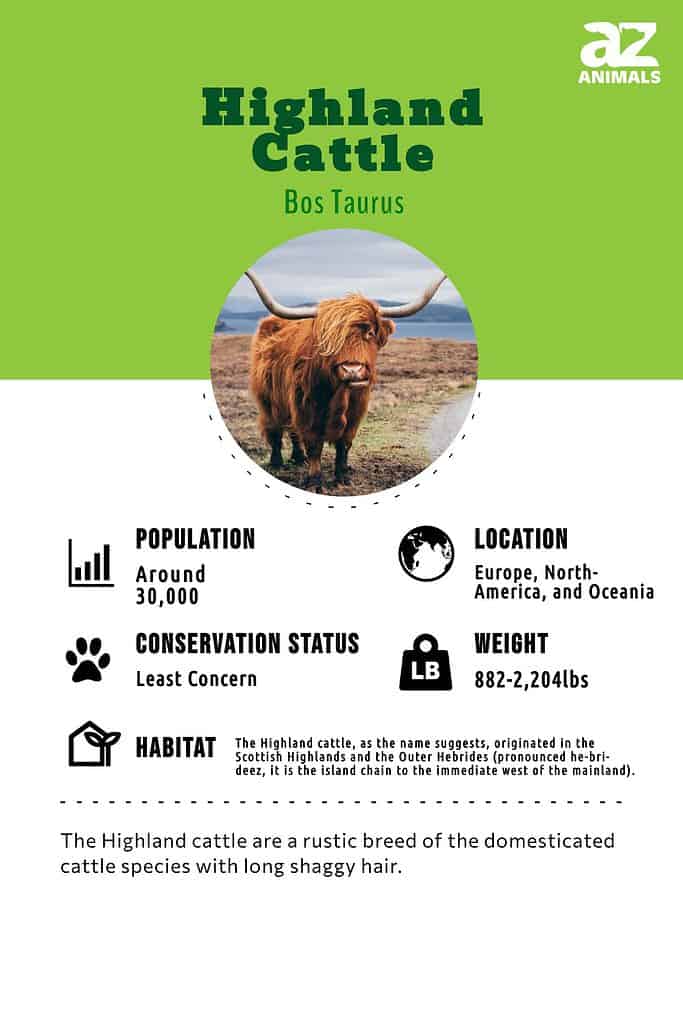
The Highland cattle are a rustic breed of the domesticated cattle species.“

Originally hailing from the high elevations of the scenic Scottish Highlands, this breed is now raised worldwide for meat production.

Judging by its behavior and physical characteristics, it is very much a quintessential cattle breed.

But the Highland cattle also has many distinct features, including its sturdy constitution and incredibly long hair.

3 Incredible Highland Cattle Facts

  • The Highland cattle produce leaner, tender meat compared to most other breeds of cattle. This meat is sometimes highly sought after by meat connoisseurs for its quality.
  • The Highland cattle have horizontal pupils to keep track of potential predators coming from the periphery. This is an adaptation shared by all breeds of cattle and many other hoofed mammals.
  • The Highland cattle are primarily a product of artificial selection. This means that people bred the cattle’s individual traits and characteristics based on usefulness to human society. This artificial selection went on for thousands of years, long before people really understood the genetic science behind it.

Scientific Name
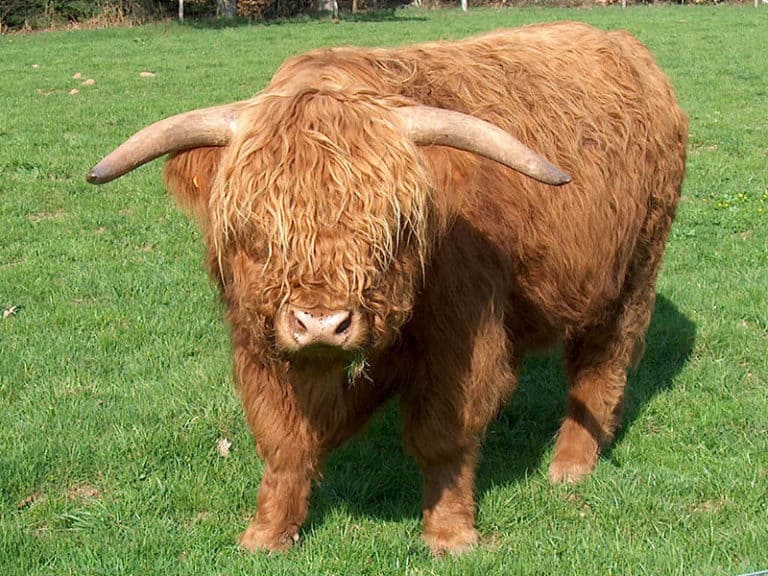
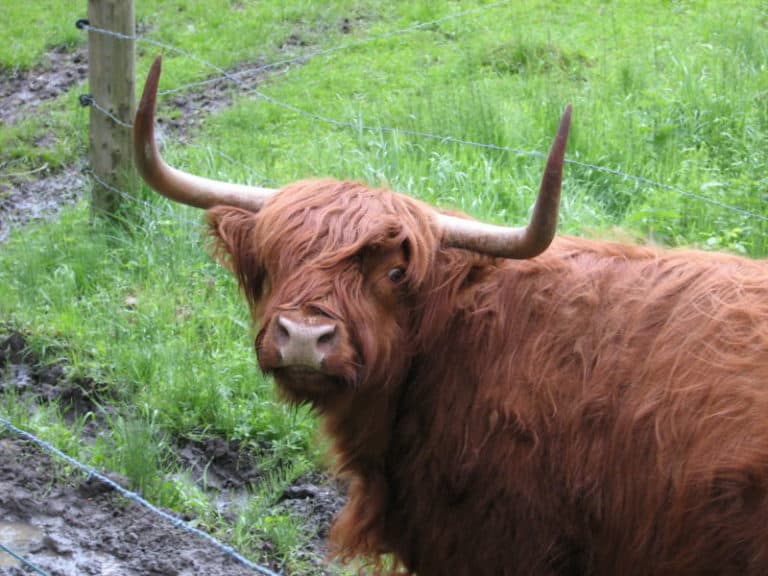
A Highland cattle with large horns looking at the camera

Highland Cattle

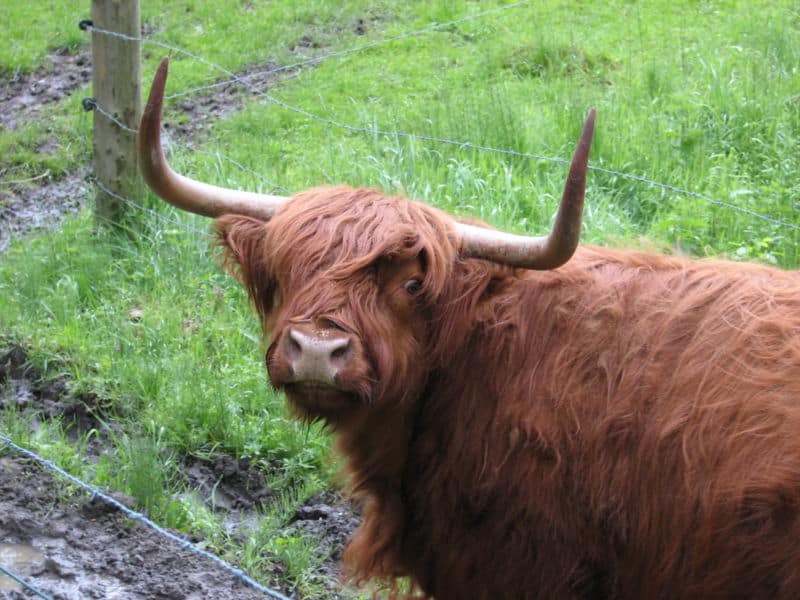
The Highland cattle, like all breeds of cattle, belongs to the species Bos taurus. The breed likely descended from longhorn cattle brought to Britain in the second millennium BC. After thousands of years of evolution in the Scottish Highlands, this breed was finally standardized at some point in the 19th century.

The first guidebook in 1885 described two different types of Highland cattle – a mainland type and an island type – but they’ve largely been crossbred into a single type with fewer distinct differences between them.

All domesticated cattle belong to the family Bovidae, which also includes buffalo, sheep, goats, bison, and antelope. This family, in turn, is part of the order Artiodactyla, which is shared by pigs, camels, hippos, giraffes, deer, and much more.

Together this order represents all living even-toed ungulates – essentially, hoofed animals that bear weight equally on two toes. Interestingly, the cetaceans are closely related to even-toed ungulates, having evolved from semi-aquatic hippo-like creatures millions of years ago.

Different Types of Cows

Here is a list of different types of cattle:

  • Holstein Friesian cattle
  • Hereford cattle
  • Aberdeen Angus
  • Simmental cattle
  • Brown Swiss cattle
  • Limousin cattle
  • Belgian Blue
  • Galloway cattle
  • Belted Galloway
  • Red Angus
  • Brangus
  • Braford
  • Chillingham cattle
  • Ongole cattle
  • Beefalo
  • Chianina
  • Gelbvieh
  • Parda alpina
  • Cachena
  • Senepol
  • Dairy Shorthorn
  • Horro
  • Maine-Anjou
  • Montbéliarde
  • Nguni cattle
  • British White cattle
  • Lakenvelder cattle
  • Retinta
  • Albera
  • Hallikar
  • White Park cattle
  • Heck cattle
  • Beef Shorthorn
  • Hungarian Grey
  • Red Poll
  • Corriente
  • Podolica
  • Australian Lowline
  • Pustertaler Sprinzen
  • English Longhorn
  • French Brown
  • Florida Cracker cattle
  • Twinner
  • Caracu
  • Balancer
  • Rathi cattle
  • Pantaneiro
  • Boškarin
  • Swedish Red Poll
  • Aubrac

Appearance

A black and brown Highland cattle shown from the side

Highland Cattle

Like all other cattle, the terms bulls and cows are used to distinguish the sexes. There are several important differences between them. Bulls can weigh anywhere between 1,500 and 2,000 pounds, while cows typically weigh between 900 and 1,300 pounds.

This is about the weight of a small car. Another key difference is the shape of the horns. Bulls have horizontal horns with slightly bent tips, whereas cows have mostly sweeping curved horns. Cows also have an udder on their abdomen from which the milk derives.

The signature feature of all cattle is the four-chamber stomach. This allows the cattle to digest tough plant material that would be impossible or difficult for many other animals to consume. The first chamber of the stomach, also known as the rumen, can hold a massive amount of food – in some cattle, more than 25 gallons.

This chamber contains good beneficial bacteria that help the cattle digest food. After the food is processed by the rumen, part of the vegetation will be regurgitated as cud. This material will then be chewed over and swallowed again multiple times to fully break it down.

It takes up to 100 hours to fully digest food, which is one of the slowest rates in the animal kingdom. Although this process involved quite a few complex steps, it ensures the cattle access to bountiful food reserves of vegetation with little competition.

One distinct variation of this breed is the miniature Highland cattle. Although much rarer, the miniature cattle weigh up to 500 pounds and require far less grazing land and food. It also produces far less milk and meat.

Shaggy Hair
Highland cattle

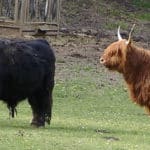
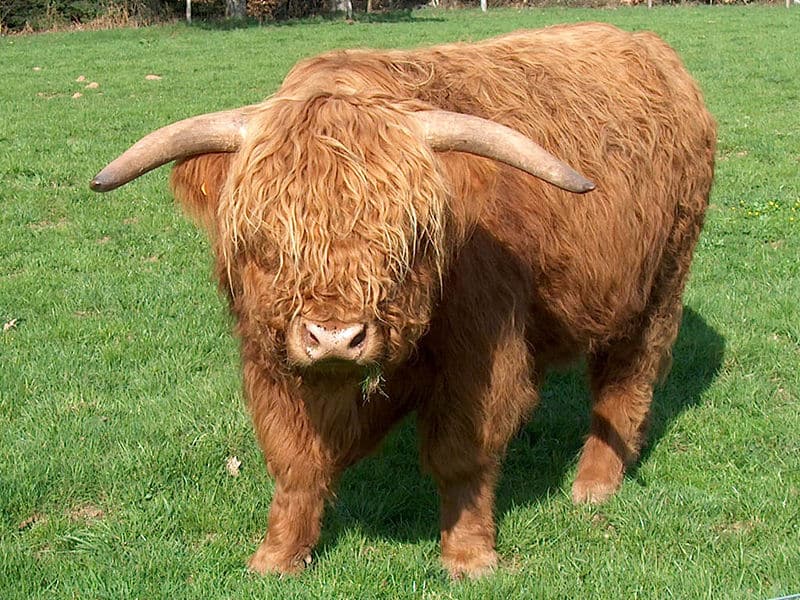
The Highland cattle resemble domesticated cattle in almost all aspects. The major difference is the presence of long, shaggy hair all around its body. This hair is actually composed of two distinct layers: a downy inner coat and a longer oily outer coat, the longest of any cattle breed currently living.

The most common hair color is a sort of light ruddy red-orange. The breed can also be seen in black, gray, yellow, and a kind of creamy white.

Behavior
Highland Cow - Scottish Yak in Isle of Skye

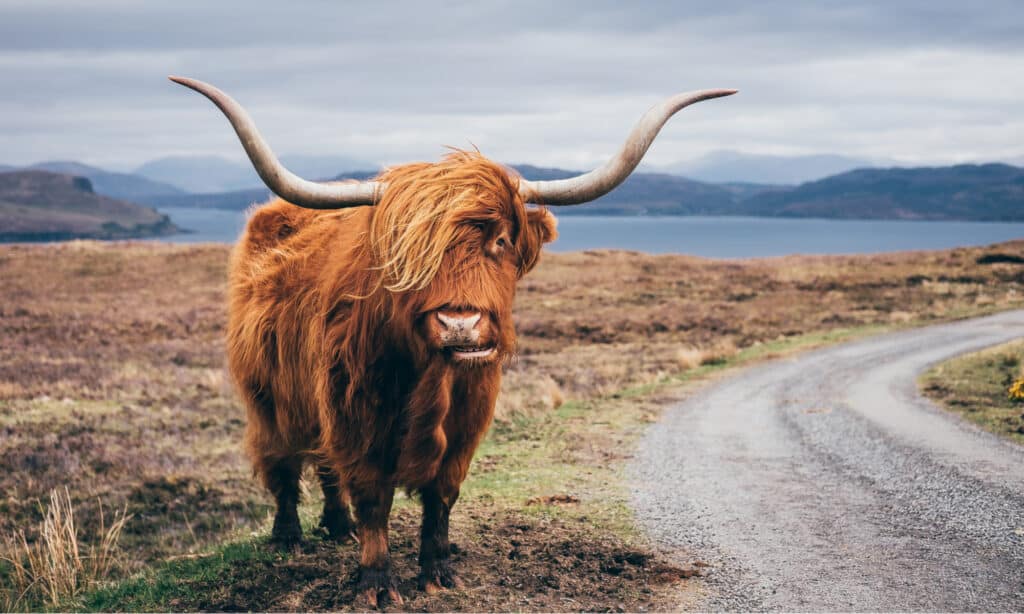
Highland cattle are noted for their long shaggy coats.

Highland cattle are social species that graze together in large groups. They appear to have a distinct social hierarchy based on the dominance of other members, usually with a single dominant male among the group.

Both age and gender play an important role in the establishment of this hierarchy. This brings a measure of harmony to group cohesion. Highland cattle sleep in various short intervals throughout the day and especially at night.

Cattle can display a relatively complex range of emotions and temperaments such as fear, anxiety, stress, and affability. Their keen intelligence allows them to remember other creatures and places for a long amount of time, and their problem-solving ability is still the subject of scientific scrutiny.

Individual cattle also appear to have distinct personalities. They mostly rely on their vision, touch, chemicals, and sense of hearing to identify threats, find good grazing spots, and bond with other members of the group.

Habitat
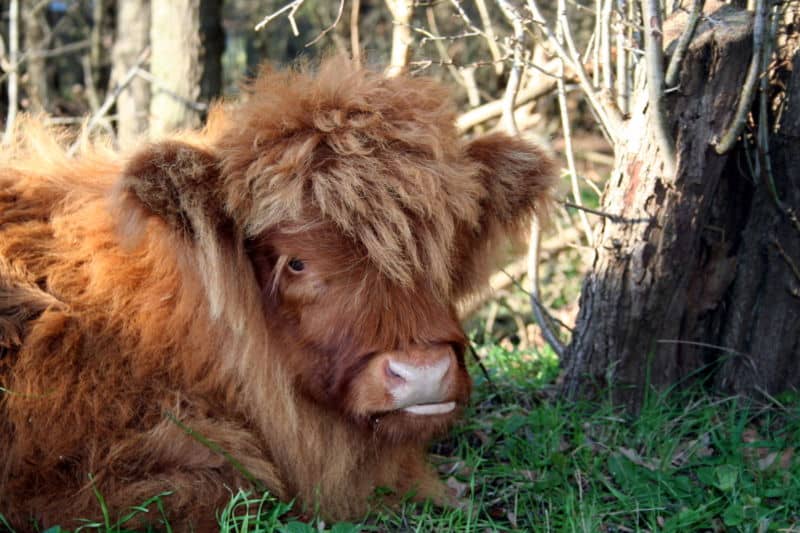
A shaggy-headed Highland cattle

Highland Cattle

The Highland cattle, as the name suggests, originated in the Scottish Highlands and the Outer Hebrides (pronounced he-bri-deez, it is the island chain to the immediate west of the mainland).

Beginning in the 19th century, the breed was brought by cattle herders to the rest of the world, including the United States, Canada, Australia, and Scandinavian countries. Various Highland cattle societies have cropped up around the world to promote its use by ranchers.

The breed rarely occurs in the wild. Instead, it occupies large grazing lands on human ranches and farms. Thanks to their thick coats of fur, Highland cattle are relatively tolerant to cold weather.

They have been known to reside at high elevations in the mountains, digging with their hooves to find buried food beneath the snow.

Population
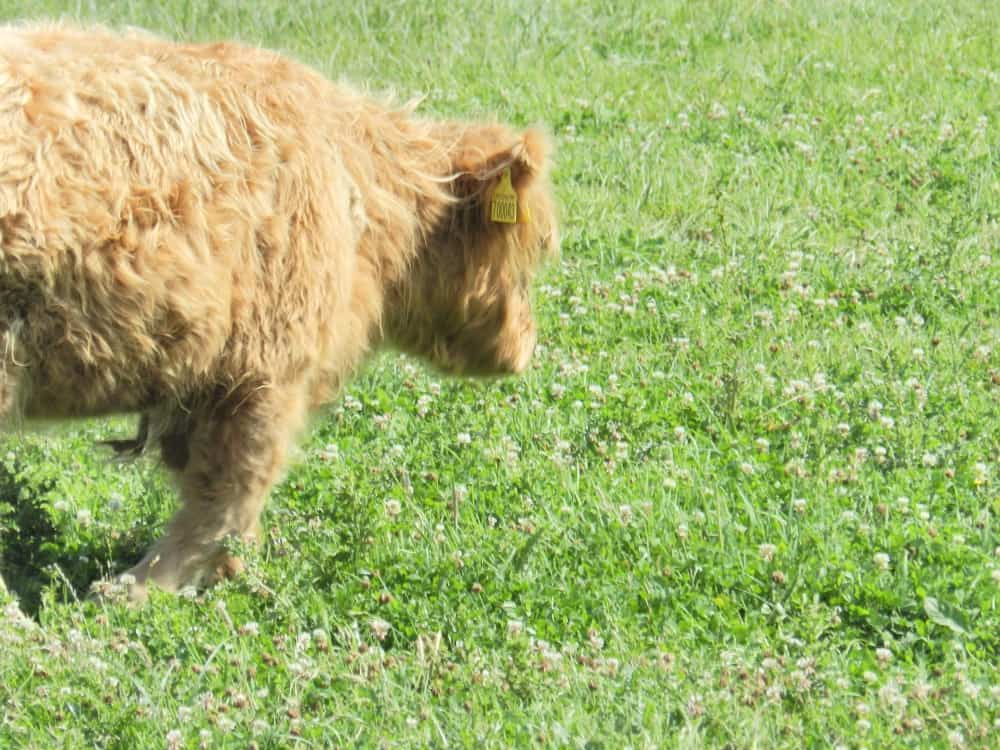
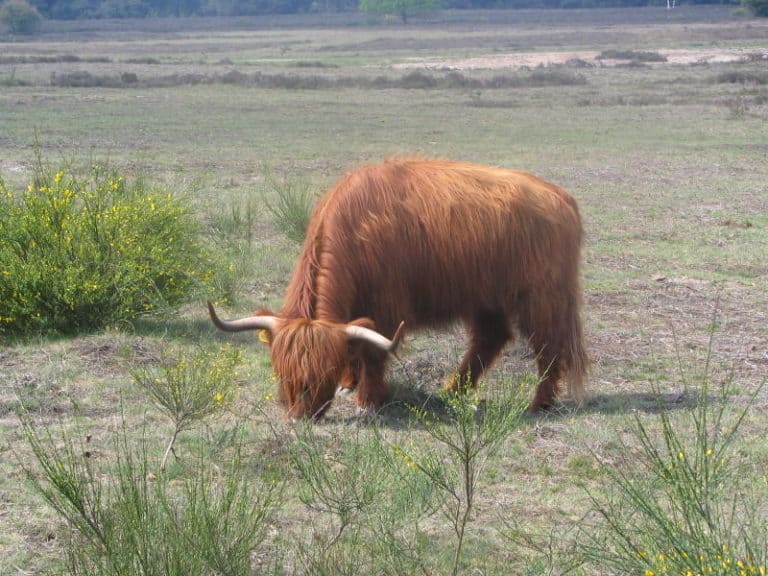
A farm-raised Highland cattle

Based on a conservative estimate, there are more than 25,000 Highland cattle registered around the world, but there might be many more unregistered cattle as well. This is only a small percentage of the full cattle population, which is nearly a billion worldwide.

However, Highland cattle have provided a source of high-quality beef since the late 19th century. Because it is a domesticated species bred and raised for human consumption, population numbers are in no danger of dwindling for as long as people rely on them.

The breed is not currently classified by the IUCN Red List, which only considers the endangered status of wild species.

Diet
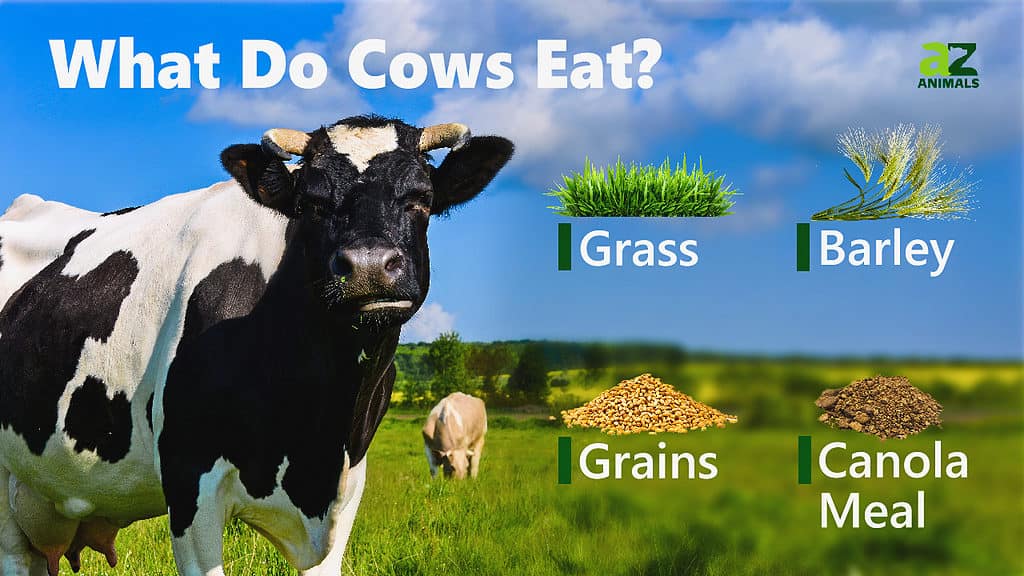
Highland cattle feed on grass, barley, grains, and canola meal.

The Highland cattle primarily forage on grass and vegetation. Their body types, including their unique stomach, have been shaped over thousands of years of evolution to fit this specific grazing lifestyle. Cattle spend a great deal of their time every day simply consuming and digesting food.

They can consume up to 40 pounds of vegetation every single day. This grazing is actually a net good for the environment. Part of the breed’s diet consists of annoying pest plants that can mar a pasture.

Predators and Threats

Due to their enormous size, the Highland cattle are not easily tussled with. When threatened, their main defense is to charge a predator and try to gore it with their horns. For this reason, they are only threatened by the most dangerous apex predators such as wolves, cougars, and bobcats.

An entire group of Highland cattle provides a nearly impenetrable defense against predators. Rather than confronting a group directly, predators often choose to pick off wounded, young, old, or lone cattle that wander away from the group.

As a domesticated species, the spread, survival, and reproduction of the Highland cattle are heavily promoted and defended by humans. Domesticated cattle, as a species, are one of the most widespread mammals on the planet.

However, most cattle still end up slaughtered for their meat, so what’s good for the species is not necessarily good for the individual. The treatment of individual cattle can also vary from ranch to ranch. Some cattle may be treated humanely or even kept as pets.

Cattle are prone to many types of dangerous diseases, including respiratory infections, skin diseases, and viruses, some of which can be spread to humans.

Reproduction, Babies, and Lifespan
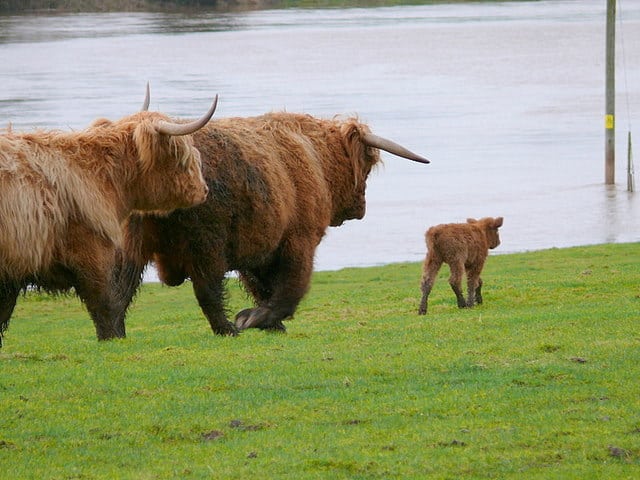
Several adult and one baby Highland cattle

Highland Cattle with a baby calf.

The reproduction of Highland cattle is obviously of enormous interest to breeders. Because cattle breeding has practically been honed to a precise science, the cattle industry is deriving more productivity from cattle than ever before.

A young female cow, commonly referred to as a heifer, will have her first calf after about two to three years of age. Males typically achieve sexual maturity after about a year.

Breeders can choose whether the heifer is impregnated through natural means or artificial insemination. If through natural means, then cattle can breed at various times throughout the year.

The cow will carry the young calf for approximately nine to 10 months before it is born, about the same time as humans. Given the physical and mental costs required to raise the young, she will produce only one or two calves at a time.

The calf stays close to its mother for most of its early life, forming a close bond. The mother offers both milk and protection mostly without the help of the father.

The calf is weaned at around eight to 12 months of age. It will then achieve independence a short time later. The average individual has a lifespan of around 20 years, though they can sometimes live much longer. Cows may give birth to several calves throughout their lives.

View all 287 animals that start with H

Sources

  1. The Livestock Conservancy
  2. Marc Bekoff Ph.D. for Psychology Today
  3. Tanya Dewey and Jessica Ng for Animal Diversity Web
Rebecca Bales

About the Author

Rebecca Bales

Rebecca is an experienced Professional Freelancer with nearly a decade of expertise in writing SEO Content, Digital Illustrations, and Graphic Design. When not engrossed in her creative endeavors, Rebecca dedicates her time to cycling and filming her nature adventures. When not focused on her passion for creating and crafting optimized materials, she harbors a deep fascination and love for cats, jumping spiders, and pet rats.
Connect:

Thank you for reading! Have some feedback for us?


Highland Cattle FAQs (Frequently Asked Questions)

Highland cattle are herbivores, feeding exclusively on grass, leaves, clovers, and other prime vegetation.