




H
Species Profile

Himalayan

Felis catus

Persian plush, Siamese points.
Anne Richard/Shutterstock.com

Himalayan Distribution

Click a location to explore more animals from that region

Origin Location

This map shows the native origin of the Himalayan. As a domesticated species, they are now found worldwide.

Loading map...

Size Comparison

Human 5'8"
Himalayan 10 in

Himalayan stands at 15% of average human height.

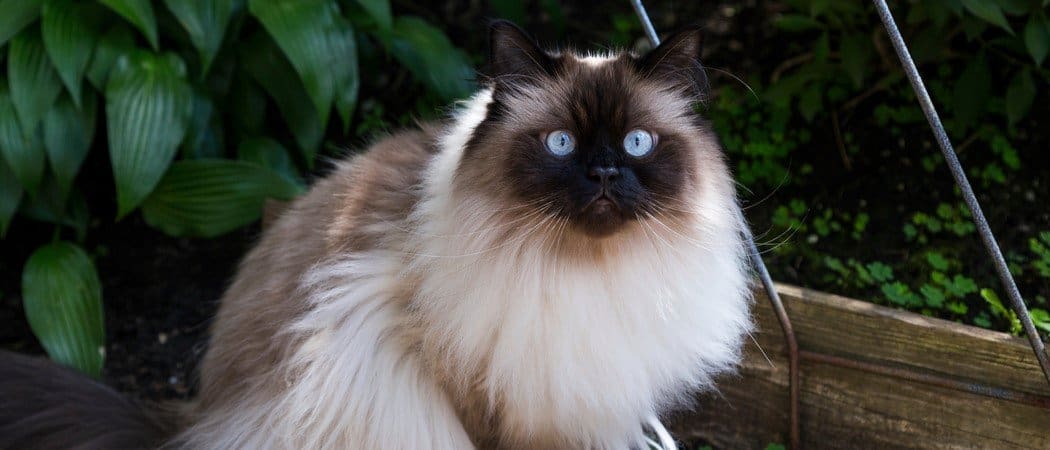
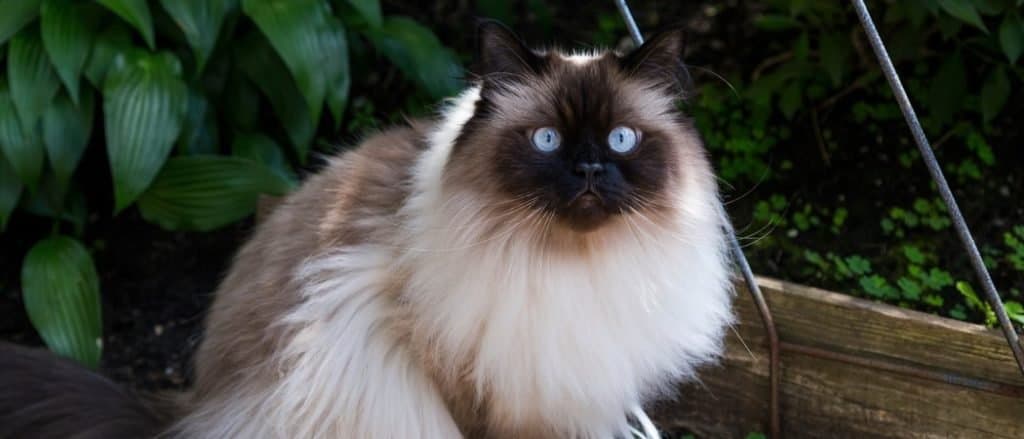
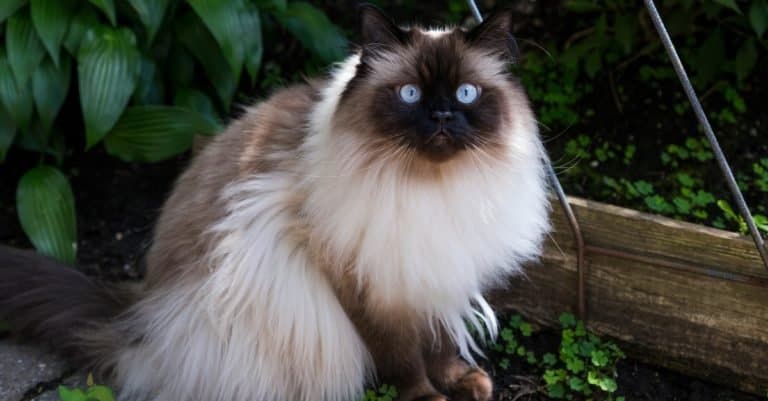
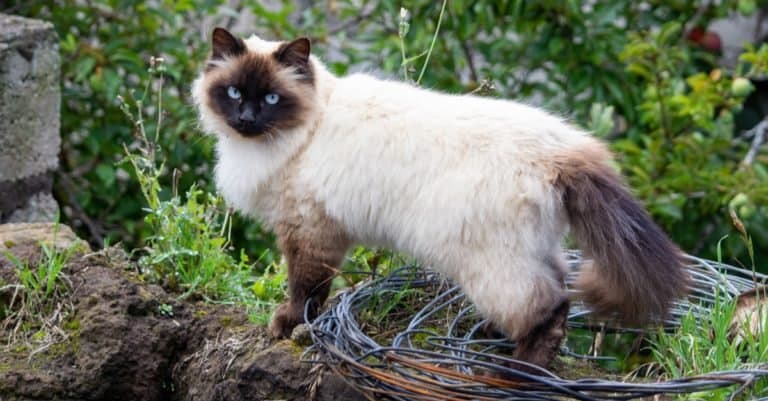
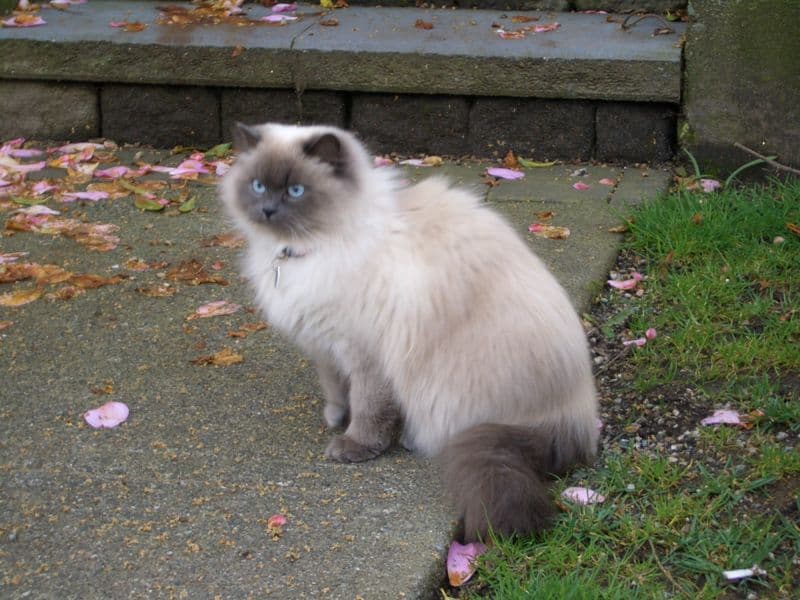
Chocolate point doll-faced himalayan cat with striking light blue eyes sitting in garden

At a Glance

Domesticated
Also Known As Colorpoint Persian, Colourpoint Persian, Himmy, Pointed Persian
Diet Carnivore
Activity Crepuscular+
Lifespan 10 years
Weight 6.5 lbs
Status Not Evaluated
Did You Know?

Despite the name, the Himalayan cat is a domestic breed-not a wild cat from the Himalayas.

Scientific Classification

The Himalayan cat is a long-haired, blue-eyed, colorpoint domestic cat breed developed from Persian and Siamese-type lines; it resembles a Persian with Siamese colorpoint patterning.

Kingdom
Animalia
Phylum
Chordata
Class
Mammalia
Order
Carnivora
Family
Felidae
Genus
Felis
Species
Felis catus

Distinguishing Features

  • Long, dense coat with a full ruff; generally Persian-like body type
  • Colorpoint pattern (darker face/ears/legs/tail) and blue eyes
  • Often brachycephalic (flat-faced) depending on breeding line
  • Calm, indoor-oriented temperament reported in breed descriptions

Physical Measurements

Males and females differ in size

Height
10 in (9 in – 11 in)
9 in (9 in – 10 in)
Length
2 ft 6 in (2 ft 4 in – 2 ft 9 in)
2 ft 3 in (2 ft – 2 ft 6 in)
Weight
12 lbs (10 lbs – 15 lbs)
9 lbs (7 lbs – 11 lbs)
Tail Length
11 in (10 in – 1 ft 1 in)
10 in (9 in – 12 in)
Top Speed
25 mph
about 40 km/h

Appearance

Primary Colors
Secondary Colors
Skin Type Domestic cat (Felis catus) with a Persian-derived long, dense, plush coat (heavy undercoat + long guard hairs). Brachycephalic facial conformation often leads to moist facial skin and tear staining; coat easily mats without frequent grooming.
Distinctive Features
  • Domestic cat breed (not a wild Himalayan species): a selectively bred Felis catus developed from Persian and Siamese-type lines.
  • Persian-like 'cobby' build: stocky/compact body, short legs, broad chest, and a very full ruff and plume tail.
  • Siamese-style colorpoint pattern combined with a long coat: pale body with clearly darker extremities (mask, ears, legs, tail).
  • Striking, consistently blue eyes (a hallmark tied to the colorpoint gene), set in a rounded Persian-type face.
  • Brachycephalic head and short nose in many lines; can be extreme ("peke-face") or moderate depending on breeding.
  • Coat care requirement is higher than the base domestic shorthair: daily brushing/combing to prevent mats and hairballs; regular bathing/degrea sing may be needed in some individuals.
  • Facial care often needed: routine gentle cleaning around eyes/nose to reduce tear staining and dermatitis from chronic moisture.
  • Common health considerations relative to typical mixed-breed domestic cats: increased risk of brachycephalic airway issues (noisy breathing, heat intolerance), dental crowding/malocclusion, chronic epiphora/tear duct issues, and eye problems (e.g., corneal irritation/ulcers from shallow orbits).
  • Inherited-disease considerations from Persian ancestry: screen lines for polycystic kidney disease (PKD) and hypertrophic cardiomyopathy (HCM) via reputable breeder testing; maintain regular veterinary monitoring.
  • Lifestyle/care: keep cool (heat sensitivity), manage weight with measured feeding (sedentary tendency), and prioritize low-dust litter to reduce facial irritation.

Sexual Dimorphism

Dimorphism is present but mild compared with many wild felids; males are typically larger and more heavily built with broader heads and thicker neck/ruff, while females are usually smaller and finer-boned.

  • Larger overall size and heavier 'cobby' frame; broader skull and more pronounced jowls in some individuals.
  • Often develops a thicker neck/ruff with maturity.
  • Slightly smaller, lighter build with a finer head shape while maintaining the same long coat and colorpoint pattern.
  • May appear more refined in facial structure, though still Persian-influenced.

Did You Know?

Despite the name, the Himalayan cat is a domestic breed-not a wild cat from the Himalayas.

It was developed by crossing Persian and Siamese-type cats to combine a long coat with colorpoint markings.

The "points" (ears, mask, paws, tail) are darker because colorpoint genes are temperature-sensitive-cooler areas grow darker fur.

All Himalayans have blue eyes, a hallmark of the colorpoint pattern.

Registries vary: some treat the Himalayan as its own breed, others classify it as a Persian colorpoint variety.

Coat color intensity can shift with age, climate, and body temperature, making some cats look darker in winter.

Unique Adaptations

  • Colorpoint genetics (from Siamese ancestry) produce darker extremities and blue eyes due to reduced pigment at warmer body temperatures.
  • Dense, long Persian-type coat provides insulation but requires human-assisted grooming in indoor life to prevent mats.
  • Brachycephalic (short-nosed) head shape in many lines can alter airflow and tear drainage-an adaptation in appearance rather than function, influencing care needs.
  • Stocky "cobby" build typical of Persian lineage suits a more sedentary lifestyle, conserving energy in indoor environments.

Interesting Behaviors

  • Quiet, gentle "lap-cat" temperament is common, reflecting Persian influence; many prefer calm routines over rough play.
  • Often follows favorite people from room to room but usually without the high-volume vocalizing typical of many Siamese-type cats.
  • Enjoys low-to-the-ground play (batting toys, short chases) more than big leaps-especially in heavier-bodied lines.
  • Can be sensitive to household changes; many do best with predictable schedules and cozy resting spots.
  • May paw at faces or rub cheeks to solicit attention, using scent glands to "mark" trusted people.
  • Frequent face-washing and grooming motions are common; tear overflow can increase facial cleaning behavior.

Cultural Significance

The Himalayan is a designer mix of Persian looks and Siamese colorpoints, known for a long coat, point markings, and blue eyes. In shows and pet life it means luxury, a calm indoor pet, yet fully domestic (Felis catus).

Myths & Legends

Breed-naming lore: early fanciers compared the cat's colorpoint pattern to the Himalayan rabbit's markings, and the exotic name helped cement its identity in mid-20th-century cat culture.

Show-ring origin tales often recount the long effort to reliably "fix" both the Persian coat and Siamese points-an oft-repeated historical anecdote among breeders about patience across generations.

As with many blue-eyed, masked colorpoint cats, some owners preserve household superstitions that these cats are especially "mood-reading" companions-an affectionate tradition tied to their striking gaze rather than a formal folktale.

Conservation Status

NE Not Evaluated

Has not yet been evaluated against the criteria.

Population Stable

Life Cycle

Birth 4 kittens
Lifespan 10 years

Lifespan

In the Wild
8–11 years
In Captivity
8–15 years

Reproduction

Mating System Polygynandry
Social Structure Managed Domestic
Breeding Pattern Transient
Fertilization Internal Fertilization
Birth Type Internal_fertilization

Himalayan cats (Felis catus) remain naturally polygynandrous: females may mate with many males and have multi‑sired litters. Breeders control pairings; some may need help at birth. Females are seasonally polyestrous, induced ovulators, ~63–65 day gestation, ~3–5 kittens.

Behavior & Ecology

Social Clowder Group: 3
Activity Crepuscular, Cathemeral
Diet Carnivore Animal-based, high-protein wet food (especially poultry such as chicken/turkey), with occasional cooked meat treats

Temperament

Himalayan cats (Felis catus) are usually calmer, quieter, and less active than many other cats; often like to sit on laps and are people-friendly like Persians, though some are more talkative from Siamese lines.
Social style: affectionate, gentle, and routine-oriented; commonly follows a preferred person room-to-room, enjoys proximity, and tolerates handling when introduced positively.
Play/energy: moderate-to-low; prefers short interactive play and puzzle/foraging games over sustained high-speed chase; may be less inclined to climb/jump compared with more athletic domestic cats-provide low-to-mid height perches and safe ramps/steps.
Himalayan cats (Felis catus) can be easily stressed and timid with sudden changes, loud noise, or new animals. They do best with regular routines and slow introductions, tending to be calm.
Persian-type lines have risk of brachycephalic airway problems (snoring, heat and exercise intolerance), eye tearing with facial staining, crowded teeth, and polycystic kidney disease (PKD); these lower activity, raise irritability, and need early vet screening.
Long coats need regular grooming to prevent mats and keep Himalayan cats comfortable. Clean face and eyes daily. Grooming and nail care help them accept handling and are less likely to avoid or act out.
Multi-cat management: often does best with calm companions; ensure resource distribution (litter boxes, feeding stations, resting sites) to minimize social tension; monitor for subtle stress signals (reduced grooming, hiding, inappropriate elimination).

Communication

Meows Often soft/low-volume; can become more frequent when seeking attention, consistent with some Siamese-line influence
Purrs Comfort-seeking and social bonding
Trills/chirps Friendly greeting, especially toward familiar people
Hisses/growls Rare in well-managed homes; typically used when startled, in pain, or during forced interactions
Kittens: high-pitched calls to solicit maternal care
Scent marking: facial rubbing (bunting) on people and furniture; Himalayans commonly use this affiliatively and may do it frequently with preferred humans.
Body language: tail-up greeting, slow blinking, relaxed posture for affiliation; subtle avoidance cues (turning head away, freezing, ear angle changes) are important because calm breeds may 'shut down' rather than escalate quickly.
Allogrooming and social sleeping: occurs in bonded pairs/household groups; Himalayans often choose close-contact resting with trusted companions.
Kneading and pawing: common comfort behavior, often directed to blankets/laps; can be used to solicit attention.
Play signaling: gentle paw taps and short pounces; less rough-and-tumble than many domestic cats-provide wand toys and low-impact play sessions.
Human-directed communication: sitting near desired resource, leading behavior (walks toward food/treat area), and door-waiting; routines strongly shape these signals in Himalayans.
Health-related signals to watch: increased open-mouth breathing, louder snoring, reduced activity/heat seeking, squinting/tearing, decreased grooming, or litter box changes-can indicate brachycephalic discomfort, dental pain, ocular irritation, or kidney/urinary issues and can alter sociability.

Habitat

Biomes:
Temperate Forest Temperate Grassland Mediterranean Tropical Rainforest Tropical Dry Forest Savanna Desert Hot Desert Cold Temperate Rainforest Boreal Forest (Taiga) Tundra Alpine Wetland Freshwater Marine +9
Terrain:
Plains Coastal Hilly Valley Plateau Mountainous Island Riverine +2
Elevation: Up to 18044 ft 8 in

Ecological Role

Domestic obligate carnivorous mesopredator (mostly companion animal); where allowed outdoors, functions as a small-game predator.

Rodent control in and around human dwellings Can reduce some household pest populations (e.g., insects) Potential negative ecological impact if free-roaming: predation pressure on native birds, reptiles, and small mammals

Diet Details

Main Prey:
Mice and rats Small birds Small reptiles Amphibian Insects and other invertebrates

Human Interaction

Domestication Status

Domesticated

Felis catus came from Near Eastern/African wildcats and became close to people for rodent control about 9,000–10,000 years ago; cats now live worldwide as pets and pest controllers. The Himalayan was bred mid-20th century by crossing Persian longhairs with Siamese colorpoints for a Persian body, short nose, colorpoint blue eyes, calm pet nature, and show cats that need heavy grooming.

Danger Level

Low
  • scratches or bites (usually minor; risk increases if frightened or handled roughly)
  • cat-scratch disease (Bartonella) and other bite/scratch-associated infections
  • allergies/asthma triggered by cat dander/saliva proteins
  • zoonotic parasites/pathogens associated with litter and feces (e.g., toxoplasmosis risk from handling litter, especially for pregnant or immunocompromised people)
  • trip/fall hazards in the home (common to companion cats)

As a Pet

Suitable as Pet

Legality: Himalayan cat (Felis catus) is usually legal where pet cats are allowed. Rules may include license or registration, rabies shot, leash or containment, limits on number. Rental or HOA rules may restrict; import/export may need health papers.

Care Level: Experienced

Purchase Cost: $800 - $3,000
Lifetime Cost: $16,000 - $35,000

Economic Value

Uses:
Companion animal industry Pedigree breeding and catteries Cat shows and registration Veterinary care and pet insurance Grooming services and products
Products:
  • sale/adoption of pedigree kittens (pet/show quality)
  • registration/pedigree services and show entry fees
  • specialty grooming (de-matting, sanitary trims) and grooming tools
  • specialized diets (hairball control, weight management) and supplements
  • routine and advanced veterinary services (dental care, imaging, genetic testing for PKD where available)

Relationships

Ecological Equivalents 5

Animals that fill a similar ecological role in their ecosystem

When you cross a Persian feline and a Siamese feline, you get the beautiful Himalayan. These animals with their solid-colored bodies look like they are wearing a mask because of their points. Himalayan cats are loving family animals that adore being the center of attention.

Breed History

The Himalayan breed is a sub-breed of the long-haired Persian. It has specific features such as its blue eyes and point coloration derived from crossing the Persian with the Siamese breed. The Cat Fanciers’ Association classifies the Himalayan as a color variation of the Persian instead of its own sub-breed. The name is a reference to Himalayan animals like the Himalayan rabbit, which have specific colorations.

In the United States, the cross-breeding of Persians with Siamese to produce Himalayans began at Harvard University in the 1930s, but without officially registering them. The same cross-breeding experiments occurred in the UK, resulting in the Longhaired Colorpoint breed being recognized in 1955 by the GCCF.

It wasn’t until 1948 that a few breeders in the US made more concentrated efforts at crossing Siamese and Persian cats, such as California cat breeder Jean Mill and Mrs. Goforth, who helped the new Himalayan breed gain recognition by the Cat Fanciers’ Association in 1957. The new breed developed over the next few decades, evolving into a cat that is less Siamese-like.

Traits: What to Know Before You Buy

Before you buy a Himalayan, there are several factors you should keep in mind:

  • Himalayan cats are big cats that should have a large bone structure. They should be equally massive across the shoulders and the rump. The Himalayan should not be fat, but it should have the bone structure to carry its weight
  • The first efforts to breed a Himalayan-type cat were by Virginia Cobb and Dr. Clyde Keeler in the 1930s, and the result was a Newton’s Debutante. Fast-forward about 29 years, and in 1957, Marguerita Goforth bred the first long-haired Himalayan-style cat, which she called Princess Himalayan Hope.
  • Himalayan cats can have three different-shaped heads. Those with doll-face, round heads usually have the fewest health issues. Those with peke-face or ultra-typed heads often can have respiratory problems, dental malocclusions, and cherry eyes.

Personality

The Himalayan cat is happiest when on its owner’s lap. You can expect it to want to be with you or another member of the family constantly. At the same time, most do not suffer from separation anxiety, so you can leave them to work. Expect to hear some vocalizations; however, if you leave the Himalayan cat alone for too long. This cat’s loving personality means that it wants to be included in everything.

Himalayan cats often make great pets for children, as long as they have some supervision to teach the child how to act around a cat. Many Himalayans have been seen being pushed around in baby strollers while wearing cute clothes. They have a fun-loving personality that loves being the center of attention.

These cats have short periods when they can be highly active. Then, they can go right back to sleeping in the sun. They want you to occasionally acknowledge their presence with a soft rub or by talking to them, but they can easily entertain themselves.

Breeders report that Himalayans with flame or flame-lynx points are often higher-strung than those with other color variations. If you have an active family, then this may be a great choice. Alternatively, if you are looking for a mellow lap cat, you may want to think about other color choices.
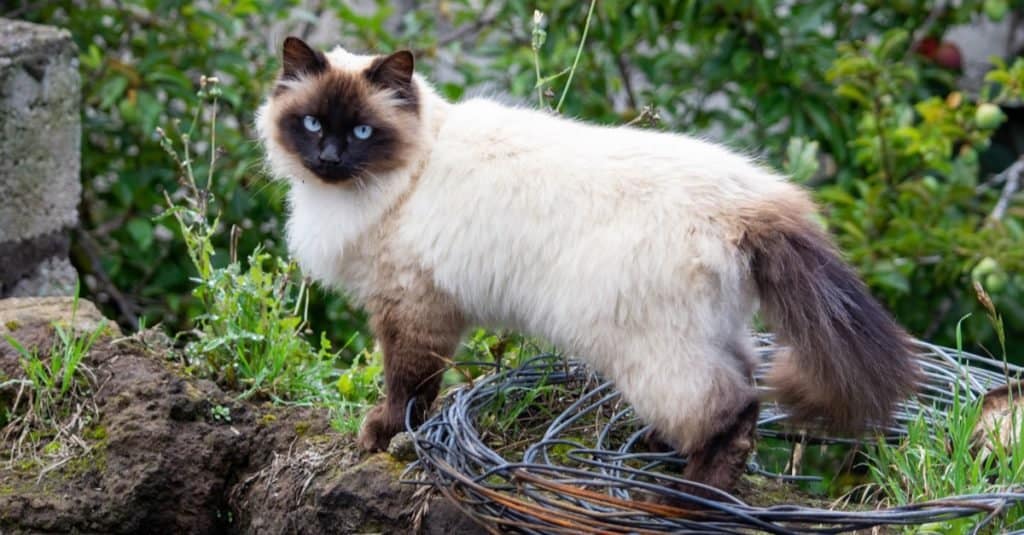
Beautiful Himalayan cat playing outside in the garden.

The Himalayan loves being around a member of its family constantly.

Size and Weight

Male Himalayans are generally bigger than females. Typically, males should weigh under 12 pounds while females should weigh between 8 and 10 pounds.

The Himalayan cat will reach its full size in about two years, much later than many domestic cat breeds. Since they are heavy-boned cats, it takes their bones longer to mature.
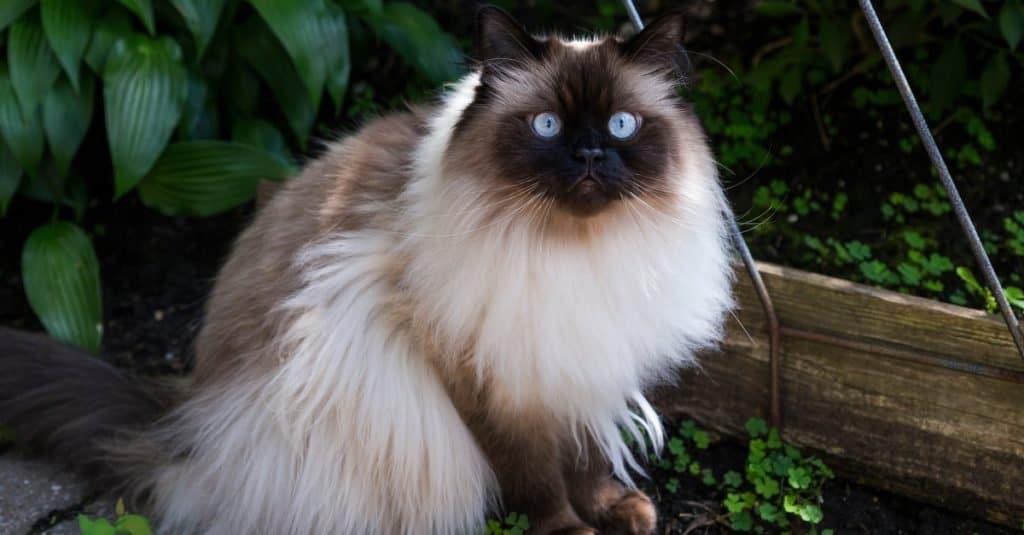
Chocolate point doll-faced Himalayan cat with striking light blue eyes sitting in the garden.

Breeders initially crossed a Persian cat with a Siamese cat to produce the Himalayan.

Price

The cost of Himalayan cats ranges from $200 to $2,500, depending on many different factors.

You can find Himalayan cats from reputable breeders starting at about $1,000. Some of these are kittens who make great pets but will not do well in a show arena. If you are interested in showing Himalayan cats, then you can expect to pay more. There are about one or two breeders in each state, with many having over 20 years of experience in raising this breed.

If you are looking for an adult show cat, then keep in mind that their previous winnings and the winnings of their parents can affect the price.

Remember that the initial cost is only the starting price. You will have to pay the cost of food, vet bills, toys, and treats.
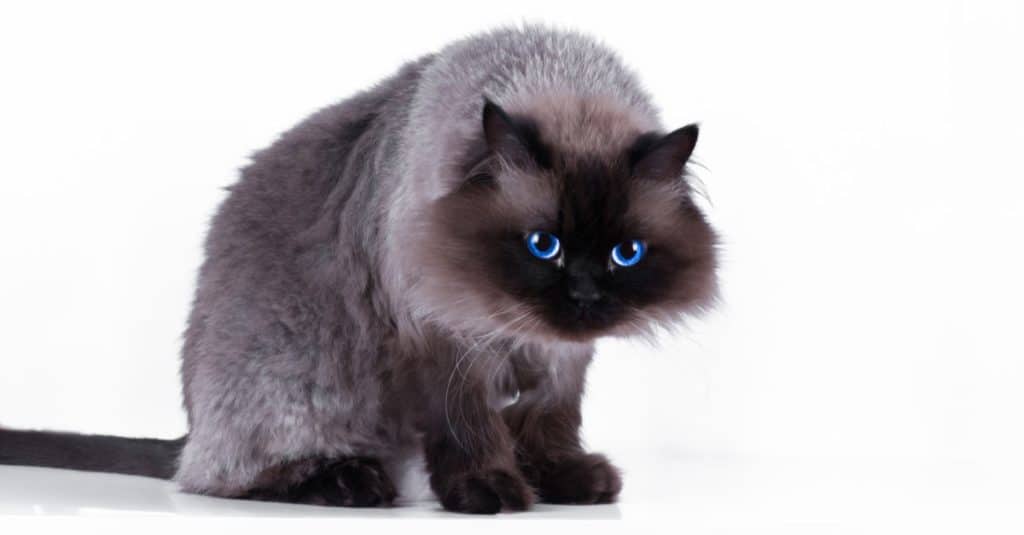
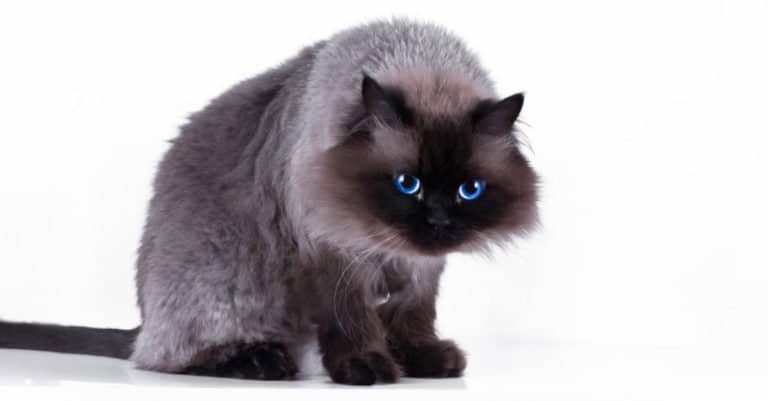
Himalayan isolated on white background

Purchasing a Himalayan from a reputable breeder can cost from 00 to 00.

Kittens

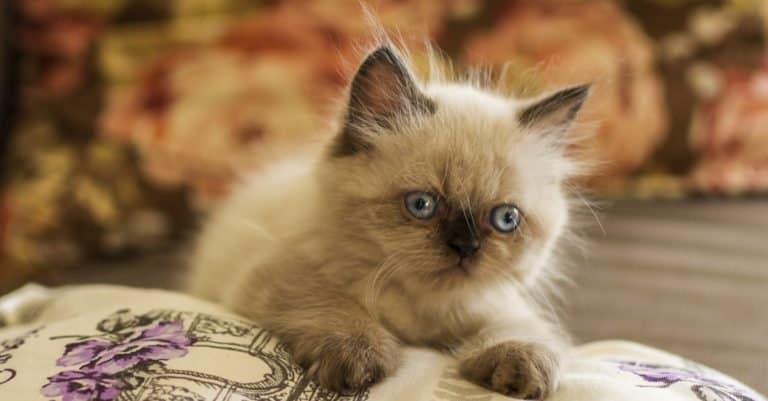
If you consider a Himalayan kitten, do not be surprised if it is hard to spot their points. They are not visible at all when the kitten is first born. The first hint of points will appear when the kitten is 4 weeks old, but they will not be fully apparent until it is 12-to-18 months old.

Himalayan cats usually have litters of three to six kittens. Each kitten should be born with blue eyes and a pink nose. These felines are usually about average size. Instead of being born bigger than other breeds that they eventually outgrow, it takes the Himalayan longer to mature.

Expect Himalayans to have a smaller litter if it is their first litter. Litter size usually increases with experienced moms.

Himalayan kittens are great around children. One breeder of 20 years in California talks about how she often visited her grandparents in Iowa during summer vacations. She was about seven when a mother Himalayan decided to give birth on her lap. It was at that moment that she knew that she wanted to be a breeder.
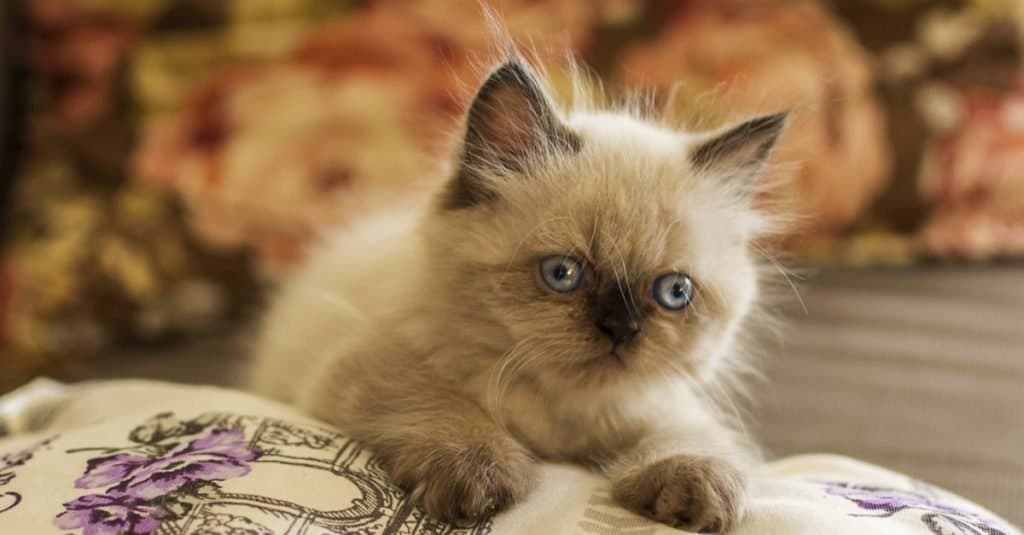
Cute Himalayan kitten lying on a bed.

The first hint of points in a Himalayan kitten will not be fully apparent until it is 12-to-18 months old.

Lifespan

The Himalayan breed was developed from the Persian and Siamese cat breeds. Both of these breeds are among the longest-living cats. On average, the Persians live 15 to 20 years. The Persian may develop some stomach issues as it ages, which can also be true of the Himalayan. The Siamese breed also lives between 15 and 20 years. Therefore, it should be no surprise that the Himalayan is one of the longest-living cat breeds.

While breed standards call for a smashed face without an extended nose, this can lead to respiratory issues in some Himalayans. Their unique chubby faces are also more susceptible to cherry eyes and dental problems, which can become tougher to manage as the cat ages.
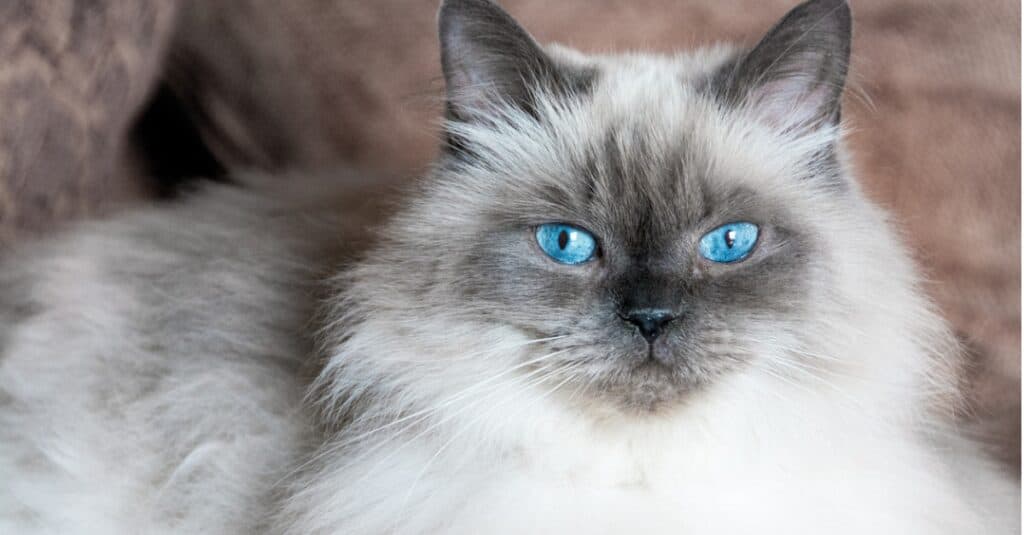
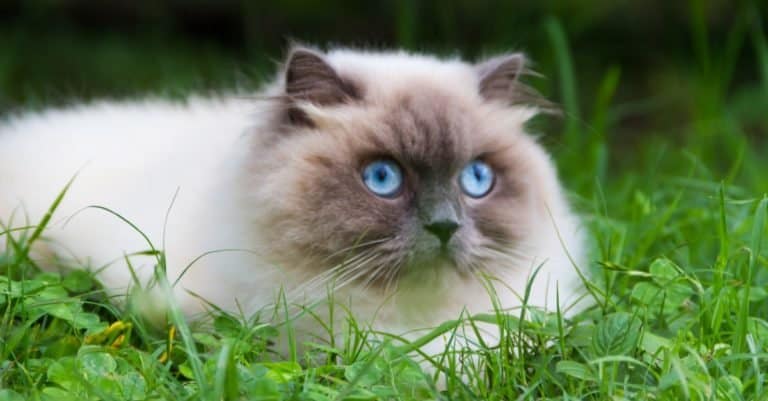
Himalayan with blue eyes

The life expectancy of a Himalayan is from 9 to 15 years.

Breed Vs. Mixed

If a Himalayan cat does not have points, then it may be a mixed breed. These points are darker colors around the ears, facial mask, legs, paws, and tail. They should also have the paw and nose pad color that goes with their coloring.

All Himalayan cats have blue eyes. If the cat has eyes of a different color, then you can suspect that they are a mixed breed.

The Himalayan cat is a long-haired cat. In fact, in 2014, Colonel Meow was named the cat with the longest hair by the people at Guinness World Records. His hair measured 9 inches long. While not every cat will rival Colonel Meow for hair length, if the cat does not have long hair, it is not a purebred Himalayan.

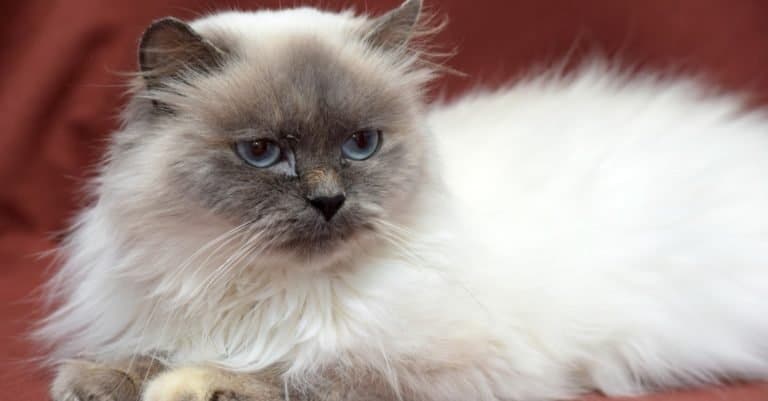
Himalayan cats also have a double coat. There are short hairs under the long ones. If you let the cat go a couple of days without brushing it and do not find a matted undercoat, it is probably a mixed-breed cat.

If the animal is solid gray without point coloration, it is likely a mixed breed. However, blue point Himalayans can appear grayish or bluish, so a grayish color with proper point markings and blue eyes can still be a pedigreed Himalayan.
Himalayan cats have a double coat with short hairs under the long ones.

Types of Himalayan Cats and Colors

Various organizations recognize many different colors of Himalayan cats. When the Cat Fanciers of America first approved the breed in 1959, they approved three-point colors, and they remain popular today. They are:

  • Seal: Deep seal brown points, nose leather, and paw pads on a pale fawn-to-white-colored cat
  • Blue: Blue points on a bluish-white cat with slate blue nose leather and paw pads
  • Chocolate: Milk chocolate points on an ivory-colored cat with a cinnamon pink nose

Then, the association added flame and torte points in 1964. Flame points are deep orange flame to deep red points on creamy white cats. These white cats should have coral-pink nose leather and paw pads. Cats who have torte points should be seal with undisturbed patches of red or cream. This is one of the few color combinations where cats can have coral pink or seal brown nose leather and paw pads.

The color choices expanded again in 1972 with blue creams, which feature blue with patches of cream, and again in 1979 with the addition of creams, which are buff white on a cream body. Since then, the organization has expanded to include many different point colors. Other example points are Tabby, Lynx, or Tortoiseshell-patterned.
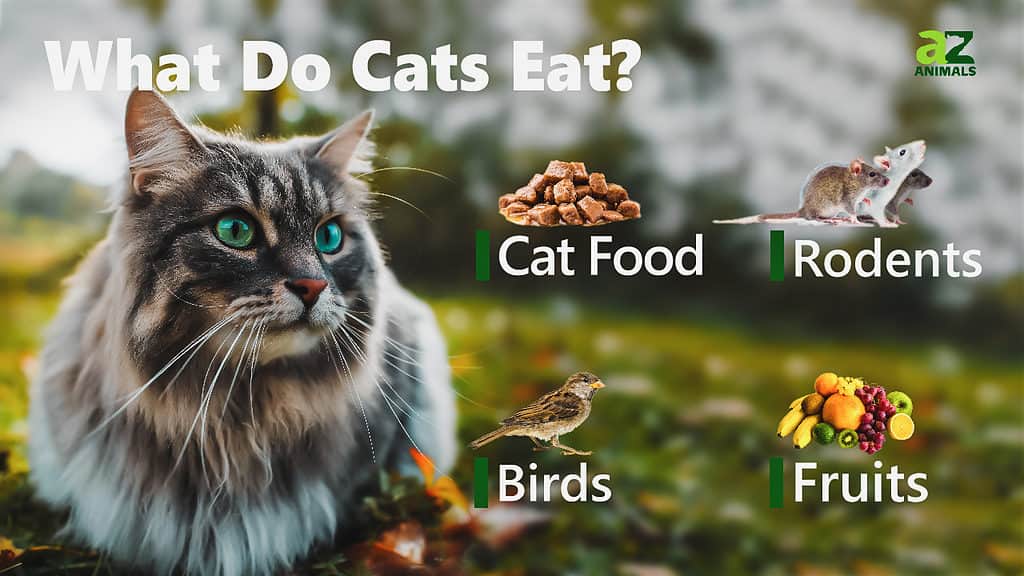
Pet domestic cats generally consume cat food, but also will eat rodents, birds, and fruits.

What to Feed a Himalayan Cat

We are probably all in agreement that Himalayan cats are simply beautiful, and one of the characteristics that enhances their beauty is their long, soft coat. For pet owners, this is a factor to take into consideration when deciding on what food to give them. Himalayans will be more prone to hairballs, which can hamper their digestion. The best kind of food would be one that helps them digest the hair and pass it through their systems without issues.

View all 287 animals that start with H

Sources

  1. ASPCA Pet Insurance / Accessed May 4, 2021
  2. The Pets And Love / Accessed May 4, 2021
  3. FAQ Cats / Accessed May 4, 2021
  4. Tica / Accessed May 4, 2021
  5. Persian Cat Corner / Accessed May 4, 2021
  6. Purr Craze / Accessed May 4, 2021
  7. Purr Pals / Accessed May 4, 2021
  8. The Cat Fanciers Association / Accessed May 4, 2021
Abby Parks

About the Author

Abby Parks

Abby Parks has authored a fiction novel, theatrical plays, short stories, poems, and song lyrics. She's recorded two albums of her original songs, and is a multi-instrumentalist. She has managed a website for folk music and written articles on singer-songwriters, folk bands, and other things music-oriented. She's also a radio DJ for a folk music show. As well as having been a pet parent to rabbits, birds, dogs, and cats, Abby loves seeking sightings of animals in the wild and has witnessed some more exotic ones such as Puffins in the Farne Islands, Southern Pudu on the island of Chiloe (Chile), Penguins in the wild, and countless wild animals in the Rocky Mountains (Big Horn Sheep, Mountain Goats, Moose, Elk, Marmots, Beavers).
Connect:

Thank you for reading! Have some feedback for us?


Himalayan FAQs (Frequently Asked Questions)

Himalayans are affectionate, calm, and social cats. They love attention and enjoy spending time with their family but are not overly demanding — making them perfect for owners seeking a loving but laid-back companion.