
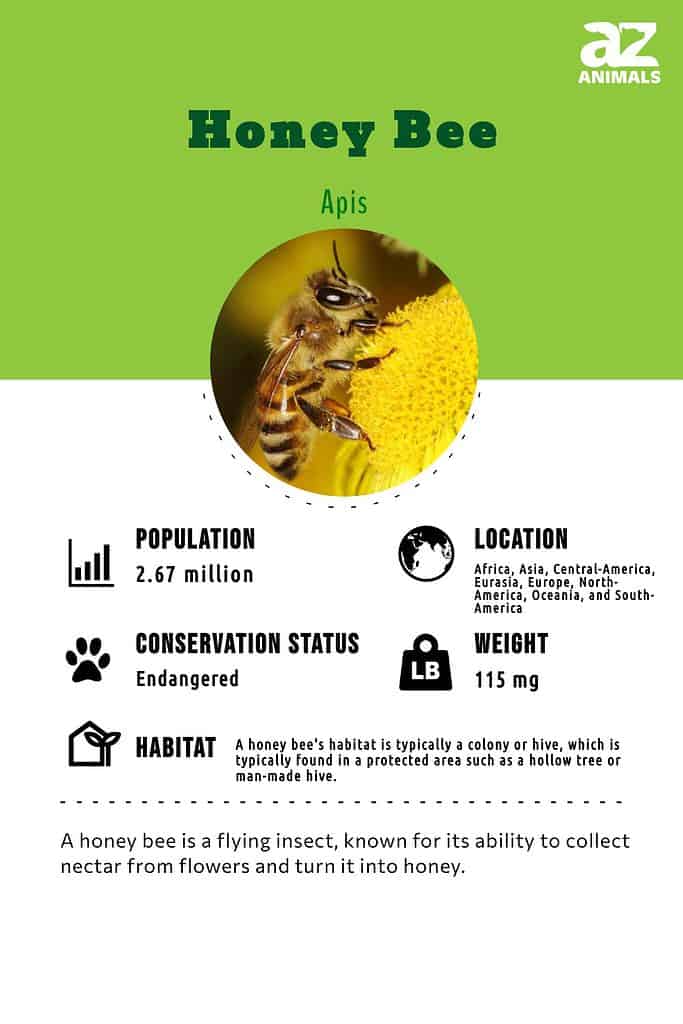
H
Species Profile

Honey Bee

Apis mellifera

One colony, one mind, many wings
Dmitri Gomon/Shutterstock.com

Honey Bee Distribution

Click a location to explore more animals from that region

Invasive Species
Loading map...
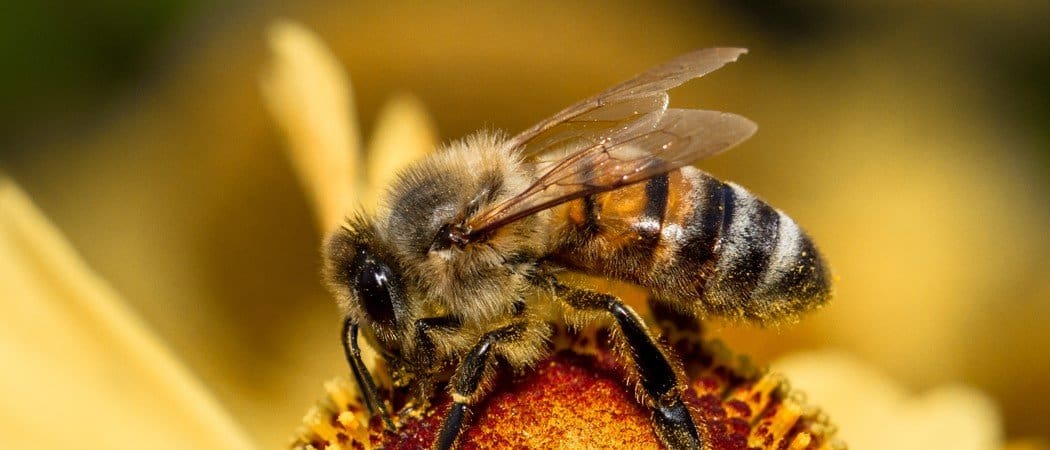
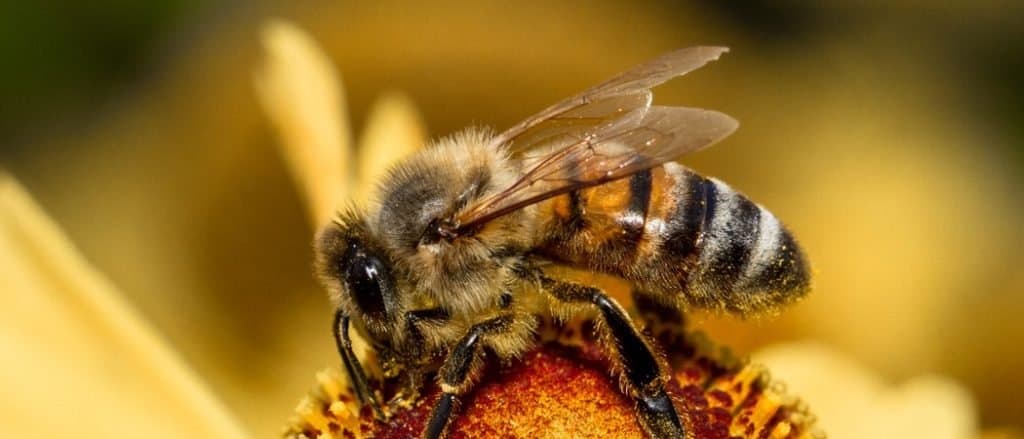
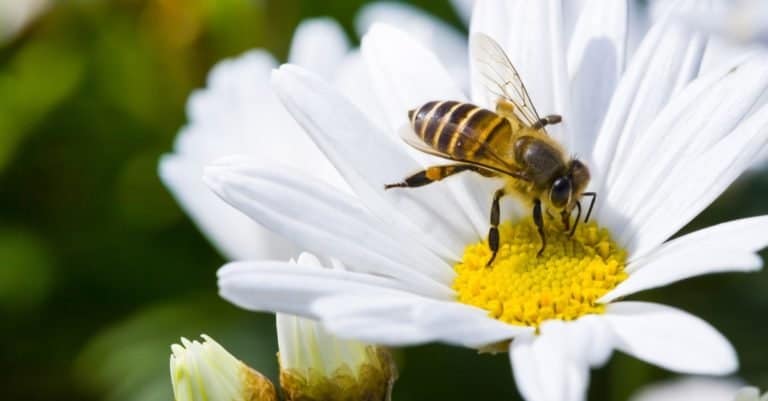
Honey bee closeup on a flower

At a Glance

Wild Species
Also Known As Honey bee, Honeybee, European honey bee, Common honey bee, Domestic honey bee
Activity Diurnal+
Lifespan 1.5 years
Weight 0.0003 lbs
Did You Know?

A strong colony commonly has ~20,000-60,000 workers (can peak higher in summer), all daughters of one queen (Seeley, 1995).

Scientific Classification

A eusocial bee species kept worldwide for honey production and crop pollination; forms large perennial colonies with a queen, workers, and drones.

Kingdom
Animalia
Phylum
Arthropoda
Class
Insecta
Order
Hymenoptera
Family
Apidae
Genus
Apis
Species
mellifera

Distinguishing Features

  • Eusocial colony with distinct castes (queen, workers, drones)
  • Cavity-nesting, wax comb construction
  • Important generalist pollinator; famous waggle dance communication
  • Worker sting is barbed (usually fatal to the worker after stinging mammals)

Physical Measurements

Males and females differ in size

Length
1 in (1 in – 1 in)
Weight
0 lbs (0 lbs – 0 lbs)
Top Speed
15 mph
About 24 km/h in calm
Venomous

Appearance

Primary Colors
Secondary Colors
Skin Type Sclerotized chitinous exoskeleton with dense branched setae (hairy thorax; comparatively less hairy abdomen); wax-producing sternites in workers
Distinctive Features
  • Medium-sized cavity-nesting honey bee: workers typically ~1.2-1.5 cm body length; queens ~1.8-2.0 cm; drones ~1.5-1.7 cm (commonly reported ranges in honey bee morphology references such as Snodgrass, 1956; Winston, 1987).
  • Two pairs of membranous wings with hamuli (wing hooks) coupling fore- and hindwings; worker forewing length often ~0.9-1.0 cm in A. mellifera (morphometric standards widely used in Apis identification; e.g., Ruttner, 1988).
  • Abdomen with clear banding ('striped' appearance) and a relatively stout, compact build compared with larger open-nesting species such as Apis dorsata (giant honey bee).
  • Worker sting is barbed (sting apparatus adapted for defense); workers typically die after stinging vertebrate skin due to sting lodging and abdominal tissue damage (standard honey bee biology; Winston, 1987).
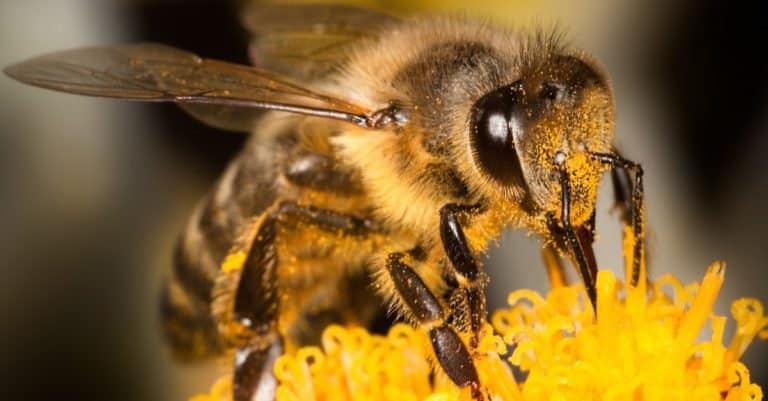
  • Hind legs of workers have a corbicula (pollen basket) and pollen press; conspicuous when returning from foraging with pollen loads (key managed-pollinator field cue).
  • Workers have well-developed wax glands on abdominal sternites and build vertical wax comb in enclosed cavities (tree hollows, hives), distinguishing A. mellifera's typical nesting habit from open-comb Apis species (Seeley, 1995; Winston, 1987).
  • Proboscis (tongue) relatively long for a bee, commonly ~0.55-0.70 cm in A. mellifera depending on subspecies/strain (values widely reported in Apis morphometrics; e.g., Ruttner, 1988), supporting generalist nectar foraging.
  • Eusocial caste-based colony structure reflected in morphology: a single long-bodied queen, many smaller workers, and seasonally produced larger-eyed drones (Winston, 1987).
  • Lifespan depends on caste and season: summer workers about 5–6 weeks; winter workers several months; queens live years (often 2–5 in managed hives); drones live weeks and are often forced out before winter.

Sexual Dimorphism

Strong caste/sex dimorphism typical of eusocial Apis: females occur as queen and workers; males are drones. Drones are bulkier with very large eyes and no sting; queens are longer-bodied with a developed abdomen for egg-laying; workers are smaller with specialized pollen- and wax-related structures (Winston, 1987).

  • Drone eyes extremely large and meet dorsally (holoptic), a key field ID feature; adapted for locating queens in mating flights.
  • Drone abdomen is more blunt/rounded; no functional sting (males lack worker-type sting apparatus).
  • Drones tend to have a broader thorax/overall bulk than workers; body length commonly ~1.5-1.7 cm (typical reported range; Snodgrass, 1956; Winston, 1987).
  • Antennae typically longer than in workers; overall 'male' head appears more dominated by eyes.
  • Workers (female) typically ~1.2-1.5 cm; slimmer than drones; have barbed sting and defensive venom apparatus (Winston, 1987).
  • Workers possess corbiculae (pollen baskets) on hind tibiae and wax glands for comb construction-absent in drones and not expressed in the same way in queens.
  • Queen (female) typically ~1.8-2.0 cm with distinctly elongated abdomen extending beyond wing tips; sting is functional but smoother/less barbed than worker's and primarily used against rival queens (standard Apis caste morphology; Winston, 1987).
  • Queen thorax appears robust from enlarged flight musculature used for mating flights; legs lack the worker's pollen-collecting specializations.

Did You Know?

A strong colony commonly has ~20,000-60,000 workers (can peak higher in summer), all daughters of one queen (Seeley, 1995).

Workers are ~12-15 mm long; drones ~15-17 mm; queens are larger at ~18-20 mm (standard apiculture morphology references).

A queen can lay roughly 1,500-2,000 eggs per day at peak, and may live 1-3+ years (beekeeping biology texts; e.g., Winston, 1987).

Summer workers typically live ~5-7 weeks; "winter bees" can live ~4-6 months to carry the colony through cold seasons (Winston, 1987).

Workers die after stinging most mammals because their barbed sting apparatus often remains embedded, tearing the abdomen during escape-unlike many other bees/wasps with smoother stings.

They communicate food location with the waggle dance, linking dance angle to sun compass direction and waggle duration to distance (von Frisch, 1967).

Brood nest temperature is actively regulated around ~34-36 °C via fanning, heat generation, and evaporative cooling (Seeley, 1995).

Unique Adaptations

  • Wax production: workers secrete wax scales from abdominal glands and engineer hexagonal comb-high strength with minimal material-optimized for storage and brood rearing.
  • Barbed worker sting: highly effective colony defense against vertebrate predators, at the cost of the individual worker.
  • Spermatheca-based long-term sperm storage: queens mate during a brief period early in life (often with ~10-20+ drones) and store millions of sperm to fertilize eggs for years (Winston, 1987).
  • Collective decision-making: distributed "swarm intelligence" allows reliable nest-site selection without central control (Seeley & Visscher, 2004).
  • Physiological seasonal shift: "winter bees" develop larger nutrient reserves and altered physiology, enabling multi-month survival compared with short-lived summer workers (Winston, 1987).
  • Precise recruitment communication: waggle dance encodes direction and distance to profitable resources, supporting efficient exploitation of patchy flowering landscapes (von Frisch, 1967).

Interesting Behaviors

  • Eusocial caste system: one queen (primary reproductive), thousands of mostly sterile female workers, and seasonal male drones; task allocation shifts with worker age (nursing → comb work → guarding → foraging) (Winston, 1987).
  • Cavity nesting: builds multiple parallel wax combs inside tree hollows or man-made hives; this distinguishes A. mellifera from open-nesting giant honey bees like Apis dorsata that build a single exposed comb.
  • Swarming (colony reproduction): the old queen departs with a large worker cohort; scouts evaluate potential nest cavities and can reach a consensus via recruitment and "stop signals" (Seeley & Visscher, 2004).
  • Thermoregulation: workers "shiver" flight muscles to warm brood; in heat, they fan and spread water for evaporative cooling to keep brood in the narrow viable range (~34-36 °C).
  • Foraging ecology: typically forages within ~1-3 km of the hive, but can travel up to ~10 km when resources are scarce (summarized in Seeley, 1995; supported by mark-recapture and waggle-dance decoding studies).
  • Defense: guard bees use alarm pheromones (notably isoamyl acetate from the sting apparatus) to recruit nestmates to threats; workers can also "ball" small intruders (e.g., some wasps) to overheat them.
  • Orientation and navigation: uses a sun compass plus polarized light cues and learned landmark "snapshots"; young workers perform orientation flights before becoming foragers (von Frisch, 1967; Seeley, 1995).
  • Hygienic behaviors in some lineages: workers detect and remove diseased brood, which can reduce pathogens/parasites (a key trait in selective breeding for colony health).

Cultural Significance

Apis mellifera is the main managed honey bee worldwide, key for honey, wax, and helping pollinate crops. Beekeeping goes back to ancient Egypt; honey is an important food and symbol in many cultures. It is widespread and central to farming and conservation.

Myths & Legends

In Greek myth, Aristaeus taught beekeeping. When his bees died, he did the "bugonia" ritual, where new bees were said to come from an ox carcass—an old Mediterranean belief told by writers like Virgil.

The nymph Melissa in Greek tradition: associated with honey and nurturing (her name linked with "bee" and honey sweetness), sometimes portrayed as a bee-maiden or a nurse of the infant Zeus fed with honey.

Ancient Egyptian tradition told that bees were born from the tears of the sun god Ra as they fell upon the desert sands-linking bees to divine kingship and sacred offerings.

In Celtic and British/Irish custom, people 'told the bees'—including the Western Honey Bee (Apis mellifera)—about deaths, marriages, or moves, treating them like kin and messengers between worlds; not telling risked bad luck or bees leaving.

In parts of Slavic folklore, bees were considered blessed creatures tied to the Virgin Mary, and harming them was taboo; bees and honey were used in ritual foods and commemorations.

Medieval and early modern Europeans thought the honey bee (Apis mellifera) had a “king.” They used hives as tiny monarchies in sermons, political stories, and emblem books to teach order and duty.

Conservation Status

DD Data Deficient

Not enough data to assess extinction risk.

Population Unknown

Life Cycle

Birth 1500 larvas
Lifespan 2 years

Lifespan

In the Wild
1–60 years
In Captivity
1–60 years

Reproduction

Mating System Polyandry
Social Structure Eusocial
Breeding Pattern Transient
Fertilization Internal Fertilization
Birth Type Internal_fertilization

Apis mellifera is a eusocial bee with one long-lived queen and many sterile workers. Queens mate with many males (commonly ~10–20) on mating flights, store millions of sperm for years, and lay about 1,500–2,000 eggs per day. Sex is haplodiploid.

Behavior & Ecology

Social Colony Group: 50000
Activity Diurnal, Matutinal, Vespertine
Diet Nectarivore High-sugar floral nectar (typically preferred at ~30-50% sucrose-equivalent concentration under choice conditions; source varies by local flowering plants).

Temperament

Generally non-aggressive away from the nest; defensive behavior is primarily nest-centered (guarding at the entrance, threat assessment, coordinated stinging) and scales with colony state (brood presence, nectar flow, disturbance).
Western Honey Bee (Apis mellifera) have different temperaments across populations and places. Africanized bees are often more defensive; alarm signals like isoamyl acetate can quickly trigger many stings.
In Apis mellifera, roles linked to age form worker groups: young nurses care for brood, middle workers process comb and food, older workers guard and forage; timing shifts with season, colony needs, and nutrition.

Communication

Queen piping Often described as 'tooting') and responding queen 'quacking' associated with swarming/queen competition dynamics (reported across A. mellifera; described in detail in classical honey bee behavioral literature such as Winston, 1987
Worker piping signals Brief, high-pitched vibratory/audible signals) associated with colony arousal and coordination during key events (e.g., before flight activity or during swarming contexts
Waggle dance (encodes direction relative to the sun and distance via waggle-run angle and duration) for recruitment to profitable food sources; round dance for nearer resources. Foundational experimental support: von Frisch's work (summarized in von Frisch, 1967) and extensive subsequent validation.
Tremble dance Stimulates receiver/processor bees when forager influx exceeds nectar processing capacity) and other modulatory dances/signals that shift labor allocation (Seeley, 1995
Stop signal Brief vibratory 'inhibitory' signal) used to reduce recruitment or interrupt dances, especially under danger/competition-documented as a colony-level negative feedback mechanism (e.g., described in Seeley's work and later empirical studies
Pheromonal communication: queen mandibular pheromone QMP) influences worker retinue behavior and reproductive suppression; Nasonov pheromone for aggregation/orientation; sting alarm pheromone (notably isoamyl acetate) for defense recruitment; brood pheromones regulating nursing/foraging balance (Winston, 1987; Seeley, 1995
Trophallaxis (mouth-to-mouth food exchange) and contact chemoreception distribute food, colony odor, and chemical information; antennation and grooming provide frequent close-range information transfer.
Vibration/mechanosensory signaling through comb Substrate-borne vibrations) used in recruitment/arousal and coordinating group movements (notably during swarming and nest-site selection; Seeley, 2010

Habitat

Biomes:
Temperate Forest Temperate Grassland Mediterranean Tropical Dry Forest Savanna Desert Hot Desert Cold Temperate Rainforest Tropical Rainforest Boreal Forest (Taiga) Alpine Wetland +6
Terrain:
Mountainous Hilly Plateau Plains Valley Coastal Island Riverine +2
Elevation: Up to 11482 ft 11 in

Ecological Role

Generalist pollinator and key mutualist of flowering plants; managed keystone pollinator in many agricultural systems.

Pollination of wild angiosperms (supports plant reproduction and community diversity) Crop pollination services in agriculture (enhances yield/quality in many fruit, nut, seed, and vegetable crops) Facilitates gene flow among plant populations via pollen transfer Supports food webs by increasing seed/fruit set that feeds other animals Provides hive products (honey, wax, propolis) used by humans; indirectly affects agroecosystem management practices

Diet Details

Other Foods:
Floral nectar Pollen Honey Honeydew Water Plant resins/exudates Human-provided sugars +1

Human Interaction

Domestication Status

Semi domesticated

Apis mellifera is partly domesticated: people manage hives and breed lines for gentleness and disease resistance, yet feral colonies form. Beekeeping dates to ancient Egypt (3rd millennium BCE). Humans spread the species worldwide (Americas early 1600s; Australia 1820s). Today they are used for crop pollination, honey, and trade in queens and packaged bees.

Danger Level

Moderate
  • Stings: worker honey bees have a barbed sting that typically remains embedded in mammalian skin, continuing to deliver venom after the bee departs/dies. Average venom delivered per sting is commonly reported around ~50-140 micrograms (mcg) of venom (values compiled in venom/toxicology literature; e.g., Visscher et al. and Schmidt/Hymenoptera venom references).
  • Allergy/anaphylaxis: the primary severe hazard is IgE-mediated anaphylaxis in sensitized individuals; risk is concentrated in those with venom allergy and can be life-threatening without epinephrine and medical care (widely documented in clinical allergy literature; e.g., Golden, Stinging insect hypersensitivity reviews).
  • Mass stinging incidents: multiple stings can cause systemic toxicity even without allergy (hemolysis/rhabdomyolysis/renal injury). Lethality is dose-dependent; frequently cited clinical rule-of-thumb is that hundreds of stings (often ~500-1,000 in adults, or ~10 stings/kg body mass) can be fatal, though outcomes vary by individual and medical response.
  • Defensive behavior context: colony defense is strongest near the nest/entrance, during nectar dearth, or when colonies are disturbed (vibration, crushing alarm pheromone release). Risk increases around unmanaged feral colonies or defensive stocks (including Africanized ancestry in some regions).

As a Pet

Not Suitable as Pet

Legality: Keeping Western Honey Bees (Apis mellifera) is usually legal as livestock or for pollination, but rules vary. Cities/HOAs may limit hives, require registration, and restrict moving colonies/queens to stop diseases (AFB, Varroa).

Care Level: Expert Only

Purchase Cost: $150 - $400
Lifetime Cost: $1,500 - $6,000

Economic Value

Uses:
Crop pollination services Honey and food products Industrial raw materials Biomedical/research use Ecosystem services
Products:
  • pollination rentals for crops (e.g., almonds, berries, cucurbits)
  • honey
  • beeswax
  • propolis
  • royal jelly
  • bee pollen (collected pollen loads)
  • queen and package bee sales
  • apitoxin (bee venom) for research/medical products (where regulated)

Relationships

Predators 11

European bee-eater
European bee-eater Merops apiaster
Blue-tailed bee-eater Merops philippinus
Great tit Parus major
European wasp Vespula vulgaris
European hornet Vespa crabro
Yellow-legged hornet Vespa velutina
Bee wolf Philanthus triangulum
Golden orb-weaver
Golden orb-weaver Trichonephila clavipes
European badger Meles meles
American black bear
American black bear Ursus americanus
Striped skunk Mephitis mephitis

Related Species 10

Asian honey bee Apis cerana Shared Genus
Giant honey bee Apis dorsata Shared Genus
Dwarf honey bee Apis florea Shared Genus
Koschevnikov's honey bee Apis koschevnikovi Shared Genus
Black dwarf honey bee Apis andreniformis Shared Genus
Cape honey bee Apis mellifera capensis Shared Species
Italian honey bee Apis mellifera ligustica Shared Species
Carniolan honey bee Apis mellifera carnica Shared Species
Buff-tailed bumblebee Bombus terrestris Shared Family
Common eastern bumblebee Bombus impatiens Shared Family

Ecological Equivalents 5

Animals that fill a similar ecological role in their ecosystem

Asian honey bee Apis cerana Occupies a very similar eusocial niche (queen/worker/drone caste system; perennial colonies) and has overlapping floral foraging and pollination roles; typically forms smaller colonies than Apis mellifera and experiences distinct predator and parasite dynamics in Asia.
Buff-tailed bumblebee Bombus terrestris Major managed pollinator in agriculture (e.g., greenhouse crops), occupying a similar pollination-service niche. Eusocial with a queen and workers, but colonies are annual and much smaller (hundreds versus the thousands to tens of thousands typical for Apis mellifera).
Stingless bees Tetragonula Eusocial, colony-living generalist pollinators in tropical and subtropical systems. Like Apis mellifera, they forage for nectar and pollen and store food in honey-like stores, but lack a functional sting and differ in recruitment and defense strategies.
Red mason bee Osmia bicornis Common orchard and crop pollinator that strongly overlaps in floral resource use with Apis mellifera. Contrasts with Apis mellifera by being solitary (no perennial eusocial colony) but is functionally similar as a pollen-collecting pollinator.
Hoverflies Syrphidae Non-bee flower visitors that can provide meaningful pollination in many crops and wild plants. They overlap in the pollination niche—nectar feeding and pollen transfer—despite very different life histories: they are dipterans and often have predatory larvae.

Honey Bee Breeds

8

Explore 8 recognized breeds of honey bee

Beekeeping Color Strain (Italian Derived) (1)

Cordovan (color strain) Origin: United States (selected line from Italian stock)

Beekeeping Strain (selected For Mite Tolerance) (1)

Russian honey bee Origin: Primorsky region, Far East Russia (stock imported and selected in North America)

Beekeeping Strain (selected Hybrid Line) (1)

Buckfast bee Origin: United Kingdom (Buckfast Abbey origins; later international breeding)

Beekeeping Subspecies/stock (hardy, Temperate Adapted) (1)

European dark/black bee Origin: Northern and Western Europe

Beekeeping Subspecies/stock (heat/drought Adapted) (1)

Iberian honey bee Origin: Iberian Peninsula

Beekeeping Subspecies/stock (long Tongue, Propolis Use) (1)

Caucasian honey bee Origin: Caucasus region

Beekeeping Subspecies/stock (overwintering, Spring Build Up) (1)

Carniolan honey bee Origin: Slovenia and surrounding Carniola region (Central/Southeastern Europe)

Beekeeping Subspecies/stock (productive, Gentle) (1)

Italian honey bee Origin: Italian Peninsula

The small honey bee, long a symbol of hard work and cooperation, has one of the most complex social arrangements and caste systems in the entire animal kingdom.

The defining characteristic of this insect is the ability to construct large colonial nests from wax and then convert nectar into sweet honey. Both the wax and the honey they produce are exploited by humans for our own personal uses. But bees also play a very important role in the environment by transporting pollen between flowers.

4 Incredible Honey Bee Facts!
Fear of Animals: Melissophobia/Apiphobia

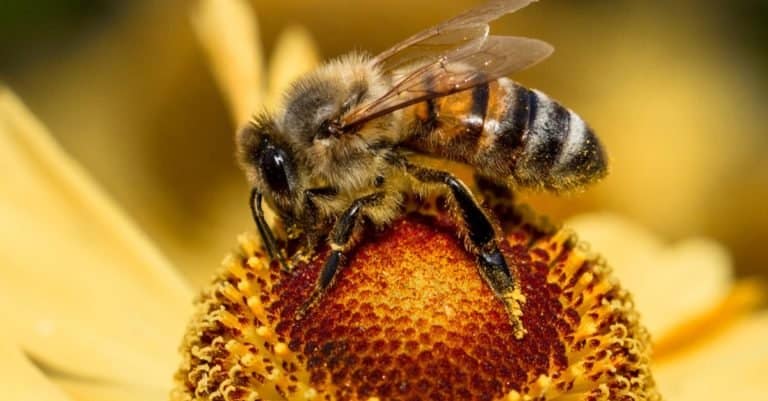
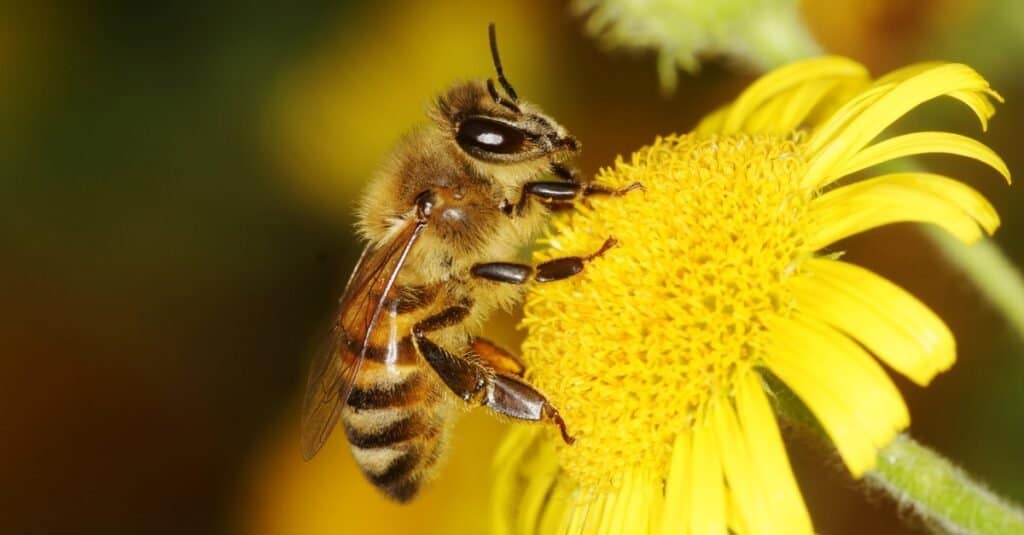
A honey bee sitting on a beautiful flower. The honey bee is the only insect that produces food eaten by man. 

  • A single colony can contain up to 80,000 bees at a time.
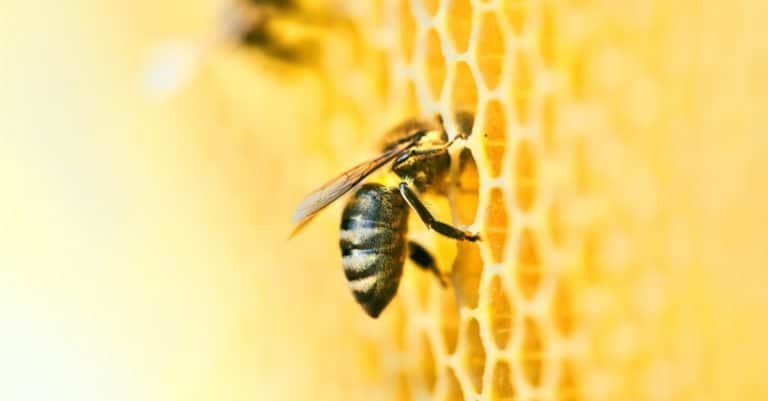
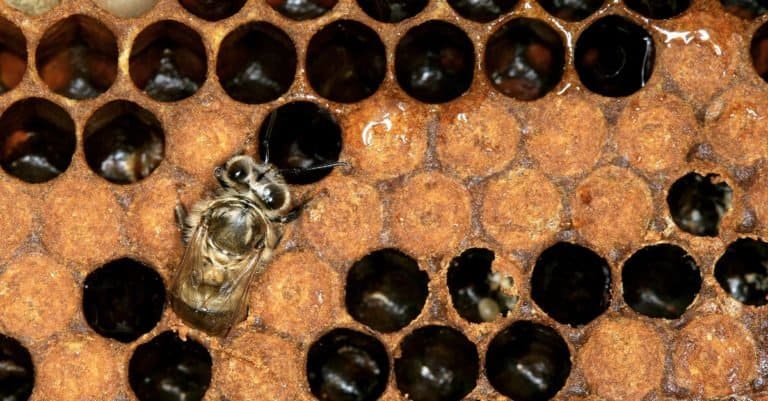
  • These bees secrete wax between plates on the underside of the abdomen. This wax creates the comb-like structure in which the larvae reside.
  • It is believed that these bees can communicate important information to each other (including the location of food) through a complicated dance. Learn about the smartest animals on earth here.
  • Since the dawn of the 21st century, these bee colonies are mysteriously collapsing in some parts of the world, and it’s not clear why.

Species, Types, and Scientific Names
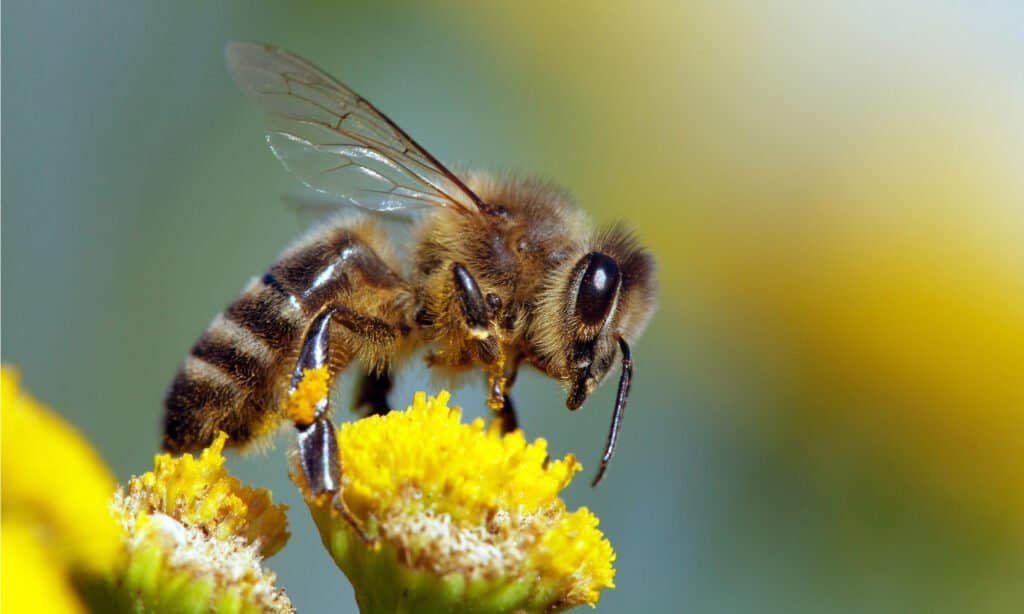
honeybee on a flower

The scientific name for this bee is Apis (a Latin word that simply means bee).

The scientific name for this bee is Apis (a Latin word that simply means bee). Compared to the 20,000 species of bees, this bee genus contains at least eight different species. The western honey bee is by far the most common, especially for the purpose of making domesticated honey.

Here’s a full list of them:

  • Western Honey Bee – Apis mellifera
  • Eastern Honey Bee – Apis cerana
  • Philippine Honey Bee – Apis nigrocincta
  • Koschevnikov’s Honey Bee – Apis koschevnikovi
  • Giant Honey Bee – Apis dorsata
  • Himalayan Giant Honey Bee – Apis laboriosa
  • Black Dwarf Honey Bee – Apis andreniformis
  • Dwarf Honey Bee – Apis florea

Evolution and Origins

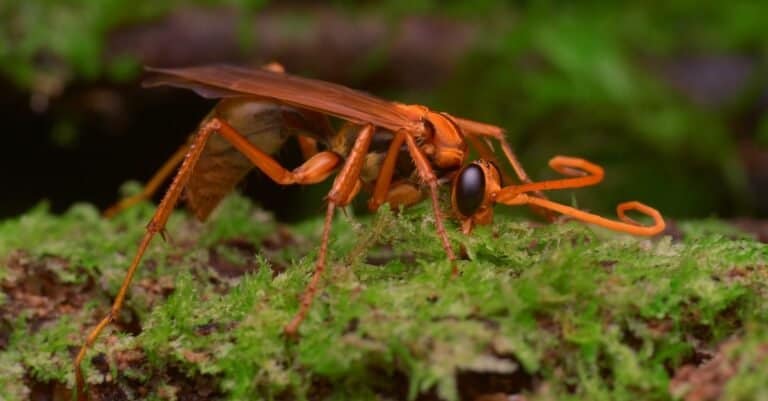
Honey bees are believed to have evolved from hunting wasps, which developed a taste for nectar and changed their diet to become vegetarian. The process of their evolution began between 80 and 150 million years ago, during the Cretaceous Period.

Recent research has shown that honey bees are derived from an ancient lineage of cavity-nesting bees that arrived from Asia around the same time. These bees developed physiological and behavioral adaptations to efficiently collect and transfer pollen from flower to flower, making them the primary pollinators of plants today.

Why are Honey Bees Important?

Honeybees are important for a variety of reasons. One of the most significant is their role in pollination. They pollinate many of the fruits, vegetables, and nuts that make up a significant portion of our diet, including apples, almonds, and blueberries.

Additionally, honey bees help to pollinate plants that provide habitat and food for other wildlife. They also produce honey and beeswax, which are used in a wide range of food and non-food products.

They are also used as model organisms in scientific research to study topics such as learning, memory, and social behavior.

In recent years, honey bee populations have been in decline due to factors such as habitat loss, disease, and pesticide exposure, which highlights the need to protect and conserve them.

Appearance: How to Identify the Honey Bee
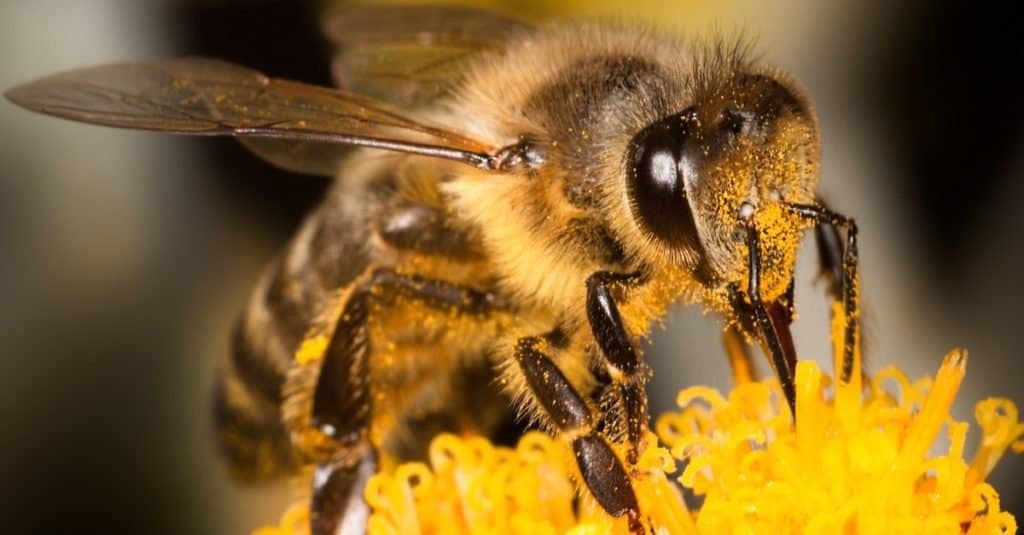
Honey Bee on Yellow Flower

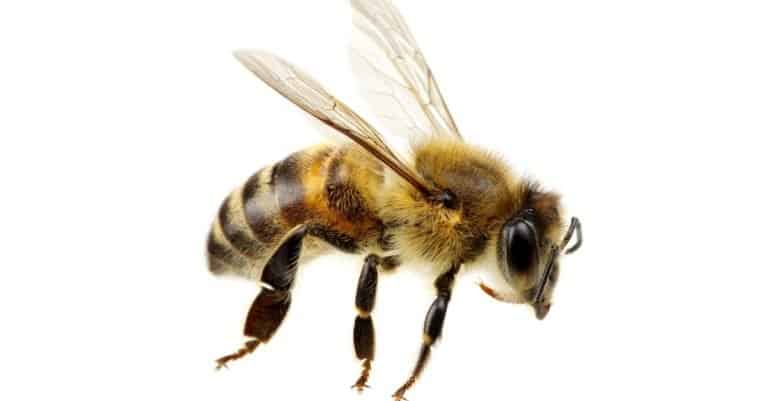
These bees are small, flying insects with long, segmented bodies divided into the head, the thorax (essentially, the mid-section), and the abdomen from which a long and sharp stinger emerges.

These bees are small, flying insects with long, segmented bodies divided into the head, the thorax (essentially, the mid-section), and the abdomen from which a long and sharp stinger emerges. The body is covered in alternating bands of yellow/reddish brown and dark bands, which serve as a warning against potential threats. It also has two wings, six legs, and small hair over its body. A typical bee is only about half an inch long, or the size of a paper clip.

The bee colony has a complex social arrangement comprised of three different classes. The male drones only serve one basic purpose: reproduction. During the winter months, they are expelled from the colony to save resources, and most end up dying.

Female bees make up the entirety of the workforce. They forage for food, build up the hive, and protect it from threats. However, they are incapable of sexual reproduction. The queen, of which only one usually exists at a time, has sole reproductive duties and also guides the activity of the entire hive. If one queen dies, then the colony can create another one by feeding a female larva a special elixir.

Honey Bee vs. Bumble Bee

The bumble bee has a very similar appearance and social structure to the honey bee. The main differences are the larger body, thicker coat of hair, and a darker set of wings. It also forms smaller colonies and does not produce honey.

Habitat

These bees are actually endemic to South and East Asia and parts of Africa. Only the western bee (as a result of human domestication) is found in almost every ecosystem around the world except for the most extreme climates. With a few exceptions, they construct nests in protected areas such as tree cavities or the underside of buildings.

Diet
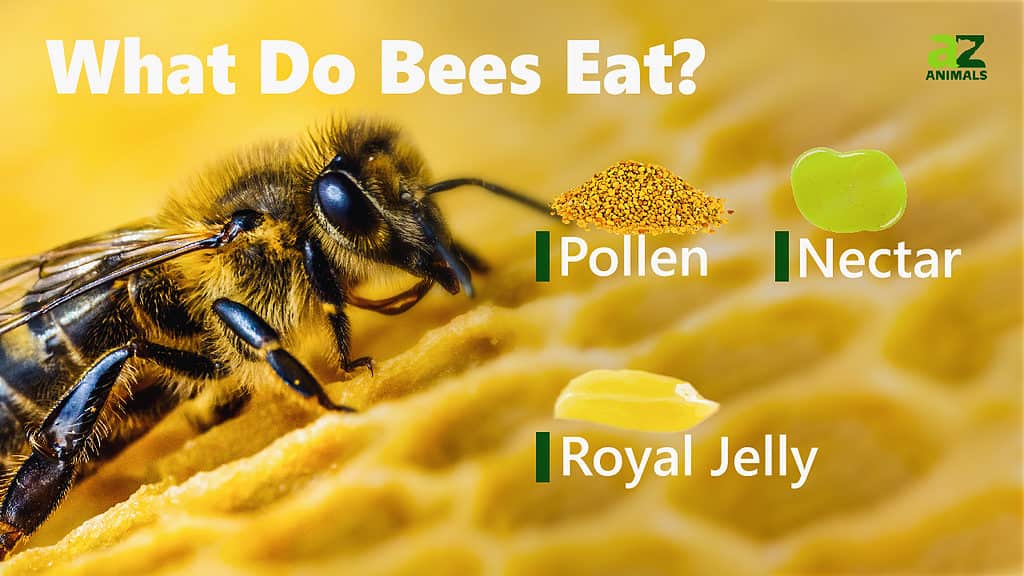
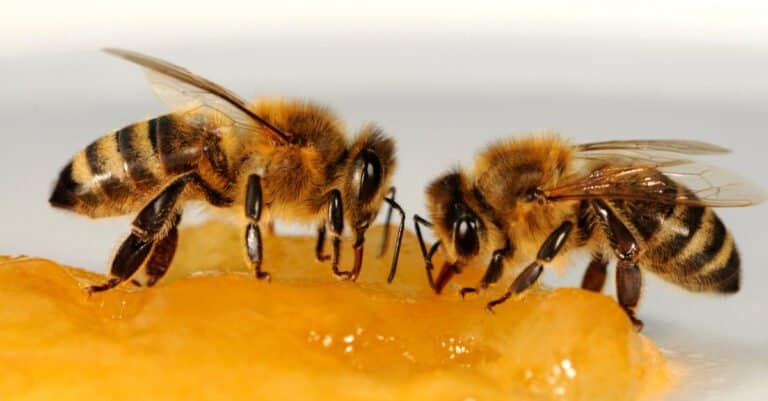
Bees eat pollen, nectar, and royal jelly.

These insects get all of their nutrients from pollen and nectar, which are both products of plants. Pollen provides most of the protein, while nectar provides most of the carbohydrates and water. In order to survive the coldest months, the workers store up food reserves for the winter in their honeycombs. They create honey by processing the nectar inside of their bodies and then regurgitating it. For a complete list of foods bees eat, check out our “What Do Bees Eat?” page.

Prevention

The most effective way to get rid of these insects is to use some kind of repellent or bee spray, including insecticides, citronella candles, garlic spray, vinegar, ultrasonic insect repellents, and insect repellent plants. You can also buy or create your own bee trap and lure them inside. It is not recommended to handle a hive yourself.

View all 287 animals that start with H

Sources

  1. National Geographic / Accessed February 13, 2021
  2. Orkin / Accessed February 13, 2021
  3. World Birds / Accessed February 13, 2021
Rebecca Bales

About the Author

Rebecca Bales

Rebecca is an experienced Professional Freelancer with nearly a decade of expertise in writing SEO Content, Digital Illustrations, and Graphic Design. When not engrossed in her creative endeavors, Rebecca dedicates her time to cycling and filming her nature adventures. When not focused on her passion for creating and crafting optimized materials, she harbors a deep fascination and love for cats, jumping spiders, and pet rats.
Connect:

Thank you for reading! Have some feedback for us?


Honey Bee FAQs (Frequently Asked Questions)

Honey Bees are Herbivores, meaning they eat plants.