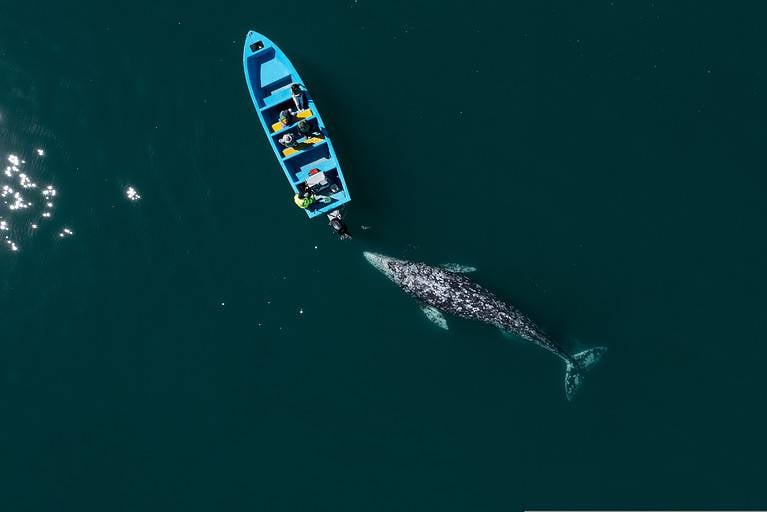





Their complex and unique behaviors have made the humpback whale a favorite among whale watchers worldwide. Once on the brink of extinction, the humpback whale has almost completely recovered. It is a true conservation success story!
Incredible Humpback Whale Facts
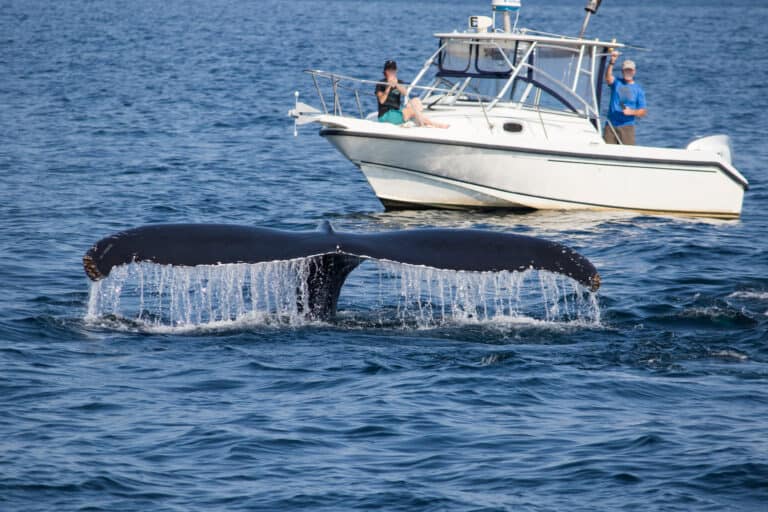
- Adult humpbacks spend almost 90% of their time underwater. On average, they return to the surface every 7 to 15 minutes, while calves return every 3 to 5 minutes.
- Albino humpbacks are incredibly rare. A humpback named Migaloo, first spotted in 1991, is the only known pure albino humpback in the world. Albinos are afforded special protection even beyond most humpback whales.
- The sci-fi film Star Trek IV: The Voyage Home features a plot in which Kirk and his crew travel back to the 1980s to bring a pair of extinct humpback whales with them to the future.
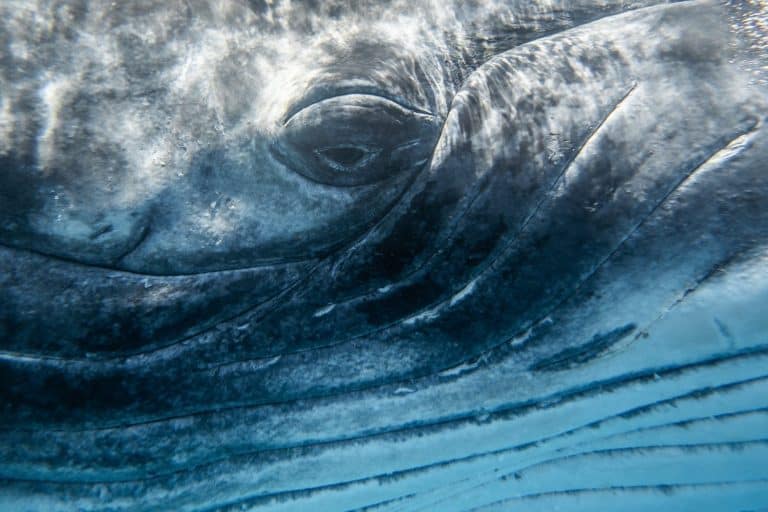
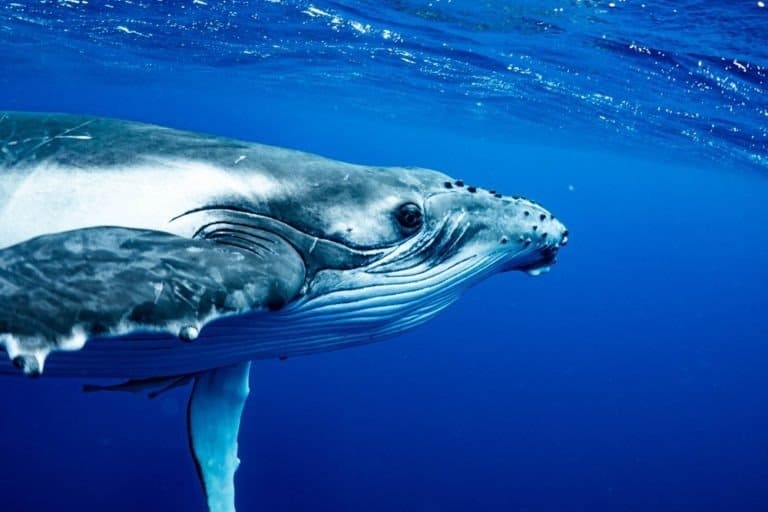
- The humpback’s senses are specifically adapted for its underwater habitat. With greatly reduced olfactory organs, they likely have no sense of smell at all. Their small eyes have evolved to withstand the pressure of the water. They have no earflaps, just a small hole on the head right behind the eyes.
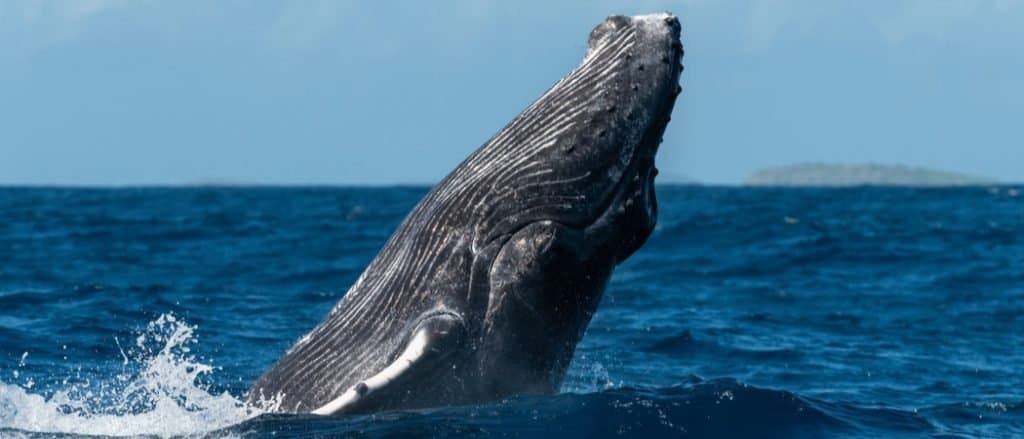
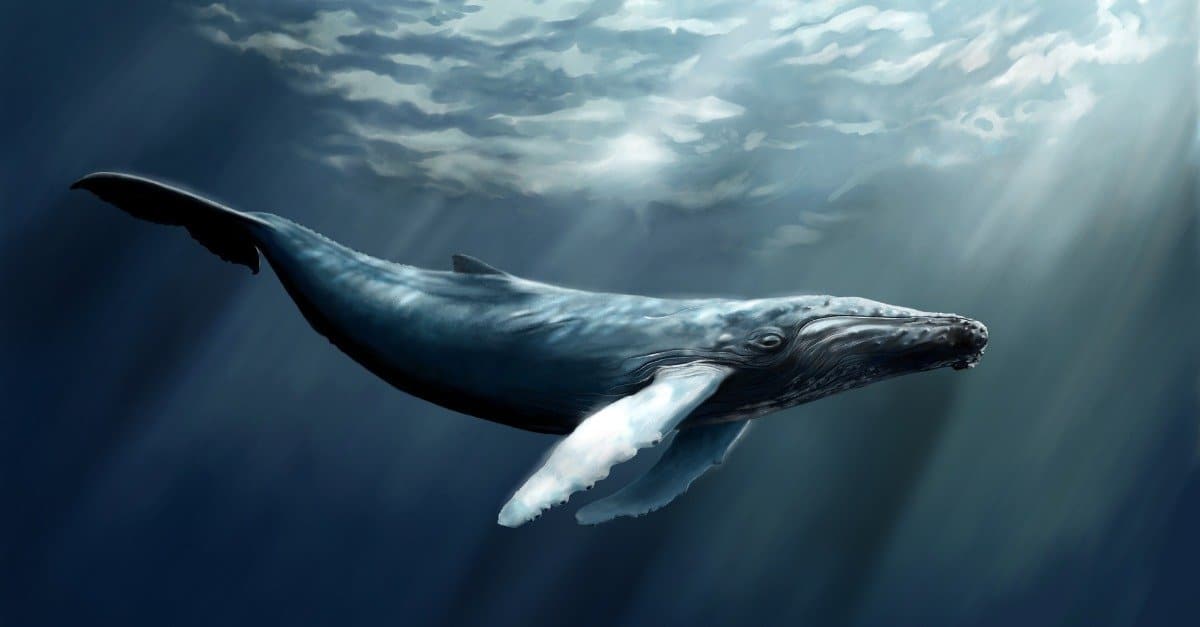
Humpback whales spend 90% of their lives underwater.
©wildestanimal/Shutterstock.com
Classification and Scientific Name
The scientific name for the humpback whale is Megaptera novaeangliae. This is a Greek term meaning large (mega), wing (ptera, for its large pectoral fin), and New Englander (novaeangliae, for where they were first described in detail). The humpback is the only currently living member of its genus. It also belongs to the family of Balaenopteridae, a group of “rorqual” whales with nine living species, including the blue and fin whales.
Appearance
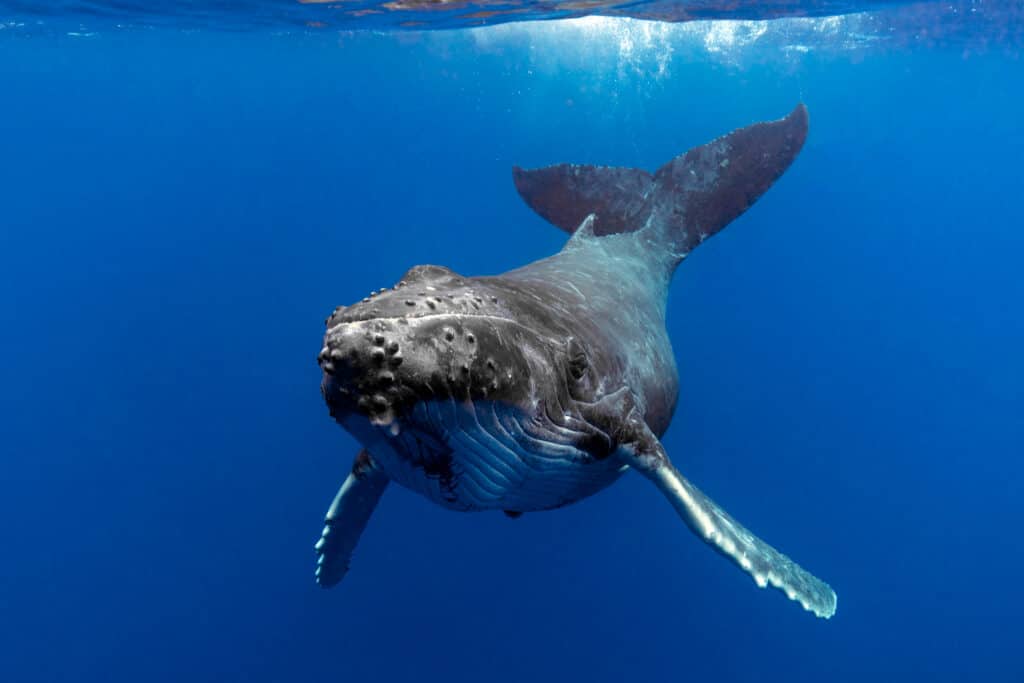
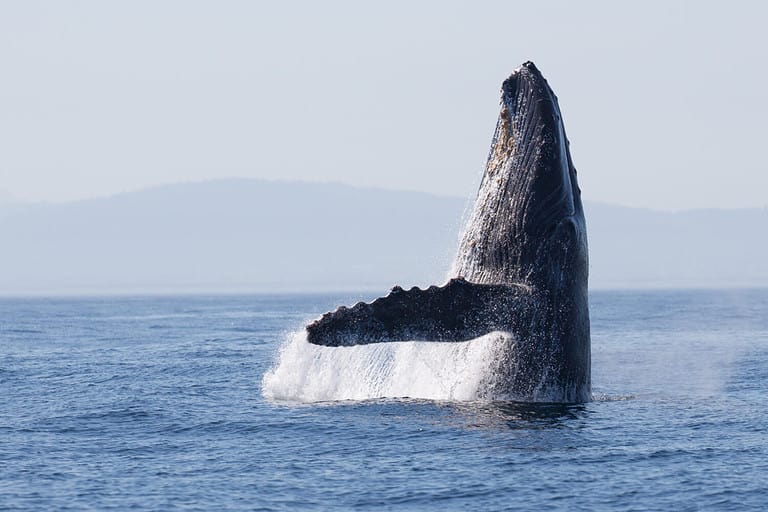
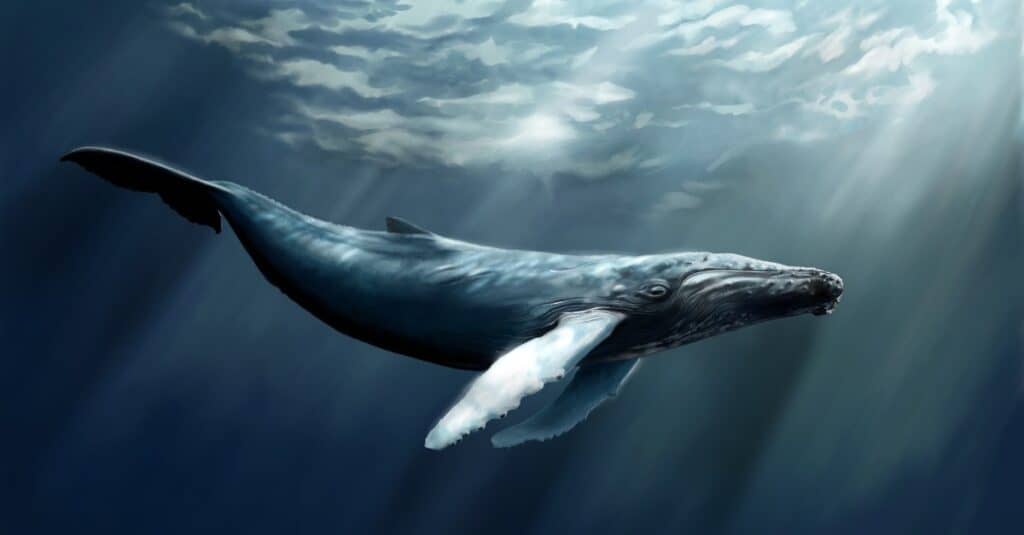
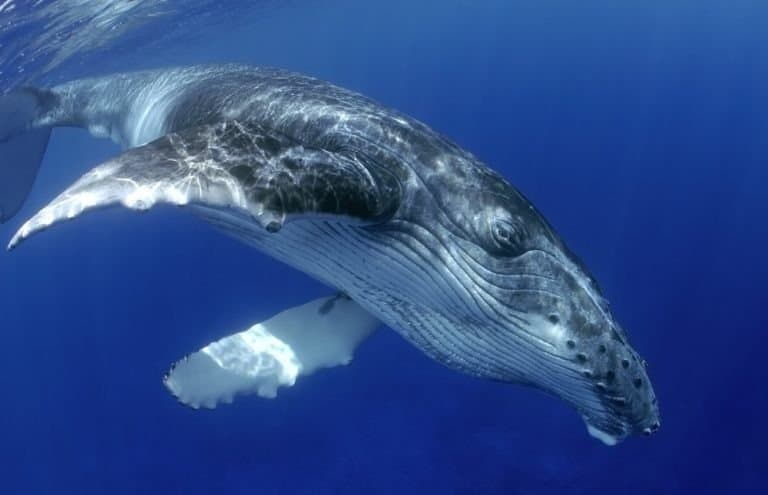
The humpback whale’s large pectoral fins increase its maneuverability.
©Craig Lambert Photography/Shutterstock.com
The humpback whale is easily recognizable by its distinctive body features. It has a small hump near its dorsal fin, prominent when the whale arches its back. Its large pectoral fins, about a third of its body length, are crucial for its maneuverability, allowing it to perform acrobatic movements such as breaching. The whale’s skin is dark on the back and lighter on the underside, with a unique pattern of scars on the belly that can help identify individuals.
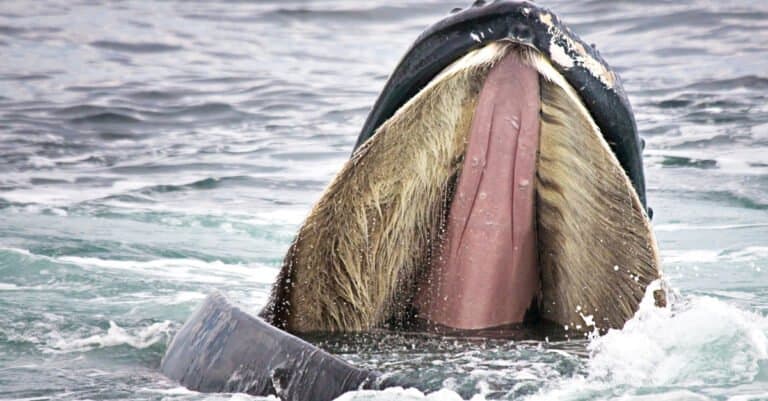
Additionally, the humpback has tubercles (knobby protuberances) on its head and jaw, which are sensory in function, and hair follicles scattered on its body, especially around the head and mouth. Instead of teeth, the humpback has baleen plates made of keratin to filter food from the water. Adult humpbacks typically measure between 48 and 62 feet in length and can weigh around 40 tons, with females being slightly larger than males, which is unusual for mammals.
Behavior
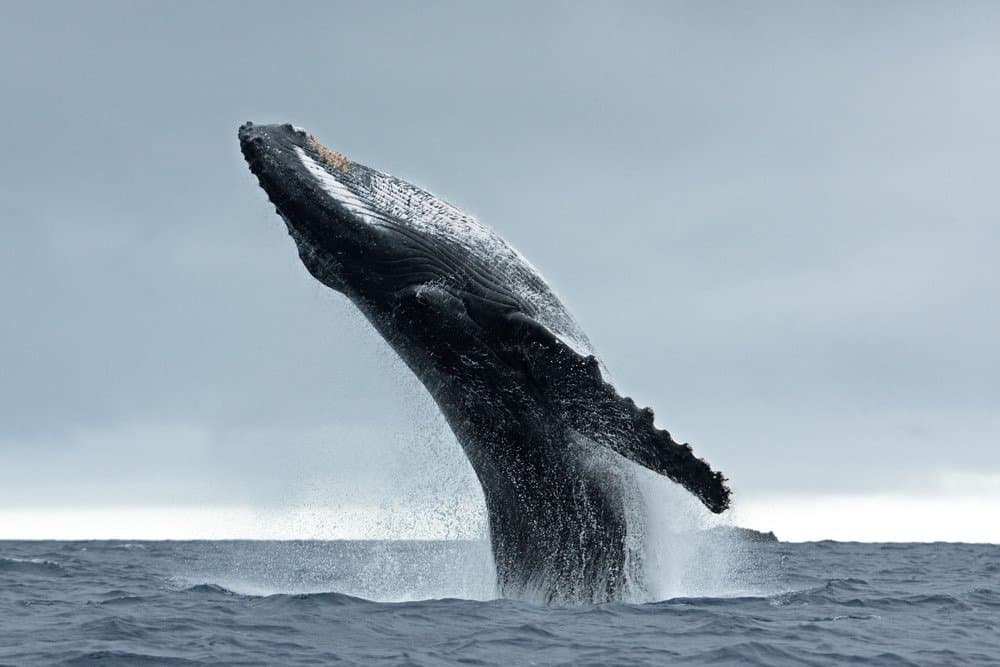
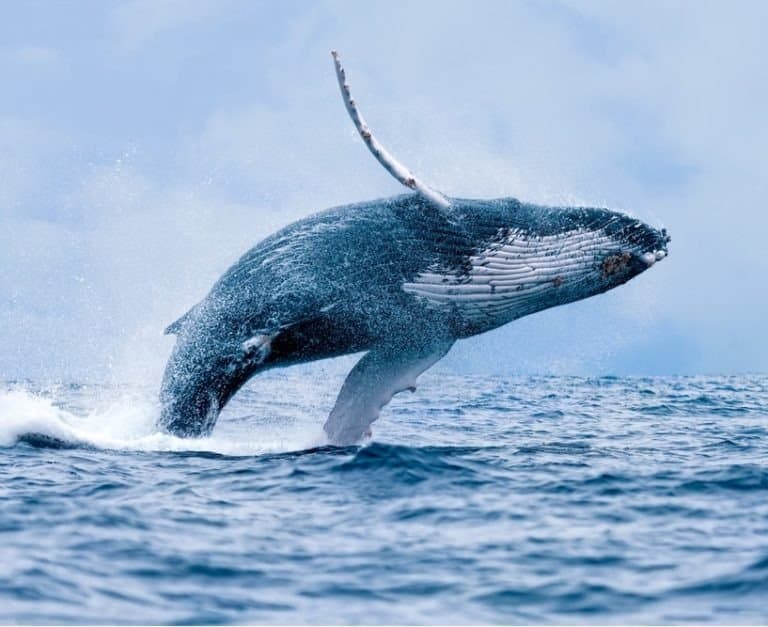
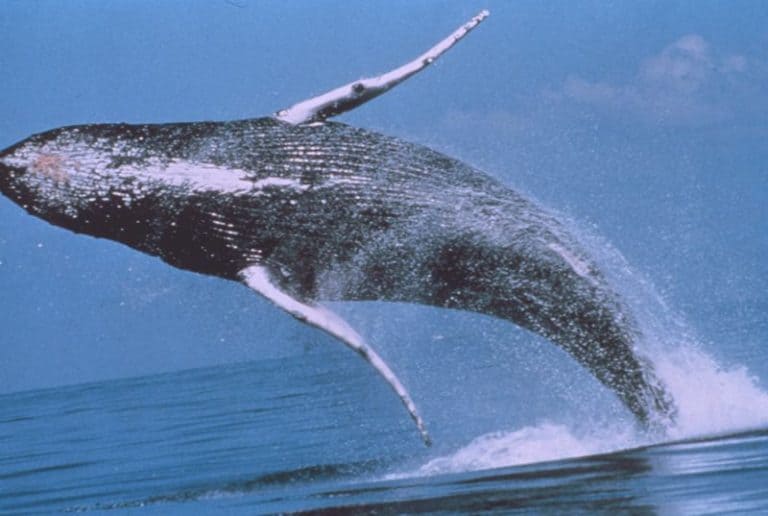
The humpback whale is known for its acrobatic feats.
©Martin Prochazkacz/Shutterstock.com
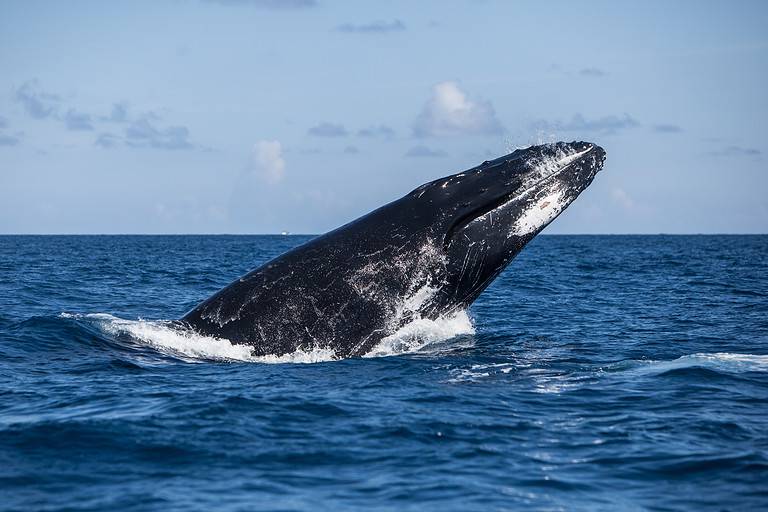
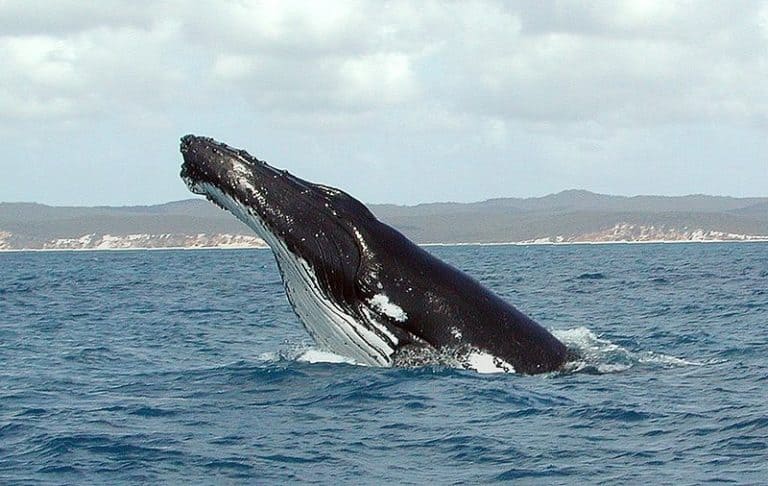
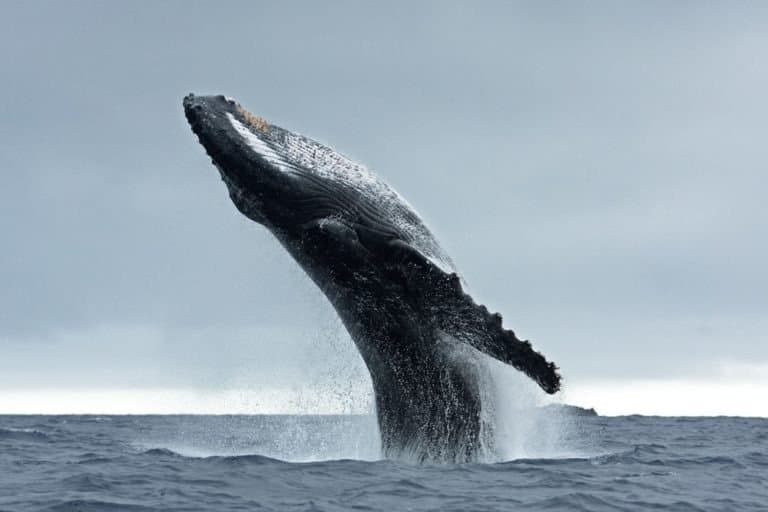
Humpback whales are known for their acrobatic behavior, most famously breaching, where they propel themselves out of the water and crash back down. Though the exact reasons for breaching are unclear, theories suggest it may be used for communication, to shake off parasites, for warnings, or as part of mating displays. Humpbacks also engage in cooperative feeding techniques, including bubble-net feeding, creating a spiral of bubbles to corral fish and krill. These behaviors highlight the whale’s intelligence and complex social interactions.
Humpback Whales’ Habitat
Humpback whales are found in oceans worldwide. They typically live in coastal areas but migrate long distances between feeding grounds in polar regions during the summer and breeding grounds in tropical and subtropical waters during the winter. These migrations can span up to 16,000 miles annually, the longest known migration of any mammal. The species is also found in some of the most remote oceanic regions, with distinct populations in the North Pacific, North Atlantic, and Southern Hemisphere.
Diet
Humpback whales are opportunistic feeders, consuming large quantities of plankton, krill, and small fish such as herring and mackerel. They can eat up to 2,000 pounds of food daily. Humpbacks are known for their unique bubble-net feeding technique, in which they blow bubbles in a spiral to trap fish or krill. They then engulf the food by opening their mouths wide and using their baleen plates to filter the water.
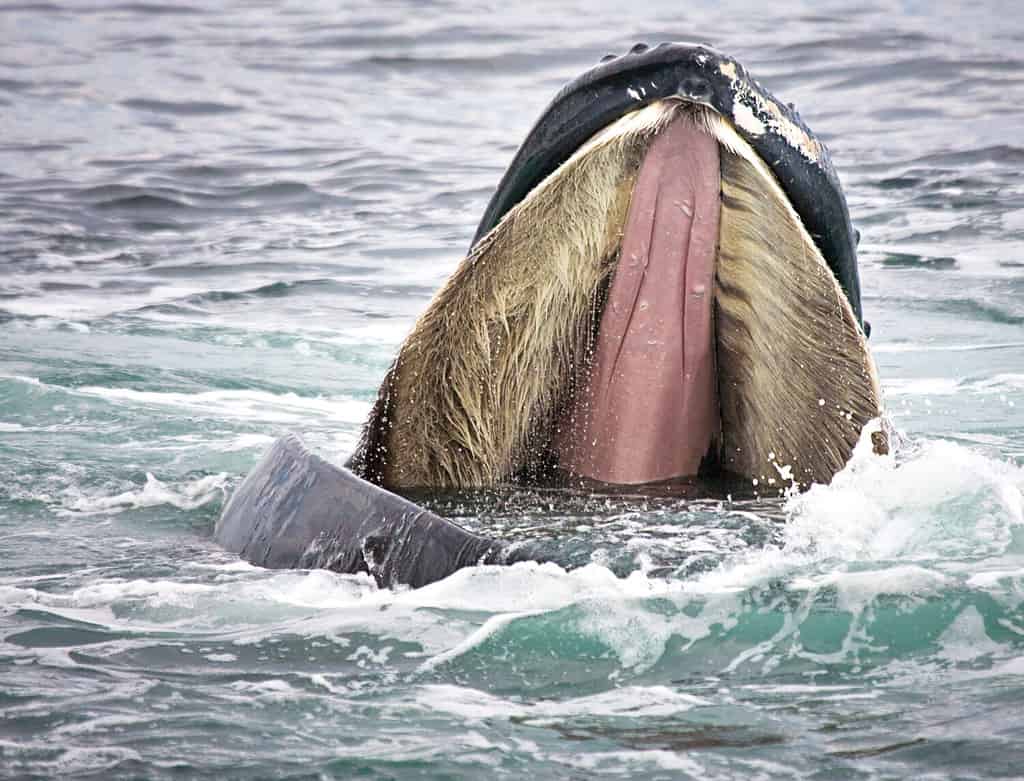
Humpback whales eat up to one ton of food every day.
©John Tunney/Shutterstock.com
Predators
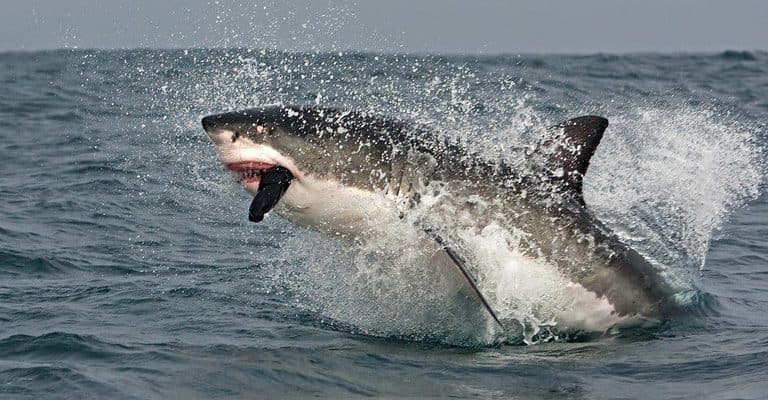
An adult humpback whale has very few natural predators. The only known species to kill a full-grown humpback is a pack of great white sharks. However, juvenile humpbacks are much more vulnerable to predation. Many of them bear scars from shark and killer whale attacks.
Reproduction and Lifespan
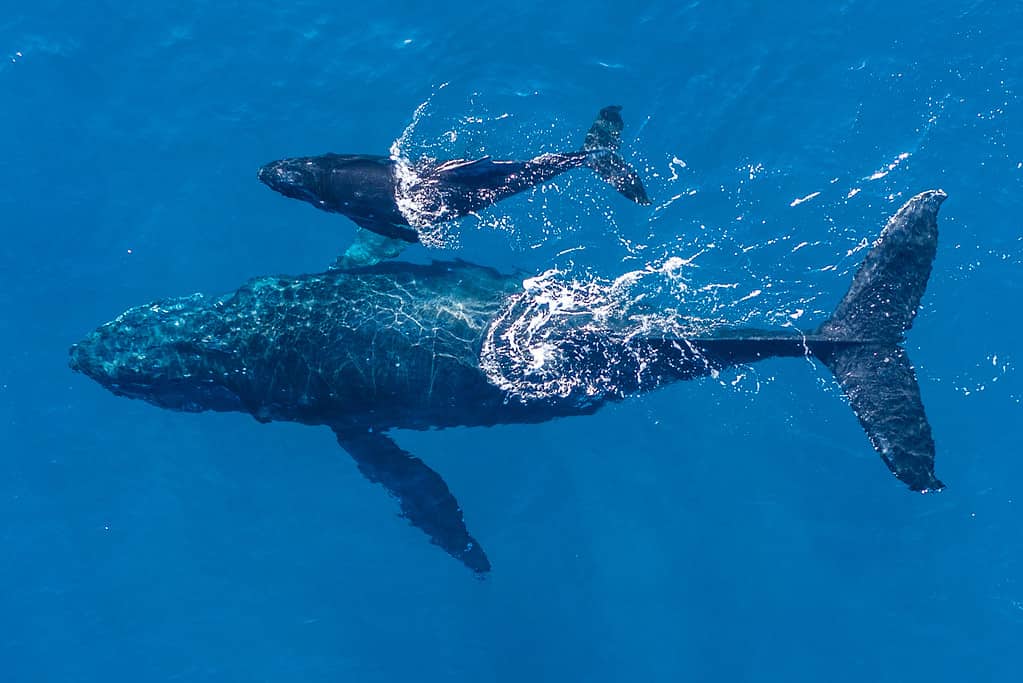
After an 11-month gestation, humpback whales give birth in tropical waters.
©Justin Berken/Shutterstock.com
Humpback whales are polygamous, and males often compete for the attention of a single female during the breeding season. Males engage in elaborate courtship displays, which include breaching, tail-slapping, and vocalizations. After mating, the female undergoes a lengthy 11-month gestation period. Calves are born in tropical waters and nurse from their mothers for up to a year.
The bond between mother and calf is strong, and they often swim close together, with the mother offering protection from predators. Calves grow rapidly, doubling in size each year, and do not reach full sexual maturity until they are between four and five years old. Humpbacks can live up to 50 years in the wild, with females reproducing only every two to three years.
Population
Until the international ban on whaling in 1985, the humpback was hunted almost to extinction. Some populations fell into precipitous decline and had no more than a few hundred individuals left. Today, there are as many as 150,000 humpbacks and 16 distinct population groups worldwide, only a few of which are still endangered. In 2008, the International Union for Conservation of Nature changed the humpback’s status to least concern, the best possible classification. The most significant remaining threats are ship collisions and accidental entanglements in fishing gear.
Humpback Whale Pictures
View all of our Humpback Whale pictures in the gallery.

Paul S. Wolf/Shutterstock.com
Sources
- National Geographic / Accessed December 20, 2020
- Animal Diversity Web / Accessed December 20, 2020
- Ocean Conservancy / Accessed December 20, 2020