

I
Species Profile

Indian Elephant

Elephas maximus indicus

One trunk-many forests sustained
Andrew Gray / Creative Commons

Indian Elephant Distribution

Click a location to explore more animals from that region

Loading map...

Size Comparison

Human 5'8"
Indian Elephant 8 ft 10 in

Indian Elephant is 1.6x the height of an average human.

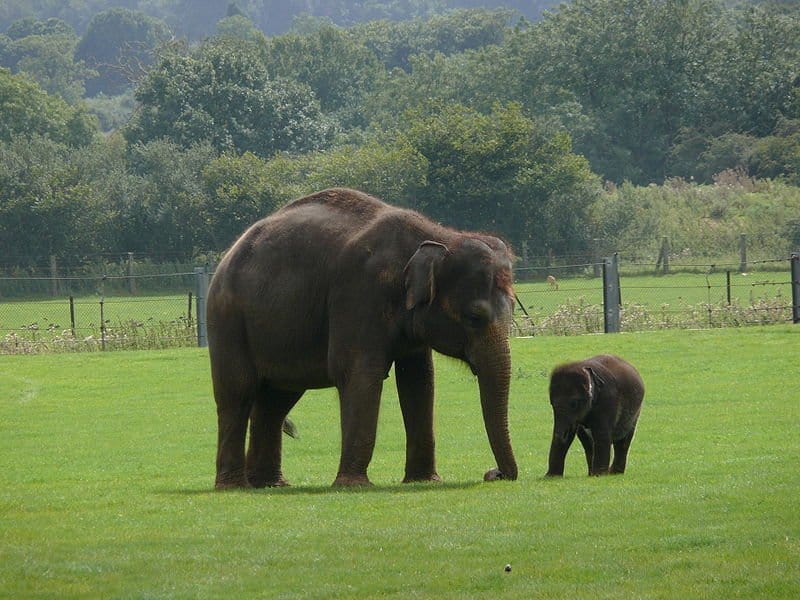
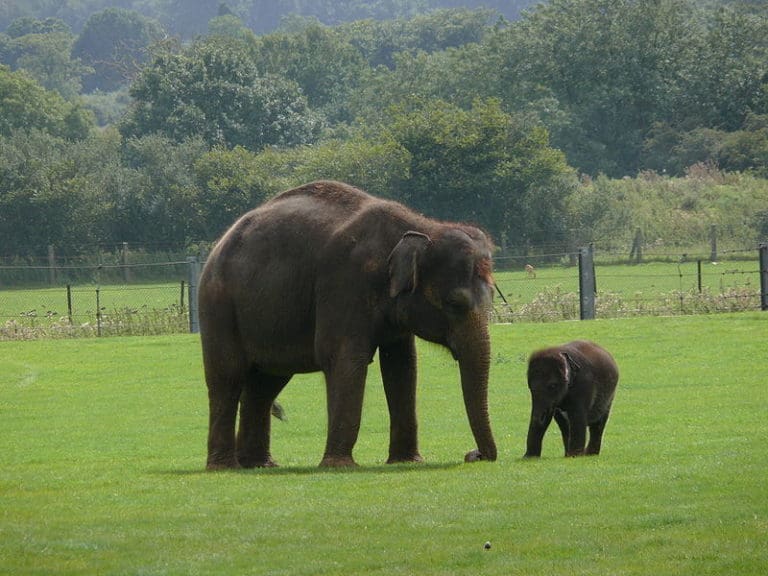
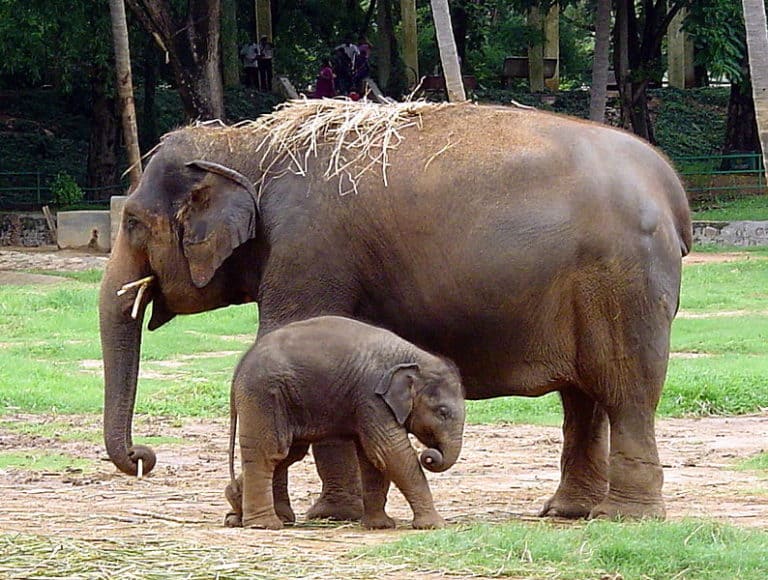
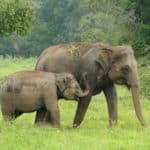
Indian elephant (Elephas maximus) mother with calf

At a Glance

Wild Species
Also Known As Asian elephant, Asiatic elephant, Hathi, Gaja, Gajah, Pachyderm, Tusker, Jumbo
Diet Herbivore
Activity Cathemeral+
Lifespan 48 years
Weight 5500 lbs
Status Endangered
Did You Know?

Asian vs African ID: Indian/Asian elephants have smaller, rounded ears and one "finger" on the trunk tip (African elephants have two).

Scientific Classification

The Indian elephant is a regional subspecies of the Asian elephant found primarily on the Indian subcontinent, notable for its cultural significance and role as a large forest and grassland herbivore.

Kingdom
Animalia
Phylum
Chordata
Class
Mammalia
Order
Proboscidea
Family
Elephantidae
Genus
Elephas
Species
maximus

Distinguishing Features

  • Asian elephant lineage (genus Elephas) rather than African elephants (genus Loxodonta)
  • Typically smaller ears than African elephants
  • Generally one 'finger' on the trunk tip (Asian elephants), versus two in African elephants
  • Both sexes may have tusks in some populations, but tuskless males are relatively common in many Asian elephant populations

Physical Measurements

Males and females differ in size

Height
9 ft 6 in (7 ft 10 in – 10 ft 6 in)
7 ft 3 in (6 ft 7 in – 7 ft 10 in)
Length
23 ft 7 in (21 ft 4 in – 25 ft 11 in)
Weight
5.0 tons (3.3 tons – 6.1 tons)
2.8 tons (2.2 tons – 3.3 tons)
Tail Length
4 ft 5 in (3 ft 11 in – 4 ft 11 in)
3 ft 11 in (3 ft 3 in – 4 ft 11 in)
Top Speed
15 mph
Indian elephant: 24.5 km/h

Appearance

Primary Colors
Secondary Colors
Skin Type Very thick skin made of keratin with little hair and deep folds/wrinkles on trunk and leg joints. Skin is often dusted with soil or coated in mud to cool and keep off parasites.
Distinctive Features
  • The Indian elephant (Elephas maximus indicus) is a regional subspecies of the Asian elephant (Elephas maximus), native mainly to mainland South Asia, especially India; it is not a separate species.
  • Elephas maximus indicus (not Loxodonta) has smaller ears than African elephants, a two-domed head, smoother skin, and usually one finger at the trunk tip; African elephants have two.
  • Feet/nails (Asian-elephant diagnostic): typically 5 toenails on the forefeet and 4 on the hindfeet (noting some individual variation reported in field guides and comparative proboscidean accounts, e.g., Shoshani & Eisenberg 1982).
  • Adult Indian elephants (Elephas maximus indicus): males usually about 2.4–3.0 m tall at the shoulder and 3,000–5,000 kg; females about 2.0–2.4 m tall and 2,000–3,000 kg.
  • Lifespan: commonly ~60 years, with maximum longevity around ~70 years reported for Asian elephants under favorable conditions (frequently cited in Sukumar 2003 and general mammalogy compilations).
  • Indian elephant (Elephas maximus indicus) has high-crowned, ridged molars that are replaced in sequence. As a bulk feeder, it shapes forests and grasslands by browsing, grazing, making trails, and spreading seeds.
  • Behavior relevant to appearance: frequent dust-bathing and mud-wallowing (often leaving brown coatings) for thermoregulation and skin protection; these behaviors can make individuals look much browner than their underlying gray skin (Sukumar 2003).
  • Their big bodies and herd movements bring Indian elephants (Elephas maximus indicus) and lone bulls to farm edges, raising conflict risks; adult males in musth often travel long distances into human areas.

Sexual Dimorphism

Strong sexual dimorphism in Elephas maximus, shown in E. m. indicus: adult males are much larger and usually have large tusks; females are smaller and often tuskless or have tiny tushes. Males enter musth with gland secretions, more roaming, and aggression.

  • Body size: commonly larger/heavier than females (see size ranges in Sukumar 2003; Nowak).
  • Tusks: males commonly have well-developed tusks; tusk size varies widely with genetics and human selection pressure (poaching history).
  • Musth-related appearance: temporal gland swelling/secretions and urine dribbling during musth; often accompanied by more pronounced staining on cheeks and forelegs during episodes (Sukumar 2003).
  • Body size: smaller/lighter than males (see size ranges in Sukumar 2003; Nowak).
  • Tusks: females typically lack prominent tusks; may have short tusk remnants ('tushes') that are not externally conspicuous in many individuals.
  • More consistent group-living: adult females typically occur in matriarchal family groups; while not an 'appearance' trait, this strongly affects how sexes are encountered/recognized in the field (Sukumar 2003).

Did You Know?

Asian vs African ID: Indian/Asian elephants have smaller, rounded ears and one "finger" on the trunk tip (African elephants have two).

Toes matter: Asian elephants typically show 5 toenails on the forefeet and 4 on the hindfeet (a common field ID trait).

Long pregnancy: gestation is about 18-22 months (often ~20-22 months reported for Asian elephants).

Teeth on a conveyor belt: cheek teeth (molars) erupt sequentially from the back; an elephant typically uses 6 sets over a lifetime (a key proboscidean trait).

Built for quiet long-distance messages: elephants use very low-frequency calls (infrasound; classic work by Payne et al., 1986) that can travel far through air and sometimes ground.

Unique Adaptations

  • Trunk precision + strength: the trunk is a fusion of upper lip and nose with tens of thousands of muscle fascicles (often cited ~40,000), enabling delicate grasping and powerful lifting.
  • Efficient bulk feeding: large hindgut fermentation system allows processing of fibrous browse and grasses-supporting daily intake that can reach hundreds of kilograms for big adults (values vary with habitat and season).
  • Thermoregulation with sparse hair and ear blood flow: although Asian elephant ears are smaller than African elephants', ear vasculature and flapping still aid heat exchange in hot seasons.
  • Low-light navigation and memory-based ranging: strong spatial memory supports revisiting dispersed waterholes, saltlicks, and seasonal forage patches across fragmented ranges.
  • Thick, sensitive skin: despite appearing tough, elephant skin has sensitive nerve endings; mud/dust layers function as a movable 'sunscreen' and anti-insect barrier.
  • Molar replacement system: sequential molar progression reduces the need for continuous tooth growth and supports a long lifespan on abrasive vegetation.

Interesting Behaviors

  • Matriarchal family groups: related adult females and calves travel together; adult males are more solitary and may form loose bachelor associations.
  • Male reproductive condition: a periodic heightened reproductive state marked by temporal gland secretion and urine dribbling; males in this state can range widely and dominate mating.
  • Mega-herbivore engineering: bark stripping, branch breaking, and tree pushing can open canopy gaps-promoting grass/understory growth and changing fire and habitat dynamics.
  • Seasonal movement tracking water and forage: in monsoon landscapes, herds often shift between forest blocks, riverine areas, and grasslands as resources peak.
  • Dust and mud bathing: coating skin helps with thermoregulation, sun protection, and ectoparasite control; wallows become microhabitats for other species.
  • Crop-raiding and risk behavior near people: elephants may enter farms at night for high-calorie crops (rice, sugarcane, banana), a major driver of human-elephant conflict across the Indian subcontinent.
  • Calf care and "allomothering": juveniles are guarded and assisted by multiple females; calves may be helped at steep banks or during river crossings.

Cultural Significance

The Indian elephant (Elephas maximus indicus) is a key wildlife species and cultural symbol. As a large plant-eater it spreads seeds and shapes forests. Sacred in Hindu and Buddhist religions, central to royal history and temple festivals, it faces conflict from habitat loss, so coexistence measures and protection are needed.

Myths & Legends

The elephant-headed Hindu deity: a beloved figure celebrated as the remover of obstacles; stories recount his head being replaced with that of an elephant, linking elephants to wisdom, auspicious beginnings, and protection.

Indra's white elephant (Hindu mythology): a celestial, rain-bringing mount associated with storms and prosperity, linking elephants to monsoon power and kingship.

Eight elephants of the directions (South Asian cosmology): elephants are said to stand at the cardinal and intercardinal directions supporting the world, making the elephant a cosmic pillar and guardian figure.

Queen Maya's white elephant dream (Buddhist tradition): in accounts of the Buddha's conception, Queen Maya dreams of a white elephant entering her side-an auspicious omen of a great being's birth.

Buddhist birth-story cycles: elephants appear as wise, compassionate, and loyal figures (including self-sacrificing or morally exemplary elephants), reinforcing ideals of kingship, restraint, and generosity.

Temple-elephant traditions (especially in parts of South India): festival narratives and local legends often treat elephants as honored attendants of deities, with stories of extraordinary devotion, processions, and elephant-saint encounters passed down in regional memory.

Conservation Status

EN Endangered (IUCN Red List status applies to the species Elephas maximus; the subspecies Elephas maximus indicus is not consistently assessed separately. Across the Asian elephant complex, conservation status ranges from Endangered to Critically Endangered in some island subspecies, with broadly similar threat drivers: habitat loss/fragmentation and escalating human-elephant conflict.)

Facing a very high risk of extinction in the wild.

Population Decreasing

Protected Under

  • India: Wildlife (Protection) Act, 1972 (Schedule I protection for wild elephants; highest legal protection)
  • International trade: CITES Appendix I (Elephas maximus)
  • Migratory species: Convention on Migratory Species (CMS) Appendices I and II (Elephas maximus)
  • India: Project Elephant (launched 1992; national program for habitat/corridor protection, conflict mitigation, and welfare/management support)

Life Cycle

Birth 1 calf
Lifespan 48 years

Lifespan

In the Wild
40–60 years
In Captivity
50–86 years

Reproduction

Mating System Polygynandry
Social Structure Aggregation Group
Breeding Pattern Transient
Fertilization Internal Fertilization
Birth Type Internal_fertilization

Behavior & Ecology

Social Herd Group: 8
Activity Cathemeral, Crepuscular, Nocturnal
Diet Herbivore Grasses and bamboo (preferred when abundant; elephants shift toward browse/bark in dry seasons)

Temperament

Strong female-bonded sociality with matriarchal leadership; decision-making often led by oldest female(s), with group cohesion maintained by frequent contact and coordinated movement (Sukumar 2003).
Fission-fusion flexibility: tighter grouping in risky or open contexts; more splitting in dense forest or when foraging competition is high (de Silva & Wittemyer 2012).
Generally non-territorial; home ranges overlap, and encounters between groups are often tolerant but can involve displacement at water/food (Sukumar 2003).
Males show pronounced life-history shift: dispersal from natal females typically around ~10-15 years, followed by increasingly independent ranging and dominance interactions (Sukumar 2003).
Musth-related temperament shift in adult males: elevated assertiveness, increased mate-seeking, and higher probability of aggressive responses to rivals and perceived threats; risk to humans/livestock increases during musth and in high-conflict landscapes (Poole 1987; Sukumar 2003).
Activity is commonly cathemeral with crepuscular peaks; in heavily human-impacted areas, elephants often shift activity toward nocturnality to reduce encounter risk (Sukumar 2003; adaptations widely reported across Asian elephant range).
Long-lived, slow life history typical of Asian elephants (wild longevity commonly reported up to ~60+ years), supporting long-term social learning and memory-based movement/foraging traditions (Sukumar 2003).

Communication

Low-frequency rumbles Including infrasonic components) used for contact, cohesion, and coordination over distance (Payne et al. 1986; Sukumar 2003
Trumpets associated with alarm, excitement, or high arousal Sukumar 2003
Roars/growls and loud calls during aggression or intense social interactions Sukumar 2003
Snorts/blows as alarm or irritation signals at close range Sukumar 2003
Squeaks/chirps Notably reported in Asian elephants) in affiliative and aroused social contexts (Sukumar 2003
Chemical signaling: temporal gland secretions and urine dribbling convey male musth status and reproductive state; conspecifics investigate via olfaction and flehmen-like sampling Poole 1987; Sukumar 2003
Tactile communication: trunk-to-mouth, trunk-to-genitals, trunk entwining, body rubbing, and calf-directed touch for reassurance, bonding, and assessment Sukumar 2003
Seismic/vibrational signaling: low-frequency calls and/or locomotor-generated vibrations can be coupled into the ground and detected via mechanoreception Concept supported for elephants broadly; Payne et al. 1986; Sukumar 2003
Visual signaling: ear spreading, head-high posture, temporal gland streaming, and approach/retreat cues used in dominance and conflict de-escalation Sukumar 2003
Acoustic eavesdropping and social recognition: individuals discriminate callers and respond differentially to familiar vs unfamiliar signals Documented for elephants; applied to Asian elephants in behavioral syntheses such as Sukumar 2003

Habitat

Biomes:
Tropical Rainforest Tropical Dry Forest Savanna Temperate Forest Freshwater Wetland
Terrain:
Mountainous Hilly Plateau Plains Valley Riverine Coastal Island +2
Elevation: Up to 9842 ft 6 in

Ecological Role

Megaherbivore ecosystem engineer and long-distance seed disperser in forest-grassland mosaics of the Indian subcontinent.

Seed dispersal (endozoochory) of many tree and shrub species via dung; promotes plant gene flow across fragmented landscapes Habitat engineering: creates/maintains openings, trails, and wallows; can increase habitat heterogeneity and influence succession Nutrient cycling: concentrates and redistributes nutrients through dung and urine; dung supports diverse decomposer and invertebrate communities Vegetation structuring: heavy browsing, bark stripping, and tree damage can regulate woody cover and affect fire/grass dynamics

Diet Details

Other Foods:
Grasses Sedges and rushes Bamboo Browse Tree bark and cambium Wild fruits Cultivated crops +1

Human Interaction

Domestication Status

Semi domesticated

Indian elephant (Elephas maximus indicus) is not fully domesticated but semi-domesticated. For centuries people captured wild elephants (by driving herds into enclosures or using ropes and trained elephants), tamed them, and managed breeding. They were used in war, ceremonies, logging, transport and tourism; modern care now focuses on welfare and conservation.

Danger Level

High
  • Human-elephant conflict: crop-raiding and property damage leading to close encounters, injury, and death; India reports on the order of hundreds of human fatalities per year in conflict hotspots in multiple assessments (commonly cited ~400+ annually in recent decades; see Sukumar 2003 and subsequent India government/NGO conflict summaries).
  • Trampling/crushing during surprise encounters in forests/agricultural edges, especially with family groups protecting calves.
  • Aggression by adult males in musth (elevated risk of unprovoked attacks and fence-breaking/charging).
  • Captive-management accidents: elephant handlers and bystanders can be killed or severely injured during restraint, transport, musth periods, or pain/illness events.
  • Vehicle collisions and road/rail interface incidents involving elephants can endanger passengers and responders.

As a Pet

Not Suitable as Pet

Legality: Not suitable or legal as a private pet in most places. Elephas maximus indicus is on CITES Appendix I; in India it is protected under the Wildlife (Protection) Act, 1972 (Schedule I). Private keeping is tightly regulated or banned.

Care Level: Expert Only

Purchase Cost:
Lifetime Cost: $1,000,000 - $4,000,000

Economic Value

Uses:
Cultural and religious services Tourism and recreation Working animal labor (historical/limited modern use) Conservation and research employment Ecosystem services (keystone herbivore shaping forests/grasslands)
Products:
  • ceremonial appearances (temple/festival participation)
  • tourism viewing and, where still practiced/allowed, rides or elephant camps
  • human-elephant conflict mitigation services (patrol/monitoring programs employing trained elephants in some regions)
  • manure-based products (e.g., dung paper/compost in some enterprises)

Relationships

Predators 6

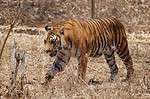
Bengal tiger
Bengal tiger Panthera tigris tigris
Leopard
Leopard Panthera pardus
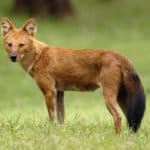
Dhole
Dhole Cuon alpinus
Mugger crocodile Crocodylus palustris
Saltwater crocodile Crocodylus porosus
Human
Human Homo sapiens

Indian elephants are incredibly intelligent and expressive.

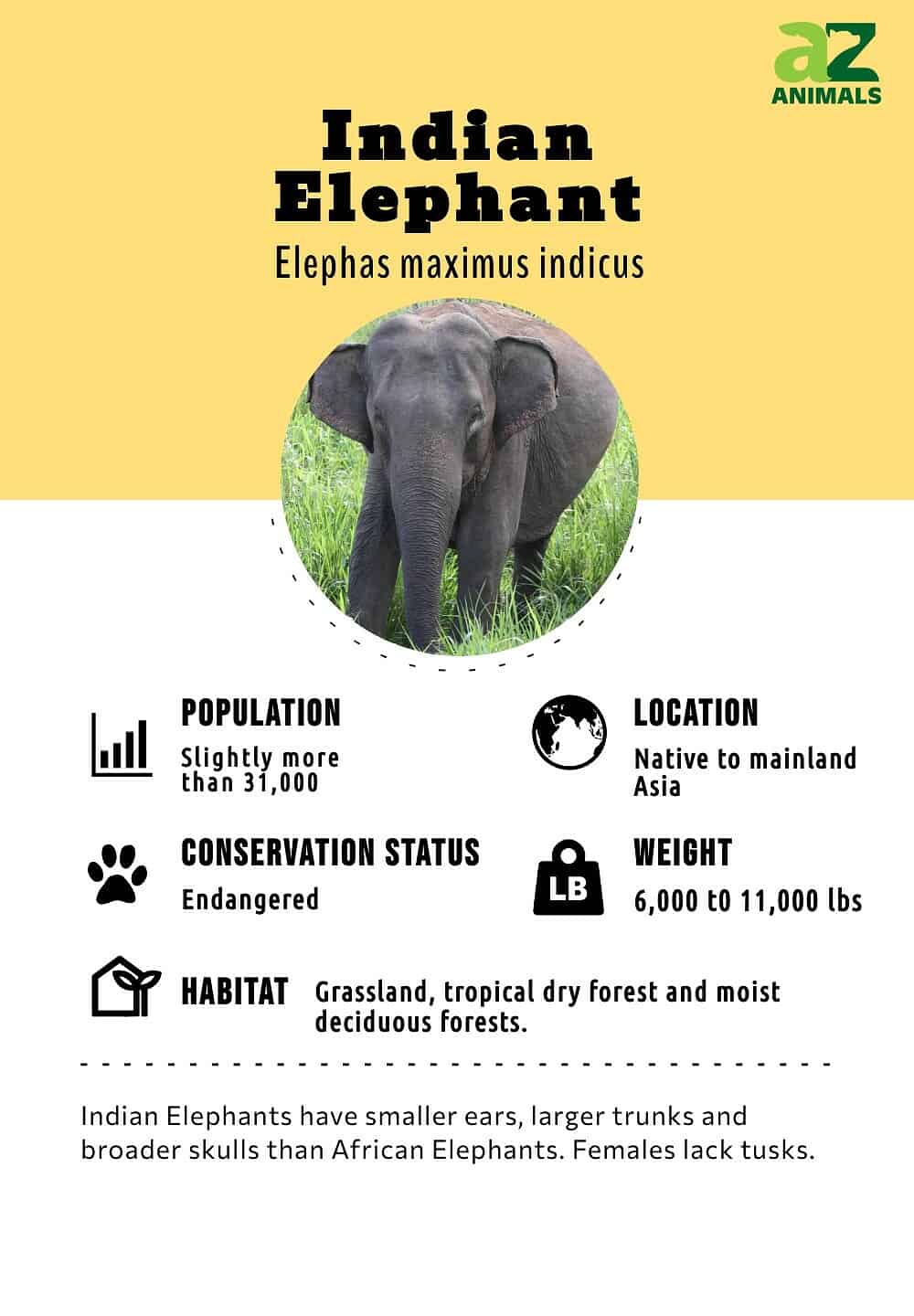
Indian elephants are greyish-black animals that are subspecies of the Asian elephant. They are about 6.6 to 11.5 feet in height and weigh about 6000 to 11,000 pounds.

These elephants go by the scientific name Elephas maximus indicus and have long trunks that are completely boneless. The trunks are known to be made up of about 40,000 muscles.

Indian elephants are known to be very sociable animals and display a wide variety of emotions. They are incredibly intelligent and expressive.

Evolution

The elephant is the largest existing land mammal on the planet and originates from Africa, where it existed in a more primitive form more than 40 million years ago. The original proboscis, Moeritherium, thought to be the early-stage elephant, did not have a trunk and it is believed that these noses evolved to be primitively used as a snorkel. The elephants we see today evolved 20 million years ago from the prehistoric Gomphotherium, a pachyderm from the early Pleistocene era.

Incredible Indian Elephant Facts!
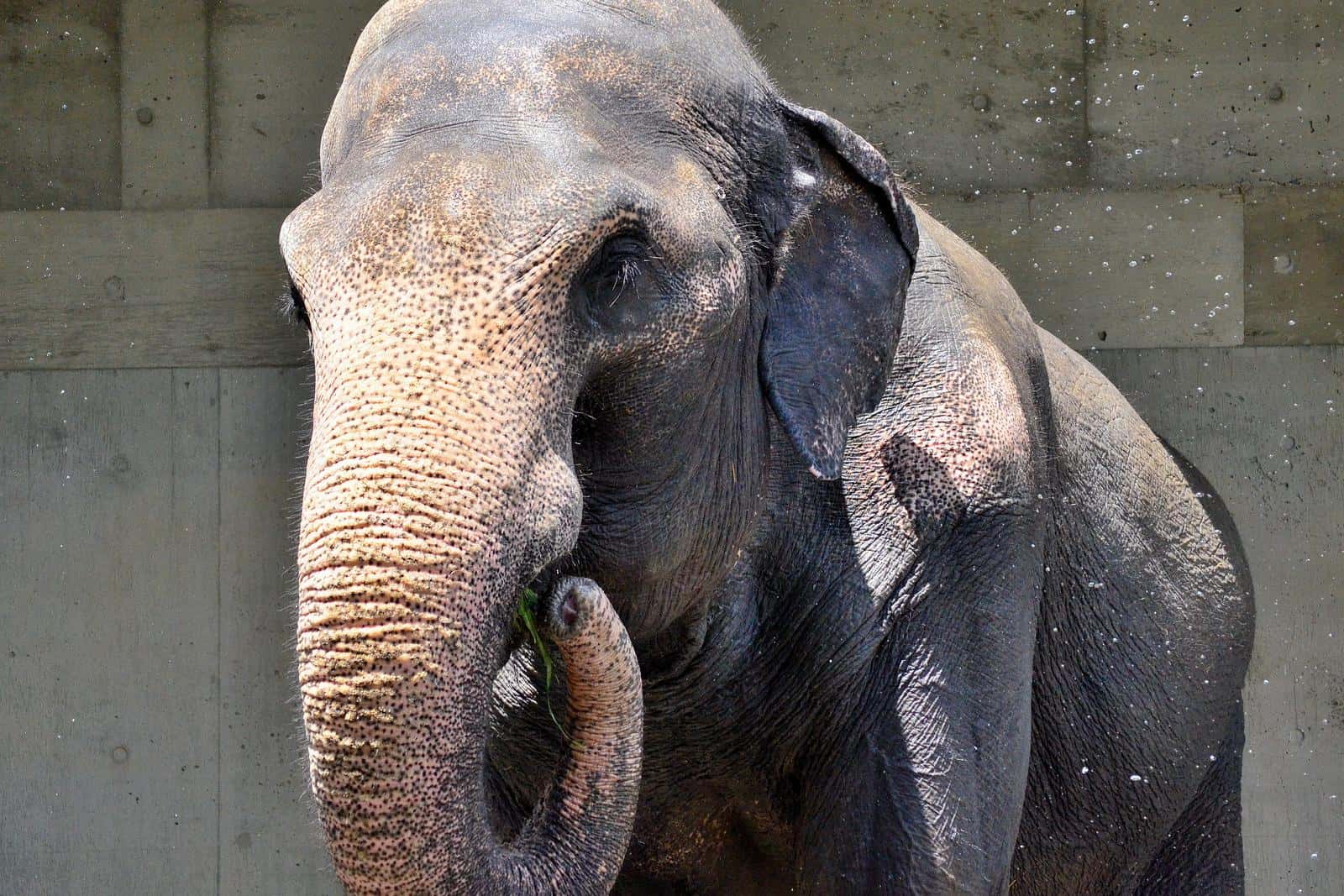
  • The trunk of this elephant contains no bones. Though it includes both the upper lip and the nose, the entire trunk is made up of 40,000 muscles, which is about 62 times the number of muscles in the entire human body.
  • Mothers have the help of other females in their herd to raise their calves. These helpful females are referred to as aunties, and the fathers play a less significant role.
  • During the hot months, they can drink up to 200 liters of water per day. This heavy drinking suggests that the mammal can drink their weight in water almost three times a month
  • Indian elephants weigh between 6,000 and 8,000 pounds as an adult, measuring between 18 and 21 feet in length. This length includes their body, head, and trunk. Even a baby is fairly large, measuring weighing up to several hundred pounds as well.
  • An Indian elephant spends 19 hours a day just eating.

Scientific Names

The Indian elephant goes by the scientific name Elephas maximus indicus. They belong to the kingdom Animalia and class Mammalia. These elephants come from a family called Elephantidae and have a subspecies called E. m. indicus. They belong to the order called Proboscideans.

The word elephas is the Latin influence for elephant, but it comes from the Greek word ἐλέφαντος, which could’ve been influenced by the Egyptian word for ivory or elephant. Interestingly, ivory’s etymology comes directly from Latin and Greek interpretations of the word elephant, making them interconnected forever.

Indicus is rooted in the Ancient Greek from Ἰνδία, which means India. Essentially, the interpretation of this name simply means that the animal is a large elephant from India.
Appearance

These elephants are huge animals with a size of about 18 to 21 feet, weighing in at up to 8,000 pounds as a male. Though their head is large heads, their necks are small. With such a high weight, the legs take on much work to carry them.

While other elephant breeds have shorter tails, the tail of this elephant is incredibly long. Matching their grayish color, the tail sometimes goes longer than its knees, potentially brushing the ground with the coarse hair that hangs from the bottom of the tail.

The trunks are perhaps the most fascinating feature of the Indian elephant. While the trunk makes up quite a large portion of the body, it doesn’t contain any bones at all. Instead, as described in the above facts, this powerful extremity contains a total of 40,000 muscles, which are broken down into 150,000 separate sections.

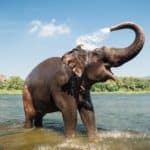
This muscled trunk is necessary for the elephant’s survival, allowing them to cool off with splashing, and to hydrate by bringing water to their mouth, tearing down food to eat, and expressing themselves.
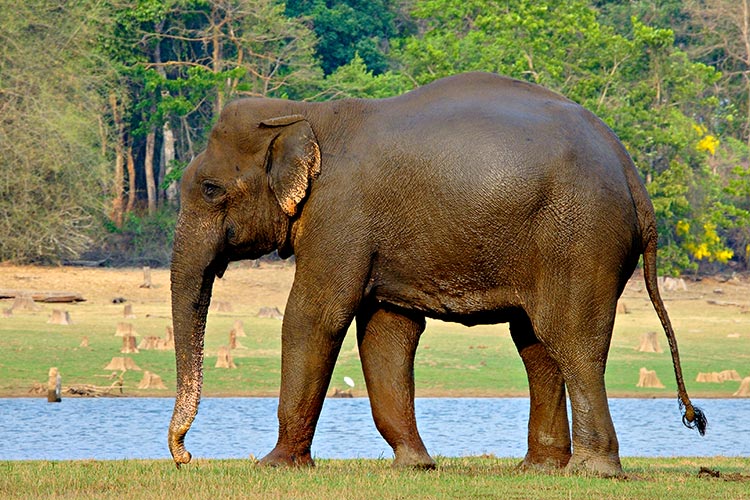
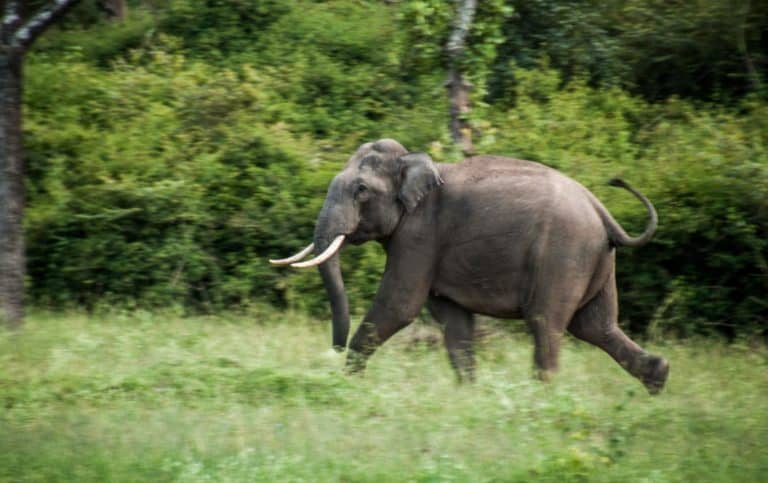
Indian Elephant, Nagarhole National Park, Karnataka, India

Their trunk is essential for survival, bringing water to their mouth and tearing down food to eat.

Behavior And Characteristics

These elephants are diurnal which means that they are the most active during the day and sleep at night. However, contrary to that, these animals are also nocturnal in nature which means that some of them can also be highly active during the night.

These elephants are highly social and are known to exist in stable groups. The groups are usually matriarchal and consist of 20 female Indian elephants that are very closely related. The groups are headed by the oldest female elephant. The leader usually guides the whole group in the quest for food and water.

These elephants are known to be intelligent and display a wide variety of emotions like joy and grief. The Indian elephants are known to make a variety of sounds – both low and high-pitched – to communicate.

The groups that these elephants exist in are called herds. With their family, the Indian elephant takes 19 hours a day to eat, which produces a large amount of waste – 220 pounds of dung daily, to be exact. They will travel up to 125 miles a day to keep themselves active as they seek out their next source of nutrients. Even when they sleep, most elephants will remain standing while in the wild.

These elephants are known to travel from one forest to another and are also known to often stay in different forests at different periods. However, male Indian elephants like to live in solitude, especially in their younger years.

Characteristics
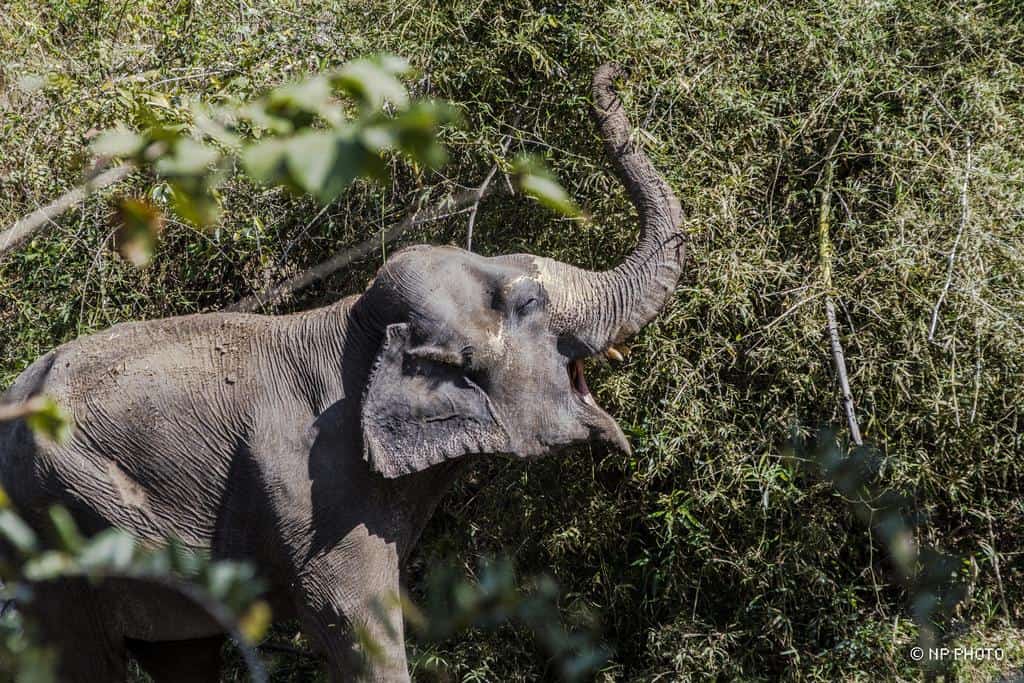
Indian elephants and Asian elephants in general are smaller than African elephants. They also tend to have the highest body point at the tip of the head. Their trunk tip has one small finger-like point and their back is level to their heads if not a touch shorter.

Indian elephants reach a shoulder height of about 6 to 10 feet and they can weigh anywhere from 4,4000 to 11,000 lbs. They also have 19 pairs of ribs. Their skin color tends to be lighter than other species with small patches of darker skin. Females also tend to be smaller than males.

Additionally, Indian elephants have smaller ears and larger skulls. Their trunks are often bigger than African elephants and their toes are wider as well. However, unlike their cousins, Indian elephants’ abdomen is proportionate with their body weight whereas the African elephant has a bigger stomach compared to their skull size.

Habitat
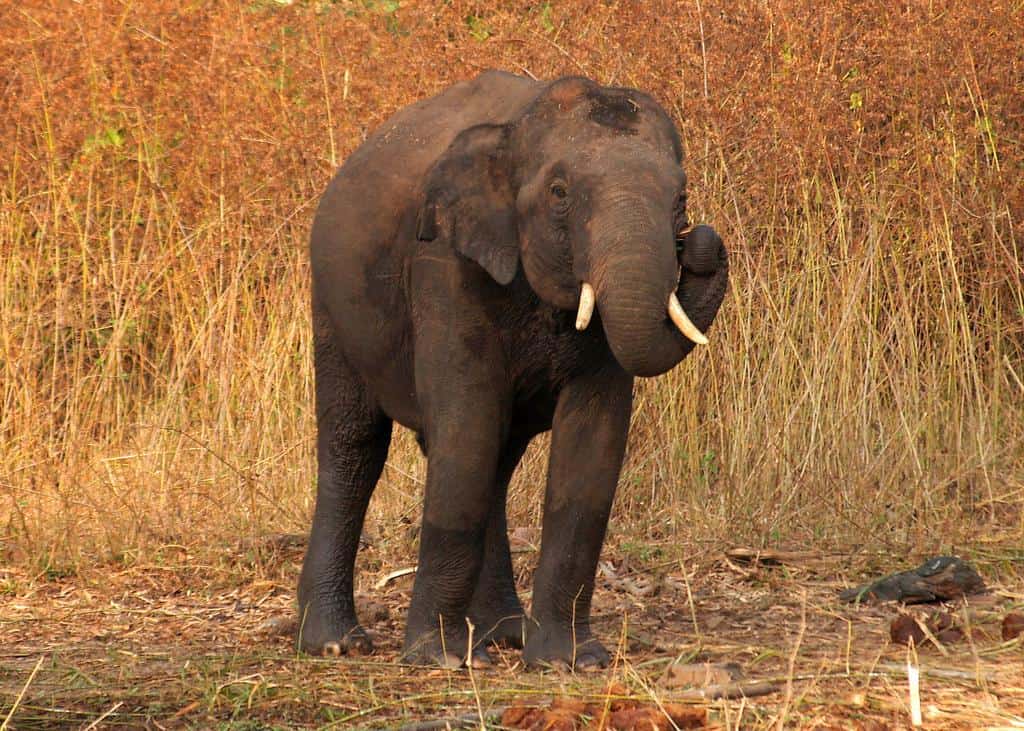
These elephants exist in a variety of habitats and prefer to live in forests, grasslands, and scrublands. Besides that, they can also be found in cultivated forests. When they sleep at night in ordinary circumstances, herds that reside near villages may reverse these habits to remain vigilant against potential human threats.

They can be found in several parts of Southeast Asia including Cambodia, the Republic of the Union of Myanmar, Bhutan, Bangladesh, Pakistan, Nepal, Malaysia, Vietnam, and Thailand. These regions provide Indian elephants with a substantial number of plants to feast on, but they are dwindling.

Humans and Indian elephants in the region are starting to see their habitats collide. This combination can cause a major conflict, forcing them to give up their natural habitat and dwindle in numbers. While there are efforts to correct this conflict, humans have been accosted, injured, and even killed in the process.

Diet
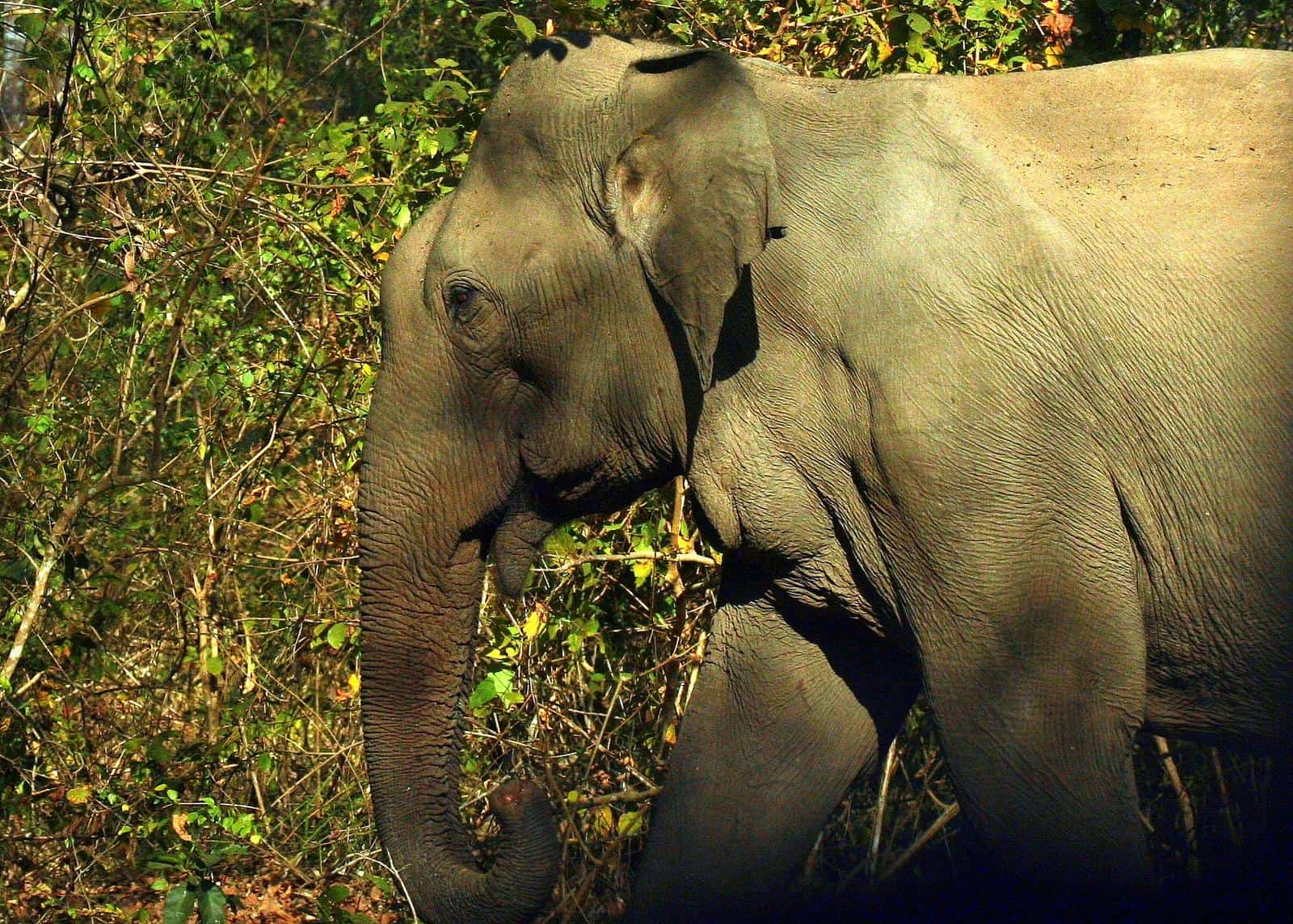
These elephants are majorly plant-eaters (i.e., megaherbivores) and are known to eat about 330 pounds of food each day. Their diet majorly includes grass, leaves, barks, stems, and roots.

Apart from that, these huge mammals also feed on bananas, sugarcane, and rice. They love grazing on tall grasses and are known to remove the shoots and blades of these grasses very skillfully.

As plentiful as this food may sometimes be, the search can be dangerous for humans and elephants alike.

What Does An Indian Elephant Eat?

These elephants are majorly plant-eaters. They usually feed on grass, leaves, bark, stem, root, and shoots. They also feed on bananas, sugarcane, and rice. Apart from that, they graze on tall grass. Though the blades and shoots can be harmful to their stomach and mouth, the strong trunk of the Indian elephant allows them to remove these parts before they chew them up.

As the habitats of the Indian elephant become smaller, some of their journeys for nutrients take them fairly close to the human populations.

What Eats Indian Elephants?

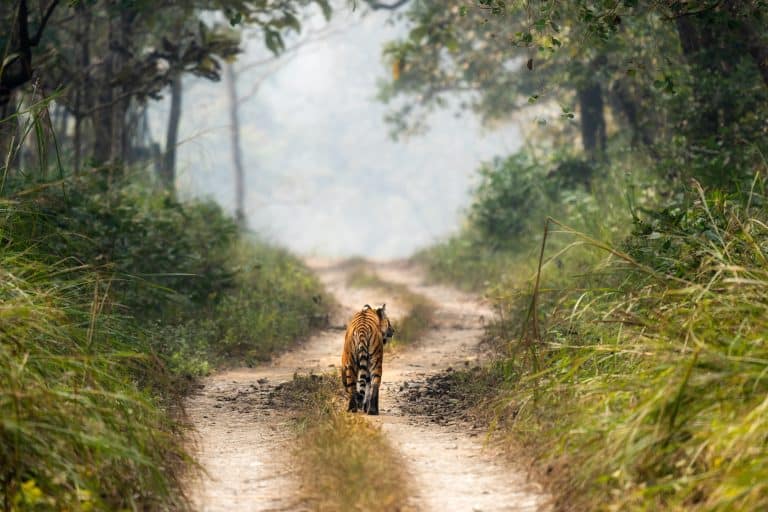
Due to their humongous size and weight, these animals have very few predators. Bengal tigers are known to eat them, but they hunt down only the baby Indian elephants as they are easy to hunt owing to their smaller size as compared to the larger ones.

Many of the reports of these tiger attacks are in the Jim Corbett National Park in Uttarakhand.

Predators And Threats

As stated above, there are almost no predators (in terms of the natural food chain) for the Indian elephant. Bengal tigers are one of the prominent predators of the Indian elephant, but tigers hunt down the babies of these elephants owing to their size. Some of these instances have even appeared in the news, tracing back to a zoo in Uttarakhand, India.

The biggest threat to the Indian elephant is humans and their daily life. Poaching remains a major threat to these animals as humans use their tusks for ivory, but the threat goes beyond that. The reduced habitat has caused aggressive confrontations between the humans nearby. As the elephants look for food in farmlands, these humans lose out on their income. However, the violent response from both sides has led to the death of nearly 500 humans each year.

Reproduction, Babies, And Lifespan
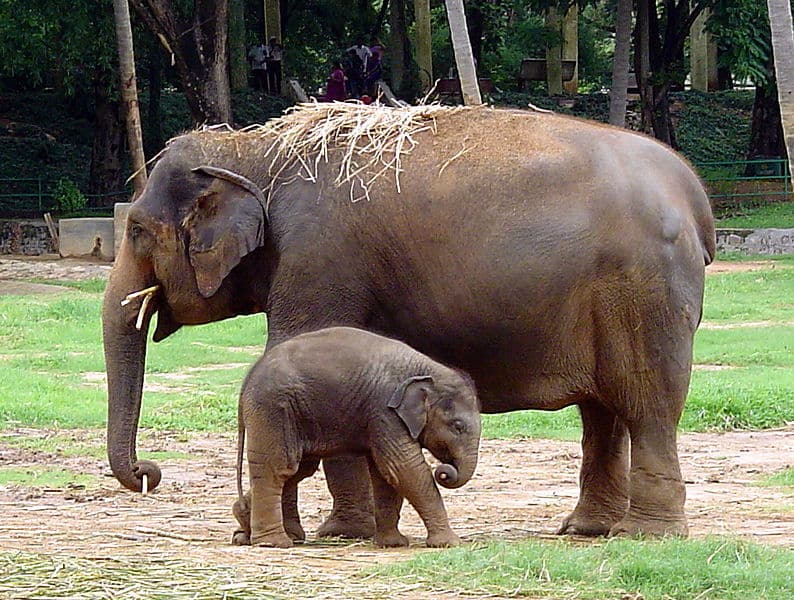
The Indian elephants are known to mate by rubbing their bodies against each other and even wrapping their trucks together. Male Indian elephants then mount the female from behind. The sexual act lasts for about two minutes after which, the male Indian elephant stays near the female Indian elephant to ward off other males from around her.

Males that fall in the age bracket of 40 to 50 years are most likely to mate with females for babies. however, the courtship between the male and the Indian elephant female is fairly short-lived. Females are about 10 years old when they can start producing babies, which are referred to as calves. The gestation period lasts for around 22 months after which they give birth to calves or baby elephants.

A baby Indian elephant usually weighs around 220 lbs at birth. The mother and other female ‘aunts’ take care of the baby. The calf sticks around with its mother for about five years after which the male calves move out of the herd while the female ones stay behind.

An Indian elephant usually has a lifespan of about 48 years. However, conservation efforts and captivity influence that age.

Population

Indian elephants can be found throughout mainland Asia, with up to 31,368 elephants in India alone. Over half of these elephants are found in the southern region. Myanmar has the second-most Indian elephants at about 4,000 to 5,000, though the population is greatly broken up.

A few thousand Indian elephants each are found in Malaysia and Thailand, but the number is only in the hundreds in Bangladesh, Bhutan, Laos, China, and Cambodia. There are a few areas in southern Vietnam with elephants, though their numbers are as low as 70 Indian elephants in total.

The Indian elephant is on the ICUN Red List as an endangered species. Since the 1950s, the total number of Indian elephants has decreased by 50%, which is what landed the species on the list in 1986. The IUCN’s last update on the population in 2019 indicated that current numbers were needed to see how many are currently left.

Types Of
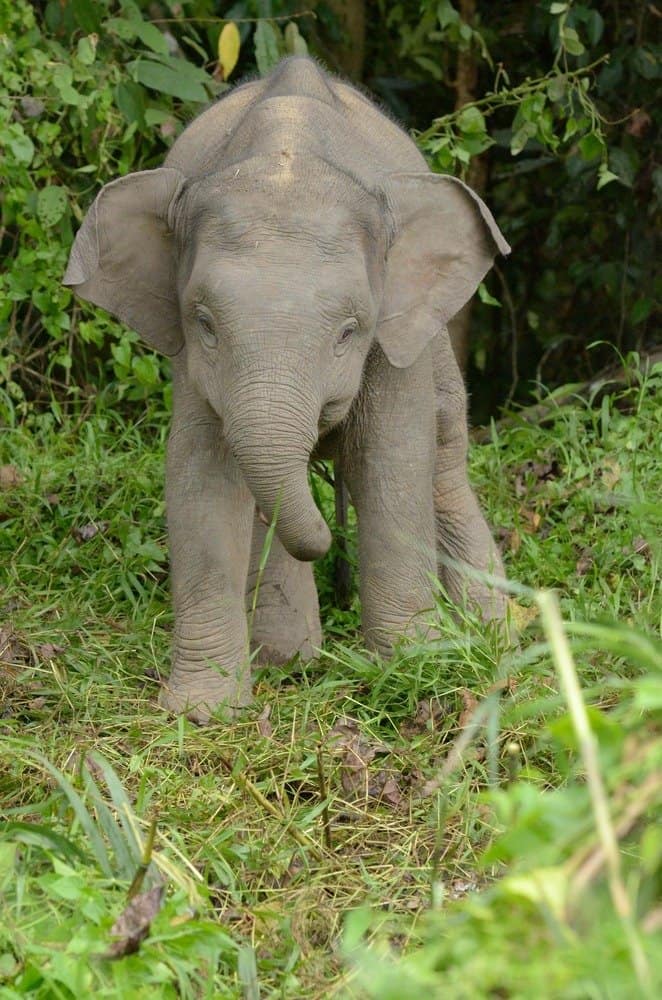
baby Borneo Elephant

Baby Borneo elephant – the smallest of the Asian elephants is still the largest mammal.

There are currently four recognized subspecies of the elephant, including the Indian elephant (Elephas maximus indicus). Those are:

Bornean elephant (Elephas maximus borneensis). Critically endangered, the Borneo elephant is the smallest subspecies of Asian elephants.

Sumatran elephant (Elephas maximus sumatranus). This elephant, with only a population of nearly 2,800, is listed as critically endangered.

Sri Lankan elephant (Elephas maximus maximus). This pachyderm is thought to be one of the rarest and largest land mammals.

In The Zoo
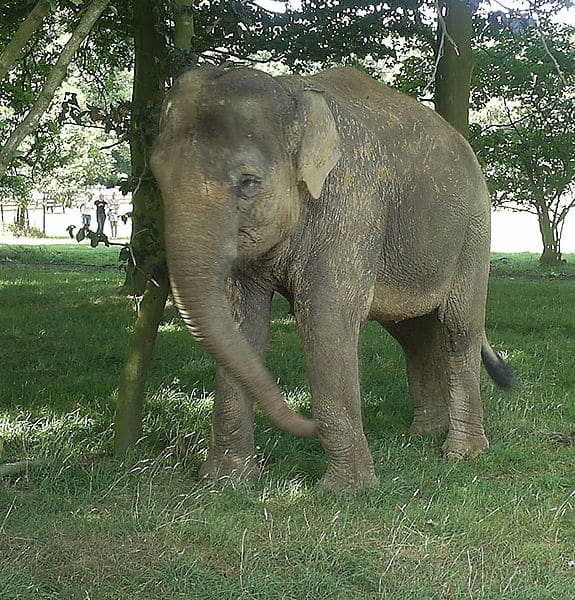
These elephants are often found to exist in captivity, particularly in India and Thailand. They are often used as an object of fascination in zoos and have often been used to uplift the tourism industry. In the United States, it is difficult to find an Indian elephant, as there are many groups against holding them in captivity. The only zoos that have elephants often source them from Africa.

Much of the reason that these animals are in zoos is an effort to protect them from humans and domesticate them.

View all 59 animals that start with I

Sources

  1. WWF / Accessed December 12, 2020
  2. Wikipedia / Accessed December 12, 2020
  3. Animals Network / Accessed December 12, 2020
  4. Kaziranga National Park / Accessed December 12, 2020
  5. National Geographic / Accessed December 12, 2020
  6. Elephant World / Accessed December 12, 2020
  7. Animalia / Accessed December 12, 2020
Melissa Bauernfeind

About the Author

Melissa Bauernfeind

Melissa Bauernfeind was born in NYC and got her degree in Journalism from Boston University. She lived in San Diego for 10 years and is now back in NYC. She loves adventure and traveling the world with her husband but always misses her favorite little man, "P", half Chihuahua/half Jack Russell, all trouble. She got dive-certified so she could dive with the Great White Sharks someday and is hoping to swim with the Orcas as well.
Connect:

Thank you for reading! Have some feedback for us?


Indian Elephant FAQs (Frequently Asked Questions)

Indian elephants are herbivorous in nature and are majorly plant-eaters. They usually feed on grass, leaves, roots, bark, stems, and shoots. They also eat bananas, sugarcane, and rice.