



I
Species Profile

Indian Star Tortoise

Geochelone elegans

Stars on a shell, survivor of scrub
Tobias Hauke/Shutterstock.com

Indian Star Tortoise Distribution

Click a location to explore more animals from that region

Loading map...
Indian star tortoise Geochelone elegans (Testudines; Testudinidae), a common "exotic" pet reptile

At a Glance

Wild Species
Also Known As Star tortoise, Starred tortoise, Tara kachhua
Diet Herbivore
Activity Diurnal+
Lifespan 35 years
Weight 7 lbs
Status Vulnerable
Did You Know?

Adults show strong sexual size dimorphism: males usually ~15-25 cm straight carapace length (SCL), females ~25-35 cm; maximum recorded ~38 cm SCL (Das, 2002; Ernst & Barbour, 1989).

Scientific Classification

A medium-sized terrestrial tortoise known for its distinctive star-like radiating pattern on the carapace. Native to the Indian subcontinent and adapted to dry scrub, grasslands, and thorn forests.

Kingdom
Animalia
Phylum
Chordata
Class
Reptilia
Order
Testudines
Family
Testudinidae
Genus
Geochelone
Species
elegans

Distinguishing Features

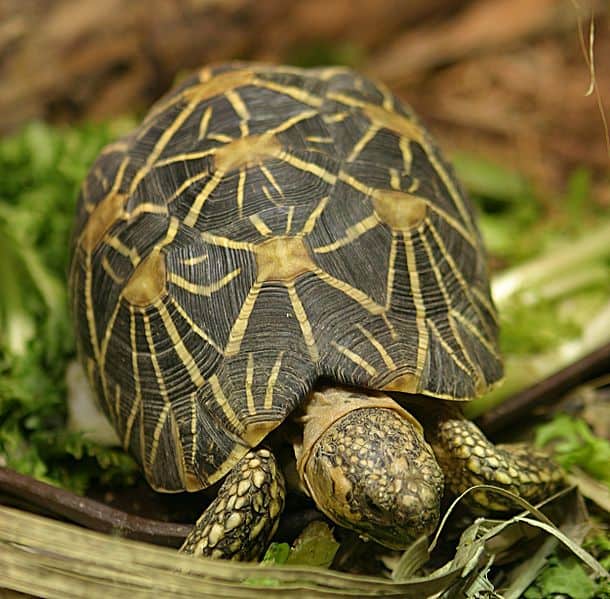
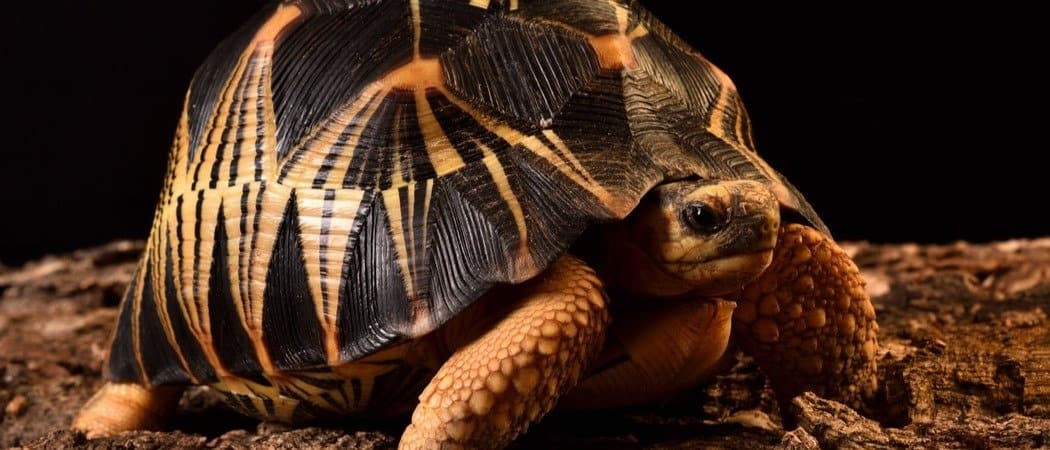
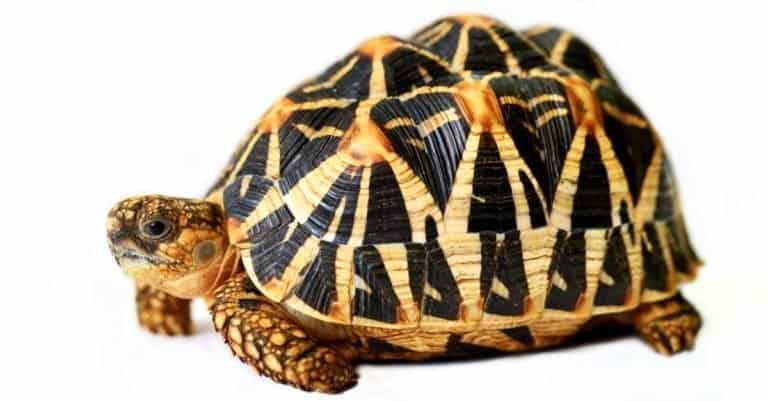
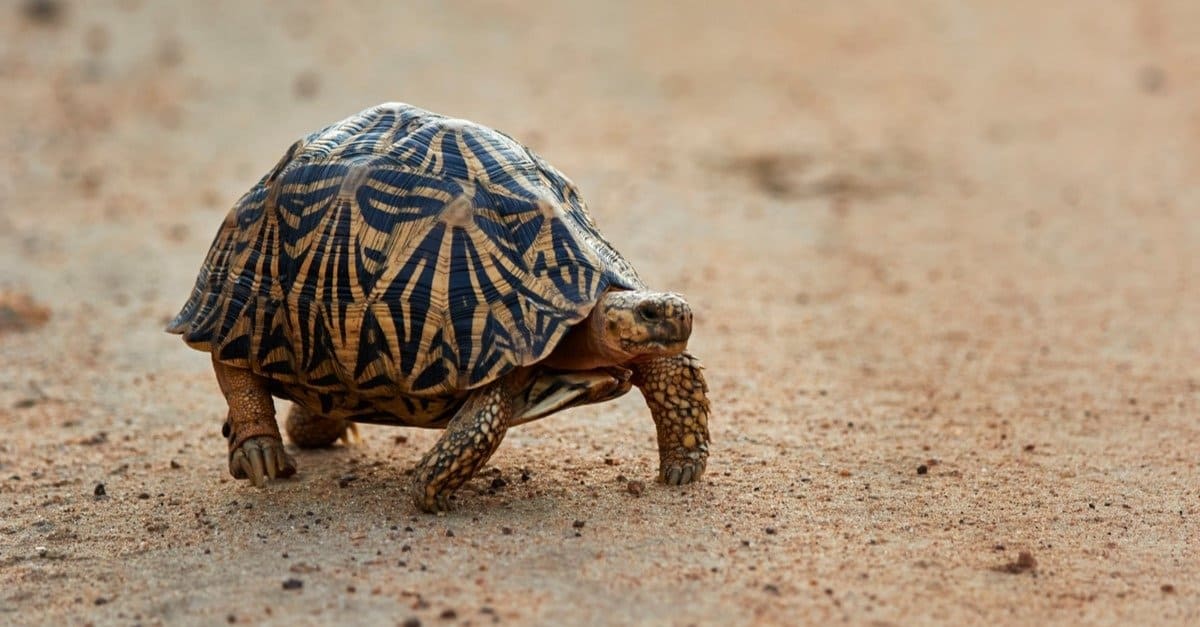
  • High-domed shell with yellow/cream radiating ‘star’ lines on dark scutes
  • Terrestrial, heavy-limbed tortoise typical of Testudinidae
  • Patterning tends to be crisp and symmetric compared with many other Asian tortoises
  • Typically found in drier landscapes of India, Sri Lanka, and parts of Pakistan

Physical Measurements

Males and females differ in size

Height
♀ 5 in (3 in – 6 in)
Length
♀ 10 in (7 in – 11 in)
Weight
♂ 2 lbs (1 lbs – 4 lbs)
♀ 8 lbs (3 lbs – 11 lbs)
Tail Length
♀ 1 in (1 in – 1 in)
Top Speed
0 mph
about 0.5 km/h max

Appearance

Primary Colors
Secondary Colors
Skin Type Terrestrial tortoise integument: keratinized scutes forming a high-domed carapace and plastron; dry, thick, pebbly scales on head/limbs; robust, 'elephantine' columnar legs adapted for walking in dry scrub/grassland.
Distinctive Features
  • Medium-sized terrestrial tortoise with a distinctly high-domed shell marked by bold yellow, star-like radiating lines on most shell scutes (a key field mark of the species).
  • Indian star tortoise adults usually have a straight carapace length (SCL) of about 25–26 cm, though some are reported up to about 38 cm.
  • Native range: Indian subcontinent (India, Sri Lanka, and parts of Pakistan) in dry scrub, grassland, and thorn-forest mosaics; largely terrestrial and uses ground cover/vegetation for shelter during heat (IUCN Red List: Geochelone elegans).
  • Indian star tortoise (Geochelone elegans) is most active on the surface during cool times or after rain/monsoon; in hot, dry weather it hides in shade and stays less active to save water.
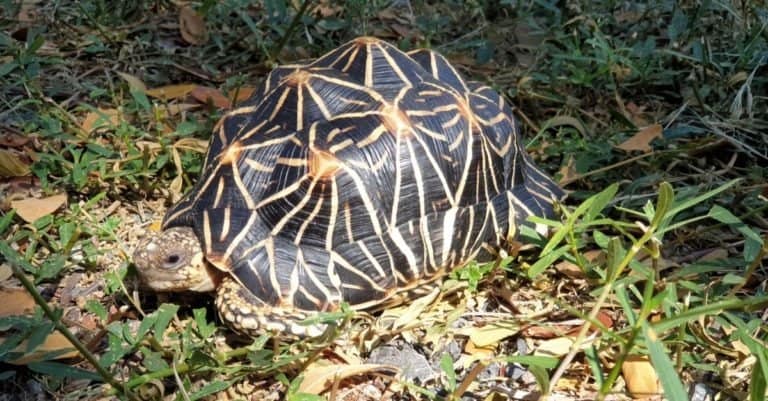
  • The carapace shows distinctive star-shaped, radiating yellow lines on each scute (on a dark background), producing the characteristic "star" pattern that gives the species its common name.

Sexual Dimorphism

Sexual dimorphism is present, primarily in body size and tail/plastron shape. Females are typically larger-bodied, while males show features associated with mating (concave plastron and longer tail).

♂
  • Typically smaller overall than females at maturity.
  • Plastron usually more concave to facilitate mating.
  • Tail longer and thicker, with vent positioned farther from the shell margin than in females (typical tortoise sexual dimorphism; species accounts summarized by the IUCN Red List assessment for the Indian star tortoise).
♀
  • Typically larger-bodied, with broader posterior shell opening to facilitate egg-laying (species accounts; IUCN Red List: Geochelone elegans).
  • Plastron generally flatter than in males.
  • Tail shorter and thinner, with vent closer to the shell margin than in males.

Did You Know?

Adults show strong sexual size dimorphism: males usually ~15-25 cm straight carapace length (SCL), females ~25-35 cm; maximum recorded ~38 cm SCL (Das, 2002; Ernst & Barbour, 1989).

The "stars" are radiating yellow lines from each scute's center; patterns vary by region and individual, making shells like natural fingerprints.

Primarily herbivorous: grazes grasses, leaves, flowers and fallen fruit; diet shifts with monsoon-driven plant flush (field accounts summarized in Das, 2002).

Reproduction is seasonal in much of its range: clutches typically 3-5 eggs, but reported range is about 1-10 (Das, 2002).

Incubation commonly lasts ~90-170 days depending on temperature and humidity (reported in captive and field-based studies compiled in Das, 2002).

Long-lived even among tortoises: captive records commonly exceed 50 years, with reports approaching ~80 years (longevity compilations such as Bowler, 1977; zoo husbandry records).

Conservation spotlight: listed as Vulnerable on the IUCN Red List and in CITES Appendix I (international commercial trade largely prohibited) due to intense collection for the pet trade (IUCN; CITES CoP18, 2019).

Unique Adaptations

  • High-domed carapace typical of Testudinidae helps protect against crushing bites and makes it harder for predators to get purchase; also supports a terrestrial, non-burrowing lifestyle in open habitats.
  • Elephantine, columnar fore- and hindlimbs (classic tortoise build) are efficient for walking long distances over dry, uneven ground while carrying a heavy shell.
  • Water economy: like many tortoises, can store water in the bladder and reabsorb it during dehydration stress-an important advantage in seasonal dry zones (general chelonian physiology; documented broadly across Testudinidae).
  • Disruptive shell patterning: the radiating "star" lines break up the outline against grass-and-shadow backgrounds, aiding camouflage in scrub/grassland mosaics (inference consistent with habitat and pattern function; described in field guides including Das, 2002).
  • Tough keratinized beak and strong jaw muscles are well-suited to cropping fibrous grasses and coarse dry-season vegetation.

Interesting Behaviors

  • Heat-avoidance routine: largely diurnal but most active in cooler morning/late afternoon, retreating into shade or grass tussocks during peak heat (typical Testudinidae thermoregulation; Das, 2002).
  • Seasonal activity pulses: in dry scrub and thorn forest, activity often increases after rains when tender grasses and herbs appear (Das, 2002).
  • Head-bobbing and circling in courtship: males commonly follow females, bob the head, and attempt mounting; shell ramming and nudging can occur in male-male competition (reported in natural history accounts; Das, 2002).
  • Nest-site selection: females roam to locate suitable soil, then dig a flask-shaped nest with hind feet; egg-laying is followed by careful backfilling and tamping.
  • Self-righting behavior: the high-domed shell can be a liability if overturned; individuals use vigorous limb pushes and neck leverage to roll upright (commonly observed in tortoises, including G. elegans in captivity/husbandry observations).

Cultural Significance

In the Indian subcontinent, the Indian star tortoise (Geochelone elegans) is linked to long life, stability and the sacred "world-bearer", and to a Hindu god's tortoise form. Its familiar symbolism and striking shell have driven pet and curio trade demand, harming conservation and straining law enforcement.

Myths & Legends

Tortoise incarnation (Hindu tradition): A major deity takes the form of a giant tortoise who supports a mountain during the "Churning of the Ocean" myth, enabling gods and demons to obtain the nectar of immortality.

World-tortoise motif (South Asian cosmological folklore): variations across the region describe the world (or a great landmass) resting on the back of a colossal tortoise, symbolizing endurance and steadiness beneath creation.

Indian star tortoise (Geochelone elegans) appears in South Asian fables across India and Sri Lanka. Tales like "The Talkative Tortoise" show it as patient and long-lived but harmed by pride or speaking without thinking.

Sri Lankan folk associations with slow wisdom and long life: local storytelling commonly uses tortoises as symbols of patience and measured action, echoing broader South Asian moral traditions rather than species-specific myth.

Conservation Status

VU Vulnerable

Facing a high risk of extinction in the wild.

Population Decreasing

Protected Under

  • CITES Appendix I (international commercial trade prohibited; uplisted at CITES CoP18, effective 26 Nov 2019)
  • India: Wildlife (Protection) Act, 1972 (protected species; national-level protection against capture/possession/trade without permits)
  • Sri Lanka: Fauna and Flora Protection Ordinance (national protection; capture and trade regulated/prohibited)

Life Cycle

Birth 4 hatchlings
Lifespan 35 years

Lifespan

In the Wild
20–60 years
In Captivity
30–80 years

Reproduction

Mating System Promiscuity
Social Structure Solitary
Breeding Pattern Seasonal
Fertilization Internal Fertilization
Birth Type Internal_fertilization

Indian star tortoise (Geochelone elegans) is largely solitary and mating is promiscuous: males seek and court many females, and females may mate with several males. Copulation is internal; females dig ground nests, lay 1–10 eggs per clutch, often seasonally; no parental care.

Behavior & Ecology

Social Solitary (no stable group name; occasional loose aggregation) Group: 1
Activity Diurnal, Matutinal, Vespertine
Diet Herbivore Tender grasses and other soft, high-fiber ground vegetation (reported as the most consistently preferred wild forage; IUCN SSC Tortoise & Freshwater Turtle Specialist Group species account for Geochelone elegans).

Temperament

Generally shy/cryptic; when disturbed commonly freezes or withdraws head/limbs into the shell rather than confronting threats (typical testudinid anti-predator response; described for G. elegans in field/husbandry accounts).
Low baseline aggression outside breeding context; tolerance of conspecifics is usually limited to passive co-occurrence when space and resources are sufficient, but crowding increases stress and antagonistic interactions (chasing/ramming).
Seasonally heightened male assertiveness: males may pursue females persistently and may engage in male-male contests involving ramming and biting at limbs/shell margins; injuries are more likely in confined conditions.

Communication

Hissing/forceful exhalation when handled or startled Defensive respiration; common across Testudinidae and reported in G. elegans
Low guttural sounds/grunts reported during close-contact reproductive interactions in some captive observations Not a prominent long-distance signal
Visual signaling at close range: orientation displays, head movements, circling/positioning during courtship and male-male assessment.
Tactile communication: nudging, shell-ramming, mounting, and occasional biting used in courtship and competition.
Chemical/olfactory cue use: investigation of substrate and conspecifics (sniffing/chemosensory sampling) to locate mates and assess reproductive state; relies on close-range scent cues rather than long-distance calls.

Habitat

Biomes:
Tropical Dry Forest Savanna Desert Hot
Terrain:
Plains Plateau Hilly Rocky Sandy
Elevation: Up to 6561 ft 8 in

Ecological Role

Primary consumer (terrestrial herbivore/grazer-browser) in dry-zone ecosystems of the Indian subcontinent.

Vegetation regulation (grazing/browsing influences plant community structure and ground-layer biomass) Seed dispersal for some fruiting plants via ingestion and defecation of seeds (when fruit is consumed) Nutrient cycling through deposition of feces and redistribution of plant material across microhabitats Contributes to food webs as prey for larger predators (especially eggs/juveniles), indirectly linking plant productivity to higher trophic levels

Diet Details

Other Foods:
Grasses Herbaceous forbs and broadleaf weeds Leaves of low shrubs and creeping plants Flowers Fallen fruits and berries Succulent plant material

Human Interaction

Domestication Status

Wild

Geochelone elegans (Indian star tortoise) is wild, not domesticated. People mostly collect and trade it, often illegally for the international pet market from South Asia to Southeast/East Asia. Adults are about 25–30 cm SCL (females larger) and can live many decades in captivity (50+ years reported). Human links include pets, harvest, cultural gifts, conservation, zoos, and habitat loss.

Danger Level

Low
  • Zoonotic Salmonella transmission risk from fecal contamination and handling (common reptile-associated hazard)
  • Minor scratches from claws during handling; very small bite risk if provoked
  • Allergy/irritation from substrate dust/mold in poorly maintained enclosures (indirect husbandry-related risk)

As a Pet

Not Suitable as Pet

Legality: Indian star tortoise (Geochelone elegans) is strictly controlled. International trade needs CITES permits. In India wild capture or keeping is illegal. EU and UK need legal origin papers; US rules vary. Many market animals lack proof.

Care Level: Experienced

Purchase Cost: $250 - $1,500
Lifetime Cost: $8,000 - $30,000

Economic Value

Uses:
Illegal and legal pet trade (primary economic driver) Captive breeding (where legal, documented stock) Zoo/education display value Conservation enforcement and rescue/rehabilitation costs (negative economic impact)
Products:
  • Live animals (pet market; frequently trafficked)
  • Captive-breeding services/stock (limited to legal, documented programs)
  • Zoo exhibit/educational programming

Relationships

Predators 7

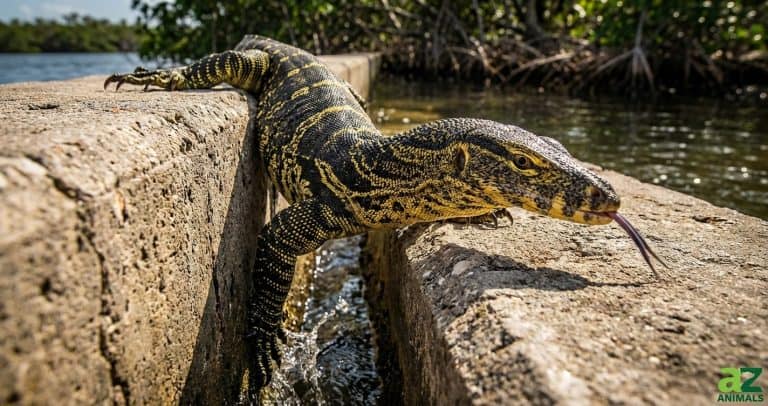
Bengal monitor Varanus bengalensis
Indian gray mongoose Urva edwardsii
Golden jackal
Golden jackal Canis aureus
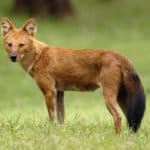
Dhole
Dhole Cuon alpinus
Indian leopard Panthera pardus fusca
Dog
Dog Canis lupus familiaris
House crow Corvus splendens

Ecological Equivalents 5

Animals that fill a similar ecological role in their ecosystem

Burmese star tortoise Geochelone platynota Closest natural match: a dry-zone, ground-dwelling Testudinidae with a similar body form and herbivorous diet. The Indian star tortoise (Geochelone elegans) is medium-sized, primarily eats plants, and is active in cooler hours like G. platynota.
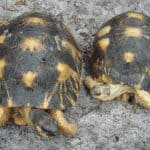
Radiated tortoise
Radiated tortoise Astrochelys radiata Occupies a convergent niche in seasonally dry scrub and woodland. Terrestrial, mostly herbivorous tortoise that thermoregulates behaviorally (active in the morning and late day and uses shade) and relies on seasonal pulses of plant growth. Also has a strongly radiating "star" carapace pattern associated with open-habitat camouflage.
Leopard tortoise
Leopard tortoise Stigmochelys pardalis Ecological counterpart in grassland/savanna systems: predominantly an herbivorous grazer in open habitats that uses shade and vegetation structure to buffer heat load and dehydration risk, and plays a similar role as a medium-to-large-bodied plant consumer shaping ground-layer vegetation.
African spurred tortoise
African spurred tortoise Centrochelys sulcata Arid-adapted terrestrial tortoise occupying hot, dry landscapes where activity is constrained by temperature and water availability; shares broad herbivory and seasonal activity shifts, though sulcata is much larger and more burrow-dependent.
Russian tortoise
Russian tortoise Agrionemys horsfieldii Small-to-medium terrestrial dryland tortoise with strong seasonality in activity and diet: a spring flush of forbs and greens, followed by reduced activity and heat-avoidance later in the season. Occupies a similar functional niche as an herbivorous ectotherm in open, xeric environments.

With its unique star-shaped patterns and relatively compact size, the Indian star tortoise is one of the most striking tortoises on the planet.

Found in forests, grasslands, and shrublands across much of India, Pakistan, and Sri Lanka, the species has a high tolerance for seasonally wet or dry habitats and therefore is fairly adaptable. Unfortunately, Indian star tortoises are popular in the international exotic pet trade, and this is primarily why the species is now listed as Vulnerable on the IUCN Red List. Various efforts are in place to protect these tortoises, including the Indian Wildlife Act of 1972.

5 Incredible Indian Star Tortoise Facts!

  • Dull Beginnings – Although adult Indian star tortoises are known for their bright, eye-catching patterns, hatchlings are born without distinctive markings. Typically, their shells, or carapaces, are entirely black or brown with rectangular yellow or orange splotches.
  • Adaptable – These tortoises do best during the rainy season when they are highly active throughout the day. They also fare well during hot, dry weather, resting under vegetation during the hottest time of day. In cold climates during winter months, they can become inactive for extended periods of time.
  • Sexual Dimorphism – Female Indian star tortoises are noticeably larger than males. Males have longer, thicker tails, and the underside of their shell – the plastron – is concave while the females are much flatter.
  • Long Living – Like all tortoises, Indian star tortoises have long life spans. On average, they live 35 to 80 years in the wild; in captivity, they live for an average of 25 years.
  • No Parental Care – Indian star tortoises provide no post-nesting care. The eggs are laid and then abandoned, and the hatchlings are on their own after they emerge.
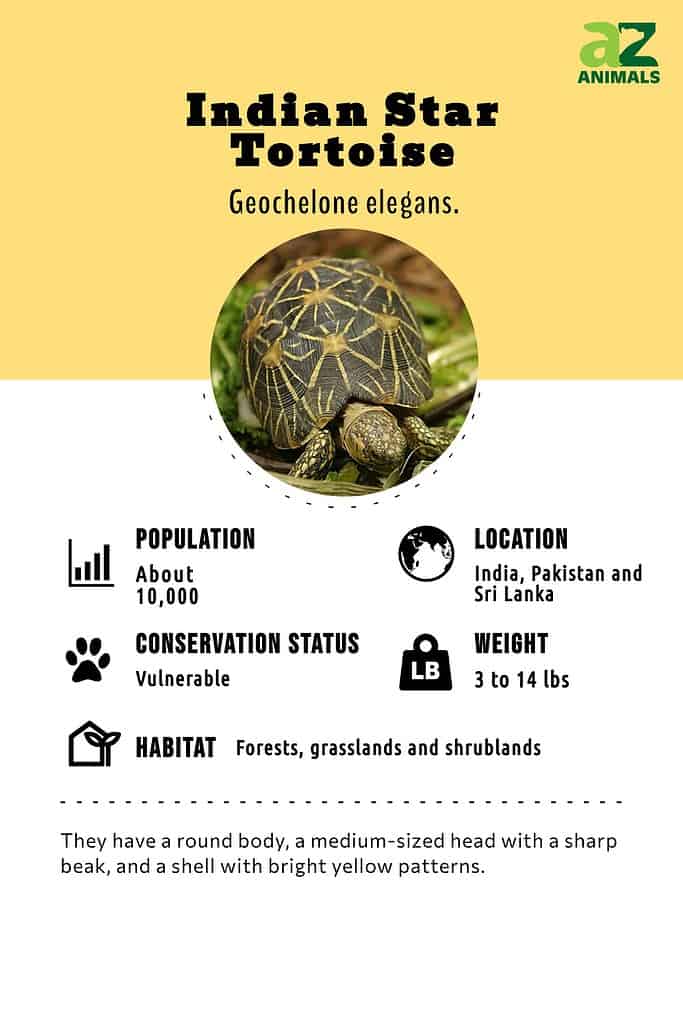
History And Origin

It is difficult to find the exact geographic origin of this species because the DNA evidence found is composed of a multitude of tortoise populations. It is known that they originated in India and are part of the larger family of tortoises Testudinidae, which contains 40 to 50 species and 11 genera. The earliest records found are of a fully-shelled turtle Proganocheles that lived in the late Triassic era, over 200 million years ago. The Testudinidae family most likely originate in Asia as well and didn’t begin to migrate to other geographic locations until the Eocene era.

Scientific Name

The scientific name for the Indian star tortoise is Geochelone elegans. This tortoise is just one of two extant members of the genus Geochelone; the other is the Burmese star tortoise, Geochelone platynotan, which is native to Myanmar and is also one of the most endangered tortoises in the world.

The Indian star tortoise belongs to the class Reptilia, the order Testudines, the family Testudinidae and the genus Geochelone.

Types Of

Although the Indian star tortoise is only one of two members of the genus Geochelone, it is considered to be part of three different geological variants.

  • northern Indian stars
  • southern Indian stars
  • Sri Lankan stars

Appearance

On average, the Indian star tortoise grows to a size of 7 to 12 inches long. Male Indian star tortoises attain an average length of 6 to 8 inches while females attain an average length of 10 to 12 inches. On a size chart comparing all tortoise species, this one would be on the smaller end. The body, limbs, and tail are usually yellow to tan in color, and some dark spots and blotches may be present.

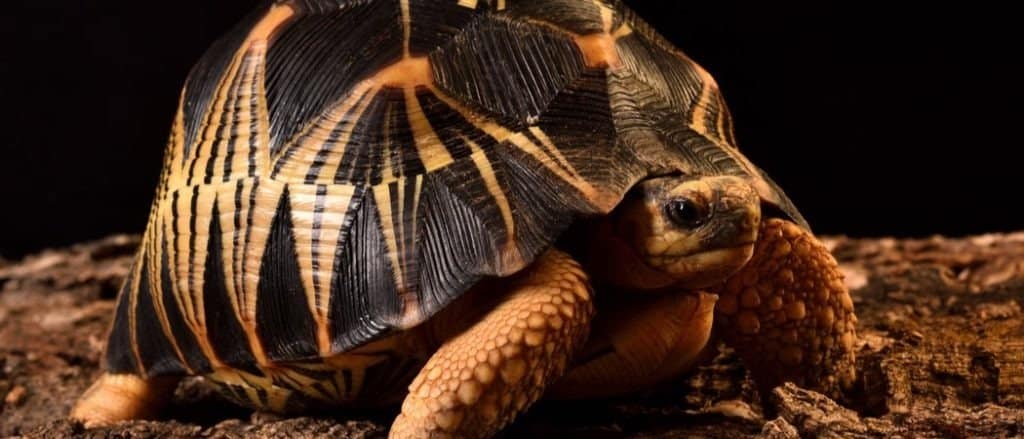
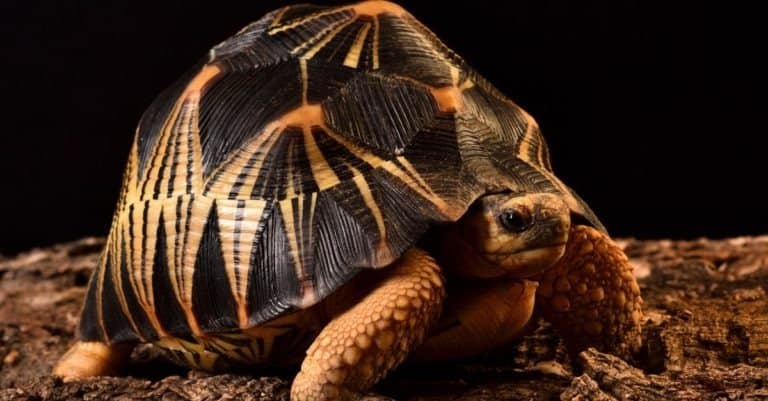
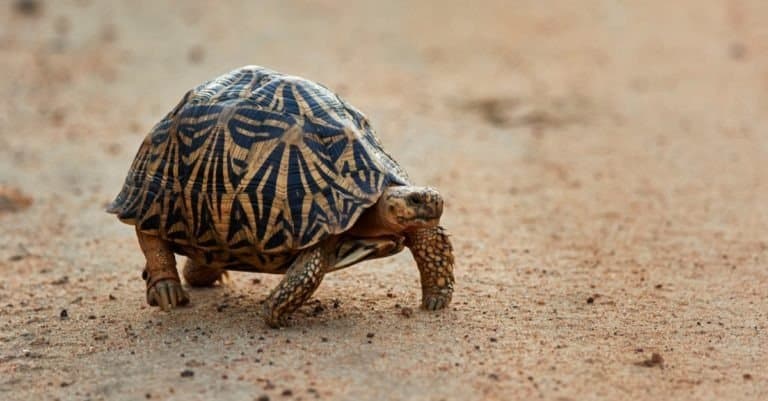
The upper shell, or carapace, of the Indian star tortoise, is its most striking feature. It has an extremely convex, or rounded, shape, with the sides being almost vertical. The dorsal shields, or scutes, often form humps, creating an even more dramatic effect. The scutes can range from being nearly smooth and flat to almost pyramidical in shape. Each one features a yellowish center, which is known as an areola and yellow or tan lines radiate out from there. This creates the distinctive star pattern that lends the tortoise its name. The background – the area below the scutes – is normally brown or black.

The shape of this tortoise’s carapace is believed to be specially adapted to help them return easily to a stable stance after being turned over. This comes in handy since males often compete with each other during mating season by trying to flip each other onto their backs. This self-righting feature ensures that Indian star tortoises aren’t left stranded after being turned over, whether accidentally or otherwise.

This tortoise has a moderate-sized head. The forehead is swollen, convex, and covered with tiny, irregular shields. The tortoise’s beak is slightly hooked. Like
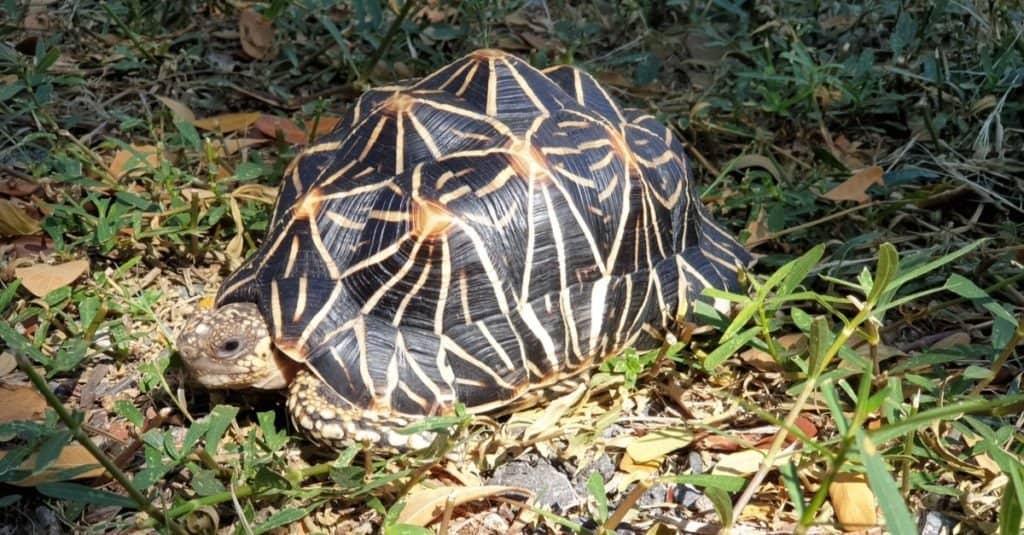
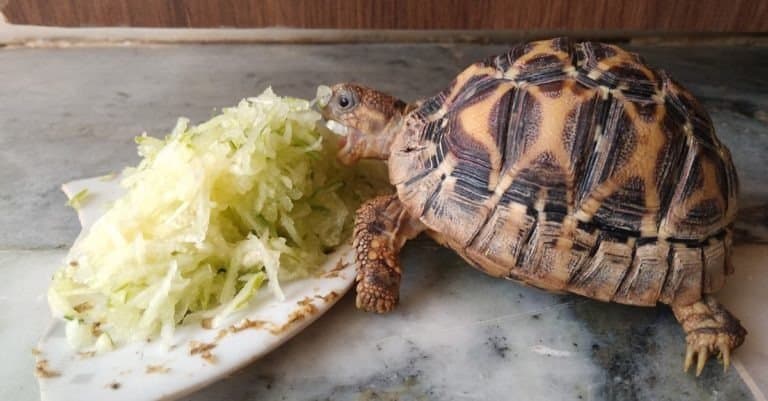
Indian star tortoise feeding

Males Vs. Females

A high degree of sexual dimorphism is present in Indian star tortoises, making it fairly easy to tell males apart from females. On a size chart, you can easily spot the difference. As noted previously, females are larger than males. They attain an average length of 10 to 12 inches while males grow to an average length of 6 to 8 inches. The plastron, or lower shell, of the female, is fairly flat while the male is much more concave. This feature allows the male to mount the female more easily. Males also have longer, thicker tails than females.

Behavior
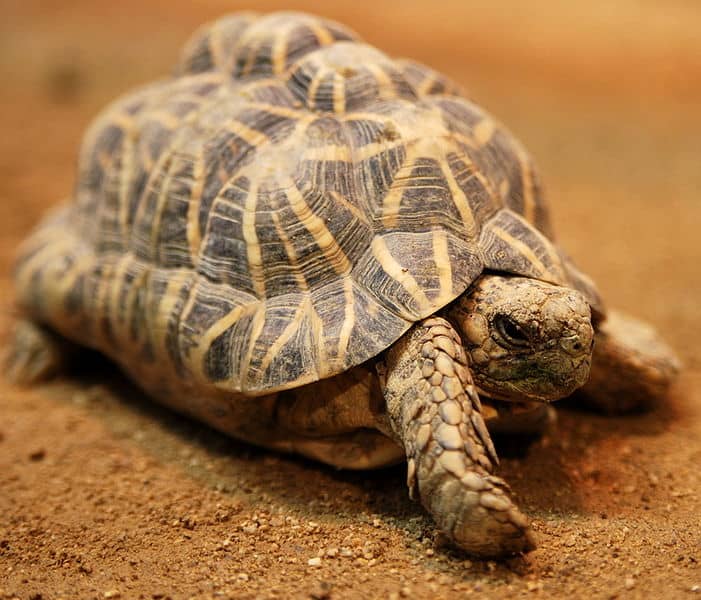
Indian star tortoises are placid, slow-moving creatures. Outside of the mating season, they tend to be reclusive and solitary. Like most tortoises, they are typically diurnal, meaning that they are awake during the day and asleep during the night. However, some may be considered crepuscular, meaning that they become more active during twilight.

In hot, dry weather, Indian star tortoises are usually active early in the morning and late in the afternoon. The rest of the day, they shelter themselves beneath vegetation or in other hiding places. Their activity increases a lot during the rainy season when they are known to feed and move around throughout much of the day. During the colder, drier winter months, they tend to be less active. Tortoises in colder parts of the range like western India and Pakistan often become inactive for extended periods during the coldest months of the winter. Indian star tortoises have a high tolerance for habitats that go through extreme fluctuations between wet and dry weather.

Habitat
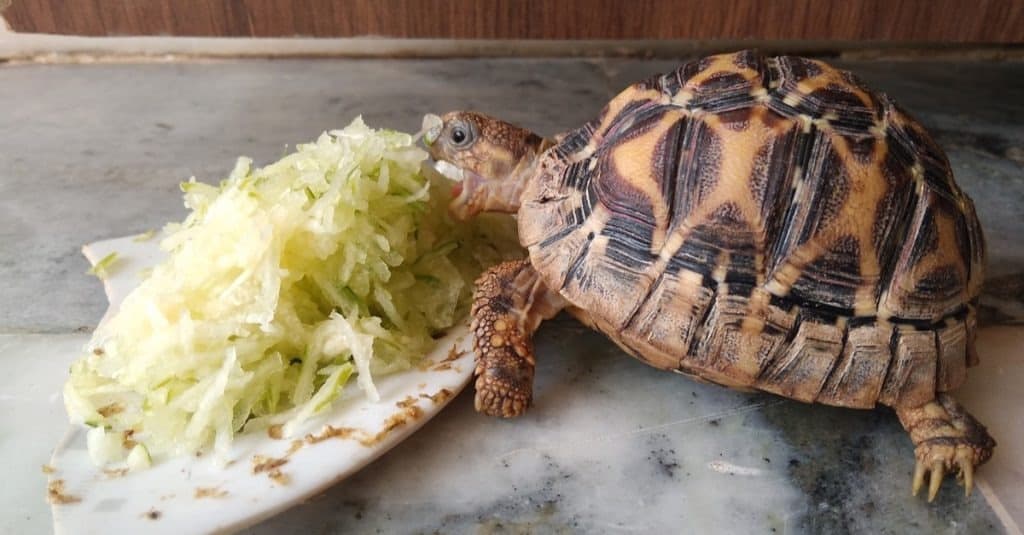
Indian baby star tortoise eating food.

This tortoise can be found dining on fruits, flowers, grasses, and plant leaves mostly in forests, shrublands, and grasslands.

The Indian star tortoise’s primary habitats are forests, shrublands, and grasslands and their range extends throughout most of India except for Lower Bengal and west to the Sindh province of Pakistan through to Sri Lanka. Their habitats are mostly found in semi-arid and arid regions. Their extensive range exemplifies the adaptability of this species.

Diet

Primarily herbivores, Indian star tortoises’ diets mostly consist of fallen fruits, flowers, grasses, and the leaves of succulent plants. From time to time, they may opportunistically feed on carrion. Hatchlings subsist off of an embryonic egg sac for the first three to seven days of life.

Predators And Threats
Thanks to its shell, which it can tuck itself inside of when threatened, the Indian star tortoise has few natural predators in the wild. However, eggs, hatchlings, and juveniles are at greater risk of predation. Common predators include mongoose, hawks, jackals, monitor lizards, snakes, vultures, and foxes.

Humans are also known to prey on these tortoises. Locally, they are often consumed by indigenous groups. On a national and international level, however, these tortoises are not commonly consumed as food.

Although Indian star tortoises don’t have many natural predators, they are threatened on many levels by human activity. Thanks to their distinctive patterns and relatively compact size, they are popularly kept as pets. As a result, they have been extensively hunted for the international pet trade for many decades. It is estimated that 10,000 to 20,000 Indian star tortoises disappear from the wild every year. They are typically sold to middlemen who then sell them to international smugglers. From there, they are sold at markets in places like Thailand and Malaysia and shipped across the world. They can command a price of up to $150 per tortoise, so it’s a lucrative business.

These tortoises are also used in traditional medicine in Malaysia and China, where they are believed to be an excellent source of energy. They also face habitat losses as large expanses of forests and grasslands are cleared for agriculture.

For many decades, efforts have been made to protect Indian star tortoises, whose population numbers are declining. The Indian Wildlife Act of 1972 made it illegal to possess or trade these tortoises, but the law isn’t enforced well, and Indian star tortoises are easy to find for sale in pet shops across India. They are attractive to illegal smugglers because they command such a good price. Under the Convention on International Trade in Endangered Species, or CITES, Appendix I of 2019, all international trade of Indian star tortoises is prohibited. Again, though, enforcing this act is easier said than done.

Reproduction, Babies, And Lifespan

Hatchlings grow rapidly and are on their own from the start; no parental care is provided.

The average lifespan for Indian star tortoises in the wild is 35 to 80 years. In captivity, these tortoises live for an average of 25 years.

Indian star tortoises mate during the rainy season, which occurs from mid-June through November in southern India. During the mating season, males compete for females in displays of aggression, often attempting to flip each other onto their backs. Compared with many other tortoise species, their courtship is fairly subdued, and males rarely shove or nip at females. While copulating, males emit grunt-like sounds.

Approximately 60 to 90 days after mating, the female Indian star tortoise wanders around sniffing the ground in search of a suitable nesting site. After finding one, she urinates to soften the ground and then uses her hind legs to excavate a flask-shaped nest. The female then lays her eggs. In one year, a female Indian star tortoise may lay one to nine clutches, and each clutch may include anywhere from one to 10 eggs. Once the eggs have been laid, the female refills the hole and flattens the earth with her plastron.

Incubation times vary from 90 to 170 days and are probably dependent on temperature. Hatchlings lack these distinctive star markings. Instead, they have black or brown carapaces with rectangular yellow or orange blotches on the scutes. They can grow rapidly for the first several months, but they are on their own from the start because no post-nesting parental care is provided.

Population

Precise figures are not available regarding the total world population of Indian star tortoises. However, their numbers are believed to be declining primarily due to human activity. Anywhere from 10,000 to 20,000 of these tortoises disappear from the wild annually, and around 3,000 of them are recovered from the illegal pet trade through conservation efforts.

In the Zoo

Indian star tortoises are found in zoos around the world. Currently, examples are found at places like the Australia Zoo, the Cincinnati Zoo, and Hogle Zoo in Utah.

View all 59 animals that start with I

Sources

  1. Animal Diversity Web / Accessed February 4, 2021
  2. Britannica / Accessed February 4, 2021
Melissa Bauernfeind

About the Author

Melissa Bauernfeind

Melissa Bauernfeind was born in NYC and got her degree in Journalism from Boston University. She lived in San Diego for 10 years and is now back in NYC. She loves adventure and traveling the world with her husband but always misses her favorite little man, "P", half Chihuahua/half Jack Russell, all trouble. She got dive-certified so she could dive with the Great White Sharks someday and is hoping to swim with the Orcas as well.
Connect:

Thank you for reading! Have some feedback for us?


Indian Star Tortoise FAQs (Frequently Asked Questions)

Indian star tortoises are primarily herbivores. Their diets generally consist of fallen fruit, grasses, flowers and succulent leaves. They will also occasionally consume carrion if the opportunity arises, but they don’t necessarily seek it out.