





















Quick Take
- Elcho achieved 200 offspring to fulfill the 1875 requirement for breed survival.
- Reaching 71 pounds creates a body mass problem that restricts the utility of field dogs.
- A loud bark is counterintuitively paired with affection, disqualifying the breed as guard dogs.
- Performing the set was mandatory for bird capture, linked to a crouching physical requirement.
Irish setters are energetic, rambunctious dogs with a sweet temperament. They’re a favorite family dog because of their loyalty and fun-loving nature.
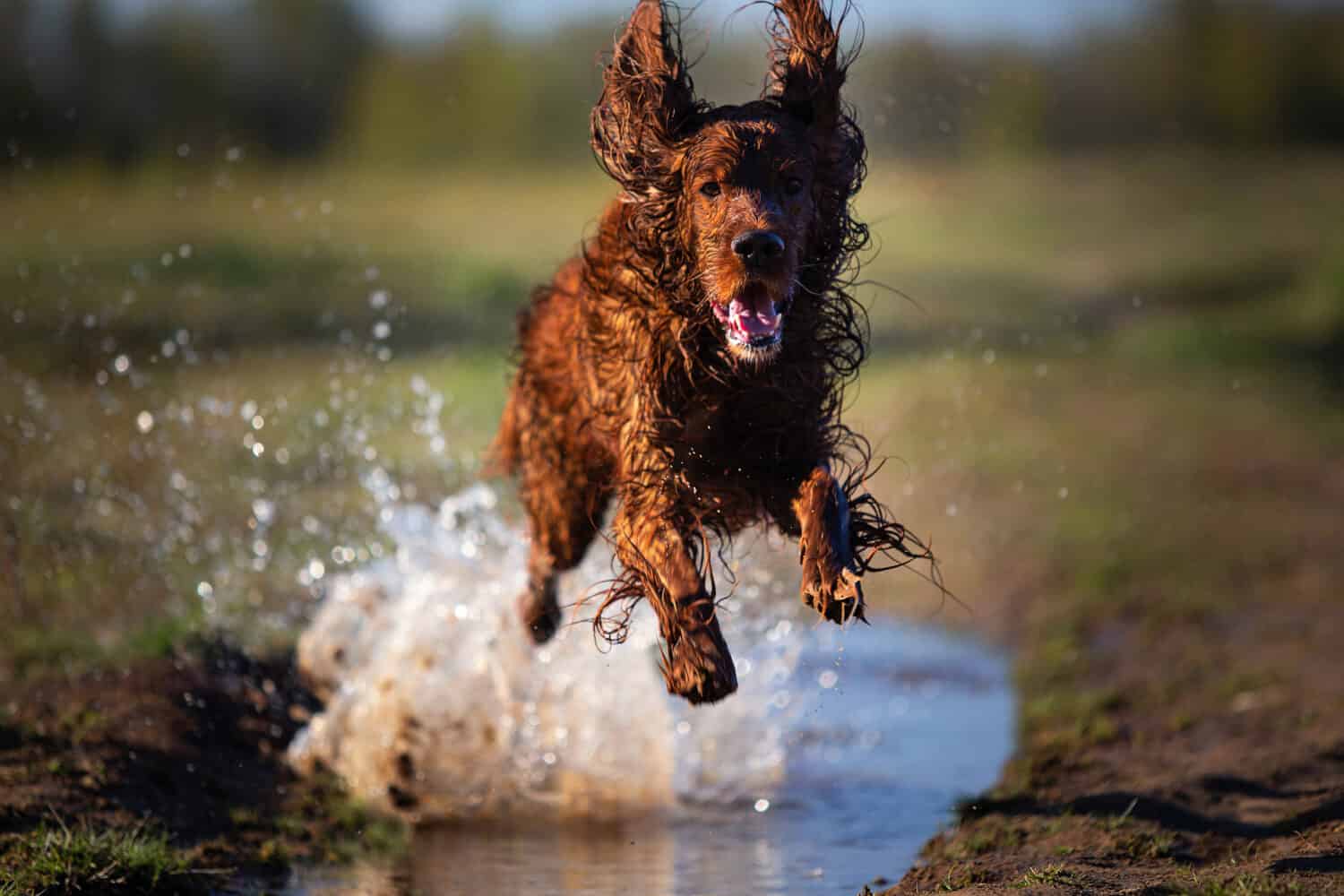
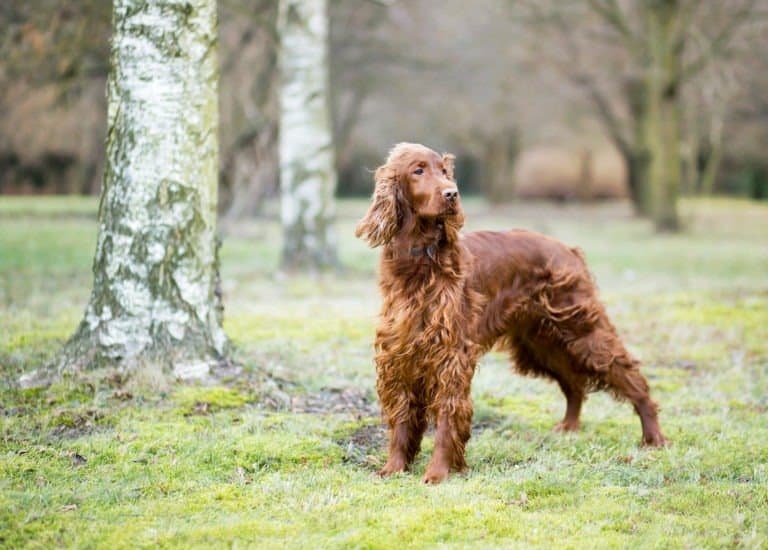
Known for their rich, silky, and mahogany or chestnut coats, Irish Setters are members of the sporting group of dogs. Their excellent sense of smell, persistence, and incredible speed have earned them a reputation as superb hunting dogs. They are popular as family pets due to their good nature, intelligence, and liveliness.

History and Origins
The Irish Setter originally descended from the Irish Red and White Setter, which was developed in the 18th century from a mix of the English Setter, Gordon Setter, Irish Terrier, Irish Water Spaniel, and Pointer. In Ireland in the 1800s, they were used as companions on hunting trips to track down birds in a field and other prey throughout the countryside.
Apart from a red and white coat, the Irish Red and White Setter has shorter legs than the Irish Setter, which assists the hunting dogs to “set” their game, crouching down low near it so the hunter can throw a net over both to complete the capture.
The Irish Setter was developed through selective breeding in the 19th century, which saw the white being removed from the coat and resulted in the solid chestnut red coat of Irish Setters today. Irish Setters became so dominant that by the end of the 19th century, the Irish Red and White Setter was very rare, until the 1920s when the breed was revived.
The first Irish Setter in America was a dog named Elcho, who was imported in 1875. The breed, once known as the Irish Red Setter in the U.S., quickly became a favorite in the dog show ring. In the 1960s, the breed’s popularity grew further due to an Irish Setter being the star of the movie “Big Red.”
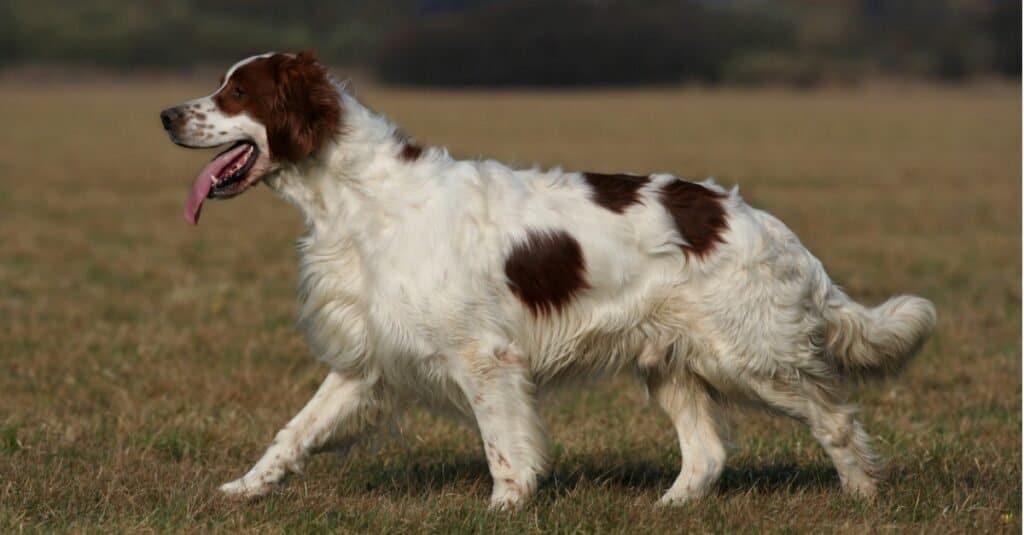
The Irish Setter was developed through the selective breeding of the Irish Red and White Setter.
©iStock.com/Wavetop
Types of Irish Setters
Irish Setters were so successful in the show ring that in 1940, the magazine “Field and Stream” raised concern about them disappearing from the field and losing their status as working dogs. This led to two types being developed: a show dog that had a larger and heavier body, and a field dog that was lighter and sleeker.
The field dog, or working dog, weighs around 45 pounds on average, compared to the show dog, which can grow up to 70 pounds. The field Irish Setter has a less silky coat, shorter feathering, and lighter coloring of russet or fawn shades.

The Irish Setter is classified either as a show dog or a field dog.
©Kseniia Kolesnikova/Shutterstock.com
Owning an Irish Setter: 3 Pros and Cons
| Pros | Cons |
|---|---|
| Affectionate The breed is good-natured and generally affectionate with family, kids, and strangers. In addition, Irish Setters are normally well-behaved with other dogs. | Separation anxiety Irish Setters often suffer from separation anxiety when left at home for long periods. Crate training can create a more comfortable environment for setters while owners are away from the house. |
| Intelligent Irish Setters are incredibly intelligent dogs. This means the breed can be trained quickly, although it can be a challenge to keep their focus during this training. | High energy Irish Setters love to run and get exercise. For this reason, it’s best to have a yard that can accommodate their need to run. |
| Their coat The Irish Setter has a beautiful coat that’s flowing and feathered. Many owners find this coat extremely charming, and it has been a big factor in the rising popularity of the breed. | Grooming needs Irish Setters have long coats that can become matted and tangled. Caring for this coat requires frequent brushing and combing. Additionally, the dog’s beautiful coat will also lead to shedding. |
Size
Irish Setters are medium to large dogs. A male Irish Setter grows to be 27 inches tall at its shoulder, while females measure 25 inches tall at the shoulder. In terms of weight, a male weighs from 60 to 71 pounds, while a female weighs from 53 to 64 pounds.
At 8 weeks, an Irish Setter should weigh 11 to 12 pounds. This dog reaches adulthood at 12 months of age.

Irish Setters are medium to large dogs that can weigh up to 71 pounds.
©Reddogs/Shutterstock.com
Common Health Issues
One of the most common health issues of Irish Setters is known as hip dysplasia. Hip dysplasia causes weakness in the muscles and tissues of the hip joint. As this disease progresses, it affects the walking and running motion of the dog. Excess weight can make this condition worse. Hypothyroidism is another common health issue for this breed of dog. It’s a decrease in normal thyroid levels that causes fatigue, weight gain, and skin issues, including dry, scaly skin. Acral Lick Dermatitis is a common issue that causes an Irish Setter to continually lick and bite its skin/fur, especially on the lower body. This can be caused by anxiety or stress.

Hypothyroidism is a common health issue for Irish Setters and causes fatigue, weight gain, and skin issues.
©Kseniia Kolesnikova/Shutterstock.com
Temperament
Irish Setters are ideal dogs for families with children because they’re loyal, energetic, and love to play. This is a dog with a friendly personality. Even after reaching adulthood, an Irish Setter still maintains a lot of the traits it had as a puppy. These dogs love to run, jump, chase, fetch, and have a romping good time!
Irish Setters are compatible with humans and mix well with other dogs. So, a trip to the dog park is a real treat. They are clever dogs with a loud bark that can alert a household to someone at the door or on the property. However, Irish Setters aren’t known to be guard dogs. While their barking can signal the presence of someone at the door, this dog’s behavior is likely to be affectionate and welcoming to friends and strangers alike.

Irish Setters love to play and get along well with other dogs.
©Reddogs/Shutterstock.com
How to Take Care of an Irish Setter
Both Irish and English Setters have a medium to long-haired coat that needs regular grooming to keep it well-maintained. Also, whether you have a puppy or an adult dog, Irish Setters have a lot of energy and require regular exercise. The common health conditions of this pet, including hip dysplasia, hypothyroidism, and Acral Lick Dermatitis, must all be factored into the care of your Irish Setter.

Irish Setters have a medium to long-haired coat that requires regular grooming.
©Daniel V / Creative Commons – Original
The Best Dog Food
Irish Setters have different nutritional needs as puppies and as adult dogs. In fact, giving your Irish or English Setter the right type of food at the proper time can make all the difference in its health throughout its life.
Irish Setter puppy food: Dry food is an excellent option for puppies. Look for puppy food with increased amounts of calcium. Calcium strengthens developing bones, which can help to prevent hip dysplasia in Irish Setters. Also, choose food with increased protein for muscle development. Giving your Irish Setter food that’s higher in calories is a good choice because your puppy is going to be very active. Omega-3 fatty acids support a puppy’s eye and brain development.
Irish Setter adult dog food: An adult Irish Setter should eat dog food with antioxidants that support the health of its immune system. A healthy immune system can help prevent hypothyroidism. Also, wheat is an important ingredient in food for an adult Irish Setter. It is a slow-digesting ingredient that gives an adult dog nutrition while preventing weight gain. Consider that food high in protein, as well as vitamins A, B6, and E, can contribute to a normally functioning thyroid and help maintain healthy skin. Plus, vitamin B6 is known to increase serotonin in the brain, which can help to calm an anxious dog suffering from Acral Lick Dermatitis.
Maintenance and Grooming
How much do Irish Setters shed? Irish Setters shed an average amount of hair, which increases or decreases during different seasons throughout the year. This dog’s beautiful coat of long, fine hair requires grooming about three times a week to keep it in good condition. A slicker dog brush is a useful grooming tool that reaches down into your Irish Setter’s coat to remove tangles and loose hair. A slicker brush has individual plastic pins as bristles and is gentle on your dog’s skin while stirring up natural oils and creating shine.
Alternatively, a brush with boar’s hair bristles is another good tool to have for your Irish Setter’s grooming routine. The bristles clear away tangles and remove dead hair from your dog’s coat. Be sure to work from your dog’s head toward its tail, brushing in the natural direction of its hair.
Check the ears once a week in order to clear away any excess wax or dirt. Use a soft cloth moistened with warm water to clear away any debris. This helps prevent ear infections.
Additionally, brush your dog’s teeth once a week to help prevent teeth and gum issues. Be sure to use toothpaste designed for dogs. Dental chews are a great option to help your pet maintain dental health.
Training
Irish Setters can be somewhat challenging to train. They are energetic dogs that want to be moving around. This can make it tough to capture your Irish Setter’s attention and keep it. Once you have their attention, they are quick to learn obedience lessons.
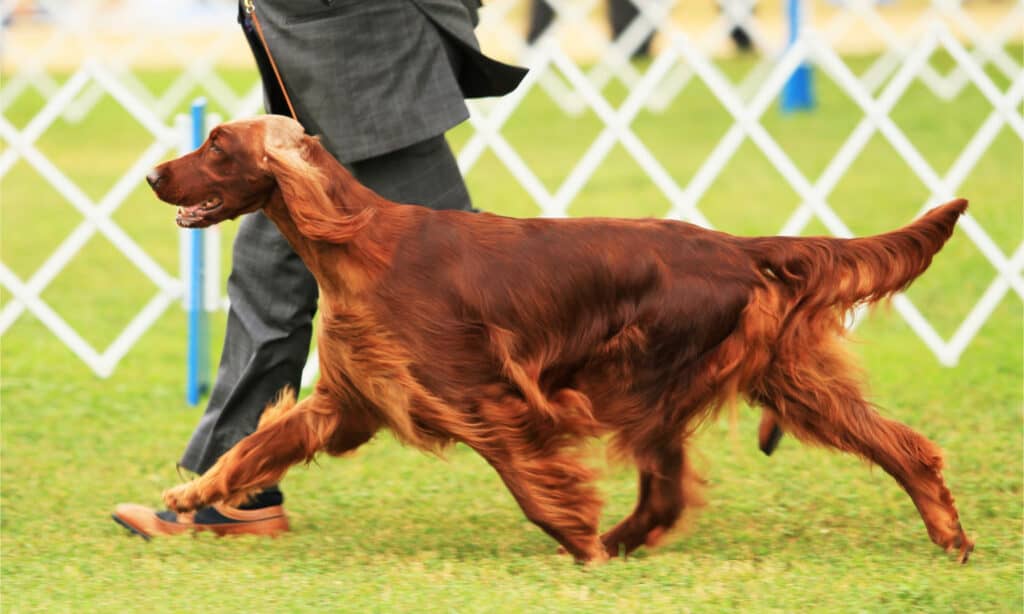
It can be difficult to maintain an Irish Setter’s attention, but once you have it, they are fast to learn obedience.
©Canden Scales/Shutterstock.com
Exercise
Irish Setters are energetic dogs. This is true as well for their close relative, the English Setter. Therefore, they need at least one hour of exercise each day to stay healthy. Exercise for an Irish Setter doesn’t mean walking on a leash. Ideally, this dog should have plenty of space in a home’s backyard, nearby field, or dog park to run around, jump, and bark.
So, an Irish Setter is not a good choice for owners who live in an apartment unless they’re dedicated to taking their dog to an open space to run around for at least an hour each day. An Irish Setter that doesn’t get enough exercise can develop health issues, including excess weight, which may exacerbate other health problems.

Irish Setters need at least one hour of exercise daily to maintain good health.
©Reddogs/Shutterstock.com
Puppies
Irish Setter puppies are easy to house-train if you have a consistent routine. Take your puppy outside at the same times, to the same area, to relieve itself throughout the day.
They need exercise just as much as adult dogs do. So, be sure to allow your puppy to exercise in an enclosed area until it has learned obedience commands such as come and stay. You want to make sure your puppy is safe while it’s getting exercise.

If you establish a consistent routine, puppies are easy to house-train.
©Hannamariah/Shutterstock.com
Irish Setters and Children
Irish Setters are good dogs for families with children. Their temperament is a wonderful mix of playfulness and affection. Also, keep in mind that these dogs grow to be 60 to 70 pounds, so they should be monitored while playing with toddlers or small children. Sometimes these dogs get very excited and may accidentally knock over a child in all the fun.

The Irish Setter has a playful and loving temperament.
©iStock.com/Wavetop
Dogs Similar to Irish Setters
There are a few dog breeds similar to the Irish Setter. The Golden Retriever, the Labrador Retriever, and the Chesapeake Bay Retriever are all examples.
- Golden Retriever: Golden Retrievers share several traits with Irish Setters, including a friendly, affectionate temperament. They are both energetic family dogs.
- Labrador Retriever: Labrador Retrievers and Irish Setters grow to be about the same size. Plus, they are both sporting dogs taken on hunting trips to track down prey.
- Chesapeake Bay Retriever: This is another high-energy dog. They are taken as companions on hunting trips and are members of the sporting group.

Golden Retrievers and Irish Setters are both energetic dogs suitable for families.
©iStock.com/Tatyana Consaul
Famous Irish Setters
There have been many famous Irish setters throughout history, including:
- Elcho: One of the first Irish Setters to move stateside and a championship-level dog. Elcho produced nearly 200 puppies in the 1870s and helped establish the popularity of the breed.
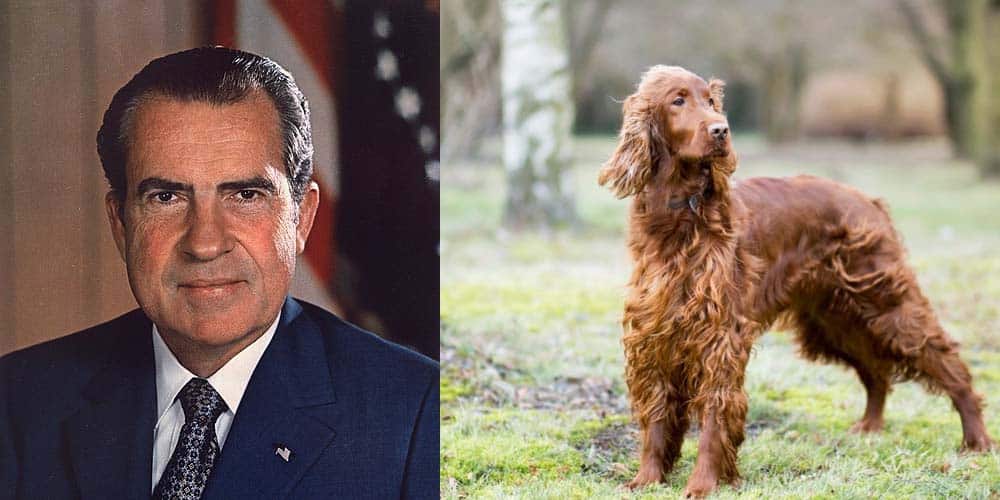
- King Tomahoe: One of Richard Nixon’s most beloved pets. This Irish Setter was often called “Tom” for short.
- Peggy: An Irish Setter that was the pet of Ronald Reagan.
- Mike: The Irish Setter that occupied the White House during Harry Truman’s time as President.
That’s right, during the 20th century, three different Presidents had Irish Setters.
Irish Setter Pictures
View all of our Irish Setter pictures in the gallery.

Sources
- David Burnie, Dorling Kindersley (2011) Animal, The Definitive Visual Guide To The World's Wildlife / Accessed November 11, 2008
- Tom Jackson, Lorenz Books (2007) The World Encyclopedia Of Animals / Accessed November 11, 2008
- David Burnie, Kingfisher (2011) The Kingfisher Animal Encyclopedia / Accessed November 11, 2008
- Richard Mackay, University of California Press (2009) The Atlas Of Endangered Species / Accessed November 11, 2008
- David Burnie, Dorling Kindersley (2008) Illustrated Encyclopedia Of Animals / Accessed November 11, 2008
- Dorling Kindersley (2006) Dorling Kindersley Encyclopedia Of Animals / Accessed November 11, 2008
- AKC / Accessed November 8, 2019
- Vetstreet / Accessed November 8, 2019