

I
Species Profile

Irish WolfHound

Canis lupus familiaris

Towering hunter, gentle heart
84kamila/Shutterstock.com

Irish WolfHound Distribution

Click a location to explore more animals from that region

Origin Location

This map shows the native origin of the Irish WolfHound. As a domesticated species, they are now found worldwide.

Loading map...

Found in 1 country

Size Comparison

Human 5'8"
Irish WolfHound 2 ft 9 in

Irish WolfHound stands at 48% of average human height.

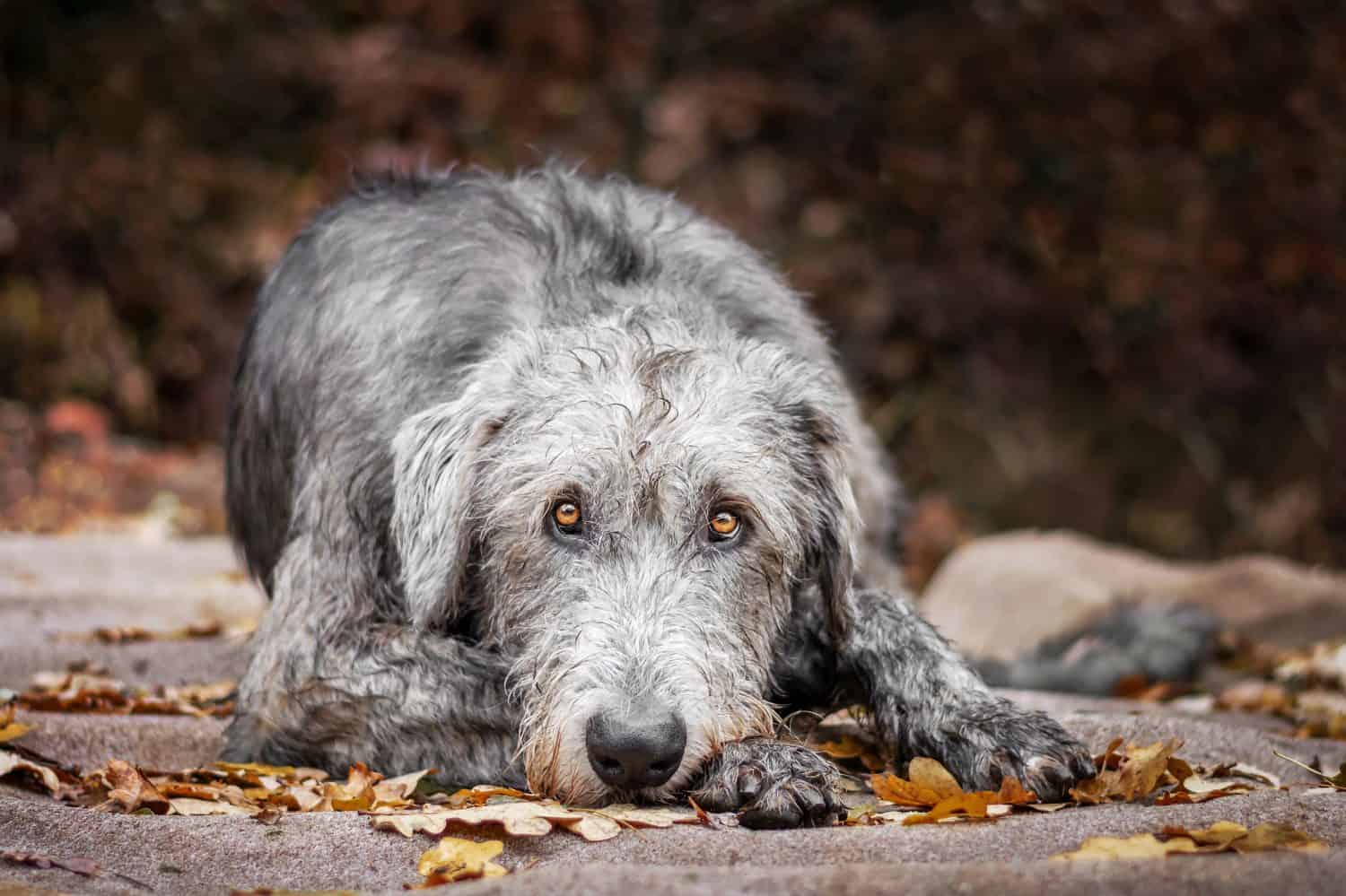
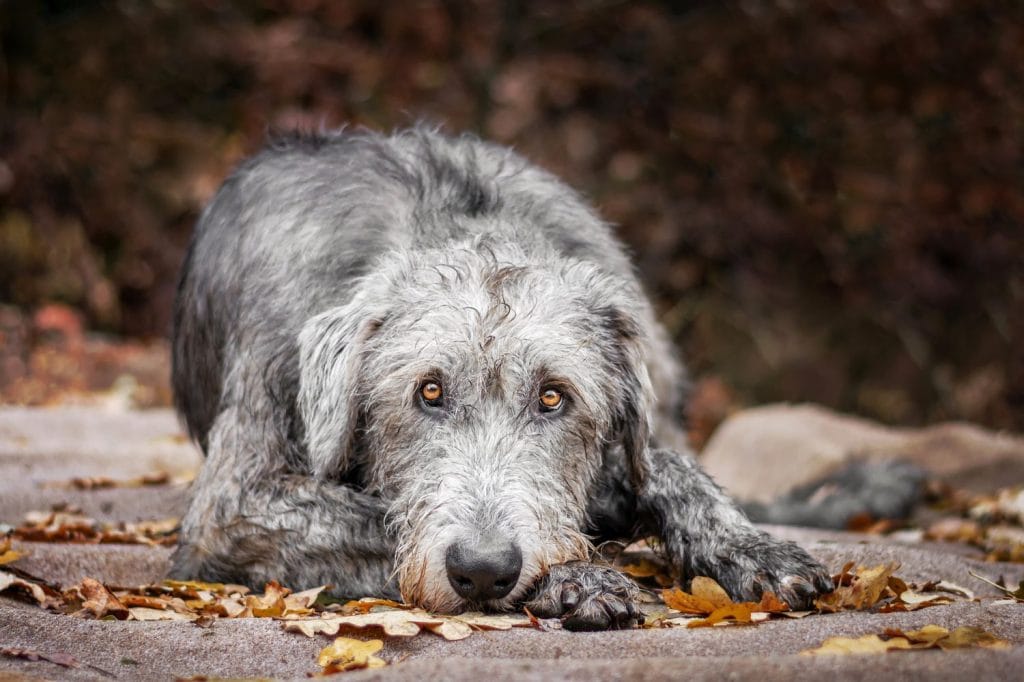
Irish Wolfhound lies on the pad with fallen autumn leaves. The head laid on the front legs and the look at the camera. Blurred background.

At a Glance

Domesticated
Also Known As Wolfhound, Irish Wolfdog, Gentle giant
Diet Omnivore
Activity Diurnal+
Lifespan 7 years
Weight 70 lbs
Status Not Evaluated
Did You Know?

Irish Wolfhounds are among the tallest dog breeds; many stand about 81-86 cm at the shoulder.

Scientific Classification

The Irish Wolfhound is a giant sighthound breed of domestic dog developed historically for hunting wolves and large game and later valued as a companion animal. It is among the tallest dog breeds.

Kingdom
Animalia
Phylum
Chordata
Class
Mammalia
Order
Carnivora
Family
Canidae
Genus
Canis
Species
Canis lupus

Distinguishing Features

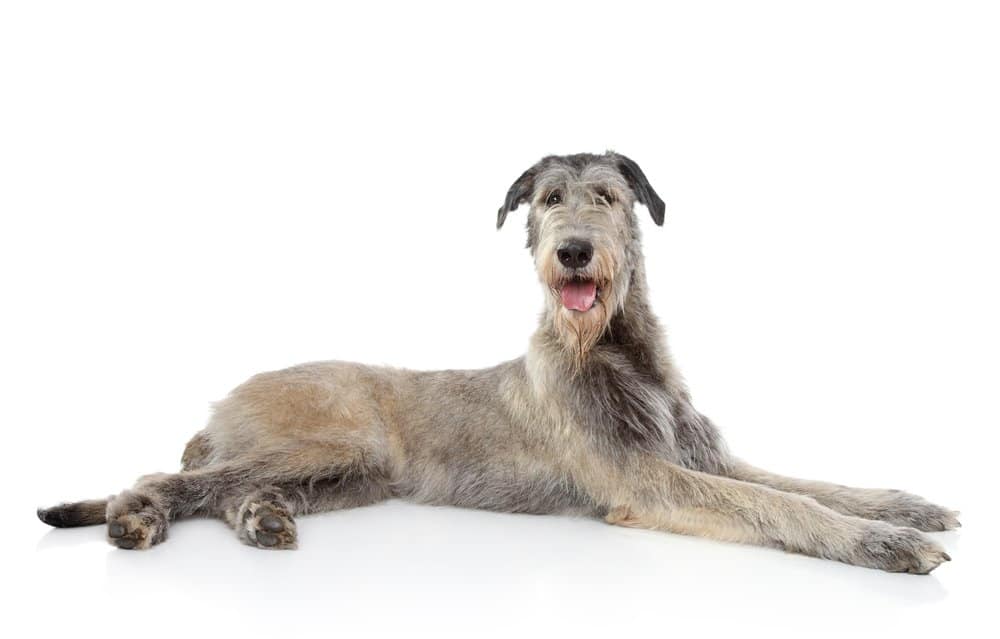
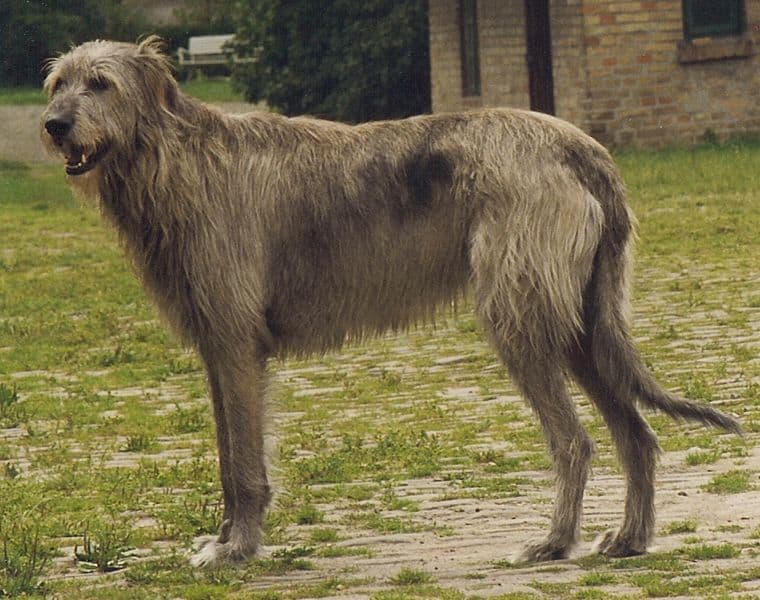
  • Very tall, giant-breed sighthound build with deep chest and long legs
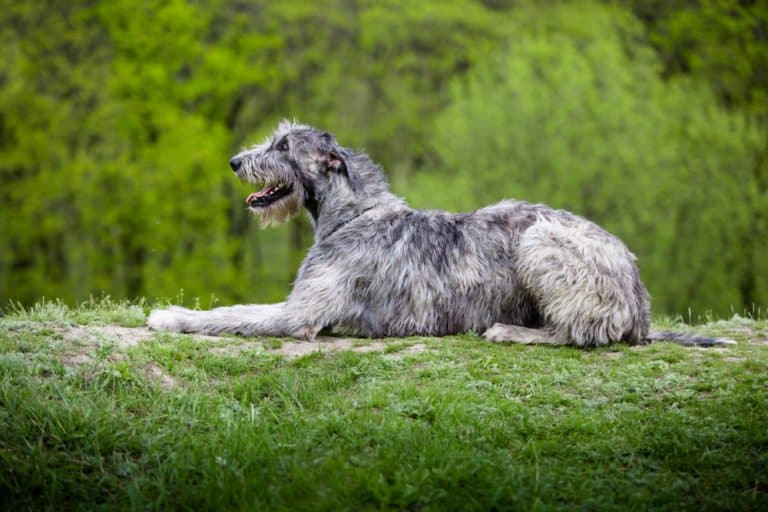
  • Rough/wiry coat, often gray, brindle, fawn, black, white, or wheaten
  • Long, narrow head and muzzle; small folded ears (rose ears)
  • Historically bred for coursing and hunting large quarry; generally calm, gentle temperament

Physical Measurements

Males and females differ in size

Height
♂ 2 ft 9 in (2 ft 7 in – 2 ft 11 in)
♀ 2 ft 6 in (2 ft 4 in – 2 ft 7 in)
Length
♂ 5 ft 7 in (5 ft 1 in – 6 ft 1 in)
Weight
♂ 150 lbs (121 lbs – 181 lbs)
♀ 106 lbs (88 lbs – 121 lbs)
Tail Length
♂ 1 ft 8 in (1 ft 6 in – 1 ft 12 in)
♀ 1 ft 11 in (1 ft 8 in – 2 ft 2 in)
Top Speed
30 mph
fast but slower than sighthounds

Appearance

Primary Colors
Secondary Colors
Skin Type Irish Wolfhound skin has a harsh, wiry, weather-resistant outer coat with a softer undercoat and facial beard and eyebrows. Needs regular brushing, occasional hand-stripping or clipping, and skin checks under facial hair.
Distinctive Features
  • Domestic dog (Canis lupus familiaris) giant sighthound breed: selectively bred for extreme height and speed/stride rather than the more compact, endurance-oriented build typical of wild Canis lupus populations.
  • Among the tallest dog breeds; very long legs, deep chest, and a lean, rangy frame create a pronounced sighthound silhouette distinct from the broader-headed, denser-coated wolf phenotype.
  • Rough/wiry coat with pronounced beard and eyebrows; texture is harsher and more "shaggy" than many other giant breeds and differs from the seasonal, heavily insulating coat cycles typical in wild wolves.
  • Long, narrow head and muzzle with small rose or semi-rose ears; overall expression is keen and houndlike rather than wolf-robust.
  • Historical role (Ireland): developed for hunting wolves and large game and later maintained as a companion/guardian; conformation reflects pursuit/dispatch capability-height and reach over brute bulk.
  • Typical movement: ground-covering, efficient stride; athletic but not heavily muscled-conditioning should emphasize controlled exercise and joint-safe fitness rather than repetitive high-impact work.
  • Health considerations (giant-breed context): elevated risk of gastric dilatation-volvulus (bloat), dilated cardiomyopathy/heart disease, osteosarcoma, and orthopedic issues (hip/elbow problems); growth-related concerns mean diet and exercise should be managed carefully in puppies.
  • Irish Wolfhound (giant sighthound): feed smaller, controlled meals; avoid hard exercise right before or after eating to lower bloat risk; give supportive bedding; keep lean to ease joints and heart; regular heart checks advised.
  • Lifespan context: like many giant breeds, tends to have a shorter average lifespan than smaller domestic dogs; proactive veterinary screening and weight management are particularly important.

Sexual Dimorphism

Sexual dimorphism is typical of domestic dogs and is pronounced in this giant breed: males are generally taller, heavier-boned, and broader through chest and head, while females are usually slightly smaller and finer in build, though both retain the same sighthound outline.

♂
  • Typically greater overall height at the shoulder and heavier body mass; broader chest and more substantial bone.
  • Often a wider head and thicker neck/forequarters; can appear more imposing while still lean.
♀
  • Typically slightly shorter and lighter with finer bone and a narrower head/chest profile.
  • Often appears more refined in outline; still very tall relative to most other breeds.

Did You Know?

Irish Wolfhounds are among the tallest dog breeds; many stand about 81-86 cm at the shoulder.

Despite their size, they're classic sighthounds-built for speed and endurance rather than bulk power.

The breed's rough, wiry coat helped protect it in Ireland's wet, windy climate and rough cover.

Irish Wolfhounds helped inspire modern "gentle giant" archetypes: imposing looks with typically calm manners at home.

Because they mature slowly, many keep a puppy-like "gangly" stage longer than smaller breeds.

Their stride is famously long; safe, open running areas often suit them better than frequent tight turns on slick floors.

They were historically used for large game such as wolves and Irish elk (historical accounts), then later became prized as companions and symbols of Irish heritage.

Unique Adaptations

  • Extreme height and long limbs: a breed-level exaggeration of the domestic dog's variable body plan, enabling long ground-covering strides for pursuit.
  • Deep chest and sighthound silhouette: supports efficient oxygen exchange during fast running, similar to other coursing hounds.
  • Wiry, harsh outer coat with softer undercoat: offers weather and brush protection compared with many smooth-coated dogs.
  • Calm "off-switch": selection for a dog that could live among people when not hunting, distinguishing it from more constantly driven working types.
  • Giant-breed physiology: large frame and rapid early growth require careful nutrition and exercise management compared with other domestic dogs.

Interesting Behaviors

  • "Sighthound scanning": often stand still and visually sweep the horizon, reacting quickly to moving wildlife.
  • Short bursts of speed ("zoomies") followed by long, content lounging-typical sighthound energy pattern.
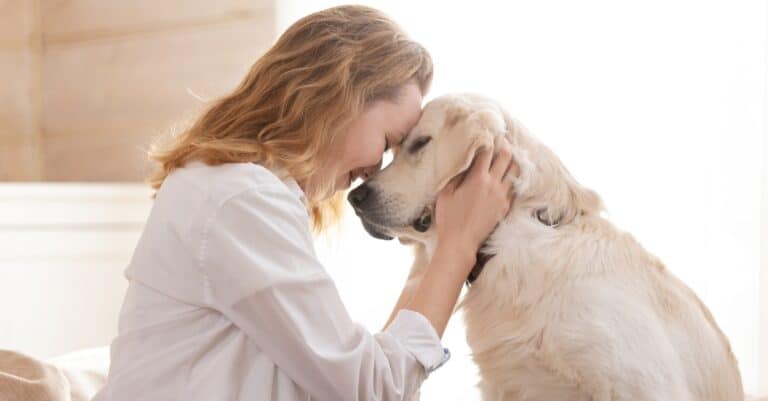
  • Leaning and gentle body contact: many enjoy calm physical closeness despite their size.
  • Soft-mouth carrying: some individuals like to carry toys gently rather than shred them.
  • Chase instinct: strong interest in running animals; recall can be challenging when something bolts.
  • Slow, deliberate play with smaller dogs: many prefer calm greetings and can be sensitive to rude, high-energy approaches.

Cultural Significance

The Irish Wolfhound (Canis lupus familiaris) is a symbol of Irish nobility, guardianship, and national pride. Bred to chase and kill wolves and large game, it is now a gentle giant companion linked to Irish heritage.

Myths & Legends

In the Fenian Cycle, hero Finn MacCool (Fionn mac Cumhaill) has hounds Bran and Sceolan; later stories sometimes link them to the Irish Wolfhound as symbols of loyalty and brave companionship.

In medieval Irish tales, a woman turned into a hound by magic, and her pups became the great hunting dogs of heroes, linking origins from the other world to the Irish Wolfhound (Canis lupus familiaris).

Irish tradition and later historical retellings describe wolfhounds as gifts fit for kings and foreign rulers-prestige animals whose giving signaled alliances, honor, and status across courts in Britain and continental Europe.

Irish Wolfhound (Canis lupus familiaris) is known in folk tales as a large, noble guard dog that watches the hall by the hearth and rises only when danger comes, a common image in Irish stories.

After the Middle Ages, Irish stories linked wolves' loss to the fading of great wolfhounds—a sad tale that later helped 1800s efforts to bring back the Irish Wolfhound (Canis lupus familiaris).

Conservation Status

NE Not Evaluated

Has not yet been evaluated against the criteria.

Population Stable

Life Cycle

Birth 7 pups
Lifespan 7 years

Lifespan

In the Wild
6–8 years
In Captivity
6–8 years

Reproduction

Mating System Polygynandry
Social Structure Managed Domestic
Breeding Pattern Serial
Fertilization Internal Fertilization
Birth Type Internal_fertilization

Irish Wolfhound (Canis lupus familiaris) breeding is usually managed by people. Dogs mate; males and females may breed with different partners across seasons. Breeders plan pairings; there is no lifelong pair bond and humans care for pups.

Behavior & Ecology

Social Pack Group: 4
Activity Diurnal, Crepuscular, Cathemeral
Diet Omnivore Meat-forward meals (e.g., beef or lamb-based diet)

Temperament

Irish Wolfhound (Canis lupus familiaris) is a giant sighthound bred to hunt big game, later for companionship. Compared with wolves, it has a weaker hunting drive, is more friendly toward people, and calmer at home.
Generally calm, patient, and gentle with familiar people; often reserved but not typically sharp with strangers when well-socialized.
Lower tendency toward nuisance barking; more likely to "observe" than to alarm-vocalize, though will use a deep bark if genuinely concerned.
Sighthound traits: strong visual attention to moving targets; variable prey-chase drive-requires secure fencing and leash reliability, especially around small animals.
HUBS (group-common patterns/variation): most individuals prefer close resting contact, brief bursts of activity followed by long rest; variation exists in prey drive, confidence with strangers, and play roughness depending on lines, socialization, and daily enrichment.
Irish Wolfhound (Canis lupus familiaris) needs early, gentle socialization and positive training with rewards for leash manners and impulse control. Gentle exercise while growing; soft bedding and room to stretch.
Irish Wolfhounds have higher risk of bloat (gastric dilatation-volvulus), dilated cardiomyopathy, osteosarcoma, and hip/elbow dysplasia. Feed several small meals, avoid hard exercise near meals, use slow-feeders, and do heart/orthopedic checks.

Communication

Deep bark Infrequent but powerful
Whine/whimper for attention or discomfort
Howl Occasional, context-dependent
Soft grumble/"talking" sounds during handling or settling
Sighs/groans Common in relaxed resting
Sighthound-typical visual signaling: sustained gaze, head/ear orientation toward movement
Body language: loose posture for affiliative intent; tall, still stance when assessing novelty
Physical affiliative contact: leaning, gentle nuzzling, pawing Can be forceful due to size
Tail and ear carriage changes to signal arousal/uncertainty
Scent investigation and limited scent marking Less territorial than many working breeds, but individual variation
Play bows and short chase games; may prefer brief, low-frequency play bouts over prolonged roughhousing

Habitat

Urban Suburban Grassland Steppe Woodland Deciduous Forest Coniferous Forest Tundra Mountain Alpine Meadow Shrubland Desert Wetland Coastal +8
Biomes:
Temperate Forest Boreal Forest (Taiga) Tundra Alpine Mediterranean Desert Hot Desert Cold Savanna Tropical Rainforest Tropical Dry Forest Wetland Freshwater Marine +7
Terrain:
Plains Hilly Valley Coastal Island
Elevation: Up to 16404 ft 3 in

Ecological Role

Domestic omnivorous canid; historically a large-game predator, now primarily a companion animal with incidental predation/scavenging behavior

Historically reduced large predator (wolf) presence and assisted humans in hunting large game In modern settings, limited pest deterrence (presence may discourage some wildlife) Nutrient cycling at a micro-scale via scavenging/consumption of human-provided foods Cultural/working role supporting human livelihoods and companionship rather than a natural trophic regulator

Diet Details

Other Foods:
Grasses Berries and other fruits Vegetables Cooked grains and starches

Human Interaction

Domestication Status

Domesticated

Canis lupus familiaris — the Irish Wolfhound is a giant, rough-coated sighthound from Ireland, bred to hunt wolves and deer and now a companion and show dog with some lure-coursing. Tall, deep-chested and calm. Needs early socialization, gentle training, space, regular low-impact exercise and grooming. Health risks: heart disease, bone cancer, bloat, joint problems; lifespan ~6–8 years.

Danger Level

Moderate
  • Low typical aggression; many individuals are notably gentle, but risk is driven by sheer size/strength.
  • Accidental injury (knockdowns, stepping on feet, leash pulls), especially with children, frail adults, or in confined spaces.
  • If poorly socialized, frightened, or in pain, any large dog can bite; bites from a giant breed can cause severe trauma.
  • Bloat-related distress can cause sudden behavior changes; handling a distressed giant dog can be hazardous without experience.

As a Pet

Suitable as Pet

Legality: Generally legal to own as a pet in most U.S. jurisdictions; may be subject to standard animal control/leash laws and housing/insurance/breed-agnostic size restrictions (e.g., landlord weight limits). Not typically targeted by breed-specific legislation compared with some guarding breeds.

Care Level: Experienced

Purchase Cost: $1,500 - $4,500
Lifetime Cost: $25,000 - $70,000

Economic Value

Uses:
Companion animal (pet market) Show/sport (conformation, lure coursing where permitted) Breeding programs (health-tested lines; stud services) Veterinary, grooming, boarding, training services (notably higher costs due to giant size) HUBS-domestic dog interactions: companionship; sport/show; specialized work roles (breed-dependent); therapy/service potential; and substantial downstream service economy (vet, food, training, transport)
Products:
  • Puppies from registered breeders (often with health testing/guarantees)
  • Stud fees and breeding rights
  • Competition participation and related services (handling, entry fees, travel)
  • Specialized giant-breed food, crates/bedding, vehicles/ramps, and orthopedic-support products
  • Professional services: veterinary cardiology/orthopedics, emergency care (bloat risk), grooming, boarding, and training

Relationships

The Irish Wolfhound is one of the world’s tallest dog breeds and has a history closely tied to Ireland’s ancient hunting and warfare traditions. Originally developed to track large game and later valued by nobles for their calm strength, these dogs nearly vanished after wolves disappeared from Ireland. Careful 19th-century preservation efforts saved the breed, which today is known for its gentle temperament and impressive stature.

Evolution and History

Romans in the 4th century referred to very large dogs among the Gaels (ancient Irish). However, zooarchaeologists say that no dogs of Irish Wolfhound size are known before 1200 AD. That might be because the large Irish dogs didn’t get their massive size until they were crossbred with coursing hounds, known for their size and hunting abilities, from the Middle East in the Middle Ages.

Then, Irish clans used this breed in battle because, despite their gentle nature, the dogs were fierce fighters. Throughout the 16th, 17th, and 18th centuries, Irish Wolfhounds were commended in literature for their docility and strength. Usually owned only by the aristocracy, they were often given as prized gifts to visiting royalty and dignitaries. During the 1700s, though, Irish farmers and hunters chose this breed to help them control the rampant wolf population in the countryside; hence their name.

Unfortunately, these ancestral Irish wolfhounds did their job too well. By the 1860s, the wolves in Ireland had gone extinct, and this dog breed had nearly disappeared. At that time, George Graham, a British army captain, searched Ireland for any remaining Irish wolfhounds and made it his goal to do what he could to protect the breed. He is still well-revered for this work.

Somewhere in their history, the breed had both short-legged and long-legged types, but today’s Irish Wolfhound is among the tallest of all breeds of dog. Irish wolfhounds are sighthounds, which means they are able to use their keen eyesight and fast speed to hunt. They are known for their very dignified, calm, and courageous temperament.
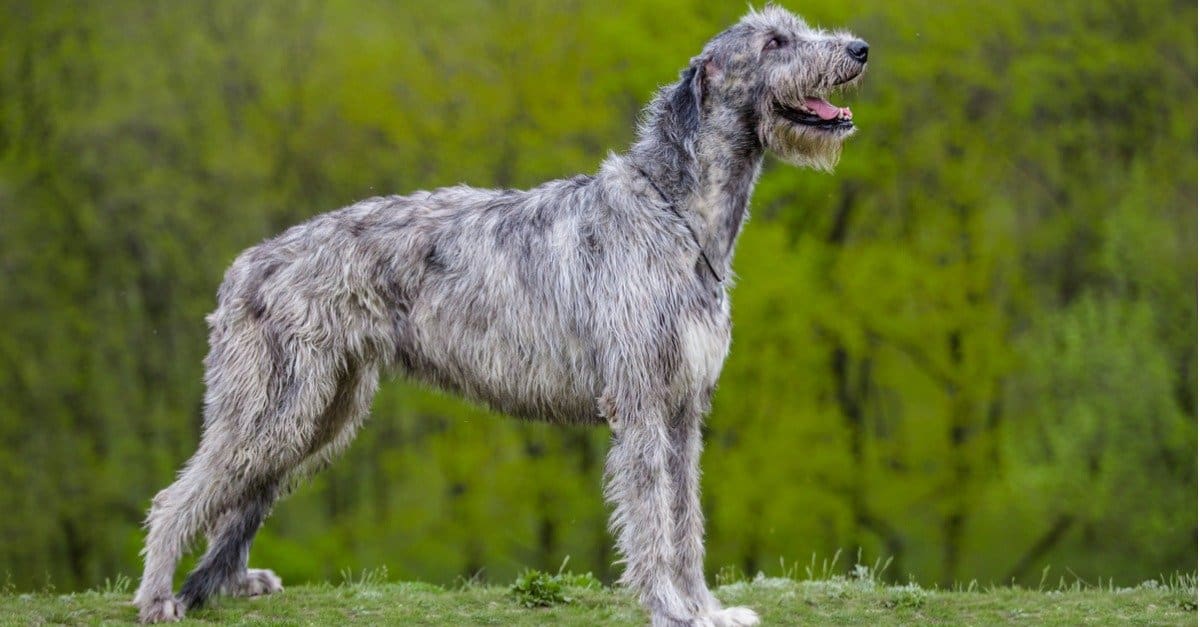
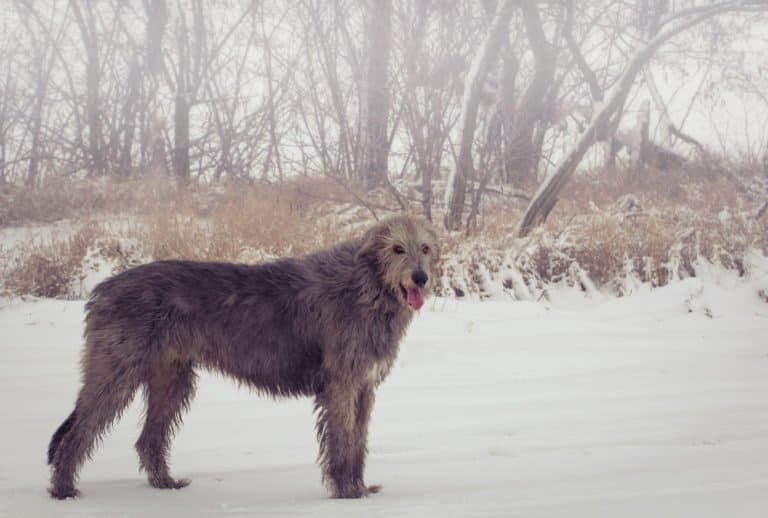
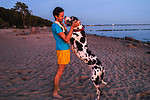
Irish wolfhound standing outside, looking up

This breed was so good at doing its job that no wolves remained in Ireland by the 18th century.

3 Pros and Cons of Ownership

ProsCons
Calm
These dogs have a very calm and gentle temperament, making them a good pet for the whole family.
Expensive
Taking care of this breed can be expensive. Since they are so large, be prepared to spend more money on food, medication, and pet supplies.
Quiet
This dog breed does not bark very often, so you won’t need to worry about being disturbed by constant barking anytime anyone walks by your house.
Shorter lifespan
On average, these dogs only live between 6 and 10 years. This is a short amount of time compared to other breeds and won’t give you as much time to enjoy your furry friend.
Easy to groom
These dogs don’t shed a lot. Their coats need to be brushed only about once a week.
Not great for very young children
The large size of this breed is a reason to think carefully before bringing one around babies and toddlers. They could accidentally injure or scare young children.
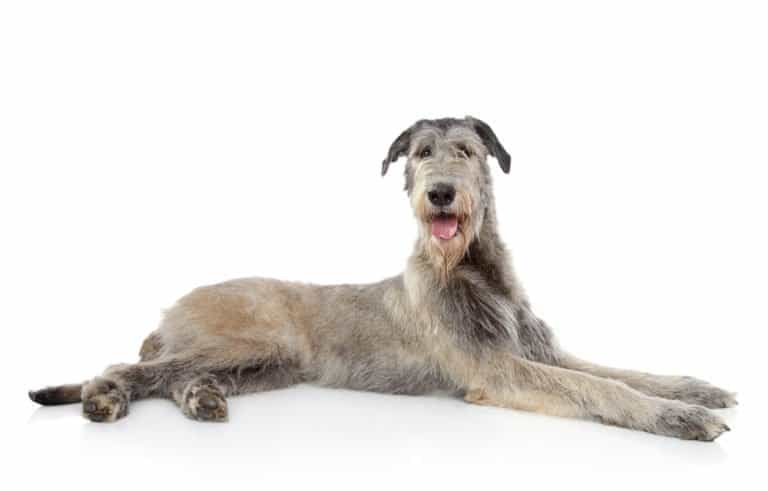
Irish Wolfhound(Canis familiaris)

Possibly the tallest breed of dog, the Irish Wolfhound typically weighs between 130 and 160 pounds.

Size and Weight

Irish wolfhounds are large dogs and possibly the tallest breed of dog. Males are at least 32 inches tall, but normally closer to 36 inches, and females are at least 30 inches tall, but typically closer to 33 inches. A fully grown male weighs as much as 160 pounds, and a fully grown female weighs up to 130 pounds. A 2-month-old puppy typically weighs around 24 pounds. By 6 months, male puppies are nearly 100 pounds, and female puppies are around 90 pounds. They are fully grown by the time they are three years old.
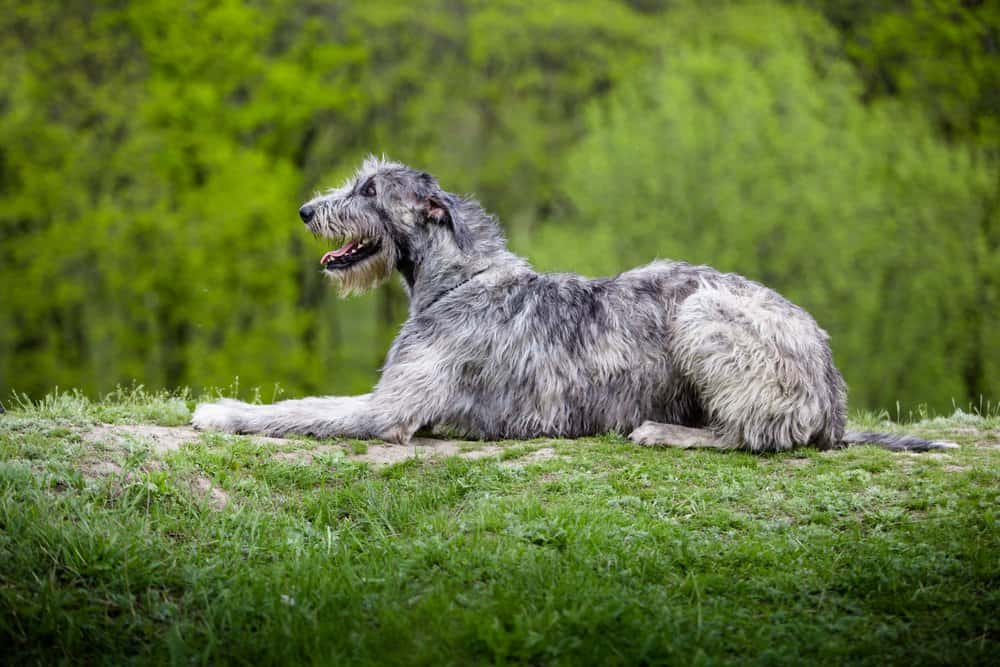
Irish Wolfhound (Canis familiaris) - irish wolfhounds on log

Irish Wolfhound owners need to be aware of the breed’s susceptibility to certain diseases to care for a dog properly.

Common Health Issues

If you are considering adopting one of these dogs, there are a few common health issues you should be aware of. It is also important to note that they may not ‘complain’ when something is bothering them, which can make it more challenging to determine that something is wrong.

Irish wolfhounds may develop cancer. Osteosarcoma is a bone tumor most often found in the limbs, but it can also be found in the bones in a dog’s spine, ribcage, or even skull. Some Irish wolfhounds also develop heart disease. This can include dilated cardiomyopathy. Oftentimes, your vet will be able to treat this disease.

This breed can also be impacted by gastrointestinal issues known as bloat or torsion, which would need to be treated immediately. Pneumonia is another health concern to be on the lookout for. Finally, before bringing home an Irish wolfhound puppy, make sure they have been screened for a liver shunt, which is a developmental disorder.
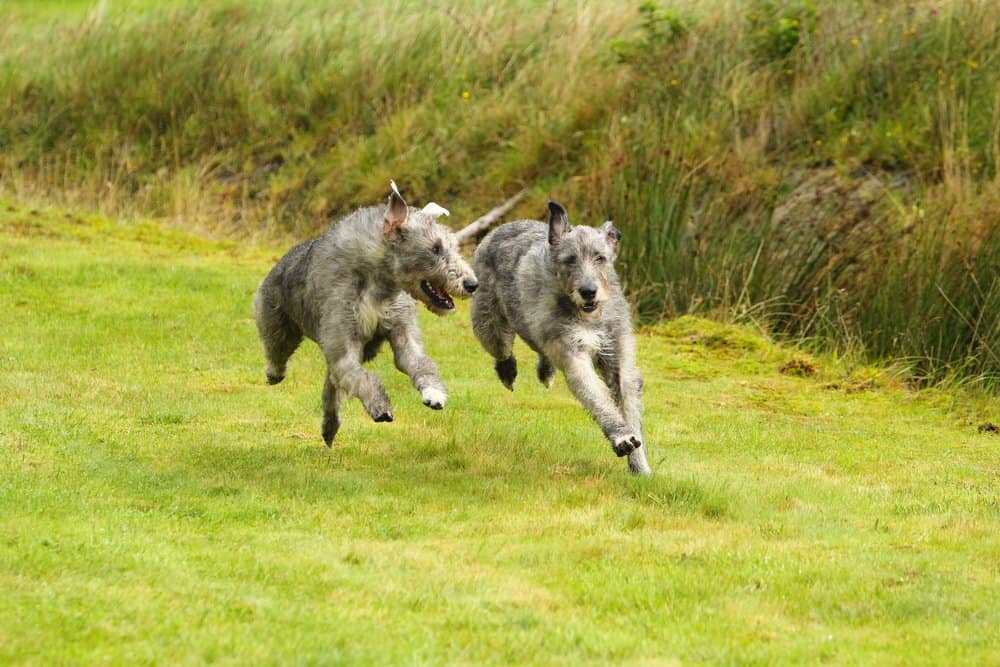
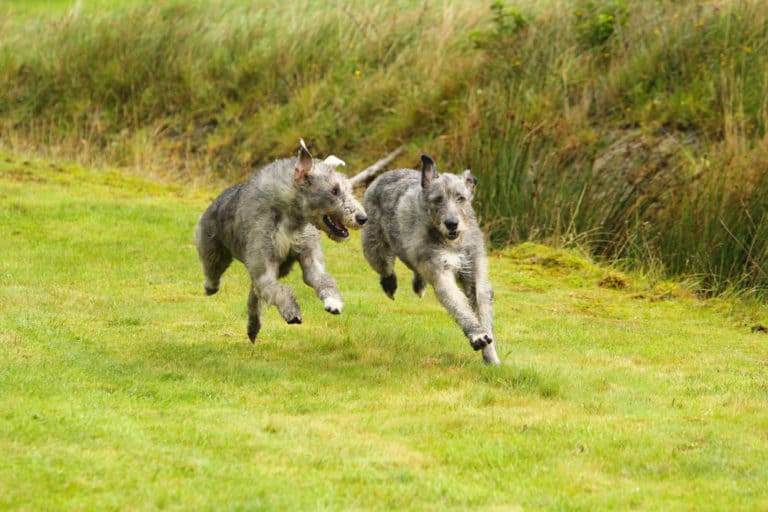
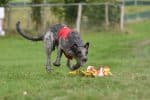
Irish wolfhounds running

Normally calm and well-behaved, Irish Wolfhounds, bred as hunters, might go on the chase when outside.

Temperament

These dogs are known for their courageous behavior. However, they also do not have an aggressive personality, making them a good dog to have around children. They are also very calm dogs. This trait also makes them a good family pet. However, if you are going to have an Irish wolfhound around small children, you’ll still want to be sure to closely supervise simply because of how large these dogs are.

Another one of the traits that defines this breed is its easygoing nature. While they will typically listen to what you are asking them to do, it may take some time. While an Irish wolfhound will be well-behaved inside, it is always a good idea to be extra aware when you are outside with them. They are hunters by nature, so they may spot an animal and try to chase it.

Care

If you bring home one of these dogs, there will be a few key things you’ll want to consider when planning their care. Being aware of their health needs, dietary and nutritional needs, and other aspects of the care they’ll need will set you up for success with your new furry friend.
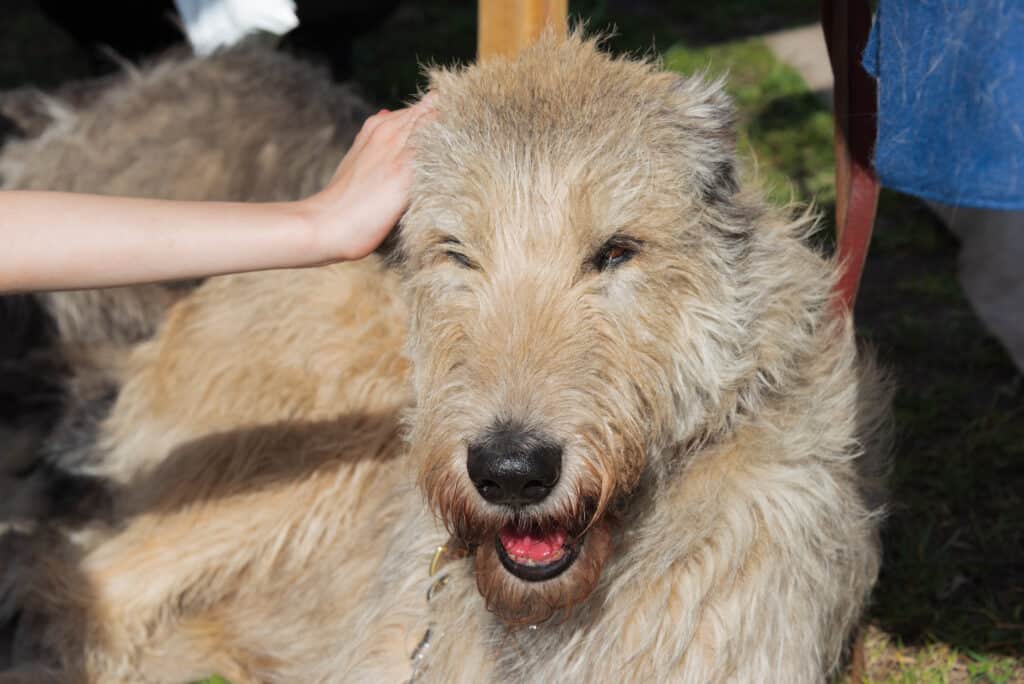
Irish wolfhound being pet

Like all pets, caring for an Irish Wolfhound involves being concerned about dietary and nutritional needs.

The Best Dog Food

Since they are very large dogs, be prepared for them to eat a lot of food. For both puppies and adults, it is best to feed them numerous small meals throughout the day, rather than a few large meals. Puppies can overeat if you give them too much food at any one meal, which could cause them to get sick.

When selecting food for your puppy, you want to choose natural foods that are very low in calcium and have few to no added supplements. Raw diets or high-quality kibbles will be your best bet for your Irish wolfhound puppies.

Unlike puppies, adult Irish wolfhounds are able to self-regulate. This means that they only eat when they’re hungry and won’t overeat. Once your puppy is an adult, you could choose to continue feeding them small meals throughout the day, or you could switch to free feeding and let your dog eat when he’s hungry.

When selecting food for your fully grown Irish wolfhound, you’ll also want to look for quality foods. A raw diet or adult kibble made with high-quality ingredients can also work for an adult Irish wolfhound. When creating your dog’s diet, you should try to include about 25% protein and 15% fat. Keep this breed’s vulnerability to heart disease, like dilated cardiomyopathy, in mind.
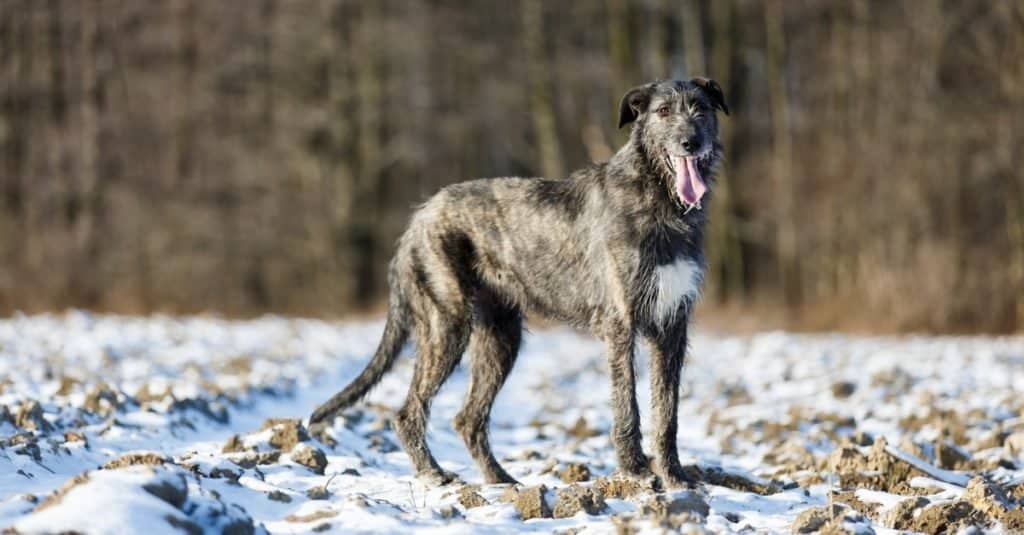
Biggest Dog Breeds_ Irish Wolfhounds

Irish Wolfhounds do not shed a lot, but they can look scraggly if not brushed frequently.

Maintenance and Grooming

This breed is relatively easy to take care of as far as grooming goes. Irish Wolfhounds have a double coat that consists of a harsh, wiry outer coat covering a soft undercoat. Their hair does not get matted. However, you will want to brush them a few times a week and pull out dead hairs about two times each year. Without doing this, your dog will look pretty scraggly.

Unlike some other breeds that shed heavily, Irish Wolfhounds shed moderately throughout the year, and regular brushing can help manage loose hair.. You will want to keep an eye on their beard and clean it regularly since it will get dirty when the dog eats.

Training

Irish wolfhounds are relatively easy to train. They respond best to positive reinforcement. When choosing a training method, you’ll want to look for one that centers around positively reinforcing your dog. You may find that your Irish wolfhound puppy is clumsier and doesn’t listen as well, but after they are a year old, this shouldn’t be a problem anymore.

Exercise

Irish wolfhounds need between 20 and 40 minutes of exercise each day. When your dog is still a puppy, it is important to make sure that they don’t get too much exercise to damage their growing bones, ligaments, and joints, which are still softer.

It is also very important to avoid exercising your dog right around the time they eat. Since Irish wolfhounds are at risk of bloat, giving them exercise right before or after a meal can be dangerous.

Puppies
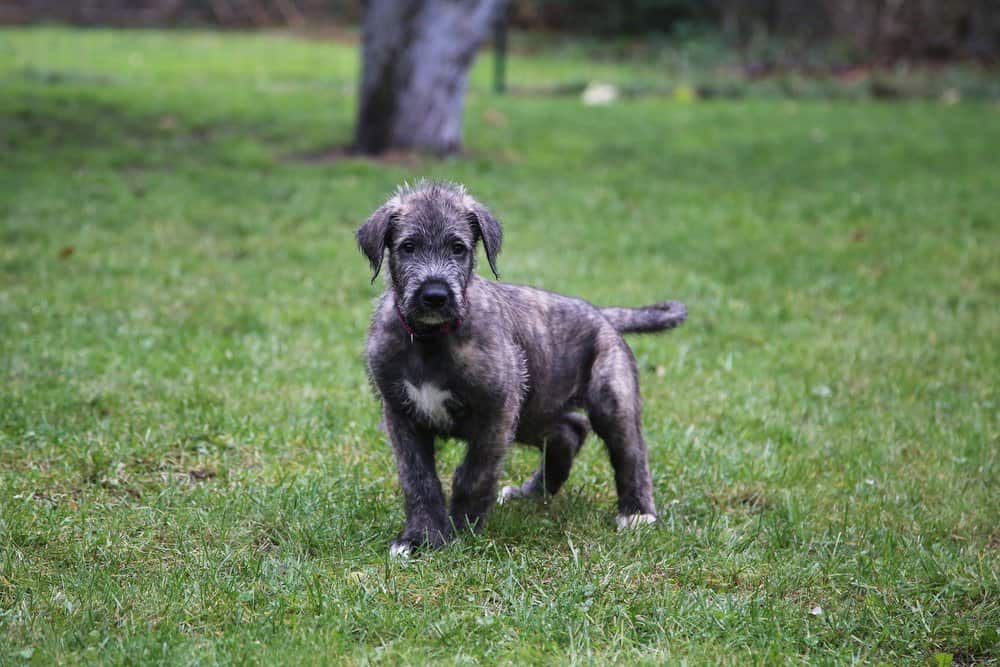
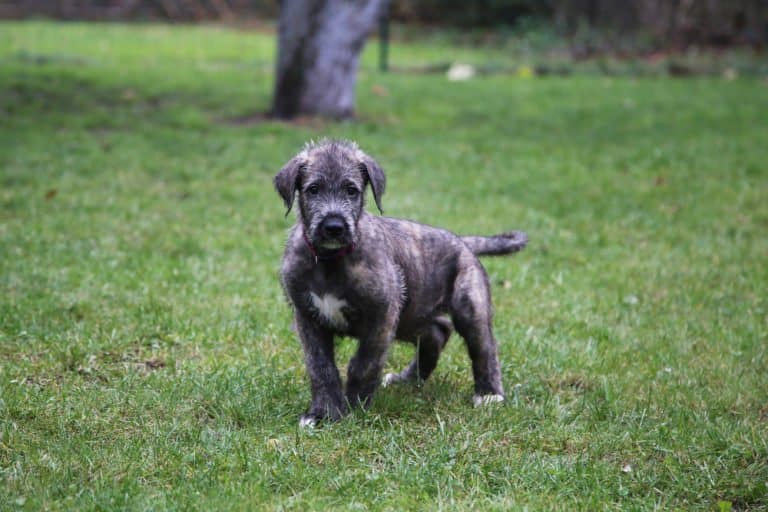
Irish Wolfhound (Canis familiaris) - irish wolfhound puppy

Irish wolfhound puppies are slow to mature.

There are a few things you’ll want to keep in mind if you are thinking about adopting a puppy. First, remember that these dogs are very large dogs, so the small puppy you bring home will be growing very quickly. They are slow to mature, so be prepared to deal with puppy behaviors, from a large dog, for quite some time.

You’ll definitely want to be prepared to sign your puppy up for a training class. If they aren’t well-trained, they can cause a lot of damage simply due to their large size, even if they aren’t trying to get into trouble.

When raising an Irish wolfhound puppy, it is also important to be aware that their joints and bones still have a lot of developing to do. Because of this, you want to be careful to limit how much exercise they get and take care to prevent stressing their joints.

Interaction with Children

This breed can make a great family dog. However, due to their large size, they would be best suited for a home with older children. These dogs could accidentally knock down or scare babies or toddlers.

This dog breed is very gentle and loving with children. It will still be important to make sure your children know how to appropriately touch the dog and how to safely play with them. As with other dog breeds, supervising your child when they are near your Irish wolfhound will be important to ensure everyone’s safety.

Similar Dogs

Greyhounds, Great Danes, and bloodhounds are three dog breeds that are similar to an Irish wolfhound.

  • Great Dane: Great Danes and Irish wolfhounds are two of the largest dog breeds. There is sometimes debate about which breed is the largest. In general, Great Danes weigh more than Irish wolfhounds, but an Irish wolfhound is taller than a Great Dane.
  • Greyhound: Greyhounds and Irish wolfhounds are both very large dogs. Additionally, both of these dogs are sighthounds, which means they are able to spot the prey very well.
  • Bloodhound: Irish wolfhounds are also similar to bloodhounds, like an Irish bloodhound. Both of these dogs were bred to be hunting dogs and are quite large in size. However, an Irish wolfhound weighs more and is taller than an Irish bloodhound.
  • Scottish Deerhound: A Scottish deerhound is another breed that is very similar to the Irish wolfhound. These dogs can be hard to distinguish from Irish wolfhounds because of their large size and similar coloring. However, Irish wolfhounds are taller and more muscular than Scottish deerhounds. They also have a longer and slightly curved tail, whereas a Scottish deerhound has a tail that tapers and nearly touches the ground.

Famous Irish Wolfhounds

As one of the largest, if not the largest, dog breeds, there are a few ‘famous’ Irish wolfhounds you might like to know about:

  • Liam Hemsworth’s dog Dora: Dora is a Golden Doodle-Irish wolfhound mix that Liam rescued in 2015 when she was only 6 months old.
  • John F. Kennedy: When he was president, John F. Kennedy had an Irish wolfhound named Wolf. Wolf was a gift from Father Thomas Kennedy, a priest in Ireland.
View all 59 animals that start with I

Sources

  1. American Kennel Club / Accessed September 10, 2018
  2. Pet Helpful / Accessed September 10, 2018
  3. Pernille Monberg / Accessed September 10, 2018
  4. Irish Wolfhound Club of America / Accessed September 10, 2018
  5. Irish Wolfhound Club of America / Accessed September 10, 2018
  6. Feeding My Dog Breed / Accessed September 10, 2018
  7. Vet Specialists / Accessed September 10, 2018
  8. Petful / Accessed September 10, 2018
  9. Dogtime / Accessed September 10, 2018
  10. Your Purebred Puppy / Accessed September 10, 2018
  11. Bubbly Pet / Accessed September 10, 2018
Thank you for reading! Have some feedback for us?


Irish WolfHound FAQs (Frequently Asked Questions)

Yes, Irish Wolfhounds are good pets. They are calm and easy-going dogs who are good with children.