





J
Species Profile

Japanese Chin

Canis lupus familiaris

Silk-coated royalty in pocket size
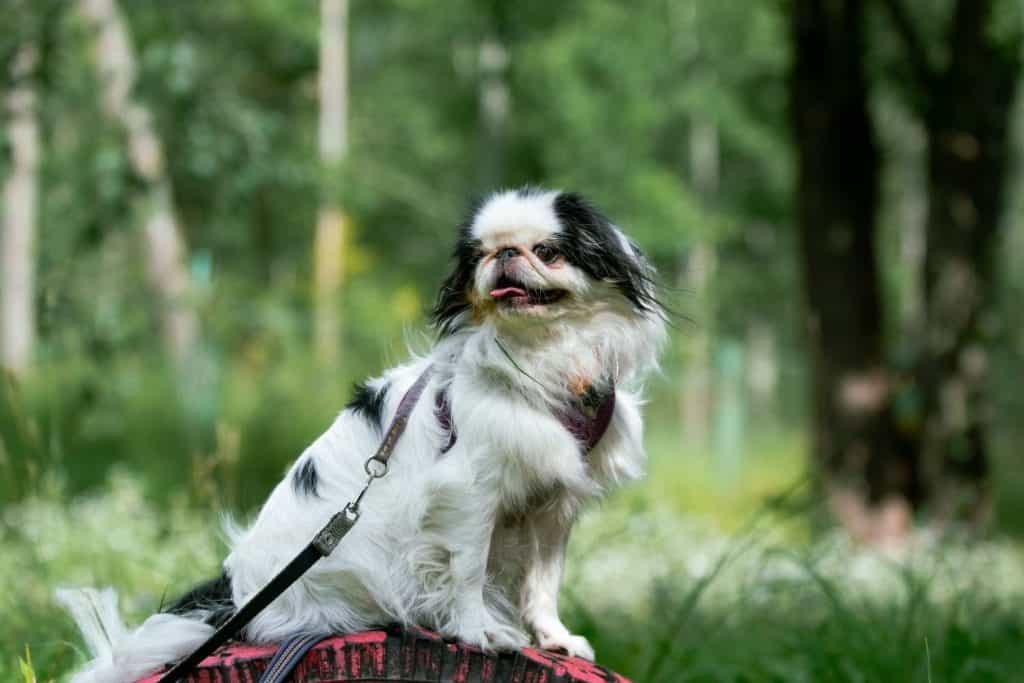
LiubovAz/Shutterstock.com

Japanese Chin Distribution

Click a location to explore more animals from that region

Origin Location

This map shows the native origin of the Japanese Chin. As a domesticated species, they are now found worldwide.

Loading map...

Found in 1 country

Size Comparison

Human 5'8"
Japanese Chin 9 in

Japanese Chin stands at 14% of average human height.

A striking set of expressive dog portraits showing unique character, mood, and breed diversity. Ideal for calendars, pet products, animal welfare, and more. Japanese chin

At a Glance

Domesticated
Also Known As Japan Chin, Japanese Spaniel, Chin, Japanese Toy Spaniel
Diet Omnivore
Activity Diurnal+
Lifespan 5 years
Weight 4.1 lbs
Status Not Evaluated
Did You Know?

Despite the name, the breed's early history is tied to East Asia's imperial gift culture; small companion dogs were exchanged among courts.

Scientific Classification

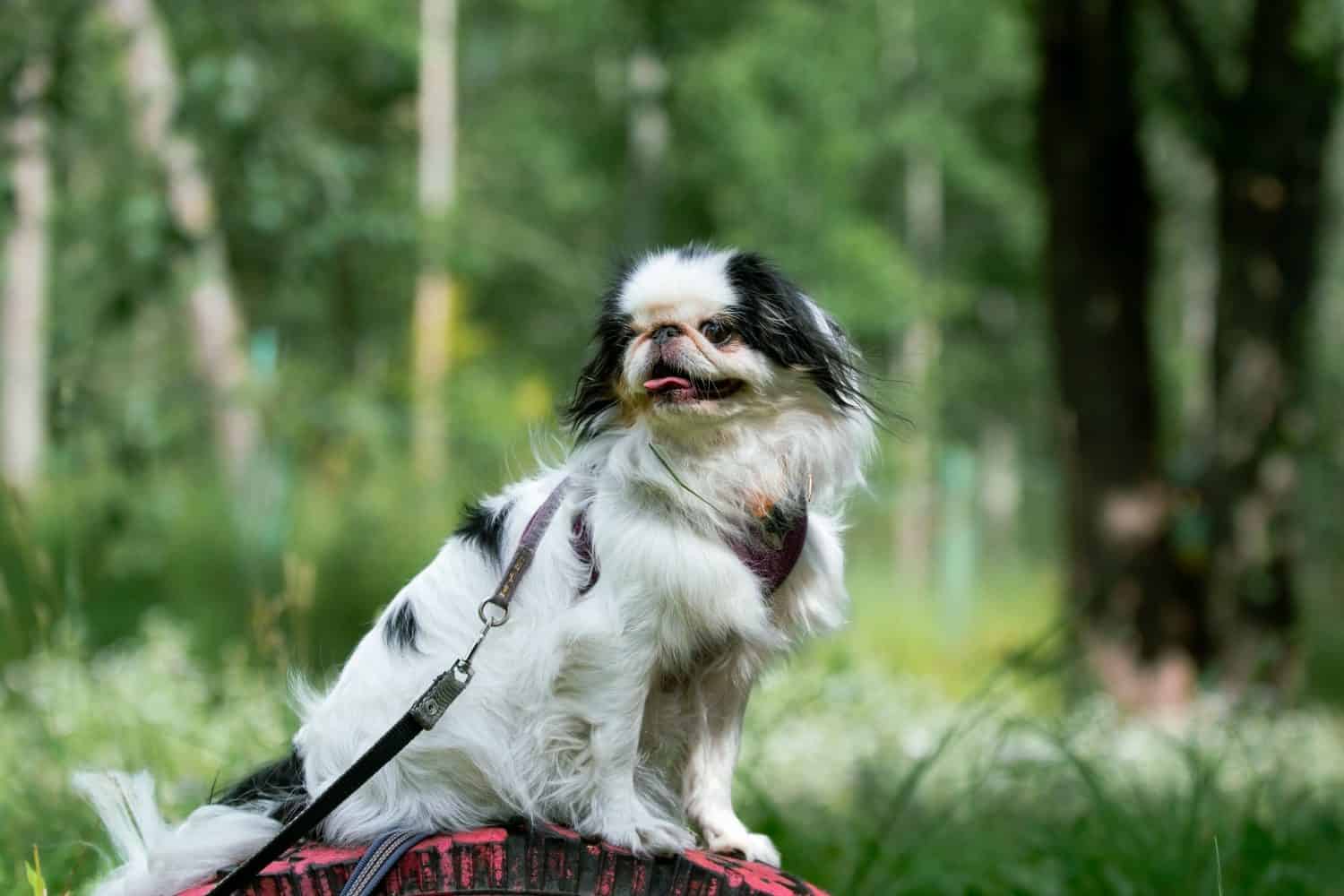
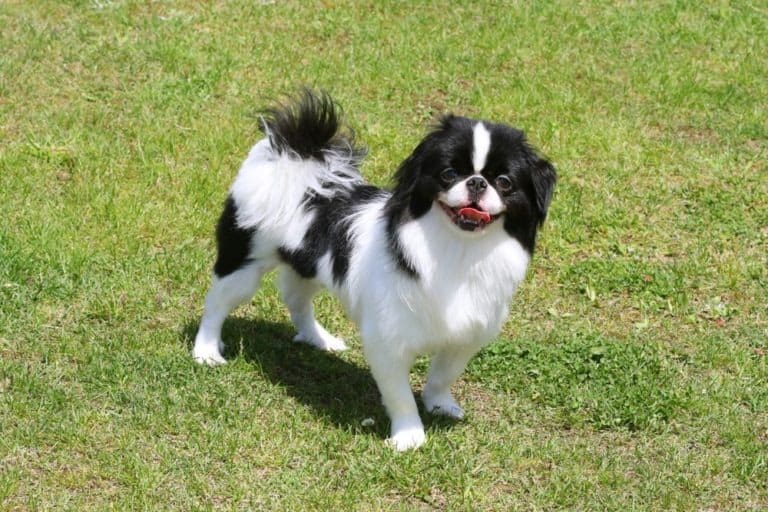
The Japanese Chin is a small toy dog breed developed as a companion animal, known for a short, broad muzzle, large expressive eyes, abundant silky coat, and a distinctive plumed tail carried over the back.

Kingdom
Animalia
Phylum
Chordata
Class
Mammalia
Order
Carnivora
Family
Canidae
Genus
Canis
Species
Canis lupus

Distinguishing Features

  • Toy-sized companion dog with a short, broad (brachycephalic) muzzle
  • Large, round, prominent eyes with a characteristic wide-eyed expression
  • Silky, profuse coat (often black-and-white or red-and-white) with feathering on ears, tail, and legs
  • Plumed tail carried arched over the back
  • Refined, lightly built frame compared with some other brachycephalic toy breeds

Physical Measurements

Males and females differ in size

Height
10 in (8 in – 11 in)
9 in (8 in – 10 in)
Length
1 ft 4 in (1 ft 1 in – 1 ft 6 in)
1 ft 4 in (1 ft 2 in – 1 ft 6 in)
Weight
9 lbs (7 lbs – 11 lbs)
6 lbs (4 lbs – 8 lbs)
Tail Length
5 in (4 in – 6 in)
5 in (4 in – 5 in)
Top Speed
12 mph
Quick in short bursts

Appearance

Primary Colors
Secondary Colors
Skin Type Japanese Chin (Canis lupus familiaris) has long, low-shedding coat with little undercoat. Mild brachycephalic facial folds; big eyes and short muzzle easily irritated. Needs regular grooming to prevent mats and keep skin healthy under feathering.
Distinctive Features
  • Toy companion breed (small, fine-boned) selectively developed for human companionship rather than working/utility roles typical of many domestic dogs; far smaller and shorter-muzzled than the base species context of Canis lupus.
  • Brachycephalic head shape: short, broad muzzle with a pronounced stop; contributes to the breed's characteristic "chin" expression and distinguishes it strongly from wolf-like craniofacial proportions.
  • Large, round, expressive eyes that are prominent; predisposes to eye injury/irritation (e.g., corneal ulcers) compared with many other dogs.
  • Silky, straight, profuse coat with heavy feathering on ears, chest ruff, legs, and a plumed tail carried over the back-signature ornamental profile.
  • Light, elegant gait; compact body with a slightly square outline; ears are V-shaped and heavily feathered, often giving a "butterfly" framing to the face.
  • Common health risks: short-faced breathing problems (snoring, heat intolerance), eye issues (dry eye, corneal ulcers, eye popping risk), kneecap slipping, crowded teeth from a small jaw and gum disease, and some heart murmurs.
  • Brush feathering several times a week to prevent mats; clean and watch eyes often; brush teeth daily if possible; avoid heat and exercise in hot, humid weather; use a harness, not a collar.
  • Species context (domestic dog): a selectively bred form of Canis lupus familiaris with temperament and morphology shaped for companionship; not a wild species and not managed under wildlife conservation status.

Sexual Dimorphism

Sexual dimorphism is typically mild in Japanese Chin compared with many larger canids: males are often slightly larger/heavier with a fuller ruff, while females may appear a bit finer-boned. Both sexes share the hallmark brachycephalic head, large eyes, and plumed tail.

  • Slightly larger overall size and heavier bone on average.
  • Often a more pronounced mane/ruff and overall coat fullness around the neck/chest.
  • Slightly smaller, more refined frame on average.
  • Coat feathering present but may appear marginally less profuse than in males.

Did You Know?

Despite the name, the breed's early history is tied to East Asia's imperial gift culture; small companion dogs were exchanged among courts.

Japanese Chins are known for a "cat-like" habit of using their paws to wash their face and for enjoying high perches like sofa backs.

Their plumed tail is characteristically carried arched over the back, accentuating the breed's balanced, square outline.

They often have a light, springy gait and can "dance" or spin when excited-an attention-seeking companion behavior.

The classic color pattern is black-and-white (also red-and-white), with facial markings that highlight the breed's large, expressive eyes.

Like many toy breeds, they were developed primarily for companionship rather than hunting or herding work.

Unique Adaptations

  • Brachycephalic head shape (breed trait): shortened muzzle and broad skull create the signature "upturned" face; this is distinct from the ancestral gray wolf's long muzzle built for endurance hunting.
  • Large, prominent eyes (breed trait): enhance expressive communication with humans but increase vulnerability to corneal injury and dryness compared with longer-faced dogs.
  • Silky, feathered coat (breed trait): long furnishings on ears, legs, and tail provide an elegant outline; requires regular grooming to prevent tangles.
  • Plumed tail carriage over the back (breed hallmark): a structural/coat presentation trait selected in toy companions, unlike the wolf's functional tail carriage for balance and signaling.
  • Human-directed temperament (domestication context): compared with the gray wolf, Japanese Chins show intensified affiliative behaviors, reduced flight distance, and strong preference for human proximity-traits shaped by thousands of years of dog domestication and targeted toy-breed selection.

Interesting Behaviors

  • Perching behavior: often chooses elevated spots (chair backs, cushions) to observe the room, reflecting an alert companion temperament.
  • Face-washing: uses paws to wipe the muzzle/eyes, a frequently noted Chin quirk.
  • Velcro companionship: follows favored people from room to room and settles close, thriving on calm attention.
  • Spin-and-prance greeting: may circle or do quick, dainty steps when excited, especially around familiar visitors.
  • Quiet watchfulness: tends to be less bark-driven than many small breeds, but will alert to novel sounds or guests.
  • Selective play bursts: short, energetic play sessions followed by long lounging-typical of a lap-oriented toy dog.

Cultural Significance

The Japanese Chin (Canis lupus familiaris) is known as a court companion in East Asia and was popular in Victorian and Edwardian Western times. A palace lapdog, it means fancy indoor life, close human bonds, an expressive face, small size, and affection.

Myths & Legends

Legend says small spaniel-like pet dogs, including the Japanese Chin (Canis lupus familiaris), were given as gifts between East Asian royal courts, entering Japanese noble circles as status symbols.

Palace companion tales: period anecdotes describe Chin-type lapdogs kept in imperial and aristocratic households, carried in sleeves or cradled on cushions, their calm presence treated as part of refined daily ritual.

"Cat-like dog" storytelling: longstanding breed lore in fanciers' circles compares the Chin to a cat-cleaning its face, perching, and moving with delicate precision-turning these behaviors into a signature cultural narrative about its temperament.

Lucky lapdog association: in some modern Japanese and Western companion-dog traditions, Chin-type dogs are spoken of as bringing serenity and good fortune to the household simply by being a gentle, watchful presence.

Stories about the name 'Chin' say it means court lapdogs, not working dogs, and this shows the Japanese Chin (Canis lupus familiaris) long history as a breed made to be a companion.

Conservation Status

NE Not Evaluated

Has not yet been evaluated against the criteria.

Population Stable

Life Cycle

Birth 2 pups
Lifespan 5 years

Lifespan

In the Wild
2–12 years
In Captivity
8–15 years

Reproduction

Mating System Polygyny
Social Structure Managed Domestic
Breeding Pattern Serial
Fertilization Internal Fertilization
Birth Type Managed_selective

Japanese Chin (Canis lupus familiaris): Breeders usually mate one male with several females over time (polygyny). Matings are human-managed, internal fertilization, episodic during female heat, no lasting pair bonds; careful health screening and vet help are often needed.

Behavior & Ecology

Social Family Group: 2
Activity Diurnal, Crepuscular, Cathemeral
Diet Omnivore Highly palatable animal-protein foods (e.g., cooked chicken or turkey; also small-breed wet food/kibble formulated for dental health).

Temperament

Affectionate, companion-oriented; seeks close contact and will frequently follow preferred humans room-to-room
Gentle and sensitive to harsh handling; responds best to calm, reward-based training (can shut down with intimidation)
Playful in short bursts; notable breed-typical quirky play (e.g., spinning/darting 'zoomies') rather than sustained endurance activity
Moderate-to-low prey/chase drive compared with many canids; more likely to observe than pursue
Reserved or polite with strangers; early socialization strongly influences confidence and reactivity (HUBS: wide range from outgoing greeter to quiet watcher)
Alert but typically not persistently yappy; may vocalize for attention or as an alarm, then settle when reassured
Health-linked behavior/care context: brachycephalic structure can reduce heat and exercise tolerance-many self-limit activity; owners should prevent overheating and avoid intense exertion in warm/humid conditions
Care context: heavy shedding/coat maintenance needs can affect comfort and sociability-regular grooming reduces mat-related irritability; eyes may be sensitive/tear-prone, and discomfort can increase face-rubbing or pawing behaviors

Communication

Soft barks or single-note alarm barks Often brief, situation-specific
Whines/whimpers for attention, proximity, or routine requests
Low grumbles or 'talking' sounds during play or when mildly displeased
Sighs/snorts Can increase with excitement or exertion; also influenced by short muzzle anatomy
Highly expressive facial signaling using large eyes and head tilts; sustained gaze to solicit interaction
Proximity-seeking: leaning, lap-climbing, pawing, and nudging as primary affiliative signals
Tail carriage (plumed tail over back) and whole-body wags to signal friendly arousal; can stiffen posture when uncertain
Play bows, spins, and quick darting movements to initiate play; short, frequent play invitations rather than long sessions
Scent communication typical of domestic dogs but generally less intense territorial marking than many larger breeds; routine-based signaling (going to door/food area) is common
Stress signals: lip licking, yawning, turning away, and freezing-important to respect due to the breed's sensitivity; discomfort from eye/airway/orthopedic issues can present as face-rubbing, pawing, or irritability

Habitat

Biomes:
Temperate Forest Temperate Grassland Boreal Forest (Taiga) Tundra Alpine Mediterranean Desert Hot Desert Cold Savanna Tropical Rainforest Tropical Dry Forest Wetland Freshwater Marine +8
Terrain:
Plains Coastal Hilly Valley
Elevation: -7874 in – 18044 ft 8 in

Ecological Role

Domesticated companion omnivore; ecologically a human-subsidized consumer rather than an active predator.

Companionship and social support to humans (primary functional role) Minor pest deterrence in household settings (occasionally targets rodents/insects) Opportunistic cleanup/scavenging of food waste when unmanaged (generally should be prevented for health and public hygiene)

Diet Details

Main Prey:
Small mammals Small birds Insects and other invertebrates Fish or meat scraps
Other Foods:
Starches, grains and legumes Vegetables Fruits Edible plant matter

Human Interaction

Domestication Status

Domesticated

Japanese Chin (Canis lupus familiaris) is a fully domesticated toy companion breed from small East Asian dogs, developed in Japan for royal homes. Tiny and brachycephalic (short, broad muzzle) with big eyes, silky coat and plumed tail, they bond to people, act as lap/therapy dogs, and need grooming and care for breathing, eye and joint problems.

Danger Level

Low
  • Bites are uncommon but possible, typically linked to fear/pain/poor handling; small jaw reduces severe-injury likelihood compared with large breeds.
  • Zoonotic/parasite risks similar to other dogs (fleas/ticks, intestinal parasites) if preventive care is poor.
  • Allergy triggers (dander/saliva) for sensitive individuals.
  • Injury risk mainly from trips/falls (small dog underfoot) rather than aggression.

As a Pet

Suitable as Pet

Legality: Generally legal as a pet in most jurisdictions; typical dog ownership rules apply (licensing, leash laws, vaccination/rabies compliance). Breed-specific bans are uncommon; brachycephalic airline transport restrictions may apply for some carriers.

Care Level: Moderate

Purchase Cost: $800 - $2,500
Lifetime Cost: $15,000 - $45,000

Economic Value

Uses:
Companion animal (pet keeping) Ethical breeding and pedigree registration Conformation showing Therapy/visitation work (temperament-dependent) Pet services (grooming, boarding, training) Veterinary services (preventive care; brachycephalic/eye/orthopedic management)
Products:
  • puppies/adoptions and stud services (regulated/ethical contexts)
  • grooming tools and professional grooming (coat brushing, trimming, bathing)
  • brachycephalic-safe harnesses, cooling aids, travel carriers
  • dental-care products (toothbrushes/chews) due to small-breed crowding risk
  • specialty veterinary diagnostics/treatments (eye care, airway evaluation, patella management)
  • show-related goods/services (handling, registration, event fees)

Quick Take

  • This dog grooms itself, climbs furniture, and shares other traits with a completely different species, which is not what most people expect from a dog breed. Explore the cat-like traits →
  • Its origin story has never been fully resolved, with competing accounts that span centuries, continents, and royal courts. See the royal history →
  • One common ingredient found in many popular dog foods could put this breed's heart at serious risk. Check the diet risks →
  • This gentle lapdog has a hidden defensive side, and the trigger might surprise you. See the defensive trigger →

A Japanese Chin is an affectionate, intelligent dog with a playful nature. It belongs to the Toy group of dogs and was bred to be the perfect companion for its owner. Its soft coat and delicate steps make it more cat-like than dog-like.

The origin of this breed is unknown. Some believe it was brought from China as a royal gift in AD 732, but others say a Japanese empress was given the dog as much as two centuries earlier. Images of these dogs have been spotted on ancient pieces of pottery and artwork found in Chinese temples. They are thought to be close relatives of the Tibetan Spaniel. This is unsurprising given the similarity in appearance and coloring between the two breeds. Pekingese are also relatives of these dogs.

Another account of the Chin’s history places the breed’s arrival in Japan at around AD 1000. It is known that in 1613, the Japanese Chin was brought to England. Since the late 1800s, this dog has been generally a lap dog for upper-class ladies, but today, they are also companion dogs to anyone who fancies the breed.

An infographic detailing the characteristics of the Japanese Chin dog breed, featuring its temperament, health issues, and care requirements next to a portrait of the dog.
From grooming like a feline to climbing furniture, discover the ancient royal secret of the dog that thinks it’s a cat. © A-Z Animals

3 Pros and Cons of Ownership

ProsCons
A constant companion
Japanese Chins love to stick by their owner no matter what they are doing.
Not good with small children
Because of their small size, these dogs are wary of being stepped on or getting hurt. Out of self-preservation, they may snap at toddlers and other small children who play nearby.
A low amount of exercise is needed
A slow walk for about 20 minutes per day is all the exercise this lapdog needs.
Fast-growing nails
Japanese Chins have nails that grow very quickly and need to be trimmed on a regular basis.
Adaptable to its environment
This toy dog is able to live happily in an apartment, a large home, or anything in between.
Health Issues
This dog can develop breathing issues due to its short facial structure.

Size and Weight

A Japanese Chin is a Toy dog with a coat of medium-length hair. These dogs are 8 to 11 inches tall at the withers. Both males and females can weigh up to 11 lbs. Puppies weigh about 4 lbs at 8 weeks old. They are considered fully grown at 9 months.
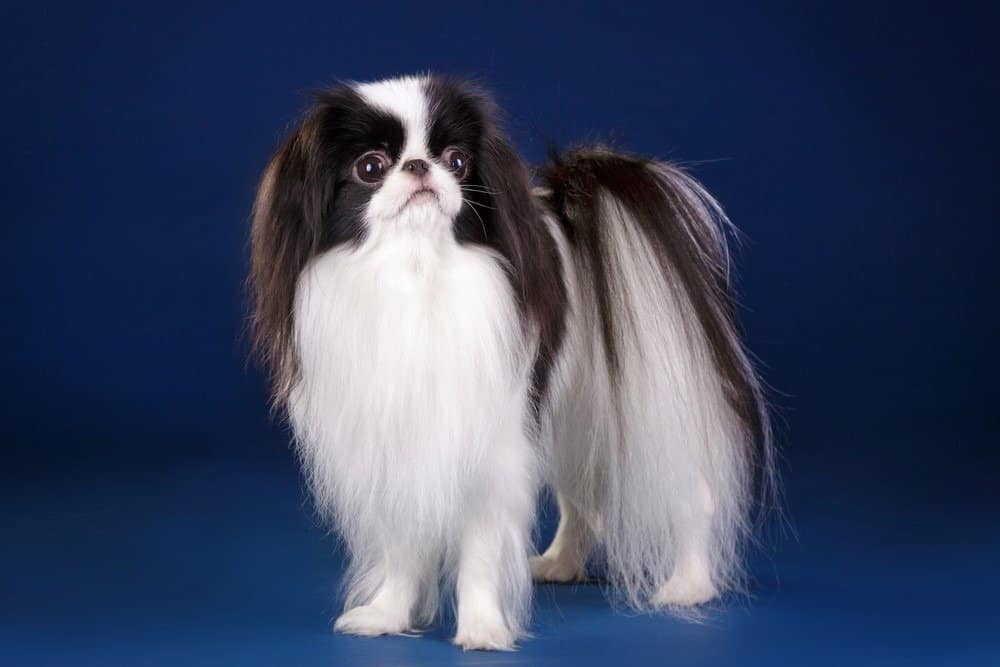
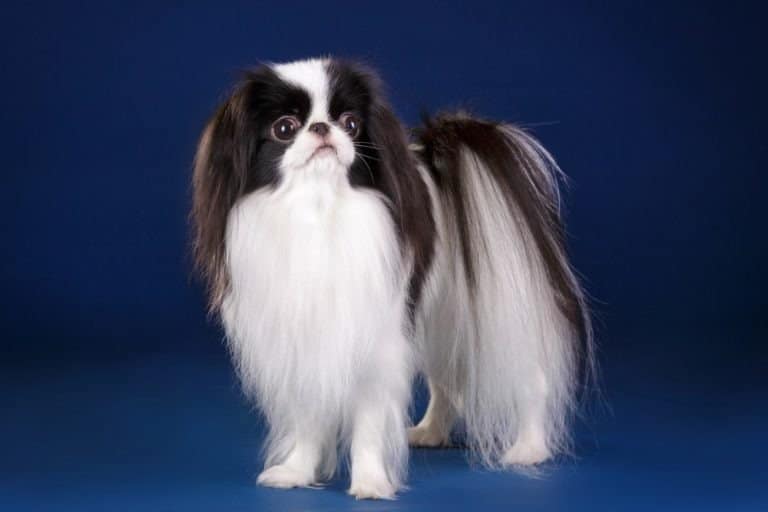
Beautiful small toy dog black and white Japanese Chin Spaniel on dark blue royal background in studio

Considered a toy dog, the Japanese Chin’s heritage goes back to the 1600s.

Common Health Issues

The Japanese Chin has some common health issues. One of them is heart disease. It usually affects older dogs in the form of a weakened heart valve. Another health issue is patellar luxation. This is a condition where the knee slips out of the proper position. Sometimes the dog can move its leg in a way that realigns its knee, while more severe cases require medical treatment. Portosystemic shunt is another health issue particular to small dogs like these. It’s a condition where the liver doesn’t receive proper blood flow and can’t remove toxins from the bloodstream.

This toy dog also has strabismus. Strabismus is a condition where the dog’s eyes are out of alignment and go in different directions. While not a health problem per se, strabismus can affect the dog’s depth perception.
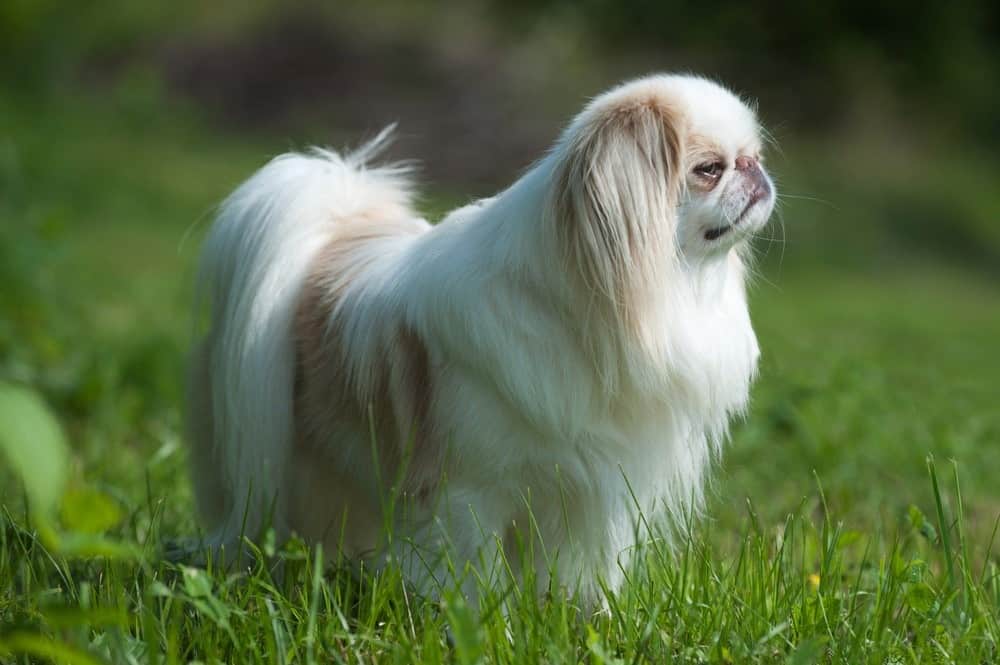
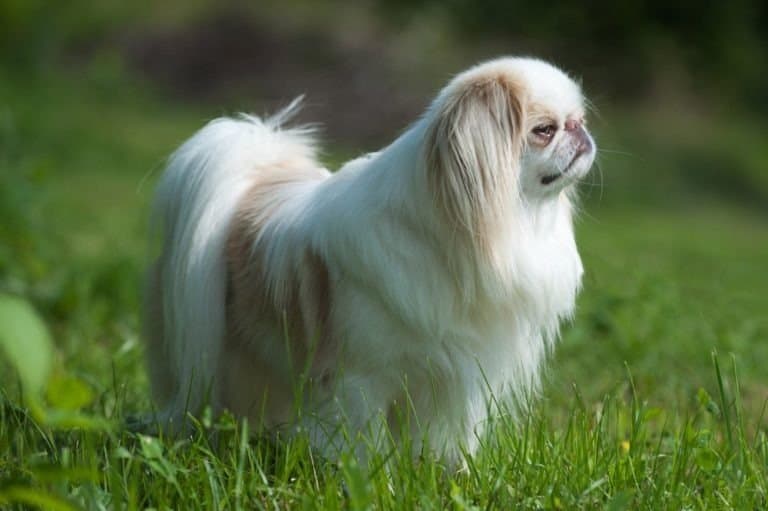
Rare brown Japanese Chin or Japanese Spaniel standing on Meadow.

Brown coloring is rare, but a Japanese Chin always has a sweet personality.

Temperament and Behavior

These dogs have a sweet personality. This is one of the things that makes them an ideal choice for a family that wants a lap dog. Other notable traits of this dog include intelligence and loyalty. A Japanese Chin is the type of dog that follows its owner around as he or she goes about daily tasks.

Its curiosity is almost cat-like! In fact, cats and Japanese Chins share a lot of traits. These dogs are adept at climbing onto chairs and other furniture. Another thing that makes them cat-like is that they groom themselves by licking their paws and rubbing their faces.

This breed is a good dog for families with older children. Sometimes the dog can display jumpy behavior around toddlers and young children because toddlers and young children have a tendency to fall and do unexpected things. Generally, older children are able to be more careful around this dog and understand the need to treat it with gentleness.

These little dogs are suspicious of strangers and will usually alert the household when someone appears at the door.

Care

Taking proper care of this pet can help it enjoy a long, healthy life with the family. The right diet and proper exercise both contribute to the vigorous health of this Toy dog.

The Best Dog Food

Feeding a puppy or an adult Japanese Chin a balanced diet can prevent some of the common health issues connected with this breed. For example, these dogs can experience heart disease. With this in mind, owners should check out legume-free dog foods and the link between dog foods containing legumes and heart failure in dogs.

Puppy food: The main ingredient should be protein. Protein helps a Japanese Chin to build muscles and gives it energy for playtime. Omega fatty acids and DHA help in a puppy’s brain development and contribute to healthy vision. This is important for a dog that has strabismus. Vitamin E and selenium in food support a puppy’s immune system. Vitamin E contributes to a healthy liver and other organs. Calcium helps in the development of strong bones and teeth.

Adult dog food: Protein and carbohydrates are important ingredients in food for an adult Japanese Chin. They give energy to a dog and support healthy muscles. Fiber helps with an adult dog’s digestion. Vitamins C and E support vision health. Fatty acids support a healthy coat and skin.
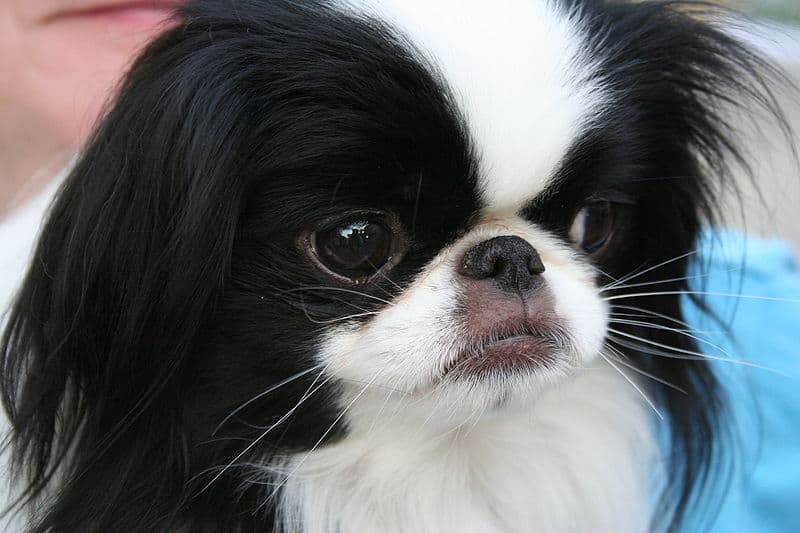
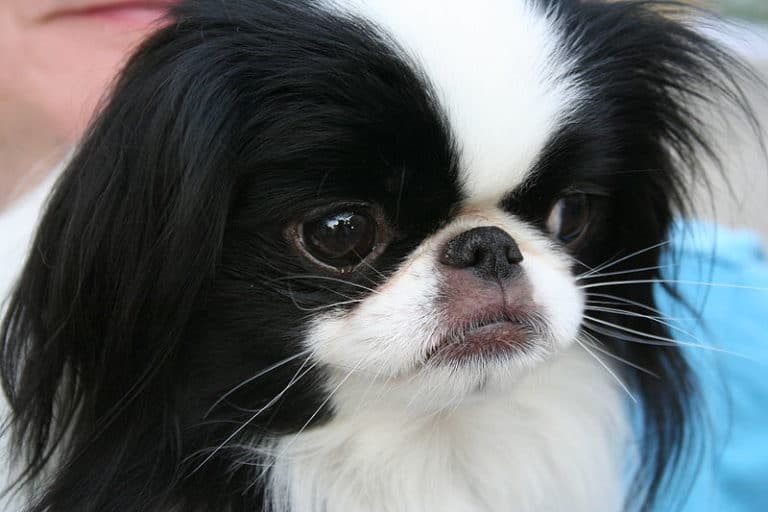
Portrait of a Japanese Chin

A Japanese Chin is easy to groom and train and needs only short walks.

Maintenance and Grooming

How much do Japanese Chin shed? These dogs shed an average amount of hair. But with a simple grooming routine, an owner doesn’t have to deal with a lot of loose hair around the house.

A Japanese Chin has a single layer of hair that is both long and silky. Brushing this dog once or twice per week can help to prevent tangles and remove loose, dead hair. A pin brush is an ideal grooming tool for brushing your Japanese Chin. Be sure the pins of the brush have plastic or rubber coverings on the ends. This protects a dog’s sensitive skin.

These dogs sometimes have bald spots or itchy areas of skin due to allergies. These skin conditions may appear in the springtime if the dog is allergic to pollen or similar particles floating in the air.

Training

Japanese Chins are relatively easy to train. Keep in mind that these are dogs with a sensitive nature. So, using a harsh voice during training is not going to be effective. It is also unkind to the dog.

This lapdog responds best to a calm voice, treats, and words of praise. Though these dogs can have an independent streak, they are very intelligent and can pick up obedience lessons fairly quickly.
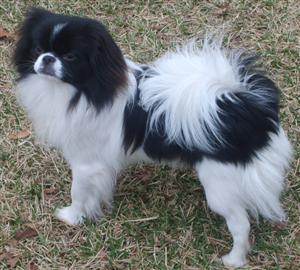
Male Japanese Chin

This toy dog is playful and curious as well as intelligent and loyal.

Exercise

Though this companion dog is small, it does require regular exercise. Taking it on a walk for 20 minutes per day is a good exercise routine. Owners should keep the pace slow because of this dog’s short stride.

These dogs are playful and sometimes enjoy a game of fetch with a ball they can grab and release easily. A small, fenced-in yard is appropriate for this dog as long as there are no holes or other places where it could injure itself.

Taking this dog to a dog park is not a good idea because it could be injured by larger dogs exercising there.

This dog is an ideal choice for someone who lives in an apartment, as long as the person can give it a short walk each day.

Puppies

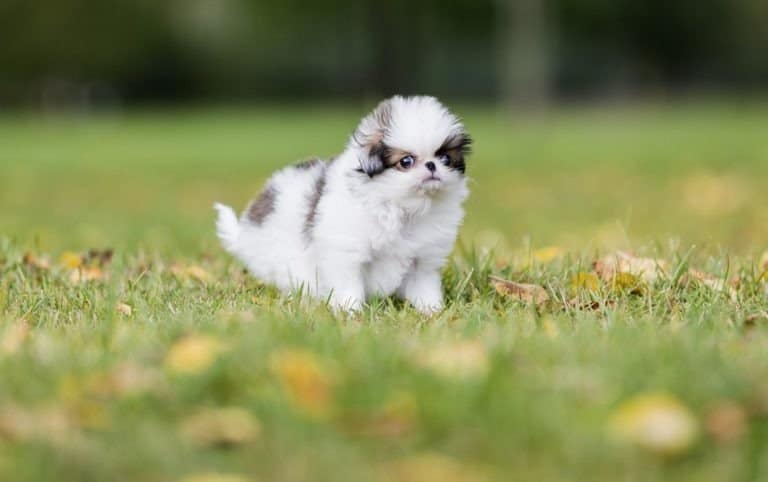
When it comes to a Japanese Chin puppy, one thing to keep in mind is its diet. Overfeeding a toy puppy can cause obesity. So, owners should find a diet that gives the puppy energy to play and explore without overfeeding.
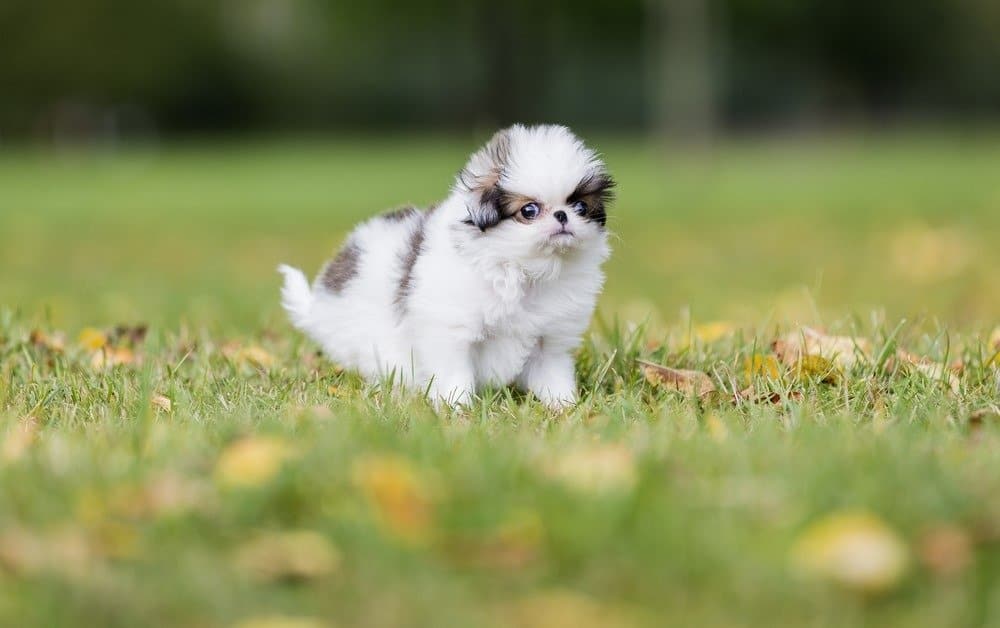
puppy Japanese chin in a Park

It is important to feed your puppy a balanced diet to ensure healthy growth.

Children

These dogs do best in a family with older children. Unfortunately, smaller children can make this companion dog nervous and wary. Remember this dog is always concerned about being injured due to its tiny size. Small children running around or trying to grab the dog are likely to cause the dog to growl or even bite.

Similar Dogs

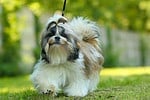
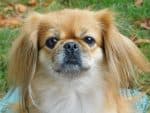
Other breeds similar to these dogs include the Pekingese, the Shih Tzu, and the Pug.

  • Pekingese: These are loyal, affectionate dogs. They need a small amount of daily exercise but require a more complicated grooming routine than Japanese Chins.
  • Shih Tzu: A loyal lapdog with an affectionate, docile personality. Its colors are similar to a Japanese Chin’s coat colors. A Shih Tzu needs more grooming attention than a Japanese Chin does.
  • Pug: A toy dog that is adaptable to either home or apartment living. They are friendly, curious dogs, but they shed more than a Japanese Chin.

Famous

These dogs have been companion dogs to royalty for centuries.

  • Queen Victoria enjoyed the company of Japanese Chins
  • Welsh Princess Alexandra owned a few of these Toy dogs.

View all 52 animals that start with J

Sources

  1. David Burnie, Dorling Kindersley Animal, The Definitive Visual Guide To The World's Wildlife / Accessed November 11, 2008
  2. Tom Jackson, Lorenz Books The World Encyclopedia Of Animals / Accessed November 11, 2008
  3. David Burnie, Kingfisher The Kingfisher Animal Encyclopedia / Accessed November 11, 2008
  4. David Burnie, Dorling Kindersley Illustrated Encyclopedia Of Animals / Accessed November 11, 2008
  5. Dorling Kindersley Dorling Kindersley Encyclopedia Of Animals / Accessed November 11, 2008
  6. American Kennel Club / Accessed November 17, 2020
  7. Vetstreet / Accessed November 17, 2020
  8. Wag! / Accessed November 17, 2020
Thank you for reading! Have some feedback for us?


Japanese Chin FAQs (Frequently Asked Questions)

A Japanese Chin puppy can cost between $1,500 to $2,500. The cost for annual veterinary care for this breed can range from $200 to $500, depending on the purpose of the visit. Food for this toy dog can cost $50 to $100 per month, depending on the brand.