

J
Species Profile

Javan Rhinoceros

Rhinoceros sondaicus

One park. One species. Protect it.
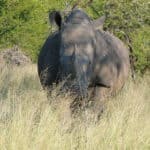
T.Dixon - Public Domain

Javan Rhinoceros Distribution

Click a location to explore more animals from that region

Loading map...

Size Comparison

Human 5'8"
Javan Rhinoceros 4 ft 7 in

Javan Rhinoceros stands at 81% of average human height.

Javan Rhinoceros

At a Glance

Wild Species
Also Known As Javan rhino, Java rhinoceros, Sunda rhinoceros, Sunda rhino, lesser one-horned rhinoceros, Badak Jawa
Diet Herbivore
Activity Crepuscular+
Lifespan 35 years
Weight 2300 lbs
Did You Know?

The Javan rhinoceros now survives naturally only in Ujung Kulon National Park (western Java, Indonesia), making it uniquely vulnerable to disasters and disease.

Scientific Classification

The Javan rhinoceros (Rhinoceros sondaicus) is a critically endangered, primarily single-horned rhinoceros species and one of the rarest large mammals on Earth, now restricted to a single wild population in western Java, Indonesia.

Kingdom
Animalia
Phylum
Chordata
Class
Mammalia
Order
Perissodactyla
Family
Rhinocerotidae
Genus
Rhinoceros
Species
Rhinoceros sondaicus

Distinguishing Features

  • Usually one horn (often small or inconspicuous, especially in females)
  • Armor-like skin folds typical of Rhinoceros genus, but generally less pronounced than in the Indian rhinoceros
  • Smaller and more lightly built than the Indian rhinoceros
  • Historically several geographic forms; the surviving population is the Javan form (often treated as R. sondaicus sondaicus)

Physical Measurements

Height
4 ft 7 in (4 ft 7 in – 5 ft 7 in)
Length
10 ft 2 in (9 ft 10 in – 10 ft 6 in)
Weight
1.8 tons (1,984 lbs – 2.5 tons)
Tail Length
2 ft 2 in (1 ft 12 in – 2 ft 4 in)
Top Speed
25 mph
Not measured; estimated 40 km/h

Appearance

Primary Colors
Secondary Colors
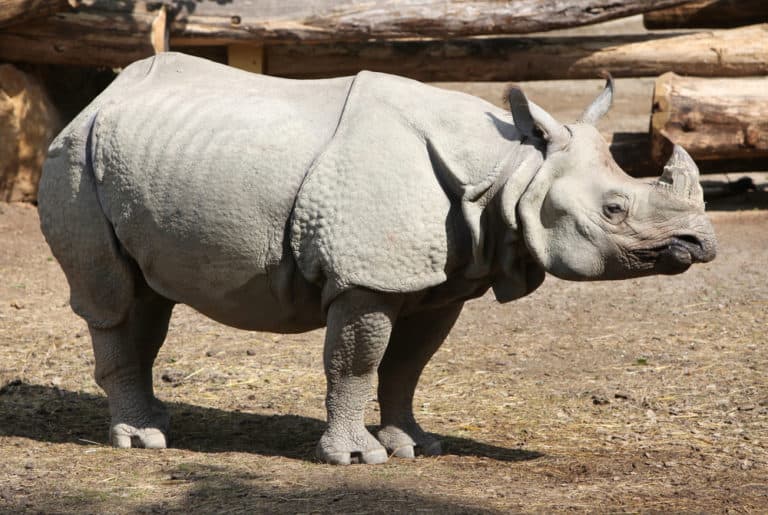
Skin Type Javan rhinoceros (Rhinoceros sondaicus) has very thick, armor-like skin made of polygonal plates and shallow folds (less deep than Indian rhino). Skin is mostly hairless with sparse hairs, a tail tuft, and fringed ear edges.
Distinctive Features
  • Single small horn (usually under about 25 cm/10 in) and armor-like gray skin with prominent folds/plates, giving a "plated" appearance typical of Asian rhinoceroses.
  • Size (adults): head-body length about 3.1-3.2 m; shoulder height about 1.4-1.7 m; mass commonly cited ~900-2,300 kg (species descriptions; IUCN/major mammal references).
  • Horn: single nasal horn; in males typically small and usually <25 cm in length; females often hornless or with only a small knob (species accounts; IUCN).
  • Compared with Indian rhinoceros (R. unicornis): generally smaller-bodied; skin folds are less deep and less armored in appearance; horn is typically shorter/less prominent; overall looks less plate-like than the Indian species.
  • Head and mouth: relatively small head; upper lip is pointed and prehensile for browsing (consistent with its primarily browsing diet).
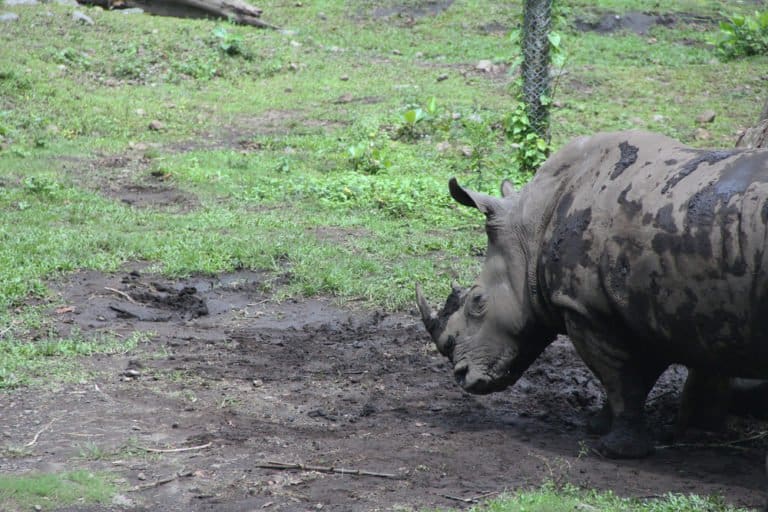
  • Often wallows; skin caked with mud and plants show rubbing marks. The Javan rhinoceros is mostly alone and shy, active mostly at dawn, dusk, and night.

Sexual Dimorphism

Sexual dimorphism is present but not strongly expressed in overall body form; differences are most evident in horn development and average body size. Females are frequently hornless or have only a small nasal bump, while males usually carry the species' small single horn (<25 cm typically cited).

  • Typically larger/heavier on average (within commonly cited adult mass range up to ~2,300 kg).
  • Usually bears a small single nasal horn; horn is generally more consistently present than in females.
  • Often smaller/lighter on average (commonly cited adult mass range starting around ~900 kg).
  • Frequently hornless or with only a small nasal knob rather than a developed horn.

Did You Know?

The Javan rhinoceros now survives naturally only in Ujung Kulon National Park (western Java, Indonesia), making it uniquely vulnerable to disasters and disease.

Adults stand about 1.4-1.7 m at the shoulder and are roughly 3.1-3.2 m in head-body length; mass is commonly cited around ~900-2,300 kg (sex- and condition-dependent).

It is usually single-horned; the horn is small compared with the Indian rhinoceros, commonly under ~25 cm in males, and females are often hornless or have only a small knob.

Skin folds are present but less deep and less "armored-plate"-like than in the Indian rhinoceros, giving the Javan rhinoceros a smoother profile.

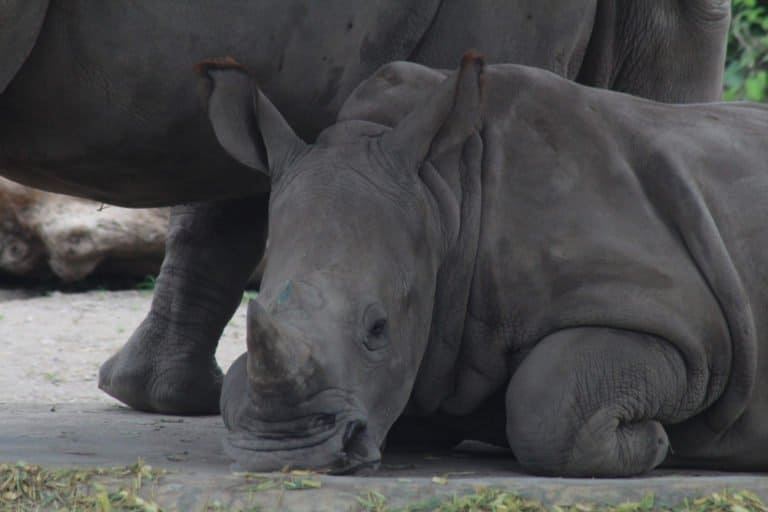
Gestation is about 16 months; calves typically stay with the mother for ~1-2 years, and births are often spaced several years apart (commonly ~4-5 years), limiting population growth.

It is primarily a browser, feeding on leaves, shoots, twigs, and fallen fruit, and it regularly visits mineral/salt licks and wallows.

Recent monitoring in Ujung Kulon commonly reports a population on the order of only a few dozen individuals (often cited around ~70-80), underscoring extreme rarity among large mammals.

Unique Adaptations

  • Compact single-horned build suited to dense lowland forest and thicket habitats, with a comparatively smaller horn than the Indian rhinoceros-an advantage where maneuvering through vegetation matters more than display.
  • Thick skin with folds that allow flexibility while still providing protection; the folds are present but less pronounced than in the Indian rhinoceros, reflecting different ecology and body shape.
  • Prehensile upper lip adapted for browsing (grasping leaves and shoots), contrasting with the wide grazing mouth of the African white rhinoceros.
  • Dependence on wallows and mineral licks: behavioral-physiological strategy supporting thermoregulation and mineral intake in humid tropical environments.
  • Low reproductive rate typical of rhinocerotids (long gestation and long calf dependency), which is an adaptation to stable adult survival-but a liability under modern threats.

Interesting Behaviors

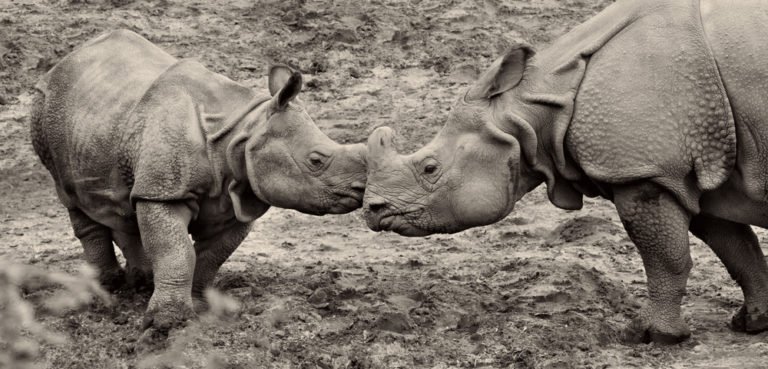
  • Strongly solitary: adults are typically alone except for females with calves; individuals avoid one another but share trails, wallows, and feeding areas.
  • Wallowing and mud-bathing: uses wallows to cool, protect skin from sun and insects, and possibly reduce ectoparasites; wallows can become long-term "infrastructure" used by multiple animals.
  • Scent-marking and communication: uses dung piles (middens), urine, and rubbing on vegetation to mark presence and convey reproductive status; also leaves tracks and scrapes along routes.
  • Crepuscular/variable activity: often active in early morning and late afternoon, but activity can shift with heat, disturbance, and habitat conditions.
  • Selective browsing: feeds at different heights and plant types across seasons, moving through forest-edge mosaics and openings; may create/maintain narrow paths through dense vegetation.
  • Avoidance and stealth: relies more on concealment than confrontation, often retreating into thick cover rather than displaying prominently.

Cultural Significance

The Javan rhinoceros (Rhinoceros sondaicus) is a national symbol for saving wildlife and the main symbol of Ujung Kulon National Park. It is very rare and shows Indonesia's natural treasures and the challenge of protecting the last wild population after past hunting for horn and trade.

Myths & Legends

Sundanese and Javanese folktales in the broader "clever mouse-deer" tradition sometimes cast a rhinoceros as a powerful but easily fooled forest giant-outwitted by the mouse-deer's tricks, reflecting a common Southeast Asian theme: intelligence overcoming strength.

Along Java's south coast, local stories tied to the 'Queen of the Southern Sea' link Ujung Kulon's wildness, where rare animals like the Javan rhinoceros live, to a guarded, sacred area at the world's edge.

In Indonesian stories and park lore, the Javan rhinoceros (Rhinoceros sondaicus) is a one‑horned forest guardian whose survival shows balance among people, forest, and sea, and helps local communities protect Ujung Kulon.

Conservation Status

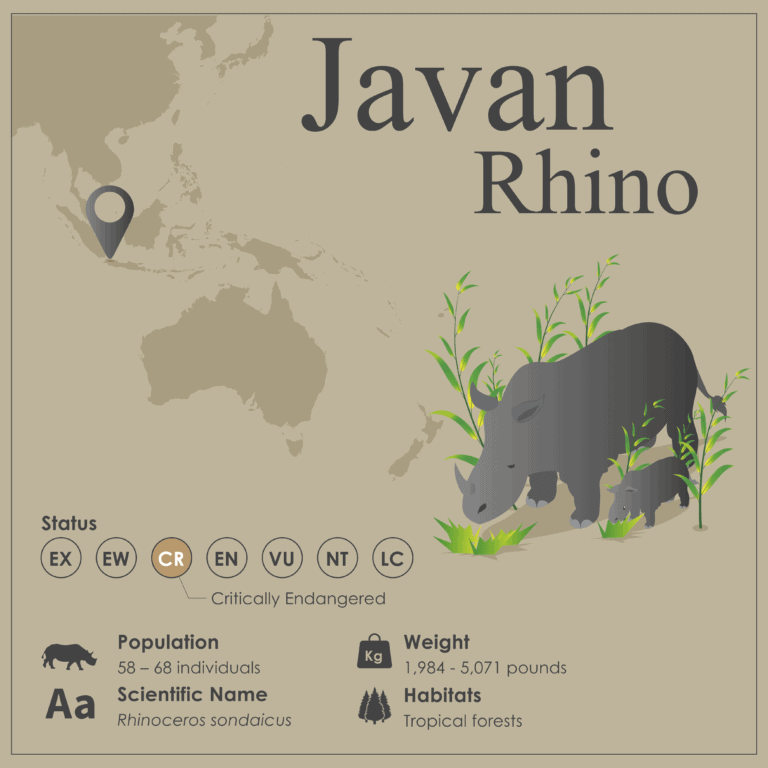
CR Critically Endangered

Facing an extremely high risk of extinction in the wild.

Population Increasing

Protected Under

  • CITES Appendix I (Rhinoceros spp. commercial trade prohibited)
  • Indonesia: Law No. 5/1990 on Conservation of Living Resources and Their Ecosystems
  • Indonesia: Government Regulation No. 7/1999 on Preservation of Plant and Animal Species
  • Occurs within Ujung Kulon National Park (protected area status)

Life Cycle

Birth 1 calf
Lifespan 35 years

Lifespan

In the Wild
30–45 years

Reproduction

Mating System Polygyny
Social Structure Solitary
Breeding Pattern Transient
Fertilization Internal Fertilization
Birth Type Internal_fertilization

Javan rhinoceros (Rhinoceros sondaicus) is mostly solitary and likely polygynous: males have larger, overlapping ranges and mark territory. Mating is brief with no long-term pair bonds. Gestation ~16 months; single calf; 4–5 year gap.

Behavior & Ecology

Social Solitary Group: 1
Activity Crepuscular, Nocturnal, Diurnal
Diet Herbivore Young leaves and shoots (browse) from understory shrubs/saplings; field diet records emphasize selection for tender growth rather than grazing (IUCN Red List; Schenkel & Schenkel-Hulliger field observations; Ujung Kulon diet-plant inventories report very broad plant use with strong preference for browse).

Temperament

Generally shy, elusive, and strongly avoidant of humans; tends to retreat into dense cover rather than confront (Talukdar et al., IUCN Red List 2019).
Adult males can be intolerant of other males in close proximity (spacing maintained through sign and avoidance; direct encounters are uncommon but can escalate if forced) (van Strien, 1986).
Female Javan rhinoceroses with calves are more defensive. Aggression occurs when animals are surprised at close range, while guarding calves, or when escape routes are blocked, as seen in Ujung Kulon.

Communication

Snorts/blows Short-range alerting at close distances, especially when disturbed
Squeals/whines Reported in close-contact contexts such as mother-calf interaction
Olfactory signaling via dung deposition Communal/visited dung piles used as signposts) and urine spraying; these cues support spacing and reproductive communication (Talukdar et al., IUCN Red List 2019; van Strien, 1986
Ground/vegetation marking: scraping and trampling near paths and sign sites; rubbing on trees and shrubs to deposit scent and possibly remove ectoparasites Van Strien, 1986
Use of well-worn trails and repeated visits to wallows/mineral licks, creating predictable 'information hubs' where indirect communication accumulates Tracks, dung, scent) even when direct social contact is rare (van Strien, 1986

Habitat

Biomes:
Tropical Rainforest Tropical Dry Forest Wetland
Terrain:
Coastal Island Riverine Plains Muddy
Elevation: Up to 3280 ft 10 in

Ecological Role

Megaherbivore browser shaping lowland rainforest and coastal-plain vegetation structure in Ujung Kulon; influences plant recruitment through selective browsing and physical disturbance.

Vegetation regulation via selective browsing (maintains gap/edge dynamics and suppresses some woody regeneration while favoring browse-tolerant species) Seed dispersal for some fruiting plants via endozoochory (ingestion of fruits followed by dung deposition) Nutrient cycling and soil enrichment through dung and urine inputs Habitat engineering: trail formation and localized disturbance around feeding sites and wallows that creates microhabitats for other organisms

Diet Details

Other Foods:
Woody browse Tree and shrub leaves Vines, lianas and understory herbs Bark and stems Fallen fruits/soft fruits Aquatic and semi-aquatic plants

Human Interaction

Domestication Status

Wild

Rhinoceros sondaicus (Javan rhinoceros) has never been domesticated or bred by people. A few were briefly kept in 19th–early 20th century zoos; the last known captive is reported to have died in 1907 (often cited at Adelaide Zoo). Today it is Critically Endangered, with one wild population in Ujung Kulon National Park, Java.

Danger Level

High
  • Severe injury or death from charging/trampling due to very large body mass (~900-2,300 kg) and speed/force; risk is highest if an animal is surprised at close range, cornered, or if a mother is defending a calf.
  • Habitat context risk: dense vegetation and low visibility in tropical forest can reduce reaction time for rangers/researchers.
  • Overall encounter probability is very low because the population is extremely small, highly protected, and the species is generally shy/avoids humans (IUCN).

As a Pet

Not Suitable as Pet

Legality: Javan rhinoceros (Rhinoceros sondaicus) cannot be kept as a pet. Trade is banned under CITES Appendix I; capture or possession is illegal in Indonesia and mostly banned or tightly restricted worldwide (e.g., U.S. ESA/CITES).

Care Level: Expert Only

Purchase Cost:
Lifetime Cost: $1,500,000 - $5,000,000

Economic Value

Uses:
Negative economic value via illegal wildlife trade pressure (poaching risk, enforcement costs) Conservation finance (protected-area funding, donor support, NGO programs) Ecosystem/heritage value (flagship species driving habitat protection) Scientific value (field research, monitoring technology development)
Products:
  • No legal consumptive products (trade prohibited; species is fully protected)
  • Historically targeted: horn for illegal trade (traditional medicine/ornamental/'status' markets)
  • Non-consumptive: conservation tourism value is limited by strict protection and low detectability, but the species is a flagship for Ujung Kulon conservation

Relationships

Predators 3

Human
Human Homo sapiens
Javan leopard
Javan leopard Panthera pardus melas
Saltwater crocodile Crocodylus porosus

Ecological Equivalents 5

Animals that fill a similar ecological role in their ecosystem

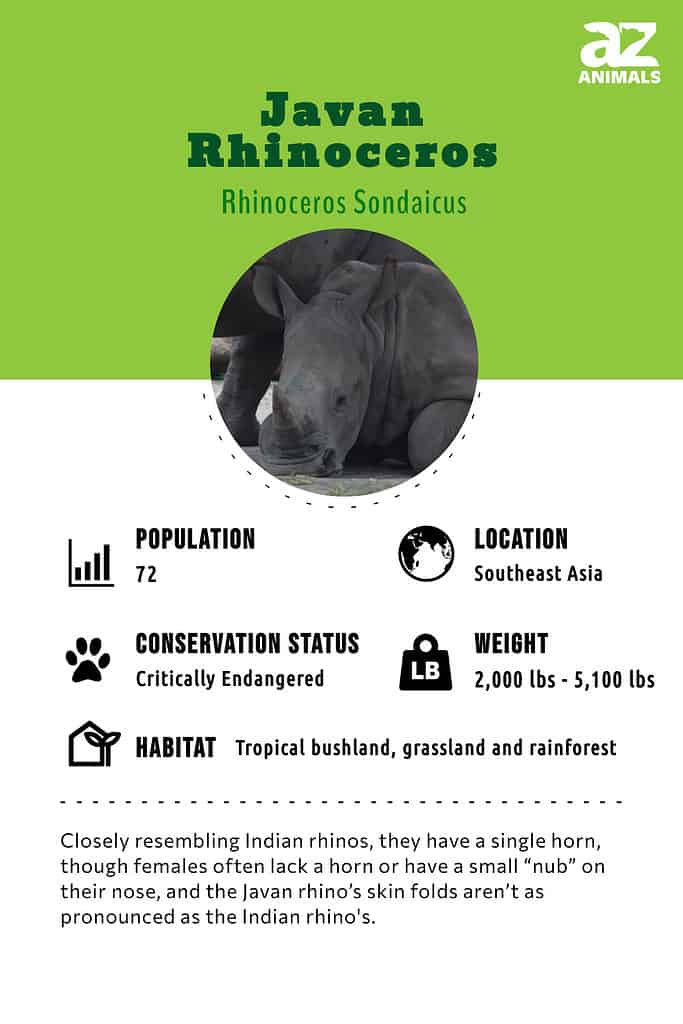
Limited to just a single national park, the Javan rhino today numbers just 72 individuals in the wild

The Javan rhinoceros (also known as the lesser one-horned rhinoceros and the Sunda rhinoceros) is a species of rhinoceros native to of Southeast Asia. The Javan rhinoceros is thought to be most closely related to the Indian rhinoceros, both of which only have one horn.

As of 2019, it’s estimated just 72 Javan rhinos survive in a single national park named Ujung Kulon on the Indonesian island of Java’s westernmost tip. However, with no poaching of the species reported in more than 25 years at Ujung Kulon, there’s hope for the species’ survival.
Incredible Javan Rhinoceros Facts!

  • The Javan rhinoceros once roamed from India, to Vietnam, and south to the islands of Indonesia. The last mainland Javan rhino was poached in 2010, leaving the subspecies of mainland Javan rhinos extinct.
  • Female Javan rhinos often lack a horn or have a small “nub.”
  • Today, the Javan rhino is found in only a single national park that sits 37 miles (60 km) from an active volcano that’s erupted as recently as December, 2019.

Scientific Name and Evolution

The scientific name for the Javan rhinoceros is Rhinoceros sondaicus. Along with the Indian rhinoceros, the Javan rhino is in the genus Rhinoceros, which is Greek for ‘nose’ and ‘horn’ and comprises the two species of one-horned rhinos. Sondaicus refers to ‘Sunda,’ a name for the Southeastern Asia where Javan Rhinos historically lived.

Javan Rhinos are more closely related to Indian Rhinos, of course, and may have diverged from them in evolution around 11 million years ago. While they have their differences from the other species of rhinos, they all adapted their thick, protective hide in order to protect themselves from would-be attackers. Add to that their imposing horns, there are not many animals on earth that could survive a rhino rush and gore attack!
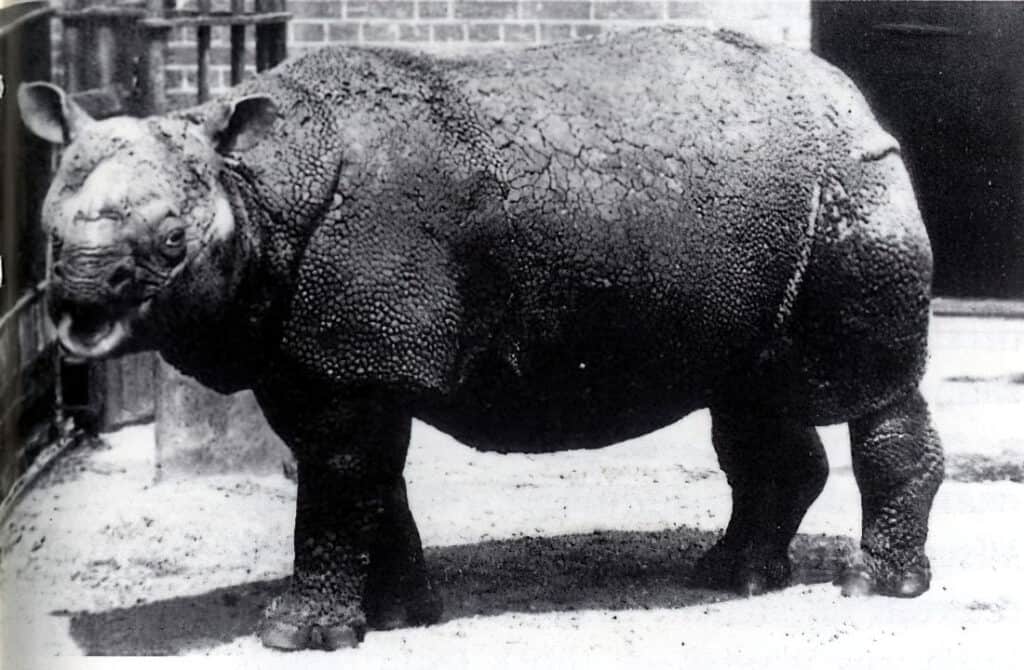
javan rhinoceros

The scientific name for the Javan rhinoceros is Rhinoceros sondaicus.

Appearance

The Javan rhino is smaller than the Indian rhinoceros, weighing 900 to 2,300 kg (2,000 to 5,100 lbs). Its length stretches 3.1 to 3.2 m (10 to 10.5 ft).

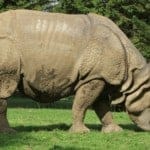
The Javan rhino closely resembles Indian rhinos. Both species have a single horn, though female Javan rhinos often lack a horn or have a small “nub” on their nose. In addition, the Javan rhino’s skin folds aren’t as pronounced as the Indian rhino’s. This gives the species less of a look of having “body armor.”

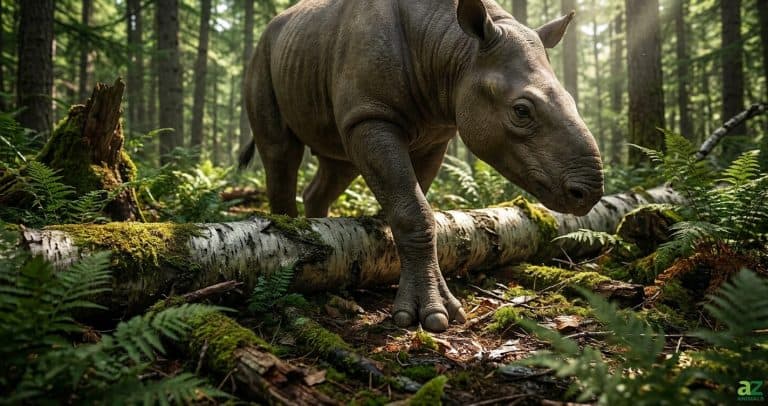
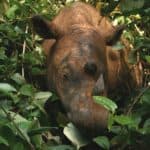
Due to the extreme rarity of Javan rhinos, they’ve been studied as the least of all rhino species. Today, few pictures are taken of Javan rhinos, with most studies coming from camera traps in the dense forests it inhabits in Ujung Kulon National Park.
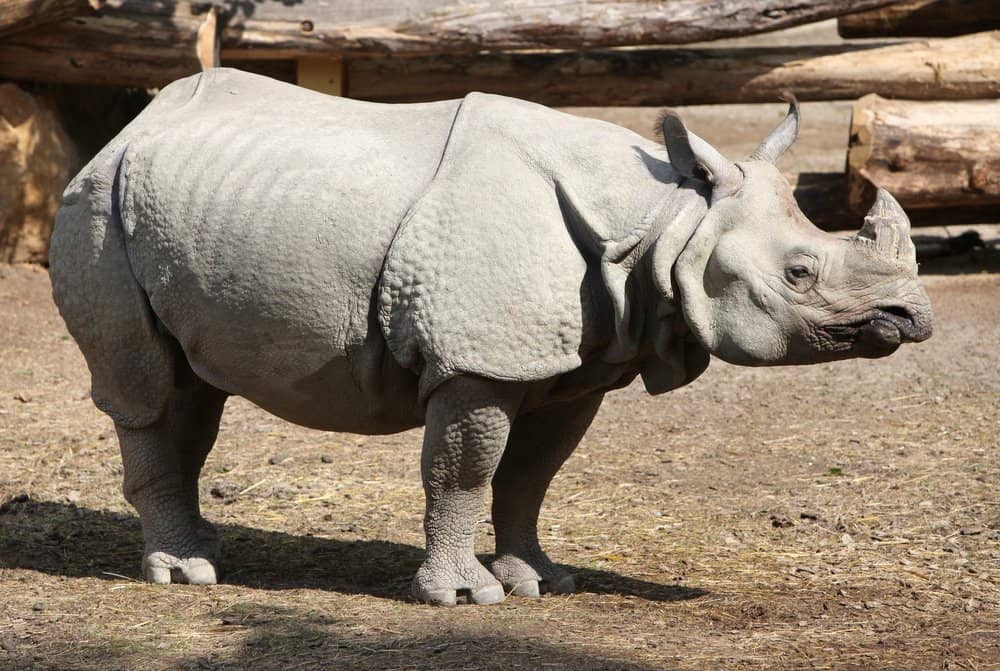
Javan Rhinoceros (Rhinoceros Sondaicus)

The Javan rhino’s skin folds aren’t as pronounced as the Indian rhino’s.

Habitat

The Javan Rhino primarily inhabits dense lowland rain forests, tall grass, and reed beds that are plentiful with rivers, large floodplains, or wet areas with many mud wallows. The range of Javan rhinoceros once stretched from Bengal, through Southeast Asia, and down to Sumatra but today, the Javan rhinoceros is only found on the island of Java.

Where the Javan rhinoceros is found today: Ujung Kulon

Today, the Javan rhino is known to survive in just a single habitat, the Ujung Kulon National Park on the western edge of the island of Java. The national park measures only about 498 square kilometers (192 sq. mi), which means all Javan rhinos live in an area about the same size as the city of Tulsa, Oklahoma.

While Javan rhinos were either hunted to extinction or lost their habitat across Southeast Asia, they survived in Ujung Kulon after unique circumstances. In 1883 a massive volcano named Krakatoa erupted off the coast of Indonesia and decimated surrounding areas. After the event, humans fled the area, but rhinos and many other critically endangered species began repopulating there.

Today, Ujung Kulon provides a protected environment that has allowed Javan rhino populations to stabilize, but it can only support a limited amount of rhinos within its borders.
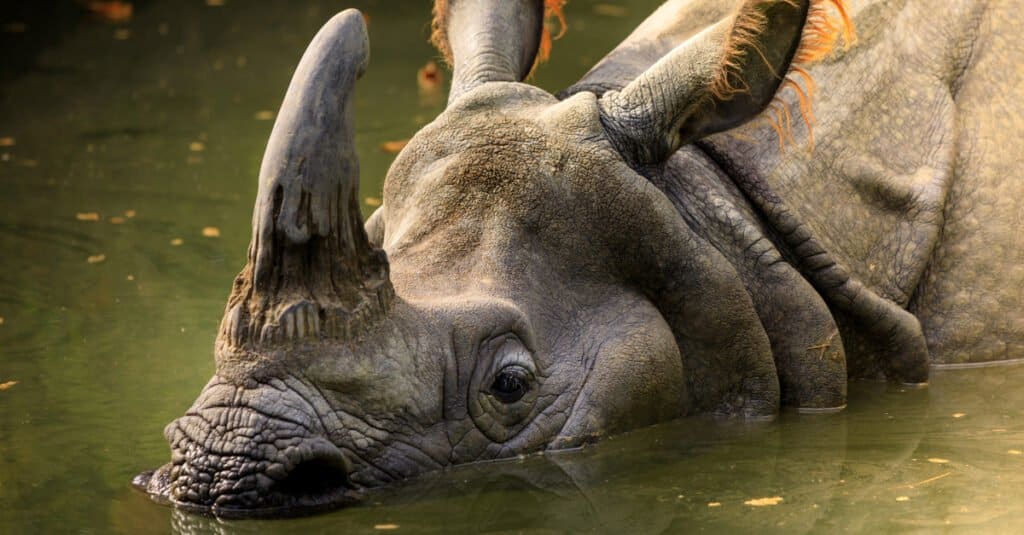
Rarest animal – Javan rhinoceros

Once the most widespread of Asian rhinoceroses, the Javan rhinoceros is now a very rare member of the family Rhinocerotidae.

Population

The population of Javan rhinos was estimated at 72 individuals by the International Rhino Foundation in 2019.

While this population makes the Javan rhino one of the most critically endangered mammals on Earth, it has been stable for more than 30 years and their population has increased from an estimated 50 individuals across the past decade. Learn more about the most endangered species in the world here.

Extinct Javan rhino subspecies

Historically there were three subspecies of Javan rhinoceros. In addition to the subspecies that survive today, there were the Indian Javan rhinoceros and the Vietnamese Javan rhinoceros.

Today, both the Indian Javan rhinoceros and the Vietnamese Javan rhinoceros have been declared extinct. A small species of Javan rhinos were found in Vietnam’s Cat Tien park, but the last surviving member of the subspecies was found poached in 2010.
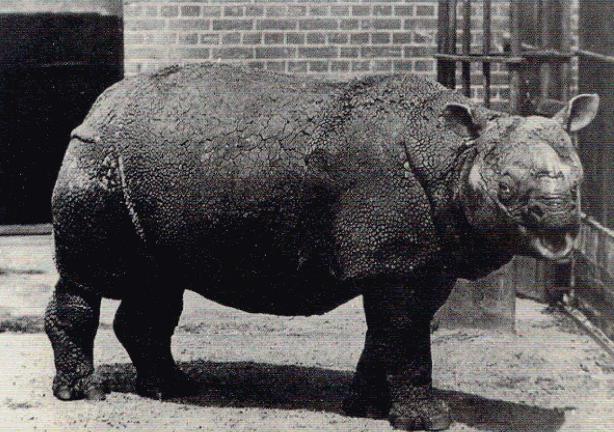
Javan Rhinoceros

Javan Rhino (Rhinoceros sondaicus sondaicus) shown in the London Zoo from march 1874 until january 1885

Diet

The Javan rhino is a herbivore that browses across shrubs, bushes, and saplings. Javan rhinos browse the densely vegetated sub-tropical forest for leaves, flowers, buds, fruits, berries, and roots which they dig up from the ground using their horns.

Due to Javan rhinos being restricted to a small habitat, it’s hard to know how varied their diet was across their historical range. With Javan rhino populations have ranged all the way to the dense grasslands of India, it’s likely the species once grazed as well.
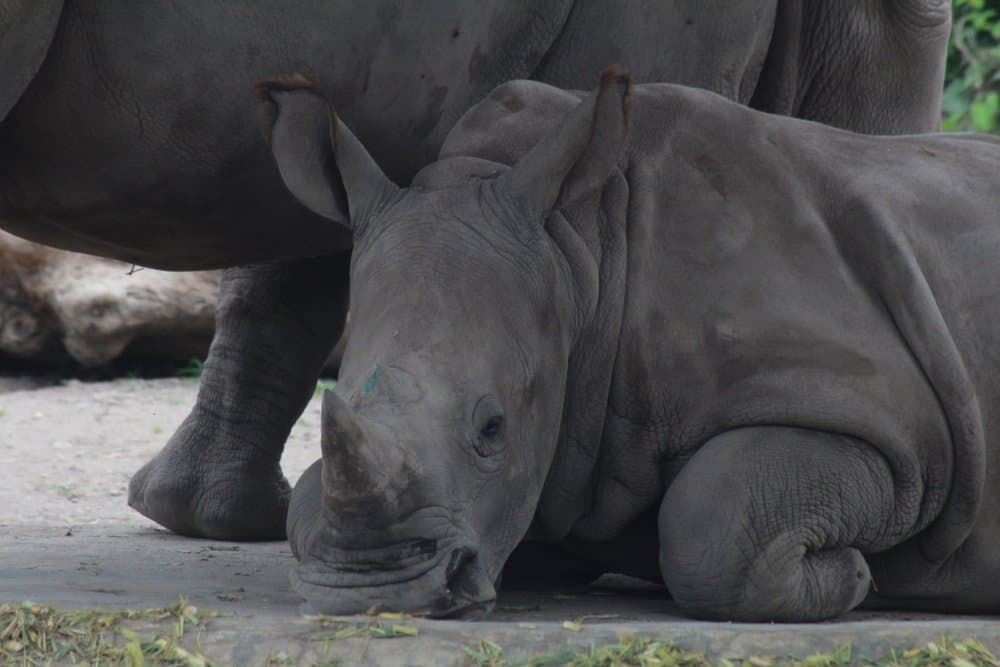
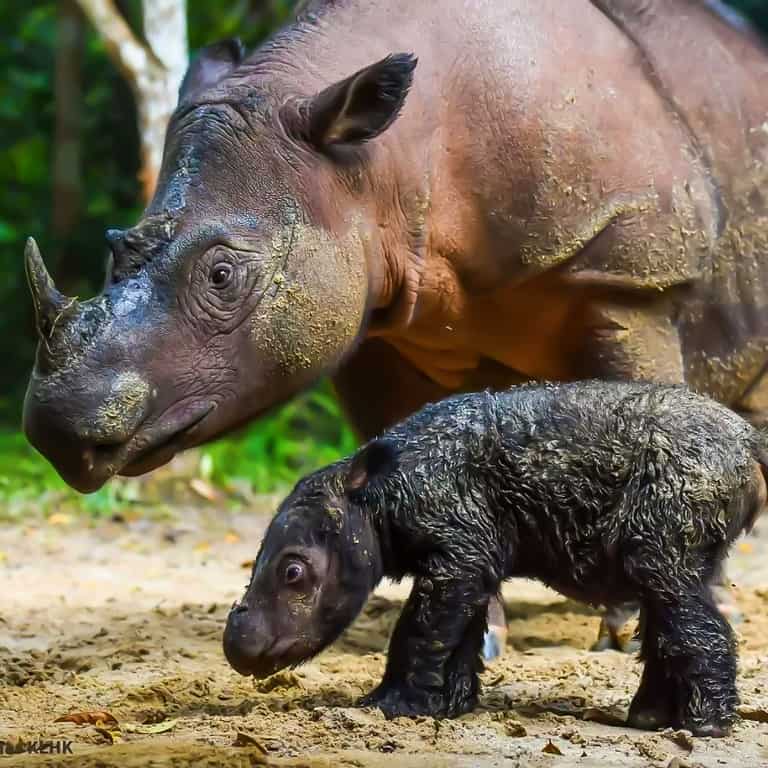
Javan Rhinoceros (Rhinoceros Sondaicus) - javan rhino baby

Due to Javan rhinos being restricted to a small habitat, it’s hard to know how varied their diet was across their historical range.

Predators

The Javan rhino faces few predators in the wild. Javan tigers existed in Ujung Kulon until the 1960s, but have been declared extinct. A small population of Javan leopards survive in Ujung Kulon and could prey on rhino calves and weaker individuals.

With no human poaching reported in the rhino’s surviving habitat in the past 25 years, its greatest threat today is a lack of genetic diversity that threatens breeding numbers.

Reproduction and Life Cycles

With an extremely small population and long gestation periods, the birth of any Javan rhino is closely monitored. In December 2019, four new calves were spotted, increasing the population to an estimated 72 rhinos.

Like all rhino species, the Javan rhino has a long gestation period, making repopulating challenging. Since no Javan rhinos are held in captivity, their gestation period isn’t precisely known. However, it’s believed to be roughly 15 to 16 months.

Facts

  • Living in the shadow of a volcano – The remaining Javan rhino population survived after repopulating an area devasted by the eruption of the volcano Krakatau in 1883. However, the species today faces the threat of natural disasters as a nearby volcano named Anak Krakatau continues erupting.
  • A close scare in 2018 – Anak Krakatau lays just 37 miles (60 km) from the coast of the Javan rhino’s single remaining habitat. In December 2018, the volcano erupted and unleashed a tsunami that killed two park rangers at Ujung Kulon. It’s believed no Javan rhinos were harmed, but the event demonstrates the risks that remain with all rhinos living in a habitat that’s susceptible to natural disasters.
  • 145 million people and 72 Javan rhinos – One of the challenges to repopulating the Javan rhino is the loss of suitable habitats across Java. The island is only about the size of Arkansas (population: 3 million), but is home to about 145 million people. This growth in population has left few suitable habitats for large Javan rhino populations.

View all 52 animals that start with J

Sources

  1. David Burnie, Dorling Kindersley (2011) Animal, The Definitive Visual Guide To The World's Wildlife / Accessed July 6, 2010
  2. Tom Jackson, Lorenz Books (2007) The World Encyclopedia Of Animals / Accessed July 6, 2010
  3. David Burnie, Kingfisher (2011) The Kingfisher Animal Encyclopedia / Accessed July 6, 2010
  4. Richard Mackay, University of California Press (2009) The Atlas Of Endangered Species / Accessed July 6, 2010
  5. David Burnie, Dorling Kindersley (2008) Illustrated Encyclopedia Of Animals / Accessed July 6, 2010
  6. Dorling Kindersley (2006) Dorling Kindersley Encyclopedia Of Animals / Accessed July 6, 2010
  7. David W. Macdonald, Oxford University Press (2010) The Encyclopedia Of Mammals / Accessed July 6, 2010
Heather Ross

About the Author

Heather Ross

Heather Ross is a secondary English teacher and mother of 2 humans, 2 tuxedo cats, and a golden doodle. In between taking the kids to soccer practice and grading papers, she enjoys reading and writing about all the animals!

Thank you for reading! Have some feedback for us?


Javan Rhinoceros FAQs (Frequently Asked Questions)

The Javan rhinoceros saw its population precipitously declines in the early 19thand 20thcentury from poaching that cleared the species out form much of its historical range.

However, today the greater threat to Javan rhino’s is habitat loss and the difficulty of rebounding from such low population levels. With an estimated 72 Javan rhinos left in just a single national park, the species is reaching the limits of its population growth at Ujung Kulon National Park. However, with few remaining habitats left in Java, conservation groups and the government of Indonesia have struggled to find a second viable environment for the Javan rhino. As of late 2019, the plan is to continue expanding Ujung Kulon to give the Javan rhinos more habitat to expand.