

L
Species Profile

Leaf-Tailed Gecko

Uroplatus

Disappear into the forest-Uroplatus
reptiles4all/Shutterstock.com

Leaf-Tailed Gecko Distribution

Click a location to explore more animals from that region

Endemic Species
Loading map...

Found in 1 country

Giant leaf-tailed gecko, Uroplatus giganteus

At a Glance

Genus Overview This page covers the Leaf-Tailed Gecko genus as a group. Stats below are general traits shared across the genus.
Also Known As Flat-tailed gecko, Leaf-tail gecko, Madagascar leaf-tail gecko, Leaf-mimic gecko, Uro (slang), Gecko-feuille (French)
Activity Nocturnal+
Lifespan 4 years
Weight 0.06 lbs
Status Not Evaluated
Did You Know?

All Uroplatus are endemic to Madagascar-nowhere else on Earth.

Scientific Classification

Genus Overview "Leaf-Tailed Gecko" is not a single species but represents an entire genus containing multiple species.

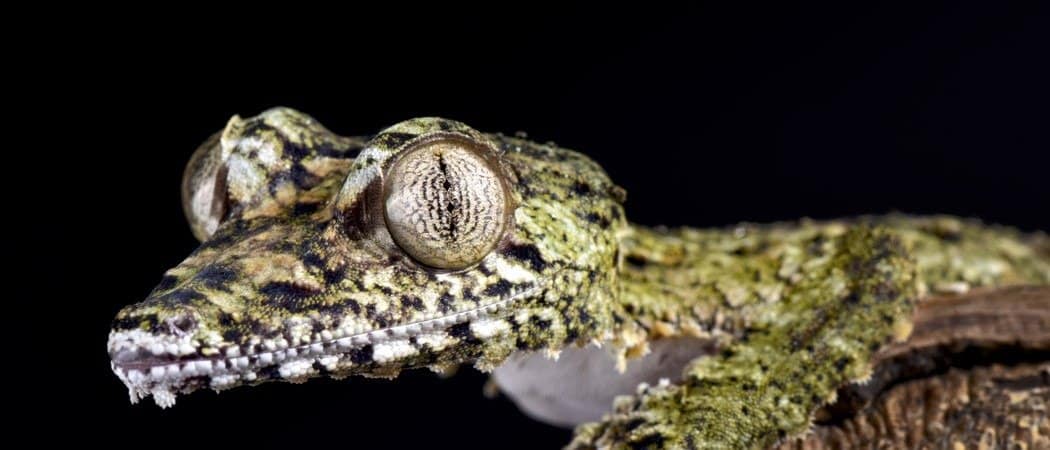
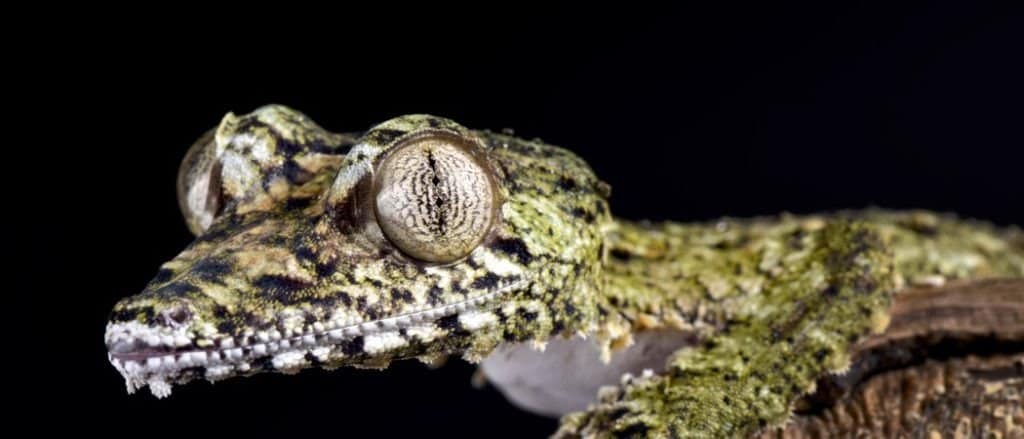
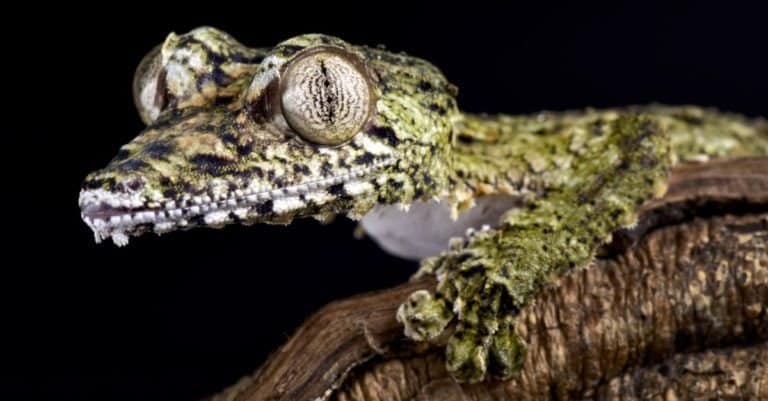
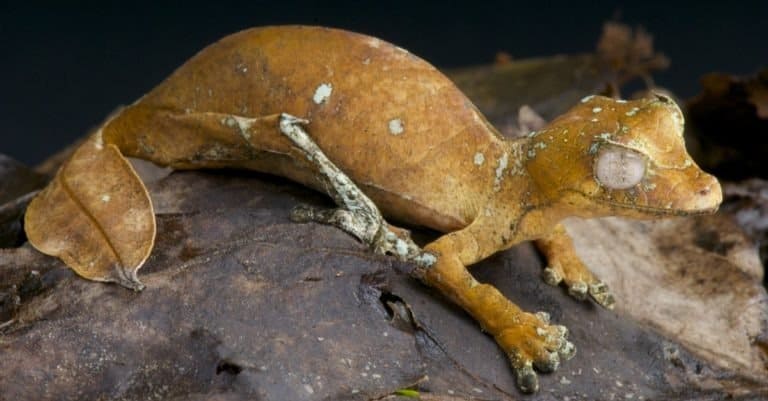
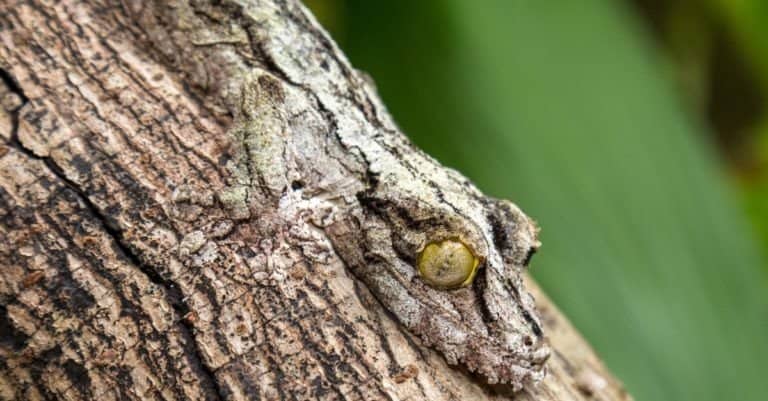
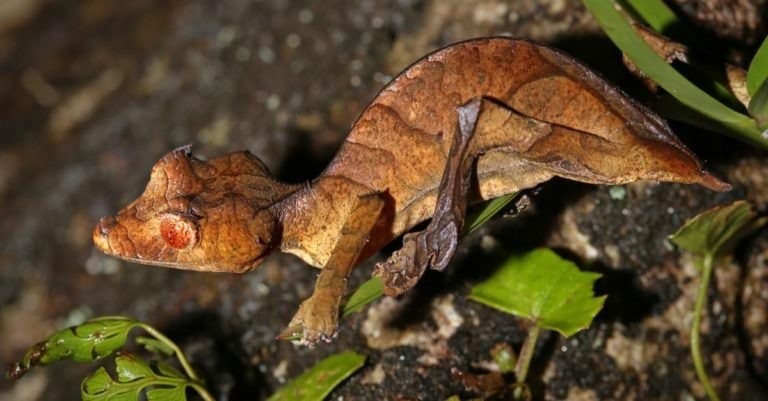
Leaf-tailed geckos (genus Uroplatus) are nocturnal, arboreal geckos endemic to Madagascar, famous for cryptic camouflage that resembles dead leaves, bark, and lichen. Many species have flattened bodies, fringed skin edges that break up outlines, and leaf- or bark-like tails.

Kingdom
Animalia
Phylum
Chordata
Class
Reptilia
Order
Squamata
Family
Gekkonidae
Genus
Uroplatus

Distinguishing Features

  • Extreme crypsis (leaf/bark/moss mimicry)
  • Flattened body and head; often with dermal fringes along flanks and limbs
  • Leaf- or bark-shaped tail used in camouflage
  • Vertical pupils and nocturnal behavior
  • Endemic to Madagascar

Physical Measurements

Males and females differ in size

Length
7 in (3 in – 1 ft 1 in)
Weight
0 lbs (0 lbs – 0 lbs)
Tail Length
3 in (1 in – 7 in)
4 in (1 in – 7 in)
Top Speed
5 mph
running

Appearance

Primary Colors
Secondary Colors
Skin Type Flattened body with velvety-to-granular skin; many species have dermal fringes along head, flanks, and limbs to reduce shadows, with texture and fringe development varying by species and microhabitat.
Distinctive Features
  • Adult size varies greatly across the genus, roughly about 8-30 cm (about 3-12 inches) in total length across different Uroplatus species.
  • Tail shapes are diverse: leaf-like, paddle-like, bark-like, serrated, or notched; often used for deception and outline breakup.
  • Strong crypsis: dorsum commonly resembles dead leaves, bark plates, or lichen mosaics depending on species.
  • Dermal fringes and flattened posture help eliminate telltale shadows against tree trunks and branches.
  • Large nocturnal eyes with vertical pupils; mostly night-active, resting immobile by day on trunks or leaf litter.
  • Arboreal and trunk/branch-associated in many species, but microhabitat use varies by species and forest type.
  • Foraging is typically sit-and-wait or slow stalking of insects; degree of active movement varies among species.
  • Lifespan varies by species and conditions: commonly ~5-15+ years (often longer in managed care).
  • Endemic to Madagascar; many occupy specific forest microhabitats and are vulnerable to deforestation and habitat fragmentation.
  • Harmless to humans; primary defense is camouflage, freezing behavior, and sudden movement when disturbed.

Sexual Dimorphism

Sexual dimorphism is generally subtle across Uroplatus species. Males often show clearer precloacal/femoral pores and a hemipenal bulge at the tail base; females may average slightly larger-bodied in some species, but overlap is common.

  • Hemipenal bulge at tail base, often visible in adults.
  • More evident precloacal/femoral pores and associated scales (species-dependent).
  • In some species, slightly slimmer body or proportion differences, with substantial overlap.
  • Often less pronounced pores and no hemipenal bulge.
  • In some species, slightly larger average body mass/abdomen, especially when gravid.
  • Overall coloration and pattern usually similar to males, varying more by species than sex.

Did You Know?

All Uroplatus are endemic to Madagascar-nowhere else on Earth.

Across the genus, adults range roughly from ~9-10 cm to ~25-30 cm total length (smallest to largest species).

Many species have skin fringes along the body and limbs that blur their outline against bark.

Different species specialize in different "backgrounds": dead leaves, tree bark, lichens, and twigs.

Most lay small clutches (often 2 eggs), but egg placement varies-some attach eggs to leaves or bark, others use crevices or leaf litter.

They're primarily nocturnal ambush foragers, waiting motionless on trunks and branches before striking at insects.

Deforestation and forest fragmentation in Madagascar are major threats for multiple Uroplatus species, and some are sensitive to microhabitat loss.

Unique Adaptations

  • Extreme crypsis across multiple styles: leaf-like tails in some species; bark- and lichen-mimicking patterns in others-showing genus-level diversity in camouflage solutions.
  • Fringed dermal flaps ("edge fringes") on the body, limbs, and sometimes head reduce shadowing and break up the silhouette.
  • Flattened body profiles in many species allow tight contact with bark, minimizing visible depth and shadow.
  • Highly variable tail morphology (broad, leaf-like; narrow, bark-like; or ragged-edged) tuned to different resting backgrounds.
  • Camouflage includes irregular mottling and contrasting patches that mimic lichens, dead-leaf veins, or peeling bark.
  • Nocturnality paired with cryptic day roosting: a daily rhythm built around avoiding visually hunting predators in daylight.
  • Arboreal specialization: gripping toe pads and climbing behavior allow precise positioning on vertical trunks and narrow branches.

Interesting Behaviors

  • Sit-and-wait hunting: many remain still on trunks/branches, then lunge at passing insects; activity peaks after dark.
  • Microhabitat partitioning: some species favor broad tree trunks, others thin branches/twigs, and some rest among dead leaves-reducing competition.
  • Daytime "sleep postures": individuals often flatten against bark or align with leaf litter, choosing perches that match their pattern and tail shape.
  • Defensive concealment: rather than fleeing, many rely first on freezing and camouflage; if disturbed, they may shift around a trunk to keep cover between them and a threat.
  • Head and body positioning to match substrates: subtle angle changes help mimic a curled leaf edge, broken bark, or lichen patches.
  • Reproductive variation: while small clutches are common, species differ in where and how they secure eggs (glued to surfaces vs. placed in protected sites).
  • Nocturnal navigation in cluttered vegetation: careful, slow climbing and short bursts of movement help maintain stealth and reduce detection.

Cultural Significance

Leaf-tailed geckos (Uroplatus) are Madagascar's iconic forest reptiles and serve as a symbol for intact rainforest and dry forest. Their camouflage boosts night-walk ecotourism; the pet trade shows need for regulated collection, habitat protection, and action against illegal trade.

Myths & Legends

Etymology as a "name story": the genus name Uroplatus is derived from Greek roots meaning "flat tail," reflecting how early naturalists highlighted the distinctive tail forms when naming and describing these geckos in scientific literature.

Natural-history lore (19th-20th century accounts): early collectors and herpetologists often emphasized how these geckos seemed to "vanish" on tree trunks-an enduring storytelling motif in field guides and expedition narratives about Madagascar's forests.

In Madagascar nature writing and guides, Uroplatus are called 'phantoms of the forest' because they show up by eye-shine at night and are nearly impossible to see by day when frozen in camouflage.

Conservation Status

NE Not Evaluated (genus-level hub). Conservation status varies widely by species across Uroplatus, from Least Concern (LC) to Critically Endangered (CR), with several narrow-range, forest-dependent species among the most at risk.

Has not yet been evaluated against the criteria.

Population Decreasing

Protected Under

  • CITES Appendix II (Uroplatus spp.; international trade regulated via permits)
  • Madagascar national wildlife protection and export-permitting framework (species-level enforcement varies)
  • Occurrence within Madagascar's protected area network (national parks and reserves), though many species also occur in unprotected or poorly enforced forest habitats

You might be looking for:

Satanic leaf-tailed gecko

30%

Uroplatus phantasticus

Small, highly leaf-mimicking species with a ragged tail margin; popular in reptile trade and media.

View Profile

Giant leaf-tailed gecko

25%

Uroplatus fimbriatus

Large Uroplatus with strong bark camouflage and fringed edges; often cited as the classic “leaf-tailed gecko.”

Mossy leaf-tailed gecko

20%

Uroplatus sikorae

Bark/moss-mimicking species with lichen-like patterning; common in herpetology references.

Ebenau’s leaf-tailed gecko

10%

Uroplatus ebenaui

Smaller species complex historically grouped under this name; leaf-tail appearance but less extreme than U. phantasticus.

Lineated leaf-tailed gecko

8%

Uroplatus lineatus

More striped/lineated pattern; arboreal forest gecko within Uroplatus.

Life Cycle

Birth 2 hatchlings
Lifespan 4 years

Lifespan

In the Wild
2–8 years
In Captivity
5–15 years

Reproduction

Mating System Polygynandry
Social Structure Solitary
Breeding Pattern Transient
Fertilization Internal Fertilization
Birth Type Internal_fertilization

Across Uroplatus, adults are largely solitary and interact mainly for mating; males may defend small areas and court receptive females. Pairing is brief, and multiple mating by both sexes is likely. Females lay eggs and provide no parental care.

Behavior & Ecology

Social Solitary Group: 1
Activity Nocturnal, Crepuscular
Diet Insectivore Moths and other nocturnal flying insects attracted to forest edges and canopy gaps
Seasonal Hibernates

Temperament

Generally shy, cryptic, and freeze-prone; relies on camouflage over flight.
Often tolerant of nearby conspecifics if resources overlap, but not truly social.
Territoriality varies by species and habitat; males may display or chase rivals.
Handling tolerance is typically low; stress responses include immobility, gaping, and rapid retreat.
Predation-avoidance commonly includes body flattening, tail positioning, and bark/leaf-mimic postures.

Communication

Soft clicks and chirps during courtship or agitation Intensity varies among species
Occasional squeaks when threatened or during handling/close contact.
Visual displays: head-bobbing, body flattening, limb extension, and tail waving/positioning.
Tactile interaction mainly during mating; brief contact otherwise.
Chemical cues likely important (fecal/skin scent), though signaling strength varies across species.
Close-range threat behaviors: gaping, lunging, and mouth displays; some species show stronger defensive postures.

Habitat

Biomes:
Tropical Rainforest Tropical Dry Forest Temperate Forest
Terrain:
Island Coastal Hilly Mountainous Plateau Valley Karst Rocky +2
Elevation: Up to 6561 ft 8 in

Ecological Role

Nocturnal arboreal mesopredator (invertebrate specialist) in Malagasy forests

Regulates nocturnal insect populations (including herbivorous/wood-boring insects) Transfers energy from invertebrates to higher trophic levels (as prey for birds, snakes, and small mammals) Contributes to forest food-web stability through predation across multiple arthropod guilds (fliers, bark/trunk crawlers, and foliage dwellers)

Diet Details

Human Interaction

Domestication Status

Wild

Leaf-tailed geckos (Uroplatus) are wild, non-domesticated reptiles native to Madagascar. They live in humid rainforests, montane and drier forests, are nocturnal, arboreal, and range 8–10 cm to 25–30+ cm. They mimic leaves or bark, eat insects, and live 5–10 years in captivity. Humans encounter them in surveys, tours, research and the pet trade; habitat loss and collection threaten some species.

Danger Level

Low
  • Minor bites or scratches if mishandled (generally small, not medically significant)
  • Salmonella and other zoonotic pathogens associated with reptiles (risk increased by poor hygiene)
  • Allergic reactions to feeder insects or enclosure materials (indirect)
  • Welfare/conservation risk to humans indirectly: scams or illegal trade issues when purchasing improperly sourced animals

As a Pet

Not Suitable as Pet

Legality: Leaf-tailed geckos (Uroplatus) are often legal to keep if captive-bred, but international trade is tightly controlled. They are usually under CITES (Appendix II); Madagascar has strict export rules. Permits and local laws vary.

Care Level: Expert Only

Purchase Cost: $250 - $5,000
Lifetime Cost: $1,500 - $10,000

Economic Value

Uses:
Specialist exotic pet trade (primarily captive-bred in responsible markets) Ecotourism and wildlife guiding in Madagascar Scientific research (camouflage, systematics, ecology) Conservation funding/NGO projects linked to biodiversity value
Products:
  • live animals (captive-bred specimens in legal markets)
  • tourism services (guided night walks, reserve entry, local guiding)
  • research outputs (publications, educational media)

Relationships

Predators 5

Madagascar tree and ground boas Acrantophis spp. and Sanzinia spp.
Cat-eyed snake
Cat-eyed snake Madagascarophis
Birds
Birds Aves
Small carnivorous mammals Eupleridae
Large arthropod predators Araneae and Scolopendromorpha

Related Species 4

Day geckos Phelsuma Shared Family
Dwarf geckos Lygodactylus Shared Family
Madagascar ground geckos Paroedura Shared Family
House geckos Hemidactylus Shared Family

Ecological Equivalents 5

Animals that fill a similar ecological role in their ecosystem

Australian leaf-tailed gecko Saltuarius spp. Nocturnal, arboreal geckos with strong bark and lichen camouflage and sit-and-wait insectivory; they similarly rely on crypsis and on trunk- or branch-roosting behavior.
Australian leaf-tailed gecko Phyllurus spp. Convergent evolution: cryptic, flattened bodies and leaf- or bark-like patterning; they occupy a comparable nocturnal arboreal predatory niche.
Panther chameleon and other arboreal chameleons Madagascar-endemic, arboreal forest reptiles that feed largely on insects; they overlap in habitat strata and face similar predator/prey pressures, although active periods and hunting strategies differ (many Calumma species are diurnal).
Leaf chameleons Brookesia spp. They exhibit extreme camouflage and specialize on forest-floor and understory microhabitats in Madagascar. They share selection pressures for crypsis and for diets of small arthropods, although microhabitat use differs by species.
Fish-scale geckos Geckolepis spp. Madagascar geckos that rely on anti-predator defenses and camouflage. They overlap in nocturnal activity and insectivory in some habitats, though defensive strategy differs: scale shedding versus leaf mimicry.

Types of Leaf-Tailed Gecko

17

Explore 17 recognized types of leaf-tailed gecko

Satanic leaf-tailed gecko
Satanic leaf-tailed gecko Uroplatus phantasticus
Giant leaf-tailed gecko Uroplatus fimbriatus
Mossy leaf-tailed gecko Uroplatus sikorae
Ebenau's leaf-tailed gecko Uroplatus ebenaui
Lined leaf-tailed gecko Uroplatus lineatus
Alluaud's leaf-tailed gecko Uroplatus alluaudi
Günther's leaf-tailed gecko Uroplatus guentheri
Henkel's leaf-tailed gecko Uroplatus henkeli
Malahelo leaf-tailed gecko Uroplatus malahelo
Pietschmann's leaf-tailed gecko Uroplatus pietschmanni
Sameiti leaf-tailed gecko Uroplatus sameiti
Giant golden leaf-tailed gecko Uroplatus giganteus
Finiavana leaf-tailed gecko Uroplatus finiavana
Kelirambo leaf-tailed gecko Uroplatus kelirambo
Garamaso leaf-tailed gecko Uroplatus garamaso
Finaritra leaf-tailed gecko Uroplatus finaritra
Fiera leaf-tailed gecko Uroplatus fiera

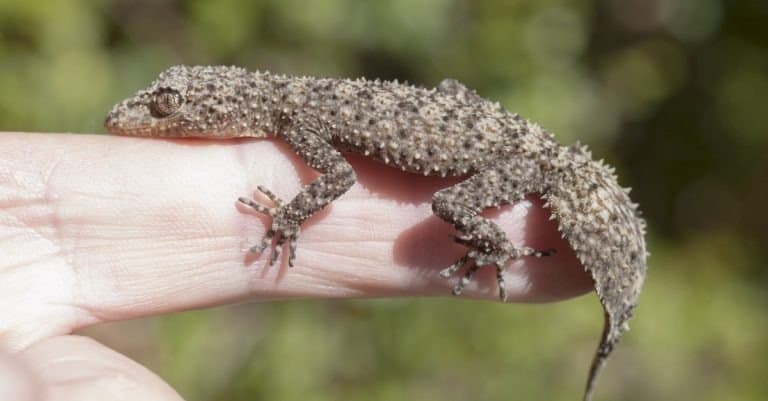
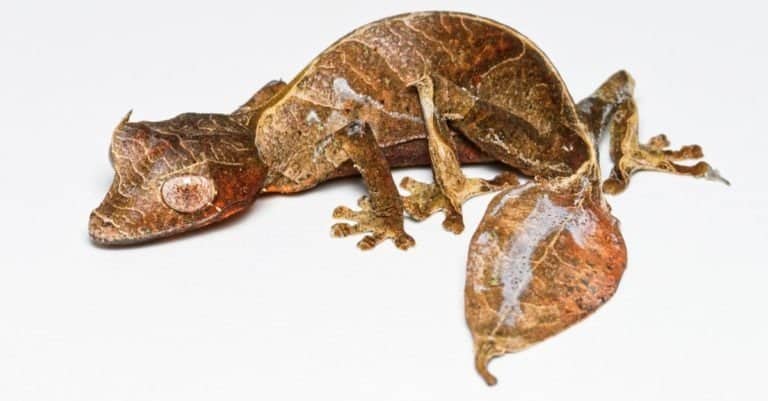
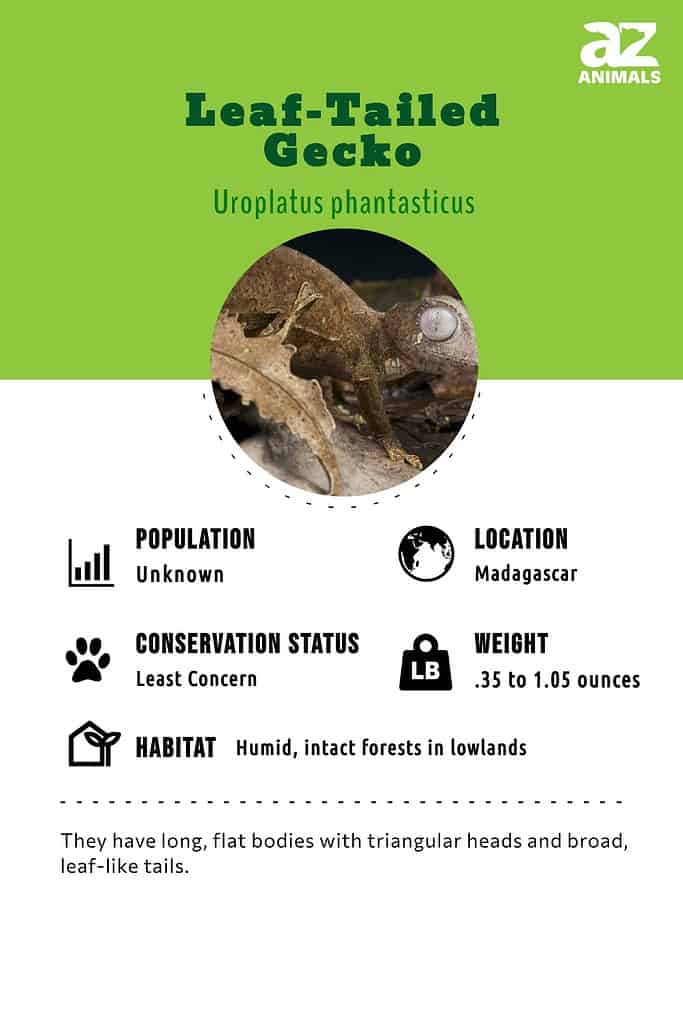
The leaf-tailed gecko, a lengthy lizard, has quite a unique physique. With a broad and triangular head, their name comes from the leaf-like resemblance of their tail.

The texture helps leaf tailed geckos to be camouflaged within their surroundings to conceal themselves against the natural foliage in their surroundings. They tend to blend in with the bark of trees and with leaves, which is made even easier with their coloring. However, there are several species of this type of gecko, including the mossy, satanic, and giant leaf-tailed gecko.

This gecko has a unique vocal trick – it can emit a loud noise that sounds just like the scream of a child.

5 Incredible Leaf-Tailed Gecko Facts!

Here are some interesting facts about these geckos

  • They have large eyes without eyelids. To keep their eyeballs moist, they lick them periodically.
  • If dirt gets on or in the eye of the gecko, the reptile removes it in the same way that they moisten the surface – with their tongue.
  • The size of this lizard can vary drastically, growing 4 to 12 inches at its adult length. The giant leaf-tailed gecko is already 2 inches long when it is initially born.
  • The skin of the leaf-tailed gecko resembles the rough bark of a tree, allowing them to hide from predators.
  • Each of the toes of these lizards contains millions of microscopically small plates that allow them to move effortlessly on smooth surfaces.
Scientific Name

Leaf-tailed geckos are classified in the kingdom Animalia and Phylum Chordata. Their class is called Reptilia and the order is called Squamata. Their family is called Gekkonidae while the genus is called Uroplatus.

Uroplatus is derived from Latin, combining two words – οὐρά (“tail”) and πλατύς (“flat”). Phantasticus is also rooted in Latin, which means “imaginary.” The unique body of the leaf-tailed gecko led George Albert Boulenger, a naturalist from Belgium, to say that it is “mythical,” which is part of the reason for the name.

Evolution And Origin

After the split of the two supercontinents, Laurasia and Gondwanaland, around 200 million years ago, geckos began to diverge from other lizards. It is believed that the earliest known fossil record of an extinct genus of gecko, Yantarogekko from the Eocene era, was found in Baltic amber, although as there are not much left of its remains, it is unable to be more definitive in its assignation and is left in the more widely categorized genus of Gekkonidae.

Types Of

There are 14 extant species of the leaf-tailed gecko. Here are just a few of the different species of the leaf-tailed gecko:

  • Spearpoint leaf-tailed gecko (Uroplatus ebenaui)
  • Satanic leaf-tailed gecko (Uroplatus phantasticus)
  • Common leaf-tailed gecko (Uroplatus fimbriatus)
  • Southern leaf-tailed gecko (Uroplatus sameiti)
  • Lined leaf-tailed gecko (Uroplatus lineatus)

Appearance
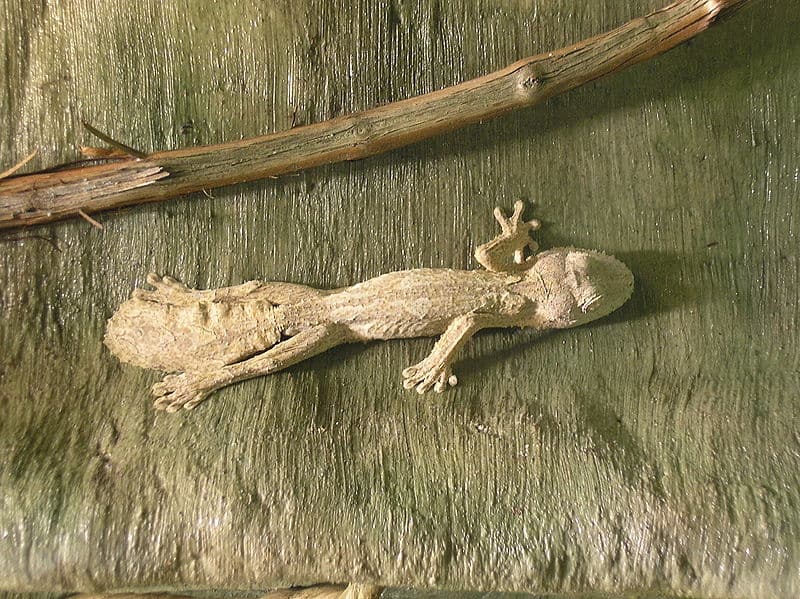
One of the facts that distinguish the leaf-tailed gecko is that they have long bodies that can grow 4 to 12 inches in size. Their heads are broad, taking on a triangular shape like that of the angles in their tail. The size of giant leaf-tailed geckos is usually 2.5 inches long as babies, growing to be 10-12 inches long as adults with larger eyes than other variations.

The eyes of these lizards are big and marbled, but the red center of the eye stands out significantly against their body which typically features green, tan, brown, and grey. The natural colors allow them to easily camouflage within their surroundings – especially because their texture is rough like the leaves and branches of the trees. The mossy leaf-tailed geckos can even camouflage with the moss on trees.

Along the lower jaw, these geckos have fringed flaps, matching their sides. When they lay on a surface, they can flatten their body to keep the illusion that they are merely a leaf in nature.

Behavior
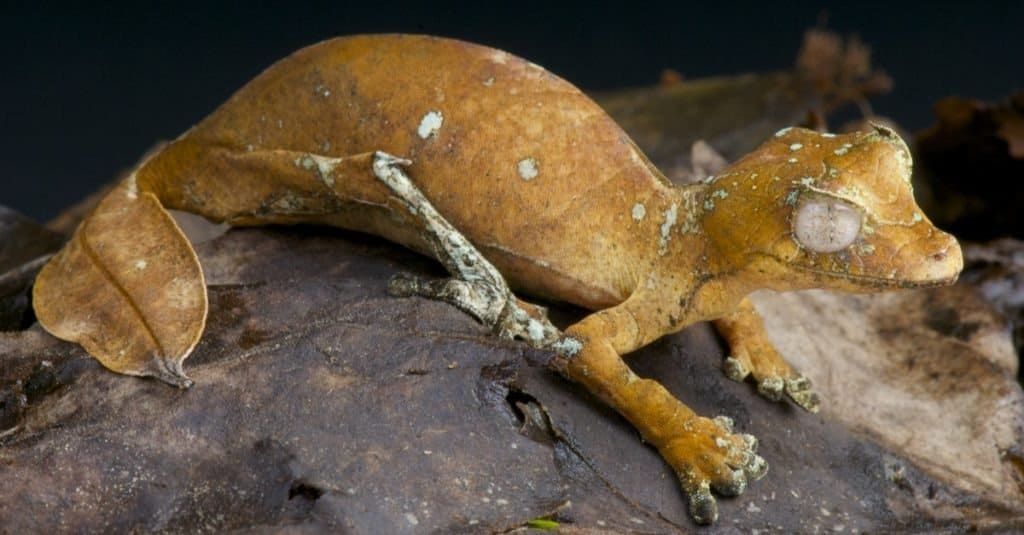
Satanic leaf tailed gecko / Uroplatus phantasticus

As nocturnal reptiles, these geckos rest during the day and are active at night.

These geckos are nocturnal animals, meaning that they rest during the day and are active during the night. During most days, you can find the geckos basking in the sun until they are ready to hunt for their prey.

Being carnivorous reptiles, the gecko is an active hunter at night. The darkness and shadows allow them to stay hidden from their prey as they seek out a meal without being noticed.

When they are resting, these lizards face downward, but that doesn’t mean that they are unprepared for danger. At the moment that the gecko is disturbed by anything in their surroundings, it will let out a loud distress call that sounds much like a child screaming. They also become aggressive towards the disturbance, showing their bright red mouth as they open them widely. The satanic leaf-tailed geckos especially do not like to have their resting time interrupted, primarily spending time alone.

The camouflage capabilities of these lizards are a determining factor in the way that they sleep since their physique can vary. Reptiles that look like bamboo will stretch out while they sleep, while the ones that look like leaves may curl up in knots to keep themselves out of the view of predators.
The movement of the geckos is usually slow – much like that of a chameleon. They do not like the limelight, moving little by little. If a gecko is moving slowly, it is a good sign that it is happy. However, if a gecko is stressed, it would be in constant motion, jumping around with a sense of panic as it attempts to escape the situation.

When they are out hunting, the geckos usually possess what is called a bug stare. When they expose this stare, the eyes usually widen as their pupils are revealed, giving a sense that they are now hunting more.

Even though the geckos bite, their jaws and claws are not strong enough. They are not dangerous especially to humans as their bites or claw grip are not enough to break any human skin but following proper safety procedures is still important.

Habitat
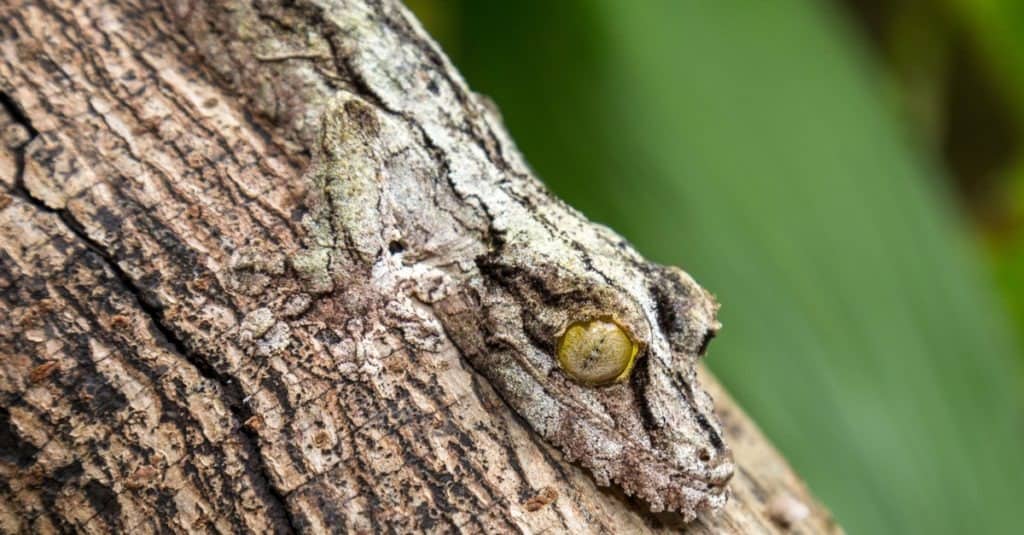
Leaf-tailed Gecko, mimicry, Uroplatus fimbriatus, Madagascar

These geckos prefer the humid forests and will rest on leaves and branches of the trees.

These geckos often prefer to make their habitat within humid forests, particularly staying in lowlands. However, they will also live at elevations of up to 2,625 feet. During the day, they rest on the leaves and branches of the trees, allowing their bodies to be easily camouflaged without the worry that a predator will find them.

One of the most common habitats for this gecko is the Nosy Mangabe Island. With the right amount of searching, you may even be able to see them in the rainforests found along the eastern coast of Madagascar.

These geckos are carnivorous, though they do not rank very high on the food chain. Rather than seeking out other reptiles, birds, or mammals, they look for insects and invertebrates that are easy to capture within their habitat. Land snails and insects are often their food of choice, though the satanic leaf tailed gecko will indulge in a variety of spiders, worms, and flies.

Predators And Threats

Even though these geckos have excellent camouflage capabilities that help the gecko in hiding from predators, they still serve as food for some birds and animals.

These reptiles face the threat from human activities like deforestation that have been clearing their natural habitats and in turn affecting their lives and posing as a threat to them.

What Eats Leaf-Tailed Geckos?

Leaf tailed geckos are eaten by a variety of birds and animals. Some of them include owls, eagles, rats, and snakes.

What Do Lead-Tailed Geckos Eat?

The leaf-tailed gecko prefers a steady diet of insects, including flies and spiders. They’ll also consume invertebrates that are much smaller than them, like worms or snails. However, these animals are not picky, and they will ultimately eat anything that they can overpower.

Reproduction, Babies, And Lifespan
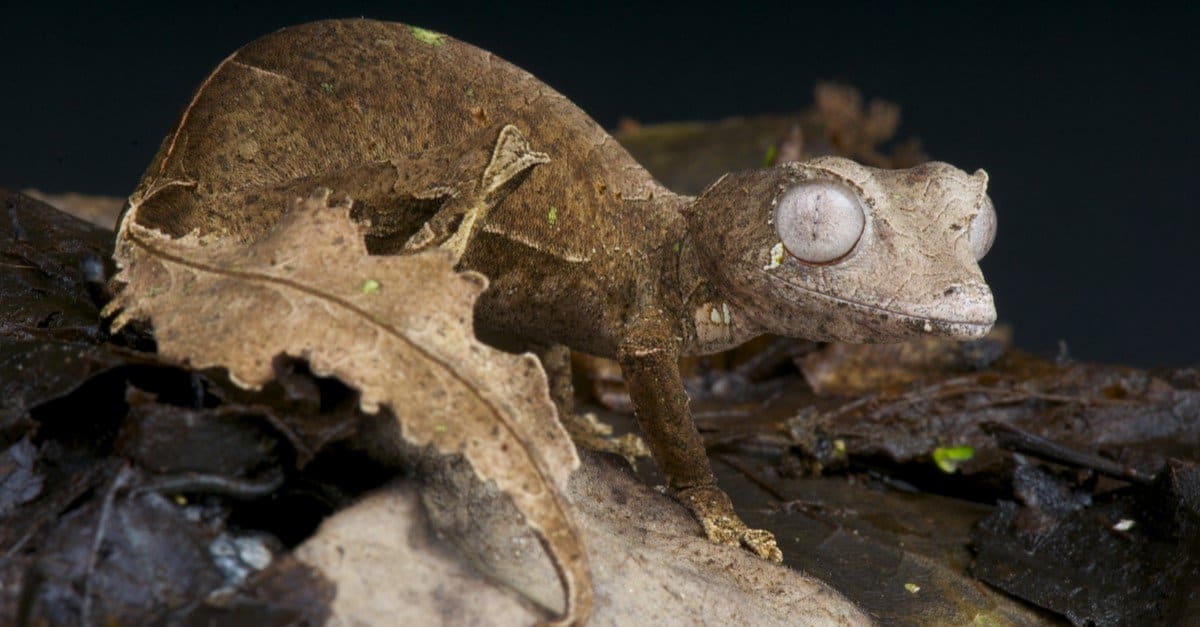
The leaf-tailed geckos are usually considered to be solitary creatures and come together only to mate. Their mating season starts when their environment reaches a rainy time of year.

Interestingly, there is very little detail regarding the reproduction process of the leaf-tailed geckos. When ready to reproduce, the female leaf-tailed gecko usually lays two to four spherical eggs. The eggs are usually laid under the leaves or the insides of the dead plants to protect them.

The cluster of leaf-tailed gecko eggs is called clutches, and the females lay up to three clutches every year. The eggs can also be laid on the forest floor, taking about 95 days to hatch. The leaf-tailed gecko will usually have a 5-year lifespan.

Population

While the exact population of the leaf-tailed gecko is unknown, the International Union for Conservation of Nature (IUCN) has classified the animal as “vulnerable.” The status is not worrisome at the moment, making it one of the least concerning populations of animals in the world right now. The only variation that seems to have steadily decreased numbers is the population of the mossy leaf-tailed geckos.

In the Zoo

Leaf-tailed geckos can be kept in the zoo in captivity. Single geckos can be kept in about 12 inches-long cages, while the pairs can be kept in about 18 inches-long cages. While in captivity, they have to be fed a variety of insects, flies, worms, and spiders for their appropriate diet and growth.

View all 131 animals that start with L

Sources

  1. Smithsonian's National Zoo & Conservation Biology Institute / Accessed February 5, 2021
  2. Soft Schools / Accessed February 5, 2021
  3. Hogle Zoo / Accessed February 5, 2021
  4. Wikipedia / Accessed February 5, 2021
  5. Cleveland Metroparks Zoo / Accessed February 5, 2021
Melissa Bauernfeind

About the Author

Melissa Bauernfeind

Melissa Bauernfeind was born in NYC and got her degree in Journalism from Boston University. She lived in San Diego for 10 years and is now back in NYC. She loves adventure and traveling the world with her husband but always misses her favorite little man, "P", half Chihuahua/half Jack Russell, all trouble. She got dive-certified so she could dive with the Great White Sharks someday and is hoping to swim with the Orcas as well.
Connect:

Thank you for reading! Have some feedback for us?


Leaf-Tailed Gecko FAQs (Frequently Asked Questions)

Leaf-tailed geckos are carnivores in nature. They are known to feed on a vast variety of invertebrates. Some of the creatures that the leaf-tailed geckos eat include land snails and a lot of insects. Apart from that, they also feed on several spiders, worms, and flies.