L
Species Profile

Leopard Seal

Hydrurga leptonyx

Spotted apex hunter of the pack ice
B.navez / Creative Commons

Leopard Seal Distribution

Click a location to explore more animals from that region

This map shows coastal regions where Leopard Seal are found.

Loading map...
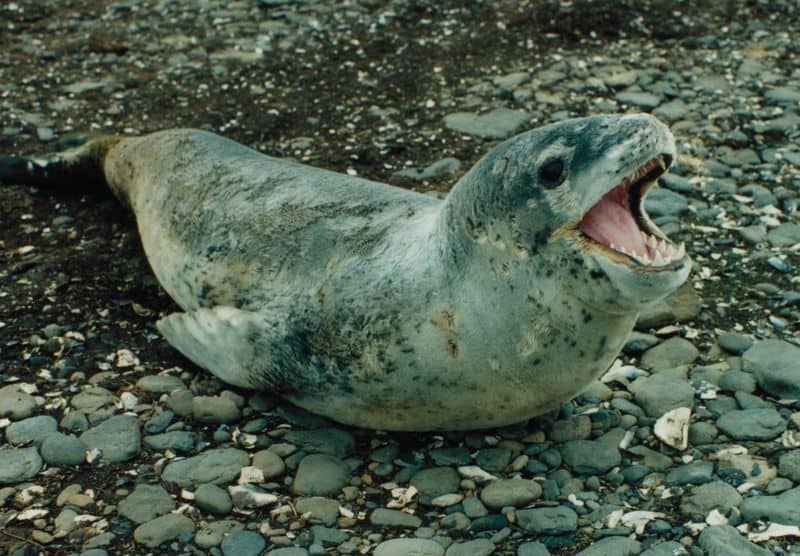
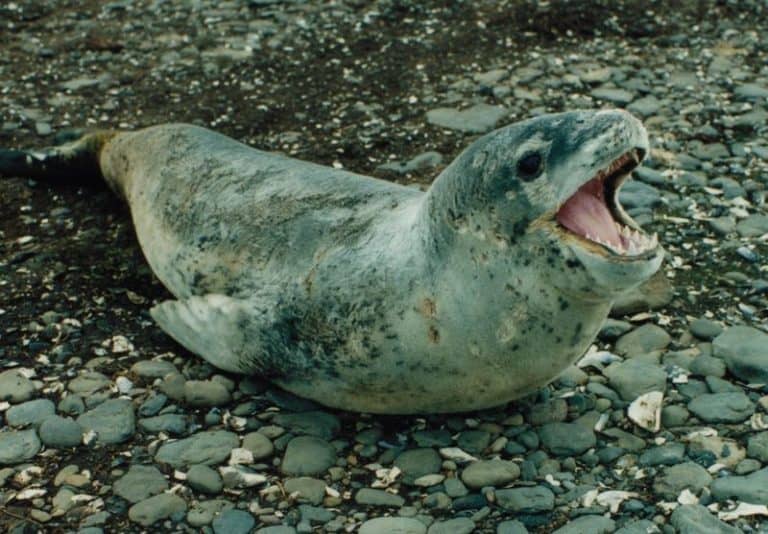
Leopard Seal lying on rocks

At a Glance

Wild Species
Diet Carnivore
Activity Cathemeral
Lifespan 18 years
Weight 600 lbs
Status Least Concern
Did You Know?

Females are larger: ~3.0-3.8 m long and ~260-500+ kg; males ~2.8-3.3 m and ~200-300 kg (reported ranges; e.g., Rogers in *Encyclopedia of Marine Mammals*, 2nd ed.).

Scientific Classification

The leopard seal (Hydrurga leptonyx) is a large Antarctic phocid (true seal) known as a top predator in the Southern Ocean, feeding on penguins, other seals, fish, and krill.

Kingdom
Animalia
Phylum
Chordata
Class
Mammalia
Order
Carnivora
Family
Phocidae
Genus
Hydrurga
Species
Hydrurga leptonyx

Distinguishing Features

  • Large, robust true seal with long, reptile-like head and powerful jaws
  • Dark gray back with lighter belly and heavy spotting (leopard-like patterning)
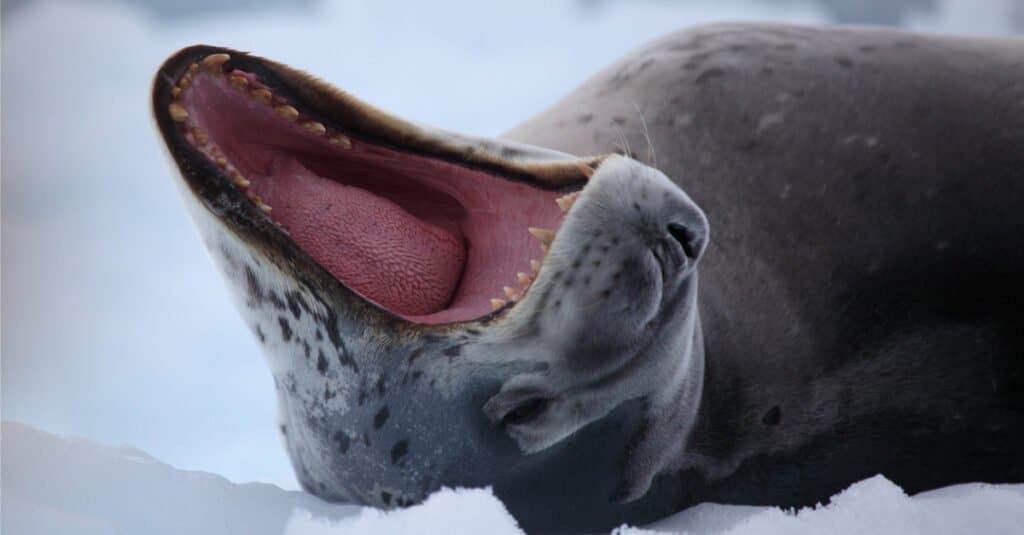
  • Notable for wide gape and prominent canines; highly predatory behavior
  • Commonly observed hauled out on pack ice near penguin colonies/ice edges

Physical Measurements

Males and females differ in size

Length
9 ft 10 in (9 ft 2 in – 10 ft 10 in)
11 ft 2 in (9 ft 10 in – 12 ft 6 in)
Weight
661 lbs (441 lbs – 992 lbs)
772 lbs (441 lbs – 1,301 lbs)
Tail Length
10 in (8 in – 11 in)
Top Speed
15 mph
swimming

Appearance

Primary Colors
Secondary Colors
Skin Type Short, coarse pelage over thick blubber; skin smooth and dark when wet, fur provides limited insulation.
Distinctive Features
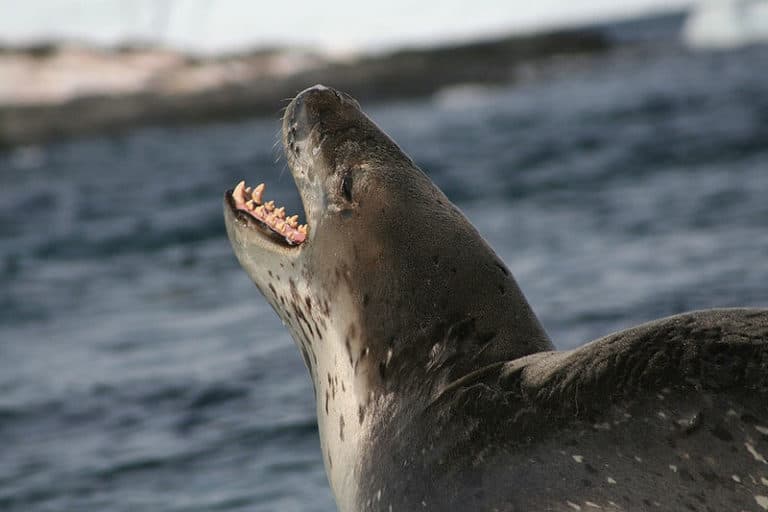
  • Large true seal with elongated, reptile-like head and long muzzle; wide gape and robust jaw musculature.
  • Very large mouth with prominent canines and multiple sharp postcanine teeth suited for gripping prey.
  • Streamlined, muscular body; relatively long foreflippers for a phocid; hindflippers used for propulsion.
  • Typical adult total length ~2.4-3.5 m; females average larger than males (Jefferson, Webber & Pitman, 2015).
  • Body mass commonly ~200-500 kg; large females reported to ~590 kg (Jefferson et al., 2015; Rogers, 2013).
  • Coat spotting highly individual; many adults show extensive scars from intraspecific interactions and prey handling.
  • Pack-ice associated in the Southern Ocean/Antarctic; often solitary, using ice edges and leads for hunting (Rogers, 2013).
  • Apex/mesopredator with broad diet including penguins, seals, fish, squid, and krill; skull/jaw morphology supports taking large, struggling prey (Rogers, 2013).
  • Longevity recorded to ~26 years (Rogers, 2013).

Sexual Dimorphism

Females are typically longer and heavier than males, with proportionally larger overall body size. Males tend to have slightly more robust neck/shoulder build, while both sexes share the same spotted countershaded pattern.

  • Generally smaller adult length and mass than females (Jefferson et al., 2015).
  • Often relatively thicker neck/forequarters compared with similarly sized females.
  • External genital opening (penile opening) visible on ventral midline when viewed closely.
  • Typically larger adult length and mass; large females reported up to ~590 kg (Jefferson et al., 2015).
  • Broader trunk/abdomen, especially when pregnant or lactating.
  • Mammary slits (two) on ventral surface; nipples not externally prominent outside nursing.

Did You Know?

Females are larger: ~3.0-3.8 m long and ~260-500+ kg; males ~2.8-3.3 m and ~200-300 kg (reported ranges; e.g., Rogers in *Encyclopedia of Marine Mammals*, 2nd ed.).

Lifespan can reach ~26 years based on age estimates from tooth growth layers (reported in scientific syntheses such as Rogers, EMM).

They have a wide gape and long head; their post-canine teeth can interlock like a sieve-useful for straining Antarctic krill as well as gripping fish and birds (Rogers, EMM).

Diet is unusually broad for a true seal: Antarctic krill, fish (e.g., Antarctic silverfish), penguins, seabirds, squid, and seals (including crabeater and Weddell seals) are all documented prey (Rogers, EMM).

Leopard seals are famous for "penguin ambush" hunting at the ice edge, using rapid lateral lunges and powerful foreflipper steering to intercept swimming birds (field observations summarized by Rogers, EMM).

Males produce long, tonal underwater calls in the breeding season-complex "songs" that can carry through sea-ice habitats (acoustic studies summarized by Rogers, EMM).

Unique Adaptations

  • Heterodont dentition: large canines for grasping plus multi-cusped postcanines that can mesh to strain krill-supporting one of the broadest diets among phocids (Rogers, EMM).
  • Streamlined, long-headed morphology and very wide gape enable capturing large, slippery prey (penguins and seals) compared with most other true seals.
  • Spotted pelage provides disruptive camouflage against the dappled light under sea ice and in the water column-origin of the common name "leopard."
  • Powerful jaw musculature and robust neck/shoulder anatomy support high-force bites and prey-tearing at the surface.
  • Thick blubber layer provides insulation and energy storage for cold Southern Ocean waters and fasting periods around breeding/molt.

Interesting Behaviors

  • Ice-edge ambush: waits near floe edges and lunges at penguins or flying seabirds as they enter/exit the water.
  • Prey handling: often shakes, thrashes, or slaps prey at the surface; large prey may be torn into manageable pieces before swallowing.
  • Dual foraging modes: can actively hunt vertebrate prey (penguins/seals/fish) and also feed on krill using interlocking teeth as a filtering comb.
  • Mostly solitary: typically encountered alone; loose aggregations can occur where prey is concentrated (colonies, ice edges, productive fronts).
  • Seasonal use of pack ice: commonly associates with marginal ice zone and pack ice, but individuals also haul out on subantarctic islands and may disperse widely outside peak ice seasons.
  • Underwater vocal behavior: prolonged, repetitive calls (especially by males) during the breeding season, thought to function in spacing and mate attraction.

Cultural Significance

Leopard seal (Hydrurga leptonyx): Antarctica has no long-term native people, so they have few old stories. They show up in explorers' tales, films, museums, and public programs as the Southern Ocean's spotted, fierce pack-ice predator.

Myths & Legends

During 19th–early 20th century Antarctic exploration, sailors and explorers told stories of a spotted, scary "sea leopard" (Leopard seal, Hydrurga leptonyx) that patrolled ice edges and chased penguins.

In scientific naming, Hydrurga leptonyx combines Greek roots meaning "water-worker" and "slender claw." Early naturalists used these names to explain how the seal's body and behavior made its identity.

At Antarctic stations, people tell stories of leopard seals (Hydrurga leptonyx) as 'ice-edge gatekeepers' — tales from real encounters that warn people not to think a lone seal is harmless.

Conservation Status

LC Least Concern

Widespread and abundant in the wild.

Population Unknown

Protected Under

  • Convention for the Conservation of Antarctic Seals (CCAS, 1972)
  • Antarctic Treaty System - Protocol on Environmental Protection (Madrid Protocol, 1991)
  • Convention on the Conservation of Antarctic Marine Living Resources (CCAMLR, 1980)

Life Cycle

Birth 1 pup
Lifespan 18 years

Lifespan

In the Wild
12–26 years
In Captivity
12–30 years

Reproduction

Mating System Promiscuity
Social Structure Solitary
Breeding Pattern Transient
Fertilization Internal Fertilization
Birth Type Internal_fertilization

Leopard seals are mostly solitary; males advertise and possibly defend underwater display areas with long calls during the austral summer. Females likely mate with multiple males; no pair bonds form, and females pup and nurse alone for ~4 weeks.

Behavior & Ecology

Social None (generally solitary) Group: 1
Activity Cathemeral
Diet Carnivore Antarctic krill (Euphausia superba)
Seasonal Migratory 1,118 mi

Temperament

Apex, opportunistic predator; bold around prey concentrations and capable of intense aggression.
Highly territorial at close range (ice edge/haul-out); uses threat displays and biting.
Generally avoids prolonged social contact; most encounters are competitive or mating-related.
Maternal defense is strong; females can be particularly aggressive near pups.
Predominantly solitary; local prey density can drive brief, variable aggregations.

Communication

Underwater trills, hoots, and whoops used as long-range displays, especially in breeding season Rogers, 2007
Growls and harsh barks/snorts during close-range aggression and threat interactions.
Visual threat displays: open-mouth gaping, head/neck extension, rapid approach or charging.
Physical communication: biting and chasing during territorial or feeding conflicts.
Spatial signaling: maintaining distance/spacing on ice and at the waterline to reduce escalation.

Habitat

Open Ocean Coastal Seabed/Benthic Deep Sea Beach Rocky Shore
Biomes:
Terrain:
Coastal Island Rocky Sandy

Ecological Role

Upper-trophic-level predator (often apex in pack-ice food webs) and key intraguild predator in the Southern Ocean.

Top-down regulation of mid-trophic consumers (penguins, juvenile seals, fish) and direct predation on krill Stabilizes/reshapes local prey populations through seasonal predation pulses (e.g., near penguin colonies and ice-edge nursery areas) Transfers energy across trophic levels (krill/fish → marine mammals) and across habitats (pelagic/ice-edge → coastal colony interfaces)

Diet Details

Main Prey:
Antarctic krill Penguin Seal Antarctic silverfish and other notothenioid fishes Squid and octopus

Human Interaction

Domestication Status

Wild

Hydrurga leptonyx (leopard seal) is a wild Antarctic/Southern Ocean seal with no history of domestication and no captive-breeding line. Humans mainly meet them during scientific research, Antarctic work, and rare displays in special facilities. Other interactions include tagging, tourism disturbance, fishery overlap, and protection under the Antarctic Treaty/CCAMLR.

Danger Level

High
  • Potentially lethal bites and lacerations due to large size, powerful jaws, and predatory/territorial responses-especially in water (the species is an ambush predator).
  • Documented rare attacks on humans, including a fatal incident during snorkeling in Antarctic waters (widely reported in the scientific/Antarctic operations literature; often cited as the 2003 incident at Rothera Station).
  • High risk during close approach/handling in research or rescue contexts: sudden lunges, bites, and dragging behavior are plausible; strict standoff distances and trained personnel protocols are standard.

As a Pet

Not Suitable as Pet

Legality: Not suitable or legal as a private pet. Keeping Hydrurga leptonyx is usually limited to approved zoos, aquaria, or research centers with strict government permits, special housing, and vet care; private ownership is generally banned.

Care Level: Expert Only

Purchase Cost:
Lifetime Cost: $1,000,000 - $5,000,000

Economic Value

Uses:
Scientific research value Ecotourism/wildlife viewing (indirect) Ecosystem role (apex predator affecting food-web dynamics) Education/exhibit value (rare, specialized institutions)
Products:
  • Non-consumptive economic value via polar ecotourism (wildlife observation from vessels/shore landings where permitted)
  • Research outputs (telemetry datasets, diet/ecology studies, ecosystem monitoring indicators)
  • No routine commercial products recommended/used; commercial exploitation is not a modern economic pathway for this species under current conservation governance

Relationships

Related Species 5

Weddell seal Leptonychotes weddellii Shared Family
Crabeater seal
Crabeater seal Lobodon carcinophaga Shared Family
Ross seal Ommatophoca rossii Shared Family
Southern elephant seal Mirounga leonina Shared Family
Antarctic fur seal Arctocephalus gazella Shared Order

Ecological Equivalents 4

Animals that fill a similar ecological role in their ecosystem

Killer whale
Killer whale Orcinus orca Both are top Southern Ocean predators that hunt penguins and seals at ice edges. Killer whales hunt in groups and can kill adult leopard seals; leopard seals hunt alone by ambush, so their ranges overlap near colonies.
Southern elephant seal Mirounga leonina Both are large Antarctic phocids that overlap in space and season. Southern elephant seals dive deep to eat fish and squid, while leopard seals hunt near the ice and take surface prey such as penguins, young seals, fish, and krill.
Weddell seal Leptonychotes weddellii Co-occurs in Antarctic coastal and fast-ice areas and consumes similar fish and squid. Weddell seals can be prey (especially pups) for leopard seals. Both rely on sea ice for breathing holes, resting sites, and access to prey.
Antarctic fur seal Arctocephalus gazella In subantarctic regions and the Antarctic Peninsula, leopard seals and Antarctic fur seals both congregate near productive oceanic fronts and island colonies. Antarctic fur seals feed primarily on krill and fish, overlap with leopard seals in nearshore areas, and are common leopard seal prey at breeding beaches.

Clumsy on land but graceful in the sea, the leopard seal is a finely skilled predator that thrives in the frigid waters of Antarctica.

This highly distinctive species has a set of unmistakable features to help it survive in the wild, including blubber and flippers. With few natural predators and plenty of food, the leopard seal has tamed one of the most inhospitable environments on the planet. However, few people have ever seen one up close, since direct contact with humans is rare and fleeting. This has allowed the leopard seal to proliferate throughout the seas of the most southern extremes on the planet.

5 Leopard Seal Facts

  • Although leopard seals have small claws on their flippers, it’s actually their big teeth that allow them to kill and consume larger prey.
  • Leopard seals sense the surrounding environment with their short whiskers. Biologists have been able to determine the last meal of a seal by analyzing the chemical composition of the whiskers.
  • These seals lack an external ear flap. Instead, they have a simple opening on either side of the head that leads to the ear canal.
  • In order to better deal with water pressure, leopard seals can collapse their lungs before diving underneath the water.

For more leopard seal facts, make sure to read ’10 Incredible Leopard Seal Facts!’
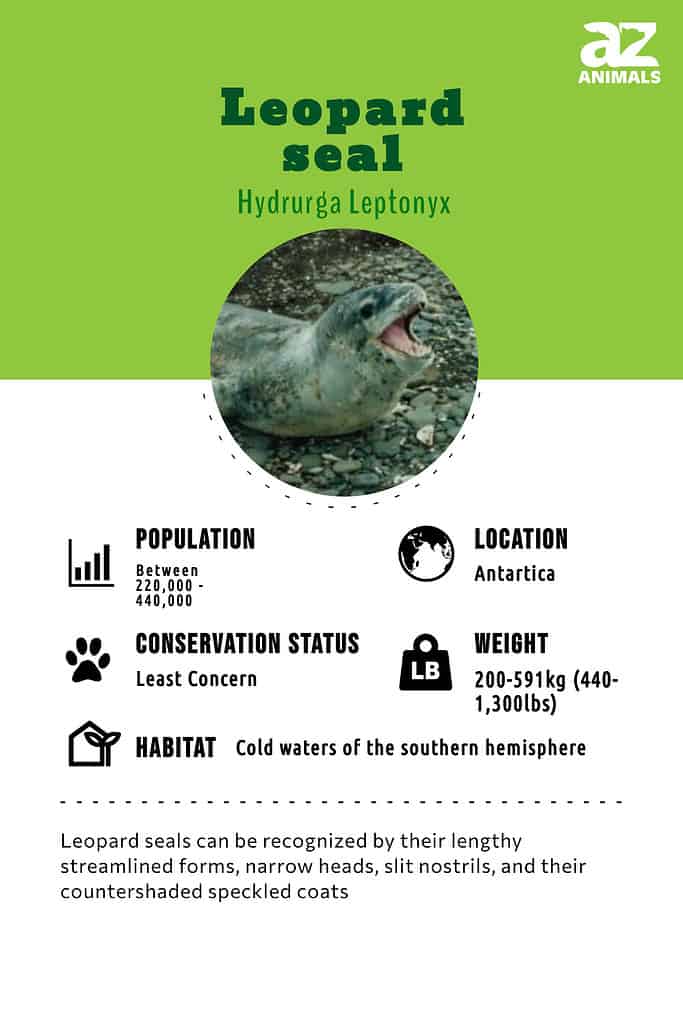
A pictorial summary of the leopard seal

Scientific Name

Leopard Seal Teeth - Leopard Seal

Leopard seals’ closest living relatives are crabeater seals, Ross seals, and Wedell seals

The scientific name of the leopard seal is Hydrurga leptonyx. Hydrurga means water worker, and leptonyx means slender or small-clawed in Greek. The leopard seal is the only living species in the genus Hydrurga. It also belongs to the family of Phocidae, meaning the earless or true seals. This distinguishes them from the eared seals of the family Otariidae. The leopard seal is most closely related to the Weddell seal, the crabeater seal, and the Ross seal, all of which live in the Antarctic.

These seals are actually a type of Carnivora — an order of mammals to which cats, dogs, and bears belong. Seals probably split from the rest of the Carnivoras some 50 million years ago. Since then, they have evolved special adaptations to suit life in the water. The larger group of seals, the Pinnipeds, also includes sea lions and walruses.

Appearance
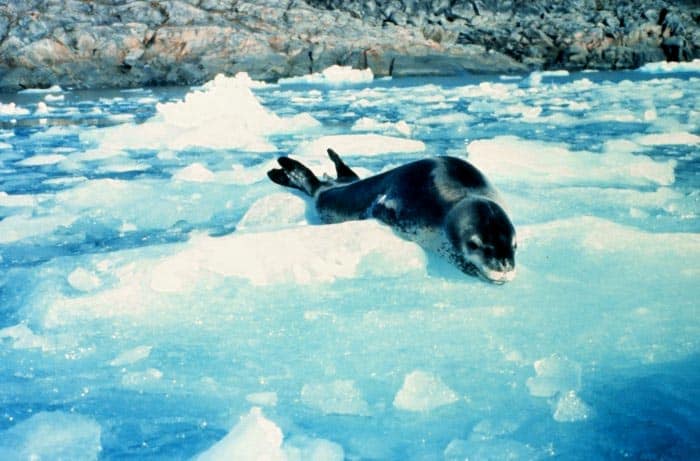
leopard seal (Hydrurga leptonyx) leopard seal on a chunk of ice
Leopard seals are capable of growing to over 12 feet long and weighing over 1,000 lbs

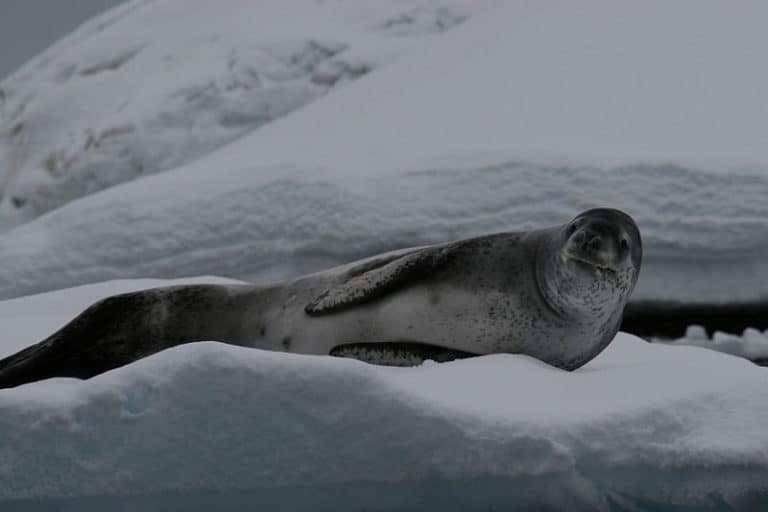
Leopard seals are long, smooth, carnivorous mammals with a rounded head, big snout, large mouths, and flippers on all four feet (which enclose both their elbows and knees). Covered in a thin coat of fur, this species can be identified by the dark gray or black colors on the head and back and the white or light gray around the belly. The most distinctive feature of the species is the black spots around the white parts of the body. This pattern resembles the big cat for which it’s named.

These seals can reach more than 12 feet in length and weigh more than a thousand pounds. That’s about as heavy as a grand piano. This makes them one of the largest and most imposing seals in the world. Females actually outweigh males by a considerable margin. This is the opposite of some Pinnipeds, such as the elephant seal, in which males are larger than the females.

Evolution and Classification
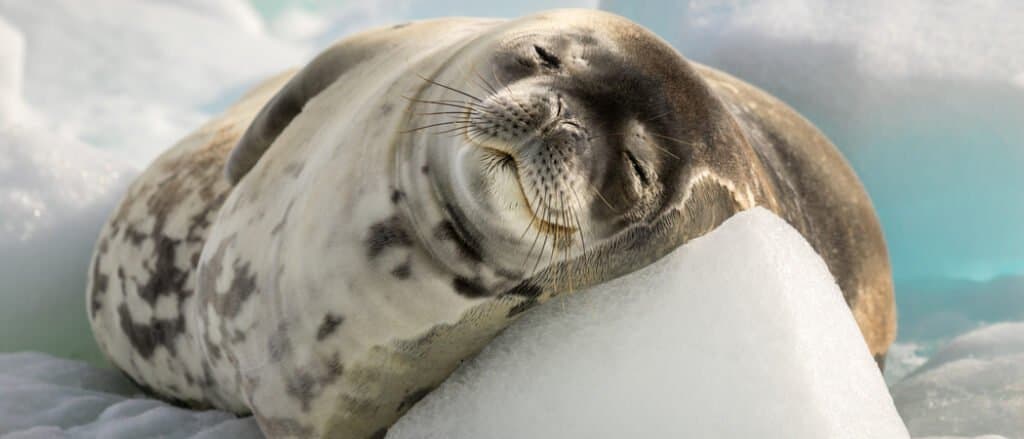
crabeater seal laying on ice

Crabeater seals are close cousins of leopards seals and occasionally have to outswim their larger relatives which hunt them

Leopard seals belong to the tribe Lobodontini (i.e., lobed teeth) and in keeping with the meaning of the word, have lobes on their molars enabling them to filter out nutritious tidbits when their teeth are interlocked.

It is a quality they share with other members of the tribe all of which are considered true seals.

Members of this rather thriving family which can be found in the Antarctic are believed to be the distant cousins of elephant seals. This is due to the fact that their ancestors separated from them during the Miocene era (23.03–5.33  million years ago), subsequently traveling to the south of the globe.

Lobodontin seals can be divided into four genera, including:

  • Hydrurga: Leopard seals are the sole members of the genus which means “water worker”.
  • Leptonychotes: The only member of this genus is the Weddell seal (Leptonychotes weddellii) which is capable of growing to 11.6 feet and 1,320 lbs. Females are generally larger than males.
  • Lobodon: This genus consists of crabeater seals  (Lobodon carcinophaga), which are the most numerous species of seals on the globe and number about 7 million. 
  • Ommatophoca: The ross seal (Ommatophoca rossii) makes up this genus. Capable of growing to over 8 feet in length and measuring 476 lbs, its most noteworthy features are its large eyes and complex twittering sounds which can be heard over extensive distances.

Behavior
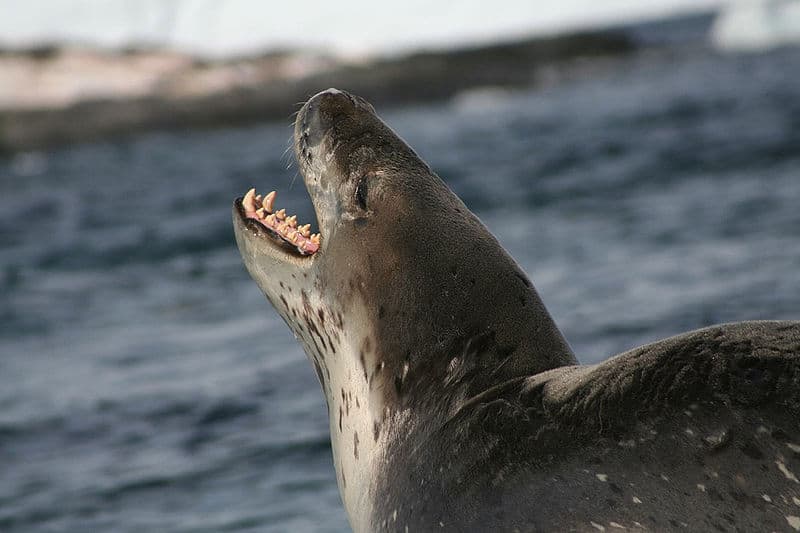
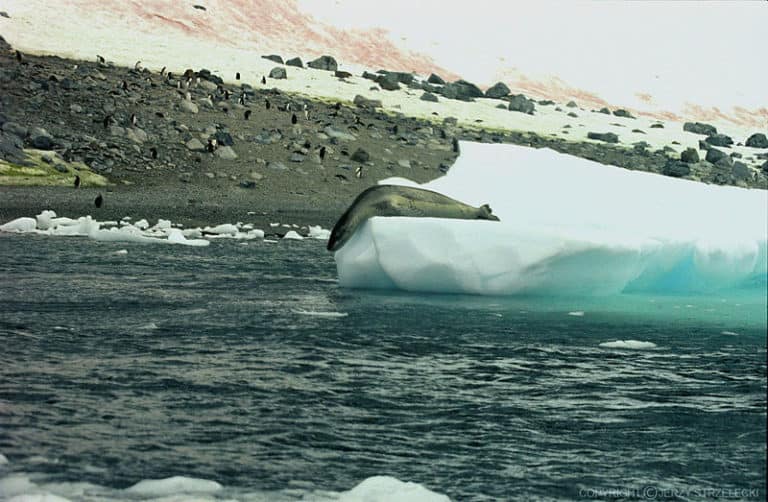
Leopard Seal going to the water

Leopard Seals are solitary by nature but are however highly vocal

Leopard seals are largely solitary creatures that live and hunt on their own. Their only sustained contact with other seals throughout the year is during the mating season. They often compete with each other to acquire food, but they can sometimes cooperate to take down prey as well. Despite its solitary nature, the leopard seal is nevertheless a highly vocal species. The large repertoire of calls includes trills, barks, and moans (which may vary with age) to help them establish territory and attract potential mates. They seem to have unique behaviors and rituals associated with certain stylized vocalizations and sounds.

Over millions of years of evolution, these seals have acquired specific adaptations to help them cope with the harsh realities of their cold marine environment. The thick layer of blubber provides special insulation from the frigid waters. Their bodies are shaped as smoothly as possible to minimize drag in the sea. Their front flippers, which are relatively large in relation to body size, allow them to steer with incredible agility and precision in the water, while their hind flippers provide speed and locomotion with a side-to-side stroke. It is believed that they can move up to 25 mph for short periods when swimming. However, leopard seals are very clumsy creatures on the land. They must force themselves forward by wriggling on their bellies and pulling their bodies up.

Fortunately, their cumbersome movement on land is not much of a hindrance. The leopard seals spend the majority of their lives in and around the water, occasionally coming up on the ice for rest, safety, and breeding. Just like the cetaceans, leopard seals can go a long amount of time between breaths of oxygen. Before diving underneath the water, the seal can collapse its lungs to deal with the water pressure. They also appear to have a higher concentration of oxygen-storing molecules in their blood. However, unlike many other Pinnipeds, leopard seals do not make particularly deep or long dives. They usually stay within a few hundred feet of the surface.

Although the leopard seal species has not been thoroughly studied, it is generally understood that seals (even the solitary species) are playful, smart, and inquisitive creatures. They seem to have an innate ability to perform limited tasks and follow commands. Some species (not necessarily leopard seals) are kept in captivity to entertain and educate people about marine life.

Habitat
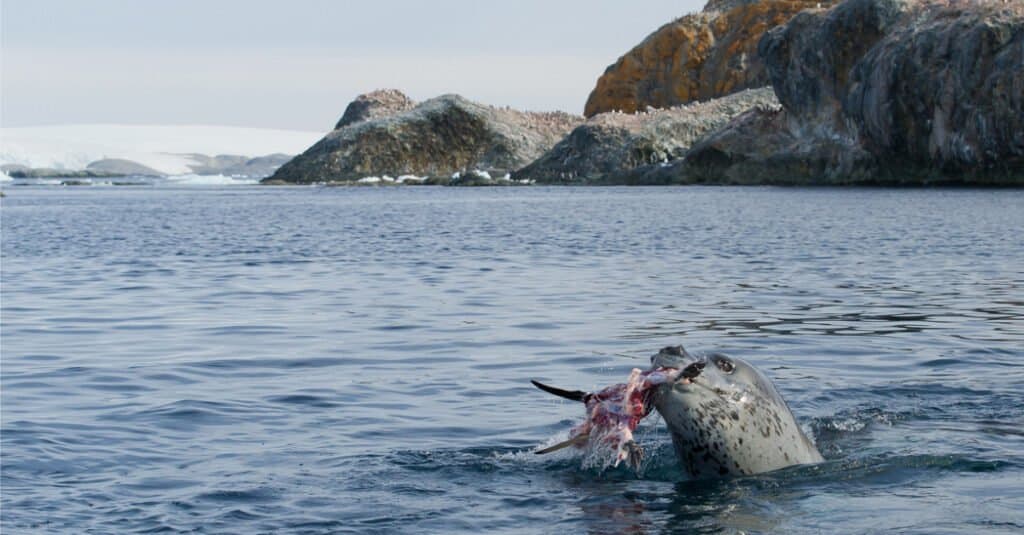
Leopard Seal Teeth - Leopard Seal Eating

Leopard seals’ migration routes are partly influenced by the availability of prey

The leopard seal lives exclusively around the waters of Antarctica. This is its year-round home. However, the species has been sighted as far afield as South America, Australia, New Zealand, and South Africa. Their lives revolve around fidelity to the pack ice and nearby islands. They may migrate around their natural range throughout the year in response to the presence of ice floes and prey.

Diet
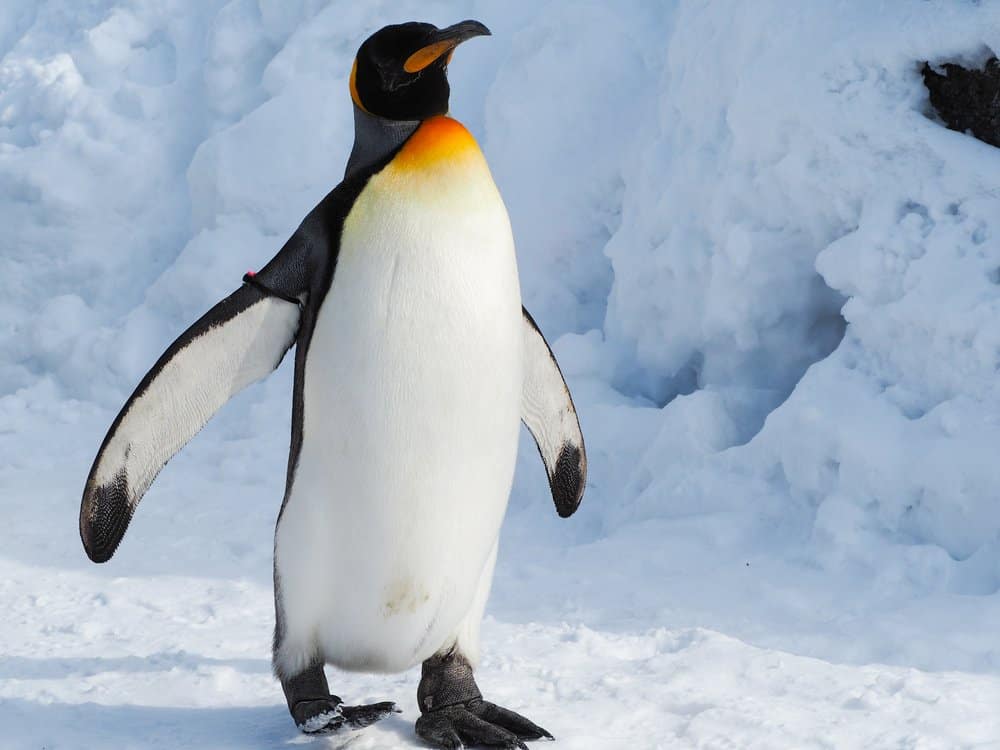
Emperor Penguin

Emperor penguins are preyed upon by leopard seals

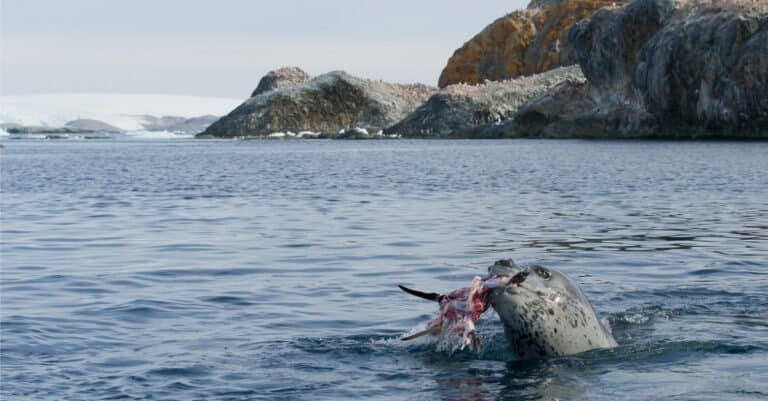
The diet of the leopard seal mainly consists of fish, squid, shellfish, penguins (including gentoos and emperors), sea birds, and sometimes even the pups of other seal species. With their sharp teeth, claws, and big powerful jaws, these carnivores have rightly earned a reputation as one of the fiercest predators of the sea. They are also one of the few seal species that consume other warm-blooded animals.

The krill appears to be a favorite food of the leopard seals. They have evolved specialized teeth that can strain out tiny prey from the surrounding water as they move. However, leopard seals will opportunistically attack and eat whatever they can find. Their diet can change based on the seasons and the availability of food. In order to catch more evasive animals, these clever hunters will lie in wait for prey or sneak up and snatch them directly from below the water. They will sometimes need to tear the prey apart first before it is small enough to be consumed.

Predators and Threats
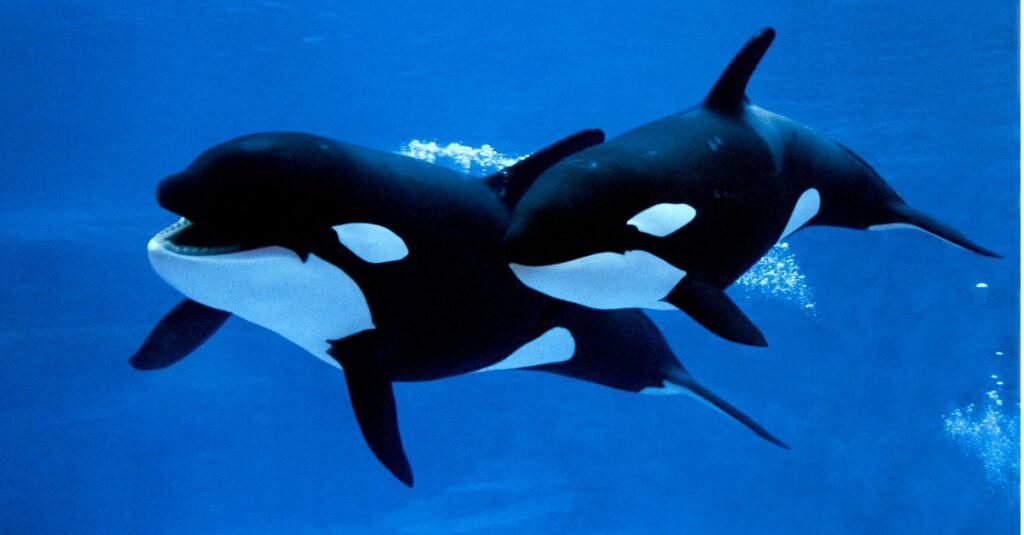
killer whales swimming side by side

Orcas hunt leopard seals alone or in pods

The leopard seal is considered to be an apex predator that has few other natural predators in the wild. However, one of them is the killer whale. These clever creatures will hunt the seal either alone or in packs by deploying intelligent strategies to corner and consume them. There are also reports that sharks may sometimes attack and consume leopard seals, but actual observation of leopard seal predation is relatively rare.

Because the species occupies an extreme environment on the fringes of the world, humans are not a significant threat to them, apart from the occasional entanglements in fishing nets. However, climate change over the long term could pose a risk to the habitat on which the species relies for its survival. If the ice of the Antarctic melts or dissipates, then it will disrupt the seal’s breeding patterns.

Reproduction, Babies, and Lifespan
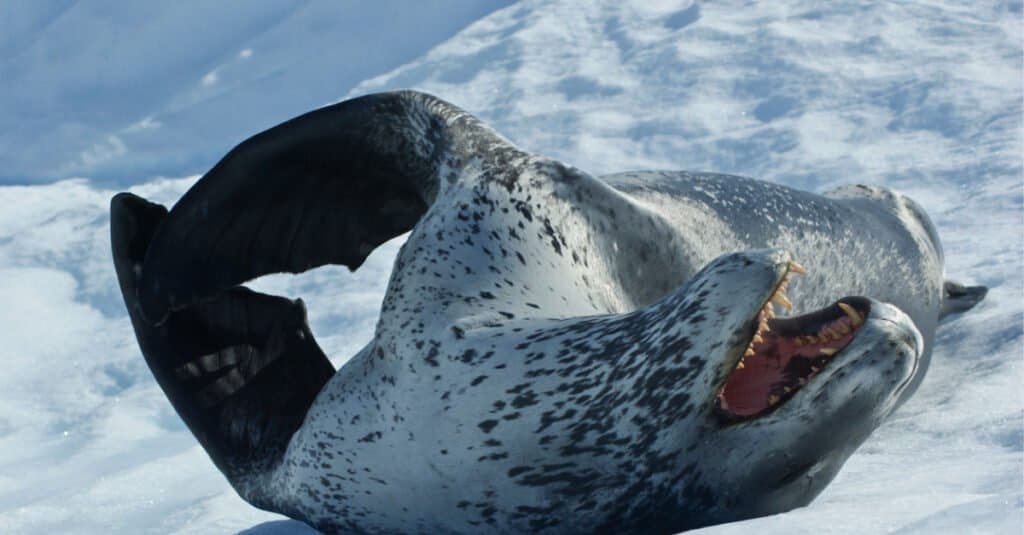
Leopard Seal Teeth - Leopard Seal

Leopard seals breed between December and January

The reproductive habits of the leopard seal remain something of a mystery to biologists. Because it is difficult to access the frigid environments of the Antarctic, actual leopard seal mating has almost never been observed directly. However, several facts can be inferred about the reproductive behavior of the species based on some documentation.

The species breeds only once every year around the months of December and January. It is believed that the leopard seal males will make certain vocalizations to attract and secure mates. Males are often quite aggressive and territorial in the competition for the right females. Once a couple has paired up, the actual mating process probably occurs in the water. However, the male does not stick around for the birth of the child. He usually departed following the end of the mating cycle.

Female leopard seals have a lengthy gestation period that lasts until around October or November (around ten months). The newborn seal is called a pup, and only a single one is born at a time. The young creature can weigh more than 60 pounds straight out of the mother’s womb. For the next four weeks, the female is responsible for raising and weaning the young pup on its own. Most of this time is spent on the ice floes, where the pup is mostly safe and secure from potential carnivores. The pup must learn quickly to swim and hunt because it will begin to live on its own shortly after being weaned. This allows the female to start mating again just in time for the breeding season.

Not much is known about the childhood development of the leopard seal. However, it is believed that sexual maturity usually takes several years to achieve. The leopard seal has been known to live up to 30 years in the wild, but the average life span might be less than this.

Population
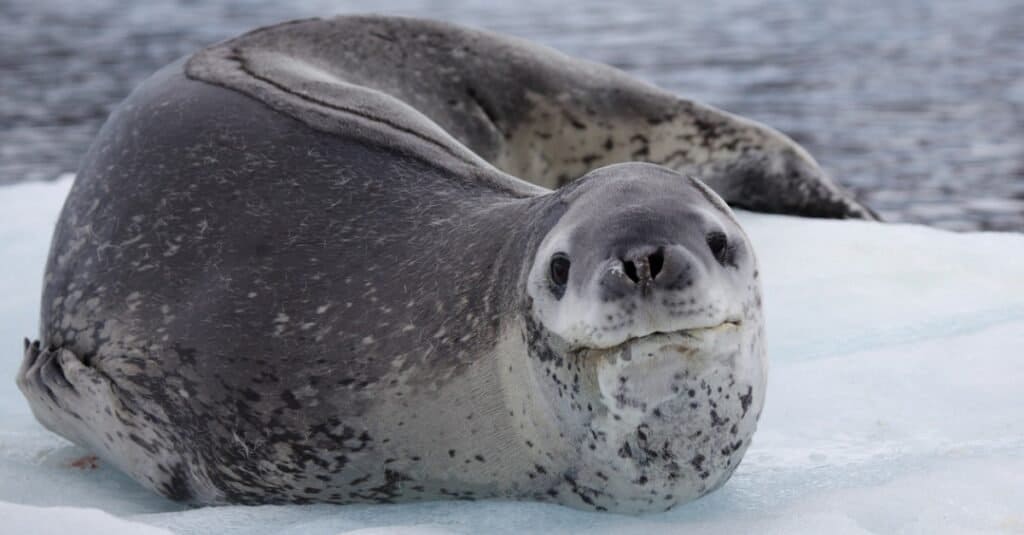
Most Vicious Animals - Leopard Seal

Leopard seals number in the hundreds of thousands and are considered to be Least Concern by the IUCN

Due to the difficulty of surveying the Antarctic region, it is difficult to estimate precisely how many leopard seals are alive in the world. According to the International Union for the Conservation of Nature (IUCN) Red List, the leopard seal is a species of least concern. IUCN claims that there are at least 35,000 individuals in the wild, but this may be an undercount. Some estimates put the true numbers at anywhere between 220,000 to 440,000.

Unlike other species, the leopard seal has not been traditionally hunted for its fat and fur, sparing it from rapid depletion. Despite this, they are protected by international conventions against hunting. However, the loss of Antarctic sea ice could pose a potential threat in the future by interrupting their breeding behavior.

View all 131 animals that start with L

Sources

  1. David Burnie, Dorling Kindersley (2011) Animal, The Definitive Visual Guide To The World's Wildlife / Accessed December 15, 2008
  2. Tom Jackson, Lorenz Books (2007) The World Encyclopedia Of Animals / Accessed December 15, 2008
  3. David Burnie, Kingfisher (2011) The Kingfisher Animal Encyclopedia / Accessed December 15, 2008
  4. Richard Mackay, University of California Press (2009) The Atlas Of Endangered Species / Accessed December 15, 2008
  5. David Burnie, Dorling Kindersley (2008) Illustrated Encyclopedia Of Animals / Accessed December 15, 2008
  6. Dorling Kindersley (2006) Dorling Kindersley Encyclopedia Of Animals / Accessed December 15, 2008
  7. David W. Macdonald, Oxford University Press (2010) The Encyclopedia Of Mammals / Accessed December 15, 2008
Dana Mayor

About the Author

Dana Mayor

I love good books and the occasional cartoon. I am also endlessly intrigued with the beauty of nature and find hummingbirds, puppies, and marine wildlife to be the most magical creatures of all.
Connect:

Thank you for reading! Have some feedback for us?


Leopard Seal FAQs (Frequently Asked Questions)

Apart from scientific and research purposes, direct contact between humans and leopard seals is incredibly rare. However, due to its sheer size and strength, a person would not want to antagonize or provoke the creature. There have only been a few recorded leopard seal attacks, including a single death in 2003 involving an accidental drowning. But as human activity in the Antarctic becomes more frequent, contact between humans and leopard seals could increase.