

L
Species Profile

Leopard Tortoise

Stigmochelys pardalis

Spotted shell, savanna soul.
JONATHAN PLEDGER/Shutterstock.com

Leopard Tortoise Distribution

Click a location to explore more animals from that region

Loading map...
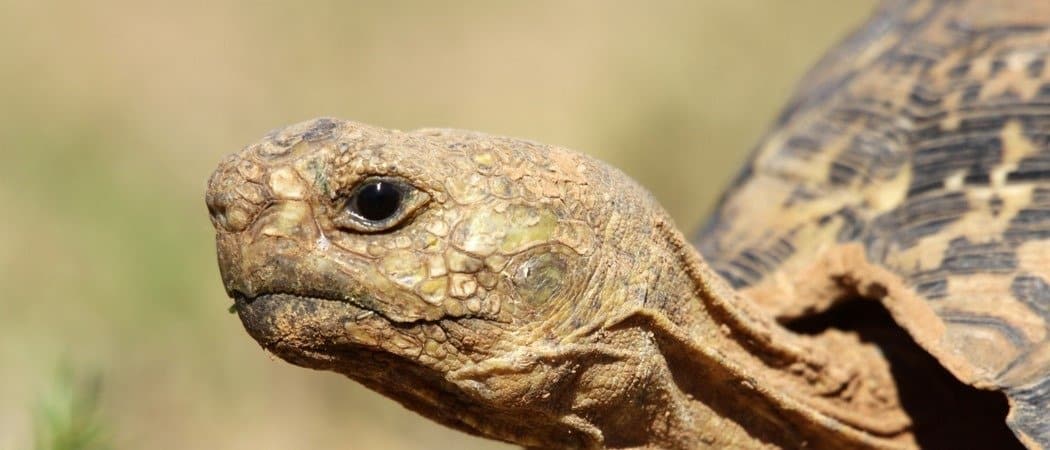
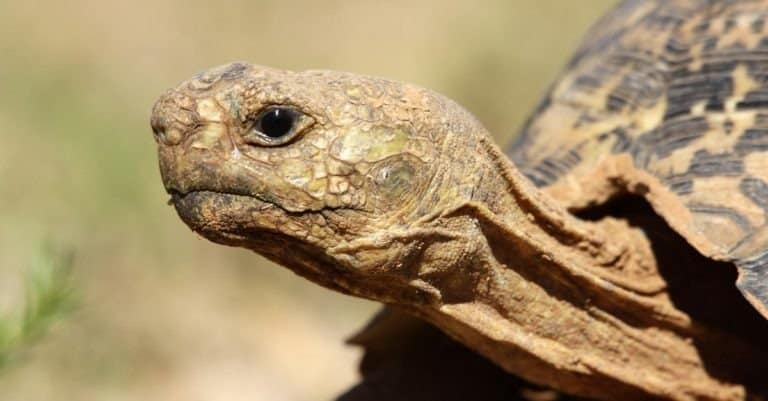
A close up photo of a leopard tortoise in South Africa

At a Glance

Wild Species
Also Known As Spotted tortoise, African spotted tortoise
Diet Herbivore
Activity Diurnal+
Lifespan 50 years
Weight 40 lbs
Status Least Concern
Did You Know?

Size: adults commonly 30-45 cm straight carapace length (SCL); large individuals can reach ~60 cm, with exceptional reports to ~70 cm (e.g., Branch 2008; Rhodin et al. 2017).

Scientific Classification

The leopard tortoise is a large, terrestrial tortoise native to eastern and southern Africa, named for the dark, leopard-like blotches on its domed carapace (especially vivid in juveniles).

Kingdom
Animalia
Phylum
Chordata
Class
Reptilia
Order
Testudines
Family
Testudinidae
Genus
Stigmochelys
Species
pardalis

Distinguishing Features

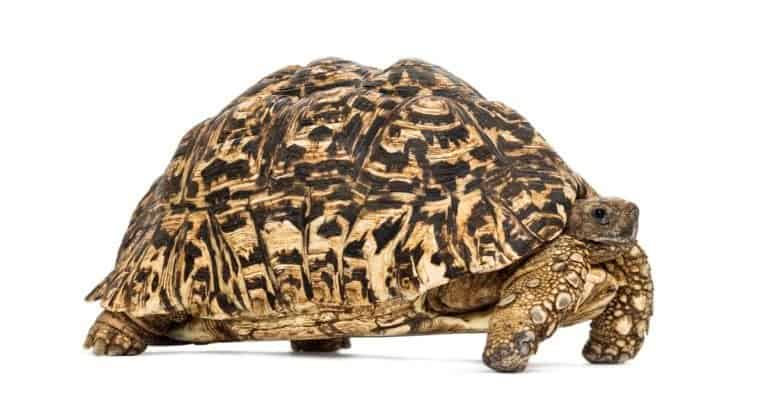
  • High-domed shell with variable dark blotches/rosettes on a yellow-tan background (pattern often fades with age)
  • Robust, heavy-bodied grazing tortoise; primarily herbivorous
  • Native to eastern and southern Africa (not South Asia)
  • No enlarged thigh spurs like the African spurred (sulcata) tortoise

Physical Measurements

Males and females differ in size

Height
10 in (7 in – 1 ft 2 in)
Length
1 ft 4 in (12 in – 2 ft 4 in)
1 ft 6 in (12 in – 2 ft 4 in)
Weight
40 lbs (18 lbs – 119 lbs)
44 lbs (26 lbs – 88 lbs)
Top Speed
0 mph
walking

Appearance

Primary Colors
Secondary Colors
Skin Type Hard keratin scutes over bony carapace/plastron; thick, dry, pebbly scales on limbs and head (terrestrial Testudinidae integument).
Distinctive Features
  • Large terrestrial African tortoise (eastern & southern Africa savannas/grasslands); genus Stigmochelys (Testudinidae).
  • Very high-domed, oval carapace; serration minimal compared with many smaller tortoises.
  • Adult straight carapace length commonly ~25-45 cm; exceptionally up to ~70 cm reported in large females.
  • Mass commonly ~13-18 kg; exceptionally up to ~50+ kg reported in very large adults.
  • Leopard-like black/brown blotches on yellow-tan scutes; boldest in juveniles and can fade or break up in adults.
  • Herbivorous grazer/browser: primarily grasses, forbs, succulents; strong hindgut fermenter typical of tortoises.
  • Mostly diurnal; basks to thermoregulate and shelters in vegetation, scrapes, or abandoned burrows during extremes.
  • Longevity commonly several decades; 50+ years typical, with 80-100+ years documented in long-lived captive/managed individuals.

Sexual Dimorphism

Sexes are similar in overall coloration and pattern. Males typically have a more concave plastron and longer, thicker tail; females often reach greater overall body size and have a flatter plastron.

  • Plastron distinctly concave to facilitate mounting.
  • Tail longer and thicker; vent positioned farther from shell edge.
  • Often slightly longer gular/anal region proportions, aiding mating posture.
  • Plastron flatter or only weakly concave.
  • Tail shorter and slimmer; vent closer to shell edge.
  • Often larger-bodied on average, especially among the biggest adults.

Did You Know?

Size: adults commonly 30-45 cm straight carapace length (SCL); large individuals can reach ~60 cm, with exceptional reports to ~70 cm (e.g., Branch 2008; Rhodin et al. 2017).

Weight: big adults may approach ~40 kg (Branch 2008).

Longevity: commonly 50+ years; captive individuals are often reported at 80-100+ years when well cared for (Rhodin et al. 2017; zoo husbandry records).

Pattern shift: the 'leopard' blotches are usually boldest in juveniles and often become less contrasting with age/abrasion.

Slow eggs: incubation is notably long-often ~8-15+ months (≈240-450+ days), varying with temperature and moisture (reported in field and captive studies; summarized in Rhodin et al. 2017).

Protection status: globally assessed as Least Concern, yet regulated in trade (CITES Appendix II) due to collection and habitat pressures (IUCN; CITES).

Not a swimmer: like most Testudinidae, its heavy, domed shell and terrestrial limbs make it poorly adapted to swimming-shallow water can be hazardous.

Unique Adaptations

  • High-domed carapace: increases protection against many predators and helps resist crushing; the steep dome is characteristic of Stigmochelys and many open-habitat tortoises.
  • Leopard blotching camouflage: disruptive dark blotches break up the shell outline among dappled grass-and-shadow habitats, especially effective in juveniles.
  • Drought resilience: can meet much of its water needs from vegetation and is capable of long intervals without drinking; like many tortoises, it can store water in the bladder (a common Testudinidae strategy).
  • Elephantine, columnar limbs: built for weight-bearing and long-distance walking over hard ground-useful in savannas and semi-arid rangelands.
  • Tough keratin scutes: resist abrasion from thorny vegetation and gritty soils; shell wear can gradually soften the contrast of the juvenile 'leopard' pattern.
  • Flexible diet within herbivory: mainly grasses and herbaceous plants, but can switch among available greens seasonally-helping it persist across varied rainfall regimes in eastern and southern Africa.

Interesting Behaviors

  • Seasonal activity shifts: in cooler periods they bask longer and may become sluggish; in hot, dry weather they often feed in mornings/evenings and rest in shade midday to avoid overheating (savanna/desert-edge behavior reported across its range).
  • Burrow-sharing rather than digging: leopard tortoises frequently use shelters such as aardvark burrows or rock crevices for temperature buffering and predator avoidance (commonly noted in southern/eastern African field observations).
  • Grazing lifestyle: primarily a grazer, cropping grasses low to the ground and moving steadily across patches-an ecological role closer to a small grazing ungulate than to a browsing turtle.
  • Male contests and courtship: males may ram and shove rivals, and during courtship they follow females closely, nudge the shell margins, and may vocalize during mating (documented in Testudinidae behavior accounts).
  • Nest building: females dig flask-shaped nests with the hind feet, lay a clutch, then carefully backfill and tamp the soil-often leaving little surface evidence.
  • Thermoregulatory postures: they extend limbs and neck to increase heat gain when basking, and withdraw tightly plus seek shade/burrows to reduce heat load and water loss.

Cultural Significance

Across eastern and southern Africa, tortoises in grazing lands and village outskirts often stand for patience, staying power, and cleverness in folktales. The leopard tortoise (Stigmochelys pardalis) matches the common savanna tortoise; pardalis means 'leopard-like.'

Myths & Legends

Southern African / broader Bantu-speaking folklore features the tortoise as a patient trickster who wins through persistence rather than speed-echoing the animal's slow, steady movement in the landscape.

A widespread African story says the tortoise got its patterned, cracked-looking shell after a fall, fire, or punishment. This origin story fits the leopard tortoise (Stigmochelys pardalis) bold scute pattern.

In West African tales (Yoruba and Igbo), the tortoise is a clever trickster in stories like "The Tortoise and the Birds." Its tricks end badly, teaching humility and honesty to listeners.

African fireside stories sometimes frame the tortoise as an emblem of survival through hardship-sheltering during dangers and emerging when conditions are safe-mirroring the real behavior of tortoises retreating into burrows or shade during extremes.

In some regional oral traditions, the tortoise's slow pace is portrayed not as weakness but as wisdom: moving carefully, avoiding waste, and arriving in the end-an instructive contrast to impulsive animals in the same tales.

Conservation Status

LC Least Concern

Widespread and abundant in the wild.

Population Decreasing

Protected Under

  • CITES Appendix II (international trade regulated).
  • Protected within multiple national parks and reserves across eastern and southern Africa; legal protection varies by range state (collection and trade restrictions differ by country).

Life Cycle

Birth 12 hatchlings
Lifespan 50 years

Lifespan

In the Wild
30–80 years
In Captivity
40–100 years

Reproduction

Mating System Promiscuity
Social Structure Solitary
Breeding Pattern Transient
Fertilization Internal Fertilization
Birth Type Internal_fertilization

Leopard tortoises are mostly solitary; males actively search for females and may ram or fight rival males. Mating is by internal fertilization with brief courtship, no lasting pair bond, and females nest and provide no parental care beyond egg-laying.

Behavior & Ecology

Social Aggregation Group: 1
Activity Diurnal, Matutinal, Vespertine
Diet Herbivore Fresh grasses (tender new growth following rainfall)

Temperament

Generally calm and non-territorial; avoids conflict by withdrawal rather than active defense (Boycott & Bourquin 2000).
Males can be assertive in breeding context-circling, ramming, and biting during courtship/competition (Boycott & Bourquin 2000; Branch 2008).
HUBS pattern: solitary movement between forage sites, with short-lived mixing at water/green flushes after rain (Branch 2008).
Large, slow-moving grazer; typical adult carapace length ~40-50 cm, reported maxima ~70 cm (Branch 2008).
Long-lived; commonly cited >50 years, with well-documented captive individuals exceeding 80 years (Boycott & Bourquin 2000).

Communication

Hissing exhalation when startled or handled Branch 2008
Low grunts/rasps reported during courtship and copulation, especially in males Boycott & Bourquin 2000
Olfactory investigation and scent-trailing Cloacal/skin odors) used in mate assessment (Boycott & Bourquin 2000
Visual/tactile courtship: circling, head movements, nudging; biting at limbs/shell margins Boycott & Bourquin 2000
Male-male assessment via physical contact and shell-ramming; impacts may function as short-range signals Boycott & Bourquin 2000

Habitat

Biomes:
Savanna Tropical Dry Forest Temperate Grassland Mediterranean Desert Hot
Terrain:
Plains Plateau Hilly Valley Rocky Sandy Riverine +1
Elevation: Up to 9514 ft 5 in

Ecological Role

Large-bodied terrestrial grazer/browsing herbivore in savanna and semi-arid ecosystems

Regulates ground-layer vegetation structure through grazing and selective feeding Contributes to seed movement via ingestion and defecation of small seeds from forbs/fruits where eaten (secondary seed dispersal) Nutrient cycling via dung deposition (localized fertilization) Creates small-scale disturbance/patchiness in vegetation that can influence microhabitat availability for invertebrates and seedlings

Diet Details

Other Foods:
Grasses Herbaceous forbs and weeds Succulents and xerophytic plants Fallen flowers and soft leaves Prickly pear Low shrubs and leaf litter

Human Interaction

Domestication Status

Wild

Leopard tortoise (Stigmochelys pardalis) is not domesticated but is widely kept and bred for the pet trade. Humans capture and trade them, sometimes eat them locally, and affect them by farming, fences, fire changes, and roads. They are regulated under CITES Appendix II. Large, domed, plant-eating, patterned shells, ~40 cm (to ~70 cm), tens of kg, live 50+ years.

Danger Level

Low
  • Zoonotic Salmonella transmission (common reptile-associated risk; mitigated by hygiene and avoiding high-risk handling by immunocompromised persons/young children)
  • Minor bite or scratch risk during handling (generally docile, but can bite when stressed or food-associated)
  • Injury risk from improper lifting/handling of a heavy adult (drops, back strain) and from large, powerful limbs when struggling
  • Husbandry-related hazards (heat sources, electrical equipment, outdoor enclosure hazards) rather than direct aggression

As a Pet

Suitable as Pet

Legality: Laws vary by country and state. Leopard tortoise (Stigmochelys pardalis) is often legal where reptiles are allowed, but CITES Appendix II rules need permits for trade. Some places ban wild-caught or large tortoises; check local laws.

Care Level: Experienced

Purchase Cost: $150 - $1,500
Lifetime Cost: $10,000 - $50,000

Economic Value

Uses:
Pet trade (captive-bred and historically wild-caught) Zoo/education display animals Ecotourism/wildlife viewing value Local subsistence use (opportunistic meat use in parts of range)
Products:
  • live animals (pet and exhibition markets)
  • husbandry services/supplies (enclosures, UV/heat, veterinary care)
  • tourism/education programming (zoos, nature centers)

Relationships

Ecological Equivalents 4

Animals that fill a similar ecological role in their ecosystem

African spurred tortoise
African spurred tortoise Centrochelys sulcata Leopard tortoise (Stigmochelys pardalis) is a large land tortoise in African savannas; it primarily eats grasses and low plants, conserves water, uses shelter, and occupies slightly wetter savannas.
Aldabra giant tortoise
Aldabra giant tortoise Aldabrachelys gigantea Comparable role as a large-bodied terrestrial herbivore (mega-grazer/browser) that shapes vegetation through grazing and seed dispersal; shares a similar life-history strategy (slow growth, late maturity, long lifespan). Useful ecological analogue when comparing impacts of large tortoises on savanna and woodland plant communities.
African pancake tortoise Malacochersus tornieri Overlaps in East African distribution and is a terrestrial herbivore, but occupies a different microhabitat (rock crevices), whereas the leopard tortoise ranges in open savanna and grassland; included as a contrast within African tortoise community structure.
Savanna monitor lizard Varanus exanthematicus Both species share savanna habitats and use open areas to bask and warm. Their diets differ—the monitor eats more animals—but it is often nearby and may eat eggs and young, linking the species in the local food web.

The leopard tortoise is among the heavyweights of the tortoise world.

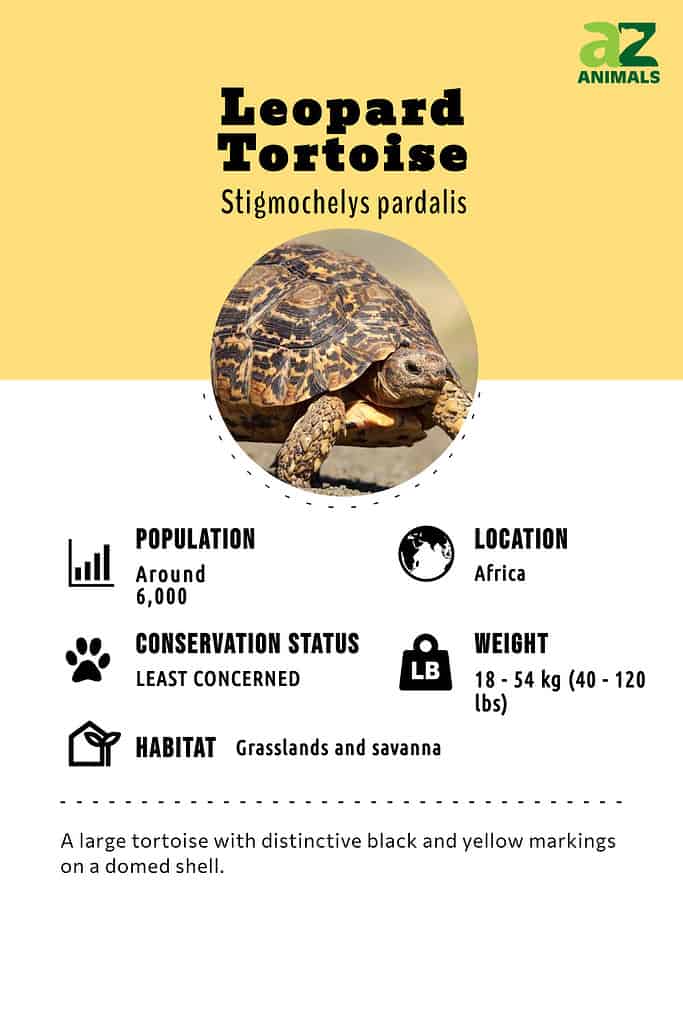
Weighing an average of 40 pounds, this species is quite a common spectacle around the savannas of sub-Saharan Africa. Like the big cat for which it’s named, the leopard tortoise has unmistakable black and yellow markings, each one completely unique to the individual. Despite the occasional threat to its survival, this species was built to survive.
4 Incredible Leopard Tortoise Facts!

  • The leopard tortoise has club-shaped front legs with pigeon toes and nails. Although it’s nowhere near as fast as its namesake, this species is sometimes capable of small bursts of speed over short distances. It also has the ability to climb over rocky terrain.
  • The leopard tortoise lives in abandoned holes instead of making its own. The only time it digs holes is to construct a nest during the breeding season.
  • Poachers who catch the tortoise and put them up for sale in the international pet trade are a persistent problem.
  • One of the more interesting facts is that this species has a rare white-colored variant known as the ivory or snow leopard tortoise.

Scientific Name
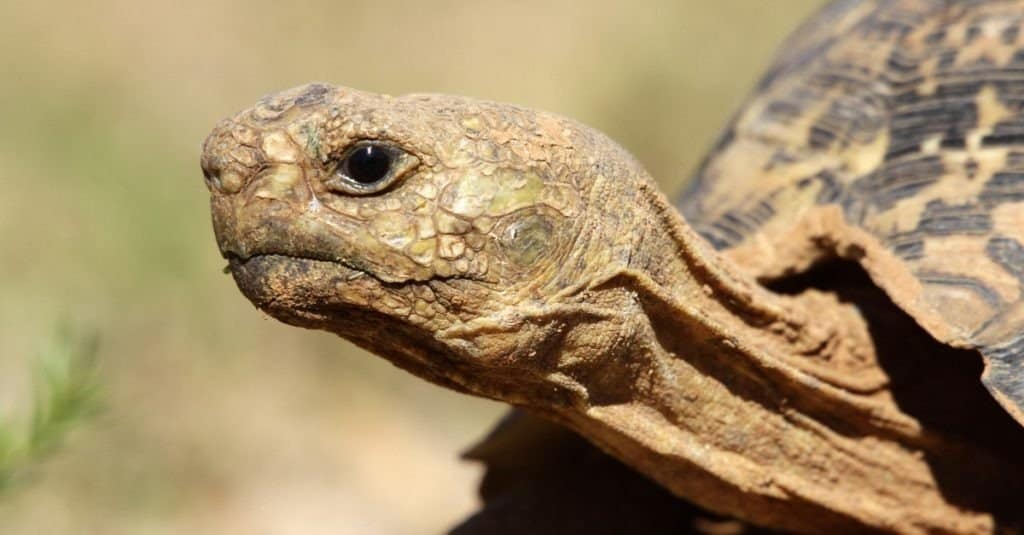
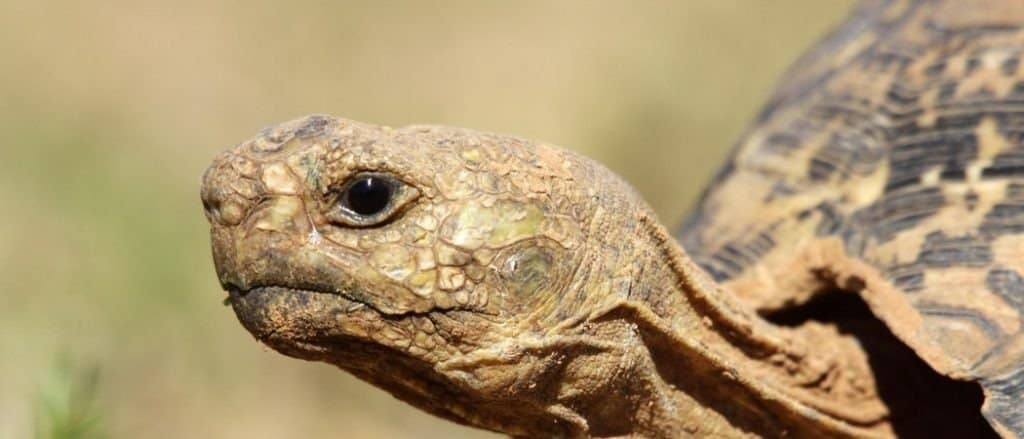
A close up photo of a leopard tortoise in South Africa

The leopard tortoise is the only living member of its genus, Stigmochelys.

The scientific name of the leopard tortoise is Stigmochelys pardalis; pardalis is simply the Latin word for leopard. This species was once part of the genus Centrochelys, but after some debate, it was later moved to the genus of Psammobates, which includes several species of South African tortoises. Eventually, it found a permanent home in Stigmochelys, of which the leopard tortoise is the only living member.

The scientific name of this genus comes from the combination of two Greek words meaning stigma and tortoise. Taxonomists have also debated whether the leopard tortoise represents a single cohesive species or two independent subspecies, but a lot of research supports the former conclusion that genetically there are no separate subspecies.

Species

There has been debate over the existence of two subspecies, but research has concluded that the leopard tortoise, Stigmochelys pardalis, is one of a kind.

Evolution
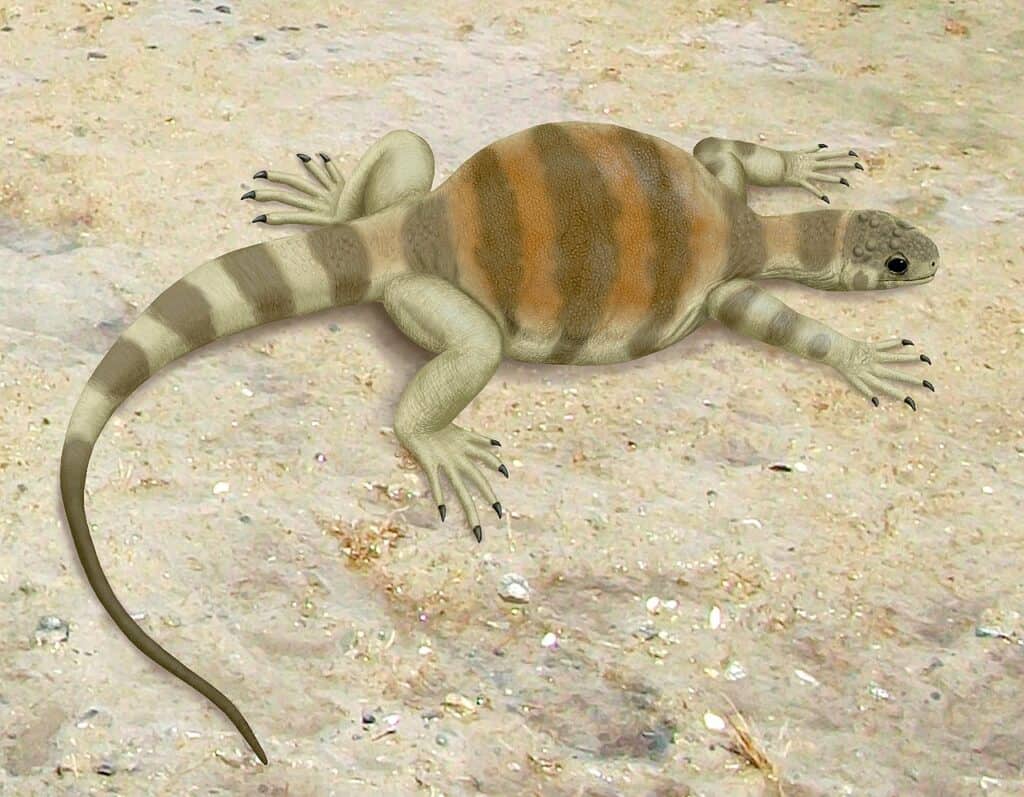
Eunotosaurus africanus

Tortoises evolved in South Africa from a small reptile named Eunotosaurus africanus, around 260 million years ago.

Tortoises/Turtles evolved in South Africa, from a small reptile named Eunotosaurus africanus around 260 million years ago. This strange little lizard had the makings of modern-day tortoises with thick, backward curving ribs that formed an armored dome under its skin.

A reptile called Odontochelys semitestacea, evolved 40 million years later in the shallow oceans of China. The Odontochelys had one trait that modern turtles and tortoises share – a plastron or bottom shell. It is believed that these tortoise ancestors developed lower shells first because sharks and other predators attacked them from below the surface of the water.

Proganochelys, or “beast turtle” lived among dinosaurs and was armored above and below. In addition to its protective shell, this ancient turtle had bony neck spikes, leg spikes, and tail spikes. Like its modern relatives, it had a bony shell and a toothless mouth.

These three tortoise ancestors diverged into the terrapin, sea turtle, and tortoise we know today.

Appearance
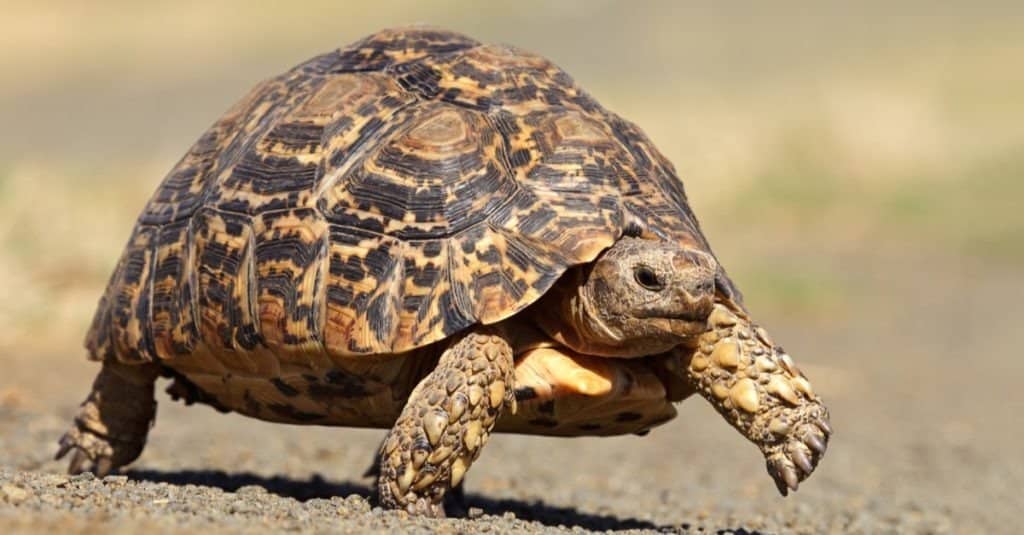
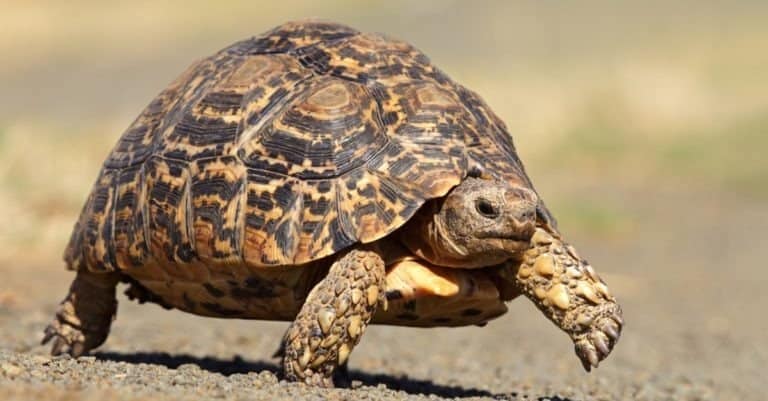
Leopard tortoise or mountain tortoise (Stigmochelys pardalis) walking, South Africa

Leopard tortoises can grow up to 100 pounds and are the fourth largest tortoise in the world.

The leopard tortoise is considered to be the fourth largest tortoise species in the world. A full-grown tortoise can easily reach between 12 inches and 28 inches in length and grow up to 100 pounds, or about the size of a large dog, though the average tortoise is only about 40 pounds. Males and females are very difficult to tell apart from appearance alone unless you really know what you’re looking for. There are some minor differences in average size between the sexes, but these facts are usually outweighed by individual differences.

The leopard tortoise’s domed shell, which is fused to the rest of the body through the ribs, is composed of two basic parts: the upper carapace and the lower plastron. The very round and steep carapace is covered with alternating black and yellow patterns which give this species its name (or, in the case of a rare variation, a snow-white and black pattern). These colors and patterns are far more prominent in juveniles and young adults. In mature adults, the markings fade toward brown and grey. The shell itself is composed of a patchwork of tough scutes: basically scales overlaid with horned plates. The suture lines of the scales are covered and reinforced by the plates, which gives additional strength to the shell. Contrary to popular belief, it is not possible to distinguish the tortoise’s age by the appearance of the shell or body.
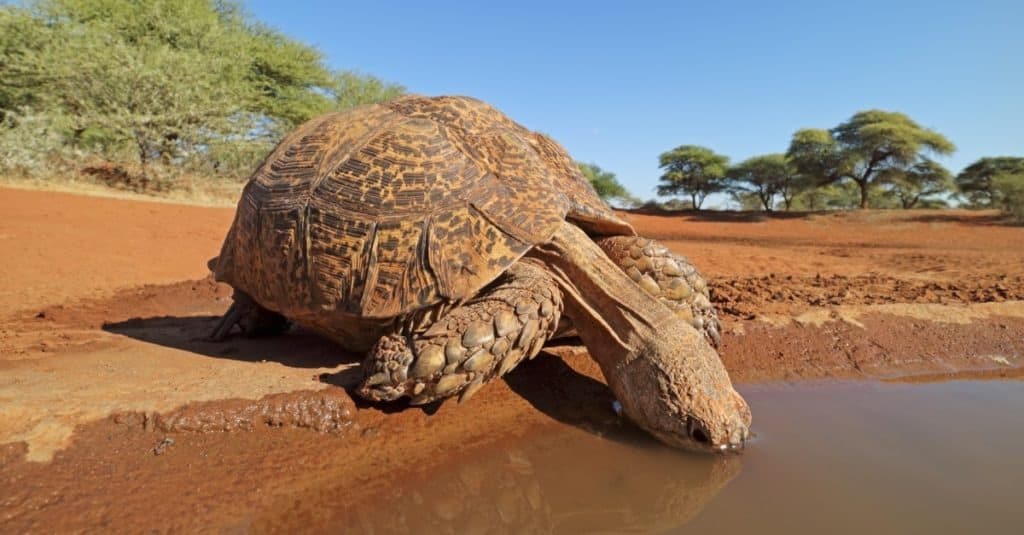
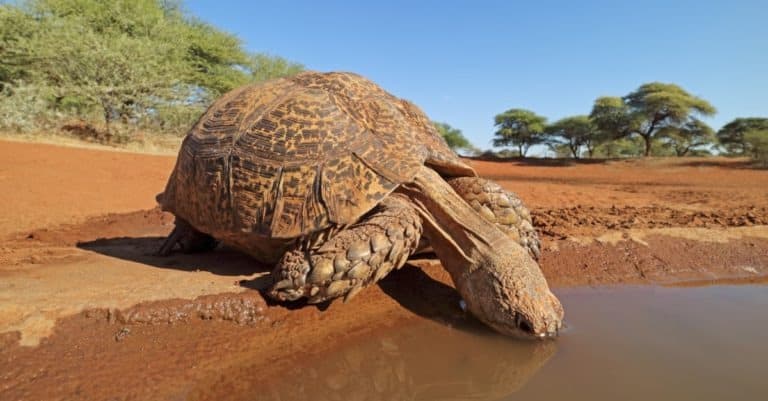
Close-up of a leopard tortoise (Stigmochelys pardalis) drinking water, South Africa

Leopard tortoises spend most of the day sleeping or looking for food and are known to undertake long treks in search of foraging spots.

Behavior

The leopard tortoise spends most of the day either sleeping or foraging for food. Although its movement appears to be slow and cumbersome, this tortoise has been known to undertake long treks in search of better foraging spots. It is most active during the moderate parts of the day at dawn and dusk. Due to the large temperature fluctuations throughout the entire 24-hour period, the tortoise seeks shelter in holes or shade during the day to avoid the hammering rays of the sun and sleeps during the night when it’s cold.

The colors of the leopard tortoise are not just for show. They provide some camouflage against the backdrop of the African environment and vegetation. Whenever it’s spotted by a predator, the leopard tortoise has the ability to withdraw into the shell to protect itself. This shell is so impregnable that it can wait out almost any threatening animal.
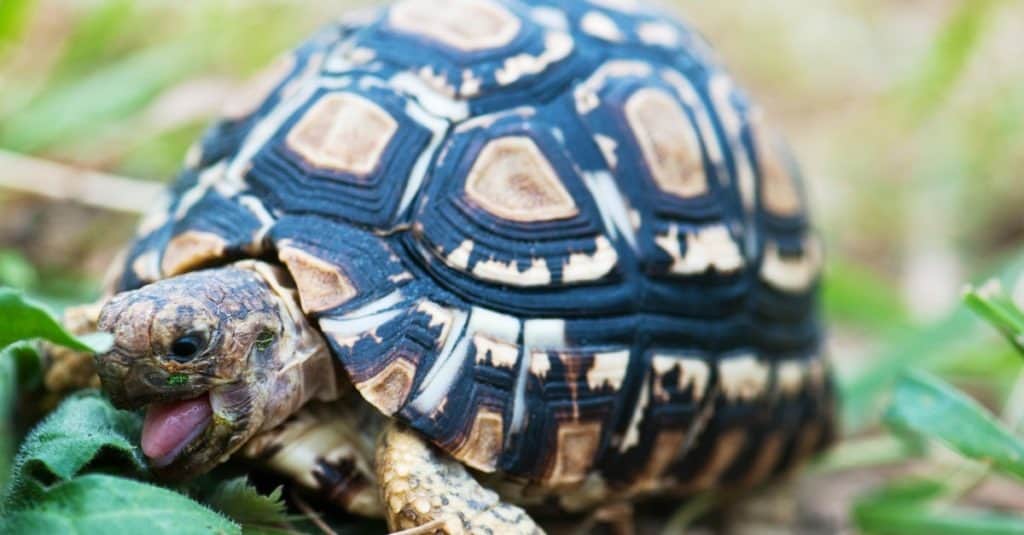
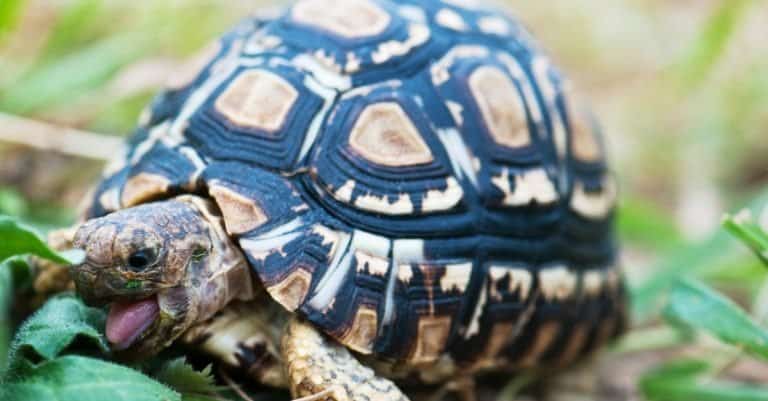
Leopard tortoise eating

Leopard tortoises use their sense of smell to find food.

Except in the breeding season, when social hierarchies are established, the leopard tortoise is a solitary grazer with a very loose social organization and very few communication skills. When the breeding season does finally approach, the tortoise becomes quite a bit noisier, since the call helps it attract mates and outcompete other males. And when it chooses a mate, the male will also make grunting sounds during copulation. The only other time it really makes a sound is when the tortoise retracts its shell. This produces a hissing sound due to the forced expulsion of air from the lungs.

The leopard tortoise relies primarily on its sense of smell to locate and track down food. Vision appears to be an important aspect of its perception, but it isn’t clear that the tortoise can distinguish between different colors. And although lacking visible ear flaps, it is also able to sense sounds and vibrations at low frequencies.

Habitat
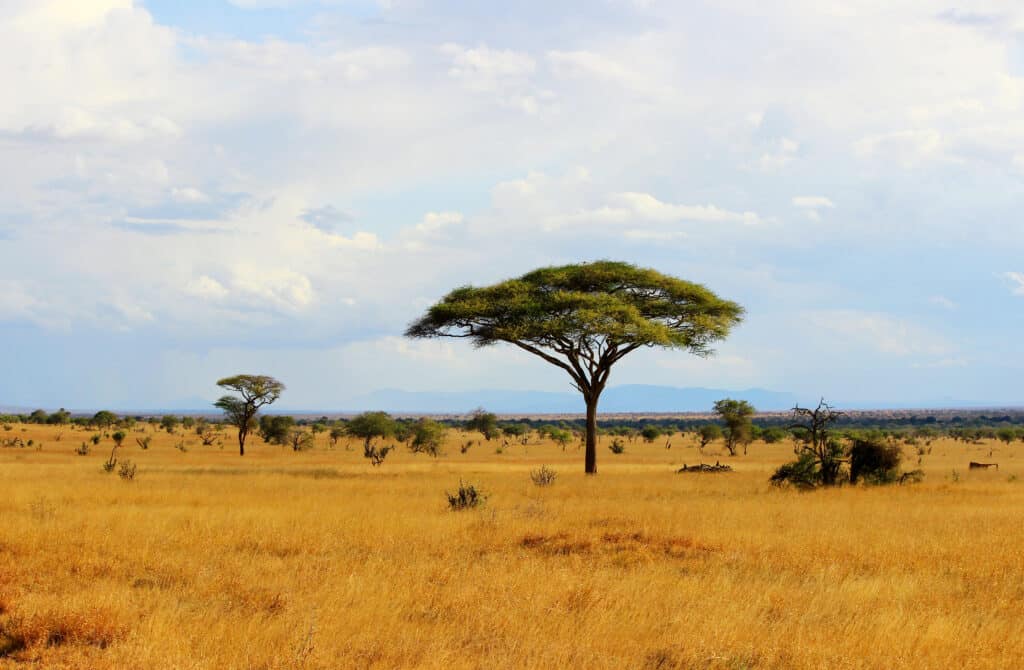
African savannah landscape in Tsavo East National Park, Kenya

Leopard tortoises inhabit much of sub-Saharan Africa.

The leopard tortoise has a large range that extends through much of sub-Saharan Africa. From temperate grasslands to dry plains, it prefers warm habitats with low-lying vegetation. It is not well-adapted for wet or cold regions with heavy rain or snow at all.

Diet
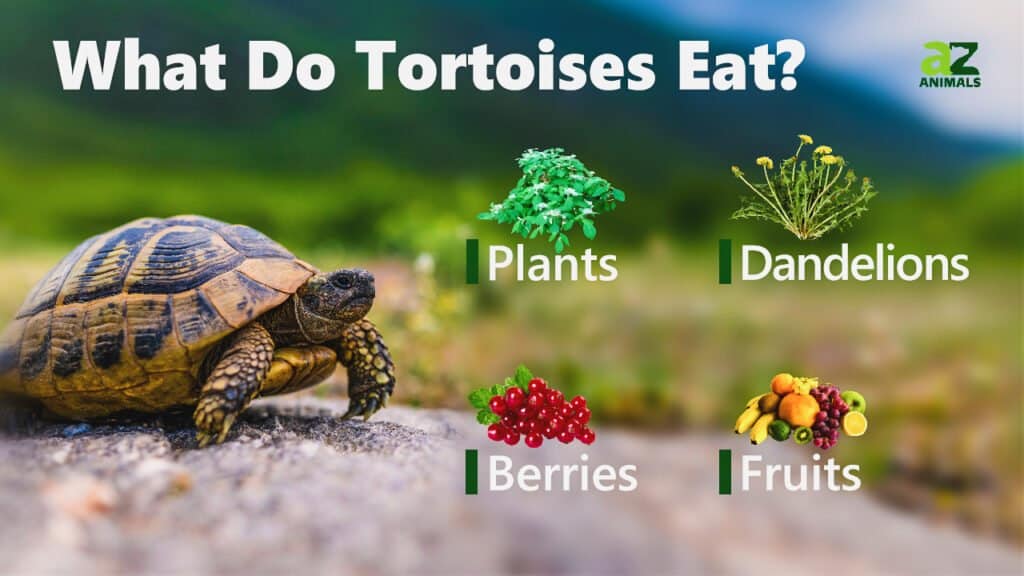
What Do Tortoises Eat
The leopard tortoise eats mixed grasses, succulents, and thistles. The fruit of the prickly pear cactus provides water.

The leopard tortoise is an herbivorous grazer that always seems to be searching for or eating food. Lacking teeth, the animal’s sharp beak and strong mouth help it to rip and tear vegetation with ease. They also play an important role in the ecosystem by dispersing undigested seeds throughout the entire environment.

What does the leopard tortoise eat?

The leopard tortoise feeds upon mixed grasses, succulents, and thistles. The rich selection of succulents, which includes the fruits and pads of prickly pear cactus, also serves as an ample source of water. By storing water in the anal sacs around the abdomen, the leopard tortoise is able to survive prolonged periods of time without drinking again. And when the circumstances are really tough, the tortoise may consume bone fragments as a source of calcium.

Predators and Threats
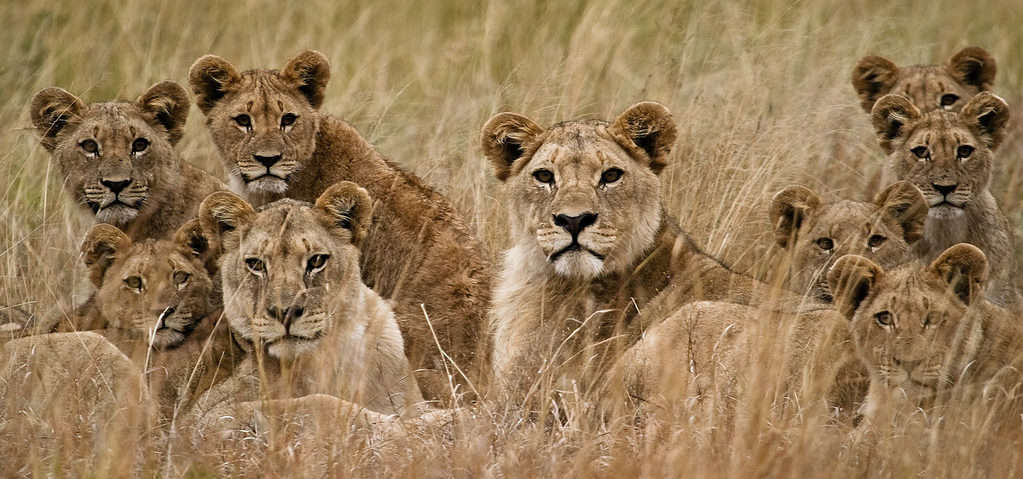
Pride of lions in grass

Lions are well camouflaged in long grass and are known to prey on leopard turtles.

The leopard turtle is often threatened by hunting, poaching, and predation, but it’s not entirely clear whether this has a significant effect on population numbers. Sometimes they are caught and put up for sale on the international pet trade (despite the fact that they are also bred in captivity). Sometimes they are hunted for their meat or shells. And sometimes they are just killed because they are a nuisance that feeds on crops and gardens.

What eats the leopard tortoise?

With its tough shell and camouflaged colors, a full-grown leopard tortoise is preyed upon by only a few other animals besides maybe humans and lions. But approximately 80% of young tortoises are lost to foxes, storks, lizards, mongooses, and many other predators before they can even reach adulthood.

Reproduction, Babies, and Lifespan
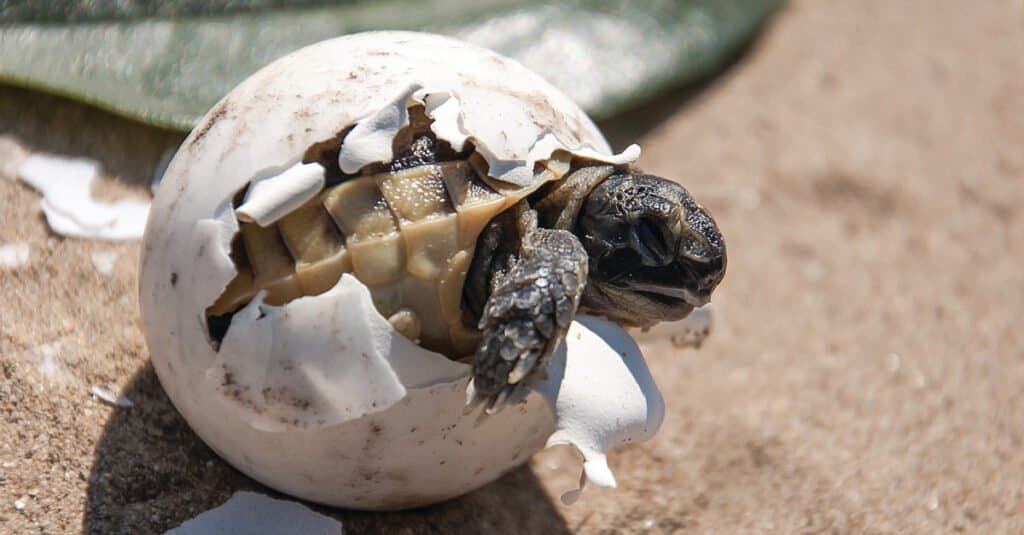
Baby turtle coming out of its eggshell

Female leopard tortoises can lay five to seven clutches of up to 30 eggs each year.

At the approach of the traditional breeding season between May and October, male tortoises will engage in fearsome and aggressive competitions with each other for access to mates. Once one emerges victorious over his rivals, the winning male will chase after a potential mate for days or even weeks at a time just for the opportunity to mate with her. It is not uncommon for the female to attempt an escape, so when he finally catches up with her, the male will attempt to immobilize her with repeated strikes of his head.

After mating is complete, the female will dig a deep hole in the ground to lay her eggs. She can lay five to seven clutches a year, each of which contains five to 30 eggs. The sex ratio of the clutch is actually determined by the surrounding environmental temperature. Temperatures over 86 degrees Fahrenheit tend to result in more females than males.
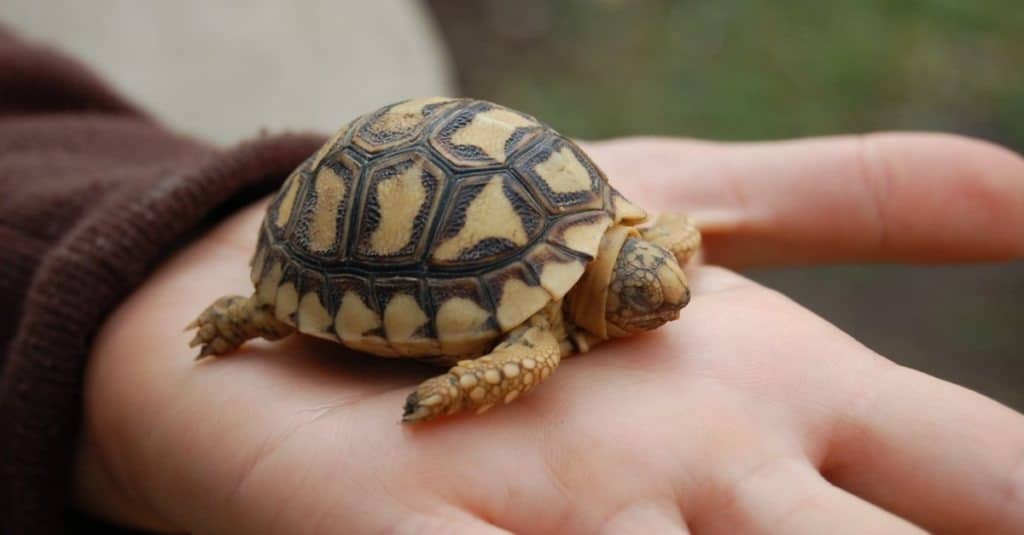
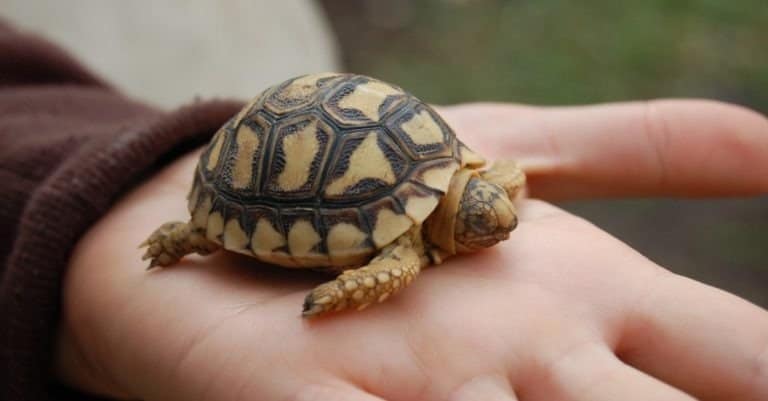
Young leopard tortoise

Baby leopard tortoises exhibit strong black and yellow patterns that fade with age.

After laying her eggs and covering them with dirt and leaves, the mother soon departs to later prepare a new nest. Neither she nor the father invests much time and effort into the care of the young. For the next nine to 12 months, the eggs will remain hidden from view, though they are still vulnerable to predators that happen to find them and dig them up. If they survive this period, then the hatchlings emerge from the eggs weighing just a fraction of a pound but ready to forge a new independent life of their own.

At this early stage, young adults exhibit a very strong black and yellow pattern over their bodies with prominent stripes, spots, or dashes, which fade more toward brown and gray as they age. Both males and females start to become sexually active after about 12 to 15 years. These exceptionally long-lived animals can reach ages of up to 100 years in the wild.

Population
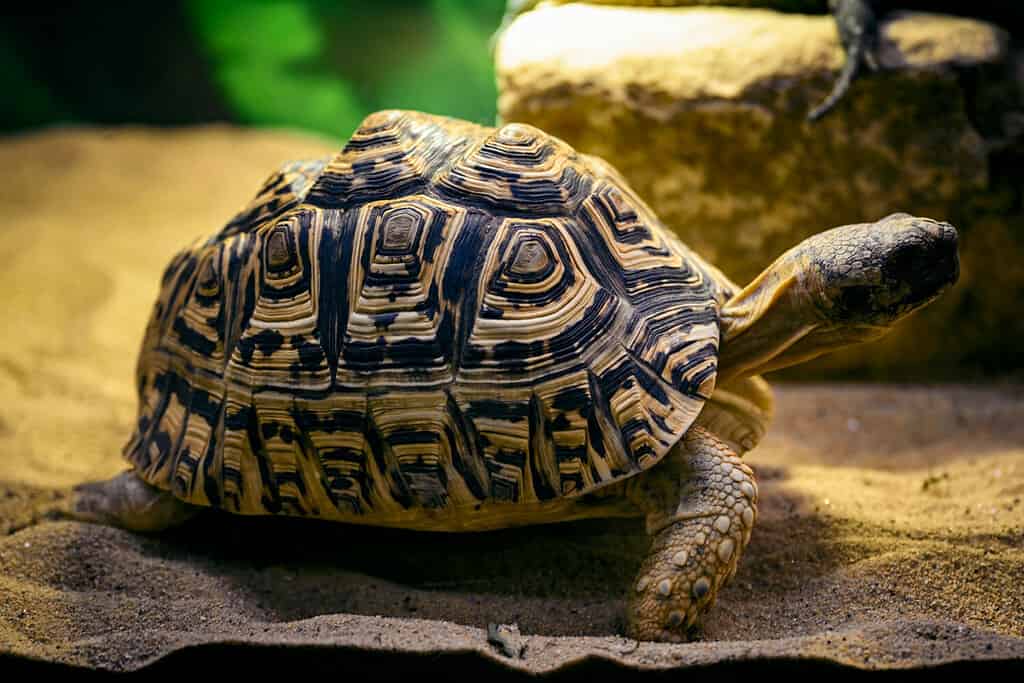
Stigmochelys pardalis - leopard tortoise in a terrarium.

Even though they are threatened by poaching, hunting, and habitat loss, the leopard tortoise is still classified as a species of least concern by the IUCN.

The leopard tortoise is currently threatened in the wild by poaching, hunting, and habitat loss, but this has not yet changed its conservation status. It’s currently classified as a species of least concern by the IUCN Red List. Although total worldwide population numbers are not well-known, the country of Tanzania in East Africa appears to have the largest number of tortoises with about 6,000 individuals remaining. Anti-poaching laws have prevented some people from putting them up for sale on the international pet trade.

In the Zoo
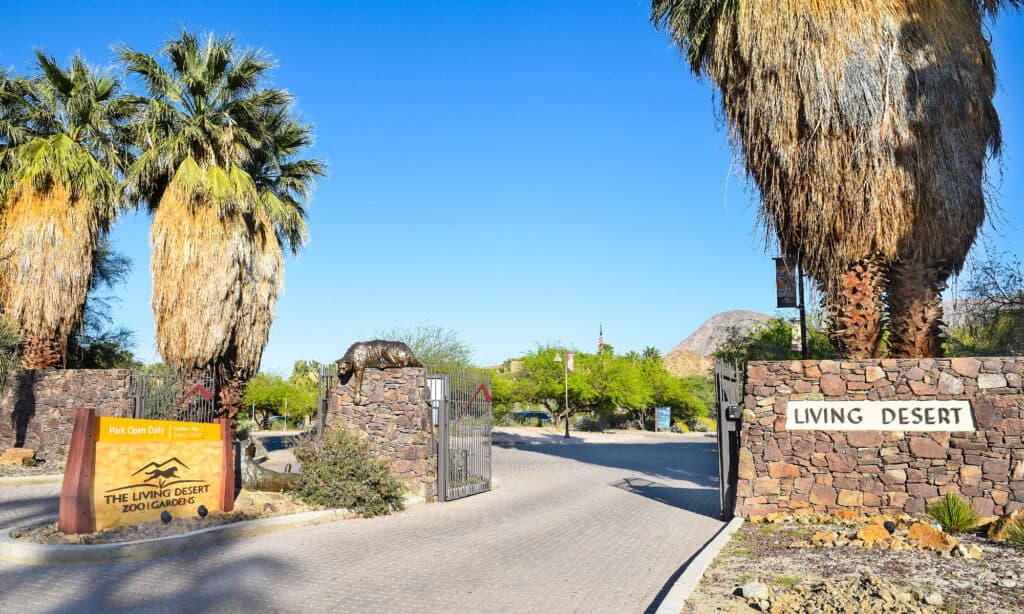
The Living Desert Zoo

The Living Desert Zoo is the second-largest zoo in California and features an exhibit of leopard tortoises.

The leopard tortoise is a prime exhibit at the Maryland Zoo, the Central Florida Zoo and Botanical Garden, Utah’s Hogle Zoo, the Saginaw Children’s Zoo in Michigan, the Alexandria Zoo in Louisiana, and the Living Desert Zoo in Palm Desert, California. Outside of the United States, you can find these magnificent animals at the Welsh Mountain Zoo and Twycross Zoo in the UK and the Auckland Zoo in New Zealand.

View all 131 animals that start with L

Sources

  1. Animal Diversity Web / Accessed February 4, 2021
  2. Maryland Zoo / Accessed February 4, 2021
  3. Living Desert / Accessed February 4, 2021
Lisha Pace

About the Author

Lisha Pace

After a career of working to provide opportunities for local communities to experience and create art, I am enjoying having time to write about two of my favorite things - nature and animals. Half of my life is spent outdoors, usually with my husband and sweet little fourteen year old dog. We love to take walks by the lake and take photos of the animals we meet including: otters, ospreys, Canadian geese, ducks and nesting bald eagles. I also enjoy reading, discovering books to add to my library, collecting and playing vinyl, and listening to my son's music.

Thank you for reading! Have some feedback for us?


Leopard Tortoise FAQs (Frequently Asked Questions)

Leopard Tortoises are Herbivores, meaning they eat plants.